IPOs in Japan enjoy popularity not seen since the dot-com bubble
InternationalDec 30. 2020Visitors look at an electronic ticker at the Tokyo Stock Exchange on Oct. 29, 2020. MUST CREDIT: Bloomberg photo by Kiyoshi Ota
By Syndication Washington Post, Bloomberg · Shoko Oda, Ayaka Maki
In a surprisingly strong year for initial public offerings globally, Japan’s 2020 market debutantes enjoyed their best opening share performances since the dot-com bubble era, helped by a groundswell of retail investors hungry for tech issues.
The average initial pop for IPOs in the Japanese market this year was nearly 130%, the most since 1999. The best performer was artificial-intelligence systems firm Headwaters Co., which jumped 1,090% in its first trade. Image-recognition software maker Ficha Inc. came second with an 806% gain, followed by internet-of-things developer Tasuki Corp., which rose 655%.
Backed by easy-money policies and growth in individual investing, new listing markets have been frothy this year despite the coronavirus market turmoil, as seen in the dramatic gains of Airbnb Inc. and DoorDash Inc. in U.S. debuts earlier this month. Stay-at-home tech plays and cloud computing upstarts especially found 2020 to be the perfect time to tap the public markets.
“The reason for the large opening gains is that there were many IPOs of stocks that were relevant to the times,” such as Japan’s digitalization push, said Hideyuki Suzuki, a general manager at SBI Securities Co. With low interest rates expected to continue for some time, the IPO market should continue to attract funds, he said.
Japanese stocks overall lagged in the pandemic recovery, with the Topix not erasing its year-to-date loss until November, months after U.S. and Asian peers. The Tokyo Stock Exchange’s Mothers Index of start-ups was a notable exception, with a gain of around 30% on the year, thanks to its heavy weightings of biotech and Internet names, as well as the surge in retail investing.
A total of 94 companies went public in Japan in 2020, up by four from the previous year, even with a pandemic-driven drought from early April to late June. About 70% were listed on Mothers. The overall value was small, with firms raising a total of $3.3 billion, and no single deal worth more than half a billion dollars. That compares with $181 billion raised in the U.S. and $51 billion in Hong Kong.
Toshiba Corp.-affiliated chipmaker Kioxia Holdings Corp. in September decided to postpone what would have been Japan’s largest offering of the year, at up to $2.9 billion, due to market uncertainty amid U.S.-China trade friction. That made mushroom cultivator Yukiguni Maitake Co., which raised $409 million, the biggest Tokyo IPO of 2020, followed by musical instruments maker Roland Corp. and business consulting provider Direct Marketing Mix Inc.
In the absence of blockbuster deals with international appeal, local retail traders helped pick up the slack. Individuals accounted for 20% of total trading value on the Tokyo Stock Exchange this year, up from about 16% in 2019.
“IPOs have helped drive retail investor turnover,” said Shoichi Arisawa, an analyst at Iwai Cosmo Securities Co. “It’s helped money come back to growth stocks and given life to the start-up market.”
In 2021, investors will be watching whether Kioxia decides to try its luck again. So far one company has announced IPO plans for next year, with laser-based chip solutions firm QD Laser Co. planning to list in February.
Doctors and nurses across Britain are sounding the alarm as confirmed cases of covid-19 reach record highs, with experts urging the government to implement a stricter lockdown to prevent the health system from being overwhelmed.
Simon Stevens, chief executive of the National Health Service (NHS) in England, told reporters on Tuesday that hospitals were “back in the eye of the storm” as new cases surged across Europe and Britain. He said more must be done to ease the burden on health-care workers.
Some health-care workers are issuing their own public warnings, detailing how hospitals in London and the southeast of England are already setting up tents to increase their capacity. They say ambulances are waiting outside hospitals for hours because there is no space inside.
“Our control room staff are having to make incredibly difficult decisions to decide who gets an ambulance first and who they are going to ask to wait,” paramedic Will Broughton told Sky News on Tuesday.
Samantha Batt-Rawden, president of the Doctors’ Association UK and an NHS critical care doctor, used Twitter to hit back at those who said health-care workers were exaggerating. “Try holding an iPad for a patient to say goodbye to their family. Or having to . . . ventilate a colleague,” she wrote Monday.
Government figures suggest that the virus is surging in Britain, despite restrictions already in place in most of the country. On Tuesday, 53,135 confirmed cases were reported across Britain, marking the second record day in a row and a number far higher than any single day increase in the first wave.
More widespread testing may account for the new record in confirmed cases, but another number cannot be explained away: NHS England said Monday that a record 20,426 people were being treated for the virus in hospitals in England.
The previous peak number for those hospitalized was set during the first surge in cases in April at a little under 19,000.
Much of Britain, including London, is already under the highest level of lockdown: Tier 4 in the U.K. system. One senior adviser to the government said Tuesday that more of the country should be brought to this level “or higher” to “prevent a catastrophe in January and February.”
“I think we are entering a very dangerous new phase of the pandemic,” Andrew Hayward, an epidemiologist at University College London, told BBC Radio 4.
Health Secretary Matt Hancock is expected to announce any changes to restrictions Wednesday, the BBC reported. Hancock tweeted Tuesday that the pressure on the NHS was now “unprecedented,” and he asked everyone to work to suppress the virus during “these difficult times.”
Earlier this month, officials in Britain voiced concern over the spread of a new variant of the coronavirus that appears to spread more easily. The variant was first identified by British scientists this month, but it has since been found in a variety of countries.
More than 2.3 million cases of covid-19 have been confirmed in Britain since the virus first appeared in the country. More than 70,000 people have died, giving Britain one of the worst death tolls in the world.
Although there have been medical advances in treatment for covid-19, and the British government was the first in the world to begin a widespread immunization program of a fully tested vaccine, the virus appears to be spreading faster than lockdown measures can restrict it.
After almost a full year of fighting the pandemic, the toll is particularly hard on health workers. “This has probably been the toughest year that most of us can remember,” Stevens told reporters.
Simon Walsh, deputy chairman of the British Medical Association’s U.K. Consultants Committee, told the Press Association news agency that hospitals in the worst-hit areas of London were using the same sort of protocols expected in a “major incident.”
“They’re having crisis meetings; they’re calling on staff to come in to work if they’re able to on their days off,” Walsh said.
Health workers quoted in the media suggested that the government has mismanaged its staffing. During the first wave of the virus, the government used empty event spaces to build seven emergency Nightingale hospitals at a cost of 220 million pounds ($297 million).
However, the Daily Telegraph reported that the facilities have remained mostly empty during the new wave of the virus and that some were being dismantled because of shortages in staffing.
Health-care workers also complained that they were not being prioritized for vaccines, which are largely going to the elderly and those with underlying health problems at this stage of the British government’s rollout.
Batt-Rawden wrote Monday that many medical workers are getting sick from the new variant and that some hospitals are tweeting out messages asking for medical students to work in intensive care units.
“This is not a drill. Please believe us,” she tweeted, adding a hands-praying emoji.
By Syndication Washington Post, Bloomberg · Jan Bratanic, Jasmina Kuzmanovic
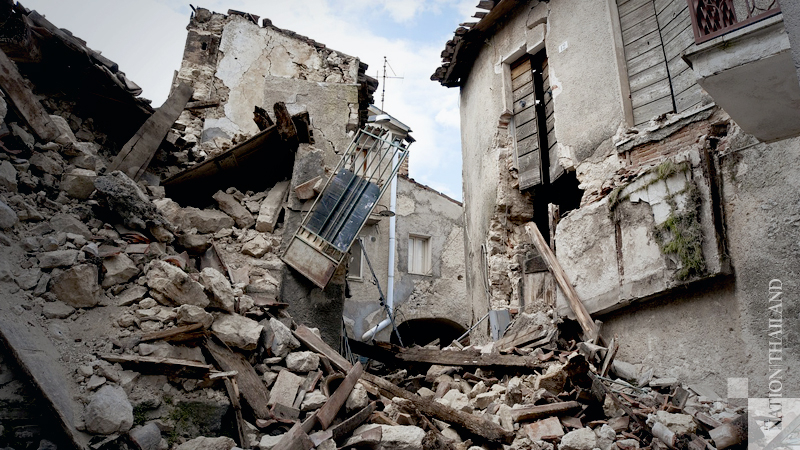
Croatia suffered its strongest earthquake in 140 years – for the second time in 2020 – with the tremor killing at least five people, devastating the city at its epicenter and rattling Europeans as far away as Rome and Vienna.
The temblor, measured at 6.3 by the European-Mediterranean Seismological Centre on Tuesday, was larger than both a 5.2 quake on Monday and a 5.3 tremor that caused $6 billion in damage when it hit the capital of Zagreb in March.
The earthquake brought down buildings near its epicenter in the town of Petrinja, where it killed a girl who was about 13 years old, according to police. Four more people, including a father and son, were killed nearby in Glina, the town’s deputy mayor said, according to the Hina news agency.
Most buildings in Petrinja were total losses, Prime Minister Andrej Plenkovic said at the scene. Authorities were evacuating the hospital in the nearby city of Sisak, and the tremor damaged structures in Zagreb, where people left their homes to wait out potential aftershocks.
“2020 has brought us tragedy after tragedy,” Plenkovic said in comments on N1 Television. The broadcaster reported that at least 20 people had been hospitalized with injuries, with two in serious condition.
The disaster adds to an already difficult year for the Adriatic European Union member state, which is repairing 20,000 buildings from the March quake while tackling one of the bloc’s worst surges in coronavirus cases and a record economic recession.
The quake was also felt in Rome, Budapest and Vienna. It was more powerful than one in 1963 that hit near the former Yugoslav town of Skopje, now the capital of North Macedonia, that killed more than 1,000 people and destroyed 80% of the city.
“This is horrible,” President Zoran Milanovic said while observing the damage in Petrinja. “Pure horror. The army is here, coming to help evacuate people.”
In Petrinja, a city of about 25,000 people that was almost destroyed in the bloody 1991-1995 breakup of Yugoslavia, video footage showed demolished houses and fallen roofs that resembled the damage from the war.
Deputy Prime Minister Davor Bozinovic said the government was lifting a ban on traveling between counties imposed earlier this month to stop a spike in new cases of coronavirus so people whose homes were destroyed could stay with relatives.
The quake also triggered the automatic shutdown of Slovenia’s Krsko nuclear power plant, with that country’s infrastructure minister saying initial checks showed no damage.
European Commission President Ursula von der Leyen said on Twitter that she had spoken with Plenkovic and that the bloc was ready to provide support.
China is struggling to get the world to trust its vaccines
InternationalDec 30. 2020Vials of Sinovac Biotech’s CoronaVac SARS-CoV-2 vaccine on Sept. 24, 2020 in Beijing. MUST CREDIT: Bloomberg photo by Nicolas Bock.
By Syndication Washington Post, Bloomberg · Iain Marlow, Faseeh Mangi, Kari Soo Lindberg
Of all the developing countries testing China’s covid-19 vaccines, few are friendlier to Beijing than Pakistan. In the years leading up to the pandemic, China financed nearly $70 billion across the South Asian nation on roads, railways and power stations, and Pakistan now has two Chinese clinical trials underway, with even senior government officials being inoculated.
Yet interviews with people in Karachi, the nation’s biggest city — as well as in other developing nations from Indonesia to Brazil, together with surveys and official comments — show that China has failed to assure the millions of people who may have to rely on its vaccines.
“I won’t take it,” said Farman Ali Shah, a motorcycle driver in Karachi for local ride-hailing app Bykea, as local shops closed early ahead of an 8 p.m. virus-induced curfew. “I don’t trust it.”
That mistrust, and the reliance of dozens of poorer nations on China to inoculate their populations could set the stage for a major global political headache if citizens offered the Chinese vaccine feel they are being given an inferior product.
China’s vaccines were meant to score a clear diplomatic win for Beijing, shoring up ties with dozens of poorer nations amid an anticipated shortage of Western-developed shots. But there has been little information about how the Chinese versions have fared in final-stage clinical trials, with just the United Arab Emirates and China itself endorsing the vaccines for emergency use so far. Meanwhile, some U.S. and European companies have published data on the safety and efficacy of their shots and started to deploy them.
That uncertainty presents another roadblock in China’s efforts to extend its political influence across Asia, Africa and South America. Through its seven-year-old Belt and Road Initiative, Beijing spent billions on loans and projects and cultivated local elites to buttress its political and economic power — efforts that have often backfired because of poor management and heavy-handed implementation. The mistrust was compounded by China’s exports early in the pandemic of subpar tests and personal protective equipment.
“China has a great opportunity to do vaccine diplomacy and distribute a life-saving product,” said Jorge Guajardo, a senior director for McLarty Associates, who was Mexico’s ambassador to China for six years. “In my experience, every time they’ve engaged in diplomacy, they screw it up — they manage to upset the countries on the receiving end of their aid.”
Missteps could undermine President Xi Jinping’s claims that China’s ruling Communist Party has handled the virus better than western democracies. China, which saw the first known cases of covid-19 a year ago, used its authoritarian system to virtually eliminate the virus, mass testing millions of people when cases emerged, shutting its borders and locking down parts of the country to snuff out infections. That approach has seen China’s economy begin to recover even as countries such as the U.S. and U.K. struggle to control outbreaks.
Bolstered by its virus success, Beijing sparred with the U.S., U.K. and Australia over everything from the origins of the virus to crackdowns in Hong Kong and Xinjiang. The pain of the pandemic also hardened the stance of the U.S. and China in wider economic disputes, including American efforts to stop countries from adopting the next-generation communications technology of China’s Huawei Technologies Co.
“The key thing I am looking out for is if they come in with offers for a vaccine in exchange for a countries’ commitment to using Huawei 5G telecommunication lines, or to allowing China to invest in key sectors,” said Guajardo. “Given that they have a history of this behavior, it wouldn’t surprise me if they did it again.”
China has made a global effort to reassure governments and populations about the efficacy and safety of its vaccines. In October, a group of ambassadors and diplomats representing 50 African countries toured a Sinopharm Group Co. facility amid a publicity blitz touting China’s promise to deliver vaccines to Africa. “When the coronavirus vaccine completes research and is put into use, we are willing to prioritize benefiting African countries,” said Liu Jingzhen, chairman of Sinopharm.
In response to questions from Bloomberg, China’s Foreign Ministry said Chinese companies developing vaccines strictly comply with the law and clinical trials in the first two phases showed the shots were safe and effective. The Chinese government has administered more than one million emergency vaccine doses since July, it said, and “we have haven’t found any serious adverse reactions.”
Foreign Ministry spokesman Zhao Lijian said in a tweet on Monday that Chinese-made vaccines may be the “only choice” for governments that haven’t secured supplies since “wealthy countries” had booked three quarters of the estimated 12 billion vaccines set for production next year. He separately told a briefing that the inactive Chinese vaccines can be distributed more widely than others using existing cold chain systems, and China would provide them to developing countries “on a priority basis including by donation and free aid.”
“We should stand against seeking self-interest at the expense of others or hoarding or monopolizing supplies,” Zhao said in Beijing. “In particular, we must reject vaccine nationalism.”
On China’s side is mathematics. The challenge of manufacturing, distributing and administering billions of doses means many developing nations may have little choice but to use Chinese vaccines for at least part of their populations. Many don’t have enough facilities to store Pfizer Inc.’s shot, which needs to be stored at -70 degree Celsius.
China has also agreed to supply its vaccine to Covax, a World Health Organization-backed effort to provide a coronavirus vaccine to developing nations. AstraZeneca Plc, the other main Covax partner, is still waiting to gain approval. Britain’s drug regulator could clear its shot for use as early as this week, according to a person familiar with the matter.
Ironically, Chinese vaccine makers were initially at the forefront of the research, but China’s rapid control of the contagion left them scrambling to find places to carry out the vital third-stage clinical trials as U.S. rivals leapt ahead.
Chinese companies now have third-phase trials running in at least 16 nations, with state-backed China National Biotec Group Co. testing from Argentina to Morocco; Sinovac Biotech Ltd. enlisting Brazil, Turkey and the Philippines among others; and CanSino Biologics Inc. testing in Pakistan, Mexico and Saudi Arabia. Authorities at Brazil’s Butantan Institute, which is helping conduct clinical trials for the Sinovac vaccine, said on Dec. 23 the shot was more than 50% effective, meeting a minimum standard set by U.S. regulators for emergency authorization of covid vaccines. It did not provide details, citing Sinovac’s request to reconcile data across different trials.
The Brazil trial is Sinovac’s biggest so far with some 13,000 participants. A trial in Turkey indicated the vaccine is more than 91 percent effective, though it’s considered inconclusive as it was calculated from only 29 cases, compared with the 170 found in Brazil. Vaccines from Pfizer and Moderna Inc. have produced results well over 90%.
“In a country where the Chinese vaccine is the only one available, you either accept it or not,” said Yanzhong Huang, a senior fellow for global health at the New York-based Council on Foreign Relations. “But when you have choices between different vaccines, people are rational. They’re certainly going to choose Western-made vaccines because they’re the No. 1 choice, the data is already available, and they’re safe. China, so far, they haven’t had any systematic data available.”CNBG and CanSino didn’t respond to Bloomberg’s requests for comment. A spokesman at Sinovac referred to recent press conferences in Beijing where health officials said the inactivated shots undergoing phase III trials and approved for emergency use have been found to be safe, with only mild side effects, and that there is a mechanism in place to follow up with those who get the shots. A Sinovac spokesman separately said the company could only disclose efficacy data after they are reviewed by Chinese regulators.
Few places have seen the issue become more politicized than Brazil, South America’s largest economy and the third-most infected country after the U.S. and India.
Brazilian President Jair Bolsonaro, known as the “Trump of the Tropics,” has repeatedly attacked “Made in China” vaccines, even as political opponent Joao Doria, governor of Sao Paulo, endorsed the Brazilian-Chinese effort by Sinovac and the Butantan Institute.
“We won’t buy it from China, it’s my decision,” Bolsonaro said in a radio interview in October. “It’s a matter of credibility — there are other vaccines that are more trustworthy.”
The government later backtracked on his statement. On Dec. 21, Doria said Sao Paulo would receive 5.5 million doses of the Sinovac vaccine within days.
Still, a survey by polling institute Datafolha earlier in the month showed that half of Brazilians wouldn’t take the Sinovac-Butantan shot, the highest refusal rate among all the vaccines. Some 36% of respondents said they’d also reject a Russian vaccine, while 23% said they wouldn’t take a U.S. shot.
The politics and public concern translate into hard economics for China’s drugmakers. When Brazil’s Health Ministry delivered a national immunization plan to the Supreme Court, it included a total of 300 million doses from AstraZeneca, Pfizer and Covax, according to the newspaper O Estado de S. Paulo. Sinovac’s vaccine wasn’t mentioned.
“Our regulatory agency is going to evaluate the data for efficacy and safety, but this needs to be well communicated to the population,” said Natalia Pasternak Taschner, a microbiologist and founder of Instituto Questão de Ciência, a Brazilian non-profit that promotes science in policymaking. “It’s quite a challenge to do so when the president and the federal government are the ones raising issues about the vaccine being made in China.”
China may also be overestimating its ability to simultaneously vaccinate its own 1.4 billion population and meet the demand of hundreds of millions more in populous developing nations, said Huang at the Council on Foreign Relations, who has testified before U.S. congressional committees. CNBG said it is capable of making 1 billion doses of its inactivated vaccines, while Sinovac can produce 600 million doses, based on existing facilities and ones set to be completed soon. CanSino said it could make 200-300 million doses of its viral vector vaccines.
If Chinese vaccines aren’t available, developing nations will turn to other suppliers “and China will lose leverage,” Huang said. “We’re not just talking about the economic loss — diplomatic and strategic gains will also will be undermined.”
For the more than 6 billion people who live in developing nations, access to a vaccine soon could help reverse the devastating economic impact, particularly for the poor and those in the informal economy. Some national leaders are trying to reassure citizens about getting inoculated.
“I will be vaccinated first,” Indonesian President Joko Widodo said in a statement in mid-December. “This is to give people the trust and confidence that the vaccine we use is safe.” Indonesia has ordered 125.5 million doses from Sinovac, as well as 30 million from Maryland-based Novavax Inc. and is developing 57.6 million of its own shots. It’s also seeking doses from Covax, AstraZeneca and Pfizer.
Sheikh Mohammed Bin Rashid Al Maktoum, the prime minister of the United Arab Emirates and ruler of Dubai, received the Sinopharm vaccine on Nov. 3. “We wish everyone safety and great health, and we are proud of our teams who have worked relentlessly to make the vaccine available in the UAE,” he wrote on Twitter alongside a photo of him receiving the vaccine.Such official endorsements may be enough to persuade some people to accept any inoculation if it receives approval.
“I would be glad to receive a vaccine, regardless of whether it’s Chinese-made or otherwise, so long as it’s proven to be safe, effective and to have no long-term side effects,” said Francis Chung, a 29-year old finance manager who works for a Malaysian plantation company. “It should also be endorsed by the relevant authorities.”
But many others remain skeptical. A survey in Kenya reinforced the concern that not all vaccines are equal. Africa-focused polling company TIFA Research found that respondents were least likely to take vaccines made in China and Russia, preferring vaccines from the U.K. or U.S.
If global leaders fail to persuade their citizens that all the vaccines they approve for use are equally safe, they could face a backlash among those who believe they are being given a second-rate option. Even in Hong Kong, where China has expanded its grip on power this year, leader Carrie Lam reversed course on Dec. 23 and said residents can choose whether to take the Pfizer, Sinovac or AstraZeneca vaccines.
“Transparency is needed in order to support more general public acceptance of the covid-19 vaccines,” said Nicholas Thomas, an associate professor in health security at the City University of Hong Kong. “Absent such data, it is all too easy to see a two-tier perception of vaccines emerging.”
Biden calls Trump pandemic effort a ‘travesty’ and vows extensive federal effort to blunt virus spread
InternationalDec 30. 2020Patricia Cummings gives Vice President-elect Kamala Harris the Moderna coronavirus vaccine at the United Medical Center in Washington on Tuesday, Dec. 29, 2020. MUST CREDIT: Photo for The Washington Post by Evelyn Hockstein
By The Washington Post · John Wagner, Amy B Wang, Chelsea Janes
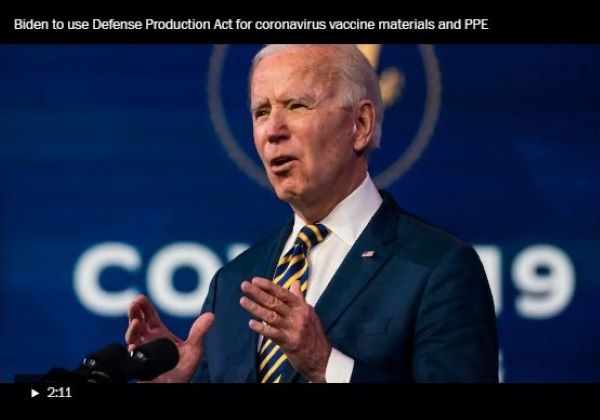
WASHINGTON – President-elect Joe Biden on Tuesday called President Donald Trump’s handling of the coronavirus pandemic a “travesty” and vowed to fully use the federal government’s powers once inaugurated to speed the production and dispersal of vaccines and protective equipment.
Biden said he would invoke the Defense Production Act to ramp up production of coronavirus vaccines. The law, enacted in 1950, gives the president the power to compel companies to produce and distribute supplies.
In the earliest weeks of the pandemic, Trump was criticized for not using the law to counter the country’s shortage of ventilators and personal protective equipment for front-line health workers. Trump later invoked the act to require General Motors to manufacture ventilators and to order meat processing plants to stay open.
Biden said Trump’s vaccine distribution efforts were falling far behind what had been promised and said he would “move heaven and earth” to bring an end to the coronavirus pandemic. But he also warned Americans that the worst of the coronavirus assault – “maybe the toughest of this entire pandemic” – remained ahead of them, despite early rounds of vaccinations underway.
With domestic air travel hitting record highs over the holiday weekend, Biden said he anticipated that infections now would produce increased cases in January and increased deaths in February.
“I can see a return to normalcy in the next year,” Biden said, but he warned that the country might not see improvements until well into March. “I know it’s hard to hear, but it’s the truth.”
He said the nation needed not only more vaccines and protective equipment but also a massive increase in testing to stem outbreaks that by now are occurring nationwide.
“After 10 months of the pandemic, we still don’t have enough testing,” he said. “It’s a travesty.”
As he has for months, Biden encouraged people to continue wearing masks, social distancing and practicing other measures to slow the spread of the virus. His remarks were his most extensive comments on the coronavirus since early this month, when he outlined a plan for his first 100 days in office that included imploring all Americans to wear masks.
“My ability to change the direction of this pandemic starts in three weeks,” Biden said.
Earlier Tuesday, Vice President-elect Kamala Harris became the latest high-profile politician to be vaccinated in a bid to build public trust in the process.
The setting for her shot was calculated: the United Medical Center in Washington, which serves the predominantly Black communities of the city’s Southeast quadrant and the southern part of Prince George’s County, Md. Harris said she hoped she could allay the mistrust that many Black Americans are expressing about the vaccine by getting hers in a hospital that serves Black neighborhoods.
Biden’s chief medical adviser, Anthony Fauci, said earlier that the nation was suffering a surge of cases “that has just gotten out of control in many respects.”
Fauci, appearing on CNN, lamented what he expects to be a post-holiday increase in cases and the strong possibility than January’s caseload will exceed even that of December.
“You just have to assume it’s going to get worse,” he said.
Fauci also acknowledged that the rollout of vaccines was not reaching as many Americans as quickly as the 20 million the Trump administration had pledged by the end of the month.
“We certainly are not at the numbers that we wanted to be at the end of December,” said Fauci, director of the National Institute of Allergy and Infectious Diseases. “We are below where we want to be.”
But Fauci expressed hope that by “showing leadership from the top,” Biden could make an impact – comments that appeared to be an implicit criticism of Trump, who has said little publicly about the crisis since Election Day.
“What he’s saying is that let’s take at least 100 days and everybody, every single person, put aside this nonsense of making masks be a political statement or not,” Fauci said of Biden. “We know what works. We know social distancing works. We know avoiding congregant settings works. For goodness’ sakes, let’s all do it, and you will see that curve will come down.”
In his remarks earlier this month, Biden also pledged to distribute 100 million vaccine shots in his first 100 days in office and said he wanted to open as many schools safely during the period as possible. He has also promised to sign an executive order requiring masks to be worn on federal property. He reiterated those pledges Tuesday.
About 200,000 new coronavirus cases have been reported daily in recent weeks, with a record high of 252,431 on Dec. 17.
The nation’s overall caseload surpassed 19 million on Sunday, even as the holidays were expected to cause a lag in reporting. Hospitalizations have exceeded 100,000 since the start of December and hit a peak of 119,000 on Dec. 23. Deaths are averaging more than 2,000 a day, with the most reported to date – 3,406 – on Dec. 17.
Harris chatted with her nurse, Patricia Cummings, as she received her first dose of the Moderna vaccine Tuesday, an event broadcast on live television.
Calling her “Nurse Patricia,” Harris thanked Cummings, the daughter of immigrants from Guyana who has been a nurse for a decade and a half, for her work and chatted with her about her day.
If Harris had any reaction to the shot, it was hidden by the two masks she was wearing, and she told Cummings afterward that “that was easy” and that she “barely felt anything.”
“I want to encourage everyone to get the vaccine. It is relatively painless, it happens really quickly, and it’s safe,” Harris told a dozen or so reporters who had gathered for the event.
“We have hospitals and medical centers and clinics like this all over the country that are staffed by people who understand the community, who often come from the community, and who administer all year round trusted health care,” she said. “I want to remind people that right in your community is where you will take the vaccine . . . by folks you may know who have been working in the same hospital where your children were born.”
Biden received his first shot of the coronavirus vaccine last week.
On her way out of the room, Harris was asked for her thoughts on the House passing legislation to bump upcoming stimulus checks from $600 to $2,000. Harris referenced a bill she introduced with Sens. Bernie Sanders, I-Vt., and Ed Markey, D-Mass., in May recommending $2,000 monthly stimulus checks.
“I urge Mitch McConnell to put my bill on the floor for a vote,” Harris said, referring to the Republican Senate majority leader from Kentucky.
Biden on Tuesday called the deal a “down payment” and vowed to push for more coronavirus relief as soon as he takes office next month.
Trump lashes out at ‘weak and tired’ Republican congressional leadership
InternationalDec 30. 2020President Donald Trump arrives in an auditorium at the White House complex before signing an executive order on vaccines earlier this month. MUST CREDIT: Washington Post photo by Jabin Botsford.
By The Washington Post · John Wagner
President Donald Trump on Tuesday lashed out at fellow Republicans who lead his party on Capitol Hill both for not fully embracing his unfounded claims of election fraud and for allowing an override of his veto of a $741 billion defense authorization bill to advance.
“WE NEED NEW & ENERGETIC REPUBLICAN LEADERSHIP. This can not stand,” Trump said in a string of morning tweets in which he continued to air grievances about the election, including baseless claims of fraud in Pennsylvania, one of the battleground states Trump lost to President-elect Joe Biden.
Trump did not single out any Republican leaders by name, but Senate Majority Leader Mitch McConnell, R-Ky., appeared to be among those he was targeting. Two weeks ago, McConnell recognized Biden as the president-elect. He has also discouraged GOP senators from participating in challenges to the electoral college votes when Congress meets to certify the results next week.
“Can you imagine if the Republicans stole a Presidential Election from the Democrats – All hell would break out,” Trump said in one of his tweets, which Twitter noted made “disputed” claims about election fraud.
“Republican leadership only wants the path of least resistance,” Trump continued. “Our leaders (not me, of course!) are pathetic. They only know how to lose! P.S. I got MANY Senators..and Congressmen/Congresswomen Elected. I do believe they forgot!”
Earlier, Trump also took aim at members of his own party, protesting the House’s vote on Monday to override his veto of the defense bill. The 322-87 vote was comfortably more than the two-thirds of the House that was needed to pass the measure.
“Weak and tired Republican ‘leadership’ will allow the bad Defense Bill to pass,” Trump wrote.
“Negotiate a better Bill, or get better leaders, NOW! Senate should not approve NDAA until fixed!!!” Trump added, referring to the bill by its title, the National Defense Authorization Act, an annual measure authorizing funds for everything from overseas military operations to pay increases for service members.
A few hours after Trump’s tweet, McConnell signaled during a speech on the Senate floor that his chamber would override Trump’s veto Wednesday.
“Soon this important legislation will be passed into law,” McConnell said. “I would urge my colleagues to support this legislation one more time when we vote tomorrow.”
Trump made good on repeated threats to veto the legislation last week, when he sent the bill back to Congress with a laundry list of objections.
Among the president’s complaints were that it ordered the Pentagon to change the names of military installations commemorating Confederate generals; restricted his ability to pull U.S. troops out of Germany, South Korea and Afghanistan; and did not repeal an unrelated law giving liability protections to technology companies.
Later Tuesday, Trump sought to raise the stakes for Senate Republicans as they consider increasing stimulus payments to eligible recipients from $600 to $2,000, as he has advocated.
“Unless Republicans have a death wish, and it is also the right thing to do, they must approve the $2000 payments ASAP,” he tweeted shortly after McConnell declined to hold an immediate vote on the issue. “$600 IS NOT ENOUGH!”
Trump also again urged Republicans to address the law related to liability protections for technology companies and said his fellow party members should not “let the Democrats steal the Presidential Election.”
WASHINGTON – Senate Majority Leader Mitch McConnell, R-Ky., on Tuesday blocked consideration of a House bill that would deliver $2,000 stimulus payments to most Americans – spurning a request by President Donald Trump even as more Senate Republicans voiced support for the dramatically larger checks.
McConnell’s move was just the beginning of a saga that is likely to engulf the Senate for the rest of the week. Democrats are pushing for an up-or-down vote on the House bill, while more Republicans acknowledge a need for larger stimulus checks.
Tension within the Republican party spilled into public view on Tuesday, with Trump leveling pointed attacks at GOP leaders for failing to act, accusing them of being “pathetic” and suggesting they had a “death wish.”
New proponents of the $2,000 checks include Georgia’s two embattled Republican senators – David Perdue and Kelly Loeffler – who find themselves in tough re-election battles that will decide the fate of the chamber next week. GOP Sen. Deb Fischer of Nebraska also lent support Tuesday, declaring that “people are hurting and we need to get them more aid.”
Before adjourning the Senate Tuesday, McConnell began the process of bringing up both the House-passed bill as well as a new bill combining larger checks with the establishment of a commission to study election fraud and a repeal of liability protections for the technology companies and other firms.
While McConnell’s move does not guarantee that either measure will get voted on, it could be a prelude to a “side-by-side” deal between Senate leaders that would secure votes on both bills with the understanding that neither is likely to garner the necessary 60 votes. All of these issues could lead to a showdown on the Senate floor on Friday.
This sort of hesitancy is what has led Trump to escalate his blistering attacks on GOP leaders in recent days, something he continued Tuesday.”WE NEED NEW & ENERGETIC REPUBLICAN LEADERSHIP,” he wrote.
He also said there would be consequences for the party if they didn’t act.
“Unless Republicans have a death wish, and it is also the right thing to do, they must approve the $2000 payments ASAP,” Trump wrote. “$600 IS NOT ENOUGH! Also, get rid of Section 230 – Don’t let Big Tech steal our Country, and don’t let the Democrats steal the Presidential Election. Get tough!”
The shifting Senate winds come a day after the House passed a bill to increase stimulus checks with a bipartisan 275-to-134 vote. That proposal, called the Caring for Americans with Supplemental Help (Cash) Act, aims to boost the $600 payments authorized in the massive year-end spending-and-relief package that Trump signed Sunday by another $1,400 and expand eligibility for them.
After McConnell spoke Tuesday, Senate Minority Leader Chuck Schumer, D-N.Y., made a request to take up the House-passed bill.
“There’s a major difference in saying you support $2,000 checks and fighting to put them into law,” he said. “The House bill is the only way to deliver these stimulus checks before the end of session. Will Senate Republicans stand against the House of Representatives, the Democratic majority in the Senate and the president of their own party to prevent these $2,000 checks from going out the door?”
McConnell objected without making further comment.
Despite the new pressure from Trump, some other Senate Republicans expressed reservations about voting for a bill with the larger payments. Some of them cited the rising debt and pointed to the extraordinary amount of federal aid that Congress had already approved.
“This is all funny money, borrowed money at this point, and that’s another consideration,” Sen. John Cornyn, R-Texas, said Tuesday. “I mean, (we’re) being just frivolous about the way we spend money and rack up debt. I think people are willing to do what we need to do if they feel like it’s an immediate need and it’s an emergency, which we have already done and we’ll probably continue to do.”
Still, the addition of new Republican support further intensified the political pressure on the Republican leader, who now must navigate a path that addresses the president’s concerns without exposing his party to additional political attacks one week before the pair of Georgia special elections determines the Senate majority.
The debate has created strange political bedfellows, aligning Trump with his Democratic foes in Congress, who have sought larger stimulus payments for months amid signs that the economy has worsened.
The Georgia senators joined Sen. Josh Hawley, R-Mo., one of the earliest GOP proponents for sizable checks; Sen. Marco Rubio, R-Fla., who endorsed the idea on Monday; and Sen. Lindsey Graham, R-S.C., who helped persuade Trump to sign the bill by backing a push for larger checks.
“Absolutely, we need to get relief to Americans now, and I will support that,” Loeffler said on Fox News. Perdue, meanwhile, tweeted hours later that he backs “this push for $2,000 in direct relief for the American people.”
Fischer would not say if she would vote for the House bill but said she opposes combining the question of larger payments with other issues: “I don’t like everything rolled in together. I think you end up with bad policy.”
Both Loeffler and Perdue have taken public credit in their campaigns for delivering the $600 checks in the signed bill. But they had not weighed in on the $2,000 checks before Tuesday, while their Democratic opponents – Raphael Warnock and Jon Ossoff, respectively – have both enthusiastically embraced the larger amounts for days.
The new wave of Republican support left Hawley convinced Tuesday that the Senate had the necessary 60 votes to advance the proposal, adding in a tweet: “Let’s vote today.”
But the Senate now appears to be in a holding pattern. An emboldened Sen. Bernie Sanders, I-Vt., who pushed for bigger checks for weeks, issued his own ultimatum Tuesday, blocking a planned Wednesday vote to override Trump’s veto of the annual defense policy bill unless McConnell relents and allows a stand-alone vote on the House checks bill.
“I don’t know what he has in mind, but the House passed, to their credit, a simple straightforward bill,” Sanders told reporters. “Let’s not muddy the waters: Are you for $2,000 or are you not?”
Sanders’s threat scrambled a tight timeline for the final days of the current Congress, which will end on Sunday when the new class of lawmakers is sworn in. Without unanimous agreement, the Senate cannot vote on the veto override until Friday at the earliest – raising the prospect that the two Georgia senators would have to spend several unexpected days in Washington amid the closing week of their reelection campaigns.
The House voted overwhelmingly to override the veto Monday. Speaking on the floor Tuesday, McConnell left little doubt about the final outcome once the Senate vote is taken: “Soon this important legislation will be passed into law,” he said of the defense bill.
Acceding to Sanders and Democrats is not an easy choice for the majority leader: There is still major opposition to the larger checks among Senate Republicans, who insisted for months than any pandemic relief measure following on the March Cares Act cost taxpayers no more than $1 trillion.
Adding $2,000 checks to the roughly $900 billion package that Trump signed Sunday would add $464 billion to the cost of the legislation – a staggering price tag for many Republicans who have spent years fretting publicly about a growing national debt.
As McConnell acknowledged, Trump’s demands are not limited to larger checks. In a Sunday statement released after he signed the massive stimulus bill, Trump said the Senate would “start the process for a vote that increases checks to $2,000, repeals Section 230, and starts an investigation into voter fraud.”
“Section 230” is a reference to a 1996 federal law that broadly indemnifies tech platforms such as Facebook, Twitter and Google for the actions of their users. Trump has railed against the tech companies as they have started to crack down on his unfounded postings alleging voter fraud in the November election, as well as much more aggressive actions targeting postings made by his supporters containing threats and disinformation.
Graham said in an interview Monday that there would be a vote on the checks and on the law governing tech companies, but he did not know if those votes would be held before the current Congress adjourns.
He predicted that if there was a stand-alone vote on the $2,000 checks, it would pass the Senate with the necessary 60 votes.
“What drove (Trump’s) thinking was, I’m not going to give in until I get a vote on the checks in the Senate, and I’m not going to sign this bill until we finally address section 230,” he said. “I don’t know how Mitch is going to do it.”
By Syndication Washington Post, Bloomberg · Stuart Biggs
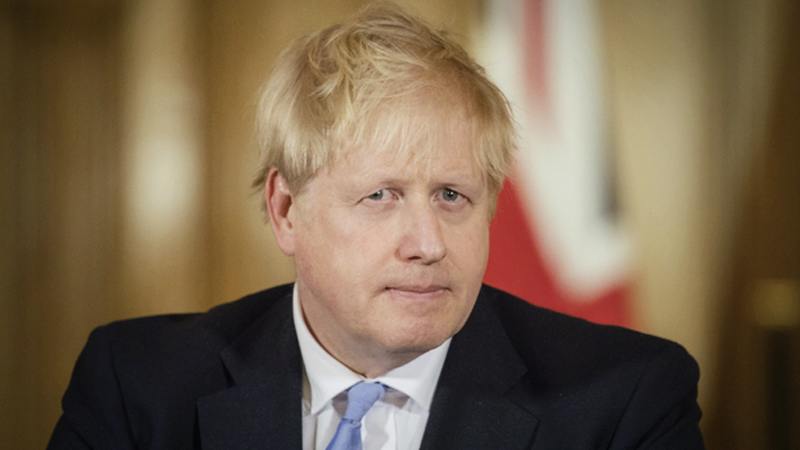
The British government will draft in the armed forces to help with coronavirus testing in schools, as pressure builds on Prime Minister Boris Johnson to delay the return of students after the holidays amid a surge in cases.
The Ministry of Defence said 1,500 personnel will help ensure testing systems are up and running when schools reopen next week. The government has previously said students facing public exams this year will return on Jan. 4, with other pupils back later in the month.
But a growing number of unions, politicians and scientists called for more time to prepare testing to prevent virus transmission in schools. The number of new cases in the U.K. surged to a daily record of more than 41,000 on Monday and hospitalizations exceeded the peak recorded in the first wave in the spring, as a more virulent strain of the virus takes hold.
Johnson has made keeping schools open a key priority as he looks for ways to kick start the U.K. economy after months of restrictions left it facing its worst downturn for 300 years. Ministers threatened legal action to stop schools offering home learning before Christmas, but a government statement late Monday left open the possibility of that position being reversed in the new year.
“We want all pupils to return in January as school is the best place for their development and mental health,” it said. “But as the prime minister has said, it is right that we follow the path of the pandemic and keep our approach under constant review.”
Schools should remain closed for “a week or two” to ensure testing is effective, Steve Chalke, founder of the Oasis chain of academy schools, told BBC radio on Tuesday. His intervention followed similar calls for a delay from the National Education Union on Monday.
“We would ask government to pause, to come up with a clear strategy for the continuity of education,” Chalke said. “We think that if you really care about kids you would do this well — to invest now, to give time now makes sense.”
Roger Gale, a member of Parliament in Johnson’s Conservative Party, said schools should remain closed until vaccines have been made available to teachers.
“Education is important, but so are the lives and well-being of teachers,” Gale, the MP for North Thanet, said on Twitter.
Since the fallout from the decision to close schools in March, which led to the cancellation of exams and a furor over university admissions in the summer, ministers have repeatedly said education must continue even if other parts of society and the economy have to close to accommodate it.
But the government’s pandemic strategy has been uprooted in recent weeks by the emergence of a new strain of the virus, which has spread rapidly in London and surrounding areas and led many countries to block arrivals from the U.K.
The government’s Scientific Advisory Group for Emergencies told Johnson to keep secondary schools closed in January and to consider another national lockdown, Politico reported Monday, citing an adviser familiar with the group’s conclusions.
The group said a lockdown on the same terms as November may not be enough to control the new strain of the virus, according to the report.
National restrictions are needed to prevent a “catastrophe” at the start of year, a member of the government’s advisory group on new respiratory virus threats — which itself advises SAGE — told the BBC on Tuesday.
“We are entering a very dangerous new phase of the pandemic and we’re going to need decisive, early, national action to prevent a catastrophe in January and February,” said Andrew Hayward, professor of infectious diseases epidemiology at University College London. “Previous levels of restrictions that worked before won’t work now.”
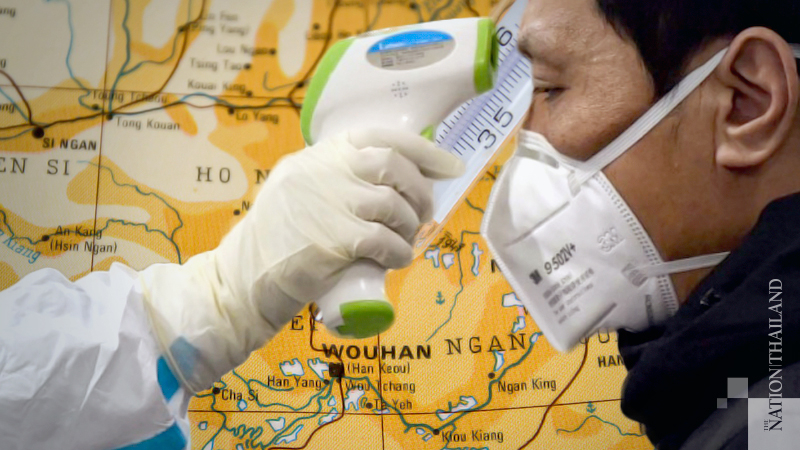
The scale of the covid-19 outbreak in Wuhan early this year may have been nearly 10 times the recorded tally, a study conducted by China’s public health authorities indicates, leaving the city where the coronavirus first took hold still well short of the immunity required to protect against a potential resurgence.
About 4.4% of those tested were found to have specific antibodies that can fight off the pathogen that causes covid-19, indicating they were infected some time in the past, according to a serological survey of more than 34,000 people conducted in April by the Chinese Center for Disease Control and Prevention. The data was released late Monday.
That ratio would suggest that with Wuhan home to about 11 million people, as many as 500,000 residents may have been infected, nearly 10 times more than the 50,000 confirmed covid-19 cases reported by health authorities in mid-April, when the survey was conducted.
China has been criticized internationally for its initial handling of the outbreak, which has spread around the world in a global pandemic in the year since the first cases emerged. The U.S. has raised questions about China’s accounting of the virus fallout in Wuhan, which was quickly eclipsed by larger outbreaks in Europe and North America. A number of revisions of the case and deaths data added to suspicions China was massaging the numbers.
While the serological data may reignite those claims, it is common for health authorities to underreport cases during an acute outbreak, given testing capabilities can be limited and hospitals overwhelmed with a sudden surge in patients. The coronavirus’s ability to quietly infect people without making some of them sick until later or even throughout the infection period only exacerbates the problem.
Serological surveillance has been widely used by health professionals around the world to gauge the true scale of epidemics, from covid-19 to AIDS and hepatitis. The prevalence of disease derived from such studies can guide mitigation and vaccination efforts.
The China CDC survey showed a far less impact of the virus outside Wuhan, which was effectively shut off as a way of containing the outbreak. The positive rate for antibodies dropped to 0.44% for the broader Hubei province, which was also placed under a three-month lockdown. Only two people tested positive for the antibody among the 12,000 surveyed in six other Chinese cities and provinces, including Beijing, Shanghai and Guangdong, suggesting an extremely low prevalence of the virus across the rest of the country.
The results for Wuhan mean even China’s worst-hit city is still vulnerable to covid-19. Epidemiologists say at least half a population needs to have come into contact with the virus for even the minimum threshold for herd immunity. But the city’s rate of infection is generally in line with those found in other countries after the first wave of coronavirus infections, the China CDC said in a news release published on its website.
The antibody positive rates in Spain and Switzerland this spring, for example, were as much as 6.2% and 11%, respectively, the China CDC said. While those are higher than the 4.4% found in Wuhan, and come before later waves that have swept across Europe, they still fall short of the herd immunity threshold.
Since quelling the Hubei outbreak, China has largely contained the coronavirus, with sporadic flare-ups since April snuffed out through aggressive contact tracing and quickly testing millions of people in a matter of days.
Argentina kicks off vaccination drive with Russia’s Sputnik V
InternationalDec 30. 2020A screen displays images of the Russian Sputnik V vaccine arriving during a press conference at Ezeiza International Airport airport in Buenos Aires, Argentina, on Dec. 24, 2020. Argentina approved the emergency use of Russia’s vaccine to combat the spread of Covid-19, becoming the first nation outside the former Soviet Union to authorize the shot. MUST CREDIT: Bloomberg photo by Anita Pouchard Serra
By Syndication Washington Post, Bloomberg · Scott Squires, Jake Rudnitsky
Argentina became the third country worldwide to begin inoculating its citizens against covid-19 with the Sputnik V vaccine outside of trials, boosting Russia’s attempts to push the shot into developing nations.
Vaccinations began around 9 a.m. local time Tuesday in the capital, Buenos Aires, and in provinces with some 300,000 people expected to be given the shot. Argentina’s health regulator gave swift emergency approval for the vaccine last week, following earlier clearances from Russia and Belarus.
“I think people have a lot of faith in the vaccine,” President Alberto Fernandez said on state television, according to Telam. “They aren’t paying attention to attempts to scare them.”
With the initiative, Argentina joins North America, the U.K., EU, China and Chile in offering preventive shots that are expected to bring the pandemic, its deaths and its disastrous economic effects, to an end. More than 1.7 million people have died worldwide from the new coronavirus that surfaced almost a year ago in China.
Controversy has swirled around Sputnik V since Russian President Vladimir Putin announced its registration for use before large-scale clinical studies were completed. Its developers have since said that an interim analysis of final-stage studies indicated it was more than 91% effective after volunteers received two doses.
The Kremlin is seeking to promote the Russian vaccine as a cheap, effective defense against the coronavirus. A course of two doses taken three weeks apart will cost $20, which is significantly less than shots being produced by Pfizer Inc. Over 50 countries have expressed interest in obtaining Sputnik V, according to its developers.
Russians remain skeptical of their homegrown vaccine, despite suffering one of the highest covid-19 tolls globally. Only 38% are ready to take Sputnik V, according to a Dec. 21-23 poll conducted by the Levada Center.
Argentina became the first country outside the former Soviet Union to begin administering the shot, which has yet to publish data from late-stage trials in a peer-reviewed journal. Venezuela, however, has vaccinated 120 people with Sputnik in a trial, its health minister said on Sunday.
Argentina expects to receive 20 million doses of the Sputnik V vaccine over the next two months, and may add 5 million more in March. The government plans to prioritize health workers. Fernandez, 61, said earlier this month he would be among the first to take the vaccine to show that it’s safe.
Axel Kicillof, a former Economy Minister and current Governor of Buenos Aires Province was among the first to receive the shot, according to television network TN. He posed for photos and showed his vaccination card.
In the rest of Latin America, Mexico, Chile and Costa Rica have begun giving the Pfizer vaccine. Many other countries in the region are either awaiting final approval for the shot being developed by AstraZeneca Plc. and Oxford University or for deliveries from Covax, a World Health Organization-backed effort to provide a coronavirus vaccine to developing nations.
Brazil’s Sao Paulo state has partnered with China’s Sinovac Biotech Ltd., though publication of final-stage trial results has been delayed.
With a population of around 45 million people, Argentina ranks 11th worldwide in covid deaths with 42,868 and 12th in cases with 1.6 million. After weeks of declines, Argentina’s covid curve has begun to rise again amid more international travel and holiday gatherings.
 Visitors look at an electronic ticker at the Tokyo Stock Exchange on Oct. 29, 2020. MUST CREDIT: Bloomberg photo by Kiyoshi Ota
 Vials of Sinovac Biotech’s CoronaVac SARS-CoV-2 vaccine on Sept. 24, 2020 in Beijing. MUST CREDIT: Bloomberg photo by Nicolas Bock.
 Patricia Cummings gives Vice President-elect Kamala Harris the Moderna coronavirus vaccine at the United Medical Center in Washington on Tuesday, Dec. 29, 2020. MUST CREDIT: Photo for The Washington Post by Evelyn Hockstein
 President Donald Trump arrives in an auditorium at the White House complex before signing an executive order on vaccines earlier this month. MUST CREDIT: Washington Post photo by Jabin Botsford.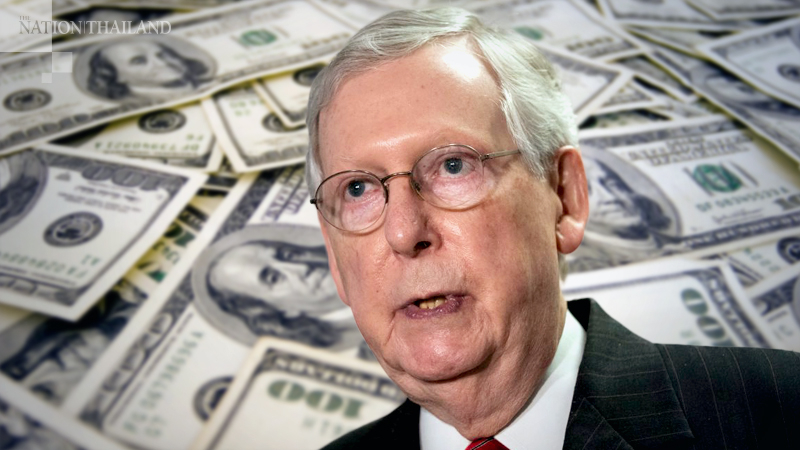
 A screen displays images of the Russian Sputnik V vaccine arriving during a press conference at Ezeiza International Airport airport in Buenos Aires, Argentina, on Dec. 24, 2020. Argentina approved the emergency use of Russia’s vaccine to combat the spread of Covid-19, becoming the first nation outside the former Soviet Union to authorize the shot. MUST CREDIT: Bloomberg photo by Anita Pouchard Serra
