U.S. economic rebound is patchwork of virus risk and rules #SootinClaimon.Com

#SootinClaimon.Com : ขอบคุณแหล่งข้อมูล : หนังสือพิมพ์ The Nation.

U.S. economic rebound is patchwork of virus risk and rules (nationthailand.com)

U.S. economic rebound is patchwork of virus risk and rules

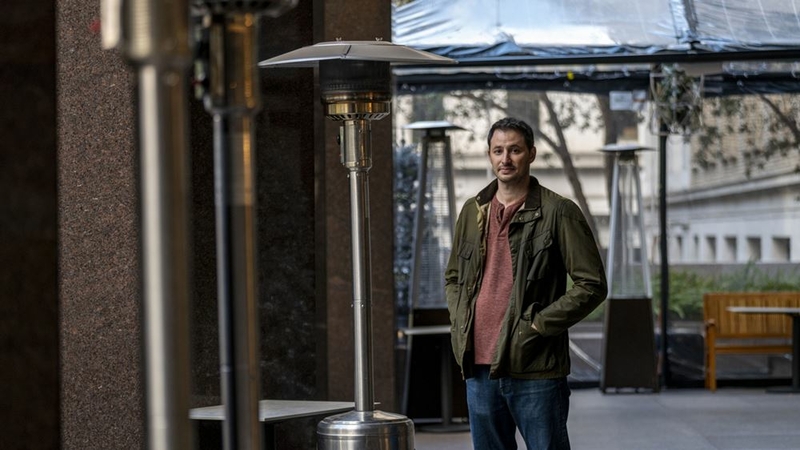
InternationalDec 23. 2020Ryan Cole spent thousands outfitting his San Francisco restaurant's patio with a roof and heaters, but outdoor dining was closed this month and he furloughed all 35 of his workers. Ryan Cole spent thousands outfitting his San Francisco restaurant’s patio with a roof and heaters, but outdoor dining was closed this month and he furloughed all 35 of his workers. “People are just exhausted by the back-and-forth change,” says Cole, photographed Dec. 17, 2020, at The Vault restaurant. MUST CREDIT: Bloomberg photo by David Paul Morris 
By Syndication Washington Post, Bloomberg · Reade Pickert, Olivia Rockeman, Alex Tanzi

The U.S. economy has splintered along state and city lines, with the speed of the rebound largely dependent on the magnitude of local business restrictions to combat an unending surge in covid-19 cases.

California and Illinois, where some of the strictest measures have been imposed, saw jumps in state unemployment filings this month that helped push the weekly U.S. total to a three-month high. Both states also had November unemployment rates above the national level of 6.7%.

In Florida, where many businesses are permitted to operate at full capacity, state jobless filings have hit the lowest since March and the November jobless rate was below the national average, even with tourism employment still depressed.

And even with a new $900 billion stimulus package approved by Congress late on Monday — extending and boosting relief for unemployed Americans — the road to recovery will continue to be uneven in different regions.

Recent data make clear there’s a trade-off between jobs and business restrictions. The economic reality for workers and firms in a place where business is generally open is vastly different from those living where things are mostly closed.

Yet higher mobility also comes with potentially devastating health consequences. Nationwide, more than 300,000 people have died of covid-19, and the recent acceleration in infections and deaths is showing little sign of abating.

A major problem is that lockdown measures are often reactive — implemented when the virus is already out of control — rather than proactive, said Joshua Barocas, an infectious-disease physician at Boston Medical Center. For workers who have managed to keep their jobs, many are faced with choosing their health or their paychecks, he said.

“Me beating the drum of ‘Stay home, stay home, stay home,’ does nothing,” Barocas said. “It is a combination of proactive restrictions, coupled with support — for both individuals and businesses — and creative solutions to sort of reduce the overall probability of transmission.”

The situation has been particularly frustrating to restaurant owners, at least those managing to stay in business after many closed permanently and laid off workers during the pandemic.

In San Francisco, Ryan Cole spent thousands of dollars outfitting his restaurant’s patio with a roof and heaters in the hopes that The Vault Garden could attract enough guests to cover the bills. Earlier this month, outdoor dining was shuttered and Cole furloughed all 35 of his workers.

“People are just exhausted by the back-and-forth change,” he said.

Across the country, in Jacksonville, Fla., Sam and Kiley Efron’s restaurant, Taverna, remains open in part because local authorities allow alfresco dining. They’ve spaced tables six feet apart and reduced indoor seating by half. Sales are down about 30%, but it’s enough to cover expenses, including paychecks for about 50 employees.

“I’ve talked to friends in other states. I am really grateful to be living in Florida right now,” Sam Efron said.

The tougher restrictions are frustrating restaurateurs like Cole, especially when data suggest other measures may be helpful. A study by researchers at the Federal Reserve Bank of Boston found mask mandates are effective in reducing at least half of the increase in covid-19 cases and deaths stemming from increased mobility.

In Duval County, where Jacksonville is located, businesses and schools are largely open, though there is a local mask order. Adjusted for population, Duval’s daily new cases surpassed San Francisco’s in the last few weeks.

Yet Los Angeles County, which had tougher business restrictions during that period, has had a worse surge in infections since mid-November.

New York has seen mixed messages. Statewide contact-tracing data in New York state showed nearly three-fourths of all cases emerged from household and social gatherings in recent months, while just 1.4% stemmed from restaurants and bars.

In New York City, though, Mayor Bill de Blasio has warned of a potential new shutdown of nonessential businesses after the holidays, amid a jump in cases.

Even after vaccines are widely available, regions where lockdown measures have generally been stricter — especially those that depend on hospitality and tourism — are likely to have a more difficult time recovering because many businesses have closed for good.

Los Angeles, New York City and Chicago, where shutdown measures have been strict, have the greatest number of permanent business closures among all U.S. metro areas, according to a September report from Yelp Inc.

In the year through October, the economies of states with more restrictive measures, like California and New York, have fared worse than those with looser rules, like Florida, Georgia and Texas. That’s according to a coincident index — or proxy measure of state economic growth — produced by the Federal Reserve Bank of Philadelphia.

State-by-state unemployment rates illustrate the economic divide, though the correlation with covid-19 caseloads is less clear.

The jobless rate is below the national average in Tennessee and Oklahoma, where business activity has resumed at least somewhat — but it’s been accompanied by some of the sharpest increases in new cases over the past two weeks, according to Johns Hopkins data. In Vermont and Nebraska, which have the lowest state jobless rates, cases have been on a downward path.

The concentration of industries also plays a role. The jobless rate remains above 10% in Hawaii and Nevada, both hospitality-dependent economies suffering from declines in tourism. Hawaii has imposed and enforced strict measures on travelers to the state and a new statewide “pause” in Nevada went into effect Nov. 24.

“The way that we do business has to change with covid, but where I think the frustration really kicks in is the unwillingness to build some flexibility in the rules,” said Mark Vitner, a senior economist at Wells Fargo & Co. “Really what we should be doing is trying to find ways that we can do as much business as we can possibly do safely.”

Jobless aid, checks, PPP: Adding up $900 billion in virus relief #SootinClaimon.Com

#SootinClaimon.Com : ขอบคุณแหล่งข้อมูล : หนังสือพิมพ์ The Nation.

Jobless aid, checks, PPP: Adding up $900 billion in virus relief (nationthailand.com)

Jobless aid, checks, PPP: Adding up $900 billion in virus relief

InternationalDec 23. 2020Capitol Police vehicles sit outside the U.S. Capitol Building in Washington, D.C., on Dec. 20, 2020. MUST CREDIT: Bloomberg photo by Ting ShenCapitol Police vehicles sit outside the U.S. Capitol Building in Washington, D.C., on Dec. 20, 2020. MUST CREDIT: Bloomberg photo by Ting Shen 
By Syndication Washington Post, Bloomberg · Laura Litvan, Erik Wasson, Laura Davison

The $900 billion in pandemic relief that passed the House and Senate late Monday is aimed squarely at shoring up the U.S. economic recovery into the early spring as battered industries and workers face months of continuing struggle.

The funds were combined with $1.4 trillion to fund regular government operations for the rest of the fiscal year, in massive legislation that runs 5,593 pages. It includes other tax, energy and national-security provisions that lawmakers agreed to pass before the end of the year.

The pandemic relief package includes help for small businesses and the jobless along with direct payments to most Americans. It also provides funding for vaccine distribution, food assistance, tax breaks and money for education and child care.

The provisions aimed at the fallout from the coronavirus represent the second-largest economic rescue package in American history, behind the $1.8 trillion virus relief package that was signed into law just nine months ago. It surpasses the $787 billion stimulus passed in response to the financial crisis in 2009.

Together with the omnibus spending bill, the total package is worth more than $2.3 trillion. The legislation also included a number of tax benefits, some unrelated to the covid-19 crisis.

Here are some highlights of specific provisions:

– Direct Payments

The bill provides $600 in one-time direct payments to individuals and $600 per child. The payments get phased out for individuals making more than $75,000 or couples making $150,000. Treasury Secretary Steven Mnuchin said the Internal Revenue Service would begin processing payments as soon as next week. The IRS already had set up a system to distribute $1,200 payments in the stimulus bill passed in March.

Several senators, including Josh Hawley, R-Mo., and Bernie Sanders, I-Vt., said they wanted larger stimulus payments, but they agreed not to object to a final deal with the smaller amount. Progressive Democrats in the House have started calling these “survival checks.”

– Jobless Benefits

Federal unemployment insurance benefits will be extended for 10 weeks through mid-March, with a $300 supplement payment each week, similar to the extra $600 supplement that expired at the end of July.

It includes people receiving state unemployment benefits as well as those receiving Pandemic Unemployment Assistance, a program that provided jobless benefits to those not traditionally eligible, like gig workers and the self-employed. Without congressional action, the program was on track to expire at year-end, which would have caused millions of Americans to lose their jobless benefits.

Pandemic Emergency Unemployment Compensation, which provided up to 13 additional weeks of jobless benefits to those who had exhausted their regular state benefits, was extended as well.

Unlike stimulus payments and forgiven PPP loans, which aren’t subject to federal taxes, unemployment insurance recipients must pay income taxes on their jobless benefits. Many states don’t automatically withhold taxes when they distribute those payments, so recipients will owe those taxes when they file their tax returns next spring.

– Companies, Airlines

The aid package includes $284 billion for the Paycheck Protection Program that was created in the Cares Act. That program’s loans to firms with fewer than 500 employees can be fully forgiven if companies keep people on their payroll.

The legislation clarifies that business owners can write off expenses paid for with forgiven PPP loans, giving small companies a tax break that could amount to more than $100 billion. The legislation would override an IRS decision that said business couldn’t claim deductions on costs, such as rent and wages, paid for with tax-free PPP money.

It also includes $15 billion to reinstate payroll reimbursements to airlines, which expired two months ago, as well as $1 billion for airline contractors.

– Tax Breaks

The legislation includes a priority for President Donald Trump: an expansion of the business-meals deduction. Economists have said the change would do little immediately to help struggling restaurants.

It also includes a renewal of the employee retention tax credit for businesses that keeps workers on their payrolls. The break gives companies an additional incentive to keep people employed as many firms still face revenue downturns but have run out of PPP money or never qualified for it.

The package makes changes to the earned income tax credit and the child tax credit to make it available to people who lost wages or jobs during the pandemic, as well as an expanded Low Income Housing Tax Credit to boost construction of housing for low-wage families.

The legislation would make permanent an excise tax break for beer brewers, wine makers and distillers. In addition, other expiring tax credits, including some for mortgage interest premiums and tax credits to help businesses in low-income communities.

– Housing, Education and More

The measure contains $25 billion for emergency rental assistance, and it extends the Cares Act’s eviction moratorium until Jan. 31.

It also calls for $7 billion in spending on broadband internet, including $3.2 billion to help poor households pay for the service and $1.9 billion to boost security by removing gear from equipment providers such as Huawei Technologies Co.

Other key funding provisions include funds for virus testing, tracing and vaccine development and distribution. It also has $82 billion for education funding, as well as $10 billion to support child-care providers, $15 billion for entertainment venues and $13 billion for nutrition assistance. The bill would convert a $10 billion loan for the U.S. Postal Service to a grant.

– Non-pandemic Measures

The legislation includes $1.4 trillion in regular appropriations to keep the government operating through the end of fiscal 2021 on Sept. 30. A last-minute deal kept $12.5 billion for Veterans Affairs health funding under the total spending budget cap.

Lawmakers settled on nearly $1.4 billion for border-wall construction and related spending, short of Trump’s request for nearly $2 billion. His $5 billion ask for fiscal 2019 led to the longest shutdown in the country’s history, but he hasn’t had a standoff with lawmakers over wall funding since he circumvented Congress by using military funds to build additional fencing.

The spending package also includes the long-standing Hyde amendment, which bars federal funds for most abortions, and the Helms amendment, which bars the use of foreign assistance funds for abortions. Congressional Democrats have said they want to remove the Hyde amendment from spending bills starting in fiscal 2022, when a Democrat will be in the White House. President-elect Joe Biden has said he also opposes the Hyde amendment.

There are a number of so-called “riders” that aren’t related to the pandemic or the 12 appropriations bills that make up the spending omnibus. These include everything from a bill creating Smithsonian museums dedicated to women’s history and the American Latino to technical corrections to the U.S.-Mexico-Canada trade agreement.

One of those riders is the long-discussed legislation to protect patients with health insurance from “surprise” medical bills in most emergency situations, including air ambulance rides. Patients also wouldn’t have to pay bills received more than 90 days after a visit, and health plans and providers would have to provide patients with more information on their networks and costs.

The final legislation also calls for the U.S. to join other nations in phasing out hydrofluorocarbons used in air conditioning and refrigeration systems. While hydrofluorocarbons aren’t nearly as bad for the ozone layer as chlorofluorocarbons, the chemical they were designed to replace, they still have hundreds to thousands of times the heat-trapping power of carbon dioxide.

The bill includes a reauthorization of the Water Resources Development Act that deals with water-related infrastructure. It also extends tax credits for renewable energy projects, including wind and solar production.

The bill reforms the way the Federal Aviation Administration certifies aircraft, a move prompted by the failures of the Boeing 737 Max plane.

The legislation would allow the secretaries of Homeland Security and Labor to increase the number of H-2B visas for workers in meatpacking, landscaping and construction.

The catchall bill alters pipeline safety regulations, reforms the federal student aid application, institutes regulations for horse racing and resolves terrorism claims against Sudan, among hundreds of smaller provisions tucked inside.

It would also give civilian federal workers a 1% raise, as well as a 3% raise for the military, but no pay increase for the lawmakers who will be voting on the final bill.

Tennessee Health Department warns that Christmas surge ‘will completely break our hospitals’ #SootinClaimon.Com

#SootinClaimon.Com : ขอบคุณแหล่งข้อมูล : หนังสือพิมพ์ The Nation.

Tennessee Health Department warns that Christmas surge ‘will completely break our hospitals’ (nationthailand.com)

Tennessee Health Department warns that Christmas surge ‘will completely break our hospitals’

InternationalDec 22. 2020

By The Washington Post · Jaclyn Peiser

As Tennessee leads the United States in coronavirus cases per capita following a post-Thanksgiving spike, the state’s health commissioner warned Sunday that the hospital system will crumble if residents don’t slow the spread of the virus by staying home, wearing masks and avoiding large gatherings.

“If we have another surge over Christmas, it will break our hospitals,” Tennessee Health Commissioner Lisa Piercey said at a news conference, according to the Tennessean.

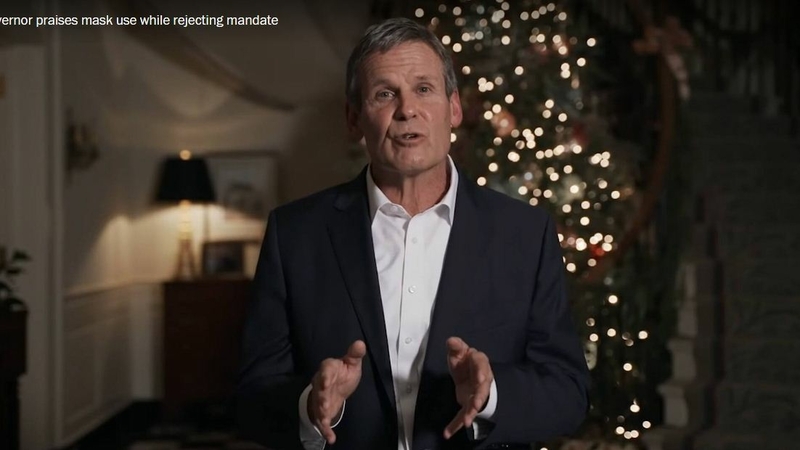
Despite Piercey’s warning, Tennessee Gov. Bill Lee, R, refused to order a statewide mask mandate in a video address hours later. Instead, he announced a new executive order to limit indoor gatherings to 10 people and implored people to keep holiday gatherings to just those in their household.

“I understand deeply how much Tennessee families need each other,” Lee said. “But we must do all that we can to blunt this surge and keep more Tennesseans from getting sick.”

The executive order comes one day after the governor’s office announced that Tennessee first lady Maria Lee tested positive for the coronavirus after exhibiting mild symptoms. In a statement, Lee said he tested negative and would quarantine as a precaution.

Tennessee is averaging almost 10,000 new coronavirus cases, and almost 100 deaths, per day, according to The Washington Post’s tracker. About 2,800 people in Tennessee are hospitalized for covid-19, the illness caused by the novel coronavirus, with about 760 in the intensive care unit, according to the Tennessee Health Department. On Saturday, Tennessee recorded a 30% positivity rate, a new high, according to the Tennessean.

In the weeks following Thanksgiving, daily reported cases in Tennessee doubled. A similar trajectory played out across the country, and health officials warn that Christmas gatherings could lead to an even larger surge.

Despite the rapidly increasing numbers pushing Tennessee hospitals to their limits, Lee maintained there would not be a mask mandate, while stressing the importance of wearing one.

“Many think a statewide mandate would improve mask-wearing, many think it would have the opposite effect,” Lee said Sunday. “This has been a heavily politicized issue. Please do not get caught up in that and don’t misunderstand my belief in local government on this issue. Masks work and I want every Tennessean to wear one.”

Lee added that 70% of Tennesseans are already under mask requirements from their local governments and 80% said they wear their masks always or most of the time.

“And I thank them for doing this,” Lee said.

But medical workers criticized the governor for not going far enough to help them during a time in which they are drowning under the increasing hospital rates. Following Lee’s address, the Tennessee Medical Association, a nonprofit advocacy group for state physicians, released a statement imploring the governor to change his mind.

“We believe all Tennessee counties should be under mask requirement orders at this time,” the group said in statement, WVLT reported. “We plead with all Tennesseans to stay safe, stay apart, wear masks, and stay home to protect their families and friends from this deadly virus.”

The pressure on Tennessee health-care workers has been so great that Lee said he had authorized National Guard medics to work in hospitals to “provide lifesaving care.”

During Piercey’s news conference Sunday, the health commissioner said five of the state’s largest health-care systems are allowing paramedics to practice inside the hospitals. She added that with the exception of hospitals, health-care workers who tested positive for the coronavirus could continue to work in long-term-care facilities if they felt well enough.

“I tell you this because we are looking under every rock. We are turning over every stone to help hospitals,” Piercey said. “We are running out of options.”

The survival of the state’s health-care system relies on Tennesseans staying home, wearing masks and avoiding gatherings, Piercey said. But she worries that people will fall back on false assumptions that having close friends or extended family at their homes is better than going to a bar.

“That’s a dangerous mentality,” Piercey said.

At the end of his address, Lee acknowledged the state is facing Its “darkest hour” but offered hope that if every Tennessean complies with the state’s health directives, they will get through the next few months.

“We are in a cold, cruel phase of this pandemic,” Lee said. “It will get worse before it gets better. I know you are tired. But we have got to double down.”

Biden to push for more coronavirus relief, setting up a clash with GOP #SootinClaimon.Com

#SootinClaimon.Com : ขอบคุณแหล่งข้อมูล : หนังสือพิมพ์ The Nation.

Biden to push for more coronavirus relief, setting up a clash with GOP (nationthailand.com)

Biden to push for more coronavirus relief, setting up a clash with GOP

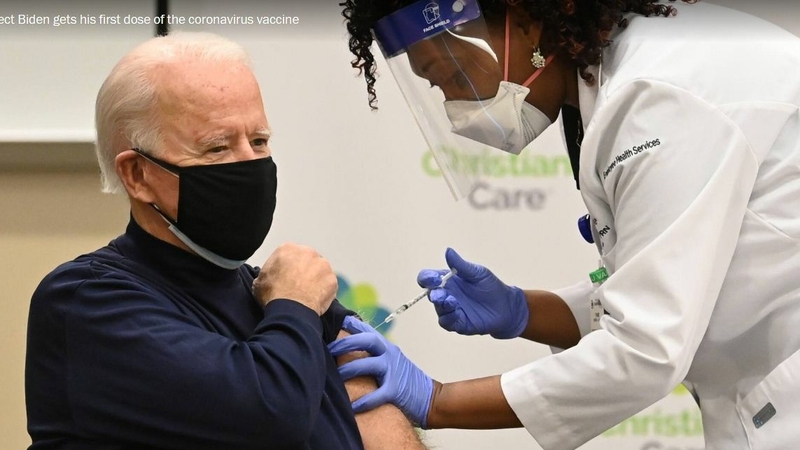
InternationalDec 22. 2020Nurse practitioner Tabe Mase congratulates President-elect Joe Biden after administering his first dose of the coronavirus vaccine Monday in Delaware. MUST CREDIT: Washington Post photo by Jonathan Newton.Nurse practitioner Tabe Mase congratulates President-elect Joe Biden after administering his first dose of the coronavirus vaccine Monday in Delaware. MUST CREDIT: Washington Post photo by Jonathan Newton. 
By The Washington Post · Annie Linskey, Mike DeBonis

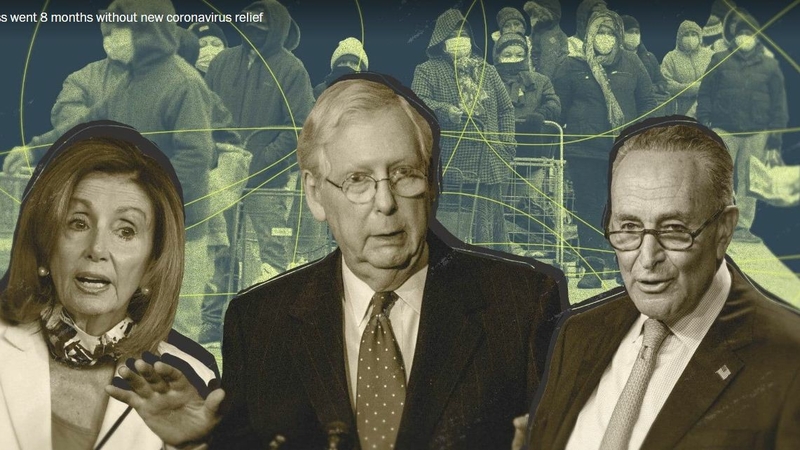
Republicans brimmed with pride over the $900 billion stimulus package taken up by Congress on Monday, with Senate Majority Leader Mitch McConnell calling it “a historic bipartisan rescue package” and Sen. Dan Sullivan of Alaska predicting it would be remembered when “the history of this challenging year is written.”

President-elect Joe Biden saw it differently, calling the deal merely a “down payment.”

Biden’s assessment, made repeatedly in recent weeks, echoes the view of many Democrats who see the bill as the beginning of a negotiation, not the end. The notion that more aid is necessary – Biden at times has said talks should start as early as January – sets up perhaps the first major legislative test for the new president and his self-proclaimed negotiating skills.

It’s a challenge made greater now that Congress has approved new spending in the areas where common ground was relatively easy to find. There is also an expectation that many Republicans will become more skeptical of big-ticket spending after President Donald Trump leaves the White House.

Biden has consistently said that bolstering the economy will be one of his four top priorities – along with ending the pandemic, addressing climate change and promoting racial justice – suggesting he will put a strong emphasis on new spending. He has been vague about what he would like in a new package, but it would probably include aid to cities and funds to prepare for opening public schools.

That push, however, will clash with an energized Republican Party eager to reestablish its fiscally conservative bona fides. McConnell, R-Ky., has signaled that he recognizes additional negotiations are likely but said it would be difficult to finalize another package.

Privately, many in Biden’s party agree it will be hard to persuade Republicans to reopen the debate after the protracted, often tortuous negotiation that led to this last-minute deal days before Christmas.

Biden declined to take detailed questions from reporters Monday after he received his coronavirus vaccination at Christiana Hospital in Newark, Del. But an official on Biden’s transition, who spoke on the condition of anonymity because the person was not authorized to speak publicly, said the president-elect wants additional money for “supporting the covid response effort, reopening schools and helping families, businesses, and state and local governments.”

Biden has been blunt in recent weeks that he considers Congress’s current package far from enough to tackle the widespread economic damage caused by the pandemic. “I’ve made it real clear,” Biden told reporters in Wilmington, Del., earlier this month. “This is not the end of the deal.”

Senior Republicans viewed Biden’s victory as key to unlocking the current deal, because it gave Democrats a credible justification for backing off their previous multitrillion-dollar demands that GOP lawmakers had no intention of meeting. Chief among them was their insistence that struggling state and local governments badly need a cash infusion to help provide vaccine distribution and other services.

But for many Republicans, the approximately $900 billion package that came together this week represents the outer limit of what they are willing to accept.

Furthermore, there is no obvious deadline to compel action, often a requirement on Capitol Hill. The bill was forced to the finish line by a looming government-shutdown deadline and a pair of Senate runoff elections in Georgia on Jan. 5, as Republican leaders were anxious that the lack of a relief package was hurting Sens. Kelly Loeffler, R-Ga., and David Perdue, R-Ga.

The clamor of rank-and-file lawmakers faced with returning home for Christmas without a deal in hand also created pressure.

Similar pressures are on the immediate horizon next year. Instead, the impetus for further relief, if any, is likely to be driven by the pace of the economic recovery and whether employment and growth rebound in the weeks after Biden takes office.

The president-elect has suggested the economy may not rebound immediately, saying that would drive Republicans to the negotiating table. “As things get worse, they’re going to find that there’s an overwhelming need,” Biden said recently.

One potential deadline comes in mid-March, when 11 weeks of additional jobless benefits provided in the current bill to the long-term unemployed are set to expire. But several Republican senators have signaled that even then, further action is doubtful.

“If we address the critical needs right now and things improve next year as the vaccine gets out there and the economy starts to pick up again, you know, then there’s maybe less of a need,” Sen. John Thune, R-S.D., said last week.

One demand, however, could bring Republicans back to the bargaining table: their desire for a sweeping “liability shield” barring coronavirus-related lawsuits against businesses. GOP leaders, in the most recent round of negotiations, sought to pair that with a top Democratic priority – tens of billions of dollars in direct aid to state and local governments. In the end, both issues were dropped from the talks.

Although some Republicans have broken with party leaders to call for additional state and local aid, Democrats remain dead set against immunizing businesses from lawsuits.

Months of talks on the subject sputtered, and it could be difficult for Biden to make headway on it. But the liability issue may be his only chance to force new action, even if Republicans are unlikely to trade it for anywhere near the trillion dollars of additional stimulus Democrats want.

“I think everybody understands that Vice President Biden is going to ask for another bill, so we will have another chance to revisit it probably pretty soon,” Sen. John Cornyn, R-Texas, a key proponent of the liability shield, said Monday.

Biden has largely avoided naming specific items or a spending target for the next package, saying that would be a bad negotiating strategy. “I’ve learned, after hanging around in this business for a while, the last thing you do before you begin a negotiation is lay out a drop-dead marker,” Biden said earlier this month.

Asked if he believes the right number for the next package is in the billions or trillions, Biden responded: “Hundreds of billions of dollars.”

Still, Biden has sketched out some of his priorities over the past few weeks, including additional funding for state and local governments. The current package includes none of this spending despite pleas from states such as New York and Illinois, whose governors have warned that they may need to raise taxes, lay off public-sector workers or cut spending on critical government programs to break even entering next year.

Biden has cast the state and local aid as critical for jobs, saying it is important that the federal government provide help to local governments to prevent layoffs of public employees including teachers, firefighters and other first responders.

Biden also said recently that “it would be better” if the deal included $1,200 checks for low-income people. The current bill includes $600 checks for people making less than $75,000 a year – which alone cost $164 billion or about as much as the new state and local aid Democrats have sought.

Democratic leaders agree. In a statement late Monday, House Speaker Nancy Pelosi, D-Calif., penned a letter to her colleagues about the legislation that laid a marker for the next round, noting that “state and local budgets are still overwhelmed by coronavirus expenses and revenue losses.”

Biden has also said Americans should not be evicted from their homes during the coronavirus crisis. The current compromise includes a measure that extends a moratorium on evictions through the end of January.

Biden has said extending unemployment insurance is necessary “so they can continue to feed their families.”

This week’s package allows for a $300-per-week additional unemployment benefit until at least mid-March, about half of the $600-per-week additional benefit that Congress enacted last spring.

The bill also extends a special program for gig workers.

Asked whether he would have any leverage to bring Republicans skeptical about the price tag back to the table, Biden said Americans will be desperate for more help.

“The country’s going to be in dire, dire, dire straits,” Biden said. “We’ll be in dire trouble if we don’t get cooperation, and I believe we will.”

Biden also offered a smidgen of bipartisan bonhomie on Monday, perhaps practicing his negotiating skills. As he received his vaccination, Biden praised the White House, saying, “I think the administration deserves some credit for getting this off the ground.”

Lawmakers rush to vote on new 5,593-page tax and spending bill before end of day #SootinClaimon.Com

#SootinClaimon.Com : ขอบคุณแหล่งข้อมูล : หนังสือพิมพ์ The Nation.

Lawmakers rush to vote on new 5,593-page tax and spending bill before end of day (nationthailand.com)

Lawmakers rush to vote on new 5,593-page tax and spending bill before end of day

InternationalDec 22. 2020

By The Washington Post · Jeff Stein, Mike DeBonis

WASHINGTON – Congressional leaders on Monday introduced a mammoth 5,593-page tax and spending bill that packages together emergency economic relief, government funding, and tax cuts into what is one of the largest pieces of legislation ever considered by the U.S. Congress.

And it might pass by the end of the day.

https://www.washingtonpost.com/video/c/embed/6c83908b-ba0c-4864-a384-e451b27f5a14?ptvads=block&playthrough=false

The bill shows the urgent rush by the White House and Congress to complete numerous unresolved tasks before the holiday recess during a lame duck session of Congress.

The $900 billion economic relief component of the legislation has received the most attention, but the bill would do many other things, including funding of federal agencies through September 2021 and the extension of tax breaks for numerous businesses for at least the next year.

The House is planning to vote on the measure later in the day, though the Senate vote could come late at night. If they do not pass the bill or other measures to fund the government, a government shutdown would begin at midnight. Lawmakers reached a deal on the agreement Sunday.

Senate Majority Leader Mitch McConnell, R-Ky., said Monday that lawmakers are “going to stay here until we finish tonight.”

The speed and scope of the legislative rush startled some lawmakers as details from the massive bill emerged Monday. The proposal includes numerous provisions – from Smithsonian American Women’s History Act, legislation to rein in surprise medical billing, and policies supporting Tibet – that appear to have nothing to do with the coronavirus pandemic or national economic emergency.

Lawmakers will have a short period of time to review parts of the bill before voting on it.

Senate leaders announced the breakthrough agreement on a coronavirus relief package Sunday night after several weeks of negotiations. The legislation brokered by congressional leaders includes about $325 billion in business relief, including about $275 billion for another round of Paycheck Protection Program funding. It would also extend federal unemployment benefits of up to $300 per week, which could start as early as Dec. 27.

The legislation also addresses dozens of other needs, including $45 billion for transportation needs such as state transportation departments and Amtrak, $82 billion for schools, $20 billion for vaccine distribution, and $13 billion for a major expansion in food stamps.

One of the main planks of the bill includes sending direct payments of $600 to Americans who earned less than $75,000 in the preceding tax year. Treasury Secretary Steven Mnuchin on Monday said millions of Americans could begin seeing stimulus payments as soon as next week.

Although many lawmakers from both major political parties have said the bill would provide relief to businesses and households hammered by the ongoing coronavirus pandemic, disagreements had sprung up about whether it would be enough.

Mnuchin said in a CNBC interview Monday that the package was “fabulous” and should see the United States through the other side of the economic recovery.

President-elect Joe Biden said in a statement Sunday that “this action in the lame duck session is just the beginning. Our work is far from over.”

In the CNBC interview, Mnuchin cited conversations with numerous business executives whose firms saw an immediate boost from the disbursal of stimulus payments. “The direct payments get into the economy very quickly,” Mnuchin said. “This is a large bill and it has a little bit of everything for everybody.”

Sen. Pat Toomey, R-Pa., told CNBC on Monday that he opposed another round of stimulus payments, noting that many Americans have not lost their jobs during the pandemic but will still receive the government assistance. A bipartisan framework released this month excluded another round of stimulus payments.

Despite the breakthrough on the deal, market futures tumbled Monday as European countries implemented travel bans in response to a virus mutation in Britain.

The economic relief component of the bill would bring the total level of emergency government spending this year to over $3.3 trillion, illustrating the sheer volume of aid that the White House and Congress tried to use to address the coronavirus pandemic. In March, when the pandemic’s impact on the U.S. economy intensified rapidly, Congress passed the $2 trillion Cares Act. That law distributed $1,200 stimulus checks to more than 100 million people, created a massive small business aid program, extended money for airlines, unemployment benefits, provided rental and student loan assistance, and authorized a range of other programs.

Many economists say that law helped prevent a major economic contraction, but a number of the programs expired over the summer or later in the year, just as the pandemic began raging across the country again. After the November election, Democratic leaders also signaled that they would back down from their previous insistence on a giant spending bill after Biden won the election, expressing hope that he would be willing to pursue another package in early 2021.

The massive bill spotlights how many things were left unresolved by Congress and the White House this year, particularly as political brawls dominated Washington in the months leading up to the election. Many of the tax provisions inserted into the bill have to deal with expiring provisions that lawmakers have had all year to tackle. And they have had months to vote on a government funding bill to keep agencies operating through September, but those talks bogged down into debates about immigration, and lawmakers from both parties dug in before the Nov. 3 election.

The stimulus component was debated for months and led to numerous fights between the White House and congressional leaders. House Democrats passed a $3.4 trillion measure in May that the White House and Senate Republicans largely dismissed. There was an effort to revive talks in July and August, but those also went nowhere amid a fight over whether to extend aid to states and cities.

The stimulus talks were revived in recent weeks after a bipartisan group of mostly rank-and-file lawmakers in the House and the Senate tried to push a more tailored bill into law, worried about what a new surge of coronavirus cases might mean for the economy. They decided to cut out two of the more divisive provisions to secure a broader agreement.

These include a demand from Democrats for more money for cities and states. That money that Democrats wanted was largely stripped out of the final bill. As was a push by many Republicans that companies have broad protection from employee-led lawsuits and regulatory actions if there are outbreaks at workplaces. Fights over those measures are expected to continue in 2021.

Yellen pressed to back strong dollar in reversing Trump-era tone #SootinClaimon.Com

#SootinClaimon.Com : ขอบคุณแหล่งข้อมูล : หนังสือพิมพ์ The Nation.

Yellen pressed to back strong dollar in reversing Trump-era tone (nationthailand.com)

Yellen pressed to back strong dollar in reversing Trump-era tone

InternationalDec 22. 2020Janet Yellen, former chair of the U.S. Federal Reserve, on Aug. 22, 2019, at the Jackson Hole economic symposium, sponsored by the Federal Reserve Bank of Kansas City, in Moran, Wyo. MUST CREDIT: Bloomberg photo by David Paul MorrisJanet Yellen, former chair of the U.S. Federal Reserve, on Aug. 22, 2019, at the Jackson Hole economic symposium, sponsored by the Federal Reserve Bank of Kansas City, in Moran, Wyo. MUST CREDIT: Bloomberg photo by David Paul Morris 
By Syndication Washington Post, Bloomberg · Saleha Mohsin, Liz Capo McCormick

Janet Yellen once touted the benefits of a weaker greenback for exports, but as the incoming treasury secretary, she faces pressure to return the U.S. to a “strong-dollar” policy — and may cause trembles on Wall Street if she doesn’t.

The greenback’s tumble this year — it’s heading for the second-biggest drop in the past decade — has already stoked foreign policymakers’ concerns, thanks to the competitive advantage it gives the U.S. Even a tacit endorsement of a weakening dollar could spur tensions with trading partners.

Yellen, President-elect Joe Biden’s pick for Treasury chief, if confirmed will take office about a month after her predecessor labeled two countries as currency manipulators and named 10 on a watch list for artificial interference. The moves, unveiled Dec. 16, capped a volatile period for currency commentary under President Donald Trump’s administration that heightens focus on Yellen’s approach.

The U.S. adopted a policy of favoring a “strong” dollar in 1995, marking an end to regular calls for other countries to drive their currencies higher. While the mantra did evolve from one Treasury chief to another, no administration from then until the Trump years communicated, as the president did in 2017, that the dollar was “getting too strong.”

While they sometimes did endorse a strong dollar — always from a long-term perspective — Trump and outgoing Treasury Secretary Steven Mnuchin said that a weaker currency would help American exports. Mnuchin also said an “excessively strong dollar” could have negative short-term effects on the U.S. economy.

It’s a sentiment Yellen herself has suggested she shared in the past.

As president of the Federal Reserve Bank of San Francisco in 2004, Yellen helped establish a view among investors that the U.S. central bank saw a weaker currency as a help in addressing the country’s current-account deficit. As the Fed’s chair a decade later, she continued to make that connection, saying repeatedly that dollar appreciation posed a drag for American exports.

A Biden transition spokesperson declined to comment on Yellen and dollar policy.

It’s the treasury secretary’s job to oversee currency policy, and at least two former holders of that title have urged Yellen to make clear she doesn’t favor dollar depreciation. That’s after Mnuchin went so far as to entertain Trump’s consideration to forcibly weaken the dollar in mid-2019.

“It would be unwise to appear actively devaluationist or indifferent to the dollar,” Larry Summers, who was treasury secretary under Bill Clinton and national economic adviser under Barack Obama, said last month.

Summers highlighted that the dollar’s dominant role in the global financial system puts the onus on the Treasury to manage its responsibilities carefully. Favoring a strong dollar is “prudent” for the incoming secretary, in particular given Biden’s plans for “expansionary policy,” said Summers, who is a paid contributor to Bloomberg.

Hank Paulson, who served as treasury secretary under George W. Bush, made the same point in a Wall Street Journal opinion column this month.

“Interest rates are at historic lows, and the federal debt is larger as a share of the economy than at any time since the end of World War II,” Paulson wrote. “It is critically important to bend down the steep trajectory of the rising national debt. Otherwise, the dollar will eventually be debased. Washington won’t be able to pay its bills.”

Those aren’t the kinds of concerns Yellen needed to focus on during her tenure at the Fed, which began in the 1990s as a board member. She instead looked at how the exchange rate factored into the economic outlook, and what the implications were for setting monetary policy. The following comments illustrate a consistent take over time:

– “We have a huge current account deficit, and that is a drain on demand in our economy. A lower dollar ultimately should feed through into more demand,” Yellen said in September 2004.

– The drop in the dollar from 2002 “will help to improve our gaping trade deficit and thereby offset some of the otherwise contractionary effects of the tighter credit conditions,” Yellen said in December 2007.

– “The dollar has strengthened quite a lot over the last year and a half,” Yellen told lawmakers in December 2015. “The strength of the dollar is one factor that puts – means that monetary policy for the U.S. is more likely to follow a gradual path.”

– “A stronger dollar does have a depressing effect. It creates channels through which domestic demand is depressed. At the moment, net exports – well, for quite some time and probably going forward, they will be somewhat of a drag on U.S. growth,” Yellen said in June 2016.

“Yellen as a Fed person can talk about the benefits of a weaker dollar with regard to inflation and exports,” said Brad Bechtel, global head of foreign exchange at Jefferies LLC. “But as a treasury secretary the typical stance is a strong dollar policy.”

The dollar’s exchange rate has been set by the market since the 1970s, and official comments don’t tend to have more than a fleeting impact on the greenback, but they are still viewed closely by overseas policymakers, along with investors – who currently anticipate the U.S. currency will drop further in 2021. The Bloomberg Dollar Index is down 4.3% for 2020.

The new administration’s pronouncements will be keenly eyed after the Mnuchin Treasury’s latest report on overseas foreign-exchange practices. For a quarter century, the U.S. held off on declaring any trading partner as a manipulator of its currency.

Mnuchin applied that label three times – for China from August 2019 to January, and, in Wednesday’s announcement, for Switzerland and Vietnam.

Switzerland’s central bank quickly rebuffed Mnuchin’s demand for it to scale back intervention in the franc. Taiwan, which is on the so-called monitoring list, said the Treasury inaccurately represented its foreign-exchange purchases.

On that score, Yellen has previously indicated a more understanding view of exchange-rate movements. In 2019, she said, “It’s really difficult and treacherous to define when a country is gaming its currency to gain trade advantages.”

“She will likely advocate a high hurdle both to express and implement an active dollar policy and also to be cautious in accusing trade partners of currency manipulation,” Daniel Hui, a JPMorgan Chase & Co. global foreign-exchange strategist, wrote in a Dec. 14 report.

Regardless of whether she actively returns the U.S. to a strong dollar policy or tries to shy away from any comments, Yellen is seen bringing stability and predictability to any comments on the $6.6 trillion-a-day currency market. She underscored the importance of message discipline when, as Fed chair, she called on her colleagues in 2014 to be mindful of what they said about the dollar and highlighted that it’s the Treasury that speaks for the U.S. government on the currency.

“By long-standing agreement, the Treasury speaks for the U.S. government on international economic policy and the dollar,” Yellen observed in the late-October 2014 Fed policy meeting.

More than six years later, that’s just the role she’ll be expected to take on.

U.K. virus mutation prompts more travel bans and major disruptions at ports #SootinClaimon.Com

#SootinClaimon.Com : ขอบคุณแหล่งข้อมูล : หนังสือพิมพ์ The Nation.

U.K. virus mutation prompts more travel bans and major disruptions at ports (nationthailand.com)

U.K. virus mutation prompts more travel bans and major disruptions at ports

InternationalDec 22. 2020

By The Washington Post · William Booth, Rick Noack

LONDON – The British government scrambled Monday to dampen the impact of travel entry bans from more than 40 countries prompted by fear of a new coronavirus mutation believed to have originated in England.

Health officials said they do not believe the mutation is more deadly or vaccine resistant, but evidence that it spreads much more easily has alarmed governments in Europe and around the world.

Scientists advising the British government estimated that the new variant was 50% more transmissible.

As country after country shut their borders to people traveling from Britain, the greatest travel disruption emerged along both sides of the English Channel, after France imposed a far more comprehensive ban than the border closures during the first wave of the virus in spring.

The short passage from Britain to France across the channel is one of the most important transport corridors in Europe. On Monday, hundreds of trucks backed up for miles, prompting concern that food and other time-sensitive cargo might end up rotting on the roadside.

British supermarket chain Sainsbury’s warned: “If nothing changes, we will start to see gaps over the coming days on lettuce, some salad leaves, cauliflowers, broccoli and citrus fruit – all of which are imported from the continent at this time of year.”

The hashtag #lettuce trended on Twitter in Britain, as panicked shoppers tried to stock up on supplies for Christmas and beyond.

In a news conference at Downing Street on Monday evening, Prime Minister Boris Johnson played down the impact of border closures and batted away questions about the need for a national lockdown, while emphasizing progress on vaccines. More than 500,000 people in Britain have gotten an initial Pfizer-BioNTech shot.

Johnson said he understood the fears of other countries about the new virus strain, but was talking to French President Emmanuel Macron – who is self-isolating after coming down with covid-19 last week – about getting the ports moving again.

Meanwhile, Johnson reported, the line of trucks idling at the Dover port had been reduced from 500 to 170. And he said France’s travel ban affected only 20% of the trade going in and out of Britain – freight carried by trucks with drivers, who travel by ferry or tunnel.

“Which means the vast majority of food, medicines and other supplies are coming and going as normal,” Johnson said, adding that British supermarket supply chains are “strong and robust.”

British scientists advising the government said Monday that this coronavirus mutation first arose in England in September, but it wasn’t until December that researchers saw how quickly it began to dominate. Today, 80 percent of newly diagnosed cases in London, for example, were likely caused by the new mutation.

A review of the latest data underscored “high confidence” that new strain has a transmission advantage over earlier versions of coronavirus seen in Britain, said Peter Horby, professor of emerging infectious diseases at the University of Oxford.

The scientists said that in nasal and throat swabs taken from patients, there appeared to be more virus particles present, compared to earlier versions.

Researchers on Monday also flagged early evidence that children appeared to be more susceptible to the new strain, although they cautioned it did not make the children more likely to have symptoms or become sick.

The new strain may make children “as equally susceptible as adults,” said Wendy Barclay, head of the infectious-disease department at Imperial College London.

Adam Finn, a professor of pediatrics at the University of Bristol, said Monday that the new strain was being tested to see if it might be more resistant to vaccines. “It is a matter of immediate interest,” he said, adding that predictions are it will “have either no effect or a minor effect” on the efficacy of vaccines.

In the interim, scientists said Britain’s vaccine rollout should continue as quickly as possible.

The World Health Organization sought to temper panic. Chief scientist Soumya Swaminathan said the coronavirus is mutating at a much slower rate than seasonal flu. “And so far, even though we’ve seen a number of changes and a number of mutations, none has made a significant impact on either the susceptibility of the virus to any of the currently used therapeutics, drugs, or the vaccines under development, and one hopes that that will continue to be the case,” she said.

Tobias Kurth, director of the Institute of Public Health at Berlin’s Charité University Hospital, said the decision by numerous countries to “pull the emergency brakes” and suspend travel with Britain is “understandable.”

But Kurth cautioned that the mutation is “certainly already in continental Europe, and likely in Germany.”

“We won’t be able to stop it,” even though travel restrictions may slow the spread of the mutation, he said.

French Health Minister Olivier Véran acknowledged Monday morning that the new variant may already be in France. Italy, the Netherlands and Denmark said they have identified the mutation among recently discovered coronavirus cases in their countries.

Mutations of the virus that share traits with the British variant have also been detected in South Africa and are responsible for an increases in infection there.

In Britain, officials on Monday announced 33,364 new coronavirus cases and 215 deaths.

With cases soaring, some stoked by the new variant, Johnson ordered London and parts of the southeast England into Tier 4 lockdown over the weekend, telling 18 million people to “stay at home” and only venture out to shop for food and medicine, attend medical appointments or do outdoor exercise.

The travel bans compounded the upheaval. They come less than two weeks before Britain is set to cut its last membership ties with the European Union. The two sides have yet to agree on a post-Brexit trade deal, and the disruptions on Monday provided a preview of what could happen if Britain crashes out of the bloc without one.

Johnson tried to suggest that anticipation of a possible no-deal Brexit offered an advantage when faced with pandemic-related border closures. “The government has been preparing for a long time for exactly this kind of event,” he said.

British Transport Minister Grant Shapps said the government was providing portable toilets for stranded lorry drivers and rerouting trucks at Britain’s southern port, where tens of thousands of trucks normally converge every day to board ferries or travel through the Eurotunnel to France. Authorities made contingency plans to deliver medicines by military helicopter if necessary.

Earlier Monday, French Transport Minister Jean-Baptiste Djebbari had tweeted that in the coming hours, in coordination with other European nations, the country would “put in place a robust sanitary protocol to allow traffic flows from the United Kingdom to resume.” But no announcement had been made by evening.

Even though the European travel restrictions do not ban trucks from entering the United Kingdom, industry representatives cautioned that few companies would be willing to take the risk of then becoming stranded there, meaning trade was impacted in both directions.

“No driver wants to deliver to the U.K. now, so the U.K. is going to see its freight supply dry up,” said Vanessa Ibarlucea, a spokeswoman for the French road haulage federation, according to Reuters.

Beyond the ports, many passengers were left stranded, as more countries canceled flights to and from the United Kingdom.

Beth Gabriel Ware, a British citizen who lives in Turkey, found herself stuck at her parents’ home in Kent after the Turkish government banned flights from Britain on Sunday. She had surprised her family with a visit after they had been apart for 10 months.

“I will be sleeping on the couch for the foreseeable future,” said Ware, 23.

Hind Mrabet, 21, who planned to move from Britain to Paris for school at the end of this week, now does not know when she will be able to cross into France.

“They seem to be making last-minute decisions that leave people in panic,” she said of the British government.

Biden will inherit a strong hand China, thanks to Trump and Xi #SootinClaimon.Com

#SootinClaimon.Com : ขอบคุณแหล่งข้อมูล : หนังสือพิมพ์ The Nation.

Biden will inherit a strong hand China, thanks to Trump and Xi (nationthailand.com)

Biden will inherit a strong hand China, thanks to Trump and Xi

InternationalDec 22. 2020President-elect Joe BidenPresident-elect Joe Biden 

By Syndication Washington Post, Bloomberg · Peter Martin, Saleha Mohsin

Joe Biden will take office next month wielding more leverage over Beijing than he ever would have sought. He can thank Donald Trump and Xi Jinping for that.

Biden will be sworn in as president after Trump’s administration spent years ramping up pressure on China, including levying tariffs on $370 billion in imports, getting Canada to place a Chinese executive for Huawei Technologies Co. under house arrest, threatening access to U.S. capital markets and blaming the Communist Party for the scale of the covid-19 outbreak.

President Trump’s pressure campaign continued last week as the administration blacklisted more than 60 Chinese companies, limiting their ability to get U.S. technology, in order “to protect national security,” according to a Commerce Department statement.

Beijing’s behavior turned some nations that would otherwise have tried to straddle U.S.-China tensions more firmly against President Xi’s government by asserting territorial claims in the South China Sea and in strategic areas like its border with India, as well as using economic coercion against countries like South Korea and Australia.

“Trump’s broad trade sanctions against China coupled with pushback from other countries against China’s aggressive geopolitical diplomacy will give the Biden administration substantial leverage when it commences bilateral negotiations,” said Eswar Prasad, who formerly worked on China issues at the International Monetary Fund. “The sanctions already in place and the domestic political dynamics in the U.S. give the Biden administration a strong hand in negotiations.”

While Biden and many Democrats say they oppose the tactics Trump used to pressure China, those tools will remain on the table as his successor seeks to negotiate with leaders of the world’s second largest economy.

“I’m not going to make any immediate moves, and the same applies to the tariffs,” Biden said in an interview published Dec. 2 with New York Times columnist Thomas Friedman.

“The best China strategy, I think, is one which gets every one of our — or at least what used to be our — allies on the same page,” he said in the interview. “It’s going to be a major priority for me in the opening weeks of my presidency to try to get us back on the same page with our allies.”

Despite public misgivings with Trump’s strategy toward Beijing, countries such as Britain and France have fallen into line behind the U.S. over the threat posed by Huawei to next-generation wireless networks, while Western institutions such as the “Five Eyes” spy alliance and the North Atlantic Treaty Organization have turned their attention to combating threats from China.

Although China’s leaders won’t look favorably upon the U.S. rallying other nations to its cause, they have signaled that they’re looking forward to the potential improvement in ties that the change in the Oval Office could bring.

In remarks to business leaders last week, Chinese Foreign Minister Wang Yi called for the two sides to restart dialogue and “go back to the right track.” Former vice foreign minister Fu Ying wrote an op-ed calling for “cooperative competition” between the two powers.

“China’s expectation for the Biden administration is to reset China-U.S. relations aimed at re-engagement and mutual benefit,” said Gao Zhikai, a former Chinese diplomat and translator for late Chinese leader Deng Xiaoping. “Poisoned China-U.S. relations need to be disinfected, and both China and America need to be made winners, not losers.”

Still, Biden’s challenges are formidable.

America’s global reputation has suffered under Trump, and U.S. allies are unsure America can be trusted in the longer term. Even if Biden wants to work more with allies and embrace international institutions like the World Health Organization, leaders in other countries, including China, know there’s no guarantee he won’t be replaced by a more Trump-like leader — or even Trump — in the 2024 election.

And as much as Trump’s tactics have exhausted officials in Beijing, they have done little to change their policies.

Xi’s government has accelerated its efforts to rein in independent voices in Hong Kong and to bolster its outposts in the South China Sea and along its frontier. Looking past Biden, it has seen America’s failure to tame the pandemic as evidence that the U.S. is already past its prime.

Even if Biden succeeds in changing such perceptions, negotiations with China will probably be every bit as tortuous and drawn-out as those that took place under Trump, who never got the comprehensive trade deal with China that he promised to achieve when taking office in 2017.

“I don’t get the sense that China’s leaders are under such stress that they’re willing to tolerate significant concessions to remove unilateral U.S. pressure,” said Ryan Hass, who previously oversaw China affairs at the National Security Council.

Though Biden and Xi have known each other for more than a decade, the U.S.-China relationship has changed markedly since the president-elect was last in the White House in early 2017. China’s rapidly growing military prowess has given it more confidence to project power in the Asia Pacific, solidifying its hold on tiny South China Sea outposts despite protests from regional neighbors.

On the economy, Xi has taken a far more aggressive stance on almost every major policy front with the U.S. The Chinese leader has repeatedly called on his nation to strive for “self-reliance” in key sectors, signaling that he intends to double down on the industrial policies that the U.S. has for so long found objectionable.

Confidence-building opportunities between the two sides would be easy to find. About 100 official dialogues between the U.S. and China have stalled or been canceled under Trump. Those could be revived to get lower-level officials talking even if the nations’ leaders are still sorting out their agendas.

Perhaps more importantly, a Canadian hearing in the case of the detained Huawei executive, Meng Wanzhou, is expected in late spring 2021. Biden’s Justice Department could continue Trump administration outreach to Meng’s legal team about a negotiated solution that would let her return to China.

To China’s benefit, Biden’s administration may also be more cautious about using some of the tools at its disposal than Trump. While current Treasury Secretary Steven Mnuchin eventually succumbed to Trump’s pressure to designate China a currency manipulator, Biden’s nominee for that post — former Federal Reserve Chair Janet Yellen — has indicated reticence about using that lever to win concessions.

“It’s really difficult and treacherous to define” when a country is gaming its currency to gain trade advantages, Yellen said in a 2019 Brookings Institution podcast.

One of the biggest risks is that Biden finds himself distracted on the domestic front, struggling to bolster a faltering economy while confronting a widening coronavirus crisis, even as vaccine distribution expands. Unless Washington can get its house in order after the most polarizing election in more than a generation and rebuild trust with allies abroad, any advantage Washington has over Beijing could remain purely theoretical.

“There’s latent potential for the Biden administration to build leverage, but doing so will depend upon whether they are able to build consensus at home on top priorities, consensus with allies and partners on China,” said former National Security Council staffer Hass, now a fellow at the Brookings Institution.

E.U. authorizes Pfizer-BioNTech coronavirus vaccine, with hopes to speed doses to all 27 member countries #SootinClaimon.Com

#SootinClaimon.Com : ขอบคุณแหล่งข้อมูล : หนังสือพิมพ์ The Nation.

E.U. authorizes Pfizer-BioNTech coronavirus vaccine, with hopes to speed doses to all 27 member countries (nationthailand.com)

E.U. authorizes Pfizer-BioNTech coronavirus vaccine, with hopes to speed doses to all 27 member countries

InternationalDec 22. 2020

By The Washington Post · Chico Harlan, Michael Birnbaum

ROME – The European Union’s drug regulator on Monday authorized the use of the continent’s first coronavirus vaccine, enabling countries to begin inoculations next week in an urgent but complicated fight to ease the pandemic.

The authorization of the Pfizer-BioNTech vaccine could stand as a symbolic turning point in a pandemic that has killed more than 300,000 Europeans, caused the deepest recession since the E.U.’s formation and sent many countries back into lockdown for the holidays. Countries are also halting flights to and from Britain, alarmed about an emerging variant of the virus that is said to be more transmittable.

European policymakers have portrayed the vaccine rollout as a chance to show the continent’s unity in the face of the virus threat. Doses will be allocated to all 27 E.U. nations based on population, not wealth, and each country will pay the same price. European Commission President Ursula von der Leyen expressed hope that countries would start the vaccination in unison in the days after Christmas.

In the end, though, the launch may be a bit disunited, with vaccines being administered in a rolling wave in the coming weeks.

Some countries have struggled to get in place the ultracold freezers necessary to store the Pfizer-BioNTech vaccine. Others are still tweaking plans about how they will decide who gets the first inoculations – generally, front-line health workers, as well as residents and staffers of nursing homes, but each country has its own list. And the first shipments may be modest: Media in Estonia reported last week that one company wanted to send 10,000 doses in the first wave, enough for just 5,000 people in the country of 1.3 million.

“We are not yet at a turning point,” Emer Cooke, executive director of the European Medicines Agency, said in announcing the Pfizer-BioNTech authorization. “It will take time to roll out vaccines in sufficiently large numbers to enable all of our citizens to be protected.”

Some health officials are grumbling that Europe has already fallen behind other countries, with the United States, Britain and Canada having authorized the Pfizer-BioNTech vaccine earlier this month. The United States has also authorized a vaccine developed by Moderna, which Europe’s regulator will review for authorization on Jan 6.

At an E.U. summit this month, some leaders pushed the European Medicines Agency to speed up the decision-making, and the regulator bumped up its meeting from Dec. 29 to Dec. 21, saying it had received new information from the vaccine producers. E.U. policymakers who have defended the pace say that the best way to ensure widespread public confidence in the safety of the vaccines is not to appear to cut any corners on studies of safety and efficacy.

The European Medicines Agency is using a more fleshed-out process for vaccine approval compared with the United States, which authorized the Pfizer-BioNTech vaccine on an emergency basis. The E.U.’s executive branch will need to sign off on the deal, a move that von der Leyen said could come later Monday.

“Now we will act fast,” she said on Twitter.

The pressures are immense. More than 3,000 people on the continent are dying of the virus every day.

Many countries, including Italy, Spain and Germany, say they will begin the first shots on Dec. 27. Germany has already built mass-vaccination centers on soccer grounds and old bus depots.

“The primary goal of our vaccination drive is to protect the weakest,” those in nursing homes who are 80 or older, German Health Minister Jens Spahn said.

Denmark, though, said the first shots will not be feasible until early January.

Scientifically, the progress in halting the pathogen has been unprecedented; never before have drugmakers moved so quickly from development to trials, building vaccines that – in the case of Pfizer-BioNTech and Moderna – have proved roughly 95% effective against the virus in clinical trials. But distribution is proving trickier than development. The United States has already fallen behind schedule, with state governors complaining that they have been receiving fewer doses than initially promised.

The vaccine purchasing in Europe has been a centralized affair, handled largely by the European Commission, which has locked in contracts for 1.3 billion doses of six vaccines in various stages of development.

The E.U. will receive 200 million doses of the Pfizer-BioNTech vaccine, with an option to buy 100 million more. It bought an additional 80 million doses of the Moderna vaccine, with an option to request another 80 million – but officials have said they don’t expect deliveries from Moderna until later next year.

Some of the other vaccines the E.U. has bet heavily on are further behind in development. After a setback, a vaccine being developed by the French company Sanofi probably will not be ready until late 2021. The E.U. also has a deal with AstraZeneca for 400 million doses of a vaccine developed with Oxford University, and though initial data suggests its efficacy is lower – 70% overall – it costs less than Pfizer’s and does not need to be frozen.

The German newsmagazine Der Spiegel said Europe erred by buying too little and betting on the wrong producers, while turning down a far larger first-round order from Pfizer-BioNTech.

At least two E.U. countries, Germany and Hungary, have sought to purchase more vaccines on the side, a step that may also ultimately undermine European unity, because the limited supply means that any doses that go exclusively to one country lead to fewer being available for the E.U. as a whole in the short term.

Germany is lining up extra doses of the Pfizer-BioNTech vaccine, a step Spahn justified by noting that the country had supplied crucial research funding at an early stage of the vaccine’s development. Hungary has bought the Russian Sputnik V vaccine for use within its borders.

Biden receives coronavirus vaccine on live television #SootinClaimon.Com

#SootinClaimon.Com : ขอบคุณแหล่งข้อมูล : หนังสือพิมพ์ The Nation.

Biden receives coronavirus vaccine on live television (nationthailand.com)

Biden receives coronavirus vaccine on live television

InternationalDec 22. 2020

By The Washington Post · Felicia Sonmez

WASHINGTON – President-elect Joe Biden on Monday received his first dose of the coronavirus vaccine, in an effort to reassure the country about its safety.

The president-elect received the Pfizer-BioNTech vaccine at ChristianaCare Hospital in Newark, Del., in an event that was carried on live television. Tabe Masa, a nurse practitioner and head of the hospital’s employee health services, administered the vaccine.

Biden’s wife, Jill Biden, received her first dose of the vaccine earlier Monday, according to the transition team.

Biden, who at 78 will be the oldest president ever inaugurated, is in a high-risk category because of his age. Harris and her husband, Doug Emhoff, will start their course of vaccinations after Christmas.

Pence and the top leaders in Congress received their first doses of the vaccine last week.

The White House has not given any indication as to whether Trump, who contracted covid-19 in October, will receive the vaccine. The president has touted the vaccine’s development but has been notably absent from events aiming to reassure the public of its safety.