Shipments of second coronavirus vaccine roll out as officials warn about Christmas surge in cases #SootinClaimon.Com

#SootinClaimon.Com : ขอบคุณแหล่งข้อมูล : หนังสือพิมพ์ The Nation.

Shipments of second coronavirus vaccine roll out as officials warn about Christmas surge in cases (nationthailand.com)

Shipments of second coronavirus vaccine roll out as officials warn about Christmas surge in cases

InternationalDec 21. 2020

By The Washington Post · Paulina Firozi

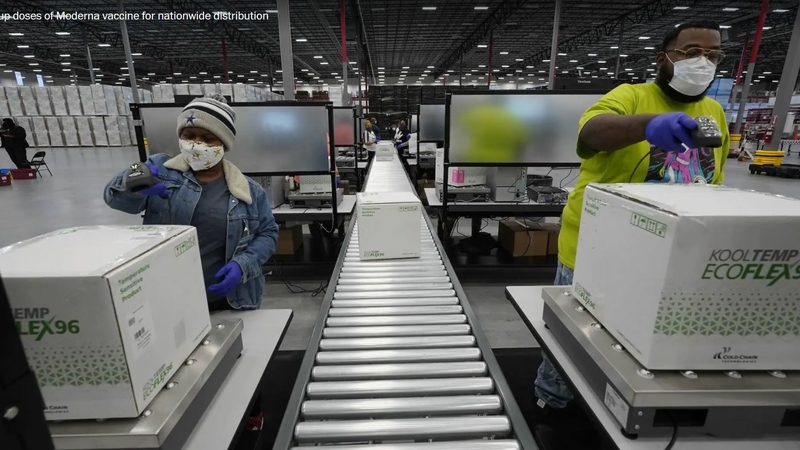
The latest leg of a massive vaccination effort took place in a distribution center in Olive Branch, Miss. There, vials with the nation’s second coronavirus vaccine were loaded into boxes, ready to head out across the country to help states gripped by the surging pandemic.

https://www.washingtonpost.com/video/c/embed/21c3ea3d-2b93-430b-84e7-d31d3f6d1b71?ptvads=block&playthrough=false

Shipments of the second vaccine, developed by Massachusetts biotechnology company Moderna in partnership with the National Institute of Allergy and Infectious Diseases, are set to arrive in states beginning on Monday. The Food and Drug Administration gave emergency authorization to Moderna’s shot Friday, one week after granting emergency authorization to the first vaccine by Pfizer and BioNTech.

The vials will provide another tool in the fight against the pandemic that has killed more than 316,000 people in the United States – a death toll that is precipitously rising, as some states report unnerving numbers and set daily records. The vaccine is another two-shot regimen and will be easier to transport because it can be stored at normal freezer temperatures, while Pfizer’s shots need to be kept at ultracold temperatures

But officials warn the nation is still reeling from infections seeded over Thanksgiving and worry about additional surges that could follow the December holidays.

“Unfortunately, it will get worse,” Moncef Slaoui, chief science adviser to the White House’s effort to develop a vaccine, said in an interview on CNN’s “State of the Union.” “There will be a continuing surge. Exactly what the numbers may be, I don’t know. But, unfortunately, they’re going to be higher than what they are today, most likely.”

But, Slaoui added: “There is light at the end of tunnel.”

He said he expected the first shot of the latest vaccine to be doled out on Monday, as 7.9 million total doses of the Moderna and Pfizer vaccines are set to be shipped this week.

Adm. Brett Giroir, assistant secretary of health and human services, urged Americans to continue to take precautions ahead of the holidays.

“Really, the lives of tens of thousands of Americans depend on what we do. And you know what to do,” he said during an interview on ABC News’s “This Week.” “It’s wearing a mask when you’re in public, physically distancing, washing your hands. If you’re having holiday gatherings, please do them safely. Try to limit them to your immediate household. And if you don’t, wear masks inside, improve the ventilation.”

He said while widespread vaccination will eventually end the pandemic, “we’ve got a lot of work to do, or it’s going to be an even darker winter.”

President-elect Joe Biden and his wife, Jill, will receive the vaccine on Monday. Vice President-elect Kamala Harris and her husband, Doug Emhoff, will get their first vaccine shots the following week. Vice President Mike Pence, as well as numerous congressional leaders, received their shots on Friday.

President Donald Trump has not announced vaccination plans. In a tweet on Dec. 13, he said, “I am not scheduled to take the vaccine, but look forward to doing so at the appropriate time.”

Giroir suggested the president’s vaccination would encourage his supporters to get their shots as well.

“I would encourage the president to get a vaccine for his own health and safety and also to generate more confidence among the people who follow him so closely,” Giroir said.

Surgeon General Jerome Adams, in an interview on CBS News’s “Face the Nation,” cited the antibody treatment Trump received after contracting the coronavirus earlier this year as a reason the president has not yet received a vaccine.

“From a scientific point of view, I will remind people that the president has had covid within the last 90 days,” Adams said. “He received the monoclonal antibodies. And that is actually one scenario where we tell people maybe you should hold off on getting the vaccine, talk to your health provider to find out the right time.”

The White House did not immediately respond to an inquiry about whether the president has made plans to get a coronavirus vaccine.

During his interview on CNN, Slaoui said it is “appropriate” for people who have already been infected with the virus to get vaccinated. “It’s safe,” he said, adding that being infected with the virus “doesn’t induce a very strong immune response and it wanes over time.”

Trump administration officials have eyed a midyear timeline for when a large proportion of the population could be vaccinated. Giroir expressed confidence on Sunday that by June, “anyone in America who wants to have a vaccine will have that opportunity to have a vaccine.”

Biden’s surgeon general pick, Vivek Murthy, who served in the role during the Obama administration, warned a late spring timetable for mass vaccination may be too optimistic.

“If everything goes well, then we may see a circumstance where by late spring, you know, people who are in lower-risk categories can get this vaccine, but that would really require everything to go exactly on schedule,” Murthy said on NBC News’s “Meet the Press.” “I think it’s more realistic to assume that it may be closer to midsummer or early fall when this vaccine makes its way to the general population. So, we want to be optimistic, but we want to be cautious as well.”

Biden nominees mount charm offensive amid tough confirmation landscape #SootinClaimon.Com

#SootinClaimon.Com : ขอบคุณแหล่งข้อมูล : หนังสือพิมพ์ The Nation.

Biden nominees mount charm offensive amid tough confirmation landscape (nationthailand.com)

Biden nominees mount charm offensive amid tough confirmation landscape

InternationalDec 20. 2020President-elect Joe BidenPresident-elect Joe Biden 

By The Washington Post · Amy B Wang · NATIONAL, POLITICS, CONGRESS, WHITE HOUSE 

Janet Yellen, President-elect Joe Biden’s pick for treasury secretary, spoke to three trade and advocacy groups this week about her plans for healing the economy. Health and human services nominee Xavier Becerra appeared on Politico Live to stress his concern about health-care inequities. Linda Thomas-Greenfield, tapped to be U.N. ambassador, met with Republican Sen. Bill Cassidy and won his backing.

And taken together, Biden’s appointees have held more than 100 Zoom meetings with lawmakers, both Democrats and Republicans, in the past week alone. 

This multifaceted charm offensive reflects the transition team’s attempts to smooth the tough confirmation landscape the nominees will soon face in the Senate, a potentially hostile environment exacerbated by a narrow partisan divide and ongoing bitterness from the Trump era, with some Republicans still questioning Biden’s win.

That makes the confirmation battles, set to start well before Inauguration Day, the first real testing ground for post-Trump politics. They will show if Biden can win over Senate Republicans, if Majority Leader Mitch McConnell can stymie Biden, and if individual senators, especially Republicans hoping to run for president in 2024, can attract a following by vocally attacking Biden’s efforts. 

Critical and potentially controversial picks are still expected in coming days, including for attorney general and CIA director. The Biden team’s courtship, meanwhile, is complicated by the covid-19 pandemic, as casual drop-bys in senators’ offices are replaced by far less intimate Zoom introductions and virtual roundtables. But the Biden transition team sees no alternative.

“We will have more of that in the coming weeks,” said Biden spokeswoman Jen Psaki. “It’s important for us to have the nominees and team out there as much as possible so the American people can get to know them even in advance of their confirmations.”

Some of Biden’s picks have quickly attracted resistance, and not just from the right. Some Democrats worry that Lloyd Austin’s recent military career makes him an unsuitable pick for defense secretary. Republicans are protesting Neera Tanden, Biden’s choice as budget director, because of previous tweets slamming GOP politicians. Tom Vilsack, in line to reprise his role as agriculture secretary, faces objections from Black leaders and liberal activists who want a new direction for that department.

And some confirmations could hinge on which party controls the Senate, which will become clear only after the results are finalized in Georgia’s two Senate runoffs on Jan. 5.

Given the crises wracking the country, Biden’s aides say it’s vital that they have key Cabinet secretaries in place on Inauguration Day or soon after – a feat that is not unusual but is far more difficult when the opposing party controls the Senate. Such speed may be a tall order for Republicans, many of whom remain loath to even acknowledge Biden’s win out of loyalty to President Donald Trump, who has refused to concede and continues making baseless claims of voter fraud.

While more Republican lawmakers are calling Biden president-elect since the electoral college formalized his win on Monday, some have twisted themselves into verbal pretzels to avoid using that title, and others suggest they will never accept Biden as the legitimate president. McConnell himself was silent for six weeks after Election Day before acknowledging Biden as the incoming president.

That could delay the scheduling of committee hearings on the nominees.

“What we’re seeing now is Republican senators making it clear that, at least at this stage, they’re not going to hold those hearings,” said Norman Ornstein, a resident scholar at the American Enterprise Institute. “For many, to do so would acknowledge that Biden was president-elect. For others, it will create an obstacle to his getting off to a fast start.”

Biden continues to insist that Republicans ultimately will work with him “for the good of the nation,” especially after “Donald Trump’s shadow fades away,” and in recent weeks, he has embarked on a largely behind-the-scenes effort to re-establish rapport with Senate Republicans. 

So have his nominees. Austin held a virtual roundtable with nearly a dozen military family organizations. When Yellen spoke with trade and advocacy groups, she was joined by her would-be deputy, Wally Adeyemo. Cecilia Rouse, Biden’s pick to chair the Council of Economic Advisers, has met with Black female leaders. 

Surgeon general nominee Vivek Murthy and Sen. Elizabeth Warren, D-Mass., who know each other from Boston, geeked out on data for a solid half-hour and ended their Zoom call by making a post-covid lunch date, according to people familiar with their meeting who spoke on the condition of anonymity to discuss a private session.

Tanden, possibly Biden’s most vulnerable nominee at the moment, has met with senators including Thomas Carper, D-Del., who said afterward he was deeply moved by her childhood story of relying on public food and housing programs after her parents divorced. Carper encouraged Tanden to publicly recount that background more often.

She did so on Thursday, tweeting her memories of being the only student in her public school who used 10-cent vouchers to buy lunch, saying that experience drove her to work in public service. “Since childhood, I’ve understood what government can do to help struggling families get on their feet,” she said.

It is far from clear that such human touches will be enough to sway GOP senators who have balked at what they call Tanden’s hard-hitting partisanship. But stressing the nominees’ personal stories is a central strategy of Biden’s confirmation effort, especially given the president-elect’s historically diverse team.

When he was announced as Biden’s choice for secretary of state, Antony Blinken, for example, spoke of his stepfather being a Holocaust survivor. When Becerra was introduced, he recounted that his father was a construction worker with a sixth-grade education and his mother a clerical worker who arrived from Mexico in her teens.

The Biden nominees are also reaching out to home-state Republicans. Shortly after Pete Buttigieg – the former mayor of South Bend, Ind. – was announced as the transportation secretary nominee, Sen. Todd Young, R-Ind., issued a statement saying that “as a former city leader here in Indiana, Pete understands how critical infrastructure is to growth and opportunity. It will be good to have a Hoosier serving in this capacity.”

Psaki said that many such conversations were “already happening behind the scenes” and that the president-elect’s team plans to pick up the pace after the new year.

“Once we get to January, our hope and expectation is that the dozens of meetings that have already occurred – and the hundreds of engagements that have happened between our staff and the staff on the Hill – will expand and lead into more and more meetings and hearings,” Psaki said.

Confirmation battles are hardly new, especially when different parties control the White House and Senate; in 2017, Democrats used procedural rules to drag their feet on Trump’s initial nominees. Just two of his Cabinet chiefs were approved on his first day in office – Defense Secretary Jim Mattis and Homeland Security Secretary John Kelly – compared with six for Barack Obama and seven for George W. Bush.

“Frankly, Democrats also exercised many more delaying tactics,” said John Fortier, director of governance studies at the Bipartisan Policy Center. Democrats contend that’s because so many of Trump’s picks were unorthodox or unqualified.

Presidents Bill Clinton, Bush and Obama all benefited from their party’s control of the Senate when they took office. Overall, the median time between nomination and a Senate vote (or a candidate’s withdrawal) was between zero and two days for those presidents, according to a Washington Post analysis, compared with 25 for Trump.

Still, virtually every president has suffered at least one failed Cabinet pick.

Clinton’s first choice for attorney general, Zoe Baird, withdrew after it emerged she had paid an undocumented worker as a nanny. Similarly, Bush’s labor secretary nominee Linda Chavez pulled out after reports that she had paid an undocumented immigrant. 

And Obama’s choice to lead the Department of Health and Human Services, former senator Tom Daschle, D-S.D., was felled by tax issues. 

“In most years, there’s usually a holdup or two or three,” Fortier said. “Not everyone is going to make it through.”

Biden, having spent more than three decades in the Senate, is well aware of the pitfalls nominees can face – he chaired the bitter confirmation hearings for Supreme Court Justice Clarence Thomas – and aides suggest he is factoring confirmability into some of his choices. 

Many GOP leaders have praised Yellen, for example, and Katherine Tai, Biden’s choice for U.S. trade representative, also has bipartisan support on Capitol Hill. Conversations about the finalists for attorney general have reportedly shifted toward likelihood of Senate confirmation.

Such considerations will be even more important if Republicans keep control of the Senate, where they currently hold a 52-48 majority. Republican Sens. David Perdue and Kelly Loeffler face runoffs against Democratic challengers Jon Ossoff and Raphael Warnock, respectively, because no candidate received at least 50 percent of the vote on Election Day. 

Even if the Democrats win both runoffs, resulting in a 50-50 Senate, Republicans would control the chamber until at least Jan. 20, when Biden is inaugurated. That’s because the sitting vice president casts tie-breaking votes in the upper chamber.

That means the GOP would dictate the schedule of confirmation hearings and floor votes. “If the Republicans are still in the majority, it’s quite possible that they’ll slow-walk a lot of these nominations and make it extremely difficult for Biden,” Ornstein said.

The pandemic complicates matters further because if even a small number of senators are forced to quarantine, it could affect a nominee’s prospects in unpredictable ways.

The fight brewing over Tanden provides a taste of the battles to come.

CNN has reported that several of her now-deleted tweets targeted Republicans in direct terms. In December 2017, for example, she charged that “the Republican party is gleefully supporting an alleged child molester,” referring to Alabama Senate candidate Roy Moore, who had been accused by several women of sexual misconduct, which he denied. 

Biden and other Democrats have been quick to defend Tanden, arguing that after four years of Trump’s ferocious personal attacks, the GOP has little ground for complaint.

“I’m hoping that the Republicans – when they get through with what I would call their hypocritical, all-of-a-sudden-caring-about-people’s-tweets (phase) – that they will look at her qualifications and her experience and see their way clear to vote for her,” said Sen. Mazie Hirono, D-Hawaii. “I would like her to be able to go through the process of a hearing and they can ask her whatever questions they want to ask her.”

Trump contradicts Pompeo in bid to downplay massive hack of U.S. government, Russia’s role #SootinClaimon.Com

#SootinClaimon.Com : ขอบคุณแหล่งข้อมูล : หนังสือพิมพ์ The Nation.

Trump contradicts Pompeo in bid to downplay massive hack of U.S. government, Russia’s role (nationthailand.com)

Trump contradicts Pompeo in bid to downplay massive hack of U.S. government, Russia’s role

InternationalDec 20. 2020President TrumpPresident Trump 

By The Washington Post · Ellen Nakashima, Josh Dawsey · NATIONAL, WORLD, TECHNOLOGY, NATIONAL-SECURITY, WHITEHOUSE, EUROPE 

WASHINGTON – President Donald Trump addressed the ongoing cyber hacks of the U.S. government for the first time on Saturday, seeking to turn blame away from Moscow in defiance of mounting evidence while downplaying how devastating the intrusions appear to be.

In a bizarre outburst on Twitter that Trump’s critics condemned for its alarming disconnect from the facts, the president contradicted his top diplomat, Secretary of State Mike Pompeo, who on Friday pinned the breaches that have afflicted at least five major federal agencies “clearly” on Russia. Rather, the president baselessly suggested that the true culprit “may be China (it may!)”

Trump’s aversion to calling out the Kremlin for its malign activities in cyberspace and his deference to Russian President Vladimir Putin has become a hallmark of his presidency. He has repeatedly trusted the word of Putin over the assessments of his own intelligence community, including its conclusion that Russia waged a sophisticated campaign to interfere in the 2016 presidential election – a verdict Trump believes calls into question the legitimacy of his victory four years ago.

His tweets Saturday raise fresh concerns that he will seek to shrug off what may turn out to be a cyber hack of unprecedented scale, and that Russia will not be held to account. The president has complained to advisers, who believe Russia is culpable, that the intrusions are a fake narrative meant to damage him politically.

“The Cyber Hack is far greater in the Fake News Media than in actuality,” Trump tweeted, despite a federal alert in recent days that called the widespread cyber espionage campaign “a grave risk to” government agencies and the private sector. 

“I have been fully briefed and everything is well under control,” he said, while agencies are scrambling to investigate and contain a series of major breaches at agencies including the State, Treasury, Energy, Homeland Security and Commerce departments – an effort that is likely to take months.

He also speculated, with no evidence, that the hacks may also have included “a hit on our ridiculous voting machines during the election, which is now obvious that I won big.” Twitter flagged that assertion, saying that “multiple sources called this election differently.” There is no evidence that November’s election was undermined by significant or widespread fraud, despite Trump’s insistence otherwise.

Trump had, until Saturday, studiously avoided the topic, reluctant to address publicly an issue that has bedeviled him since he took office: Russia’s hacking of U.S. targets. He broke his silence only after he was criticized publicly by lawmakers from both parties for an apparent unwillingness to confront Putin.

White House officials had drafted a statement to be released Friday accusing Moscow of carrying out the cyber intrusions in a months-long campaign, but they were blocked from doing so, said a senior administration official, who like others spoke on the condition of anonymity because of the matter’s sensitivity.

But Pompeo, in an interview on “The Mark Levin Show,” had no qualms about speaking out. “This was a very significant effort,” he said, “and I think it’s the case that now we can say pretty clearly that it was the Russians that engaged in this activity.”

Pompeo did not specify which branch of the Russian government carried out the campaign, but U.S. officials have privately said they believe it is the foreign intelligence service, the SVR, a successor agency to the KGB. None have suggested that China played any role.

Moscow has denied any involvement in the intrusions. Federal agencies were first revealed to have been hacked last weekend.

Pompeo said he could not say much more as the investigations were ongoing. “But suffice it to say, there was a significant effort to use a piece of third-party software to essentially embed code inside of U.S. government systems, and it now appears systems of private companies and companies and governments across the world as well,” he told Levin, a syndicated radio talk show host.

His remarks come as government agencies and affected companies race to figure out the scope of the breaches, how the Russians carried them off without being detected for months and how to prevent future compromises.

The president is intent on turning the conversation to China and its coercive activities in the technology and economic spheres and its human rights abuses, a second official said. He has directed advisers to look for ways in the waning days of his administration to confront Beijing over those issues, the official said.

Trump’s comments Saturday reflect a long-running disregard for the facts and his disinterest in what he calls “the cyber,” analysts and former aides said. “Starting with Trump’s very first meeting with Putin to today’s tweets we’ve seen an almost unbreakable pattern of denying the obvious about Russia’s misdeeds while carrying water for the Kremlin,” said Andrew Weiss, a Russia expert and vice president for studies at the Carnegie Endowment for International Peace. “Trump’s comments are totally divorced from reality.”

Gregory Treverton, a former chairman of the National Intelligence Council, the government’s senior-most provider of intelligence analysis, said that Trump “behaves so much like a paid Russian agent.” 

“If you look at the string of his actions and pronouncement,” Treverton said, “the only consistent interpretation that you can logically draw is that he’s in their thrall.”

Russia’s SVR waged a widespread cyber espionage campaign in 2014-2015 that ensnared the State Department, Pentagon Joint Chiefs of Staff and White House unclassified email networks, among other targets.

The Obama administration saw that campaign, as disturbing as it was, as classic espionage of the sort that states routinely engage in against each other, rather than as a disruptive attack, and so did not retaliate, said Michael Daniel, who was President Barack Obama’s White House cyber coordinator. Officials were not aware of the thousands of other victims in the private sector and other countries at the time, he said. The administration never publicly accused Russia of perpetrating the hacks.

This time, the context is different. There is widespread publicity around the breaches, which could turn out to be unprecedented in scale. The nature of the compromises, involving corruption of software commonly used by thousands of large organizations around the globe, is alarming. And the public is much more attuned to Russia’s malign activity in cyberspace, in the wake of its 2016 election interference.

Thus far, there is no sign that the intrusions have resulted in disruption or destruction, and the SVR is known mostly for conducting espionage. That doesn’t mean, however, the activity is not a precursor to something beyond spying, some analysts said.

In any case, Pompeo’s “attribution is a very important step,” said Tom Bossert, who was Trump’s homeland security adviser until April 2018. “The United States can now direct its focus and unite the world against this outrage.”

He said the Russian government is holding American networks at risk. “We must impose a cost on the Russians,” he said. “Until we start defending digital infrastructure as if commercial and government operations depended on it, we will remain rudderless.”

Microsoft, a major software and cloud provider, alerted several federal agencies last weekend to the fact that they were breached, its president Brad Smith told The Washington Post in an interview this week. 

Smith said so far the company has notified a little more than 40 customers who were breached, and that 80% of them were in the United States. The others were in Canada, Mexico, Belgium, Spain, Britain, Israel and the United Arab Emirates.

Britain so far has seen only a small number of victims, all in the private sector.

A major avenue for breaching victims’ networks was an update for computer software made by a Texas-based company called SolarWinds. The firm said about 18,000 customers that received the patch, for network management software called Orion, were potentially exposed. The Russians covertly added malware to the update, which installed a backdoor on computers that the hackers could use to enter a victim’s system at will. 

But the intruders were selective in choosing who to compromise. Not everyone who downloaded the patch was seen as an attractive target, Microsoft said.

The SolarWinds update was not the only path into victims’ networks, the Department of Homeland Security’s Cybersecurity and Infrastructure Security Agency said in an alert this week. “CISA has evidence of additional initial access vectors, other than the SolarWinds Orion platform; however, these are still being investigated,” the agency said.

Microsoft is itself a SolarWinds customer and acknowledged in a statement this week it had found SolarWinds malware “in our environment,” which it isolated and removed.

In his interview with The Post, Smith said none of Microsoft’s customers had been breached through the software giant. “I think we can give you a blanket answer that affirmatively states, no, we are not aware of any customers being attacked through Microsoft’s cloud services or any of our other services, for that matter, by this hacker.”

He said: “Lots of people have been hacked and a lot of the people that have been hacked happen to be Microsoft customers and Microsoft cloud customers. But that doesn’t mean they were hacked or attacked through the Microsoft cloud.”

Smith in a blog post called for the establishment of a global norm forbidding the type of “broad and reckless activity” used against SolarWinds and its customers, which threatened the integrity of the broader software supply chain. 

A norm against compromising that supply chain would “kneecap intelligence collection” by western democracies, said Thomas Rid, a cyber espionage expert at Johns Hopkins University. Worse, nondemocratic states would not abide by it, he said. “Some of the most successful western intelligence operations were supply chain compromises,” he said, citing a decades-long operation in which rigged encryption machines allowed U.S. intelligence agencies to spy on dozens of countries undetected.

Daniel, the former White House cyber coordinator, said a broad-based supply chain compromise that affects many different organizations indiscriminately “should probably be frowned upon.” But, he said, to argue that a western spy agency is never going to use the supply chain to spy on an adversary is unrealistic. “For a well-defended adversary,” he said, “it’s something you may want to consider.”

Moderna vaccine shipments set to arrive in states on Monday, Operation Warp Speed operations chief says #SootinClaimon.Com

#SootinClaimon.Com : ขอบคุณแหล่งข้อมูล : หนังสือพิมพ์ The Nation.

Moderna vaccine shipments set to arrive in states on Monday, Operation Warp Speed operations chief says (nationthailand.com)

Moderna vaccine shipments set to arrive in states on Monday, Operation Warp Speed operations chief says

InternationalDec 20. 2020

By The Washington Post · Derek Hawkins · NATIONAL, BUSINESS, WORLD, HEALTH, SCIENCE-ENVIRONMENT, HEALTH-NEWS 

WASHINGTON – Shipments of the second coronavirus vaccine approved by health regulators are set to arrive in states Monday, according to the Trump administration’s vaccine operations chief, one week after front-line health workers received the first shots in the U.S. government’s mass vaccination campaign.

Gustave Perna, chief operating officer of Operation Warp Speed, said Saturday that distribution was already underway for the vaccine developed by Massachusetts biotechnology company Moderna in partnership with the National Institute of Allergy and Infectious Diseases, following the Food and Drug Administration’s decision to clear the shot late Friday.

Workers were packing the vials into boxes at distribution centers run by the medical wholesale giant McKesson, Perna said. FedEx and UPS trucks are slated to depart Sunday and carry the freezer-temperature containers to their destinations. The government has also begun shipping ancillary kits including needles, syringes and other supplies to help administer the shots, according to Perna.

Later on Saturday, an independent vaccine advisory panel to the Centers for Disease Control and Prevention voted to recommend Moderna’s coronavirus vaccine for use in people ages 18 and older, paving the way for inoculations to begin as shipments arrive. The move follows Friday’s authorization from the FDA, which permitted the vaccine to be administered; an endorsement by the CDC immunization panel signals that the vaccine should be administered to the populations included in its guidance.

The rollout of the Moderna vaccine caps a week marked by a mix of high hopes and frustration surrounding the administration’s handling of the first coronavirus vaccine, developed by Pfizer and BioNTech and cleared by the FDA on Dec. 12.

Days after doctors, nurses and other Americans received the first injections, officials in multiple states said they were alerted that their second round of shipments had been drastically cut, creating widespread confusion and raising concerns about whether health departments would receive enough doses to meet the administration’s timelines.

Speaking in a Saturday morning news conference, Perna said he took personal responsibility for the error, saying he misunderstood a step in the process that prevents the government from releasing vaccine doses as soon as the manufacturer makes them available. As a result, he said, his forecasts were incorrect and he had to lower the vaccine allocations.

“To the governors to the governors’ staffs, please accept my personal apology if this was disruptive in your decision-making,” Perna said.

Asked to explain the issue in plain terms, Perna declined to elaborate. He called the situation a “miscommunication” and a “planning problem,” not a problem with either of the vaccines themselves.

He added that the administration was on track to allocate “around 20 million doses” of the vaccines by the end of December, but said distribution could extend into early January. The characterization appeared to mark a departure from the administration’s goal of administering 20 million shots by the end of the year.

“We are pushing out millions of doses of vaccines right now, and each week those numbers will continue to grow,” Perna said.

So far, 2.9 million doses of the Pfizer vaccine have been delivered across all 50 states. Between the two vaccines, 7.9 million doses were allocated and ready for distribution this week, according to Perna.

As of Saturday morning, 272,001 doses of the Pfizer vaccine had been administered, according to the CDC.

The approval of Moderna’s vaccine marks a crucial expansion of the government’s vaccination efforts, freeing the country from having to rely on a vaccine from one manufacturer as officials try to meet ambitious goals for getting doses out the door.

One benefit of the vaccine is that it can be stored at the temperature of a normal freezer, making it easier to transport. Pfizer’s vaccine, by contrast, needs ultra-low-temperature freezers regularly refreshed with dry ice.

Perna said workers were packing containers with 100 vials each, a relatively small number that also eases transportation. “This allows jurisdictions ways to reach small and hard-to-reach rural areas,” he said Saturday.

As the first waves of vaccines have reached hospitals and health departments nationwide, local disputes have arisen over who should get the shots first, bringing the logistical challenges of inoculating millions of people into sharp relief at a time when infections and deaths have reached record levels.

In California, where many intensive care units are overwhelmed with patients, nearly all young front-line doctors at Stanford Medical Center were excluded from the initial round of coronavirus vaccinations, prompting outcry from workers who said such workers should be prioritized.

Dozens of the hospital’s residents and fellows staged a raucous protest on the Palo Alto campus Friday, accusing the university of selecting orthopedists, dermatologists and even some faculty who work from home for vaccination before workers who spend long hours treating covid-19 patients.

Stanford officials apologized for the issue, saying a faulty vaccine algorithm left out early-year doctors and promising an immediate fix. “We take complete responsibility for the errors in the execution of our vaccine distribution plan,” Stanford Medicine said in a statement.

Christine Santiago, a 29-year-old resident in internal medicine who treated covid-19 patients during night shifts in the ICU, told The Washington Post that resident physicians “occupy a very unprotected space in the United States.”

“We’re not fully employees of the workforce,” said Santiago, who said she is home quarantining and waiting on a coronavirus test after using a faulty batch of N95 masks. “We fall in this vague, unclear position.”

Nationwide, coronavirus infections continued to surge, with the seven-day average for new daily cases rising 3.1% over the past week, according to data tracked by The Post. The weekly average for daily deaths rose 6.1%, with 2,878 coronavirus fatalities reported Friday. Hospitalizations also climbed more than 6% nationwide.

California reported a record 379 deaths on Thursday, followed by a near-record of 300 on Friday and 279 as of Saturday afternoon. Infections in the state have topped 40,000 for four consecutive days, with at least 43,600 reported Saturday, according to The Post’s tracking.

Although coronavirus vaccine doses have arrived in all 50 states, only about 15 have begun releasing daily vaccination data. About a dozen others have disclosed plans to offer some form of public vaccination tracking, while others have made no mention of it, the Covid Tracking Project noted in an analysis this week.

Convincing large portions of the population to get the vaccine remains a challenge for health officials around the country, who have launched an array of awareness campaigns to inform people of the benefits and dispel misinformation about the shots. In Missouri, the state health department recently posted a detailed fact sheet on the vaccine, answering common questions about safety and side effects, while also offering a “rumor control” section addressing falsehoods about the vaccine altering patient DNA and containing “tracking chips.”

Speaking with CNN late Friday, Anthony Fauci, the country’s leading infectious-disease expert, praised Vice President Mike Pence and other government officials for getting the vaccine publicly, a move he said could help alleviate concerns among some that the injection is unsafe.

“I think that was a good thing, representing to the community, to the people watching, that this is something that we all should do,” he said, “because if we get the majority of people in this country vaccinated we’re going to turn this around for sure.”

Fauci added that President Trump should get the vaccine as well, even though he was infected earlier this year.

“One of the things you have to keep in mind is he received the monoclonal antibody when he was ill, so he still might have a very high level of antibody in his system, which you might want to wait a bit before you actually vaccinate him,” Fauci said. “But ultimately he might want to get vaccinated.”

In more lighthearted CNN appearance Saturday, Fauci offered a message to children who sent questions to the news network asking whether Santa Claus had been vaccinated, too. “I went there and I vaccinated Santa Claus myself,” he said. “He is good to go.”

America’s image has tumbled during Trump’s presidency. Can Biden turn it around? #SootinClaimon.Com

#SootinClaimon.Com : ขอบคุณแหล่งข้อมูล : หนังสือพิมพ์ The Nation.

America’s image has tumbled during Trump’s presidency. Can Biden turn it around? (nationthailand.com)

America’s image has tumbled during Trump’s presidency. Can Biden turn it around?

InternationalDec 20. 2020President-elect Joe BidenPresident-elect Joe Biden 

By The Washington Post · Dan Balz · NATIONAL, POLITICS, CONGRESS
Analysis/WASHINGTON – President-elect Joe Biden has a daunting to-do list as he prepares to take the oath of office next month, much of it focused domestically. But there was a reminder this past week that among the problems dumped in his lap by President Donald Trump is a world that questions whether the United States is willing and prepared to lead abroad.

A tarnishing of America’s international image has been a constant almost from the day Trump was sworn in four years ago. But 2020 could be the worst yet in terms of how people in other countries perceive the United States as a leader in the world.

The Gallup organization conducts annual surveys assessing how others assess U.S. leadership. In 20 of 29 countries where Gallup has completed these surveys, approval ratings “are at new lows or they tie the previous low,” according to the report released last week. Among the countries where approval hit new lows are two of the nation’s staunchest allies, Germany and Britain.

Four years ago, before Trump became president, 43% of Germans had a positive impression of the United States as a leader in the world. Today just 6% approve. In the United Kingdom, 15% say they approve. More Russians – 18% – approve of American leadership internationally than Brits or Germans.

Gallup’s findings square with a Pew Research Center report of a few months ago. Pew’s regular survey asks whether people elsewhere have a favorable or unfavorable view of the United States. Among the nations where favorable impressions hit record lows or roughly tied them this year were a who’s who of traditional friends: the United Kingdom, Germany, France, Japan, Canada and Australia.

Trump’s departure and Biden’s arrival will likely begin to boost the nation’s image. The former chairman of the Senate Foreign Relations Committee has promised to reengage constructively with other nations, as has his designee for secretary of state, Antony Blinken. That will begin with allies in Europe, who have been treated badly by the current president.

Biden knows the world from his travels as a senator and vice president, but he was described by one former diplomat as someone whose first orientation on foreign policy is through Europe. “When he thinks foreign policy, he thinks allies, and when he thinks allies, he thinks Europe,” said Ivo Daalder, former ambassador to NATO and now president of the Chicago Council on Global Affairs. 

Trump has spurned or hectored allies in Europe and questioned the value of transatlantic alliances. Biden will embrace them all.

Showing up and saying the right words will be helpful in changing perceptions of the United States, but that might be only a first step in what could be a more challenging mission.

Biden will look to European allies for help in dealing with some of the most important foreign policy issues that await him, from U.S. posture toward Russia to Biden’s desire to mend relations with Iran after Trump pulled out of the joint nuclear agreement.

China presents perhaps the biggest challenge, given its gains in power and reach over the past four years. Trump departed from the posture of previous administrations, adopting a more aggressive approach in dealing with the Asian giant. Even critics of the presidents concede there can be no return to the past.

“There is a growing consensus across parties that China poses a series of new challenges and that the status quo was not really sustainable,” Blinken said last summer during an event sponsored by the Hudson Institute. He also said that, because of Trump’s approach, “China is in a strong position and we’re in a weaker position.” The solution, he added, will be “to rally our allies and partners, instead of alienating them.”

Biden said the same in a post-election interview with New York Times columnist Thomas L. Friedman. “The best China strategy, I think, is one which gets every one of our – or at least what used to be our – allies on the same page,” he said. “It’s going to be a major priority for me in the opening weeks of presidency to get us back on the same page with our allies.”

Rhetorically that might seem easy; practically it will take time. Biden’s challenge will involve striking a balance between competition and sometimes confrontation with China over economic and defense issues and cooperation on things like pandemics and climate.

“My view of it is that the Biden administration will invest in strengthening the transatlantic relationship as a means to being able to have a thoughtful, tough, but pragmatic line towards China,” said Robin Niblett, director and chief executive of Chatham House, a London-based think tank. “I think they will take the time to try to get Europe on board before they try anything tougher with China.”

Biden has long experience with European allies, but he will be dealing with a changing and sometimes disunited continent. Hungary and Poland have moved in anti-democratic directions. Turkey is an ally and member of NATO, but the source of disagreements. Britain appears on the brink of exiting the European Union as a result of the Brexit vote in the summer of 2016. 

Biden has said he knows world leaders, and he does, but leadership has changed since he was vice president and will continue to do so. He does not have a particularly strong relationship with British Prime Minister Boris Johnson, and in any case the so-called special relationship between the two nations will take on a different hue with Britain no longer a bridge to the E.U. for the United States.

German Chancellor Angela Merkel, the strongest leader in Europe, will step down later this year and there is no clear successor on the horizon. French President Emmanuel Macron was elected to his position after Biden left the vice presidency. Although he will offer a more welcoming approach than the Trump era, Biden will not be able to pick up where he left off as vice president.

From abroad, the United States is seen as a nation that is badly divided and looking inward, a country undergoing a necessary but painful reckoning on race, preoccupied with its own problems and therefore less prepared to embrace the role played for decades during the Cold War and the post-Cold War period. America also has been judged harshly for the way the Trump administration handled the coronavirus pandemic. 

Biden’s willingness to reengage internationally will be an essential step in restoring U.S. leadership and in the process will rebuild America’s tattered image. But what he accomplishes domestically, his record in dealing with the pandemic and the economy and so much else, could be equally important in shaping perceptions around the world of how America sees itself in the post-Trump era.

Henry Haller, longest-serving White House executive chef, dies at 97 #SootinClaimon.Com

#SootinClaimon.Com : ขอบคุณแหล่งข้อมูล : หนังสือพิมพ์ The Nation.

Henry Haller, longest-serving White House executive chef, dies at 97 (nationthailand.com)

Henry Haller, longest-serving White House executive chef, dies at 97

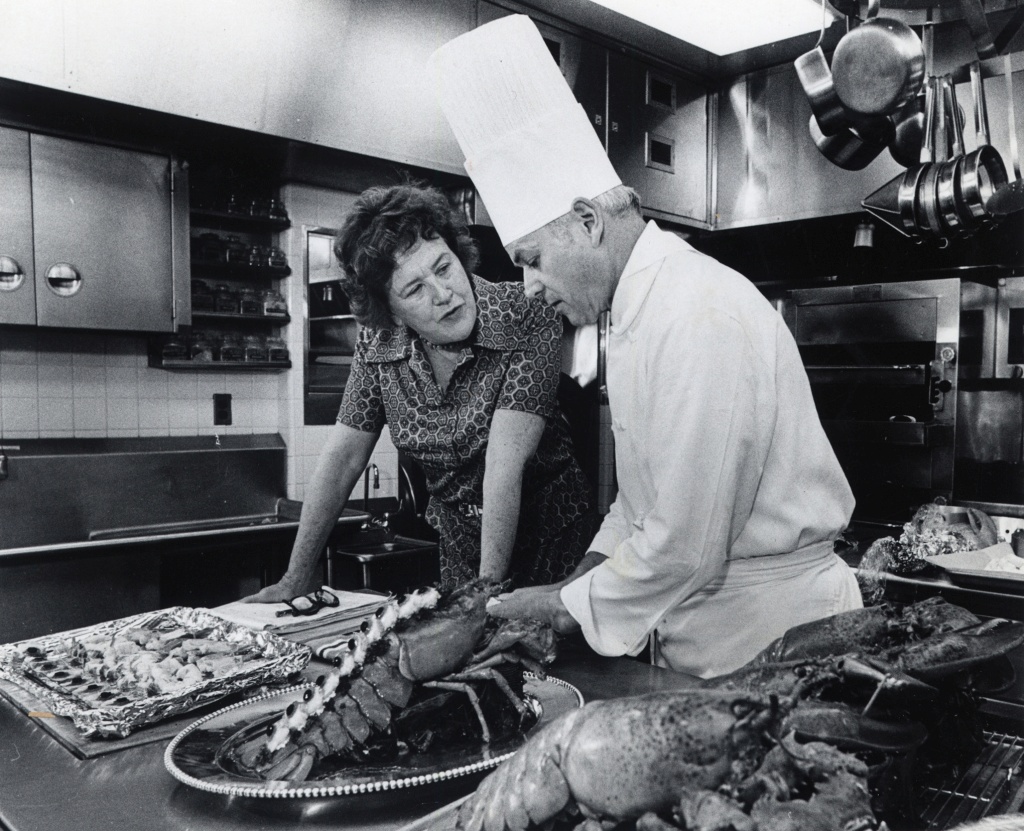
InternationalDec 19. 2020Henry Haller is pictured in 1976 with cook and TV personality Julia Child. MUST CREDIT: Washington Post photo by James A. Parcell
Photo by: James A. Parcell — The Washington PostHenry Haller is pictured in 1976 with cook and TV personality Julia Child. MUST CREDIT: Washington Post photo by James A. Parcell Photo by: James A. Parcell — The Washington Post 
By Special to The Washington Post · Olesia Plokhii 

Henry Haller, the longest-serving White House executive chef in the history of the residence, who planned and executed countless extravagant banquets, three wedding receptions and more than 250 state dinners for five presidents, died Nov. 7 at his home in Gaithersburg, Md. He was 97.

His wife, Carole Haller, confirmed the death and said there was no specific cause.

Haller was a Swiss-born French chef who joined the White House in 1966 after impressing President Lyndon B. Johnson years earlier with his cooking at New York City’s Sheraton-East Hotel. He remained at 1600 Pennsylvania Ave. late into the Reagan administration, mastering the tastes of five first families over a span of 21 years and pulling off impressive culinary feats on short notice.

A consummate professional who was never known to gossip about what he saw or heard at the White House, Haller catered to the tastes of the first families, whether asked to prepare deluxe continental cuisine or simple homestyle American meals.

“It’s quite simple, really,” he told the Albany Times Union in 2002. “You keep your mouth shut. There are no prima donnas at the White House except the president of the United States. . . . Some chefs like to tell the guests what to eat. It’s not like that at the White House. They tell you what they want to eat and you do it.”

For Johnson, that was Texan food and tapioca pudding. For the family of Richard M. Nixon, it was classic French dishes, red snapper and broiled lamb chops. Haller said the Fords enjoyed roast beef cooked with whole onions as well as red cabbage with pork chops; Jimmy and Rosalynn Carter liked fried chicken, ham, okra and string beans; and Ronald and Nancy Reagan valued variety and beautiful presentation.

Trained in classical French cuisine in Switzerland, Haller came to the White House after René Verdon – the French-born chef brought in by the Kennedys in 1961 – quit as executive chef in 1965 in a dispute with Johnson over the president’s food preferences and the sudden arrival of frozen and canned vegetables in the White House pantry.

Deciding on menus often required consultation with the first ladies. The biggest challenge for Haller came from Nancy Reagan, whom he described as the most involved and particular first lady he worked with. She insisted that Haller and his staff cook the planned meal before important functions, and she would suggest changes to the taste and appearance of the foods.

“We take pictures with a Polaroid so the staff knows how they are to be done,” Haller told the New York Times in 1987. “With the Reagans you have to be more creative.”

Haller also admitted to two occasions on which he was reprimanded. The first was when he told the news media that Nixon liked to mix his own martinis before dinner; the second was when he failed to remove the strings from the green beans he served Johnson. That night, after dinner was served, the butler told Haller the president wanted to see him.

“I went in, and he had some strings from the beans in his hand,” Haller told the Philadelphia Inquirer. “He handed them to me and said, ‘I saved these for you.’ “

The rest of his employment, however, was marked by one culinary coup after another. In 1973, he produced a dinner for 1,300 people honoring returned Vietnam prisoners of war. The event was held under a giant tent, with a menu that included supreme of seafood Neptune – an elaborate seafood salad – roast sirloin and strawberry mousse. Because the White House didn’t have enough ovens and stoves, much of the cooking took place at the nearby Mayflower Hotel.

Another success came during the bicentennial in 1976, when Britain’s Queen Elizabeth II visited the White House of Gerald R. Ford. Haller served – just as a first course for 250 people – 25 four-pound lobsters in a 50-gallon steamer. During that year, Haller was responsible for preparing several formal dinners each week and often worked 18-hour days. In 1978, for a celebratory dinner after the signing of the Camp David Accords, Haller had just one week to pull off an event for 1,300 guests of the Carters.

Henry Haller is pictured with Julia Child in 1976. MUST CREDIT: Washington Post photo by James A. Parcell

Photo by: James A. Parcell — The Washington Post

There were also times when demands on the White House kitchen were minimal. When King Faisal bin Abdulaziz of Saudi Arabia visited, for example, he brought his own food in briefcases. “I think he had cottage cheese that night,” Haller said.

One of the chef’s greatest triumphs was a lobster mousse made from his own mold – thanks to a sheet-metal worker on staff – for French Prime Minister Jacques Chirac in 1986.

“I put the lobster mousse on a big china platter and glazed the mousse with aspic,” he told the Chicago Tribune in 1988. “On one side I placed 12 medallions of lobster decorated with truffles. On the other, I made a floral design with carrots, truffles, leeks and cherry tomatoes. It looks like a bouquet. On the outside edge, I had half quail eggs covered with caviar and standing in little cucumber cups. Sounds good, no?”

Born Henri Haller in Altdorf, Switzerland, on Jan. 10, 1923, he was the son of a French mother and a Swiss father who worked in a factory. He helped his mother cook and tend to her vegetable garden, and developed a flair for cooking. When he was 14, his father planted the idea of making his passion a career.

“Why don’t you be a chef,” Haller recalled his father saying. “You can travel all over the world. And you will never have to worry about a job. People everywhere have to eat.”

At 16, he did a culinary apprenticeship at the Park Hotel in Davos, Switzerland, where he learned the art of the mashed potato and studied French, German and Italian cooking.

Over the next decade, he worked at top hotels and restaurants in Bern and Lucerne, Switzerland, and practiced his English. When he was 25, he moved to Montreal to work for the Ritz-Carlton and then arrived in New York City in 1951.

He spent several years at a country club and then at Hampshire House near Central Park. In 1962, he left for the top chef position at the Sheraton-East Hotel, where his food impressed Johnson.

After leaving the White House in 1987, Haller published “The White House Family Cookbook,” filled with dozens of recipes. He later created menus for Norwegian Cruise Lines and an assisted living company, partnered with a supermarket to create a line of gourmet foods and was featured in 1996 in a PBS cooking series called “The Presidential Palate.”

In 1954, he married Carole Itjen. In addition to his wife, of Gaithersburg, survivors include four children, Robert Haller of Palm Harbor, Fla., Richard Haller of Highland, Calif., Susan Capps of Gastonia, N.C., and Nancy Bender of Holly Springs, N.C.; and five grandchildren.

One of Haller’s most vividly remembered days at the White House was when Nixon resigned on Aug. 9, 1974. That morning, Haller said, the president walked into the kitchen barefoot and wearing pajamas and asked for corned beef hash and a poached egg. Nixon then shook Haller’s hand and said, “Chef, I have dined all over the world, but your food is the best.”

Despite bearing witness to an intimate side of American history, Haller said there was very little talk of politics in his kitchen. He said his job was to provide a sense of normalcy amid the tumult of presidential life.

“You’re an escape from all of that in some ways,” he told the Gerald R. Ford Oral History Project in 2010. “I mean, you provide a normal environment. A normal environment to the last day. That was our job.”

Biden gets vaccine Monday, rethinks West Wing setup #SootinClaimon.Com

#SootinClaimon.Com : ขอบคุณแหล่งข้อมูล : หนังสือพิมพ์ The Nation.

Biden gets vaccine Monday, rethinks West Wing setup (nationthailand.com)

Biden gets vaccine Monday, rethinks West Wing setup

InternationalDec 19. 2020President-elect Joe Biden speaks at a President-elect Joe Biden speaks at a “Get Ready to Vote” rally with Georgia Democratic Senate nominees Raphael Warnock and Jon Ossoff on Dec. 15 in Atlanta. His audience was seated in cars. MUST CREDIT: Washington Post photo by Joshua Lott Photo by: Joshua Lott — The Washington Post Location: Atlanta, United States 

By The Washington Post · Annie Linskey

President-elect Joe Biden and his wife, Jill, plan to begin their course of coronavirus vaccinations Monday, after the recent infection of two people in his orbit, including a senior adviser, brought the pandemic closer than before to the former vice president and senior members of his team.

The Biden team also is rethinking how to organize the president-elect’s West Wing staff, which will take office amid what is expected to be a bleak and dangerous winter because of the pandemic. The new administration does not plan to have its full staff work out of the typically cramped White House offices immediately after taking office Jan. 20 because of medical concerns, officials said Friday.

The outgoing Trump administration, which has demonstrated far less adherence to its own medical team’s coronavirus guidance than Biden’s team, has suffered through several outbreaks of the virus, with victims including President Donald Trump, his wife and son, and many senior officials and Cabinet members.

The announcement of the Bidens’ pending inoculation and curbs on attendance at the White House after his inauguration illustrate the extraordinary difficulty that the pandemic has added to planning for a transfer of power and launching a new government, layering significantly more complication and risk to an already fraught process.

During the transition, many of Biden’s meetings have been conducted virtually, with only a few staff members, stationed in his hometown of Wilmington, Del., who regularly see the president-elect in person.

That followed the pattern set in the campaign, during which Biden spent long stretches hunkered down in his Wilmington home to protect against catching the virus as it rampaged across the country. Trump, who was diagnosed with covid-19, the disease caused by the coronavirus, in October, regularly mocked Biden for his preventive behavior and, when he emerged, for routinely wearing a mask. Neither the president nor his senior aides regularly wear masks or demonstrate social distancing practices.

In deciding when to receive the two-shot regimen required for the coronavirus vaccine, Biden has had to weigh his own health risks against the politically tricky image of skipping ahead of some health-care workers to receive an inoculation.

Biden, who at 78 will be the oldest president ever inaugurated, is in a high-risk category because of his age. His incoming medical adviser, Anthony Fauci ,had recommended that he and Vice President-elect Kamala Harris receive vaccinations, along with President Trump and Vice President Mike Pence. Pence and his wife, Karen, received their shots Friday in a televised event.

Biden has set a goal of distributing 100 million vaccinations in his first 100 days in office. He also wants Americans to wear masks during this period as a way to reduce community spread of the virus.

Biden’s brief trip to Georgia on Tuesday – the only time he has boarded an airplane since winning the election – clearly illustrated the risks he’s facing in delaying the shots: Within days of the stop at least two people involved in the visit tested positive for the coronavirus.

One was an unnamed reporter who covered the trip but did not fly on the same plane as Biden, nor come into close contact with the president-elect. Biden did, however, approach the traveling press corps before taking off from Wilmington for Atlanta. Biden and the reporters wore masks as they spoke.

The second was Rep. Cedric Richmond, D-La., who will become a senior adviser to Biden in the White House. Biden’s transition team, in a statement released Thursday, said the president-elect was never in “close contact” with Richmond as defined by the Centers for Disease Control and Prevention. Given the circumstances, Biden did not plan to self-quarantine.

Richmond’s office referred questions to the Biden transition team. Biden’s team declined to provide any additional details Friday about their contact, its duration or whether it occurred indoors or outside.

Biden traveled to Georgia to campaign for two U.S. Senate candidates vying against Republican incumbents in Jan. 5 runoff elections. The outcome of the race will determine control of the Senate, in which Republicans currently hold a 50-to-48 advantage. Two Democratic wins would flip control, as Harris would become the tiebreaker once she is sworn into office.

Biden spoke briefly at an outdoor car rally in Atlanta and did not appear on that stage with Richmond. Richmond traveled to the event separately from Biden.

“We have covid protocols in place that everybody abides by who has any contact or attends any events with the president-elect,” Jen Psaki, a Biden-Harris transition spokeswoman, said during a Friday news briefing.

Biden regularly takes coronavirus tests. His latest results, from a test taken Thursday, were negative.

Psaki said that Richmond’s status did not change the timing of Biden’s vaccination.

But the plans had appeared to have been in flux. CNN reported Wednesday that Biden would receive his vaccination early next week, although Biden’s team told The Washington Post only that it would be “as soon as next week” and would not commit to a specific timeline.

Psaki declined to immediately say when Richmond last had a negative coronavirus test. Richmond’s office also did not respond to multiple requests to explain when he last tested negative.

The reporter who tested positive covered Biden on Monday and Tuesday. Reporters who cover Biden at specific events must show they have tested negative at a transition testing site before they are permitted near him. They also are required to wear masks.

Biden also wears masks to his events, and sometimes has given entire speeches wearing one. But he occasionally pulls his mask down when people have difficulty understanding him. After stepping off the outdoor stage in Atlanta on Tuesday, Biden briefly pulled down his mask to yell something to a supporter and then put it back in place.

Biden’s vaccination will be done in public in Delaware, but his aides declined to provide details about exactly when or where the shots would be given. Biden and his wife will receive the Pfizer-BioNTech vaccine, Psaki said.

Harris and her husband, Doug Emhoff, will start their course of vaccinations after Christmas, Psaki said. Biden and Harris have separate medical teams and Psaki said the quartet was spacing out the inoculations based on advice from their doctors.

Pence and his wife also received the Pfizer-BioNTech vaccine. It was administered by Walter Reed National Military Medical Center staff in a room in the White House complex Friday.

The pandemic has cast a pall over one of the typical moves for any incoming administration: jockeying for valuable West Wing real estate. In the past two administrations, the crowded conditions have led aides at times to share desks.

“We expect that everybody who would traditionally be – and historically be – working out of the West Wing, probably will not be working out of the West Wing on January 20th and January 21st,” Psaki said.

The new administration will “abide by the guidance and direction by our medical experts and doctors” in determining who will be in the building and when, she said.

Biden plans to announce his selection for additional administration posts next week, but Psaki declined to say whether all of the Cabinet slots will be announced by Christmas, which the Biden team had hoped to do.

“It’s all based on when decision-making is made and we want to give him the time and space to do that,” Psaki said. She said that Biden’s team does expect to name the first 100 appointments by the new year.

So far Biden has named 19 members of his Cabinet, but some big slots remain open, including who will lead the departments of Justice, Labor and Education and who will lead the CIA.

On Saturday, he is due to publicly announce members of his climate and energy teams, including his nominee for interior secretary, Rep. Deb Haaland, D-N.M., who if confirmed by the Senate would be the first Native American to serve in the Cabinet.

In addition to Haaland, Biden will introduce North Carolina environmental regulator Michael Regan, who would be the first Black man to head the Environmental Protection Agency, as well as Obama administration veteran Brenda Mallory to serve as the first Black chair of the White House Council on Environmental Quality.

Former Michigan governor Jennifer Granholm will be named by Biden as his nominee for energy secretary.

– – –

The Washington Post’s Matt Viser contributed to this report.

U.S. bans technology exports to Chinese semiconductor and drone companies, calling them security threats #SootinClaimon.Com

#SootinClaimon.Com : ขอบคุณแหล่งข้อมูล : หนังสือพิมพ์ The Nation.

U.S. bans technology exports to Chinese semiconductor and drone companies, calling them security threats (nationthailand.com)

U.S. bans technology exports to Chinese semiconductor and drone companies, calling them security threats

InternationalDec 19. 2020

By The Washington Post · Jeanne Whalen

The Trump administration has added prominent Chinese semiconductor and drone manufacturers to an export blacklist, continuing to exert pressure on the country in the final weeks of the Trump presidency.

The Commerce Department said it has placed Semiconductor Manufacturing International Corp., or SMIC, drone maker DJI; and dozens of other Chinese companies and universities on the Entity List, which bans the export of U.S. technology to the entities unless the exporter receives a government license.

The sanction follows “evidence of activities between SMIC and entities of concern in the Chinese military industrial complex,” Commerce said in a statement.

“We will not allow advanced U.S. technology to help build the military of an increasingly belligerent adversary,” Commerce Secretary Wilbur Ross said about SMIC in a statement. “Between SMIC’s relationships of concern with the military industrial complex, China’s aggressive application of military civil fusion mandates and state-directed subsidies, SMIC perfectly illustrates the risks of China’s leverage of U.S. technology to support its military modernization.”

The Commerce Department said it was adding DJI for enabling high-tech surveillance in China, which the agency called a human-rights abuse.

The additions also include several construction companies, including China Communications Construction Company, for helping China militarize and claim disputed territory in the South China Sea.

Commerce also added to the list several universities, in Beijing, Nanjing and Tianjin, for actions including trade-secret theft or “acquiring and attempting to acquire U.S.-origin items in support of programs for the People’s Liberation Army.”

The sanction shows that cutting trade ties with China remains a top priority for the Trump administration’s many China hawks, who view the country’s growing tech and military might with increasing alarm. Similar concerns have also taken root in Congress, among both Republicans and Democrats, and could continue during a Biden administration.

The Entity List has become a favorite Trump administration tool to punish China and now includes more than 300 Chinese entities.

The Commerce Department, which maintains the list, has previously used it against Chinese telecom company Huawei and against Chinese entities engaged in alleged human rights violations in China’s Xinjiang region.

Officials at SMIC and DJI, and at China’s embassy in Washington, D.C., didn’t respond immediately to requests for comment. SMIC has previously denied supporting China’s military.

It wasn’t immediately clear how much U.S. technology DJI uses to make its drones. The Shenzhen-based company is among the world’s biggest drone manufacturers.

The Trump administration already began restricting exports to SMIC in September by notifying some U.S. companies that they would need a license to export to the chip maker. Inclusion on the Entity List is a broader sanction.

Founded in 2000 in Shanghai, SMIC ranks among the top five semiconductor manufacturers in the world, according to a report from the United States International Trade Commission, or USITC.

Industry experts say that SMIC’s technology lags behind that of chip manufacturers in Taiwan and the United States but that Beijing is pouring billions into the industry to help SMIC and other Chinese companies catch up.

SMIC has enjoyed generous government financial support, including low-interest loans, tax breaks and investments to help build manufacturing facilities, the Organization for Economic Cooperation and Development in Paris said in a report last year.

Commerce said that the export ban will apply to technology needed to produce advanced semiconductors with silicon transistors sized at 10 nanometers or less. There are one billion nanometers in a meter.

Chip-industry experts say SMIC and other Chinese companies are not yet able to make such advanced semiconductors, and would for now need software and equipment from the U.S. and other Western countries to reach that capability.

SMIC started as a private company, but state ownership has steadily grown over time, to more than 45 percent of SMIC stock as of 2018, according to the OECD report.

SMIC’s shares used to trade on the New York Stock Exchange, but the company removed its stock from the NYSE last year. The shares now trade on the Shanghai and Hong Kong exchanges.

SMIC’s stock, held by some Western investors, fell 5% in Hong Kong trading on Friday.

The additions to the list also include some lesser known Chinese companies, such as NucTech, which makes luggage- and cargo-screening equipment. The Trump administration said it had determined that “NucTech’s lower performing equipment impair U.S. efforts to counter illicit international trafficking in nuclear and other radioactive materials.”

The administration also added several Russian entities, including OOO Sovtest Comp and Cosmos Complect, to the list, saying they appear to have used a front company to acquire “sensitive electronic components” for use in Russia, without obtaining required licenses.

Europe is paying less than U.S. for many coronavirus vaccines #SootinClaimon.Com

#SootinClaimon.Com : ขอบคุณแหล่งข้อมูล : หนังสือพิมพ์ The Nation.

Europe is paying less than U.S. for many coronavirus vaccines (nationthailand.com)

Europe is paying less than U.S. for many coronavirus vaccines

InternationalDec 19. 2020

By The Washington Post · Michael Birnbaum, Christopher Rowland, Quentin Ariès

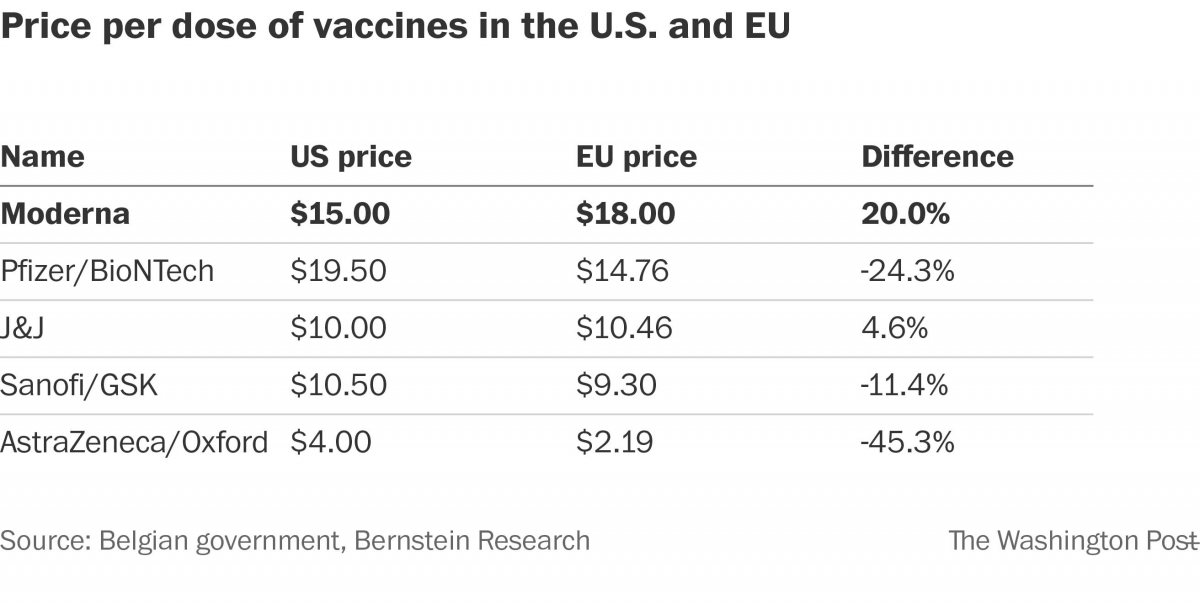
The European Union is paying less money than the United States for a range of coronavirus vaccines, including the Pfizer-BioNTech inoculation being rolled out across the country, according to a Washington Post comparison of the breakdowns.

The costs to the EU had been confidential until a Belgian official tweeted – and then deleted – a list late Thursday.

Comparing that list with U.S. calculations by Bernstein Research, an analysis and investment firm, it appears that the 27-nation union has a 24% discount on the Pfizer vaccine, paying $14.76 per dose relative to $19.50 in the United States. Some of the difference may reflect that the EU subsidized that vaccine’s development and the cost of shipping the European-made shots across the Atlantic.

According to the Belgian document, the bloc will pay 45 percent less than the United States for the AstraZeneca-Oxford vaccine currently under development. But it will pay 20 percent more than the United States for the Moderna vaccine, which is expected to be approved for U.S. use on Friday. Both of those vaccines were funded partly by the U.S. government as part of Operation Warp Speed, an effort to expedite their development. The AstraZeneca-Oxford team received $1.2 billion, and Moderna got $4.1 billion.

As in the United States, European countries generally plan to make the vaccines free for their citizens.

The per-dose prices of the vaccines are lower than most brand-name drugs, but the hundreds of millions of doses required to vaccinate entire populations will drive up costs significantly for individual countries. Disparities between the higher prices in the United States and Europe in overall drug prices have long driven outrage in Congress.

Asked about the price differences between the United States and Europe, Pfizer noted that the EU coronavirus vaccine purchase, 200 million doses, was double that of the United States.

“Pfizer and BioNTech are using a tiered pricing formula based on volume and delivery dates,” Pfizer said in a statement. “The agreement with the European Commission for the supply of 200m doses, and an option to request an additional 100m, represents the largest initial order of our candidate vaccine to date.”

It said it would not disclose further details.

“AstraZeneca is providing the vaccine at no profit during the pandemic and the price per dose varies depending on the supply chain. We are unable to comment on specific agreements,” the company said in a statement. The company has previously said it expected its vaccine to cost between $3 and $5 a dose, based on the cost of production. It was not clear why the Belgian figure was so much lower.

The U.S. Pfizer order has already been the subject of frustration, since Pfizer urged Operation Warp Speed over the summer to purchase double what the United States ultimately decided to order. By the time U.S. buyers asked for more doses earlier this month, the availability had been snapped up elsewhere – including by Europe.

Operation Warp Speed said that it had negotiated extensively with each drug manufacturer.

“Based on the significantly varying levels of developmental funding, distribution costs, and other contract terms, we are confident we negotiated the best possible price for the American taxpayer,”‘ the initiative said in a statement. It noted that the price of Pfizer’s vaccine included distribution across the United States and territories, including charter flights from manufacturing flights in Europe.

Most vaccines currently under development require two doses, although Johnson & Johnson’s – $10 in the United States and $8.50 in Europe – is a single shot.

The two vaccines that are first in line for approval – Pfizer-BioNTech and Moderna – are more expensive than others partly because they are more expensive to make, the result of a never-before-used approach that primes the immune system to defeat the coronavirus.

The EU’s finance arm offered a $122 million loan to BioNTech in June to help develop the vaccine, followed by an additional $458 million from the German government in September.

The other vaccine prices noted on the EU list were $9.30 for the one under development by Sanofi and GlaxoSmithKline, an 11 percent discount on the U.S. cost, and $12.30 for the one under development by CureVac, for which the United States has not signed contracts.

The EU has been secretive about the prices it negotiated for its 2 billion doses of various vaccines, drawing fire from transparency advocates who say the public and policymakers have a right to know how much their governments are paying for the inoculations.

The EU negotiated as a bloc, but most other countries, including the United States, are negotiating individual contracts with pharmaceutical companies. The confidentiality clauses presumably benefit the manufacturers, since they make it easier to vary the prices from country to country.

A spokesman for the European Commission, which negotiated the contracts for the vaccines on behalf of EU members, declined to comment about the pricing on Friday, other than to say disclosure was a breach of confidentiality clauses of the contracts.

The Belgian official, State Secretary for Budget Eva De Bleeker, posted the table of Belgium’s costs for vaccines on Twitter on Thursday, then deleted it shortly afterward. Because the EU has negotiated collectively for vaccines on behalf of its members, the same prices apply across all of its 27 nations.

A spokesman for De Bleeker confirmed the authenticity of the tweet, and said that it came after a Thursday evening discussion in the Belgian Parliament and opposition charges that there was no money to pay for the vaccines in the country’s 2021 budget.

“The communication team posted the tweet to close the discussion,” said Bavo De Mol, the spokesman. “We wanted to be as transparent as possible, but maybe we were a bit too transparent.”

The breach was first reported by HLN, a Belgian newspaper. Late Friday, Belgian media noted there was at least one error in the document – the number of doses of CureVac that the country planned to purchase was incorrect – but said that the prices per dose appeared to be accurate.

Drug pricing is linked to a number of factors, including volume discounts and other specific promises made by governments when they sign the contracts. Some governments have agreed to limit the liability drug manufacturers will face if side effects arise from the vaccines, for instance. In February, the Trump administration offered vaccine manufacturers protection from lawsuits until 2024.

Europe has spread its bets relatively evenly among six vaccines, reserving 200 million to 300 million doses of all of them except the one produced by Moderna, of which it purchased 80 million. A few countries, including Germany and Hungary, have purchased additional vaccines on the side.

The European Medicines Agency is likely to approve the Pfizer-BioNTech vaccine on Monday, with the vaccine expected to roll out across the EU the final week of this month.

The EU vaccines will be shared equally across the European Union based on each country’s population size.

WHO-linked plan to start global vaccine rollout in first half of 2021 #SootinClaimon.Com

#SootinClaimon.Com : ขอบคุณแหล่งข้อมูล : หนังสือพิมพ์ The Nation.

WHO-linked plan to start global vaccine rollout in first half of 2021 (nationthailand.com)

WHO-linked plan to start global vaccine rollout in first half of 2021

InternationalDec 19. 2020

By The Washington Post · Emily Rauhala

A multilateral effort to develop and distribute vaccines has secured almost 2 billion doses, potentially allowing some vulnerable groups in participating countries to get vaccinated in the first half of next year, the World Health Organization said Friday.

The announcement came in an end-of-year update on the Covax Facility, a plan to ensure that low- and middle-income countries are not cut out of a vaccine race that has seen rich countries snap up the majority of early doses, leaving the rest of the world to wait.

At a news conference on Friday, officials from the WHO, Gavi, the Vaccine Alliance, and the Coalition for Epidemic Preparedness Innovations, or CEPI, touted progress toward reversing that trend, at least a little, announcing deals with AstraZeneca and Johnson & Johnson.

Officials from Canada and France said they were working to develop and fund a mechanism for rich countries to eventually share surplus vaccine doses through Covax, though they did not offer details on when that might start.

“The arrival of vaccines is giving all of us a glimpse of the light at the end of the tunnel,” WHO Director General Tedros Adhanom Ghebreyesus said Friday. “But we will only truly end the pandemic if we end it everywhere at the same time, which means it’s essential to vaccinate some people in all countries, rather than all people in some countries.”

Tedros cast the update as good news for an initiative that has struggled to secure funding and support from big players including the United States, which has declined to participate.

But his upbeat tone belied growing concern that hoarding by rich countries will leave much of the world without an adequate vaccine supply.

In recent weeks, as the United States, Britain and Canada have cheered the rollout of domestic vaccination campaigns, other countries have scrambled to secure doses of as-yet-unproven candidates.

By mid-November, wealthy nations had reserved 51 percent of various vaccine doses even though they are home to only 14 percent of the world’s population, according to a new study published by two Johns Hopkins researchers in the BMJ, a journal published by the British Medical Association.

An earlier study by researchers at Duke University estimated that people in low-income countries could be waiting for a coronavirus vaccine until 2024.

Covax on Friday announced new deals with drug companies, including an advance purchase agreement with AstraZeneca for 170 million doses and a memorandum of understanding for 500 million doses from Johnson & Johnson.

These deals will build on existing agreements with India’s Serum Institute for 200 million doses, plus options for up to 900 million doses more of either the AstraZeneca or Novavax candidates, as well as a statement of intent for 200 million doses from Sanofi/GSK, according to the WHO.

The U.N. health agency said Friday that at least 1.3 billion donor-funded doses will be made available to 92 relatively poor countries by the end of 2021.

But the figures are estimates. The WHO noted that vaccines are still being evaluated. As it waits for results, the agency will “continue developing” its vaccine portfolio, it said.

In the news conference, Canadian and French officials sketched out plans to share surplus doses through Covax, but details are still scarce.

Karina Gould, Canada’s minister for international development, pledged Canadian money and support for a mechanism to donate or exchange doses. The plan is “not about slowing anyone down, but speeding everyone up,” she said.

Pressed on when Canada will start sharing and whether Canada will vaccinate every Canadian before sharing with others, Gould declined to lay out a specific timeline. Canada, she said, is moving “one day at a time.”

Stéphanie Seydoux, France’s minister for global health, said her country will start sharing “as early as possible” and encouraged other wealthy countries to do the same.

All told, more than 190 countries, representing a large share of the world’s population, have signed on to participate in Covax.

It is seen as one of the only ways that low-income countries will be able to source vaccines. But questions about funding and supply persist.

“We still need more doses, and we still need more money,” Seth Berkley, chief executive of Gavi, said Friday. “But we have a clear path to securing what we need to end the acute stage of this pandemic.”