Barnier voices caution as Brexit negotiators race to a deal
InternationalDec 03. 2020Michel Barnier, chief negotiator for the European Union, center, wears a protective face mask while speaking with lawmakers ahead of a State of the Union address in the European Parliament in Brussels on Sept. 16, 2020. MUST CREDIT: Bloomberg photo by Geert Vanden Wijngaert.
By Syndication Washington Post, Bloomberg · Ian Wishart · WORLD, EUROPE
British and European Union officials are racing to strike a post-Brexit trade deal before the start of next week, with EU chief negotiator Michel Barnier telling envoys the outcome is still too close to call.
While intensive, round-the-clock talks in London are making progress, genuine disagreement remains on the two biggest obstacles, meaning it’s impossible to predict an outcome with any certainty, people with knowledge of the discussions said. A third issue — how the deal would be enforced — can only be overcome at the end. However, two officials said the general mood on both sides is one of optimism.
Barnier told diplomats from the bloc’s 27 member states on Wednesday and that three disagreements, which have long bedeviled the talks, are still unresolved. There has been some movement, Barnier added, but it had mainly come from the EU side, according to one diplomat. The pound fell as much as 0.6% on the news.
The next few days are crucial, with the U.K. and EU teams hoping that an agreement can be reached on Friday or over the weekend, officials said. One said that while a final picture was beginning to emerge, the situation remains incredibly delicate.
It is typical in the last few days of a negotiation for assessments of a likelihood of a deal or not to swing wildly as both sides try to make each other blink. Markets are jumpy, showing how eager traders are to jump on signs an agreement is in reach.
People familiar with the EU position said negotiators are trying to avoid talks running into next week to prevent them having an impact on preparations for a summit of EU leaders that starts on Dec. 10. Barnier told ambassadors that talks could continue until that date, officials said.
Not only are European governments occupied with a row over the EU budget, the bloc’s negotiating team, led by Barnier, is concerned that presenting leaders with anything other than a signed-and-sealed deal would leave an agreement vulnerable to being unpicked at the last moment.
The EU has outsourced its negotiating to Barnier and the European Commission, and some countries — especially France and the Netherlands — are uneasy about what sort of compromises are being made in their name, one EU official said.
Barnier’s briefing on Friday was an exercise in calming those countries’ nerves, one diplomat said. But another said member states are concerned the EU might sign a deal that wasn’t in its favor, and that not signing one would be better than making too many concessions.
While deadlines have come and gone throughout the negotiating process, this period is being seen as the real endgame, officials on both sides said. The talks, which have been going on since March, need to finish within days if the U.K. and EU parliaments are to have time to ratify any agreement before Britain leaves the EU’s single market on Dec. 31.
If the two sides fail to reach an accord by then, businesses and consumers will be left facing the cost and disruption of tariffs and quotas, while relations between the U.K. and EU risk being poisoned for a generation.
Officials in Brussels said that planned U.K. legislation giving the government powers to unilaterally rewrite parts of the Brexit Withdrawal Agreement could yet prompt the EU to balk at ratifying any deal. They expressed hope that Britain will delete the most controversial clauses from the bill if a deal is reached.
The two biggest obstacles to a trade deal remain what access EU boats will have to British fishing waters and the level competitive playing field for business, but progress has been made on both in the last few days, officials said. A third disagreement — how the overall deal is enforced — is tied to the first two.
On fisheries, the U.K. is holding out for greater control over its stocks, something the government sees as a matter of sovereignty. An agreement on the issue is a precondition for any wider accord, but President Emmanuel Macron has warned that France won’t allow a deal that fails to respect its interests.
Compromises being discussed include delaying any changes to quota allocations and phasing them in gradually over time. But efforts to reach an agreement on the subject are being hindered both by EU countries’ claims to historic rights to fish in certain areas, and the U.K.’s demand to make access conditional on annual negotiations, one official said.
On the level playing field, the two sides are trying to establish a system in which U.K. environment and labor standards can evolve in a similar way to the EU’s but which allows the British government to have full control over them.
Hong Kong activist Joshua Wong jailed 13.5 months over protest
InternationalDec 03. 2020Joshua Wong, activist and former members of pro-democracy party Demosisto, walks towards a Correctional Services Department vehicle ahead of being transported to West Kowloon Magistrates’ Courts in Hong Kong on Dec. 2, 2020. MUST CREDIT: Bloomberg photo by Paul Yeung.
By Syndication Washington Post, Bloomberg · Kari Lindberg, John Cheng, Chloe Lo
Hong Kong activist Joshua Wong urged supporters to “hang on” after he was sentenced to more than a year in jail for leading a protest outside police headquarters last year, prompting angry cries outside the court in one of the most high-profile cases in the government’s crackdown on the pro-democracy movement.
“I know it’s so difficult, but I’ll hold on,” he yelled to supporters after the sentence was read out.
On Wednesday, Wong was sentenced to 13 and a half months in West Kowloon Magistrates’ Courts on charges of organizing an unauthorized assembly in June 2019 and inciting others to take part. The 24-year-old leader of the city’s 2014 Occupy protests had pleaded guilty last week to the charges, which carried a maximum sentence of three years in prison.
Activists Agnes Chow and Ivan Lam, who were both members of Wong’s now-disbanded political party Demosisto, also pleaded guilty over their roles in the protest. Chow, 23, was sentenced to 10 months in jail while Lam, 26, was given seven months. After the sentencing, Lam shouted: “Never regret it!”
Around 100 people outside the courtroom cried out in anger once they heard the verdict. “Add oil!” they yelled, using one of the protest movement’s slogans. “We’ll wait for you!” Rival pro-China supporters chanted that Wong, Chow and Lam deserved to be locked up “forever,” and popped bottles of sparkling wine in celebration.
“In sentencing, the court must take into account factors such as protecting the public, meting out penalties, open condemnation and deterrence,” Magistrate Wong Sze Lai wrote in her decision. “As the present case involves a breach of public order and safety, as well as a threat to the personal safety of the public, deterrent sentences are warranted to safeguard public interests and the lives and property of the people.”
The June 21, 2019, siege outside the Hong Kong Police Force’s compound in Wan Chai was among the most dramatic moments in the early days of last year’s historic protests against legislation that would’ve allowed extraditions to mainland China. Wong — then fresh out of jail — joined the rally to oppose the police’s decision to tear gas against protesters.
Dozens of high-profile democracy advocates, including lawmakers, lawyers and billionaire media mogul Jimmy Lai, are facing jail time as Chief Executive Carrie Lam’s government seeks to punish participants in last year’s largely leaderless protests. Police have arrested more than 10,000 people on various allegations, including 26 under new national security legislation carrying sentences as long as life in prison.
The effort to prosecute Wong — who testified before the U.S. Congress last year and was subject of the Netflix documentary “Joshua: Teenager vs. Superpower” — has drawn condemnation from Western government officials. Chow’s case has also helped solidify criticism of Beijing in Japan, where local media has dubbed her “the goddess of democracy.”
Shortly after the sentencing, Hong Kong democracy activists Nathan Law and Alex Chow, living the U.K. and U.S. respectively, published an op-ed in the New York Times calling for a global alliance to push back against China and on Washington to do more for the city’s residents as Beijing cracks down.
“We hope that the Biden administration will review and reform asylum policies for Hong Kongers and take a close look at sanctions against those who attack the city’s democratic institutions,” the wrote.”It’s another blatant attack on the HK activists, whose wishes are solely bringing democracy to Hong Kong,” Law wrote separately on Twitter.
Before the sentencing, two pro-democracy supporters chanting outside the court in support of Wong were quickly cleared from the scene by police, who said they had been standing on the court’s driveway.
“The protest movement is over,” said Alexandra Wong, a protester known as Grandma Wong who attended rallies over the course of Hong Kong’s unrest last year, outside the court. “They’re arresting all lawmakers, even young activists, teenagers, even a grandma like me. Put charges on us for nothing, trying to silence us. It’s over.”
Previous Sentence
Joshua Wong had previously served more than four months in jail for leading protests in 2014, when he was still a high school student. After pleading guilty last week, Wong was taken into custody where he was held for some 72 hours in a lit hospital room because police wanted to determine whether a shadow on a stomach X-ray indicated he had swallowed a foreign substance.
The activist is still facing charges related to his participation in an annual candlelight vigil to mark the June 4, 1989, crackdown on Tiananmen Square activists in Beijing, which had been banned due to coronavirus restrictions.
He’s also among those arrested over an October 2019 protest against a ban on face masks that has since been ruled unconstitutional and replaced with a requirement to wear them.
InternationalDec 03. 2020The Pfizer logo at a Pfizer facility in Puurs, Belgium, on Nov. 10, 2020. MUST CREDIT: Bloomberg photo by Geert Vanden Wijngaert..
By The Washington Post · William Booth, Karla Adam
LONDON – Britain became the first country to grant emergency approval on Wednesday to the coronavirus vaccine developed by the Pfizer and BioNTech, smashing all speed records to see a potentially lifesaving shot invented, tested and approved in less than a year.
British officials said a mass immunization program would begin almost immediately, with distribution of the first 800,000 doses to begin next week in a remarkable rollout of an entirely new kind of vaccine, built with a few bits of RNA, that must be stored and shipped at Antarctic temperatures.
Drug regulators in Britain have a global reputation for being tough but quick-moving, but Wednesday’s decision is likely to intensify the focus on the U.S. Food and Drug Administration, which has faced increasing pressure from the Trump administration to approve Pfizer’s vaccine. On Tuesday, White House Chief of Staff Mark Meadows summoned Stephen Hahn, the head of the FDA, to ask why the agency was not moving faster.
The British government said the first people to receive the vaccine would be the most vulnerable to covid-19, and so at the head of the line will be the residents of nursing homes and their caregivers. In Britain, like the United States, residents of these homes suffered high rates of mortality, especially in the first wave of the pandemic. According to the Office for National Statistics, over 17,000 people – 27 percent of coronavirus-related deaths in England and Wales – have died in nursing homes.
The care home residents will be followed by all those over 80 and front-line medical workers. Then the over 75, the over 70s and individuals who are “clinically extremely vulnerable.”
At a Downing Street news conference, June Raine, chief executive of the Medicines and Healthcare Products Regulatory Agency, said that the regulator had “absolute confidence” in the “safety, effectiveness and quality” of the vaccine.
“No stone has been left unturned,” she said.
“If you are climbing a mountain, you prepare and prepare. We started that in June. By the time the interim results became available on November 10 we were at base camp and then when we got the final analysis we were ready for that last sprint that takes us to today.”
Wei Shen Lim, chair of the Joint Committee on Vaccination and Immunisation, said Britain was prioritizing those most at risk of dying from the virus, those who are most vulnerable, and health-care workers. He said that the order of who gets a jab first is unrelated to lockdown tiers where people live.
Munir Pirmohamed, a professor at the University of Liverpool and an independent adviser to the government, said the Pfizer data showed that there was partial immunity after the first dose and that people will be immune seven days after the second dose. The two doses are given about three weeks apart.
British officials say they will have 800,000 doses of the vaccine in the country within days, with another few million doses by the end of the year. Pfizer has said it can supply 40 million doses here in the spring.
But Britain has said it wants to immunize the whole country of 67 million – so supply will crucial.
British regulators are also reviewing for approval of a competing vaccine made by Oxford University and the British-Swedish pharmaceutical company AstraZeneca. If approved the government has made orders for 100 million doses from AstraZeneca. There’s also 7 million doses on pre-order from another front-running vaccine candidate made by Moderna.
Britain’s swift action drew some blowback from the European Union’s drug regulator, which said that it believed its slower and more careful approval process was the “most appropriate regulatory mechanism for use in the current pandemic emergency.”
It said that the full approval process allows for a more extensive evaluation of the data and imposes more legal requirements for safety, quality and efficacy of the vaccine on drug manufacturers.
The regulator, the European Medicines Agency, is reviewing both Pfizer and Moderna’s vaccines, but does not expect to take action before the end of December.
Britain has left the European Union but remains subject to many of its regulations, including those on drugs, until Dec. 31. But E.U. rules allow individual countries to authorize unlicensed drugs during emergencies.
In a statement, Britain’s Department of Health and Social Care said that the decision to approve the vaccine “follows months of rigorous clinical trials and a thorough analysis of the data” by a panel of experts who concluded that it met the standards for safety and effectiveness. Data previously released from large-scale clinical trials showed that the vaccine had nearly 95 percent efficacy and people who were immunized displayed no serious side effects.
Britain has been racing to become the first Western country to approve a coronavirus vaccine.
British Prime Minister Boris Johnson tweeted, “It’s the protection of vaccines that will ultimately allow us to reclaim our lives and get the economy moving again.”
“Help is on its way,” British Health Secretary Matt Hancock tweeted on Wednesday. “The NHS stands ready to start vaccinating early next week.”
Hancock told the BBC that he was “absolutely thrilled” by the decision and “very proud” that Britain was the first country to approve the vaccine.
Pfizer CEO Albert Bourla described the vaccine’s authorization as “a historic moment,” and noted that the company anticipates that it will soon be approved by other governments around the world. Pfizer and BioNTech filed for emergency use authorization in the United States on Nov. 20, with the goal of distributing the vaccine to high-risk populations by mid-December.
Biden closes in on top health leaders as pandemic ravages U.S.
InternationalDec 03. 2020Michelle Lujan Grisham, governor of New Mexico, is seen on a laptop computer speaking during the virtual Democratic National Convention on Aug. 19, 2020. MUST CREDIT: Bloomberg photo by Daniel Acker.
By Syndication Washington Post, Bloomberg · Josh Wingrove, Shira Stein, Alexander Ruoff
President-elect Joe Biden’s front-runner for secretary of Health and Human Services is New Mexico Gov. Michelle Lujan Grisham, and he may announce several of his administration’s health leaders as soon as next week, according to people familiar with the matter.
The position of HHS secretary is down to two possibilities, the people said, between Lujan Grisham and former surgeon general Vivek Murthy, a co-chair of the coronavirus advisory board Biden appointed shortly after he was elected.
Biden’s health team will assume office with the U.S. still suffering from the pandemic, as virus cases and hospitalizations soared over the past month. His health secretary is expected to have input on filling other top health posts, such as FDA commissioner and the administrator of the Centers for Medicare and Medicaid Services, the people said, so those appointments may not be announced until later.
The Health and Human Services secretary will have the tough task of rebuilding Obamacare, which Biden has promised to expand. That will be a difficult undertaking with a Republican-led Senate.
Murthy or Jeff Zients, who led the Obama administration effort to repair healthcare.gov, the faulty Obamacare website, may be named to a leadership role on the pandemic, according to the people familiar with the matter — a “Covid-19 czar.”
Mandy Cohen, the North Carolina state health secretary, is a favorite for CMS, the people said. Biden’s choices to lead the Food and Drug Administration appear narrowed down to David Kessler, a former commissioner of the agency who is another co-chair of his coronavirus advisory board, and Joshua Sharfstein, a former FDA official who is a vice dean at Johns Hopkins University’s Bloomberg School of Public Health.
Biden announced his economic team on Tuesday, a group led by Treasury Secretary-designate Janet Yellen whose top priority will be restoring jobs eliminated by the pandemic. An announcement on some of his health team could come as soon as Monday, the people said.
The people familiar with the matter asked not to be identified because talks are still ongoing and no final decision has been made. It’s not clear how many people will be announced at once, or which positions would later be filled by the health secretary once the Biden administration is in place.
Biden’s transition team did not immediately respond to a request for comment.
The U.S. recorded 158,000 new coronavirus infections on Monday and a record 205,000 cases three days earlier. Biden will take office as distribution of coronavirus vaccines ramps up, and he has warned that any delay in the transition to his administration could slow or complicate that endeavor.
Lujan Grisham is seen as having an easier path to confirmation than Murthy, who has spoken out against gun violence as a public health threat and may draw strong opposition from Senate Republicans as a result, the people familiar with the matter said.
If he isn’t nominated to lead HHS, Murthy is under consideration as Covid-19 czar or another role, including a second stint as surgeon general, the people said. Murthy talks to Biden almost every day as co-chair of his advisory board and is seen as having influential supporters.
Murthy and Zients have also represented Biden’s transition team on calls with current HHS officials, two of the people said.
Biden’s team is still discussing what the White House coronavirus task force and Operation Warp Speed — the Trump administration’s effort to fast-track vaccines — will look like under the new administration.
If Biden announces his health team next week, he may be just days ahead of the first emergency FDA approval of a coronavirus vaccine. President Donald Trump is planning a vaccine summit next week at the White House, while an FDA advisory panel is scheduled to meet on Dec. 10 to discuss the shots.
Vice President Mike Pence told governors this week that the vaccines could start being delivered as soon as the week of Dec. 14.
InternationalDec 03. 2020President-elect Joe Biden announces his economic team Tuesday in Wilmington, Del. Biden is facing complaints from some that he has so far largely put Black officials in lower-profile positions or in jobs that include “deputy” in the title. MUST CREDIT: Washington Post photo by Demetrius Freeman
By The Washington Post · Annie Linskey, Matt Viser
WASHINGTON – Representatives from seven of the country’s leading civil rights organizations are pressing to meet with President-elect Joe Biden in coming days, escalating pressure on him to appoint Black nominees to the remaining high-profile Cabinet posts amid concern that White nominees have dominated so far.
Wally Adeyemo, President-elect Joe Biden’s pick for deputy treasury secretary, speaks at the introduction of Biden’s economic team Tuesday in Wilmington, Del. Adeyemo would be the first Black person to serve in that role. Biden’s team noted that he has so far named fewer than a quarter of the federal positions he plans to highlight. MUST CREDIT: Washington Post photo by Demetrius Freeman
Biden has rolled out a diverse set of appointments but reserved the initial marquee slots in the Cabinet and White House for White candidates, prompting worry that Biden is failing to make good on his promises to promote Black leaders to prominent jobs.
Derrick Johnson, the president of the NAACP, said Tuesday that he was baffled that Biden has failed to confirm a meeting with the civil rights groups nearly a month after Election Day.
“We have not had any communication with the president-elect, so we have no concept of what to expect next,” Johnson said, noting that Biden has been a longtime member of the organization and that the NAACP pushed hard for his election. “That’s somewhat concerning to us.”
“But for the black community support for him, he would not be in office,” he said.
Prominent advocates, and members of Congress who typically keep a lower profile, also expressed disappointment in the fledgling Biden administration – in some cases saying they hoped that sounding the alarm would influence Biden’s thinking as he fills out his government.
“I really thought – at this stage of the game – I would see more African American appointments in the top positions,” said Rep. Bonnie Watson Coleman, D-N.J., a member of the Congressional Black Caucus who endorsed Biden in the Democratic primary. “And I would have had more of a sense of confidence that there would be more African American men and women appointed to positions at the highest level of government.”
“We are capable of being in those lead positions,” Watson Coleman added. “I don’t see that yet. And that’s disappointing to me.”
Clayola Brown, president of the A. Philip Randolph Institute, a Black trade union group, said Biden had “fallen a bit more than just short” of expectations with regard to appointing Black officials – particularly in naming Black women to “meaningful positions inside of this administration.”
Biden’s transition team confirmed it had received a request for a meeting from the seven groups. Biden officials said they have “engaged” with some of the groups individually, including the NAACP Legal Defense Fund and the Urban League. They did not confirm that the requested meeting would take place.
Biden has nominated longtime diplomat Linda Thomas-Greenfield, a Black former Foreign Service officer, to be ambassador to the United Nations. And on Tuesday, he introduced six key members of his economics team, a group that includes Wally Adeyemo, who would be the first African American deputy treasury secretary, and Cecilia Rouse, who would be the first Black official to serve as chair of the Council of Economic Advisers. The group also included Neera Tanden, who would be the first woman of color – her parents were from India – to lead the Office of Management and Budget. All require Senate confirmation.
But those raising concerns cited Biden choosing White officials for top jobs at the state and treasury departments as well White House positions including chief of staff, national security adviser and press secretary. Instead, they said, Biden has so far largely put Black officials in lower-profile positions or in jobs that include “deputy” in the title.
Their focus now is on positions including defense secretary and attorney general. They argue that Biden’s decisions about those two key roles could affect the two runoff Senate races in Georgia – which will determine which party controls the upper chamber. Democrats need a strong turnout by Black voters to win those races.
“In order to win Georgia you have to have a very energized African American voting base,” Johnson said. “At the very minimum you shouldn’t do anything to dampen the energy and enthusiasm of that base. Who he appoints to what position could very well do that.”
Biden officials noted that so far half of the Cabinet-level positions feature people of color and that 10 Black officials have been named to key jobs. Biden has broken four racial barriers with his nominations, including naming Alejandro Mayorkas to be the first Hispanic to lead the Department of Homeland Security.
Vice President-elect Kamala Harris will be the first woman, first Black woman and first Asian American woman to fill the job. Biden has pledged to name the first Black woman to the Supreme Court should an opening arise.
“His success in finding diverse voices to develop and implement his policy vision to tackle our nation’s toughest challenges will be clear when our full slate of appointees and nominees is complete,” said Cameron French, a spokesman for the Biden transition.
Other groups besides the seven requesting a meeting have also weighed in: In Late November, the Congressional Asian Pacific American Caucus wrote to Biden urging him to make sure his appointments would reflect their population in the United States.
Janet Murguía, president of the Latino organization UnidosUS, said there was an initial burst of excitement about Mayorkas’s selection for the Homeland Security post.
“We think that’s a great start, but there’s much more to do in terms of seeing more representation at the highest levels,” Murguía said. “There’s still many roles to be filled. We’re encouraged by what we’ve seen so far. But there are some key roles we believe could be filled by key high-profile Hispanics.”
Biden’s team noted that he has so far named fewer than a quarter of the federal positions he plans to highlight. For example, Susan Rice, who is African American and was on Biden’s shortlist for secretary of state and vice president, will get a “key job” in the Biden administration, according to a person in direct contact with the president-elect.
Still, the civil rights leaders say they are focused on top positions.
“Those of us that have had access to administrations know the difference between first tier and second tier,” said the Rev. Al Sharpton, who is among those hoping to meet with Biden.
Sharpton noted that President Barack Obama had two Black attorneys general during his eight years in the White House. “The expectation among the civil rights community and the Black community here is not unfounded,” Sharpton said.
He and others have promoted Deval Patrick, the former Massachusetts governor who ran the Justice Department’s Civil Rights Division during the Clinton administration, as well as Tony West, a former associate attorney general during the Obama administration. They also have signaled that Sen. Doug Jones, D-Ala., who was defeated in November, would be palatable. Jones is White but has a strong civil rights background, most notably when as a U.S. attorney he prosecuted Ku Klux Klan members for the 1963 bombing of a Birmingham church in which four young Black girls were killed.
“We had a reckoning of race with George Floyd,” Sharpton said. “To answer that without an attorney general who not only has a sensitivity but a background in protecting people with police reform and voting rights would be something that would be very displeasing if not insulting to the community he promised to represent on the night he was elected.”
“It was Joe Biden who said the African American community has his back and he’ll have ours,” he added. “We would assume, but we’ll see, in the appointments.”
Regarding the Defense slot, Michèle Flournoy, a former undersecretary of defense for policy in the Obama administration who is White, has long been regarded as a leading candidate to become the first female defense secretary.
But over the past few weeks, two Black candidates have been floated: Jeh Johnson, a secretary of homeland security in the Obama administration, and Lloyd Austin, a retired Army general.
The NAACP’s Johnson said it’s a “problem” that he and other civil rights leaders have not yet heard from Biden about setting a time for a meeting. In addition to the NAACP, the group includes representatives from the Urban League and Sharpton’s National Action Network, among others.
“It’s very important that this meeting with the historic civil rights leaders takes place,” said Marc Morial, the president and CEO of the National Urban League. “We want to have the conversation and we want to establish the relationship – and a relationship is one where there will be times we will be supportive, and there may be times we have to object.
“There’s high expectations about the diversity of the Cabinet,” Morial said. “And we think the expectation is, when it comes to the Cabinet [of] this incoming administration, it will exceed the high-water marks of Clinton and Obama.”
Biden’s promise to Black voters was reiterated during his victory speech the night he was declared president-elect. “The African American community stood up again for me. You’ve always had my back, and I’ll have yours,” he said.
It was a reference to support from Black voters during the general election. Black voters backed Biden by wide margins in several key states that had gone for President Trump in 2016. In Georgia, Pennsylvania, Michigan and Wisconsin, which secured his electoral college advantage, about 9 in 10 Black voters sided with Biden, exit polls showed.
During the Democratic primary, Biden’s candidacy was revived in South Carolina after he was endorsed by the powerful Rep. James Clyburn, D-S.C. Clyburn, however, is also among those concerned about Biden’s appointments. “I want to see where the process leads to, what it produces,” Clyburn told Juan Williams, a columnist for The Hill newspaper. “But so far it’s not good.”
He and others have been pushing Rep. Marcia Fudge, D-Ohio, a member of the Congressional Black Caucus, for a possible nomination as agriculture secretary. Biden has indicated he is reluctant to select House or Senate members for jobs because it could dilute the party’s power on Capitol Hill.
“It is critically important that Black women’s leadership be well represented in your Cabinet and throughout the Administration,” according to a letter signed by two dozen officials who lead groups promoting Black women.
The letter was organized by Melanie Campbell, president of the National Coalition on Black Civic Participation and convener of the Black Women’s Roundtable, who said in addition to Agriculture she is pushing for a Black woman to run at least one other major department, such as Housing and Urban Development; Education; Health and Human Services; or Justice.
“We are appreciative of the staff positions,” Campbell said. “But where are the Black women in the statutory Cabinet positions?”
Barr says he hasn’t seen fraud that could affect the election outcome
InternationalDec 03. 2020Attorney General William Barr appears before the House Judiciary Committee in July. MUST CREDIT: Washington Post photo by Matt McClain
By The Washington Post · Matt Zapotosky, Devlin Barrett, Josh Dawsey
WASHINGTON – Attorney General William Barr said Tuesday that he has “not seen fraud on a scale that could have effected a different outcome in the election,” undercutting claims that President Donald Trump and his allies have made – without evidence – of widespread and significant voting irregularities.
His comments to the Associated Press, while caveated, make Barr the highest-ranking Trump administration official to break with the president on his allegation that the election was stolen, and they might offer political cover to other Republicans to stake out similar positions.
Trump himself, though, has shown no sign of backing down, and some of his Capitol Hill allies were critical of Barr’s assertions. Trump’s relationship with his attorney general was already deteriorating, with the president frustrated that Barr was unwilling to launch aggressive measures to support his fraud claims or take other steps that might benefit his reelection campaign.
At the same time Barr’s comments became public Tuesday, the Justice Department revealed that the attorney general had, in October, secretly appointed U.S. Attorney John Durham of Connecticut as special counsel examining how the FBI investigated the Trump campaign in 2016 and beyond – a move that might hearten Trump and his allies.
Barr assigned Durham to run the investigation last year, but the order to install him as special counsel is likely to ensure that his work is not shut down by the incoming administration of Joe Biden, a concern voiced by people close to Barr.
Under Justice Department regulations, special counsels can be dismissed only for misconduct or some other good cause, making it more difficult for the next attorney general to end Durham’s investigation, in addition to the political cost that would come with short-circuiting the probe.
Barr has been accused of using his position as the country’s top law enforcement official to help Trump win reelection and amplify his unfounded claims of electoral malfeasance.
Before the election, he warned repeatedly and forcefully about fraud that might come with mass mail-in voting, echoing the president’s attacks on the practice. Afterward, he reversed long-standing Justice Department policy and authorized prosecutors to take overt steps to pursue allegations of “vote tabulation irregularities” in certain cases before results were certified. To date, none have done so.
Barr’s memo, though, authorized actions only in cases that could change the outcome of the election, and officials have previously told The Washington Post that they were aware of no such investigations or evidence that would warrant them.
Since it became clear that Biden won, Trump and his allies have sought to discredit the election’s results, mounting unsuccessful court challenges and publicly decrying what they claim to be fraud and other irregularities. But even with Barr’s directive in place, the attorney general met Trump and his allies’ claims with silence. A group of 16 assistant U.S. attorneys even wrote to Barr to say they had not seen evidence of any substantial anomalies.
A person who spoke with Trump on Monday said he was railing against governors in Republican states – particularly in Georgia and Arizona – who would not back up his claims of fraud and were proceeding to certify election results. Barr’s comments take away another valuable ally in his cause, which is expected to go nowhere, but Trump nevertheless is unlikely to give it up until at least after the electoral college votes Dec. 14, this person said.
An administration official, like others speaking on the condition of anonymity to detail a sensitive topic, told The Post that in recent months, Barr and Trump have “barely spoken,” though they did have a conversation the week before Thanksgiving.
Before the election, the president was frustrated that Durham was not producing public results that might discredit his political opponents and aid his reelection bid. Then, Trump became upset that the Justice Department was not doing more to support his claims of massive fraud, nor coming out publicly to support his claims, officials said.
Trump made his displeasure known. In October, after it was reported that Durham would not release a report before the election, the president said that the delay was “a disgrace” and that he would relay his thoughts directly to Barr.
“If that’s the case, I’m very disappointed,” Trump said during an interview with radio host Rush Limbaugh. “I think it’s a terrible thing. And I’ll say it to his face.”
This past weekend, Trump took aim at the Justice Department and the FBI over their failure to back his election fraud claims.
“Where are they? I’ve not seen anything,” he told Fox News.
The president also suggested that the bureau and the Justice Department were possibly “involved,” though he did not offer any evidence or further clarity.
Administration officials said those public disputes have also played out in private. Trump has complained to advisers about his attorney general, two officials said, and the frustration has filtered to Barr even as the men have talked less frequently.
The president has also been annoyed that Barr has expressed support for FBI Director Christopher Wray, whose public statements contradicting Trump – about election security and domestic extremism – have made him a frequent target of the president’s rage, an administration official said.
“There have been clashes,” the official said.
In the Associated Press interview, Barr said the FBI and the Justice Department had looked into some fraud claims, and suggested they had not found what the president and his allies have asserted. Barr seemed to take particular aim at one claim by lawyer Sidney Powell, who alleged a grand conspiracy in which election software changed voting tallies.
“There’s been one assertion that would be systemic fraud, and that would be the claim that machines were programmed essentially to skew the election results. And the DHS and DOJ have looked into that, and so far, we haven’t seen anything to substantiate that,” Barr told the Associated Press, referring to the Departments of Homeland Security and Justice.
Barr did not rule out any instances of fraud or election irregularities. He said that most of the claims of fraud that had come to the department were “very particularized to a particular set of circumstances or actors or conduct. They are not systemic allegations. And those have been run down; they are being run down.”
“Some have been broad and potentially cover a few thousand votes,” he said. “They have been followed up on.”
After the interview was published, a Justice Department spokesperson issued a statement attacking some of the reporting on it and declaring, “The Department will continue to receive and vigorously pursue all specific and credible allegations of fraud as expeditiously as possible.”
In a statement, Rudy Giuliani, Trump’s personal attorney, and Jenna Ellis, a legal adviser to the campaign, said, “With all due respect to the Attorney General, there hasn’t been any semblance of a Department of Justice investigation.” The two lawyers have been leading Trump’s effort to attack the results of the election, and though they have appeared with Powell, they have said publicly that she is not formally working for Trump. Powell did not return an email seeking comment.
In recent weeks, officials said, Trump has been speaking with Giuliani and Ellis extensively, believing that his other advisers are too skeptical about his claims or too pessimistic about his chances.
“Nonetheless, we will continue our pursuit of the truth through the judicial system and state legislatures, and continue toward the Constitution’s mandate and ensuring that every legal vote is counted and every illegal vote is not,” their statement said. “Again, with the greatest respect to the Attorney General, his opinion appears to be without any knowledge or investigation of the substantial irregularities and evidence of systemic fraud.”
Some Republicans similarly took aim at the Justice Department after Barr’s comments. Rep. Matt Gaetz of Florida said on Fox Business that the department “has a lot of egg on their face having not discovered a lot of the fraud as it was occurring.” Sen. Ron Johnson of Wisconsin called on Barr to show more of what investigators had discovered.
“I think there is still enough questions outstanding,” Johnson said, according to CNN.
Even as news broke of Barr’s statements to the Associated Press, Trump was tweeting about “hundreds of thousands of fraudulent (FAKE) ballots” and a news conference advancing similar claims. Barr was spotted at the White House, though an official said that was for a meeting with Chief of Staff Mark Meadows, not the president.
In the interview with the Associated Press, Barr endeavored to make clear that whatever disputes Trump might have with the election, the Justice Department is not the appropriate institution to resolve them. The department, he said, examines crimes, while state or local officials audit voting results.
“There’s a growing tendency to use the criminal justice system as sort of a default fix-all, and people don’t like something, they want the Department of Justice to come in and ‘investigate,’ ” Barr said.
Senate Minority Leader Charles Schumer, D-N.Y., surmised that Barr’s comments would probably result in the attorney general being terminated.
“I guess he’s the next one to be fired, since he now too says there’s no fraud,” Schumer said. “Trump seems to fire anyone in that regard.”
Christopher Krebs, who had led the Department of Homeland Security’s Cybersecurity and Infrastructure Security Agency, one of the key federal agencies charged with safeguarding the vote, was fired last month after he publicly defended the integrity of the election count. Shortly before his dismissal, Krebs refuted allegations made by the president’s supporters that election systems had been manipulated, tweeting that “59 election security experts all agree, ‘in every case of which we are aware, these claims either have been unsubstantiated or are technically incoherent.’ “
Durham’s appointment as special counsel, meanwhile, drew a more predictable reaction, as it was embraced by Republicans and decried by Democrats.
Sen. Lindsey Graham, R-S.C., chairman of the Senate Judiciary Committee, said he hoped that Democrats show “the same respect” they gave to former special counsel Robert Mueller III when he led the Russia inquiry. “This important investigation must be allowed to proceed free from political interference,” said Graham. “The American people deserve a full accounting of this wrongdoing.”
Rep. Adam Schiff, D-Calif., chairman of the House Intelligence Committee, said that the Durham appointment smacked of politics and that the attorney general “is using the special counsel law for a purpose it was not intended: to continue a politically motivated investigation long after Barr leaves office.”
The attorney general’s order, signed Oct. 19 but kept secret until now, said that after consulting with Durham, Barr had “determined that, in light of extraordinary circumstances relating to these matters, the public interest warrants Mr. Durham continuing this investigation pursuant to the powers and independence afforded by the Special Counsel regulations.”
A Justice Department official said the White House was not made aware of the appointment at that time and learned only Tuesday.
As special counsel, Durham is authorized to investigate “whether any federal official, employee, or any other person or entity violated the law in connection with the intelligence, counterintelligence, or law-enforcement activities directed at the 2016 presidential campaigns, individuals associated with those campaigns, and individuals associated with the administration of President Donald J. Trump, including but not limited to Crossfire Hurricane and the investigation of Special Counsel Robert S. Mueller III.”
Crossfire Hurricane is the name FBI agents gave to their investigation of Trump campaign associates whom they suspected might be involved with Russian election interference. Mueller took over that probe after Trump fired Wray’s predecessor, James Comey.
In a letter to lawmakers Tuesday explaining his decision, Barr said that although he had expected Durham to finish his work by the summer, delays created by the coronavirus pandemic and the discovery of additional information pushed back that timeline.
“In advance of the presidential election, I decided to appoint Mr. Durham as a Special Counsel to provide him and his team with the assurance that they could complete their work, without regard to the outcome of the election,” Barr wrote.
The letter states that Barr waited to make that decision public until after the election, though it does not indicate why he waited until December to do so. Some lawyers questioned whether he had misused Justice Department regulations to appoint a department employee – Durham – as special counsel, when the regulation states that a special counsel “shall be selected from outside the United States Government.”
Barr’s order appointing Durham seems to try to circumvent that requirement by citing another department regulation stating the attorney general can appoint a Justice Department officer to “conduct any kind of legal proceeding.”
The incoming Biden administration could, in theory, rewrite the special counsel regulation to make it easier to dismiss Durham or otherwise change his mandate, but that would probably provoke anger among Republicans.
“What Barr thinks he’s doing is ensuring Durham’s work can continue beyond the end of this administration, because the regulations don’t allow the attorney general to fire the special counsel except for cause,” said Gregory Brower, a former senior FBI official. “The next administration may be stuck with Durham, but as long as Durham is playing it straight, that’s not a terrible thing. Arguably the new administration doesn’t have a dog in this fight.”
The Association of Southeast Asian Nations (Asean) and the European Union (EU) decided at a ministerial meeting on Tuesday to elevate their dialogue partnership to a “strategic partnership”.
This comes after a meeting in Brussels in 2019 agreed in principle to upgrade relations.
Tuesday’s meeting via video conference was co-chaired by Singapore’s Foreign Affairs Minister Vivian Balakrishnan, as country coordinator for Asean-EU Dialogue Relations, and EU high representative for Foreign Affairs and Security Policy/Vice-President of the European Commission Josep Borrell.
The meeting was attended by foreign ministers or their representatives from all Asean states and 27 EU states, as well as the Asean Secretariat and European Commission.
“We reaffirmed the shared values and common interests that underpin 43 years of Asean-EU Dialogue Relations and noted with satisfaction the comprehensive and multifaceted nature of our dynamic partnership today [Tuesday]. We commended the good progress on implementation of the Asean-EU Plan of Action (2018-2022),” a press statement said.
“We also reiterated our shared commitment to support Asean centrality and Asean-led mechanisms in the evolving regional architecture that is open, transparent, inclusive and rules-based. Asean member states reiterated the importance of the Asean Outlook on the Indo-Pacific [AOIP] as a guide for Asean’s engagement in the wider Asia-Pacific and Indian Ocean regions.
“Asean encouraged the EU to work with it in promoting the AOIP and in the key areas of cooperation identified in the outlook to enhance mutual trust, mutual respect and mutual benefit through Asean-led mechanisms,” it said.
“In the spirit of mutual cooperation pertaining to sustainable vegetable oil production, we welcomed the launch of a joint working group between the EU and relevant Asean states to address the challenge towards reaching Sustainable Development Goals in the vegetable oil sector, especially the importance of a holistic approach to the environment and looked forward to the convening of its first meeting, to be held in January 2021,” the statement said.
“Recognising the unprecedented impact of the Covid-19 pandemic, we encouraged greater cooperation in strengthening both regions’ preparedness for, and capacity to respond to, current and future public health crises in line with Sustainable Development Goal 3 on health and well-being.
“Asean expressed appreciation for the EU’s ‘Team Europe’ package of over €800 million [Bt29 billion] to combat the spread of Covid-19 and mitigate its impact in Asean as well as the €20-million EU support programme ‘Southeast Asia Health Pandemic Response and Preparedness’ announced at this ministerial meeting. We invited our experts to launch a dialogue on Covid-19 vaccines and looked forward to the outcome of the Asean-EU Experts Dialogue on Vaccine Security on December 8,” it said.
“We expressed our strong support for ‘vaccine multilateralism’ and the World Health Organisation (WHO), as we work together to ensure fair, equitable, and affordable access to safe and effective vaccines as ‘global public goods’. In this context, we recognised the EU’s contribution of €500 million in grants and guaranteed loans to support the multilateral Covax facility to accelerate and scale up development and manufacturing of a global supply of vaccines.
“Asean encouraged the EU to continue to support Asean’s pandemic response and recovery efforts, including the Covid-19 Asean Response Fund, the Regional Reserve of Medical Supplies and the Asean Comprehensive Recovery Framework.
“We recognised the EU’s early engagement with Asean at the outset of the pandemic through the successful convening of the Asean-EU Ministerial Video Conference on Covid-19 in March 2020. We also discussed ways to take forward cooperation to combat the pandemic, facilitate robust recovery, ‘build back better’, and enhance our long-term resilience and sustainability, including through cooperation to support the implementation of the Asean Comprehensive Recovery Framework.
“The EU and Asean agreed on the importance of collaboration at the WHO, including towards an impartial review of the pandemic response. The EU and Asean looked forward to continue working together on pandemic response and sustainable recovery efforts, in line with the Asean Comprehensive Recovery Framework,” the grouping said.
“We were heartened by our robust economic cooperation, with the EU being Asean’s third largest foreign investor and trading partner in 2019. Nonetheless, we acknowledged the serious economic impact of the pandemic and resolved to strengthen the economic linkages binding our two regions to bolster the comprehensive post-Covid economic recovery,” it said.
“Cognisant of the strategic value of closer Asean-EU trade relations, we committed to further efforts towards creating a practical framework for an ambitious free trade agreement [FTA] as this would send a strong signal of both regions’ commitment to bring tangible benefits through economic integration and trade liberalisation. We commended the trade agreements concluded between the EU and Singapore and Vietnam, respectively, and encouraged further progress in negotiations between the EU and Indonesia.
“We also looked forward to closer cooperation to reform core functions of the World Trade Organisation in order to preserve and strengthen the multilateral, rules-based trading system. We also encouraged deeper public-private engagements, including through the EU-Asean Business Council and the Asean Business Advisory Council,” the statement said.
“We recognised the need to enhance cooperation on the implementation of the 2030 Agenda and its Sustainable Development Goals, the Paris Agreement on Climate Change, and the Sendai Framework for Disaster Risk Reduction, including through the Asean-EU Dialogue on Sustainable Development and the Asean-EU High Level Dialogue on Environment and Climate Change.
“We acknowledged the work of the Asean Catalytic Green Finance Facility and looked forward to the 3rd Asean-EU Dialogue on Sustainable Development to be hosted by Thailand next year, as well as greater concrete cooperation on sustainable development, including in sustainable consumption and production, in partnership with the Asean Centre for Sustainable Development Studies and Dialogue.
“We welcomed the outcomes of the 2nd Asean-EU High-Level Dialogue on Environment and Climate Change, which took place on November 27, 2020. We welcomed the EU’s commitment to climate neutrality by 2050, and will work together to achieve a successful COP26,” it said.
“We recognised the long-standing robust partnership between Asean and the EU on concerted efforts to conserve and sustainably use the region’s natural heritage. In light of the global concern on biodiversity loss, Asean expressed appreciation for the EU’s continued support to the Asean Centre for Biodiversity through the Biodiversity Conservation and Management of Protected Areas in Asean project. Asean welcomed the EU’s crucial contribution to enhancing capacity in the effective management of Asean Heritage Parks and other protected areas and mainstreaming biodiversity into key development sectors, as we work together to develop the post-2020 global biodiversity framework towards transformative change. We looked forward to close cooperation in the preparation of COP15,” the grouping said.
“We agreed that sustainable connectivity represents a key priority for the region-to-region relationship and welcomed efforts to build on synergies between the master plan on Asean Connectivity 2025 and Connecting Europe and Asia: The EU Strategy. Despite the disruptions from Covid-19, we reiterated our shared objective of strengthening Asean-EU connectivity, including through the successful convening of the Asean-EU Connectivity Seminar in June 2020 and the Asean-EU Joint Ministerial Statement on Connectivity, which are particularly timely.
“We further appreciated the great strides that both sides have made towards an Asean-EU Comprehensive Air Transport Agreement, which would be the first substantive aviation agreement between two major regional groupings. We reaffirmed our commitment to its expeditious conclusion,” it said.
“Recalling the Asean-EU Statement on Cybersecurity Cooperation adopted in 2019, we underscored the importance of strengthening cooperation in cybersecurity to promote an open, secure, stable, accessible and peaceful information and communication technology environment and to support Asean’s digital economy, and looked forward to exploring further initiatives to advance cooperation. Asean also welcomed the EU’s engagement on promoting greener and more resilient cities in the region through the EU’s new €5-million programme ‘Asean Smart Green Cities’, and closer engagement with the Asean Smart Cities Network, by enhancing the sharing of experiences and expertise in tackling the challenges of urbanisation through innovative, digital and green technologies,” the statement continued.
“Asean encouraged the EU to support the humanitarian mine action of the Asean Regional Mine Action Centre as well as other regional activities pertaining to peace and reconciliation.
Asean welcomed the EU’s contributions towards Asean’s community building and regional integration efforts. In particular, the two sides welcomed the launch of the Asean Customs Transit System on November 30, 2020, as a significant achievement of the strong and dynamic Asean-EU partnership, which will benefit businesses and citizens.
“The EU supported the development of the ACTS through its Asean Regional Integration Support programme [Arise Plus]. We also identified topics through which we could expand the breadth and depth of Asean-EU cooperation, including maritime cooperation, climate change and green growth, disaster management, biodiversity conservation, smart cities, digitalisation, combating transnational crime, terrorism, sustainable development, and supporting human capital development, education and vocational training, narrowing the development gap, as well as micro, small, and medium enterprises,” it said.
“We also supported sub-regional economic cooperation efforts, which continue to serve as catalysts for economic growth and for reinforcing regional economic integration and connectivity.
“Asean welcomed the EU’s support and sharing of best practices and experiences in narrowing the development gap, enhancing Asean’s competitiveness as a region and further ensuring that sub-regional development and sustainable and equitable development strategies are aligned with the overall development strategies of Asean. In this respect, Asean welcomed the EU’s new €5-million programme to support the group: ‘Forest Law Enforcement, Governance and Trade in Asean’, the statement said.
“We updated each other on recent developments in Asean and the EU. We congratulated Vietnam for a successful Asean chairmanship in 2020 and commended its leadership for realising Asean’s achievements in an extraordinary year. We expressed support for Brunei Darussalam’s 2021 Asean chairmanship … and looked forward to working together to further enhance the Asean-EU relationship under Brunei Darussalam’s chairmanship next year.
“We engaged in frank and fruitful discussions on regional and international issues of mutual interest and concern. We underlined the importance of the respect for the rule of law, sovereignty and territorial integrity of states, maritime security and safety, freedom of navigation and overflight, peaceful resolution of disputes, in accordance with the universally recognised principles of international law, including the 1982 United Nations Convention on the Law of the Sea [UNCLOS] and the relevant standards and recommended practices of the International Civil Aviation Organisation and the International Maritime Organisation.
“We also reaffirmed our support for the open, inclusive and rules-based multilateral system and reiterated our shared interest in promoting international law and internationally agreed norms and standards.
Furthermore, “we reaffirmed the importance of maintaining and promoting peace, security, stability, safety and freedom of navigation in and overflight above the South China Sea. We emphasised the importance of non-militarisation and self-restraint in the conduct of all activities by claimants and all other states, including those mentioned in the 2002 Declaration on the Conduct of Parties in the South China Sea [DOC] that could further complicate the situation and escalate tensions in the South China Sea. We further underscored the importance of the full and effective implementation of the DOC in its entirety, and encouraged negotiations towards the early conclusion of an effective and substantive Code of Conduct in the South China Sea consistent with international law, including the 1982 UNCLOS”, the statement added.
“We looked forward to commemorating the 45th anniversary of Asean-EU relations in 2022, and to continuing our discussions at the 24th AEMM, which the EU is scheduled to host that same year,” it concluded.
WASHINGTON – President Donald Trump’s campaign on Tuesday asked the Wisconsin Supreme Court to intervene in the state’s presidential election by throwing out hundreds of thousands of ballots in the state’s two most Democratic-leaning counties, a last-ditch bid to overturn President-elect Joe Biden’s victory in the state.
Legal experts said the suit has little chance of prevailing, and an attorney for the Trump campaign even acknowledged that it was unlikely to change the outcome of the White House race.
But the gambit shows how the president is continuing to try to open new fronts in his fading battle to undermine Biden’s win, even after all six swing states where he has contested the results have certified their results and courts around the country have rejected the arguments of Trump and his allies.
The Wisconsin suit was filed a day after Gov. Tony Evers, a Democrat, certified Biden’s more than 20,000-vote victory in the state. Trump had requested a recount in the state’s two largest counties, which concluded Sunday and reconfirmed Biden’s win. Under state law, a candidate who loses a recount has five days to file a lawsuit challenging the process.
Also on Tuesday, petitioners led by Rep. Mike Kelly, R-Pa., said they are asking the Supreme Court to consider a case challenging Pennsylvania’s mail-in voting rules. The state’s highest court had dismissed the case Saturday, arguing that its request to throw out millions of votes was “extraordinary” and had come far too late – more than a year after the balloting rules were adopted.
Generally, the U.S. Supreme Court does not second-guess state courts when they are interpreting their own constitutions. And in an interview Sunday on Fox News, Trump acknowledged that he may not succeed in getting the Supreme Court to weigh in on the election.
“Can you imagine?” he said. “Donald Trump, president of the United States, files a case, and I probably can’t get a case.”
In its suit in Wisconsin, the Trump campaign is seeking to toss out several large categories of ballots, including more than 170,000 cast early and in person in Milwaukee and Dane counties. The campaign argued that a form filled out by voters before casting such ballots does not qualify as an application for a ballot under state law.
The form, however, is used throughout the state and has been in place for many election cycles. Documents distributed during the recount showed that James Troupis, the Trump campaign’s lead attorney in Wisconsin, cast such a ballot himself – meaning the suit essentially argues that his own ballot was illegal and should not be counted.
The suit also challenges a practice adopted in October 2016 of allowing Wisconsin clerks to correct tiny errors on the certification envelope of mail-in ballots, as well another procedure, in place since 2011, that allows aged and infirm voters to assert that they are “indefinitely confined” and to vote without submitting a photo identification.
In all, the campaign’s lawsuit targets 221,000 votes – all cast in Milwaukee and Dane counties, home to the majority of voters of color in Wisconsin.
The lawsuit does not assert that fraud took place or that individual voters committed wrongdoing but instead claims that election clerks misinterpreted state law – allowing what the campaign termed “unlawful” ballots to be counted.
“As we have said from the very beginning of this process, we want all legal votes and only legal votes to be counted,” Trump lawyer Rudy Giuliani said in a statement. “Americans must be able to trust in our election results, and we not stop until we can ensure voters once again have faith in our electoral process.”
Troupis told Fox News on Tuesday that he did not believe the campaign’s lawsuit in Wisconsin would change the outcome of the national election. But he said it could result in changes in how ballots are handled in the state.
“Exposing exactly how the election processes were abused in Wisconsin holds enormous value for this election beyond a victory for President Trump, but the fact is, our state’s electoral votes likely won’t change the overall outcome,” he said. “Regardless, we’re demonstrating that the results of this election unequivocally ought to be questioned.”
Wisconsin Attorney Gen. Josh Kaul, a Democrat, said in a statement that the suit is essentially seeking the creation of a “two-tiered system for votes cast in the presidential election, with citizens from two of our counties subject to disenfranchisement under much stricter rules than citizens in the rest of the state.”
Nate Evans, a spokesman for the Biden campaign said in a statement that the lawsuit is “completely baseless and not rooted in facts on the ground.”
“The hundreds of thousands of Wisconsinites targeted by this lawsuit did nothing wrong. They simply followed long-standing guidance from elections officials issued under the law,” he said.
Evans called the suit an attempt to “disenfranchise large groups of Wisconsin voters” and noted that the same arguments were made during the recount process and rejected by local boards of canvassers, often on a bipartisan basis.
At a meeting Tuesday morning of the Wisconsin Elections Commission, Milwaukee Mayor Tom Barrett objected to the Trump campaign’s attempt to throw out votes in his city and in the county that includes the city of Madison.
“These claims are obviously an egregious and floundering attempt to discredit this fair election,” the Democratic mayor said.
Edward Foley, an election law expert at Ohio State University, said that of all Trump’s cases, the Wisconsin lawsuit offered the greatest chance of a favorable ruling.
“It’s his best shot,” Foley said. “These are not claims of fraud, and they’re not wild national conspiracy theories. They are talking about technical rules. Sometimes technical rules aren’t followed, and they should have been.”
However, the remedy the campaign is seeking is extreme, he added.
Even if the Trump campaign persuaded judges that the state’s rules were technically violated, it would still face a major challenge in convincing them that the proper response would be to throw out hundreds of thousands of votes, Foley said – particularly because the campaign did not challenge the rules before the election and voters cast their ballots in good faith.
Ultimately, he said, he believed that “upending the vote seems too heavy a lift for a court to be willing to undertake.”
Rick Hasen, an election law expert at the University of California at Irvine, said that if the Wisconsin Supreme Court follows the law, the case should “easily fail.” Conservatives hold a 4-to-3 majority on the panel.
“It raises issues that could have been raised well before the election, and deciding the issue now risks disenfranchising hundreds of thousands of Wisconsin voters through no fault of their own,” he said. “We’ve seen this same pattern in other lawsuits across the country, and courts have been similarly unwilling to go along with these late gambits for similar reasons.”
Bipartisan group of senators prepares $908 billion stimulus plan, aiming to break partisan logjam
InternationalDec 02. 2020Sen. Mitt Romney speaks to reporters in the Capitol in September. MUST CREDIT: Washington Post photo by Demetrius Freeman
By The Washington Post · Seung Min Kim, Jeff Stein, Mike DeBonis
WASHINGTON – A bipartisan group of senators introduced a coronavirus aid proposal worth about $908 billion on Tuesday, aiming to break a months-long partisan impasse over providing emergency federal relief to the U.S. economy and the ongoing pandemic response.
The new plan came amid a flurry of congressional jostling about the shape of economic relief, with House Democrats assembling a new proposal, Senate Majority Leader Mitch McConnell, R-Ky., creating a new plan, and President-elect Joe Biden calling for a massive government response. The growing calls for action have not rallied behind a unified approach, which has prompted the political leaders to forge ahead in different directions.
Still, the new actions and statements on Tuesday may reflect movement toward some level of pandemic relief for millions of Americans. Congress has faced increasing pressure to approve additional economic aid since talks between the White House and House Democrats collapsed, first over the summer and then again in the fall ahead of the Nov. 3 election.
While the negotiations among leadership and the administration were stuck, senators in both parties worked together for weeks on a proposal that could break the logjam. Several centrist lawmakers senators – including Joe Manchin, D-W.Va., Mark Warner, D-Va., Bill Cassidy, R-La., Mitt Romney, R-Utah, and Susan Collins, R-Maine – held a news conference Tuesday morning to push their proposal as a template for legislation that could pass Congress as the economy faces increasing strain from a winter surge in coronavirus cases.
“Our action to provide emergency relief is needed now more than ever before. The people need to know we are not going to leave until we get something accomplished,” Manchin said, flanked by about half a dozen lawmakers at the Capitol. “I’m committed to seeing this through.”
McConnell disclosed Tuesday that senior Republicans received a new coronavirus relief offer from House Speaker Nancy Pelosi, D-Calif., and Senate Minority Leader Chuck Schumer, D-N.Y., on Monday night. Democratic aides declined to disclose details of their offer, and Schumer called it a “private proposal to help us move the ball forward.”
Senate Republican leaders, though, circulated a slimmer plan Tuesday that would be opposed by Democrats. The measure includes a liability shield for businesses and more small-business assistance. It would provide short-term, limited jobless aid but no additional funding for state and local governments or help for cash-strapped transit agencies.
The plan represented a conservative turn from the Senate Republican leader after the electoral defeat of President Donald Trump, who had pushed the GOP to support more spending before the election. In September, McConnell pushed a federal supplement of unemployment benefits of $300 per week. The latest proposal from his office would for about one month extend base unemployment benefits and a program for gig workers and independent contractors, but would otherwise not provide supplemental federal unemployment benefits – a reversal in Republicans’ positions. A spokesman for McConnell did not immediately respond to a question about the change.
The McConnell bill also reintroduces a Republican plan to allow diners to claim a tax deduction on their meal expenditures, a provision pushed by the business lobby but viewed skeptically by economists and some Republicans.
“We just don’t have time to waste time. We have a couple of weeks left here,” McConnell said. “Obviously, it does require bipartisan support to get out of Congress, but it requires a presidential signature.”
By contrast, the plan circulated by the bipartisan group of senators is light on details but seeks to reach a middle ground on numerous contentious economic issues.
It would provide $300 a week in federal unemployment benefits for about four months – a lower amount than the $600 per week Democrats sought, while still offering substantial relief to tens of millions of jobless Americans. The agreement includes $160 billion in funding for state and local governments, a key Democratic priority opposed by most Republicans, as well as a temporary moratorium on some coronavirus-related lawsuits against firms and other entities – a key Republican priority that most Democrats oppose. The measure also includes funding for small businesses, schools, health care, transit authorities and student loans, among other measures.
Aides close to the effort described details as fluid and subject to change. Few outside the group of Senate negotiators endorsed their proposal on Tuesday, with some Republican senators complaining that the $908 billion cost was too steep.
But the substantive efforts at a compromise in the Senate reflect growing agitation from influential senators against the hard-line stances of their respective leaders, who have struggled to reach another round of coronavirus relief aid as the economy continues to suffer under the weight of the pandemic.
McConnell and Schumer have traded barbs, with McConnell on Monday accusing Democrats of “all-or-nothing obstruction.” Schumer said in a floor speech that “both sides must give,” but he trashed McConnell for advancing a GOP wish list in stimulus talks.
Some lawmakers have hoped that elements of a bipartisan stimulus deal could be added to the spending bill required to avoid a Dec. 11 government shutdown, though that could complicate the must-pass legislation. Nonetheless, McConnell suggested Tuesday that the spending bill could be an avenue to pass targeted coronavirus relief.
Pelosi and Treasury Secretary Steven Mnuchin spoke Tuesday afternoon on the government funding bill. As for the bipartisan Senate framework, Mnuchin said he would review it, though the plan got a much icier reaction from the White House.
“The Trump administration has been in ongoing talks with Leader McConnell and Leader McCarthy about a targeted covid relief plan,” White House press secretary Kayleigh McEnany said. “The $908 billion proposal has not been a topic of discussion.”
As for Pelosi, she stressed: “Additional covid relief is long overdue and must be passed in this lame duck session.”
Biden, who introduced his economic team Tuesday, expressed support for some form of relief now and signaled to Republicans that more aid will be necessary next year after his inauguration in January.
“Right now, the full Congress should come together and pass a robust package for relief to address these urgent needs,” Biden said in prepared remarks in Wilmington, Del. “But any package passed in a lame-duck session is likely to be, at best, just a start.”
Asked whether he supported the $908 billion stimulus proposal, Biden told reporters, “I just heard about it. I’ll take a look at it when I get back.” Asked whether he had spoken to McConnell, he said “not yet.”
Sen. Dick Durbin of Illinois, the second-highest-ranking Senate Democrat, was involved in the discussions but ultimately did not appear with lawmakers at the Tuesday news conference. In a floor speech, Durbin cited disagreements with the group’s decisions, arguing that it should have excluded the liability shield, but he said: “I’m still willing to work on it. . . . Let us not make the best the enemy of the good.”
Durbin called for the legislation to come to the Senate floor, despite his reservations.
“I’m not happy with a lot of these figures,” he said. “But that’s what it’s all about, in this world of the United States Congress: You come together, willing to sit down and listen to the other side and, if necessary, compromise.”
Economists have warned of devastating consequences for the economy and millions of Americans if no stimulus deal is passed. A number of relief programs are set to expire at the end of the year. Twelve million Americans are on pace to lose their jobless benefits, and protections for renters and student borrowers are also set to expire along with a federal paid-family-leave program.
The White House has largely abandoned its aggressive push for stimulus since Trump lost the Nov. 3 presidential election. It is also unclear whether Biden will push Democrats to accept a smaller package, though some of his economic advisers have been adamant that a stimulus deal must be passed quickly even if it is smaller than what Democrats prefer.
Republicans continued to try making that case Tuesday.
“I think $900 billion would do a lot more good right now than $2 trillion will do in March,” said Sen. Roy Blunt, R-Mo., a member of GOP leadership. “This is an important time to step up if we can.”
The bipartisan agreement has about $288 billion in funding for small businesses, including through the Paycheck Protection Program and other aid. It also includes $45 billion for transportation agencies; $82 billion for education; $26 billion in nutrition assistance; and $16 billion for health care, including to help with coronavirus testing and tracing, and vaccine distribution.
The effort was expected to leave out a second round of $1,200 stimulus payments as a way to bring down its overall cost, even though Trump and Pelosi support it.
The measure faced early opposition from both flanks, with liberals opposed to the liability shield and conservatives opposed to spending more money to help the economy. Rep. Rashida Tlaib, D-Mich., a member of the Congressional Progressive Caucus, criticized the proposal for leaving out another round of $1,200 stimulus checks. Jason Pye, vice president of legislative affairs for the conservative group FreedomWorks, said conservative GOP senators probably would reject the measure because of its cost over. Sens. Mike Lee, R-Utah, and Rand Paul, R-Ky., are among those who have resisted another spending package.
“Anything that adds to the deficit is a non-starter,” Pye said.
At the news conference, Romney stressed that he is a deficit hawk and that the proposal costs far less than the $1.8 trillion that White House officials pushed earlier. He also said the legislation would be partly funded by more than $500 billion in unspent money from the Cares Act, reducing the amount of new spending.
Sara Nelson, president of the Association of Flight Attendants, spoke positively of the bipartisan effort and urged lawmakers to quickly approve emergency financial help.
“More will be needed later, but immediate relief is needed now,” she said. “That’s what the senators are talking about. We cannot wait.”
InternationalDec 02. 2020Maryland Gov. Larry Hogan holds a news conference Nov. 17 to discuss the state’s response to the coronavirus pandemic. MUST CREDIT: Washington Post photo by Bill O’Leary
By The Washington Post · Ovetta Wiggins, Erin Cox
Maryland Gov. Larry Hogan said Tuesday the state is taking steps to address a looming shortage of hospital beds and an even graver shortage of doctors and nurses to staff them as the region braces for a winter coronavirus surge.
Maryland has 1,583 people in the hospital being treated for the virus, the highest number the state has seen since early May. The rising number comes as public health experts are sounding the alarm that the situation is expected to get worse.
In recent weeks, Maryland has recorded a rise in hospitalizations and in its coronavirus test positivity rate. The seven-day average has jumped to 7.33 percent, fueled in part by a surge in rural parts of the state. Somerset County on the Eastern Shore has a test positivity rate of nearly 20 percent, while Garrett and Allegany counties in Western Maryland are approaching 15 percent.
The seven-day average number of new cases across Maryland, Virginia and the District of Columbia on Tuesday stood at 4,775 infections – down slightly from a high of 4,989 recorded on Thanksgiving Day.
Hogan said Tuesday the state Department of Health is working with the Maryland Hospital Association to recruit medical personnel and support staff at the state’s hospitals. The facilities are in need of staff to provide screening, testing and treatment for coronavirus patients.
The state is also asking universities to award academic credit to students willing to work at hospitals during the pandemic and to let graduating students receive early licensing, the governor said.
A report from the Maryland Health Department last week showed the dire direction in which the state is headed. It found enough staff for 1,846 beds for coronavirus patients, and more than 85 percent of those beds were occupied.
Hogan asked hospitals to submit a “patient surge” plan, which includes a detailed strategy for increasing hospital bed and staffing capacities. The state Department of Health must receive the plans by Dec. 8.
There were 3,500 patients across Maryland, Virginia and D.C. hospitalized Tuesday with the coronavirus, up from 1,636 one month earlier. The number of virus-related deaths has also risen across the greater Washington region, with the seven-day average standing at 45 new daily fatalities to start the month, compared to 20 on Nov. 1.
The state is also requiring hospitals to expand staffed bed capacity by 10 percent within seven days if 8,000 patients become hospitalized statewide. As of Monday, there were a total of 6,780 patients in the state’s hospitals.
A Nov. 13 modeling estimate from Johns Hopkins Medicine – which accurately predicted 1,400 coronavirus patients in Maryland would be hospitalized by Thanksgiving – outlined four scenarios for the winter surge and its impact on the state’s health care system.
Just one model, called the “optimistic scenario,” predicts the state will have enough beds. It calls that scenario, showing a peak of 5,000 people hospitalized with the coronavirus around February, “highly unlikely” based on the rapid ascent of cases now.
A “moderate scenario” model predicts a peak of more than 8,000 patients by February, and a “pessimistic” one predicts 10,000. Maryland has about 10,000 beds statewide for all patients, and as of Wednesday, about half were available for coronavirus patients.
The “catastrophic scenario” predicted “peak hospitalization levels of about 15,000 patients, assuming no further modifications of (the public’s) behavior.”
As the Washington area stares down the beginning of a winter surge, officials across the region continue to urge residents who traveled during the Thanksgiving holiday to get tested. Hogan has continued to home in on the message of avoiding large crowds, wearing masks and getting tested.
In recent weeks, he has imposed a number of restrictions, including requiring bars and restaurants in Maryland to close at 10 p.m. for dine-in service and reducing capacity allowed in retail stores, religious facilities, fitness centers, personal service facilities and bowling alleys to 50 percent. He also limited visits to nursing homes.
Before the holiday, Hogan announced an “all-hands-on-deck” effort to ensure that bars and restaurants adhered to restrictions. State police were directed to be a part of enforcement normally handled by local police and health departments.
The Washington region on Tuesday reported 5,126 new cases and 68 additional deaths. Maryland had 2,765 cases and 32 deaths, Virginia had 2,228 cases and 31 deaths, and D.C. had 133 cases and five deaths.

 Michel Barnier, chief negotiator for the European Union, center, wears a protective face mask while speaking with lawmakers ahead of a State of the Union address in the European Parliament in Brussels on Sept. 16, 2020. MUST CREDIT: Bloomberg photo by Geert Vanden Wijngaert.
  Joshua Wong, activist and former members of pro-democracy party Demosisto, walks towards a Correctional Services Department vehicle ahead of being transported to West Kowloon Magistrates’ Courts in Hong Kong on Dec. 2, 2020. MUST CREDIT: Bloomberg photo by Paul Yeung.
  The Pfizer logo at a Pfizer facility in Puurs, Belgium, on Nov. 10, 2020. MUST CREDIT: Bloomberg photo by Geert Vanden Wijngaert..
  Michelle Lujan Grisham, governor of New Mexico, is seen on a laptop computer speaking during the virtual Democratic National Convention on Aug. 19, 2020. MUST CREDIT: Bloomberg photo by Daniel Acker.
  President-elect Joe Biden announces his economic team Tuesday in Wilmington, Del. Biden is facing complaints from some that he has so far largely put Black officials in lower-profile positions or in jobs that include “deputy” in the title. MUST CREDIT: Washington Post photo by Demetrius Freeman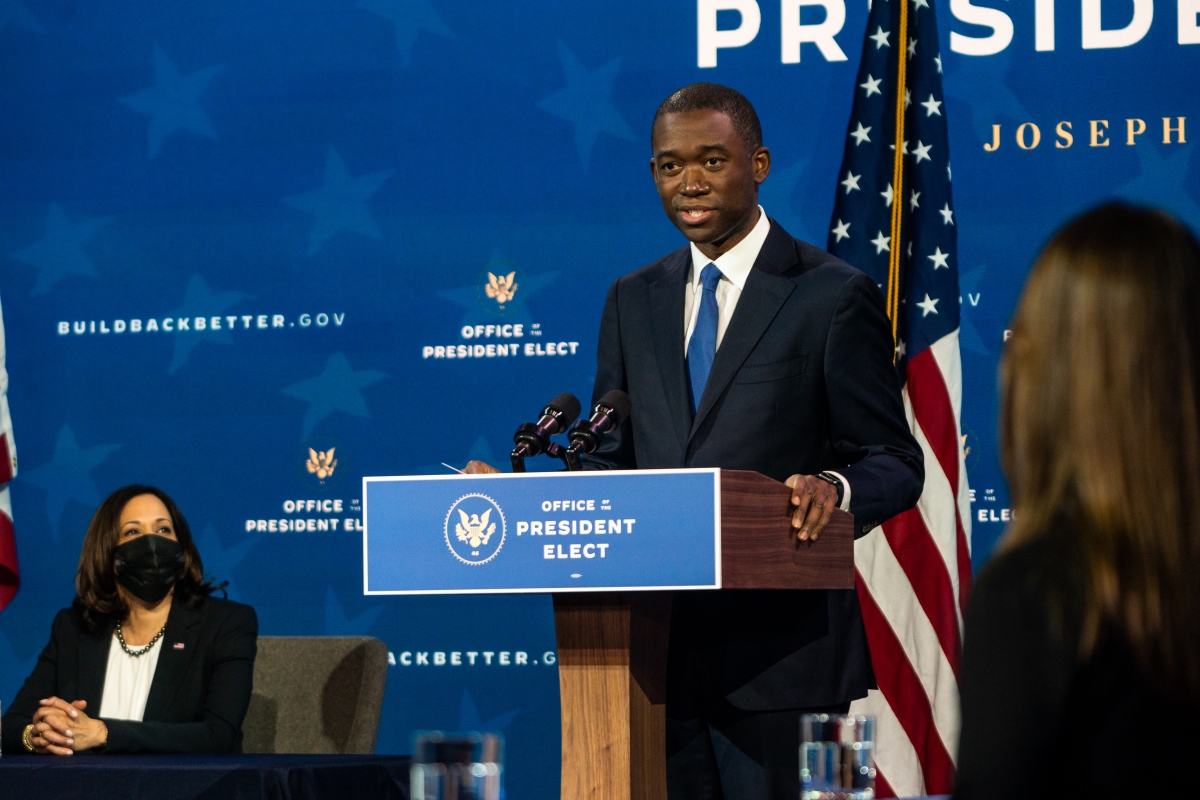
 Attorney General William Barr appears before the House Judiciary Committee in July. MUST CREDIT: Washington Post photo by Matt McClain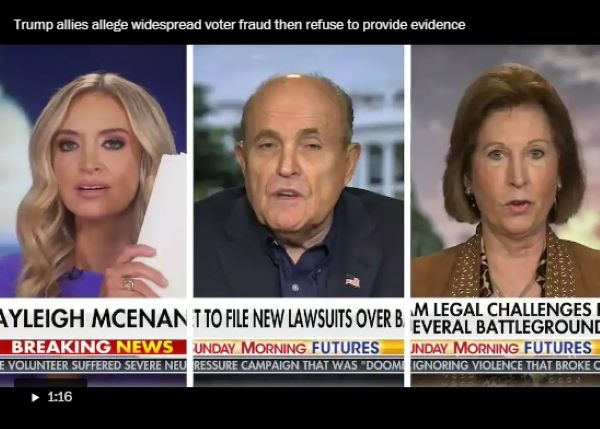

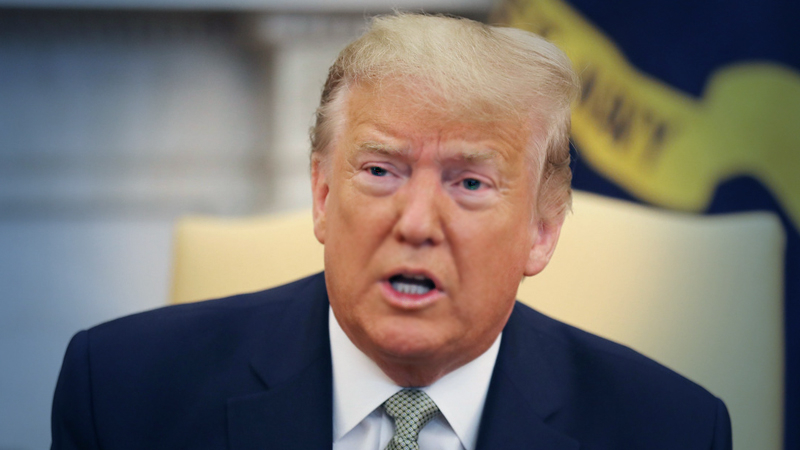
 Sen. Mitt Romney speaks to reporters in the Capitol in September. MUST CREDIT: Washington Post photo by Demetrius Freeman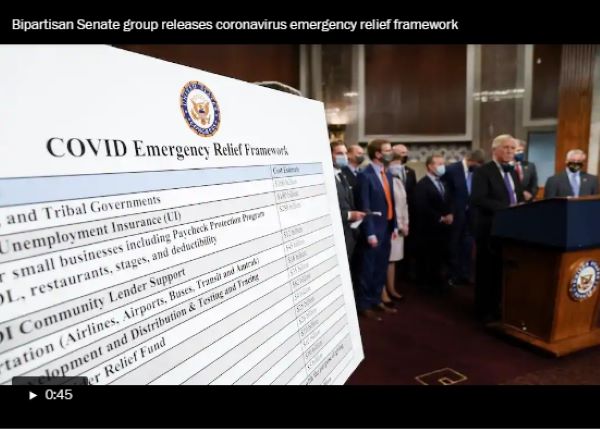
 Maryland Gov. Larry Hogan holds a news conference Nov. 17 to discuss the state’s response to the coronavirus pandemic. MUST CREDIT: Washington Post photo by Bill O’Leary
