Virus resurgence dashes hopes for Hong Kong-Singapore travel ‘bubble’
InternationalDec 02. 2020Airport workers wait for departing passengers during a media event at Hong Kong International Airport in Hong Kong, China, on Oct. 15, 2020. MUST CREDIT: Bloomberg photo by Billy H.C. Kwok
By Syndication Washington Post, Bloomberg · Kyunghee Park, Iain Marlow, Denise Wee
A resurgence of the virus is scuppering hopes of a return to normalcy in Hong Kong.
A key travel bubble with Singapore was delayed for a second time on Tuesday, some international banks ordered their staff to resume working from home and Carrie Lam, the city’s chief executive, said even parties at sea are off limits.
It’s a sobering reminder of how quickly circumstances can change. After a long lull with just a handful of cases a day, the deteriorating situation in Hong Kong prompted the government to impose tighter social-distancing rules and to close schools again. The city reported 82 new infections on Tuesday.
While Hong Kong’s resurgent outbreak is far less intense than in the U.S. and Europe, where cases in some places are still hitting daily records, it’s been enough to usher in a raft of new restrictions. With nightclubs and karaoke parlors closed, a hotline for residents to report parties aboard yachts and rented party boats has been set up, Lam told a weekly news briefing Tuesday.
“The reporting hotline newly set up is there because we see that, after party rooms and karaoke parlors have been made to close, there are a number of people who organize events at sea,” Lam said. “We want to target such a breach.”
While Hong Kong is poised to limit public gatherings to two people, the government hasn’t capped the number of people who can meet in private. A police representative declined to elaborate on the rules on whether the measure would have any effect on private parties hosted by yacht owners, referring only to the earlier Facebook post.
Meanwhile, global banks in the financial hub from Goldman Sachs Group Inc. to Standard Chartered Plc are urging more staff to work from home again.
Goldman Sachs will go back to a full work-from-home approach in Hong Kong starting Wednesday except for staff that have to be in the office to perform their roles, according to a staff memo that was confirmed by a bank spokesman.
Standard Chartered has applied a hard split-team arrangement for functions that require work in the office, and shortened branch hours last Friday, according to a spokeswoman. “In view of covid wave 4, we strongly encourage our staff to work from home where possible,” she said.
But perhaps Tuesday’s biggest setback was the delay until 2021 of the keenly anticipated travel corridor between Hong Kong and Singapore. That’s a blow for the region’s airlines and tourism businesses seeking to start a recovery from the almost year-long pandemic.
The travel bubble that would have involved rigorous coronavirus testing will be delayed beyond 2020, and the cities said Tuesday they will review the arrangement for 2021 toward late December. The pact, which would have allowed passengers to travel between the centers without a quarantine, was already postponed by two weeks on Nov. 21, a day before flights were due to start.
The decision was taken “in view of the severity of the epidemic situation in Hong Kong with the number of local cases of unknown sources increasing rapidly,” the Hong Kong government said in a statement.
Strict border curbs have helped Asia contain the coronavirus better than in other parts of the world, with countries from China to New Zealand limiting the entry of travelers and imposing mandatory quarantines as a way of stopping the virus at their doors. But the approach — which has seen some all but eliminate covid-19 — has come at a heavy cost, decimating tourism with cross-border travel basically paralyzed.
While in-country containment of the virus has resulted in the world’s 10 busiest domestic air travel routes now all being in Asia, according to OAG Aviation Worldwide Ltd., Hong Kong’s Cathay Pacific Airways Ltd. and Singapore Airlines Ltd. continue to struggle as they have no domestic travel market to fall back on. Cathay shares are down 26% this year; Singapore Airlines has slipped 31%.
A rise in cases in either Hong Kong or Singapore was always a risk for those who booked tickets when the bubble plan was announced on Nov. 11. It’s still possible to travel between the two cities, but a mandatory quarantine applies on both sides.
Singapore and Hong Kong had said they hoped the agreement can be a model for other nations trying to open up. Air traffic globally is expected to be at just 33% of 2019 levels at the end of this year, and “hopefully” at 50% to 60% by the end of 2021, Alexandre de Juniac, director general of the International Air Transport Association, said last month.
Cross-border traders in Asean can now take advantage of a new online Customs transit management system – the Asean Customs Transit System (ACTS) – to accelerate trade in goods by road within the region.
The ACTS was developed with the support of the European Union.
The new online system will reduce intra-Asean trading challenges and enable companies to benefit fully from the Asean Economic Community (AEC) and the free movement of goods across the region, Asean said.
In 2017, Asean Economic Ministers set the twin goals of reducing trade transaction costs by 10 per cent by 2020 and doubling intra-Asean trade between 2017 and 2025. To realise this goal, the ACTS has been developed to allow businesses to lodge e-transit declarations directly with Asean Customs Authorities and to track the movement of their goods from loading at departure to delivery at the final destination.
“The implementation of the ACTS plays a vital role in facilitating seamless movement of goods in the region. I believe the system would be an excellent tool in enhancing Asean’s trade and production networks as well as establishing a more unified market for its firms and consumers,” said Lim Jock Hoi, the Asean secretary-general.
“The ACTS could also support post Covid-19 recovery to accelerate the transit movement of medical supplies, vaccines and personal protective equipment within the member States,” he added.
Under the ACTS, the private sector can make a single Customs transit declaration that covers the transport of goods across multiple Asean countries, without the need to make repeated Customs declarations or change vehicles at each border. Special arrangements allow reliable traders to load their goods at their own premises in the country of departure, and to deliver the goods to their own premises at destination. Faster Customs clearance at borders helps accelerate transit movements, and reduce the time and expense of carrying out regional trade in goods, to the benefit of producers and consumers across the continental Asean region, Asean said.
The system is managed by a permanent ACTS central management team based in the Asean Secretariat in Jakarta, with support from the EU-funded ARISE Plus programme. Regional and national ACTS helpdesks are available (see https://acts.asean.org).
“The ACTS is a remarkable achievement that is testament to the strong, dynamic and long-standing partnership between Asean and the European Union,” said Koen Doens, director-general for International Cooperation and Development at the European Commission.
“The ACTS will make the movement of goods by road quicker and easier across the borders of the participating Asean member states, thereby reducing costs for businesses and citizens. The EU is proud to have joined Asean to make the ACTS a reality, providing European technical expertise and 10 million euros since 2012, in addition to the 5 million euros invested by our Asean partners,” he added.
ARISE Plus has provided extensive ACTS training for stakeholders in the public and private sectors, including Customs authorities, government transport agencies, freight forwarders, transporters, banks and insurance companies. Following the ACTS pilot activities in Cambodia, Lao PDR, Malaysia, Singapore, Thailand and Vietnam, the system has now been formally launched for general use. The first successful ACTS transit movement occurred on October 23 and 24 with a truck travelling from Singapore via Malaysia to Thailand. The system will soon be available in Myanmar, and depending on business needs may later be expanded to Brunei, Indonesia and Philippines.
“We are excited to have the Asean Customs Transit System in place,” said Yukki Nugrahawan, chairman of the Asean Federation of Forwarders Associations.
“The freight forwarding community will be one of the main beneficiaries of this system, as it offers simplified Customs and transport control procedures between different Asean member states, and provides predictability on door-to-door delivery times and most importantly reduced transport costs. The ACTS will significantly accelerate transit movements across the region and help us reduce time and expenses of carrying out cross border trade in Asean,” he added.
By The Washington Post · Jeff Stein, Annie Linskey, Seung Min Kim
WASHINGTON – President-elect Joe Biden’s pick to lead the powerful White House budget office generated early controversy Monday, with Neera Tanden emerging as an immediate target for conservatives and Republican lawmakers.
Tanden, 50, has regularly clashed with the GOP in a manner that Republicans say will complicate her Senate confirmation process. Several GOP senators said Monday that she could run into trouble during confirmation hearings, warning that her “partisan” background could make it hard for her to win Republican support.
The two Senate Republicans poised to lead committees that would hold Tanden’s confirmation hearings declined to commit to doing so. One of them – Sen. Rob Portman, R-Ohio, who is in line to chair the Senate Homeland Security and Governmental Affairs Committee – also said he hopes that Biden will decide not to formally nominate Tanden.
“The concern I have is both judgment, based on the tweets that I’ve been shown, just in the last 24 hours . . . and it’s the partisan nature,” said Portman, a former Office of Management and Budget director himself. “Of all the jobs, that’s one where I think you would need to be careful not to have someone who’s overtly partisan.”
The other potential committee chairman who would oversee Tanden’s hearings, Sen. Lindsey Graham, R-S.C., chuckled when asked about Tanden on Monday, noting that she in the past has had a lot to say about him. He also declined to commit to hearings for her, saying only that senators will “cross that bridge when we get there.”
Sen. John Thune, R-S.D. told reporters, “I’m not disqualifying anybody, but I do think it gets a lot harder obviously if they send someone from their progressive left that [is] kind of out of the mainstream.” Mick Mulvaney, President Donald Trump’s first budget director, told Fox News that Tanden had very little chance of being confirmed.
A loyal Democrat with decades of senior policy-making experience, Tanden has been tapped by Biden to lead the White House Office of Management and Budget (OMB), which plays a crucial role in setting the president’s economic agenda and approving agency policies. She would be the first woman of color to lead the budget office.
She was a close ally of former secretary of state Hillary Clinton and served as a senior adviser to President Obama’s Department of Health and Human Services, where she helped draft the Affordable Care Act. She most recently served as president of the Center for American Progress (CAP), a left-leaning think tank with deep ties to Democratic policy-makers. The OMB plays a pivotal role in the White House because of its role in setting the federal budget and clearing new regulations.
“She’ll be well situated to play hard,” said Dean Baker, a liberal economist. “Tanden is obviously an inside player, but she has been around Washington and will be smart on pushing stuff in ways that get through.”
If confirmed to lead the OMB, Tanden would be one of the central economic voices in the Biden administration, along with Janet Yellen, the former Federal Reserve chairwoman chosen to lead the Treasury Department; Cecilia Rouse, a Princeton University economist chosen to lead the White House Council of Economic Advisers; and Brian Deese, a BlackRock executive named to lead the White House National Economic Council. All but Deese would require Senate confirmation.
Sen. John Cornyn, R-Texas, a member of the Senate GOP leadership, said he did not see any reason why he would oppose Yellen, but he called Tanden Biden’s “worst nominee so far.”
“I think, in light of her combative and insulting comments about many members of the Senate, mainly on our side of the aisle, that it creates certainly a problematic path,” he said Monday.
Senate Minority Leader Chuck Schumer, D-N.Y., said Republicans were being hypocritical after having brushed aside Trump’s frequent Twitter attacks only to now express alarm about things Tanden has said in the past.
“Honestly, the hypocrisy is astounding,” he said. “If Republicans are concerned about criticism on Twitter, their complaints are better directed at President Trump. I fully expect to see some crocodile tears spilled on the other side of the aisle over the president-elect’s Cabinet nominees.”
Republicans hold a 50-48 majority in the Senate. There is a Georgia runoff election for the two remaining seats in early January that will determine which party controls the Senate when Biden takes office on Jan. 20, 2021.
Tanden would be required to go through two Senate confirmation hearings – one through the Budget Committee and the other through the Homeland Security and Governmental Affairs Committee. The OMB is a rare Cabinet position in which nominees have to file their tax returns to the committees for review.
Tanden has a history of engaging in more pointed and partisan critiques of opponents than Yellen, Deese, or Rouse, feuding on Twitter with conservatives and supporters of Sen. Bernie Sanders, I-Vt.
Tanden’s supporters praise her passion and willingness to fight aggressively across a range of policy issues, including her push against Republican deficit concerns at a time many economists believe further stimulus spending is necessary to propel the economy.
“You need people with toughness. Neera has that,” said former congressman Barney Frank, D-Mass. “She knows what she’s doing. She understands the politics.”
Tanden’s sometimes adversarial approach appears to strike a different tone than what Biden had promised to pursue during the campaign. In his presidential election victory speech, Biden called on Americans to “put the harsh rhetoric of the campaign behind us, to lower the temperature, to see each other again.” Biden added: “We have to stop treating our opponents as enemies. We are not enemies.”
Tanden’s comments may not be out of bounds with the climate of her party, however. Biden himself has also fiercely condemned Republicans at times. Under Tanden, the CAP worked with the American Enterprise Institute, a right-leaning think tank, on a series of events, including one that featured former Ohio Gov. John Kasich, a Republican at odds with the president.
Still, Tanden probably will face the most difficult path to Senate confirmation of Biden’s picks so far, according to interviews with six Republican aides and strategists who spoke on the condition of anonymity to discuss internal party deliberations.
Tanden has occasionally clashed with Sanders and his allies, with the senator criticizing the CAP think tank over its reliance on corporate donations. The identities of these donors and whether they might have business before the OMB next year could be a source of scrutiny as Tanden navigates the Senate confirmation process.
A CAP official said in an email that less than 2.5% of the organization’s funding came from corporate sources and that its research frequently broke with the wishes of its donors.
Meanwhile, Briahna Joy Gray, a former Sanders spokeswoman, called Tanden’s selection “less of an olive branch than a middle finger to the left.” But several prominent liberal lawmakers and economists, including Sens. Sherrod Brown, D-Ohio, and Elizabeth Warren, D-Mass., as well as Rep. Barbara Lee, D-Calif., defended Tanden on Monday.
Tanden declined to comment for this report, as did a spokesman for Sanders.
Part of Tanden’s appeal to Biden’s team is her wide range of experience leading the CAP, which is one of the largest think tanks in Washington and deals with national security, domestic security, and economic policy – all areas that the OMB director oversees, according to person familiar with the transition. Biden’s team is expected to frequently highlight Tanden’s hardscrabble upbringing, according to people close to the nomination process who spoke on the condition of anonymity to discuss private deliberations.
The daughter of Indian immigrants, Tanden was raised by a single mother who relied on government assistance programs before attending the University of California at Los Angeles and Yale University’s law school.
“After my parents were divorced when I was young, my mother relied on public food and housing programs to get by,” Tanden tweeted Monday. “Now, I’m being nominated to help ensure those programs are secure, and ensure families like mine can live with dignity. I am beyond honored.”
Tanden held prominent policy positions in the administrations of Presidents Bill Clinton and Barack Obama, and her resume played a role in her selection to lead the OMB. She has denied playing a role in Clinton’s welfare policy, which many Democrats now view as a mistake. At the Center for American Progress, Tanden also helped push the party left on budget and spending issues, though she initially expressed openness to cutting Social Security and Medicare along with many other Washington liberals at the time.
In 2012, the think tank was riven by a debate over how to raise taxes on the rich in their official proposal for replacing the then-expiring tax cuts from the George W. Bush administration. Tanden pushed forcefully, and successfully, for the center to adopt a position of a higher 39.6% top marginal bracket, according to people who spoke on the condition of anonymity to reveal the nature of the internal debate.
Tanden also oversaw the creation of a liberal coalition group, called Hands Off, devoted to fighting back against Republican efforts to cut social programs such as food stamps. The Center for American Progress helped lead the charge against many of the changes pushed by Trump’s budget office, from new policies designed to make it harder for immigrants to secure government assistance to rules limiting government regulations. Her allies say that experience makes her almost uniquely well suited to rollback many of the steps taken by the Trump administration.
“CAP has been at the center of most of the big fights through four years of Trump,” said Lisa Gilbert, executive vice president of Public Citizen, a left-leaning policy group. “That speaks to someone coming in who knows what norms were broken – and where we will have to throw down.”
Melania Trump’s Christmas goodbye: Women’s suffrage, first responders and more
InternationalDec 01. 2020The 2020 official White House Christmas tree displayed in the Blue Room is a Fraser fir from Shepherdstown, W.Va., trimmed with more than 160 artworks created by students from each state and territory depicting something that captures the spirit of their state. MUST CREDIT: Washington Post photo by Jabin Botsford.
By The Washington Post · Jura Koncius
Melania Trump seems to have a love/hate relationship with Christmas.
The Red Room salutes America’s first responders and front-line workers, who have been critical during this pandemic. The tree decorations and mantel display highlight this theme. MUST CREDIT: Washington Post photo by Jabin Botsford.
The first lady always looks runway ready in her annual White House Christmas videos that she shares on Twitter on the day the decorations are unveiled. Today’s installment, marking the Trumps’ fourth and last Christmas in the White House – at least in this go round – highlights her 2020 “America the Beautiful” theme. Dressed in a shimmery gold top and stiletto heels, she glides, softly smiling, through the glittering, twinkling rooms in the one-minute tour of the decorations, which this year include American flag ornaments and photos of historic American female leaders.
This comes on the heels of Trump being labeled a Christmas grump after her stunning “Who gives a f— about the Christmas stuff and decorations?” comment to former East Wing adviser Stephanie Winston Wolkoff. The taped conversation, secretly recorded in 2018 and released in October, created a major stir.
Nevermind. The first lady carried on with her duties, and this year she’s dished up decorations that aptly reflect her patriotic theme, including ornaments in the Library that honor the anniversary of the ratification of the 19th Amendment and, in the State Dining Room, a gingerbread replica of the White House, including the recently renovated Rose Garden. The official White House Christmas tree, in the Blue Room, features more than 160 pieces of artwork created by students from each state honoring what they think makes their state beautiful.
The 2020 gingerbread house displayed in the State Dining Room depicts the West Wing, Executive Residence and, for the first time, the Rose Garden and First Ladies’ Garden. The pastry team used 275 pounds of gingerbread dough, 110 pounds of pastillage dough, 30 pounds of gum paste, 25 pounds of chocolate and 25 pounds of royal icing. MUST CREDIT: Washington Post photo by Jabin Botsford.
A Red Room mantel honoring first responders, including a snow-dusted hospital, is a sobering moment in the tour, bringing attention to the pandemic that has killed more than 266,000 Americans.
The White House reported that “more than 125” volunteers worked on the project, and photos shared on the FLOTUS Twitter feed depict some wearing masks while participating in the weekend’s assembly sessions. (In 2018 and 2019, 225 volunteers worked on decorations.)
According to a Nov. 23 article from the Associated Press, the White House is still planning to host a number of holiday parties, despite CDC guidelines indicating that gatherings with family and friends who do not live with you can increase the chances of getting or spreading the coronavirus. Stephanie Grisham, first lady Melania Trump’s spokeswoman and chief of staff, told the AP that this year’s holiday events will include smaller guest lists, require masks and encourage social distancing on the White House grounds. Hand sanitizer stations will be placed throughout the State Floor.
She told the AP: “Guests will enjoy food individually plated by chefs at plexiglass-protected food stations. All passed beverages will be covered. All service staff will wear masks and gloves to comply with food safety guidelines.”
The first lady’s office did not immediately respond to requests for comments on this or questions on how many gatherings were planned.
The 40 towering crimson topiary trees that appeared in the East Colonnade in 2018 (which quickly became known on social media as “the avenue of blood red trees”) this year have been replaced by classical urns filled with “foliage representative of the official tree of each state and territory.”
The Library was decorated for the holidays to recognize the 100th anniversary of the ratification of the 19th amendment. Children’s artworks featuring women of achievement are displayed on the base of the tabletop tree. MUST CREDIT: Washington Post photo by Jabin Botsford.
Certain decorations have become Christmas staples during the Trump era. Be Best ornaments honor the first lady’s children’s initiative. Her “signature wreaths” (pine circles with red bows) made their debut on exterior windows of the White House in 2017 and this year there are 106 wreaths, one adorning each window. The Gold Star Family Tree honoring military families is an annual tradition upon entering through the East Wing, and the 18th century Neapolitan Creche, now in its 53rd year on display at the White House, according to the first lady’s press office, is displayed in the East Room.
The changes in the holiday previews over the years seem to reflect the Trump family’s souring relations with the press. In Trump’s first White House Christmas, in 2017, reporters assembled to watch the first lady descend the Grand Staircase in an icy white dress to pose in front of snow-covered trees as the Marine Band played “The Nutcracker Suite.” Although she made no formal remarks, we were allowed to follow her as she made her way through the decorated rooms chatting with children who had been invited to make gumdrop trees and greenery swags. In 2018, the preview offered reporters only self-guided tours. Grisham, her spokeswoman, told me at the time that Trump decided “to let the decorations speak for themselves.” From then on, the first lady skipped the traditional press preview and released her own video instead.
The traditional red-and-green style of her annual Christmas decorations, as well as last year’s glitzy green-and-gold State Dinner in the Rose Garden for the Australian Prime Minister, will be part of Trump’s design legacy as first lady. She says this year’s theme reflects her many trips across the country over the course of her husband’s presidency.
“Over the past four years I have had the honor to travel to some of our nation’s most beautiful landmarks and meet some of the most compassionate and patriotic American citizens,” she said in a statement. “From coast to coast, the bond that all American’s [sic] share is an appreciation for our traditions, values, and history, which were the inspiration behind the decorations this year.”
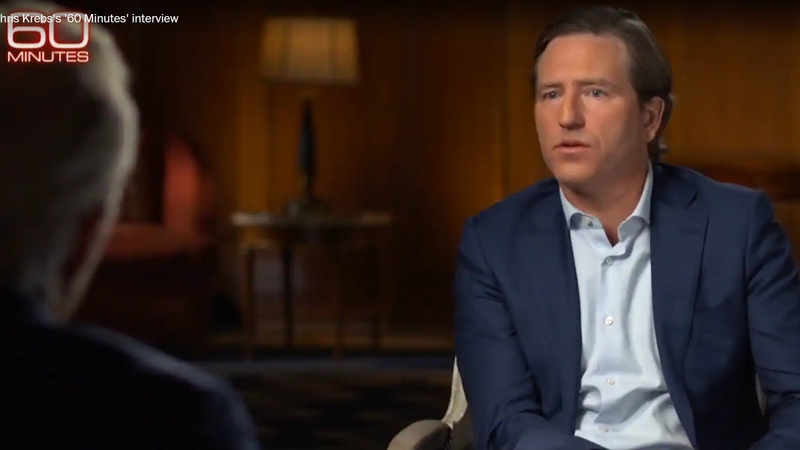
In his first interview after President Donald Trump fired him from his post leading the Department of Homeland Security’s effort to help to secure the election, Christopher Krebs reaffirmed on Sunday that there was no evidence of voter fraud and the integrity of the election had not been compromised.
“There is no foreign power that is flipping votes. There’s no domestic actor flipping votes. I did it right. We did it right,” Krebs told CBS News’s Scott Pelley on “60 Minutes.” “This was a secure election.”
Trump vehemently disagreed, turning to his Twitter feed late Sunday to excoriate Krebs and the news program, and reassert his unfounded claims that the election he lost was “probably our least secure EVER!”
“NO WAY WE LOST THIS ELECTION!” tweeted Trump, again without evidence, in another claim marked as “disputed” on Twitter.
Krebs, a Republican who joined DHS in 2017 as a senior counselor to then-Secretary John Kelly, was confirmed in 2018 as undersecretary for the National Protection and Programs Directorate, later rebranded to the Cybersecurity and Infrastructure Security Agency (CISA).
Krebs seemingly fell out of Trump’s good graces earlier this month when CISA released a joint statement with the coordinating council of state and local federal government entities in charge of protecting elections that rejected the president’s claims and called the election “the most secure in American history.”
Five days later, on Nov. 17, Krebs, like many other government officials over the past four years, learned he was terminated from one of the president’s tweets.
During his interview with “60 Minutes,” Krebs spoke frankly about the effect the president’s rhetoric has had on state elections officials. He specifically mentioned secretaries of state in Pennsylvania, Michigan, Nevada and Arizona, all women, who are “under attack from all sides, and they’re defending democracy,” Krebs said.
“Look at Secretary [Brad] Raffensperger in Georgia, lifelong Republican,” Krebs said. “He put country before party in his holding a free and fair election in that state. There are some real heroes out there. There are some real patriots.”
Krebs also quashed the false assertions made by the president and his team, which included claims that Venezuela hacked voting machines and that votes are being tabulated in foreign countries. “I don’t understand this claim,” Krebs said. “All votes in the United States of America are counted in the United States of America. Period.”
“The American people should have 100% confidence in their vote,” he added.
Much of the segment focused on Krebs’s desire to reassure the public that election was secure, telling Pelley that his department had spent more than three years preparing for every possible scenario of meddling from a foreign adversary. Specifically hoping to avoid a repeat of Russia’s interference in the 2016 election, one of the key measures was the use of paper ballots, he said.
“Paper ballots give you the ability to audit, to go back and check the tape and make sure that you got the count right,” Krebs said. “And that’s really one of the keys to success for a secure 2020 election. Ninety-five percent of the ballots cast in the 2020 election had a paper record associated with it. Compared to 2016, about 82 percent.”
The paper ballots also helped prove that the votes in Georgia were not hacked by a “malicious algorithm,” he said. Trump’s demand for a hand recount further proved Krebs’s point, showing that the votes that were tabulated by machines were consistent with the hand recount results.
Krebs said those results definitively debunk the president’s false claims that election vendors were hacked and their software and systems were compromised.
“It’s nonsense,” he said.
The Trump campaign did not immediately respond to a request for comment.
At one point, the interview got more personal when Pelley asked Krebs about his sudden ousting. Krebs said that while he was not surprised by the president’s move to fire him, he was disappointed in how it all unfolded.
“It’s not how I wanted to go out,” he said, dolefully. “I love that team. And I didn’t get a chance to say goodbye, so that’s what I’m most upset about.”
The former government official also expressed his worries that the actions by Trump and personal attorney Rudolph W. Giuliani were undermining the democratic process. Giuliani has held several news conferences spewing conspiracy theories. On Sunday morning, Trump spoke to Maria Bartiromo on Fox News’s “Sunday Morning Futures,” unchallenged for 45 minutes about his unfounded claims of the election being “rigged” and “a fraud.”
For Krebs, he worries these actions could cause irreparable harm.
“What it was actively doing was undermining democracy,” Krebs said. “And that’s dangerous.”
InternationalDec 01. 2020An election worker sorts through ballots during a recount of Milwaukee County results at the Wisconsin Center on Nov. 20, 2020. MUST CREDIT: Photo for The Washington Post by Taylor Glascock
By The Washington Post · Rosalind S. Helderman, Amy Gardner · NATIONAL, POLITICS
WASHINGTON – The recount of presidential ballots in Wisconsin’s two largest counties reconfirmed Sunday that Joe Biden defeated President Donald Trump in the key swing state by more than 20,000 votes, the latest example of the president’s flailing efforts to undo the election results.
The completion of the recount – which the Trump campaign had requested – added to a pileup of defeats for the president as he continues to attack Biden’s national victory, claiming without evidence that widespread fraud tainted the results. His campaign has vowed to appeal to the U.S. Supreme Court, though it has yet to do so, while suffering losses nearly every day in state and federal courts.
After the completion of the recount in Wisconsin’s Milwaukee County on Friday and Dane County on Sunday, there was little change in the final breakdown of the more than 800,000 ballots that had been cast in the two jurisdictions. In the end, Biden’s lead over Trump in the state grew by 87 votes.
Under Wisconsin law, Trump was required to foot the bill – meaning his campaign paid $3 million, only to see Biden widen his margin.
With the recount concluded, the president is rapidly running out of opportunities to try to slow Biden’s march to the presidency.
Four of the six states where Trump has questioned the results have certified their vote tallies. His efforts to stop Michigan officials from finalizing the vote there this month ran aground. A hand recount of ballots in Georgia confirmed Biden’s win in that state. A second recount there is expected to conclude Wednesday, and Georgia election officials do not expect it to significantly change Biden’s approximately 12,000-vote margin.
Meanwhile, two new court decisions in Pennsylvania late last week rejected the Trump campaign’s attempts to halt the vote count in that state, the latest in a series of forceful judicial opinions that have tossed out claims by the president and his allies across the country.
The last key vote certifications could come Monday, when Arizona is set to finalize its results, along with Wisconsin, which announced Sunday that it would complete its state canvass then.
Republicans, including the three who sit on Wisconsin’s six-member election commission, may attempt to delay certification. However, under state law, the chair of the commission – currently a Democrat – has the authority to finalize the results.
The president and his legal advisers have said they still plan to fight in court in an attempt to prevent Wisconsin from moving forward.
“The Wisconsin recount is not about finding mistakes in the count, it is about finding people who have voted illegally, and that case will be brought after the recount is over, on Monday or Tuesday,” Trump tweeted Saturday. “We have found many illegal votes. Stay tuned!”
Trump campaign legal adviser Jenna Ellis claimed without evidence in a statement Sunday that the recounts had “revealed serious issues regarding the legality of ballots cast.”
“As we have said from the very beginning, we want every legal vote, and only legal votes to be counted, and we will continue to uphold our promise to the American people to fight for a free and fair election,” she said.
Danielle Melfi, the Wisconsin director of the Biden campaign, said in a statement that local boards of canvassers had “resoundingly rejected – often on a bipartisan basis – the Trump campaign’s baseless attempts to disenfranchise hundreds of thousands of Wisconsinites who simply followed the law when they voted. And despite repeated incendiary accusations, there was no evidence of fraud whatsoever.”
Even if the Trump campaign were to pull out a surprise courtroom win – which legal experts said is unlikely – it would do little to change the outcome of the White House race, which Biden won with 306 electoral votes. The electoral college will meet on Dec. 14 to formalize his victory.
Trump escalated his false claims about the election during a telephone interview with Fox News on Sunday, alleging that Democrats had orchestrated a “big, massive dump” of hundreds of thousands of illegal votes in the election.
The president made it clear that he would never accept his loss and is contemplating the appointment of a special counsel to investigate the election, though that decision would fall to Attorney General William Barr.
“My mind will not change in six months,” Trump told host Maria Bartiromo on Fox News’s “Sunday Morning Futures.” “There was tremendous cheating here.”
But he faces diminishing avenues to make such claims.
After a three-judge panel of the U.S. Court of Appeals for the 3rd Circuit resoundingly rejected the Trump campaign’s attempts to undo the certification of the Pennsylvania vote last week, Ellis vowed that the campaign would take the case to the Supreme Court.
However, the 3rd Circuit decision involved only a technical question about whether the Trump campaign could amend its lawsuit. And the categorical nature of the ruling by a panel of three Republican-nominated judges – written by a judge nominated by Trump – did not bode well for the campaign’s chances.
On Sunday, Trump acknowledged that he may not succeed in getting the country’s high court to weigh in.
“The problem is, it’s hard to get into the Supreme Court,” he said on Fox News. “I have got the best Supreme Court advocates, lawyers, that want to argue the case, if it gets there. But they said it’s very hard to get a case up there. Can you imagine? Donald Trump, president of the United States, files a case, and I probably can’t get a case, even with – and we have tremendous proof.”
In fact, the Trump’s campaign’s path to the nation’s highest court has been made more difficult by just how little evidence it has offered to lower-level courts of voting irregularities, drawing repeated rebukes from judges.
In Wisconsin, the president’s campaign sought to use the recount process to invalidate tens of thousands of otherwise legal ballots. Among other things, Trump’s lawyers argued that a form signed by voters who cast a ballot during in-person voting before Election Day was insufficient under state law. They said all those ballots – totaling about 180,000 votes in the two counties – should be tossed out.
They also complained about a practice in place since 2016 that allows election officials to fix tiny errors on the certification envelopes of some mail-in ballots, as well as rules in place since 2011 that allow some people to declare themselves “indefinitely confined” due to age or disability and vote without showing a photo ID.
Local officials in each county rejected the Trump campaign arguments and included the ballots in the recount.
In announcing Dane County’s results Sunday, Clerk Scott McDonell told reporters that he saw Trump’s tweet as “a clear admission to the fact that there was no fraud found here,” but instead an acknowledgment that the Trump campaign’s concerns amounted to “objections to policies.”
He said the process should “reassure” the public about the accuracy of the count, but said he found it “disturbing” that the Trump campaign had targeted only two Democratic counties for practices in place across Wisconsin.
Two conservative groups filed lawsuits last week, asking the Wisconsin Supreme Court to consider challenges to the recount process. The seven-member elected court has not yet said whether it will agree to hear the cases; Republicans have a 4-to-3 majority on the court. The Trump campaign is not a party to either suit.
Legal experts have said the arguments advanced by the Trump campaign during the recount were thin. They also said that even if judges were to conclude that some practices by Wisconsin clerks were technically flawed, they would be extremely unlikely to throw out tens of thousands of ballots cast by voters who did nothing wrong other than follow rules, as directed by election officials.
Further undermining the Trump campaign’s argument, experts said, is the fact that it raised only objections in two predominantly Democratic counties.
The practices that Trump lawyers criticized are in place statewide and have been in place for years, including before to the 2016 election – which Trump won and did not contest.
Their arguments would not invalidate only Biden votes. Documents prepared as part of the Dane County recount showed that the Trump campaign’s own lead attorney in Wisconsin, James Troupis, had voted early and in person. He essentially argued that his own vote was illegal and should not be counted. Troupis did not respond to requests for comment.
“This whole strategy is so shortsighted. It’s so self-destructive in the long term,” said James Wigderson, a conservative activist and editor of the website RightWisconsin, who did not vote for Trump.
He said the GOP gambit sent a strong message to voters of color that the Republican Party believes their votes are less valid than those cast in White suburbs and rural areas. “Republicans should be outraged by this,” he said.
Under Wisconsin law, Trump was allowed to request the recount because Biden’s margin of victory – about 0.6% – was less than 1%. However, Trump’s campaign was required to pay for the recount because Biden’s margin was more than 0.25%. Trump could have requested a full statewide recount, at a cost of nearly $8 million. Instead, his campaign opted to pay less for a narrower recount in the state’s two most Democratic-leaning counties.
“This recount demonstrated what we already know: that elections in Milwaukee County are fair, transparent, accurate and secure,” County Clerk George Christenson said as the county election commission voted to certify its results Friday. “We have once again demonstrated good government in Wisconsin.”
The recount required dozens of election employees to work for more than 12 hours a day since Nov. 20, taking off only Thanksgiving Day. Officials in both counties took over local convention centers to allow workers to spread out, erected plexiglass shields, and instructed workers and observers alike to wear masks.
Still, election officials worried that employees could have been exposed to the coronavirus while conducting a process they had asserted from the start was exceptionally unlikely to change the state’s results, given Biden’s margin of victory.
“I’m very concerned,” Christenson said in an interview.
He noted that there among the 300 people who gathered at a convention center each day for the recount was a poll worker who was pregnant. A member of the local elections commission, who had to be at the site full time to adjudicate challenges raised by the Trump campaign, is 73 years old and has a heart condition, he said.
In other states, a few scattered legal efforts are still underway. In Nevada, the Trump campaign has filed a formal election contest under a state law that allows a losing candidate to challenge the results of an election based on illegal votes cast or official malfeasance. The campaign has asked a judge to declare Trump the winner or annul the election, which would mean neither candidate would receive the state’s six electoral votes.
To prevail, Trump’s lawyers would have to show enough voting irregularities to cast doubt on Biden’s win of more than 33,000 votes. That seems unlikely, given that judges have rejected Republicans’ previous allegations of wrongdoing and fraud – some of which are repeated in the Trump election challenge.
Nevada law allows the Trump campaign to conduct depositions as part of the challenge.
In Arizona, state Republican Party Chairwoman Kelli Ward has said she intends to file an election contest in that state after the results are certified Monday.
Ward has asked a judge to allow her to begin examining mail ballots, claiming that the signature verification process allowed fraudulent votes to be counted. A hearing is scheduled for Monday.
Arizona Republicans are planning to host Trump campaign lawyers Ellis and Rudy Giuliani on Monday in what they are calling a “fact-finding hearing” on election fraud.
The Trump campaign has billed the meeting as a hearing held by the state legislature. In fact it is a meeting of members of the legislature at a Hyatt Regency in Phoenix – much like a similar press event held in Gettysburg, Pa., last week, during which Giuliani and Ellis repeated numerous unfounded claims of fraud.
Republican Attorney General Mark Brnovich has defended the integrity of the state’s election. He and GOP Gov. Doug Ducey are expected to be present at the certification of results Monday.
By Syndication Washington Post, Bloomberg · Viren Vaghela
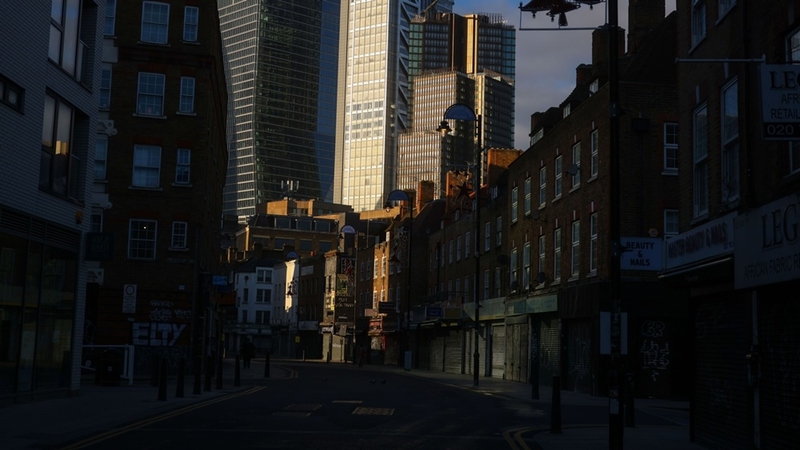
The golden age of the City of London began with a big bang. It’s ending with a whimper.
Fears that the finance powerhouse that emerged from Margaret Thatcher’s 1986 deregulation — known as the Big Bang — will gradually be dismantled have deepened with a recent flurry of announcements about some business heading to the European Union as Britain enters the last month of the Brexit transition period without a financial-services deal in sight.
The latest shift came Monday when London Stock Exchange Group Plc’s stock trading platform Turquoise Europe goes live in Amsterdam. It joins other trading venues like Cboe Europe and Aquis Exchange Plc setting up shop on the continent as part of their no-deal Brexit plans, a contrast with the late 1980s, which ushered in a period where London became the place to be for equities trading.
“The City of London has been thrown to the lions,” said Alasdair Haynes, chief executive officer at Aquis, adding that the U.K. could lose even more stock trading than it expects if giant U.S. asset managers like BlackRock Inc. decide to trade in Paris and Amsterdam.
Last week, Goldman Sachs Group Inc., said it had applied to French regulators to open its SIGMA X Europe stock platform in Paris from Jan 4. Goldman partner Elizabeth Martin said that she expects most of the $10 billion (8.6 billion euros) a day in London-based European share trading to shift to the bloc.
Aquis has already established a platform in the French capital. It went live with more than 1,700 European shares earlier this month. Other trading venues like Liquidnet have outposts in Dublin to ensure they can service clients.
“We are expecting a big bang on Jan. 4,” said David Howson president of Cboe Europe, the largest of London’s stock trading platforms, which opened its own venue in the Dutch capital last year. “The industry has never had to move this much flow overnight.”
It’s not just stock dealing that’s shifting. Brussels disappointed London swap traders last week when its markets regulator said that derivatives need to change hands on EU-based platforms from January. That means trillions of dollars of trades are at risk of being transacted outside of the U.K.
The bloc has already made a land grab for London’s euro swaps clearing business, urging its banks to accelerate a shift to Europe. Deutsche Boerse AG’s Eurex Clearing has built up a 19% share of the business over recent years although it is dwarfed by London’s market share.
In recent weeks, Goldman and JPMorgan Chase & Co. have indicated that between them more than 300 staff will move to continental cities. Goldman is shifting as much as $60 billion in assets to Frankfurt, while JPMorgan is moving about $230 billion to the German city.
Consultancy EY said in a new report Monday that only 10% of big financial services firms are planning to establish or expand operations in the U.K. in the coming year, discouraged by the uncertainties of Brexit and the covid-19 pandemic. That’s down from 45% in April.
EY said in a report last month that the 7,500 roles and 1.2 trillion pounds ($1.6 trillion) in assets that have moved already may just be the beginning. It expects further shifts in personnel and assets once the U.K.’s transition period officially ends.
That bodes ill for the U.K., where finance employs more than one million people, makes up about 7% of the economy and accounts for more than a 10th of all tax revenue. Despite that, the industry has garnered little of the attention bestowed on fishing, which makes up just 0.1% of the U.K. economy, in the protracted Brexit negotiations.
To be sure, London’s long-standing advantages of the English language and legal system and a deep talent pool mean it won’t be overtaken anytime soon. And a last-minute agreement with the EU on financial services could still happen.
The LSE said it would call off its plan for Turquoise Europe if the European Union declared that Britain can host trading services for EU shares, part of a process known as equivalence. Such an agreement remains a possibility.
But time is running out. And without an agreement London’s status as Europe’s financial hub will no longer be in its hands.
“The kingmakers here will be the Americans,” Aquis CEO Haynes said. “There’s no guarantee they will still trade in London. They will follow the liquidity.”
OPEC faces seismic demand split as cartel plots next move
InternationalDec 01. 2020Security personnel stand in front of the media ahead of the 177th Organization of Petroleum Exporting Countries (OPEC) meeting in Vienna on Dec. 5, 2019. Ministers gather virtually this year. MUST CREDIT: Bloomberg photo by Stefan Wermuth
By Syndication Washington Post, Bloomberg · Javier Blas
As OPEC+ ministers gather virtually this week, the city that traditionally hosts their meetings will be locked down. Vienna’s Christmas markets will be closed, the famous Ringstrasse boulevard silent. For oil ministers, the scene should urge caution.
Oil pumping jacks in a Rosneft Oil Co. oil field near Sokolovka village in the Udmurt Republic, Russia, on Nov. 20, 2020. The flaring coronavirus outbreak will be a key issue for OPEC+ when it meets at the end of the month to decide on whether to delay a planned easing of cuts early next year. MUST CREDIT: Bloomberg photo by Andrey Rudakov
But while the Austrian capital provides a dramatic example of how the second wave of the pandemic is shutting down economies in Europe and the U.S., the global picture is more nuanced.
In Asia, the situation is almost the opposite to that of Vienna. The streets in India were full during the recent celebration of Diwali; China’s Golden Week holiday saw millions take cars, trains and even planes to visit relatives across the country.
The east-west divide is an added conundrum for OPEC+, which on Monday and Tuesday needs to decide whether to delay a production increase slated for January — and if so, for how long. Informal talks on Sunday failed to yield an agreement.
As well as the geographical split, there’s another crucial divide in the global oil market: while gasoline and diesel demand have recovered to about 90% of their normal level, consumption of jet fuel languishes at about 50%.
“The size of the shock and the unevenness of its impacts imply a recovery process which is far from smooth,” said Bassam Fattouh, the head of the Oxford Institute for Energy Studies.
In private, OPEC+ delegates talk about the imbalance in the recovery, both geographically and between refined products. Increasingly too, they talk about another segmentation: crude oil quality. The market for the denser more sulfurous crude, called heavy-sour, is tight, mostly due to production cuts from Saudi Arabia, Russia and other big producers. But the market for so-called light-sweet is glutted, in part because Libyan barrels have come back to the market after a cease-fire, and European refiners are consuming less North Sea crude.
All those factors make the deliberations of OPEC+ ministers trickier. And they have just one blunt tool at their disposal: raising or cutting overall production. OPEC+ nations do not target gasoline or jet-fuel production, but just crude.
There’s also a geographical handicap: most of their oil goes to Asia, where demand is strong, rather than Europe and America, where it’s weaker. That means they can do little to address the glut where it matters. Even the quality is a problem: OPEC pumps mostly heavy-sour crude, and can do relatively little to trim the excess of light-sweet crude.
There is some consolation. While the recovery in oil demand that started in May stuttered in October and November as the second wave took hold, it wasn’t the same hit to the market as earlier this year. The lockdowns in Europe aren’t as severe as the first wave, and demand in Asia is surging — not just in China, but also in India, Japan and South Korea.
High frequency data for road usage shows a decline in early November of about 30% from pre-Covid levels, compared to nearly 70% in late March and early April, according to an index compiled by Bloomberg News. The most recent data suggests that road fuel demand bottomed out around Nov. 15, and has been recovering since. With European nations easing lockdowns in the run-up to Christmas, demand is likely to recover further.
Pieced together, this all means the market isn’t as bad as it looked just a few weeks ago. Oil prices are reflecting the more positive tone: Brent crude has rallied well above $45 a barrel, and the shape of the curve has flipped, with nearby contracts trading at a premium to later ones. That dynamic, known as backwardation and traditionally a bullish signal, means that demand is running above supply.
The physical market, where actual barrels change hands, is also showing signs of strength: the favorite crude varieties of Chinese refiners are commanding rising premiums. Take ESPO crude of Russia, a grade that Chinese independent refiners, known as teapots, like to buy. In the most recent tenders, it has changed hands at $2.85 a barrel above its benchmark, up from 55 cents in mid-October.
Beyond the next quarter, the outlook improves further.
Many are already hopeful about the impact of virus vaccines on oil demand. If they are right, by midyear, when OPEC is likely to be meeting again, the streets of Vienna will be once again full of tourists, often perplexed to see oil ministers followed by packs of television cameras across the Austrian capital. The cartel is tentatively planning to hold its biannual international oil seminar, a two-day festival of the industry, at the Imperial Hofburg Palace in June 2021.
“Vaccine efficacy and availability point to a large enough recovery in oil demand next year to allow OPEC to achieve both a rebalancing of excess inventories as well as increase production sharply,” said Damien Courvalin, oil analyst at Goldman Sachs Group Inc.
For now though, OPEC+ still has work to do. If the cartel wants to keep draining inventories accumulated earlier this year, it needs to keep the market in deficit, rather than simply balance supply and demand. With Libyan output surging back, OPEC’s own economists believe that global inventories would increase by about 200,000 barrels a day during the first quarter of 2021 if the group increases output as scheduled in January. If it delays the hike by three months, then stocks would instead drain by about 1.7 million barrels a day between January and March, a similar amount to what it expects in the fourth quarter of 2020.
“The job is far from done,” said Gordon Gray, global head of oil and gas equity research at HSBC Holdings Plc.
By Syndication Washington Post, Bloomberg · Tim Ross, Alex Morales
Boris Johnson is battling to convince Conservative Party colleagues to back plans to keep most of England under strict pandemic controls when the national lockdown ends this week.
Ministers on Monday will publish analysis of the health, economic and social impacts of the pandemic and the measures taken to suppress the disease, before a scheduled vote on Tuesday over England’s return to a three-tier system of coronavirus restrictions to replace the lockdown on Dec. 2.
With reports that as many as 100 Conservatives may rebel in the vote because they say the new rules are too tough, Johnson at the weekend wrote to his critics promising concessions in an attempt to persuade them to support him. He warned that a third national lockdown may be required if the country fails to bring the coronavirus under control.
“The prime minister and other ministers will be working very hard to reassure them about the steps that we are taking,” Environment Secretary George Eustice told Sky News on Monday. “There’s great frustration with the emergency measures we’ve had to take to deal with this pandemic.”
If 100 Tories rebel, it would deliver a damaging political blow to the premier and could even cause his plans to fail. But while the main opposition Labour Party have yet to say how its MPs will be asked to vote, indications from members of the shadow cabinet are that they’ll rescue the prime minister from defeat by supporting his measures.
On Sunday, Shadow Transport Secretary Jim McMahon told Times Radio it would be “illogical” to vote against the new tiered system because then the country would be left without any pandemic restrictions given England’s current lockdown expires by law on Dec. 2.
“We’ve always supported sensible public health restrictions and of course we will put that first again tomorrow,” Shadow Education Secretary Kate Green told Sky News. She said she hopes Johnson “will be able to give us all the reassurances that we need today to make the right decision for the public and keep everyone safe.”
The prime minister intends to put most of England in the top two tiers of curbs from Dec. 2 to suppress the virus further before loosening the rules in time for families to meet at Christmas. The rules will be reviewed every two weeks, with the first coming on Dec. 16.
But his strategy of locking down England twice and now keeping the hospitality industry under tight restrictions has put him at odds with many in his own party, who fear the economic damage of lost jobs and failed businesses risks outweighing the benefits to health. Many have complained about the inconsistency of the new tiered system, lumping areas of low infection under tough restrictions along with places with high prevalence.
After Cabinet minister Michael Gove wrote in the Times newspaper all hospitals in England would face being overwhelmed if MPs block the new restrictions, former minister Mark Harper told Gove to prove it.
“If he genuinely thinks that hospitals would be overwhelmed, then show us the modeling and the evidence that he sees,” Harper said in an interview with Times Radio. “I simply don’t know whether it’s true.”
In his letter, Johnson appealed to members of Parliament to back the regulations, promising the rules would expire on Feb. 3 under a “sunset” clause and saying MPs would get another vote on whether to extend the restrictions to the end of March.
“Disagreement on approach is natural, and I hope you recognize that the government is seeking as far as possible to listen to criticism and respond positively to constructive proposals,” Johnson wrote in his letter to Tory MPs. “I do believe that the strategy set out is a balanced approach, which helps protect the NHS from being overwhelmed, keeps children attending school, and lets the economy open up in a safe way, and the best way forward.”
Officials are also working to develop a national mass testing program to replace the need for self-isolation, Johnson said.
Meanwhile, the government announced 20 million pounds ($27 million) will be allocated to boost medicine manufacturing, to encourage companies to build new factories and adopt new technologies. Johnson will launch the Medicines and Diagnostic Manufacturing Transformation Fund on a visit to North Wales on Monday.
WASHINGTON – Some Supreme Court justices on Monday seemed skeptical of President Donald Trump’s claim that he has the authority to exclude undocumented immigrants from population totals when deciding congressional reapportionment. But they also wondered whether a definitive answer is needed now.
Chief Justice John Roberts was among those questioning whether the court should wait to see whether the Census Bureau, under the direction of Commerce Secretary Wilbur Ross, can even produce useful numbers about the undocumented population. Or whether the numbers the government can produce will make a difference when deciding the size of each state’s congressional delegation.
Acting Solicitor General Jeffrey Wall said during Monday’s arguments that it was unclear what the department can produce in the remaining month before its report to the president is due. The Supreme Court said over the summer that the administration could not ask a citizenship question on the census form.
Wall said it was more likely the president would try to eliminate subsets of the undocumented based on existing administrative records, but it was unclear how successful that process would be.
Roberts said that counseled caution.
“We don’t know what the secretary is going to do. We don’t know what the president is going to do. We don’t know how many aliens will be excluded. We don’t know what the effect of that would be on apportionment,” Roberts said. “All these questions would be resolved if we wait until the apportionment takes place. So why aren’t we better advised to do that?”
Even though the court had granted the case on an expedited schedule to reach a decision before Jan. 1, Justice Samuel Alito seemed to agree with the chief justice.
“It could be that we are dealing with a possibility that is quite important,” he said. “It could be that this is much ado about very little. It depends on what the Census Bureau and the Department of Commerce are able to do.”
Lawyers for states protesting Trump’s intentions and organizations who say they would be hurt by the change said a slight delay might give the justices more insight, but making them wait until after the president has decided the size of each state’s congressional district would be too much.
They said the court could decide now that the president simply does not have the authority to exclude those residing in the country on April 1, when the census began, even if they are undocumented.
“The Constitution and laws provide that House seats should be allocated on the basis of total population,” said New York Solicitor General Barbara Underwood, a Democrat. “The framers wanted a system that could not easily be manipulated. So they decided to count just the persons living in each state. The policy here would for the first time in this nation’s history reject that choice.”
Wall acknowledged that no other president has ever taken such a position. But he said the president had the authority to eliminate at least some people who were in the country illegally.
He ran into trouble even with some conservative justices on that assertion, including from Justice Amy Coney Barrett.
“A lot of the historical evidence and long-standing practice really cuts against your position,” Barrett told Wall. “And, you know, there’s evidence that in the founding era, an inhabitant was a dweller who lives or resides in a place.”
American Civil Liberties Union lawyer Dale Ho said some undocumented aliens have lived in the country for years and easily are categorized as inhabitants of the state.
Ho cited an amicus brief that said undocumented immigrants pay $20 billion in federal taxes.
“Eighty percent are essential workers. One in four are homeowners and pay property taxes,” Ho said. “They’re our neighbors, our co-workers, and our family members. They are usual residents under any plausible definition of that term.”
Three lower courts have ruled against Trump, and a fourth said the time was not ripe for a decision on the question’s merits.
The administration is hurrying to finish the count and submit the reapportionment report to Congress before President-elect Joe Biden is inaugurated Jan. 20.
Wall told the justices it was “very unlikely” that the administration could identify all of the more than 10 million people estimated to be illegally living in the country.
He said it is now trying identify categories of people – those awaiting deportation, for instance, or held in detention – who might be excluded. But Wall said it was unknown at this point whether those categories would amount to enough to change how the congressional seats should be allocated.
No one disputes that eliminating the undocumented would shift representation from some more diverse states with large immigrant populations to states where the population is more White.
A Pew Research Center study this summer found that if the country’s undocumented immigrants were excluded from apportionment, California, Florida and Texas would end up with one fewer seat each and Minnesota, Ohio and Alabama would end up with one more each, compared with what they would have gotten with no adjustments.
Some of the court’s liberal justices seemed skeptical of Wall’s assertion that everything was too speculative at this point for the court to act.
Justice Elena Kagan said the administration has been working on the project for some time and could have enough documentation to remove up to 5 million people from the count.
Justice Stephen Breyer disputed whether Trump could legally exclude any substantial number, referring to the Constitution’s command that the census count “all persons” and that those numbers be used for reapportionment.
In a July memorandum, Trump told Ross to submit both the census report and a report to be used for apportionment that, to the extent possible, cut out undocumented people.
The lower court decision at issue, from a three-judge panel in New York, restricted Ross from including the second number. But Roberts said that seemed like a “gag order” on a president’s subordinate.
The census report is to be submitted to the president by the end of the year. It is up to the president then to inform Congress within one week of the opening of its next session how its 435 seats are to be allocated. The House clerk then has 15 days to inform the states of the number of representatives to which each is entitled.

 Airport workers wait for departing passengers during a media event at Hong Kong International Airport in Hong Kong, China, on Oct. 15, 2020. MUST CREDIT: Bloomberg photo by Billy H.C. Kwok
 The 2020 official White House Christmas tree displayed in the Blue Room is a Fraser fir from Shepherdstown, W.Va., trimmed with more than 160 artworks created by students from each state and territory depicting something that captures the spirit of their state. MUST CREDIT: Washington Post photo by Jabin Botsford.


 An election worker sorts through ballots during a recount of Milwaukee County results at the Wisconsin Center on Nov. 20, 2020. MUST CREDIT: Photo for The Washington Post by Taylor Glascock

 Security personnel stand in front of the media ahead of the 177th Organization of Petroleum Exporting Countries (OPEC) meeting in Vienna on Dec. 5, 2019. Ministers gather virtually this year. MUST CREDIT: Bloomberg photo by Stefan Wermuth