
Coronavirus cases are skyrocketing again in cities #SootinClaimon.Com

#SootinClaimon.Com : ขอบคุณแหล่งข้อมูล : หนังสือพิมพ์ The Nation.

Coronavirus cases are skyrocketing again in cities (nationthailand.com)

Coronavirus cases are skyrocketing again in cities

InternationalNov 27. 2020

By The Washington Post · Brittany Shammas, Mark Guarino, Jacqueline Dupree · NATIONAL, HEALTH, HEALTH-NEWS

For a few months, coronavirus-weary Chicago residents got a reprieve from the strict regulations that shuttered the nation’s third-largest city during the spring.

After infections plummeted in early June, restaurants welcomed diners back inside. Movie theaters, fitness centers and bowling alleys reopened their doors. And the barriers came down on the bike pathway along the city’s cherished lakefront.

But with new coronavirus cases surging beyond the springtime peak, Chicago is now hunkering down. Statewide measures have closed some businesses and limited the capacity at others, while officials are urging residents to stay home. Again.

“We’ve been through a heck of a lot this year,” Lori Lightfoot, the city’s Democratic mayor, said during a recent news conference. “And it’s not over.”

Across much of America, the picture is similar. Major metropolitan areas were the face of the pandemic before being overtaken by spikes in less populated parts of the country in September. Since then, the nation’s worst outbreaks have been concentrated in rural parts of the Upper Midwest.

Yet dramatic increases have been reported in many major American cities in recent weeks, with some being hit harder than they were during their previous peaks. Testing has greatly ramped up since the start of the pandemic, but that alone does not explain the growing caseloads.

“The dreaded fall wave, in many places, is upon us,” said Josh Michaud, an epidemiologist and associate director for global health policy at the nonprofit Kaiser Family Foundation. “And that includes in metropolitan areas.”

In Cook County, where Chicago is located, the seven-day average of new cases hit a record high of 4,654 on Nov. 17 – far outpacing the peak of 1,690 during the spring surge. Deaths are lower than the numbers seen in the spring but have climbed in recent weeks.

With winter approaching, business owners who stayed afloat by turning to outdoor service have been investing in heating lamps, hoping to keep customers coming even in temperatures that can drop below freezing.

Michelle Foik, co-owner of Eris Brewery & Cider House, said she saw the shutdown of indoor dining as inevitable. The facility’s patio has been “our saving grace,” she said, but she worries about what will happen this winter. She’s torn between relief that the rise in cases was met with more restrictions and concerned over the impact on her business.

“Believe me, we need the money,” Foik said. “We’re a start-up. We are investing in our future, but if this become a longtime shutdown, it just hurts everything.”

At NorthShore University HealthSystem, infectious-disease specialist Kamaljit Sandhu Singh said he and other health-care workers were “exhausted physically and mentally” as hospitalizations and intensive care unit admissions increased.

He said the pandemic reminded him of growing up during the Vietnam War: “I could never wrap my name around the number of soldiers’ lives lost, but the pictures were compelling.”

Cases are surging on Chicago’s West and Southwest sides, where the virus spread at a disproportionate rate in the spring and the majority of residents are Black or Latino. Kiran Joshi, senior medical officer at the Cook County Department of Public Health, said “a myriad of factors” play into why those areas are surging highest, but that a common attribute is that people there “experienced structural racism over decades.”

The second peak in Chicago mirrors those in metropolitan areas across the country. In recent weeks, counties home to cities including Philadelphia, Los Angeles, Detroit, Las Vegas and Minneapolis have seen new cases surpass their past highs. Miami-Dade County has been trending up again, while Salt Lake County is experiencing its first major peak of the pandemic, with cases and hospitalizations rising since early October.

In Maricopa County, which includes Phoenix, Valleywise Health “had a little breather” after the summer’s surge in Sun Belt states, said Michael White, the health system’s chief clinical officer. But the seven-day average of new cases, which hovered around 500 a day in late October, exceeded 2,000 on Monday.

“We’re hanging in there is how I would describe it,” White said. “Our biggest concern always is, as we continue to see this case count rise, that that certainly can lead to more folks needing hospitalization down the road, on top of a time where we usually see a higher rate of hospitalizations for non-covid-related illnesses.”

Phoenix-based Banner Health is projecting that 125 percent of the system’s licensed hospital beds will be full by the first week of December. Hospital administrators believe they have stocked up on enough personal protective equipment, ventilators and beds to weather the surge, Chief Clinical Officer Marjorie Bessel said during a news conference Tuesday. They worry most about staffing – they’ve hired nearly 1,000 health-care workers from out of state and are recruiting 900 more.

The health system always beefs up its staff for the winter months, Bessel said, but the coming weeks are expected to be markedly different from previous years and even the Sun Belt’s summer surge.

“The entire country is surging at the same time,” she said.

Health officials attribute the virus’s resurgence in cities to several factors, including eased restrictions, increased gatherings and what’s being called “covid fatigue.” Eight months into the pandemic, “there is no longer that sense of urgency,” said Mouhanad Hammami, chief health strategist in Wayne County, home to Detroit. “When you live with something, it is no longer urgent, and you tend to get desensitized to it.”

Some authorities in Chicago blamed rock-bottom hotel prices and the state-imposed indoor dining ban, suggesting it may have caused parties to relocate to hotel rooms or other spaces, such as Airbnb rentals. On Nov. 12, Lightfoot told reporters that current restrictions apply to both.

“I know the hotel industry was hit hard and is in many instances is on life support, but that cannot include parties,” she said. “I urge the hotel industry to be much more diligent about who is coming in. … People think it’s party time. It’s not.”

Officials in many hard-hit cities also point to increasingly widespread transmission across the United States, which has been reporting record-setting numbers of infections. Over the past week, the country had well over 150,000 new cases each day. Ahead of Thanksgiving, traditionally a time of significant travel and extended family get-togethers, health experts feared the number would only continue to climb.

“We would love to be that shining city on the hill where we’re avoiding all this,” said Philadelphia Department of Public Health spokesman James Garrow. “But I don’t know that anybody’s going to be able to avoid this.”

Mortality rates have improved from earlier in the pandemic – a change attributed to improved therapeutics and knowledge of how to handle covid-19, the disease caused by the virus. Still, authorities in areas that are seeing spiking infections have reacted with alarm, noting that the explosion in cases will inevitably drive up the death toll.

In Los Angeles County, where hospitalizations are up and deaths increased slightly last week, Public Health Director Barbara Ferrer on Friday described the data as looking “really bad right now” and added that the county had experienced “three terrible days in terms of case rates and increases in hospitalizations.” She said health officials were hoping deaths “don’t go up … as much as earlier in the pandemic.”

With rapidly rising case numbers has come a return to some of the restrictions of the spring. In Los Angeles, health officials suspended outdoor dining for the first time since May. They warned that a stay-at-home order could follow if the situation worsens.

Wayne County’s health department on Friday strongly recommended that schools shift to virtual instruction through mid-January, noting that the current wave “is at a level higher than the first peak in April 2020.”

Philadelphia on Nov. 20 imposed new “Safer at Home” restrictions, which required schools to shift to online learning, restaurants to suspend indoor dining, and gyms and indoor fitness classes to close. Movie theaters, casinos and bowling alleys were also shuttered and indoor gatherings of more than one household prohibited.

“The hope is that by implementing these restrictions as soon as we could – and we’re doing it ahead of at least a lot of surrounding counties and states – that we’ll be able to head off getting to a point where we outstrip our capacity and get to a point worse than we were in April,” Garrow said.

Months after the first shutdowns in the United States, a better understanding of how the coronavirus spreads means that this latest wave of restrictions can be more targeted, Michaud said. Authorities can focus on what is believed to carry the greatest risk of transmission: venues where people are crowded together indoors for extended periods of time.

“In the spring, we didn’t know a whole lot about the virus and exactly what were the activities that were the riskiest,” he said. “We know a whole lot more now. And that means that we don’t have to put in a Chinese-style lockdown to have an effect on transmission. You can be much more surgical in your approach.”

But among some already battered by earlier shutdowns, the new restrictions drew frustration.

The Illinois Restaurant Association released a statement objecting to the state’s ban on indoor dining, arguing that it “will force people into less controlled, private gatherings with no safety precautions – resulting in the exact opposite of slowing the spread” of the virus. The organization said that without being allowed to serve indoors in some capacity, “our state’s largest private sector employer will be pushed to the brink of permanent devastation.”

Mark Domitrovich, co-owner of Chicago restaurants Ina Mae Tavern and Frontier, said he was trying to “string together as much as an outdoor dining situation as we can get” because takeout and delivery alone weren’t enough to get by.

“At this point we’re trying to grind it out. To try to drive as much business as possible,” he said. “It’ll run out at some point and it doesn’t seem like the cavalry is on the way either, so we’re just praying right now.”

Biden’s conciliatory tone has some Democrats concerned #SootinClaimon.Com

#SootinClaimon.Com : ขอบคุณแหล่งข้อมูล : หนังสือพิมพ์ The Nation.

Biden’s conciliatory tone has some Democrats concerned (nationthailand.com)

Biden’s conciliatory tone has some Democrats concerned

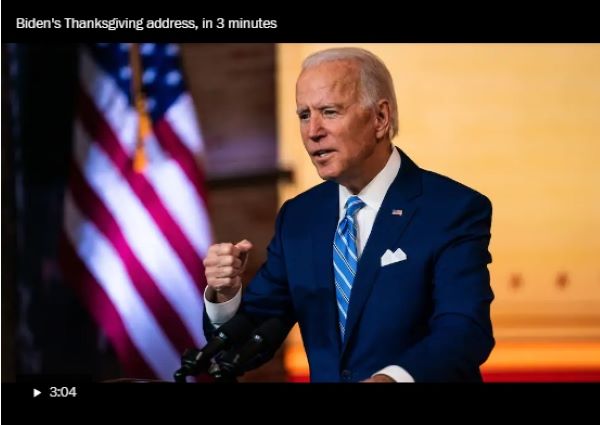
InternationalNov 27. 2020President-elect Joe Biden delivers remarks last week after a virtual meeting with U.S. governors, including some Republicans, during which he vowed a bipartisan assault on the coronavirus. MUST CREDIT: Washington Post photo by Salwan GeorgesPresident-elect Joe Biden delivers remarks last week after a virtual meeting with U.S. governors, including some Republicans, during which he vowed a bipartisan assault on the coronavirus. MUST CREDIT: Washington Post photo by Salwan Georges 
By The Washington Post · Annie Linskey, Sean Sullivan · NATIONAL, POLITICS

WILMINGTON, Del. – Republicans had been gearing up for the first partisan brawl of the new administration – a battle over whether to confirm the woman widely believed to be on Joe Biden’s shortlist for secretary of state.

https://www.washingtonpost.com/video/c/embed/ab34799b-793a-45ca-8b25-eabeb77a1930?ptvads=block&playthrough=false

They blasted Susan Rice as a polarizing throwback to an interventionist style of foreign policy or, as one senator put it, the “Typhoid Mary” of the Obama administration for what they saw as her role in multiple controversies. Some Democrats urged Biden to pick her anyway, to stand by an experienced hand in foreign affairs who could be one of the most prominent Black women in his government.

That fight will have to wait.

Biden’s choice of the lower-profile Antony Blinken, an establishment figure with close ties to the president-elect for decades, is widely seen as less likely to kick up a political storm in the closely divided Senate that will vote on his confirmation.

But while the State nomination, along with several other Cabinet picks rolled out this week, underscore Biden’s intention to govern as a conciliator and not a partisan warrior, some on the left worry that his early moves signal weakness even before he steps into the Oval Office. They say Biden, 78, naively believes the Senate still functions as it did during his 36 years there, with potential for compromise and conciliation.

“To meet Republicans where they are is to meet them in Fantasyland,” said Rebecca Katz, who worked as a top aide to Nevada Democrat Harry Reid when he served as Senate majority leader. “We don’t have any time to spare. Sometimes you’ve got to fight. We can’t fold before we’ve had one fight.”

On Capitol Hill, other Democrats are sounding similar warnings.

“There is still plenty of room for bipartisanship, but real bipartisanship, from a position of strength, not begging Republicans to confer bipartisanship upon us if we do things their way,” said Sen. Sheldon Whitehouse, D-R.I., who is worried that Biden’s outreach to the GOP is being met with resistance.

Vice President-elect Kamala D. Harris, center, appears onstage as President-elect Joe Biden introduces nominees for his administration on Tuesday. So far his picks have underscored his conciliatory posture. MUST CREDIT: Washington Post photo by Demetrius Freeman

Vice President-elect Kamala D. Harris, center, appears onstage as President-elect Joe Biden introduces nominees for his administration on Tuesday. So far his picks have underscored his conciliatory posture. MUST CREDIT: Washington Post photo by Demetrius Freeman

But Biden is making clear through his early moves that he meant it when he said, for months on the campaign trail, that he would turn down the partisan heat in Washington. His team has quietly reached out to Republicans in the House and Senate and expressed public sympathy for their delicate political calculation in weighing the potential backlash from Trump’s base if they acknowledged the election results, according to a person familiar with the strategy who like others spoke on the condition of anonymity to share internal thinking and private discussions.

So far, Biden can boast some success with his approach. Along with other olive branches to Republicans, he backed away from filing a lawsuit to force the General Services Administration to release resources for his transition. The GSA instead relented after a pressure campaign that came first from Democrats, and then Republicans, along with back-to-back-to-back losses in state courts for the president’s attempt to overturn the election results.

“I’m making a judgment based on many years of experience and how to get things done with the opposition,” Biden said recently when asked why he had declined to pursue a legal challenge against Trump’s refusal to cooperate with a transition.

The tension between picking fights and pursuing conciliation so far is typified by questions about Rice, who was a finalist in Biden’s vice-presidential search and was mentioned by Biden allies as a possible secretary of state when she didn’t get that post.

“Susan will land in another key job,” said one Biden insider. The person declined to say whether the position would be one requiring Senate confirmation.

The person also scoffed at the notion that Rice was set to get the job but for Biden’s reluctance to launch a fight with Republican senators.

“Tony was always the choice. Always,” the person said, referring to Blinken. “Anyone who thinks Tony was not going to get this doesn’t know Joe Biden.”

Rice was a leading candidate for secretary of state during Obama’s second term. The Stanford University-educated foreign policy phenom had risen quickly in the diplomatic ranks, becoming one of the country’s youngest assistant secretaries of state.

But she withdrew from consideration amid furor over her initial comments about the 2012 armed attacks on U.S. facilities in Benghazi, Libya – which killed four Americans, including the U.S. ambassador to Libya – that relied on what turned out to be inaccurate talking points supplied by the White House and CIA. Eight congressional panels investigated the events; none found that Rice had been deliberately misleading.

Instead, Obama named Rice as his second-term national security adviser, a job that does not require Senate confirmation. She worked closely with Biden as vice president, often hashing out policy ideas with him in the West Wing.

Before the Blinken selection, GOP senators lined up to oppose Rice, even as they refused to fully acknowledge Biden’s victory. It was Sen. Tom Cotton, R-Ark., a member of the Armed Services Committee, who called her the “Typhoid Mary” of the Obama administration’s foreign policy. Sen. Lindsey Graham, R-S.C., a member of the Foreign Relations Committee, said in an interview that “she’s a hard person to confirm.”

Biden’s common-ground approach was part of his pitch to America – and how he worked during a Senate career that preceded his two terms as vice president.

“I’ve known him a long time, and I don’t think guns blazing is ever going to be his style,” said Biden’s friend and donor John Morgan. “He is an institutionalist. He’s friendly with both sides. And I think the reason he was chosen to be vice president was because of his relationships.”

As he awaited official recognition of his victory, Biden has showcased bipartisan meetings. Speaking to a group that included Republican governors, he vowed a bipartisan assault on the coronavirus. During a meeting with mayors, he noted that there are not “blue cities” or “red cities.” A panel of medical experts he named to advise him on the pandemic included two former Trump administration officials.

Biden’s attempts at unity offer a direct contrast to the way in which Trump whooshed into the presidency four years ago, condemning the Washington establishment, making a series of early Cabinet decisions that were highly controversial and working to undo the actions of his Democratic predecessor.

While Biden is expected to take on issues unpopular on the right via executive order, such as mitigating climate change and liberalizing immigration rules, his early focus will be on containing the virus and bolstering the economy – two issues where there has been recent history of bipartisan agreement.

“I am hopeful that I’m going to be able to get cooperation from our Republican colleagues in the Senate and the House, as well as the governors, to build a consensus as to how we proceed when we do,” Biden said recently.

The conciliatory tone goes beyond just the divide between parties.

When talking about his then-unnamed pick for treasury secretary last week, he eagerly pointed out that they would be “accepted by all elements of the Democratic Party.” Former Federal Reserve chair Janet Yellen, who has been tapped for the position, fits that bill.

Biden’s recent meeting with national security officials included retired Gen. Stanley McChrystal, who clashed with Biden over troop levels in Afghanistan and was fired by President Barack Obama in 2010 after he disparaged administration officials, including Biden, in comments to a reporter for Rolling Stone.

On Monday, Biden named former secretary of state and Senate colleague John Kerry to be a special presidential envoy for climate, adding him to the National Security Council – showing he has no hard feelings about a February cellphone call in which Kerry, then in Iowa as a surrogate for Biden, was overheard musing about jumping into the Democratic primary.

Part of Biden’s calculation is the reality he faces in a closely divided Senate – a chamber now in Republican hands. Even if Democrats win both of Georgia’s runoff elections on Jan. 5, the chamber would split 50-50, giving him the smallest possible edge with the tie-breaking vote of Vice President Kamala Harris.

That will require maintaining some relationships with Republicans and keeping the Democratic left happy. Already, Sen. Bernie Sanders, I-Vt., the liberal leader who rallied his forces on behalf of Biden during the general election, is worried that Biden’s posture to reach out to the right will leave the left wing of the party untended.

“It seems to me pretty clear that progressive views need to be expressed within a Biden administration,” Sanders said in an interview with the Associated Press. “It would be, for example, enormously insulting if Biden put together a ‘team of rivals’ – and there’s some discussion that that’s what he intends to do – which might include Republicans and conservative Democrats – but which ignored the progressive community.”

Sanders is hoping that Biden will tap him to be labor secretary, according to a person familiar with his ambitions, although that could reignite GOP campaign talking points that Biden is captive to the left. Biden avoided a similar fight by skipping over Sen. Elizabeth Warren, D-Mass., as treasury secretary, a position she sought, according to several Warren allies.

“You can only pick one or two battles,” said a Biden insider, explaining Biden’s approach to nominations.

Biden, in an NBC interview Tuesday night, indicated he was reluctant to select Democratic senators or House members for his Cabinet because of the potential impact on the party’s legislative strength.

Democratic members urged Biden not to dial back any Cabinet choices.

“He should go by the person that he feels is the most qualified,” said Rep. Gregory Meeks, D-N.Y. “Don’t worry about the political aspects of the Republicans, many of whom still have not acknowledged that he’s the president of the United States.”

Rather than gearing up for a fight, Biden has said he expects some back-and-forth with Senate Majority Leader Mitch McConnell, R-Ky., when it comes to Cabinet nominations.

“I take McConnell at his word,” Biden said recently when discussing his process for making selections. “I understand he said that he will make it clear who he’s prepared to support or not support and that’s a negotiation that I’m sure we’ll have.”

Last week, Biden’s newly minted chief of staff, Ron Klain, offered a more traditional posture on the Cabinet, saying that Biden would not defer to GOP leaders on his choices.

“On these executive branch nominations, these are the choices for the president to make, and then the Senate needs to act on those choices,” Klain told CNN’s Wolf Blitzer.

However, some Democrats have been quick to point out that Republicans are showing no indication they’ll work with Biden – even as he tries to work with them.

Some Democratic operatives see Biden’s current strategy as an effort to claim the higher ground with the American public and predict it will be short-lived.

“Biden’s entire message – which I did not enjoy, but I think I understand the political calculation – has always been seeking cooperation as part of his ‘healing America mission,’ ” said Adam Jentleson, a former deputy chief of staff to Reid. “It’s fine for Republicans to be the ones to shoot first and break any sort of cease-fire that may exist.”

Increase investment in Thailand or risk missing UN Sustainable Development Goals: Research #SootinClaimon.Com

#SootinClaimon.Com : ขอบคุณแหล่งข้อมูล : หนังสือพิมพ์ The Nation.

Increase investment in Thailand or risk missing UN Sustainable Development Goals: Research (nationthailand.com)

Increase investment in Thailand or risk missing UN Sustainable Development Goals: Research

InternationalNov 27. 2020

By THE NATION

Thailand and emerging Asean are not getting the investment needed to help the world meet the UN Sustainable Development Goals (SDGs), new research from Standard Chartered has revealed.

“The $50 Trillion Question” investigates how some of the world’s biggest asset managers – with a combined US$50 trillion in assets under management (AUM) – are investing at this critical time for the global economy and environment.

The research is based on a survey conducted between July and August 2020, among a panel of the world’s top 300 investment firms with total assets under management (AUM) of more than US$50 trillion.

It found that 20 per cent are unaware of the UN’s Sustainable Development Goals (SDGs).

Meanwhile only 13 per cent of their $50 trillion of investment is linked to the SDGs

Just 22 per cent of the AUM is invested in Asia.

The lack of investment in emerging markets puts the chances of meeting the 2030 SDG deadline at risk.

Of those already investing in the largest emerging Asean markets (Vietnam, Indonesia, Thailand, the Philippines and Malaysia), 39 per cent say they will likely increase their investment in the future. Thailand was seen as particularly attractive with 45 per cent of high-growth investors.

The research also shows Covid-19 may have made it even harder for emerging markets to get the investment they need. Some 70 per cent of investors believe the pandemic has widened the capital gap further.

Biden’s conciliatory tone has some Democrats concerned #SootinClaimon.Com

#SootinClaimon.Com : ขอบคุณแหล่งข้อมูล : หนังสือพิมพ์ The Nation.

Biden’s conciliatory tone has some Democrats concerned (nationthailand.com)

Biden’s conciliatory tone has some Democrats concerned

InternationalNov 26. 2020President-elect Joe Biden delivers remarks last week after a virtual meeting with U.S. governors, including some Republicans, during which he vowed a bipartisan assault on the coronavirus. MUST CREDIT: Washington Post photo by Salwan GeorgesPresident-elect Joe Biden delivers remarks last week after a virtual meeting with U.S. governors, including some Republicans, during which he vowed a bipartisan assault on the coronavirus. MUST CREDIT: Washington Post photo by Salwan Georges 

By The Washington Post · Annie Linskey, Sean Sullivan · NATIONAL, POLITICS 
 WILMINGTON, Del. – Republicans had been gearing up for the first partisan brawl of the new administration – a battle over whether to confirm the woman widely believed to be on Joe Biden’s shortlist for secretary of state.

They blasted Susan Rice as a polarizing throwback to an interventionist style of foreign policy or, as one senator put it, the “Typhoid Mary” of the Obama administration for what they saw as her role in multiple controversies. Some Democrats urged Biden to pick her anyway, to stand by an experienced hand in foreign affairs who could be one of the most prominent Black women in his government.

That fight will have to wait. 

Biden’s choice of the lower-profile Antony Blinken, an establishment figure with close ties to the president-elect for decades, is widely seen as less likely to kick up a political storm in the closely divided Senate that will vote on his confirmation.

But while the State nomination, along with several other Cabinet picks rolled out this week, underscore Biden’s intention to govern as a conciliator and not a partisan warrior, some on the left worry that his early moves signal weakness even before he steps into the Oval Office. They say Biden, 78, naively believes the Senate still functions as it did during his 36 years there, with potential for compromise and conciliation.

“To meet Republicans where they are is to meet them in Fantasyland,” said Rebecca Katz, who worked as a top aide to Nevada Democrat Harry Reid when he served as Senate majority leader. “We don’t have any time to spare. Sometimes you’ve got to fight. We can’t fold before we’ve had one fight.”

On Capitol Hill, other Democrats are sounding similar warnings.

“There is still plenty of room for bipartisanship, but real bipartisanship, from a position of strength, not begging Republicans to confer bipartisanship upon us if we do things their way,” said Sen. Sheldon Whitehouse, D-R.I., who is worried that Biden’s outreach to the GOP is being met with resistance. 

But Biden is making clear through his early moves that he meant it when he said, for months on the campaign trail, that he would turn down the partisan heat in Washington. His team has quietly reached out to Republicans in the House and Senate and expressed public sympathy for their delicate political calculation in weighing the potential backlash from Trump’s base if they acknowledged the election results, according to a person familiar with the strategy who like others spoke on the condition of anonymity to share internal thinking and private discussions.

So far, Biden can boast some success with his approach. Along with other olive branches to Republicans, he backed away from filing a lawsuit to force the General Services Administration to release resources for his transition. The GSA instead relented after a pressure campaign that came first from Democrats, and then Republicans, along with back-to-back-to-back losses in state courts for the president’s attempt to overturn the election results. 

“I’m making a judgment based on many years of experience and how to get things done with the opposition,” Biden said recently when asked why he had declined to pursue a legal challenge against Trump’s refusal to cooperate with a transition.

The tension between picking fights and pursuing conciliation so far is typified by questions about Rice, who was a finalist in Biden’s vice-presidential search and was mentioned by Biden allies as a possible secretary of state when she didn’t get that post. 

“Susan will land in another key job,” said one Biden insider. The person declined to say whether the position would be one requiring Senate confirmation. 

The person also scoffed at the notion that Rice was set to get the job but for Biden’s reluctance to launch a fight with Republican senators. 

“Tony was always the choice. Always,” the person said, referring to Blinken. “Anyone who thinks Tony was not going to get this doesn’t know Joe Biden.”

Rice was a leading candidate for secretary of state during Obama’s second term. The Stanford University-educated foreign policy phenom had risen quickly in the diplomatic ranks, becoming one of the country’s youngest assistant secretaries of state. 

But she withdrew from consideration amid furor over her initial comments about the 2012 armed attacks on U.S. facilities in Benghazi, Libya – which killed four Americans, including the U.S. ambassador to Libya – that relied on what turned out to be inaccurate talking points supplied by the White House and CIA. Eight congressional panels investigated the events; none found that Rice had been deliberately misleading.

Instead, Obama named Rice as his second-term national security adviser, a job that does not require Senate confirmation. She worked closely with Biden as vice president, often hashing out policy ideas with him in the West Wing.

Before the Blinken selection, GOP senators lined up to oppose Rice, even as they refused to fully acknowledge Biden’s victory. It was Sen. Tom Cotton, R-Ark., a member of the Armed Services Committee, who called her the “Typhoid Mary” of the Obama administration’s foreign policy. Sen. Lindsey Graham, R-S.C., a member of the Foreign Relations Committee, said in an interview that “she’s a hard person to confirm.”

Biden’s common-ground approach was part of his pitch to America – and how he worked during a Senate career that preceded his two terms as vice president.

“I’ve known him a long time, and I don’t think guns blazing is ever going to be his style,” said Biden’s friend and donor John Morgan. “He is an institutionalist. He’s friendly with both sides. And I think the reason he was chosen to be vice president was because of his relationships.”

As he awaited official recognition of his victory, Biden has showcased bipartisan meetings. Speaking to a group that included Republican governors, he vowed a bipartisan assault on the coronavirus. During a meeting with mayors, he noted that there are not “blue cities” or “red cities.” A panel of medical experts he named to advise him on the pandemic included two former Trump administration officials.

Biden’s attempts at unity offer a direct contrast to the way in which Trump whooshed into the presidency four years ago, condemning the Washington establishment, making a series of early Cabinet decisions that were highly controversial and working to undo the actions of his Democratic predecessor. 

While Biden is expected to take on issues unpopular on the right via executive order, such as mitigating climate change and liberalizing immigration rules, his early focus will be on containing the virus and bolstering the economy – two issues where there has been recent history of bipartisan agreement. 

“I am hopeful that I’m going to be able to get cooperation from our Republican colleagues in the Senate and the House, as well as the governors, to build a consensus as to how we proceed when we do,” Biden said recently.

The conciliatory tone goes beyond just the divide between parties. 

When talking about his then-unnamed pick for treasury secretary last week, he eagerly pointed out that they would be “accepted by all elements of the Democratic Party.” Former Federal Reserve chair Janet Yellen, who has been tapped for the position, fits that bill. 

Biden’s recent meeting with national security officials included retired Gen. Stanley McChrystal, who clashed with Biden over troop levels in Afghanistan and was fired by President Barack Obama in 2010 after he disparaged administration officials, including Biden, in comments to a reporter for Rolling Stone.

On Monday, Biden named former secretary of state and Senate colleague John Kerry to be a special presidential envoy for climate, adding him to the National Security Council – showing he has no hard feelings about a February cellphone call in which Kerry, then in Iowa as a surrogate for Biden, was overheard musing about jumping into the Democratic primary. 

Part of Biden’s calculation is the reality he faces in a closely divided Senate – a chamber now in Republican hands. Even if Democrats win both of Georgia’s runoff elections on Jan. 5, the chamber would split 50-50, giving him the smallest possible edge with the tie-breaking vote of Vice President Kamala Harris.

That will require maintaining some relationships with Republicans and keeping the Democratic left happy. Already, Sen. Bernie Sanders, I-Vt., the liberal leader who rallied his forces on behalf of Biden during the general election, is worried that Biden’s posture to reach out to the right will leave the left wing of the party untended.

“It seems to me pretty clear that progressive views need to be expressed within a Biden administration,” Sanders said in an interview with the Associated Press. “It would be, for example, enormously insulting if Biden put together a ‘team of rivals’ – and there’s some discussion that that’s what he intends to do – which might include Republicans and conservative Democrats – but which ignored the progressive community.”

Sanders is hoping that Biden will tap him to be labor secretary, according to a person familiar with his ambitions, although that could reignite GOP campaign talking points that Biden is captive to the left. Biden avoided a similar fight by skipping over Sen. Elizabeth Warren, D-Mass., as treasury secretary, a position she sought, according to several Warren allies. 

“You can only pick one or two battles,” said a Biden insider, explaining Biden’s approach to nominations. 

Biden, in an NBC interview Tuesday night, indicated he was reluctant to select Democratic senators or House members for his Cabinet because of the potential impact on the party’s legislative strength.

Democratic members urged Biden not to dial back any Cabinet choices.

“He should go by the person that he feels is the most qualified,” said Rep. Gregory Meeks, D-N.Y. “Don’t worry about the political aspects of the Republicans, many of whom still have not acknowledged that he’s the president of the United States.”

Rather than gearing up for a fight, Biden has said he expects some back-and-forth with Senate Majority Leader Mitch McConnell, R-Ky., when it comes to Cabinet nominations.

“I take McConnell at his word,” Biden said recently when discussing his process for making selections. “I understand he said that he will make it clear who he’s prepared to support or not support and that’s a negotiation that I’m sure we’ll have.”

Last week, Biden’s newly minted chief of staff, Ron Klain, offered a more traditional posture on the Cabinet, saying that Biden would not defer to GOP leaders on his choices.

“On these executive branch nominations, these are the choices for the president to make, and then the Senate needs to act on those choices,” Klain told CNN’s Wolf Blitzer.

However, some Democrats have been quick to point out that Republicans are showing no indication they’ll work with Biden – even as he tries to work with them. 

Some Democratic operatives see Biden’s current strategy as an effort to claim the higher ground with the American public and predict it will be short-lived.

“Biden’s entire message – which I did not enjoy, but I think I understand the political calculation – has always been seeking cooperation as part of his ‘healing America mission,’ ” said Adam Jentleson, a former deputy chief of staff to Reid. “It’s fine for Republicans to be the ones to shoot first and break any sort of cease-fire that may exist.”

Trump pardons former national security adviser Michael Flynn, who pleaded guilty to lying to the FBI #SootinClaimon.Com

#SootinClaimon.Com : ขอบคุณแหล่งข้อมูล : หนังสือพิมพ์ The Nation.

Trump pardons former national security adviser Michael Flynn, who pleaded guilty to lying to the FBI (nationthailand.com)

Trump pardons former national security adviser Michael Flynn, who pleaded guilty to lying to the FBI

InternationalNov 26. 2020Former national security adviser Michael Flynn is pictured at a news briefing at the White House on Feb. 1, 2017. MUST CREDIT: Washington Post photo by Jabin BotsfordFormer national security adviser Michael Flynn is pictured at a news briefing at the White House on Feb. 1, 2017. MUST CREDIT: Washington Post photo by Jabin Botsford 

By  The Washington Post · Rosalind S. Helderman, Josh Dawsey · NATIONAL, POLITICS, COURTSLAW, NATIONAL-SECURITY
WASHINGTON – President Donald Trump on Wednesday announced he had pardoned his former national security adviser Michael Flynn, ending a three-year legal saga that included Flynn’s guilty plea for lying to the FBI, his later effort to withdraw that plea and then a controversial decision by Attorney General William Barr to try to drop the case altogether.

Trump’s move marks a full embrace of the retired general he had ousted from the White House after only 22 days on the job – and a final salvo against the Russia investigation that shadowed the first half of his term in office.

The pardon he granted Flynn, an early backer of his 2016 White House bid, underlines how Trump has used his clemency power to benefit allies and well-connected offenders.White House officials said Trump has been considering other pardons before leaving office, including possibly other former aides who were convicted of crimes as part of the special counsel probe of Russian interference in the 2016 campaign.

Flynn pleaded guilty to a felony in December 2017, admitting that he had misled investigators about details of his conversations with the Russian ambassador during Trump’s presidential transition.

His plea was one of the first major courtroom victories for special counsel Robert Mueller III, who had been appointed seven months earlier.

The special counsel probe ultimately did not establish the Trump campaign had entered into a criminal conspiracy with the Kremlin. But the investigation documented how Russia interfered in the 2016 race to benefit Trump, and how Trump’s campaign welcomed the assistance. 

Flynn was one of six Trump associates to be convicted or charged with crimes before the probe ended in 2019. The president and his allies have repeatedly attacked Flynn’s prosecution as overzealous and flawed in their efforts to discredit the special counsel inquiry.

This spring, Barr and the Justice Department suddenly reversed course, declaring that prosecutors should not have brought the case against Flynn and seeking to have it dismissed. That request has been pending before a federal judge, who has been reviewing the case.

On Wednesday, Trump tweeted, “It is my Great Honor to announce that General Michael T. Flynn has been granted a Full Pardon. Congratulations to @GenFlynn and his wonderful family, I know you will now have a truly fantastic Thanksgiving!”

Not long before Trump announced the pardon publicly, Flynn tweeted an image of the American flag and the words “Jeremiah 1:19,” a reference to a Bible verse in which God says, “They will fight against you but will not overcome you, for I am with you and will rescue you.”

Democrats responded to the long-anticipated pardon with outrage. In a lengthy statement, House Intelligence Committee Chairman Adam Schiff, D-Calif., said Flynn had chosen “loyalty to Trump over loyalty to his country” and that Trump’s decision was intended to insulate himself from criminal investigation. He called the move a “corruption of the Framer’s intent” in giving the president broad pardon powers. 

“It’s no surprise that Trump would go out just as he came in – crooked to the end,” Schiff said.

House Judiciary Chairman Jerrold Nadler, D-N.Y., called the pardon “undeserved, unprincipled, and one more stain on President Trump’s rapidly diminishing legacy.”

Through a representative, Mueller declined to comment. 

But Andrew Weissmann, a former member of the special counsel team, tweeted, “Trump’s abuse of the pardon power undermines the crown jewel of our democracy: the rule of law.”

Trump told one adviser this week that Flynn had considerable support from the conservative community, and that his pardon would be well received among his supporters, according to the person, who spoke on the condition of anonymity to describe the private conversation.

Flynn had also developed close ties with Jenna Ellis, one of the president’s legal advisers, who is pushing his false allegations of fraud in this month’s election. 

Last week, the night before she appeared at a news conference at the headquarters of the Republican National Committee in Washington to discuss the president’s claims about the election, Ellis posted a photograph on Twitter of herself with Flynn and the president’s personal lawyer, Rudy Giuliani. She has discussed Flynn’s case with Trump, according to the person.

Chief of Staff Mark Meadows was an advocate for the Flynn pardon, and has often commiserated with the president about how unfair the Mueller investigation was to Flynn and others.

Flynn is the second Trump associate caught up in the Mueller probe to benefit from the president’s power to grant clemency. In July, Trump commuted the sentence of his former adviser, Roger Stone, who had been convicted of lying to Congress about his efforts to secure information from WikiLeaks during the 2016 campaign.

Trump has largely eschewed the traditional pardon process, in which people convicted of crimes formally apply for White House consideration and have their applications reviewed by Justice Department lawyers. 

Instead, the president has taken recommendations from friends, TV hosts and White House advisers, such as son-in-law Jared Kushner, who has taken a large role in some of the past decisions.

It is unclear whether Trump might seek to preemptively pardon himself or any of his family members, who have told others they expect to face ongoing investigations after Trump leaves office. 

After his guilty plea in late 2017, Flynn initially cooperated with special counsel prosecutors pursuing other cases, delaying his sentencing. 

But once Mueller’s team disbanded, Flynn hired new lawyers – including attorney Sidney Powell, who this fall has been part of a team of Trump legal advisers working to overturn the November election results by promoting baseless conspiracy theories about fraud.

In the Flynn case, Powell argued that Flynn had been entrapped during his FBI interview, conducted at the White House four days after Trump took office. She maintained that he had never intended to lie and that key documents had been withheld from him by prosecutors.

Prosecutors at first continued to pursue the case, and a federal judge rejected several of Flynn’s new arguments.

But in May, acting on instructions from Barr, the Justice Department reversed course and said a new review of the case’s origins led prosecutors to conclude that Flynn’s lies could not be proved in court. Because of that, the department said, they were not material to an FBI investigation of Russia’s interference in the 2016 election that was underway at the time.

The stunning turnaround prompted fears of politicization at the Justice Department. Barr insisted that a review of the case concluded it should be dismissed.

Rather than immediately accept that, however, District Court Judge Emmet Sullivan, who has overseen the case, signaled that he wished to explore whether the Justice Department had acted properly and if Flynn was being given special treatment because he is an ally of the president.

Flynn objected to Sullivan’s handling of the case, but the U.S. Court of Appeals for the District of Columbia Circuit ruled the judge did not have to immediately grant the Justice Department’s request to drop the matter.

In September, Powell told Sullivan that she had personally briefed Trump on Flynn’s case and had asked the president not to pardon his former national security adviser.

But on Wednesday, Powell said the pardon was appropriate. “It was high time that he be exonerated of all these charges,” she said on Fox Business. “It was truly a pardon of innocence.”

Trump’s pardon shortcuts Sullivan’s ongoing review. The Justice Department will no longer be able to pursue charges against Flynn for lying to the FBI, even after President-elect Joe Biden and his new attorney general take over next year.

The Supreme Court has ruled that accepting a pardon is akin to an admission of guilt – though some presidents and governors have used their pardon powers to help people who maintained their innocence. 

A Justice Department official, speaking on the condition of anonymity, said the department was not consulted in advance of the pardon but was given a “head’s up” on Wednesday. The official said the department would have preferred to see if Sullivan would act, and for the matter to be resolved in court.

“We were confident in the likelihood of our success in the case,” the official said. They said, however, the move was “obviously an appropriate use of the president’s pardon power.”

Flynn, now 61, was a highly regarded military intelligence officer who served multiple tours in Iraq and Afghanistan before being named director of the Defense Intelligence Agency under President Barack Obama.

But he was pushed out of that job amid concerns about his leadership skills, and a penchant for taking positions on matters related to Iran and militant Islam not supported by underlying intelligence. Associates of Flynn said he was so embittered by his treatment that he turned against Obama, former secretary of state Hillary Clinton and others he blamed for his professional demise.

In 2016, he lent Trump’s campaign legitimacyat a time when no other established national security official role was willing to endorse the former reality TV star or advise him on foreign policy issues.

As a campaign adviser, he led crowds in chants of “Lock Her Up” about Clinton and, in recent years, as his legal woes mounted, Flynn has made statements and postings on Twitter that suggest he has embraced online conspiracy claims espoused by QAnon and other sources.

After Trump was elected, he designated Flynn to serve as his national security adviser. In that role, Flynn conducted a series of meetings and phone calls with Russian Ambassador Sergey Kislyak before Trump was inaugurated.

Among the topics the two discussed were new sanctions that were imposed on Russia by Obama on Dec. 29, 2016, in response to Russia’s interference in the election. Declassified transcripts of the call show that Flynn and Kislyak spoke that day, and Flynn asked that Russia not respond aggressively to Obama’s move or escalate the conflict. 

The next day, Russian President Vladimir Putin announced that he would take no action in reaction to the new sanctions, flummoxing officials in Washington. 

The reason for the move, however, was made clear in a phone call from Kislyak to Flynn on Dec. 31, in which the Russian envoy told Flynn his views had been “taken into account” at the Kremlin and were the reason for the muted Russian reaction.

When Flynn was asked 24 days later by two FBI agents whether he discussed the sanctions with Kislyak, he told the agents that he did not remember doing so. In pleading guilty, he told the court he knew this was not true. 

More recently, he told the court he had not intended to lie. 

After a Washington Post columnist reported in January 2017 that Flynn had spoken to Kislyak on the day the sanctions were announced, Vice President Pence and other officials publicly said they had been assured by Flynn that he had not discussed the topic with the Russian ambassador. 

Justice Department officials warned the White House that Flynn had been interviewed by the FBI. After that, Flynn acknowledged privately to Trump that he may have discussed sanctions with Kislyak.

Trump’s top aides concluded they did not think Flynn could have forgotten the conversation and concluded he had lied. Flynn was then forced to resign from his post.

Why Flynn chose to lie repeatedly about his contacts with Kislyak is one of the lingering mysteries of the Russia investigation. Many legal experts believe that if had he been truthful, he likely would not have faced charges or lost his job.

In pleading guilty, Flynn also told the court that he had acted as a foreign agent of the government of Turkey while working as a consultant during the 2016 presidential campaign – and falsely filed paperwork with the Justice Department in March 2017 indicating that he had not known whether Turkey would benefit from the work or not. Flynn later denied knowingly making false statements about his Turkey work. 

His lies to the FBI – as well as his undisclosed work for Turkey – prompted Sullivan to lecture the retired general at a dramatic hearing not long after he pleaded guilty, telling him that his crime was a “very serious offense.”

The judge pointed to the American flag that sat on the bench next to him and told the retired military officer: “Arguably, you sold your country out.” 

Mall Santas brave the pandemic with plexiglass barriers, sanitation elves and snow-globe bubbles #SootinClaimon.Com

#SootinClaimon.Com : ขอบคุณแหล่งข้อมูล : หนังสือพิมพ์ The Nation.

Mall Santas brave the pandemic with plexiglass barriers, sanitation elves and snow-globe bubbles (nationthailand.com)

Mall Santas brave the pandemic with plexiglass barriers, sanitation elves and snow-globe bubbles

InternationalNov 26. 2020Santa's helper works to keep things disinfected at the Springfield Bass Pro Shops store in Springfield, Mo. MUST CREDIT: Washington Post photo by Annaliese Nurnberg.Santa’s helper works to keep things disinfected at the Springfield Bass Pro Shops store in Springfield, Mo. MUST CREDIT: Washington Post photo by Annaliese Nurnberg. 

By The Washington Post · Abha Bhattarai · NATIONAL, BUSINESS, FEATURES, RETAIL

Santa Claus is coming to town with a few extra precautions this year.

Santa dons a face shield and sits behind plexiglass at a Bass Pro Shops store this week in Springfield, Mo. MUST CREDIT: Washington Post photo by Annaliese Nurnberg.

Santa dons a face shield and sits behind plexiglass at a Bass Pro Shops store this week in Springfield, Mo. MUST CREDIT: Washington Post photo by Annaliese Nurnberg.

Old Saint Nick will pose for photos from inside an acrylic snow globe in Richmond. He’ll be barricaded behind a eight-foot picture frame in Lakewood, Colo. And in Gruene, Texas, Cowboy Kringle, who wears red leather chaps and a cowboy hat, will keep socially distant by asking visitors to sit on a saddle positioned six feet away.

This year’s holiday photos will have a decidedly pandemic feel: No more sitting on Kriss Kringle’s lap or whispering in his ear. Instead, venues are increasingly requiring reservations, masks and temperature checks. Santa is hosting drive-through events, attaching face shields to his hat and trading in his white cloth gloves for disposable ones to protect himself – and others – as coronavirus cases skyrocket to new highs around the country.

Although some retailers, such as Macy’s, have suspended Santa visits or moved them online, many others are forging ahead with extra precautions and backup plans, in hopes of getting customers into stores during a particularly fraught holiday season.

“Everything is different this year, but people are finding a way to keep that traditional Santa experience,” said Mitchell Allen, owner of the staffing firm Hire Santa, where virtual bookings have grown tenfold but still make up a sliver of the company’s total revenue. “It’s unexpected, to be honest.”

The stakes are especially high. The pandemic has sent a number of prominent retailers into bankruptcy and disrupted every part of the industry, from supply chains to consumer behavior. Many retailers are still struggling to make up for lost sales from coronavirus-related closures in the spring. Another round of shutdowns just as the holiday season is kicking off, they say, could be devastating.

Bass Pro Shops Santa Paul Porter in Springfield, Mo. MUST CREDIT: Washington Post photo by Annaliese Nurnberg.

Bass Pro Shops Santa Paul Porter in Springfield, Mo. MUST CREDIT: Washington Post photo by Annaliese Nurnberg.

Santa, though, has become a symbol of retailers’ optimism, even as challenges abound. Santa-booking companies say overall appointments are down about 40%, and many Santas are dropping out of the workforce because of health concerns. Even so, store executives and mall owners have spent months – and tens of thousands of dollars – trying to reimagine Santa’s Wonderland for the coronavirus era. The goal, they say, is to spread holiday cheer (but not the virus).

“Santa can’t give out hugs or candy canes this year, but people still want to see him,” said Mark Brenneman, 70, who has been playing Santa for nearly five decades. “They want hope. They want normal.”

But normal can be difficult during a pandemic. Mall of America in Bloomington, Minn., canceled in-person Santa visits this month after the governor issued an executive order restricting all social gatherings, indoors and outdoors.

Santas are also nervous. Many are in their 70s and 80s and have health conditions such as diabetes that put them at particularly high risk of coronavirus complications. Brenneman, who owns the booking firm Santa Claus and Co. in Phoenix, said about half of the 30 white-bearded men he employs are sitting the season out, and a few are doing only outdoor events.

But at least a dozen Santas, he said, will continue to work because they need the money. “A lot of these guys are living on Social Security checks alone, so it’s a tough decision for them to make – their health or extra income,” he said.

A Santa gig, he said, can easily bring in hundreds of dollars a day. Brenneman charges $200 an hour early in the season and as much as $600 an hour on Christmas Eve. Overall bookings are down about 40% this year, but the company still has at least 300 events on its calendar.

Brenneman and his employees are making more house calls, too. With most corporate events and school visits canceled, more families are inviting Santa into their homes to read stories, perform magic tricks or sing carols from a distance. Some are renting golf carts or horses and buggies to parade Santa and Mrs. Claus around their neighborhoods.

“We have to give people hope,” he said, “more today than any year in the past.”

Bass Pro Shops began offering free photos with Santa during the 2008 recession, when the country was in need of a collective pick-me-up. It turned out to be an overnight success that helped drive sales and boost the company’s brand.

Now the outdoors retailer, which also owns Cabela’s, is hoping to re-create some of that magic, even if Old Saint Nick is stuck behind an acrylic shield and elves are pulling double duty as “Santa’s sanitization squad.” Demand has been brisk: 95,000 families stopped in for photos during Santa’s first week at 176 stores.

“A lot of our customers told us they want the event to continue,” spokesman Jack Wlezien said. “They said: ‘We’ve already had to sacrifice so much this year. We’d really like to be able to see Santa.’ So then the question became: How can we pull this off while also protecting Santa, our shoppers and employees?”

Photos are by appointment only, and all visitors must undergo a temperature screening. The company also has backup plans, such as moving the set outdoors, in case of new shutdowns and restrictions.

Other retailers are making similar calculations. Neiman Marcus has done away with its popular breakfast-with-Santa events and is enlisting the jolly old elf to deliver curbside orders to customers’ cars instead. More than 130 shopping malls owned by Brookfield Properties are offering their own twist on the North Pole, using oversize sleighs and fake campfires to keep visitors at least six feet apart.

Overall, Santa visits are expected to decline about 65% from last year, when more than 10 million families took their children to pose for pictures at malls and stores, according to GlobalData Retail. The majority of those people also spent money at nearby shops and restaurants during their visit, the firm said.

The SoNo Collection, a mall owned by Brookfield in Norwalk, Conn., is offering virtual visits this year for $25. But for those who would like to see Santa in the flesh, he’ll be greeting shoppers from inside an acrylic snow globe on the third floor.

“Santa has survived so many things – the Spanish flu, the bubonic plague – and I just couldn’t bring myself to tell my kids that he was afraid of covid-19,” said Kathryn Burgess, a Richmond-based photographer who designed the snow globe and spent $10,000 manufacturing it. “But we had to come up with a creative plan to protect him.”

Her acrylic barriers, which she sells for as much as $4,000, are being used by nearly 50 malls, schools and hospitals this holiday season.

Just about everything is bigger in Texas, Renee Davis said, and that includes Santa’s plans for the pandemic.

Davis, who owns events company Santa Express Central, recently spent $10,000 on a custom “hot rod sleigh” for Santa to drive to local parades, neighborhood events and hospitals. She is coordinating more outdoor events, including drive-throughs where children can drop off letters to Santa and take photos from their cars.

“It’s like re-creating the wheel with every client,” said Davis, who co-founded the company with her husband in 2002. “I’m working harder than I ever have in my life.”

The company is committing to fewer bookings this year and has backup plans in case Santa gets sick or has to quarantine. It has become more difficult to find qualified Santas with proper training and real beards who are willing to do in-person visits, Davis said.

There are more-practical considerations, too. Davis has spent months stockpiling hand sanitizer to last Santa the entire holiday season. And since masks ruffle his beard and muffle his voice, she has been buying up plastic face shields that connect to his glasses.

“We have to protect Santa, and we have to protect the child,” she said. “That’s the most important thing this year.”

IBM planning 10,000 job cuts in Europe ahead of unit sale #SootinClaimon.Com

#SootinClaimon.Com : ขอบคุณแหล่งข้อมูล : หนังสือพิมพ์ The Nation.

IBM planning 10,000 job cuts in Europe ahead of unit sale (nationthailand.com)

IBM planning 10,000 job cuts in Europe ahead of unit sale

InternationalNov 26. 2020An IBM logo in London, on Oct. 29, 2018. MUST CREDIT: Bloomberg photo by Chris J. Ratcliffe.An IBM logo in London, on Oct. 29, 2018. MUST CREDIT: Bloomberg photo by Chris J. Ratcliffe. 

By Syndication Washington Post, Bloomberg · Olivia Carville, Helene Fouquet, Daniele Lepido · BUSINESS, WORLD, TECHNOLOGY, US-GLOBAL-MARKETS, EUROPE

International Business Machines Corp. is planning to cut about 10,000 jobs in Europe in an attempt to lower costs at its slow-growth services unit and prepare the business for a spinoff.

The wide-ranging losses will affect about 20% of staff in the region, according to people familiar with the matter. The U.K. and Germany are set to be most impacted, with cuts also planned in Poland, Slovakia, Italy and Belgium.

IBM announced the job cuts in Europe earlier in November during a meeting with European labor representatives, according to a union officer briefed on proceedings. The person asked not to be identified because the talks are private.

“Our staffing decisions are made to provide the best support to our customers in adopting an open hybrid cloud platform and AI capabilities,” an IBM spokeswoman said in an emailed statement. “We also continue to make significant investments in training and skills development for IBMers to best meet the needs of our customers.”

Hardest hit will be IBM’s legacy IT services business, which handles day-to-day infrastructure operations, such as managing client data centers and traditional information-technology support for installing, operating and repairing equipment.

IBM said in October it’s planning to spin off the business and focus on its new hybrid-cloud computing and artificial intelligence unit, which the company hopes will return it to revenue growth. IBM said it aims to complete the carve-out as a tax-free spinoff to IBM shareholders by the end of 2021.

“We’re taking structural actions to simplify and streamline our business,” said IBM Chief Financial Officer James Kavanaugh during the company’s third-quarter earnings call in October. “We expect the fourth-quarter charge to our operating results of about $2.3 billion.”

Once an iconic blue-chip company, IBM’s star has faded over the years as its legacy in mainframe computing and IT services fell behind while newer technology firms like Amazon.com Inc. swooped in to dominate the emerging cloud-computing market.

IBM was already cutting jobs earlier this year, although the company wouldn’t say how many positions were being eliminated. The company has traditionally declined to disclose the numbers of job cuts for decades, with arguably one exception in 1993 when Lou Gerstner, a CEO hired from outside the company, announced 60,000 dismissals.

The spin-off of its services unit is the first big move by Chief Executive Officer Arvind Krishna, who took over from Ginni Rometty in April and has been pushing to revive growth after almost a decade of shrinking revenue. Krishna earlier this year cut thousands of jobs as he began reshaping the business.

The current round of job cuts should be completed by the end of the first-half of 2021, one of the people added.

Dell, HP report sales topping estimates on pandemic PC Surge #SootinClaimon.Com

#SootinClaimon.Com : ขอบคุณแหล่งข้อมูล : หนังสือพิมพ์ The Nation.

Dell, HP report sales topping estimates on pandemic PC Surge (nationthailand.com)

Dell, HP report sales topping estimates on pandemic PC Surge

InternationalNov 26. 2020A man walks with a box bearing the HP logo in New Delhi onJune 24, 2020. MUST CREDIT: Bloomberg photo by Prashanth Vishwanathan.A man walks with a box bearing the HP logo in New Delhi onJune 24, 2020. MUST CREDIT: Bloomberg photo by Prashanth Vishwanathan. 

By Syndication Washington Post, Bloomberg · Nico Grant · BUSINESS, TECHNOLOGY, RETAIL

Dell Technologies and HP reported quarterly revenue that topped Wall Street estimates, lifted by customer upgrades of personal computers for remote work and school during the pandemic.

Dell’s sales climbed 2.8% to $23.5 billion in the period that ended Oct. 30, the Round Rock, Texas-based company said Tuesday in a statement. Rival HP reported it shipped a record 19 million PCs in its recent quarter, as well as more home printers than it has sold in years. HP also gave a profit forecast for the current period that beat analysts’ projections and said it would raise its quarterly dividend 10%.

Michael Dell and HP Chief Executive Officer Enrique Lores are trying to revamp their PC makers into more profitable businesses. Both companies have taken steps to cut operating expenses during the pandemic, and they produced better-than-projected profits in the October quarter. Billionaire Dell is trying to spur more predictable, recurring revenue by letting corporate clients pay for products over time rather than upfront. Lores, meanwhile, is overseeing a corporate restructuring that will result in lower expenses and a smaller workforce.

“We are very optimistic about where the company is going to be going during the next quarters and years,” Lores said in an interview.

HP shares gained about 5% in New York trading, helped by the company’s announcement that it would boost the quarterly dividend to 19.38 cents a share. Dell shares fell roughly 2%. The stock is up more than 30% so far this year.

HP’s revenue fell about 1% to $15.3 billion in the period that ended Oct. 31, the Palo Alto, California-based company said in a statement. Analysts, on average, expected $14.7 billion, according to data compiled by Bloomberg. Profit, excluding some items, was 62 cents a share in the fourth fiscal quarter, while analysts projected 52 cents.

Adjusted profit in the current quarter will be 64 cents to 70 cents a share, HP said. Analysts, on average, estimated 54 cents.

Dell’s sales from consumer PCs jumped 14% to $3.5 billion in the fiscal third quarter, the company said. PC sales to business and government clients increased 5.4% to $8.78 billion. Server and networking sales fell 1.8% to $4.16 billion, the seventh consecutive quarter of year-over-year declines for the unit. Executives said they expect continued “soft” data-center spending in the current period. Storage hardware revenue declined 7% to $3.86 billion.

“I’m generally pleased with how the business performed,” Dell Chief Financial Officer Tom Sweet said in an interview. “We’ve got to continue to work our way through the uncertain environment. Given our broad, diversified portfolio, we have an ability to drive a consistent stable cash flow, consistent results.”

Dell said that it expected revenue in the current period to increase 3% to 4% compared with the third quarter’s.

Sales of HP’s Personal Systems, mostly computers, was little changed from a year earlier at $10.4 billion. Revenue from consumers jumped 24% while business sales decreased 12%. Printing revenue declined 3% to $4.8 billion. The company reported a 21% rise in consumer hardware sales and a 22% drop in hardware revenue from businesses.

While corporate customers aren’t buying printers with their offices closed or at reduced capacity, Lores said demand from consumers working at home was so strong that HP shipped 12 million printers in the quarter — the highest number since the corporate split from Hewlett Packard Enterprise Co. in 2015.

Sunak warns of 2.6 million jobless in historic U.K. slump #SootinClaimon.Com

#SootinClaimon.Com : ขอบคุณแหล่งข้อมูล : หนังสือพิมพ์ The Nation.

Sunak warns of 2.6 million jobless in historic U.K. slump (nationthailand.com)

Sunak warns of 2.6 million jobless in historic U.K. slump

InternationalNov 26. 2020A commuter wears a protective face mask on a bus in London on Nov. 17, 2020. MUST CREDIT: Bloomberg photo by Simon Dawson.A commuter wears a protective face mask on a bus in London on Nov. 17, 2020. MUST CREDIT: Bloomberg photo by Simon Dawson. 

By Syndication Washington Post, Bloomberg · Alex Morales, David Goodman · BUSINESS, WORLD, EUROPE

Chancellor of the Exchequer Rishi Sunak warned the U.K. will suffer its deepest recession in more than 300 years as a result of the coronavirus pandemic, with unemployment expected to reach 7.5%, as he set out government spending plans.

Sunak announced billions of pounds for new infrastructure projects to boost jobs, and support for low-paid workers, but he cut funding for policies he said were hard to “justify” — such as public sector pay rises and overseas aid.

“Our health emergency is not yet over and our economic emergency has only just begun,” Sunak told Parliament. “So our immediate priority is to protect people’s lives and livelihoods.”

The chancellor’s statement to Parliament on Wednesday began the British state’s painful reckoning with the financial consequences of the pandemic, with some tough decisions on how to address a ballooning budget deficit.

With renewed lockdowns threatening further economic damage, the chancellor focused on support for jobs and the unemployed, plowing tens of billions of pounds into infrastructure spending, and ensuring the health care system can cope with a resurgent wave of infections.

Sunak’s choices will set the tone for the ruling Conservative Party’s approach to the fiscal legacy of the coronavirus.

The most noteworthy announcement in advance was the biggest uptick in defense spending in three decades: a four-year, 24 billion-pound investment in the country’s armed forces that pleased traditional Conservatives. The chancellor also confirmed a cut in the U.K.’s foreign aid budget to 0.5% of national income, breaking a promise to spend 0.7%.

The drop in overseas development spending is likely to dismay other Tories including former Prime Minister David Cameron, who warned it will hamper renewed efforts to display Britain’s global role just as Brexit takes effect.

Sunak said the 0.7% aid commitment was “difficult to justify” to the British people. “I have listened with great respect to those who have argued passionately to retain this target,” he said. “But at a time of unprecedented crisis, government must make tough choices.”

Curbs to public sector pay also provoked an immediate backlash.

“Earlier this year the chancellor stood on his doorstep and clapped for key workers, today his government institutes a pay freeze for many of them,” Labour’s shadow chancellor, Anneliese Dodds, told Sunak. “The beginning of his speech was that our economic emergency was only just begun. Try telling that to people who’ve been out of work since March.”

A new infrastructure strategy is expected to detail planned projects to deliver on 100 billion pounds of projects pledged over the course of the five-year Parliament that started last December. Sunak also unveiled a new financial institution to help attract private money into such programs.

The chancellor has found himself spending in a way that no Conservative chancellor would easily countenance. As of July, costs totaling 200 billion pounds had been racked up or earmarked to tackle the virus and support jobs and businesses through the crisis.

More borrowing will be needed. The government plans to issue a record 485.5 billion pounds of bonds this fiscal year.

The Office for Budget Responsibility forecast that the already dire economic situation would be made worse if the Brexit negotiations end without a deal. In that scenario, unemployment would peak at 8.3%, while the economy wouldn’t reclaim its pre-virus size until well into 2023. The long-term GDP scarring of virus would be 5% rather than 3%, according to the OBR’s latest forecasts, published Wednesday.

U.S. new-home sales remain elevated in October #SootinClaimon.Com

#SootinClaimon.Com : ขอบคุณแหล่งข้อมูล : หนังสือพิมพ์ The Nation.

U.S. new-home sales remain elevated in October (nationthailand.com)

U.S. new-home sales remain elevated in October

InternationalNov 26. 2020Homes under construction in the Versilia at Southern Highlands master-planned community are seen in this aerial photograph taken over Las Vegas on Sept. 17, 2020. MUST CREDIT: Bloomberg photo by Roger Kisby.Homes under construction in the Versilia at Southern Highlands master-planned community are seen in this aerial photograph taken over Las Vegas on Sept. 17, 2020. MUST CREDIT: Bloomberg photo by Roger Kisby. 

By Syndication Washington Post, Bloomberg · Jarrell Dillard · BUSINESS, PERSONAL-FINANCE, US-GLOBAL-MARKETS

New-home sales in the U.S. held up in October, remaining near the best pace since 2006 and well above pre-pandemic levels, the latest sign that record-low mortgage rates are underpinning robust buyer interest.

Purchases of new single-family houses dropped 0.3% from September to a 999,000 annualized pace from an upwardly revised 1.002 million rate, government data showed Wednesday. The median forecast in a Bloomberg survey of economists called for a 975,000 rate. The median selling price rose 2.5% from a year earlier to $330,600.

Recent momentum in housing has been driven by attractive mortgage rates and buyers looking for more space as they work from home. Purchases, however, may face greater headwinds after infections began to soar around the U.S. in recent weeks and new restrictions threatened to curb hiring.

The number of properties sold for which construction hadn’t yet started increased to a fresh 14-year high of 385,000 in October, suggesting that strength in construction will continue in coming months.

The supply of new homes remained the tightest on record. At the current sales pace, it would take 3.3 months to exhaust the supply, the same as the prior month and the leanest inventory in data going back more than a half century.

The number of homes for sale was unchanged at 278,000, the fewest since 2017.