InternationalNov 11. 2020President-elect Joe Biden on Tuesday called President Trump’s refusal to concede “an embarrassment.” MUST CREDIT: Washington Post photo by Demetrius Freeman
By The Washington Post · Matt Viser, Michael Scherer · NATIONAL, POLITICS
WASHINGTON – President-elect Joe Biden and his Democratic allies on Tuesday rebuked President Donald Trump and top Republican leaders for refusing to acknowledge the results of the election, even as Biden continued with the pre-presidential necessities of building an administration and fielding congratulatory calls from top European allies.
Democrats have grown increasingly agitated that Republicans have been unwilling to accept the election results. On Tuesday, they began making more forceful arguments that the intransigence of Trump administration officials was putting national security at risk, and that his arguments contesting election results had little basis in reality.
“It’s an embarrassment, quite frankly,” Biden said of Trump’s refusal to concede. “How can I say this tactfully? I think it will not help the president’s legacy.”
In the face of repeated challenges from Republicans casting Biden as illegitimate, his early strategy has been to continue making the moves of any traditional incoming president: appointing transition officials, talking to international leaders and deliberating over who will staff his administration. He has offered guidance to Americans on how to handle the coronavirus pandemic, forcefully asking them to wear masks to save lives, and he has pledged to protect their access to health care, even as President Barack Obama’s signature law faced a legal challenge in the Supreme Court on Tuesday.
In private, some of his advisers have discussed potential legal challenges to Trump’s refusal to recognize Biden’s electoral victory. But in public Biden has been trying to cast himself, as he did during the campaign, as a leader intent on soothing the nation’s upset even in the face of one of the most unusual and tense transitions in modern American history.
Biden’s approach so far has reflected the disciplined optimism about bipartisan cooperation for which he was frequently criticized throughout the Democratic primaries and general election from those who said that he underestimates the lengths to which Republicans will go to block his agenda.
He said repeatedly on Tuesday that he believed Republicans would eventually drop their opposition to him and come around, adopting a friendlier brand of politics. While that strikes some in Biden’s party as a throwback to a long-gone period, others said he has no real alternative than to continue to build his administration and appear the bigger man in his public utterances.
“I understand the sense of loss. I get that. But I think the majority of people who voted for the president . . . I think they understand we have to come together,” Biden told reporters Tuesday after delivering remarks on protecting the Affordable Care Act. “I think they’re ready to unite. And I think we can pull the country out of this bitter politics that we’ve seen the last five, six, seven years.”
When asked how he believes he can work with Republicans who won’t even acknowledge he won the election, Biden smiled. “They will,” he said. “They will.”
Others offered harsher verdicts.
“I don’t think many of us expected President Trump to leave office of the presidency with grace,” Senate Minority Leader Charles Schumer, D-N.Y., said in a floor speech on Tuesday. “But the extent to which the Republican Party is legitimizing the President’s assault on our democracy is infuriating and deeply, deeply wrong.”
Even as most Republicans have refused to concede the election, leaders around the world continued to call Biden on Tuesday to congratulate the incoming American president. He spoke with British Prime Minister Boris Johnson, French President Emmanuel Macron, German Chancellor Angela Merkel and Irish Prime Minister Micheál Martin, according to statements from each country and Biden’s transition team.
Turkish President Recep Tayyip Erdogan, who developed a close relationship with Trump, also released a statement congratulating Biden.
The calls were not coordinated with the U.S. State Department, as is the typical practice, because a Trump appointee is refusing to issue an acknowledgment that Biden won, which allows the transition to formally begin.
“There will be a smooth transition,” Secretary of State Mike Pompeo said on Tuesday, “to a second Trump administration.”
When asked about the message it sends to the world that the United States calls for free and fair elections in other countries but that Trump is refusing to accept the results in his own, Pompeo replied, “That’s ridiculous.”
Biden chuckled later in the day when asked about Pompeo’s remarks.
Although his top advisers have evaluated legal options – and on Monday night said they were thinking of utilizing them to force the Trump administration to formalize the transition – Biden himself said Tuesday that “I don’t see the need for legal action, quite frankly.”
Despite delays in receiving intelligence briefings, and the potential national security implications that could follow, Biden suggested his team had everything it needed.
“We’re already beginning the transition. We’re well underway,” Biden said. “The fact that they’re not willing to acknowledge we’ve won is not of much consequence.”
He also downplayed the importance of additional intelligence briefings.
“It would be nice to have it, but it’s not critical,” he said. “I’m not in a position to make any decisions on those issues anyway.”
Though there has been some low-level cooperation between current Trump administration officials and the Biden team, the formal transition process – which includes additional meetings, office space, funding and a handoff of briefing books – cannot begin until the election result is confirmed by the General Services Administration. So far GSA Administrator Emily Murphy, a Trump political appointee, has refused to sign the paperwork.
Even as the Trump administration continued blocking his access, Biden on Tuesday named a team of 500 experts who will form the backbone of his preparations for leading the federal government in January, learning from the existing workers what to expect at every agency on personnel, technology, policy and program matters.
Even if the Biden team will be unable to make formal contact with Trump appointees and career staff now in government, Biden transition officials stressed that they are working through informal channels to learn what they can, talking with think tanks, labor and nonprofit groups, and those who previously served at federal agencies.
“We may not be making formal contact, but the transition work is continuing to move full speed ahead,” said a Biden transition official, speaking on the condition of anonymity to discuss their planning efforts.
Yet three former senior government officials on Tuesday raised alarms about Trump blocking the transition, with two warning that delays could impact the Biden administration’s ability to respond swiftly to the coronavirus pandemic.
“We are in the midst of a crisis and what we know is that every lost day is a lost life and a lost livelihood,” said Kathleen Sebelius, who began her tenure as secretary of Health and Human Services in 2009 amid the swine flu pandemic. “Every day wasted is a life that is unfortunately wasted.”
The limits on transition cooperation could also prevent Biden’s team from knowing all of the research and capabilities for distributing a vaccine.
“If you are going to distribute hundreds of millions of vials of vaccine as quickly as possible, the incoming administration needs to know the status of each and every one of them,” said Leslie Dach, a former senior counselor at HHS during the Obama administration and now chairman of the group Protect Our Care, which organized a briefing Tuesday.
Another former Cabinet secretary, David Shulkin, who led the Veterans Affairs department under Trump and was undersecretary in the final years of the Obama administration, said the transition process is governed by law, but the nation is seeing “complete disregard of essentially what should happen.”
Orders from the White House not to recognize the election results are “putting us into quicksand, where [government officials] are feeling paralyzed until they get that direction from the White House,” Shulkin said.
As part of the Democratic pushback, the Biden campaign on Tuesday afternoon dispatched some of its top officials to reject the baseless claims that Trump has made about the elections, with one calling them “noise and theatrics” and “puffery and propaganda.” Biden’s smallest margin in a contested state is more than 14,000 votes, his lead in Georgia.
“Since 2000, in 31 statewide recounts, the average change in votes was 430,” said Bob Bauer, a top attorney for Biden’s campaign. “End of story. These margins simply cannot be overcome in recounts.”
“There’s no question. They can’t overturn the outcome of this election,” he added. “Joe Biden will be inaugurated on January 20, 2021.”
But a number of Republicans still called the election returns incomplete and said the country should wait until legal options have been exhausted before declaring a winner. That was not their position in 2016, when Trump won with exceedingly slim margins in three states.
“You know, the president wasn’t defeated by huge numbers. In fact, he may not have been defeated at all,” Sen. Roy Blunt, R-Mo., said at a news conference, in a shift from two days earlier when he said the legal challenges were not likely to change the result.
Senate Majority Leader Mitch McConnell, R-Ky., also dismissed concerns about a delay.
“At some point here, we’ll find out, finally, who was certified in each of these states, and the electoral college will determine the winner, and that person will be sworn in on January 20th,” he said. “No reason for alarm.”
Republicans are facing a clear dilemma because of Trump’s apparent desire to remain a central player in politics after he leaves office. He retains considerable sway over Republican voters and an ability to weaponize that influence against Republicans who cross him. Few on Capitol Hill forget the tea party uprising that followed Obama’s election, which threatened Republican incumbents as much as Democrats.
With two upcoming U.S. Senate runoff elections in Georgia – which could decide the balance of power in the chamber – the current calculation in the party is that there is no upside in forcing a showdown with Trump now.
Biden has long argued that he would be able to win over Republicans and that they would shed their loyalties to Trump and be more willing to compromise with Democrats after Trump leaves office.
“The whole Republican Party has been put in a position, with a few notable exceptions, of being mildly intimidated by the sitting president,” Biden said on Tuesday.
“Look, I am not a pessimist. I think enough Republicans have spoken out,” Biden added. “And there will be a larger number, once the election is declared, to get things done.”
He said that he had not yet spoken with McConnell but that he would “in the not-too-distant future.” Biden said he had confidence that, if he remains majority leader, McConnell would be fair in considering Biden’s Cabinet nominations.
“I’ll take Mitch McConnell at his word,” he said. “That’s a negotiation that I’m sure we’ll have.”
Several Democrats said that there was little Biden could do to counter Trump directly and that he was smart to simply prepare for the transition.
“The Biden campaign is exactly right,” said Jim Messina, former White House deputy chief of staff and the 2012 campaign manager for Obama. “You shouldn’t legitimize what isn’t.”
Simon Rosenberg, a Democratic strategist and founder of the think tank New Democratic Network, said the Republican response amounted to “a level of partisanship that we all hoped would receded after the election.”
“In a few months, Joe Biden will become president, and if he does a good job, he will bring people around,” he said. “There is nothing we can do to control what Donald Trump and the Republicans say. The focus has to be now on governing well and moving beyond this rancor of the American people.”
By The Washington Post · Amy Gardner, Tom Hamburger, Jon Swaine, Josh Dawsey · NATIONAL, POLITICS, COURTSLAW Six states where President Donald Trump has threatened to challenge his defeat continued their march toward declaring certified election results in the coming weeks, as his advisers privately acknowledged that President-elect Joe Biden’s official victory is less a question of “if” than “when.”
Trump began the day tweeting about “BALLOT COUNTING ABUSE” as he and his allies touted unproved claims that election fraud had tainted the election in Arizona, Georgia, Nevada, Pennsylvania, Michigan and Wisconsin. Vice President Mike Pence gave a presentation to GOP senators on Capitol Hill about new litigation expected in Pennsylvania, Michigan and Georgia – imploring them to stick with the president, according several Republicans in the room.
But even some of the president’s most publicly pugilistic aides, including White House Chief of Staff Mark Meadows, Republican National Committee Chairwoman Ronna McDaniel and informal adviser Corey Lewandowski, have said privately that they are concerned about the lawsuits’ chances for success unless more evidence surfaces, according to people familiar with their views.
Trump met with advisers again Tuesday afternoon to discuss whether there is a path forward, said a person with knowledge of the discussions, who, like others interviewed for this report, spoke on the condition of anonymity to describe internal discussions. The person said Trump plans to keep fighting but understands it is going to be difficult. “He is all over the place. It changes from hour to hour,” the person said.
In the states, Democratic and some Republican officials said they have seen no evidence of fraud on a scale sufficient to overturn the results. “There is no evidence of widespread voter fraud,” one GOP official in Georgia said.
The vote counting, meanwhile, continued apace as the states work toward certifying the vote, a process that should largely be finished by the beginning of December. In Georgia, the deadline for county certification is Nov. 13, but the majority of counties had already completed the task by Tuesday afternoon. Next comes a statewide audit, after which Secretary of State Brad Raffensperger, a Republican, must certify the results no later than Nov. 20.
In Arizona, county canvassing results go to the secretary of state, who must certify on Nov. 30, the fourth Monday after the election, a deadline that can be extended just a few days to accommodate missing county totals. Michigan state law requires certification on Nov. 23. In Nevada, the date is Nov. 24, while in Wisconsin, it is typically Dec. 1. In Pennsylvania, there is no statewide deadline for certification, but counties must certify their results by Nov. 23.
Multiple election officials and legal scholars said there is little Trump can do to stop the process. Even where the opportunity for a challenge exists, it rests on difference-making evidence of wrongdoing – which the Trump campaign has not presented.
“With a 12,000-vote outcome, they’d have to show some irregularity, some fraud, some error in a quantity that exceeded 12,000 votes statewide,” said Cathy Cox, a Democratic former secretary of state in Georgia. “If you come up with 100 voters who were ineligible, it’s going to be a big ‘so what,’ because it’s not going to change the outcome of the election.”
Trump almost certainly cannot delay certification around the country, barring the emergence of major new evidence of fraud, said Derek Muller, a professor of law at the University of Iowa.
“I don’t see anything significant at the moment,” Muller said, noting that he could not recall an instance in which a federal court has delayed the certification of a statewide election.
Opportunities to challenge the results remain, however – and if Trump takes them, it could delay the ultimate outcome, several election officials said.
On Tuesday, Trump continued to question the integrity of the count and refused to allow Biden’s transition officially to begin.
“WE ARE MAKING BIG PROGRESS. RESULTS START TO COME IN NEXT WEEK. MAKE AMERICA GREAT AGAIN!” he tweeted around 8:45 a.m.
“WE WILL WIN!” he tweeted a moment later.
Republican officials in key states echoed his allegations. In Georgia, state GOP Chairman David Shafer and U.S. Rep. Douglas Collins, who is leading the recount effort for the Trump campaign in the state, claimed voting discrepancies without evidence and called on the secretary of state to manually recount the ballots.
In Pennsylvania, where Biden leads by just under 50,000 votes, Republican lawmakers launched an investigation of the election by a committee of the state House of Representatives.
Perhaps the greatest opportunity for Republicans to try to upend the vote certification process lies in Michigan, where a four-person state canvassing board made up of two Democrats and two Republicans is responsible for certifying the state results. If they deadlock, the decision could fall to the Republican-controlled state legislature.
Of all six states in question, Michigan delivered Biden the largest margin of victory, nearly 150,000 votes, raising questions about what justification Republicans would offer to reverse the popular vote.
Stu Sandler, a former director of external affairs for the Michigan attorney general’s office and now a leading GOP political consultant in the state, said Tuesday that there is growing concern in Michigan about “irregularities and anomalies” in the counting of ballots in the state. He said he is being very cautious in evaluating the claims, but he said that some reports of irregularities seem credible.
Sandler and other Republican officials also expressed concern this week about “the cavalier attitude” of Wayne County elections officials when Republican poll watchers tried to flag concerns.
Such claims have not been substantiated in the courts. Four lawsuits contesting the counting have been filed in Michigan state court by Republican interests. Three have been dismissed by judges in the state, and lawyers for Republican interests have said they will appeal. A fourth lawsuit is expected to be considered during a court hearing Wednesday. A fifth suit, expected to be filed in federal court Tuesday evening by the Trump campaign, will allege fraud and discrimination against Republican voters.
The two Republicans on Wayne County’s canvassing board said in interviews that they had some concern about the security of the count but stopped short of saying they would object to certifying the vote.
“It’s way too early to say anything about that,” said William Hartmann, one of the GOP board members.
Democrats in the state said they were taking Republican efforts seriously.
“Look, because Donald Trump is capable of anything, we have to be prepared for everything,” said Mark Brewer, a Democratic election lawyer in Michigan.
Michigan House Minority Leader Christine Greig said party leaders have “strategized about a range of possible antics,” but the GOP efforts appear to be “a pathetic attempt to delay the inevitable.”
Meanwhile, in Pennsylvania, state Rep. Dawn Keefer, a Republican, whose district spans two counties won by Trump, said the inquiry by state GOP lawmakers would seek to determine whether the election “was conducted fairly and lawfully.”
The lawmakers said in a news release that they “demand election results not be certified, nor electors be seated, until the audit is complete.”
But under state law, the power to certify the election and to appoint the state’s presidential electors falls to Secretary of State Kathy Boockvar and Gov. Tom Wolf, both Democrats, who must act according to the popular vote.
Jacklin Rhoads, the communications director for Pennsylvania Attorney General Josh Shapiro, also a Democrat, said the Republican-led legislature is unable to stop that process.
“There is no legal mechanism for the General Assembly to act alone and appoint electors. None,” Shapiro said in a statement.
In Georgia, where Biden leads by less than 0.5%, Trump can request a recount within two days of the state’s certification of results. Recounts rarely change the outcome of elections, however. In addition, Georgia law allows candidates five days to contest results in court once they are certified.
As in other states, the legal bar for successfully challenging election results is high in Georgia. The party contesting the vote has to show not only that misconduct or errors occurred, but also that they were widespread enough to affect the outcome of the election.
Trump’s prospects appeared dimmest in Arizona, Nevada and Wisconsin.
Arizona Secretary of State Katie Hobbs, a Democrat who has said she has full faith in this year’s election process, is alone responsible for certifying the results, although she will do it in the presence of the governor, attorney general and chief justice of the Arizona Supreme Court. Hobbs has every intention to do so, spokeswoman Sophia Solis told The Washington Post, short of “a court order” expressly ordering her to do otherwise.
On Tuesday, Hobbs wrote a fiery letter to Arizona’s Republican Senate president after she requested public records in light of the “current controversy” over election counting.
“To be clear, there is no ‘current controversy’ regarding elections in Arizona, outside of theories floated by those seeking to undermine our democratic process for political gain,” Hobbs wrote.
Biden leads in the state by just under 15,000 votes.
In Nevada, state law calls for counties to canvass their votes on Nov. 16 and to forward their results to Secretary of State Barbara Cegavske, a Republican. Nevada Supreme Court justices then canvass the statewide vote on Nov. 24, and Democratic Gov. Steve Sisolak issues a public proclamation of the winner.
Trump could challenge the results in Nevada by filing a written statement in court within two weeks of Election Day, Nov. 17 – or, if he requests a recount, within five days of a completed recount. A hearing, oral arguments and a decision would follow. However, a reversal of Biden’s roughly 37,000-vote lead would require proof that illegal votes amounted to a number at least equal to that number.
In Wisconsin, where Biden unofficially holds a lead of about 20,500 votes, or 0.6%, the Republican-led state legislature plays no role in certifying elections, and Biden’s victory could be finalized by early December. The Trump campaign has said it will request a recount, as allowed under state law, citing “irregularities” in the Wisconsin vote but has provided no evidence or cited any specific examples of potential problems.
Wisconsin’s top election official, Meagan Wolfe, said in a statement Tuesday evening that “no evidence” has been provided to the state that “supports allegations of systematic or widespread election issues” in the state.
One Trump adviser said most of the legal actions did not amount to much, and he expected it to be over by Saturday or Sunday “unless something really changes and we find real evidence.”
But the president is getting reports from “all these people that he has a chance,” including from his personal attorney, Rudy Giuliani, and the Trump children, said one adviser who has spoken directly to the president,
Aides also said Pence is expected to be more vocal. Scheduled to take a short vacation in Florida in the coming days, he canceled the trip to stay in Washington and appeared at a private GOP lunch Tuesday to defend Trump.
The vice president was asked to appear with Trump advisers in Pennsylvania on Saturday, where they claimed without evidence that massive fraud had tainted the Pennsylvania result. Pence’s chief of staff, Marc Short, nixed the appearance, multiple advisers said, believing it would be inappropriate for the vice president and beneath the dignity of his office.
Said one adviser of the president who speaks to him regularly: “He wants to sow discontent in the public that the election was illegitimate, so he can say he didn’t lose.”
Postal worker admits fabricating allegations of ballot tampering, officials say
InternationalNov 11. 2020A citizen deposits a ballot into a box at the county clerk’s office in Erie, Penn., on Oct. 15, 2020. MUST CREDIT: Washington Post photo by Bonnie Jo Mount
By The Washington Post · Shawn Boburg, Jacob Bogage · NATIONAL, POLITICS, COURTSLAW A Pennsylvania postal worker whose claims have been cited by top Republicans as potential evidence of widespread voting irregularities admitted to U.S. Postal Service investigators that he fabricated the allegations, according to three people briefed on the investigation and a statement from a House congressional committee.
Richard Hopkins’ claim that a postmaster in Erie, Pa., instructed postal workers to backdate ballots mailed after Election Day was cited by Sen. Lindsey Graham, R-S.C., in a letter to the Department of Justice calling for a federal investigation. Attorney General William Barr subsequently authorized federal prosecutors to open probes into credible allegations of voting irregularities and fraud, a reversal of long-standing Justice Department policy.
But on Sunday, Hopkins, 32, told investigators from the U.S. Postal Service’s Office of Inspector General that the allegations were not true, and he signed an affidavit recanting his claims, according to the sources who spoke on the condition of anonymity to describe an ongoing investigation. Democrats on the House oversight committee tweeted late Tuesday that the “whistleblower completely RECANTED.”
Hopkins did not respond to messages seeking comment.
The reversal comes as Trump has refused to concede to President-Elect Joe Biden, a Democrat, citing unproven allegations about widespread voter fraud in an attempt to swing the results in his favor. Republicans held up Hopkins’ claims as among the most credible because he signed an affidavit swearing that he overheard a supervisor instructing colleagues to backdate ballots mailed after Nov. 3.
The Trump campaign provided that affidavit to Graham, who in turn asked the Department of Justice and Federal Bureau of Investigation to launch an investigation.
The Trump campaign also cited reports of the allegation in a federal lawsuit filed Monday against Pennsylvania election officials that seeks to prevent them from certifying the states’ election results.
The Trump campaign, the Department of Justice and Graham did not immediately respond to requests for comment Tuesday.
The Erie postmaster, Rob Weisenbach, called the allegations “100% false” in a Facebook post and said they were made “by an employee that was recently disciplined multiple times.”
“The Erie Post Office did not back date any ballots,” Weisenbach wrote.
The Postal Service Inspector General’s Office informed members of Congress in a briefing on Tuesday that Hopkins had recanted his allegations, according to a Congressional aide. The investigators first interviewed Hopkins on Friday, the aide said.
Hopkins’ allegations, without his name, were first aired last week by Project Veritas, an organization that uses deceptive tactics to expose what it says is bias and corruption in the mainstream media. Hopkins agreed to attach his name to the allegations late last week. He was instantly celebrated by Trump supporters.
Project Veritas’ founder James O’Keefe on Saturday hailed Hopkins as “an American hero” on Twitter. A GoFundMe page created under Hopkins’ name had raised more than $129,000 by Tuesday morning, with donors praising him as a patriot and whistleblower.
“Your donations are going to help me in the case I am wrongfully terminated from my job or I am forced into resigning due to ostrizization (sic) by my co-workers,” the page states. “It will help me get a new start in a place I feel safe and help me with child support until I am able to get settled and get a job.”
Separately, on Monday Project Veritas announced it was offering a “$25,000 reward” for “first hand election fraud tips in Pennsylvania.”
The U.S. Postal Service said in a statement over the weekend that it had referred Hopkins’ allegations to the U.S. Postal Inspection Service and the Office of Inspector General.
The U.S. Postal Inspection Service declined to comment on Tuesday morning, referring questions to the Office of Inspector General. A spokesperson for that office said it was still “looking into the matter” Tuesday afternoon and declined to elaborate.
The U.S. Postal Service also did not respond to questions about Hopkins’ employment status on Tuesday.
A page on the social networking site LinkedIn that matches Hopkins’ name and other biographical details says he served in the United States Marine Corp from 2007 to 2012. Hopkins subsequently held numerous jobs for short periods of time, including as a nurse’s aide and as an employee at a hydrologic fracking company in Texas, according to a Facebook profile. The Facebook page says he became a letter carrier in Erie in August 2018.
The Washington Post’s Dalton Bennett, Alice Crites, and Jacob Bogage contributed to this report.
By The Washington Post · Felicia Sonmez · NATIONAL, POLITICS, CONGRESS WASHINGTON – Senate Democrats and Republicans elected their leaders for the 117th Congress on Tuesday, reaffirming support for the current top leadership while the question of who will be the Senate majority leader remains to be determined by runoff elections in Georgia in January.
Sen. Mitch McConnell of Kentucky, who just won a seventh term, was unanimously reelected Republican leader. Sen. Charles Schumer, D-N.Y., was reelected Democratic leader by acclamation, as were the other members of the leadership team, according to aides who were present who spoke on the condition of anonymity to discuss the private session.
“We’re ready to get going, even though there’s some suspense about whether we’ll be in the majority or not, which will be answered in Georgia on January 5th,” McConnell said at a news conference with members of the GOP leadership Tuesday morning.
The looming question is whether McConnell will remain majority leader, with Republicans controlling the chamber as a counterweight to President-elect Joe Biden and House Democrats, who hold a slim majority.
On Tuesday, Republicans got a major boost in their effort to hold the majority as Sen. Thom Tillis, R-N.C., was projected to win reelection, defeating Democrat Cal Cunningham.
Tillis and Cunningham had been locked in a tight race, but the Democrat had to answer in the campaign’s final weeks for illicit texts to a woman not his wife and revelations of infidelity.
“The voters have spoken and I respect their decision. While the results of this election suggest there remain deep political divisions in our state and nation, the more complete story of our country lies in what unites us,” Cunningham said in a statement in which he noted that he’d just called Tillis to congratulate him.
Republicans will have 49 seats to Democrats’ 48 while both parties await the results in Alaska, where Sen. Dan Sullivan, a Republican, held the lead over independent Al Gross, who is supported by the Democratic Senatorial Campaign Committee .
The majority would come down to the Jan. 5 runoffs in Georgia. One race pits Sen. David Perdue, a Republican, against Jon Ossoff, while appointed Sen. Kelly Loeffler, a Republican, is trying to win the seat outright against Raphael Warnock.
If Democrats win those races, establishing a 50-50 tie, Vice President-elect Kamala Harris would break the tie.
“It is time for us to turn the page on one of the most divisive and chaotic chapters in our history, and I am looking forward to leveraging the expertise our diverse caucus, working in a bipartisan fashion – but never compromising on our values – to improve the lives of American families,” Schumer said in a statement.
At a Senate Republican news conference Tuesday, McConnell dismissed concerns about President Donald Trump’s ongoing efforts to challenge the results of the presidential election, telling reporters that there’s “no reason for alarm.”
He made the remarks a day after he backed Trump’s legal challenges, saying that the president is “100 percent within his rights” to pursue recounts and litigation, though Trump has produced no evidence of widespread voting fraud.
“What it says about America is that until the electoral college votes, anyone who’s running for office can exhaust concerns about counting in any court of appropriate jurisdiction,” McConnell said when asked about GOP support for Trump’s efforts. “It’s not unusual. It should not be alarming. At some point here, we’ll find out, finally, who was certified in each of these states, and the electoral college will determine the winner, and that person will be sworn in on January 20th. No reason for alarm.”
McConnell also played down reports that Trump is seeking to block the Biden team’s transition efforts. According to administration officials, the White House has instructed senior government leaders to block cooperation with Biden’s transition team, escalating a standoff that threatens to impede the transfer of power and prompting the Biden team to consider legal action.
“I don’t think anything that’s occurred so far interrupts an ordinary process of moving through the various steps that I indicated and allowing – if there is a new administration – it to work through the transition. All of these steps will be taken at the appropriate time,” McConnell said.
Sen. Roy Blunt, R-Mo., another member of Senate GOP leadership, said at Tuesday’s news conference that Trump actually may have won the election – a shift from two days earlier, when Blunt said the president’s legal challenges were not likely to change the result.
“Virtually every predictor of what was going to happen in the elections was wrong,” Blunt, a former Missouri secretary of state, said Tuesday. “You know, the president wasn’t defeated by huge numbers. In fact, he may not have been defeated at all.”
On Sunday, in an interview on ABC News’s “This Week,” Blunt acknowledged that Trump was unlikely to prevail.
“Seems unlikely that any changes could be big enough to make a difference,” Blunt said. “But this is a close election, and we need to acknowledge that.”
In the leadership elections, Sens. Cory Booker, D-N.J., Catherine Cortez Masto, D-Nev., and Rick Scott, R-Fla., joined the top ranks of their party in the chamber.
The other Senate Democratic leadership members include Senate Minority Whip Richard Durbin of Illinois, Assistant Leader Patty Murray of Washington, Democratic Policy and Communications Committee Chairwoman Debbie Stabenow of Michigan, Conference Vice Chairs Elizabeth Warren of Massachusetts and Mark Warner of Virginia, Steering Committee Chairwoman Amy Klobuchar of Minnesota, Outreach Chairman Bernie Sanders, I-Vt., DPCC Vice Chairman Joe Manchin III of West Virginia and Conference Secretary Tammy Baldwin of Wisconsin.
Schumer named Booker vice chairman of the DPCC and Cortez Masto vice chair of outreach.
Scott was named chairman of the National Republican Senatorial Committee, succeeding Sen. Todd Young, R-Ind.
The other members of Senate Republican leadership include Republican Whip John Thune of South Dakota, Republican Conference Chairman John Barrasso of Wyoming, Republican Policy Committee Chairman Blunt and Republican Conference Vice Chairman Joni Ernst of Iowa.
Vatican says Pope John Paul II was aware of misconduct allegations against ex-cardinal McCarrick nearly 2 decades before his removal
InternationalNov 11. 2020Cardinal Theodore McCarrick gave a news conference outside the Archdiocesan Pastoral Center in Hyattsville, Md., regarding the allegations of misconduct. MUST CREDIT: Washington Post photo by Sarah L. Voisin
By The Washington Post · Chico Harlan, Michelle Boorstein, Sarah Pulliam Bailey · NATIONAL, WORLD, COURTSLAW, RELIGION, EUROPE ROME – An unprecedented Vatican internal investigation has found that Pope John Paul II knew about and overlooked sexual misconduct claims against Theodore McCarrick, instead choosing to facilitate the rise of an American prelate who would be defrocked and disgraced two decades later.
The report amounts to a stunning play-by-play of the kind of system failure the Catholic Church normally keeps under wraps, describing how McCarrick amassed power and prestige in the face of rumors, and sometimes written evidence, about his sexual misconduct with seminarians, priests and teen boys.
The report devotes a good deal of attention to John Paul II and the pivotal years of McCarrick’s rise, but it also portrays Pope Benedict XVI as trying to handle the cardinal quietly and out of the public spotlight, and Pope Francis as assuming his successors had made the right judgments. It shows how American bishops sanitized reports of what they knew and all but ensured warnings would arrive at the Vatican unsubstantiated or dismissible. In Rome, church leaders found every rationale for believing a “good pastor” over a victim.
For a church that has grappled for a generation with its sexual abuse crisis, the report – 449 pages, and two years in the making – goes further than any previous effort in naming names and providing details of a coverup. Such assessments have been long requested by victims of abuse, but they are nonetheless fraught for the church, because revelations have the potential to recolor the reputations of major figures within the faith, including John Paul II, who was named a saint in 2014.
“By virtue of the simple fact that this investigation had to be conducted and this report had to be written, my heart hurts for all who will be shocked, saddened, scandalized and angered by the revelations contained therein,” Wilton Gregory, the archbishop of Washington, wrote in a statement Tuesday.
The report shows that John Paul II was told in a 1999 letter that McCarrick shared a bed with young seminarians over whom he had authority. But, apparently swayed by a letter from McCarrick himself denying that he’d ever had “sexual relations with any person,” the pope then gave McCarrick the biggest break of his career: an appointment as archbishop of Washington. That came after McCarrick had been passed up for other major postings because of the accusations against him.
“Pope John Paul II became ‘convinced of the truth’ of McCarrick’s denial,” the report said.
At the time, the church considered sex by priests with other adult men as sinful, but not anywhere as grave as abuse of a minor. And church leaders had not fully internalized the idea that adult seminarians could be victims of far more powerful clerics in charge of their careers.
The report appears to limit the culpability of Pope Francis, who greenlighted the investigation in 2018. The report says that Francis, before 2017, had heard “only that there had been allegations and rumors related to immoral conduct with adults,” and was under the impression the allegations had been “reviewed and rejected by John Paul II.”
The report also delves into the decision-making of Benedict XVI, during whose tenure, from 2005 until 2013, the church seemed conflicted about how to handle McCarrick. The Holy See, acting on new details from a priest, requested McCarrick’s “spontaneous” withdrawal as archbishop of Washington in 2006, after he reached the standard retirement age of 75. But the Vatican was also indecisive after receiving two memos from Archbishop Carlo Maria Viganò, in 2006 and 2008, that aired “concerns that a scandal could result given that the information” was in wide circulation.
Viganò suggested a canonical inquiry. His superiors were concerned as well and presented the matter to Benedict.
But rather than levy overt penalties, the decision was made “to appeal to McCarrick’s conscience and ecclesial spirit,” requesting that he keep a low profile and reduce travel in the church’s name.
McCarrick largely ignored the request.
By that time, he had earned clout as a formidable church fundraiser, giving money not just to charities but also directly to other clerics – including the ones in the Vatican who would have been involved in assessing the misconduct claims against him.
According to the report, there was no evidence “that McCarrick’s gift-giving and donations impacted significant decisions made by the Holy See regarding McCarrick during any period.”
Anne Barrett Doyle, the co-director of the abuse-tracking site BishopAccountability, said in a statement that the report was “impressive” – “the most significant document on the abuse crisis to come from the Church.” She said the report’s greatest failure was giving Francis a pass, under the premise that he hadn’t been properly informed or knew only that there’d been rumors.
“Plausible deniability must end for popes and bishops,” she said. “They are responsible for reading the abuse files and for correcting the negligent or complicit acts of their predecessors.”
By the 1990s, there was growing evidence pointing to McCarrick’s misconduct: A handful of seminarians confided in a New Jersey bishop, describing how McCarrick would devise ways to share a bed with them; sometimes, the encounters involved explicit sexual activity, according to the testimony of one victim described in the report. Anonymous letters were also sent to various prelates, including Cardinal John O’Connor of New York, saying that McCarrick had a “proclivity for young boys.”
The church initially did little to dig deeper. The Vatican’s then-ambassador to the United States “destroyed” his copies of the letter. And O’Connor, in several sympathetic notes, alerted McCarrick of the letter-writing, saying, “This stuff drives me crazy. I hate to send it to you, but would want you to do the same for me.”
But by 1999, O’Connor was concerned enough that he wrote a lengthy letter to John Paul II’s personal secretary, Stanislaw Dziwisz, describing “grave fears” about what might happen were McCarrick, then the archbishop of Newark, to receive a promotion. The letter, citing information from “impeccable authorities,” said McCarrick would share a bed with seminarians; O’Connor attached the anonymous letters as well.
But higher-ups at the Vatican found reasons to be dismissive. One prelate reasoned that the events seem to have occurred long in the past. Another said it could be just be rumors.
By the time McCarrick wrote his own entreaty to the pope’s office, the Vatican, at the request of John Paul II, had also sought input from four U.S. bishops, asking what they knew. The report released Tuesday said three of the four bishops “provided inaccurate and incomplete information to the Holy See.” Bishop Edward Hughes, who had received several explicit accounts from McCarrick’s adult victims, wrote that “I have no direct, factual information concerning any moral weakness shown by Archbishop McCarrick, either in the past or in the present.”
“There are only two instances where I have known of any allegations against the Archbishop,” Hughes wrote. “Both allegations came from priests who were guilty of their own moral lapses.”
Hughes died in 2012.
The report, in something of an explanation of why John Paul II might have believed McCarrick, describes how the pontiff and the then-bishop, though ideologically different, developed a fondness for each other after sharing time on overseas trips. Priests in Communist Poland were sometimes subject to smear campaigns, something else that could have influenced John Paul II’s handling of McCarrick.
“McCarrick successfully deceived the pope,” said George Weigel, a John Paul II biographer.
It was not until 2018 that McCarrick was officially removed from public ministry, after the New York archdiocese publicly revealed a credible allegation of abuse against a minor that dated back to the 1970s. At the same time, two New Jersey dioceses revealed they had reached settlements with adult victims.
The diocese of Metuchen, McCarrick’s first bishop posting, on Tuesday released a statement saying it had launched its own internal investigation, to provide the research to the Vatican report investigators. The statement said Metuchen found seven people who alleged abuse by McCarrick when they were adults. After submitting the report to Rome, the diocese wrote, four additional claims of abuse against minors came in.
Robert Ciolek, a former priest – and now lawyer – who reached a 2005 settlement with the church related to McCarrick’s sexual misconduct, on Tuesday said he was grateful to the report authors but disappointed to see how little Vatican leaders had dug into misconduct allegations at the time.
“They were not interested in further probing. Even if it was just abuse of authority, they’re considering [McCarrick] for one of the most powerful positions in the church. Shouldn’t they do due diligence? Like, let’s go explore beach house, maybe there was sexual activity? That is what they seem to ignore, not want to deal with,” he told The Washington Post.
Ciolek said the report made clear that church leaders “were blind to” the idea that abuse of power was a problem. Even though this was another era, Ciolek said, when the fallout of such abuse wasn’t as societally understood, “shouldn’t it have been significant for the Church? Who is supposed to be the moral leader?”
As Arizona count ticks on, volunteers race to make sure ballots are not rejected
InternationalNov 11. 2020About 4,000 mail ballots in Arizona still needed to have voter signatures verified as of Tuesday. MUST CREDIT: Photo for The Washington Post by Caitlin O’Hara
By The Washington Post · Hannah Knowles · NATIONAL, POLITICS, COURTSLAW
TOLLESON, Ariz. – It took her three tries to get the right door, and then no one answered. Maria Hernández started walking back to her car to find the next person on her list at risk of losing his or her vote.
Biden supporters celebrate on Sunday in Phoenix. MUST CREDIT: Photo for The Washington Post by Caitlin O’Hara
Then a woman came out of the house. It was the voter’s mom. Hernández explained that her daughter needed to call the county by Tuesday to confirm that the signature on her ballot’s envelope was hers.
“It’ll take her, like, one minute,” Hernández said, offering her own phone number for any questions. The woman agreed to remind her daughter.
“Biden is so close,” Hernández said as she left.
Days after President-elect Joe Biden was declared the victor in the White House race, the vote in Arizona remains too close to call and the margin is narrowing.
Maria Hernández works as a volunteer with the Arizona Democratic Party to cure ballots. MUST CREDIT: Photo for The WashingtonPost by Caitlin O’Hara
Biden leads President Donald Trump by less than 15,000 votes statewide, with about 60,000 ballots still listed as uncounted on Tuesday by the secretary of state. That includes more than 20,000 ballots ready for tallying, tens of thousands of provisional ballots left to process and about 4,200 mail ballots with signatures that need to be verified.
Tuesday at 5 p.m. is the deadline for most voters to straighten out any problems with signatures on mail ballots and provide the proper identification for provisional ballots, and party volunteers have been scrambling to make sure each vote that has been flagged for problems gets fixed, or “cured.”
During this year’s primaries, more than 534,000 mail ballots were rejected across 23 states because of missed deadlines or voter mistakes, according to a tally by The Washington Post, raising fears among voting rights advocates that the surge in mail voting this year could lead to large numbers of ballots that get tossed for errors.
Most Arizonans had already voted by mail before this year, however, and the rush to cure to ballots is not new. So the parties were prepared, said Steven Slugocki, the chair of Maricopa County’s Democratic Party.
Hundreds of Democratic volunteers have been texting, calling and door-knocking since Election Day in Maricopa, where most of the state’s population lives, Slugocki said. The ballot-curing is more important for tight local races than for the presidential contest, he said, given Biden’s current lead. But he was cautious.
“This is just being prepared and making sure that we have every vote, because it could make a difference,” he said.
A 2019 law gave Arizona voters five business days after an election to verify a signature that is flagged for not matching what the government has on file from voter registration forms, previous ballots and motor-vehicle records. For most counties, that means voters can “cure” their ballots through Tuesday.
In Maricopa County, as many as 31 election staffers are working to verify voters’ signatures depending on the day, said Megan Gilbertson, a spokeswoman for county’s elections department. On Monday evening, the county reported more than 13,500 mail ballots left to process and 2,300 still needing verification.
Then there are provisional ballots, which voters cast when they show up on Election Day without the proper ID or in other circumstances requiring follow-up. Twenty-five staffers are working on provisional ballots, Gilbertson said, and there were 8,200 left to verify Tuesday.
In the 2018 election, only about 300 ballots in Maricopa were ultimately rejected for signature mismatch, while about 1,800 had no signature. The county mails letters, emails, makes phone calls and even texts voters trying to get in touch about questionable signatures, Gilbertson said.
But with 2.6 million registered voters spread across 9,200 square miles – an area larger than some states – it’s up to others to knock on doors.
The Arizona GOP did not respond to inquiries about any last-minute efforts to help cure ballots, though some Republican leaders have been urging people to check the status of their early ballots. On social media, the party has been more focused on court fights.
A Trump campaign lawsuit says “up to thousands” of voters in Maricopa could have lost their ability to vote in certain races because poll workers gave them faulty instructions, while the Arizona secretary of state says the suit is “grasping at straws.” County officials say less than 200 votes are at stake.
Groups on the left, meanwhile, have been organizing to take advantage of the ballot-curing window. The state Democratic Party offered virtual trainings and gathered volunteers for masked, socially distant canvassing shifts. Pro-Biden Latino organizers urged Spanish speakers to sign up, especially in immigrant-heavy neighborhoods.
Hernández, a 28-year-old Phoenix native who now lives in Los Angeles, headed Monday to the suburbs and farmland where her Spanish skills came in handy. She said she arrived in the Phoenix area several weeks ago to get out the vote in her hometown as an organizer with Unite Here Local 11.
The effort was personal for her. The daughter of undocumented immigrants from Mexico, she said she has fought for years against the immigration policies of Trump and his allies. She remembers feeling joy in 2016 when Maricopa County ousted Sheriff Joe Arpaio, known for his sweeps targeting the undocumented – and horror when Trump prevailed later in the night.
“Arizona can be different,” she said, as the state was on track to elect a Democratic president and a Democratic senator. “Arizona can be welcoming. It can be, you know, a place where me and people like my family don’t have to be scared all the time.”
She had some successes Monday, such as the voter who had been meaning to call the county about her signature and did it there on the spot. The whole process took minutes, just as Hernández had promised.
“Congratulations!” she said on the doorstep as they hung up together. “Your ballot was just counted!”
Then she went back to her car, thinking of the home with the Biden-Harris sign in the window where no one answered. She would double back.
By The Washington Post · Missy Ryan, Dan Lamothe · NATIONAL, NATIONAL-SECURITY WASHINGTON – The top policy official at the Defense Department resigned suddenly Tuesday, a day after President Donald Trump abruptly fired his defense secretary, compounding uncertainty at the Pentagon during a sensitive transition period.
James Anderson, who served as acting undersecretary of defense for policy, informed colleagues of his immediate departure just hours after Christopher Miller, an intelligence official, started his first full day as acting defense secretary, according to several officials, who spoke on the condition of anonymity because they were not authorized to comment publicly.
Trump fired Mark Esper, his fourth defense secretary, and installed Miller on Monday, as the president and his allies contest the results of the Nov. 3 presidential election.
Esper’s departure had been expected since June, when the Pentagon chief broke with Trump over the president’s desire to use active-duty troops to address protests related to race and police violence.
The turmoil came as the Trump administration blocked the incoming administration from the expected transition of government, as Trump refuses to concede after losing the election to former vice president Joe Biden. Three defense officials said that the Defense Department was awaiting approval from the General Services Administration to begin the transition.
Anderson, a retired Marine Corps intelligence officer, was confirmed in 2018 to be the Pentagon’s assistant secretary for plans and strategy but, because of the high turnover and numerous vacancies at the senior levels of the Pentagon during the Trump administration, has served in the top policy job on an interim basis since earlier this year.
The undersecretary for policy, among the Pentagon’s most senior positions, is responsible for crafting decisions about defense strategy, the employment of American forces and the options the Pentagon provides to the White House on military matters. He or she also interacts with senior foreign officials.
It was not immediately clear who would take Anderson’s place. Among those expected to be in the running is Anthony Tata, a retired Army general who was previously nominated to become undersecretary for policy but whose nomination was put on hold this summer because of resistance on Capitol Hill.
Tata encountered opposition from Democrats on the Senate Armed Services Committee for a series of tweets that included calling former president Barack Obama a “terrorist leader,” describing Islam as a violent religion and suggesting that former CIA director John Brennan attempted to order the assassination of Trump. Tata, who was subsequently appointed as Anderson’s deputy on an interim basis, later said he misspoke in the social media posts.
Defense News reported that Tata, a former Fox News commentator who was advanced for the job by the White House rather than Esper, had been temporarily appointed to Anderson’s position. Anderson’s departure was first reported by Politico.
Tata left the military in 2009 after an Army inspector general found he had several extramarital affairs in violation of military rules.
His appointment could mark a further blow for morale in the Pentagon’s policy shop, where officials have been faced with leadership turmoil and the vicissitudes of Trump’s foreign and defense policy. Trump has often made decisions affecting the military on the fly, overturning Pentagon plans on Twitter.
It was not clear what the priorities of Miller, a former Special Forces soldier and longtime counterterrorism official who is little known outside Washington policy circles, will be during his tenure as acting defense secretary, or how he will handle the tensions surrounding the election.
While Biden’s victory was projected on Saturday, Trump has yet to concede and is supporting an array of legal challenges to the result. Defense leaders have so far remained silent about the election’s outcome.
The 20 most important presidential norms Trump broke – and how Biden can restore them
InternationalNov 11. 2020President Donald Trump at a rally in Goodyear, Ariz., in October. MUST CREDIT: Washington Post photo by Jabin Botsford
By The Washington Post · David Montgomery · NATIONAL, POLITICS, WHITEHOUSE, HISTORY At a frenetic and freewheeling rally in Macon, Ga., in mid-October, with less than three weeks to go before the election, President Donald Trump turned introspective. He reflected on what sets him apart from every other president in American history: his refusal to be presidential.
“I always said, it’s much easier to be ‘presidential’ than to do what I do. … I’m more presidential if I wanted to be, but I got to get things done,” he said. “I don’t have enough time. … I can be more presidential than any president in our history – with the possible exception of Abraham Lincoln when he wore the hat. That was tough to beat.”
Trump supporters and Proud Boys in September in Portland, Ore. MUST CREDIT: Photo for The Washington Post by Paula Bronstein
What does it mean to be presidential? Article II of the Constitution describes the office in just a handful of paragraphs. To a remarkable extent, the presidency is shaped by unwritten traditions and expectations that historians and political scientists call “norms” – what political scientists Steven Levitsky and Daniel Ziblatt call the “soft guardrails” of American democracy.
Violating presidential norms doesn’t equate to breaking the law. Can Trump steer taxpayer money to his businesses? Can he call for the investigation of his political rivals? Can he fire people in oversight positions and replace them with loyalists? Yes – technically – he can. But should he?
One of the things Trump has forced presidential scholars to realize “is the extent to which shamelessness in a president is really empowering,” says Jack Goldsmith, a former Justice Department official in the George W. Bush administration who teaches at Harvard Law School. The current presidency also reveals “the extent to which the whole system before Trump was built on a basic assumption about a range of reasonableness among presidents, a range of willingness to play within the system, a range of at least a modicum of understanding of political and normative constraints.”
Goldsmith and others argue that Trump’s steamrolling of norms could do lasting damage to both the stature of the presidency and the institutions of democracy if reforms aren’t devised to bolster the fragile tissue of these shared understandings.
President Donald Trump during the final presidential debate in October in Nashville. MUST CREDIT: Washington Post photo by Jabin Botsford
And yet, Trump’s transgressions have been a source of his populist power. His delight in breaking norms – and the establishment’s shock at his antics – provides proof to his supporters that he is doing something right. Sean Spicer, the president’s first press secretary, says that Trump’s style has allowed him “to actually get things done.” Spicer cites trade policy and the 2017 tax cut as examples. “You can argue that it’s not the most presidential thing to tweet at Angela Merkel about, you know, the percent of GDP that Germany pays to meet their NATO obligation. But it’s worked. … There are some things in which his disruptive nature has really moved policy forward,” Spicer says. “And there’s some areas where it’s probably not been so helpful.”
“While some on the Left or even in the media might say that the President has been one to break ‘norms,’ I would argue just the opposite,” White House spokesman Judd Deere wrote in an email. “President Trump has been the person who has returned power to the American people, not the Washington elite, and preserved our history and institutions, while others have tried to tear them down.”
In a sense, the election was a referendum on Trump’s norm-breaking. Now, as Trump shatters yet another norm by refusing to accept the result of the vote count, the office’s structural weakness, one that allows chief executives to act in ways the framers of the Constitution never imagined, has been exposed. There are calls from Congress and from outside government to recast some norms as laws, and to craft other reforms. America must decide what it means to be presidential.
Here are the 20 most important norms that Trump has ignored or undermined. Also included: why norms are important, other presidents who’ve broken norms, and whether we can restore norms once they’re broken.
1. Personally profiting from official business
Since Jimmy Carter, most presidents have used blind trusts or other means to separate themselves from active control or ownership of assets to assure the public that they would not make decisions out of financial self-interest. (Barack Obama did not set up a blind trust. His money was in mutual funds, Treasury bills and the like.)
Trump correctly pointed out that presidents are exempt from conflict-of-interest rules placed on federal officials, so he did not have to distance himself from his businesses. Yet the norm has been for presidents to act as if the rules applied to them. Trump turned over day-to-day management of his empire to his sons but insisted on staying informed and maintaining ownership. He had visited his properties more than 280 times as of late October, according to a Washington Post tally, thus raising their profile and drawing political, business and foreign customers seeking to curry favor with the administration. The Secret Service and other government agencies have paid at least $2.5 million for rooms and other expenses at Trump properties, and his campaign and fundraising committee have paid $5.6 million more in fees for events, according to Post reporting.
“The president not only holding on to his businesses, but very explicitly advancing them while president … is a whole set of norms that has been kind of thrown out the window,” says Noah Bookbinder, executive director of the nonpartisan Citizens for Responsibility and Ethics in Washington. “The idea that you can’t use government for your own personal financial gain is crucial for people to believe that government is working in their interest.”
2. Not releasing tax returns
The tax-release tradition began after Richard Nixon’s tax scandal in 1973, when he famously declared, “I’m not a crook.” Nixon released several years of returns in 1974, months before resigning amid the separate Watergate scandal. His successor, Gerald Ford, released years of summary tax data, including income, major deductions and taxes paid. Starting with Jimmy Carter, every president has released full tax returns – until President Trump. He has maintained that he can’t release his returns because they are under audit, even though that is not an obstacle to releasing them.
In Trump’s case, tax returns would show if he has personal financial connections to foreign nations, the extent to which he has paid his fair share of taxes and given to charity, and the extent to which he might benefit personally from tax policies he supports, according to Duke law professor Neil S. Siegel in a 2018 piece for the Indiana Law Journal, “Political Norms, Constitutional Conventions, and President Donald Trump.” “These norms and conventions, although not ‘in’ the Constitution, play a pivotal role in sustaining the Constitution,” Siegel wrote.
3. Refusing oversight
This past spring, President Trump fired or removed five inspectors general: the internal watchdogs for the intelligence community, the Defense Department, Health and Human Services, the Transportation Department and the State Department.
In some cases, the dismissals appeared to be retaliation for actions that angered Trump or his allies. When he fired intelligence inspector general Michael Atkinson, Trump mentioned his displeasure with Atkinson’s handling of the whistleblower complaint about the Ukraine phone call that led to Trump’s impeachment. The ouster of Christi Grimm, the acting inspector general for Health and Human Services, came a month after she issued a report finding “severe shortages” of coronavirus testing kits and “widespread shortages” of protective equipment like masks.
The job of inspector general was a post-Watergate reform, created in 1978 across the government as a quasi-independent check on waste, fraud and abuse. Never has a president terminated so many inspectors general in the middle of his term. (Ronald Reagan dismissed holdovers from the previous administration on his first day in office, but rehired several; Barack Obama fired one.)
“President Trump’s spate of inspector general removals this spring is alarming, and every American should be concerned about the state of federal government oversight,” David C. Williams, a former inspector general for six agencies under four presidents, wrote in The Post. “But the problem with Trump’s actions is not simply removing the watchdogs – it’s also the chilling effect left on those who remain and the fact that the president is replacing some of the ousted officials with thinly credentialed political loyalists.”
4. Interfering in Department of Justice investigations
Since at least the 1970s, administrations have generally taken care to insulate the Department of Justice from presidential meddling and limit White House communications about investigative details.
Not the Trump administration. Early on in his term, he tried to browbeat Attorney General Jeff Sessions into reversing his recusal from the Russia investigation. He asked FBI Director James Comey not to pursue a case against Michael Flynn, his former national security adviser, according to Comey’s congressional testimony, which Trump denied. He criticized the cases prosecutors built against both Flynn and Roger Stone, Trump’s friend and former informal political adviser. He asked White House counsel Donald McGahn to fire special counsel Robert Mueller III, then pressured McGahn to lie about having been asked, according to the Mueller report.
Trump has frequently called for the investigation and prosecution of Hillary Clinton, former president Barack Obama and other members of the previous administration.
“The norm of not attempting to influence traditional law enforcement functions, either in favor of one’s personal or political friends or against one’s personal political enemies – Trump has utterly departed from that norm,” says David Kris, co-founder of Culper Partners consultants, who served in the Justice Department under Bill Clinton, George W. Bush and Barack Obama. “This is not normal and it is not safe.”
5. Abusing appointment power
President Trump has flouted the constitutional appointments process to fashion a government reliant on acting officials who have not been confirmed by the Senate. He is the first president since before Ronald Reagan to have more acting than confirmed Cabinet secretaries, according to Anne Joseph O’Connell, writing earlier this year in the Columbia Law Review.
Presidents of both parties, including Trump, have found it difficult to get officials confirmed in the face of Senate filibusters or inaction. But partisanship alone can’t explain Trump’s record. Of the top 757 positions requiring confirmation, Trump has not nominated anyone for 133 slots, according to research by The Washington Post and the Partnership for Public Service.
Instead, Trump has stretched federal vacancy rules to delegate authority to unconfirmed loyalists across the government. This allows him to fire officials who displease him without having to go through the hassle of a Senate confirmation. “I sort of like ‘acting,’ ” Trump told reporters in 2019. “It gives me more flexibility.”
But the approach has consequences. In August, the Government Accountability Office found that Chad Wolf, acting secretary of the Department of Homeland Security, and Ken Cuccinelli, the acting DHS deputy, are serving unlawfully in their roles. The Trump administration rejected the finding. In September, a federal judge ordered the removal of William Perry Pendley, who had been effectively serving as acting director of the Bureau of Land Management for more than a year.
“The President cannot shelter unconstitutional ‘temporary’ appointments for the duration of his presidency through a matryoshka doll of delegated authorities,” U.S. District Judge Brian Morris wrote in his order, referring to Russian nesting dolls. Pendley responded by offering reporters the novel logic that he couldn’t be ousted – since he was never formally appointed.
6. Insulting allies while cozying up to authoritarians
To hear President Trump tell it, Canadian Prime Minister Justin Trudeau is “very dishonest.” French President Emmanuel Macron is “foolish” with low approval ratings. A telephone call with then-Australian Prime Minister Malcolm Turnbull was “the worst call by far.” Danish Prime Minister Mette Frederiksen’s rejection of Trump’s idea to buy Greenland was “nasty.” Theresa May made “a mess” with her handling of Brexit when she was Britain’s prime minister. Trump is also the first U.S. president since NATO’s founding to abdicate moral leadership of the treaty organization, and his punitive trade policies have further antagonized allies.
Meanwhile, Trump has shown an affinity for strongmen such as Russia’s Vladimir Putin, China’s Xi Jinping and Brazil’s Jair Bolsonaro. He has spoken glowingly of the “love letters” he received from North Korean leader Kim Jong Un. He called Turkish President Recep Tayyip Erdogan “a tough guy who deserves respect.” He congratulated Philippine President Rodrigo Duterte for the “unbelievable job” he was doing on his country’s drug problem, despite reports of thousands of extrajudicial killings.
A president will need to deal with a variety of world leaders – but there’s always an end goal in mind, says Nancy McEldowney, former director of the State Department’s Foreign Service Institute. “The very last thing you ever do is grant an Oval Office meeting, or a presidential meeting, or a summit-level meeting, which conveys legitimacy,” McEldowney said, referring to Trump’s one-on-ones with Kim, Duterte and others. “He seems to rush to embrace these leaders without getting anything in return.”
7. Coarsening presidential discourse
President Trump has communicated more unfiltered words to the public than any other chief executive – not just through Twitter, but via rambling rally speeches and impromptu jousts with reporters. This stream of presidential consciousness is like “a fireside rant, but one that has no beginning and no end,” Susan Hennessey and Benjamin Wittes write in their book “Unmaking the Presidency.”
Trump’s rhetoric is unprecedented not just in volume, but in character, according to scholars of presidential speech. His name-calling, personal insults and public swearing have almost ceased to shock. He periodically invokes violent imagery, promising protesters that “when the looting starts, the shooting starts,” and praising a congressman for having body-slammed a reporter.
Trump “uses language like a dangerous demagogue and not like a president, and he’s very successful with it,” says Jennifer Mercieca, historian of American political rhetoric at Texas A&M University and author of “Demagogue for President: The Rhetorical Genius of Donald Trump.” “He outrages his base and provokes them on a minute-by-minute, hourly basis. He outrages his opposition. It keeps all of us attentive to his message, and so he’s been able to dominate and control the public sphere.”
8. Politicizing the military
President Trump has trampled the line between politics and the military from the second week of his presidency, when he chose the Pentagon room dedicated to the most highly decorated military heroes as the setting to sign his controversial order barring refugees and blocking travel from seven predominantly Muslim countries. In 2018, his campaign soundtrack blared when he arrived to address troops in Iraq and Germany, using his talks to attack Democrats and autograph Make America Great Again hats for uniformed service members. He regularly refers to “my generals” and “my military.”
Just before the 2018 midterm elections, he deployed thousands of troops to the southern border, and in the past two years, when Congress didn’t appropriate sufficient funds for the border wall, he used the defense budget as a piggy bank, redirecting nearly $10 billion from the Pentagon to pay for the wall. As protests for racial justice broke out across the country, he threatened to deploy active-duty troops to confront demonstrators. After police cleared protesters across from the White House, he led Secretary of Defense Mark Esper and Joint Chiefs Chairman Mark Milley through Lafayette Square for a photo op. Milley later apologized in a graduation speech: “I should not have been there. My presence in that moment, and in that environment, created the perception of the military involved in domestic politics.”
Trump is not the first president to ensnare the military in politics, but “President Trump has aggravated and accelerated this trend by (breaching) so many of the norms about the way a president will behave towards the American military,” says Kori Schake, director of foreign and defense policy studies at the American Enterprise Institute. “That has potentially really damaging effects for the country, and not just for the relationship between our public and our military, but for the relationship between our military and our foreign policy goals.”
9. Attacking judges
Past presidents have signaled displeasure with court rulings, but they have not challenged the legal system’s legitimacy as Trump has.
Trump reacted angrily to a series of legal setbacks involving his 2017 attempts to impose a travel ban from Muslim countries. On Twitter he called a federal judge in Seattle a “so-called judge” whose ruling “essentially takes law-enforcement away from our country.”
In 2018 he slammed “an Obama judge” for blocking his asylum policy at the Mexico border, prompting Chief Justice John Roberts Jr. to issue a rare rebuke: “We do not have Obama judges or Trump judges, Bush judges or Clinton judges,” Roberts said in a statement. “What we have is an extraordinary group of dedicated judges doing their level best to do equal right to those appearing before them.” Trump quickly replied on Twitter: “Sorry Chief Justice John Roberts, but you do indeed have ‘Obama judges,’ and they have a much different point of view than the people who are charged with the safety of our country.”
In a lecture before the American Law Institute last year, U.S. District Judge Paul Friedman surveyed the damage of Trump’s verbal attacks on judges: “We are witnessing a chief executive who criticizes virtually every judicial decision that doesn’t go his way and denigrates judges who rule against him, sometimes in very personal terms. He seems to view the courts and the justice system as obstacles to be attacked and undermined, not as a coequal branch to be respected. … This is not normal.”
10. Politicizing diplomacy and foreign policy
All diplomacy carries a whiff of politics – Republican foreign policy is different from Democratic foreign policy – but President Trump has put a uniquely electoral stamp on foreign affairs. In June 2019, Trump asked China’s Xi Jinping to help with his re-election prospects by buying more soybeans and wheat, according to a memoir by former national security adviser John Bolton. (Trump has dismissed Bolton’s recollections as “pure fiction.”)
A year earlier, at a dinner for top donors at Trump’s hotel in Washington, a business executive with interests in Ukraine informed the president that the American ambassador to that country was disloyal. “Get rid of her!” Trump can be heard responding in a video recording released later. The ambassador, Marie Yovanovitch, was perceived as an impediment to powerful actors with interests in Ukraine who later also claimed to be willing to provide dirt on Trump’s potential campaign opponent, Joe Biden. Yovanovitch was removed in April 2019. A few months later, in the infamous phone call with Ukrainian President Volodymyr Zelensky, Trump asked Zelensky for help in gathering information on alleged misdeeds by Biden and Biden’s son Hunter.
This past August, undoubtedly with Trump’s blessing, Secretary of State Mike Pompeo brought foreign duties directly into the political sphere with a speech for the Republican National Convention from Jerusalem, where he was on an official trip. Less than a month before the 2020 presidential election, after urging by Trump, Pompeo said the department would try to release a batch of Hillary Clinton’s State Department emails.
While “every president has their own slant, their own style and their own policy preferences,” says Nancy McEldowney, the State Department veteran, “Trump has politicized not just the content of the policy, but the conduct of the diplomacy, to such an extreme extent.”
11. Undermining intelligence agencies
President Trump called the intelligence chiefs who served under Barack Obama “dirty cops” and “sleazebags,” while he has continued to feud with the agencies and his own appointed directors. He bristled at their conclusion that Russia interfered in the 2016 election in support of his campaign and tried to do the same in 2020. At a 2018 Helsinki summit, he said Russian President Vladimir Putin told him “it’s not Russia.” When intelligence officials testified counter to his views on Iran and North Korea, Trump tweeted that they were “extremely passive and naive.” He added, “Perhaps Intelligence should go back to school!” In 2019, he called the FBI “badly broken”; this year, he said the FBI was letting members of the far-left antifa movement “get away with ‘murder.'”
Unsatisfied with his own appointed director of national intelligence, Daniel Coats, Trump nominated a replacement in 2019, John Ratcliffe, saying “the intelligence agencies have run amok.” This fall, Ratcliffe said that, at Trump’s request, he was declassifying documents related to the 2016 campaign – which Trump quickly used to press his false case that the Democrats were responsible for the Russia probe. Trump tweeted that he has authorized declassifying all documents to expose “the single greatest political CRIME in American History, the Russia Hoax.” Now his lawyers are fighting to keep the documents from being released. In September, when his appointed FBI director, Christopher Wray, told Congress that the Russians were at it again – while downplaying the threat of ballot fraud and antifa – Trump told reporters, “I did not like his answers.”
“When you pound the Justice Department and pound the intelligence community as being corrupt, incompetent, making up stories about what they do, it’s enormously demoralizing for those institutions,” says Jack Goldsmith, the former Justice Department official. “It reduces the legitimacy of those institutions in the eyes of the country.”
12. Publicizing lists of potential Supreme Court picks
President Trump took the novel approach of releasing lists of potential picks for the Supreme Court. As the Republican Party’s presumptive nominee in 2016, he issued the first version of the list with the names of 11 conservative figures. This was a masterful tactic by a candidate whose conservative bona fides were still somewhat in question, as it had the desired effect of convincing conservatives and evangelicals that Trump would not disappoint them in filling the seat left vacant after Antonin Scalia’s death. Trump expanded the list that fall, and it helped him win the election. He added to it twice more as a sitting president, publicizing each iteration.
This was a giant step toward cementing the idea that the court is political, with the meaning of the Constitution in question, depending on whether Democratic justices or Republican justices are in control. SCOTUSblog has noted that Trump’s tweet promising the latest update to the list came in June, shortly after the Supreme Court handed him two stinging defeats on immigration and LGBTQ rights.
September’s additions notably included a half-dozen women – a constituency Trump needed for re-election – and a few conservative senators he may have wanted to flatter. Outside conservative groups played a huge role in curation, but the strategy was all Trump: “When it came to making the list public and the politics of it,” former White House counsel Donald McGahn told “Fox News Sunday” in October, “that was 100 percent the president.”
13. Making far more false or misleading claims than any previous president
Through Aug. 27, the sum was 22,247, to be exact, according to The Post Fact Checker’s database. The most repeated claim: “Within three short years, we built the strongest economy in the history of the world,” which Trump has declared 407 times. Other favorites: “My job was made harder by phony witch hunts, by ‘Russia, Russia, Russia’ nonsense” (236 times). And: “We’ve done a lot: the largest tax cuts ever” (232 times). He also says things like “I was honored as the Man of the Year in Michigan at a big event,” which never happened (11 times). And: “My father came from Germany” (five times); his father was born in the Bronx. “Did you know I was No. 1 one on Facebook?” he boasted in April at a press briefing on the coronavirus response. (Actually, at the time, Barack Obama had nearly twice as many Facebook fans, and actor Vin Diesel nearly four times.)
“If the president is repeatedly seen to lie about matters big and small, it presents an enormous problem for the United States in the world,” says Trevor Potter, former chairman of the Federal Election Commission and president of the nonpartisan Campaign Legal Center watchdog group. “What does the world think when the president says something? When they know he says whatever he wants to say, regardless of whether it’s true or not?”
14. Abusing the pardon power
George H.W. Bush was criticized for pardoning Iran-contra figures, Bill Clinton for pardoning a fugitive financier, and George W. Bush for commuting the sentence of an official in a case related to the leak of an undercover CIA agent’s identity. But President Trump’s 44 pardons and commutations have been especially self-serving. All but five of the people who received clemency through early February had connections to the White House or resonance with Trump’s political base, according to a Washington Post investigation. He has rarely followed the normal process of vetting pardons through the Justice Department.
He’s also the first president who has mused publicly about pardoning himself. “No other president has, like Trump, used pardons systematically to serve political and personal goals,” write Bob Bauer and Jack Goldsmith, lawyers who served in the Barack Obama and George W. Bush administrations, respectively, in their book of proposed norms reforms, “After Trump: Reconstructing the Presidency.”
Recipients of Trump pardons or commutations have included former sheriff Joe Arpaio of Arizona, a hard-line anti-immigrant Trump supporter; conservative activist and writer Dinesh D’Souza; former Illinois governor Rod Blagojevich; junk-bond king Michael Milken; disgraced New York City police commissioner Bernard Kerik; and former media mogul Conrad Black, who wrote a flattering biography of Trump. Trump appears to be the first modern president to have pardoned people convicted of murder, in the cases of two soldiers sentenced for war crimes.
Most notoriously, in July, against the recommendation of the Justice Department, Trump commuted the sentence of friend and ally Roger Stone, who was convicted of lying about his efforts to learn about hacked Democratic emails during the 2016 campaign. Republican Sen. Mitt Romney tweeted in response: “Unprecedented, historic corruption: an American president commutes the sentence of a person convicted by a jury of lying to shield that very president.”
15. Using government resources for partisan ends
From his first full day in office, when President Trump ordered the National Park Service to produce photographic evidence that his inauguration crowd was larger than Barack Obama’s (it wasn’t), he has used the levers of government to score personal or political points. When federal meteorologists in Alabama publicly contradicted his false forecast of a hurricane’s path in 2019, he pressured officials in the Commerce Department and the National Oceanic and Atmospheric Administration to issue a statement undercutting the meteorologists and justifying his Sharpie-scrawled weather chart. He attacked political enemies during official presidential addresses, such as his speech to the 2017 Boy Scouts’ National Scout Jamboree that was so partisan that the head of the Scouts later apologized.
Ethics watchdogs say this behavior reached a crescendo during the Republican National Convention in August, when the White House served as a backdrop for days of campaign activity. Trump presided over a naturalization ceremony and issued a pardon in the White House, with both events replayed during the convention program. From a stage before the White House portico, Trump’s 70-minute speech accepting the Republican nomination was a scathing attack on Democrats followed by fireworks that spelled the word “TRUMP” over the Mall.
The president is exempt from the Hatch Act, which bars political activity by government officials while at work, but, says Trevor Potter, the former FEC chairman, “The norm is that you try to separate the White House from your political activity. … The Hatch Act doesn’t apply to the president, but it applied to all those people who had to help him put that together at the White House.”
White House officials told The Post at the time that it was mainly campaign staff who executed the events, in compliance with the Hatch Act; government officials were working on their own time. White House Chief of Staff Mark Meadows said of the Hatch Act to Politico: “Nobody outside of the Beltway really cares.”
16. Making racialized appeals and attacks
No president in the modern era has relied so heavily on racialized appeals to his base. In 2019, President Trump tweeted that four congresswomen of color should “go back and help fix the totally broken and crime infested places from which they came” (even though three of them were born in the United States). It was one of several examples over the years of Trump suggesting that citizens of color or naturalized immigrants are less American than White people.
After Joe Biden picked Sen. Kamala Harris to be his running mate, Trump echoed the racist birther theory he once employed against Barack Obama to suggest that Harris, the daughter of immigrants from Jamaica and India, might not be eligible to serve as vice president. He called Black Lives Matter a “symbol of hate.” Complaining that children “have been fed lies about America being a wicked nation plagued by racism,” he called in September for a “pro-American” curriculum in schools, and he sought to ban anti-racism training in federal agencies. That month, in the first presidential debate, he asked the far-right group the Proud Boys to “stand back and stand by.”
17. Dividing the nation in times of crisis
During national crises, presidents are expected to hold the country’s hand and pull us together, if only for a little while. Think of Franklin Roosevelt after the bombing of Pearl Harbor in 1941, Ronald Reagan after the 1986 explosion of the space shuttle Challenger, or Barack Obama singing “Amazing Grace” at the funeral for the pastor killed in the 2015 Charleston, S.C., church massacre.
President Trump has declined to do this. Instead, he drew lines. He saw “very fine people, on both sides” after a white nationalist protest in Charlottesville turned deadly in 2017. He called racial justice protesters “thugs.” As the coronavirus pandemic was killing more than four times as many Americans as died in the Vietnam War – and counting – he attacked Democratic governors for their pandemic response. Speaking at Mount Rushmore ahead of Independence Day in what the White House billed as an official presidential address – not a campaign event – Trump veered quickly into a dystopian description of a nation split between a “left-wing cultural revolution” and those “strong and proud” Americans who “will not allow our country and all of its values, history and culture to be taken from them.”
“Donald Trump is the first president in my lifetime who does not try to unite the American people – does not even pretend to try,” wrote former defense secretary Jim Mattis in the Atlantic in June, after Trump called for troops to respond to protests. “Instead, he tries to divide us.”
18. Contradicting scientists
Norms guiding the presidency are meant to ensure that decisions on policy aren’t arbitrary or overly political, and that the best expert guidance is heeded. President Trump’s rejection of these customs has been on display during the coronavirus pandemic. His fancy with the antimalarial hydroxychloroquine pressured the Food and Drug Administration to grant emergency approval for the drug’s use in covid-19 treatments – which the FDA later withdrew when the drug’s risks became evident.
Trump contradicted top scientists on the Coronavirus Task Force over guidance on wearing masks and avoiding large crowds – including the president’s own rallies – while political appointees inside the Centers for Disease Control and Prevention tried to block critical reports that suggested the pandemic was not under control. Instead of relying on infectious-disease experts like Anthony Fauci, Trump appeared to favor doctors who were skeptical of masks and expanded testing.
Promising a vaccine at “warp speed,” Trump was furious when the FDA imposed tough safety standards that all but ensured a vaccine would not be available before Election Day. He attacked his own appointed scientific directors for plotting against him: “New FDA Rules make it more difficult for them to speed up vaccines for approval before Election Day,” Trump tweeted, tagging FDA Commissioner Stephen Hahn in the tweet. “Just another political hit job!”
19. Derailing the tradition of presidential debates
Presidential debates are not always illuminating, with candidates resorting to talking points and the occasional well-rehearsed zinger. But the first 2020 presidential debate was an unprecedented cacophonous fiasco, largely because President Trump ignored the agreed-upon rules and interrupted Joe Biden 71 times in 90 minutes. “I never dreamt that it would go off the tracks the way it did,” moderator Chris Wallace told the New York Times afterward. “I guess I didn’t realize … that this was going to be the president’s strategy, not just for the beginning of the debate but the entire debate.”
“This is the first time we’ve faced anything that existed like last night,” Frank Fahrenkopf Jr., co-chairman of the Commission on Presidential Debates, said following the first debate, and he vowed reforms. After the second debate was canceled because Trump refused to participate in a virtual event, the final debate featured a microphone mute button to cut down on interruptions.
20. Undermining faith in the 2020 election results
Every incumbent president in American history has accepted the prospect of a peaceful transfer of power. No sitting president in modern memory has gone into an election predicting fraud and illegitimate results. President Trump is the radical exception. In the months leading up to the election, he repeatedly forecast a rigged debacle and speculated that the winner may never be known.
In September, he told reporters: “We want to make sure the election is honest, and I’m not sure that it can be.” When asked whether he would commit to a “peaceful transition of power,” he responded, “We’re going to have to see what happens.”
“No other president has ever said anything like that, because this is an active, ongoing attempt to undermine confidence in our election system,” says former FEC chairman Trevor Potter. “Trump is trying to convince a significant piece of this country – his supporters – that if he loses, it was stolen. That is a tactic of authoritarian leadership. … And that is, in my knowledge of American history, completely unprecedented, at least in the last hundred years.”
In the days after the election, Trump has seemed determined to do still more damage on this front. As Joe Biden began to overtake him in key states, Trump told reporters: “If you count the legal votes, I easily win. If you count the illegal votes, they can try to steal the election from us.” On Saturday, hours after media outlets called the election for Biden, Trump tweeted: “I WON THE ELECTION, GOT 71,000,000 LEGAL VOTES.” He still refuses to concede. This presidency, it seems, will be abnormal to the end.
– – –
WHY ARE NORMS IMPORTANT?
The framers of the Constitution had a general idea of the type of people who would be president and how those people would act. The job’s description has been fleshed out over the centuries by the practices of each chief executive and the reaction of the public and the other branches to those practices.
The most important norms reinforce values, such as preventing self-dealing and making decisions less arbitrary, wrote Daphna Renan in a 2018 Harvard Law Review piece. The system has evolved this way for many reasons. In some areas, it may be against the constitutional separation of powers for Congress to legislate a presidential norm. Georgetown law professor Josh Chafetz, who has also written on presidential norms, says that “in many cases, you actually don’t want to solidify things as much as you would by writing them down. You want to leave a little bit of play in the joints.”
“If you try to legislate too much, you can really screw up the necessary speed, agility, adaptability and so forth of government,” says David Kris, a former Justice Department official. “There is (also) danger in too little regulation in the sense that norms are more easily violated perhaps than laws.”
Times of polarization – exactly like today, writes Renan – are when norms are most in peril.
– – –
OTHER PRESIDENTIAL NORM-BREAKERS
– Thomas Jefferson: The Constitution requires the president to report to Congress on the state of the union. After George Washington and John Adams delivered oral presentations, Jefferson changed the norm to a written report. Giving a speech, he wrote in 1801, was inconvenient and would interfere with Congress’s ability to respond thoughtfully.
– Andrew Johnson: The Founders feared the prospect of a demagogue in the White House and frowned upon the notion of a president making direct appeals to the unruly passions of the people. Johnson broke this norm and used popular rhetoric to reach the masses. His subsequent impeachment in 1868 was partly connected to this breach.
– Woodrow Wilson: He restored the original norm – and broke Jefferson’s model – by reporting on the state of the union in speeches to Congress, starting in 1913. Most presidents since have followed his lead. Building on Johnson’s populism and Theodore Roosevelt’s “bully pulpit” view of the presidency, Wilson also used speeches to firmly establish the norm of the so-called rhetorical presidency, where appealing directly to the people is seen as key to the job and a source of modern presidential power.
– Franklin Roosevelt: Frustrated with the Supreme Court after it knocked down some New Deal legislation, FDR concocted a bill in 1937 to try to add justices to the court. The norm against meddling with the court was so strong that his own Democratic Party in Congress rejected the plan. FDR successfully flouted another norm: that presidents should serve no more than two terms. After FDR’s three re-elections, the two-term norm was hardened into the 22nd Amendment to the Constitution, ratified in 1951.
– Richard Nixon: He violated norms in ways that were more shocking than illegal. He launched a secret war in Cambodia, ordered wiretapping and tax audits of reporters and other perceived foes, cut corners on his own taxes, and attempted to evade congressional oversight. A raft of post-Watergate reforms reinforced norms of transparency and ethics, and also created new ones: Presidents started voluntarily releasing tax returns, steps were taken to insulate the FBI and the Justice Department from the White House, and internal watchdogs were created – all of which President Trump has challenged.
– – –
CAN WE RESTORE BROKEN NORMS?
With Trump’s presidency coming to an end, it’s tempting to assume that respect for these soft guardrails of democracy will naturally be restored and reinvigorated – that even a narrow repudiation of Trump at the polls will be taken as proof by future presidents that norm-breaking is not a winning strategy.
But that’s a naive faith. More likely, future presidents will assess how some of the latitude seized by Trump could be useful. “My guess is it’s somewhere between what it used to be and what Trump has done,” says Trevor Potter, the former FEC chairman and head of the nonpartisan Campaign Legal Center. “They will do things that are convenient for them. … Because once these lines have moved this way, it is very hard to move them back.”
The only way to counter normative drift is to stiffen the guardrails. “It’s going to take deliberate effort to return our system to one where democratic traditions predominate as they have in the past,” says Noah Bookbinder, executive director of the nonpartisan Citizens for Responsibility and Ethics in Washington. “One of the things we have learned is that there may be a need to codify a whole lot of things that maybe people thought were laws or rules but were, in fact, just traditions, because it never occurred to most of us that anybody would want to systematically flout the kinds of practices that protect a strong democracy.”
In their book “After Trump: Reconstructing the Presidency,” Bob Bauer and Jack Goldsmith, lawyers who served in the Barack Obama and George W. Bush administrations, respectively, propose more than 50 changes to bolster norms, focusing on protections against abuses of power for personal or political gain, interference with the Justice Department and other areas. House Democrats recently assembled a package of reforms, including restrictions on the president’s pardon power, protections for inspectors general, and tougher rules against presidents enriching themselves or using government resources for political or personal ends.
But reforming norms is a delicate business. Not all norms can be reduced to statute – nor should they be. Part of the genius of the American system is that norms fill in subtle spaces around laws and provide essential flexibility for the presidency to evolve.
The norm of restraint – of not doing something, even if it’s technically legal and you have the power – is endangered not just in the White House, but on Capitol Hill and across Washington. It’s the most vital norm of all – and the hardest to preserve.
France ready to spend more amid record surge in unemployment
InternationalNov 11. 2020Bruno Le Maire, France’s finance minister, pauses during the Mouvement des entreprises de France business conference in Paris on Aug. 27, 2020. MUST CREDIT: Bloomberg photo by Cyril Marcilhacy. /Photo by: Cyril Marcilhacy — Bloomberg Location: Paris, France
By Syndication The Washington Post, Bloomberg · William Horobin
France is prepared to further ramp up spending to support any firm, from mom-and-pop shops to its national flag carrier, as rising unemployment and a resurgence of the Covid-19 pandemic cast a longer shadow over the economy.
Finance Minister Minister Bruno Le Maire pledged that if needed the state will pump more public money into Air France and expand funding for smaller companies. The government will also consider targeted measures for shopkeepers in a response to an outcry over the government’s second lockdown.
Le Maire’s comments came just hours before fresh data underscored the urgency of the situation. France’s unemployment rate jumped by a record to 9% in the third quarter. That’s the highest level in two years.
“There is no limit to supporting shopkeepers and the economy because the worst thing would be tens of thousands of companies closing, having people unemployed and losing skills,” the finance minister said as he fielding questions from entrepreneurs for over 90 minutes on live television Monday evening.
France is entering a critical phase in its fight to contain a resurgence of the virus that’s putting pressure on intensive care units already nearing capacity. Later this week, authorities will assess whether to adjust lockdown measures that have been in force since Oct. 30 and are currently expected to remain in place until Dec. 1.
For the second lockdown, the government has massively increased its so-called solidarity fund, which provides direct support for companies forced to close, or in sectors where incomes have collapsed. For November alone, it’s expected to disburse 6 billion euros ($7.1 billion) — matching the total outlay made since March.
Le Maire said he could further boost that fund as part of a review of the 100 billion-euro stimulus program the government launched in September to support the economy in coming years.
“If it is necessary to supplement the recovery program with new support measures like the solidarity fund, we will do it because our policy is to continue to protect until the virus has disappeared,” Le Maire said.
He said the 7 billion euros of aid the state has already provided to Air France will not be enough because air transport has not recovered.
For smaller businesses, the government will examine measures to help clothing and toy shops that struggle to sell stocks they built in preparation for the end of the year. The state is also ready to raise tax breaks for landlords that cancel rents in November, Le Maire said.
In some better news for France, industrial figures on Tuesday showed output rose more than forecast in September. Production increased in all sectors, although levels are still well below 2019 and the second lockdown is starting to weigh on the auto sector.
India’s Modi facing tough battle in first vote since pandemic
InternationalNov 10. 2020A boy carries a cardboard cut-out of India Prime Minister Narendra Modi after a Bharatiya Janata Party election rally in Gaya, Bihar, India, on Oct. 23, 2020. MUST CREDIT: Bloomberg photo by Prashanth Vishwanathan.
By Syndication Washington Post, Bloomberg · Bibhudatta Pradhan · WORLD, ASIA-PACIFIC Prime Minister Narendra Modi’s party, which is in coalition with the ruling alliance in Bihar, is fighting a tough battle to retain control of the eastern state as vote counting began Tuesday.
The vote tally has been slowed down considerably because of Covid-19 protocols in place, and no clear verdict had emerged by late Tuesday afternoon. Trends show the ruling coalition, that includes Modi’s Bharatiya Janata Party, pulling ahead in some 127 seats. The opposition grouping, led by the charismatic 31-year-old politician Tejashwi Yadav was leading in 106 seats in the 243-member state assembly. Most exit polls have shown citizens rejecting the ruling coalition in favor of the opposition alliance.
About 25% of the votes polled have been counted so far, according to Election Commission officials in New Delhi. It’s not immediately clear when a final vote count will be available.
Bihar is India’s poorest state, but with a population larger than any nation in the European Union it sends 40 lawmakers to federal parliament, giving it outsize political importance. Losing the state amid soaring unemployment and an economy experiencing the sharpest dive in decades will be a setback for Modi, who invested a lot of political capital in the campaign.
The state is currently governed by Nitish Kumar of the Janata Dal (United) party who has ruled for three straight terms. But in the face of an anti-incumbency wave Modi was the main campaigner, addressing more than a dozen rallies across the province despite pandemic restrictions. His Bharatiya Janata Party entered an alliance with Kumar’s party after the last elections in 2015.
A loss is likely to turn attention to Modi’s policies — including setting in motion the world’s strictest virus lockdown — and embolden the opposition to question his handling of India’s pandemic. The stay-at-home order and the job losses it triggered led to an exodus of poor migrant workers, over 1.5 million from Bihar alone, from India’s big cities. With more than 8.5 million cases, India’s virus infections trail only the U.S.
The spotlight is now on Yadav, the youthful leader of the Rashtriya Janata Dal party and the chief ministerial candidate of the opposition alliance. A one-time cricketer and the son of a former chief minister, Yadav sought to win over younger voters with the promise of a million government jobs. Bihar’s unemployment rate has climbed to 12% — almost double that of the national average of 6.7% — since the lockdown.
“A loss will also put pressure on the center to concentrate more on populist policies that give a fillip to job creation,” said Ajay Bodke, CEO for portfolio management services at Prabhudas Lilladher. “With a massive shortfall in tax revenues and divestment proceeds due to economic slowdown as a result of Covid-19 pandemic, the government needs to expedite structural reforms hobbling medium-term growth which are bound to create backlash among sections of society.”
The BJP has been facing tougher-than-expected battles in the state polls that have followed Modi’s sweeping victory to a second term in office in May 2019. Its alliance in Maharashtra, India’s wealthiest state, fell apart soon after polls there last year. It lost power in Rajasthan and Jharkhand and had to cobble together a new coalition in the northern Haryana state.

 President-elect Joe Biden on Tuesday called President Trump’s refusal to concede “an embarrassment.” MUST CREDIT: Washington Post photo by Demetrius Freeman
  President Trump/file photo
  A citizen deposits a ballot into a box at the county clerk’s office in Erie, Penn., on Oct. 15, 2020. MUST CREDIT: Washington Post photo by Bonnie Jo Mount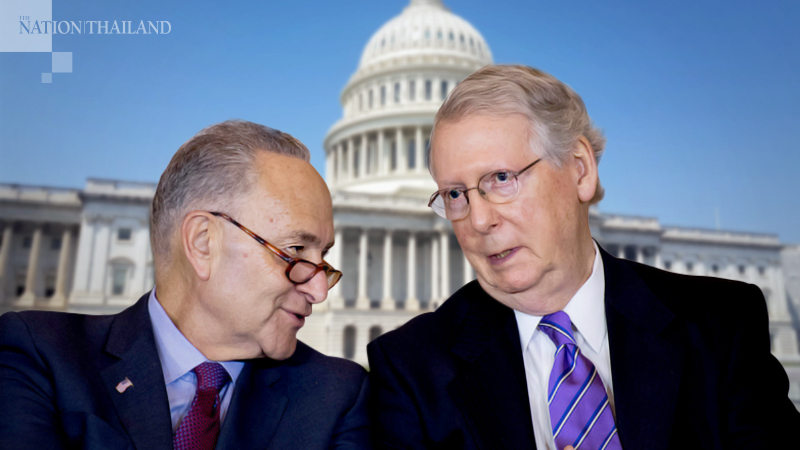
 Cardinal Theodore McCarrick gave a news conference outside the Archdiocesan Pastoral Center in Hyattsville, Md., regarding the allegations of misconduct. MUST CREDIT: Washington Post photo by Sarah L. Voisin
  About 4,000 mail ballots in Arizona still needed to have voter signatures verified as of Tuesday. MUST CREDIT: Photo for The Washington Post by Caitlin O’Hara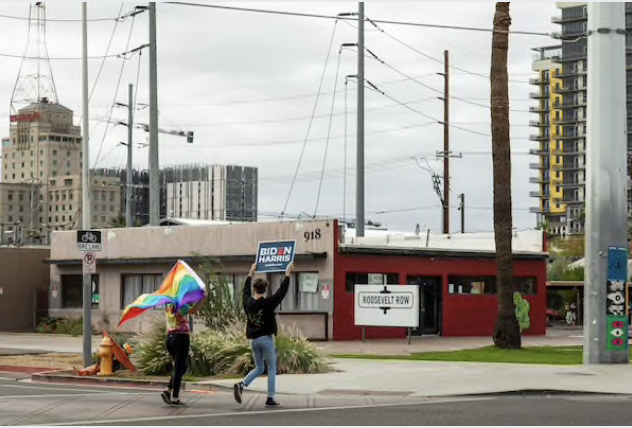

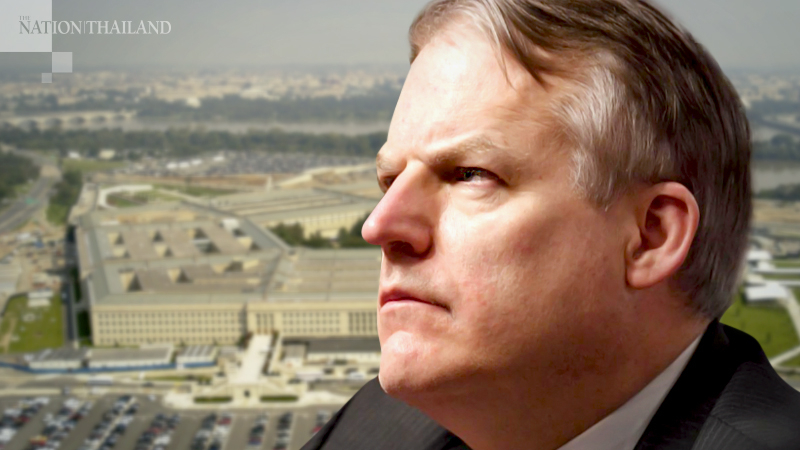
 President Donald Trump at a rally in Goodyear, Ariz., in October. MUST CREDIT: Washington Post photo by Jabin Botsford

 Bruno Le Maire, France’s finance minister, pauses during the Mouvement des entreprises de France business conference in Paris on Aug. 27, 2020. MUST CREDIT: Bloomberg photo by Cyril Marcilhacy. /Photo by: Cyril Marcilhacy — Bloomberg Location: Paris, France
  A boy carries a cardboard cut-out of India Prime Minister Narendra Modi after a Bharatiya Janata Party election rally in Gaya, Bihar, India, on Oct. 23, 2020. MUST CREDIT: Bloomberg photo by Prashanth Vishwanathan.
