
Trump administration removes head of federal climate program that oversees key reports #SootinClaimon.Com

#SootinClaimon.Com : ขอบคุณแหล่งข้อมูล : หนังสือพิมพ์ The Nation.

Trump administration removes head of federal climate program that oversees key reports

InternationalNov 10. 2020
By The Washington Post · Jason Samenow, Andrew Freedman · NATIONAL, SCIENCE-ENVIRONMENT 

WASHINGTON – The White House removed the official in charge of the federal program that produces the U.S. government’s definitive reports on climate change, three people familiar with the situation said.

The official, Michael Kuperberg, a climate scientist who had been executive director of the U.S. Global Change Research Program (USGCRP) since July 2015, was told Friday evening to return to his previous position as a scientist at the Energy Department. He had been expected to stay on through the production of the fifth edition of the congressionally mandated National Climate Assessment.

The climate assessment examines the present-day harms that climate change is having on the United States and makes projections about future damage down to the local level from greenhouse-gas emissions from burning fossil fuels.

The USGCRP is a program Congress created to help coordinate the climate science programs of 13 federal agencies. The program works to “advance understanding of the changing Earth system” and facilitates the production of the National Climate Assessment and other reports.

Kuperberg directed that office through the release of the fourth edition of the climate assessment, which detailed the potentially dire consequences for Americans should the country take little action to cut emissions and prepare for climate change’s effects, such as sea-level rise, droughts and hotter, longer-lasting heat waves.

The report, produced by federal and outside scientists, angered the White House, since President Trump has consistently downplayed the seriousness of the climate threat and the scientific consensus that human activities are playing the dominant role in warming the planet.

Kuperberg’s removal was confirmed by a current federal official and a former White House official, both of whom spoke on the condition of anonymity because they were not authorized to comment on the matter. It was also confirmed by Don Wuebbles, a climate scientist at the University of Illinois who was director of the Fourth National Climate Assessment and is a friend of Kuperberg’s.

“Mike called me on Saturday and said he was just notified that he was let go, that his detail was over and that he should go back to the Department of Energy,” Wuebbles said.

The former White House official described Kuperberg as “shocked” by his removal. “He was extremely dedicated,” the official said. “He did a very good job of figuring out how to walk that political line. He had no idea it was coming.”

Kuperberg did not reply to requests for comment.

His dismissal comes just as Betsy Weatherhead, a mainstream climate scientist, takes over as the federal coordinator of the next assessment which is just getting underway. Weatherhead will work with the USGCRP but be formally located within the U.S. Geological Survey. While the bulk of the work on the report will take place under Joe Biden’s administration, government officials are starting to select which scientists will participate in writing it now, with the first deadline for author nominations coming up on Saturday.

Removing Kuperberg could allow the White House to insert someone whose climate science views more closely align with Trump’s. That may be exactly what’s about to happen, according to Myron Ebell, a climate change contrarian at the Competitive Enterprise Institute who is close to the administration.

Ebell said in an interview that the job will most likely go to David Legates, a meteorologist from the University of Delaware who was recently appointed to be the deputy assistant secretary of Commerce for environmental observation and prediction at the National Oceanic and Atmospheric Administration (NOAA). While that is a senior position at NOAA reporting directly to the acting administrator, Legates does not have a role in the climate assessment process while serving in that capacity.

“It makes sense if they want to take the national assessment in a direction that relies on science rather than junk science, science fiction and speculation,” Ebell, who has long been critical of the scientific consensus on human-caused global warming, said of a potential Legates move to the climate research program. Legates has argued that carbon dioxide is not a pollutant, and promoted the benefits of burning fossil fuels for energy.

Even if he were to hold the climate research job for just the remaining few months of Trump’s term, Ebell said he could help select the authors of the next assessment and influence its final content that way.

Once the assessment’s authors are selected, it can be difficult to change them as the process moves along, Ebell said, regardless of the administration in office at the time.

However, he cautioned that he heard that the personnel change would be announced Monday, and said the delay could indicate there’s a ‘glitch’ in the appointment.

The USGCRP has traditionally stayed insulated from political influences, instead serving as a coordinating office and funding agency for carrying out the major report and providing other climate science information useful to the public and policymakers.

Kuperberg’s removal “seems quite consistent with decisions at NOAA and elsewhere,” said Kathy Jacobs, who is director of the Center for Climate Adaptation Science and Solutions at the University of Arizona and ran the Third National Climate Assessment. “[It’s] a last-minute attempt to remove people who may not be perceived as supporting the president’s agenda.”

It also occurs against the backdrop of the removal of several government officials at the White House’s request, including a senior official at the U.S. Agency for International Development, the director of the National Nuclear Security Administration and Monday’s firing of Defense Secretary Mark Esper.

Wuebbles and Jacobs said they did not understand why the administration would dismiss Kuperberg now.

“I can only speculate they want to see if they can manipulate the Fifth National Climate Assessment before the next administration comes in,” Wuebbles said. “Why they want to do that, I don’t understand.”

Jacobs said any damage done by removing Kuperberg could be reversed by the Biden administration.

“I would be more concerned if Trump had won the election,” she said. “If USGCRP is rudderless for a few months, I don’t consider that a devastating situation. The question is: What are they going to do in the interim?”

Brenda Ekwurzel, director of climate science for the Union of Concerned Scientists, said Kuperberg’s removal at this time is “troubling.”

“I think people underestimate how important USGCRP is,” she said, emphasizing that it plays a role in coordinating reports for the international community, as well. “It does not send a good signal internationally,” she said, especially considering the United States is set to rejoin the Paris climate accords under Biden.

Biden behaves as the incoming president, even as Trump balks at giving up power #SootinClaimon.Com

#SootinClaimon.Com : ขอบคุณแหล่งข้อมูล : หนังสือพิมพ์ The Nation.

Biden behaves as the incoming president, even as Trump balks at giving up power

InternationalNov 10. 2020President-elect Joe Biden delivers a speech at the Queen theater in Wilmington, Del. MUST CREDIT: Washington Post photo by Demetrius Freeman.President-elect Joe Biden delivers a speech at the Queen theater in Wilmington, Del. MUST CREDIT: Washington Post photo by Demetrius Freeman. 
By The Washington Post · Annie Linskey, Sean Sullivan · NATIONAL, POLITICS

WILMINGTON, Del. – President-elect Joe Biden sought to project the authority of an incoming president Monday as he dealt with matters domestic and international, even as the defeated incumbent continued to balk at turning over the reins.

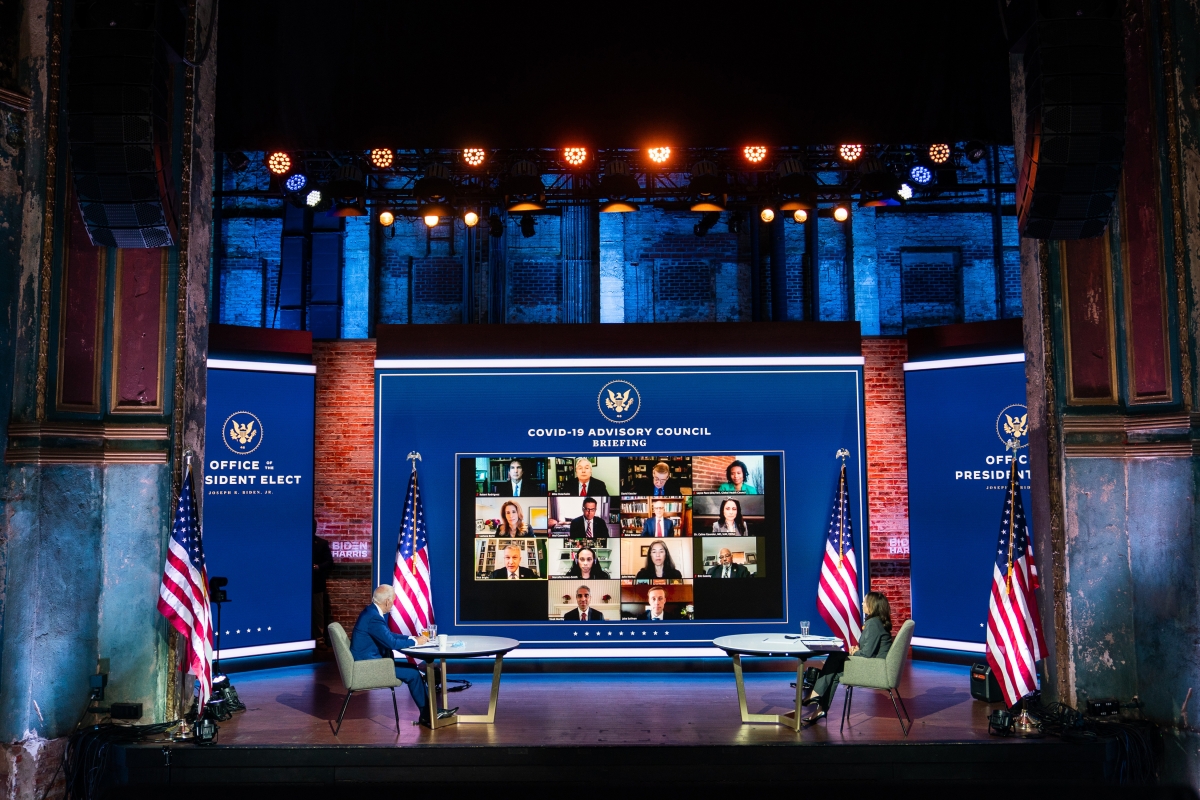
Biden and Harris take part in a virtual coronavirus briefing at the Queen in Wilmington. MUST CREDIT: Washington Post photo by Demetrius Freeman.

Biden and Harris take part in a virtual coronavirus briefing at the Queen in Wilmington. MUST CREDIT: Washington Post photo by Demetrius Freeman.
Biden began taking calls from foreign leaders, speaking Monday with Canadian Prime Minister Justin Trudeau. He also was weighing whom to appoint to top White House positions, with several of his longtime advisers expected to take senior roles. And he turned his attention to the coronavirus, dispatching a key aide to brief Senate Democrats this week and making a strong pitch to Americans of every ideology to follow public health recommendations.

Biden urged Americans to wear masks, at one point holding one up during a speech in Wilmington, and sought to depoliticize the act of putting one on.

“We can save tens of thousands of lives if everyone would just wear a mask for the next few months,” said Biden, who wore a mask routinely during the campaign and was mocked by President Donald Trump for doing so. “Not Democrat or Republican lives, American lives.”

Speaking on the day when the number of U.S. coronavirus cases soared past 10 million – the daily count has hit more than 100,000 recently – Biden sought to impart urgency about adopting actions to curb the spread, even as he acknowledged that he had little power other than rhetoric to change behavior.

“The challenge before us right now is still immense and growing, and although we are not in office yet, I’m just laying out what we expect to do and hope can be done,” said Biden, speaking from the Queen, a Wilmington theater, with Vice President-elect Kamala Harris at his side.

The effort to bend the trajectory of the coronavirus pandemic, which has killed more than 238,000 Americans, was part of Biden’s attempt to push as hard as he can at the notion that he will inevitably become president on Jan. 20, regardless of Trump’s sentiments.

But so far his transition lacks the latitude usually given to an incoming president by a conceding defeated leader.

Trump has continued to insist that he won the election, despite trailing Biden 279 electoral votes to 214. Biden leads in two states that have not been formally projected – Arizona and Georgia – while Trump leads in two others, North Carolina and Alaska.

“What President-elect Biden has to do is act like a winner, because he won,” said presidential historian Douglas Brinkley, who noted that Biden’s victory in the popular vote and the expected tally in the electoral college are by unusually large margins. Still, given Trump’s recalcitrance, Brinkley said, it behooves Biden to be visible.

“You don’t want to be in quarantine or hiding mode,” he said. “Every day you have to move forward with the transition without being distracted by Trump’s antics.”

The president’s team has taken legal action to invalidate some ballots and question counting in several states, and his allies and advisers continue to insist – without proof – that Democrats cheated to clear a path for Biden’s election. The political appointee heading the General Services Administration, Emily Murphy, has so far declined to sign off on paperwork that would allow the Biden team to kick-start its transition with access to government offices and money to finance its effort.

On Capitol Hill, meanwhile, the president’s allies were walking in lockstep behind him.

Senate Majority Leader Mitch McConnell, R-Ky., said Monday that the president is “100% within his rights” to take legal action to try to overturn the results.

“This process will reach its resolution. Our system will resolve any recounts” or lawsuits, McConnell said in remarks on the Senate floor.

McConnell on Monday did not congratulate Biden. His remarks came shortly after he met with Attorney General William Barr on Monday afternoon. A Justice Department spokeswoman declined to comment on the meeting.

Biden’s team has welcomed support from Republican senators willing to break with Trump and bolster the legitimacy of the election via congratulatory statements.

Sen. Ben Sasse, R-Neb., congratulated Biden on Monday, calling him the “next president.”

A more nuanced statement came from Sen. Susan Collins, R-Maine, who last week won a fifth term. She congratulated Biden on his “apparent victory” but also said Trump should be “afforded the opportunity” to challenge the outcome of the election.

Collins, who is known to have a good relationship with Biden after they served in the Senate together for years, spoke with the Democrat last week, according to a Republican aide, who was not authorized to discuss private conversations and so spoke on the condition of anonymity.

More than 30 Republican former members of Congress released a statement calling on the nation to accept the outcome of the presidential election and denouncing Trump’s allegations of widespread election fraud.

Senate Minority Leader Chuck Schumer, D-N.Y., called for GOP lawmakers to follow the lead of former president George W. Bush, who congratulated Biden in a statement Sunday.

“There has been no evidence of any significant or widespread voter fraud,” Schumer said. “Joe Biden won this election fair and square.”

Biden’s biggest task Monday was to grapple with the spiraling spread of the coronavirus. He named 13 top physicians and public health experts to a coronavirus advisory committee as his first official act as president-elect, a move meant to demonstrate his commitment to a science-based approach to containing the outbreak.

“This group will advise on detailed plans, built on a bedrock of science, and then keep compassion, empathy and care for every American at its core,” Biden said Monday, adding that the members will look at ways to increase access to rapid testing, determine how to hire a “corps” of contact tracers and prioritize how to get vaccines to the most at-risk Americans.

Vivek Murthy, the co-chair of Biden’s coronavirus advisory board, was invited by Schumer to brief Senate Democrats at their caucus lunch Tuesday, according to a senior Democratic aide. The briefing will be held via phone, like all other Democratic lunches have been recently.

Despite Monday’s news that Pfizer’s vaccine has proved to be more than 90% effective at protecting people compared with a placebo – a mark higher than many experts had predicted – Biden sought to lower expectations about how quickly it could be approved and distributed, a departure from Trump’s insistence that a vaccine would be widely available soon.

“The expectation is the FDA will run a process of rigorous reviews and approval,” said Biden. “The process must also be grounded in science and fully transparent so the American people can have every confidence that any approved vaccine is safe and effective.”

He added another note of caution, saying, “It’s clear that this vaccine, even if approved, will not be widely available for many months yet to come.”

Biden’s conversation Monday with Trudeau was the first time he has been known to talk to a foreign leader since he claimed victory Saturday.

“We’ve worked with each other before, and we’re ready to pick up on that work and tackle the challenges and opportunities facing our two countries – including climate change and COVID-19,” Trudeau said in a message posted on social media. “. . . President-elect @JoeBiden and I agreed to keep in touch and work closely together.”

Topics included trade, energy, the NATO alliance and racial justice, Trudeau said.

Behind the scenes, Biden was also working to finalize his senior White House team.

Biden in the past has blown past deadlines on important matters; he extended his decision on whether to run for president beyond his initial deadline and similarly took extra weeks when selecting a running mate, finally picking Harris after a drawn-out process.

The calendar is also conspiring against the unveiling of a long list of staff members, with Biden expected to honor Veterans Day on Wednesday.

But for his staff, the decisions carry some urgency. The final paychecks from the campaign will come soon, according to one staff member, though health care coverage may extend through the end of the year. Some key staff members are expected to move as early as this week to the Biden transition team.

Several longtime aides on the campaign are widely expected to be headed into the White House as influential advisers.

Two of those most frequently mentioned are Mike Donilon and Steve Ricchetti, longtime Biden advisers who are well-positioned to land influential positions inside the White House, according to people with knowledge of the internal dynamics. Those people spoke on the condition of anonymity to recount private conversations.

Both men played significant roles in Biden’s campaign, helping direct strategy, operations and major decisions, and are considered two of his closest confidants.

Should Biden tap them for top roles, the decision would be among the first concrete signs that he will continue to rely, at least in part, on the old guard of strategists who have guided him for years. Another oft-mentioned name is Ron Klain, who is seen by many in the Biden orbit as a potential White House chief of staff.

At the same time, Biden has vowed to staff an administration that looks like the country, and he is coming under pressure to ensure that his team is diverse. Donilon, Ricchetti and Klain are all White men.

The people with knowledge of the internal dynamics stressed that the situation was fluid and final decisions had not yet been made.

Donilon was the chief strategist for Biden’s campaign and was the lead architect at the staff level on major speeches, including Biden’s October address in Gettysburg, Pa.

Ricchetti served as campaign chairman and was Biden’s chief of staff when he was vice president. Before joining Biden’s staff, Ricchetti helmed a public affairs and lobbying firm.

“The Biden-Harris transition has not made any personnel decisions at this time,” said transition spokesman Cameron French.

The top staffers whom Biden trusts cut significantly different profiles than members of Trump’s team, many of whom gained their White House jobs via television appearances.

In contrast, most of the aides who populate Biden’s inner circle are famously camera-shy and largely avoid efforts to take credit for decisions.

Some staff not going to the White House immediately will help set up a presidential inaugural committee that will oversee the Jan. 20 transfer of power and associated festivities.

The pandemic raises the possibility that the traditional ceremonies, which draw thousands of supporters to the Mall, may have to be reimagined. The people with internal knowledge said it was possible that Rufus Gifford might chair the inaugural committee, though they were not aware of any final decisions. Gifford served as deputy campaign manager and has been a longtime party fundraiser whom President Barack Obama tapped as ambassador to Denmark.

Holding the event safely amid the pandemic will be difficult, some Biden allies acknowledge, but they have said it’s important to preserve some sense of grandeur given Trump’s refusal to concede.

“It’s easier to scale back than scale up,” Sen. Roy Blunt, R-Mo., who chairs the Joint Congressional Committee on Inaugural Ceremonies, said Sunday on ABC’s “This Week.” He said that a “full-scale inauguration” is being planned.

A U.S.-China detente under a ‘President’ Biden? Beijing isn’t betting on it #SootinClaimon.Com

#SootinClaimon.Com : ขอบคุณแหล่งข้อมูล : หนังสือพิมพ์ The Nation.

A U.S.-China detente under a ‘President’ Biden? Beijing isn’t betting on it

InternationalNov 10. 2020

By The Washington Post · Gerry Shih, Eva Dou · WORLD, TECHNOLOGY, ASIA-PACIFIC 
TAIPEI, Taiwan – With President-elect Joe Biden’s triumph, governments around the world around are bracing for a potentially dramatic reversal in the U.S. approach toward allies, foes and issues from trade to climate change.

In China? Not so much.

The Chinese government held off from immediately commenting on the election result on Sunday, but many Chinese analysts say that four years and one bruising showdown with the Trump administration have left a profound impression that the world’s two leading powers have ineluctably become rivals, no matter who occupies the Oval Office. While Biden could ease off Beijing in certain respects after Inauguration Day, many Chinese have adopted a fatalistic view of the post-Trump world: U.S.-China relations are likely to be fraught for four more years, if not a generation.

Part of the pessimism stems from Chinese expectations that Biden could pressure Beijing more effectively than President Donald Trump by galvanizing U.S. allies and criticizing its human rights record – a strategy Biden and his advisers have touted on the campaign trail. But a larger challenge, Chinese analysts say, is a growing, bipartisan alarm in Washington about China’s rising strength, particularly in technology.

“There will actually be more tension over human rights, Hong Kong, Xinjiang,” said Shen Dingli, director of American Studies at Fudan University, listing areas where China expects Biden to adopt a tougher line than Trump, who did not emphasize upholding human rights or liberal values as part of his foreign policy.

Shen and other analysts said China could seize the opportunity to quickly offer friendly gestures to Biden. Beijing would be happy to work on areas of potential collaboration, such as countering the coronavirus pandemic, bringing the United States back into a climate accord or patching up a nuclear agreement with Iran, Shen said.

“But overall, Biden will try to do what Trump couldn’t – suppress China – because the distance between China and the U.S. is drawing closer every year and no leader, Democratic or Republican, will ever accept China overtaking America,” he said. “Pressure will be higher still come 2024.”

China’s Foreign Ministry, which has avoided expressing favor for either candidate, did not comment on Biden’s victory as of Sunday afternoon in Beijing.

But as the Democrat led the vote count in recent days, a senior ministry official hinted that China was eager to turn a new page. The next U.S. administration should “meet halfway” with Beijing on matters of disagreement and collaborate whenever possible, Vice Foreign Minister Le Yucheng said in remarks that some state media outlets framed as a desire to move past the bitterness of the Trump years.

“Bull Piano,” a blog on WeChat that is associated with the official Xinhua News Agency but does not represent government positions, noted Sunday that Biden has called Russia a “threat” but China a “competitor.”

“We must not have illusions,” the unnamed writer said. “I hope we can return to a relatively rational track, but one thing is certain: Things will never be the same again. This world is not the world of before.”

During his term, Trump exposed China’s vulnerabilities by erecting tariffs on China’s key export industry and denying sales of cutting-edge technology such as semiconductors to Huawei and other corporate players. In response, Chinese President Xi Jinping repeatedly urged his country to patch up its vulnerabilities, shockproof the economy, and worry less about fluctuations in U.S. policies toward China and focus more on “doing our own things well.”

In recent months, a slew of far-reaching policies has reflected China’s preparations for future flare-ups with competitors like the United States. The ruling Communist Party rolled out development plans to become “self-sufficient” in advanced fields like computer chips and to rely less on selling products to other countries. Some of the policy motivations were long-standing, Chinese experts say: Beijing has long tried to overhaul the economy to become more dependent on domestic consumption.

But the blueprints were undeniably shaped by Trump’s attacks.

“Changes in U.S.-China relations increased the necessity of these policies,” said Mei Xinyu, a researcher who advises the Commerce Ministry. Mei said he was not “overly hopeful” that Biden would cancel Trump’s tariffs and said Chinese companies should be ready to live under the assumption of a “high-tariff environment.”

Biden and his advisers have said many of Trump’s policies on China, including tariffs, are ineffective and should be reconsidered. Biden has also accused China of stealing intellectual property and pledged to invest in American workers and technology to compete with China, but it’s not clear if he would use tools like Trump’s sanctions against Chinese technology companies.

Some Chinese are troubled by the pervasive gloominess. Ren Yi, a Harvard-educated independent writer in Beijing, said there was a growing trend among Chinese academics, bureaucrats and ordinary people to assume the two countries are destined for conflict.

Ren, who writes one of the country’s most popular political columns on WeChat, said he has tried to tell readers that a Democratic administration would likely focus on domestic issues, and most Americans are not preoccupied with China. But “mainstream Chinese have become disillusioned with America,” he said. “The trade war was a catalyst. Then came (Trump’s sanctions on) Huawei, TikTok, the use of American power against us, the dispute over the Hong Kong movement.”

If there is room for optimism in Beijing, it is that Biden is a relatively known quantity, and Chinese analysts expect he would adhere to norms in diplomacy and negotiation. Although he called Xi a “thug” during a February debate, Biden has also talked up his extensive foreign policy record and experience meeting Chinese leaders. Xi, during a 2013 meeting in Beijing, called Biden “my old friend.”

Victor Gao, a professor at China’s Soochow University and a former Foreign Ministry official, said he believed Beijing looked forward to somebody who was not Trump. “Trump is a man without decency,” he said. “China will be happy to deal with a president who is a man of decency.”

Xin Qiang, a professor at Fudan University who studies the United States and Taiwan, said some aspects of the bilateral relationship, like technological competition with the United States, have been “changed forever.” But Xin predicted normalcy to return on sensitive issues like Taiwan. Biden is likely to support the island’s democracy, which China claims as its territory, but avoid risky actions that could provoke military conflict, he said.

In recent months, China has expressed displeasure with the warming ties between the Trump administration and Taiwan by dispatching fighter jets into Taiwanese airspace and airing propaganda warning bluntly of war. The Trump administration has supported Taiwan by selling advanced weaponry and dispatching senior officials to visit.

Biden “will be restrained and not as radical as President Trump,” Xin said. He served on the Senate Foreign Relations Committee “and has great expertise,” Xin said. “He knows the red line, the bottom line” of China.

But Xin and other experts acknowledge concerns about the future. A Pew Research Center poll this year showed U.S. sentiment toward China dropping to all-time lows, Xin said, and Chinese are already aware that “China-bashing could become worse” with the rise of a younger generation of U.S. politicians who may seek the presidency in 2024.

“I think there are considerable American forces who embrace trying to suppress China’s rise,” said Mei, the Commerce Ministry-affiliated researcher. “We are willing to improve relations with the United States, but we must not overlook the existence of these forces.”

He summed up the mood in Beijing.

When it comes to U.S. relations, Mei said, “prepare for the worst, and strive for the best.”

Barr clears Justice Dept. to investigate alleged voting irregularities as Trump makes unfounded fraud claims #SootinClaimon.Com

#SootinClaimon.Com : ขอบคุณแหล่งข้อมูล : หนังสือพิมพ์ The Nation.

Barr clears Justice Dept. to investigate alleged voting irregularities as Trump makes unfounded fraud claims

InternationalNov 10. 2020

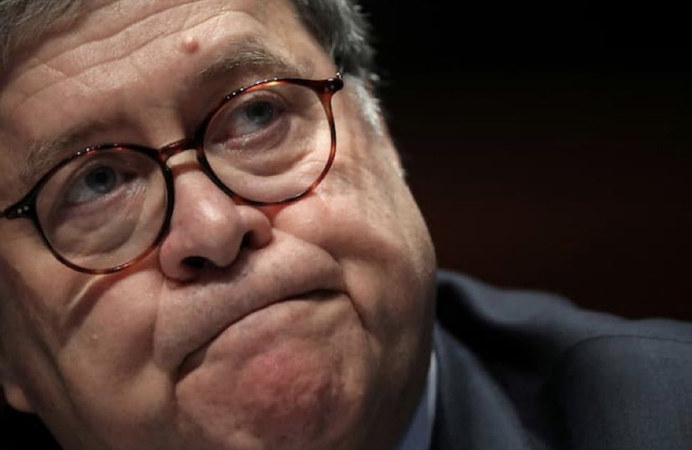
William Barr

William Barr

By The Washington Post · Matt Zapotosky, Devlin Barrett · NATIONAL, POLITICS, COURTSLAW 
Attorney General William Barr on Monday gave federal prosecutors approval to pursue allegations of “vote tabulation irregularities” in certain cases before results are certified and indicated he had already done so “in specific instances” – a reversal of long-standing Justice Department policy that quickly drew criticism for fueling unfounded claims of massive election fraud pushed by President Donald Trump and other conservatives.

The two-page memo comes as the Trump campaign and its allies have urged the department to investigate their claims, despite little evidence that such fraud exists. Justice Department officials had previously confirmed they were looking into allegations in Nevada, and had referred other information out of Michigan to the FBI.

In his memo, circulated two days after results showed former vice president Joe Biden had defeated Trump, Barr seemed to take aim at previous guidance from the Justice Department’s Election Crimes Branch that said prosecutors should not – in most instances – take overt steps in voter fraud or related investigations until after election results are in and certified. The guidance was designed to ensure that voters and state and local election officials, rather than the federal government, decide the results.

But Barr wrote that the previous directive was never “a hard and fast rule,” and that a “passive and delayed enforcement approach can result in situations in which election misconduct cannot realistically be rectified.” He also noted that concern about the Justice Department influencing an election were reduced once voters had finished casting ballots.

“Given this, and given that voting in our current elections has now concluded, I authorize you to pursue substantial allegations of voting and vote tabulation irregularities prior to the certification of elections in your jurisdictions in certain cases, as I have already done in specific instances,” Barr wrote.

Vanita Gupta, the former head of the Justice Department’s Civil Rights Division during the Obama administration who is now president of the Leadership Conference on Civil and Human Rights, said the memo amounts to “scaremongering” that will allow officials to send letters or take other public steps that might suggest there is voter fraud in a particular state, when in fact there is none.

“This is totally predictable. It’s DOJ scare tactics again. It’s the same show we’ve seen before,” Gupta said. “Barr is probably doing this because Trump is demanding that he do something, but the voters decided this election, and overwhelmingly voted for Biden.”

Matthew Miller, a former Justice Department spokesman during the Obama administration, said, “There’s no justification for doing this now.”

“The best case scenario is that Barr did this to appease Trump and add credibility to his allegations of voter fraud,” Miller said. “The worst case scenario is that DOJ is planning to intervene in some way and try to throw the election to the president. Neither one is good, but one is much, much worse than the other.”

Barr’s move came a day after the chairman of the Senate Judiciary Committee wrote to him urging an investigation into possible impropriety in Pennsylvania. On Sunday, Sen. Lindsey Graham, R-S.C., sent a letter to Barr and FBI Director Christopher Wray asking them to investigate claims made by a postal worker in Erie, Pa., that there was mishandling of mail-in ballots by postal supervisors there.

“I urge you to investigate these claims as soon as possible,” wrote Graham. “It is imperative that the American people have confidence in the 2020 election and all other elections. The expansion of voting by mail has placed the post office at the center of the election and we must ensure that the entire postal system operates with integrity.”

A Justice Department official said it is reviewing Graham’s letter. The official said Barr had not been asked to send the memo by the White House.

Barr’s directive was heavily caveated, and did not offer new evidence of substantive election fraud. He did not identify the “specific instances” in which he had authorized prosecutors to examine allegations of vote tabulation irregularities, and he noted pointedly, “Nothing here should be taken as any indication that the Department has concluded that voting irregularities have impacted the outcome of any election.”

Barr also limited the cases that prosecutors might be able to open under the new guidance to irregularities that “if true, could potentially impact the outcome of a federal election in an individual State.”

“Any investigation of claims of irregularities that, if true, would clearly not impact the outcome of a federal election in an individual State should normally be deferred until after the election certification process is completed,” Barr wrote.

Before Monday, the department had taken only modest steps to investigate fraud, despite significant pressure from the Trump campaign and its allies.

Last week, for example, lawyers for the Trump campaign sent a letter to Barr alleging voter fraud in Nevada, where they claimed to have identified more than 3,000 people who voted improperly because there was some evidence to suggest they moved out of state. But state officials soon pushed back on that claim, saying some of those voters might have been serving in the military. A Justice Department official, speaking on the condition of anonymity, said at that time that the department was “looking into” the matter, but declined to comment further.

Similarly, Republican National Committee chairwoman Ronna McDaniel last week said she had sent claims to the Justice Department about election workers in Michigan being told to backdate certain ballots, though she conceded the allegations were not fully vetted. A Justice Department official said the information McDaniel provided has been referred to the FBI, though the FBI declined to say what – if anything – it was doing.

Before Monday, the Justice Department had issued just one public statement on Trump’s broad allegations of fraud. Kerri Kupec, a Justice Department spokeswoman, told reporters, “The Department of Justice pursues all actionable information it receives and, as is always the case, encourages anyone who suspects a federal crime to report it to their local FBI office.”

The Justice Department had reaffirmed its long-standing policy of not taking overt steps on possible election fraud before results are certified as recently as December 2017, when it issued a guide telling prosecutors “not to conduct overt investigations, including interviews with individual voters, until after the outcome of the election allegedly affected by the fraud is certified.” But more recently, department also issued guidance offering prosecutors more leeway, particularly when misconduct by federal employees, such as postal workers, might be at issue.

In Monday’s directive, Barr seemed to defer to his subordinates, telling those to whom the memo was addressed, “You are the most senior leaders in the United States Department of Justice and I trust you to exercise great care and judgment in addressing allegations of voting and vote tabulation irregularities. While serious allegations should be handled with great care, specious, speculative, fanciful or far-fetched claims should not be a basis for initiating federal inquiries.”

The directive was sent to U.S. attorneys throughout the country, as well as the heads of the Justice Department’s criminal division, civil rights division, national security division and the FBI director.

Head of House Democratic campaign committee to step down after election losses #SootinClaimon.Com

#SootinClaimon.Com : ขอบคุณแหล่งข้อมูล : หนังสือพิมพ์ The Nation.

Head of House Democratic campaign committee to step down after election losses

InternationalNov 10. 2020Rep. Cheri Bustos, D-Ill., speaks to her constituents from Illinois' 17th District at the International Brotherhood of Boilermakers Reception in D.C. in 2018. MUST CREDIT: Washington Post photo by Melina Mara.
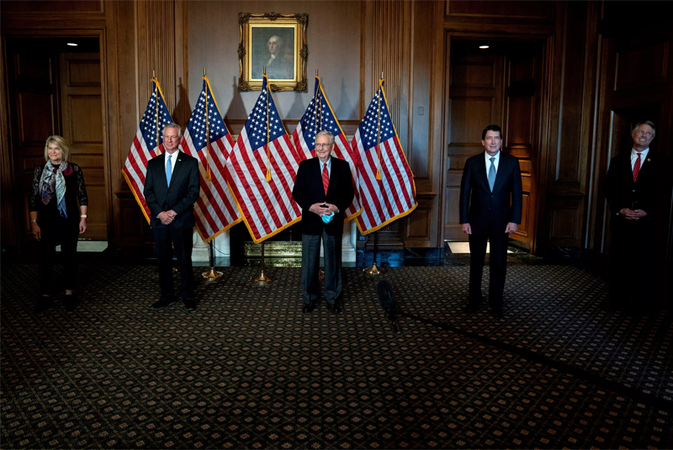
Rep. Cheri Bustos, D-Ill., speaks to her constituents from Illinois’ 17th District at the International Brotherhood of Boilermakers Reception in D.C. in 2018. MUST CREDIT: Washington Post photo by Melina Mara. 

By The Washington Post · Mike DeBonis · NATIONAL, POLITICS, CONGRESS 

WASHINGTON – The chairwoman of the Democratic Congressional Campaign Committee said Monday that she will not seek a second term in that post, moving to leave the House leadership days after her party sharply underperformed expectations in last week’s general election.

Rep. Cheri Bustos, D-Ill., campaigned for House Democrats’ top political job on the premise that she was best equipped to help win races in swing districts, including those President Donald Trump had won in 2016. 

Bustos, representing a swath of rural northwest Illinois, had easily outperformed Trump in 2016. Following Democrats’ historic 2018 gains, she pledged to hold on to those Trump-friendly seats and push Democratic gains farther into the suburbs – adding to the Democrats’ 15-seat majority.

But last week’s results instead appear to have cut deeply into that majority, with a net loss of four seats to Republicans so far and with more races yet to be called. Bustos herself was nearly a victim of the GOP surge, eking out a four-point victory after winning by more than 20 percentage points in 2016 and 2018.

Bustos has faced angry recriminations from fellow Democrats who were blindsided by the losses, and the underwhelming results have turbocharged long-simmering infighting between moderate Democrats and liberal members who have been critical of the DCCC’s centrist messaging and recruiting practices. 

The latter faction had previously battled with Bustos over her decision to blacklist campaign vendors who work to unseat Democratic incumbents in primaries as well as a lack of diversity in her initial staff hires – an effort that prompted the replacement of several committee officials, including Bustos’s handpicked executive director. 

On a conference call with Democratic lawmakers last week, Bustos blamed bad polling that underestimated GOP turnout for the misguided 2020 expectations and promised to launch a thorough postmortem review to identify missteps. But it now appears that Bustos will not see that review to its conclusion.

In a statement, she said she will “instead focus my work on exciting legislative possibilities in the years to come” rather than seek another term leading the campaign committee.

“Now, for the first time in a decade, our caucus will serve in a House majority with a Democratic president. After four years of this administration’s chaos and broken promises, there is now no limit to what we can achieve as we work to Build Back Better for the communities we serve,” said Bustos, a member of the Appropriations and Agriculture committees. 

Bustos will remain as DCCC chair until a new chairman is chosen by the Democratic caucus later this year, said a Democratic aide, who spoke on the condition of anonymity to discuss internal planning.

Significant Democratic gains were expected to propel Bustos further up the party leadership ladder, perhaps into the assistant speaker post vacated by Sen.-elect Ben Ray Luján, D-N.M. Now Bustos appears to be out of the competitive Democratic leadership derby for the time being.

Hours after Bustos made her decision public, Rep. Sean Patrick Maloney, D-N.Y., announced that he would run to succeed her, touting his own experience winning in a swing district and his fundraising prowess.

Maloney led a postmortem review of the DCCC’s similarly underwhelming performance in 2016, when party leaders thought they would be in contention for the majority but instead only made modest inroads. That familiarity with the organization, Maloney said in his letter Monday, “will shorten the learning curve and allow me to hit the ground running immediately.”

Another potential successor is Rep. Tony Cárdenas, D-Calif., who pushed for the shake-up inside the DCCC ranks last year and leads BOLD PAC, the political arm of the Congressional Hispanic Caucus. Cardenas has announced his intentions to run for the assistant leader post but could change course and instead pursue the campaign post.

Leadership of the party campaign committee stands to be a crucial job ahead of the 2022 elections. Democrats are likely to have the narrowest House majority in 20 years in the 117th Congress, and they will be facing the political head winds that have typically hampered the president’s party in congressional midterms.

“We must defend vulnerable front-line members while working to expand our majority in what will almost assuredly be a difficult environment,” Maloney said in his letter.

House Speaker Nancy Pelosi, D-Calif., paid tribute to Bustos in a statement Monday, calling her “a leader of great integrity and inspiration.”

“Chairwoman Bustos brought strategic thinking, political astuteness and boundless stamina to Hold The House, with the added challenge of the coronavirus,” Pelosi said.

After Biden win, McConnell backs Trump’s legal challenges to election results #SootinClaimon.Com

#SootinClaimon.Com : ขอบคุณแหล่งข้อมูล : หนังสือพิมพ์ The Nation.

After Biden win, McConnell backs Trump’s legal challenges to election results

InternationalNov 10. 2020

By The Washington Post · Felicia Sonmez · NATIONAL, POLITICS 
Senate Majority Leader Mitch McConnell, R-Ky., on Monday threw his support behind President Donald Trump’s legal challenges in the wake of his loss to Democrat Joe Biden, saying that the president is “100% within his rights” to pursue recounts and litigation, though Trump has produced no evidence of widespread voting fraud.

“This process will reach its resolution. Our system will resolve any recounts or litigation. In January, the winner of this election will place his hand on a Bible, just like it’s happened every four years since 1793,” McConnell said in remarks on the Senate floor.

Trump and his campaign have offered no evidence to back up their baseless claims, and state and local officials from both parties have rejected the accusations made by the president and his supporters. McConnell, later pressed by reporters, declined to answer when asked to produce evidence of fraud that would overturn the election results. 

McConnell heralded Republican wins in Senate and House races, results that have been called by media organizations but have not been certified by state election officials. Among those results was McConnell winning a seventh term.

But the GOP leader dismissed concerns about the president’s actions as Trump has refused to concede while making unfounded claims. McConnell argued that “a few legal inquiries” from Trump “do not exactly spell the end of the republic” and that the president should not “immediately, cheerfully accept preliminary election results.”

McConnell, speaking for the first time since Biden was projected as the winner Saturday, did not congratulate the president-elect, though four members of the Senate Republican conference have done so in recent days. 

McConnell’s remarks came shortly after he met with Attorney General William Barr on Monday afternoon. A Justice Department spokeswoman declined to comment on the meeting.

“Our institutions are built for this,” McConnell said. “We have the system in place to consider concerns. And President Trump is 100% within his rights to look into allegations of irregularities and weigh his legal options.”

Senate Minority Leader Chuck Schumer, D-N.Y., took to the floor shortly after McConnell spoke. He pushed back against the Kentucky Republican’s remarks and called for GOP lawmakers to follow the lead of former president George W. Bush, who congratulated Biden in a statement Sunday.

Schumer called the unsubstantiated claims of voter fraud “extremely dangerous” and “extremely poisonous to our democracy.” 

“As in any campaign, the president has a right to bring legal challenges or request recounts where state law allows,” Schumer said. “However, there is no legal right to file frivolous claims. Lawsuits must have basis in facts and evidence. And make no mistake: There has been no evidence of any significant or widespread voter fraud. Joe Biden won this election fair and square.”

Trump announces ouster of Mark Esper on Twitter #SootinClaimon.Com

#SootinClaimon.Com : ขอบคุณแหล่งข้อมูล : หนังสือพิมพ์ The Nation.

Trump announces ouster of Mark Esper on Twitter

InternationalNov 10. 2020Defense Secretary Mark T. Esper meets with crew members of the USS Bonhomme Richard on September visit to Naval Base San Diego. MUST CREDIT: Lisa Ferdinando/Defense Department.Defense Secretary Mark T. Esper meets with crew members of the USS Bonhomme Richard on September visit to Naval Base San Diego. MUST CREDIT: Lisa Ferdinando/Defense Department. 

By The Washington Post · Missy Ryan, Dan Lamothe, Paul Sonne, Josh Dawsey · NATIONAL, NATIONAL-SECURITY 
WASHINGTON – President Donald Trump fired Defense Secretary Mark Esper on Monday, ousting his fourth Pentagon chief and stoking uncertainty as the nation navigates a chaotic transition marked by an incumbent who is refusing to concede. 

“Mark Esper has been terminated. I would like to thank him for his service,” the president said on Twitter, making a sudden but widely anticipated move that underscored his insistence on absolute loyalty from top advisers even as he contests the outcome of the Nov. 3 election. 

Trump said that Christopher Miller, who was recently named director of the National Counterterrorism Center, would immediately become acting defense secretary. “Chris will do a GREAT job!” Trump wrote.

Esper’s firing plunges the Pentagon into a new period of leadership upheaval as it tries to manage an unusual transition period fraught with political tensions and potential security risks. Democrats and independents criticized the decision, saying the abrupt change could endanger American security at an already vulnerable moment.

The move comes as the Trump administration refuses to allow President-elect Joe Biden’s team to launch its work, increasing the likelihood of a disorderly transition as the country hurtles toward the Jan. 20 inauguration and grapples with a sharp worsening of the coronavirus crisis. 

In a letter to Trump on Monday, which was obtained by The Washington Post, Esper said he accepted the president’s decision to replace him. 

“I have served these last few years . . . in full faith to my sworn oath to support and defend the constitution, and to safeguard the country and its interests, while keeping the department out of politics and abiding by the values Americans hold dear,” he said. 

An Army veteran and former weapons lobbyist who was confirmed as defense secretary in July 2019, Esper was mostly aligned with his commander in chief on major foreign policy issues had clashes with Trump over his steps to draw the military into partisan politics.

Chief among those occurred in June, when Trump demanded that thousands of troops be dispatched on the streets of Washington amid protests over the police killing of George Floyd. Trump threatened to invoke the Insurrection Act to use active-duty service members against demonstrators, but Esper and Gen. Mark Milley, chairman of the Joint Chiefs of Staff, pushed back, concerned it would look like martial law.

Two officials, who spoke on the condition of anonymity because they were not authorized to comment to the news media, said Esper’s public opposition to using troops in June drew the most fierce response from the president that they had ever seen. 

While aides talked Trump out of firing Esper that week, the president regularly raised the issue throughout the campaign season, believing the defense chief was trying to embarrass him and damage his reelection prospects, the officials said. In recent months, Esper has rarely seen the president. 

One former senior administration official said that Esper often asked for advice on how to deal with the president and “knew he was going to be fired for many months.” The former official said Esper frequently complained that Trump was not listening to him and was agitated when he was around.

In recent months, Esper has kept a low profile and distanced himself from the presidential campaign, steering clear of the campaign activity embraced by other Cabinet members, including Secretary of State Mike Pompeo. 

Two officials said White House chief of staff Mark Meadows called Esper about five minutes before Trump posted his Twitter message to inform him of the president’s decision. 

John Kelly, the former chief of staff, said Esper had “made the decision to stay loyal to the law and constitution and paid the price.”

“The irony is that the president derided him as ‘Mark Yesper’ and the reason that he got fired is that he wasn’t,” said Eric Edelman, a former top Pentagon official under President George W. Bush. “It’s mean-spirited vengeance and vindictiveness, and he’s doing it because he can.” 

Esper’s departure may be the first in what some officials say could be a series of senior-level ousters, possibly including FBI Director Christopher Wray, in a presidential score-settling now that the election is over.

In recent days, the Trump administration has also fired the head of the Federal Energy Regulatory Commission and forced out the No. 2 official at the U.S. Agency for International Development, a move apparently aimed at keeping the agency’s head, a Trump appointee, in place.

Esper took over amid earlier upheaval in 2019, after then-acting Defense Secretary Patrick Shanahan abruptly resigned in the midst of preparations for his confirmation hearing. Shanahan served in an acting capacity for six months after his predecessor, retired Gen. Jim Mattis, resigned over disputes with Trump about military alliances and other matters. Richard Spencer, the then-Navy secretary, served as acting defense secretary for a week while Esper underwent Senate confirmation.

Since his clash with Trump in June, Esper presided over the military’s response to the coronavirus pandemic, sought to take steps to address racial and gender discrimination, and announced troop cuts in line with Trump’s foreign policy goals. But he also continued to subtly defy the president on matters that Pentagon officials see as a threat to the military’s status as a nonpartisan institution. 

In July, Esper issued a de facto ban on the display of the Confederate battle flag on military bases and stated openness to renaming Army posts that recognize Confederate officers who fought to preserve slavery. Trump angrily tweeted that he would not allow bases to be renamed but did not overturn the ban.

But Esper also struggled at times to achieve his stated goal of protecting the military from politicization. 

In the same June week that he broke with Trump over the use of active duty troops to restore order, he referred to U.S. cities as a “battlespace,” a remark for which he apologized. He also drew criticism for appearing alongside Trump for a photo at St. John’s Church near the White House shortly after uniformed personnel cleared protesters from the area.

It was not immediately clear whether the Trump administration would seek Senate confirmation for Miller, an Army Special Forces veteran with more than 30 years of government service, before Biden takes office in January. 

Miller previously oversaw Special Operations policy at the Pentagon and served as a top counterterrorism official at the White House National Security Council, where he focused on pressuring the Islamic State, hostage recovery and hunting down the remnants of al-Qaida’s leadership. On his watch, the U.S. military killed Islamic State leader Abu Bakr al-Baghdadi.

While in uniform, Miller was part of the first deployment of American Special Operations troops to Afghanistan in 2001 and to Iraq in 2003.

Arnold Punaro, a retired Marine Corps general with extensive experience preparing nominees for Senate confirmation, said he did not expect the appointment to present any legal issues, because Miller was already confirmed by the Senate before being sworn for his previous job in August. 

But some analysts and politicians warned that the shuffle at the top of the Pentagon was ill-timed and dangerous, citing geopolitical crises that have required the engagement of national security officials during past presidential transitions. 

The Iranian hostage crisis continued to play out during the transition from President Jimmy Carter to President Ronald Reagan in 1980. The bombing of Pan Am Flight 103 over Lockerbie, Scotland, occurred during the transition from Reagan to President George H.W. Bush in 1988. Four years later, Bush ordered U.S. troops into Somalia as part of a United Nations mission during the transition from Bush to Bill Clinton in 1992.

Rep. Adam Smith, D-Wash., chairman of the House Armed Services Committee, called the firing a destabilizing move that will embolden adversaries and puts the United States at greater risk.

“Until President-elect Biden is sworn into office next January, it is imperative that the Pentagon remain under stable, experienced leadership,” Smith said. “It has long been clear that President Trump cares about loyalty above all else, often at the expense of competence, and during a period of presidential transition competence in government is of the utmost importance.”

One Republican official who works in national security, speaking on the condition of anonymity because of the sensitivity of the issue, called Trump’s decision “irresponsible and petty.”

Mark Cancian, a former Marine officer and White House budget official, said a possible confirmation effort could prove an uphill battle for Miller, who only several months ago was assigned to a mid-level Pentagon role.

“He doesn’t have that national reputation,” Cancian said.

Funding for Pfizer vaccine came from Berlin, not Washington #SootinClaimon.Com

#SootinClaimon.Com : ขอบคุณแหล่งข้อมูล : หนังสือพิมพ์ The Nation.

Funding for Pfizer vaccine came from Berlin, not Washington

InternationalNov 10. 2020A pedestrian wearing a protective mask passing in front of Pfizer signage is reflected outside headquarters in New York on July 22, 2020. MUST CREDIT: Bloomberg photo by Jeenah MoonA pedestrian wearing a protective mask passing in front of Pfizer signage is reflected outside headquarters in New York on July 22, 2020. MUST CREDIT: Bloomberg photo by Jeenah Moon 

By Syndication Washington Post, Bloomberg · Riley Griffin, Drew Armstrong · NATIONAL, BUSINESS, HEALTH, WHITEHOUSE, HEALTH-NEWS 
The encouraging data from Pfizer’s experimental covid-19 vaccine had plenty of people in Washington lining up to take credit.

A logo sits on a sign outside the headquarters of BioNTech in Mainz, Germany, on July 17, 2020. MUST CREDIT: Bloomberg photo by Alex Kraus

A logo sits on a sign outside the headquarters of BioNTech in Mainz, Germany, on July 17, 2020. MUST CREDIT: Bloomberg photo by Alex Kraus

Vice President Mike Pence was among Trump administration officials saying support from the government’s Operation Warp Speed program helped accelerate the development of the vaccine, which was found to be more than 90% effective in preventing symptomatic Covid-19 infections in an interim analysis.

Pfizer received no funding from Operation Warp Speed for the development, clinical trial or manufacture of the vaccine. Its partner, BioNTech, did receive government money — from Germany.

BioNTech is credited for contributing the messenger RNA technology, which prompts the body to make a key protein from the virus, creating an immune response. The biotechnology company already had a history of working with Pfizer on influenza vaccines, and in March they clinched a deal to co-develop a shot to prevent against covid-19 at research sites both in the U.S. and Germany. The two companies began human testing of the vaccine in April, before the existence of Operation Warp Speed was revealed publicly.

Berlin gave $445 million to the German company in a September agreement to help accelerate the vaccine by building out manufacturing and development capacity in its home market.

What the U.S. did, meanwhile, was commit to buying hundreds of millions of vaccines in advance to ensure Americans were among the first in line if it clinches an emergency-use authorization or approval from the FDA. The Trump administration agreed in July to pay almost $2 billion for 100 million doses, with an option to acquire as many as 500 million more, once that clearance comes.

As part of that agreement, the U.S. gets to decide who gets the vaccine first, and will work with the company on logistical support. While most vaccine front-runners that have been tapped by Warp Speed will distribute their doses through a government partnership with McKesson Corp., Pfizer is handling its own delivery of its products. The company has designed reusable containers that can keep the doses at ultracold temperatures, and is organizing trucks and flights to move them.

Operation Warp Speed is credited with speeding along several other vaccine programs, including one from Moderna Inc.that uses similar technology to Pfizer’s and could produce trial data later this month. The Trump administration’s rapid-vaccine operation, led by the Health and Human Services Department, the Defense Department, and other agencies, could well prove to be the reason many Americans get a vaccine in 2021, even if it’s not made by Pfizer.

Some Republicans, including Donald Trump Jr. and Sen. Ted Cruz, R-Texas, questioned the timing of Pfizer’s release of its positive data on Monday, almost a week after the presidential election — with the implication that the information could’ve changed the outcome and tipped the scales toward President Donald Trump, who lost to former Vice President Joe Biden.

Pfizer said on Oct. 27, a week before Election Day, that it hadn’t met the threshold for positive cases that would’ve allowed it to report the data. After that, it revised its trial protocols to raise that threshold higher, after consulting with the U.S. Food and Drug Administration on what would be acceptable to gain approval. The FDA has been under pressure from scientists to set tough standards for a vaccine so that Americans will feel it has been rigorously vetted and is safe to use.

If Pfizer hadn’t raised its threshold in response to the FDA’s recommendations, it’s possible it could have hit the lower bar of 32 positive cases before the Nov. 3 election. But it’s unclear when the trial hit that number. The company didn’t find out it had surpassed the new, revised threshold of 62 positive cases until Sunday.

All along, Pfizer’s top executives have attempted to quell notions that it has been influenced by political players.

Chief Executive Officer Albert Bourla has said repeatedly that the drug giant has avoided taking taxpayer dollars for research and development purposes.

“I wanted to liberate our scientists from any bureaucracy,” Bourla said in a Sept. 16 interview on CBS’s “Face the Nation.” “When you get money from someone, that always comes with strings. They want to see how we are growing to progress, what types of moves you are going to do. They want reports. I didn’t want to have any of that.

“Basically I gave them an open checkbook so that they can worry only about scientific challenges, not anything else. And also, I wanted to keep Pfizer out of politics, by the way,” Bourla said.

Trump supporters launch disparate efforts to fight results as no GOP or Trump allegations of irregularities have been proved #SootinClaimon.Com

#SootinClaimon.Com : ขอบคุณแหล่งข้อมูล : หนังสือพิมพ์ The Nation.

Trump supporters launch disparate efforts to fight results as no GOP or Trump allegations of irregularities have been proved

InternationalNov 09. 2020Joe Mullica, 56, along with a select few supporters of President Trump, maintain their protest of the vote count outside the Pennsylvania Convention Center in Philadelphia on Nov. 8. MUST CREDIT: Photo for The Washington Post by Amanda VoisardJoe Mullica, 56, along with a select few supporters of President Trump, maintain their protest of the vote count outside the Pennsylvania Convention Center in Philadelphia on Nov. 8. MUST CREDIT: Photo for The Washington Post by Amanda Voisard 

By The Washington Post · Robert Klemko, Annie Gowen, Holly Bailey, Scott Wilson · NATIONAL
PHILADELPHIA – President Donald Trump’s refusal to accept the presidential election results is being reinforced in pockets of denial nationwide, but the anger continues to fall short of a coherent resistance movement that would threaten to overturn the vote.

In states where Trump won and here in one where he lost a close race, elected Republicans and GOP voters called for the continuation of efforts to challenge the results, which in Pennsylvania give President-elect Joe Biden a roughly 45,000-vote margin of victory.

Small clusters of Trump supporters gathered on several Philadelphia street corners Sunday to condemn a vote-counting process in which the president lost an early lead to Biden over several agonizing days. No evidence of improper counting procedures or any type of voter fraud has been presented.

“If he won and you want to go communist, knock yourself out,” said Joe Mullica, 56, a truck driver who grew up in south Philadelphia and demonstrated with a handful of others. “But when you consider Trump increased the Black vote, the Hispanic vote and yet you’re gonna tell me Biden won more than Obama? Hello? That don’t send up red flags?”

The flashes of defiance on the streets reflected the larger one at 1600 Pennsylvania Avenue, where Trump continued to insist, without evidence, that Biden and the Democratic Party stole the election.

At five days, the lag between Election Day, on Nov. 3, and a result was not close to the longest in U.S. history. But the delay did represent perhaps the most perplexing one, based less on proof than petulance.

By the end of Sunday, all but four states had been called, leaving Biden and his running mate, Sen. Kamala Harris of California, with nine more than the 270 electoral votes needed to secure the presidency. But Trump allies have kept up questions primarily about the counts in Arizona and Georgia, both uncalled, and here in Pennsylvania.

There appeared this weekend to be no centralized effort – at the White House or elsewhere – to bring together scattered Republican protests in an effort to reverse the results in Trump’s favor. On a conference call with allies Saturday, Trump campaign manager Bill Stepien said the campaign may be “propping up” rallies, protests and other events in upcoming weeks.

Bill Whalen, a political analyst at Stanford University’s conservative Hoover Institution, compared a legal challenge based on what he has seen and heard so far to the band-already-on-the-field kickoff return that won the game for the University of California at Berkeley over Stanford in 1982.

“It would be a once-in-a-lifetime coincidence of events – in other words, Trump is going to lose,” Whalen said. “The president will run out of legal options and the election will go to Joe Biden. Eventually, there will be a Barry Goldwater moment.”

Whalen was referring to a meeting in 1974 when President Richard Nixon was trying to stave off impeachment over the fallout from the Watergate break-in. Goldwater, a leading Republican senator from Arizona, told him he did not have support in the chamber to save his presidency.

Whalen said Trump will probably receive the same message regarding support within his party. 

“Until then, Biden will begin making daily policy announcements and appointments,” Whalen said, “and we will forget all about this.”

“The 2000 election stretched into mid-December before it was conceded,” Whalen continued. “And today, the republic still stands. The only damage done by these kinds of challenges is in the short term, not the long term.”

But some Republicans said Sunday that the president has a case to make in some close-run states and showcase an issue – voter fraud – that the party has attempted to elevate into a national issue for several election cycles. There has been little proof of its existence. 

Sen. Lindsey Graham, R-S.C., urged Trump to refuse to concede the election, calling it “contested” on Fox News Sunday. 

Kris Kobach, a former Kansas secretary of state who lost two statewide races on the issue, said: “There’s very much a live legal controversy in multiple states.”

He pointed to Pennsylvania, Georgia, Wisconsin and Nevada, where Republicans have alleged that more than 3,000 voters who do not live in the state cast their ballots there.

“If anything, this latest election has once again raised the profile of the issue,” Kobach said. “It’s a perennial problem.”

Most of the Republican legal efforts have been small-scale and thrown out by judges. In Nevada, a federal judge rejected Republicans’ request to intervene in ballot counting in Clark County, which includes Las Vegas. Judges in Georgia and Michigan quickly dismissed Trump campaign lawsuits last week. Supreme Court Justice Samuel A. Alito Jr. ordered Pennsylvania counties to comply with state guidance to keep late-arriving ballots separate, but did not direct officials to stop counting ballots as Republicans requested.

The GOP defiance and frustration about the still-emerging results faded in some parts of the country Sunday, as arguments against accepting the vote moved from the streets to social media.

Hundreds of Trump supporters had descended upon the steps of the Minnesota Capitol in St. Paul and later in front of the governor’s mansion last week, waving Trump flags and bearing signs alleging widespread voter fraud, despite there being evidence of none. On Sunday, the scene was silent.

In nearby Anoka County, a conservative-leaning suburb about 20 minutes north of Minneapolis where neighborhood streets had been dotted with Trump campaign signs as late as Saturday morning, many of those signs had been removed. 

Most of the criticism came from prominent Republicans in a state the president believed he could win but did not.

On Thursday night, Jennifer Carnahan, the chairman of the Minnesota GOP, held a private Zoom call with party activists where she said Republican National Committee Chairman Ronna McDaniel had asked her to rally other Republicans to back the president’s claims of voter fraud.

She cited “the looseness of the election laws,” among other issues.

“In regards to the fraud and the concern that the president’s campaign is feeling around the country, another thing that Ronna had said on the call today is she asked us as chairs: ‘Can you get your other leaders in the state to start coming out and speaking about this?’ ” Carnahan said, according to audio posted by the Minnesota Reformer, which had a reporter on the call.

“Because it can’t just be the state party chair, right? It can’t just be me saying, ‘Hey, we have concern of the validity of some of this stuff.’ . . . So I’m gonna be making calls tomorrow to all of our leaders asking us to be a voice,” she said. 

An RNC spokesman did not return a request for comment. 

After Carnahan’s call, several other Minnesota Republicans spoke out about the election, including her husband, Rep. Jim Hagedorn, who represents the state’s 1st Congressional District. In a Facebook post, he described an “eerily exact emerging pattern” in how votes were being handled and processed in “Democrat-run battleground states” that he described as “suspicious.” 

“What makes this all the more suspicious is that in each case the tabulation process has taken an extremely long period of time and the new votes have always helped Joe Biden close the gap or move ahead,” Hagedorn wrote. “And so far, once Biden has finally pulled ahead, the voting is miraculously complete. Biden never comes up short! What are the odds of that?” 

On Friday, Rep. Tom Emmer, who represents the state’s 6th Congressional District and is also chairman of the National Republican Congressional Committee, called for a “thorough investigation” of Trump’s claims.

“All Americans can agree that only legal ballots should be counted,” Emmer said in the statement. “Allegations of fraud deserve a complete and thorough investigation. Our nation is stronger when we work together to root out fraud and protect our Democratic process and the right of every American to have their vote counted.”

In Michigan, which Trump won in 2016 and lost this year, a spokesman for the Michigan Republican Party said Sunday that an effort was underway to identify witnesses to voter fraud and affidavits attesting to them. Biden won the state by a little more than two percentage points.

National and state Republican leaders have claimed that there were multiple problems in the state, including in Antrim County, which was initially awarded to Biden but was reversed after what officials called a software updating glitch. Over the weekend, Republican leaders of the state’s House and Senate oversight committees subpoenaed voting-related documents from the Michigan Department of State.

“President Trump won more than 70 million votes and we owe it to those voters to make sure it was a fair election,” Tony Zammit, the Michigan Republican Party’s communications director, said in an interview Sunday.

Republican officials, including McDaniel, made unsubstantiated allegations that ballots were missing in Rochester Hills, Mich – something the City Clerk Tina Barton said was a egregious misrepresentation of a technical error that was quickly fixed.

“As a Republican, I am disturbed that this is intentionally being mischaracterized to undermine the election process,” Barton said in a statement. 

In Georgia, which has yet to be called for either candidate, Democrats have greeted Republican claims that they would be filing lawsuits in a dozen counties with skepticism, even as a recount is expected to proceed.

On Thursday, a judge in Chatham County dismissed a lawsuit filed by the Trump campaign and the Georgia Republican Party claiming that Republican observers had seen a woman mix 50 ballots into a stack of uncounted absentee ballots. 

In Pennsylvania, state Senate Majority Leader Jake Corman, R, who has been critical of election officials and the state’s Democratic governor, described a variety of concerns. No evidence of voter fraud has surfaced. 

Corman pointed to issues regarding discrepancies in poll watching at early voting sites, signature verification for absentee ballots and the availability of provisional ballots – all of which, he alleged, may have helped swing the vote in favor of Democrats.

“We’ll have to find out if there was actual fraud. It’s all anecdotal, but it gives the appearance there’s a problem.”

“The last thing we want is to not have a clear winner,” he continued, “and now you’re going to have three million-plus people in Pennsylvania not accept the vote because they believe there was some underhanded activity.”

Virus-ravaged India bets on poor farmers to rescue economy #SootinClaimon.Com

#SootinClaimon.Com : ขอบคุณแหล่งข้อมูล : หนังสือพิมพ์ The Nation.

Virus-ravaged India bets on poor farmers to rescue economy

InternationalNov 09. 2020Boys carry fodder past cattle at a village in Gaya district, Bihar, India, on Oct. 23, 2020. MUST CREDIT: Bloomberg photo by Prashanth Vishwanathan.Boys carry fodder past cattle at a village in Gaya district, Bihar, India, on Oct. 23, 2020. MUST CREDIT: Bloomberg photo by Prashanth Vishwanathan. 

By  Syndication Washington Post, Bloomberg · Anurag Kotoky, Swansy Afonso · BUSINESS, WORLD, US-GLOBAL-MARKETS, ASIA-PACIFIC
India’s economy left cratered by the pandemic is drawing energy from one of its invisible and often-neglected engines: farmers.

Business leaders, policy makers and politicians alike are pinning hopes on the rural sector as bountiful rains have set the stage for another year of record crops. Higher disposable incomes with farmers are expected to boost demand from automobile to cement to gold jewelry.

That contrasts with the urban areas, where companies are still struggling to boost their sales following the pandemic that has hit business activities, hurt demand and caused labor shortage. The adverse impact of the world’s strictest lockdown in March continues to haunt, but the hinterland is holding out hope.

Maruti Suzuki India and the local unit of South Korea’s Hyundai, the two main players in India’s car market, said October sales were the best-ever for any month. Hero MotoCorp, the world’s largest maker of motorcycles and scooters, as well as smaller rival Bajaj Auto, reported record sales, as rural markets provided a cushion against a downturn in cities.

“We have seen a stronger demand from rural areas across categories for our products as compared to last year,” Srinivasu Allaphan, director of sales and marketing at JK Tyre & Industries said in an email response. “We expect it to sustain for the next three quarters. Higher sales in rural markets will compensate for the losses in urban and semi-urban towns.”

Rural incomes have stayed strong as production of monsoon-sown food grains is estimated to hit record 144.5 million tons. The government’s move to raise support prices for some crops and boost spending on rural employment programs have also supported incomes of farmers and laborers.

“Despite Covid-19 and the related lockdown, the agricultural activities across the country have almost remained unaffected. This has raised the hope that rural demand could drive the economic recovery,” according to India Ratings and Research, a unit of Fitch Ratings.

Some companies reported strong demand for their products and services, such as automobile, cement, steel, tires and jewelry, in rural areas.

Hindustan Unilever, Asia’s biggest maker of personal care products by market value, said its sales jumped the most since 2011. “We are seeing rural markets as well as smaller towns perform relatively better,” Sanjiv Mehta, chairman and managing director of the company, which sells its products through 8 million outlets in the nation, said on a conference call.

Tractors, passenger cars and light commercial vehicles are seeing a healthy demand as rural buying continues to be strong, according to Mahindra & Mahindra Financial Services. Farm equipment makers echoed the sentiment. “We continue to witness unprecedented retail demand,” said Hemant Sikka, president at Mahindra & Mahindra, which also makes tractors.

Even construction activities gathered pace. JSW Steel’s retail sales volume more than doubled from a quarter earlier in the July-September period, the company said, while Ajoy Chawla, CEO of the jewelry division of Titan, said demand in tier 2 and 3 markets was fueled by weddings that were postponed earlier.

Some farmers preferred to invest in gold. “The post-Covid economic uncertainties will further strengthen demand, as gold has emerged as the safest investment option,” said Ahammed MP, Chairman of Kerala-based Malabar Gold & Diamonds. Tanya Rastogi, director of Lala Jugal Kishore Jewellers, said the rural sector is an “untapped treasure for the jewelry industry.”

Bharat Petroleum, the nation’s second-biggest fuel retailer, said its sales in urban pockets had almost halved, prompting it to quickly focus on the rural and highways segments to contain the market share loss. “We want to capture the rural presence and the Indian rural growth,” said N. Vijayagopal, the company’s finance director.

Demand for everything from tractors to jewelry notwithstanding, rural India alone may not be able to underpin a recovery in the economy that’s headed for its worst annual contraction on record, according to top company officials and analysts. With more than eight million reported infections, the South Asian nation is the second-worst-hit by the pandemic after the U.S. and risks remain.

While demand is “good,” and is likely to remain so for the rest of the year due to a good monsoon, it’s difficult to predict sales beyond that, R.C. Bhargava, chairman of automaker Maruti, told reporters. A rush to own private vehicles as people move away from mass transport will be over by January, he said.

Automobile inventories had piled up in anticipation of strong sales during the October-November festive season. Sales were already going through their worst slump even before the virus, and pent up demand during the nationwide lockdown led to increased sales on a lower base.

As demand may be subdued after the festival season, automobile makers and dealers should be cautious about building inventories, the Federation of Automobile Dealers Associations said Monday. Stockpiles at the moment are at the highest level for the financial year, which may later hurt dealers, leading to showroom closures and job losses, it said in a statement.

“I would not really bet on the mass consumer coming back in a hurry because so far I am not seeing any evidence of it,” Rajiv Bajaj, managing director at Bajaj Auto, told CNBC TV-18. “I’m extremely concerned, I’m very anxious.”

Rural demand will perk up somewhat, but will not be able to offset the shortfall in urban demand because the share of agriculture in gross value added of the Indian economy ranged between 14.6% and 17.8% during 2012-13 to 2019-20, according to India Ratings and Research.

Some experts highlighted that India is witnessing an uneven recovery, where upper-income groups are seeing a rapid and strong improvement in their economic conditions, while those with lower incomes are losing ground.

“I must say that while parts of the marketplace are coming back to normal, it still is a reasonable K-shaped recovery,” said Dipak Gupta, joint managing director at Kotak Mahindra Bank. “Unfortunately, the upper part of the K-curve is still small as compared to the lower part.”