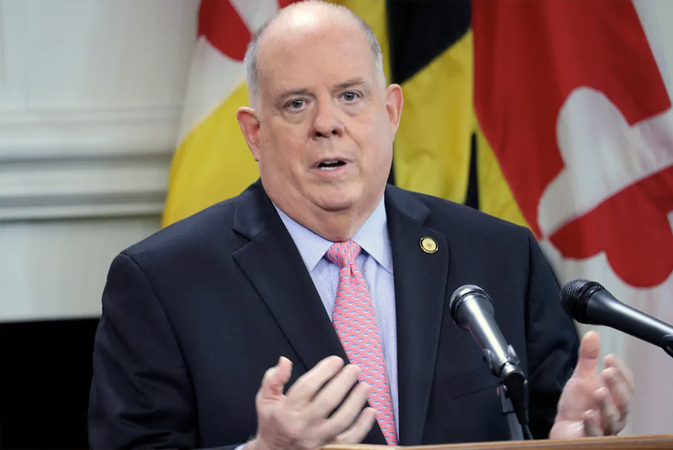
Maryland Gov. Larry Hogan (R) speaks at a news conference in Annapolis on Oct. 1, 2020. (Brian Witte/AP)
By The Washington Post · Erin Cox · NATIONAL, HEALTH, HEALTH-NEWS ANNAPOLIS, Md. – Maryland Gov. Larry Hogan announced $250 million in state cash for the ailing economy Thursday for programs that will give grants and loans to restaurants, small businesses, shuttered entertainment venues and struggling arts organizations.
As federal stimulus talks drag on in Congress, Hogan announced that he would use about half the state’s budget savings from last year to expand existing programs and fund new ones to help floundering small businesses. The sum roughly doubles what the state already has pumped into similar programs.
“It’s a desperate situation,” Hogan said. “Many businesses . . . they’re hanging on by a thread. They may not make it another month or two.”
Requests for help from Maryland’s small businesses has far outpaced resources – even with about $10 billion in aid from the federal Paycheck Protection Program going to 81,000 state businesses, the governor said.
In two weeks in late March and early April, nearly 20,000 small businesses applied for aid through the Maryland Small Business COVID-19 Relief Grant Fund program, prompting the state to shut down the application window and start a waiting list that remains. About 4,000 applications were approved before the state ran out of money.
Hogan put another $45 million into the program in July. He announced Thursday that the latest infusion of $50 million will clear the backlog of businesses that qualified and had been waiting since the spring.
It was not clear Thursday whether the state will accept new applications.
The largest share of new funding announced Thursday – $100 million – will go to what Hogan calls the Emergency Rapid Response Fund for Small Businesses. He said the money will be set aside until the administration determines how it could best be used.
If federal aid arrives before the end of the year, the rapid response money might not be used, he said.
A new program will give $50 million in grants for the state’s roughly 11,500 restaurants, which amounts, on average, to $434 per business. The money would not have to be repaid, and it could be used on a variety of expenses such as expanding outdoor dining, paying rent, upgrading technology to improve carryout business or buying personal protective equipment. Local governments would dole out the money.
The state initially had expected enormous budget deficits for the fiscal year that ended June 30 because of pandemic-related shutdowns. But the multibillion-dollar infusion from the first waves of federal help – plus some cutbacks in Maryland’s budget – left the state with $500 million more than expected.
Another program that helps small businesses avoid layoffs will grow from $10 million to $30 million, with money supplementing employee income and financing telework operations so employees can stay on the job.
Smaller initiatives aim to keep hard-hit businesses afloat, including $20 million for local entertainment and “Main Street” small businesses; $5 million in low-interest loans for disadvantaged entrepreneurs; $3 million to arts organization and artists; and $2 million to promote “hometown tourism” by marketing local stores, businesses and attractions.
“We’re hoping these are the right things and that it will be enough, but we really don’t know,” Hogan said, adding that what the state’s economy really needs is a major stimulus package from the federal government.
Hogan encouraged local leaders that have taken a slower pace to reopening to reconsider. Montgomery, Prince George’s and Anne Arundel counties, as well as Baltimore, have not fully embraced Hogan’s guidance to reopen every business, citing health concerns.
The governor said contact-tracing data showed that the top source of coronavirus infections continues to be small family gatherings and house parties. He said the state is closely watching a slight uptick in hospitalizations over the past two weeks, urging people to stick to proven strategies of mask wearing and social distancing.
The greater Washington region on Thursday recorded 2,114 new coronavirus cases and 21 additional deaths. Virginia added 1,332 new cases and nine deaths, Maryland added 743 cases and 12 deaths, and the District of Columbia added 39 cases and no deaths.
Thursday’s caseload was the highest in a single day across the region since Oct. 8, when 2,673 infections were announced, fueled by a one-day reporting issue in Virginia.
Despite the daily increase, the regional rolling seven-day average of new infections stood at 1,709 cases, holding mostly steady for more than a week. Maryland’s daily average has risen through October, standing Thursday at 633 cases – the highest since Sept. 17.
The pandemic’s economic fallout was evident Thursday, when figures from the Labor Department showed 25,669 new unemployment claims were filed last week in D.C., Maryland and Virginia. That’s up slightly from 23,369 claims filed a week earlier.
By Syndication Washington Post, Bloomberg · Robert Langreth · NATIONAL, BUSINESS, HEALTH, HEALTH-NEWS
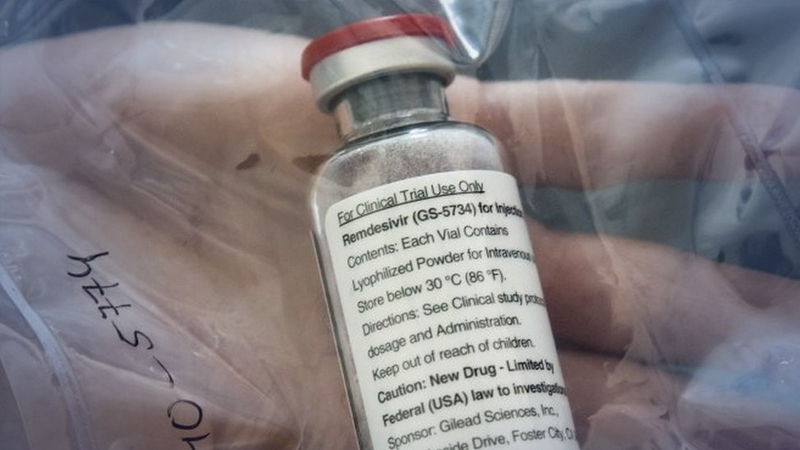
The Food and Drug Administration approved Gilead Sciences Inc.’s antiviral therapy remdesivir on Thursday, making it the first drug to obtain formal clearance for treating the coronavirus.
Regulators had granted an emergency-use authorization for remdesivir earlier this year, and since then the drug has become a widely used therapy in hospitalized covid-19 patients. It was given to President Donald Trump this month when he was diagnosed with the virus.
The approval of remdesivir, sold under the brand name Veklury, will allow Gilead to market the drug and talk about its benefits to doctors, nurses, and patients. That could help solidify its position as a go-to medicine for covid-19 patients even as other drugs for the disease begin to reach the market.
“Veklury is now the first and only approved covid-19 treatment in the United States,” Gilead said in a statement. While the drug was in short supply initially, Gilead said that the medicine is now widely available in hospitals across the country as manufacturing capacity has rapidly expanded.
Gilead shares gained 3.6% in trading after the close of regular market hours on Thursday. Analysts estimate that remdesivir will have sales of $2.17 billion this year, according to 13 surveyed by Bloomberg.
The company said in June that it will charge U.S. hospitals roughly $3,120 for most patients who need remdesivir.
The approval is based on a U.S. government-sponsored trial involving more than 1,000 hospitalized coronavirus patients that found that those who received the drug recovered about five days faster than those who got a placebo.
The overall side-effect rate was similar to the placebo in the government study. The most common side effects are nausea and elevated liver enzymes, according to the product’s label.
The drug hasn’t been proven to reduce deaths from covid-19. In a World Health Organization trial, the medicine failed to reduce fatalities, according to preliminary results that were posted on preprint servers last week.
Gilead has criticized the findings. In a letter posted on the company’s website, Chief Medical Officer Merdad Parsey said the WHO’s findings don’t negate other study results.
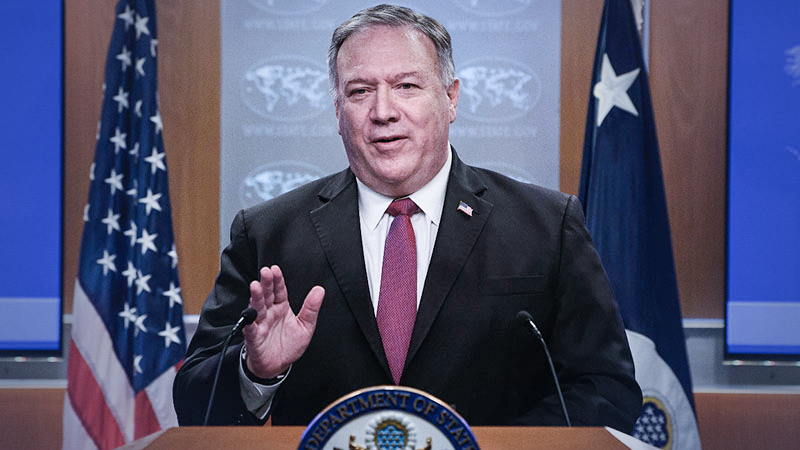
By The Washington Post · Miriam Berger · NATIONAL, WORLD, HEALTH, POLITICS The United States joined Brazil, Egypt, Hungary, Indonesia and Uganda on Thursday to co-sponsor a nonbinding international antiabortion declaration, in a rebuke of the U.N. Human Rights Council., which has enshrined abortion access as a universal right.
Secretary of State Mike Pompeo and Health and Human Services Secretary Alex Azar participated in the virtual signing ceremony. The Geneva Consensus Declaration aims to promote women’s health, “defends the unborn and reiterates the vital importance of the family,” Pompeo said at the ceremony.
Access to abortion is widely restricted in the other countries to co-sponsor the declaration. “There is no international right to abortion,” Pompeo said.
Though the document does not directly address same-sex marriage, the only co-sponsors to have legalized it are Brazil and the United States, while the text’s language affirming the family as “the natural and fundamental group unit of society” has clear meaning for countries that restrict LGBT rights. Among the co-sponsors, the Egyptian government targets LGBT people in a “systemic fashion,” according to a recent Human Rights Watch report, and in Uganda, gay sex is punishable by death.
The ceremony stood in contrast to Wednesday’s news that Pope Francis had expressed support for laws to protect same-sex unions.
Critics said Thursday’s declaration, less than two weeks ahead of the presidential election, marked the latest move by the Trump administration to build alliances with leaders accused of human rights abuses while working to promote abortion restrictions worldwide.
The Geneva Consensus formalizes a coalition united in opposition to the United Nations’ Universal Declaration of Human Rights, which forms the basis for the characterization of abortion and same-sex marriage as human rights under international law – a position that key U.S. allies, such as Britain and France, support.
Azar said Thursday that the coalition is intended to “hold multilateral organizations accountable.”
In addition to the six co-sponsors, 26 countries, including Belarus, Saudi Arabia and Poland, have joined as signatories.
“None of those countries [that have co-sponsored] at least currently have a strong commitment to women’s health and rights,” said Gillian Kane, a senior policy adviser for Ipas, a U.S.-based organization focused on abortion and contraception access around the world. “This administration is out of touch with the needs of women.”
The declaration is not legally binding and does not change any existing laws. But it is in step with the Trump administration’s repeated bypassing of traditional avenues of diplomacy to build parallel tracks.
“This will undoubtedly bring harm to LGBTQ people and roll back the established global consensus about the necessity of protecting the sexual and reproductive health and rights of women and girls in all their diversity,” said David Stacy, government affairs director of the Washington-based Human Rights Campaign.
In May, U.S. officials accused the United Nations of using coronavirus-related emergency funding for sexual and reproductive health services as a pretext to promote abortions, a charge that the global body denied.
One of President Donald Trump’s first moves in office was to reinstate a policy known as the global gag rule, which bans U.S.-funded health-care providers from providing or discussing abortions. Democratic presidential nominee Joe Biden has pledged to overturn it if elected, as President Barack Obama did shortly after taking office in 2009.
A 2019 study published in the Lancet found a global “pattern of more frequent abortions and lower contraceptive use” during periods when such U.S. restrictions have been in place.
The declaration could create “unnecessary legal, policy and service delivery hurdles that will obstruct interventions by Uganda to address the persistently high numbers of women and girls dying due to pregnancy-related complications,” a coalition of Ugandan civil society groups said Thursday in a statement opposing their government’s participation.
By The Washington Post · Seung Min Kim, Paulina Firozi · NATIONAL, POLITICS, COURTSLAW, CONGRESS
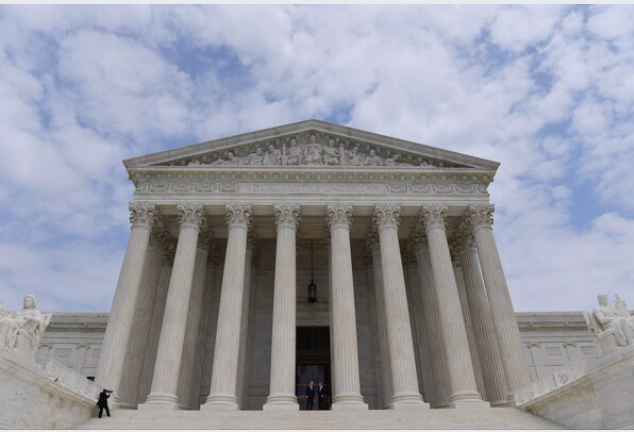
WASHINGTON – Judge Amy Coney Barrett moved one step closer to a seat on the Supreme Court on Thursday as the Senate Judiciary Committee advanced her nomination with solely Republican support after Democrats boycotted the vote in protest of what they viewed as an illegitimate confirmation process.
The vote was 12 to 0, with no Democrats present to officially register their objections. Senate Majority Leader Mitch McConnell, R-Ky., is expected to take procedural steps Friday to bring her confirmation to the floor, with Barrett being confirmed by Monday evening, putting her in position to hear key cases involving potential election disputes and health care.
Before then, Democrats are expected to throw up more procedural roadblocks – as they have been doing all week – and launch numerous floor speeches to frame what they say is the imminent threat Barrett poses to the future of abortion rights, gay rights and the fate of the Affordable Care Act.
Republicans, however, have been undeterred, vowing to swiftly install a 48-year-old jurist whose qualifications to serve on the Supreme Court have not been in dispute. Barrett’s installation would solidify a 6-3 conservative majority on the court and give President Trump his third successfully confirmed Supreme Court pick, just days before the Nov. 3 election.
“I could not live with myself if I denied her her day,” said Sen. Lindsey Graham, R-S.C., chairman of the Judiciary Committee. Of Democrats, Graham insisted that Republicans are “not going to allow them to take over the committee.”
Graham also defended Barrett’s personal beliefs after Democrats expressed concern during the confirmation hearings that her presence on the Supreme Court would result in further abortion restrictions. Both liberals and conservatives have suggested, based on her academic writings, personal beliefs and rulings as a judge, that she would support restricting or outright overturning the landmark 1973 abortion rights decision Roe v. Wade that guarantees a woman’s right to an abortion.
Barrett repeatedly declined to offer her legal views on presidential authority and voter intimidation, and insisted that she was not familiar with Trump’s positions on issues such as climate change and the health-care law.
“To all the people out there wondering about Judge Barrett I can tell you this: The law of Amy will not be applied to the case and controversy,” Graham added. “It will be the law as written in the Constitution or by statute or whatever regulatory body she is going to review. She will take her job on without agenda.”
Even though Democratic senators skipped the committee vote, they made their presence known. In their seats were 10 large portraits of constituents – Carrie from Delaware, Kenny from Illinois and others – who had benefited from protections mandated by the 2010 health-care law that ensures that millions of Americans with preexisting medical conditions cannot be denied coverage or pay more for insurance.
Each person’s story had been highlighted by Democrats during Barrett’s confirmation hearings last week, which centered on health care and whether she would be a vote to strike down the Affordable Care Act. The court will hear oral arguments Nov. 10 in the GOP-led challenge, backed by the Trump administration, to invalidate the law.
“No matter where you come down on this, this is personal,” Sen. Amy Klobuchar, D-Minn., said. “And this Republican majority and this president have chosen to make, as their closing argument, that they’re going to push through a nominee whose record shows us just where she’s going to come out on so many things.”
Trump injected his own thoughts as to what the Supreme Court should do on the health-care law in excerpts of a “60 Minutes” interview released Thursday. “It’ll be so good if they end it,” he said.
And on Barrett herself, Trump made his pleasure known in a tweet: “Judiciary Committee approves Judge Barrett. Moves to full Senate for final vote. Big day for America!”
Trump nominated Barrett, a judge on the 7th U.S. Circuit Court of Appeals, on Sept. 26, eight days after the death of liberal Justice Ruth Bader Ginsburg.
Rather than showing up for the committee vote, nine Democratic senators on the Judiciary Committee – all except Sen. Kamala Harris of California, the party’s vice-presidential nominee – and Senate Minority Leader Chuck Schumer, D-N.Y., gathered on the front steps of the Capitol to decry the confirmation process for Barrett and how they expect her to rule as a justice.
“The nomination of Amy Coney Barrett is the most illegitimate process I have ever witnessed in the Senate,” Schumer said. “Her potential confirmation will have dire, dire consequences for the Senate, for the Supreme Court and our entire country for generations to come.”
Schumer, who accused the Senate Republicans of “conducting the most rushed, the most partisan, and the least legitimate nomination to the Supreme Court in the nation’s history,” said the Democrats “will not lend a single ounce of legitimacy to this sham vote in the Judiciary Committee.”
Protesters on both sides of the debate made their views known. Some heckled the Democrats with obscenities as they spoke. Outside the Senate building, others dressed in the crimson robes and white bonnets of “The Handmaid’s Tale,” the television drama based on Margaret Atwood’s book, shouted “Trump-Pence, out now” and “Stop the confirmation.”
Republicans again warned the public that Democrats will surely move to expand the number of seats on the Supreme Court should they win the White House and flip control of the Senate in less than two weeks.
Democratic presidential nominee Joe Biden, facing pressure from the party’s base to embrace “court-packing,” said in his forthcoming “60 Minutes” interview that he would propose a bipartisan commission to study potential court changes but that the issue of expanding the Supreme Court was certainly a “live ball.”
Graham mused that the Democrats would be positioned to expand the Supreme Court to at least 13 justices. In a brief interview after the committee vote, Graham dismissed Biden’s commission proposal and said that if Democrats regain the levers of power in Washington, “they’re going to pack the court and Joe’s not going to be able to stop it.”
“As Ruth Bader Ginsburg pointed out, there goes the crown jewels of the American republic,” Sen. John Cornyn, R-Texas, said Thursday of the court proposals. “Our independent judiciary becomes nothing but another political body, a second legislative or political branch.”
In light of Biden’s comments, Democratic senators still tried to keep the focus on Barrett’s looming confirmation vote and the elections. Of the former vice president’s proposal, Schumer said that “everything is on the table when we get the majority.”
But “first job, get the majority,” Schumer said.
So Democrats continued to cast Barrett as a threat to health care and reproductive rights.
“Last week Democrats participated in the nomination hearings because we wanted to show what was at stake for America if Amy Coney Barrett is confirmed,” Sen. Dianne Feinstein of California, the top Democrat on the committee, said at the news conference. “We made our case about risks to affordable care, especially the Affordable Care Act, reproductive freedom, the right to vote and equality for all. We believe both the Affordable Care Act and Roe v. Wade could be lost.”
Democrats have lashed out at Republicans, calling them hypocrites based on their actions in 2016 when the court had a vacancy.
At the time, McConnell refused to consider nominee Merrick Garland, the choice of President Barack Obama, to fill the vacancy created by the death of Justice Antonin Scalia in February 2016.
McConnell and Senate Republicans, including Graham, insisted that the president chosen in November of that year, eight months after Obama’s nomination, should fill the seat.
Republicans argue that the circumstances now are different because Republicans hold the White House and the Senate majority.
Democrats also accused Graham of breaking committee rules to hold the vote, since the panel generally requires two members of the minority to be present to conduct committee business.
But Republican aides said that if a majority of the entire committee is present – which on Thursday it was – that means the Judiciary Committee can go ahead, under long-standing precedents. There have been more than six instances, including under Democratic control, since 2006 when the committee has conducted business without two members of the minority being there.
Contrasting needs in home stretch: For Trump, adulation; for Biden, safety
InternationalOct 22. 2020People participate in rehearsal and tests inside the Curb Event Center where President Donald Trump and Democratic presidential candidate Joe Biden are scheduled to participate in the final presidential debate Thursday, on the campus of Belmont University in Nashville, Tenn. MUST CREDIT: Washington Post photo by Jabin Botsford
By The Washington Post · Sean Sullivan, Michelle Ye Hee Lee, Anu Narayanswamy, Josh Dawsey · NATIONAL, POLITICS· WASHINGTON – With two weeks left before the close of voting, President Donald Trump flew to the far northwest corner of Pennsylvania for a large rally where he aired grievances against the news media, complained that the pandemic had damaged his campaign and portrayed Democrats as purveyors of drugs and crime – all as a sea of loyal supporters in red MAGA hats cheered him on.
While Trump on Tuesday appealed in person to his most ardent fans with divisive themes, Joe Biden’s campaign beamed in to the nation’s living rooms during the World Series with a much broader audience in mind. “There is only one America. No Democratic rivers, no Republican mountains,” the actor Sam Elliott intoned as he narrated a commercial for Biden in his signature gravelly voice. Biden, meanwhile, was at home as the ad aired, eschewing public events to prepare for Thursday’s debate.
The split screen underlined the starkly different strategies Trump and Biden have deployed in the final stage of the presidential race. Trump has been spending heaps of cash staging crowded rallies designed to motivate his most fervent fans, despite the advice of public health officials to avoid large gatherings. Biden, who is leading in the polls, has been holding smaller, less expensive events and investing aggressively in television ads and virtual gatherings designed to persuade a wide audience that he can unify a divided country.
The divergent approaches reflect the thinking on each side. Biden campaign officials say they feel strongly about running a campaign safely – and their posture underscores their belief that Trump’s widely criticized handling of the pandemic is the decisive issue in the election. Any contrast with him – either in policy proposals or campaign practices – will benefit Biden, they feel.
The coronavirus pandemic has prompted the Biden campaign to experiment with different strategies, including some that could prove useful in a post-coronavirus world and mark a potential shift in the way campaigns are conducted.
Among its approaches, campaign officials have used trucks as mobile offices at which voters can pick up literature and yard signs without entering a building, and they’ve also set up drive-through pickups. Jenn Ridder, states director for the Biden campaign, said these tactics could be helpful in rural areas during future campaigns. Ridder said she also has found that engaging people in virtual events often leads to them volunteering to make phone calls or conduct other outreach later on.
“It’s taken a little bit more proactiveness on us to track these people down and suck them into the campaign, rather than just a big rally at the park where people show up and you just sign them up right there,” Ridder said. “It’s been a little more work.”
Trump, meanwhile, has been determined to project strength during a crisis, which he often does by flouting the advice health of experts and basking in the support of his most ardent fans.
Still, the main reason his campaign continues to hold large rallies is that the president loves them, aides said. They say Trump feels that when people see big crowds, they will be more inclined to vote for him. When his advisers argued against rallies, saying the events wouldn’t be safe, and instead going to smaller events designed to target certain groups, Trump insisted on returning to his signature format.
The differences between the campaigns came into sharp focus in the campaign finance reports released this week; they revealed a wide disparity in spending on travel, in-person events and use of virtual platforms from June to September, according to a Washington Post analysis.
The Trump campaign and two affiliated committees outspent Biden and his affiliates by more than 8 to 1 in event staging, facility rental and various fees, the analysis shows. The Trump side spent $17.6 million compared with $2.1 million by Biden and his allies.
The Trump side also spent $7.1 million on transportation, including $1.8 million to reimburse the Treasury Department for using Air Force One, which doubles as his rally backdrop, to fly to campaign stops. Biden spent $3.6 million on travel and transportation, including $265,000 to lease an Amtrak train for a whistle-stop tour in Ohio and Pennsylvania the day after the first debate.
Meanwhile, Biden also spent more than $37,000 on communication services provided by Zoom, the platform frequently used by the campaign for its virtual events. Trump spent just $143 in Zoom subscription fees.
Trump has paid a host of high costs related to rallies and fundraisers in recent months, including $117,333 to a linen rental company, $221,020 to a biometric testing company, and $47,506 to a sommelier services company.
By contrast, some of Biden’s biggest expenses for event production went toward companies that produce digital events. In September alone, Biden spent about $330,000 to a company named 090 Media, which specializes in live-streamed events. From July through September, he paid $535,651 to Wizard Studios, which stages socially distanced campaign events for Biden, including setting up “social circles” that allow guests, campaign staffers and reporters to maintain safe distances from one another.
Although Biden stepped up his travel in recent weeks, the past few days have marked a return to his pre-Labor Day pace. As Biden hunkered down Wednesday and prepared for the debate – his third day in a row without an in-person campaign event – Trump traveled to North Carolina for another rally.
The Democrat aired a second World Series ad. Biden’s absence from the trail was filled by a very prominent pinch hitter: Barack Obama stumped for him in Philadelphia. In his debut on the physical campaign trail for Biden, Obama talked about the importance of voting, and he sharply criticized Trump. The 44th president was one of many surrogates on whom the Biden campaign has relied. On Wednesday, the campaign planned to host a virtual gathering of Colorado voters with the cast of “Grey’s Anatomy.” The campaign held a similar event aimed at Arizona voters featuring the comedian George Lopez.
Biden’s in-person gatherings are always small. Temperatures are taken, masks are worn and social distancing is enforced. One campaign official recalled an event with Sen. Bernie Sanders, I-Vt., where students stood inside hula hoops to ensure safe spacing.
But the campaign also has had the benefit of a torrent of money. Biden started October with nearly three times as much cash on hand as Trump had, thanks to a surge of donations motivated by an urgent desire to defeat the president. Biden’s campaign entered October with $177 million, compared with Trump’s $63 million.
Raising money from wealthy donors also has become a more efficient endeavor for the campaign, which holds finance events virtually because of the pandemic, sparing the usual expenses such as a catering and entertainment.
On Tuesday, Sen. Kamala Harris, D-Calif., held back-to-back virtual fundraisers as Biden’s running mate, events featuring actors such Scarlett Johansson, Don Cheadle and Paul Rudd, as well as Golden State Warriors Coach Steve Kerr.
But Trump is committed to a different approach.
He is still holding in-person fundraisers, including one planned for Nashville, Tenn., on Thursday ahead of the debate; tickets for that fundraiser are going for up to $250,000.
Aides say that beyond basking in adulation, Trump has a goal in resurrecting rallies: to drive up voter turnout and collect voter data, attract attention from local news outlets and draw a contrast with Biden’s more modest schedule. Tim Murtaugh, a campaign spokesman, said many of the attendees at the rallies are not registered Republicans or Trump voters.
But often, Trump attracts attention for reasons having little to do with the economy or other issues his aides and allies would prefer to see him emphasize. During his rally in Erie, Pa., on Tuesday night, Trump took yet another shot at Lesley Stahl of “60 Minutes,” played selectively edited clips of Biden on a giant screen and suggested that the only reason he was back in Erie – which is in a county he won narrowly in 2016 – was that his political standing has slipped during the pandemic.
“Before the plague came in, I had it made. I wasn’t coming to Erie. I have to be honest. There was no way I was coming. I didn’t have to,” he said. In reality, polls showed the president was likely to face a challenging race even before the outbreak.
Even the Trump campaign, however, relied on television and Internet ads for its biggest outlay, as did Biden. The Trump campaign and its affiliates paid more than $423 million from June through September to American Made Media Consultants for ad placements.
Meanwhile, the Biden campaign leaned on two major media-buying firms during those months, Media Buying & Analytics (which was paid $270 million) and GMMB (which was paid $137 million). The campaign also directly paid Facebook $27.8 million and Google $3.4 million for ads, filings show.
Even as the coronavirus pandemic worsened, Trump and his team spent huge sums. Corey Lewandowski, an informal adviser, has bragged to others about how elaborate the stages were at various Trump events. Some of the campaign’s expenses – such as $500,000 of fireworks over the White House, a Super Bowl ad, and banners flown over the shorelines of beach towns – were seen as unnecessary by some in the campaign.
The campaign also has continued to spend money on family salaries and for office space in Trump Tower in New York, where the president no longer goes.
In recent weeks, however, the campaign has limited many of its trips to using a smaller Air Force One in a bid to save money. The campaign is charged by the seat, and the number of aides has been limited on the trips. Aides also have cut some television reservations, including in competitive states.
Trump campaign manager Bill Stepien has complained to others that when he took the reins of the campaign, there was not a formalized budget and that he did not realize what a dire situation he was in, according to four people who have spoken to him.
“There’s no doubt the previous regime wasted a fortune. That money could have been far better spent. The president’s campaign is in worse shape now than it would be otherwise,” said Mike DuHaime, a Republican strategist who is close to Stepien.
But none of that was evident when Trump set off Wednesday for yet another rally at which thousands would cheer for him.
“Hello, everybody,” he told reporters on the South Lawn of the White House. “So we’re going to North Carolina. Big crowd. Really big crowd. And we’re going to have a good time.”
Obama delivers blazing critique of president in 2020 campaign trail debut
InternationalOct 22. 2020Women watch from a window as former president Barack Obama campaigns in Philadelphia on Wednesday for Democratic nominee Joe Biden. MUST CREDIT: Washington Post photo by Bonnie Jo Mount
By The Washington Post · David Nakamura · NATIONAL, POLITICS
PHILADELPHIA – Former president Barack Obama delivered a lacerating critique of President Donald Trump in his debut on the 2020 campaign trail Wednesday, denouncing his successor’s handling of the coronavirus pandemic and ridiculing him for being unable to even “protect himself” from covid-19.
Speaking at a drive-in rally for Joe Biden in South Philadelphia, Obama attacked Trump on a wide range of issues – including his personal tax payments, embrace of conspiracy theories, handling of the economy and efforts to gut the Affordable Care Act – as he implored Democrats to avoid complacency and turn out at the polls.
“We’ve got to turn out like never before. We cannot leave any doubt in this election,” Obama said, warning that Trump has suggested he won’t accept the results if he loses.
Though polls have showed Biden holding a steady lead in Pennsylvania, Obama cautioned: “I don’t care about the polls. There were a bunch of polls last time, and it didn’t work out. . . . Not this time. Not this election.”
With less than two weeks left before Election Day, Obama’s appearance in a state Trump won in 2016 highlighted the importance of Pennsylvania’s 20 electoral votes, which both campaigns have viewed as a must-win on a path to the White House. A day earlier, Trump delivered remarks at a rally in Erie, Pa., in one of three western counties that had voted for Obama in 2008 and 2012 but backed Trump four years ago.
A little more than an hour after Obama spoke, Trump briefly went after his predecessor during a campaign rally in North Carolina, claiming it was “good news” that Obama is out on the campaign trail.
“It’s good. There was nobody that campaigned harder for crooked Hillary Clinton than Obama, right?” Trump said. “He was all over the place. . . . I think the only one more unhappy than crooked Hillary that night was Barack Hussein Obama.”
Obama has been an important surrogate for Biden, delivering a prime-time endorsement address during the Democratic National Convention in August, headlining virtual fundraisers and rallying supporters in get-out-the-vote video messages and other media appearances. In recent days, he joined vice-presidential nominee Kamala D. Harris and the actor Michael B. Jordan in an online fundraiser.
But his debut at an in-person event aimed to deliver a jolt of excitement from the Democratic Party’s top draw and most electrifying speaker to generate enthusiasm among the Democratic base, particularly minorities and young people. Obama appeared energized in his return to the spotlight, unleashing full-throated criticism over Trump’s management of the country and his personal behavior.
“I get this president wants full credit for the economy he inherited and zero blame for the pandemic he ignored,” Obama said, citing the more than 220,000 Americans who have died of the novel coronavirus. “But you know what? The job doesn’t work that way. Tweeting at the television doesn’t fix things. Making stuff up doesn’t make people’s lives better. You’ve got to have a plan.”
The 44th president cited a nationwide rise in coronavirus cases, which have spiked to over 60,000 a day, and said that Trump “isn’t going to suddenly protect all of us. He can’t even take the basic steps to protect himself.” By comparison, Obama added, Biden “is not going to screw up testing. He’s not going to call scientists idiots. He’s not going to hold a superspreader event at the White House.”
Obama cited recent New York Times reports about the president’s finances that revealed he had paid $750 in personal income taxes in 2016 and 2017 and that he maintained a bank account in China while overseeing U.S. foreign policy.
“Can you imagine if I had a secret Chinese bank account when I was running for reelection?” Obama said. “You think Fox News might have been a little concerned about that? They would have called me ‘Beijing Barry.’ ”
The format of the event, in which supporters remained in their vehicles to maintain social distancing, offered a stark reminder of the nation’s health crisis. As Obama spoke, supporters could be heard cheering but also honking their horns in support.
The scene was a contrast to Trump’s rallies, in which thousands of supporters huddle closely on airport tarmacs for the president’s remarks. Many have eschewed masks, as Trump has denounced Democratic governors and mayors for maintaining pandemic restrictions on businesses.
Biden did not attend the event. The former vice president has hunkered down at his home in Wilmington, Del., and maintained a low public profile this week, with aides emphasizing that he is focused on preparing for his final debate with Trump on Thursday.
Ahead of the drive-in rally, Obama urged supporters to vote and avoid cynicism over the country’s problems. He tied the recent social justice protests to the election, suggesting the passion that drove demonstrators would offer a bulwark against opponents who have tried to depress the vote.
Obama also met with 14 Black community members in North Philadelphia to discuss issues facing Black men, including poverty, unemployment and gun violence.
“Obama’s ability to mobilize Democrats is rivaled by only one other person, and that would be Trump – Obama because he inspires us and tells us, ‘Yes we can,’ and Trump because he dares tell us we can’t,” said Pennsylvania state Sen. Sharif Street, a Democrat, who participated in the meeting.
“Barack Obama’s very presence will remind people of a time when America was working to better itself versus whatever this president is doing now.”
Yet Obama’s appearance in Philadelphia also served as a reminder that he was unable to help deliver the state for Democratic nominee Hillary Clinton in 2016. On the final day of that campaign, the two joined up in the city for a celebratory mega-rally featuring Bruce Springsteen in a state that Obama had carried comfortably in 2008 and 2012. The next day, Trump proved victorious on his way to the White House.
“If Obama couldn’t carry Pennsylvania for Hillary, I have serious doubts about what he can do for Joe Biden,” said Charlie Gerow, a GOP political strategist based in the state.
Polls have shown Biden with a solid lead for months. A Washington Post average of October polls shows Biden with an eight-point lead in the state, 52 percent to 44 percent.
But Biden aides have warned against complacency, and Obama addressed those fears at both of his events.
“I’ve never lost hope over these last four years,” Obama told the group in North Philadelphia. “I’ve been mad. I’ve been frustrated, but I haven’t lost hope, and the reason is because I never expected progress to move directly in a straight line.”
In his address outside Lincoln Field, Obama took aim at the Trump administration’s efforts to gut the Affordable Care Act, calling it “shameful.”
“The idea of taking health care from people at the very moment where people need it most – what’s the logic of that?” Obama asked. “There is no logic.”
“I’m asking you to remember what this country can be,” he said, “when we treat each other with respect and dignity.”
Concluding his remarks, Obama repurposed one of his famous 2008 campaign slogans for the pandemic era.
“Honk if you’re fired up,” he told the audience in their cars. “Honk if you’re ready to go.”
Car sharing startup Socar becomes 12th unicorn in S. Korea
InternationalOct 22. 2020SoCar brand represenrative Kang Ha-neul (SoCar)
By Kim Young-won The Korea Herald/ANN
Car sharing firm Socar said on Oct. 16 that it has newly attracted 60 billion won of funding from investors, achieving unicorn status with a corporate value of 1 trillion won ($872.6 million).
With Socar’s latest addition to the unicorn list, South Korea now has 12 unicorn companies, including ecommerce firm Coupang, fintech company Viva Republica and accommodation booking services operator Yanolja. Socar is Korea’s first mobility unicorn.
“As Socar has received a combined 60 billion won from SG Private Equity and Songhyun Investment, the company’s value was estimated to reach the 1-trillion won mark,” the car sharing company said.
The company’s car sharing business started in 2011 with 100 rental cars. It acquired mobile messenger startup VCNC in 2018 to launch van-hailing service Tada.
Tada ceased its van-hailing operations this year, after new legislation made it difficult to operate the service, but it still runs a premium taxi service.
The number of vehicles run by Socar has grown to 120,000 with the number of subscribers exceeding 6 million. The company’s revenue last year came to 256.6 billion won, up from 121.1 billion won in 2017.
“Through the latest round of investment, Socar has shown its growth potential amid the coronavirus pandemic,” said Park Jae-wook, CEO of the mobility company, adding that the company will beef up its competitiveness by recruiting talent and improving services.
The race to lead the mobility sector will likely heat up as existing and new players have been competitively expanding their respective operations. Uber, an underdog in the domestic market largely due to the government’s strict regulations, has recently joined forces with mobile network operator SK Telecom to launch new mobility services.
The two companies plan to launch a joint venture for car hailing services in the first half next year. SKT will also spin off its automotive services unit, tentatively named T Map Mobility, which runs a taxi hailing service and a navigation service.
The US car sharing firm will invest $100 million in the planned joint venture and $150 million in T Map Mobility.
InternationalOct 22. 2020This undated photo shows an Ant Group mascot in Hangzhou, capital of China’s Zhejiang province. (LONG WEI / FOR CHINA DAILY)
By China Daily/ANN
BEIJING – China’s securities regulator said Wednesday it has approved the initial public offering (IPO) registration of Ant Group, the parent company of the country’s leading mobile-payment business Alipay, on the science and technology innovation board.
The company will be listed on the Shanghai Stock Exchange’s sci-tech innovation board, commonly known as the STAR market, according to the China Securities Regulatory Commission.
The company and its underwriters will confirm the IPO date and publish its prospectus following discussions with the stock exchange.
The STAR market, inaugurated in June last year and designed to support companies in the high-tech and strategic emerging sectors, eases listing criteria but adopts higher requirements for information disclosure.
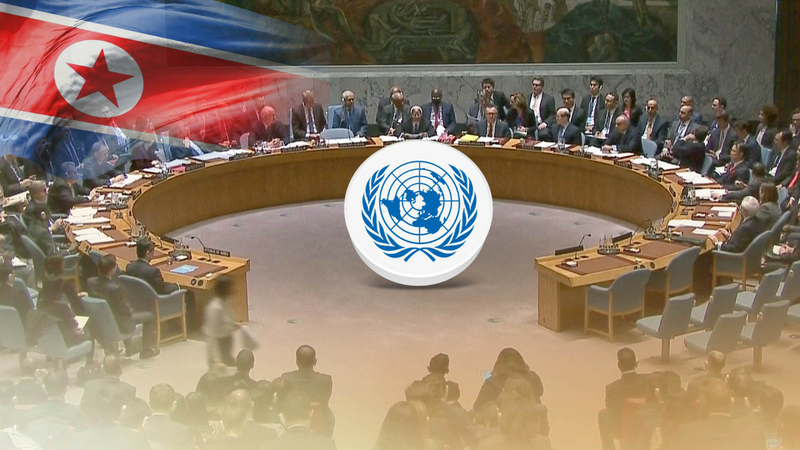
An international health charity received UN approval for an exemption from sanctions against North Korea so it can help the country tackle COVID-19 and tuberculosis.
The UN Security Council’s committee on sanctions against North Korea said Wednesday that it had approved a sanctions exemption for Doctors Without Borders, known by the French abbreviation MSF, to support North Korea with nutrition aid, diagnosis and treatment of tuberculosis, and COVID-19 response measures.
MSF plans to run medical programs to deal with COVID-19, address malnutrition, and diagnose and treat tuberculosis and multidrug-resistant tuberculosis in North Hamgyong Province. It will also provide emergency and general medical aid for residents of Kyongsong County, North Hamgyong Province.
MSF is now allowed to bring in 6,000 surgical masks, 2,000 protective suits and 1,000 filtering respirators for 12 months starting Oct. 14.
The UN sanctions committee said it had extended the exemption period for MSF “on an exceptional basis.”
The UN has approved requests from eight international organizations and nongovernmental organizations, as well as countries such as Finland, Italy and South Korea, for humanitarian extensions of the time frame for their exemptions from sanctions on North Korea since June this year.
NEW DELHI – India has started planning to distribute the Covid-19 vaccine whenever it is ready as the number of new cases continues on a downward trend in the country which has reported 7.65 million cases, the second highest in the world after the United States.
But the authorities remain concerned about the potential for another spike with the festive season, when large gatherings are the norm, just around the corner.
Health secretary Rajesh Bhushan said the first phase of the plan from January to July next year will involve vaccinating people, including healthcare workers on the front line. States have been asked to draw up their priority lists.
“We think if present trials proceed according to plan, the number of doses would be sufficient to immunise priority list persons,” he told a press conference on Tuesday (Oct 20).
He was quoted as saying that the 30 million people would be included in the first list.
Mr Bhushan said that they already had a network under the immunisation programme, from 29,000 cold storage facilities to a digital platform to track the doses of vaccines and the temperatures at which they are kept.
“We have these facilities. Discussions are going on over what type of augmentation is necessary,” he said. An expert group, including top government officials and health experts, is preparing the vaccination plan.
Prime Minister Narendra Modi has also asked officials to look at distributing the vaccine through the election mechanism or disaster management networks, which are widespread and cover the entire span of the vast country.
Mr Modi has already asked officials to plan cold storage chains, strengthen the existing distribution network for vaccines and preparation equipment like vials and syringes in advance.
India will no doubt be at the forefront of ensuring a global supply of the vaccine, whenever it is released.
The South Asian country is a supplier of medicines for a variety of diseases across the world and is known for producing high quality and low-cost medicines for India as well as the global market.
It supplies 50 to 60 per cent of global demand for many vaccines, affordable anti-retroviral drugs and 40 per cent of generics consumed in the US, according to a report by the Federation of Indian Chambers of Commerce & Industry.
Still, experts noted that nothing of the scale of vaccination planned for Covid-19 has been attempted in India before.
“The challenges would be both in the logistics of the supply chain and in the health workforce needed to administer the vaccine and monitor the adverse effects. The former may be more easy to solve. Organising the administration of the vaccine to the huge (1.35 billion) population will call for a large health workforce,” said Professor K. Srinath Reddy, president of the Public Health Foundation of India.
“It will be especially demanding if it is a two-dose vaccine,” he added.
The Serum Institute of India and Bharat Biotech are expected to pursue late stage clinical trials of their respective intranasal Covid-19 vaccines in the coming months after getting approval, the government has said.
Ahmedabad-based Zydus Cadila’s ZyCoV-D vaccine trials are in phase two while a Russian Covid vaccine has also received regulatory approval for clinical trials in India.
Leading epidemiologist Shahid Jameel said that the liquid form vaccine would be best suited for India.
“However, there would be limited capacity in India to store, let alone transport vaccines to all parts of the country if they require -20 or -70 deg C temperatures. India should go with vaccines that require storage and transport in liquid form (that is, between 4 and 10 deg C) and not the ones that have to be kept frozen,” said Dr Jameel.
He added: “I feel the biggest challenge would be cold chain, depending upon what vaccine is to be deployed.”
He welcomed the plan to use the election network for distribution.
“India has a very good election network and it would be wise to deploy that. India also has a lot of experience with polio eradication that included both Pulse Polio Days and door-to-door vaccination campaigns, which can be deployed.”

 People participate in rehearsal and tests inside the Curb Event Center where President Donald Trump and Democratic presidential candidate Joe Biden are scheduled to participate in the final presidential debate Thursday, on the campus of Belmont University in Nashville, Tenn. MUST CREDIT: Washington Post photo by Jabin Botsford
  Women watch from a window as former president Barack Obama campaigns in Philadelphia on Wednesday for Democratic nominee Joe Biden. MUST CREDIT: Washington Post photo by Bonnie Jo Mount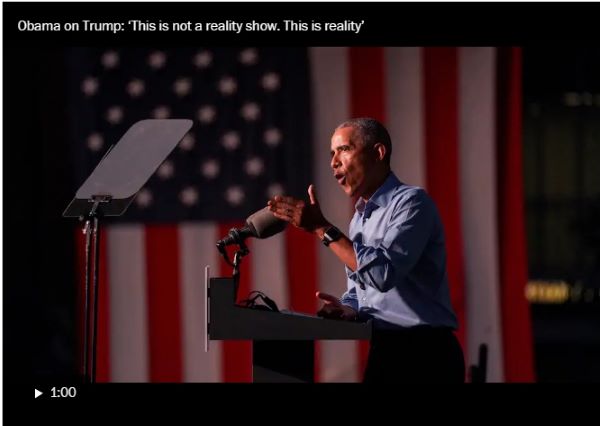
 SoCar brand represenrative Kang Ha-neul (SoCar)
  This undated photo shows an Ant Group mascot in Hangzhou, capital of China’s Zhejiang province. (LONG WEI / FOR CHINA DAILY)