Convenience store to offer cash withdrawal via QR code

ศาสตร์เกษตรดินปุ๋ย : ขอบคุณแหล่งข้อมูล : หนังสือพิมพ์ The Nation

https://www.nationthailand.com/edandtech/30372974

Convenience store to offer cash withdrawal via QR code

Jul 15. 2019
By The Nation

108 Viewed

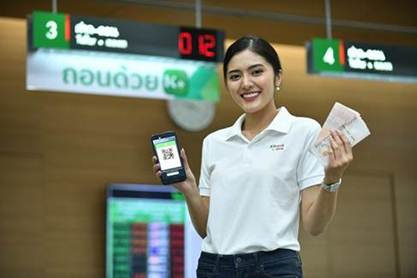
KBank makes life more convenient for customers by offering cash withdrawal services via QR code at KBank branches and KBank Service at 7-Eleven convenience stores nationwide through K PLUS.

The service, which is available around the clock, does away with the need to fill in a form, or carry a passbook. The limit for withdrawal at 7-Eleven stores is Bt50 to Bt5,000 per transaction with a daily limit of Bt20,000. A service fee of Bt15 will be charged per transaction and a national ID card is required for every withdrawal transaction. Customers simply use KPLUS for withdrawal transactions, presenting the QR code or barcode on their mobile phones to cashiers to scan to receive cash instantly. KBank plans to offer cash withdrawal service via QR code on K PLUS at Big C and Thailand Post outlets nationwide by the end of this year.

A ‘Stitch’ in time

ศาสตร์เกษตรดินปุ๋ย : ขอบคุณแหล่งข้อมูล : หนังสือพิมพ์ The Nation

https://www.nationthailand.com/edandtech/30372972

A ‘Stitch’ in time

Jul 15. 2019
By The Nation

85 Viewed

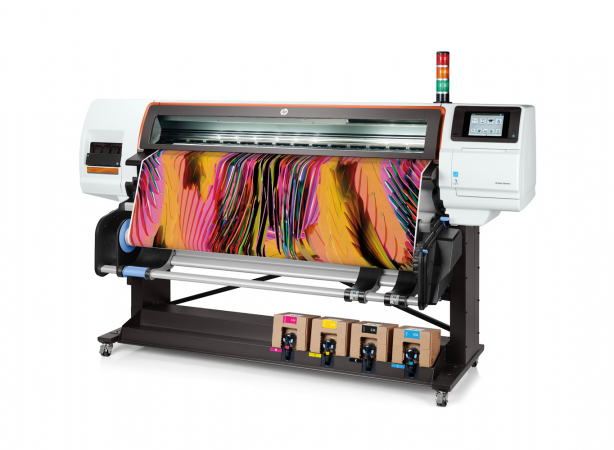
HP has launched its new Stitch S series designed for garment and textiles manufacturing.

The new HP Stitch S Printer series includes a portfolio of three new printers for textile printing from 64-inch to 126-inch wide – the HP Stitch S300 64-in Printer, the HP Stitch S500 64-in Printer and HP Stitch S1000 126-in Printer.

As part of the launch, HP also announced a new collaboration with Thai online clothing store Varithorn Boutique, which will see limited-edition dresses with a unique textile print by the HP Stitch S.

“HP’s expansion into the Thai textile printing and fashion industry is timely as fashion designers and textile printers look to innovate with commercial digital printing across a fast-growing industry. This is a time of great opportunity for Thai market,” said Pavin Vorapruck, managing director of HP Thailand.

KT seeks to leverage 5G tech in global fight against disease

ศาสตร์เกษตรดินปุ๋ย : ขอบคุณแหล่งข้อมูล : หนังสือพิมพ์ The Nation

https://www.nationthailand.com/edandtech/30372965

KT seeks to leverage 5G tech in global fight against disease

Jul 15. 2019
KT Chairman Hwang Chang-gyu, second right, shakes hands with the World Economic Forum’s founder Klaus Schwab during 2018 WEF meeting held in Davos, Switzerland.

KT Chairman Hwang Chang-gyu, second right, shakes hands with the World Economic Forum’s founder Klaus Schwab during 2018 WEF meeting held in Davos, Switzerland.
By The Korea Herald
Asia New Network

51 Viewed

South Korea became the first country to launch commercial service for the fifth-generation network back in April and hopes are now high that the hyperspeed network will transform everyday lives.

Ranging from ultrafast downloading of lengthy movies to driving autonomous vehicles on connected urban highways, the 5G network is expected to enable futuristic technologies.

With telecom companies around the world seeking to maximize benefits of 5G technology, Korea’s leading mobile carrier KT is envisioning an area where the technology can fulfill its potential globally: disease prevention.

“Human beings and animals suffer from infectious disease, and about $60 billion (Bt1,854 billion) is being spent a year around the world to prevent suffering,” KT chief Hwang Chang-gyu said during a speech at the World Food Organisation last month.

“In the era of the 5G network, information and communication technology can make the visions of the ‘fourth industrial revolution’ a reality. Based on the advanced technology, we can protect humans and animals from infectious diseases.”

Over the past few years, KT has introduced its disease prevention platforms to countries around the world. Based on massive data collected by the advanced network, KT is seeking to establish a global warning system for pandemics.

During the World Economic Forum in Davos last year, Hwang proposed an initiative called the “Global Epidemic Prevention Platform”. He called for each country to implement the system aimed at warning about pandemics through mobile devices.

Kenya, Ghana, Laos and other developing countries have since been trying to provide the service for people visiting areas prone to infectious diseases. KT said the advanced travel-warning system is to become available as later this year.

“In a normal situation, only those who agreed to provide personal information can receive information about diseases,” said KT officials. “But the alarm system is available to everyone in the event of pandemic diseases.”

Recently, KT has sought to broaden the scope of the GEPP initiative, expanding its disease prevention system to livestock, which can be as vulnerable to transnational pandemics as humans.

Dubbed the “Livestock Epidemic Prevention Platform,” the initiative aims to stem the cross-border flow of infectious diseases among animals. Some Asian countries have suffered recently from African swine fever, which is thought to have originated in Africa.

To improve the disease prevention system, KT urged governments around the world to collect information on animal diseases and share this with each other. The company also pledged to protect sensitive information through blockchain technology.

“Using ICT technology can not only boost agricultural productivity but can also free livestock from the danger of infectious diseases,” KT chief Hwang said in his speech at an international conference hosted by the UN Food and Agriculture Organisation last month.

The idea of using a mobile network to combat infectious diseases became popular in South Korea during the 2015 Middle East respiratory syndrome crisis. Having originated from countries in the Middle East, the disease claimed 37 lives after infecting 186 people in Korea.

During the public health crisis, KT introduced a system to figure out whether a passenger entering Korea had visited MERS-infected countries. If the passenger were found to have visited such countries, KT shared the information with the Korean disease prevention agency.

While the current alarm system mostly focuses on notifying authorities about whether a traveller visited countries prone to infectious diseases, KT is seeking to establish an early warning system for global pandemics.

“Through ICT technology, KT will materialise the social value of public health and safety,” KT Vice President Yoon Jong-jin said last month, when the company pledged to work with the Korean Society of Infectious Disease to develop an early warning system for diseases.

In Thailand, Julian Gorman, head of Asia Pacific at GSMA, said that in 2025 around 1.4 million of people in the global will be connected or subscribed with 5G connections and around 50 per cent of totally is subscribers from China.

For Thailand, 5G will create high potential growth in the country and boost values for the digital economy in various industries such as healthcare, education, smart agriculture and manufacturing. The 5G network will able to improve efficiency of business and create a 5G ecosystem for the country as a whole.

Thailand 5G: What consumers say and trials completed so far.

ศาสตร์เกษตรดินปุ๋ย : ขอบคุณแหล่งข้อมูล : หนังสือพิมพ์ The Nation

https://www.nationthailand.com/edandtech/30372951

Thailand 5G: What consumers say and trials completed so far.

Jul 15. 2019
The new era of 5G is coming upon us. What do you think?

The new era of 5G is coming upon us. What do you think?
By Ornvipa Rumroy
The Nation

766 Viewed

Thai mobile network providers have been waiting for years to set up 5G technology – fifth generation internet connectivity that assures faster data transfers and more stable connections.

Though 5G provides a larger speed range, it still depends on each network’s latency and devices among other factors. Compared to 4G, 5G offers speeds that are much higher and a broader bandwidth, allowing users to reach approximately 10Gbps maximum internet download speed, compared to the 4G+ connections’ speed of 300Mbps.

To clarify the difference in speed, Lifewire has collected the following data on the time required to download a 3GB film. The test was run on realistic speed, not peak speeds: 3G: 1 hour, 8 minutes, 4G: 40 minutes, 4G LTE: 27 minutes, 5G: 35 seconds

According to a report on internet consumption from the Electronic Transactions Development Agency (ETDA), Thais on average spend 10 hours and five minutes daily online – three times more than last year. Over the past four years, the online presence of Y and Z generations has been 10 hours and 22 minutes on weekdays and almost 12 hours on the weekends. In comparison, Gen X and the baby boomers have been averaging around eight hours on both weekdays and weekends.

Judging from these details, Thai consumers appear to be ready for 5G. According to Ericsson’s ConsumerLab Report, one in two smartphone users in Thailand will switch their network provider if they are given moving benefits and if their current provider doesn’t offer 5G technology.

We have gathered opinions from three generations about 5G, their familiarity with this technology, what they expect from Thai providers, how much they are willing to spend on both smartphones and monthly subscription, and when they will shift to the 5G network.

College student Ploy, 20

“I first heard about 5G technology when I got my 4G smartphone. It has been promised for ages now. I would love the new technology because I’m a heavy internet user, downloading films and surfing social-media networks.

“However, I believe it will only be available in Bangkok. My Netflix dies sometimes when I travel upcountry with my family, as the 4G network service is very limited. If I have the opportunity to change my phone, I will – but it depends on whether my mum will let me. I currently use the Bt899 monthly subscription, and if I’m offered 5G speeds at the same price, it will be great!”

Office worker, 26, who works and lives in Bangkok’s Ratchada area

“It’s like an upgraded version of 4G right? If it is more convenient and provides higher speeds, there is no reason to keep using the same service. I have learned that I will need to change my phone too. I think the new one will be more expensive, because it will use new technology. I prefer to wait for yearend promotions. I suspect monthly subscriptions of less than Bt1,000 will be offered for the 5G service.”

Government officer Wanida Rumroy, 59

“I have read on Facebook that 5G technology will perhaps be available by the end of this year. I assume Huawei will dominate the 5G mobile market in Thailand. I don’t care about it much, because my phone is still working just fine. If it breaks, then I will say hello to a 5G phone. New technology is expensive, but the price should not be more than 15 to 20 per cent higher than what’s offered now, or people will not be encouraged to change.”

Nobody we spoke to knew about 5G television, which will automatically connect to the mobile network without users having to rely on Wi-Fi connections. Though everybody was excited about it, their excitement seemed to die when we revealed how much it would cost.

The National Broadcasting and Telecommunications Commission (NBTC) has granted 700MHz licences to the three key telecom operators – DTAC, Advanced Info Service (AIS) and True Corporation. The terms of the licences become valid in October 2020, and NBTC also plans to allocation additional spectra to prepare for the launch of 5G.

Experiments on 5G across the world

Remote surgery

The world’s first test-run on remote surgery through 5G was successfully conducted in China on January 8 this year. A doctor in the southeastern province of Fujian successfully removed the liver of a laboratory animal located 50 kilometres away. The surgery was done using the extremely low latency of 5G with 0.1 seconds lag time.

Smart farming

A new gadget for monitoring the health of cows is being tested in the English town of Shepton Mallet, with 51 dairy cows wearing 5G smart collars and ear tags. The 5G collars are connected to an automated milking system that keeps track of when the cows need to be milked and automatically opens the gate for them.

The harvesting of crops in England is also connected to 5G technology. Some farmers are already using cellular internet of things technology to optimise the level of fertiliser in their fields and can estimate when the crop is ready to be harvested through sensors in soil or in farming equipment.

Driverless cars

Cars will soon be intelligent enough to no longer require a human driver. These cars will be connected to other vehicles, infrastructure, architecture and traffic signs through onboard sensors and connectivity chips, so they can deliver their passengers to their destination safely. It is expected that automakers, tech companies and communications providers will soon start competing to put V2X (vehicle to any communication) on the road in the near future, and the logistics market is expected to grow at a significant pace and subsequently bring the costs down.

New gaming generation

There is a promise that 5G will usher a new era to the gaming world, with faster, more stable internet connections and new compatible devices. The technology will not only provide cloud-based gamers with higher resolution and next to no lag time on game-streaming services, they will also get to enjoy close-to-reality experiences with virtual reality headsets. These developments are bound to have game developers gearing up to compete in the future.

Related news: Look beyond FAANGs for tech investments

Mobile tech investment ‘a priority’ for 60% of Asia-Pacific firms

ศาสตร์เกษตรดินปุ๋ย : ขอบคุณแหล่งข้อมูล : หนังสือพิมพ์ The Nation

https://www.nationthailand.com/edandtech/30372822

Mobile tech investment ‘a priority’ for 60% of Asia-Pacific firms

Jul 11. 2019
By Jirapan Boonnoon
The Nation

87 Viewed

Investment in mobile technology is now a priority for up to 60 per cent of companies and organisations in Asia-Pacific, reports Zebra Technologies Corporation.


The findings come from a recent study on the “Future of Field Operations” conducted by the company, which manufactures data devices and services designed to give businesses a performance edge.

The study results indicate a trend of rising investment in disruptive technologies and mobile devices to enhance worker productivity and customer satisfaction in field operations including fleet management, field services, proof of delivery and store delivery workflows.

The online survey interviewed 2,075 mobility decision makers from 20 countries – the  US, Canada, Brazil, Mexico, Colombia, Chile, Argentina, France, Germany, UK, Italy, Sweden, Netherlands, Saudi Arabia, South Africa, China, India, Japan, Australia and New Zealand.

Tan Aik Jin of Zebra Technologies reported the headline findings as follows:

* 44 per cent of respondents consider truck loading automation will be among one of the most disruptive technologies, compared to 28 per cent globally.

Emerging technologies and faster networks are disrupting field operations.

* Mobile-first organisations in Asia-Pacific tend to be early adopters of emerging efficiency-boosting field operations technologies.

* Use of sensors, radio frequency identification (RFID) and intelligent labels is expected to grow from the current 76 per cent of mobile-first companies to 98 per cent by 2023.

* Use of augmented reality applications will grow from 68 per cent to 95 per cent by 2023, making detail-oriented workflows such as merchandising much more efficient.

* Use of blockchain forecast to rise from 68 to 96 per cent by 2023, to track goods’ chains of custody or documents via multiple firms.

“Driven by the acceleration of e-commerce along with customer’s heightened expectations and more focus within companies on differentiating service levels, the field operations industry is rapidly adapting the way it looks at its mobile technology investments,” said Jin.

The study also found that up to 44 per cent of Asia-Pacific organisations view mobility investment as a top priority.

* 58 per cent of Asia-Pacific organisations are expanding mobile technology to enterprise-wide use – reaching 97 per cent by 2023.

* From 2018 to 2023, the use of handheld mobile computers with built-in barcode scanners in Asia-Pacific is forecast to grow by 41 per cent, mobile printers by 60 per cent and rugged tablets by 57 per cent. The higher levels of inventory, shipment and asset accuracy provided by using these devices is expected to increase business revenues.

* Mobile-first organisations in Asia-Pacific are conducting total cost of ownership (TCO) analysis prior to major expenditure on mobile technology up to 83 per cent of the time.

* Only 34 per cent of the survey respondents believe that consumer smartphones have better TCO than rugged specialised devices.

TikTok shows digital creators how to make the most of its app

ศาสตร์เกษตรดินปุ๋ย : ขอบคุณแหล่งข้อมูล : หนังสือพิมพ์ The Nation

https://www.nationthailand.com/edandtech/30372819

TikTok shows digital creators how to make the most of its app

Jul 11. 2019
By THE NATION

99 Viewed

TikTok, a short-video platform, recently brought together 300 digital content creators and marketers in the region for the first time ever at its [REC]reate conference in Singapore.

The aim was to unleash creative possibilities with the use of TikTok app and to achieve that, the participants were provided with valuable insights on how they can use the platform to engage the highly-sought after Gen Z demographic. The conference also featured a series of keynote sessions and a panel by regional TikTok representatives to discuss the rise of short-form video content.

Latest studies show that Southeast Asians are among the most active on mobiles, spending an average of about four hours daily on devices, and TikTok makes the most of this habit by providing easy-to-use video capturing and editing tools, allowing for the creation of content that reflects diversity.

“We’re noticing a steady increase in the consumption of short-form video content in Thailand and across the region, especially among Gen Z, 98 per cent of whom own a smartphone. Through [REC]reate, we aim to arm both creators and marketers with the insight and know-how needed to connect with these valuable audiences,” said Lionel Sim, senior director for TikTok Ads’ global marketing-business solutions.

TikTok also recently launched a special AR-stickers campaign during the last Big Mountain Music Festival in Khao Yai.

The platform, offering social-media enthusiasts 15-seconds of fame, is available in more than 150 countries and in 75 languages. It can be downloaded via iOS or Google Play.

LINE Thailand announces new CEO, senior management

ศาสตร์เกษตรดินปุ๋ย : ขอบคุณแหล่งข้อมูล : หนังสือพิมพ์ The Nation

https://www.nationthailand.com/edandtech/30372802

LINE Thailand announces new CEO, senior management

Jul 11. 2019
Phichet Rerkpreecha as the new chief executive officer at LINE Thailand

Phichet Rerkpreecha as the new chief executive officer at LINE Thailand
By Jirapan Boonnoon
The Nation

52 Viewed

LINE Company (Thailand) has announced the appointment of Phichet Rerkpreecha as the new chief executive officer of LINE Thailand.

The move was accompanied by several other top-management appointments with Norasit Sitivechvichit named Chief Commercial Officer, Kanop Supamanop, Chief Content Business Officer, and Chanwoot Luechaisit Chief Marketing Officer. The new positions come into effect on July 15.

“During our search for a new leadership team, we realised that we already had a strong and experienced lineup of leaders ideally situated to take LINE Thailand to the next level,” said Eunjung Lee, Senior Vice President of Global Business Development at LINE Plus Corporation. “Under the leadership of Phichet and the new management team, we are confident that LINE Thailand will grow even faster, creating ever more ways for LINE to be the favorite platform for all aspects of people’s digital lives.”

Currently the Director of Government Affairs, Phichet will be responsible for leading the company’s strategic planning and direction, growing business partnerships and government alliances, supporting the management team and consolidating the businesses within the LINE ecosystem to drive future growth. He will also continue his lead role in Government Affairs. Before joining LINE Thailand in 2016, Phichet was the Head of Public Policy and Government Affairs at Google (Thailand).

Norasit will switch from his position as Director of Commerce to Chief Commercial Officer and will be in charge of commercial strategy and operations for LINE Biz-Solutions (LINE’s lineup of B2B services), LINE Stickers, and business service innovation.

Kanop,  currently Director of LINE Stickers, will become Chief Content Business Officer (CCBO), responsible for managing all content development at LINE TV and LINE, Kanop joined LINE Thailand in early 2017 as the Head of B2C and LINE Stickers.

Chanwoot, currently Director of Marketing Communications, will be appointed as Chief Marketing Officer (CMO), in charge of marketing, marketing communications and corporate communications for all LINE Thailand services and platforms.

theAsiaparent raises series C funding from global investors

ศาสตร์เกษตรดินปุ๋ย : ขอบคุณแหล่งข้อมูล : หนังสือพิมพ์ The Nation

https://www.nationthailand.com/edandtech/30372799

theAsiaparent raises series C funding from global investors

Jul 11. 2019
By Jirapan Boonnoon
The Nation

66 Viewed

theAsianparent, Southeast Asia’s community and content platform for mothers, has successfully raised millions of baht in an oversubscribed series C funding round. theAsianparent’s oversubscribed series C fundraise was on the back of significant strategic global investor interest.

“Over the years we have grown from a parenting blog into a multinational company with offices in 12 countries. Our move from a content platform to a social network wasn’t an easy one but has significantly accelerated our business to serve as a leading source of information for parents around Asia and the world. One thing that hasn’t changed is our focus on parenting from an Asian perspective,” said Roshni Mahtani, founder and chief executive of theAsianparent.

With the fresh funding, theAsianparent is aiming to drive its expansion into new markets in Asia, and Africa, as well as accelerate plans to further develop their recently launched app. Launched last September on the App Store and Google Play Store, theAsianparent app is currently the number one parenting app in Southeast Asia.

Since its launch, the company has expanded to 180 people across 12 countries and districts, including Singapore, where it is headquartered, Thailand, Philippines, Malaysia, Indonesia, Vietnam, Hong Kong, Sri Lanka, India, Taiwan, Japan, and Nigeria. Since the launch of their first app with a focus on the parents and parents-to-be community, theAsianparent has become the go-to platform for parenting tips and tricks.

MacBook Air, MacBook Pro updated for new school term

ศาสตร์เกษตรดินปุ๋ย : ขอบคุณแหล่งข้อมูล : หนังสือพิมพ์ The Nation

https://www.nationthailand.com/edandtech/30372765

Jul 11. 2019
By The Nation

24 Viewed

Apple has updated its MacBook Air, adding True Tone to its Retina display for a more natural viewing experience, and lowering the price to Bt35,900 and reducing the cost for college students to just Bt31,900.

In addition, the entry-level Bt42,900 13-inch MacBook Pro has been updated with the latest 8th-generation quad-core processors, making it twice as powerful than before. It also now features Touch Bar and Touch ID, a True Tone Retina display and the Apple T2 Security Chip, and is available to college students for Bt38,900.

With their sleek, portable designs, Retina displays, great everyday performance, all-day battery life and running macOS, Mac notebooks have never been more popular in higher education, with Student Monitor data showing nearly 60 per cent of US college notebook buyers own a Mac.

“College students love the Mac – it’s the notebook they rely on from the dorm room to the classroom, and the No 1 choice among higher education students,” said Tom Boger, Apple’s senior director of Mac Product Marketing. “With a lower Bt31,900 student price for MacBook Air and the updated 13-inch MacBook Pro with faster performance, Touch Bar and Touch ID at Bt38,900 for students, there’s never been a better time to bring a Mac to college.”

MacBook Air features a thin and light design in a choice of three finishes, the convenience and security of Touch ID, an 8th-generation dual-core processor, immersive wide stereo sound and all-day battery life. Its 13-inch Retina display now features True Tone that automatically adjusts the colour temperature of the display for a more comfortable viewing experience. MacBook Air is designed to power through daily tasks, from email and web surfing, to photo editing and FaceTime calls, and at an even lower price, it’s the do-it-all notebook for consumers and students alike.

The 13-inch MacBook Pro packs powerful processors, super-fast SSDs, all-day battery life and the best Mac notebook display ever into a portable and lightweight design. Now the entry-level 13-inch MacBook Pro adds the latest quad-core processors for up to two times faster performance, Touch Bar and Touch ID, True Tone to the Retina display, the Apple T2 Security Chip and immersive stereo speakers with wide stereo sound, all at the same great starting price of B42,900, or Bt38,900 for college students. With all these powerful features, MacBook Pro is the perfect choice for students heading into college and looking for the notebook that will help power them through graduation and beyond.

In autumn, MacBook Air and MacBook Pro entertainment apps, Apple Music, Apple Podcasts and the Apple TV app as well as the all-new Sidecar feature, will enables users to extend their Mac desktop by using their iPad as a second display or as a high-precision input device. New security features keep users better protected and Voice Control lets users control their Mac entirely with their voice.

Both models are now available through apple.com/th, the Apple Store app and in selected Apple Stores and Apple Authorised Resellers later this week. Additional technical specifications, configure-to-order options and accessories are available online at apple.com/th/mac.

Farming robot makes its debut in Fujian

ศาสตร์เกษตรดินปุ๋ย : ขอบคุณแหล่งข้อมูล : หนังสือพิมพ์ The Nation

https://www.nationthailand.com/edandtech/30372761

Jul 11. 2019
A farming robot moves in between two rows of plants in a greenhouse in Fuzhou, capital of Fujian province. [Photo provided to China Daily]

A farming robot moves in between two rows of plants in a greenhouse in Fuzhou, capital of Fujian province. [Photo provided to China Daily]
By China Daily
Asia News Network

103 Viewed

While industrial robots have become a common sight in factories across eastern China, the country’s agriculture sector is seen by some as a place where few technologies can take root due to the high costs and sophisticated natural environment involved in growing food.

But a research institute and a startup based in Fuzhou, the capital of East China’s Fujian province, are determined to change the perception by jointly developing an agricultural robot.

The white, 5G-enabled, sensor-rich agricultural robot can move between two rows of leafy greens in a greenhouse, collect data about the plants, and feed it back to the control room.

Developed by the Fujian Academy of Agricultural Sciences and Fujian Newland Era Hi-Tech Co Ltd, the robot is part of their efforts to build an autonomous farm.

Unlike industrial plants where robots can follow preset routes and do fixed jobs such as feeding standardized electronic parts, agricultural environments are far more complex, said Zhao Jian, deputy head of the digital agriculture institute of FAAS.

“Farm robots also have to adapt to a wide variety of highly differentiated crops, livestock and aquatic products,” said Zhao.

To solve the challenges, the research institute and Newland have jointly developed a more sophisticated artificial intelligence system. Computer algorithms as well as the hardware for positioning, map construction, route design and avoiding obstacles have all been optimized to suit the agricultural environment, taking into consideration fertilisation, watering the plants, bumpy roads and other natural factors.

The robot’s head is equipped with two 5 megapixel cameras as the “eyes” and two 7 megapixel cameras as its “ears”. With sensors at the top of its head and mouth, the robot can also detect wind velocity, carbon dioxide levels, humidity, temperature and other data about the natural environment of the greenhouse.

The farm robot has been successfully tested for compatibility with 5G mobile communication technology, which allows the data to be analysed by computers enabled by AI in the control room more efficiently.

“Currently, the robot can inspect farms automatically and collect data samples used to power various applications. It can determine the health of plants and decide if pest control measures are warranted,” said Chen Li, deputy director of marketing at Newland.

According to Chen, the robot is still a prototype and on that basis, the two sides hope to step up investments to develop versatile robots that can even pick fruit with a bionic hand in the future.

“Based on the mass agricultural data and images we have acquired, we hope to build an optimized plant growth model to achieve automatic control of the growth environment and early warning of pests and diseases,” Chen added.

China is now the world’s largest market for industrial robots. As labour costs continue rising, the demand for robots will grow stronger, said Wang Tianmiao, president of the Smart Manufacturing Research Institute at Beihang University.