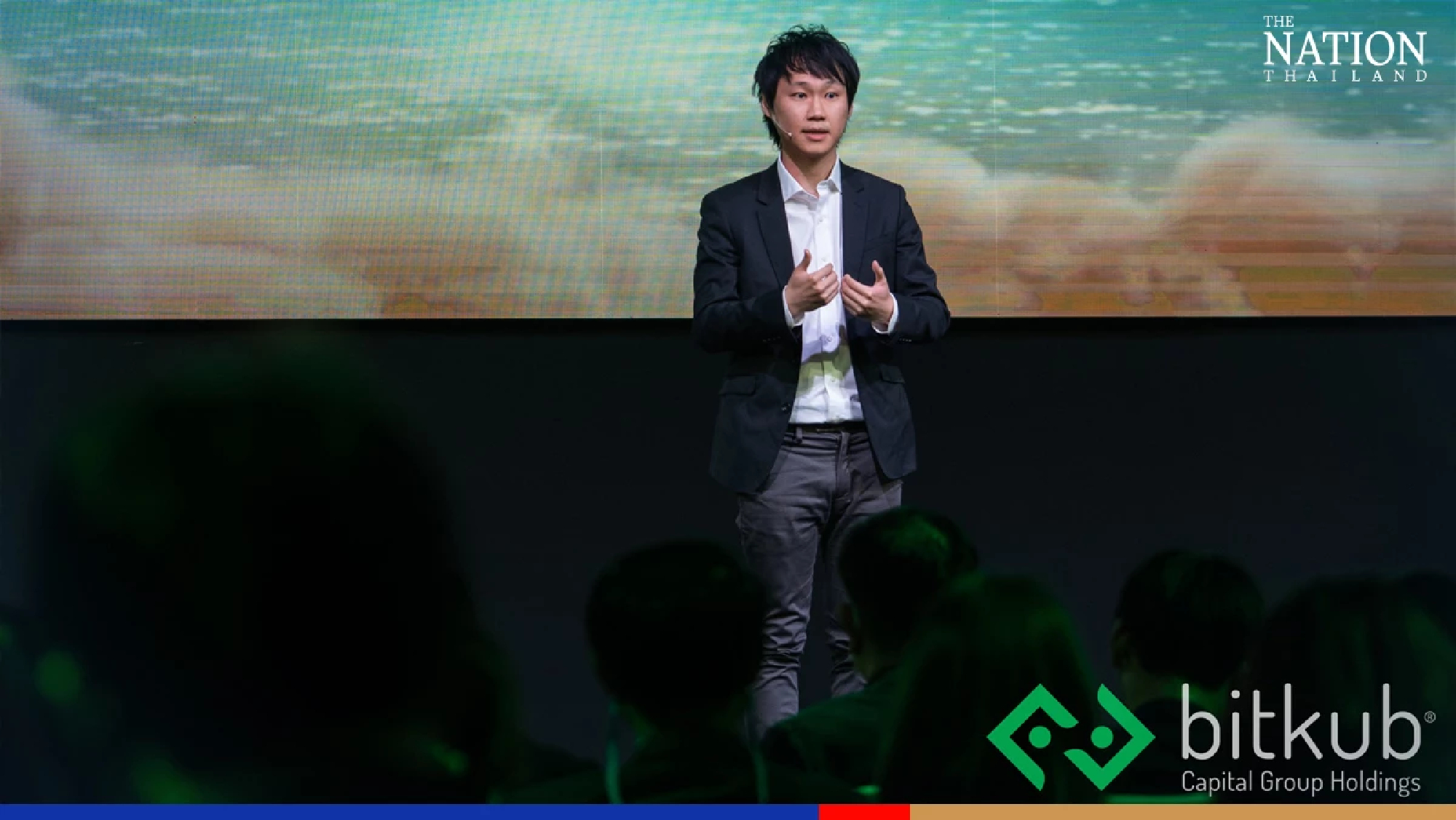
Thailand’s Bitkub Blockchain Technology company announced radical new changes to the network’s protocol called “Erawan Hardfork” at Bitkub Chain, the Next Chapter event.
Thailand’s Bitkub Blockchain Technology company announced radical new changes to the network’s protocol called “Erawan Hardfork” at Bitkub Chain, the Next Chapter event.
The purpose is to maximise efficiency of the blockchain network and prepare for mass adoption in the near future.
“The event initially started with vision and a mission by Jirayut Srupsrisopa, founder and CEO of Bitkub Capital Group Holdings, to develop Bitkub Chain from the beginning to the future, which aims to boost digital infrastructure in Thailand together with the perspective of future trends in technology and business,” the company said in a press release.
“With state-of-the-art technology, it has unlocked a new way of living,” Jirayut said.
“Firstly, we can easily exchange information on the internet, which will maximise growth of the digital economy via the free flow of data. Secondly, blockchain technology will also unlock the free flow of capital. This means money can circulate in the digital economy without an intermediary via micro entrepreneurship. As a result, Bitkub is building digital infrastructure to support Thailand so the country takes the lead in technology,” he explained.
This follows the opening to 21 node validators on Bitkub Chain after the Erawan Hardfork process (upgrading from 11 to 21 node validators).
The 21 include Saha Pathanapibul, TPCS, Siamrajathanee, Proen Corp, Ananda Development, TPCX, Inspec, 2C2P (Thailand), Multiply Technology, SmartContract (Thailand), Villa Market JP, GetLinks (Thailand), Six Network (Thailand), ABX Ventures, Diamon Finance, Finstable, Shin-A Service, Dig Dig, SiS Distribution (Thailand), Minor International and Arch 2021 (Thailand), the press release said.
With the opening to more node validators, Bitkub announced the new big changes. These changes to the network’s protocol are called “Erawan Hardfork”.
Bitkub Chain will support several technical tools and enhance efficiency of the blockchain network.
“These new changes will maximise users’ potential together with improving Bitkub Chain’s ecosystem to become a worldwide leader in blockchain,” CEO Passakorn Pannok said. “Also, Bitkub Next will be a bridge that connects people from the physical to the digital world.”
CTO Samret Wajanasathian said: “The cooperation with node validators is another step in Bitkub Chain’s development, which will drive and strengthen the Chain in the digital world. We believe digital technology will become a part of people’s lives.”
Rattanon Palanon, head of strategy at Bitkub Blockchain Technology, meanwhile introduced Bitkub Chain’s 2022 strategy.
He revealed new Bitkub Next and Bitkub NFT features, which will seamlessly connect people to the digital world.
At the Next Chapter event, there were three panel discussion sessions that allowed the company’s partners to discuss three main topics – DeFi (decentralised finance), GameFi and NFTs.
The DeFi session came courtesy of Finstable CEO Thanakorn Karoth, Yuemmai (Thailand) chief executive Sutthikiat Kittipattrakul and Loremboard CEO Thotsaporn Sunkbul.
The GameFi session was courtesy of Extend Interactive CEO Nenin Ananbanchachai, Dice Kingdom and ABX chief executive Chatchawan Suriyayanyong and Variasoft founder Pitchaya Srifa.
Meanwhile, the NFT session came courtesy of BitToon owner Chumpol Wongmatikul, Shin-A CEO and co-founder Nisith Ardharnwon, Thai Yamaha general marketing manager Plad Praweechanon, Amverse Digital CTO Surasak Vinij and YSTS Fam co-founder Jediiano.
Another important highlight of the event was the Bitkub Metaverse project. At this session, The Monk Studio CEO Suponwich Somsamarn and Studio business development executive Sakolwan Nimmol presented the keynote speech together, enlightening the audience about the project.
Before wrapping up the event, Passakorn detailed the road map and ecosystem of Bitkub Chain.
The Next Chapter event also featured NFTs airdrop (Live) activities on Bitkub Chain’s official Facebook page.
More than 15,000 NFTs, 20 KUB coins along with special NFT collections were distributed in the Live event via Bitkub Next wallet scanning.
Huawei has launched new solutions and updated strategy policies for local partners to enhance market strength to deal with new challenges in the post-pandemic era, the tech giant said.
Huawei has launched new solutions and updated strategy policies for local partners to enhance market strength to deal with new challenges in the post-pandemic era, the tech giant said.
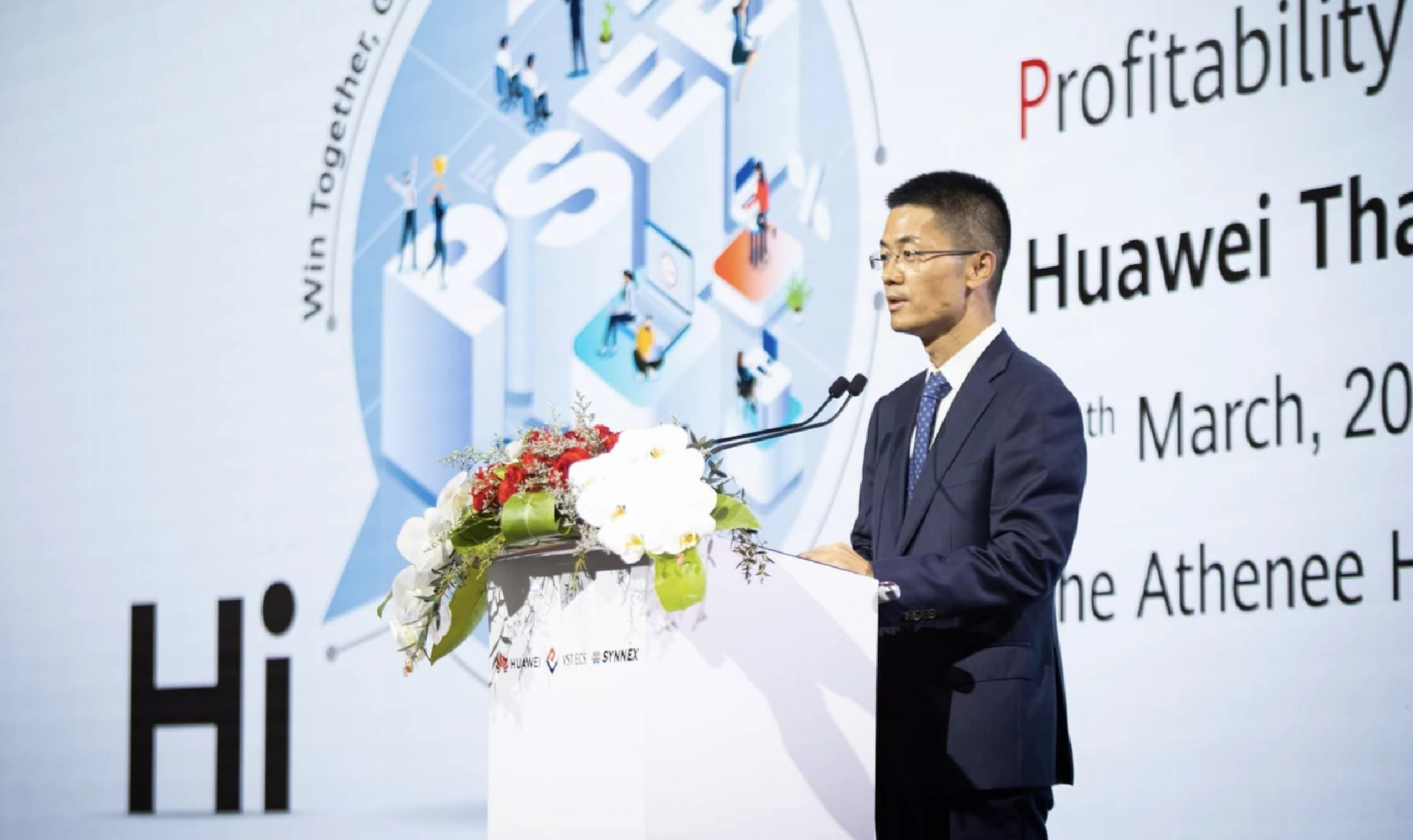
On March 30, Huawei Technologies (Thailand) Co Ltd together with VST ECS (Thailand) Co Ltd and Synnex (Thailand) Pcl, hosted the Huawei Thailand Ecosystem Partner Summit 2022 at the Athenee Hotel in Bangkok. The theme of the summit was “Win together, Grow together”.
The summit introduced Huawei’s latest advanced solutions and partner strategies and incentives to accelerate partners for transition. The event gathered industry partners to explore new business strategies, opportunities and economic recovery in the post-pandemic era.
Kevin Cheng, Huawei’s president of Thailand Enterprise Business Group, pointed out that although the geopolitical environment is changing rapidly in the aftermath of the Covid-19 outbreak, Huawei has not only survived, but also thrived. The outbreak has highlighted the importance and necessity of digital transformation and preparedness more clearly than ever. With the strong support of its partner, Huawei Thailand has achieved great things during the Covid pandemic that can help all businesses make the transition to the digital age, he said.
“Our key strategy is to continue building an open, cooperative, and win-win partnership ecosystem based on four aspects: profitability, policy simplification, enhancement of partner capabilities, and ecosystem construction,” he said during the keynote speech. “We will continue to work with partners to satisfy industry customers’ requirements at different stages of digital transformation, address industry challenges, seize new opportunities for transformation, and jointly create new industry values.”
During the summit, Huawei showcased fully upgraded intelligent cloud network solution and data communication products – Four Engines (AirEngine, CloudEngine, NetEngine, and HiSecEngine), four innovative products in the optical field, and the all-flash data centre solution.
Huawei reiterated its mission of “Grow in Thailand, Contribute to Thailand”. Huawei’s enterprise business will continue to focus on more than 10 industrie, including smart city, finance, energy, transportation, ISP, education, healthcare, and real estate.
Huawei emphasised its commitment together with its ecosystem partners to persist in enabling Thailand’s digital transformation journey.
Chinese tech giant Huawei is planning to expand its 5G smart hospital project to other hospitals after its initial project in Siriraj Hospital achieved success.
The project, which kicked off in Siriraj Hospital as a pilot project, applies 5G, cloud and AI technology in the treatment and diagnosis of patients. It also includes a 5G ambulance.
Huawei’s 5G Joint Innovation Lab at Siriraj Hospital aims to study and develop the 5G, blockchain, and AI adaptation for the medical field. The company plans to offer this technology to other hospitals in Thailand this year.
Apart from specialist training for medical personnel, this project also brings together officials from Huawei, the hospital and Thai start-ups, who can look into how the medical industry can be improved.
Huawei has also expressed interest in expanding its 5G network to cover medical institutions in other Asean countries.
The Covid-influenced lockdowns, quarantines and health protocol have created a new normal, in which people are more reliant on the digital economy. In response to this, the Thai government turned to China for help in developing 5G technology.
Apart from its venture into the medical field, Huawei is also planning to build a digital ecosystem that includes a smart city, transportation, energy and education in Thailand.
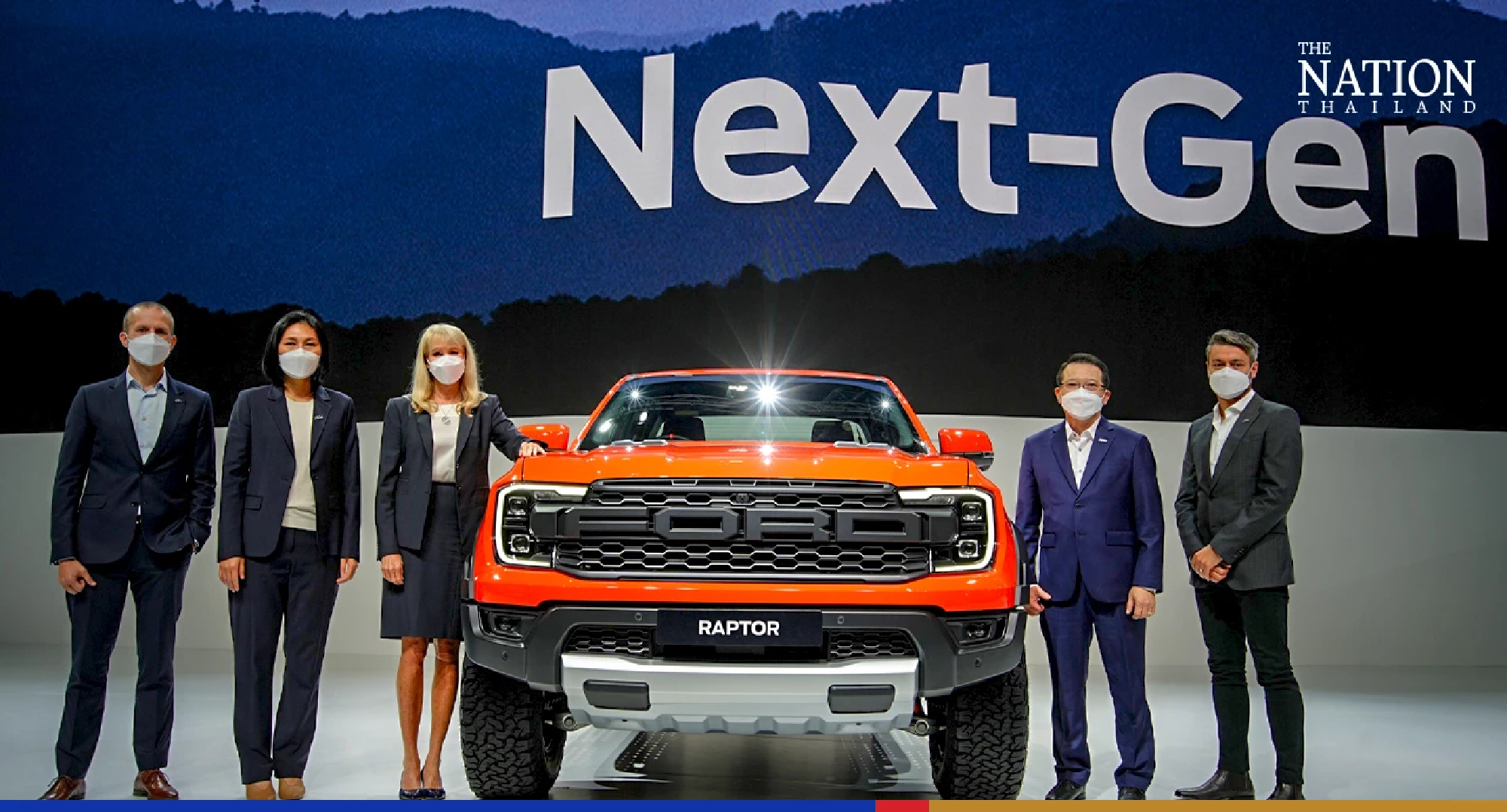
Ford Thailand on Monday revealed the latest lineup of its next-generation vehicles – the next-gen Ranger, next-gen Everest and next-gen Ranger Raptor – for the first time at the Bangkok International Motor Show 2022.
Customers can book these next-gen Ford vehicles online through the automaker’s website, and on-ground at the motor show or at Ford dealerships nationwide.
“We are excited to celebrate the next milestone in our flagship nameplates’ ongoing success with the unveiling of our next-gen Ford Ranger, Ford Everest and Ford Ranger Raptor together for the first time in the world at the Bangkok Motor Show today,” said Ford Thailand managing director Wichit Wongwatthanakan.
“Ford has been revolutionising the truck and SUV segments in Thailand each time we have launched a new product, and these next-gen vehicles will continue that trend with impressive performance, capabilities and versatility that customers look for in their next vehicles,” Wichit added.
Next-generation Ranger
The next-generation Ranger is the smartest, most versatile and most capable Ranger ever, Wichit said. Ford’s engineers and designers have translated rich input from customers around the globe into features of the pickup.
The Ranger pushes beyond traditional design boundaries with purposeful exteriors with C-Clamp shaped headlamps flanking the bold new grille. In addition to the new matrix LED headlights, the new integrated rear box step behind the rear tyres makes accessing the cargo area easier.
For customers in Thailand, the next-gen Ranger will come with 2 powertrain options – a 2-litre diesel bi-turbo or a 2-litre single-turbo variant, pairing with a choice of 6-speed manual or auto, and a 10-speed automatic transmission.
With durable features like a high-strength steel frame, frame-mounted steel bumpers and 50mm increased width and wheelbase — powered by powerful engines — you can rely on your Ranger whether on your everyday drive or the toughest terrain, Wichit said.
The cabin has been completely redesigned with more comfort, technology and functionality along with more premium materials and more storage. The coast-to-coast instrument panel creates a spacious and premium feel in the cabin. Providing smart and connected features, the large portrait-style centre 10.1-inch or 12-inch touchscreen linked to a 360-degree camera also comes with Ford’s latest SYNC4A connectivity and entertainment system, Wichit said.
The new digital instrument cluster elevates your driving experience by bringing you more information and greater access to the right vehicle data when you need it, Wichit said.
Improved customer functionality includes a wider track providing more room between the wheel arches, a wider cargo area that could accommodate a full-width pallet in the tray, a new cargo management system designed with dividers to hold various sized items, and an onboard inverter that offers power to the box, with 400 watts of available power and an AC outlet in the tray, meaning customers can power a range of appliances like rice cooker or small oven by plugging directly into the Ranger.
For the first time, Ford Ranger will also come with up to six selectable drive modes: normal, eco, tow/haul, slippery, mud/ruts, and sand, a feature previously only available in the Ranger Raptor.
Ranger Wildtrak and Sport
On display at the motor show and available for online bookings are the next-gen Ranger Wildtrak and Sport series.
Next-gen Ford Ranger Wildtrak will be available in six exterior colours – aluminium metallic, meteor grey, absolute black, snowflake white pearl, luxe yellow and sedona orange with prices starting from THB999,000.
Next-gen Ford Ranger Sport will be available in five exterior colours: aluminium metallic, meteor grey, absolute black, arctic white, and sedona orange with prices starting from THB929,000.
Next-generation Everest
The next-generation Ford Everest blends adventure-ready capabilities with exceptional comfort, craftsmanship and customer-focused technology in a rugged, refined and fun-to-drive SUV.
The exteriors have a strong yet sleek design, while the 50mm wider track and longer wheelbase help deliver a more controlled ride on-road. Tweaks to damper settings allowed the team to inject more fun and control into the Everest’s ride, both on- and off-road.
In terms of power and torque, the Ford Everest will be available in either the 2.0-litre diesel single turbo or bi-turbo, with options of six-speed automatic or Ford’s efficient 10-speed automatic transmission.
Adding to a sense of spaciousness amplified by the full-width coast-to-coast instrument panel and centre console, the Everest offers an array of amenities that make for a comfortable and convenient drive such as integrated wireless charging, and an electric parking brake. Both the second- and third-row seats have also been designed to fold flat to allow for long loads to be carried safely.
The latest technology offers connectivity at your fingertips thanks to the large, high-resolution portrait 10.1- or 12-inch touchscreens and 8- or 12.4-inch digital instrument panels. The Everest is loaded with Ford’s SYNC4A system and an embedded factory-fitted modem, allowing customers to connect to the Everest when linked with the FordPass app, Wichit said.
The Active Park Assist 2.0 helps reduce the stress of parking at the press of a button. The new adaptive cruise control with stop and go will make drivers feel more confident and in command on the road. Other new safety features include lane-keeping system with road-edge detection, evasive steer assist, and reverse brake.
The Everest Titanium+ is priced at THB1,854,000. It will be available in six exterior colours: aluminium metallic, meteor grey, absolute black, snowflake white pearl, equinox bronze and sedona orange. Standard interior colour is available in ebony, while a lighter interior ‘praline’ colour will be available as option.
The Ford Everest Sport is priced at THB1,464,000. It will be available in seven exterior colours: aluminium metallic, meteor grey, absolute black and blue lightning.
Next-gen Ranger Raptor
Designed and engineered by Ford Performance, the second-generation Ranger Raptor has been developed with smarter technology controlling tougher, next-generation hardware.
Packed with new features to tackle off-road terrain, the next-gen Ranger Raptor introduces the new twin-turbo 3.0-litre EcoBoost V6 petrol producing up to 397PS at 5,650rpm and 583Nm of torque at 3,500rpm tuned by Ford Performance. Paired with a 10-speed automatic transmission tuned to meet Ford Performance standards, the Ranger Raptor’s new engine delivers effortless acceleration on gravel, dirt, mud and sand, Wichit said.
A class-exclusive electronically controlled active exhaust system allows drivers to alter the sound of their Raptor with four selectable exhaust modes: quiet, normal, sport and baja.
To give desert-running power, the Ranger Raptor’s anti-lag system, available in baja mode, has been designed to keep the turbo spinning for up to three seconds when you get off the throttle so that you’ve got instant power out of corners or between gears.
The Ford Performance team collaborated with Fox using a mixture of computer-aided engineering and real-world testing to tune the spring rates, setting the ride height, tuning the valves and honing the ride zones to create the perfect balance between comfort, control, stability and traction on- and off-road. The Ranger Raptor features next-generation Fox 2.5-inch live valve internal bypass shock absorbers, which are the most sophisticated ever on Ranger Raptor and can adapt in real-time, with sensors placed around the vehicle enabling the shocks to adjust damping rates at each corner 500 times a second.
The Ranger Raptor features up to seven selectable drive modes: normal; sport and slippery are for on-road use, and rock crawl; sand; mud and ruts and baja are for off-road use.
The new interior has been designed for hardcore off-road racers. All-new performance seats for the front and rear, inspired by the seats in an F-22 Raptor jet fighter, keep passengers firmly placed whether on- or off-road.
The Ranger Raptor comes with a fully digital cabin, with high resolution 12.4-inch digital cluster and 12-inch centre touchscreen boasting Ford’s new-generation SYNC4A. Other features include upfitter switches and off-road screen.
It is available in four colours — absolute black, arctic white, code orange and conquer grey. Pricing for the Ranger Raptor starts from THB1,869,000.
The next-gen Ranger will be built at Ford’s Auto Alliance Thailand (AAT) and Ford Thailand Manufacturing (FTM) facilities in Rayong province. The Ranger Raptor will be built at FTM, while the Everest will be built at the AAT plant. Ford recently invested THB28 billion (US$900 million) in Thailand — the company’s largest-ever single investment in the country to modernise its local manufacturing operations and to also drive the Ford+ plan for growth.
Ford is now offering differentiated services by fully integrating technology via the FordPass app that connects our customers to their vehicles 24/7 via their smartphones, Wichit said.
Key functionalities and services for FordPass will include the “vehicle health alert” that will automatically notify customers when their vehicles need service and maintenance, using the intelligence of connected vehicle data that monitors vehicle usage. That means customers don’t have to worry about when to bring in their vehicles for service. FordPass also comes with a remote start feature to ensure the temperature inside the vehicle is comfortable when the driver gets in.
A full suite of service initiatives available with the next-gen Ford vehicles includes:
Personalised expert advice to help owners learn about the advanced features of their vehicles as well as advice to help you choose a model that best suits your lifestyle.
‘Know Your Vehicle’ programme, a personalised always-on customer education channels through FordPass, the Ford website and experiential sessions, to help customers use their vehicles to the fullest potential.
Online service appointments, pick-up and delivery service as well as courtesy vehicle while their vehicle is being serviced is available.
24-hour service Ford Call Centre to help resolve concerns and quickly get back on their enquiries
“We all know how very important it is to delight our customers with remarkable, high-quality vehicles. But an exceptional product is only part of the story. We need to give our customers an exceptional experience as well. Because the vehicle sale is the beginning of our journey together,” said Wichit.
“We understand our customers have busy lives and want convenience on their terms. And that’s what we’re doing, with our always-on commitment to making their lives easier.”
Orders for the next-gen Ford vehicle can be placed through www.ford.co.th. For an enhanced online experience, Ford has collaborated with Google to introduce ‘Immersive Edge Technology’ through 3D/AR technology, allowing customers to see the next-gen Ford vehicles come to life virtually and make a purchasing decision from their mobile device.
With the next-gen Ford vehicles, through online and off-line booking channels, customers can also add an “option package” that includes a host of advanced driver-assisted technologies and factory-warranty parts and accessories to customise their new vehicle.
Bookings for selected models can also be made at the Bangkok International Motor Show 2022 as well as at Ford dealers.
All the next-gen Ford vehicles will come with a complimentary 5 years or 150,000km factory warranty and Ford Ensure first-class insurance for the first year.
Chulabhorn Royal Academy (CRA) is inviting people to attend a seminar “CRA Digital Health” to offer knowledge and views on digital health trends, and launch the CRA Digital Health Programme.
Chulabhorn Royal Academy (CRA) is inviting people to attend a seminar “CRA Digital Health” to offer knowledge and views on digital health trends, and launch the CRA Digital Health Programme.
The event is on March 22, from 10am to 11.30am at Nation Tower in Bangkok’s Bang Na district.
Due to the spread of Covid-19, digital technologies are playing an important role and causing changes in people’s behaviour in many aspects, the academy said.
In the medical industry, varieties of digital health services have emerged to boost treatment efficiency and enable people to access medical services equally.
Hence, building digital health skills of medical staff will be important for hospitals and public health agencies in Thailand to achieve success in the long term, the academy said.
CRA secretary-general Prof Dr Nithi Mahanonda will open the seminar and speak on digital health transformation in Thailand and the academy’s role in promoting digital health initiatives at both organisational and national levels.
Prof Dr Chirayu Auewarakul, dean of CRA’s Princess Srisavangavadhana College of Medicine, will talk about the vision of the college’s curriculum development to build medical staffs’ digital health skills, as well as the opening of the CRA Digital Health Programme.
Experts from CRA’s Princess Srisavangavadhana College of Medicine who will join the seminar include:
▪️ Dr Chavin Jongwannasiri, Program Director of the Master of Science Program in Digital Health;
▪️ Dr Wares Chancharoen, Program Instructor in-charge of the Master of Science Program in Digital Health;
▪️ Dr Paniti Achararit, Program Instructor in-charge of the Master of Science Program in Digital Health;
▪️ Asst Professor Teerapat Ungtrakul, Vice Dean of Princess Srisavangavadhana College of Medicine, and medical oncologist, Chulabhorn Hospital;
▪️ Thanapon Chobpenthai, Assistant Dean for Educational Technology and Innovation at Princess Srisavangavadhana College of Medicine, and musculoskeletal oncologist, Chulabhorn Hospital.
Interested people can attend the seminar via four online channels: YouTube Live: Chulabhorn Channel, Facebook Live: Chulabhorn Hospital, Nation Online and Krungthep Turakij.
Mitsubishi Motors Thailand has announced that by 2024, all its vehicles will be either plug-in hybrid electric vehicles (PHEVs) or battery electric vehicles (BEVs).
Eiichi Koito, president and CEO of Mitsubishi Motors Thailand, said on Friday that the company aims to stop making vehicles that require petrol, diesel or other fuels from 2024.
Koito was speaking at the “Mitsubishi Motors Thailand, Drives Ambition to the Future” event held on Friday to announce the company’s vision.
The CEO said that though he could not elaborate on the investment and models that will be made in Thailand, Mitsubishi will first focus on making PHEVs because they would be suitable for the transition to electric vehicles.
“Mitsubishi believes PHEV is a good start for us and the technology can be further developed into BEV,” Koito said.
“The PHEV market is still small in Thailand but we believe we can make it grow in the future … We believe PHEVs are suitable for Thailand and we’re still studying purely electric vehicles.”
The event was held shortly after the company opened a 3-billion-baht painting factory, which Koito said would focus on the Mitsubishi Outlander PHEV, Tritan pick-ups and Pajero Sports SUVs.
The CEO said Thailand Post is currently testing two of its pure battery minivan, the Mitsubishi Mini Cab MiEV. The test focuses on how far the vehicles can go, the stopping range and battery recharging to see what needs to be improved.
He said the company will wait to see if the demand for EV pick-ups is high enough in Thailand before deciding whether they should be manufactured. So far, he said, Mitsubishi has realised that diesel engine is the best choice for pickups that require to be driven for long distances.
As for the government’s promotion of electric vehicles, Koito said Mitsubishi reckons the use of BEVs in Thailand will rise gradually and that most Thai motorists will start off with PHEVs.
He said the automaker expects government subsidies to bring the price of PHEVs on par with fuel vehicles, which will help PHEV sales to grow.
Koito added that Mitsubishi will also announce its all-new Expander MPV in the Bangkok International Motor Show, which runs from Wednesday to April 3.
The government will install wall chargers and and special power meters for charging batteries of electric vehicles to promote the use of EVs, the energy minister said.
Deputy Prime Minister and Energy Minister Supattanapong Punmeechaow made the promise during the “Go Green 2022” seminar on Thursday when he was talking about green businesses.
The energy minister said the government would make it more convenient for people to recharge their battery electric vehicles (BEV) at home to promote the sale of EVs, and drive the EV industry in the country.
“The government is preparing to open counters to help EV buyers in what we can do,” Supattanapong said.
“To make it more convenient for buyers, we will help install wall chargers at their homes and apply for special meters for them. We will coordinate with the Provincial Electricity Authority and Metropolitan Electricity Authority. We’ll make it as a one-stop service so that EV buyers will not have to be worried and this should promote the use of EVs.”
The energy minister stopped short of saying who will be responsible for the expenses. At present, some auto brands or dealers offer free wall chargers and installations for their buyers.
The special meters, the energy minister referred to are single phase electricity meters with 100-amp load capacity, or three-phase electricity meter with at least 30-amp capacity for each phase. Currently, most homes are installed with a single-phase meter with 15-amp load capacity, or 45-amp load capacity, which is not enough for recharging EVs, especially while using other high power-consuming electric appliances, such as air-conditioners at the same time.
Supattanapong added that the government has announced an EV-promotion package with the goal that EVs make up 30 per cent of all vehicles manufactured in the country by 2030.
He said the goal is to make Thailand a hub for manufacturing all types of vehicles.
The promotion package is aimed at getting auto manufacturers to make EVs in the country. Several auto brands have welcomed the subsidy package, the energy minister added.
“The government believes EVs will be made in the country in the next three years,” Supattanapong added.
He said the making of EV batteries in the country will follow in about five years and 12,000 more recharging stations will be built around the country.
The energy minister also encouraged motorists to visit the 43rd Bangkok International Motor Show 2022 at the Challenger Hall in Muang Thong Thani, saying several models of BEVs will be on sale.
With petrol prices zooming past Bt40 per litre, many Thais are seriously considering electric vehicles. The Nation presents a comparison between the use of a conventional car and an EV.
Sunt Srianthumrong, a special lecturer at the National Institute of Development Administration’s Faculty of Environment Development Administration, suggested EV users apply for a Time of Use Tariff (TOU) electricity metre first. The comparison is based on a driving distance of 2,000 kilometres per month.
He provided some statistics:
Conventional cars:
– Petrol costs Bt40 per litre
– A vehicle consumes one litre of petrol per 16km
– Drives average 2,000km per month, 24,000km a year and 240,000km in ten years.
Cost conclusion:
– Bt5,000 a month, Bt60,000 a year and Bt600,000 for ten years.
An EV recharged at home using a TOU metre:
– Normal rate of electricity is Bt4.58 per unit
– After 10pm, the electricity rate drops to Bt2.80 per unit.
– An EV uses about one unit of power every 5-7km, so a 1km drive costs Bt0.56.
– If an EV is recharged after 10pm, the recharging cost is Bt1,121 per month, Bt13,459 per year and Bt134,592 for ten years.
Conclusion:
– An EV allows a motorist to save Bt3,787 per month, Bt46,540 a year or Bt465,408 in ten years.
– If petrol prices double, the electricity cost will also rise but not by much. EV motorists can save a good deal of money compared to conventional vehicle owners.
– An EV priced about Bt1 million is a much better choice than a conventional car.
– When the government’s EV promotion package is fully enforced, there will be several EV models to choose from.
Prototypes of modified electric vehicles designed from research by his ministry will be on show at the upcoming motor show event, Higher Education, Science, Research and Innovation Minister Anek Laothamatas said on Thursday.
Anek said that the vehicles, including a truck, a pickup truck, a van, a motorcycle and a light electric tram, which have been researched and modified by Thais, will be displayed at the Bangkok International Motor Show 2022 from March 23 to April 3.
The vehicles are mostly modified from internal combustion engine vehicles with research funds from the office of fund management to increase the country’s competitiveness under the university.
Assoc Prof Siree Chaiseree, director of the office for competitiveness fund, said the office has been cooperating with several government agencies and private firms to develop future mobility technologies.
The goal of the office’s research funds is to transform technologies for Thai manufacturers to enhance their business chances and to promote the manufacture of EVs.
The partners of the office include the Thailand Science Research and Innovation, the Higher Education, Science, Research and Innovation Policy Office, the Rajamangala University of Technology Isan, Panus Assembly Co Ltd, Cho Thavee Co Ltd, and the Electric Vehicle Association of Thailand (EVAT), Siree said.
Panus Assembly CEO Panus Watanachai said his company will display a modified 10-wheel electric truck during the motor show. The Panus Drive brand truck is the first commercial modified EV truck of Thailand, which has been supported with funds from the competitiveness fund management office, and four universities.
He said his company is ready to make modified EV trucks at the commercial level now.
Cho Thavee CEO Suradej Thaweesaengsakulthai said Cho Thavee would display its light electric tram, which has been developed with support from the Rajamangala University of Technology Isan and Khon Kaen Unviersity.
Meanwhile, the EVAT announced that it would display a Vespa motorcycle, whose internal combustion engine has been removed and replaced with a motor and a lithium-ion battery with a capacity of 1 kilowatt hour. The modified electric motorcycle can travel 70 kilometres per battery charge, the EVAT added.
The Excise Department has ordered electric vehicle (EV) manufacturers/importers to detail costs in a bid to prevent them from misusing tax reductions or support funds.
Spokesman Nattakorn Utensut said on Wednesday that the department had set up guidelines to support EV manufacturing to ensure buyers benefit from tax reductions and support funds.
“Therefore, manufacturers must first declare the exact price structure, import cost, management fee and discount for buyers to the department for approval,” he said.
The department also ordered carmakers not to release “minor changes” involving equipment and function systems for car models for two years so there won’t be any increase in EV prices.
The automakers must also not use government discounts as standard discounts for buyers because car dealers or brands usually provide discounts and bonuses to buyers, Nattakorn made clear.
EV makers can avail of three types of support:
One is excise tax reduction from 8 to 2 per cent to import EVs.
The other is a support fund – according to battery size – of 70,000-150,000 baht for each car and 18,000 baht for each motorcycle.
The third is import duty reduction on completely built up EVs. Each car can get up to 40 per cent tax reduction if the price does not exceed 2 million baht. EVs costing 2 million to 7 million baht can avail of a 20 per cent tax reduction.
A source said two Chinese brands – MG and Great Wall Motor – are interested in the measures and would sign an agreement next week. Meanwhile, Honda and other top automakers are considering the measures and are expected to come on board later.



 “Our key strategy is to continue building an open, cooperative, and win-win partnership ecosystem based on four aspects: profitability, policy simplification, enhancement of partner capabilities, and ecosystem construction,” he said during the keynote speech. “We will continue to work with partners to satisfy industry customers’ requirements at different stages of digital transformation, address industry challenges, seize new opportunities for transformation, and jointly create new industry values.”


 The CEO said Thailand Post is currently testing two of its pure battery minivan, the Mitsubishi Mini Cab MiEV. The test focuses on how far the vehicles can go, the stopping range and battery recharging to see what needs to be improved.
 Koito added that Mitsubishi will also announce its all-new Expander MPV in the Bangkok International Motor Show, which runs from Wednesday to April 3.


 SootinClaimon.Com