Section 230: The little law that defined how the internet works #SootinClaimon.Com

#SootinClaimon.Com : ขอบคุณแหล่งข้อมูล : หนังสือพิมพ์ The Nation.

Section 230: The little law that defined how the internet works

Oct 29. 2020Internet companies' beloved liability shield law will again be a hot topic of discussion this week at a Congressional hearing called with the chief executives of Twitter, Facebook and Google.
Internet companies’ beloved liability shield law will again be a hot topic of discussion this week at a Congressional hearing called with the chief executives of Twitter, Facebook and Google. 

By The Washington Post · Rachel Lerman · BUSINESS, TECHNOLOGY 
Internet companies’ beloved liability shield law will again be a hot topic of discussion this week at a Congressional hearing called with the chief executives of Twitter, Facebook and Google.

The hearing, held by the Senate Commerce committee, is titled “Does Section 230’s Sweeping Immunity Enable Big Tech Bad Behavior?” It will likely touch on the law, which gives tech companies broad legal immunity for what its users post online, but the hearing is expected to mostly focus on grievances Republican senators have against the tech companies for perceived bias against conservatives.

Those claims, which are unsubstantiated, flared up again in October when Twitter and Facebook both quickly limited the spread of a New York Post article containing allegations against Hunter Biden and Joe Biden. The companies’ unusual steps prompted a sharp outcry from President Donald Trump, Republicans and right-leaning publications, which repeated claims of politically motivated censorship by Silicon Valley giants.

The law has been a point of contention between Trump and social media companies all year. President Trump signed an executive order in May intended to pave the way for federal regulators to punish tech companies for how they moderate content.

The order centered on Section 230, a law that is now more than 20 years old and that has helped define the way we all communicate on the internet.

Critics says Section 230 gives tech companies too much power over what is and is not allowed on their sites. Supporters – including a wide range of internet companies, free-speech advocates and open-internet proponents – say that without the law, online communication would be stifled and social media as we know it would cease to exist.

So what is this law, anyway?

– What is Section 230?

Section 230 is a provision of the 1996 Communications Decency Act. It says that companies that operate online forums – everything from the billions of posts made on Facebook to restaurant reviews on Yelp to comment sections on Twitter – cannot be considered the publisher of all those posts that others put on their sites. And therefore the forum operators can’t be held liable for what others choose to share on their sites, even if those posts could break a law. In other words, it means that Facebook can’t be held legally responsible for a user putting up a post that defames their sixth-grade math teacher.

The key portion of Section 230 is only 26 words long and reads, “No provider or user of an interactive computer service shall be treated as the publisher or speaker of any information provided by another information content provider.”

– Why does it matter?

Section 230 “gave companies the go-ahead to launch every single technical intermediary that you depend on for internet communication,” said Daphne Keller, the platform regulation director at Stanford Cyber Policy Center. With few exceptions, it gives companies the right to police content on their websites as they see fit. That means companies don’t have to sift through millions of posts to make sure they are not violating any laws before allowing them to appear online. It also means people can post pretty much whatever they want and companies can duck responsibility for the effects.

But it was not designed to keep online forums neutral, Keller said. In fact, she said, it was meant to encourage companies to keep an eye on the conversations on their sites.

Section 230 “was very specifically crafted to get platforms to moderate content,” she said.

But it also means that companies get to moderate that content however they see fit, with little regulation to confine them.

– Why should we care now?

Section 230 allows tech companies to leave up pretty much any posts that others make. It also gives those companies broad ownership of what they decide to remove from the sites, as long as the companies follow a few rules. It’s this part of the provision that has been thrust into the spotlight recently as Trump and others accuse social media sites of censoring conservative voices. Trump has claimed the sites favor liberal voices and are trying to “silence” conservatives, though his own massive and growing Twitter following suggests otherwise. The companies have denied those charges.

– Who wants Section 230 to be changed?

Democrats and Republicans have expressed concern over the limits of 230 in recent years.

Some Democrats have pushed back on how tech companies moderate hate speech or other objectionable speech on their platforms, saying the companies don’t go far enough in curbing hurtful language. But that language is generally protected by the First Amendment.

“Congress can’t actually require companies to take down lawful speech,” said Emma Llansó, director of the Free Expression Project at the Center for Democracy and Technology. “That’s one of the really big challenges happening in the U.S. and around the world when it comes to online content regulation.”

Some Republicans have pushed back on the immunity tech companies have to take down most types of content, asserting that companies are acting with bias toward conservatives.

Sen. Ted Cruz, R-Texas, questioning Facebook CEO Mark Zuckerberg at a hearing in 2018, suggested the law requires companies to provide “neutral” forums. But the law does not require companies be neutral. In fact, it was originally conceived to encourage them to step in and moderate.

– How did the provision come to be?

Section 230 bloomed out of two lawsuits against early internet companies in the days long before social media. One court found that Prodigy Services could be held liable for speech made on its site because it tried to set standards and moderate content. Another court found that CompuServe, which took a hands-off approach, was merely a distributor and not a publisher and therefore not liable.

That seemed to suggest that companies could protect themselves by taking a hands-off approach, said Jeff Kosseff, a cybersecurity law professor at the U.S. Naval Academy and the author of a book on Section 230, “The Twenty-Six Words That Created the Internet.”

Wanting to circumvent that and encourage companies to moderate their sites, Section 230 was created.

“The idea behind 230 was that the platforms were much better suited to come up with the rules of the road than the government,” Kosseff said.

The idea was that people would use whichever sites suited them and had rules they agreed with. Of course, that was years before the rise of dominant social media sites with billions of users.

Some have criticized tech companies for hiding behind the law and taking a hands-off approach to moderating content on their sites, rather than using the law to be more engaged in moderating, as its creators had envisioned.
Facebook, Google, Twitter CEOs clash with Congress in pre-election showdown #SootinClaimon.Com

#SootinClaimon.Com : ขอบคุณแหล่งข้อมูล : หนังสือพิมพ์ The Nation.

Facebook, Google, Twitter CEOs clash with Congress in pre-election showdown

Oct 29. 2020

By The Washington Post · Tony Romm, Rachel Lerman, Cat Zakrzewski, Heather Kelly, Elizabeth Dwoskin · NATIONAL, TECHNOLOGY, POLITICS, CONGRESS
WASHINGTON – Democrats and Republicans grilled Facebook, Google and Twitter at a highly partisan congressional hearing Wednesday that exposed differing views and deep distrust about the power of Silicon Valley to police the web.

Senate lawmakers had invited the three tech giants’ top executives to testify as part of a broad review of decades-old federal laws known as Section 230 that spare social media sites from being held liable for the posts, photos and videos they allow or remove — rules that many members of Congress increasingly have come to see as outdated. Even Facebook chief executive Mark Zuckerberg on Wednesday said he believes it is necessary to “update the law.”

Caught in the middle were Facebook, Google and Twitter, under pressure from Democrats to patrol their sites and services more aggressively and Republicans who felt the companies should have a more hands-off role with most political speech. The mixed signals threatened to add new complications to the tech giants’ already controversial work to protect the world’s most popular digital communications channels from abuse. And it evoked the lingering, widespread unease in Washington with the political and economic leverage the three companies have amassed and the ways they seek to wield it.

The nearly four-hour session was rife with hyperbole and misstatement sometimes on the part of lawmakers themselves, in a reflection of the country’s many schisms — and the stakes for Silicon Valley six days out from Election Day.

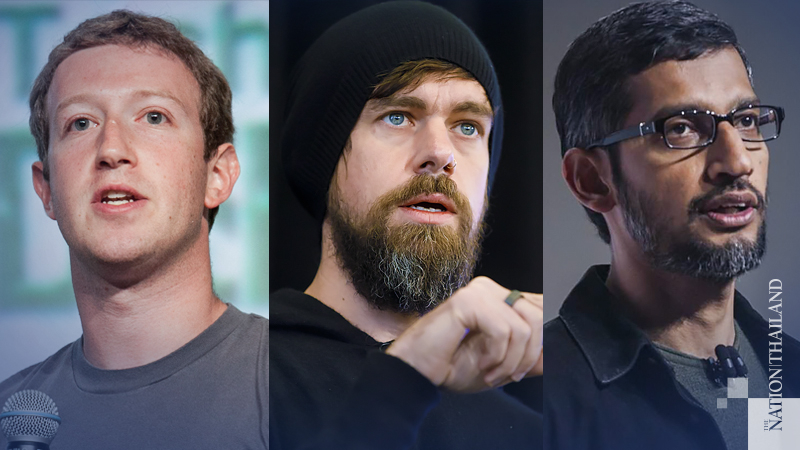
Republicans on the Senate Commerce Committee seized on the hearing to attack Zuckerberg, Google’s Sundar Pichai and Twitter’s Jack Dorsey over allegations they deliberately censor conservatives, including President Donald Trump, emphasizing the power they say tech companies wield over political speech. All three tech giants denied they harbor any political biases, and GOP lawmakers provided scant evidence for their claims. But the party’s panel members insisted anyway on Wednesday that Silicon Valley sought to tip the political scales in its favor.

“Who the hell elected you?” GOP Sen. Ted Cruz (Texas) railed against Twitter’s Dorsey in one of the most heated exchanges. He and other Republicans assailed the company over its initial decision this month to block links to a story by the New York Post about Vice President Joe Biden’s son, Hunter, which had contained unverified information about his business dealings. The Washington Post has not been able to verify the documents.

“Why do you persist in behaving as a Democratic super PAC,” Cruz continued, “silencing views to the contrary of your political beliefs?”

“We’re not doing that,” responded a more measured Dorsey, marking one of many attempts by the Twitter chief executive and his peers to assuage GOP concerns. He acknowledged Twitter did err in its earlier decision to block the link, which is now allowed on the site.

Democrats, on the other hand, fired back that Republicans sought to use the hearing to apply political pressure on the industry as Americans cast their 2020 ballots. Sen. Brian Schatz (Hawaii) said GOP lawmakers only convened the session to “bully” social-media sites into giving Trump and his fellow conservatives more favorable online treatment. He and others pointed to a litany of examples in which tech giants — seeking to crack down on harmful misinformation — had taken action against Trump and his allies.

“We have to call this hearing what it is: it’s a sham,” Schatz said. “This play my colleagues are running did not start today, and it is not just happening here in the Senate; it is a coordinated action across the government.”

The three tech executives’ testimony — on the eve of the 2020 election — follows four years after Russian agents sought to stoke social unrest on social media in a bid to undermine the last presidential race. Entering the Senate hearing, Facebook, Google and Twitter explained that they had made great strides in enhancing their content-moderation practices — hiring more reviewers, spending billions of dollars and improving their technologies and policies so they can more aggressively and consistently identify harmful content across the web.

But the upgrades hardly satisfied some lawmakers, who pointed Wednesday to a wave of hate speech, terrorist content, election disinformation and other harmful posts, photos and videos that still proliferate widely on social media. Members of Congress and tech leaders alike each acknowledged Wednesday that the threats had not dissipated in the four years since the Kremlin’s online siege.

“Social media is so pervasive in the daily lives of Americans and traditional media outlets that it can be weaponized to manipulate the public discourse and destabilize institutions,” said Sen. Tammy Duckworth (Ill.), warning that a wide array of adversaries had come to adopt Russia’s playbook.

Democratic Sen. Gary Peters, meanwhile, raised the potential for “real-world violent threats” to be incubated on Facebook, where a group of suspects earlier this year had started planning an attack on Michigan Gov. Gretchen Whitmer.

“We identified that signal to the FBI six months ago,” Zuckerberg said in response, seeking to defray the concerns. “That’s part of our routine in how we operate.”

The incidents have galvanized a new drive on Capitol Hill to rethink Section 230, as well as a slew of legislative proposals that might open the door for the government to hold Facebook, Google and Twitter liable for their decisions about what to allow and prohibit online. Zuckerberg, Pichai and Dorsey each sought to defend Section 230, arguing it is what allows them to keep their platforms open to expression.

But the loose congressional consensus for reform broke down over Republicans’ allegations of political bias, which a wide array of critics — including free-speech advocates and congressional Democrats — see as an attempt to shield conservatives from scrutiny.

Republican leaders have ratcheted up their attacks on the tech industry particularly as Facebook and Twitter have come to take a more aggressive approach to harmful content, including tweets and other posts shared by President Trump. The two tech giants have labeled, limited or fact-checked some of his most controversial claims about the coronavirus and the 2020 election, fearing the president’s comments about the pandemic threaten public health and his attacks on mail-in balloting could undermine faith in American democracy.

Sen. Cory Gardner (Colo.), a Republican on the Commerce Committee, on Wednesday blasted Dorsey and other tech executives as “unelected elites in San Francisco or Silicon Valley deciding whether my speech is permissible.” Another GOP panel member, Sen. John Thune (S.D.), faulted Facebook, Google and Twitter for deciding “what speech gets to be amplified and suppressed.” At one point, Sen. Marsha Blackburn (Tenn.) even appeared to attack Pichai, the chief executive of Google, for employing an worker who previously had said “unkind things about me.”

Democrats rejected the lines of questioning. Connecticut Sen. Richard Blumenthal — who said he had sought to reform Section 230 for nearly 15 years — said Republicans’ comments instead betrayed their efforts to “bully and browbeat the platforms here to try to tilt them toward President Trump’s favor.”

Trump in recent months has blasted the industry, signed an executive order to enhance the government’s power over political speech and encouraged Republican state officials to investigate big tech. On Wednesday, in the midst of the hearing, he tweeted a new attack to his 87 million followers, telling them Congress should “Repeal Section 230!”

Massachusetts Democratic Sen. Edward Markey said the efforts combined still aimed to “feed a false narrative about anti-conservative bias and to intimidate big tech so it will stand idly by” as the election nears its end.

“The issue today is not that the companies are taking too many posts down,” he said. “The issue today is that companies are leaving too many posts up.”

After going all in on Amazon, a merchant says he lost everything #SootinClaimon.Com

#SootinClaimon.Com : ขอบคุณแหล่งข้อมูล : หนังสือพิมพ์ The Nation.

After going all in on Amazon, a merchant says he lost everything

Oct 28. 2020Barak Govani in front of his shuttered clothing store on Los Angeles' Melrose Avenue. MUST CREDIT: Bloomberg photo by Maggie ShannonBarak Govani in front of his shuttered clothing store on Los Angeles’ Melrose Avenue. MUST CREDIT: Bloomberg photo by Maggie Shannon 

By Syndication Washington Post, Bloomberg · Spencer Soper · BUSINESS 

How Amazon treats third-party sellers is at the heart of a recent House panel report concluding that big technology companies often abuse their power over smaller partners.

Barak Govani made a big bet on Amazon.com earlier this year that he now regrets: He shuttered his New York Speed clothing store on Los Angeles’ storied Melrose Avenue, packed up $1.5 million in inventory and shipped it to Amazon warehouses around the country, putting his fate in the hands of a company that has routinely presented itself to the world as a friend of small business.

Today, the 41-year-old retail veteran is broke and couch-surfs between his mother’s home and his sister’s place. Govani hopes to start anew by getting Amazon to pay him for inventory the company destroyed after suggesting his products could be fake-an accusation Govani strenuously denies. His lawyer in September sent a demand for $800,000, along with invoices to verify his merchandise came directly from fashion brands, and they’re waiting for Amazon’s response.

“All my life, I’d wake up at 5:30 a.m. and work 40, 50, 60 hours each week,” Govani said. “That inventory was everything I had. Amazon ruined my life, and I did nothing wrong.”

Amazon has become the world’s largest e-commerce company in large part thanks to the millions of third-party merchants who have chosen to set up shop on its sprawling marketplace. Small- and medium-size businesses are responsible for more than half of the goods the company sells to customers around the world, moving 3.4 billion products alone in the year ending May 31. The average small business has annual sales of $160,000 on Amazon, up about 60% from the previous year.

In blogs and news releases, Amazon highlights the success of these merchants as a win-win. Lost in the public-relations glare are merchants like Govani.

Stories like his have swirled for years in online merchant forums and conferences. Amazon can suspend sellers at any time for any reason, cutting off their livelihoods and freezing their money for weeks or months. The merchants must navigate a largely automated, guilty-until-proven-innocent process in which Amazon serves as judge and jury. Their emails and calls can go unanswered, or Amazon’s replies are incomprehensible, making sellers suspect they’re at the mercy of algorithms with little human oversight.

Recourse is limited because when merchants set up shop on Amazon, they waive their right to a day in court by agreeing to binding arbitration to resolve any disputes. Amazon doesn’t negotiate terms with merchants. The boiler plate agreement is take-it-or-leave-it, a telling reminder of who has the upper hand in the relationship.

How Amazon treats third-party sellers is at the heart of a recent House Judiciary Committee report concluding that big technology companies often abuse their power over smaller partners. The committee’s recommendations include providing adequate recourse to sellers and eliminating forced arbitration clauses from contracts that deprives them from filing a lawsuit.

“Because of the severe financial repercussions associated with suspension or delisting, many Amazon third-party sellers live in fear of the company,” the report states. “This is because Amazon’s internal dispute resolution system is characterized by uncertainty, unresponsiveness and opaque decision-making processes.”

In an emailed statement, an Amazon spokeswoman said the company works hard to ensure products sold on its site are authentic and provides a fair dispute resolution process.

Govani has been selling clothes for more than 20 years, mostly brands like Hugo Boss, Calvin Klein and Lucky. About a decade ago, he began supplementing his store sales by putting merchandise on web marketplaces including Amazon and eBay. Amazon emerged as the most effective partner, accounting for more than 90% of his online sales.

Initially, Govani stored, packed and shipped all the orders himself, paying the company a commission on each sale. Amazon representatives suggested he try Fulfillment by Amazon, a service that handles that for additional fees. Govani decided to send all of his inventory to Amazon, becoming one of 450,000 businesses to try the service in the year ending May 31.

Govani’s problems began soon afterward. In April, Amazon emailed him to say his account was being reviewed based on four customer complaints over “inauthentic” products.

“In order to ensure that customers can shop with confidence on Amazon, we take ‘inauthentic’ complaints seriously,” the message said. “The sale of counterfeit products on Amazon is strictly prohibited.”

One complainant from San Rafael, Calif., was unhappy with the fit of a $125 Lucky Moto jacket and said she was “wondering if this was a fake.” Govani refunded her money and explained that jackets made with different materials fit differently.

Another shopper was upset that his Calvin Klein underpants arrived in a damaged carton. “Box is pretty much broken, the item is a knock off,” the shopper said in a product review. It’s not clear why Amazon characterized the other two complaints-about apparel wrapped in tissue paper and shipped in envelopes-as “inauthentic.”

Govani appealed the suspension and submitted invoices from the brands to Amazon. His invoices were more than a year old because that’s when he had purchased the inventory, but Amazon wanted invoices from the previous 365 days. Govani was notified that his inventory would be destroyed if he didn’t reclaim it by mid-July. Merchants must pay Amazon additional fees for inventory removal.

Hoping to have his account reinstated and continue selling on the site, Govani put off the decision. He was equal parts encouraged and confused by subsequent messages from Amazon saying his inventory was scheduled to be destroyed later in July and then in early August then in late August. He received a total of 11 emails from Amazon each giving him different dates at which time his inventory would be destroyed if he hadn’t removed it. He sought clarity from Amazon about the conflicting dates. When he tried to submit an inventory removal order through Amazon’s web portal, it wouldn’t let him.

The spokeswoman said Amazon repeatedly asked Govani to provide evidence that the products sold were authentic but that the invoices he sent were either illegible or didn’t match the records of the brand owners. “After being unable to resolve the matter following several appeals as part of our dispute resolution process, we informed this seller six separate times that they needed to remove their inventory from our store by specific dates or it would be destroyed,” she said. “The seller failed to request to remove their inventory by the dates provided.”

At the end of July, Govani sent a panicked email to Chief Executive Officer Jeff Bezos-the world’s wealthiest man-with the subject line: “URGENT: Invalid Disposal of $1.5 Million Worth of Inventory.” He exchanged emails with an Amazon representative named “Brigitte M.,” who promised to investigate.

“I haven’t been able to sleep for months now and I still do not know what Amazon is going to do that will determine my future,” Govani said in a final plea to Brigitte M. on July 31. “Amazon is in possession of my entire life’s hard work, closing my seller account with no valid reason that I understand and disposing of it! All of that without proper communication with me, not responding within a timely manner, responding without answering my questions or addressing the actual issue, being vague.”

Brigitte M. gave her final response on Aug. 3, reiterating that there was nothing else she could do. “I understand that you are disappointed with our previous response and we regret this inconvenience,” she wrote. “I’m sorry for any disappointment caused and appreciate your understanding. We won’t be able to comment further on this matter.

Amazon has been more aggressive in using algorithms to knock suspected counterfeits off the site, and consultants say Govani’s experience is common. Chris McCabe, a former Amazonian who now helps merchants navigate the appeal process, says suspensions based on complaints about inauthentic products are rising and often lodged by rival merchants looking to sabotage a competitor.

“Numerous sellers find themselves appealing this endlessly only to hear that their invoices aren’t acceptable or their suppliers aren’t verifiable, but without any indication as to why,” said McCabe, who testified before the House panel. “Or they receive no reply.”

If Amazon declines to reimburse Govani for his inventory, his next step is binding arbitration, which the House panel said gives Amazon the upper hand in disputes. From 2014 to 2019, only 163 Amazon merchants initiated arbitration proceedings against the company because “sellers are generally aware that the process is unfair and unlikely to result in a meaningful remedy,” the report states.

“Arbitration functions as a way for Amazon to keep disputes within its control, with the scales tipped heavily in its favor,” the report’s authors wrote. “As such, Amazon can withhold payments from sellers, suspend their accounts without cause, and engage in other abusive behavior without facing any legal consequences for its actions.”

Govani’s attorney Mario Simonyan, who has represented other Amazon sellers in similar disputes, suspects the company will make a lowball offer, forcing Govani to decide if he wants to pay for arbitration, which can cost tens of thousands of dollars.

Govani said he is eager to start a new business in an entirely new field-possibly construction-even though he spent his career in retail.

“I don’t want to go back to online retail even though it’s the only thing I’m good at,” Govani said. “I’m so scared to sell on Amazon. This has been traumatizing.”

India’s engineers have thrived in Silicon Valley. So has its caste system. #SootinClaimon.Com

#SootinClaimon.Com : ขอบคุณแหล่งข้อมูล : หนังสือพิมพ์ The Nation.

India’s engineers have thrived in Silicon Valley. So has its caste system.

Oct 28. 2020Though born into a higher caste, engineer Raghav Kaushik works to bring attention to caste-based discrimination in tech companies. MUST CREDIT: Photo by Stuart Isett for The Washington PostThough born into a higher caste, engineer Raghav Kaushik works to bring attention to caste-based discrimination in tech companies. MUST CREDIT: Photo by Stuart Isett for The Washington Post 

By The Washington Post · Nitasha Tiku · NATIONAL, BUSINESS, WORLD, TECHNOLOGY, RACE 
Whenever Benjamin Kaila, a database administrator who immigrated from India to the United States in 1999, applies for a job at a U.S. tech company, he prays that there are no other Indians during the in-person interview. That’s because Kaila is a Dalit, or member of the lowest-ranked castes within India’s system of social hierarchy, formerly referred to as “untouchables.”

Silicon Valley’s diversity issues are well documented: It’s still dominated by White and Asian men, and Black and Latino workers remain underrepresented. But for years, as debates about meritocracy raged on, the tech industry’s reliance on Indian engineers allowed another type of discrimination to fester. And Dalit engineers like Kaila say U.S. employers aren’t equipped to address it.

In more than 100 job interviews for contract work over the past 20 years, Kaila said he got only one job offer when another Indian interviewed him in person. When members of the interview panel have been Indian, Kaila says, he has faced personal questions that seem to be used to suss out whether he’s a member of an upper caste, like most of the Indians working in the tech industry.

“They don’t bring up caste, but they can easily identify us,” Kaila says, rattling off all of the ways he can be outed as potentially being Dalit, including the fact that he has darker skin.

The legacy of discrimination from the Indian caste system is rarely discussed as a factor in Silicon Valley’s persistent diversity problems. Decades of tech industry labor practices, such as recruiting candidates from a small cohort of top schools or relying on the H-1B visa system for highly skilled workers, have shaped the racial demographics of its technical workforce. Despite that fact, Dalit engineers and advocates say that tech companies don’t understand caste bias and have not explicitly prohibited caste-based discrimination.

In recent years, however, the Dalit rights movement has grown increasingly global, including advocating for change in corporate America. In June, California’s Department of Fair Employment and Housing filed a landmark suit against Cisco and two of its former engineering managers, both upper-caste Indians, for discriminating against a Dalit engineer.

After the lawsuit was announced, Equality Labs, a nonprofit advocacy group for Dalit rights, received complaints about caste bias from nearly 260 U.S. tech workers in three weeks, reported through the group’s website or in emails to individual staffers. Allegations included caste-based slurs and jokes, bullying, discriminatory hiring practices, bias in peer reviews, and sexual harassment, said executive director Thenmozhi Soundararajan. The highest number of claims were from workers at Facebook (33), followed by Cisco (24), Google (20), Microsoft (18), IBM (17) and Amazon (14). The companies all said they don’t tolerate discrimination.

And a group of 30 female Indian engineers who are members of the Dalit caste and work for Google, Apple, Microsoft, Cisco and other tech companies say they have faced caste bias inside the U.S. tech sector, according to a statement shared exclusively with The Washington Post.

The women, who shared the statement on the condition of anonymity for fear of retaliation, argue that networks of engineers from the dominant castes have replicated the patterns of bias within the United States by favoring their peers in hiring, referrals and performance reviews.

“We also have had to weather demeaning insults to our background and that we have achieved our jobs solely due to affirmative action. It is exhausting,” they wrote. “We are good at our jobs and we are good engineers. We are role models for our community and we want to continue to work in our jobs. But it is unfair for us to continue in hostile workplaces, without protections from caste discrimination.”

The tech industry has grown increasingly dependent on Indian workers. According to the State Department, the United States has issued more than 1.7 million H-1B visas since 2009, 65 percent of which have gone to people of Indian nationality. Close to 70% of H-1B visa holders work in the tech industry, up from less than 40% in 2003, says David Bier, an immigration policy analyst at the Cato Institute.

Devesh Kapur, a professor of South Asian studies at Johns Hopkins University, found that in 2003, only 1.5 percent of Indian immigrants in the United States were Dalits or members of the lower-ranked castes.

The lawsuit, which was initially filed in federal court before being refiled in October in state court in Santa Clara County, where Cisco is headquartered, alleges that Cisco violated the California Fair Employment and Housing Act, which prohibits employment discrimination based on race, religion, national origin, and ancestry.k out against the discrimination they allege, says Soundararajan from Equality Labs, which is conducting a formal survey to follow-up on the claims they received this summer.

“Just like racism, casteism is alive in America and in the tech sector,” said Seattle-based Microsoft engineer Raghav Kaushik, who was born into a dominant caste but who has been involved in advocacy work for years. “What is happening at Cisco is not a one-off thing; it’s indicative of a much larger phenomenon.”

In a statement, Cisco spokesperson Robyn Blum said: “Cisco is committed to an inclusive workplace for all. We have robust processes to report and investigate concerns raised by employees which were followed in this case dating back to 2016, and have determined we were fully in compliance with all laws as well as our own policies. Cisco will vigorously defend itself against the allegations made in this complaint.”

Dalit engineers said that most Indian workers from upper castes do not seem aware of their caste privilege and believe caste bias is a thing of the past, despite the fact that high-profile tech CEOs and board members, such as Microsoft CEO Satya Nadella and Amazon board member Indra Nooyi, the former CEO of Pepsi, are Brahmins, or members of the highest caste.

In a statement, Facebook spokesperson Nneka Norville said: “To build services for the whole world, we need a diverse and inclusive workplace. We train managers to understand the issues team members from different backgrounds may face and have courses to help employees counter unconscious bias.”

Apple spokesperson Rachel Tulley said: “At Apple, we are dedicated to providing employees with a workplace where they feel safe, respected, and inspired to do their best work. We have strict policies that prohibit any discrimination or harassment, including based on caste, and we provide training for all employees to ensure our policies are upheld.”

Google spokesperson Jennifer Rodstrom said: “Our policies prohibit harassment and discrimination in the workplace. We investigate any allegations and take firm action against employees who violate our policies.”

Microsoft spokesperson Frank X. Shaw said there are no official complaints of caste bias at Microsoft in the United States. IBM and Amazon declined to comment. (Amazon chief executive Jeff Bezos owns The Washington Post.)

Caste is often discovered through questions, not always through appearance. (Although Dalits may have a darker complexion, skin color is not synonymous with caste.) Questions about whether someone is a vegetarian, where they grew up, what religion they practice or who they married may be used as a “caste locator,” seven Indian engineers working in the United States said in interviews with The Post, unrelated to the statement shared by 30 female Indian engineers.

Other tests include patting an Indian man on the back to see whether he is wearing a “sacred thread” worn by some Brahmins, the highest-ranked caste. (This gesture is sometimes referred to as the “Tam-Bram pat,” in reference to Tamil-speaking Brahmins.)

Internal Microsoft emails from 2006 obtained by The Post indicate that caste bias is a long-standing problem within the industry. That year, after the Indian government announced affirmative action measures for marginalized castes, a debate broke out on a company thread about whether the bar was being lowered for Dalit candidates and about their inherent intelligence and work ethic. HR intervened but only to temporarily shut down the thread.

No employees faced consequences for expressing bias against Dalits, according to Kaushik and Prashant Nema, currently a performance and capacity engineer at Facebook, who worked at Microsoft at the time. Shaw said Microsoft encourages and facilitates dialogue and feedback from all employees but declined to comment on the specifics of the 2006 thread.

“If anything, it’s probably gotten worse” since then because of the election of Narendra Modi as prime minister, whose administration has tried to roll back protections for Dalits, Kaushik says. “A lot of the previously repressed ideas, now South Asians feel more emboldened to say it out loud.”

Recent discussion threads about the Cisco case on the anonymous app Blind show tech workers raising the same questions about Dalit engineers in 2020.

In the Cisco suit, the complainant, an Indian engineer identified as John Doe, alleges he was paid less and denied opportunities because both managers knew he is Dalit. It also claims that Doe faced retaliation after he complained about facing a hostile work environment.

The lawsuit, which was initially filed in federal court before being refiled last week in state court in Santa Clara County, where Cisco is headquartered, alleges that Cisco violated the California Fair Employment and Housing Act, which prohibits employment discrimination based on race, religion, national origin, and ancestry.

If Doe wins, it will be the first major case to prove discrimination against Dalits in the private sector, says Kevin Brown, a law professor at Indiana University at Bloomington, who has been traveling to India and studying the Dalit rights movement for more than 20 years. Brown says the decision would have a clear impact on tech companies’ U.S. operations but also raise the importance of the issue for multinational companies operating in India.

The 30 female engineers are urging their employers, as well as corporate America at large, to include caste as a protected category, so that they feel comfortable reporting this type of bias to human resources. The group includes a few engineers who worked on contract for U.S. tech companies – both in the United States and India through multinational outsourcing companies. However, most of the women are currently tech employees living in the United States.

The female engineers described Indian engineering managers from dominant castes who excluded them from opportunities for promotion, made inappropriate jokes about Dalit and Muslim women and about Dalit reservations (the Indian government’s term for affirmative action), and, in the worst cases, subjected them to sexual harassment.

The Dalit women said they immigrated to the United States hoping to escape bullying and abuse they endured at India’s top engineering schools, where members of the dominant castes questioned their competence as developers. But elite academic centers, such as the Indian Institutes of Technology (IITs), also act as a feeder system for tech talent to Silicon Valley.

In the Cisco case, for instance, both John Doe and the manager who outed him graduated from IIT Bombay.

Harvard professor Ajantha Subramanian, author of “The Caste of Merit: Engineering Education in India,” says the IITs have an “outsized influence in U.S. tech culture” through powerful alumni networks that have facilitated the entry of a younger generation into Silicon Valley.

“While caste bias is not unique to the IITs, it is pervasive on the campuses because of widely shared assumptions among upper-caste faculty and students about upper-caste merit and lower-caste intellectual inferiority,” Subramanian says. “Such assumptions were quite clearly in play in the Cisco case.”

The consequences of being identified as Dalit can also lead to social exclusion by co-workers, even outside the office. One engineer and former contractor for Cisco said he was temporarily removed from a WhatsApp group with other Cisco workers after sharing a news story critical of Brahmin supremacy.

Indian engineers said they did not always trust that Americans would comprehend the power dynamics underlying caste oppression. In interviews, many Indian engineers referenced journalist Isabel Wilkerson’s best-selling new book, “Caste: The Origins of Our Discontents,” which argues that treatment of Black people in the United States is the result of a caste-based hierarchy.

Despite the risks of speaking out, Dalit engineers and their allies have seized on the discussion around historic racism to share their individual observations and experiences about workplace discrimination.

The prevalence of caste bias makes the outcome of the Cisco case more urgent, Microsoft’s Kaushik says. “Then it doesn’t matter what Microsoft thinks, it doesn’t matter what Google thinks, it doesn’t matter what Amazon thinks. They have to pay attention to the law.”

Twitter adds new warnings about misinformation in run up to election #SootinClaimon.Com

#SootinClaimon.Com : ขอบคุณแหล่งข้อมูล : หนังสือพิมพ์ The Nation.

Twitter adds new warnings about misinformation in run up to election

Oct 27. 2020Twitter has started pushing notices to warn users to be on the lookout for misinformation to people's timelines.Twitter has started pushing notices to warn users to be on the lookout for misinformation to people’s timelines. 
By The Washington Post
Rachel Lerman

SAN FRANCISCO – Twitter launched prominent new reminders warning people to be wary of potential misinformation on the social media site – the company’s latest effort to try to tamp down swirling rumors and potential misinformation during the election.

Twitter started pushing two different prompts to the top of people’s main timelines Monday. One tells users, “You might encounter misleading information about voting by mail,” and directs to a page to find out more about mail-in voting, including tweets from outside sources. The other reminds users that election results might be delayed because of the increase in voting by mail.

Twitter imposed new restrictions earlier this month on politicians’ posts leading up to the election, including restricting posts announcing victory before it has been independently confirmed. Twitter also announced features for regular users to try to reduce the spread of misinformation, including by requiring people to “quote tweet,” or add their own text to retweets, rather than instantly sharing others’ posts.

The features are all part of social media companies’ push to limit misinformation on their sites in the run up and aftermath of Election Day. Social media experts have warned of the speed with which misinformation can spread, with the potential to change social discourse, especially during moments of political importance.

Quashing misleading information about voting by mail has been one of Twitter’s highest profile struggles this year, ramping up in May when the company labeled two of President Donald Trump’s tweets about the topic with fact checks. It was the first time Twitter had labeled Trump’s posts, and set off a new round of conservative protests regarding censorship.

Twitter CEO Jack Dorsey will testify in front of the Senate Wednesday about unsubstantiated claims that the company is biased against conservatives.

Twitter’s newest timeline posts follow similar measures the company is taking around voting registration and early voting. The prompts this week will also show up in the search tab when people look for related information.

“These prompts will alert people that they may encounter misinformation, and provide them with credible, factual information on the subject,” Twitter spokesman Nick Pacilio said.

Twitter will launch a similar feature beginning next week to count down the days until election night on Nov. 3.

Pair of studies confirm there is water on the moon #SootinClaimon.Com

#SootinClaimon.Com : ขอบคุณแหล่งข้อมูล : หนังสือพิมพ์ The Nation.

Pair of studies confirm there is water on the moon

Oct 27. 2020

By The Washington Post
Ben Guarino, Joel Achenbach

There is water on the moon’s surface, and ice may be widespread in its many shadows, according to a pair of studies published Monday in the journal Nature Astronomy. The research confirms long-standing theories about the existence of lunar water that could someday enable astronauts to live there for extended periods.

One scientific team found the telltale sign of water molecules, perhaps bound up in glass, in a sunlit region. Another group estimated the widespread prevalence of tiny shadowed pockmarks on the lunar landscape, possible shelter for water ice over an area of 15,000 square miles.

Moon water has been eyed as a potential resource by NASA, which created a program named Artemis in 2019 to send American astronauts back to the moon this decade. Launching water to space costs thousands of dollars per gallon. Future explorers may be able to use lunar water not only to quench their own thirst but to refuel their rockets.

The conception of a bone-dry moon persisted widely until relatively recently. Astronomers in the 1800s believed the moon must be waterless because they could not see lakes or clouds through their telescopes. That notion was reinforced by the powdery lunar surface the Apollo astronauts saw and felt through the soles of their boots a half century ago.

A Soviet probe may have collected moon water, but that research, published in a Soviet journal in 1978, went largely ignored.

But in the 2000s, a picture of a water-tinged moon began to emerge. Careful studies of moon samples and spacecraft observations helped overturn the notion of a total lunar desert. In 2018, scientists found ice deposits at the moon’s poles, which the Apollo astronauts did not visit. The lunar south pole in particular is believed to have reservoirs of potentially useful water in either ice or molecular form – though certainly not liquid.

Spacecraft such as India’s Chandrayaan-1, using a NASA instrument to map minerals and other materials, hunted for lunar water and detected compounds of hydrogen and oxygen, the atomic components of water.

But those detections could not rule out sources other than water in sunlit regions, said Casey Honniball, a research fellow at NASA’s Goddard Space Flight Center in Greenbelt, Md. Other hydrogen-oxygen compounds or the moon’s thermal emissions may have muddled the signals.

The new discovery comes from remote observation of the moon’s surface by an infrared telescope on SOFIA, a modified Boeing 747 airplane that flies high in Earth’s atmosphere and scans the moon’s surface. The instruments aboard the observatory detected subtleties in the moonlight at a wavelength of 6 microns, which the researchers believe is an unambiguous signal of water. “Only molecular water can create a 6-micron band,” Honniball said.

John Grunsfeld, a physicist and former associate administrator for NASA’s Science Mission Directorate, who was not involved with this research, said the new study confirms what was previously measured. “The SOFIA measurements are similar to others, including the lunar samples from the Apollo missions,” he said.

The SOFIA study detected individual molecules of water near a massive crater formation, named Clavius, in the moon’s southern region. Because the water molecules are so spread out, Honniball said, they “do not interact with one another and so cannot form liquid water or water ice.”

She suspects they were protected in pockets between grains of dust or within glass beads, the size of pencil tips, formed by micrometeorite impacts. “The water must be sheltered from the harsh lunar environment, because at the time of our observations, the location on the moon was quite warm,” Honniball said.

The molecules of water found in this new study aren’t abundant enough for astronauts to use, Honniball said. They detected the equivalent of a 12-ounce water bottle per cubic meter of soil. But greater concentrations may be found in other lunar regions, such as the moon’s volcanic deposits.

A second report estimated where ice could collect across the moon’s permanently shadowed areas. Craters and indentations on the surface, which the authors called “micro cold traps,” could cover more than 15,000 square miles of the moon’s surface. The bogglingly chilly temperatures in those traps – minus-260 degrees Fahrenheit or below – could keep ice stable as a rock for a billion years, said study author Paul Hayne, a planetary scientist at the University of Colorado at Boulder.

Using mathematical models plus temperature observations from a NASA robot, the Lunar Reconnaissance Orbiter, Hayne and his colleagues estimated there are tens of billions of these traps. They range in size from about the width of pennies to a yard across. This research does not confirm ice exists in all the traps, but they would be tempting targets for astronauts, Hayne said. Instead of trekking into a vast crater to collect water, future astronauts may be able to bend down and pluck ice nuggets from these dark pockmarks.

“The great thing about science is that both papers make predictions that are testable,” said Bethany Ehlmann, an assistant professor of planetary science at Caltech who was not involved in the research. She noted that a robotic mission, called Lunar Trailblazer, would orbit the moon to look for water in shadowy craters as well as the cold traps.

NASA also announced in June that it had hired a private company to deploy a rover, named VIPER, to the moon’s south pole in 2023, that will drill for water a meter below the surface.

“Both papers deepen the mysteries of lunar water while providing pieces of the puzzle,” she said in an email. “It’s exciting to think that lurking in the shadow within ten degrees of the pole are tiny reservoirs of water ice.”

Colorado wildfire grows by at least 140,000 acres in a day, forcing hundreds to flee #SootinClaimon.Com

#SootinClaimon.Com : ขอบคุณแหล่งข้อมูล : หนังสือพิมพ์ The Nation.

Colorado wildfire grows by at least 140,000 acres in a day, forcing hundreds to flee

Oct 25. 2020

By The Washington Post · Andrew Freedman · NATIONAL, SCIENCE-ENVIRONMENT 

A dire wildfire crisis is unfolding in Colorado after a blaze exploded sixfold in size in just 24 hours, growing to about 170,000 acres on Thursday evening.

The East Troublesome Fire, burning in Grand County and extending now into Rocky Mountain National Park, forced hundreds to quickly evacuate from Grand Lake and Granby overnight, with more evacuations taking place Thursday and an unknown number of structures reportedly destroyed.

The blaze has all the hallmarks of climate change. It’s burning at an elevation of 9,000 feet at a time of year when snow should be falling. The fire is also raging during a severe drought, aggravated by record heat, through stands of trees killed or weakened by a bark beetle infestation.

The East Troublesome Fire is now the second-largest wildfire in Colorado history. Three of the state’s five largest wildfires on record have now occurred in 2020. The largest, the Cameron Peak Fire, is still burning just west of Fort Collins.

Noel Livingston, who leads the team of firefighters tackling this blaze as incident commander for Pacific Northwest Team Three, said that crews saw an “amazing amount of fire spread yesterday.” In an afternoon press briefing Thursday, Livingston said the 100,000 acres of fire growth that occurred late Wednesday and into Thursday morning is “really unheard of for a fire in this part of the world in timber.”

At times, National Weather Service Doppler radar showed the smoke plume from the blaze towering almost 40,000 feet above the surface, a sign of extreme fire behavior. Typically, at such a high elevation in the state, the weather at this time of year would not result in such a high wildfire danger. Instead, a red flag warning for “critical” fire weather risk is in effect through 7 p.m. local time Thursday, with winds forecast to gust up to 50 mph, making efforts to increase fire containment difficult.

“We saw about 20 miles of fire growth throughout the day and throughout the night, which equated to about 100,000 acres of additional fire activity,” Livingston said.

Livingston said the fire burned quickly through heavily forested areas north of Granby and Grand Lake. A pre-evacuation notice was issued for Granby on Thursday.

The fire jumped the continental divide in Rocky Mountain National Park, despite being areas that are above the tree line. That is an extremely rare occurrence and puts new downwind areas to the east, such as Estes Park, at risk. A merging of this fire with the Cameron Peak Fire is even possible, Livingston said during a news conference Thursday morning.

Evacuation orders for the national park and parts of Estes Park were issued, with traffic backups reported Thursday afternoon for people leaving Estes Park. On Thursday afternoon, the sky in Estes Park had turned dark as night, contrasted against the lights from cars backing up on local roads out of town.

The ingredients for the massive, rapid growth of this fire, Livingston said, were the thick stands of trees, many of which had been weakened or killed by beetle invasions in recent years, a phenomena linked to climate change that is occurring across vast stretches of the West and into Canada.

As temperatures have increased in Colorado, it has given once-scarce pests, including mountain bark beetles, that were held in check by extremely cold winter temperatures, an opportunity to spread and damage or destroy trees. Studies have shown that in some ecosystems, these dead or weakened trees can accelerate blazes, while in others they may actually slow down some wildfires.

Livingston also pointed to extremely dry conditions and strong winds that pushed the fire through the timbered areas. Winds near the fire were gusting to 60 mph at times on Wednesday.

Winds are predicted to remain strong for the next two days, said Nick Nauslar, a predictive-services meteorologist with the National Interagency Fire Center in Boise, Idaho. He noted in an interview that at 9 p.m. on Wednesday night, near the fire at 8,500 feet in elevation, the air temperature was 70 degrees and winds were gusting to 68 mph.

“That’s pretty rare just in the summer for 8,500 feet, let alone late October,” Nauslar said, since normally it would be colder at that height. “I’ve used the word ‘unprecedented’ before and I’m starting to run out of adjectives to describe what’s happening this fire season,” he said.

Grand County Sheriff Brett Schroetlin published a Facebook video around 1 a.m. Thursday explaining how tough the night had been.

“I have a message,” he said. “I’m not even sure what those words are. Today [Wednesday] has been an extremely, extremely challenging day for our community. We knew this fire was here. We knew the impacts of it. We looked at every possible potential for this fire. We never, ever expected 6,000 acres per hour to come upon our community.”

The winds were strong and, as a result, the fire’s behavior was as well.

“As we drive around this northern part of Grand County, I don’t know what we’ll see in the morning, to be honest,” he said. “But you know what? Together, as a community, we’re going to get through this.”

The forecast for Thursday calls for more high winds and low relative humidity in the region of the fire.

“Unfortunately, today is another fire day,” Livingston said. “We have forecasted high winds coming in this afternoon with a cold front[al] passage. We have again forecasted dry conditions. And we obviously have a lot of available fuel this fire could continue to spread in.

“We anticipate another day of large fire growth,” Livingston said.

The state Colorado is suffering drought conditions for the first time since 2013. Human-caused climate change is sparking more frequent and intense wildfires in much of the West, along with an extension of the wildfire season, studies show. Higher air temperatures are worsening droughts, as well.

California is also experiencing a record wildfire season. More than 4.1 million acres have burned, and more than 9,200 homes and other structures destroyed since Jan. 1. California wildfires have killed 31 people so far this year, with more high winds in the forecast for the next week, which could spread any new blazes that ignite.

State, federal antitrust charges against Facebook could come as soon as November, sources say #SootinClaimon.Com

#SootinClaimon.Com : ขอบคุณแหล่งข้อมูล : หนังสือพิมพ์ The Nation.

State, federal antitrust charges against Facebook could come as soon as November, sources say

Oct 24. 2020

By The Washington Post · Tony Romm · NATIONAL, BUSINESS, TECHNOLOGY, POLITICS, COURTSLAW 
WASHINGTON – State and federal investigators are expected to file antitrust charges against Facebook as soon as November, according to four people familiar with the matter, embarking on a massive legal challenge against the tech giant and its perceived, ironclad grip over social media.

The timing reflects a frenzy of recent activity on the part of the Federal Trade Commission, which met privately Thursday to discuss the probe, and state attorneys general, who under the leadership of New York’s Letitia James have been scrutinizing Facebook for potential threats to competition, said the sources, who spoke on the condition of anonymity to describe a law-enforcement matter.

The timeline could still change, cautioned the people familiar with the probe, adding that work is ongoing. The FTC, in particular, has not yet voted to bring a case against Facebook, though the people said a meeting of its Democratic and Republican members this week – first reported by The Washington Post – involved presentations illustrating how the agency might proceed. State attorneys general, meanwhile, are in the later stages of preparing a complaint, according to the sources.

A lawsuit against Facebook would be the second major antitrust action against Silicon Valley in a matter of weeks. The U.S. government joined 11 states to sue Google on Tuesday over allegations that it engaged in illegal, anti-competitive tactics to ensure the dominance of its search engine.

Facebook and the FTC declined to comment, as did a spokesperson for the attorney general of New York.

Federal officials initiated their antitrust probe into Facebook last year after the company agreed to pay $5 billion to settle a government probe over a series of privacy scandals. The FTC, one of the country’s two competition enforcement agencies, specifically set its sights on Facebook’s purchase of its past rivals – Instagram, a photo-sharing app, and WhatsApp, a messenger service – and the extent to which the tech giant’s sprawling corporate footprint has come to violate antitrust laws.

State investigators revealed their own plans last October: Letitia James, the Democratic attorney general of New York, said at the time she would lead 46 other states and territories in a bipartisan, wide-ranging antitrust inquiry targeting Facebook. James said in a statement then that state enforcers had grown “concerned that Facebook may have put consumer data at risk, reduced the quality of consumers’ choices, and increased the price of advertising.”

Since then, Facebook has faced a slew of criticism from regulators nationwide who believe it brazenly has sought to expand its digital empire in a way that undermines competition and leaves its billions of users with worse service, including fewer privacy protections. A probe conducted by House lawmakers, concluded earlier this month, appeared to furnish fresh evidence of the company’s brass-knuckled tactics – illustrating for members of Congress the extent to which Facebook CEO Mark Zuckerberg had sought to neuter potential rivals before they could mount a serious challenge.

One memo showed Facebook leaders discussing a “land grab” to acquire its possible threats. Another 2018 document prepared for Zuckerberg seemed to suggest Facebook felt its greatest competition came from its own subsidiary apps. Investigators led by Rep. David Cicilline, D-R.I., the chairman of the House antitrust committee, said the trove they amassed ultimately showed how Facebook’s past purchases “tipped the social networking market toward a monopoly.”

Facebook staunchly has rebutted the charges, pointing to the fact that federal regulators had the chance to prevent it from acquiring Instagram and WhatsApp and did not. The company’s arguments foreshadow the likelihood of a major, lengthy legal battle between the tech giant and state and federal antitrust enforcers that try to exact severe penalties for Facebook’s business practices.

“Acquisitions are part of every industry, and just one way we innovate new technologies to deliver more value to people,” Facebook spokesman Chris Sgro said in a statement this month in response to lawmakers’ report. “Instagram and WhatsApp have reached new heights of success because Facebook has invested billions in those businesses.”

NASA says it collected a large sample from the asteroid Bennu. Maybe too large #SootinClaimon.Com

#SootinClaimon.Com : ขอบคุณแหล่งข้อมูล : หนังสือพิมพ์ The Nation.

NASA says it collected a large sample from the asteroid Bennu. Maybe too large.

Oct 24. 2020

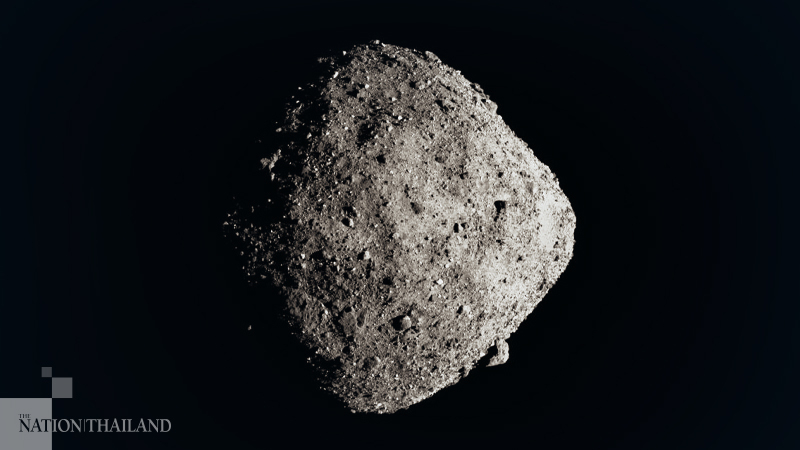
Asteroid Bennu

Asteroid Bennu

By  The Washington Post · Christian Davenport · NATIONAL, WORLD, SCIENCE-ENVIRONMENT 
The spacecraft that reached out and grabbed a sample from an asteroid earlier this week may have collected so much material it prevented the lid of the sample holder from closing properly, allowing some of the precious dust and rocks to leak out, NASA officials said Friday evening.

Now the space agency is faced with the daunting task of stowing away the materials it does have without spilling a significant amount, a delicate procedure made all the more difficult by the weightless environment of space and the fact that the spacecraft is some 200 million miles away.

On Tuesday, an arm of the OSRIS-REx spacecraft, designed by Lockheed Martin, touched the surface of the asteroid Bennu, fired nitrogen gas that stirred up gravel and dust to be captured by a collection device.

But the blast appears to have kicked up so much gravel and dust that some of it got jammed in the device, keeping the lid open. Still, NASA officials said they were confident that they have a large sample – far more than the 60 grams required – and will be able to stow the collection device away without too much leaking out.

“I am highly confident that the [operation] was successful, that it collected abundant mass,” said Dante Lauretta, a planetary scientist at the University of Arizona and the principal investigator of the mission. There was “definitely evidence of hundreds of grams of material, and possibly more. My big concern now is that the particles are escaping. Because we were almost a victim of our own success here, and some of the largest particles left the . . . flap open.”

Instead of trying to measure the amount of material collected, as originally planned, NASA now plans to store the collection device in the return capsule as early as Tuesday. In the meantime, it is holding the spacecraft and collection device as steady as possible, fearful that any additional movement will cause more material to spill out.

“I was pretty concerned when I saw these images coming in, and I think the most prudent course of action is to very safely stow what we have and minimize any future mass loss,” Lauretta said.

But scientists won’t know exactly how much material was collected until the spacecraft returns to Earth -in 2023.

“We’re going to have to wait till we get home to know precisely how much we have and as you can imagine that’s hard,” he said. “But the good news is we see a lot of material so where we are in the positive situation of having a lot more than the 60 grams that was required here.”

The mission was the first time NASA has ever taken a sample from one of the estimated 1 million asteroids in the solar system. Scientists believe the material could shed light on how the universe was formed and how water ended up on Earth.

More than 4.5 billion years old, Bennu is as large as the Empire State Building and looks like a giant walnut that scientists believe is full of scientific riches, such as carbon and water locked away inside clay materials.

Huawei out-hustles Trump by stockpiling chips needed for China 5G #SootinClaimon.Com

#SootinClaimon.Com : ขอบคุณแหล่งข้อมูล : หนังสือพิมพ์ The Nation.

Huawei out-hustles Trump by stockpiling chips needed for China 5G

Oct 23. 2020An attendee wearing a protective face mask passe the Huawei Technologies Co. stand during the IFA Consumer Electronics Show at the Berlin Messe exhibition hall in Berlin on Sept. 4, 2020. MUST CREDIT: Bloomberg photo by Jacobia DahmAn attendee wearing a protective face mask passe the Huawei Technologies Co. stand during the IFA Consumer Electronics Show at the Berlin Messe exhibition hall in Berlin on Sept. 4, 2020. MUST CREDIT: Bloomberg photo by Jacobia Dahm 

By Syndication Washington Post, Bloomberg · No Author · BUSINESS

Huawei Technologies Co. quietly spent months racing to stockpile critical radio chips ahead of Trump administration sanctions, ensuring it can keep supplying Chinese carriers in their $170 billion rollout of 5G technology through at least 2021.

A customer service assistant wearing a protective face mask serves a customer inside a Huawei Technologies Co. store in Pretoria, South Africa, on Aug. 12, 2020. MUST CREDIT: Bloomberg photo by Waldo Swiegers

A customer service assistant wearing a protective face mask serves a customer inside a Huawei Technologies Co. store in Pretoria, South Africa, on Aug. 12, 2020. MUST CREDIT: Bloomberg photo by Waldo Swiegers

Partner Taiwan Semiconductor Manufacturing Co. began ramping up output in late 2019 of Huawei’s 7-nanometer Tiangang communications chips, the most crucial element in 5G base stations, people familiar with the matter said. The Taiwanese contract manufacturer eventually shipped more than 2 million units at Huawei’s behest ahead of the sanctions cutoff last month, one of the people said, asking not be identified discussing internal matters. The sheer magnitude of orders at one point got TSMC executives wondering whether they had underestimated global demand, the person said.

Huawei’s breakthrough in securing essential supplies underscores the mixed success of a U.S. campaign against China’s largest tech company since 2018. Citing national security concerns, the White House started by trying to curtail the sale of American software and circuitry to Huawei before finally enacting sweeping restrictions against its suppliers including TSMC. It’s that last salvo, a ban on the sale of ready-made, commercially available semiconductors, that finally kneecapped Huawei’s smartphone business and forced it to curtail device production, the people said. Representatives for Huawei and TSMC declined to comment.

But the Tiangang chip, designed in-house by secretive division HiSilicon, has proven pivotal to keeping the 5G business afloat. Huawei had leaned on TSMC in the months before Washington shut that loophole and it can now continue to supply China Mobile Ltd., China Telecom Corp. and China Unicom — the carrier trio now aggressively building out a nationwide 5G network Beijing considers instrumental to driving the world’s No. 2 economy. A China Mobile representative declined to comment for this story. A China Telecom spokesperson said the company will communicate any impact from curbs on Huawei but declined to comment on discussions about chip supply. Unicom representatives didn’t respond to requests for comment.

“The U.S. has demonstrated an intense will to restrict Huawei’s ability to offer 5G technologies. The U.S. government’s assertions of extraterritoriality have made it more difficult for Huawei to maintain access to critical components,” said Dan Wang, an analyst at Gavekal Dragonomics. In 2012, just a third of Huawei’s revenue was generated in China — that closed in on two-thirds last year. “Huawei is more dependent on domestic sales due to both U.S. pressure as well as its strong hold over the fast-growing China market.”

Huawei told Chinese wireless operators its component inventory was fully capable of supporting base station construction in 2021 and beyond despite U.S. sanctions, according to people familiar with the matter. The company has started shipping 5G base stations without American components since at least the end of last year.

It’s unclear how long those stocks can last. Rotating Chairman Guo Ping said last month the company has “sufficient” inventory for its communications equipment business, but is seeking supplies for the smartphone unit.

Even assuming Huawei has cached enough silicon for Chinese clients’ purposes, it may have had to make sacrifices in performance because of shortages in second-tier components. Resorting to less-sophisticated local alternatives may hinder areas such as power consumption rate, the people said. To rectify that, Huawei’s promised to compensate carriers for part of that additional electricity expense, they said. A typical 5G base station consumes roughly four times the power of a standard 4G model.

While Washington is gaining ground in efforts to pressure allies from Australia to the U.K. to shun Huawei equipment, the Chinese company’s main source of income remains its own home country. Huawei has so far won more than half of the 5G orders from state-owned carriers this year, securing contracts worth billions of dollars, Bloomberg News reported earlier.

Chinese carriers have built 690,000 5G base stations since the technology was commercialized about a year ago, according to the Ministry of Industry and Information Technology. The nation’s carriers have yet to announce base station procurement plans for 2021, but ministry officials said the country’s network buildup will continue over the next three years.