Moon mission to help Thailand blast out of middle-income trap
FRIDAY, SEPTEMBER 16, 2022
THE NATION
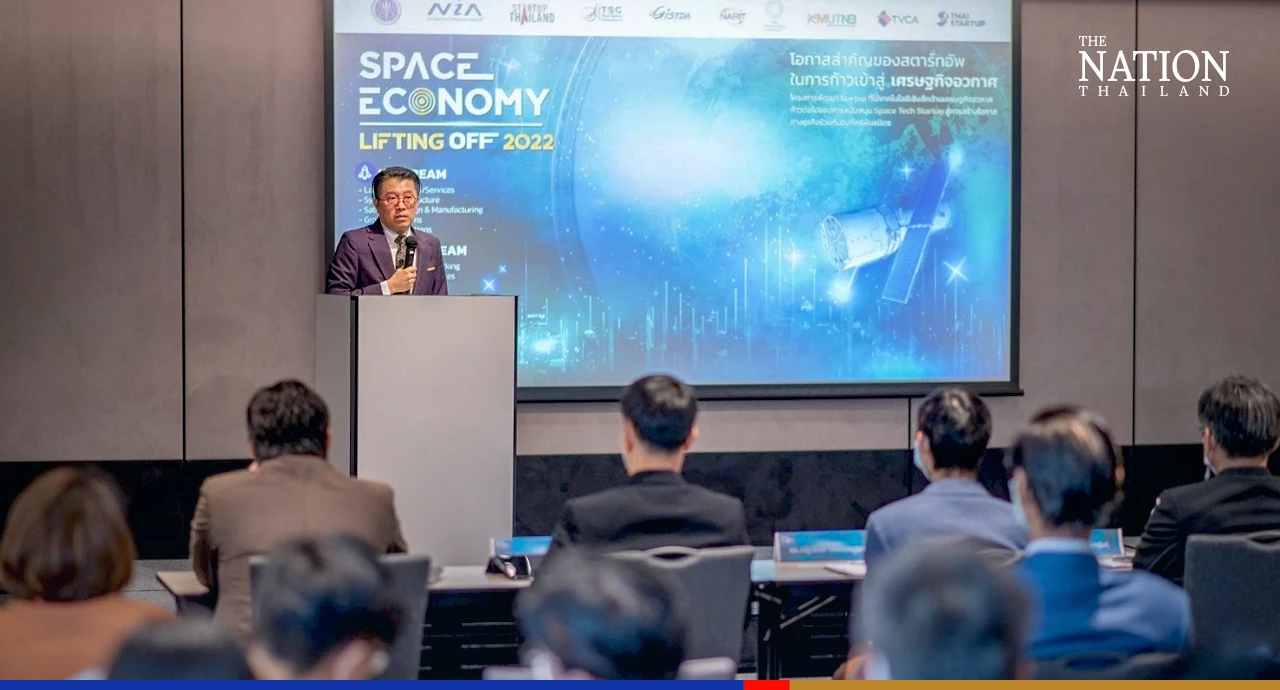
Thailand must reach for the stars if it wants to escape the gravitational pull of the middle-income trap. That was the message of the National Innovation Agency (NIA) on Friday as it unveiled a launchpad for the country’s fledgling space industry.
The “Space Economy: Lifting Off 2022” start-up incubator will help the Thai government achieve its target of sending a satellite into moon orbit within seven years, said NIA executive director Pun-Arj Chairatana. The incubator will create start-ups to fill gaps in the domestic space industry’s supply chain, forming a platform for Thailand’s moon shot.
“Thailand currently has more than 1,000 space-related businesses with total economic value of more than 30 billion baht and growth of at least 10 per cent annually,” said Pun-Arj, whose agency comes under the Ministry of Higher Education Science Research and Innovation.
The space business is among Thailand’s new “S curve” industries, which have both economic and social benefits for the country.
“Promoting the development of space-related products and services is an important mechanism to boost growth of the country’s other industries,” the NIA chief said.
The moon mission “will see Thailand become part of a global space industry worth US$1 trillion and will generate enormous revenue”, he added.
Geopolitical Risk Will Provide CIOs New Leadership Opportunities
WEDNESDAY, SEPTEMBER 14, 2022
Technology governance issues emanating from cross-country politics have led to digital geopolitics rapidly becoming an issue that multinational CIOs must step up to lead, according to Gartner, Inc.
Forty – one per cent of Boards of Directors view geopolitical power shifts and turbulence as one of the biggest risks to performance, according to a Gartner survey.
Gartner predicts that by 2026, 70% of multinational enterprises will adjust the countries in which they operate by hedging to reduce their geopolitical exposure.
“Digital geopolitics is now one of the most disruptive trends that CIOs must address, with many now dealing with trade disputes, legislation coming from one country that impacts global operations, and government imposed restrictions on the acquisition and use of digital technology,” said Brian Prentice, VP analyst and Gartner Fellow. “They need to get acquainted with this new reality and prepare for its impact.”
Geopolitics describes the geographic influences on power relationships in international relations. The resulting competition between nations plays out in many areas, including economic, military and society. Due to the increasing importance that digital technology plays in each of these areas, digital geopolitics is emerging as its own unique category of impact.
Gartner says CIOs must play a pivotal role in assessing corporate risk and, if required, rearchitecting digital systems. They will need to manage or exploit four distinct facets of digital geopolitics
1. Protect digital sovereignty
Digital sovereignty will be a primary source of complex, dynamic and expanding compliance obligations for multinational enterprises.
Governments are primarily addressing it through their legislative and regulatory powers, such as privacy laws like the GDPR, and are increasingly turning to extraterritorial legislation. Companies that deal with the citizens of a jurisdiction are required to comply with its laws, regardless of where the company operates or where the citizens reside.
CIOs must be proactively engaged in ensuring that the IT organization’s operating model and practices reflect current laws and regulations in place.
Their role is to be aware of the legal environment and articulate to other executives how the IT organization supports compliance across the enterprise.
2. Build a local technology industry
The technology industry is of great interest to public policymakers around the world due to its size, fast growth, strategic importance, tax revenue, employment possibilities and lack of requirement for a specific national resource advantage.
Many national governments are investing in developing a home-grown tech sector. For example, the U.S. seeks to address the regional imbalance in global chip production through the Creating Helpful Incentives to Produce Semiconductors (CHIPS) for America Act, and the Australian Government’s Digital Economy Strategy 2030 includes building a dynamic and emerging tech sector as a key pillar.
Efforts to establish a domestic technology industry provide CIOs with an opportunity for proactive engagement with governments. They must localize specific initiatives into countries that have the best integration between local expertise and access to government co-innovation support.
3. Achieve necessary military capability
The growing digitalization of national military and security operations will limit the availability of some technologies within various countries. Enterprises and CIOs are impacted by the emerging sphere of cyber warfare, as well as the digitalization of existing warfighting and security technologies.
CIOs can no longer count on the availability of technology used by the enterprise for its operations in any country in which it operates and will likely be faced with restricted and mandated suppliers. To minimize disruptions, they must establish a vendor and technology risk centre of excellence, chartered with a regular assessment of the exposure of key suppliers to evolving government restrictions.
4. Exert direct control over the governance of cyberspace
National competition for control over the governance of cyberspace will impact the operations of multinational enterprises. As digital technology weaves itself through all aspects of society, nations are seeking to ensure that their own technologies reflect and support their core values and their citizens. Governments are increasingly concluding that they need a protected national digital infrastructure.
The machinations by governments for control over cyberspace governance are beyond the influence of CIOs, but they will have profound impacts on a business’s ability to operate internationally. CIOs can advance the executive team’s understanding of the cross-national competition for control over cyberspace and the impacts on their enterprise’s operations by leading an annual cyberspace environmental update briefing.
Tourism sector advised to embrace digital technology
THURSDAY, SEPTEMBER 08, 2022
THE NATION
The tourism industry must utilise digital technology widely to increase the opportunity to find additional revenue and more tourists, the Digital Economy and Society Ministry advised at a press conference on Wednesday.
Digital Economy and Society Minister Chaiwut Thanakamanusorn was part of the conference on the “Thailand Travelution 2022” project.
He said the project highlights the important government policy of using digital and modern technology to develop every sector, including tourism.
Digital technology has been used by the tourism industry, Chaiwut said, but tour operators must develop the system to “build trust” to be “more reliable”.
The minister said digital technology in the new era will come with better screening, as there will be various platforms to help take care of this.
In the future, it will connect databases among related sectors in operating businesses as the Government Big Data Institute will team up with the Digital Economy Promotion Agency to boost tourism, he pointed out.
“[I] thank all related sectors, including the Tourism Authority of Thailand and the Tourism Council for helping organise this event to develop Thailand’s tourism industry,” Chaiwut added.
Apple’s new satellite service for iPhone 14 ‘a big deal’
THURSDAY, SEPTEMBER 08, 2022
Reuters
Apple Inc introduced new iPhone 14 models capable of using satellites to send emergency messages and an adventure-focused Ultra Watch for sports like diving and triathlons.
The outdoor-focused products will test whether Apple’s relatively affluent customer base will keep spending in the face of rising inflation.
Prices of the high-end iPhone 14s are the same as last year’s iPhone 13 models. But Apple dropped its cheapest option, the iPhone mini, meaning the cheapest model now costs $100 more than last year.
The iPhone 14 will start at $799 and the iPhone Plus at $899 and be available for preorder starting Sept. 9. The iPhone Pro will cost $999 and the iPhone Pro Max $1,099 and be available Sept. 16.
“There was a lot of rumors that Apple may be raising their prices because of supply chain issues and inflation and what have you. And one small but pleasant surprise from today was they didn’t. They kept the same prices a as previous years, so I think some people will be relieved,” said Bob O’Donnell of Technalysis Research.
Apple said its satellite SOS will work with emergency responders. It also said that in some situations, users will be able to use its FindMy app to share their location via satellite when they have no other connectivity.
The service will be free for two years with the iPhone 14. Apple did not say what would happen after that period
Shares in Globalstar Inc jumped 20% on Wednesday after the satellite services firm announced it will be the satellite operator for Apple’s emergency SOS service.
Apple will pay for 95% of the approved capital expenditure for the new satellites that would be needed to support the service, but Globalstar said it will still need to raise additional debt to construct and deploy the satellites.
“Well I think the biggest news for me was the release of the satellite service for iPhone 14. There’s been rumors about this honestly for a year and a half. And it wasn’t clear whether they were going to actually do it. But from that opening video where they showed the satellite in the sky, okay, I’m pretty sure it’s going to come today. And sure enough it did,” O’Donnell said.
The stock had gained almost 70% from mid-June to Tuesday’s close, following speculation of working with Apple.
Other companies are working on similar functions. SpaceX founder Elon Musk said last month it is working with T-Mobile to use its Starlink satellites to connect phones directly to the internet.
Apple’s iPhone 14 Plus model will have a larger screen like Apple’s iPhone Pro models but an A15 processor chip like the previous iPhone 13.
The Cupertino, California-based company also showed a trio of new Apple Watches, including a new Watch Ultra model aimed at extreme sports and diving and designed to challenge sportswatch specialists such as Garmin and Polar.
“Obviously the Watch Ultra is expensive, but look it’s not for everybody. There’s very few people that need a device that rugged and that capable, but for people who are divers, it’s a big deal,” O’Donnell said.
The Ultra has a bigger battery to last through events like triathlons and better waterproofing and temperature resistance to operate in outdoor environments, as well as better GPS tracking for sports.
The new Watches include an upgraded budget model called the SE and a Series 8 Watch with crash detection and low-power mode for 36 hours of battery life.
The Series 8 with cellular will start at $499 and the SE will start at $299 with cellular. The Ultra, which includes cellular in its base model, will start at $799 and be available Sept. 23.
Apple said the new Series 8 watch has a temperature sensor that will work in conjunction with its previously released cycle tracking app to retroactively detect ovulation. The company emphasized the privacy approach of its cycle tracking. Privacy and reproductive health data has become a focus for tech companies in the wake of a U.S. Supreme Court decision that ended a constitutional right to abortion in the United States.
Apple said it does not have the key to decrypt health data such as cycle tracking.
Apple also touted that its second-generation AirPods Pro will double the amount of noise cancellation over the original version.
But while accessories like the Apple Watch have driven incremental sales from Apple’s existing user base, the iPhone remains the bedrock of its business with 52.4% of sales in its most recent fiscal year.
Apple’s stock was up 0.8% after the presentation, lagging the S&P 500’s gain of 1.8% for the session.
People across Asia are united by a firm belief that connectivity empowers them with more economic opportunity, daily convenience, and greater access to essential services, according to Telenor Asia’s new “Digital Lives Decoded” study.
The study, released in conjunction with Telenor’s 25th anniversary in Asia, surveyed over 8,000 mobile internet users across eight countries (Bangladesh, Indonesia, Malaysia, Pakistan, Philippines, Singapore, Thailand, Vietnam) in South and Southeast Asia.
The survey revealed a common appreciation for the benefits of an “always-on” life, where mobile connectivity enriches relationships and delivers convenience and makes it easier for people to participate in the digital economy.
A resounding 93% of respondents believe their mobile usage improves their quality of life. Overall, women lead this trend with 63% saying the quality of life is significantly enhanced compared to 52% of men.
This trend is most apparent in Thailand (75%) and Indonesia (71%), where the highest number of women are connecting to “significantly better” lives through their mobile use.
“It is often reported that mobile usage comes between people, distracting users from those around them and damaging relationships and interpersonal communication skills.
However, this study dispels that notion. Compared to before the pandemic, mobile data usage has more than doubled in most Asian markets, reshaping how we communicate at work and at home.
Interestingly, this survey shows that people want the changes in digital use and their daily lives to stay. In fact, they continue to immerse themselves in a digital world despite rules on travel and social interaction being relaxed,” said Jørgen Rostrup, Head of Telenor Asia.
As connectivity puts power into the hands of people, this study also revealed where digital gaps remain, particularly in rural and elderly populations.
With mobile connectivity evolving from a nice-to-have to a must-have, the need to understand these gaps is becoming more important to policymakers, businesses, and individuals alike. Insights from this study can thus act as a map of where to bridge the widest digital divides,” he added.
Swiping up for an always-on lifestyle Nearly all respondents surveyed have their mobile phone with them for at least half of the day, and one in five are never without their phone.
Yet, the majority of respondents surveyed feel they strike a good balance in their use of technology (76%).
People in the Philippines and Thailand are most dependent on their mobile phones, with 29% and 25% respectively saying they are never without their mobile phones. This dependence is set to grow, with nearly three in four people (74%) expecting their mobile usage to increase in the coming years, a trend greatest among respondents in Thailand (82%).
Keeping up as digital life charges ahead Generational differences in how people feel about the surge in time spent online are apparent. Gen Z respondents, the youngest surveyed, are more likely to feel that they are overusing technology. Along with their millennial counterparts, Gen Z respondents were also the most concerned about having the right skills to keep pace with technology.
This was a concern shared across all generations, with 85% of respondents worried that their digital skills will not keep pace with a rapidly evolving digital environment. Of the countries surveyed, Thailand was the least concerned (63% of respondents).
(Lack of) trust in the digital world Concerns around privacy and security of mobile devices across the region have surfaced for 93% of respondents across the region, amid a well-recognised surge in digital adoption.
Of those who reduced their mobile usage in the past year, one in three Gen Z respondents in Malaysia cited privacy and security concerns as the top reason for the decrease. Conversely, people in Thailand were least concerned, with nearly a quarter of respondents (27%) not concerned about this at all.
Tapping into a more sustainable life The study also reveals optimism about the potential for mobile technology to advance environmental sustainability. Three-quarters of those surveyed believe that digital access is “very important” for them to lead greener lives in the future. However, that share was lowest in Thailand (63%), Malaysia (57%) and Singapore (41%).
People cited the greatest benefits come in the areas of reducing paper, waste, and electricity (70% of respondents), being able to communicate more efficiently (67%) and providing better access to public transport with more information (55%).
Mobile technology is closing the digital divide The study also points to the greater potential women see in mobile usage, with more women than men saying mobile connectivity has enhanced their options for working and generating income and gave them better access to information and education opportunities. This was particularly true in Thailand, where three-quarters (75%) of women say mobile usage improves their lives, versus half (49%) of men.
Respondents also recognize how mobile connectivity is inclusive, giving people greater access to essential services which enrich their daily lives, such as education (88%) and healthcare services (88%).
However, it is around financial inclusion where mobile devices are really levelling the playing field. 92% of respondents say having a mobile device has increased their access to financial services while more than half (57%) believe their access to financial services has “significantly improved”.
It is also worth noting the disparity between responses of those living in cities (60%) and rural areas (50%), which highlights the ongoing need to broaden the reach of these services to those outside urban areas.
“As mobile connectivity becomes even more fundamental to our daily lives, lacking the right skills and awareness, including to navigate safety and privacy issues, or being off the grid can severely restrict access to education, healthcare, economic and employment opportunities. We need to better understand digital gaps, and how to bridge them, as well as the carbon footprint of our online habits, as we work together to create a future where mobile connectivity is empowering and sustainable for all,” said Mr. Rostrup.
Telenor Asia’s “Digital Lives Decoded” study is a three-part series looking at the role of mobile relationships in how we live, work, and play.
The first report examines the role and impacts mobile phones are having on the way people live, with a focus on the quality of life, relationships, access and inclusion, and outlook for the future.
The study, undertaken in July 2022, surveyed 8,227 mobile internet users over 18 years old and spread across eight markets in South and Southeast Asia, including Bangladesh, Indonesia, Malaysia, Pakistan, the Philippines, Singapore, Thailand, and Vietnam.
Respondents were evenly split by gender, ranging in age from 18 years and older, and crossing four generations: Gen Z (Born 1997 – 2012); Millennials (Born 1981 – 1996); Gen X (Born 1965 – 1980); and Baby Boomers (Born 1946 – 1964).
Siemens Healthineers has showcased its prototype innovation, “Patient Twinning”, a device that allows doctors to examine the targeted locations thoroughly and calculate the outcome.
The AI-powered innovation was unveiled on Wednesday at the event “Hospital Management Asia 2022’ at Bangkok Convention Centre in CentralWorld, Bangkok.
The device visualises human organs in a digital space and simulates the organs’ reactions to therapy. It will aid healthcare practitioners provide optimal medication.
Bjorn Bodenstein, managing director of Siemens Healthineers in Thailand, said that his company has the goal of pioneering breakthroughs in healthcare for everyone, everywhere.
“Virtual planning can visualise an organ’s response to a treatment on a computer before the actual intervention. Physicians can use it to test various therapies, examine the outcomes, and select the best therapy for the patient.”
He said the digitalisation of healthcare is driven by the desire to provide the best treatments for all patients.
For example, artificial intelligence can eliminate unnecessary interventions, prioritise acute cases, improve the quality and productivity of healthcare, advance precision medicine, and generate more clinical knowledge. It will cause a shift from patient-centric disease management to person-centric healthcare.
The company also showcased its other digital innovations at the event:
● AI-Rad Companion – A database to support radiologists, radiation oncologists, radiotherapists, and medical physicists with the automated post-processing of MRI, CT, and X-ray datasets connected to the Teamplay digital platform.
It saves time and enhances diagnostic precision. The steady rise of radiology examinations and staff shortages have led to less time spent on each case, with the risk of missing clinically relevant findings, the company said.
● syngo Virtual Cockpit – This allows medical staff to diagnose patients in remote areas, especially when more sophisticated examinations are required. This is achieved by connecting remotely to scanners at a different location.
Healthcare providers can transform care delivery and achieve a higher level of standardisation, leading to more accurate diagnoses, Siemens said.
● Cinematic Reality – By rendering X-Ray, CT scan or MRI images into high definition 3-dimensional animated visualisations that can be freely rotated, and magnified on demand, it has made it simpler for doctors to examine and diagnose complex cases.
Thai start-ups took to the international stage on Friday as the Techsauce Global Summit (TSGS) kicked off at IconSiam in Bangkok.
The two-day showcase sees global tech leaders, start-ups, corporations, investors and venture capitalists come together to network and swap ideas.
New to this year’s summit is the ClimateTech podium, which addresses climate change and sustainable solutions across Southeast Asia.
Other stages include Fintech, Climate Tech, the Metaverse, AI/Data, NFTs/Digital Assets, Deeptech, Smart Cities, Health Tech, Startups/VC and Corporate Innovation.
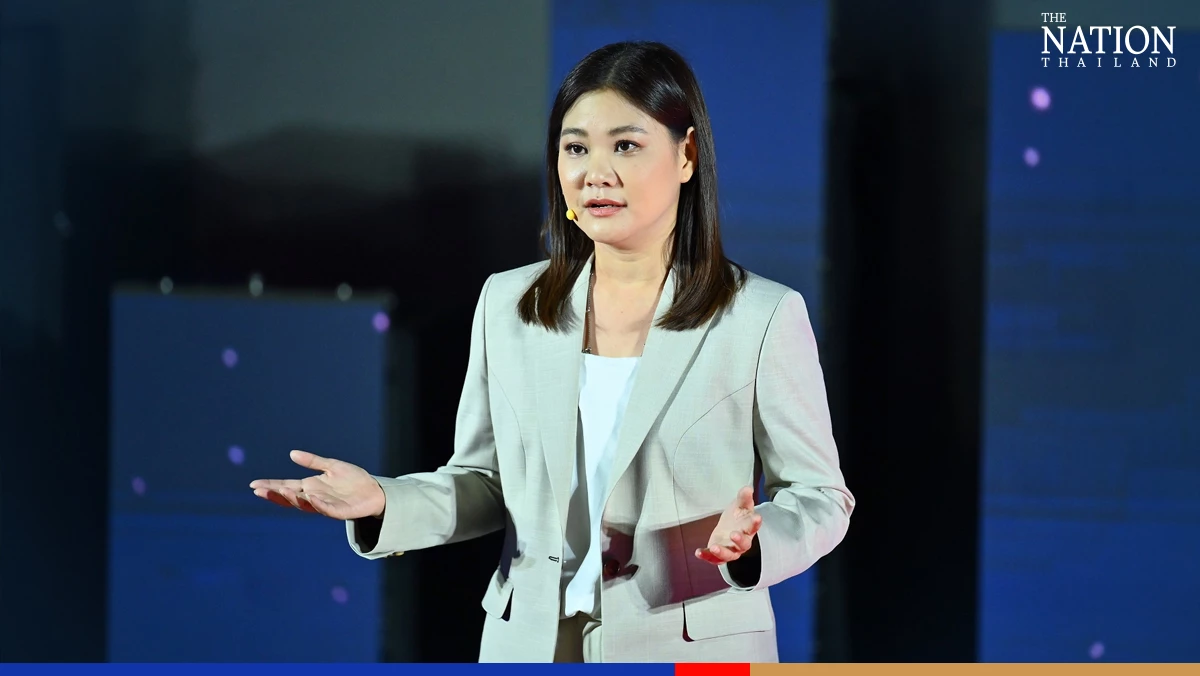
TSGS is back with 10,000 attendees after a three-year break, said Oranuch Lerdsuwankij, founder and CEO of summit organiser, Bangkok-based Techsauce Media.
Oranuch is widely considered a pioneer in the development of Thailand’s start-up ecosystem.
Oranuch Lerdsuwankij
“Techsauce is more than a media or technology event organiser. It is a tech ecosystem builder that connects three groups: start-ups, companies, and venture capital,” she said.
Techsauce said the summit has 10,000 registrants from 30 countries, making it the country’s largest tech event.
The first day of the summit also saw Techsauce announce its new “Thailand Accelerator” and “Pathfinder Club” programmes.
“Thailand Accelerator” is aimed at helping start-ups and SMEs grow across all industries in Southeast Asia, said Oranuch. It will provide start-ups with access to funding so they can launch in the global market, she said.
Meanwhile the Pathfinder Club, in partnership with Marco Polo, enables summit attendees to use non-fungible tokens to avail themselves of Techsauce support.
New images of Jupiter captured by Nasa’s James Webb Space Telescope (Webb) will give scientists even more clues to the planet’s inner life, the US space agency said.
Images include giant storms, powerful winds, auroras, and extreme temperature and pressure conditions.
“We hadn’t really expected it to be this good, to be honest,” said planetary astronomer Imke de Pater, professor emerita of the University of California, Berkeley.
“It’s really remarkable that we can see details on Jupiter together with its rings, tiny satellites, and even galaxies in one image.”
The two images come from the observatory’s Near-Infrared Camera, which has three specialised infrared filters that showcase details of the planet. The longest wavelengths appear redder and the shortest wavelengths are shown as more blue, Nasa said.
In the standalone view of Jupiter, created from a composite of several images from Webb, auroras extend to high altitudes above both the northern and southern poles of Jupiter.
The auroras shine in a filter that is mapped to redder colours, which also highlights light reflected from lower clouds and upper hazes, Nasa added.
A different filter, mapped to yellows and greens, shows hazes swirling around the northern and southern poles. A third filter, mapped to blues, showcases light that is reflected from a deeper main cloud.
Photo credit: Nasa
The Great Red Spot, a famous storm so big it could swallow Earth, appears white in these views, as do other clouds, because they are reflecting a lot of sunlight, Nasa said.
“The brightness here indicates high altitude – so the Great Red Spot has high-altitude hazes, as does the equatorial region,” said Heidi Hammel, Webb interdisciplinary scientist for solar system observations and vice president for science at Association of Universities for Research in Astronomy.
“The numerous bright white ‘spots’ and ‘streaks’ are likely very high-altitude cloud tops of condensed convective storms.” By contrast, dark ribbons north of the equatorial region have little cloud cover.
In a wide-field view, Webb sees Jupiter with its faint rings, which are a million times fainter than the planet, and two tiny moons called Amalthea and Adrastea. The fuzzy spots in the lower background are likely galaxies “photobombing” this Jovian view.
“This one image sums up the science of our Jupiter system programme, which studies the dynamics and chemistry of Jupiter itself, its rings, and its satellite system,” Thierry Fouchet, a professor at the Paris Observatory, said.
Researchers have already begun analysing Webb data to get new science results about our solar system’s largest planet.
How will the metaverse build an immersive “mirror” of our real world of shops, products, companies and venues? And how can businesses in Thailand and elsewhere gain access to this lucrative virtual world, dubbed “the next internet”?
Answers to these questions were provided by Anothai Wettayakorn at “Metaverse Expo Thailand” on Sunday.
“The metaverse has already happened, and it is expanding,” said Anothai, regional director for US-based Dell Technologies.
Bloomberg Intelligence estimates that the fast-growing metaverse market will be worth US$783.3 billion (28 trillion baht) by 2024. Not surprisingly, businesses ranging from large corporations to SMEs are looking for a slice of this market, and the Thai private sector is no exception.
Anothai said cloud technology will be key to the metaverse strategies of companies transitioning to the “next internet”.
He explained that the metaverse is currently a patchwork of separate immersive pockets that will eventually be stitched together to form a seamless virtual platform.
Development of this virtual world requires huge computing power to drive real-time immersive experiences – which is where cloud technology comes in.
But also helping to build the metaverse is Dell’s Digital Twin technology, Anothai said.
Digital Twin tech enables individuals, companies and organisations to duplicate real-world items and processes in the digital world.
He added that businesses can use cloud and Digital Twin technology to provide customers with immersive experiences in everything from work and education to shopping, health and leisure.
These metaverse experiences would drive the digital economy and boost global gross domestic product, he predicted.
“In the future, many organisations will focus on doing ‘anything from anywhere’,” he said.
“The question isn’t when the change will happen, but how to prepare organisations to deal with changes,” he added.
The three-day “Metaverse Expo Thailand”, organised by Nation Group, wrapped up on Sunday.
Thai developers must join hands to compete in the global metaverse market, five experts told the “Thailand Metaverse Expo 2022” in Bangkok on Sunday.
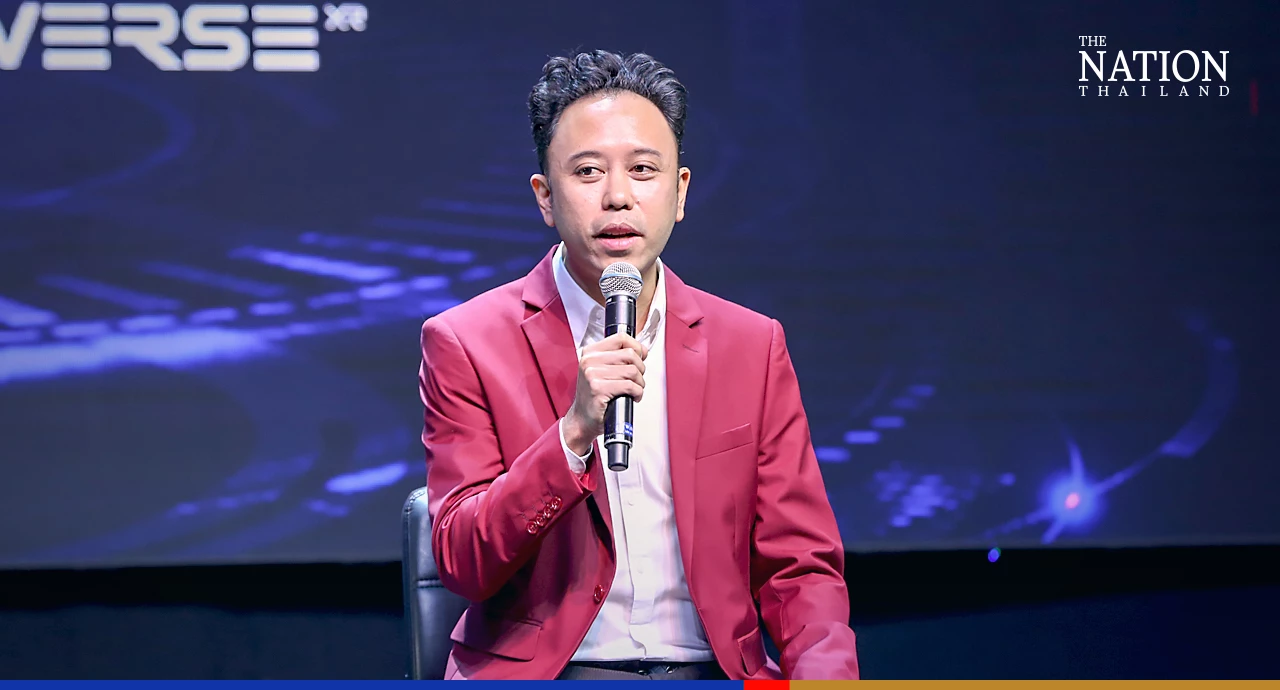
Nattasate Trithipcharoenchai, CEO of Jenosize Digital Group, said no one could be successful in their own isolated metaverse so his company created T-Verse to connect virtual business, education, and government sectors and boost Thailand’s competitiveness.
In a talk titled “Get Ready for Your Own ’Verse”, he said that if every metaverse sector joined hands, users would benefit from a seamless, immersive experience while developers could compete on the global stage.
He added that the challenge was not how to create the metaverse, but how to make it a success. And success depended on creating everyday accessibility for people. Currently, to enter metaverse worlds, users need relatively expensive gadgets like virtual-reality (VR) headsets.
Nattasate also highlighted security concerns, explaining that users would need to feel safe when they create their second identity in the metaverse.
Content was also an issue as users will want engaging activities while spending time in the virtual world.
He went on to explain the core metaverse concept of “Digital Twins”, citing the example of a user who buys a costume for their 3D avatar that is identical to their real-world outfit. He also described the metaverse as communities where users could meet and hang out with friends
Finally, he said commerce would be a crucial aspect since the metaverse will not be sustainable without money or profits.
Jinthita Chanthasuwannasin, a Jakaverse development team executive, boasted Jakaverse will be the biggest gaming metaverse, with more than 1,000 immersive games.
Jakaverse is also focusing on e-commerce, with Thai brands already buying up land in its virtual world. Singha Corporation has purchased 100 blocks of land while the Mall Group plans to build malls in the Jakaverse.
She also mentioned that her company will be one of the first Thai developers to make its metaverse compatible with VR glasses.
Jakaphan Prachuabmoh, a member of the Jakaverse development team, said that Generation Alpha children (born 2010-2020) are already in metaverses like Roblox or Fortnite but they are not decentralised metaverses.
He said these kids will teach their parents how to access the metaverse just as children now teach baby boomers to use Line or Facebook.
Meanwhile, in building a metaverse, developers must create enjoyable experiences that differ from the real world to give users a break from their busy everyday lives, he added. The metaverse’s selling point must also be clear.
The purchasing of land was another important aspect of the metaverse. Just as in the real world, different metaverses will have different strengths and the price of virtual will become more expensive in the future.
Jakaphan also mentioned that metaverse devices and infrastructure will gradually become smaller and easier to use.
He added that big companies such as Facebook and Microsoft are already developing metaverse gadgets so other companies should hurry if they want to jump into the market.
Pongwud Praipaisankij, CEO of Multiverse Expert, said his company does not have its own platform but is creating metaverses and their functions for customers.
Multiverse Expert is also developing GameFi (Game + Finance) applications with several game engines. Two games will feature on Thailand’s Bitkub Chain ecosystem.
He echoed the importance of accessibility, noting that Web 3.0 virtual technology required users to undergo several processes before entry. He said accessibility would be a decider of whether people choose to enter the metaverse or not.
Use cases were also important as almost every “verse” in Thailand launched by first selling land and buildings and opening them but is now deciding what to do with them.
He also sees differences in Europe and Asia. Metaverses in Europe focus mainly on decentralised finance while metaverses in Asia (mostly South Korea) tend to start with a single function and later seek collaboration with other metaverses, he said.
Pongwud added that standards and standardisation were also important. He mentioned that every verse he had created used the same technology, so they could be connected easily.
He said that the Metaverse Association of Thailand has been founded to set a standard for metaverses in Thailand so they could compete against counterparts in places like Europe, where they already share technologies.
Pongwud said that users would be bored if they stay in a single metaverse for a long time and will want to visit other verses just as people travel to foreign countries.
He also recommended that developers stop hyping the metaverse and start focusing more on business models and what people will gain.
He summarised his point as: “Ignorance will be expensive.”
Worawisut Pinyoyang, co-founder of Learnity, said his company is using immersive Web 3.0 technology to build a digital academy and infrastructure to tackle education problems.
He said that educational technology is solving issues such as credit transfers and forgery of certificates and reports.
He also agreed there needs to be a central organisation so Thai developers can join hands and expand to the international market.
As a decentralised applications developer, Worawisut said that Thai developers’ mindset is focused too narrowly on serving the Thai market while foreign developers are a step ahead and thinking about the global market.
He added that the public should focus on metaverse fundamentals rather than being scared away by temporary phenomena such as the crypto crash.
He concluded that the metaverse would be the first opportunity for Thai developers to compete equally with foreign developers.
The three-day “Thailand Metaverse Expo 2022”, sponsored by The Nation, wrapped up on Sunday.




 Oranuch Lerdsuwankij


 Photo credit: Nasa



 SootinClaimon.Com