Jack Randall, marine taxonomist known as ‘Dr. Fish,’ dies at 95 #ศาสตร์เกษตรดินปุ๋ย

#ศาสตร์เกษตรดินปุ๋ย : ขอบคุณแหล่งข้อมูล : หนังสือพิมพ์ The Nation.

https://www.nationthailand.com/lifestyle/30387098?utm_source=category&utm_medium=internal_referral

Jack Randall, marine taxonomist known as ‘Dr. Fish,’ dies at 95

May 01. 2020
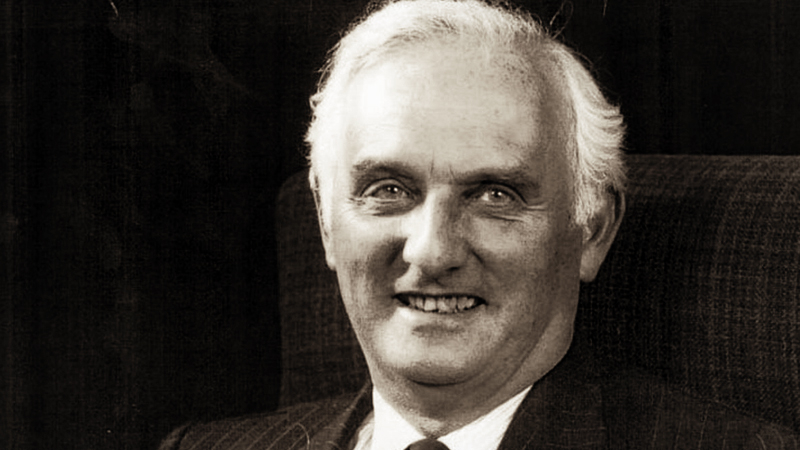
Jack Randall is pictured in 1991 with a model of a white shark at the Taronga Zoo in Sydney. MUST CREDIT: Photo courtesy of the Randall family

Jack Randall is pictured in 1991 with a model of a white shark at the Taronga Zoo in Sydney. MUST CREDIT: Photo courtesy of the Randall family
By Special to The Washington Post · Christie Wilcox · NATIONAL, SCIENCE-ENVIRONMENT, OBITUARIES, ANIMALS

Jack Randall, a distinguished ichthyologist and coral specialist who discovered and named more species of fish than anyone in history, died April 26 in his home in Kaneohe, Hawaii. He was 95.

His daughter Lori O’Hara said the cause was presumed to be complications from cancer.

Following the tradition of naturalists such as Carl Linnaeus and Charles Darwin, Dr. Randall spent much of his career classifying organisms, engaging in the laborious and tedious branch of science known as taxonomy.

Based for more than a half-century at the Bernice Pauahi Bishop history and science museum in Honolulu, he spent countless hours poring over the minutiae of fish specimens, from scale counts to body-part measurements, to find the minute details that distinguish different species.

By the time of his death, he had described and named more than 830 fish. That number will rise in the coming years as his colleagues finalize numerous papers still in the works. His well-earned nicknames were “Dr. Fish” or “the Fish Man.”

Melanie Ide, president and chief executive of the Bishop Museum, called Randall’s contributions immeasurable. Everything in biology, ecology and conservation – even the hunt for blockbuster pharmaceuticals hiding in plain sight in living organisms – all depends on knowing what organisms you’re looking at, she said.

“It’s the science upon which everything else is built,” Ide said. “Without the baseline fundamental units of data about life on the planet, in this case in the ocean, you can’t understand systems, and you can’t understand interactions, and you can’t understand impacts.”

Randall’s early National Science Foundation-funded work on diet and behavior in Atlantic reef fish – he studied the contents of their stomachs – proved essential to understanding how those ecosystems have changed over time. And his 1958 foundational paper on the causative agent behind ciguatera poisoning, a foodborne illness experienced by tens of thousands of people annually, has been cited hundreds of times by fellow scientists.

Randall published more than 900 papers, wrote more than two dozen books and book chapters and dozens of popular-science articles. He won the highest honors in his profession, including the International Coral Reef Society’s Darwin Medal.

Richard Pyle, a senior curator of ichthyology at the Bishop Museum, said Randall was a generous mentor and among the most prolific ichthyologists of all time. “He wasn’t in it for the glory. He wasn’t in it for the fame. He wasn’t in it for the recognition,” Pyle said. “I think that’s probably what sets him apart the most.”

It’s considered in poor taste for a taxonomist to name a species after themselves, so instead, the genus and species they choose either refer to traits of the organism or to people they think deserve the honor of a creature bearing their name. Because of his standing, Randall has no less than 60 species – and two genera – that reference him.

“Fish everywhere in the world know Jack as one of their own,” wrote Sylvia Earle, a preeminent marine biologist, on an online memorial to Randall.

John Ernest Randall Jr. was born in Los Angeles on May 22, 1924. His father, a contractor, hoped to encourage Jack to study architecture. But living near the ocean – and with a mother who took him fishing and with school visits to tide pools – he took an avid and early interest in exploring under the sea more than building on land.

After Army service stateside during World War II in the Medical Administrative Corps, he graduated with a bachelor’s degree in zoology from the University of California at Los Angeles in 1950.

The next year, he married Helen Au, and she became his partner in life and science, often helping him on expeditions and preparing manuscripts. In addition to his wife, survivors include two children, four grandchildren and two great-grandchildren.

In 1955, he received a doctorate in ichthyology from the University of Hawaii and held positions at the University of Miami and the University of Puerto Rico before returning to Hawaii in 1965. In 1967, he started working for the Bishop Museum and, though he officially retired in 2009, he continued to describe species as an emeritus senior ichthyologist.

At his death, he was completing a memoir tentatively titled “Fish & Ships: The Life and Discoveries of an Ichthyologist,” which included anecdotes about playing tennis with Emperor Akihito of Japan and scuba dives with novelist John Steinbeck.

Randall started diving years before the term “scuba” was coined, and dipped his long johns in latex to stay warm before the invention of neoprene wet suits.

He conducted his last dive in 2014 to celebrate his 90th birthday. At that point, he largely relied on a walker, as the nerves in his legs had begun to fail him. “I can swim better than I can walk,” he mused to Hakai Magazine in 2016.

Pandemic demands toll on familes of health-care providers #ศาสตร์เกษตรดินปุ๋ย

#ศาสตร์เกษตรดินปุ๋ย : ขอบคุณแหล่งข้อมูล : หนังสือพิมพ์ The Nation.

https://www.nationthailand.com/lifestyle/30386969?utm_source=category&utm_medium=internal_referral

Pandemic demands toll on familes of health-care providers

Apr 29. 2020
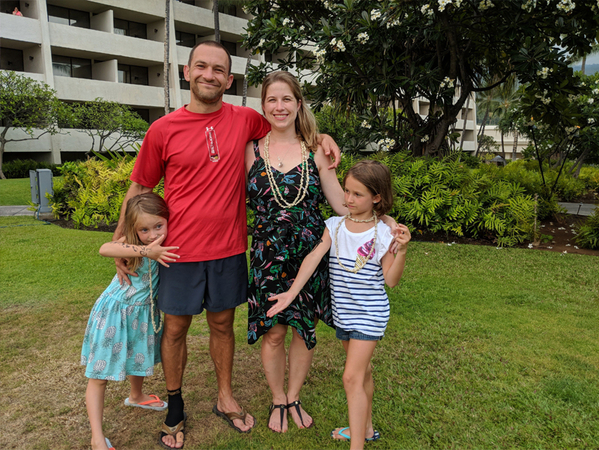
Leah Lujan hugs her daughter Tamina Tracy, 6. Lujan, 51, and her husband, Jimmy Tracy, 38, are both nurse practitioners who work with high-risk patients. MUST CREDIT: Washington Post photo by Salwan Georges

Leah Lujan hugs her daughter Tamina Tracy, 6. Lujan, 51, and her husband, Jimmy Tracy, 38, are both nurse practitioners who work with high-risk patients. MUST CREDIT: Washington Post photo by Salwan Georges
By The Washington Post · John Woodrow Cox · NATIONAL, FEATURES, HEALTH 

WASHINGTON – What the pandemic is doing to the children of doctors and nurses Children of doctors and nurses have kept anguished journals, written parents goodbye letters and created detailed plans in case they never see their moms or dads again

A month had passed since the first-grader last saw her dad, and her mom hadn’t stopped by in nearly a week, but now, from the kitchen, she heard a tapping on the front window. Tamina Tracy looked over, and when she saw the woman in a blue surgical mask standing outside the northwest Washington rowhouse, the girl’s hazel eyes widened.

“Mama! My mama is here!” said Tamina, 6, as she hopped into the air and sprinted barefoot toward the door, her pigtails bouncing.

Taylor Lindsey, about to be 11, plays with her cat, Bruno, outside of her home in Olympia, Wash.. Her mother, Amber Lindsey, works the night shift as an emergency room nurse at Capitol Medical Center. MUST CREDIT: Photo for The Washington Post photo by Daniel Berman

Taylor Lindsey, about to be 11, plays with her cat, Bruno, outside of her home in Olympia, Wash.. Her mother, Amber Lindsey, works the night shift as an emergency room nurse at Capitol Medical Center. MUST CREDIT: Photo for The Washington Post photo by Daniel Berman

She wasn’t expecting her mother, Leah Lujan, that April Saturday. When her parents, both nurse practitioners, started treating patients with a scary new virus, they’d sent Tamina to live with her cousins. Her dad, Jimmy Tracy, also left their home, moving into a relative’s empty apartment. Tamina didn’t know he’d developed a fever a few days later or that her parents feared he had the virus until his test came back negative, allowing her mother to visit the day before Easter.

Tamina, an only child, had struggled with the move, at times finding the separation unbearable, so they didn’t tell her Jimmy was sick. She understood it could happen, though. Before schools closed, a classmate explained that everyone who gets infected with the coronavirus dies. Then she overheard her parents talking about how they both expected to catch it, and she thought that meant they would die, too.

Tamina Tracy, 6, visits with her mother, Leah Lujan, who takes a shower, puts on clothes straight from the dryer and covers her face with a mask before seeing her daughter. MUST CREDIT: Washington Post photo by Salwan Georges

Tamina Tracy, 6, visits with her mother, Leah Lujan, who takes a shower, puts on clothes straight from the dryer and covers her face with a mask before seeing her daughter. MUST CREDIT: Washington Post photo by Salwan Georges

No, Leah told her daughter. That wasn’t true. Most people who get sick recover. But Leah didn’t lie, either. Some people, she acknowledged, do not make it.

That terrified Tamina, one of thousands of children across the country who have suddenly confronted the possibility that their parents’ jobs – to care for the ill – could cost them their lives. Already, more than 9,200 health-care workers have tested positive for covid-19, according to the Centers for Disease Control and Prevention. The illness has killed at least 27 of them, the CDC says, but the true number is much higher. National Nurses United found that more than 50 registered nurses, alone, have died.

Some health-care workers have moved away from their families, and many others have isolated in spare bedrooms or basements, trying to explain to their kids that they can no longer hug them because the consequences of even a single touch could be dire.

Most of all, parents have wrestled with how much to divulge, because what their children do and don’t know about the pandemic could consume them. In many cases, it already has: Kids have endured nightmares and recorded their anguish in journals, written parents goodbye letters and created detailed plans of what they’ll do in case they never see their mom or dad again.

Tamina’s anxiety seldom relented. Nearly every time her mother visited, the girl asked the same questions.

“When can I come home?”

“Why can’t daddy be here, too?”

“When is this going to be over?”

This time, though, Tamina was distracted.

“I brought you all kinds of stuff,” Leah said as she opened a shopping bag packed with toys and clothes.

Tamina pulled out her green Easter dress and decided she didn’t want to wait until the next day to wear it. She was excited for the holiday, but also worried. Tamina wondered whether the Easter Bunny would realize she wasn’t at home.

“Does he know that you guys work at a clinic so I have to live somewhere else?” she asked her mom.

That’s what her young life had become – glimpses of normalcy abruptly interrupted by reminders that nothing was normal. While Tamina picked through the bag, she spotted a bottle of hand sanitizer and immediately squirted a dollop on her hands, then insisted her mom do the same. Later, when she was zipping a toy boat across the red-brick porch, her 10-year-old cousin knocked a ball over the metal fence into a neighbor’s yard. Tamina stopped the boat and stared.

“Don’t catch anything over there,” she said.

Even the lightest moments were tinged with sorrow.

“I wanna dance,” she announced, yellow tulips blooming in pots all around her.

“Should we put music on?” Leah asked, and Tamina said she wanted to hear “Budapest.”

“Oh, Papa would be so happy,” Leah said, because that was one of Jimmy and Tamina’s favorite songs. Before all this, the two of them would play it in their house a few blocks away and shimmy together, hand in hand.

Now, Tamina danced alone.

On Easter, she put her green dress back on and hunted for eggs and ate the head off a chocolate rabbit. Tamina thought about her papa again, too, but still didn’t know he was sick.

That night, as she got ready for bed, he began feeling worse. Then his temperature spiked to 102.9. Then came a cough.

– – –

In the other Washington, 2,800 miles away, where covid-19 first exploded in the United States, Keis Alagba-Green knew all about what the virus could do to people, and that’s why the boy was still awake one evening early this month when his mom went into his bedroom to check on him.

Niran Alagba is a pediatrician in Silverdale, Washington, and her husband, Lawrence Green, an Army veteran, manages her clinic an hour’s drive from Seattle. Niran knew she’d treated patients who were infected, and so did her four children.

“What happens if you and daddy die?” Keis asked her as she lay next to him, two weeks before his 10th birthday.

At dinner soon after he posed the question, his parents answered it for him and his siblings. Their close friends, they explained, had agreed to care for the kids if Niran and Lawrence couldn’t. In the days that followed, each child processed the reality that their mom and dad might not survive in starkly different ways.

Third-grader Laila, quiet and matter-of-fact, seldom talked about it, while the 8-year-old’s oldest brother, Laith, 11, did all the time. An aspiring paleontologist and Lego devotee, Laith liked to plan. Right away, he wanted to know how their new life would work.

The family’s friends also have four kids and they don’t live in a home big enough for four more. He decided that the other family should move into his house, then he mapped out where each kid would sleep.

Preparing for his parents’ absence made Laith sad – in a nightmare, he saw them laying in hospital beds – but the fifth-grader believed it was his responsibility to consider the “hardship things” his siblings wanted to avoid.

Those things troubled Keis the most. One afternoon in early April, the two boys contemplated what the virus might do in the coming months.

“It could clear up over the summer,” Laith said. “It could just keep going on -.”

“And kill everybody,” Keis interjected.

“No, not kill everybody, Keis. It wouldn’t kill everybody.”

“Yeah, but it could kill a lot of people.”

“It could kill a lot of people,” Laith conceded.

Keis could never hide how he felt. He hated visiting the hospital when a heart attack took his grandfather’s life two years earlier, and he hated the idea of his parents ending up in one now.

He was convinced that both of them would eventually contract the virus, but he also knew his mom had access to hydroxychloroquine, the unproven drug President Trump touted as a potential cure. Niran explained to her son that the medication might not help, but Keis fixated on it anyway.

He needed to believe it would work, especially after the bad thoughts bubbled at night, when he would read books, concoct Dungeons & Dragons strategies, go give his parents’ hugs – anything not to obsess over losing them.

But his youngest sibling, Zade, who is 6, had decided he should do the opposite.

“I don’t want to stop thinking about them dying,” he explained, because Zade believed that if he forced himself to imagine his mom and dad being gone, he wouldn’t forget them when they were.

– – –

Taylor Lindsey didn’t know when she would see her mother again, so the fifth-grader sat in the pink chair at her desk and picked up a pencil. To prepare for a potential surge of infected patients, Amber Lindsey, a registered nurse, was about to embark on a 10-day stint of overnight shifts at her community hospital in Olympia, Washinbgton, an hour’s drive south of Silverdale. That meant Taylor, whose parents were divorced, would head back to her dad’s place.

“Dear Mom, I love you so much I have no idea what I would do with out you I would never forget you,” Taylor, 10, jotted on a sheet of paper. “Stay safe don’t get sick I be thinking about you everyday!”

She tucked the letter under her mom’s pillow, and soon, they said goodbye.

Taylor’s mother is her closest friend. They tended to their chickens and painted canvases in acrylic and kayaked Puget Sound, always as a pair. They traveled together every summer, hiking in central Oregon’s forest, sunning on Southern California’s beaches. Before the pandemic, each had given the other a beloved gift: for Amber, it was a heart-shaped necklace, inscribed with “BEST MOM EVER,” that she wore to work every day; for Taylor, a teddy bear dressed in pink scrubs that, when she squeezed its paw, played “I’ll Be There.”

On March 18, the night her mother returned to work, Taylor added an entry to her journal.

“Day 2,” it read at the top, next to “CoronaVirus.” “I really cried because I dont want her to get the Virus… I dont want her to get sick and be home alone. I cant be without her.”

The pandemic has instilled a sense of helplessness in children whose parents work in hospitals and clinics, but that feeling is especially acute for those like Taylor, the only child of a single woman living by herself while she treats sick patients. Her worries are not unique. Three-quarters of those 9,200 covid-positive health-care workers identified by the CDC were women, some undoubtedly raising children alone.

For Lexa Sterritt, 12, what might happen if her mother got sick was so unnerving that she tried never to think about it.

She and Elise Sterritt moved about six months ago from Chicago to Las Vegas, where the nurse practitioner took a job at a primary-care clinic. In March, the single mother developed a cough a few days after being exposed to two people who were later diagnosed with covid-19. Though she eventually tested negative, the episode shook her and Lexa.

What if Elise did get sick, and what if she was hospitalized? Would Lexa have to fly back to stay with relatives in Chicago, 1,700 miles away? Would she have to leave her mother?

Lexa didn’t let herself ask any of those questions aloud, and when Elise confided she might have to quit her job because the answers were too painful, her daughter assured her she understood.

Daniel Shum tried to understand when his mother explained things, too, but he was only 6.

“Mama has to take care of very sick people,” Lila Abassi, a physician, told her son on the day in March she dropped him off at her ex-husband’s place across town in New York City. She didn’t come back for Daniel the next week or the next or the one after that.

Daniel is smart. He reads at a fifth-grade level and can describe the differences among solids, gases and liquids in detail. He also wants to be a doctor, the kind “who save lives when people get very big boo-boos and is about to pass away.”

He grasped the immense risk his mother was taking, but Lila spared him from the worst of it – that nearly all of the patients at Mount Sinai Hospital in Manhattan, where she works, were coronavirus cases and that each time she admitted somebody new from the emergency room, Lila wondered whether this would be the one who infected her.

Daniel tried not to blame her for the separation during their FaceTime calls, but he couldn’t always help it. In his saddest moments, he closed his eyes and pictured the New Year’s Eve ball in Times Square.

After nearly a month apart, Lila told Daniel she was going to pick him up. The news thrilled him, at first, but then he overheard an argument between his mom and dad, who contended it was too dangerous for Daniel to see her. Lila insisted it wasn’t and that she’d taken every precaution and shown no symptoms. Eventually, her ex-husband relented.

When at last she picked Daniel up and they returned to her East Harlem apartment, he followed her everywhere, even when she took out the trash. At night, as he listened to his Harry Potter audiobooks, he fell asleep with both arms wrapped around her neck.

He was proud of his mom, but sometimes, Daniel wished he didn’t have a reason to be.

“I think why,” he said. “I think why did she pick the job to be a doctor?”

– – –

“Is it OK if I hold your hand?” Tamina Tracy asked her mother on a mild, spring afternoon.

It was the first time they had seen each other in person since Tamina moved in with her cousins two weeks earlier. They decided to walk to Rock Creek Park, one of their favorite places. Tamina took her shoes off and waded in the cool water. She ate a Lunchable with two Oreos. She held her mom’s hand.

Tamina knew her parents were doing something important. Leah and Jimmy, who’d volunteered together in Haiti after the 2010 earthquake, both spoke Spanish and worked in District of Columbia clinics that treat many immigrants who lack insurance and are at a high risk of contracting the coronavirus. Tamina often talked about wanting to help people, like her parents did, and now, they told her, she could. Her job was to stay healthy and not get anyone else sick, and to do that, she couldn’t live at home.

At her aunt and uncle’s house, she reveled in her role as the baby sister to her four cousins – all girls, all older – and embraced her newly assigned chores, aside from cleaning up after Crespa, the dog. Her aunt, Julie Lujan, set up a mattress in the living room and built a fort of sheets over it. Tamina found a strung-together wad of faux dogwood flowers and decorated the wall next to her bed with them.

This wasn’t home, though, and she never forgot that.

Her mother painted a 12-by-8-inch portrait of the two of them and gave it to Tamina to keep while they were apart. She would lug it all over the house, then sit and stare at it.

She saw her dad only through FaceTime calls, but he’d also begun to write her letters, telling his daughter that she made him proud and recounting the parts of his days that wouldn’t frighten her.

“So she doesn’t forget me,” said Jimmy, who wrote them even after the chills took hold and he couldn’t breathe for more than a few seconds without coughing. He ended each note with a request that his daughter send one back, and she did.

“I love you so MUCH,” she wrote him.

But she sometimes felt abandoned by her father and mother, and would refuse to accept the arrangement, throwing tantrums, demanding that things return to normal.

Once, she threatened to run away to her house and sounded so serious that her aunt slept that evening with her back against the front door.

Then came the afternoon of her walk through the park with her mom.

When they got back and Leah readied to leave, Tamina unraveled. She grabbed onto her mom and tried to wrap a hair tie around her wrist, imagining that it would keep her there forever. Tamina begged her to stay and screamed at her aunt when she pulled her away.

“I hate you,” Tamina said, weeping.

She looked into her mother’s eyes, peering back from above the surgical mask.

“Why aren’t you crying?” Tamina asked, and as her mother walked away, she did.

Leah returned the following day, because she’d promised to, but the goodbye was no easier. After that, they made a deal: When Leah left, Tamina could call her on FaceTime and stay on until she fell asleep.

That’s what they did at the end of the next visit, a week before Easter, and as Tamina lay in bed, inside her fort, she listened to her mom name the many people who loved her: her grandparents, her cousins, her aunts, her uncles, her Mama, her Papa.

Before she finished, Tamina’s eyes closed.

– – –

Tamina didn’t want to be mad at her mom, just as Daniel, the 6-year-old in New York, didn’t want to be mad at his. But as the pandemic upends thousands of doctors’ and nurses’ lives, it’s left many of their children grappling with a rage they’ve never shown before and that their parents don’t know how to manage.

The bitterness in Sophie Babb, 7, emerged in ways her mother never expected.

Megan, a physician who treats infants in Folsom, California, was seldom exposed to infected patients – and told Sophie that – but the workdays had gotten longer, mostly because of her push for new health-care reforms in response to the outbreak.

It wasn’t the first time Megan’s job had left her with little time for her daughter. Only now, as Sophie became increasingly preoccupied with the virus, had she lashed out over her mom’s absence. She would ignore Megan when she came home late at night and snap at her when she apologized for going in early – “I know, mom, you’re sorry.”

For Gabriel Lipkin-Moore, 9, the resentment began to build in early March, when he was on vacation in Florida and his parents told him they couldn’t go to the beach anymore. On the trip back to Lancaster, Pennsylvania, his mom, Ericka Powell, the medical director of an emergency department, made him wear a mask on the plane, even though no one else was.

“They don’t understand yet,” she told him, but neither did he.

Like most kids, he sulked because he wasn’t allowed to see his classmates or go outside as much, but then his parents delivered far worse news: His mother couldn’t touch him anymore. He would sleep in his dad’s room, and she would move into Gabriel’s, which had its own shower.

After she came home from the hospital one day that first week, he walked up to her. His mother stopped him.

“I need you to stay six feet away,” she said.

Gabriel tried to distract himself, playing video games and practicing violin, but he couldn’t shake his anger. At the heart of it, his parents knew, was fear – fear for his mom, whose hospital was quickly filling with infected patients, and for his father, who at 65, Gabriel learned, was much more likely than younger people to die if he caught the virus.

His frustration simmered until one day when his grandmother stopped by to drop something off and he learned that he couldn’t see her either. Gabriel obeyed, then later exploded, yelling at his mother that he couldn’t live this way. He needed her.

“I would rather die than not hug you, mom,” he said, and at last, she took him into her arms.

– – –

Walt Awdish wasn’t angry, and the third-grader tried not to feel afraid either, though he couldn’t always help that.

Usually, the more he grasped something, the better he felt, so Walt – a straight-A student who called his parents by their first names and repeated Simpsons jokes few 9-year-olds would get – found out all he could about the coronavirus.

He learned that it started in China, ravaged Italy and hit his hometown, Detroit, harder than almost anywhere in the country outside New York. He learned how viruses spread when his mom, Rana, a critical-care physician, used tiny foam balls floating in slime to illustrate. He learned that nearly every patient where she worked, Henry Ford Hospital, was infected, and that helped him understand why his parents converted the laundry room into an off-limits space, marked by orange tape on the floor, for her to change clothes when she got home.

Not everything he discovered made him feel better, though. His mom told him she wore protective gear, but he knew it didn’t always make a difference. More than 700 people who worked for the Henry Ford Health System had tested positive.

He also suspected that on the days she came home with puffy red eyes, it meant she had been crying, and that meant she had seen something sad at the hospital.

Walt didn’t want to imagine her getting sick, but he needed to find out what could happen if she did. That led him back to his computer.

He searched fatality rates on Google and clicked on a chart. In his mother’s age group, 40 to 49, he saw 0.4%.

“Out of like a hundred, like that’s – that’s like very small,” he explained. “It would actually be four-tenths of a person for a death rate out of 100 people.”

Walt decided that was good news.

In Tucson, Arizona, Kaya Dreifuss found her own way to cope.

The 10-year-old’s father, Brad, an emergency medicine physician, had launched an effort to aid people on the front lines in getting mental health support and finding comfortable housing away from their families. To help, Kaya, who’d just learned to sew, made fabric pouches – more than a dozen – and packed each with dried lavender. She gave them to her dad to sell so he could raise money for his project.

“Keep doing it,” he encouraged, because he knew that his daughter helping him would help her just as much.

She did keep sewing, and the work made her feel good, but the outbreak in Arizona soon intensified. Brad decided that he, too, needed to move away from his wife and daughter.

After he packed his car, Kaya, as usual, squeezed between her parents and pulled them toward her in a tight embrace, the “meat between the bread.”

Then she watched her father drive away.

– – –

Tamina’s father still hadn’t come to see her, and she still didn’t know why.

By then, Jimmy had taken a second test for the coronavirus. This time it came back positive. The week after Easter, though, his fever broke and his cough gradually waned. Tamina’s parents didn’t assume he was clear of all danger. Covid sometimes subsided only to roar back, sending people who thought they’d recovered to intensive care. But Jimmy and Leah also worried their daughter would somehow find out, on her own, about his illness. If she overheard a cousin mention it, would she melt down again or, worse, feel betrayed?

They decided it was time to tell her the truth.

On a walk with her mom, Jimmy called over FaceTime. Leah handed her daughter the phone, and she looked at her dad’s face on the screen. Jimmy, by then able to get through a few sentences without coughing, explained that he’d been sick and, after a test, learned he had the coronavirus.

“Huh?” she replied, her dark eyebrows raised.

Everything would be OK, her dad continued. He was already feeling better. They still couldn’t see each other, though, because he might be contagious.

“Okay,” Tamina responded, and she didn’t say much else.

The next day, Leah took her daughter over to his apartment, where they stood on the back deck and peered inside. Tamina, who wore a colorful, miniature mask, brought him his favorite Girl Scout cookies, Samoas, the ones she couldn’t pronounce.

She was nervous, her mother could tell. When Jimmy came to the window and started to open it, Tamina backed away.

He shut the window.

They spoke for a few minutes on speakerphone, but Tamina didn’t talk much. At the end, as they left, she looked back and blew him a kiss.

That afternoon, at her aunt’s house, Tamina was quiet. Out on the front porch, she sat on her mom’s lap. Leah wondered what she was thinking.

Would her daughter want to know why they didn’t tell her sooner? Whether she should be afraid of her dad? If he was going to die?

But Tamina didn’t ask any of that. She had only one question.

When could she give Papa a hug?
Three hours longer, the pandemic workday has obliterated work-life balance #ศาสตร์เกษตรดินปุ๋ย

#ศาสตร์เกษตรดินปุ๋ย : ขอบคุณแหล่งข้อมูล : หนังสือพิมพ์ The Nation.

https://www.nationthailand.com/lifestyle/30386821?utm_source=category&utm_medium=internal_referral

Three hours longer, the pandemic workday has obliterated work-life balance

Apr 27. 2020
File Photo by Syndication Washington Post

File Photo by Syndication Washington Post
By Syndication Washington Post, Bloomberg · Michelle Davis, Jeff Green · BUSINESS, PERSONAL-FINANCE, CAREER-WORKPLACE 

An executive at JPMorgan Chase gets unapologetic messages from colleagues on nights and weekends, including a notably demanding one on Easter Sunday. A web designer whose bedroom doubles as an office has to set an alarm to remind himself to eat during his non-stop workday. At Intel Corp., a vice president with four kids logs 13-hour days while attempting to juggle her parenting duties and her job.

Six weeks into a nationwide work-from-home experiment with no end in sight, whatever boundaries remained between work and life have almost entirely disappeared.

With many living a few steps from their offices, America’s always-on work culture has reached new heights. The 9-to-5 workday, or any semblance of it, seems like a relic of a bygone era. Long gone are the regretful formalities for calling or emailing at inappropriate times. Burnt-out employees feel like they have even less free time than when they wasted hours commuting.

“I honest to goodness am wearing the exact same outfit that I started with on Monday,” Rachel Mushahwar, the vice president and general manager of U.S. sales and marketing at Intel, said in an interview last Thursday. “I think I’ve showered three times.”

Some predicted the great work-from-home migration of the pandemic would usher-in a new age of flexible work arrangements. As of 2017 only 3% of full-time workers in the U.S. said they “primarily” worked out of a home office in a Census Bureau survey. Then millions sheltered at home for what was originally thought to be a temporary hiatus. Many mapped out plans to fill time they would’ve spent commuting to take up new hobbies, like learning a foreign language, baking or getting into the best shape of their lives. It looked like the beginnings of a telecommuting revolution.

A month and a half later, people are overworked, stressed, and eager to get back to the office. In the U.S., homebound employees are logging three hours more per day on the job than before city and state-wide lockdowns, according to data from NordVPN, which tracks when users connect and disconnect from its service. Out of all countries that NordVPN tracks, U.S. workers had tacked on the most hours. In France, Spain, and the U.K. the day has stretched an additional two hours, NordVPN’s data found. Italy saw no change at all.

The contours of the workday have changed, too. Without commutes, wake-up times have shifted later, NordVPN found, but peak email time has crept up an hour to 9 a.m., according to data from email client Superhuman. Employees are also logging back in late at night. Surfshark, another VPN provider, has seen spikes in usage from midnight to 3 a.m. that were not present before the covid-19 outbreak.

Huda Idrees, the chief executive officer of Dot Health, a Toronto-based technology startup, confirms her 15 employees are working, on average, 12-hour days, up from 9 hours pre-pandemic. “We’re at our computers very early because there’s no commute time,” she said. “And because no one is going out in the evenings, we’re also always there.”

One big problem is there’s no escape. With nothing much to do and nowhere to go, people feel like they have no legitimate excuse for being unavailable. One JPMorgan employee interrupted his morning shower to join an impromptu meeting after seeing a message from a colleague on his Apple Watch. By the time he dried off and logged back on, he was five minutes late.

(Some people spoke on the condition of anonymity because they didn’t want to be seen as complaining about telecommuting while millions of Americans lose their jobs or risk their lives on the front lines.)

Then there’s the fact that people have turned their living spaces into makeshift offices, making it nearly impossible to disconnect. Having an extra room helps, but not much, said John Foster, who has been home in Tuscumbia, Alabama, since mid-March doing financial compliance for a manufacturing company. His workspace is right next to the living room. “You walk by 20 times a day” he said. “Every time you pass there, you’re not escaping work.”

At this point, he even misses his commute. “Usually you have that downtime to drive home or to kind of get ramped up for the day,” he said.

Others say they feel pressure from bosses to prove they’re working, especially as the economy takes a hit and the prospect of layoffs looms. At Constellation Software Inc. in Toronto, more than 100 employees got an email from a superior that said: “Don’t get distracted because you are on your own. It is easy to get into bad habits, the lure of the internet, the endless box sets. Just think, would I do this in the office? If it’s a no, don’t do it,” read the email reviewed by Bloomberg. “You know we will be watching closely,” the same manager wrote in an earlier message. A Constellation Software representative didn’t return phone and email messages seeking comment.

In reality, despite stereotypes that telecommuting breeds slacking, early data suggest productivity is up, at least at some companies. “We’ve seen, anecdotally, some increases in productivity for some of our developers as they’re hunkered and focused at home,” Bank of New York Mellon Corp. Chief Financial Officer Mike Santomassimo said.

At JPMorgan, where 70% of the bank’s quarter-million employees are working remotely, productivity has gone up for certain types of jobs as workers spend less time going to meetings, attending town halls or completing training sessions, according to a person with knowledge of the matter. A JPMorgan spokesperson declined to comment.

An internal case study at Publicis Sapient, an IT consulting company that tracked work by 410 employees on roughly 40 tech-focused projects for a large New York-based investment bank also found a productivity bump. Between March 16 and April 10, tasks were completed at either the same rate or faster than those before the crisis.

“When you’re virtual you’re less distracted-nobody’s disappearing for coffee for a while or going and disappearing to socialize,” Dave Donovan, who leads the Americas global financial-services practice for Publicis Sapient, said. “Clients are more reachable too.” Given the early results, Donovan thinks remote work is here to stay. “Once the genie’s out of the bottle it’s not going to go back.”

The gains haven’t come without costs. By early April, about 45% of workers said they were burned out, according to a survey of 1,001 U.S. employees by Eagle Hill Consulting. Almost half attributed the mental toll to an increased workload, the challenge of juggling personal and professional life, and a lack of communication and support from their employer. Maintaining employee morale has proved difficult, said two-thirds of human resources professionals surveyed by the Society for Human Resource Management earlier this month.

Those crammed into smaller quarters are also at a higher risk of developing high blood pressure than colleagues with extra rooms, according to preliminary research by Tessa West, an associate professor of psychology at New York University.

Parents with kids at home are stretched particularly thin, as they squeeze work in between child-care duties, which now include virtual learning sessions. In two-thirds of married couples with children in the U.S., both parents work, leaving nobody available to watch the kids while the other partner is on the job.

For Mushahwar, the Intel executive, there’s no winning. She feels guilty if she neglects her kids and guilty if she neglects her work, she said. “I burned the bacon between conference calls. That was the morning,” said Mushahwar, who’s caring for four children, ages 8 to 14, along with doing a full-time job.A 31-year-old web designer at a medium-sized software company said he’s starting to lose steam working 12-hour days from his tiny bedroom to meet demands of clients and supervisors, who expect him to immediately respond to phone calls and emails, even on the weekends.

His apartment doesn’t doesn’t have an office and his roommates, a woman and her small child, play and watch TV in the living room. The setup has made it impossible to disconnect from work, but he feels pressure to work harder than normal. Some of his colleagues have already been laid off.

Recognizing productivity gains may be short lived if workers burn out, some employers are attempting to help people cope. Goldman Sachs gave staff an extra 10 days of family leave; Microsoft is offering its workers an additional 12 weeks parental leave. At Starbucks Corp., employees now get 20 free therapy sessions. Salesforce.com Inc. is running virtual meditation and workouts.

But there’s only so much companies can do with schools, daycares, and offices still closed for what seems like the indefinite future. Even the ambitious plan outlined by President Donald Trump for opening up the economy suggests students wouldn’t return to schools for weeks.

At this point, even kids are wondering when things will go back to the way the were. Last week, Mushahwar’s 8-year-old asked when this was all going to end. “I just sat at the breakfast table,” the Intel executive said. “I don’t have a good answer for him.”

‘A heart of gold:’ First California police officer killed by covid-19 inspires kindness #ศาสตร์เกษตรดินปุ๋ย

#ศาสตร์เกษตรดินปุ๋ย : ขอบคุณแหล่งข้อมูล : หนังสือพิมพ์ The Nation.

https://www.nationthailand.com/lifestyle/30386511?utm_source=category&utm_medium=internal_referral

‘A heart of gold:’ First California police officer killed by covid-19 inspires kindness

Apr 21. 2020
Santa Rosa Detective Marylou Armer, 43, died on March 31 from complications of covid-19, the disease caused by the coronavirus. She was the first police officer in California to die of the virus. (MUST CREDIT: Handout photo by Mari Lau)

Santa Rosa Detective Marylou Armer, 43, died on March 31 from complications of covid-19, the disease caused by the coronavirus. She was the first police officer in California to die of the virus. (MUST CREDIT: Handout photo by Mari Lau)
By  The Washington Post · Meryl Kornfield · NATIONAL, HEALTH, COURTSLAW 

When Marylou Armer saw a traumatized child, small and scared, without hesitation, she bent down on her hands and knees.

The child had allegedly been sexually assaulted, and Armer, a career police detective in Santa Rosa, California, had been called to investigate. Slowly, she collected her interview while still providing needed emotional support. Once she finished, she talked with the child’s worried parents, explaining the excruciating situation and assuring them on how they could help.

Christine Castillo, who heads Verity, a Santa Rosa-based nonprofit that represents survivors of sexual assault and abuse, recalls the difficult scene vividly when she remembers Armer.

“That’s how she was with survivors,” Castillo said. “That’s how she was with the world.”

Armer, 43, died on March 31 from complications of the novel coronavirus, the first California police officer to lose their life to the virus. Family, friends, colleagues and victims’ advocates alike have remembered Armer’s thoughtfulness for others. Since Armer died, she’s inspired others to carry on her selflessness.

For instance, knowing that Armer was on duty up until the time she became sick, Mari Lau, her older sister, has purchased blue masks for nearly every officer in the Santa Rosa Police Department in a tribute to her sister. Her friend and fellow officer Stephen Bussell started a fundraiser through the professional organization Peace Officers Research Association of California that has raised more than $62,400 for her family. A California woman read in the local newspaper that Armer wasn’t immediately tested for the virus and started a petition to demand testing for first responders. More than 56,000 people have signed it.

“She would be so happy to hear that,” Lau said. “I just wish that was the case prior to her having to lose her life over it.”

Armer, a 20-year veteran of the Santa Rosa Police Department, asked to be tested for the coronavirus but was denied three times, her sister said. She first complained of flu-like symptoms, including fever, body aches and chills, around March 9, but wasn’t given a test until March 23. Before getting sick, she was working, responding to crime scenes and helping patrol.

In a statement, her hospital, Kaiser Permanente’s Vallejo Medical Center, confirmed that Armer was not immediately tested and offered condolences to her family and friends.

“We closely follow public health authority testing rules, as we did in this case, which have been based on very limited availability of tests,” Kaiser Permanente spokesman Marc Brown told The Washington Post. “Those rules for testing have evolved over the past several weeks, whereas a month ago, testing was under the exclusive authority of the public health department and limited to those with symptoms and who had primary contact with a COVID-positive person.”

When Armer was finally told she would be tested, she went to the hospital and was admitted by staff with a high fever. The last time she texted her sister was to tell her she was going to be intubated, Lau said.

Hours after Armer was put under, her test results came back positive for the virus.

While Armer was under a medically induced coma to let her lungs recuperate, her family sent her voice recordings, and it somewhat worked — Armer’s oxygen levels improved, and her heartbeat sped up. But the changes did not last.

She died on March 31. It was a shock to her family, who thought Armer — a young police officer with no underlying health conditions — would recover.

“It doesn’t pick and choose its victims,” Lau said of the coronavirus. “It just takes whoever.”

Lau said her sister had a lot to look forward to. Armer, her husband and her teenage stepdaughter had moved into a new home a year ago. She was busier at work.

“She had so many more years to build a life in her new home,” Lau said, adding that she’s grateful that money raised by the fundraiser will go to Armer’s husband and stepdaughter.

Armer was also honored on April 3 by a mile-long procession of law enforcement vehicles with their lights flashing, which drove to the hospital where Armer died. California Gov. Gavin Newsom’s office called for flags at the Capitol to be flown at half-staff. The police department encouraged the community to wear blue for one day. Santa Rosa’s Courthouse Square was lit up in blue lights for a night.

No one was told in advance about the procession to avoid crowds from gathering, but people watched online, including Castillo, the victims’ advocate. Castillo cried as the cars inched forward in memoriam of Armer, who worked in the same building as Castillo and often visited her office to meet with victims or advocates.

When the office learned of her death, some Verity employees left wildflowers at the closed building, Castillo said. Instead of a planned staff meeting, a Zoom call turned into a conversation about Armer and their appreciation for her thoughtfulness as a detective.

Before Armer became a detective for the department’s Domestic Violence Sexual Assault Team, she became interested in police work when she was young: in high school as an Explorer for the National City Police Department. After she graduated, she was hired as a field evidence technician and rose to a sworn police officer for Santa Rosa in 2008.

Her detective job is one of the most difficult positions on the force, Stephen Bussell, a fellow Santa Rosa police officer and friend of Armer, said.

“You’re dealing with some of the most sensitive and vulnerable groups of victims, when it comes to sexual assault and domestic violence,” Bussell said. “I think those personal traits that she had obviously served her well as a professional, but also she reached across the aisle, put herself in other people’s shoes, established empathy in both realms, personal and professional.”

Despite common workplace cliques, Armer made friends with everyone, Bussell said.

Ernesto Olivares, a retired SRPD lieutenant and Santa Rosa City Council member, remembered relating to how much Armer enjoyed sharing her family’s recipe of lumpia, a Filipino spring roll, during office potlucks. It reminded Olivares of his family’s tamales.

When Olivares saw Armer’s name on his daily roster, he felt encouraged, he said.

“She just had a presence in the room that made you feel good,” he said.

Olivares left the police department, but when he heard of Armer’s death, he said it felt like losing a family member. She serves as a reminder of how vulnerable any police officer can be, Olivares said. Nine other employees of the police department tested positive, but the national scope of how the virus has impacted first responders isn’t fully known.

Lau, her sister, said Armer first became interested in becoming a police officer because she thought she could help others on the job.

“She went above and beyond that these families and kids were properly taken care of,” Lau said.

“That was her,” Lau said of her sister, “she had a heart of gold.”

John Houghton, renowned climate scientist who led IPCC reports, dies of coronavirus at 88 #ศาสตร์เกษตรดินปุ๋ย

#ศาสตร์เกษตรดินปุ๋ย : ขอบคุณแหล่งข้อมูล : หนังสือพิมพ์ The Nation.

https://www.nationthailand.com/lifestyle/30386447?utm_source=category&utm_medium=internal_referral

John Houghton, renowned climate scientist who led IPCC reports, dies of coronavirus at 88

Apr 21. 2020
By The Washington Post · Andrew Freedman · NATIONAL, SCIENCE-ENVIRONMENT, OBITUARIES 

John Houghton, a Welsh atmospheric physicist who bridged the science, policy and religious communities and served as lead editor of groundbreaking studies for the United Nations’ climate science advisory group when it won the Nobel Peace Prize in 2007, died April 15 in Wales. He was 88.

The cause was suspected complications from covid-19, the disease caused by the novel coronavirus, his granddaughter Hannah Malcolm said on Twitter.

Houghton was among the most influential early leaders of the U.N.’s Intergovernmental Panel on Climate Change (IPCC), which was set up in 1988 to advise policymakers on the science of global climate change. He was the chief editor for the IPCC’s first three reports and chaired or co-chaired the panel’s scientific assessment committee as well.

The first IPCC report, released in 1990, helped spur world leaders to convene the Rio Earth Summit two years later. At that landmark gathering, virtually all nations committed to the U.N. Framework Convention on Climate Change (UNFCCC), an ambitious treaty requiring countries to prevent “dangerous interference” with the global climate. Each round of annual U.N. climate negotiations since have taken place under the auspices of the UNFCCC.

The second IPCC report in 1995 informed negotiators of the Kyoto Protocol, an agreement that forced developed nations to commit to binding greenhouse gas emissions limits, while developing countries took other steps.

The third IPCC report, published in 2001, for the first time attributed “most of the observed warming over the last 50 years” to the human-caused buildup of greenhouse gases in the air. It also documented rising seas, melting glaciers and other signs of a rapidly warming planet.

In 2007, Houghton was among the IPCC scientists who collected the Nobel Peace Prize in Oslo on behalf of the organization, which shared the award that year with former vice president Al Gore “for their efforts to build up and disseminate greater knowledge about man-made climate change, and to lay the foundations for the measures that are needed to counteract such change.”

Houghton was also the director general and chief executive of the U.K. Meteorological Office from 1983 to 1991 and established the organization’s Hadley Centre for Climate Science and Services, which is now one of the world’s foremost research organizations on climate science.

His work on climate research began in the 1960s when the focus, amid the Cold War, was on studying potential changes in the atmosphere in the event of nuclear fallout. At the University of Oxford, he conducted research into the temperature structure and composition of the atmosphere using NASA’s Nimbus satellites.

By the 1980s, Houghton was on the vanguard of studying the alarming levels of carbon dioxide in the atmosphere. He joined the nascent IPCC and tried to convince policymakers of the existential threat of climate change. “In our first IPCC report,” he told the South Wales Echo, “it became very clear to us that there was some real danger ahead, without being able to spell it out as clearly as we can now.”

His argument was scientific, but he imbued it with the moral imperative and obligation of his Christian faith.

In particular, he expressed a deep concern for how the “grave and imminent danger” of the climate crisis would affect tens of millions of vulnerable people in developing nations. “As a Christian I feel we have a responsibility to love our neighbors,” he often said, “and that doesn’t just mean our neighbors next door. It means our poorer neighbors in the poorer parts of the world.”

“The climate is changing faster than it has changed for possibly 10,000 years,” he told the Irish News in 2007. “Adapting to that change is going to be difficult for us as humans. Sea levels are rising and this century will displace 10 million people in Bangladesh and 25 million in south China. Where are these people going to go?”

John Theodore Houghton was born in Dyserth, Wales, on Dec. 30, 1931. He won a scholarship at 16 to Oxford, where he studied physics at Jesus College. He received a bachelor’s degree in 1951 and a doctorate in 1955 and went on to become a professor of atmospheric physics at Oxford.

In 1972, Houghton was elected a fellow of the Royal Society, the world’s oldest continuous scientific society. He was knighted by Queen Elizabeth II in 1991, won the Royal Astronomical Society’s Gold Medal in 1995 and was honored with the Japan Prize in 2006.

As the science on human-caused climate change became clearer, Houghton’s warnings about its consequences grew more urgent. In 2003 he wrote that climate change constituted “a weapon of mass destruction.”

Houghton wrote the book “Global Warming: The Complete Briefing” (1994), now in its fourth edition. He was the author of widely used atmospheric physics textbooks as well as two books on science and religion. He also published a memoir, “In the Eye of the Storm” (2013).

His first wife, Margaret Portman, died in 1986. Two years later, he married Sheila Thompson. In addition to his wife, survivors include two children from his first marriage and seven grandchildren.

Bob Watson, a former chairman of the IPCC and chief environmental science adviser to the British prime minister, said Houghton was a rare breed of scientist who had “incredible credibility within the science community and within the policy community.” His outreach to the religious community, Watson said in an interview, made him especially unusual.

In 1997, Houghton helped form the John Ray Initiative, an educational charity focused on the intersection of science, the environment and Christianity.

“I think it’s a very exciting thing to put scientific knowledge alongside religious beliefs,” he told the Western Mail in 2007. “The biggest thing that can ever happen to anybody is to get a relationship with the one who has created the universe. . . . In the great scientific awakening of 300 years ago with people like Sir Isaac Newton, Robert Boyle and Sir Christopher Wren and others who used to meet and talk about science in that great time – they were nearly all Christians.”

“Why were they doing their science?” he continued. “They were doing their science to explore what God has done. They said quite openly, ‘We’re doing this for the glory of God.’ ”

Bennie Adkins, who received Medal of Honor for Vietnam War battle, dies at 86 of coronavirus #ศาสตร์เกษตรดินปุ๋ย

#ศาสตร์เกษตรดินปุ๋ย : ขอบคุณแหล่งข้อมูล : หนังสือพิมพ์ The Nation.

https://www.nationthailand.com/lifestyle/30386370?utm_source=category&utm_medium=internal_referral

Bennie Adkins, who received Medal of Honor for Vietnam War battle, dies at 86 of coronavirus

Apr 19. 2020
By  The Washington Post · Adam Bernstein · NATIONAL, OBITUARIES 

Bennie Adkins, a farmer’s son eager to see the world beyond Oklahoma, had quit college twice and was facing a future either as a fry cook or tilling the land. It was peacetime, he recalled, and he was happy to be drafted in 1956 because it broadened his prospects.

He was initially assigned as a clerk to a garrison unit in West Germany. The job, he recalled, was total boredom, except for the day when he fingerprinted a newly arrived soldier named Elvis Presley. But even that was a letdown. “To be honest,” he wrote in a memoir, “I was not really a fan of Elvis’s music.”

When he re-enlisted, Adkins sought a unit that was “a little more active.” He volunteered for Special Forces training in 1961, and he was deployed to Vietnam as a Green Beret three times over the next decade.

Adkins’ second tour, which took him to the steep, jungle-covered hills of the A Shau Valley in 1966, proved particularly harrowing, with punishing enemy fire and an encounter with a hungry tiger. Forty-eight years later, he received the Medal of Honor, the nation’s highest military decoration, for what the citation described as “extraordinary heroism and selflessness above and beyond the call of duty.”

“During the 38-hour battle and 48-hours of escape and evasion,” the citation read, “Adkins fought with mortars, machine guns, recoilless rifles, small arms and hand grenades, killing an estimated 135 to 175 of the enemy and sustaining 18 different wounds.”

He died April 17 at 86 after being hospitalized in Opelika, Alabama, with the novel coronavirus, according to the Bennie Adkins Foundation, which raises money to fund scholarships for Special Forces members transitioning to civilian life.

Adkins, then a sergeant first class, was among a smattering of U.S. Special Forces troops sent in March 1966 to train 400 South Vietnamese soldiers and civilian irregulars at an outpost in the A Shau Valley, in the northern part of South Vietnam near the border with Laos.

Communist forces used the valley as a conduit to move men, weapons and supplies from North Vietnam. The U.S.-South Vietnamese compound – which flooded often – was not located or built in a way that matched its strategic importance.

“I can tell you that none of us were happy to be in that camp,” Adkins observed in “A Tiger Among Us,” his 2018 memoir written with Katie Lamar Jackson. “It was about thirty miles from another friendly camp, was bordered by high mountains on the east and west, and was surrounded by a triple-canopy jungle. We were like fish in a barrel.”

From interrogated prisoners, Adkins learned that a full-on attack was coming.

Two days later, about 2 a.m. March 9, North Vietnamese and Viet Cong forces pounced with overwhelming strength – a 10 to 1 advantage, by some estimates. Barrage after barrage of mortar rounds killed some American and many South Vietnamese troops at the camp.

An airstrip near the compound was overrun, and the enemy penetrated the outpost’s perimeter. Adkins was in a mortar pit that enemy troops bombarded with grenades. One ripped off the leg of a member of the mortar crew and wounded Adkins.

Adkins remembered catching another grenade and tossing it back. “It was pure luck that I caught it and sent it back to them,” he said in an oral history with the Library of Congress’ Veterans History Project. “Playing baseball did help, since I was a high school catcher.”

According to Adkins, a company of South Vietnamese irregulars defected when the battle looked bleakest and began firing on their former comrades from inside the camp. “This was not ‘friendly fire’ they might have done accidentally,” he wrote. “It was treachery.”

Adkins and members of his team – acting under orders – managed to destroy valuable equipment and classified documents, move the wounded to medevac helicopters and fight their way out to an extraction point. With mortar fire, he also provided vital cover for an American pilot who had crash-landed his plane on the airfield after strafing the enemy and who was eventually pulled to safety by other soldiers.

At one point, Adkins and a member of the South Vietnamese mortar crew left the camp to retrieve ammunition and other supplies that had been airdropped in a minefield. (The mines had been largely destroyed by artillery fire early in the enemy assault.)

“The indigenous soldier was hit real hard,” he recalled in the oral history. “I put him on my back, and we went back into the compound from the minefield. When I got back into the compound, he had been riddled with bullets from the North Vietnamese. He being on my back saved my life.”

Despite his own wounds, Adkins carried another casualty to the extraction point only to learn that the last helicopter had taken off. Over the next 48 hours, while perilously low on ammunition, he and a small group found their way to a hilltop – hoping a helicopter would reach them before the enemy did.

Their radio’s antenna had been shot off, and Adkins improvised a new one using his 12-gauge sawed-off shotgun. “I was able to stand in water, utilize my weapon as an antenna and communicate with the Special Forces support soldier that was in an aircraft that had every frequency of the radios that we had, and they were able to locate us,” he said in the oral history.

Meanwhile, the Viet Cong and a tiger were tracking Sgt. Adkins and his comrades (he said their blood had left a trail). The growls and “the glint of two large eyes in the dark,” Adkins later told the Tuscaloosa News in Alabama, seemed to scare off the enemy. “They must have heard it or seen it, too, and the only thing I can figure is the enemy was more afraid of this tiger than they were of us.”

Once the weather broke, a helicopter landed in a clearing the men had cut in the jungle and carried them to safety.

Adkins was awarded many decorations, including the Distinguished Service Cross, the Silver Star, the Bronze Star Medal and the Purple Heart. President Barack Obama presented the Medal of Honor to him at the White House in 2014 after a review of military valor awards that led to a number of upgrades.

“I harbor no bitter feelings toward the enemy, especially those who put it all on the line,” he said in an official Army release in 2014. “They were doing as they were directed to do just as we were.”

Bennie Gene Adkins was born in Waurika, Oklahoma, on Feb. 1, 1934, the fourth of seven siblings. In high school, he was president of Future Farmers of America, and he was active in sports and the student council. But mostly he focused on his farm chores.

He graduated from high school in 1952 and worked at odd jobs before his Army induction.

He retired from the military in 1978 at the rank of command sergeant major, and he subsequently completed bachelor’s and master’s degrees in education and management from Troy State University in Alabama. He owned and operated an accounting firm in Auburn, Alabama, for more than 20 years.

His wife of 62 years, Mary Arington Adkins, died in 2019. Survivors include three children, Mary Ann Adkins Blake, Michael Adkins and W. Keith Adkins; and many grandchildren and great-grandchildren.

When he received the Medal of Honor, Adkins described himself as “a keeper” of the award for the 16 American troops who served with him in the battle – “especially the five who didn’t make it. I can tell you every man who was there and the five who lost their lives. I can tell you how that happened. It diminishes, but it does not go away.”

Seven stories of solitude during the coronavirus, from ages 24 to 86 #ศาสตร์เกษตรดินปุ๋ย

#ศาสตร์เกษตรดินปุ๋ย : ขอบคุณแหล่งข้อมูล : หนังสือพิมพ์ The Nation.

https://www.nationthailand.com/lifestyle/30386276?utm_source=category&utm_medium=internal_referral

Seven stories of solitude during the coronavirus, from ages 24 to 86

Apr 18. 2020
Photo Credit:Prostooleh

Photo Credit:Prostooleh
By The Washington Post · Caroline Kitchener · FEATURES 

The last time a virus forced Americans indoors, women did not go inside alone. When the 1918 flu pandemic started to spread, the average American woman got married at 21. Most went straight from their parents’ home to their husband’s; others spent a few years at a boardinghouse full of women their age, working in shops and factories as they awaited their proposals. A woman rarely made enough money to live by herself.

The novel coronavirus has confined many women to a very different living situation: Today approximately 23.5 million American women live alone, more than ever before. That’s largely because we’re staying single longer. The average woman now waits until she’s 28 to get married. More women are getting divorced or opting out of marriage altogether.

Women who live alone are not necessarily lonely. Over the past few decades, women without partners or roommates have triumphed by developing “strong social networks,” says Stephanie Coontz, author of “Marriage: A History.” When women live alone, they invest in their hobbies and maintain friendships, studies show, building connections with other people more effectively than men.

“I saw more people every day when I was single than I do as a married person,” Rebecca Traister writes in her book “All the Single Ladies.” Before she met her husband, she spent more nights out, went to more baseball games, more concerts. There was always someone around.

“This is a cold water bath,” says Coontz. “This removes almost all the advantages of living alone and amplifies all the hard parts.”

Now friends can only be seen on a screen. Almost overnight, the social networks that buoyed women living alone became far more difficult to access. Meeting up with even one or two people is widely considered an unnecessary risk.

“This is a cold water bath,” says Coontz. “This removes almost all the advantages of living alone and amplifies all the hard parts.”

The Washington Post asked to hear from women who are self-quarantined alone. We received almost 1,300 responses.

To pass the time, these women have been trimming hedges, dancing barefoot and baking cookies without flour. They are happy to have Zoom, they say, even if video calls sometimes make them feel more lonely. One woman remembers the exact moment she last touched another person: March 6, around midnight. She was saying goodbye to a friend after a long night of dinner and dancing. They hugged.

From one decade to the next, women are alone for different reasons: A 24-year-old is stranded when her graduate school cancels classes; a 33-year-old has been looking for a partner but isn’t having any luck. At 46, one woman is relishing her freedom, while another, 61, mourns her husband’s death. Some are living alone for the first time; others have been alone a lifetime.

It’s never felt quite like this.

– – –

AGE 24

Maria Salinas lives in a one-bedroom apartment in Boston.

The call might as well be an alarm clock, coming in at exactly 8 a.m. every day. Maria Salinas rolls over in bed, pulls her phone from its charger, and wills her voice to sound as lively and conscious as possible.

“Buenos días, Ma.”

She knows exactly who it is, because her mom, Trinidad Salinas, has called from her home in Lima, Peru, at precisely this time since the middle of March, when Maria’s master’s program canceled in-person classes. She wants to know: Is her daughter sitting up? Is she standing? Sometimes Maria tries to lie, gaming for a few more sweet minutes of sleep. It never works.

“I’m like, ‘Oh, my God, how did you know?'” Maria says. “And she’s like, ‘I’m your mother, how do you think I know?'”

Maria has been living alone since she rented her own apartment as a sophomore in college. But she wasn’t alone then – not really. Her best friends lived right down the hall, always ready to “just do nothing together, for the hell of it.” It always felt a little bit like home, where Maria’s parents, cousins and grandparents live in matching houses, side by side and easy to access through a door in the garden fence.

Many of her friends from college have stuck around, and she’s made new ones through grad school. But now almost everyone has gone home. By the time Maria started thinking seriously about leaving Boston, Peru had closed its borders. She thought she might go to New York to be with her sisters, but they told her not to come: Things were getting bad, they said. She should stay put.

It only took a few days before Maria called her mom for help. She knew enough about her own depression and post-traumatic stress disorder to recognize the red flags cropping up almost as soon as her city shut down: not showering, barely leaving the house, not bothering to take the few steps from her couch to her bed when she was ready to sleep. There was no one around to hold her accountable, Maria told her mom. She needed someone to help propel her through her daily motions. Because right now she couldn’t quite propel herself.

The calls began immediately.

“Are you eating?” Trinidad will say with a sigh. “At least eat an apple.”

She will nudge her daughter to make the bed, do laundry, clean her room – then FaceTime her until she’s finished vacuuming. When Maria goes out to walk her dog, her mom reminds her to take her coat.

“This all probably sounds a little silly coming from someone who is almost 25,” Maria says.

Maybe she’s too old to need this kind of help from her mom, she adds.

Then again, we’re in the middle of a pandemic. So maybe that makes it OK.

– – –

AGE 33, Gina Fernandes lives in a studio apartment in D.C.

Whenever Gina Fernandes mentions her love life, her mother always has the same response.

“Take your time, Gina. Don’t worry. You’ll meet somebody.”

Gina reminds her mom that she got married in her 20s and was pregnant with Gina by 30. If she doesn’t meet someone, Gina says, she’s not too worried about it: She would be happy moving back to Seattle, single and living somewhere close to her family. But she does sometimes linger on a particular moment from “Sex in the City” when one of the characters says, “I’ve been dating for so long. Where is he?”

“I never get the quote quite right,” Gina says, “but it’s my favorite scene.”

Lately it’s been harder than usual not to be part of a pair. Gina has been avoiding the game nights and movie nights that friends from college have been hosting on Zoom. They’re almost all in relationships. It’s hard to see partners sitting together on the couch, hands on knees, arms draped over shoulders. Kids wander on and off the screen, tugging on wrists, climbing over legs.

She hasn’t touched anyone in weeks.

“At my age, everybody is coupled up, like Noah’s Ark,” Gina says. “Here we are at the end of the world, and I am in my apartment for one.”

She’s not jealous, exactly. There is plenty she likes about living alone. When she’s not working as an architectural designer, she’s been “printing pears” – slicing open the fruit, coating the insides with pastels and charcoal, then pressing down hard into heavy paper. Left undisturbed, pastel dust settles in ways she doesn’t expect, blown across stray papers and books. There is no one to tell her to wipe it away.

Gina has always talked about dying alone in her apartment, mostly as a joke. When she was younger, she read a magazine article about the number of women who die alone in their bathrooms, while taking a bath or drying their hair. She’s been thinking a lot about that story since self-quarantine started; she can’t help it. If she was unconscious on the bathroom tile, how long would it take someone to find her?

A day? A week? More?

She tells herself that fear is irrational: She has plenty of friends nearby who check in regularly, who would drop everything to take her to the hospital. Still, she lives in an apartment building that locks on the outside, with no doorman. If she gets covid-19, how would she get groceries and medicine? She wouldn’t want to risk spreading the virus in the elevator.

When the anxiety starts to take over, sometimes she’ll call up her family. Gina and her cousin just challenged her dad and uncle to a virtual game of Codenames.

“Oh my goodness, we cleaned the floor with them,” she says. “We were like, how are those PhDs working for you now, guys?”

This was the kind of game night Gina enjoyed. There is no pressure to appear “perky and happy,” she says, because “family is family.” Next week, she is planning to play another game, inviting cousins and second cousins in India, Germany and Australia. She wants to see how many time zones they can span.

– – –

AGE 46, Jennifer Jachym lives in a three-story townhouse in Philadelphia.

Jennifer Jachym was supposed to be in Costa Rica right now, wading into the waves with her board and her 25-year-old surf-instructor-turned-love-interest.

They’ve been texting and calling on and off since Jennifer’s last surf trip. It wasn’t anything serious, but he made her laugh – although she could have done without the joke about her being older than his mother.

“He is, stereotypically, about as hot as it gets,” she says.

She had already picked out her Airbnb and was waiting for the right moment to book her ticket, hoping she might get a coronavirus discount. But then Costa Rica closed its borders.

“I was like – eh, you know, I’ll go down, surf, hook up. It’ll be great,” Jennifer says. “And then it’s like, no. No, you won’t.”

Jennifer misses sex. No other way to say it. She’s heard people complain about the lack of touch: missing hugs or holding hands. Her needs are more specific.

“I don’t think, ‘I can’t wait to hug my sister’ or ‘I can’t wait to pat my dad on the back.’ Nope, my mind goes right down to the gutter.”

It’s not like she was having a ton of sex before self-quarantine. “I’ve had some not-so-great relationships the last few rounds,” she says, so she’d been taking a break. “I want to be in a relationship with a kind person.”

Five days a week, Jennifer used to spend an hour at her gym with her personal trainer. All the men at the gym know her, and they all have their little flirtations, ribbing each other about boyfriends and girlfriends, flexing their abs in somebody’s general direction. She didn’t realize how much she would miss that.

Self-quarantine feels like puberty, Jennifer says. She does what she can to wring out the frustration. Talking to the surf instructor helps a little. Porn helps more. She still works out with her trainer on video chat, sliding her coffee table against a wall and rolling out her yoga mat every weekday afternoon.

As much as she would like to have sex, Jennifer says, she’s glad she not cooped up with somebody. When she signs into a virtual happy hour, her friends are with partners and kids: eating dinner, dancing around in the kitchen, heading upstairs to put the little ones to bed.

Jennifer takes a sip of her signature cocktail – raspberry liqueur, lime and silver tequila – feeling not even a little bit jealous. She just thinks to herself: The minute the borders open, I am on a flight to Costa Rica.

– – –

AGE 52, Joi Cardwell lives in a beach bungalow in West Palm Beach, Florida.

Joi Cardwell has two rules. In her house, there are never shoes, and there is always music.

There is not usually booze at 1 o’clock in the afternoon, but today is a special occasion: Her friend is hosting a live stream, DJ-ing from his home in the south of France. She pours herself a glass of rosé.

The friend’s set is exactly what she hoped it would be: The songs make her move, swaying her way down the hall, wine in hand, bare feet moving quickly over the cold Mexican tile. A few minutes in, a lyric catches Joi off guard: “I want to feel your heartbeat.” The last time she touched another body was March 6, more than a month ago: She went out in Miami with a group of her friends. She starts to cry, but keeps dancing.

Joi knows top musicians all over the world. “I was – ” She pauses. “I still kind of am a big deal in dance music.” In 2016, Billboard named her No. 43 on its list of greatest all-time top dance club artists. (Madonna is at the top.) Recently, she’s been taking a break from all that. Coronavirus has given her permission to pause her projects and spend a whole morning laying mulch and trimming hedges. To sleep long and well.

“I don’t feel burned-out anymore.”

She hears people talk about insomnia and nightmares, complaining about how the days have begun to run together. They’re “in despair,” she says. She has those feelings, too – sometimes she’ll catch herself fantasizing about the first person she’ll hug once all this is over. But she refuses to dwell on the negative.

If she could convey one message to the universe right now, Joi says, she would tell it to “chill”: Stop worrying about things you can’t control. Put on music that channels a pool party in Ibiza. Have the kind of three-cocktail afternoon that becomes evening before you realize that somehow it’s now dark. Stand right up close to the pulsating speaker. Sing. Dance.

“It’s not like, I don’t know what day it is, and I’m in despair,” Joi says. “It’s like, I don’t know what day it is, and I don’t care.”

– – –

AGE 61, Irma Villarreal lives on the top floor of a Victorian house in Evanston, Illinois.

It’s Saturday, and Irma Villarreal is out of excuses. Today, she will make herself an egg.

Irma hates to cook; She doesn’t even really like to eat. It’s something she does because she has to, like dishes or a load of laundry. She knows she could easily spruce up her regular breakfast – Cheerios or shredded wheat and almond milk, with a sprinkle of sugar – but she doesn’t see the point.

“It tastes horrible, but I don’t care. I don’t think about it.”

Most of the time, she can blame her diet on her job. Since self-quarantine began, Irma, a corporate securities lawyer, has been working in her home office from 8 a.m. straight through to 6:30 p.m. When she moves to the kitchen for dinner, then to the living room for a Lifetime movie, her laptop stays open, balanced on a countertop or coffee table. Her law firm has furloughed many of its workers: The employees who remain have to work extra hard, her boss said, so the rest have something to come back to.

Irma is grateful for the distraction. Douglas Uhlinger, her husband of 35 years, died suddenly 18 months ago. He was admitted to the hospital on a Thursday evening, not feeling particularly well and not knowing why. He died from complications leading to sepsis and was gone by 9 a.m. on Monday morning. They didn’t have any children.

“He was my life,” she says.

She’s been talking to him more. There are no shows to go to, no friends who want to take a walk. She takes the egg to her sunroom and looks up at his urn. She took her time picking it out: brassy and blue – his favorite color. It shimmers a little in the light.

“I really miss you,” she says, curled up in their favorite wing-chair. “This is a really hard time.”

It was their Saturday morning ritual: sitting with coffee and breakfast, reading the paper, talking to each other about interesting stories they found. She doesn’t get the hard copy anymore, instead scrolling through a few articles on her phone.

With her husband, the time passed quickly. Their 10th wedding anniversary sneaked up on her – then they were married 15 years, then 20. Whenever people talked about how difficult marriage was, how hard you had to work at it, she listened quietly. It was never that way for them.

“I thought, ‘I’ve never done anything in my life this long. This is crazy,'” she says. “Then at some point, the relationship just becomes who you are.”

Irma knows how her husband would have responded to self-quarantine. “We’re fine,” he would have said. “We’re together.” When she turned on a sappy romance movie, he would never have complained. “Lifetime,” he used to say: “The network for women, and the men who love them.”

On this particular morning, he probably would have been the one making eggs. He didn’t like cooking, either, but he would have noticed how hard she’d been working lately.

“He would have wanted to make sure I had something to eat.”

– – –

AGE 70, Hazel Feldman lives in a one-bedroom apartment in New York City.

Hazel Feldman is almost out of cinnamon. She uses it for everything: a sprinkle on cereal or stirred into vegetable soup. She always adds a few shakes of the jar to her coffee grounds.

“Now, you don’t want to be heavy-handed with it,” she says. “But a little cinnamon adds a layer to anything, gives it a little something more.”

Hazel has been constantly surveying the contents of her fridge, keeping two lists in her head: what she wants and what she needs.

The dish soap is out. Need.

She finished all her fat-free vanilla meringues. Want.

The cinnamon jar is empty. She stops to think. Need, definitely need.

Hazel hasn’t left her apartment for almost two weeks; She has a nasty cough she worries might be coronavirus. She’s been getting creative in the kitchen, Googling “What can I bake without flour,” and finding a recipe for peanut butter cookies. She wouldn’t have given them as a gift, she says, but they were edible. At least it was a pleasant way to pass an hour.

When a neighbor offered to bring her a few things from Trader Joe’s, Hazel was relieved. She immediately sent pictures of all of her staples. She’s shopped there enough to know exactly what she likes.

That was over a week ago. She’s been hoping the neighbor will offer again but hasn’t heard from her.

Hazel has lived in Stuyvesant Town-Peter Cooper for over 40 years. It’s a complex of 110 identical red-brick apartment buildings in downtown Manhattan, each with over 100 units. She recognizes lots of people there. They pass each other in the hallway, ride together on the elevator. But she isn’t really friends with anyone.

“The news keeps saying, ‘People are coming together.’ They might be coming together, but not here. Not in these types of buildings.”

It’s hard to know who to call. Hazel has never been married and doesn’t have kids. Everyone she knows in the city is busy with their own problems. Hazel spent days debating whether to call her physician. The cough was bad, she thought, “but is it worthy of a call? Am I sick enough? Am I worried enough?” When she finally dialed the number, the doctor didn’t answer. She probably won’t call again.

“I can’t expect her to calm me down,” she says. “These things are very unimportant.”

Hazel has been agonizing for days over how to ask her neighbor for groceries. She decides to write a short email: She wishes the neighbor well, then adds a quick line at the end: “If you go to Trader’s, would you please let me know?” She won’t ask for anything specific. That might seem too pushy.

“It’s easier for me to have a root canal. I really mean that.”

The response arrives a few hours later. Her neighbor isn’t planning to leave her apartment. She says she might order online from Whole Foods in a couple of days. Should she tack on a few things for Hazel?

Hazel doesn’t want to shop at Whole Foods: It’s too expensive and she wouldn’t know what to buy. Besides, now she feels too much like a burden.

Thank you, Hazel replies, but no thank you. She will go to Trader Joe’s when she feels better.

– – –

AGE 86, Bettye Barclay lives in a one-bedroom apartment in Santa Monica, Calif.

Just before California issued stay-at-home orders, Bettye Barclay started working on the church buddy system: Of the 250 people in her Unitarian Universalist church congregation, about 100 are elderly or immunocompromised. Bettye has helped to find someone for each of them.

She’s not sure exactly what the buddies will do: She has left that largely up to them. If someone can’t get out of the house, she hopes their buddy might pick up groceries or prescriptions. If someone just wants to talk, she hopes their buddy will pick up the phone.

It’s important to make yourself useful, Bettye says. Especially now, she feels lucky: She has three kids, five grandkids, and six great-grandkids, some who live within 50 miles of her house. Her phone rings regularly with smiling children wanting to FaceTime. If she ever needed something, someone would be at her door in less than an hour.

For years, Bettye was in charge of finding quotes for her church’s weekly order-of-service. She’d Google words like “hope” and “love,” finding quotes from Desmond Tutu, Erik Erikson, the Dalai Lama, saving her favorites in a Word document. Bettye had been wanting to somehow use that collection during coronavirus. Her friend suggested she create a daily “meme.”

She looked up the term.

“You just put words over pictures,” Bettye said. “Easy.”

Every day, it’s a different quote and painting, mostly photos of old watercolors or acrylics that Bettye painted herself. The “memes” go out to 60 people: family, friends from her poetry group, people from church who Bettye thinks could use a “bright spot.” She pastes the list in the blind carbon copy field, reading over each name before she hits send.

“I like to remind myself of who I’m sending it to,” she says. “It feels like I’m actually making touch with each of the people who is on my list.”

Bettye has been thinking about death more than usual, she says: How could she not? She updated her trust and made sure her end-of-life documents were all in order. She had always imagined a “loving farewell,” several generations of her family gathered around her bed, sending her off with hugs and kisses. It wouldn’t be that way now.

“If I should die from either covid-19 or something else during this time, I die alone.”

That used to scare her, she says, but she’s been making peace with the idea. She takes a little time each day to sit quietly, eyes closed, paying attention to her fears and why she has them. She imagines lying in the hospital, her family safe and healthy somewhere else, wishing her well.

Being alone wouldn’t really be so bad.

He saw the flag raised at Iwo Jima; now, at 94, he watches the nation fight a deadly virus #ศาสตร์เกษตรดินปุ๋ย

#ศาสตร์เกษตรดินปุ๋ย : ขอบคุณแหล่งข้อมูล : หนังสือพิมพ์ The Nation.

https://www.nationthailand.com/lifestyle/30385863?utm_source=category&utm_medium=internal_referral

He saw the flag raised at Iwo Jima; now, at 94, he watches the nation fight a deadly virus

Apr 12. 2020
Retired Brig. Gen. Albert Bryant Sr., 94, recalls Iwo Jima at the Knollwood military retirement community in Washington, D.C. MUST CREDIT: Washington Post photo by Marvin Joseph

Retired Brig. Gen. Albert Bryant Sr., 94, recalls Iwo Jima at the Knollwood military retirement community in Washington, D.C. MUST CREDIT: Washington Post photo by Marvin Joseph
By The Washington Post · Ian Shapira · NATIONAL, NATIONAL-SECURITY, RACE 

Inside his military retirement home, Albert Bryant Sr. spends his days quarantined with his wife in their two-bedroom apartment, watching CNN from his brown leather recliner. He knows he is witnessing history, as the country fights a virus killing tens of thousands around the world.

But at 94, Bryant has witnessed history – and deaths – before. Seventy-five years ago, as one of country’s first black Marines, Bryant fought both racism and the Japanese during World War II. He watched the American flag being raised on the Pacific Island of Iwo Jima, making him one of the last living veterans of that famous battle.

“When I think about war, your life can be so easily shortened,” Bryant said by telephone from his apartment at Knollwood in Washington, D.C., where he is recovering from a broken hip. “But I find this virus equally if not more alarming, because when you think of Pearl Harbor or Iwo Jima, there was a possibility of defense. Not with Mother Nature, though. You can’t outrun Mother Nature. I have this feeling of helplessness.”

Albert Bryant Sr., center, with, from left to right, children Lori Bryant-Woolridge, Kermit Bryant and Albert Bryant Jr. and wife Mable Bryant. MUST CREDIT: Washington Post photo by Marvin Joseph

Albert Bryant Sr., center, with, from left to right, children Lori Bryant-Woolridge, Kermit Bryant and Albert Bryant Jr. and wife Mable Bryant. MUST CREDIT: Washington Post photo by Marvin Joseph

Bryant’s life has always been about service. After WWII, he joined the Army Reserve and became a one-star brigadier general. Later, he worked for the Veterans Affairs Department, rising to chief of drugs and pharmaceuticals, with an office overlooking the White House.

Three of Bryant’s children and two of his grandchildren have served, too, from Bosnia to Iraq to Afghanistan. Among them: a brigadier general, a combat medic, a Bronze Star winner and a 2016 U.S. Military Academy graduate.

“It just blows me up,” Bryant said. “I’ve been blessed. It causes me to think where I came from, my childhood, my parents, how hard they worked. … I became a general, but I never forgot my background.”

Albert Bryant. No middle name. He was born Nov. 10, 1925, and grew up in Greenville, Mississippi, near the Louisiana and Arkansas borders.

The boy who’d fight at Iwo Jima and become a general was the son of an African American homemaker and a white chauffeur. On government documents, Bryant’s race was listed as “Negro” or “White,” his complexion described as “ruddy” or “light brown.”

But his identity was never in doubt.

“We knew we were ‘Negroes,’ and we lived here, and whites folks lived over there. And white folks went to Greenville High School, and Negroes did not,” Bryant said one day in early March inside the library of Knollwood. “We never had any shared affairs.”

He caught sight of Mable Lun, a young girl of Chinese descent, during his senior year of high school as he walked to church. He approached her and told her he’d swish a half-court shot that night in his basketball game in her honor.

“I made it,” he said, smiling. “True story.”

“I don’t remember,” said Mable, 92, seated next to him after 71 years of marriage. “I was ready to ignore him.”

“I really did do it,” Bryant said. “I dribbled to the center line and stopped. Nothing but net.

“Two months later, I got my draft notice.”

When Bryant reported to his local draft board in 1943, he wanted to fly fighter planes, like the all-black Tuskegee airmen. He revered the squad of 900 pilots who trained at a segregated airfield in Alabama.

Instead, the 5-foot-9, 157-pound Bryant became a Marine. He boarded a bus to Camp Montford Point in Jacksonville, North Carolina, home to the country’s first group of black Marines.

The white officers did not embrace their new African American comrades.

“When I got to Montford Point, a white sergeant looked around at all of us recruits and said, ‘When I saw you people in uniforms, I knew we were at war,’ ” Bryant recalled. “That son of a bitch. I called him a ‘son of a bitch’ under my breath. I mean, I am here possibly to die for our country, and here’s a leader who would think that. You people.”

While their white counterparts lived in brick barracks, the black Marines slept in pasteboard huts in a freshly torn pine tree forest, according to the book “African American Voices from Iwo Jima.” The woods teemed with mosquitoes, snakes and bears, which “padded about through the camp, much to the consternation of recruits who saw their tracks when they fell out for morning roll call,” according to an account published by the Marine Corps’ history and museums division.

White Marines and black Marines didn’t mix socially, Bryant said. They went to church at different times. They ate at different mess halls.

“In church, we’d learn we were all God’s children, but then why was it that whites and blacks would go to church at different times?” Bryant asked. “There must be two Gods?”

Bryant hated the way white drill instructors spoke to him, but he dug in.

“I accepted that this was the way of life,” he said. “But I was determined to be the best I could, to the point where I felt like I had something to prove.”

After three or four months, he became the “honor man” of his training class and earned a promotion to private first class.

In 1944, Bryant was sent to Hawaii and assigned to the 8th Ammunition Company, a new unit created by the Marines for its black members. His job: load, unload, organize and guard ammunition. During combat, he’d move the ammunition forward from the shore to the frontline troops and firing batteries.

When his unit left Hawaii, he said, “I didn’t know where in the hell we were going, to be honest with you. Maybe Japan.”

The precise destination: the island of Iwo Jima, about 700 miles from Japan. The Americans, who’d been bombing Iwo Jima from the air and sea since December, needed to capture the island so the military could use it for refueling and emergency landings.

The task would not be easy. Tens of thousands of Japanese troops were hiding out in fortresses and underground caves. They would defend one of Iwo Jima’s most strategic spots – the summit of the 546-foot dormant volcano of Mount Suribachi on the island’s southern tip. The expansive sight lines gave the Japanese multiple opportunities to fire directly on American troops.

When Bryant reached the shores Feb. 21, 1945 – two days after D-Day, or “D plus 2,” as he says – he said he started to pray.

“You never knew where the shells were going to hit,” he said. “They were coming in from all over. Things were blowing up. Marines were coming onto the shores, and some Marines who were already there were wounded and being taken to Navy hospital ships. And the volcanic ash. You’d try digging a foxhole, and the more you dug, the more it would cave in on you.”

Two days into the fight, in the late morning of Feb. 23, Bryant was at the base of Mount Suribachi, helping supply combat troops with ammunition. Marines suddenly started cheering, and Bryant looked up. Marines were hoisting a small U.S. flag at the summit.

Later that afternoon, a larger flag was brought, and Bryant saw several Marines grasping the pole and positioning it into the ground atop Mount Suribachi. It was this second flag-raising that was captured by Associated Press photographer Joe Rosenthal, whose Pulitzer Prize-winning picture later inspired the Marine Corps War Memorial in Arlington, Virginia.

“When I saw them raise the flag, it gave me this feeling the island was secure, it meant that we won,” Bryant said. “I felt like: ‘Well, I made it. I am safe.’ Maybe I’d go back on the ship and go home. But the battle went on and lasted much longer than that. That night, we had a night attack.”

He nearly lost his own life in the fighting afterward.

“Two guys in the foxhole next to me got hit by a shell, and the foxhole caved in on them,” Bryant said, closing his eyes for two seconds. “The earth shook. We ran over to them to try and dig them out, but the more we dug, the more the volcanic ash fell back in. They suffocated before we could get them out. It just made me realize how serious it was and how lucky we were. The foxhole was no more than 60 or 70 yards from me.”

During the weeks that followed, Bryant said, whites and blacks fought side by side, without any of the prejudice that had divided them earlier in training.

“We were all Americans once the chips were down,” Bryant said.

Seventy-five years later, Bryant is living through a global pandemic that has claimed the lives of more than 100,000 people around the world, including more than 20,000 Americans – nearly three times the number of Marines killed during the battle of Iwo Jima. He knows that elderly people, especially residents of nursing homes, have been dying from the virus.

Still, Bryant feels safe at Knollwood, which, like many facilities for the elderly, has largely barred visitors and has asked residents not to leave the campus’ grounds. Residents are also no longer allowed to visit each other’s apartments and must eat their meals inside their own units, as opposed to the cafeteria. Knollwood is also conducting daily health checks of all staff members as they report to work.

He and his wife miss visits from their children and grandchildren.

Their oldest child, Albert Bryant Jr., a West Point graduate, also became a brigadier general and helped oversee the peacekeeping mission in Bosnia in the 1990s and the mission to capture of Iraqi President Saddam Hussein. Their second oldest, Kermit Bryant, a former Army staff sergeant, was a combat medic and worked in the VA for 26 years making and fitting artificial limbs. Their youngest son, Gregory Bryant, a U.S. Merchant Marine Academy graduate, was a Navy reservist for eight years.

Among the grandchildren, Albert-Francis “Paco” Bryant deployed to Iraq and Afghanistan multiple times and earned a Bronze Star. Veronica Bryant, a 2016 West Point graduate, attends an Army captain’s career course at Fort Jackson, South Carolina. And Benjamin Bryant, a television and film producer, served as the managing editor for the Pentagon’s independent review of the 2009 mass shooting at Fort Hood and later as a lead editor on the Defense Department’s report endorsing the repeal of the military’s “Don’t Ask, Don’t Tell” policy.

Bryant Sr. is proud of their service, especially as the country confronts a very different war. Though the coronavirus has been on the offensive for months, he believes, as he did all those years ago in the Pacific, that the enemy will be defeated.

Math teacher runs 102 miles in 21 hours to support local food bank #ศาสตร์เกษตรดินปุ๋ย

#ศาสตร์เกษตรดินปุ๋ย : ขอบคุณแหล่งข้อมูล : หนังสือพิมพ์ The Nation.

https://www.nationthailand.com/lifestyle/30385821?utm_source=category&utm_medium=internal_referral

Math teacher runs 102 miles in 21 hours to support local food bank

Apr 12. 2020
By The Washington Post · Kyle Melnick · NATIONAL, SPORTS, HEALTH, EDUCATION 

Eight hours and 48 miles into what was supposed to be a 24-hour run, Dan Frank entered his Columbia, Maryland, home at 2 a.m. last Saturday and crashed on the couch in the living room.

Frank runs as a hobby, and about two weeks earlier he set a plan of running for 24 straight hours in support of the Howard County Food Bank during the novel coronavirus pandemic. But he hit a wall.

“I was just really sleepy,” said Frank, a 36-year-old who teaches math and physical education at Paint Branch High in Burtonsville. “I couldn’t imagine going back out.”

Frank recharged with Coca-Cola, ginger ale and Pringles. Ten minutes later, he returned to running Howard County’s roads.

“It was like: ‘All right, well, you can’t imagine getting up, but it doesn’t really matter. You kind of committed to this. Other people are depending on this, so get your a– up and go,’ ” recalled Frank, who posted updates of his run on Facebook. “It was good that there was no choice.”

Frank fell 3½ hours short of his goal because of injuries resurfacing, but he completed 102 miles in 20½ hours between Friday night on April 3 and the next afternoon, and as of Sunday night he had raised nearly $12,000 for the Community Action Council of Howard County, which runs the food bank there.

Late last month, David Kilgore, a 28-year-old New York resident who has made a career out of running, went 100 miles in about 17 hours 47 minutes in Florida to help provide medical workers supportive footwear. Frank brainstormed his idea March 23 and ran for about two weeks while he prepared for the online classes he is now teaching.

Frank began running seriously about five years ago, and he completed his first 100-miler in August in Leadville, Colorado, where he finished in 21:58:23. That race was through mountains, but his run this weekend was 90 percent on pavement. He has always felt road races were too serious for him.

Still, Frank was motivated to provide for those in need. His children attend Phelps Luck Elementary, where every month a mobile food pantry is stationed. Over the past month, fewer donations have been made to the food bank, he said; meanwhile, demand has risen because children don’t have in-school meals and the unemployment rate is rising.

“The coolest part besides raising the money was watching a community rally behind something positive in these times,” Frank said. “People are looking for things like that right now. They’re at home on Facebook anyway; they want to cheer something on that has some good meaning behind it.”

On Thursday evening, Frank and his family filled large zip-top bags with chocolate candy – Twix, Snickers and Milky Way – and dropped them off around Howard County so Frank could pick up snacks. Beer also kept Frank pushing. At around 40 miles, one of Frank’s friends left a Blue Moon Belgian White on her porch. About 44 miles later, another friend dropped off french fries, bacon and beer from a local bar.

“That was a godsend,” Frank said.

Frank’s fundraiser on Adventures for the Cure accepted donations until Wednesday, so continued to promote his cause until then.

While professional runners would have used that time to rest, Frank continued online teaching Monday, and his wife, Kelly, left him a list of chores.

Book World: In Camus’ ‘The Plague,’ lessons about fear, quarantine and the human spirit #ศาสตร์เกษตรดินปุ๋ย

#ศาสตร์เกษตรดินปุ๋ย : ขอบคุณแหล่งข้อมูล : หนังสือพิมพ์ The Nation.

https://www.nationthailand.com/lifestyle/30385503?utm_source=category&utm_medium=internal_referral

Book World: In Camus’ ‘The Plague,’ lessons about fear, quarantine and the human spirit

Apr 06. 2020
By Special To The Washington Post · Roger Lowenstein

The Plague

By Albert Camus

Vintage. 320 pp. $15

In his novel “The Plague,” published in 1947, Albert Camus did not extend his imagined pestilence to the entire globe, like the coronavirus that is threatening the planet now. Camus had just lived through the worldwide terror of the Third Reich and Japanese aggression. In “The Plague,” he confined his scourge to Oran, a “treeless,” “soulless” port city “ringed with luminous hills,” in his native Algeria.

Yet the book deeply evokes the adaptations imposed on us today. Camus focused less on the ambulances and body counts in stricken Oran than on how the plague affected the citizenry, who, like us, had to realign priorities, schedules, in some cases relationships and modes of living.

Like us, they had no intimation of disaster. Throughout history, plague had been as frequent as war, the book’s narrator observes – yet each outbreak takes people “equally by surprise.” Yet it is not so much the shock of the plague, but its innocent-seeming, almost innocuous beginnings, that clamp a dreadful foreboding on the novel’s opening pages.

The hero, Bernard Rieux, a young doctor with dark, steady eyes, is exiting a routine surgery on an April morning when he feels underfoot an unpleasant softness: a dead rat. The rats emerge in force; soon they are piled in garbage cans and carted off in batches, not before emitting “a gout of blood” accompanied by “shrill little death-cries.” The mysterious human fever immediately follows.

Doctors hesitate to give it a name, though Rieux recognizes the disease as plague from the swollen ganglia forming at the neck and limbs of its victims. The local prefect, and the chair of the local medical association, are concerned with avoiding alarm – even, as one terms it, “false alarm.”

Oran has no supply of plague serum. The newspapers publish only brief, discreet notices. Meanwhile, use of disinfectant is required, people living with victims are to be quarantined, schools are refashioned to house the overflow of stricken patients from hospital wards. Yet normal life goes on, save that the death toll rises from several a day to more than 10, more than 20. When it doubles to 40, the fateful telegram arrives: “Proclaim a state of plague stop close the town.”

It is at this point that the novel really begins, and it is the moment, to varying degrees, that Americans and people in scores of other afflicted countries are living in now. Camus likened it to a state of “exile,” a familiar theme to the writer, for whom metropolitan France, where he spent his adult life, was never more than an adoptive home. In “The Plague,” exile is partly geographic, describing the painful isolation from those outside the city gates – but it refers, more powerfully, to exile in time.

The plague separates people from their former lives. Despite their fervent longings to go back, the past is suddenly alien – a detached memory. As the cranes on the wharves go silent and the death toll mounts, seemingly in time with the oppressive heat, people become fixed on “the ground at their feet.” The narrator – whose identify is long kept secret – stoically observes, “Each of us had to be content to live only for the day.”

Camus was preoccupied with the absurd – with Sisyphus condemned, like mankind, to pushing a stone up a hillside. In “The Plague” he found a lens for projecting life at once suspended and more vivid. Though Oran had become but a vast “railway waiting-room,” with all the boredom and indifference the metaphor implies, people were, at least, living in the present. The urgency of volunteering in sanitary squads replaces the yearning for a vaccine or the outside world. The present replaces the future. A mysterious observer trapped in Oran, to whose diary the narrator gains access, posits that only this – being “fully aware” of time – guarantees that it won’t be wasted.

As with the virus today, the citizens crave a return to normalcy yet are visited by doubt that they could – or should – again be the same. There is a hint of self-condemnation.

The local priest sermonizes to his beleaguered flock, “Calamity has come on you, my brethren, and, my brethren, you deserved it.” He does not mean those flouting the plague rules, trafficking in forbidden goods, but the sinfulness of Oran before its crisis. Today one reads of supposed contributory evils – globalism, political failings, world capitalism. Even Camus’ finally revealed narrator seems to invoke a judgment, after the plague has lifted: The fight against “terror,” as he now styles it, is “assuredly” ongoing. The plague bacillus, as if it were some uncleansable stain on the human character, “never dies or disappears for good.”

Yet the satisfying surprise for me, rereading “The Plague” a half-century after my first encounter with it, is that Camus, who died at 46 in an automobile accident, fashioned from this morbid allegory a theme of human goodness. It is a redemptive book, one that wills the reader to believe, even in a time of despair. Rieux and the priest cannot resolve the eternal question of whether a God could allow such a blight, but to Rieux, the answer is simple: In the absence of an all-responsive deity, he must make his rounds, cure whom he might. As with all evils, he says, “It helps men to rise above themselves.”

This is true for Rieux, and for some of the lesser townsfolk, who overcome their selfish desires and lend a hand, only to discover that if happiness is shameful by oneself, fear is more bearable when it is shared. To this, the veiled narrator has chosen to bear witness. His mission, he ultimately declares, is to state what we learn in a time of pestilence: “There are more things to admire in men than to despise.”

Lowenstein is the author, most recently, of “America’s Bank: The Epic Struggle to Create the Federal Reserve.”