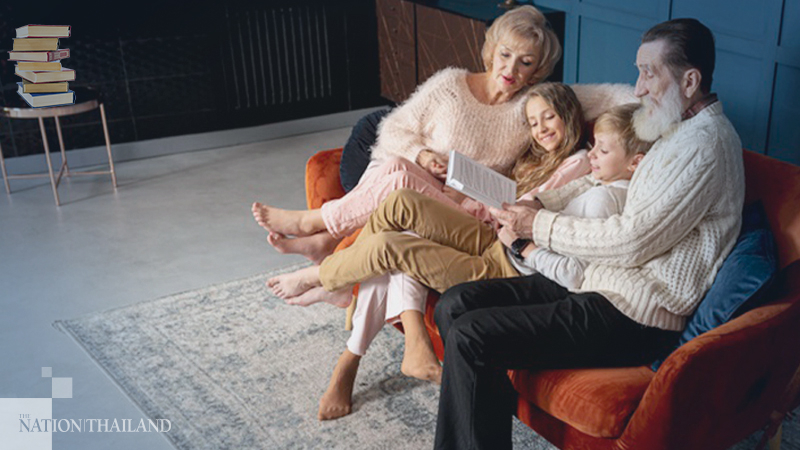
Seven stories of solitude during the coronavirus, from ages 24 to 86 #ศาสตร์เกษตรดินปุ๋ย

#ศาสตร์เกษตรดินปุ๋ย : ขอบคุณแหล่งข้อมูล : หนังสือพิมพ์ The Nation.

https://www.nationthailand.com/lifestyle/30386276?utm_source=category&utm_medium=internal_referral

Seven stories of solitude during the coronavirus, from ages 24 to 86

Apr 18. 2020
Photo Credit:Prostooleh

Photo Credit:Prostooleh
By The Washington Post · Caroline Kitchener · FEATURES 

The last time a virus forced Americans indoors, women did not go inside alone. When the 1918 flu pandemic started to spread, the average American woman got married at 21. Most went straight from their parents’ home to their husband’s; others spent a few years at a boardinghouse full of women their age, working in shops and factories as they awaited their proposals. A woman rarely made enough money to live by herself.

The novel coronavirus has confined many women to a very different living situation: Today approximately 23.5 million American women live alone, more than ever before. That’s largely because we’re staying single longer. The average woman now waits until she’s 28 to get married. More women are getting divorced or opting out of marriage altogether.

Women who live alone are not necessarily lonely. Over the past few decades, women without partners or roommates have triumphed by developing “strong social networks,” says Stephanie Coontz, author of “Marriage: A History.” When women live alone, they invest in their hobbies and maintain friendships, studies show, building connections with other people more effectively than men.

“I saw more people every day when I was single than I do as a married person,” Rebecca Traister writes in her book “All the Single Ladies.” Before she met her husband, she spent more nights out, went to more baseball games, more concerts. There was always someone around.

“This is a cold water bath,” says Coontz. “This removes almost all the advantages of living alone and amplifies all the hard parts.”

Now friends can only be seen on a screen. Almost overnight, the social networks that buoyed women living alone became far more difficult to access. Meeting up with even one or two people is widely considered an unnecessary risk.

“This is a cold water bath,” says Coontz. “This removes almost all the advantages of living alone and amplifies all the hard parts.”

The Washington Post asked to hear from women who are self-quarantined alone. We received almost 1,300 responses.

To pass the time, these women have been trimming hedges, dancing barefoot and baking cookies without flour. They are happy to have Zoom, they say, even if video calls sometimes make them feel more lonely. One woman remembers the exact moment she last touched another person: March 6, around midnight. She was saying goodbye to a friend after a long night of dinner and dancing. They hugged.

From one decade to the next, women are alone for different reasons: A 24-year-old is stranded when her graduate school cancels classes; a 33-year-old has been looking for a partner but isn’t having any luck. At 46, one woman is relishing her freedom, while another, 61, mourns her husband’s death. Some are living alone for the first time; others have been alone a lifetime.

It’s never felt quite like this.

– – –

AGE 24

Maria Salinas lives in a one-bedroom apartment in Boston.

The call might as well be an alarm clock, coming in at exactly 8 a.m. every day. Maria Salinas rolls over in bed, pulls her phone from its charger, and wills her voice to sound as lively and conscious as possible.

“Buenos días, Ma.”

She knows exactly who it is, because her mom, Trinidad Salinas, has called from her home in Lima, Peru, at precisely this time since the middle of March, when Maria’s master’s program canceled in-person classes. She wants to know: Is her daughter sitting up? Is she standing? Sometimes Maria tries to lie, gaming for a few more sweet minutes of sleep. It never works.

“I’m like, ‘Oh, my God, how did you know?'” Maria says. “And she’s like, ‘I’m your mother, how do you think I know?'”

Maria has been living alone since she rented her own apartment as a sophomore in college. But she wasn’t alone then – not really. Her best friends lived right down the hall, always ready to “just do nothing together, for the hell of it.” It always felt a little bit like home, where Maria’s parents, cousins and grandparents live in matching houses, side by side and easy to access through a door in the garden fence.

Many of her friends from college have stuck around, and she’s made new ones through grad school. But now almost everyone has gone home. By the time Maria started thinking seriously about leaving Boston, Peru had closed its borders. She thought she might go to New York to be with her sisters, but they told her not to come: Things were getting bad, they said. She should stay put.

It only took a few days before Maria called her mom for help. She knew enough about her own depression and post-traumatic stress disorder to recognize the red flags cropping up almost as soon as her city shut down: not showering, barely leaving the house, not bothering to take the few steps from her couch to her bed when she was ready to sleep. There was no one around to hold her accountable, Maria told her mom. She needed someone to help propel her through her daily motions. Because right now she couldn’t quite propel herself.

The calls began immediately.

“Are you eating?” Trinidad will say with a sigh. “At least eat an apple.”

She will nudge her daughter to make the bed, do laundry, clean her room – then FaceTime her until she’s finished vacuuming. When Maria goes out to walk her dog, her mom reminds her to take her coat.

“This all probably sounds a little silly coming from someone who is almost 25,” Maria says.

Maybe she’s too old to need this kind of help from her mom, she adds.

Then again, we’re in the middle of a pandemic. So maybe that makes it OK.

– – –

AGE 33, Gina Fernandes lives in a studio apartment in D.C.

Whenever Gina Fernandes mentions her love life, her mother always has the same response.

“Take your time, Gina. Don’t worry. You’ll meet somebody.”

Gina reminds her mom that she got married in her 20s and was pregnant with Gina by 30. If she doesn’t meet someone, Gina says, she’s not too worried about it: She would be happy moving back to Seattle, single and living somewhere close to her family. But she does sometimes linger on a particular moment from “Sex in the City” when one of the characters says, “I’ve been dating for so long. Where is he?”

“I never get the quote quite right,” Gina says, “but it’s my favorite scene.”

Lately it’s been harder than usual not to be part of a pair. Gina has been avoiding the game nights and movie nights that friends from college have been hosting on Zoom. They’re almost all in relationships. It’s hard to see partners sitting together on the couch, hands on knees, arms draped over shoulders. Kids wander on and off the screen, tugging on wrists, climbing over legs.

She hasn’t touched anyone in weeks.

“At my age, everybody is coupled up, like Noah’s Ark,” Gina says. “Here we are at the end of the world, and I am in my apartment for one.”

She’s not jealous, exactly. There is plenty she likes about living alone. When she’s not working as an architectural designer, she’s been “printing pears” – slicing open the fruit, coating the insides with pastels and charcoal, then pressing down hard into heavy paper. Left undisturbed, pastel dust settles in ways she doesn’t expect, blown across stray papers and books. There is no one to tell her to wipe it away.

Gina has always talked about dying alone in her apartment, mostly as a joke. When she was younger, she read a magazine article about the number of women who die alone in their bathrooms, while taking a bath or drying their hair. She’s been thinking a lot about that story since self-quarantine started; she can’t help it. If she was unconscious on the bathroom tile, how long would it take someone to find her?

A day? A week? More?

She tells herself that fear is irrational: She has plenty of friends nearby who check in regularly, who would drop everything to take her to the hospital. Still, she lives in an apartment building that locks on the outside, with no doorman. If she gets covid-19, how would she get groceries and medicine? She wouldn’t want to risk spreading the virus in the elevator.

When the anxiety starts to take over, sometimes she’ll call up her family. Gina and her cousin just challenged her dad and uncle to a virtual game of Codenames.

“Oh my goodness, we cleaned the floor with them,” she says. “We were like, how are those PhDs working for you now, guys?”

This was the kind of game night Gina enjoyed. There is no pressure to appear “perky and happy,” she says, because “family is family.” Next week, she is planning to play another game, inviting cousins and second cousins in India, Germany and Australia. She wants to see how many time zones they can span.

– – –

AGE 46, Jennifer Jachym lives in a three-story townhouse in Philadelphia.

Jennifer Jachym was supposed to be in Costa Rica right now, wading into the waves with her board and her 25-year-old surf-instructor-turned-love-interest.

They’ve been texting and calling on and off since Jennifer’s last surf trip. It wasn’t anything serious, but he made her laugh – although she could have done without the joke about her being older than his mother.

“He is, stereotypically, about as hot as it gets,” she says.

She had already picked out her Airbnb and was waiting for the right moment to book her ticket, hoping she might get a coronavirus discount. But then Costa Rica closed its borders.

“I was like – eh, you know, I’ll go down, surf, hook up. It’ll be great,” Jennifer says. “And then it’s like, no. No, you won’t.”

Jennifer misses sex. No other way to say it. She’s heard people complain about the lack of touch: missing hugs or holding hands. Her needs are more specific.

“I don’t think, ‘I can’t wait to hug my sister’ or ‘I can’t wait to pat my dad on the back.’ Nope, my mind goes right down to the gutter.”

It’s not like she was having a ton of sex before self-quarantine. “I’ve had some not-so-great relationships the last few rounds,” she says, so she’d been taking a break. “I want to be in a relationship with a kind person.”

Five days a week, Jennifer used to spend an hour at her gym with her personal trainer. All the men at the gym know her, and they all have their little flirtations, ribbing each other about boyfriends and girlfriends, flexing their abs in somebody’s general direction. She didn’t realize how much she would miss that.

Self-quarantine feels like puberty, Jennifer says. She does what she can to wring out the frustration. Talking to the surf instructor helps a little. Porn helps more. She still works out with her trainer on video chat, sliding her coffee table against a wall and rolling out her yoga mat every weekday afternoon.

As much as she would like to have sex, Jennifer says, she’s glad she not cooped up with somebody. When she signs into a virtual happy hour, her friends are with partners and kids: eating dinner, dancing around in the kitchen, heading upstairs to put the little ones to bed.

Jennifer takes a sip of her signature cocktail – raspberry liqueur, lime and silver tequila – feeling not even a little bit jealous. She just thinks to herself: The minute the borders open, I am on a flight to Costa Rica.

– – –

AGE 52, Joi Cardwell lives in a beach bungalow in West Palm Beach, Florida.

Joi Cardwell has two rules. In her house, there are never shoes, and there is always music.

There is not usually booze at 1 o’clock in the afternoon, but today is a special occasion: Her friend is hosting a live stream, DJ-ing from his home in the south of France. She pours herself a glass of rosé.

The friend’s set is exactly what she hoped it would be: The songs make her move, swaying her way down the hall, wine in hand, bare feet moving quickly over the cold Mexican tile. A few minutes in, a lyric catches Joi off guard: “I want to feel your heartbeat.” The last time she touched another body was March 6, more than a month ago: She went out in Miami with a group of her friends. She starts to cry, but keeps dancing.

Joi knows top musicians all over the world. “I was – ” She pauses. “I still kind of am a big deal in dance music.” In 2016, Billboard named her No. 43 on its list of greatest all-time top dance club artists. (Madonna is at the top.) Recently, she’s been taking a break from all that. Coronavirus has given her permission to pause her projects and spend a whole morning laying mulch and trimming hedges. To sleep long and well.

“I don’t feel burned-out anymore.”

She hears people talk about insomnia and nightmares, complaining about how the days have begun to run together. They’re “in despair,” she says. She has those feelings, too – sometimes she’ll catch herself fantasizing about the first person she’ll hug once all this is over. But she refuses to dwell on the negative.

If she could convey one message to the universe right now, Joi says, she would tell it to “chill”: Stop worrying about things you can’t control. Put on music that channels a pool party in Ibiza. Have the kind of three-cocktail afternoon that becomes evening before you realize that somehow it’s now dark. Stand right up close to the pulsating speaker. Sing. Dance.

“It’s not like, I don’t know what day it is, and I’m in despair,” Joi says. “It’s like, I don’t know what day it is, and I don’t care.”

– – –

AGE 61, Irma Villarreal lives on the top floor of a Victorian house in Evanston, Illinois.

It’s Saturday, and Irma Villarreal is out of excuses. Today, she will make herself an egg.

Irma hates to cook; She doesn’t even really like to eat. It’s something she does because she has to, like dishes or a load of laundry. She knows she could easily spruce up her regular breakfast – Cheerios or shredded wheat and almond milk, with a sprinkle of sugar – but she doesn’t see the point.

“It tastes horrible, but I don’t care. I don’t think about it.”

Most of the time, she can blame her diet on her job. Since self-quarantine began, Irma, a corporate securities lawyer, has been working in her home office from 8 a.m. straight through to 6:30 p.m. When she moves to the kitchen for dinner, then to the living room for a Lifetime movie, her laptop stays open, balanced on a countertop or coffee table. Her law firm has furloughed many of its workers: The employees who remain have to work extra hard, her boss said, so the rest have something to come back to.

Irma is grateful for the distraction. Douglas Uhlinger, her husband of 35 years, died suddenly 18 months ago. He was admitted to the hospital on a Thursday evening, not feeling particularly well and not knowing why. He died from complications leading to sepsis and was gone by 9 a.m. on Monday morning. They didn’t have any children.

“He was my life,” she says.

She’s been talking to him more. There are no shows to go to, no friends who want to take a walk. She takes the egg to her sunroom and looks up at his urn. She took her time picking it out: brassy and blue – his favorite color. It shimmers a little in the light.

“I really miss you,” she says, curled up in their favorite wing-chair. “This is a really hard time.”

It was their Saturday morning ritual: sitting with coffee and breakfast, reading the paper, talking to each other about interesting stories they found. She doesn’t get the hard copy anymore, instead scrolling through a few articles on her phone.

With her husband, the time passed quickly. Their 10th wedding anniversary sneaked up on her – then they were married 15 years, then 20. Whenever people talked about how difficult marriage was, how hard you had to work at it, she listened quietly. It was never that way for them.

“I thought, ‘I’ve never done anything in my life this long. This is crazy,'” she says. “Then at some point, the relationship just becomes who you are.”

Irma knows how her husband would have responded to self-quarantine. “We’re fine,” he would have said. “We’re together.” When she turned on a sappy romance movie, he would never have complained. “Lifetime,” he used to say: “The network for women, and the men who love them.”

On this particular morning, he probably would have been the one making eggs. He didn’t like cooking, either, but he would have noticed how hard she’d been working lately.

“He would have wanted to make sure I had something to eat.”

– – –

AGE 70, Hazel Feldman lives in a one-bedroom apartment in New York City.

Hazel Feldman is almost out of cinnamon. She uses it for everything: a sprinkle on cereal or stirred into vegetable soup. She always adds a few shakes of the jar to her coffee grounds.

“Now, you don’t want to be heavy-handed with it,” she says. “But a little cinnamon adds a layer to anything, gives it a little something more.”

Hazel has been constantly surveying the contents of her fridge, keeping two lists in her head: what she wants and what she needs.

The dish soap is out. Need.

She finished all her fat-free vanilla meringues. Want.

The cinnamon jar is empty. She stops to think. Need, definitely need.

Hazel hasn’t left her apartment for almost two weeks; She has a nasty cough she worries might be coronavirus. She’s been getting creative in the kitchen, Googling “What can I bake without flour,” and finding a recipe for peanut butter cookies. She wouldn’t have given them as a gift, she says, but they were edible. At least it was a pleasant way to pass an hour.

When a neighbor offered to bring her a few things from Trader Joe’s, Hazel was relieved. She immediately sent pictures of all of her staples. She’s shopped there enough to know exactly what she likes.

That was over a week ago. She’s been hoping the neighbor will offer again but hasn’t heard from her.

Hazel has lived in Stuyvesant Town-Peter Cooper for over 40 years. It’s a complex of 110 identical red-brick apartment buildings in downtown Manhattan, each with over 100 units. She recognizes lots of people there. They pass each other in the hallway, ride together on the elevator. But she isn’t really friends with anyone.

“The news keeps saying, ‘People are coming together.’ They might be coming together, but not here. Not in these types of buildings.”

It’s hard to know who to call. Hazel has never been married and doesn’t have kids. Everyone she knows in the city is busy with their own problems. Hazel spent days debating whether to call her physician. The cough was bad, she thought, “but is it worthy of a call? Am I sick enough? Am I worried enough?” When she finally dialed the number, the doctor didn’t answer. She probably won’t call again.

“I can’t expect her to calm me down,” she says. “These things are very unimportant.”

Hazel has been agonizing for days over how to ask her neighbor for groceries. She decides to write a short email: She wishes the neighbor well, then adds a quick line at the end: “If you go to Trader’s, would you please let me know?” She won’t ask for anything specific. That might seem too pushy.

“It’s easier for me to have a root canal. I really mean that.”

The response arrives a few hours later. Her neighbor isn’t planning to leave her apartment. She says she might order online from Whole Foods in a couple of days. Should she tack on a few things for Hazel?

Hazel doesn’t want to shop at Whole Foods: It’s too expensive and she wouldn’t know what to buy. Besides, now she feels too much like a burden.

Thank you, Hazel replies, but no thank you. She will go to Trader Joe’s when she feels better.

– – –

AGE 86, Bettye Barclay lives in a one-bedroom apartment in Santa Monica, Calif.

Just before California issued stay-at-home orders, Bettye Barclay started working on the church buddy system: Of the 250 people in her Unitarian Universalist church congregation, about 100 are elderly or immunocompromised. Bettye has helped to find someone for each of them.

She’s not sure exactly what the buddies will do: She has left that largely up to them. If someone can’t get out of the house, she hopes their buddy might pick up groceries or prescriptions. If someone just wants to talk, she hopes their buddy will pick up the phone.

It’s important to make yourself useful, Bettye says. Especially now, she feels lucky: She has three kids, five grandkids, and six great-grandkids, some who live within 50 miles of her house. Her phone rings regularly with smiling children wanting to FaceTime. If she ever needed something, someone would be at her door in less than an hour.

For years, Bettye was in charge of finding quotes for her church’s weekly order-of-service. She’d Google words like “hope” and “love,” finding quotes from Desmond Tutu, Erik Erikson, the Dalai Lama, saving her favorites in a Word document. Bettye had been wanting to somehow use that collection during coronavirus. Her friend suggested she create a daily “meme.”

She looked up the term.

“You just put words over pictures,” Bettye said. “Easy.”

Every day, it’s a different quote and painting, mostly photos of old watercolors or acrylics that Bettye painted herself. The “memes” go out to 60 people: family, friends from her poetry group, people from church who Bettye thinks could use a “bright spot.” She pastes the list in the blind carbon copy field, reading over each name before she hits send.

“I like to remind myself of who I’m sending it to,” she says. “It feels like I’m actually making touch with each of the people who is on my list.”

Bettye has been thinking about death more than usual, she says: How could she not? She updated her trust and made sure her end-of-life documents were all in order. She had always imagined a “loving farewell,” several generations of her family gathered around her bed, sending her off with hugs and kisses. It wouldn’t be that way now.

“If I should die from either covid-19 or something else during this time, I die alone.”

That used to scare her, she says, but she’s been making peace with the idea. She takes a little time each day to sit quietly, eyes closed, paying attention to her fears and why she has them. She imagines lying in the hospital, her family safe and healthy somewhere else, wishing her well.

Being alone wouldn’t really be so bad.

He saw the flag raised at Iwo Jima; now, at 94, he watches the nation fight a deadly virus #ศาสตร์เกษตรดินปุ๋ย

#ศาสตร์เกษตรดินปุ๋ย : ขอบคุณแหล่งข้อมูล : หนังสือพิมพ์ The Nation.

https://www.nationthailand.com/lifestyle/30385863?utm_source=category&utm_medium=internal_referral

He saw the flag raised at Iwo Jima; now, at 94, he watches the nation fight a deadly virus

Apr 12. 2020
Retired Brig. Gen. Albert Bryant Sr., 94, recalls Iwo Jima at the Knollwood military retirement community in Washington, D.C. MUST CREDIT: Washington Post photo by Marvin Joseph

Retired Brig. Gen. Albert Bryant Sr., 94, recalls Iwo Jima at the Knollwood military retirement community in Washington, D.C. MUST CREDIT: Washington Post photo by Marvin Joseph
By The Washington Post · Ian Shapira · NATIONAL, NATIONAL-SECURITY, RACE 

Inside his military retirement home, Albert Bryant Sr. spends his days quarantined with his wife in their two-bedroom apartment, watching CNN from his brown leather recliner. He knows he is witnessing history, as the country fights a virus killing tens of thousands around the world.

But at 94, Bryant has witnessed history – and deaths – before. Seventy-five years ago, as one of country’s first black Marines, Bryant fought both racism and the Japanese during World War II. He watched the American flag being raised on the Pacific Island of Iwo Jima, making him one of the last living veterans of that famous battle.

“When I think about war, your life can be so easily shortened,” Bryant said by telephone from his apartment at Knollwood in Washington, D.C., where he is recovering from a broken hip. “But I find this virus equally if not more alarming, because when you think of Pearl Harbor or Iwo Jima, there was a possibility of defense. Not with Mother Nature, though. You can’t outrun Mother Nature. I have this feeling of helplessness.”

Albert Bryant Sr., center, with, from left to right, children Lori Bryant-Woolridge, Kermit Bryant and Albert Bryant Jr. and wife Mable Bryant. MUST CREDIT: Washington Post photo by Marvin Joseph

Albert Bryant Sr., center, with, from left to right, children Lori Bryant-Woolridge, Kermit Bryant and Albert Bryant Jr. and wife Mable Bryant. MUST CREDIT: Washington Post photo by Marvin Joseph

Bryant’s life has always been about service. After WWII, he joined the Army Reserve and became a one-star brigadier general. Later, he worked for the Veterans Affairs Department, rising to chief of drugs and pharmaceuticals, with an office overlooking the White House.

Three of Bryant’s children and two of his grandchildren have served, too, from Bosnia to Iraq to Afghanistan. Among them: a brigadier general, a combat medic, a Bronze Star winner and a 2016 U.S. Military Academy graduate.

“It just blows me up,” Bryant said. “I’ve been blessed. It causes me to think where I came from, my childhood, my parents, how hard they worked. … I became a general, but I never forgot my background.”

Albert Bryant. No middle name. He was born Nov. 10, 1925, and grew up in Greenville, Mississippi, near the Louisiana and Arkansas borders.

The boy who’d fight at Iwo Jima and become a general was the son of an African American homemaker and a white chauffeur. On government documents, Bryant’s race was listed as “Negro” or “White,” his complexion described as “ruddy” or “light brown.”

But his identity was never in doubt.

“We knew we were ‘Negroes,’ and we lived here, and whites folks lived over there. And white folks went to Greenville High School, and Negroes did not,” Bryant said one day in early March inside the library of Knollwood. “We never had any shared affairs.”

He caught sight of Mable Lun, a young girl of Chinese descent, during his senior year of high school as he walked to church. He approached her and told her he’d swish a half-court shot that night in his basketball game in her honor.

“I made it,” he said, smiling. “True story.”

“I don’t remember,” said Mable, 92, seated next to him after 71 years of marriage. “I was ready to ignore him.”

“I really did do it,” Bryant said. “I dribbled to the center line and stopped. Nothing but net.

“Two months later, I got my draft notice.”

When Bryant reported to his local draft board in 1943, he wanted to fly fighter planes, like the all-black Tuskegee airmen. He revered the squad of 900 pilots who trained at a segregated airfield in Alabama.

Instead, the 5-foot-9, 157-pound Bryant became a Marine. He boarded a bus to Camp Montford Point in Jacksonville, North Carolina, home to the country’s first group of black Marines.

The white officers did not embrace their new African American comrades.

“When I got to Montford Point, a white sergeant looked around at all of us recruits and said, ‘When I saw you people in uniforms, I knew we were at war,’ ” Bryant recalled. “That son of a bitch. I called him a ‘son of a bitch’ under my breath. I mean, I am here possibly to die for our country, and here’s a leader who would think that. You people.”

While their white counterparts lived in brick barracks, the black Marines slept in pasteboard huts in a freshly torn pine tree forest, according to the book “African American Voices from Iwo Jima.” The woods teemed with mosquitoes, snakes and bears, which “padded about through the camp, much to the consternation of recruits who saw their tracks when they fell out for morning roll call,” according to an account published by the Marine Corps’ history and museums division.

White Marines and black Marines didn’t mix socially, Bryant said. They went to church at different times. They ate at different mess halls.

“In church, we’d learn we were all God’s children, but then why was it that whites and blacks would go to church at different times?” Bryant asked. “There must be two Gods?”

Bryant hated the way white drill instructors spoke to him, but he dug in.

“I accepted that this was the way of life,” he said. “But I was determined to be the best I could, to the point where I felt like I had something to prove.”

After three or four months, he became the “honor man” of his training class and earned a promotion to private first class.

In 1944, Bryant was sent to Hawaii and assigned to the 8th Ammunition Company, a new unit created by the Marines for its black members. His job: load, unload, organize and guard ammunition. During combat, he’d move the ammunition forward from the shore to the frontline troops and firing batteries.

When his unit left Hawaii, he said, “I didn’t know where in the hell we were going, to be honest with you. Maybe Japan.”

The precise destination: the island of Iwo Jima, about 700 miles from Japan. The Americans, who’d been bombing Iwo Jima from the air and sea since December, needed to capture the island so the military could use it for refueling and emergency landings.

The task would not be easy. Tens of thousands of Japanese troops were hiding out in fortresses and underground caves. They would defend one of Iwo Jima’s most strategic spots – the summit of the 546-foot dormant volcano of Mount Suribachi on the island’s southern tip. The expansive sight lines gave the Japanese multiple opportunities to fire directly on American troops.

When Bryant reached the shores Feb. 21, 1945 – two days after D-Day, or “D plus 2,” as he says – he said he started to pray.

“You never knew where the shells were going to hit,” he said. “They were coming in from all over. Things were blowing up. Marines were coming onto the shores, and some Marines who were already there were wounded and being taken to Navy hospital ships. And the volcanic ash. You’d try digging a foxhole, and the more you dug, the more it would cave in on you.”

Two days into the fight, in the late morning of Feb. 23, Bryant was at the base of Mount Suribachi, helping supply combat troops with ammunition. Marines suddenly started cheering, and Bryant looked up. Marines were hoisting a small U.S. flag at the summit.

Later that afternoon, a larger flag was brought, and Bryant saw several Marines grasping the pole and positioning it into the ground atop Mount Suribachi. It was this second flag-raising that was captured by Associated Press photographer Joe Rosenthal, whose Pulitzer Prize-winning picture later inspired the Marine Corps War Memorial in Arlington, Virginia.

“When I saw them raise the flag, it gave me this feeling the island was secure, it meant that we won,” Bryant said. “I felt like: ‘Well, I made it. I am safe.’ Maybe I’d go back on the ship and go home. But the battle went on and lasted much longer than that. That night, we had a night attack.”

He nearly lost his own life in the fighting afterward.

“Two guys in the foxhole next to me got hit by a shell, and the foxhole caved in on them,” Bryant said, closing his eyes for two seconds. “The earth shook. We ran over to them to try and dig them out, but the more we dug, the more the volcanic ash fell back in. They suffocated before we could get them out. It just made me realize how serious it was and how lucky we were. The foxhole was no more than 60 or 70 yards from me.”

During the weeks that followed, Bryant said, whites and blacks fought side by side, without any of the prejudice that had divided them earlier in training.

“We were all Americans once the chips were down,” Bryant said.

Seventy-five years later, Bryant is living through a global pandemic that has claimed the lives of more than 100,000 people around the world, including more than 20,000 Americans – nearly three times the number of Marines killed during the battle of Iwo Jima. He knows that elderly people, especially residents of nursing homes, have been dying from the virus.

Still, Bryant feels safe at Knollwood, which, like many facilities for the elderly, has largely barred visitors and has asked residents not to leave the campus’ grounds. Residents are also no longer allowed to visit each other’s apartments and must eat their meals inside their own units, as opposed to the cafeteria. Knollwood is also conducting daily health checks of all staff members as they report to work.

He and his wife miss visits from their children and grandchildren.

Their oldest child, Albert Bryant Jr., a West Point graduate, also became a brigadier general and helped oversee the peacekeeping mission in Bosnia in the 1990s and the mission to capture of Iraqi President Saddam Hussein. Their second oldest, Kermit Bryant, a former Army staff sergeant, was a combat medic and worked in the VA for 26 years making and fitting artificial limbs. Their youngest son, Gregory Bryant, a U.S. Merchant Marine Academy graduate, was a Navy reservist for eight years.

Among the grandchildren, Albert-Francis “Paco” Bryant deployed to Iraq and Afghanistan multiple times and earned a Bronze Star. Veronica Bryant, a 2016 West Point graduate, attends an Army captain’s career course at Fort Jackson, South Carolina. And Benjamin Bryant, a television and film producer, served as the managing editor for the Pentagon’s independent review of the 2009 mass shooting at Fort Hood and later as a lead editor on the Defense Department’s report endorsing the repeal of the military’s “Don’t Ask, Don’t Tell” policy.

Bryant Sr. is proud of their service, especially as the country confronts a very different war. Though the coronavirus has been on the offensive for months, he believes, as he did all those years ago in the Pacific, that the enemy will be defeated.

Math teacher runs 102 miles in 21 hours to support local food bank #ศาสตร์เกษตรดินปุ๋ย

#ศาสตร์เกษตรดินปุ๋ย : ขอบคุณแหล่งข้อมูล : หนังสือพิมพ์ The Nation.

https://www.nationthailand.com/lifestyle/30385821?utm_source=category&utm_medium=internal_referral

Math teacher runs 102 miles in 21 hours to support local food bank

Apr 12. 2020
By The Washington Post · Kyle Melnick · NATIONAL, SPORTS, HEALTH, EDUCATION 

Eight hours and 48 miles into what was supposed to be a 24-hour run, Dan Frank entered his Columbia, Maryland, home at 2 a.m. last Saturday and crashed on the couch in the living room.

Frank runs as a hobby, and about two weeks earlier he set a plan of running for 24 straight hours in support of the Howard County Food Bank during the novel coronavirus pandemic. But he hit a wall.

“I was just really sleepy,” said Frank, a 36-year-old who teaches math and physical education at Paint Branch High in Burtonsville. “I couldn’t imagine going back out.”

Frank recharged with Coca-Cola, ginger ale and Pringles. Ten minutes later, he returned to running Howard County’s roads.

“It was like: ‘All right, well, you can’t imagine getting up, but it doesn’t really matter. You kind of committed to this. Other people are depending on this, so get your a– up and go,’ ” recalled Frank, who posted updates of his run on Facebook. “It was good that there was no choice.”

Frank fell 3½ hours short of his goal because of injuries resurfacing, but he completed 102 miles in 20½ hours between Friday night on April 3 and the next afternoon, and as of Sunday night he had raised nearly $12,000 for the Community Action Council of Howard County, which runs the food bank there.

Late last month, David Kilgore, a 28-year-old New York resident who has made a career out of running, went 100 miles in about 17 hours 47 minutes in Florida to help provide medical workers supportive footwear. Frank brainstormed his idea March 23 and ran for about two weeks while he prepared for the online classes he is now teaching.

Frank began running seriously about five years ago, and he completed his first 100-miler in August in Leadville, Colorado, where he finished in 21:58:23. That race was through mountains, but his run this weekend was 90 percent on pavement. He has always felt road races were too serious for him.

Still, Frank was motivated to provide for those in need. His children attend Phelps Luck Elementary, where every month a mobile food pantry is stationed. Over the past month, fewer donations have been made to the food bank, he said; meanwhile, demand has risen because children don’t have in-school meals and the unemployment rate is rising.

“The coolest part besides raising the money was watching a community rally behind something positive in these times,” Frank said. “People are looking for things like that right now. They’re at home on Facebook anyway; they want to cheer something on that has some good meaning behind it.”

On Thursday evening, Frank and his family filled large zip-top bags with chocolate candy – Twix, Snickers and Milky Way – and dropped them off around Howard County so Frank could pick up snacks. Beer also kept Frank pushing. At around 40 miles, one of Frank’s friends left a Blue Moon Belgian White on her porch. About 44 miles later, another friend dropped off french fries, bacon and beer from a local bar.

“That was a godsend,” Frank said.

Frank’s fundraiser on Adventures for the Cure accepted donations until Wednesday, so continued to promote his cause until then.

While professional runners would have used that time to rest, Frank continued online teaching Monday, and his wife, Kelly, left him a list of chores.

Book World: In Camus’ ‘The Plague,’ lessons about fear, quarantine and the human spirit #ศาสตร์เกษตรดินปุ๋ย

#ศาสตร์เกษตรดินปุ๋ย : ขอบคุณแหล่งข้อมูล : หนังสือพิมพ์ The Nation.

https://www.nationthailand.com/lifestyle/30385503?utm_source=category&utm_medium=internal_referral

Book World: In Camus’ ‘The Plague,’ lessons about fear, quarantine and the human spirit

Apr 06. 2020
By Special To The Washington Post · Roger Lowenstein

The Plague

By Albert Camus

Vintage. 320 pp. $15

In his novel “The Plague,” published in 1947, Albert Camus did not extend his imagined pestilence to the entire globe, like the coronavirus that is threatening the planet now. Camus had just lived through the worldwide terror of the Third Reich and Japanese aggression. In “The Plague,” he confined his scourge to Oran, a “treeless,” “soulless” port city “ringed with luminous hills,” in his native Algeria.

Yet the book deeply evokes the adaptations imposed on us today. Camus focused less on the ambulances and body counts in stricken Oran than on how the plague affected the citizenry, who, like us, had to realign priorities, schedules, in some cases relationships and modes of living.

Like us, they had no intimation of disaster. Throughout history, plague had been as frequent as war, the book’s narrator observes – yet each outbreak takes people “equally by surprise.” Yet it is not so much the shock of the plague, but its innocent-seeming, almost innocuous beginnings, that clamp a dreadful foreboding on the novel’s opening pages.

The hero, Bernard Rieux, a young doctor with dark, steady eyes, is exiting a routine surgery on an April morning when he feels underfoot an unpleasant softness: a dead rat. The rats emerge in force; soon they are piled in garbage cans and carted off in batches, not before emitting “a gout of blood” accompanied by “shrill little death-cries.” The mysterious human fever immediately follows.

Doctors hesitate to give it a name, though Rieux recognizes the disease as plague from the swollen ganglia forming at the neck and limbs of its victims. The local prefect, and the chair of the local medical association, are concerned with avoiding alarm – even, as one terms it, “false alarm.”

Oran has no supply of plague serum. The newspapers publish only brief, discreet notices. Meanwhile, use of disinfectant is required, people living with victims are to be quarantined, schools are refashioned to house the overflow of stricken patients from hospital wards. Yet normal life goes on, save that the death toll rises from several a day to more than 10, more than 20. When it doubles to 40, the fateful telegram arrives: “Proclaim a state of plague stop close the town.”

It is at this point that the novel really begins, and it is the moment, to varying degrees, that Americans and people in scores of other afflicted countries are living in now. Camus likened it to a state of “exile,” a familiar theme to the writer, for whom metropolitan France, where he spent his adult life, was never more than an adoptive home. In “The Plague,” exile is partly geographic, describing the painful isolation from those outside the city gates – but it refers, more powerfully, to exile in time.

The plague separates people from their former lives. Despite their fervent longings to go back, the past is suddenly alien – a detached memory. As the cranes on the wharves go silent and the death toll mounts, seemingly in time with the oppressive heat, people become fixed on “the ground at their feet.” The narrator – whose identify is long kept secret – stoically observes, “Each of us had to be content to live only for the day.”

Camus was preoccupied with the absurd – with Sisyphus condemned, like mankind, to pushing a stone up a hillside. In “The Plague” he found a lens for projecting life at once suspended and more vivid. Though Oran had become but a vast “railway waiting-room,” with all the boredom and indifference the metaphor implies, people were, at least, living in the present. The urgency of volunteering in sanitary squads replaces the yearning for a vaccine or the outside world. The present replaces the future. A mysterious observer trapped in Oran, to whose diary the narrator gains access, posits that only this – being “fully aware” of time – guarantees that it won’t be wasted.

As with the virus today, the citizens crave a return to normalcy yet are visited by doubt that they could – or should – again be the same. There is a hint of self-condemnation.

The local priest sermonizes to his beleaguered flock, “Calamity has come on you, my brethren, and, my brethren, you deserved it.” He does not mean those flouting the plague rules, trafficking in forbidden goods, but the sinfulness of Oran before its crisis. Today one reads of supposed contributory evils – globalism, political failings, world capitalism. Even Camus’ finally revealed narrator seems to invoke a judgment, after the plague has lifted: The fight against “terror,” as he now styles it, is “assuredly” ongoing. The plague bacillus, as if it were some uncleansable stain on the human character, “never dies or disappears for good.”

Yet the satisfying surprise for me, rereading “The Plague” a half-century after my first encounter with it, is that Camus, who died at 46 in an automobile accident, fashioned from this morbid allegory a theme of human goodness. It is a redemptive book, one that wills the reader to believe, even in a time of despair. Rieux and the priest cannot resolve the eternal question of whether a God could allow such a blight, but to Rieux, the answer is simple: In the absence of an all-responsive deity, he must make his rounds, cure whom he might. As with all evils, he says, “It helps men to rise above themselves.”

This is true for Rieux, and for some of the lesser townsfolk, who overcome their selfish desires and lend a hand, only to discover that if happiness is shameful by oneself, fear is more bearable when it is shared. To this, the veiled narrator has chosen to bear witness. His mission, he ultimately declares, is to state what we learn in a time of pestilence: “There are more things to admire in men than to despise.”

Lowenstein is the author, most recently, of “America’s Bank: The Epic Struggle to Create the Federal Reserve.”

Comfort from a 102-year-old who has lived through a flu pandemic, the Depression and WWII #ศาสตร์เกษตรดินปุ๋ย

#ศาสตร์เกษตรดินปุ๋ย : ขอบคุณแหล่งข้อมูล : หนังสือพิมพ์ The Nation.

https://www.nationthailand.com/lifestyle/30385465?utm_source=category&utm_medium=internal_referral

Comfort from a 102-year-old who has lived through a flu pandemic, the Depression and WWII

Apr 06. 2020
Lucille Ellson on her 102nd birthday - Dec. 30, 2019. MUST CREDIT: Photo by Jane Pickle

Lucille Ellson on her 102nd birthday – Dec. 30, 2019. MUST CREDIT: Photo by Jane Pickle
By The Washington Post · Jesse Dougherty · FEATURES, RELATIONSHIPS

At Lucille Ellson’s home, inside her brimming drawers, are hints of how the present mirrors the past.

Ellson is 102 years old. She was born on Dec. 30, 1917, right before the Spanish Flu spread through military camps in Europe and the United States and became a global pandemic. She was a baby then, unaware, but heard stories of how her uncle contracted the flu while serving in World War I; and how her father got it so badly that he took time away from the family farm outside Laurens, Iowa.

Lucille Ellson and her husband, Floyd, when she and Floyd were dating. MUST CREDIT: Family photo

Lucille Ellson and her husband, Floyd, when she and Floyd were dating. MUST CREDIT: Family photo

Neither died. Ellson’s mother would remind her of that, too. But it wasn’t Ellson’s last time living through a historic crisis. She was a teenager during the Great Depression. She was a school teacher and young wife during World War II. And she’s reflected on that as the country faces another pandemic, this one from the novel coronavirus.

Ellson has been going through the letters, newspaper clippings and other stuff – she calls it “mumbo jumbo” – she’s kept over a century. It all reminds her of what’s gripping the country now, the feeling of being stuck inside, a bit scared, and not knowing what the future holds.

“I know a lot of people are in a panic about their weddings because they have to cancel them or postpone them,” Ellson said this week from her home in Orlando. “Well, let me tell you about my wedding …”

She can only draw faded lines between the coronavirus and Spanish Flu, since all those stories are second-hand. The lines get thicker between today and the Great Depression, spanning 1929 and 1933, with millions applying for unemployment and the economy faltering. But Ellson sees today and the World War II period as true parallels.

It starts, for her, with a delayed wedding. She was supposed to marry Floyd Ellson in July of 1942. Then came the Dec. 7, 1941, attack on Pearl Harbor. She and Floyd knew what that meant. He had a low draft number. Their marriage would have to wait. He was soon enlisted in the Navy, sent away for training, and Ellson stayed home in Iowa, teaching, while panic reigned.

Plumbers were out of work, she remembered, because all metal was directed to the war effort. A few local heating businesses closed for the same reason. People left her tiny town and rushed west, hoping for jobs building ships in California or Washington state. There was a shortage of teachers, and the school system begged her brother, who had fallen sick and was discharged from the Army, to come use his college degree in their classrooms.

“I spent so much time reading the ration book,” Ellson recalled. “The grocery store shelves were empty. It wasn’t quite like now, because you were allowed outside, but there was the same fear. That we didn’t know what was going to happen tomorrow.”

When she and Floyd did have their wedding, about a year later than expected, they weren’t gifted any metal dishware or table cloths. Those materials were still needed in large bulk by the U.S. military. She left teaching for a desk job at the Great Lakes Stable train station. He was away for 17 months as a gunnery officer. They were lucky and lost no relatives or close friends in the war.

Floyd didn’t make it home for Christmas in 1944. But he did send a letter to Lucille, who would soon give birth to their first child, a baby girl named Jane. They loved writing to each other. They would later write a book together, titled “My First 100 Years,” an effort Lucille finished after Floyd died at 104 in 2012. They had been married for 69 years.

“Darling I really love you,” Floyd penned to Lucille in a letter dated Dec. 25, 1944. “Everything you wrote & each little package just brought out to me your really true colors. You made this a very pleasant Christmas in such a way that I cannot be bitter. I can only hope we can be together next year & we can demonstrate to each other only what we can feel now … I will sign off now and dream of you.”

Floyd was honorably discharged on Dec. 20, 1945. He made it back to Iowa for Christmas with Lucille and Jane.

“I’ve been through so many things,” Ellson said. “To cope with this virus, and all that’s going on, I would tell people to not get stressed about planning far ahead. You can’t do it. A long time ago, I started making a list every morning of what I had to do. It was the only thing I could control, and I stuck to it, you hear me?”

Those lists now are similar day to day: check in on family with her iPad. Do Zoom video calls with her kids, and their kids, and their kids. Make meals and bake desserts to leave on the front porch for her son who lives nearby. She cooked for 25 people in February. She calls that preparing “a little something.”

Ellson has few infirmities for her age, wearing a hearing aid, taking thyroid and blood pressure medicine. She still walks unassisted when inside. She otherwise uses a rollator for balance and storage. She calls it her “buggy.”

Lately, she’s been focused on organizing the drawers that show a life in full. She is sorting the mumbo jumbo into categories. One is for when her house will be sold, a pile of neighborhood regulations, the property deed, and old contracts that Floyd signed. Another is for receipts she doesn’t want to throw away. Another is for her kids, with the first grade report card that shows she received a “D” in deportment, and more letters from the war.

This is not her way of wasting time. She wishes she had more of that. But what Ellson wants people to know – “if I can preach for a minute,” she requested with a laugh – is that this, like everything else, will pass.

“I learned that from living, I guess,” she said. “You see a lot when you get to 102.”

Book World: Crossroads in Emily Dickinson’s journey to becoming a poet for the ages #ศาสตร์เกษตรดินปุ๋ย

#ศาสตร์เกษตรดินปุ๋ย : ขอบคุณแหล่งข้อมูล : หนังสือพิมพ์ The Nation.

https://www.nationthailand.com/lifestyle/30384703?utm_source=category&utm_medium=internal_referral

Book World: Crossroads in Emily Dickinson’s journey to becoming a poet for the ages

Mar 24. 2020

“These Fevered Days: Ten Pivotal Moments in the Making of Emily Dickinson” by Martha Ackmann. MUST CREDIT: Norton
By Special To The Washington Post · Scott Bradfield

“These Fevered Days: Ten Pivotal Moments in the Making of Emily Dickinson”

By Martha Ackmann

Norton. 268 pp. $26.95

– – –

Emily Dickinson spent the wildest of her “Wild Nights!” alone in a room with her pens, ink and papers, and over the course of several decades, she secretly produced more than 2,000 deeply personal poems without any specific audience in mind. Yet when the first selected volume of her work was published four years after her death, an audience seemed to be already waiting. Her books have sold briskly ever since. “I’m Nobody!” she wrote in one verse. “Are you – Nobody – too?” Apparently there were a lot of Nobodies, and many were eager to hear the things Dickinson spent a lifetime saying only to herself. It is probably the foremost irony of a life that abounded with ironies.

Dickinson’s home was presided over by two emotionally distant parents, and despite sharing a great affection with her friends and siblings (her beloved brother, Austin, and family lived right next door), Dickinson was a deeply reticent personality. She preferred to watch the world of war and commerce pass by her living room window than join in the parade. According to Martha Ackmann – author of the enjoyable and absorbing “These Fevered Days,” a top 10 list of Dickinson’s “pivotal moments” – the only “acclaim” she received during her lifetime “was winning second prize for her rye and Indian bread at the annual cattle show.”

Delivering letters to friends, she abruptly “rang the bell and ran”; she only played piano for visitors if they listened in the next room; and from a young age, she enjoyed Sundays because that was the day her family went to church and left her to her books and pencils. “I am left alone in all my glory,” she wrote to a friend. But it was a glory that only Dickinson seemed to appreciate.

Despite her solitary nature, she often reached out for companionship through her letters and, more clandestinely, through the poems she kept hidden away. (When her sister, Vinnie, found them, hand-sewn into batches, or “fascicles,” she couldn’t bring herself to burn them, as Dickinson had requested.) In her writing, Dickinson often referred to a “thee” that sounded like an imaginary lover (“Might I but moor – Tonight – / In Thee!”), or an ideal reader; but she might just as well have been addressing the most important presence in her life, which was not God (whom she once called “an Eclipse”) but rather the cumulate body of her beloved poems. For Dickinson, writing poetry was a form of “singing.”

With an odd sense of common words and uncommon metrics, she wove strange, lyrical conundrums of emotion and logic. Dickinson wrote to explore her own deeply idiosyncratic reflections, but when we, her audience, read them, she seems to be speaking directly to us.

Late in life, she developed a long-term relationship with an older man, but even then, the relationship was conducted almost entirely through correspondence. For Dickinson, words and love were part of the same material stuff.

But there is nothing sentimental about Dickinson or her poems. Initially, her verse grabs readers with an almost sing-songy nursery-rhyme cleverness – but it quickly draws them into a sense of perilous dissonance, which strikes from the heart of those bony dashes punctuating almost every line. “Because I could not stop for Death – ” one poem begins, just before hitting you with that killer second line: “He kindly stopped for me – “. And there’s my personal favorite – and possibly the only poem I was required to read in school that I never got out of my head: “I heard a Fly buzz – when I died – “. In a Dickinson poem, the next logical thought is the one that questions everything you thought before.

There are many monumental biographies of Dickinson (such Richard Sewall’s in 1974), and there are many useful, pocket-size quick-study guides. But Ackmann’s list aims for the sweet spot in terms of length and depth, and generally hits its target. In fact, Dickinson – a poet of those small, insignificant moments that suddenly blossom into wide, disturbing vistas of significance – fits Ackmann’s model neatly.

Sometimes, Ackmann’s selected “moments” seem like arbitrary pegs on which to hang a piece of Dickinson’s life – such as the summer day of her 14th year when she wrote a letter to a friend, auspiciously concluding, “All things are ready.” But others are indisputably important, such as the day she first published a poem in the local newspaper (only a handful of poems were published in her lifetime, and always anonymously) or her first effort to reach out to the writer and abolitionist Thomas Wentworth Higginson after reading in the Atlantic Monthly his essay of advice for young writers. (She must have felt an electric jolt at the passage, “There may be years of crowded passion in a word, and half a life in a sentence.”) All her life, Dickinson had sought out a “rare Ear” that could hear the things she wanted to say. And yet over many subsequent years of friendship and correspondence, she rarely took Higginson’s advice about how to revise her work or where to publish it.

But then Dickinson was never looking for a mentor. She was only looking for conversation.

– – –

Bradfield is the author, most recently, of “Dazzle Resplendent: Adventures of a Misanthropic Dog.”

Readers stuck at home need books – and community. Here’s how to access them. #ศาสตร์เกษตรดินปุ๋ย

#ศาสตร์เกษตรดินปุ๋ย : ขอบคุณแหล่งข้อมูล : หนังสือพิมพ์ The Nation

https://www.nationthailand.com/lifestyle/30384591?utm_source=category&utm_medium=internal_referral

Readers stuck at home need books – and community. Here’s how to access them.

Mar 22. 2020
By Special To The Washington Post · Angela Haupt

If there’s a silver lining to the sudden need to hunker down as the novel coronavirus upends normal life, it’s that maybe – finally – you’ll have time to read. Provided you have enough books.

Fortunately, there are plenty of ways to access new reading material without leaving the house, and to stay engaged with the bookish community even as libraries and bookstores shutter their doors. Here’s a guide.

– Take advantage of free library resources like OverDrive.

Many libraries are closed until further notice, but you can still tap into their tools – even if you don’t have a library card. OverDrive, a company that works with thousands of libraries around the country, offers an “instant digital card.” Sign up and start browsing an impressive collection of e-books and audiobooks.

OverDrive’s Libby app makes it easy to download your picks to whatever device you prefer: Stream an audiobook on your Google Home, for example, or send a book to your tablet or Kindle. Beware that there aren’t unlimited digital copies, so there’s often a waitlist for popular titles. Once your request comes in, you’ll typically have access for seven to 21 days.

Ramiro Salazar, president of the Public Library Association and director of the San Antonio Public Library, says libraries have a “history of rising to the occasion, and that’s what we’re doing right now.” He asked his staff to look into expanding their books-by-mail program, for example, a longtime service that provides books to those who are homebound. And he said libraries nationwide are working to shorten wait times by increasing the number of digital books available to patrons.

– Order from your favorite indie bookstore.

On Monday, Literati Bookstore in Ann Arbor, Michigan, reported that in the previous few days, customers had placed more than 800 online orders – compared to a typical five to 10 a day. Like many independent bookstores, it had turned exclusively to online sales. The small staff was working to process web orders as quickly as possible and thanked customers for giving them a “fighting chance” to weather the unexpected circumstances.

Around the country, many indies are offering local shipping free or for a nominal fee in hopes of luring extra business.

Another option is bookshop.org, a recently launched website that shares proceeds with independent bookstores.

– Trade physical books for audiobooks.

Even if you don’t prefer listening to reading, you’re probably familiar with Audible: The Amazon-owned audiobook company has a catalogue of nearly 500,000 easy-to-download options, from Reese Witherspoon’s Book Club picks to classics. You can listen on a wide array of devices, or even in a web browser. A $14.95 monthly membership includes any title, plus two Audible Originals. (Amazon CEO Jeff Bezos owns The Washington Post.)

Another option is Libro.fm, which offers more than 150,000 digital audiobooks of all genres. Membership costs about $15 a month. When you sign up, you’ll select the independent bookstore you want your purchases to support, and typically, the company splits the profits with that shop. Right now, all proceeds are going to the bookstores.

Both Audible and Libro.fm supply ample instructions, and getting started requires little more than a working device and an eager reader.

– Click over to websites that provide free books.

For decades, Project Gutenberg has made copyright-free e-books available on the Internet. Don’t expect to find any current bestsellers, but there’s a rich selection of more than 60,000 older titles that you can download to your device or read in your web browser. The site’s “top 100” list includes “A Tale of Two Cities” by Charles Dickens, “Little Women” by Louisa May Alcott and “The Strange Case of Dr. Jekyll and Mr. Hyde” by Robert Louis Stevenson.

The Library of Congress also offers a selection of free classics you can read online. Many of the choices are kid- and adventure-oriented, like “Jack and the Beanstalk” and “Treasure Island.” After Cambridge University Press made more than 700 textbooks free through the end of May, demand was too high for their website to withstand. There may still be a chance to cozy up with a copy of “Psychopathology” or “Nietzsche,” however. The press is working to “reinstate free access as soon as possible.”

– Attend a virtual book talk.

In-person events are on hold, but bookstores are still finding creative ways for authors to engage with readers. Hilary Leichter was scheduled to talk about her new novel “Temporary” at Brooklyn-based Books Are Magic the same day the shop canceled all March events, for example, so staffers pivoted to a virtual version. The shop uploaded a fun, chatty conversation with Leichter (and her ukulele) to its Instagram page. Upcoming virtual talks will feature Paul Lisicky and Joseph Fink, among others.

Similarly, Washington bookstore Politics and Prose announced it was launching P&P Live, a series of author events streamed online. Those who tune in can submit questions for the speakers, including Emily St. John Mandel and Bess Kalb.

Another example of making the best of disrupted plans: Anne Bogel, the popular blogger behind Modern Mrs. Darcy, had to cancel her tour to promote her latest book. So she’s launching the Stay at Home Book Tour, which kicks off March 23 and will include talks by authors such as Kimmery Martin and Ariel Lawhon. No selfies or signing, she says, but the events will be free and open to the first 500 people who log on via the video conferencing platform Zoom.

– Participate in an online book club.

What to do if half the fun of reading a book is talking about it? Talk from afar. The Washington,Public Library is putting a virtual spin on its book club: Elizabeth Acevedo’s “With the Fire on High” is up first, and for a few Saturdays, the library will host Twitter chats focusing on different sections of the book.

Of course, no commute is too long in virtual book-club land. Aside from checking what your local library and bookstores are offering, consider more global options. The Quarantine Book Club, for example, popped up to host online discussions with authors. And the writer Yiyun Li is hosting a virtual club to discuss Leo Tolstoy’s “War and Peace” – follow along at apublicspace.org.

– Live-stream story time.

There are many options for children, too. Penguin Kids is hosting authors and illustrators who will read their stories on Instagram each weekday at 11 a.m., and the Brooklyn Public Library is live-streaming their story time in the afternoon and again before bedtime. Join on the library’s Facebook page or website.

In Ohio, the superintendent of Medina City Schools is live-streaming story time from his YouTube channel. The books – like Ferida Wolff’s “Is a Worry Worrying You?” – are selected to provide kids with support during such unusual times.

It’s also a chance for A-listers to read you a story: Actresses Amy Adams and Jennifer Garner launched #SaveWithStories, a charity-driven initiative in which celebrities read children’s books on Instagram. Brie Larson, for example, read “Giraffes Can’t Dance,” while Reese Witherspoon delivered a spirited rendition of “Uni the Unicorn.” Donations will help the nonprofits Save the Children and No Kid Hungry ensure that kids have access to meals during school closures.

12 productive things you can do to feel better about being stuck at home #ศาสตร์เกษตรดินปุ๋ย

#ศาสตร์เกษตรดินปุ๋ย : ขอบคุณแหล่งข้อมูล : หนังสือพิมพ์ The Nation

https://www.nationthailand.com/lifestyle/30384453?utm_source=category&utm_medium=internal_referral

12 productive things you can do to feel better about being stuck at home

Mar 20. 2020
File photo by Syndication Washington Post

File photo by Syndication Washington Post
By Special To The Washington Post · Nicole Anzia · FEATURES, HOMEGARDEN

Now that the coronavirus has sent workers and students home, closed businesses and canceled events, it’s going to be important to create new routines and find meaningful ways to spend our long days at home. The following organizing tasks are simple and will help you structure your day and create a small sense of control.

– Order picture frames and albums: Do you have a stack of photos you have been meaning to put in frames or photo albums? If so, take a few minutes online to find options that will work for you, and place the order. Depending on how long social distancing lasts, you may even have time to put those photos into the frames and albums.

– Send notes: Write those thank-you cards that you have had on your to-do list for the past few months. If you don’t have any thank-you notes to send, just send a few written notes or cards to friends. It will make you feel good to keep up some connection offline, and the recipient will be thrilled to open some real mail.

– Organize and minimize your inbox: Spend 15 minutes deleting and filing emails. You’ll be amazed at how much you can lighten your inbox in a small amount of time. For bonus points, do this every day for a full week.

– Wash and store winter items: Wash winter coats, hats and gloves that are launderable. Set aside for donation those items that your family members have outgrown, and properly store the rest.

– Meal planning: The upside to not sending kids to school and not going into an office is that you don’t have to pack lunches. On the other hand, with everyone at home, you will have to make three meals a day. Spend 20 minutes one day a week thinking through lunches and dinners. This will make mealtimes feel less stressful and rushed, and you can make sure you have everything you need in advance. With stores having uneven inventory, ensuring you can prepare what you want is important.

– Wash backpacks and reusable bags: When is the last time you washed your kids’ backpacks and any of the reusable tote bags you bring to the grocery store or on errands? For most people, the answer is never, but now you have time to get them cleaned up and germ-free. Will this change your life? No. But it will feel good for both you and your kids to start fresh when normal life resumes.

– Clean your car: If you have a car, this is the perfect time to clean it. This activity has the extra bonus of getting you outside for a portion of your day. Start by taking everything out, and then wipe down the surfaces and vacuum the floors and seats. Finish by cleaning the windows inside and out. This is something kids can help with.

– Deep-clean your kitchen cabinets: This is an activity that you don’t have to do all at once, but it will keep you busy for 30 minutes each day for a couple of days. Take things out of your drawers and cabinets and wipe down the insides. Put items that you no longer want or use in a bag for donation, and toss expired food. Put things back neatly. Wipe down both the inside and outside of your cabinet doors and all of the pulls, too.

– Move furniture in one room and clean: Get some help from other family members to move your family room or living room furniture and clean underneath, either with a vacuum or Swiffer. While you’re at it, take the cushions off the couch and chairs and vacuum them, too.

– Refresh your bookcases: Take all the books and items off one bookshelf in the house. Put books that you no longer want in a bag to donate, wipe down the shelves and put everything back in a new configuration.

– Write down goals for the rest of 2020: Some of us made a list of goals at the beginning of the year, but if you didn’t, now is a good time to make one. It will help you visualize life after the coronavirus and help you prioritize in the coming months. If you already have a list, take a look and revise as necessary. If you’re making a new list, be sure to include larger home projects you would like to complete, ideas for things you want to do with your kids and professional goals.

– Streamline your bill-paying: If you’re still a holdout to online bill-paying, this is the perfect time to get set up. If you’re just getting started, entering the information for all of your payees does take a while, but you don’t have to do it all at once, and the time you spend now will save you countless hours later. If you already have online bill-pay, take a look at your recipients to make sure they’re current, and add any new vendors. Alternatively, call the companies you pay each month and set up automatic bill-pay through them.

Many of us have wished for more time at home to get things done, and, well, now we have it. Using this opportunity to do some cleaning and organizing will not only make you feel more in control and save you time later, but it will also give you a sense of renewal and accomplishment.

– – –

Anzia is a freelance writer and owner of Neatnik.

Whose bedroom becomes the infirmary? Group-house living just got a whole lot trickier #ศาสตร์เกษตรดินปุ๋ย

#ศาสตร์เกษตรดินปุ๋ย : ขอบคุณแหล่งข้อมูล : หนังสือพิมพ์ The Nation

https://www.nationthailand.com/lifestyle/30384361?utm_source=category&utm_medium=internal_referral

Whose bedroom becomes the infirmary? Group-house living just got a whole lot trickier

Mar 18. 2020
From left, housemates Sam Lane, Zack Johnson, Dutch Seitz and Zach Lane have stocked up on extra food and toilet paper. Seitz is prepared to cede his bedroom to anyone who gets sick. MUST CREDIT: Photo for The Washington Post by Evelyn Hockstein

From left, housemates Sam Lane, Zack Johnson, Dutch Seitz and Zach Lane have stocked up on extra food and toilet paper. Seitz is prepared to cede his bedroom to anyone who gets sick. MUST CREDIT: Photo for The Washington Post by Evelyn Hockstein
By The Washington Post · Maura Judkis · FEATURES, HOMEGARDEN, RELATIONSHIPS 

WASHINGTON – The best room in the four-dude D.C. group house is also the most isolated – up on the third floor, with pine-tree wall art, big windows and its own bathroom and shower. It belongs to Dutch Seitz. But if our current national nightmare infiltrates their home, the 26-year-old is prepared to move a few of his possessions to a small, spare room with an air mattress, allowing his coveted third-floor spot to become the infirmary.

That’s the deal he and his housemates made as Washington, along with much of the nation, girds itself for an outbreak: If one of them gets covid-19, the illness caused by the novel coronavirus, Seitz’s room is where the sick will go: sealed into the navy-and-white-clad annex without hesitation, with only a mounted stag for company. It’s like “The Cask of Amontillado,” but with Netflix.

Sam Lane and Dutch Seitz clean the spare bedroom in their Washington, D.C., group house. MUST CREDIT: Photo for The Washington Post by Evelyn Hockstein

Sam Lane and Dutch Seitz clean the spare bedroom in their Washington, D.C., group house. MUST CREDIT: Photo for The Washington Post by Evelyn Hockstein

“It’s a necessary sacrifice for the greater good,” says Seitz. Late last week, even though his housemates were in good health, he packed a bag of about 10 days’ worth of clothing to stash in the spare room so he could be ready to move there at a moment’s notice.

The designated sick room has its own climate control, so the sick person’s air wouldn’t recirculate back through the house’s HVAC. Between that and the private bathroom, it would be possible, in theory, to cut off contact between the infected housemate and his roommates, who would deliver food and medication outside his door.

Zach Lane has stocked up on nonperishable food and toilet paper. MUST CREDIT: Photo for The Washington Post by Evelyn Hockstein

Zach Lane has stocked up on nonperishable food and toilet paper. MUST CREDIT: Photo for The Washington Post by Evelyn Hockstein

It’s what the Centers for Disease Control and Prevention recommends in its guide to caring for a stricken member of your household: “Stay in a specific room” with its own bathroom, “avoid sharing personal household items” and “clean all ‘high-touch’ surfaces every day.”

“The only avenue we haven’t addressed is, once that person has healed, how we’d disinfect that room afterward,” he says. “It would be the responsibility of the person who was sick,” he supposes.”I would be following through with a secondary disinfectant after that.” (It’s all moot if more than one of them gets sick, of course.)

In communal houses across Washington right now, there are group texts and house meetings where discussions of who is responsible for scrubbing the toilet have given way to planning for what will happen if – when, really – the virus strikes. Few of these 20-somethings are worried about the actual symptoms – their demographic has among the best survival rates – but rather, the disruption to their lives and the possibility of transmission. Some of those housemates are longtime friends looking for an extension of college fun, while others are in the unnerving position of having to wait out a deadly global pandemic with a near-stranger from Craigslist. Maybe they are lucky to have each other. Or maybe they should have sprung for the tiny studio apartment instead. Maybe they’ll soon find out one way or the other.

“It’s easy to feel kind of powerless when you’re living with multiple people in a small space,” says Magen Eissenstat, a 25-year-old nonprofit worker who lives in a share house. “Your friends kind of become your family, and this has kind of driven that home. It’s made it a much bigger deal when you realize that you might be stuck in the house with people.”

People living in group houses can socially distance from the world, but not from one another.

“We all live so closely together and we share bathrooms,” says Jason Johnson, a 25-year-old Capitol Hill staffer who lives in a group house with three other roommates he found via Craigslist. If one were to get sick, “it’s almost inevitable that each of us is going to get the virus.”

They haven’t done much to prepare for that “inevitable” possibility, either. In Johnson’s house, as in many group houses, everyone buys their own groceries, and they take turns buying shared items, like cleaning supplies. And toilet paper. Which, as Johnson just realized, is about to become a big problem.

“We have one six-pack left. I was planning to get some after work,” he says. “I guess I need to check Amazon.” Good luck, pal. (Yes, Amazon chief executive Jeff Bezos owns The Washington Post, but we’re scrambling for toilet paper just like the rest of you.)

“One of our house members bought a lot of food for himself, but that’s one out of four of us,” says Zach Lane, 24, who lives in the house with Seitz. “We all cook our own food. There’s no sharing.”

They wouldn’t let each other go hungry, of course. Still, an alert went out on the house group text last week: Go to Costco. ASAP.

“I bought food on Sunday for the whole entire week, because I might be working from home, but I don’t have weeks or months of food,” says Lane. “I’ll probably have to go to the store in five days.”

Five days. That’s a long time to be together, especially for houses with members that – as some note proudly in their Craigslist ads for open rooms – tend to spend almost no time at home. But emergency telework policies have turned housemates into officemates. Officemates who never part ways.

“It might start out kind of as a party, but I feel like we will quickly go into a cabin fever feeling,” says Don Masse, 27, who lives in the same house as Johnson. “We’re a fairly social and outgoing house.”

In Thomas Carpenter’s five-person group house, there will be plenty of video-game sessions in the living room. Over at another group house, Shannon McDermott and her housemates are doing group yoga and watching “Cheer,” a Netflix series shot in the before times when crowds were benign and colleges had students. At the share house nicknamed “Dolphin House” – it came with three large dolphin emblems surrounding its front door – American University student Ben Davis, 23, plans to hold big group dinners with his housemates, all recent grads except for one new guy who arrived to Dolphin House just as the coronavirus was arriving to most U.S. states.

“We brought in a random person who is a Vanderbilt guy,” says Davis. “We’ve only known him about two weeks now.” Based on early observations, he seems like a reliable hand-washer.

Things are a little more tense over at Blaine Smith’s group house. The 23-year-old public health researcher has three roommates, but one of them just lost a paid internship thanks to coronavirus shutdowns and can’t afford to stay. So they’ll need to find a subletter. That means inviting a bunch of strangers over to see the place.

“It is definitely nerve-racking that there are going to be people coming through our house to tour it, and movers,” says Smith. The standard D.C. group house interview questions – Are you messy? Do you work long hours? Do you have people over? – may be replaced with more pressing ones, such as: How frequently do you wipe down your doorknobs?

“We just had our March house meeting, where we talked about what we would be doing to keep surfaces a little more clean,” says Smith. “We are all adults that are living very different and separate lives,” which makes those check-ins more important. “If I lived with my parents … it would be a bit easier to navigate, because our lives would be a bit more connected.”

Cleaning is all anyone can talk about at McDermott’s house. Last week, one of the housemates returned from visiting a friend in Spain, which has the fifth-highest total of confirmed coronavirus infections in the world and the second-highest in Europe.

“I personally am kind of spooked by it,” says McDermott. At first, the housemates thought they would try to stay six feet away from one another, but they realized doing so probably wouldn’t work due to the shared kitchen and bathrooms.

So they’re all going to self-quarantine together for two weeks. McDermott canceled her birthday party. The housemates pulled together a good supply of Lysol, hand soap and medicine, and McDermott ordered thermometer probe covers. No one will leave the house, except to go on the porch.

They’re not holding it against the housemate, who had left for the trip to Spain before things got bad.

“I’m happy that I live with people,” says housemate Amanda Riddle, 24. “I know that it’s a little bit scary because you could have multiple exposure points, but I personally am quite extroverted and I like to be around my friends.”

But not all of her friends live in her house, so just before her housemate returned, Riddle went on a farewell tour, of sorts: She spent the evening visiting friends at their homes, knowing that she wouldn’t be seeing them for two weeks. Then, she made one last trip to the grocery store for essentials: coffee and oat milk, frozen vegetables, pizza dough, cans of tomato soup, sour cream and onion chips, more cheese (“of course”), mint chocolate chip ice cream. And few other items:

“Four bottles of wine,” added McDermott. “That’s the big one.”

No gatherings over 50 people, the CDC says. Here’s what couples are doing with their wedding plans. #ศาสตร์เกษตรดินปุ๋ย

#ศาสตร์เกษตรดินปุ๋ย : ขอบคุณแหล่งข้อมูล : หนังสือพิมพ์ The Nation

https://www.nationthailand.com/lifestyle/30384283?utm_source=category&utm_medium=internal_referral

No gatherings over 50 people, the CDC says. Here’s what couples are doing with their wedding plans.

Mar 17. 2020
By The Washington Post · Lisa Bonos · FEATURES, RELATIONSHIPS 

Days before the Centers for Disease Control and Prevention urged Americans to postpone or cancel gatherings of more than 50 people, Robyn Macy, 29, and her fiance, Andrew, were already downsizing their March 21 wedding.

The original plan: 180 people a venue in Tarrytown, New York, black-tie dress, with a wedding band coaxing people out onto the dance floor. The new plan: 25 people in Andrew’s parents’ living room, twinkle lights strewn about, dinner and a homemade cake, no dancing. The guest list is capped at the couple, their immediate families, the rabbi who’s officiating, bridal party and best friends. Everyone will still wear their tuxes and gowns.

Like many other couples around the country, Robyn and Andrew are postponing their larger celebration, which will now take place in August.

But they didn’t want to wait six months to tie the knot.

“Even this feels a bit Prohibition-y,” Macy said in a phone interview Monday, “because Trump just said no gatherings of more than 10 people.”

Planning a wedding is stressful on its own. Replanning it while a pandemic is unfolding is a whole new level of stress. To help couples cope, the Knot and Wedding Wire launched a 24/7 hotline staffed with wedding planners and experts. Callers are asking things like: “I have a wedding in June. Should I postpone?” says Kristen Maxwell Cooper, editor in chief of the Knot. “Or: I need to postpone because it’s in 3 weeks. How do I start?”

Some people just want to be heard, Maxwell Cooper says. “Couples understand that there are bigger things at play, but it’s still a disappointing thing. Sometimes they just want someone to tell them they’re allowed to feel disappointed and upset.”

To Macy, the chaos of this moment has been clarifying. Her mantra to her fiance has been: “As long as I get to marry you, I don’t care.”

“The whole point of this is to marry your person,” Macy adds. “At the end of the day, if you get to do that, you’re winning.”

Here’s what couples are doing, and professionals are suggesting, to amend wedding plans.

– Find alternatives

Weddings are all about bringing people together, which becomes tricky during a period of social distancing. Susan Cordogan, founder of the Chicago-based event planning company Big City Bride, suggested using technology to help include those who can’t attend in person.

“We’ve had the best man read the father’s toast, and had the toast live-streamed,” Cordogan said of past clients. Virtual guest books and prerecorded speeches can help, too.

When it comes to food and drinks, she advised skipping communal and self-service options like buffets, though the recommended alternatives of individually plated options are more expensive.

Obviously those who were planning weddings of more than 50 people will have to postpone or cancel. But even those beyond the next eight weeks should come up with a Plan B, suggests Maxwell Cooper, so talk to your vendors. “You may not have to execute a plan B, but come up with one,” she says, starting with brainstorming a backup date and then letting your guests and vendors know.

Vendors have been extremely accommodating, Maxwell Cooper notes, and couples will need to be flexible as well. That might mean rescheduling what would have been a Saturday wedding for a Thursday, Friday or Sunday wedding.

– Make it smaller (or private)

Bree Ryback, a day-of wedding coordinator in Washington, reminds couples that they can always go to courthouse and get married. A wedding reception is “a party; you can move parties,” she said, adding that the District even allows for self-uniting marriages in which one partner acts as the officiant. So even if you and your partner are self-quarantined, you could still get married – and celebrate later.

Sarah Yates, 25, and her fiance Byron, 26, had been planning a 130-person wedding for March 28 in Laguna Beach, California. They recently decided to postpone the big celebration until July. But in the meantime, they’re planning a wedding with nine people (themselves included). On March 28, Sarah and Byron, along with their moms and best friends, plan to drive from Laguna Beach four hours north to Morro Bay, where Sarah and Bryon got engaged 15 months ago.

“This whole process of not being able to have the wedding that you planned for 15 months is the best reminder of why you’re getting married in the first place,” Yates said in a phone interview Monday, adding that she and Byron have become so much closer in having to be flexible and make these big decisions around their nuptials. “Getting married has such a bigger and deeper meaning than one day. . . . I could get married in a laundromat; I don’t really care,” she added.

In the event that they can’t drive up to Morro Bay, the couple said they would just take some cool pictures around the house and gather a few core folks in their backyard. “We have plan A thru Z and backwards,” Yates said. “The big thing right now is: We’re still healthy; we’re OK. There are bigger things in the world.”

– Postponing

Adam Ezring and Heather Foster, who live in Washington, had planned a May 3 wedding in Italy but are postponing until August. “We had some friends propose that we just get married in D.C. and do a one-year anniversary trip to Italy. But we’re not ready to give up on our dream wedding yet,” Ezring said.

Adam Sontag and his fiance are in the process of rescheduling their April 4 wedding in New Jersey. They don’t have a new date yet, but Sontag reports that their venue and photographer have already offered to be flexible. “We want to feel good about everyone attending doing so when they also will feel good about it,” Sontag wrote in an email, adding that postponing the wedding “relieves some of the incredible stress of this moment, as we can now go back to just being worried about this moment, rather than how it will affect our wedding.”

– While postponing, you can still mark that special day

While shifting to a later date, Maxwell Cooper still encourages couples to find a way to celebrate the day they had intended to get married. That could be by making a favorite dish and opening a bottle of wine you’d been saving for your honeymoon. Or watching a favorite movie or show together.

– Insurance

When Ezring and Foster were planning their wedding in Italy, they didn’t even know wedding insurance existed. They found just two providers that covered Italy: One had an update on its website saying it doesn’t cover cancellations because of the coronavirus, and the other didn’t respond to a request for comment. “Even if we had bought it, it would be debatable about whether it would be covered,” Foster said.

Borales notes that most wedding venues in Washington require the hosts to take out liability insurance. “We always suggest to get insurance,” Borales said, which typically runs $300 to $600. However, it’s unclear whether wedding insurers will cover the costs of events canceled due to the coronavirus. “This is not something any of us have really had an opportunity to work through,” she said.