Agencies join hands to support startups in major drive to e-commerce

ศาสตร์เกษตรดินปุ๋ย : ขอบคุณแหล่งข้อมูล : หนังสือพิมพ์ The Nation

http://www.nationmultimedia.com/detail/Startup_and_IT/30368219

Agencies join hands to support startups in major drive to e-commerce

Tech April 24, 2019 01:00

By Kwanchai Rungfapaisarn
The Nation

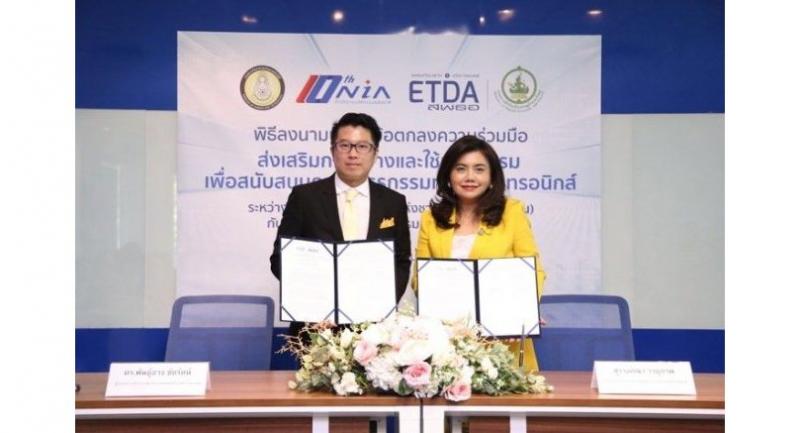
Thailand’s National Innovation Agency (NIA) yesterday signed a memorandum of understanding with the Electronic Transactions Development Agency (ETDA) to provide funding and innovation support to local startups and small and medium enterprises, so as to enhance e-commerce and other electronic transaction activities.

The move is seen as a key step in facilitating e-commerce and e-transaction activities in Thailand.

ETDA predicts that the total e-commerce market in Thailand will increase significantly by about 14 per cent this year to Bt3.3 trillion, up from Bt3.1 trillion in 2018, according to Surangkana Wayuparb, president and CEO.

“The growth of e-commerce and e-transaction activities in Thailand has been driven by changing lifestyles of the Thai consumers,” she said, adding that the move has pushed Thailand to the highest growth in customer to customer online sales and activities in Asean. Meanwhile, in business to business, the country is lagging behind its neighbours including Singapore.

Surangkana said Thailand should have “local digital platforms” with a distinct Thai feel and signature to promote e-commerce activities in the country, and the development of data will be a significant element.

Working with NIA and ETDA will put a priority on raising funds and feeding them into the development of local platforms, she said. About Bt1 billion of the funding budget will be raised this year, especially from capital funds, private companies and other financial instruments, such as crowd funding.

“Under this collaboration, we will integrate knowledge, technology and innovation to promote the platform and ecosystem in electronic transactions.”

ETDA has a goal to push the emergence of an e-Commerce Park, which will play a similar role in Thailand’s e-commerce as Silicon Valley to the US computer industry. The park would incubate startups and SMEs and help build a labour force to feed the Thai e-commerce future market through a Young Talent Platform.

Ultimately, a workforce of 1 million could be involved in the sector, and 200,000 SMEs, said Surangkana.

The collaboration with NIA will bring closer the dream of a vigorous Thai e-commerce sector, she predicted, as people could see progress on building an e-commerce ecosystem, and connections between entrepreneurs and funding sources.

Pun-arj Chairatana, NIA director, noted that e-transactions now account for about 10 per cent of Thailand’s GDP, and will increase to between 30 per cent and 40 per cent within the next five years.

“Through the cooperation with ETDA, we [NIA] will provide funding and electronic transaction support to local startups and SMEs, focusing on three different groups – students incubating new startups, local startups, and professionals and corporates,” said Pun-arj.

Pun-arj said that for this collaboration, the focus will be on collaborative activities to promote and support education, research, technology development, and innovations in electronic transactions and e-commerce of small to medium sized enterprises and start-ups, in order to build business platforms and electronic transaction ecosystems.

In addition, they will jointly develop courses in electronic transactions, training and academic meetings, as well as knowledge exchange discussions that include recruiting sources of funds for entrepreneurs, experts or people who are interested in expanding electronic transactions.

Amazon sets up team to help Thai businesses tap B2C e-commerce

ศาสตร์เกษตรดินปุ๋ย : ขอบคุณแหล่งข้อมูล : หนังสือพิมพ์ The Nation

http://www.nationmultimedia.com/detail/Startup_and_IT/30368220

Amazon sets up team to help Thai businesses tap B2C e-commerce

Tech April 24, 2019 01:00

By Asina Pornwasin
The Nation

2,526 Viewed

Amazon Global Selling has set up a team in Thailand to focus on helping Thai businesses capture the global cross-border business-to-customer (B2C) e-commerce, which is growing strongly and is expected to reach US$998 billion (Bt31.8 trillion) in 2020.

Amazon is not setting up a company, but creating a dedicated team in Thailand aimed at helping Thai sellers, brand owners and manufacturers to explore online export opportunities and to expand their international business by reaching more than 300 million Amazon global customers.

Bernard Tay, director of Amazon Global Selling Southeast Asia, said that Thailand is the second office in Asean after Singapore that will focus on helping Thai businesses benefit from cross-border commerce via Amazon e-marketplace platforms, with 18 websites, but starting with amazon.com.

“Amazon Global Selling has a regional office in Singapore. Thailand is the first office in Southeast Asia outside Singapore. This shows how much importance we attach to the Thai market,” said Tay.

He said the setting up of a dedicated team in Thailand was because of the Kingdom’s emerging manufacturing base, constant export growth of 7 per cent and the government’s digital transformation policy.

“We have just started a dedicated team. We hope to build more confidence and educate sellers in the beginning,” said Tay.

The team will provide educational support to potential Thai sellers with respect to selling on Amazon on-boarding process including account registration, listing creation, account operation, and Fulfilment by Amazon (FBA). Sellers will benefit from FBA’s bulk shipment, meaning more economies of scale and warehousing, especially for quick shipment. It has partnered with many logistics and transport companies

Revenue models are service fee (monthly fee), commission and FBA service charge.

The company will focus on the first five priority product categories which are high-potential Thai products like toys, apparel, home products, sport and pet products. These five product categories are in high demand from customers in the US while Thailand is strong in these products.

“We are cooperating with some government organisations and other partners to educate Thai sellers. However, there is no policy level cooperation with the government like what Alibaba did with the Thai government,” said Tay.

The global e-commerce trend shows that e-commerce grew 4 times faster than the retail market. In 2018, the e-commerce market grew by 23 per cent while retail market growth was 6 per cent. The cross-border B2C e-commerce market is growing rapidly and is expected to reach 27 and 29 per cent of total global B2C e-commerce in 2019 and 2020 respectively. It increased from 20 per cent in 2018.

On the Amazon platform, sales by small and medium enterprises (SMEs) were only 3 per cent in 1999 but jumped to 58 per cent in 2018. Amazon said it has helped SMEs worldwide do business and around 200,000 SMEs generate more than US$100,000 in sales on Amazon. Over 50 per cent of products available on Amazon are contributed by SMEs.

Amazon Global Selling has 18 websites with businesses from 130 countries selling on AGS. It also has 175 fulfilment centres that can deliver products to customers in 185 countries and regions. Customers now have more choices, with easier access to products from other markets.

Thai internet infections more than doubled in 2018, says Kaspersky

ศาสตร์เกษตรดินปุ๋ย : ขอบคุณแหล่งข้อมูล : หนังสือพิมพ์ The Nation

http://www.nationmultimedia.com/detail/Startup_and_IT/30368122

Thai internet infections more than doubled in 2018, says Kaspersky

Tech April 22, 2019 14:23

By The Nation

2,842 Viewed

Kaspersky Lab on Monday released its 2018 security bulletin containing local information and an overview of the threats that faced Thailand over the past year.

According to the report, the web remained one of the major sources of cyberthreats in the country. The global cybersecurity company detected 30,203,943 separate internet-borne infections in Thailand.

Overall, 31.8 per cent of Thai users were attacked by web-borne threats last year, according to the report based on data from Kaspersky Security Network (KSN). This is a significant increase over 2017, when the lab’s products detected 12,696,011 threats with 29 per cent of users attacked.

According to Suguru Ishimaru, security researcher at Kaspersky Lab Japan, the Thai increase follows a global trend showing an overall growth of detected malicious installation packages, new mobile banking trojans, and new mobile banking trojans.

Several Southeast Asian countries also made it to the world’s top 10 nations with the highest percentage of users attacked by online threats. Banking trojans such as DanaBot, which was first detected in Q2 2918, continue to develop rapidly.

“Currently Thailand is 73rd worldwide in terms of the dangers we have detected which are associated with web surfing,” said Yeo Siang Tiong, general manager for Southeast Asia at Kaspersky Lab.

“While we can easily say that Thailand is safer compared with its neighbours in the region, we still highly urge internet users in the country to put their guards up against these costly and damaging online threats,” he said.

“The more than 30 million online infections blocked last year proved that Thailand is still within the radar of cybercriminals. Beef up your defenses and improve your online habits. Do not be a willing prey.”

Wired for a better rural future

ศาสตร์เกษตรดินปุ๋ย : ขอบคุณแหล่งข้อมูล : หนังสือพิมพ์ The Nation

http://www.nationmultimedia.com/detail/Startup_and_IT/30368022

Wired for a better rural future

Tech April 20, 2019 13:45

By Asina Pornwasin
The Nation weekend

Rollout of fibre optics in remote villages aims to boost education, healthcare and local economies under the ambitious Net Pracharat programme

REDUCING inequality, creating opportunities for people in rural areas and building the competitiveness of the country.   These are the cited reasons behind the government’s programme to bring digital infrastructure to all people throughout the country and to increase their knowledge and access to services as they use the Net Pracharat network.

Ajarin Pattanapanchai, permanent secretary of the Ministry of Digital Economy and Society, said they have educated people throughout the country on how to utilise the infrastructure network of Net Pracharat.

This is being done because the programme will have long-term benefits that include both economic and social impacts for the country.

With Net Pracharat, all Thais will have equitable and affordable access to several sources of information and services, including for education, healthcare, e-commerce and government services, said Ajarin.

This would lead the country toward the path of long-term stability, prosperity and sustainability, Ajarin said.

Hard infrastructure

The Village Broadband Internet (Net Pracharat) project’s infrastructure was completed in December 2017, when MDES and Telephone of Thailand Public Company Limited (TOT) laid down the last of a fibre cable network targeting 24,700 rural villages throughout the Kingdom.

One of Thailand’s national flagship projects, Net Pracharat aims to ensure reliable digital infrastructure and equitable access to information and communication technology throughout the country.

Meanwhile, the National Broadcasting and Telecommunications Commission (NBTC) is responsible for 3,920 villages in border areas, and the remaining 15,732 target villages in rural areas.

In 2019, the ministry continues to emphasise the use of Net Pracharat, with volunteers in 24,700 villages, as the young generation and community leaders work to coordinate the project. They report to the ministry about the daily functioning of the high-speed internet Net Pracharat network, other infrastructure-related suggestions, as well as the other needs of local people.

In collaboration with the Ministry of Interior (MOI), training sessions have already reached one million local people.

The ministry has also focused on the community digital centres in each village, transforming each locale into a learning centre for the Net Pracharat project and allowing further development of the network to advance local community economic benefit.

The ministry this year will emphasise creating applications and other uses on top of the Net Pracharat infrastructure including e-commerce, telemedicine and education.

The additional activities will include Thailand Post’s Point of Sale (POS) initiative to create a logistics platform for delivering products for the villages in support of local e-commerce through OTOP and community enterprises.  It aims to expand the POS infrastructure, offering e-marketplace, e-payment, and e-logistic services for the local digital communities, from 200 units to 5,000 units.

About 900 people have already brought some 1,700 product items onto the platform and created revenues of Bt20 million for community enterprises.

This year, the ministry will also focus on finding ways to leverage the Net Pracharat infrastructure for public health benefits. The 30/10 megabits per second (Mbps) network speed as is not enough for establishing telemedicine, so the ministry, working with the Ministry of Public Health, will next upgrade the network speed to 100 Mbps to enable it in 10 locations.

Fibre optics for schools

Fibre optics will also be deployed this year by the ministry to support school initiatives, bringing high-speed internet to 2,000 to 3,000 schools throughout the country, including the Border Patrol Police School. The Ministry of Education will also be involved.

The Ministry of Digital Economy and Society will also build the fibre optics network to reach over 800 Tambon Health Promoting Hospitals, the first level of the public health service system in  communities.  “The initiative delivering fibre optics to hospitals is to encourage telemedicine to become a reality throughout the country,” said Ajarin.

The ministry is also working to prepare for the 5G era, as it establishes a 5G test bed and conducts 5G field trials at a digital park in the Eastern Economic Corridor.

Apple expands recycling effort under watch of Daisy the robot

ศาสตร์เกษตรดินปุ๋ย : ขอบคุณแหล่งข้อมูล : หนังสือพิมพ์ The Nation

http://www.nationmultimedia.com/detail/Startup_and_IT/30368021

Apple expands recycling effort under watch of Daisy the robot

Tech April 20, 2019 13:44

By The Nation weekend

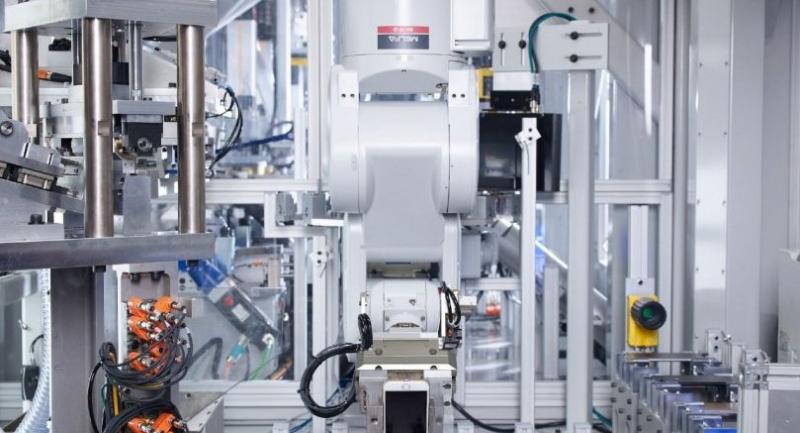
Apple has announced the expansion of its global recycling programme, which will quadruple the number of locations to which US customers can send their iPhones to be disassembled by Daisy, its recycling robot.

Daisy will disassemble and recycle select used iPhones returned to Best Buy stores throughout the US and KPN retailers in the Netherlands. Customers can also turn in their eligible devices to be recycled at any Apple Store or through Apple.com/th as part of the Apple Trade In programme.

Apple has received nearly 1 million devices through Apple programmes and each Daisy can disassemble 1.2 million devices per year. In 2018, the company refurbished more than 7.8 million Apple devices and helped divert more than 48,000 metric tons of electronic waste from landfills.

Lisa Jackson, Apple’s vice president of Environment, Policy and Social Initiatives, said that advanced recycling must become an integral part of the electronics supply chain.

“Apple is pioneering a new path to help push our industry forward. We work hard to design products that our customers can rely on for a long time. When the time comes to recycle them, we hope that the convenience of our programmes will encourage everyone to bring in their old devices,” she explained.

Daisy is now able to disassemble 15 different iPhone models at the rate of 200 per hour, recovering ever-more important materials for re-use. Once materials have been recovered from Daisy, they are recycled back into the manufacturing process. For cobalt, a key battery material, Apple sends iPhone batteries recovered by Daisy upstream in its supply chain. They are then combined with scrap from selected manufacturing sites and, for the first time, cobalt recovered through this process is now being used to make brand-new Apple batteries — a closed loop for this precious material.

Apple also uses 100-per-cent recycled tin in a key component of the main logic boards of 11 different products. The company’s engineering of an aluminium alloy made from 100-per-cent recycled aluminium allows the new MacBook Air and Mac mini to have nearly half the carbon footprint of earlier models. Starting this year, aluminium recovered through the Apple Trade In programme is being remelted into the enclosures for the MacBook Air.

To further its research into recycling, Apple has also announced the opening of its Material Recovery Lab dedicated to discovering future recycling processes. The new 836-square-metre facility in Austin, Texas, will look for innovative solutions involving robotics and machine learning to improve on traditional methods like targeted disassembly, sorting and shredding. The Lab will work with Apple engineering teams as well as academia to address and propose solutions to today’s industry recycling challenges.

Apple continues to expand its programmes to ensure devices are used for as long as possible. The number of Apple Stores and network of authorised service providers has grown to more than 5,000 worldwide. Last autumn, Apple rolled out a new method for optimising iPhone screen repairs that allows thousands more independent shops to offer the service. Apple has also launched a battery replacement and recycling programme for all of its products.

Now Apple has released its 2019 Environment report, which contains additional information on the company’s climate change solutions, including its recent announcement that 44 of its suppliers have committed to 100-per-cent renewable energy for their Apple production.

Plastic surgery: a radical new process to breathe new life into old plastic

ศาสตร์เกษตรดินปุ๋ย : ขอบคุณแหล่งข้อมูล : หนังสือพิมพ์ The Nation

http://www.nationmultimedia.com/detail/Startup_and_IT/30368020

Plastic surgery: a radical new process to breathe new life into old plastic

Tech April 20, 2019 13:42

By Patama Chantaruck
Special to The Nation

Plastic waste is plaguing our planet. In total, people have produced more than 8 billion tonnes of plastic. Half of all newly manufactured plastic becomes trash in less than a year.

It is projected that in 2050, there will be more plastic in the ocean than fish. PET is one of the most common manufactured plastic polymers (approximately 10-per-cent of total plastics produced per year), is a key ingredient in food and beverage packages and in the fibres of cloth. Historically, most of this material has not been recycled, the primary reason why 8 million metric tons of PET plastics are estimated to go into the ocean each year.

Plastic recycling is collapsing in many parts of the US. Demand for recycled materials has declined because there is too much trash in the sorting mix. As a result, many recycling companies are trying to claw back their profits by raising the cost of their services. In turn, cities like Philadelphia are resorting to incinerating their recyclables for energy, even forcing Memphis International Airport to send its bins straight to landfills. According to the California treasurer, Fiona Ma, “it’s a crisis in the recycling movement right now”.

To help address this problem, IBM recently announced a novel “selective digestion” recycling technique that can significantly streamline the sorting process and turn the PET commonly found in food and beverage packaging into a renewable resource, rather than trash destined for our landfills and waterways.

In the coming years, advancements like VolCat will make plastics recycling more efficient and more versatile in treating a wider range of material types than its predecessors.

Unlike traditional mechanical recycling, future plastics recycling will break down both coloured and clear plastics, as well as dirty and clean containers, producing a high-quality final product that is 100-per-cent recyclable. It should be noted that mechanical recycling can only be used on clear, pre-cleaned containers and results in a material that’s only reusable when combined with new PET.

Plastic bottles, containers, and PET-based fabrics will be collected, ground up and combined with a chemical catalyst in a pressure cooker set to above 200 degrees Celsius.

With heat and a small amount of pressure, the catalyst is able to digest and clean the ground-up plastic, with the process separating contaminants (eg, food residue, glue, dirt, dyes and pigments) from material that is useable for new PET. The useable matter, called a monomer, takes the form of a white powder, which can be fed directly into a polyester reactor to make brand-new plastics.

For people at home, future recycling advancements will mean no more sorting, rinsing and separating used containers, wrappers and plastics. All polyester waste can go directly into the dustbin and out to the curb for collection and from there to a recycling facility, to be digested and transformed into new and renewable material.

If this new research breakthrough is adopted by the plastics and recycling industries, people at the grocery store buying a bottle of soda or punnet of strawberries will know that the plastic they purchased won’t end up in the ocean and in just over 30 years, outweigh the fish.

Patama Chantaruck is vice-president of Indochina Expansion and managing director of IBM Thailand.

Ransomware ‘hero’ pleads guilty to US hacking charges

ศาสตร์เกษตรดินปุ๋ย : ขอบคุณแหล่งข้อมูล : หนังสือพิมพ์ The Nation

http://www.nationmultimedia.com/detail/Startup_and_IT/30368004

x

Ransomware ‘hero’ pleads guilty to US hacking charges

Tech April 20, 2019 06:33

By Agence France-Presse
Washington

2,060 Viewed

A British computer security researcher once hailed as a “hero” for helping stem a ransomware outbreak and later accused of creating malware to attack the banking system said Friday he pleaded guilty to US criminal charges.

Marcus Hutchins, whose arrest in 2017 stunned the computer security community, acknowledged in a statement pleading guilty to criminal charges linked to his activity in 2014 and 2015.

“I regret these actions and accept full responsibility for my mistakes,” the 24-year-old Hutchins, known by his alias “MalwareTech,” wrote, noting that the charges related to his activity prior to his work in security.

“Having grown up, I’ve since been using the same skills that I misused several years ago for constructive purposes. I will continue to devote my time to keeping people safe from malware attacks.”

Hutchins in 2017 found a “kill switch” to stem the spread of the devastating WannaCry ransomware outbreak, prompting widespread news reports calling him a hero.

Months later he was arrested after attending the Def Con gathering of computer hackers in Las Vegas.

The case drew fire from critics who argued that researchers often work with computer code that can be deployed for malicious purposes.

A federal indictment unsealed in Wisconsin accused Hutchins and another individual of making and distributing the Kronos “banking Trojan,” a reference to malicious software designed to steal user names and passwords used on online banking sites.

According to the indictment, Hutchins was part of a conspiracy to distribute the hacking tool on so-called dark markets.

He was released on bail while awaiting trial, allowing him to continue working for a security firm. He had maintained his innocence and won support from many others in his profession.

US prosecutors did not immediately respond to an AFP query about the case. But court documents published by the news site ZDNet showed Hutchins could face up to one year in jail on each of the criminal counts along with financial penalties.

Other counts in the indictment were dismissed, according to the court papers.

Study finds universal shortage of cybersecurity staff

ศาสตร์เกษตรดินปุ๋ย : ขอบคุณแหล่งข้อมูล : หนังสือพิมพ์ The Nation

http://www.nationmultimedia.com/detail/Startup_and_IT/30367787

x

Study finds universal shortage of cybersecurity staff

Tech April 17, 2019 01:00

By The Nation

2,022 Viewed

DomainTools, a leader in domain name and DNS-based cyberthreat intelligence, yesterday announced the results of its study, “Staffing the IT Security Function in the Age of Automation”, conducted in conjunction with the Ponemon Institute.

More than 1,400 security professionals based across the Asia Pacific (APAC), US, and UK provided answers on the impact that automation and artificial intelligence (AI) will have on the staffing of cybersecurity functions. All respondents in the study are responsible for recruiting, hiring, promoting and retaining cybersecurity staff within their organisations.

Results clearly indicated a shortage of cybersecurity staff across geographical regions with 78 per cent of all respondents admitting their teams were understaffed).

According to respondents, automation will provide a partial solution to the problem, relieving cybersecurity professionals of time-consuming and non-cost-effective tasks, such as malware analysis, which is either already automated (50 per cent), or is planned to become so in the next three years (56 per cent).

Only 35 per cent of respondents, however, think that automation will reduce the headcount of their cybersecurity function: 40 per cent even expect an increased need for hires with more advanced technical skills.

“Within just one year, the perspective around adoption of automated technologies has notably shifted among cybersecurity professionals,” said Dr Larry Ponemon, chairman and founder of the Ponemon Institute.

“Contrary to the popular belief that the rise of automation will threaten the job market, organisations now feel these technologies will help ease the current strain on resources, and offer the potential to promote job security for highly skilled staff, while strengthening cybersecurity defences.”

UK and US respondents were much more confident that automation will improve their cybersecurity staff’s ability to do their job (59 per cent and 65 per cent of respondents, respectively) than were APAC respondents (48 per cent), who were also more likely to distrust AI as a cybersecurity tool (37 per cent of respondents, compared to 31 per cent in the UK and 24 per cent in the US).

Growth rate in Vietnam’s internet services to soar

ศาสตร์เกษตรดินปุ๋ย : ขอบคุณแหล่งข้อมูล : หนังสือพิมพ์ The Nation

http://www.nationmultimedia.com/detail/Startup_and_IT/30367780

The Vietnam Internet Ecosystem Forum in Singapore on April 13 discussed the development of the Vietnamese internet economy. Read more at http://vietnamnews.vn/society/518734/growth-rate-in-internet-services-to-soar.html#lsBdGMUxEVmpILfb.99

Growth rate in Vietnam’s internet services to soar

Tech April 16, 2019 16:55

By Viet Nam News/ANN

SINGAPORE – The high rate of technology adoption in Vietnam presents vast opportunities for growth, according to Le Hong Minh, co-founder, chairman and CEO of technology company VNG Corporation.

In the field of mobile payments, for example, Minh said that by demand alone, “five years from now, Vietnam could have 40 million transactions per year, 40 times the current capacity of the banking system”.

However, “Vietnam still faces challenges to fully exploit this opportunity,” he said at the Vietnam Internet Ecosystem Forum held in Singapore on April 13.

“Vietnam lacks people who really understand and are fully committed to this tremendous change,” Minh said. As a result, businesses still lag behind consumers in technology adoption.

Minh said that to bridge this gap in human resources, one of VNG’s goals is “to excite talented people to work in the technology industry in Vietnam, in whatever capacity they can.”

Based on his extensive research of Vietnam’s macro-economic development, Dr. Vu Minh Khuong of the Lee Kuan Yew School of Public Policy at the National University of Singapore expressed optimism about Vietnam’s economic performance, but stressed the importance of strategic reform and digital transformation to sustain that growth, especially in the current global economic climate.

“Information and communications technology (ICT) adoption will affect all internal and external factors influencing the growth of the market,” Khuong said.

Vu Minh Tri, vice president of VNG Cloud Services, and managing director of VINADATA, noted that cloud computing had tremendous potential.

“The current trend is to have inter-connected facilities, opening up huge opportunities for IT companies to tap into the budget for infrastructure development, which normally makes up 60 per cent of a country’s GDP,” he said.

A panel discussion on the cloud computing sub-sector in Vietnam also pointed out that gaps which exist across multiple verticals, from retail to government, could be filled by cloud computing solutions.

Alex Smith, the APAC technical lead for Microsoft Azure, expressed confidence in the ability of the “public cloud to remove barriers of entry for Small and Medium Sized Enterprises (SMEs), hence democratising the market”.

Partnering is also an excellent way to transfer knowledge and expedite progress.

“The problems (regarding cloud computing services) that they solve in Vietnam are fundamentally simple. Hence, with the right stewards with enough experience, progress will be seen much more quickly”, said Wilbur Le, vice president of corporate development at LEAP, an investor in cloud computing companies.

VNG, in joint efforts with Hanh Trinh Viet, a community organisation that connects overseas Vietnamese experts with Vietnamese companies to find solutions to challenges of common interest, aims to provide a sustainable channel for communication and collaboration with IT communities abroad, to connect with more Vietnamese talent and to inform them of the opportunities and challenges at home.

The forum also highlighted opportunities for overseas professionals to take part in Vietnam’s exciting market.

The forum featured leading organisations in Southeast Asia like the National University of Singapore, Amazon Web Services, Microsoft Azure, ST Telemedia, SEA, Kyber Network and VNG Corporation.

The event attracted over 120 participants from various industries and backgrounds, generating passionate participation from the audience.

Enabler of digital transformation

ศาสตร์เกษตรดินปุ๋ย : ขอบคุณแหล่งข้อมูล : หนังสือพิมพ์ The Nation

http://www.nationmultimedia.com/detail/Startup_and_IT/30367774

Enabler of digital transformation

Tech April 16, 2019 16:08

By China Daily/ANN

2,113 Viewed

China makes headway in application and commercialization of 3D printing, paving way for high-quality manufacturing, end-user engagement

From aircraft units, car parts to musical instruments, 3D printing technology is pushing the limits of what can be made out of materials.

While relatively young, this new technique has established itself as one of the most disruptive technologies in decades.

According to consultancy Statista, the global 3D printing industry’s output value is projected to reach $23 billion by 2022.

3D printing, also known as additive manufacturing, is a process of making three-dimensional solid objects from a digital profile. It is the opposite of subtractive manufacturing that features hollowing out a piece of material with a milling machine.

“‘Additive’ means laying down successive layers of material until the object is created, and each of these can be regarded as a sliced, horizontal cross-section of the eventual item,” said Michael Agam, president of South Asia at Stratasys, an additive manufacturing solution provider based in the United States.

Stratasys provides technologies that are used to create prototype, manufacturing tools and production parts for industries from aerospace, automotive, healthcare to consumer products.

“3D printing enables you to produce complex (functional) shapes using less material than traditional manufacturing methods,” Agam said.

Falling product costs, ease of customization of goods, as well as government incentives are helping China emerge as an Asia leader in additive manufacturing.

China’s 3D printing industry is expected to reach $7.68 billion in output value, or one-third of the global market by 2020, according to a forecast by the China Industry Information Institute.

Consultancy IDC estimates the country will pour in $1.9 billion into the sector this year. This makes it the third-largest market behind the US and Western Europe.

Beijing has homed in on a series of policies to advance 3D printers. In the past, the Ministry of Industry and Information Technology, the industry regulator, had released the National 3D Printing Industry Development Plan (2015-2016), which established goals for the sector’s innovation and commercialization.

Separately, the ministry came up with a second action plan later in December 2017 to give a further boost. In its latest move, it included the sector in the nation’s strategic emerging industries list, heralding massive opportunities for related companies.

But the technology itself has experienced challenges over time. At the early stage, most of the 3D printers were used for rapid prototyping – meaning, mimicking early-stage product mock-ups. Commercialization was not imminent.

“Even though there are amazing innovations nearly every day in the way 3D printers are used in key industries, including automotive, aerospace and medical, we believe that we’re still just scratching the surface of the potential for 3D printing as an enabler of digital transformation,” said Tim Greene, research director at consultancy IDC.

Industry experts, however, have noticed a gradual paradigm shift. According to Agam, the sector is on the cusp of a transformation from prototyping and design to real-life manufacturing and end-user engagement. This year could herald such changes.

Conglomerates are leading the pack, with GE celebrating the 30,000th additively-manufactured fuel nozzle tip on a 3D printing device at its aviation plant in the US a couple of months ago.

Under the additive manufacturing method, the number of parts in a single fuel nozzle tip was reduced from about 20 pieces previously welded together to one whole piece. The nozzle tip’s weight was cut by about 25 percent.

“Today, there are hundreds of big planes flying between cities around the world and carrying machine components,” noted Mohammad Ehteshami, the former head of engineering at GE Aviation who now runs GE Additive, a new business focusing on the latest manufacturing techniques like 3D printing. “Tomorrow, you won’t need to do all of that. You’ll just print what you need.”

At Siemens, additively-manufactured turbine blades can be cooled by complex internal channels, thereby improving their functional efficiency. Such technology now allows novel geometries that were not possible before.

According to a report released by the German conglomerate, additive manufacturing enables rapid prototyping resulting in up to 75 percent of former development time, and is more sustainable by consuming up to 65 percent less resources, by reducing gas emissions by up to 30 percent and generally by creating components with longer life spans.

Experts believe that China is quickly closing the gap on the technology’s application and commercialization.

“The Chinese market is always intensively competitive, because here people want to do things fast and they put their heart and soul into it,” said Benjamin Tan, vice-president of Asia-Pacific at Ultimaker.

Founded in 2011, Ultimaker has built open and easy-to-use 3D printers, software and materials that enable professional designers and engineers to innovate.

According to Tan, the lead time for delivering a certain product in China can take roughly three days, other than three weeks or three months that are commonly required in other markets. Such market competitiveness has proliferated the use of 3D printing in the country.

“3D printing could be as simple as designing a phone cover, or as sophisticated as designing a rocket. But we have a role to play here, by shortening production time and allowing just any imaginable structure to be created with polymers, metals or even ceramic materials,” he said.

Similarly, Stratasys unveiled the voxel-level 3D printing solution during the TCT Asia trade show in February in Shanghai. It allows users to exercise control of their design at volumetric pixel level with access to more materials.

For instance, the company has teamed up with a carmaker in China to allow customers to customize car body patterns using 3D printing solutions, which Agam hailed as a “true revolution”.

“Till now the 3D printing remained largely a B2B business. This is for the first time that customers can come and actually have an impact on what the products are going to look like,” he said.

Speeding up production and shortening supply chain are not the only game-changers. The need to come up with tailor-made designs that are flexible to meet end-user needs lies at the heart of 3D printing, he said.

Some of the most advanced 3D printing applications will be driven by Chinese companies, in light of the high level of government incentives to promote the industry.

“Customers and end-users are expecting new things at a much faster pace than before, prompting companies to come up with new products at a pace that could never be achieved by traditional manufacturing,” Agam said.

Materials play a critical role in the process. While plastic remains the most widely used material for 3D printing, the use of metal as “ink” will become more popular in 2019 and beyond, and more material companies are joining the fray.

“The implications are huge – the auto, industrial and medical sectors alone produce billions of metal parts each year,” Dion Weisler, CEO of HP Inc, was quoted as saying in a press release. The company believes the metal platform unlocks the speed, quality and economics to enable customers to design, manufacture and deliver new solutions.

But according to autonomous manufacturing trade group AMFG, the focus on metal 3D printing in recent months has meant that the expansion of the polymers segment – it still dominates the overall 3D printing materials market – has often times been overlooked.

It cited leading chemical companies, from DSM, SABIC to BASF and Solvay, to elbow into the 3D printing space over the last few years, demonstrating a growing interest in the sector as an industrial solution.

To adapt to that trend, Ultimaker has formed an alliance bringing together material providers. Their latest addition of three material makers in Shanghai further expanded the choice of materials and applications in a wide variety of industries.

“By making print profiles in the Ultimaker marketplace, engineers and designers in the electronics industry can benefit immediately from the ease of use of desktop 3D printing,” said company CEO Jos Burger.

eSun, a company specializing in the industrialization of biodegradable polymers, is a new member of the alliance. CEO Yang Yihu said the alliance can allow eSun to speed up eco-friendly 3D printed products by adopting renewable resources.

“The Chinese market is a lot more advanced and aggressive. So we are aiming to serve not only the industrial users but also the manufacturers,” said Blake Teipel, CEO of Essentium, another material maker that forayed into China this year.