Two Chinese nationals charged in cryptocurrency scheme linked to North Korea #ศาสตร์เกษตรดินปุ๋ย

#ศาสตร์เกษตรดินปุ๋ย : ขอบคุณแหล่งข้อมูล : หนังสือพิมพ์ The Nation

https://www.nationthailand.com/edandtech/30383235?utm_source=category&utm_medium=internal_referral

Two Chinese nationals charged in cryptocurrency scheme linked to North Korea

Mar 03. 2020
By The Washington Post · Spencer S. Hsu, Ellen Nakashima · NATIONAL, WORLD, COURTSLAW, ASIA-PACIFIC 

WASHINGTON — The United States on Monday charged two Chinese nationals with laundering more than $100 million in stolen cryptocurrency from a 2018 cyberattack linked to North Korea’s illicit nuclear missile and weapons development program.

The new indictment, accompanied by sanctions and a civil forfeiture complaint seizing 113 cryptocurrency accounts filed in federal court in Washington, marks the first and largest enforcement action of its kind by the United States to deter North Korea’s cryptocurrency financing.

“The hacking of virtual currency exchanges and related money laundering for the benefit of North Korean actors poses a grave threat to the security and integrity of the global financial system,” said Timothy Shea, U.S. attorney for Washington.

The charges come after a U.N. sanctions monitoring panel reported last summer that North Korea has raised up to $2 billion for its weapons development program through cyberattacks, including “increasingly sophisticated” raids against financial institutions and cryptocurrency exchanges to steal, launder and generate funds.

Large-scale attacks by North Korea on cryptocurrency exchanges that deal in virtual money such as bitcoin and Ethereum and rely on blockchain technology “generate income in ways that are harder to trace and subject to less government oversight and regulation than the traditional banking sector,” the U.N. expert panel reported in August.

“The United States will continue to protect the global financial system by holding accountable those who help North Korea engage in cybercrime,” Treasury Secretary Steven Mnuchin said.

The charges and enforcement actions Monday are linked to an estimated $250 million in stolen funds. About $68 million of the funds laundered by the two defendants flowed to nine named Chinese banks, the government said. The case underscores the role played by China’s banking system that has agitated relations between Beijing and Washington, people familiar with the case said.

The U.S. Treasury Department’s Office of Foreign Assets Control alleged that Tian Yinyin and Li Jiadong provided material support for “a malicious, cyber-enabled activity” and assisted an attack by Lazarus Group, a North Korean government cyber group that has carried out the bulk of North Korea’s malicious hacks against U.S. and foreign banks, corporations and other targets.

The Trump administration in September sanctioned the group, whose accused exploits include an attempted ransomware attack on hundreds of thousands of WannaCry users in 2017, and the 2014 hack of Sony Pictures after it backed a satirical movie depicting the assassination of North Korean leader Kim Jong Un.

The Treasury Department at that time sanctioned the Lazarus Group and two subgroups dubbed Bluenoroff and Andariel, saying all three are controlled by North Korea’s primary intelligence agency, the Reconnaissance General Bureau.

North Korea has resorted to hacks against financial institutions to obtain income in the face of global sanctions imposed over its nuclear program that have starved its access to foreign currency and the world banking system, experts say.

The U.S. indictment, handed up Thursday and unsealed Monday, comes amid a renewed rise in tensions over North Korea’s missile threat. North Korea on Monday launched two short-range projectiles off its east coast in its first weapons test in three months. The test came a year after Kim’s failed summit meeting with President Donald Trump and amid allegations that nuclear talks have broken down.

Pyongyang has pledged never to give up its nuclear weapons, which the United States and its allies say must be the goal of any negotiations. North Korea has separately denied allegations of orchestrating cyberattacks and cyberheists.

The U.S. actions will be seen by North Korea as part of the administration’s “hostile policy,” said Jung Pak, a senior fellow at the Brookings Institution and a former CIA analyst. “It highlights that the two countries are on parallel tracks. . . . They’re going to lob missiles. We’re going to do what we’re doing, which is designate, investigate,” Pak said.

The U.S. charges appear to bolster the U.N. panel’s accusations on Pyongyang’s “deceptive practices” and exploitation of weak enforcement by cryptocurrency exchanges and foreign banks.

U.S. criminal filings allege that Tian and Li received funds from North Korean co-conspirators who had attacked four cryptocurrency exchanges since 2017. Court documents do not name the exchanges, but the details link them to publicly reported hacks that the U.N. panel tied to North Korea’s revenue generation efforts. They include a December 2017 hack on Youbit that took 17% of its assets and sent it into bankruptcy, a $49 million hack on Upbit in November 2019, and $30 million stolen in June 2018 from Bithumb — all three of South Korea.

Much of the laundered money came from a nearly $250 million, previously undisclosed hack in 2018 of another Asian exchange, court documents said. The intrusion came after an employee unwittingly downloaded malware while communicating with a potential client, the documents said.

U.S. court documents allege that Tian and Li sent roughly 2,500 deposits with $67.3 million in stolen funds to nine Chinese banks: China Guangfa Bank, Agricultural Bank of China, China Everbright Bank, China CITIC Bank, China Minsheng Bank, Huaxia Bank, Industrial Bank, Pingan Bank and Shanghai Pudong Development Bank.

Tian and Li are not in U.S. custody and are assumed by U.S. authorities to be in China.

U.S. court filings did not accuse the banks of any wrongdoing. Regulators said banks are typically required under “know your customer” regulations to question clients and identify the source of such large deposits, and to report suspicious transactions, several people familiar with the process said.

Commercial blockchain analysis firms helped U.S. investigators trace hacked funds, knowing that although cryptocurrencies are known to attract criminals seeking anonymity, all transactions to individual accounts are recorded in public ledgers that can be amassed into large data sets.

One such firm, Chainalysis, profiled Lazarus in a January report on the state of crypto-crime that said the North Korean-linked entity had conducted one of the “most elaborate phishing schemes” the industry has ever seen.

Monday’s actions are likely to be “just the first” of U.S. government actions to follow the money from its Lazarus revelations, Chainalysis spokeswoman Maddie Kennedy said. The firm estimated that seized cryptocurrency accounts still hold about $15 million, and it is advising clients of any exposure to accounts named by the U.S. government.

“A not insubstantial part of North Korea’s gross domestic product is based on stealing cryptocurrency funds,” Kennedy said. U.S. authorities are “showing that . . . anyone who helps facilitate those who are stealing illicit funds are going to be held responsible.”

The investigation was a massive and complex undertaking. After identifying accounts that received tens of thousands of related transactions, U.S. investigators followed up with requests for associated customer financial account and communications records under domestic and foreign legal authorities from more than 100 private entities.

“These are not the only two individuals we’re aware of that are involved in this type of activities,” IRS Criminal Investigation Special Agent Christopher Janczewski said.

The case was cracked when unidentified North Korean co-conspirators made a key error covering their tracks, according to court documents.

Court filings said attackers layered — or “peeled” — transfers through more than 5,000 transactions, including by using one-time use cryptocurrency wallets, through multiple countries before converting proceeds to government-backed currencies.

But they failed to “peel” one bulk transfer worth about $1.6 million, which investigators traced to a North Korean-linked source, the charges said. Separately investigators traced North Korean co-conspirators logging in from Pyongyang and using North Korean cellphone infrastructure, according to court documents.

The same North Korean co-conspirators involved, the U.S. alleged, were also engaged at that time in a massive phishing campaign posing as advertisers for a Los Angeles firm or prospective clients or developers for cryptocurrency exchanges. The co-conspirators, court documents said, had a fake Twitter and LinkedIn page created with the name “Waliy Darwish” and Celas LLC, which produced a malicious software code that gave direct access to the downloader’s system.

Celas shared a server and IP address with known malware named Fallchill that the FBI and Homeland Security Department have associated with the government of North Korea, and the Celas application used a language code associated with North Korea, court documents said.

The phishing campaign targeted thousands of work and personal email accounts at exchanges around the world, including of prominent executives in the industry, court documents said.

Ken Gause, a North Korean expert and director of the adversary analytics program at C.N.A., a think tank, cautioned against assuming that all hacked funds go to North Korea’s nuclear program saying the Kim family, a wider elite, and civilian economy all likely benefit.

Gause warned that enforcement actions may not disrupt evolving attacks, which he called “an unending game of whack-a-mole.”

Boeing goes on hiring spree in high-stakes gamble on 737 Max #ศาสตร์เกษตรดินปุ๋ย

#ศาสตร์เกษตรดินปุ๋ย : ขอบคุณแหล่งข้อมูล : หนังสือพิมพ์ The Nation

https://www.nationthailand.com/edandtech/30383207?utm_source=category&utm_medium=internal_referral

Boeing goes on hiring spree in high-stakes gamble on 737 Max

Mar 02. 2020
File Photo /Syndication Washington Post, Bloomberg

File Photo /Syndication Washington Post, Bloomberg
By Syndication Washington Post, Bloomberg · Julie Johnsson · BUSINESS, US-GLOBAL-MARKETS 

In the weeks before Boeing halted 737 Max production in January, company executives took a hard look at all the personnel who’d be left with little to do when the last jets rolled out of their Seattle-area factory.

The conclusion they came to, though, was surprising: The problem wasn’t that there’d be too many mechanics idly milling around for months on end, but rather too few of them.

Sure, there’d be a cost to having them on payroll, but what worried managers more was the thought of not having enough workers around when they finally restart output of the Max. That task will be made more difficult by the need to simultaneously maintain the hundreds of Max jets that Boeing built last year but was forced to keep in storage until airlines can start flying them.

So on Dec. 13, Boeing welcomed 115 new mechanics and assembly-line workers to its Pacific Northwest manufacturing hub. Another 122 new employees started Jan. 10, and 143 the week after that, while only 31 machinists left the company that month. All told, union figures show, Boeing has hired about 730 of these workers, a figure that is almost entirely net additions, according to IAM District 751, the company’s biggest labor union.

It’s a big gamble. Boeing executives currently plan to restart the factory in the next couple months, on the expectation that by around midyear regulators will lift the flight ban they imposed on the Max in early 2019 following two deadly crashes. If Boeing’s timetable proves too optimistic, as its earlier predictions have, the costs will pile up — not just from the new hires, but also from the 3,000 other Max assembly workers the company has kept on the payroll since shutting down production.

“There’s some major risks,” said George Ferguson, an analyst with Bloomberg Intelligence. “If you’re Boeing and you want a share of the market in the future, you’re going to need to make sure you go out and protect it now.”

To make matters worse, the push to ramp output back up comes just as concern is mounting that the coronavirus will curb air travel and dissuade airlines from taking the planes they’ve already ordered — let alone buying new ones. Boeing’s stock was hard hit in last week’s global equity sell-off, sinking 17%. It’s now down 37% over the past year.

Once Boeing starts to emerge from the Max crisis, it will need the extra employees to mount a commercial comeback for the plane — both in the factory and in the parking lots where the company and airlines have stored about 800 aircraft.

Without the new workers, labor shortages could disrupt Boeing’s production and enable Airbus SE to widen its lead in the crucial market for single-aisle jets.

There are already signs that some of Boeing’s suppliers are preparing to snap out of their hibernation. Spirit AeroSystems Holdings Inc., which jettisoned 3,200 jobs because of the production pause, said last week that it would resume making 737 Max fuselages for Boeing this month.

In the middle of March, with the Max’s grounding hitting the one-year mark, Boeing Chief Executive Officer Dave Calhoun is expected to speak before suppliers. Uncertainty and financial strain are starting to pile up at the partsmakers, posing another risk to Boeing.

While Boeing is spending heavily in anticipation of a Max comeback, it’s far from certain when or whether the strategy will pay off. The Chicago-based planemaker projected in January that it will absorb about $4 billion in “abnormal” costs related to the production halt, primarily in 2020. That’s on top of the $14.6 billion in other Max costs outlined by the company.

About 200 of the machinists hired by Boeing since December have been assigned to the 737 Max program, according to the company. More of the newcomers may be needed when Boeing starts up its 737 factory and the thousands of workers who have been lent to other programs “go back on the line,” said Ken Herbert, an analyst with Canaccord Genuity.

The recent Max hires are primarily tending to newly built planes that Boeing can’t deliver until the grounding ends. The parked narrow-body jets — taped up against the elements in storage lots in Texas and California as well as the Seattle area and an Eastern Washington airport in Moses Lake — represent about $20 billion of inventory for Boeing, Bloomberg Intelligence estimated.

Inside the 737 factory in Renton, the east and west final assembly lines have been empty since Boeing rolled out the last Max in January. There are still aircraft on the center line, frozen in place since production was shut down.

Engineers and mechanics are using that as a lab to study every step in making the plane to how the manufacturing flow can be streamlined and improved, Alder said. For example, the toolkits have been matched to the work that will be performed by every mechanic along the line for each two-hour segment of their day.

“We’ve maintained our staffing levels on the 737 program to focus on factory initiatives, while temporarily assigning some employees,” said Doug Alder, a Boeing spokesman.

But getting the Max production back into high gear will involve a delicate balancing act, since Boeing won’t want to add to its inventory of 400 or so planes built during the grounding and never shipped to customers. Then there’s the risk of disruption as the 600 suppliers who provide parts and structures for the Max make their own calculations as to when the plane will return — and whether they’ll be able to stay afloat until then.

Especially hard hit are smaller operators whose working capital was clipped when Boeing adopted 120-day payments several years ago, said aerospace consultant Kevin Michaels.

“If you’re a supplier that sees your revenue cut in half, that could be enough to put you out of business,” said Michaels, who is managing director of AeroDynamic Advisory. “It only takes one supplier to muck it up,” he added of the parts shortages that can cause production snarls.

Tool Gauge, which makes complex plastic and metal parts and assemblies for Boeing and other aerospace manufacturers, is among those anxiously monitoring Boeing’s plans for the 737.

The Tacoma, Washington-based company has built a new factory that more than doubles its footprint to 80,000 square feet and invested in automation. Now it is waiting for the payoff: a chance to rapidly scale its work on Boeing jets such as the Max and the 777X, which is months behind schedule.

“Is it stressful? Absolutely,” Jim Lee, Tool Gauge’s general manager, said at a supplier convention outside of Seattle last month. “More stressful than it’s ever been.”

Diaper vending machines get parental seal of approval in Japan #ศาสตร์เกษตรดินปุ๋ย

#ศาสตร์เกษตรดินปุ๋ย : ขอบคุณแหล่งข้อมูล : หนังสือพิมพ์ The Nation

https://www.nationthailand.com/edandtech/30383199?utm_source=category&utm_medium=internal_referral

Diaper vending machines get parental seal of approval in Japan

Mar 02. 2020
A vending machine offers beverages and diapers in Tokyo. MUST CREDIT: Japan News-Yomiuri photo

A vending machine offers beverages and diapers in Tokyo. MUST CREDIT: Japan News-Yomiuri photo
By Syndication Washington Post, Japan News-Yomiuri · No Author · BUSINESS, WORLD, TECHNOLOGY, CAREER-WORKPLACE, ASIA-PACIFIC

TOKYO – Vending machines that sell small batches of diapers are popping up at roadside stations and commercial facilities, drawing praise from moms and dads looking to buy just a few when they’re out with baby.

A vending machine stocked with disposable diapers has stood next to a changing table in the baby lounge at the Olynas Kinshicho shopping mall in Sumida Ward, Tokyo, since last October. The paper diapers come in two sizes and are wrapped in a cylindrical shape like a beverage can. Each pack contains two diapers and sells for 220 yen ($2.04 U.S.).

A package of diapers is delivered from a Tokyo vending machine. MUST CREDIT: Japan News-Yomiuri photo

A package of diapers is delivered from a Tokyo vending machine. MUST CREDIT: Japan News-Yomiuri photo

“It’s such a relief when I forget to bring diapers or run out,” said a 24-year-old woman who entered the lounge to change her baby. “I don’t have to worry when I go out with my son now.”

According to the employee in charge of the lounge, the machine sells about 20 packs a month.

“Many customers shop with small children, so we thought about how we could make the lounge more convenient,” he said. “The diapers have sold better than expected, assuring us of the need for them.”

When they’re outside with their children, many parents would like to purchase just a few diapers when they run out. Diapers are usually sold in bags of about 20 to 100, and the idea to sell small batches from beverage vending machines was inspired by this inconvenience.

Beverage maker Dydo Drinco teamed up last year with diaper maker Daio Paper Corp. to install vending machines for disposable diapers at roadside stations and commercial facilities such as Olynas, in response to the Land, Infrastructure, Transport and Tourism Ministry’s target to sell single diapers at 220 expressway rest areas nationwide, as well as all government-arranged roadside stations by 2021.

The companies aim to install 200 machines nationwide.

Kirin Beverage Co. has also set up vending machines for diapers with Kao Corp. since 2017. To date they have installed about 30 such machines at airports and commercial facilities around the country.

Selling for 200 yen, the diapers come in sets of two and are available in two sizes. Many of the machines also have wipes.

The move came after a Kirin subsidiary consulted with Welcome Baby Project, a Yokohama-based nonprofit organization that supports child-rearing. Sales from some of the machines will be used to fund the project’s activities.

A project leader who is also a member of the nonprofit organization Comachiplus said: “Vending machines are accessible 24 hours a day and are very convenient. We’d like to expand this project as part of our efforts to create a community that’s friendly to families with children.

It’s elementary, but family matters #ศาสตร์เกษตรดินปุ๋ย

#ศาสตร์เกษตรดินปุ๋ย : ขอบคุณแหล่งข้อมูล : หนังสือพิมพ์ The Nation

https://www.nationthailand.com/edandtech/30383135?utm_source=category&utm_medium=internal_referral

It’s elementary, but family matters

Mar 01. 2020
First-grader Emma Boyes recently lost a tooth, which she shows to school social worker Sarah King. One of King's tasks at the Colorado campus is connecting families with housing and food. MUST CREDIT: Photo by Caralee Adams via The Hechinger Report

First-grader Emma Boyes recently lost a tooth, which she shows to school social worker Sarah King. One of King’s tasks at the Colorado campus is connecting families with housing and food. MUST CREDIT: Photo by Caralee Adams via The Hechinger Report
By Special to The Washington Post · Caralee Adams · NATIONAL, FEATURES, EDUCATION, KIDS,

PARENTING LOVELAND, Colo. – Soft instrumental music played in the background as families walked into the gym at Laurene Edmondson Elementary School about 5:30 in the evening. Dani Roquett, a school psychologist, held four colors of notes as she greeted kindergartner Ellison Hutt: “Hey, love. Do you remember what the zones are?”

Each morning, kids at Edmondson pick a color for the “zone” they’re in that day – green for happy, blue for sad, red for mad and yellow for scared. This evening, the children showed their parents the routine. Ellison and her dad picked green; Ellison’s mom took yellow, signaling to her daughter it was OK to be a little nervous at the big event.


The evening event was not the classic school fundraiser or social. No one from the PTA begged for donations; the kids didn’t dance across the stage in costumes. The goal was to connect with busy families in a more meaningful way: showing parents what’s happening in the classroom and, critically, how they can support learning at home.

The school calls the events, held twice a year, GET Togethers – Guaranteed Education Teams. The name captures Edmondson’s intention to elevate parents as team members in their child’s education.

In keeping with that spirit, the evenings are designed to be far more interactive than a typical curriculum night, in which teachers run through what they’ll be teaching that year. Last fall, the students explained new homework policies. At another event, teachers taught parents math games to play with their children. In January, adults could attend two 30-minute workshops on topics including how to set limits and understanding trauma – topics the parents had suggested themselves.

Investing time and creativity in getting parents involved often pays off. Out-of-school factors weigh heavily on student success, studies show, and research indicates family engagement can lead to higher grades and test scores, improved attendance and better behavior.

And yet surveys suggest most teachers find it challenging to connect with families.

Many schools rely on traditional back-to-school nights or parent-teacher conferences to gauge whether parents are engaged in their children’s learning. At schools where parents don’t show up for PTA meetings or volunteer to chaperone field trips, it can be a blame game: Teachers think parents don’t care, and families say they don’t feel welcome or valued.

Laurene Edmondson Elementary wants parents to be partners in their child's education. MUST CREDIT: Photo by Caralee Adams via The Hechinger Report

Laurene Edmondson Elementary wants parents to be partners in their child’s education. MUST CREDIT: Photo by Caralee Adams via The Hechinger Report

But at Edmondson, the focus on building relationships is grounded in research showing that trusting relationships with families can improve learning outcomes. The 220-student school extends personal invitations to events, solicits parent input, communicates in Spanish and works to get families basic resources, including groceries, when they need it. In some cases, teachers and school staff even visit families at home, a practice that’s gaining traction in schools, such as Edmondson, that serve vulnerable populations.

Laurene Edmondson Elementary wants parents to be partners in their child's education. MUST CREDIT: Photo by Caralee Adams via The Hechinger Report

Laurene Edmondson Elementary wants parents to be partners in their child’s education. MUST CREDIT: Photo by Caralee Adams via The Hechinger Report

“I have never met a parent who didn’t care about their children or value education – but they may not show it in ways that white, middle-class people would expect,” said Anne Henderson, a senior consultant for the National Association for Family, School, and Community Engagement, based in Alexandria, Virginia.

One study of 71 high-poverty schools found that when teachers were active in outreach to families, students’ reading and math scores improved at a 50 percent faster rate in reading and a 40 percent faster rate for math. What worked? Meeting every family face to face, sending materials home for parents to use to help their children and staying in regular touch with families on kids’ progress.

“The more we can educate parents and are all speaking the same language, the more powerful it is going to be for kids and easier to be moving toward the same goals,” said Trish Malik, Edmondson’s principal.

Initially, Malik relied on traditional meetings to get parent feedback. She convened a “school accountability committee” an hour before PTA meetings to make attendance convenient, but turnout was low. Malik said it felt like she was presenting information for a stamp of approval rather than having a dialogue.

“I felt very fraudulent saying I was going to get input from my parents when only one or two people showed up and they, honestly, didn’t represent the majority of my population,” she said.

At the same time, the school population was changing. By 2016, almost 70 percent of Edmondson’s students received a free or reduced-price lunch and came from low-income families. A decade ago, less than a third of the school’s students came from low-income families.

Malik brainstormed with her team about a more creative way to reach families. One that centered on listening. The idea for the GET Togethers emerged from parents’ suggestions. They wanted meetings to be more interactive and to equip them to help their children with academics. Feedback generated changes in traffic patterns for drop-off and pickup and triggered the addition of more after-school programs.

The whole staff has embraced the effort to be more hospitable. The school’s office manager, April Hoyland, says a cheerful hello to everyone who walks through the front door. “One of my goals is to learn every student’s name and every parent’s name,” said Hoyland, who last year turned her desk to face the entryway to be more welcoming.

Colorado has been a leader in family engagement policy and provides support to districts to promote evidence-based practices. Last year, it established an Office of Family, School and Community Partnerships in its education department, led by Darcy Hutchins, who said having a dedicated role at the state level and legislation gives the issue traction.

“If a district is doing a family night or a carnival, I say that’s a great starting point,” Hutchins said. “I encourage them to look at the overall school population. Are you getting the two-parent white family, or are you getting everybody? When we say every, we mean every.”

Several studies demonstrate the positive link between family engagement and student achievement. An analysis of 100 public schools in Chicago with strong parental involvement found that students were four times more likely to improve in reading and 10 times more likely to improve in math than at schools in which ties to community were weak.

Last year, Edmondson began offering home visits to all kindergarten families. About half of the families agreed to the 30-minute informal chats. Kindergarten teacher Erik Hagan said the meetings were invaluable to establish rapport and get a glimpse into his students’ world. “Some parents can be intimidated by school and by us going to their home first and visiting with them, I feel it’s more comfortable,” Hagan said.

Once those relationships are established, educators said it’s easier for teachers and parents to tackle challenges that may arise.

Tiffany Rodriguez and her husband are raising four children, along with three nieces and nephews, ages 3 to 16. She doesn’t hesitate to text or call to alert the school before drop-off if her nephew is having a rough morning. “They are always on top of it, getting back to me if he still has a bad day, texting me, calling me – or letting him call me,” she said. “They are respectful and kind and they love the kids.”


Maria Carsi, another Edmondson parent, said she learned how to better communicate with her four children – and especially manage bedtime struggles – in parenting classes sponsored by the school district and promoted by family engagement liaisons at Edmondson. The six-week session, conducted in Spanish, her primary language, was held at the Loveland Public Library. As a bonus, the location prompted her to get library cards for the family.

Since trying these approaches to connect with families at Edmondson, informal parent perception surveys show the school is on the right track. While there have been no big boosts in test scores, growth rates in student achievement have increased slightly in recent years and the school has begun to meet state performance measures.

Robin Campbell, the mother of a fifth-grader at Edmondson, moved from California to Loveland because of its small-town community vibe. She and her husband regularly volunteer and attend Edmondson’s evening events, because the message is clear that parents are welcome. “It’s always, ‘How we can help you at home and how you at home can help us at school,’ ” Campbell said. “It’s a collaboration.”

Ice cream and Thai curries are about to fly through Irish skies #ศาสตร์เกษตรดินปุ๋ย

#ศาสตร์เกษตรดินปุ๋ย : ขอบคุณแหล่งข้อมูล : หนังสือพิมพ์ The Nation

https://www.nationthailand.com/edandtech/30383126?utm_source=category&utm_medium=internal_referral

Ice cream and Thai curries are about to fly through Irish skies

Mar 01. 2020
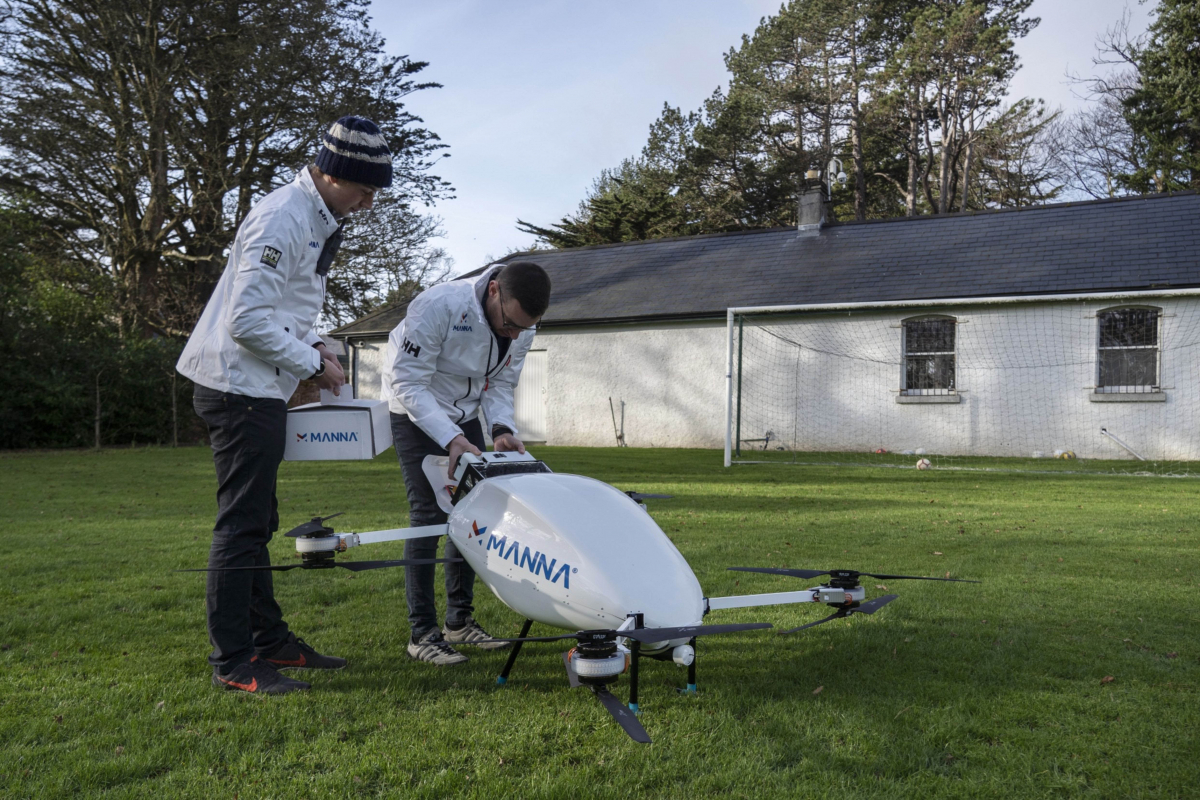
The Manna Aero MNA-1090 drone delivers a parcel of food during a flight demonstration in Dublin on Jan. 30, 2020. MUST CREDIT: Bloomberg photo by Paulo Nunes dos Santos.

The Manna Aero MNA-1090 drone delivers a parcel of food during a flight demonstration in Dublin on Jan. 30, 2020. MUST CREDIT: Bloomberg photo by Paulo Nunes dos Santos.
By Syndication Washington Post, Bloomberg · Natalia Drozdiak · WORLD, TECHNOLOGY, EUROPE 

In the suburbs of Dublin on a windy, overcast day in January, several alumni of Airbus and the U.K.’s Royal Air Force watched as a flying object, shaped a bit like a crouching frog, hovered about 10 meters (33 feet) up in the air.

The craft, called MNA-1090, opened its cargo bay door, and lowered a package — about the size of a shoebox — to the ground on a string. The robotics engineers who’d helped design the vehicle opened the carton, looked inside, and smiled: the dozen-or-so pots of Ben & Jerry’s ice cream were still perfectly frozen.

Manna Aero employees load a parcel of food into the MNA-1090 delivery drone during a flight demonstration in Dublin on Jan. 30, 2020. MUST CREDIT: Bloomberg photo by Paulo Nunes dos Santos.

Manna Aero employees load a parcel of food into the MNA-1090 delivery drone during a flight demonstration in Dublin on Jan. 30, 2020. MUST CREDIT: Bloomberg photo by Paulo Nunes dos Santos.

In late March, customers on the outskirts of Dublin, far from the dense metropolises that make services like Uber Eats and Deliveroo viable in terms of revenue, will get to try ordering food and drink the same way.

Manna.aero built the MNA-1090 drone to be an airborne replacement for the human-and-bicycle formula used the world over by food-delivery apps, and is preparing to run a couple of hundred test flights per day over several weeks to lay the groundwork for a permanent service for small Irish towns. Ben & Jerry’s, U.K. food delivery firm Just Eat, and local Irish restaurant chain Camile Thai are signed up to participate in the pilot that will take place at the University College Dublin campus.

Bobby Healy, chief executive officer of Manna Aero, poses for a photograph next to the MNA-1090 delivery drone at his home in Dublin on Jan. 30, 2020. MUST CREDIT: Bloomberg photo by Paulo Nunes dos Santos.

Bobby Healy, chief executive officer of Manna Aero, poses for a photograph next to the MNA-1090 delivery drone at his home in Dublin on Jan. 30, 2020. MUST CREDIT: Bloomberg photo by Paulo Nunes dos Santos.

“In five years, it’s going to be the most normal thing you can imagine,” Manna Chief Executive Officer Bobby Healy says.

If you live in a city, having a hot meal delivered to your doorstep in under an hour has never been easier or cheaper. For about the price of a small coffee, a human being will cycle to a restaurant, collect your freshly baked pizza and bring it to your apartment. Innovations in smartphones, mapping and gig-economy logistics have catalyzed growth of the sector, which research firm Frost & Sullivan estimates will be worth $200 billion by 2025.

But the margins are tiny for the companies handling the delivery, and the competition fierce. In October, Grubhub Inc. executives told shareholders they didn’t believe it was even possible to generate significant profit from food delivery. The cost of paying people to drive food around was just too much, they said.

Companies are looking for an alternative, and a roster of investors believe Healy might have a model that could work: a drones-as-a-service for restaurants and delivery apps.

Here’s how Healy said it will work: Manna will partner with restaurants or food courts that have a high-throughput of orders and a small outdoor space to house a drone-loading team. The Manna craft itself is about the size of a computer printer and will carry meals weighing around 2 kilograms (4.4 pounds) more than 2 kilometers (1.2 miles) in under three minutes, even in wind and rain.

Upon arriving at its destination, the drone will hover and wait for the customer to accept delivery using an app, having indicated when ordering exactly where they want their food to land — on the lawn, an outdoor dining table or just in the driveway. The drone will descend and lower the food parcel that, Healy said, will still be “piping hot.”

Manna’s vehicle has been designed to travel for 100 million hours without a problem, Healy said in an interview. But, alongside space for three 10-inch pizzas, it also has a backup battery and two parachutes, just in case.

The 51-year-old Irish entrepreneur is a mobility veteran: In 2003, he sold off travel software firm Eland Technologies to industry titan Sita.Aero. He then helped build CarTrawler into a transportation platform used by more than 100 international airlines. Healy’s got some well-known names putting $5.2 million behind Manna, including billionaire Peter Thiel’s Founders Fund, Dynamo venture capital, and FFVC, among others.

For food platforms, Manna says the service is more than just a gimmick — it will lower delivery costs and allow them to scale to currently under-served suburban areas in a profitable way. Healy said Manna’s drone delivery will cost platforms $3 to $5 per delivery.

Fabricio Bloisi, CEO of online delivery platform iFood in Brazil, said the use of drones is a “great breakthrough” for the industry because of their efficiency and ability to travel relatively large distances. He said his company’s working with Sao Paulo-based Speedbird to reduce delivery time by combining the use of drones with bicycles and motorbikes.

Uber’s testing a drone for food delivery in the San Diego area, and Alphabet Inc.’s Wing is already delivering coffee, food, medicine and household items directly to homes in Finland, Australia and the state of Virginia.

Amazon.com is also developing its Prime Air service, with a view to delivering parcels, not necessarily food, of up to five pounds via drone. The company’s bidding for a stake in the U.K.’s Deliveroo.

Healy isn’t worried. He’s pitching Manna as a business-to-business company, where its drones are used by food delivery companies, not end consumers. To the entrepreneur, Wing isn’t his rival. “We’re arming their competitors.”

Still, not everyone is so rosy about the drone delivery trend. In a sign of how divided views are on the technology, Dutch food delivery firm Takeaway.com — which recently bought Just Eat, one of Manna’s partners for the March pilot — said it thinks drone delivery for food is a “fantasy.”

“We just don’t see any way how it can work currently from a technical perspective,” said Joris Wilton, a spokesman for Takeaway. “We will not be investing in developing it in-house.”

Miki Kuusi, co-founder and CEO of Helsinki-based food delivery company Wolt, said his company has tested drone deliveries, but, “it’s been more PR than actually about a business case.”

That partly has to do with complexities around picking up the food orders, he said. Drone services have to be deeply integrated with the restaurants to ensure that drones are loaded in the right way, something “most restaurants in a hectic environment are not equipped to do.”

Then there’s the tricky issue of regulation. Airspace authorities have tightened restrictions on drone usage as their popularity with consumers and troublemakers has grown. People also express discomfort at the idea of machinery whizzing above their homes — both for privacy and safety reasons. Add to that the complexity of hauling hot food in the sky over several kilometres and it’s an uphill battle for any startup to launch a service.

Healy recognizes that changing the industry won’t come overnight, given the need to safely test the technology, get approvals from regulators at each new stage as well as from the local communities.

Still, he expects to have completed between 20,0000 and 50,000 successful deliveries by year-end.

“With this industry it’s ‘crawl, walk, run,'” Healy said, “and we want to crawl for a little while, we want everyone to feel good about it.”

AI baby monitors attract anxious parents: ‘Fear is the quickest way to get people’s attention’ #ศาสตร์เกษตรดินปุ๋ย

#ศาสตร์เกษตรดินปุ๋ย : ขอบคุณแหล่งข้อมูล : หนังสือพิมพ์ The Nation

https://www.nationthailand.com/edandtech/30383097?utm_source=category&utm_medium=internal_referral

AI baby monitors attract anxious parents: ‘Fear is the quickest way to get people’s attention’

Mar 01. 2020
By Drew Harwell
The Washington Post

Baby-monitor companies are pushing artificial-intelligence technology into the family nursery, promising that surveillance software designed to record infants’ faces, sounds and movements can save them from injury or death.

But medical, parenting and privacy experts say the safety claims made for such Internet-connected systems aren’t supported by science and merely prey on the fears of young parents to sell dubious technology. No federal agency has provided evidence to back them up.

The camera systems gather round-the-clock data on the newborns and send alerts to parents when they detect crying, vomiting or signs of distress. The companies assure parents that the systems are a vital safeguard for babies’ health, claiming they can detect the signs of parents’ worst nightmares, including suffocation and sudden infant death syndrome. One camera brand, Cubo AI, which says it has sold roughly 10,000 devices, tells parents its system “saves babies’ lives.”

“Fear is the quickest way to get people’s attention,” Cubo’s chief strategy officer, Brian Lin, told The Washington Post.

But David King, a pediatrician working at Sheffield Children’s Hospital in the United Kingdom, said there is little evidence that such AI-powered baby monitors lower the risk of SIDS or suffocation.

Simpler, more established methods – such as laying babies on their backs with their feet at the end of the crib, and removing loose bedding – are already highly effective for those concerns without the need for extra machines. Conventional baby monitors, he added, can pick up the noises of crying and vomiting, if the parent so desires.

The new devices seem mostly designed toward “catering to parents’ anxieties,” he said. “Beyond what the manufacturers say, we don’t really know the answer to what parents get from buying them.”

Critics worry that the devices could lull parents into a false sense of security, with privacy trade-offs that could be profound: The camera systems gather intimate data on children’s first weeks of life, open homes to potential cyberattacks, and can subject parents to the simmering dread of relentless alerts and false alarms – delivered to cellphones wherever the parents might be.

“We have the technology to do this kind of constant surveillance and hyper-monitoring, and maybe some of these technologies will help or save one kid,” said Kim Brooks, the author of “Small Animals: Parenthood in the Age of Fear.” “But what we don’t talk about is the cost. It’s driving parents insane.”

But interest in the systems remains high. Craig Caruso, a father in Peekskill, New York, said the Cubo has been a huge hit in his family, allowing his wife and him to watch, record video and talk to their 3-month-old son from afar. They get regular notifications on their phones of the baby’s crying and movement, and they credit the system with alerting them to when their son had pulled a blanket over his face.

As for privacy concerns, he’s unbothered. “Everyone’s stealing your data,” he said; at least this time, the trade-off gets him peace of mind.

“I’d rather put the baby’s safety over privacy,” he said of the facial-analysis software. “His face is going to change, anyway.”

There’s no public data on how many of the experimental devices have been sold. But more than a half-dozen established baby-monitor firms and private tech start-ups now advertise “AI-enabled” devices, and the companies claim tens of thousands of camera systems are now online.

The Web-connected devices include always-on cameras, microphones, thermometers, motion sensors and speakers, so viewers can talk to their baby from miles away. Internal computers use AI techniques such as “computer vision” to process the real-time sounds, sights and motion happening in and around a baby’s crib.

The systems build on a new wave of baby monitors that look for subtle clues in the newborn’s body. The New York start-up Nanit’s $379 “complete monitoring system” uses an overhead camera and special swaddling blanket to track infant breathing and sleep patterns. The Utah-based company Owlet sells a $299 “smart sock” that tracks babies’ heart rate and oxygen levels.

But the AI-enabled devices go one step further by using facial-analysis software to send alerts when they sense a baby is crying or has covered their face. The systems are also designed to automatically record images, including of the babies’ smiling, which are then stored long-term in company-controlled server space.

With no industry leader, rival start-ups are competing to offer parents features they can’t get anywhere else. The Turkey-based start-up Invidyo, which claims roughly 5,000 active users, sells a $149 baby camera with a face-detection system that can send “stranger alerts” when an unknown person is spotted in an infant’s room.

GenkiCam, whose Taiwan-based developers said they intend to sell to U.S. buyers in the coming months, also advertises “vomiting detection” that can send alerts when a baby is seen spitting up. Camera systems that can detect when the baby is smiling, crying or has her face covered will sell for $149, the company said; vomiting detection will cost $50 more.

Developers said they trained the AI systems on infant behavior by building vast databases of babies’ cries and facial expressions. Some start-ups said they used video of babies taken from sites such as YouTube, while others captured original footage and refined their systems through parents’ real-world use.

GenkiCam’s developers, based at the Industrial Technology Research Institute in Taiwan, said they collected more than 500,000 baby images and hundreds of minutes of video from new mothers staying in postpartum care centers. More than 40 babies were involved in the systems’ testing, they said.

A promotional video for the camera system states the number of babies who die in their sleep every year and tells parents to “let GenkiCam take care of your baby.” GenkiCam’s lead creator, Chih-Tsung Shen, said in an interview, “We have a new solution to use the AI chip and help parents have a good life.”

But the software faces a number of technical challenges that some computer-vision researchers said could deeply undermine its performance. Few AI systems have been trained on small children because of a lack of available data and public unease. And they point to a simpler problem: Babies’ faces are typically less distinct, with fewer of the wrinkles, scars and signs of aging that help set adult faces apart.

Demonstration videos provided by the companies to The Post revealed imperfect results: The systems, for instance, sometimes said a baby’s face was dangerously covered when it sensed fingers were in the mouth. Those inaccuracies could end up flagging harmless occurrences as emergencies or overlooking worrisome situations that parents might expect the systems to catch.

The underlying AI software is also not as flawless as some companies advertise. Systems that purport to assess a person’s mood using their facial expressions have proved critically flawed, according to research published last year by a group of experts in machine learning, child emotion and neuroscience. Facial-recognition algorithms have also been found to show wide gaps in error rates depending on a person’s age, gender or skin color, a federal study in December revealed.

Lin, Cubo’s strategy chief, said the company had first trained its software with infant data recorded in local clinics in Asia. But shortly before delivering their first units, he said, the engineers worried the cameras would perform less accurately for babies with darker skin.

“We were scared about the color of the skin – the African American babies, the Indian babies, the Westerner babies who are more pale. We were like, ‘Oh shoot, we don’t have that data, what do we do? I need black babies, man,'” he said.

Their solution was to ship an early round of the bird-shaped camera systems to a test group of parents “not only for marketing but for data collection,” he said. “If you were a black mom influencer, we said, ‘Here’s one unit, go play with it.'” The accuracy, he says, quickly improved.

The fact that babies’ faces and cries are used to refine company software should be alarming to parents who want control over how their children’s data gets used, said Jamie Williams, a staff attorney at the Electronic Frontier Foundation, a digital-rights group.

Every company has different standards on privacy and data retention, and parents won’t have any idea of what happens to their babies’ likeness once it’s recorded and saved to the companies’ domain.

“What’s this data used for now? What’s it going to be used for later?” she said. “And can parents really be expected to keep an eye on every company’s privacy policy in terms of what they track in your baby’s crib?”

The monitors could further fuel a dependence in parents feeling they need to check on their kids at all times. A survey of 1,000 new parents last year, funded by the baby-product company Summer, found that a third of the responding fathers and a quarter of the mothers said they checked their monitors every minute.

The systems also open up ethical questions about surveillance inside the home. Invidyo’s co-founder, Özgür Deniz Önür, said the camera systems’ facial-analysis and motion-detection features have made it a popular product among parents wanting to watch their babies’ caregivers.

“It’s become more like a nanny monitor than a baby monitor,” he said. Though some nannies – including the one who watches his young son – have said they’re not comfortable having their words and movements recorded, he argues the cameras’ ability to closely monitor baby behavior is worth the trade-off. “The nannies seem to have accepted the fact that there are cameras everywhere,” he added.

Company leaders say the technology is just the beginning of a new age of newborn surveillance. Future versions could hook parents on even more alluring upgrades: A patent filing by Google engineers published last year proposed a system that could use motion detection and “eye state analysis” to predict whether a baby is in a silent “discomfort state,” allowing parents to respond before the baby wakes up. (Google has said the patent filing may never become a real product.)

This style of technology could also follow babies beyond the crib. The electronics firm ViewSonic said last month that it was building a whiteboard-mounted “mood sensing” device that could monitor students and alert teachers as to how engaged a class may be. The company’s chief technology officer, Craig Scott, said in a statement that the system was still in early development but was being designed to “improve class performance.”

But this level of computer-aided surveillance, Brooks said, can also have a corrosive effect on parents’ sense of self-worth and state of mind. The devices, she said, send the message that parents have failed if they don’t watch their baby at every turn.

“We have this mind-set, this mentality, that when kids are involved, we don’t have to be rational. Any risk mitigation is worth the cost we have to pay,” Brooks said. But the system “undermines parents’ feelings of basic competence: that they can’t trust themselves to take care of their babies without a piece of $500 equipment.”

Apple’s Tim Cook sees minor supply chain changes in wake of virus #ศาสตร์เกษตรดินปุ๋ย

#ศาสตร์เกษตรดินปุ๋ย : ขอบคุณแหล่งข้อมูล : หนังสือพิมพ์ The Nation

https://www.nationthailand.com/edandtech/30383067?utm_source=category&utm_medium=internal_referral

Apple’s Tim Cook sees minor supply chain changes in wake of virus

Feb 29. 2020
By Syndication Washington Post, Bloomberg · Mark Gurman · BUSINESS, TECHNOLOGY, US-GLOBAL-MARKETS 

Apple Chief Executive Officer Tim Cook suggested the iPhone maker wouldn’t make any quick moves out of China in light of interruptions due to the coronavirus and called the situation a “temporary condition.”

“We’re talking about adjusting some knobs, not some sort of wholesale, fundamental change,” he said in an interview aired Friday on Fox Business.

Apple’s China-focused supply chain is facing two major tests — first from a trade war between the U.S. and China and more recently from manufacturing outages spurred by the spread of the virus across the world’s most populous nation.

Apple scrapped its March quarter revenue guidance recently, citing iPhone production constraints and closed stores in China due to the coronavirus. On Friday, Cook was asked if the disruption would bleed into the June quarter. “We’re still in February, there’s reason for optimism, but we’ll see,” he said.

The Apple supply chain is “relatively more important in China,” he said, but noted that he’ll be watching the coronavirus situation unfold in Korea and Italy since Apple has suppliers and businesses there as well. “It’s very important to see what happens there,” he added.

Cook also defended a supply-chain strategy that he has led for years. “We’ve worked through earthquakes, tornadoes, fires, floods, tsunamis, SARS, so we’ve had a long list of things, and the operational team is very deep at working through these,” the CEO said. “So the question for us after we get to the other side, was the resilience there or not and will we need to make some changes?”

“It will take some time, but by and large, I think this is a temporary condition, not a long term of thing,” he added.

Tech firms take a hard line against coronavirus myths. So why not other types of misinformation? #ศาสตร์เกษตรดินปุ๋ย

#ศาสตร์เกษตรดินปุ๋ย : ขอบคุณแหล่งข้อมูล : หนังสือพิมพ์ The Nation

https://www.nationthailand.com/edandtech/30383057?utm_source=category&utm_medium=internal_referral

Tech firms take a hard line against coronavirus myths. So why not other types of misinformation?

Feb 29. 2020
By The Washington Post · Craig Timberg, Tony Romm, Jay Greene · NATIONAL, BUSINESS, WORLD, TECHNOLOGY, HEALTH

As misinformation about the coronavirus has spread online, YouTube has steered its viewers to credible news reports. Facebook has swept away some posts about phony cures. And Amazon has removed 1 million products for making dubious health claims.

These efforts have drawn praise from misinformation experts, who long have complained that tech companies should do more to confront misleading claims about other subjects, from the holocaust to fake cancer cures.

But this praise has come with a caveat: If tech companies can move to promote truth on a fast-moving public-health crisis, why do they struggle to do the same on other important issues?

Such questions have been particularly pointed when it comes to how technology companies handle misleading political claims, which Facebook and other social media companies have been wary of policing, even when information is demonstrably false. While tech companies often express their reluctance to act as “arbiters of truth,” their response to the coronavirus outbreak makes clear companies are willing to arbitrate some truths – so long as they are seen as uncontroversial and not politically charged.

“This is what it looks like when they really decide to take a stand and do something,” said Danny Rogers, co-founder of the Global Disinformation Index, a research group. “They haven’t had the policy will to act [on political misinformation]. Once they act, they can clearly be a force for good.”

Despite the work of tech companies, falsehoods about the coronavirus have burgeoned along with the outbreak itself, drawing together long-running conspiracy narratives about the contrails of jetliners, the rollout of 5G wireless technology and the supposed development of secret bioweapons.

Much of this has been accompanied by ads making unproven claims about the value of nutritional supplements, protective masks or supposed medicines in combating the outbreak. Other claims have appeared online with ads for survivalist gear and durable packaged food, or pitches for investors to stock up on gold and other precious metals as a hedge against a potentially devalued dollar.

“This is the first social media pandemic, if you will,” said Carl Bergstrom, a University of Washington biology professor who studies disinformation. “A social media environment is not designed to produce accurate claims. It’s designed to keep you on the site.”

The surge of news coverage in recent days also has sparked complaints from President Donald Trump’s political allies that fears of coronavirus are overblown and being intentionally hyped by his opponents – adding a dose of unproven political spin to what previously had been nonpolitical public conversation about the outbreak.

While technology companies permit many dubious claims to appear on their platforms, they have sought to check the spread of particularly egregious misinformation about the outbreak – such as claims that a certain medicine or nutritional supplement can cure coronavirus – and to direct users to authoritative information sources.

This has been especially visible on YouTube, which for years has been criticized for its role in spreading conspiracy theories, hateful ideologies and propaganda. Major reforms announced last year, however, curbed the platform’s propensity to direct users to such content through its recommendation algorithm, said longtime critic Guillaume Chaslot, a former YouTube engineer who founded the watchdog group AlgoTransparency.

The result is that searches for “coronavirus” prompts lists of mainstream news reports, and YouTube’s autoplay is offering videos from authoritative sources – and not conspiracy theories about the outbreak – according to tracking by AlgoTransparency.

Chaslot said that YouTube still hosts numerous videos featuring conspiracy theories, including about coronavirus, but they are less likely to be recommended to users.

“They’ve made a lot of improvements, but it’s still far from being enough,” Chaslot said.

YouTube videos about coronavirus also carry a label below saying, “Get the latest information from the World Health Organization about coronavirus.” The words link to the WHO’s information page on the outbreak.

“We have clear policies that prohibit videos promoting medically unsubstantiated methods to prevent the coronavirus in place of seeking medical treatment, and we quickly remove videos violating these policies when flagged to us,” said Farshad Shadloo, a YouTube spokesperson

Facebook users who search for coronavirus receive suggestions that they visit the Centers for Disease Control and Prevention site to “help you stay healthy and help prevent the spread of the virus,” with a link to a CDC Web page on the outbreak. Twitter does the same, with a box titled “Know the facts.”

Reddit imposed a “quarantine” on a coronavirus-themed group that hosted misinformation – warning users before they enter – and, early in the outbreak, posted a banner to direct users to “r/AskScience,” a community featuring accurate answers to medical questions, including about coronavirus.

Facebook, meanwhile, announced that it would take down posts that promoted bogus cures for coronavirus, going a step beyond its policy for addressing alleged cures to most other diseases, such as cancer and AIDS, which are permitted on the site.

The responses from the tech companies build on efforts for battling misinformation about vaccines. Facebook’s information box that pops up when users search for “coronavirus” – saying “Looking for coronavirus info?” – is almost identical to one that pops up for users searching for “vaccine.” (Both lead to CDC information pages.)

But Claire Wardle, the U.S. director of First Draft, a nonprofit group that combats misinformation, said the companies have been more aggressive on targeting false claims about the coronavirus because the outbreak has largely lacked political controversy.

The tech companies also are able to direct users searching for information to widely acknowledged international authorities, such as the WHO and CDC. There are no equivalents for many political claims in today’s polarized world, where nearly every utterance has its detractors and defenders – and companies that appear to favor one part of the ideological spectrum often come under attack from the other side.

“It’s this question of consensus,” said Wardell. “There aren’t two sides to health stuff.”

Facebook has come under the most sustained criticism for its handling of political misinformation, especially since the company announced in September that it would not subject statements or ads by politicians to the scrutiny of its independent fact-checking teams. Chief Executive Mark Zuckerberg later outlined his logic in a speech at Georgetown University in which he argued that democracies are best served by giving political speech an especially wide berth so that truths can emerge through robust debate.

But Democrats, backed by numerous misinformation researchers, have blasted the decision as serving Facebook’s business priorities by encouraging engagement on the platform and avoiding alienating politically powerful constituencies. This includes followers of President Trump, whose statements have been riddled with well-documented falsehoods, exaggerations and misstatements.

“Facebook is committed to supporting the global health community’s work by limiting the spread of coronavirus misinformation and connecting people to authoritative and helpful information about the virus and its prevention,” said company spokesman Andy Stone.

Amazon said it has blocked or removed 1 million products sold by third-party merchants on its retail site for suspect or misleading claims about coronavirus. The company warned at least one seller of surgical face masks that it would remove its listing for making false medical claims, according to a CNBC report. (The Washington Post is owned by Amazon chief executive Jeff Bezos.)

“Amazon has always required sellers provide accurate information on product detail pages and we remove those that violate our policies,” said company spokeswoman Cecilia Fan.

To counter misinformation, Amazon this month began showing shoppers who search “coronavirus” a message at top of the results to “Learn more about Coronavirus protective measures” that links to the CDC website. Typically, that spot in Amazon’s search results features ad-sponsored products.

Amazon also no longer allows merchants to bid on “coronavirus” as a keyword in search results, as well as related words such as “covid-19,” the disease caused by the coronavirus.

“They are always going to try to avoid controversy when it comes to advertising,” said John Ghiorso, chief executive of Amazon-focused ad agency and consulting firm Orca Pacific.

Still, some sponsored links have slipped through. Three survival books showed up as sponsored links this week on searches for “covid19,” as did disinfectant products on searches for “kill coronavirus.”

Boeing admits it failed to test the Starliner spacecraft adequately before its maiden flight #ศาสตร์เกษตรดินปุ๋ย

#ศาสตร์เกษตรดินปุ๋ย : ขอบคุณแหล่งข้อมูล : หนังสือพิมพ์ The Nation

https://www.nationthailand.com/edandtech/30383053?utm_source=category&utm_medium=internal_referral

Boeing admits it failed to test the Starliner spacecraft adequately before its maiden flight

Feb 29. 2020
File Photo/ Syndication Washington Post

File Photo/ Syndication Washington Post
By The Washington Post · Christian Davenport · NATIONAL, BUSINESS, WORLD, TECHNOLOGY, TRANSPORTATION 

Boeing acknowledged Friday that its procedures for testing the Starliner spacecraft’s systems ahead of its marred maiden flight in December were seriously flawed and that it now plans to revamp them as it scrambles to reassure NASA that one of its longest and most trusted contractors is up to the task of flying astronauts into space.

In the most comprehensive comments to date on what went wrong during Boeing’s test mission – an autonomous flight without astronauts – to the International Space Station, John Mulholland, the manager of Boeing’s Starliner program, said the company had cut short a key test of the craft’s software, failed to test a critical system against crucial hardware, and instead used a flawed computer system to conduct the test.

It was a stunning admission from the world’s largest aerospace company, which has been beset with questions about the software aboard its 737 Max aircraft. That software is being blamed for two fatal crashes that killed 346 people and led to the global grounding of the aircraft nearly a year ago.

Mulholland said that in addition to reviewing all 1 million lines of software code on the spacecraft, Boeing will revamp the way it tests its systems before they are put into service.

“From a hindsight standpoint, it’s very easy to see what we should have done because we uncovered an error,” he said. “But I really don’t want anyone to have the impression that this team tried to take shortcuts. They didn’t. They did an abundance of testing. And in certain areas obviously we have some gaps to fill.”

With the flight of its Starliner spacecraft, Boeing had hoped to show that it was getting close to flying NASA’s astronauts to the space station as part of the agency’s multibillion-dollar “commercial crew program.” But instead, the mission became another in a series of significant setbacks for the beleaguered company.

The Starliner spacecraft encountered problems almost immediately after reaching space when its onboard computer, with its time miscalibrated by 11 hours, failed to fire the thrusters that would send the craft on a path to the space station. While aloft, the spacecraft struggled to communicate with the ground. By the time controllers could figure out what went wrong, the spacecraft had burned too much fuel, preventing it from docking with the station, one of its primary objectives.

When Boeing officials discovered a software issue had caused the timing problem, they immediately began to hunt for other potential problems. It found a big one: another issue that would have fired the wrong thrusters during the separation of the service module and the crew module.

Boeing was able to quickly diagnose that problem and send a software patch to the spacecraft. The spacecraft then landed safely in the New Mexico desert several days ahead of schedule.

NASA is investigating the mishap and expects to release more results of its probe next week. The space agency is still mulling whether to require Boeing to fly another test mission without astronauts or to proceed to a flight with three people on board

Doug Loverro, NASA’s head of human spaceflight, said earlier this month that Boeing’s problems were a “fundamental” and widespread “breakdown of the software process.”

“We don’t know how many software errors we have – if we have just two or many hundreds,” he said.

He said the company needed to make its testing procedures more robust. And in a blog post, NASA said “there were numerous instances where the Boeing software quality processes either should have or could have uncovered the defects.” It added that the problems could have had serious consequences and “led to spacecraft loss.”

Speaking to reporters on Friday, Mulholland said that the company has been looking “to see if we have any other coding anomalies we need to fix. We haven’t found any yet.”

While many things went right during the mission, from its heatshield to environmental controls to the landing, he said the company knew “we need to do our part to rebuild trust with our customer.”

On the timing issue, he said the clock on the spacecraft was pulling its time from the rocket. During tests of the software in the laboratory, the crews were primarily concerned with making sure the two vehicles were communicating correctly. The testing team proved there were no communication issues, but it cut the test short so it never uncovered that the spacecraft was reading the wrong time.

“Unfortunately, the run was stopped after we separated from the launch vehicle,” he said.

If the test had continued, “we would have caught it.”

Boeing also had a breakdown in the testing of another key milestone in the flight – the moment when the service module was to separate from the crew module just before re-entry into the atmosphere. At the same time the test of the software was supposed to happen, Boeing had simultaneously scheduled a “hot fire” test of the module’s thrusters. As a result, the actual service module hardware was at another location for that test. To test the software, then, Boeing officials used an “emulator,” a computer system used to mimic the service module.

The problem was the emulator had the wrong thruster configuration programmed in.

Mulholland said the problems with the tests were “definitely not a matter of cost. Cost has never been in any way a key factor in any of our decisions on how we need to test our systems. The team thought it was more logical to break these mission phases into chunks and to do a lot of testing in those smaller chunks.”

In the future, he said, Boeing would continue to test the systems in smaller chunks but then also perform longer tests to simulate the moment from launch to docking at the space station, and then from release to landing.

“This is a tough business,” he said. “It’s a game of inches. And so you had a highly talented, very dedicated team that made that error. And going forward we just need to make sure we have the discipline that it won’t happen again.”

Oil companies can’t accurately locate polar bear dens in the Arctic, study finds. That could be grave for mothers, cubs. #ศาสตร์เกษตรดินปุ๋ย

#ศาสตร์เกษตรดินปุ๋ย : ขอบคุณแหล่งข้อมูล : หนังสือพิมพ์ The Nation

https://www.nationthailand.com/edandtech/30382983?utm_source=category&utm_medium=internal_referral

Oil companies can’t accurately locate polar bear dens in the Arctic, study finds. That could be grave for mothers, cubs.

Feb 28. 2020
A polar bear walks across rubble ice in the Alaska portion of the southern Beaufort Sea. MUST CREDIT: Mike Lockhart, USGS handout photo

A polar bear walks across rubble ice in the Alaska portion of the southern Beaufort Sea. MUST CREDIT: Mike Lockhart, USGS handout photo
By  The Washington Post · Darryl Fears · NATIONAL, BUSINESS, SCIENCE-ENVIRONMENT

A method used by fuel companies to avoid polar bear dens before they search for oil or gas works less than half the time, according to a new study released Thursday. That failure could pose a grave risk to mothers and their cubs in the dens, which are hidden under ice, if the Trump administration finalizes its plan to expand drilling into the Arctic National Wildlife Refuge.

According to the study published in the journal PLOS One, radar mounted on airplanes missed 55% of dens that were known to exist west of the Alaskan refuge off Prudhoe Bay. Oil operators search for the dens to comply with a federal requirement to build roads and facilities at least a mile away from the hibernating bears, whose shrinking populations are designated as threatened under the Endangered Species Act.

Since the 1990s, mining operations have used surveillance technology known as FLIR – Forward Looking Infared Radar – to identify the heat signature of maternal bears that bore as deep as four meters under thick ice to give birth. But FLIR is often disrupted by bad weather that blinds it to dens in some surveys and causes it to falsely identify dens in others.

Researchers who used the surveys provided by the industry as a guide to find dens and study bears between 2004 and 2016 found at least 18 dens that the radar missed. Conversely, they said, bears didn’t occupy areas that surveys said they inhabited.

“We froze our bleeps off out there,” said Tom Smith, a study co-author and associate professor at Brigham Young University. “I mean, it’s rough. When someone is telling us there’s a den here and we invest a lot of time and a lot of effort and there’s nothing there, and then we’re going down the sea ice 10 miles away and there’s a den when they said there wasn’t any, we took it kind of personal. We said this is useless. This is not working.”

Smith and researchers at Polar Bears International, a nonprofit conservation group, embarked on their study of aerial surveys using FLIR. They determined the radar can easily be disrupted if surveys are conducted in windy conditions or bad winter weather on the tundra.

Patrick Bergt, a manager of regulatory and legal affairs for the Alaska Oil and Gas Association, said FLIR “is just one of many mitigation activities” used by the industry to minimize harm to polar bears. Bergt said 40 years of data collection has shown “at most, a negligible impact on polar bear populations” in the North Slope Borough, which includes the Prudhoe Bay area where the study was conducted.

Much of what scientists understand about polar bears “is due in large part to the funding, personnel, and cooperation of oil and gas operators” that have a long history of cooperation with the U.S. Fish and Wildlife Service officials in the area, Bergt said.

The study comes five months after the Trump administration announced a controversial proposal to allow petroleum operation in the entire coastal plain of the Arctic National Wildlife Refuge, the most aggressive of five listed options. The proposal is in the process of being finalized, possibly by year’s end. It would be the first time exploration and drilling would be allowed in the environmentally pristine refuge, a critical habitat for polar bears.

Under the Interior Department’s Coastal Plain Oil and Gas Leasing Program, 1.5 million acres would be offered to the oil and gas industry, which is eyeing a potentially rich reward in the environmentally pristine refuge – an estimated 7.5 billion barrels of recoverable oil and more than 7 trillion cubic feet of natural gas.

But the potential loss of wildlife is also huge. The Arctic refuge hosts wolves, migratory birds and the massive Porcupine caribou herd that is sacred to the Vuntut Gwitchin First Nation, an indigenous group that has fought exploration and drilling.

According to the Bureau of Land Management, a division of Interior, oil and gas exploration and development could impact just about everything: Native hunting, water quality, greenhouse gas emissions, other types of air pollution and the breakup of permafrost. It could also result in oil spills and unintended boat strikes on marine mammals, to name only a few.

Bears stand to be impacted by airstrips and well pads, miles of oil pipelines, storage sites, a sewage treatment plant and 200 miles of roads.

Failing to correctly identify dens could have serious consequences. Polar bear mothers could be chased from dens by development activity such as seismic testing and road building before cubs are strong enough to survive the rigors of life on Arctic terrain. The animals could also be crushed or buried alive.

“The likelihood that maternal dens could be disturbed can be expected to increase” if and when oil and gas exploration is expanded to the refuge, the study said. “Because polar bear cubs cannot leave the shelter of the den until approximately 3 months of age, disruption . . . can have negative consequences.”

Even under the best conditions, locating a polar bear den is difficult. Radar often cannot detect their heat signature under a meter of thick ice, and mothers sometimes dig as deep as four meters.

Off Prudhoe Bay, where the winter wind blows hard and temperatures can plummet to 50 degrees below zero, it was possible for researchers to walk on thick ice without knowing a den was beneath them, Smith said.

Pregnant mothers bore into snow drifts in November and December, Smith said. Their babies are born weighing about a kilogram (2.2 pounds) around New Year’s Day. Before they emerge in spring, mothers feed them from stores of fat to help them grow.

“They have to socialize and create a bond with their cubs so that they’ll stay close for a couple of years or they could wander off and get picked off by a predator,” he said. “They develop muscle skills . . . so they can learn to walk and jump on ice.”

But if the mothers are disturbed, or the den destroyed, and they leave prematurely, all that is potentially lost. “That’s not going to end well for those little cubs,” Smith said.

According to the study, co-authored by Steven Amstrup and Geoffrey York of Polar Bears International, FLIR has flaws that the Arctic’s harsh conditions expose nearly every time it is used. Howling wind throws it off. It cannot detect heat signatures under a meter of ice.

Smith’s student researchers used handheld radar to detect dens. Alyeska contracts pilots to fly Twin Otter fixed-wing airplanes to canvass a wide area with attached radar.

“They miss them because they’re flying in bad weather,” Smith said. “They’re not paying heed to all the research that’s gone before that says you can’t just go out and fly.”

At Prudhoe Bay, the weather is unforgiving in the spring and especially bad in winter when the surveys are conducted. The findings are shared with the U.S. Fish and Wildlife Service, another division of Interior, that manages the area. Researchers rely on the word of the agency’s biologists.

“We were told by the Fish and Wildlife Service that a bear was gone,” Smith said. So he had one of his students dig with a shovel to determine the thickness of the den. “All of a sudden, right at his feet, a bear sticks its head out.” The student ran for his life. The bear stayed for another week.

“Yeah, it’s alarming” that surveys miss so many dens, Smith said. “It really undermines your confidence that they truly know where the bears are.”