“KUDOS Super Sensing” returns to Thailand at Bangkok Design Week 2020 #ศาสตร์เกษตรดินปุ๋ย

#ศาสตร์เกษตรดินปุ๋ย : ขอบคุณแหล่งข้อมูล : หนังสือพิมพ์ The Nation

https://www.nationthailand.com/edandtech/30382961?utm_source=category&utm_medium=internal_referral

“KUDOS Super Sensing” returns to Thailand at Bangkok Design Week 2020
Feb 28. 2020
By The Nation

It can be said that the scientific technology and industrial systems that currently support our lives have advanced largely due to the processes of mass-producing diverse materials, something that utilises large volumes of energy generated by transforming the earth’s resources.

It is also certainly true, however, that this has also caused various environmental and social problems. Today, the demand for reassessment of and improvements in regard to our inefficient use of resources and energy is increasing day by day, and it is necessary to propose new designs and technological theories that offer a specific directionality for these issues.

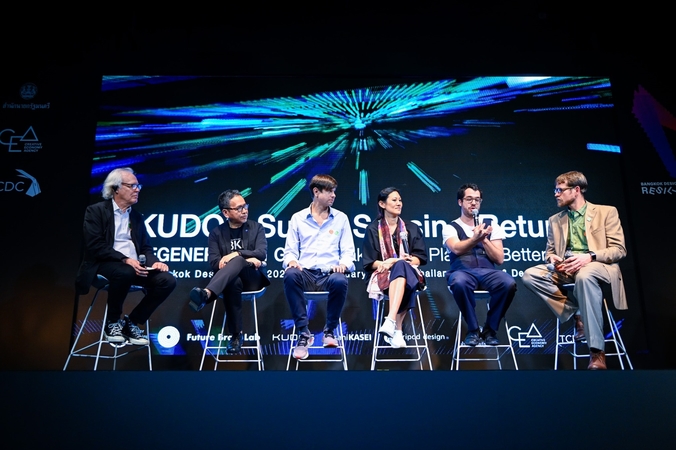
Following the success of “KUDOS Super Sensing” last year, KUDOS, a leading high quality sanitary ware and digital door lock provider – in collaboration with Super Sensing Forum, Asahi Kasei, and Creative Economy Agency (CEA) – introduced the newest discovery of Regenerative Technology under the theme of “KUDOS Super Sensing Returns” at Bangkok Design Week 2020. Brought directly from Consumer Electronics Show (CES) as Asia premiere, the advanced sensing design and technology can generate endless micro electricity anytime, anywhere and from any source.

The event featured an international panel of keynote speakers, including Satoshi Nakagawa, Tucker Viemeister, Forrest Megger, Eric Schuldenfrei, Marisa Yiu and Andre Feliciano. The concept of “Regenerating Good Making Our Planet a Better Place” is that of industrial design and systems for the purpose of “regeneration.” It serves as an opportunity for the re-examination of both those systems that continue solely to consume precious energy and those environmental problems that result from the proliferation of plastics in our everyday lives, as well as for discussion and investigation that might lead to the discovery of new technologies and design proposals.

Satoshi Nakagawa, the founder of Super Sensing Forum

Satoshi Nakagawa, the founder of Super Sensing Forum

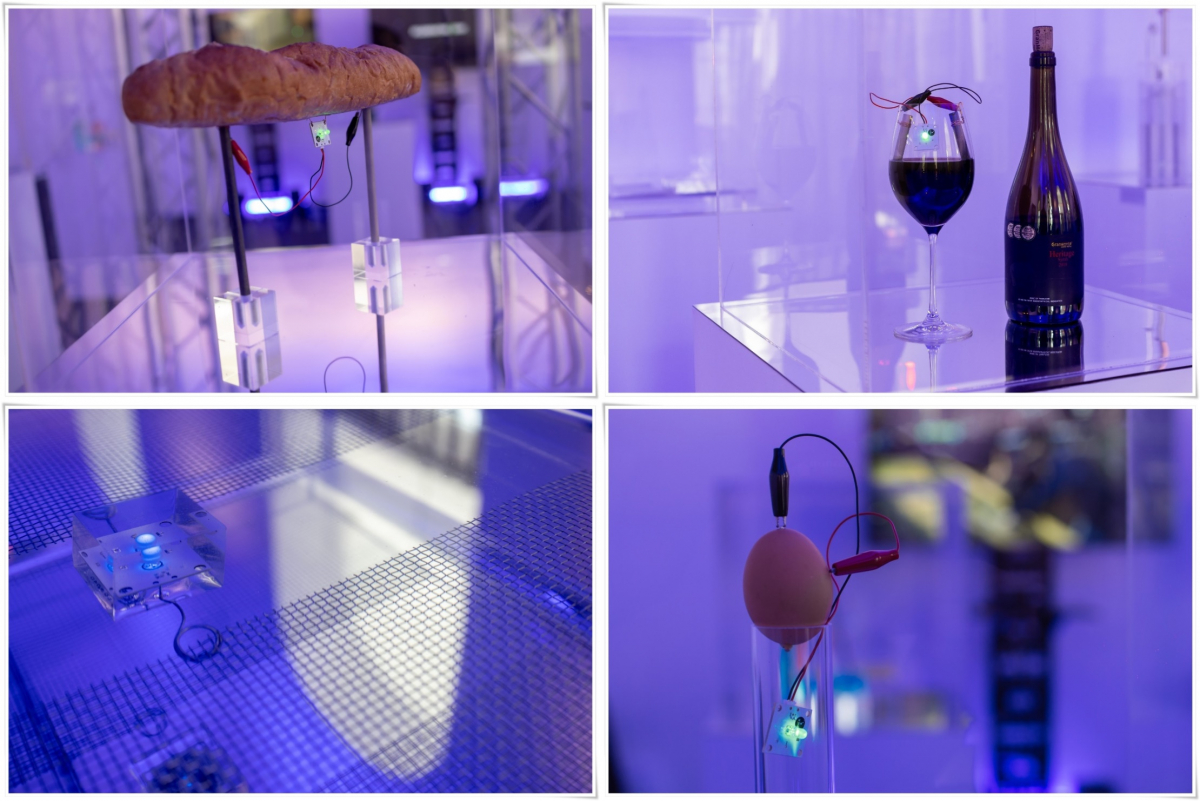
“Regenerating Good Project – E!ROOM” that we showcased this time is the Super Regenerator technology, debuted in Asia for the first time after CES 2020. Furthered from the Micro Energy generated from bacteria theory, it is able to generate electricity from anything and anywhere even from living things” said Satoshi Nakagawa, the founder of Super Sensing Forum. He adds that “This technology can help provide light in an emergency time, in natural disaster situation or at a far way place; moreover, it can help in developing environmentally friendly design and reduce natural resources consumption in the future”

It showcased samples of energy generated from our surrounding stuff, for example electricity from food, from water or from soil and bells ringing from spindle motor powered by energy obtained from any sources with the help of a step-up DC-DC converter boots up 1μW of power to 4-8 volts.

“This converter provides a long term, multipoint and low-cost electricity for electronic devices and sensing network; thus, accelerating large-scale IoT (Internet of Things) implementations. Moreover, hard working and continually research bring about the Sensorless Sensor, a new theory that power generation from any sources is an indication of power and by itself a sensor”

 Santi Srivicharnkul, Chief Executive Officer of CIT Corporation Limited and KUDOS brand

Santi Srivicharnkul, Chief Executive Officer of CIT Corporation Limited and KUDOS brand

“Sensing technology is one of the emerging trends that allows us to come up with new products and services that never exist before. With Nakagawa-sensei’s latest discovery in Super Regenerator, the potential of IoT will even become greater. Innovators can become more creative to see if what else sensors could improve personal lives, agricultural productivity and national security because there is no limitation for power generation. Hopefully, Thai entrepreneurs were be able to find a winning product that combines both design and technology to make people’s lives and the world better” said Santi Srivicharnkul, Chief Executive Officer of CIT Corporation Limited and KUDOS brand.Super Sensing technology is not just only a magic tool that impacts a whole industrial design but also a game changer for any business opportunities. All the world’s advanced sensors and technologies, and the act of acquiring data as defined as “Sensing,” will certainly allow a new generation of designers and product managers to design better products and services in the IoT space.
As we embark on a journey of rethinking about business and society, we may look at this technology as a big step forward for the future and thank Satoshi Nakagawa for his greatest discovery, Santi said.

Amazon to open larger Go Grocery store in hometown Seattle #ศาสตร์เกษตรดินปุ๋ย

#ศาสตร์เกษตรดินปุ๋ย : ขอบคุณแหล่งข้อมูล : หนังสือพิมพ์ The Nation

https://www.nationthailand.com/edandtech/30382847?utm_source=category&utm_medium=internal_referral

Amazon to open larger Go Grocery store in hometown Seattle

Feb 26. 2020
nterior of the new Amazon Go Store in the Capitol Hill neighborhood of Seattle on Feb. 24, 2020. MUST CREDIT: Chona Kasinger/Bloomberg.

nterior of the new Amazon Go Store in the Capitol Hill neighborhood of Seattle on Feb. 24, 2020. MUST CREDIT: Chona Kasinger/Bloomberg.
By Syndication Washington Post, Bloomberg · Matt Day · BUSINESS, RETAIL, FOOD

Amazon.com Inc. is taking aim at the urban grocery market with a larger version of its cashierless Go convenience store.

The company on Tuesday is set to open the first Go Grocery, located in Seattle’s Capitol Hill neighborhood, not far from the online retailer’s headquarters. The store is about five times the size of a typical Amazon Go – meaning it can accomodate shopping carts – and carries baked goods, meat, produce and household items.

Amazon is betting a frictionless checkout experience will help it grab a bigger share of the $800 billion U.S. grocery market, now dominated by Walmart Inc.

The Go Grocery stocks about 5,000 items, compared with 500 to 700 in a typical Go store, said Cameron Janes, who oversees the Go project along with several other brick-and-mortar experiments. The selection includes non-food staples like paper towels and laundry detergent but stops well short of the array offered at a traditional grocery store. Amazon’s Whole Foods markets carry tens of thousands of products.

Like the 25 existing Amazon Go convenience stores located in Seattle, Chicago, San Francisco and New York, Go Grocery uses cameras and sensors to track people and note what they took off the shelf. Shoppers are charged when they exit. But unlike the early stores, Go Grocery uses newer versions of the system capable of identifying produce without wrappers for each apple, cabbage or pineapple. That makes stocking easier and lowers costs in an industry with notoriously tight margins.

“We can pretty much handle everything” stocked by a regular grocer, Janes said of the latest technology.

He showed off grab-and-go food, coffee and baked goods from local purveyors. The store uses the same meat suppliers as the Amazon Fresh grocery delivery service, he said, and shares some organic produce and fish suppliers with Whole Foods. Unlike the high-end organic grocer, Go Grocery stocks items like Coca-Cola and Big League Chew bubble gum.

Amazon leased the retail space at 610 E. Pike Street in Seattle several years ago with the intention of using it for the first Go store. Given a broad mandate to shake up physical retail, the Go team originally planned to build a checkout-free supermarket, complete with a butcher, cheesemonger and coffee bar.

Chief Executive Officer Jeff Bezos toured a prototype store in late 2015 and said it could confuse customers. Instead, he asked the team to focus on refining the people-tracking technology and checkout experience. Go opened to the public three years later as a convenience store in Amazon’s headquarters, and the original space sat empty – until now.

The store’s opening won’t be Amazon’s last new take on grocery shopping this year. In Los Angeles, the company is preparing the first in a new line of grocery stores, with traditional checkout counters but distinct from the Whole Foods chain.

Amazon is also weighing other Go formats and potentially licensing the technology to other companies, Bloomberg reported last year. Blueprints filed in Washington, D.C., suggest a Go Grocery is coming to the nation’s capital, too.

Janes didn’t comment on plans for future stores but said the new Go Grocery will target apartment dwellers rather than the office workers the existing Go stores mostly serve.

“This is our first one,” Janes said. “I think we’re going to learn and see where they’re going to work … high-density residential areas is where we’re starting.”

Nate Silver: ‘There were some models that gave Trump as little as a 1 or 2 percent chance’ of winning in 2016 #ศาสตร์เกษตรดินปุ๋ย

#ศาสตร์เกษตรดินปุ๋ย : ขอบคุณแหล่งข้อมูล : หนังสือพิมพ์ The Nation

https://www.nationthailand.com/edandtech/30382834?utm_source=category&utm_medium=internal_referral

Nate Silver: ‘There were some models that gave Trump as little as a 1 or 2 percent chance’ of winning in 2016

Feb 25. 2020
Nate Silver at ABC Studios in New York on Feb. 13, 2020. MUST CREDIT: Photo for The Washington Post by Rick Wenner.

Nate Silver at ABC Studios in New York on Feb. 13, 2020. MUST CREDIT: Photo for The Washington Post by Rick Wenner.
By Special To The Washington Post · KK Ottesen · NATIONAL, POLITICS, MEDIA 

Nate Silver, 42, is founder and editor in chief of FiveThirtyEight, owned by ABC News. He correctly predicted the outcome in 49 of the 50 states in 2008’s presidential race and in all 50 states in 2012. He is the author of “The Signal and the Noise: Why So Many Predictions Fail – But Some Don’t.”

Q: People have called you a forecasting guru, a hero to nerds, a disrupter, a data journalist. How do you describe what you do?

A: I’m a journalist and an applied statistician, basically. And trying to explore the overlap between those two things. There are lots of things I don’t do well, but I am actually good at building statistical models that take a complex process, like the presidential primaries or the NBA season, and represent that mathematically. And it’s not just a matter of plugging some numbers into a computer; you’re trying to actually create a model of the real world. And the real world is complicated.

Q: Before the 2016 presidential election, your record was pretty spot-on in forecasting who would win. And you were closer than most on the 2016 election.

A: There were some models that gave Trump as little as a 1 or 2 percent chance, and we had him with a 30 percent chance – 29 percent, I think. Those are really different answers. One is saying, look, Trump’s going to win the election about as often as a good baseball player gets a base hit. And one is saying, this is a once-in-a-blue-moon scenario. We were quite emphatic that the election was competitive, and that Trump had a chance.

If you were betting the line in Vegas, then you would have used our model to lay a lot of money on Trump. Even though he wasn’t a favorite, our model said that Trump is significantly underpriced and that, on average, you’ll double your money by betting on Trump. Even though you lose most of the time, you make so much when he wins. And so, to us, the fact that Trump won this kind of narrow electoral college victory was exactly the scenario that our model identified as the reason he was more likely to win than people assumed. Because we’d done the historical work and the data work and the reporting work to actually kind of think through these things a little bit more deeply.

Q: I was wondering if that election brought you a different way of looking at things?

A: No. Because from a polling standpoint, 2016 was an extraordinarily boring and ordinary and normal election. From every other standpoint, it was remarkable. And not necessarily remarkable in a good way, depending on how you felt about the outcome. The one thing that said Donald Trump could become president was the polls. The polls showed him within the margin of error. The polls showed him, by the way, winning the Republican primary pretty much after the first month.

So the forecast is objective, but the way people look at probabilities is very contingent on what their assumptions are. The same person can look at a 70-30 probability, depending on their assumptions, and say, “OK, this proves that such-and-such is going to happen, thank God.” Or they can say, “Oh my gosh, there’s still a 30 percent chance of this happening.” You know, imagine if you’re boarding a flight and the flight attendant says, there’s a 70-30 chance that the plane will crash. It’s not terribly reassuring, right? So in some ways, you want people to actually trust their gut less. (Laughs.) You want people to say, look, maybe you can’t see how Trump wins the election or Bernie Sanders wins the primary or whatever else, but just be aware that, historically, this is something that could happen.

Q: If you were to apply your analysis to another area, what would that be?

A: The more I do this, the more focused I get. One misconception people have about the big-data-slash-analytics world is, if you know how to do analytics, you can solve any problem. I mean, not really, right? You still need a lot of domain knowledge about the field you’re trying to study.

I play poker on the side, right? A pretty on-brand activity. Well, there are people who specialize in poker for a living. They probably have the same types of intelligence that I have, but spend their whole life devoted to it. So I’m probably better than the average person off the street, but I get my a– kicked by dedicated professionals.

Elections are actually really tricky to cover because they require a lot of specialized knowledge. And there’s a lot of expertise that has historically been missing from campaign coverage. What happens, I think, is when people are smart but don’t necessarily have expertise, they tend to fill in the blanks with stuff that’s speculative. That’s the kind of polite way to put it, right? The impolite way is that you fill it in with a kind of B.S. that sounds good at a cocktail party, but which doesn’t necessarily hold up that well to scrutiny. I almost feel like we’re a journalistic throwback, saying, “Let’s take a step back and give reliable, unbiased information to assess a situation.”

Apple, TikTok decline to testify at second congressional hearing probing tech’s ties to China #ศาสตร์เกษตรดินปุ๋ย

#ศาสตร์เกษตรดินปุ๋ย : ขอบคุณแหล่งข้อมูล : หนังสือพิมพ์ The Nation

https://www.nationthailand.com/edandtech/30382776?utm_source=category&utm_medium=internal_referral

Apple, TikTok decline to testify at second congressional hearing probing tech’s ties to China

Feb 25. 2020
By The Washington Post · Tony Romm · NATIONAL, WORLD, TECHNOLOGY, CONGRESS, ASIA-PACIFIC 

Apple and TikTok each have declined a request to testify at a March congressional hearing that would have probed their relationships with China, a move that threatens to ratchet up tensions with federal lawmakers who see Beijing as a privacy and security threat.

Sen. Josh Hawley, R-Mo., one of TikTok’s leading critics, had invited the two tech firms to appear at a March 4 session, his office confirmed Monday. Both previously had declined to testify at a hearing last year on the same issue.

TikTok confirmed Monday that it told Hawley it would dispatch a top aide to appear at an unspecified later date, just not next week, citing a recent raft of new hires at senior ranks of the company. Apple did not respond to a request for comment about its expected absence.

In sitting out the hearing, Apple and TikTok still risk a verbal lashing on Capitol Hill, where Hawley, the chairman of a key Senate subcommittee, has upbraided both firms for not answering questions about their Chinese ties.

Hawley lambasted the iPhone giant at his hearing last year for storing Chinese users’ data locally in accordance with government rules. The move threatens Apple customers’ security, given Beijing’s broad surveillance powers, Hawley said then, even though Apple stresses it has not built back doors into its products.

With TikTok, Hawley and other lawmakers have been sharply critical of its Chinese-based parent company, ByteDance. Despite its repeated assurances, TikTok has struggled to convince lawmakers that the app is operating independently from Beijing, which heavily censors online content.

Hawley still plans to hold the March hearing in which U.S. law enforcement officials are set to testify, according to his office.

The tussle illustrates the growing appetite for answers among some lawmakers, particularly those who are generally skeptical of China and see Beijing as a threat to free speech and online privacy and security.

TikTok in particular has drawn bipartisan congressional scorn and sparked a national security probe into its origins. Branches of the U.S. military recently have barred service members from using the app on their official phones, fearing security risks. And the Transportation Security Administration this weekend said it would stop allowing its employees to use the app, responding to concerns first raised by Senate Minority Leader Chuck Schumer, D-N.Y.

In response, TikTok has sought to assuage federal regulators about its privacy and security practices. It revised its rules about what content it permits and prohibits, seeking to tamp down concerns of censorship. It also relocated the oversight of its content-management teams to the United States. The move came after news reports in which former employees recalled China exerting heavy influence over TikTok’s practices.

And the company in recent months has set its sights on Washington, hiring its first lobbyists and a new top official in the nation’s capital to try to forge better relationships with regulators. It had previously planned to dispatch its top executive, Alex Zhu, for meetings with lawmakers, but TikTok later canceled the trip, citing unspecified scheduling concerns.

Apple rebuffed by high court in $1 billion dispute with VirnetX #ศาสตร์เกษตรดินปุ๋ย

#ศาสตร์เกษตรดินปุ๋ย : ขอบคุณแหล่งข้อมูล : หนังสือพิมพ์ The Nation

https://www.nationthailand.com/edandtech/30382766?utm_source=category&utm_medium=internal_referral

Apple rebuffed by high court in $1 billion dispute with VirnetX

Feb 24. 2020
By Syndication Washington Post, Bloomberg · Susan Decker · NATIONAL, BUSINESS, COURTSLAW, US-GLOBAL-MARKETS 

The U.S. Supreme Court refused to consider an appeal by Apple Inc. as the iPhone maker seeks to avoid paying as much as $1 billion in patent damages to upstart software developer VirnetX Holding Corp.

VirnetX, a Nevada company with less than $2 million in annual revenue, has waged a decade-long fight to collect royalties from Apple for secure communications technology used in FaceTime and virtual private network programs on devices including the iPhone, iPad and Mac computers.

VirnetX jumped as much as 11% on the news.

The high court denied Apple’s petition arguing that a $439 million judgment from the first of two cases brought by VirnetX was “grossly excessive” and should be thrown out because the U.S. Patent and Trademark Office, in separate proceedings, ruled that the patents at the heart of the dispute are invalid.

VirnetX said Apple’s Supreme Court appeal is part of that company’s effort to avoid paying to use another of VirnetX’s inventions. Cupertino, California-based Apple’s legal tactics were part of the reason the trial judge increased the jury’s verdict of $302 million, VirnetX’s lawyers said.

“After 10 years of litigation, Apple has no plausible arguments for resisting the judgment,” VirnetX told the court. “It continues the pattern of ‘gamesmanship’ and delay that resulted in the district court enhancing damages below.”

On the question of damages, Apple said the U.S. Court of Appeals for the Federal Circuit, which handles all patent appeals, has created a “gaping loophole” in the rule that damages should be “limited only to the value of its patented invention” and not to the price of an end product that contains other features.

Apple said that in this case, VirnetX equated the rate paid for a desktop phone with the more complex iPhone.VirnetX said its expert witness estimated the “dollar value” of the invention in any phone supporting secure voice and video calls over the Internet. In that way, the company said it sought to avoid arguments that it was tying the royalty rate to the price of an iPhone or other Apple device.The Federal Circuit affirmed the jury verdict without issuing a formal opinion, and VirnetX argued that meant there was no real issue for the high court to review. The appeals court refused to put its decision on hold while Apple appealed to the Supreme Court.

Apple also contends the case should be thrown out because of the decisions from the patent office. While the Federal Circuit has affirmed some invalidity rulings from a patent office review board, it ordered a second look at others.

“There is no need or justification to require a defendant to pay massive damages for infringing patent claims that the PTO has decided should never have issued in the first place,” Apple said.

A second case, which ended with a $503 million verdict, involves the same patents but newer models of the Apple products. The Federal Circuit in November ordered a new trial on damages in that case after finding that newer models of FaceTime didn’t infringe the patents. It said Apple was barred from arguing invalidity because that issue was resolved in one of the earlier court appeals.

VirnetX said that none of its patents have been canceled because the legal dispute on those issues is continuing.

The Patent Trial and Appeal Board, established in a 2011 law as part of a sweeping overhaul of the U.S. patent system, is a favored venue for companies to challenge patents after they’ve been sued. The board has a reputation for siding with companies that challenge patents, and Apple is the most prolific user of the system.

Often, district court judges will put a civil suit on hold until the reviews are completed. When they don’t, as in these cases, it becomes a race for the parties to see which forum will finish first.

The case is Apple Inc. v VirnetX Inc., 19-832.

Huawei’s new MatePad looks a lot like Apple’s iPad Pro #ศาสตร์เกษตรดินปุ๋ย

#ศาสตร์เกษตรดินปุ๋ย : ขอบคุณแหล่งข้อมูล : หนังสือพิมพ์ The Nation

https://www.nationthailand.com/edandtech/30382761?utm_source=category&utm_medium=internal_referral

Huawei’s new MatePad looks a lot like Apple’s iPad Pro

Feb 24. 2020
A Mate Xs foldable smartphone, manufactured by Huawei Technologies Co., at a launch event in London. MUST CREDIT: Bloomberg photo by Chris Ratcliffe.

A Mate Xs foldable smartphone, manufactured by Huawei Technologies Co., at a launch event in London. MUST CREDIT: Bloomberg photo by Chris Ratcliffe.
By Syndication Washington Post, Bloomberg · Nate Lanxon · BUSINESS, TECHNOLOGY, RETAIL

Huawei Technologies reaffirmed its bet that expensive folding smartphones will excite consumers into upgrades, and that Apple’s iPad Pro is a design worth imitating for a new line of tablet computers.

The Chinese company on Monday announced a second-generation version of its Mate X folding phone, which up to now has been sold mostly in its home country. This time Huawei is bringing it to Europe, and said the product’s more durable than the first version and has a faster processor and 3D graphics.

When folded, the Mate Xs has a 6.6-inch display, which is just slightly larger than Apple Inc.’s iPhone 11 Pro Max. But when opened out, Huawei’s device becomes an 8-inch tablet computer. It has three rear-facing Leica Camera-branded lenses, which double as selfie cameras when flipping the phone around in its folded form.

It’ll cost 2,499 euros ($2,704) when it goes on sale worldwide in March.

The market for smartphones is slowing, and manufacturers are trying to find new ways to convince consumers they should upgrade their devices. Bendable products are an increasingly popular strategy being tried out by some of the world’s biggest device makers.

Samsung has been selling a foldable smartphone for as many months as Huawei, and at the Consumer Electronics Show in Las Vegas in January, Lenovo Group showed off an updated prototype of a folding ThinkPad computer. The Motorola Razr brand is also due to make a comeback later this year, and it too will bend.

Huawei also showed off a new line of tablet computers for Europe — the MatePad Pro 5G — aimed at the same buyers of products like Apple’s iPad Pro. It’s not without its physical similarities, either.

The MatePad Pro has a 10.8-inch display compared to the iPad’s 11 inches; it includes a stylus that, like the Apple Pencil, connects magnetically to the outer edge of the tablet for recharging, and is dubbed the Huawei M-Pencil. The bezel around the screen is slimmer than that of Apple’s, but uses the same rounded screen corners that differentiate the iPad Pro from its cheaper brethren.

At a briefing with reporters ahead of the launch on Monday, Huawei championed the MatePad Pro’s use of split-screen multitasking to run apps side-by-side and its optional magnetic keyboard case.

It does have innovations of its own, however. The tablet can mirror the display of certain Huawei smartphones if they’re nearby, letting you control the phone virtually — a bit like using a remote desktop app to use a PC from another computer. The tablet also has fifth-generation 5G wireless — something no iPhone or iPad offers yet — and it can be used to wirelessly charge other products, such as phones, headphones or computer mice.

Prices will start at 549 euros for a Wi-Fi-only version from April.

However, due to the U.S. government blacklisting Huawei — which it accuses of aiding Beijing in espionage — last year, the company’s new Mate Xs and MatePad run on versions of Android that’s free and open-source, meaning they don’t have apps such as Google Maps, YouTube or the Google Play Store. Samsung’s Android-powered tablets do not suffer such restrictions.

Huawei’s been battling global scrutiny over its telecom equipment, but often overlooked is the company’s rapid growth as a smartphone manufacturer. In 2018, it surpassed Apple to become the world’s second-largest maker of smartphones, according to data from market research firm IDC.

Firms, organisations urged to use DDoS protection to keep hackers at bay #ศาสตร์เกษตรดินปุ๋ย

#ศาสตร์เกษตรดินปุ๋ย : ขอบคุณแหล่งข้อมูล : หนังสือพิมพ์ The Nation

https://www.nationthailand.com/edandtech/30382729?utm_source=category&utm_medium=internal_referral

Firms, organisations urged to use DDoS protection to keep hackers at bay

Feb 24. 2020
Theerachai Udomkitpanya

Theerachai Udomkitpanya
By The Nation

CAT Telecom has recommended that companies and organisations use Distributed Denial-of-Service (DDoS) protection to prevent business losses or interruption of services.

Hackers are increasingly conducting more cyberattacks, especially DDoS, which causes server crashes. This type of cyberattack has caused enormous damage and made businesses lose opportunities.

Assistant vice president of the Datcom Division Theerachai Udomkitpanya explained that DDoS attacks are used by hackers to obstruct service.

“The easiest way to carry out a DDoS attack is to make a massive amount of requests to access servers or websites at the same time until the servers fail to provide services for customers, resulting in lost business or transactions which are unable to proceed smoothly. This has also caused businesses to lose opportunities and customer credibility,” he said.

Ten years ago, a DDoS attack was performed by several hackers attacking one website at the same time, Theerachai said.

“Now, this cyberattack has developed into something more complex, such as embedding malware into Internet of Things [IoT] devices or tricking users to download files to embed malware that has been set to attack at a later stage. That is why organisations find it difficult to identify which method hackers have used,” he said.

According to 2019 statistics by Imperva, the leader of the Web Application Firewall (WAF), the size of a DDoS attack can be measured in two ways – the ratio at mega packet per second (Mpps) and the amount of attack bandwidth at gigabit per second (Gbps)

Hackers once sent a packet of 580 Mpps to a network, with bandwidth of 680 Gbps. Last year, 36 per cent of hackers targeted game companies.

For Thailand, most hackers have targeted financial institutions, while customers who used online services also fell victim to the attacks.

Theerachai said the best possible solution is to prevent risks of a DDoS attack from the very beginning, this was so especially for large agencies or organisations, which are the main target.

“We recommend using DDoS protection services from professional IT departments because some server attacks might not be considered DDoS attacks, such as campaigns which provide online services or sale promotions which draw people to websites and can also cause system crashes,” he added.

YouTuber campaigns against ‘climate alarmism,’ drawing comparisons to Greta Thunberg #ศาสตร์เกษตรดินปุ๋ย

#ศาสตร์เกษตรดินปุ๋ย : ขอบคุณแหล่งข้อมูล : หนังสือพิมพ์ The Nation

https://www.nationthailand.com/edandtech/30382714?utm_source=category&utm_medium=internal_referral

YouTuber campaigns against ‘climate alarmism,’ drawing comparisons to Greta Thunberg

Feb 24. 2020

Naomi Seibt poses for a portrait near her home in Munster, Germany. Seibt, 19, uses YouTube to denounce

Naomi Seibt poses for a portrait near her home in Munster, Germany. Seibt, 19, uses YouTube to denounce “climate alarmism,” countering the arguments of young climate activist Greta Thunberg. MUST CREDIT: Photo for The Washington Post by Sebastien Van Malleghem
By The Washington Post · Desmond Butler, Juliet Eilperin · NATIONAL, WORLD, POLITICS, SCIENCE-ENVIRONMENT, EUROPE
For climate skeptics, it’s hard to compete with the youthful appeal of global phenomenon Greta Thunberg. But one U.S. think tank hopes it’s found an answer: the anti-Greta.

Naomi Seibt is a 19-year-old German who, like Greta, is blond, eloquent and European. But Seibt denounces “climate alarmism,” calls climate consciousness “a despicably anti-human ideology,” and has even deployed Greta’s now famous “How dare you?” line to take on the mainstream German media.

https://www.washingtonpost.com/video/c/embed/562421d5-d1f3-4335-ac87-f9b7eae62545

“She’s a fantastic voice for free markets and for climate realism,” said James Taylor, director of the Arthur B. Robinson Center for Climate and Environmental Policy at The Heartland Institute, an influential libertarian think tank in suburban Chicago that has the ear of the Trump administration.

In December, Heartland headlined Seibt at its forum at the U.N. climate conference in Madrid, where Taylor described her as “the star” of the show. Last month, Heartland hired Seibt as the young face of its campaign to question the scientific consensus that human activity is causing dangerous global warming.

“Naomi Seibt vs. Greta Thunberg: whom should we trust?” asked Heartland in a digital video. This week, Seibt is set to make her American debut at the Conservative Political Action Conference, or CPAC, a high-profile annual gathering just outside Washington of right-leaning activists.

If imitation is the highest form of flattery, Heartland’s tactics amount to an acknowledgment that Greta has touched a nerve, especially among teens and young adults. Since launching her protest two years ago outside the Swedish parliament at age 15, Greta has sparked youth protests across the globe and in 2019 was named Time magazine’s “Person of the Year,” the youngest to ever win the honor.

The teenager has called on the nations of the world to cut their total carbon output by at least half over the next decade, suggesting that if they don’t, “then there will be horrible consequences.”

“I want you to panic,” she told attendees at the World Economic Forum in Davos, Switzerland, last year. “I want you to feel the fear I feel every day. And then I want you to act.”

Seibt argues that these predictions of dire consequences are exaggerated. In a video posted on Heartland’s website, she gazes into the camera and says, “I don’t want you to panic. I want you to think.”

Seibt says her political activism was sparked a few years ago when she began asking questions in school about Germany’s liberal immigration policies. She says the backlash from teachers and other students hardened her skepticism about mainstream German thinking. More recently, she said that watching young people joining weekly “Fridays For Future” protests inspired by Greta helped spur her opposition to climate change activism.

“I get chills when I see those young people, especially at Fridays for Future. They are screaming and shouting and they’re generally terrified,” she said in an interview. “They don’t want the world to end.”

Seibt said she does not dispute that greenhouse gas emissions are warming the planet, but she argues that many scientists and activists have overstated their impact.

“I don’t want to get people to stop believing in man-made climate change, not at all,” she said. “Are man-made CO2 emissions having that much impact on the climate? I think that’s ridiculous to believe.”

Seibt argues that other factors, such as solar energy, play a role – though the amount of solar energy reaching Earth has declined since the 1970s, according to federal measurements. A slew of peer-reviewed reports, from scientific bodies in the U.S. and elsewhere, have concluded that greenhouse gas emissions are the dominant cause of warming since the mid-20th century, producing a range of devastating effects from massive marine die-offs in South America to severe wildfires in Australia and sinking ground in the Arctic.

In addition to climate change, Seibt echoes far-right skepticism about feminism and immigration. The German media have described her as sympathetic to the nationalist Alternative for Germany (AfD), the biggest opposition party in parliament, whose leaders have spoken of fighting “an invasion of foreigners.” Seibt says she is not a member of AfD – she describes herself as libertarian – but acknowledges speaking at a recent AfD event.

Her path to Heartland began in November with a speech at EIKE, a Munich think tank whose vice president is a prominent AfD politician. By then, Seibt was already active on YouTube, producing videos on topics ranging from migration to feminism to climate change. In the audience was Heartland’s Taylor. He said he immediately recognized her potential and approached her about working with Heartland.

Founded in 1984 and funded largely by anonymous donors, Heartland has increasingly focused on climate change over the past decade. Its staff and researchers have ready access to the Trump administration, and one of the institute’s senior fellows, William Happer, served as a senior director on the White House National Security Council between September 2018 and 2019.

An emeritus professor of physics at Princeton University, Happer has repeatedly argued that carbon emissions should be viewed as beneficial to society – not a pollutant that drives global warming. During his time with the Trump administration, he sought to enlist Heartland’s help in promoting his ideas and objected to a U.S. intelligence official’s finding that climate impacts could be “possibly catastrophic,” according to documents obtained by The Washington Post.

Why would an American think tank want to get involved in German politics? Because it worries that Berlin’s strong stance on reducing greenhouse-gas emissions could be contagious, according to a recent investigation aired on German television.

For two decades, Germany has been a leader in pressing other nations to curb carbon output and shift to renewable energy. Though it is falling short of its ambitious goals, Germany has pledged to cut its greenhouse gas emissions this year by 40% compared with 1990 – and by up to 95% by mid-century.

In December, during the Madrid climate conference, two undercover staffers from the nonprofit investigative newsroom CORRECTIV approached Taylor and claimed to work for a wealthy donor from the auto industry who wanted to give Heartland a half-million euros. Taylor took the bait and followed up with a three-page proposal outlining a campaign to push back against German efforts to regulate emissions.

“These restrictive environmental programs are largely unnecessary,” says the document, a copy of which was obtained by The Post. “Worse, other nations – including the United States and European Union nations – are increasingly being influenced by unwise German policy.”

The proposal described Seibt as “the star” of a “Climate Reality Forum” organized by Heartland during the Madrid talks. With “over 100,000 people viewing her talk on climate realism,” the proposal said, Seibt was well-positioned to fight German climate policies.

“Funding for our Germany Environmental Issues project will enable Heartland to provide Naomi with the equipment and the sources she needs to present a series of effective videos calling attention to the negative impacts of overreaching environmental regulations,” the proposal says.

CORRECTIV aired its report on Heartland earlier this month on German TV. Taylor dismissed the report, saying, “Heck, I would have spoken with them if they told us who they were, and the answers would have been pretty much the same.”

The report included secretly filmed footage of Seibt, who struck back with her own video response. Invoking Greta, she said, “To the media, I have a few last words: How dare you?”

Despite echoes of Greta’s style, Seibt has objected to the comparison.

“The reason I don’t like the term anti-Greta is that it suggests I myself am an indoctrinated puppet, I guess, for the other side,” she says in one video. Asked whether she meant that as a criticism of Greta, Seibt says: “That sounds kind of mean, actually.” She added: “I don’t want to shame her in any way.”

Taylor said the tendency to associate Seibt with Greta is “kind of natural” – and benefits Heartland’s message.

“To the extent that Naomi is pretty much the same, just with a different perspective, yeah, I think that it’s good that people will look at the two as similar in many ways,” he said.

Still, Seibt has a long climb to reach the level of global attention lavished on Greta. While Greta measures her social media following in the millions, Seibt counts slightly under 50,000 YouTube subscribers.

Through her representatives, Greta declined to comment.

Your corporate email isn’t as safe as you think #ศาสตร์เกษตรดินปุ๋ย

#ศาสตร์เกษตรดินปุ๋ย : ขอบคุณแหล่งข้อมูล : หนังสือพิมพ์ The Nation

https://www.nationthailand.com/edandtech/30382693?utm_source=category&utm_medium=internal_referral

Your corporate email isn’t as safe as you think

Feb 23. 2020
By Syndication Washington Post, Bloomberg · William Turton · BUSINESS, CAREER-WORKPLACE

The discovery of an alleged international ring of fraudsters started with a one-line email. In April 2019, a company accountant received an email that appeared to be from the chief executive officer.

“Joanna, Can you mail out a check to to a Vendor today? Barbara,” the email said.

The email had some hallmarks of a scam that is becoming increasingly common. But it also had a few unique attributes that intrigued cybersecurity experts at the company’s email security provider, Agari Data Inc. Using a fake email account posing as the company accountant, Agari sent back a reply.

“Hi Barbara, Yes, of course. Please send me the details for the payment and I will take care of it ASAP. Joanna,” the reply said.

Over the next several months, Agari said it was able to unravel what’s known as a business email compromise operation. Agari dubbed the group sending the emails Exaggerated Lion, and said its members were based in Nigeria, Ghana and Kenya. Between April and August 2019, Exaggerated Lion targeted more than 3,000 people at nearly 2,100 companies, all of them in the U.S., according to an Agari report published Thursday.

Similar email attacks are growing problem in the U.S., according to the latest Federal Bureau of Investigation report, but one that doesn’t get the headlines of state-sponsored hacks or ransomware attacks. Global losses from business email compromises increased 100% from May 2018 to July 2019, according to the FBI, which recorded 166,349 incidents from June 2016 to July 2019 and $26.2 billion in losses during that period.

In one of its simplest forms, a business email compromise operator will send an email posing as the chief executive officer to an accounts payable department with an urgent request to transfer funds or fulfill a fake invoice. In another example, payroll representatives will receive an email appearing to be from an employee requesting to update their direct deposit information – often to a prepaid card account. Companies often realize something is amiss only when it’s too late to recover the transferred funds.

“We think of business email compromise as any attack which claims to be someone you know and trust and is attempting some kind of theft,” said Patrick Peterson, Agari’s founder and chief executive officer, in an online video. “This has been far too successful.”

Leveraging its position as an email security provider, Agari can sometimes see email scams that target its customers as they happen. In some cases, the company intervenes to communicate with the fraudster, posing as a clueless employee in order to draw out more details. That’s what happened with Exaggerated Lion, when the operation sent the email to the company, which Agari declined to name, last April.

In the months that followed, Agari said it engaged with Exaggerated Lion more than 200 times, and discovered the identity of 28 “mules” used to ferry payments between victims and the group itself. Mules are primarily recruited by Exaggerated Lion under the pretense of romance and likely unaware they are participating in a criminal enterprise, the company said. “These romance-victims-turned-money-mules are told they are helping their romantic partner recover a large inheritance that is tied up with lawyers and is being distributed slowly over time,” according to Agari.

In one exchange with a mule included in Agari’s report, a member of Exaggerated Lion wrote, “Okay honey please put the cash in big envelope and seal it before taking to FedEx.”

The unnamed mule responded, “Honey, that’s a lot of money to send cash that’s a heck of a liability it could be lost anywhere.”

Exaggerated Lion’s representative then wrote, “It can’t honey. As long as you insure it. And I’ve received more than that through cash mailing when my dad was still alive.”

Agari declined to say how it obtained the digital conversations.

As the fake relationship progresses, mules are asked to launder increasingly larger sums of money, according to Agari. Once an unsuspecting business parts with its cash, through a paper check or wire transfer, Exaggerated Lion’s mules have a variety of ways to get the money back to them. Once a physical check is cashed, the money can be delivered to Exaggerated Lion via traditional money transfer, Bitcoin, or gift cards, according to Agari.

Agari said it turned its information on the mules over to financial partners and law enforcement.

Exaggerated Lion began operating in 2014 by running check scams on Craigslist and has since become more sophisticated, according to the report. One scam the group allegedly operated for years involved recruiting people to wrap their car with marketing decals for a beverage company in exchange for a fixed amount of money every week.

Participants, who responded to an online ad or email, would be sent a fake check, which included the first month’s pay and money for a specialist to place advertisements on the car. Respondents were then instructed to keep the first month’s pay and wire the money to the “specialist,” who was really a money mule or a member of Exaggerated Lion, according to Agari.

What makes Exaggerated Lion unique in the world of business email compromise is its preference for physical checks, a payment method the group had “experience and comfort with,” according to Agari. Paper checks may be helpful in evading systems designed to detect fraudulent wire transfers. Exaggerated Lion requests these checks to be sent as fast as possible, through an overnight mail service, according to exchanges contained in the Agari report. But when a victim is hesitant about sending a check, Exaggerated Lion is quick to suggest a bank account to wire money to, according to the report.

Exaggerated Lion also used fake invoices, created using a free invoice generator, and W-9s, publicly available on the Internal Revenue Service website, “to inject a sense of authenticity in their attacks,” according to Agari. The group also used Google’s enterprise email service to send more emails, the security company said. “Google doesn’t start charging for G Suite until after the first month,” Agari said in its report. “This means Exaggerated Lion can create a new G Suite account, add compromised credit card information as a payment method, and effectively have at least a 30-day free trial on each domain they set up.”

If the credit card doesn’t work, the group “can simply move on to another account,” Agari wrote. With a Google Enterprise account, Exaggerated Lion can send 2,000 emails a day, four times more than a regular gmail account. Google declined to comment.

Among the mules identified by Agari was 63-year-old Reuben Alvarez Sr., of Beaumont, Texas, who was arrested in October 2019 and accused of laundering more than $100,000, nearly $70,000 of which came from the United Methodist Church, according to a probable cause affidavit from the Jefferson County Sheriff’s Office. The rest came from small-to-medium-sized businesses, such as an insurance company in Ohio and golf courses in Alabama, who were all victims of a business email compromise scam, according to the affidavit. Agari said its researchers discovered 14 messages where Exaggerated Lion directed its targets to send money to Alvarez’s bank accounts.

Alvarez’s case is pending and he hasn’t yet entered a plea, according to the district attorney’s office. Neither Alvarez nor his attorney could be located for comment.

In an interview with a detective, Alvarez said the money he received came from a woman he believed to be named “Peggy Smith,” who lived in Washington state. Alvarez said he knew Smith from chatting online for three or four years but had never met her in person. Alvarez told the detective that he assumed the money came as part of Smith’s inheritance payments after her parents died. But Alvarez said he knew his activities constituted a crime, according to the affidavit. When the detective drove Alvarez home, he handed over a package he had received the day before: it contained a $25,647 check from a Tennessee health care company.

COVID-19 hits Samsung’s Gumi plant, may affect Galaxy S20, Z Flip phones #ศาสตร์เกษตรดินปุ๋ย

#ศาสตร์เกษตรดินปุ๋ย : ขอบคุณแหล่งข้อมูล : หนังสือพิมพ์ The Nation

https://www.nationthailand.com/edandtech/30382686?utm_source=category&utm_medium=internal_referral

COVID-19 hits Samsung’s Gumi plant, may affect Galaxy S20, Z Flip phones

Feb 23. 2020
Yonhap)

Yonhap)
By The Korea Herald/ANN

Samsung Electronics’ smartphone production facility in Gumi, North Gyeongsang Province, was shut down over the weekend due to a confirmed case of the new coronavirus that causes COVID-19, industry sources said Sunday.

The Gumi facility, 202 kilometers south of Seoul, consists of two production lines for network equipment and premium smartphones, including the latest Galaxy S20 series and the foldable Galaxy Z Flip.

A female employee in her 20s who worked on the smartphone line was diagnosed with COVID-19 on Saturday morning. According to reports, she visited Daegu on Feb. 16.

The tech giant sent a message to all employees across the country, notifying them that the Gumi plant would be shut down until Monday morning for disinfection and other preventive measures.

Since the Gumi plant is the only facility that produces smartphones mostly for the domestic market, the temporary shutdown raises concerns about supplies of the new phones.

The first batch of preordered Galaxy S20 devices is scheduled to be shipped out Thursday. The phones’ official launch date is March 6.

The Galaxy Z Flip, the foldable device that launched to much fanfare Feb. 14, is also manufactured in Gumi. While Samsung churns out over 90 percent of its smartphones for overseas markets in Vietnam, some of the smartphones produced at the Gumi plant are exported to other countries.

“Delays in delivery of unlocked phones that were ordered last week seem inevitable,” said a sales manager at a Samsung retail shop.

But the company said it would ensure smooth supplies of the devices by keeping the lines operating longer than usual in the coming week.

“The shutdown was limited to the weekend, which had limited impact on productivity,” said a Samsung official. “There won’t be any problem in supplying (phones).”

Industry insiders say the COVID-19 outbreak could have a greater impact than expected on sales.

All three mobile carriers in South Korea have canceled offline events to promote the new Samsung smartphones. Some were replaced with online events.

Samsung has also scaled back hands-on events to promote its latest devices.

During a press conference held Feb. 11 after the Samsung Unpacked event in San Francisco, the company’s mobile business head, Roh Tae-moon, pledged to minimize the impact of the disease on supplies of the Galaxy S20 and Z Flip.

“So far, we can’t say we have no difficulty in terms of supply chain management,” Roh said. “We will keep monitoring closely and do our best to minimize the impact on the new products.”

By Song Su-hyun (song@heraldcorp.com)