Science ICT ministry seeks 17.3% hike in national R&D budget for 2020

ศาสตร์เกษตรดินปุ๋ย : ขอบคุณแหล่งข้อมูล : หนังสือพิมพ์ The Nation

https://www.nationthailand.com/edandtech/30375533

Science ICT ministry seeks 17.3% hike in national R&D budget for 2020

Aug 29. 2019
By The Korea Herald

117 Viewed

The Ministry of Science and ICT said Thursday that it has proposed a 17.3-percent on-year increase in the national research and development budget for 2020 to allow the country to strive for independence in critical technologies.

The proposal, which is subject to parliamentary approval, set aside 24.1 trillion won ($19.8 billion) for R&D, up from 20.5 trillion won from 2019.

“This is the first time in 10 years that South Korea is aiming for a double digit increase in its R&D spending budget,” the ministry said in a press release. The increase is also far steeper than the overall rise in the government’s annual budget proposal that calls for a 9.3-percent on-year increase, totaling 513.5 trillion won.

The science ministry said it will allocate 2.3 trillion to strengthen the country’s basic R&D infrastructure and train talented engineers and scientists to spur innovative growth.

It said it plans to earmark another 1.7 trillion to build up the country’s capability in critical industrial components so it cannot be impacted by outside developments, like Japan’s recent decision to curb exports of important materials and parts needed to make high-tech products, such as semiconductors and displays.

“Money needs to be injected so the country can make its own critical components without relying on other countries,” the ministry said.

The ministry said it will set aside a further 500 billion won to lay the foundation for a society able to make good use of artificial intelligence and 5G data networks while injecting some 1.7 trillion won to support the growth of system chips, bio-health and future automobiles.

Besides the R&D budget, the ministry called for 9.2-percent on-year hike in its spending expenditure to little over 16.2 trillion won for specific R&D projects that can contribute to sustainable growth, create a more friendly research environment for scientists, and create jobs for expert personnel.

State spending will be used in such areas as combating fine dust air pollution, which sparked public safety concerns earlier this year.

Apple improves Siri’s privacy protections

ศาสตร์เกษตรดินปุ๋ย : ขอบคุณแหล่งข้อมูล : หนังสือพิมพ์ The Nation

https://www.nationthailand.com/edandtech/30375530

Apple improves Siri’s privacy protections

Aug 29. 2019
By The Nation

124 Viewed

Siri has been engineered to protect user privacy from the beginning, Apple announced on Wednesday.

The company said in a press statement that it focuses on doing as much on the device as possible, minimizing the amount of data it collects with Siri.

Apple claimed it does not store Siri data on servers to build a marketing profile and it has never sold the data to anyone. Instead, Apple said, it uses Siri data only to improve Siri, and it is constantly developing technologies to make Siri even more private.

Siri uses as little data as possible to deliver an accurate result. When users ask a question about a sporting event, for example, Siri uses their general location to provide suitable results. But if users ask for the nearest grocery store, more specific location data is used.

If users ask Siri to read their unread messages, Siri simply instructs their device to read aloud their unread messages. The contents of their messages aren’t transmitted to Siri’s servers, because it isn’t necessary to do so.

Siri uses a random identifier — a long string of letters and numbers associated with a single device– to keep track of data while it’s being processed, rather than tying it to the user’s identity through his/her Apple ID or phone number, a process Apple believes is unique among the digital assistants in use today. For further protection, after six months, the device’s data is disassociated from the random identifier, the company added.

In order for Siri to more accurately complete personalised tasks, it collects and stores certain information from users’ devices. For instance, when Siri encounters an uncommon name, it may use names from users’ Contacts to make sure it recognises the name correctly.

Siri also relies on data from users’ interactions with it, stating: “This includes the audio of your request and a computer-generated transcription of it. Apple sometimes uses the audio recording of a request, as well as the transcript, in a machine learning process that ‘trains’ Siri to improve.”

VN has potential to become South-east Asian innovation hub

ศาสตร์เกษตรดินปุ๋ย : ขอบคุณแหล่งข้อมูล : หนังสือพิมพ์ The Nation

https://www.nationthailand.com/edandtech/30375529

VN has potential to become South-east Asian innovation hub

Aug 29. 2019
By Viet Nam News

123 Viewed

Viet Nam has been very successful in the software outsourcing field over the past decade that many countries regard it as an Asian outsourcing hub.

Ngo Van Toan, vice chairman of the Viet Nam Information Technology Outsourcing Alliance (VNITO Alliance) and vice president of Global CyberSoft (Vietnam) JSC, talks to Viet Nam News about this topic.

How does Viet Nam’s information technology sector compare with other countries’?

In the assessment of the world’s leading research and advisory company Gartner and other prestigious organisations that rank software outsourcing services, Viet Nam has been one of the most attractive destinations for information technology in the world in the last five years.

We have a relatively good position. In the field of business process outsourcing (BPO) and IT outsourcing (ITO), we are among the leading outsourcing destinations in the world.

We are also one of the leading countries in providing IT services to the world. These are objective assessments by foreign organisations.

From being an Asian software development hub, Viet Nam now seeks to become a centre for software development and innovation in Southeast Asia. What do you think about this? Can Viet Nam become a regional ‘innovation hub’?

We can absolutely make it because some start-ups and other companies have implemented projects with high levels of new technology.

However, to become an innovation hub and increase the rate and number of companies that can participate in new technology projects depends on the way we train our human resources.

Viet Nam’s exports of IT services have increased significantly in recent years. Looking ahead, how do see the export potential?

The export potential is huge. Currently, we export to a few dozen countries, but Japan, North America and Europe are still the biggest markets.

Key markets such as North America, the EU and Japan have a very high demand for IT services that we do not have sufficient resources and personnel to accept and implement projects from these countries.

How to have capable human resources to enable us to grab this valuable opportunity is among the challenges faced by Viet Nam currently.

The fourth industrial revolution has had a significant impact on Vietnamese businesses in many sectors. What difficulties do IT firms face from the rapid growth of technology during the industry 4.0 era?

Fortunately, Vietnamese are very receptive to and capable in new technological fields. In fact, Vietnamese enterprises are now able to implement projects using the latest technologies such as big data, artificial intelligence, and the internet of things.

Vietnamese engineers can now carry out onsite projects for customers all over the world. This means we are really strong in the new technology field.

What should the IT sector do to add value?

I think there are many issues we need to focus on. But there are two main things we need to prioritise. Firstly, we need to focus on improving human resource so that we can execute international projects.

Secondly, we must continue to enhance innovation in the services we provide and raise the level of our services to add more value to our products and services.

Viet Nam has strength in it because as I said above, in the field of new technologies our engineers are fully receptive and can undertake new technology projects.

How do you assess the human resources in the sector?

Enterprises in the sector face a shortage of human resources in terms of both quality and quantity.

There is still a gap between training and practice. Therefore, enterprises are working with universities to narrow this gap.

Do you think the escalation in the US-China trade war will bring opportunities to the IT sector?

There are many points of views. Opportunities for this innovation industry are already plenty, even without the US-China trade war. The most important thing is if we are ready to grab the opportunities.

Grab to pour $500m into VN over next 5 years

ศาสตร์เกษตรดินปุ๋ย : ขอบคุณแหล่งข้อมูล : หนังสือพิมพ์ The Nation

https://www.nationthailand.com/edandtech/30375528

Grab to pour $500m into VN over next 5 years

Aug 29. 2019
Grab has revealed the details of a large-scale investment designed to develop its foothold in the Vietnamese market over the next five years. Photo saigoneer.com.

Grab has revealed the details of a large-scale investment designed to develop its foothold in the Vietnamese market over the next five years. Photo saigoneer.com.
By Viet Nam News

126 Viewed

HA NOI Ride-hailing firm Grab on Wednesday officially unveiled the details and scope of its planned investment in Viet Nam, saying it will devote US$500 million to expand its transport, food delivery and payment networks over a five-year period.

According to Grab, this investment will tap into opportunities in fintech, new mobility solutions and logistics in order to spur the development of Việt Nam’s digital economy and create millions of income opportunities that will elevate the quality of life of all Vietnamese people.

The investment will be in addition to the $200 million that Grab had already planned to invest in the Southeast Asian country by the end of this year, said Grab Vietnam’s head Jerry Lim.

Grab also announced the implementation roadmap for its “Tech For Good” mission, with goals aligned with the policy priorities laid out in the Government’s socio-economic plan for 2020.

The three main areas of focus will be contributing to reducing poverty, expanding the benefits of the digital economy to 63 provinces and cities nationwide and giving millions of Vietnamese people higher incomes by helping drivers, delivery partners and business partners become micro-businesses that co-operate on the Grab platform. Grab expects these activities to contribute to the national goal of reducing the urban unemployment rate to below 4 per cent.

The roadmap also includes building a skilled workforce with the expectation that it will continue to develop a contingent of engineers at the Research and Development (R&D) Centre in Viet Nam and investing in Vietnamese technology talent to tackle the biggest challenges in Southeast Asia through artificial intelligence (AI), big data, machine learning and more. Grab will also support the development of the country’s technology start-up ecosystem through the Grab Ventures programme.

Grab said it was committed to a shared, seamless and smart mobility future for Viet Nam, including complimentary solutions to the existing public transport system and changing people’s habits from private vehicle ownership to shared transport methods such as GrabBus, a marketplace for bus travel that will cater to mass-market consumers.

Russell Cohen, head of regional operations for Grab, said: “This investment is a reflection of our redoubled commitment to Viet Nam. The country’s rapidly developing economy and young, mobile-first population make it ripe for the adoption of digital services.”

Grab has seen significant development since entering Viet Nam in 2014. Payments through Moca, its e-payment partner, grew by 150 per cent in the first six months of this year, while the number of monthly active mobile users has grown by more than 70 per cent.

During the reviewed period, GrabFood saw the number of transactions quadruple to an average of 300,000 orders per day. Grab said its driver-partners in Việt Nam have earned a total of almost $1 billion in the last five years.

“Competition in ride-hailing will become fiercer,” Reuters quoted HCM City-based economist Bùi Quang Tín as saying. “The size of the investment means Grab will be able to offer heavy discounts even if it risks losses in the short term.”

In late July, the Singapore-based firm also said it would invest $2 billion in Indonesia over five years, where it aims to build a next-generation transport network and transform how critical services such as healthcare are delivered.

There’s plenty of latitude with the Latitude

ศาสตร์เกษตรดินปุ๋ย : ขอบคุณแหล่งข้อมูล : หนังสือพิมพ์ The Nation

https://www.nationthailand.com/edandtech/30375470

There’s plenty of latitude with the Latitude

Aug 28. 2019
By Paisal Chuenprasaeng
The Nation

161 Viewed

A sleek, powerful and compact laptop, the new Dell Latitude 7400 2-in-1 boasts a 14-inch touch screen that can be fully rotated to rest on the back of its keyboard to morph into a tablet. It can also be rotated into a tent shape and placed on your desk with display and keyboard resting on the surface and function as a tablet with a stand. It’s a handy size as well, just 14.89mm thick and weighing in at only 1.36 kg.

It is well up to the manhandling too, with a chassis machined from a solid piece of aluminum through a 27-step process that maintains its good looks thanks to hairline-brushed, bead-blasted and diamond-cut finishes.

The laptop uses a new asynchronous hinge system, providing smooth one-handed opening. This design allows it to glide from laptop to tent and then to tablet mode. And the 360-degree hinge design also allows for smaller bottom borders and a larger screen size, allowing Dell to pack a 14-inch display into a 13-inch body.

The 16:9 FHD WVA Touch display has 1920×1080 pixel resolution. It uses anti-reflective and anti-smudge design, is protected with Corning Gorilla Glass 5 glass and also supports Active Pen stylus, allowing you to draw with precision.

The display is sharp with 300 nits of brightness and the high Full HD resolution is great for watching movies.

And the laptop is fast for business and general applications in line with its mission of being the ultimate portable computer for office workers on the go.

The one sent to me for review was powered by 8thGeneration Intel Core i7-8665U running at 1.9 GHz and installed with 8 gigabytes of DDR3 working memory or RAM. It uses fast 256GB SSD (solid state drive) storage and an Intel Integrated UHD Graphics 620 graphic engine. Like all new laptops, it runs on Windows 10 Pro operating system.

During the test, I found the Latitude 7400 ran Microsoft Office and other business applications fast and without glitches. HD video clips played smoothly and beautifully on the FHD display. Web pages were also rendered fast.

The laptop comes with MaxxAudio Pro stereo sound system speakers and I was suitably impressed by the quality of the soundtracks of the HD movies I watched.

The laptop uses Adaptive Thermal Performance (ATP) technology to prevent the computer from overheating. The ATP works with a gyroscope that senses different profiles when in various use modes to intelligently adapt the power from the battery to the style of working, thus enables all-day battery life.

The laptop also comes with double security measures – fingerprint reader and facial recognition so your data is securely protected.

The Latitude 7400 is generous in terms of devices, boasting two USB 3.1 Gen 1 ports, one on each side, plus two Thunderbolt 3 (USB Type-C) and an HDMI 1.4 port on the left side and a micro SD 4.40 memory card reader and a microSIM slot on the right side.

Dell Latitude 7400 2-in-1 has a starting price of Bt63,990, depending on the configuration of CPU, memory and storage.

Key specs:

OS: Windows 10 Pro

CPU: 8th Generation Intel Core i7-8665U 1.9 GHz

Graphics: Intel Integrated UHD Graphics 620

Memory: 8 GB LPDDR3 2133 MHz

Storage: 128GB SSD

Display: 14-inch 16:9 FHD (1920×1080) WVA Touch, Anti-reflective and Anti-Smudge, Corning Gorilla Glass 5, Super Low Power, 300 nits, Active Pen Support

Sensors: Gyroscope, eCompass/Magnetometer, Accelerometer, GPS (via WWAN Card only), Ambient Light Sensor, Adaptive Thermal Performance (via Gyroscope/Accelerometer), Dell Proximity Sensor (~1 metre)

Ports: 2 x USB 3.1 Gen 1 (with PowerShare, USB Type-A) 2 x Thunderbolt 3 with Power Delivery & DisplayPort (USB Type-C) HDMI 1.4 uSIM card slot (WWAN only) uSD 4.0 Memory card reader Noble Wedge Lock slot

Battery: 4-Cell, 52 WHr6 Polymer, Express Charge capable

Dimensions: 319.77×14.89×199.9mm

Weight: 1.36kgs

Facebook, Naver join forces in criticizing network usage fee regulations

ศาสตร์เกษตรดินปุ๋ย : ขอบคุณแหล่งข้อมูล : หนังสือพิมพ์ The Nation

https://www.nationthailand.com/edandtech/30375465

Facebook, Naver join forces in criticizing network usage fee regulations

Aug 28. 2019
By The Korea Herald

152 Viewed

With a South Korean court overruling the media regulator’s decision to fine Facebook Korea for a network outage in 2017, content providers are raising pressure on the government to amend regulations on network usage fees.

Google, Facebook and Netflix have partnered with local tech companies including Naver and Kakao in ramping up criticism that the “network sharing” regulation has caused excessive financial burdens for content providers here and abroad.

The criticism intensified after the court ruled last week that it was unlawful for the Korea Communication Commission to impose a fine of 396 million won ($367,000) on Facebook for delaying access for local internet users by changing network connection routes.

“The crux of the issue lies at excessive burden on network usage and never-before-seen network-sharing regulation,” the content providers said in a joint statement with associations of local startups and internet companies.

The network-sharing regulation, enacted in 2016, ended the principle of ignoring costs that occur when internet service providers (ISP) send data to and from each other, which was based on the proposition that they are on equal footing and the networks are “public good.”

The regulation mandates ISPs to calculate and allocate costs that are created when large amounts of data are exchanged between one another. It stipulates that the ISP from which the traffic originates should shoulder most of the cost of providing that service.

The regulation, while always the subject of debate, was thrown into the limelight in 2017, when KT suddenly faced a huge bill for the massive amount of Facebook traffic it was hosting. KT had been operating the cache server for Facebook. SK Broadband and LG Uplus demanded KT pay more for the traffic created through its cache server dedicated for Facebook.

KT then urged Facebook to pay more for using its network services in Korea, which Facebook rejected. Instead, it decided to reroute users of other ISPs to its servers in Hong Kong, causing network delays to SK Broadband users and others.

“If it had not been for the network-sharing regulation, there would not have seen such problem,” said an official from local content provider. “It is a battle between telecom firms and Facebook over who should pay more for improving the network service.”

The firms that run popular data-heavy services like video-sharing service YouTube and the KakaoTalk messenger app claimed the regulation has been “exploited” by local internet service providers.

According to related companies, the network-sharing regulation created a new financial burden that had not existed before.

Because connections to big content providers such as social media and video streaming sites usually involve much more data going to the user than the user sends. This means that, under the “network sharing” regulation, the ISPs that run their servers have to pay for most of the cost of providing those services.

Unable to pass the costs onto the consumer, and unwilling to pay for them out of their own pockets, the telecom firms have looked to charge the content providers. But the providers say they are having to shoulder a “disproportionate” burden.

“Increase in network usage fees worsens the country’s competiveness in the IT industry and ultimately creates an additional burden on the consumers,” the content providers said. “They have to stop creating conflicts among the providers and come up with measures to protect the consumers’ rights.”

No official data has yet become available as to how much content providers have been paying to telecom firms for using their networks. Except in 2017, Naver’s CEO Han Sung-sook had said the company paid 73.4 billion won in network usage fees.

The cycle of buck-passing network usage fees has even widened into accusations among tech companies, with local firms like Naver complaining their financial burdens are much higher than those of global firms like Google.

The telecom companies, for their part, asserted that sharing network usage fees with content providers was justified because it can “lead to establishing better infrastructure for seamless delivery of popular contents to the consumers.”

“Imagine we built 100 units of telecom infra for Netflix and 120 units were needed for increased demand. If we didn’t build an additional 20 units, Netflix would suffer badly. So it’s a win-win strategy.

“Plus, we can’t pass on the additional cost to the consumers because they only agree to pay for using our mobile service, not Netflix or Facebook. And some of their platforms are offered as paid services only. So we believe the regulation is quite a fair framework.”

Facebook Korea, meanwhile, reportedly accused the government of being “one-sided” in its policies and blamed internet service providers for withholding information that it said ultimately made it difficult for Facebook to foresee the 2017 network delay incident.


“The network-sharing regulation must be fixed. … This issue did not exist when internet service providers didn’t have to pay for exchanging data,” Facebook Korea said in an email sent to reporters.

PlayStation’s Gran Tourismo cars to come with Michelin tyres

ศาสตร์เกษตรดินปุ๋ย : ขอบคุณแหล่งข้อมูล : หนังสือพิมพ์ The Nation

https://www.nationthailand.com/edandtech/30375453

PlayStation’s Gran Tourismo cars to come with Michelin tyres

Aug 27. 2019
By The Nation

301 Viewed

PlayStation has chosen Michelin as its “official tyre technology partner” for its Gran Turismo driving game, the companies announced on August 27 at the PlayStation Theatre on Broadway.

Under the multi-year agreement, Michelin is also becoming the “official tyre supplier” of FIA-Certified Gran Turismo Championships, with Michelin-branded tyres featured in the game during its third World Tour live event, which was running at the PlayStation Theatre throughout the weekend.

The relationship begins by increasing Michelin’s visibility through free downloadable content on Gran Turismo Sport available to users by October. The Michelin-themed download will include a new Michelin section on the Gran Turismo Sport “Brand Central” virtual museum, which introduces players to Michelin’s history in global motorsports, performance and innovation.

Tyre technology by Michelin will also be available in the “Tuning” section of Gran Turismo Sport, applicable to the game’s established hard, medium and soft formats.

It will feature on-track branding elements and scenography from many of the world’s most celebrated motorsports competitions and venues.

Michelin will share its motorsport knowledge with Sony in the first co-development exchange of its kind, aiming to provide Gran Turismo players with a new dimension of strategy and competition linked to tyre selection and performance, drawing ever closer to the pit-level decisions that race teams evaluate on every track.

Four USB ports for the price of one

ศาสตร์เกษตรดินปุ๋ย : ขอบคุณแหล่งข้อมูล : หนังสือพิมพ์ The Nation

https://www.nationthailand.com/edandtech/30375418

Four USB ports for the price of one

Aug 27. 2019
By The Nation

119 Viewed

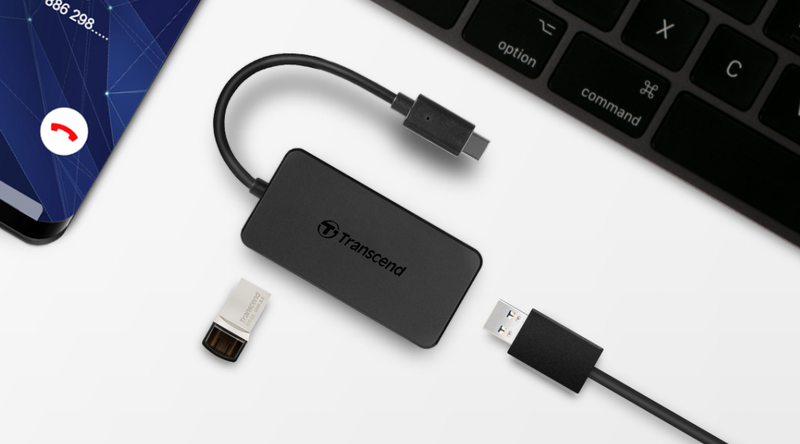
Transcend Information Inc, a manufacturer of storage and multimedia products, has launched a new USB Type-C 4-Port, the HUB2C, that transforms a single USB Type-C port into four Type-A ones, instantly expanding the number of devices you can connect to your Type-C gadget at the same time.

The HUB2C is a compact and easy-to-carry solution for users to keep their standard USB accessories up and running, while expanding the connectivity options of devices with the new USB-C ports.

The 4-port HUB2C comes with a reversible USB Type-C connector for greater ease of use making it ideal to pair with computers, laptops, and Android mobile devices featuring USB Type-C ports. By transforming a single Type-C port into four Type-A ones, instantly expanding the number of devices that you can connect to your device at one time, it allows you to connect accessories such as USB flash drives, keyboards, or mice to your tablet, or USB flash drives to your Android smartphone. Simply connect the hub to a Type-C port on your gadget, then enjoy instant plug-and-play fun.

Equipped with the USB 3.1 Gen 1 interface, the HUB2C offers high speed transfer unparalleled to previous USB2.0/ 1.1 specifications. It dramatically reduces large data transfer time and provides instant data access.

Xi congratulates opening of Smart China Expo

ศาสตร์เกษตรดินปุ๋ย : ขอบคุณแหล่งข้อมูล : หนังสือพิมพ์ The Nation

https://www.nationthailand.com/edandtech/30375399

Xi congratulates opening of Smart China Expo

Aug 27. 2019
A child gets a preview of an automaton at the venue of the 2019 Smart China Expo in Chongqing on Sunday. The four-day expo opened on Monday. [Photo/Xinhua]

A child gets a preview of an automaton at the venue of the 2019 Smart China Expo in Chongqing on Sunday. The four-day expo opened on Monday. [Photo/Xinhua]
By China Daily
Asia News Network

240 Viewed

China is willing to work with the international community to create an age of virtual intelligence and share outcomes of greater breakthroughs in smart technology, President Xi Jinping said on Monday.

Modern information technology, represented by the internet, big data and artificial intelligence, is witnessing rapid changes, Xi said in a congratulatory letter to the 2019 Smart China Expo, which opened in Chongqing on Monday and runs through Thursday.

A new round of scientific and technological revolution and industrial transformation is developing with strong momentum, and the fast growth of smart technology is having significant and far-reaching influence on economic development, social progress and global governance, Xi said.

The president emphasized that China attaches great importance to the development of smart technology and industrial digitalization, and advocates for forward-looking, in-depth integration of the digital economy and the real economy.

The annual Smart China Expo, begun last year, aims to showcase new products, technologies, business formats and modes of smart technology through conferences, exhibitions, summits and competitions.

This year’s expo attracted over 1,800 participants and 843 companies from 28 countries and regions, including 13 Nobel Prize laureates, four Turing Award winners, Fortune 500 business leaders and tech giants including Intel, Tencent, Baidu, Alibaba and Xiaomi.

“Smart technology is developing very fast in China,” Vice-Premier Liu He said at the opening ceremony.

“It has become a new, important economic growth point, with preliminary statistics showing that the total industrial scale of AI-related industries in China surpassed 500 billion yuan ($71.4 billion) in 2018.”

As the gateway to Southwest China and a major industrial base, Chongqing, on the upper reaches of the Yangtze River, has established one of the world’s largest IT industrial clusters and one of China’s biggest auto manufacturing bases.

Local traditional manufacturing companies are investing heavily in digital and smart factories. In 2018, the city poured over 7 billion yuan into smart manufacturing upgrades, People’s Daily reported.

Pony Ma, chairman of internet giant Tencent Holdings, called for joint efforts across industries and countries to achieve technological breakthroughs.

“No one country in the world can have all the resources, technology and capabilities to develop new generation science and technology. Industrial fragmentation and technological decoupling will eventually hurt the interests of mankind,” Ma said at the expo.

Digital Ministry plans ‘anti-fake news’ centre

ศาสตร์เกษตรดินปุ๋ย : ขอบคุณแหล่งข้อมูล : หนังสือพิมพ์ The Nation

https://www.nationthailand.com/edandtech/30375378

Digital Ministry plans ‘anti-fake news’ centre

Aug 26. 2019
Buddhipongse Punnakanta

Buddhipongse Punnakanta
By Jirapan Boonnoon
The Nation

880 Viewed

The Digital Economy and Society Ministry has pitched a Bt21-billion budget for fiscal 2020 and announced plans to introduce an “anti-fake news” centre in the next couple of months.

Minister Buddhipongse Punnakanta said on Monday that Cabinet approval for his operating budget was expected soon.

The Bt2.5 billion sought by the Office of the National Digital Economy and Society Commission is the third-highest amount requested by government agencies, behind the Bt3.8 billion earmarked by the National Statistical Office and the Bt3.2 billion that the Office of the Permanent Secretary wants.

Buddhipongse said he planned to spend the money on, among other items, establishing 10,000 free WiFi hot spots in rural areas to “promote the use of and access to the internet and improve people’s knowledge”.

Net Pracharat, also known as the Village Broadband Internet, will operate the new WiFi hotspots as part of the government’s “Thailand 4.0” drive to strengthen innovation, knowledge, technology and creativity.

Enhancing the quality of the digital infrastructure is a crucial factor in improving the quality of life in remote areas.

Buddhipongse said his ministry has collaborated with the National Broadcasting and Telecommunications Commission to expand the high-speed network to all villages where it is not yet available. The ministry will focus on 24,700 villages, the commission on 3,920 villages in border areas and another 15,732 elsewhere.

Some six million people in Thailand are currently using 7.84 million devices to access the internet through Net Pracharat’s 2,277 digital community centres, where online know-how is promoted.

The planned anti-fake news centre will seek to counter false reports and protect people’s privacy, Buddhipongse said. It will help boost public confidence to seek out news, he added.

Its efficiency will rely on the assistance of the private sector, such as Line, to monitor information circulating on social media.

The ministry also plans to create a coding platform to support schools in teaching computer coding, he said.

It will help small and medium-sized enterprises (SMEs) increase online commerce with the aid of international e-commerce corporations such as Alibaba, making Thai products better known and more readily available overseas.

The ministry will ask Thailand Post to serve as an e-marketplace and help with logistics to support SMEs in their product deliveries.