The National Astronomical Research Institute of Thailand (NARIT) marked Valentine’s Day on Monday by releasing the image of a sparkling ring of stars called Abell 33.
Abell 33, captured by European Southern Observatory (ESO)’s Very Large Telescope in Chile, is a planetary nebula some 2,500 light-years from Earth.
The strikingly bright star named HD 83535 located along the rim of Abell 33 creates the image of sparkling diamond solitaire.
“This planetary nebula emerged after stars with masses similar to that of the Sun ended their lives as white dwarfs,” NARIT explained.
It added that this phenomenon is rare because colourful glowing clouds of gas take irregular shapes due to stellar rotation or gravity.
Say hello to Dong Dong, a passionate and outspoken 22-year-old woman from Beijing who loves winter sports. Alibaba’s virtual influencer for the Beijing Olympics boasts a sparkling personality designed to seduce audiences (you and me) with fun facts about the Games – and perhaps sell you some Alibaba merchandise too.
The Chinese tech giant is an official partner of the Beijing Olympics and used its powerful cloud technology to develop the digital avatar.
Dong Dong presents livestream shows, responding to questions in a lively, natural voice with different emotions and body gestures. She even busts out upbeat dance moves to cheer on the athletes.
“Our ambition is to use cloud technology to give the Olympic Winter Games a digital uplift,” said Xiaolong Li, who heads Alibaba’s Virtual Human & Intelligent Customer Service.
“That’s why we developed Dong Dong, with the hope that the cloud-based virtual influencer can create better engagement with the younger, digital natives in an exciting and natural way.”
The Beijing Winter Olympics is providing a global showcase for Chinese tech giants to display their latest digital wonders.
International Olympic Committee president Thomas Bach was among the first to test the new tech, appearing as a life-sized hologram in a virtual meeting with Alibaba Group chairman and CEO Daniel Zhang.
Bach said the IOC is “making history in Beijing” together with Alibaba, which developed the Cloud ME software that powered his meeting with Zhang.
Cloud ME allows people kept apart by geographical distance and Covid-19 restrictions to meet virtually and enjoy real-time conversations with each other via life-sized, true-to-life projections.
Participants step into a pop-up studio in the Cloud ME booth and have their full-body image projected into a remote booth. Their projected personas are displayed to meet and greet with their counterparts.
These true-to-life meetings can also be opened up to a wider audience across unlimited locations, thanks to easily installed remote projection functionality.
Zhang said that Alibaba is committed to the digitalisation of the Olympic Games and providing the technology infrastructure to promote a more inclusive and engaging experience.
“We hope to unite athletes and fans around the world with our cloud technology and allow the Olympic spirit to inspire us all as we celebrate the joy of sports,” he said.
Hailing the technological advancement, Bach said: “For the first time ever, all core systems needed to run these Olympic Winter Games are hosted on Alibaba Cloud. Alibaba Cloud technology is setting new standards and raising the bar to new levels.
The two met via Cloud ME on February 6, holographically overcoming Covid-19 restrictions in China.
Cloud ME booths are simple to set up, according to Alibaba. The power of cloud computing means all you need is ordinary studio equipment like a video camera and a computer.
Video and audio produced in the Cloud ME booth are transmitted on Alibaba Cloud, the digital technology and intelligence backbone of Alibaba Group.
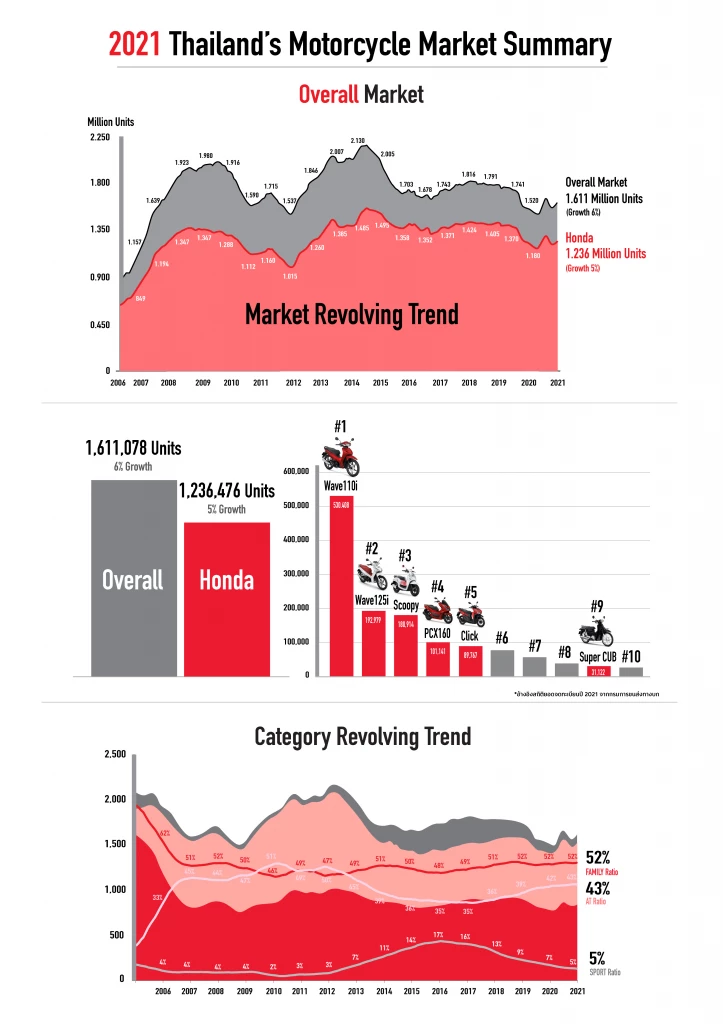
Thai Honda Manufacturing Co Ltd (Thai Honda) has announced a successful 2021 with over 1.2 million units sold, maintaining its top rank in the market for the 33rd consecutive year.
Shiketo Kimura, president of Thai Honda, said Thailand’s motorcycle market continued to grow in 2021 despite negative factors including Covid-19’s impact on logistics and the semiconductor shortage.
He said Honda retained its market leadership for the 33rd year, accounting for 1,236,476 units of the total 1,611,078 units sold this year.
Honda’s family segment maintained its popularity with the Honda Wave 110i ranking number one, with 530,408 units sold, representing a 52 per cent market share.
“In the AT segment, the Honda Scoopy came top with 180,914 units sold, representing 1 per cent growth and accounting for 43 per cent of market share,” he said, “In the sport segment, meanwhile, the Honda CRF300L was the best-selling motorcycle, with 6,944 units sold, representing a 5 per cent market share.”
Shiketo said the 6-per-cent year on year growth in the Thai motorcycle market last year confirmed that motorbikes remain an important part of the Thai lifestyle.
He said the popularity of AT has continued to rise as the younger generation prefers a motorcycle that’s easy to ride and comes with more storage.
“The AT motorcycle also come in a variety of styles that can match the unique lifestyle of the individual. Various stimulus packages rolled out by the government have continued to stimulate a floundering economy,” he said.
He expects Thailand’s motorcycle industry to continue to grow in 2022 with positive factors such as the stimulus package rolled out by the government and people’s desire to get their lives back on track.
He forecasts that the overall market will increase by 2 per cent, reaching 1,644,391 units sold.
“Honda has set a sales target of 1,300,598 units, or 5 per cent growth – larger than that of the overall market,” he said.
Thai Honda is also planning to penetrate further into the market this year, including development of two electric motorcycle models – the PCX Electric and Benly – and material cost management, he added.
“Up to eight new motorcycle models will be launched this year,” Shiketo said.
As well as positive signs for the industry, the past year also marked an important step for Thai Honda with the merging of the sales and manufacturing departments to maximise their performance in serving the market, he continued.
The merger also allowed Honda to improve after-sales service for customers.
“Apart from motorcycles, Thai Honda is also a manufacturer of Power Products. Our production capacity isn’t limited to just the domestic market, but is also to serve the global market,” he said, “Thai Honda is one of Honda’s most important manufacturing and distributing bases for motorcycles and Power Products to meet global demand.”
Thai Honda has a production capacity of 1.76 million motorcycles per year. Of these, 82 per cent are sold within the country and the rest are exported.
Meanwhile, the production capacity for Power Products is 2.7 million units per year. Of these, 93 per cent are exported and the rest sold in Thailand.
“At Thai Honda, our customers’ satisfaction has always been the goal. From this point on, we will do our best to deliver endless satisfaction to our users,” Shiketo concluded.
Thai start-up company HG Robotics debuted its prized Vetal drone at the Consumer Electronics Show (CES) 2022 in Las Vegas, USA, from January 5 to 7, the Department of International Trade Promotion (DITP) said on Thursday.
The DITP said it had supported the booth in a bid to promote Thai innovation at a global event, which witnessed more than 2,300 exhibitors and welcomed over 45,000 visitors from 119 countries.
“The Vetal drone that HG Robotics debuted at the event attracted great attention,” said DITP director-general Phusit Ratanakul Sereeroengrit.
“Reuters mentioned it on their news website as one of CES 2022 Best Tech Trends to Watch, as the drone can take off vertically but then operate as a fixed-wing airborne vehicle,” Phusit said.
Meanwhile, USA Today said Vetal is a $20,000 (THB655,000) vertical takeoff and landing drone featuring a magnetic battery and the ability to swap payloads.
The highlights at CES this year were innovations in healthcare, sport, exercising, smart living, artificial intelligence and robotics.
The other innovations selected by Reuters as the Best of CES were a massaging robot from Massage Robotics; “Ameca”, a humanoid robot by Engineered Arts; a Tali motorcycle smart-helmet, which can alert authorities in case of an accident; “Amagami Ham Ham”, a therapeutic robot that nibbles on your finger to provide comforting effects; and an “Inupathy” device, which uses heart rate and activity to monitor your dog’s mood.
“The DIPT supported the travel of a total eight Thai start-up companies to CES 2022, which has resulted in 73 business negotiations with foreign companies and estimated trade deals worth 23.8 million baht,” Phusit added.
The International Olympic Committee (IOC) is inviting everyone to join the thrills and spills in Beijing with a mobile game featuring tradeable non-fungible tokens (NFTs).
Created by video game developer nWay, “Olympic Games Jam: Beijing 2022” is available on iOS and Android for free.
Players compete for Olympic NFT digital pins through ski and snowboard challenges. These crypto tokens can then be traded in the nWayPlay marketplace.
The games developer dropped its first Games-themed digital collectibles, called the Olympic Heritage Collection, on June 17.
nWay is among subsidiaries of Animoca that have produced “play-to-earn” NFT-based games for Manchester City, MotoGP and Formula One.
The metaverse is growing in popularity as tech giants Meta (Facebook), Epic Games, and Microsoft invest billions of dollars in what they say is the next big thing for internet users.
But what is this new phenomenon and how will it affect our lives?
Metaverse has become a buzzword because it offers people the ability to meet, shop and use services in the virtual world. Facebook invested at least US$10 billion in the metaverse last year.
The difference between the internet and metaverse is that the internet is a global network comprised of billions of computers, other gadgets and servers linked together online.
The metaverse is not a competitor to the internet but rather a virtual universe accessed through the internet. Once inside, people and things interact with each other as digital avatars in a highly immersive world, buying land, playing games and socialising with users across other online platforms.
So how do we access the metaverse?
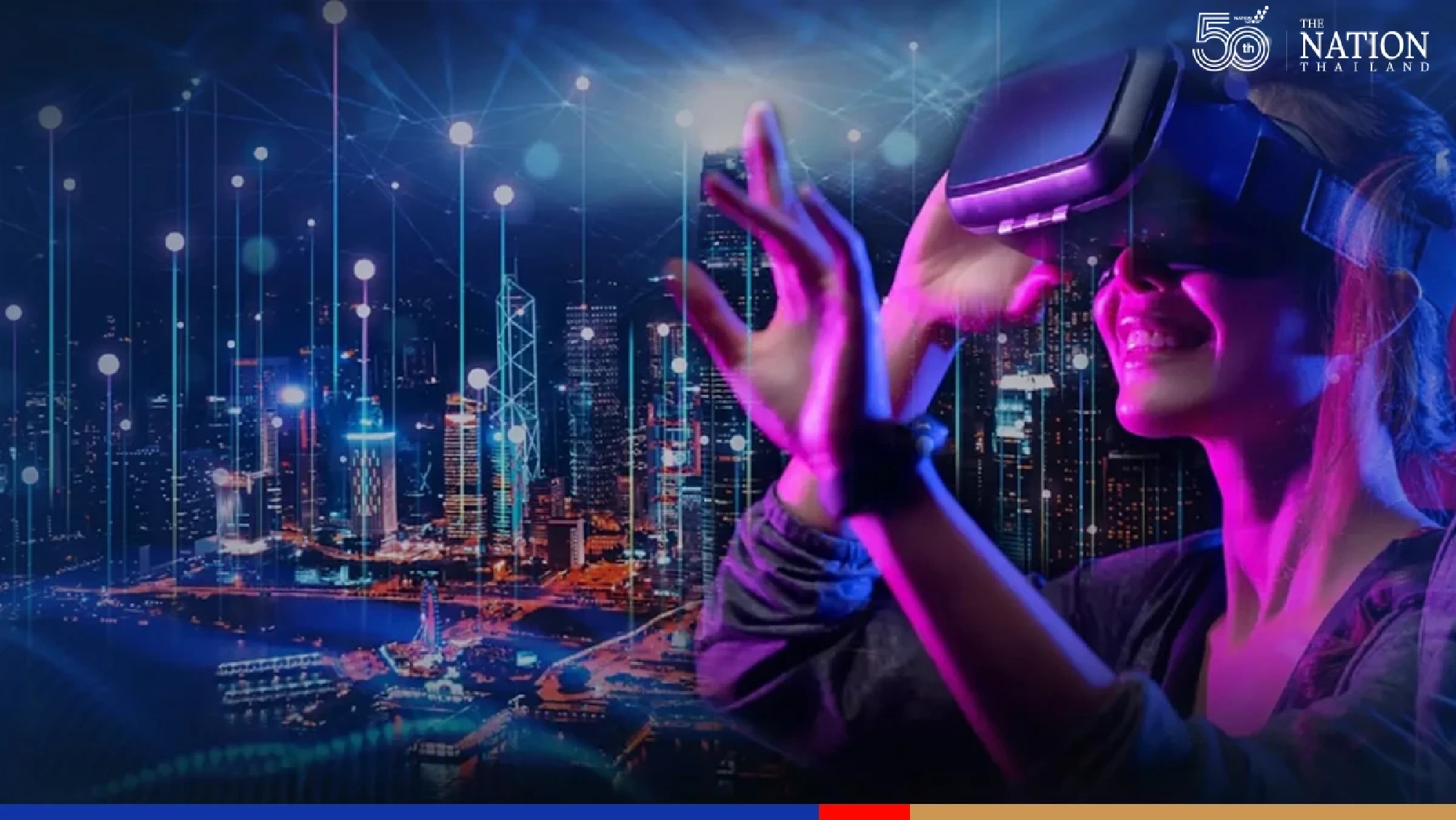
People can enter this virtual universe with virtual reality (VR) headsets or augmented reality (AR) technology. The medium of exchange in the metaverse is digital currency.
While users of the internet are “spectators”, the metaverse fully immerses participants in a virtual world, allowing them to interact with each other directly as avatars. The experience is comparable to playing a virtual-reality game – except that the metaverse is a boundless world of interactions that mirrors our “real world” and may even envelop it.
School, work, social interactions and everything else we do in the real world can, theoretically, take place in the fully immersive metaverse.
This new digital reality is dependent on blockchain and cryptocurrencies that are becoming part of everyday life.
So, want to enter the metaverse?
For the fully immersive metaverse experience, you will need good bandwidth, a virtual-reality or augmented-reality headset and a digital wallet. You will also need to create your own avatar.
Just want a taster? Less immersive meta features are available through your mobile phone via features such as Sensorium Galaxy’s mobile app.
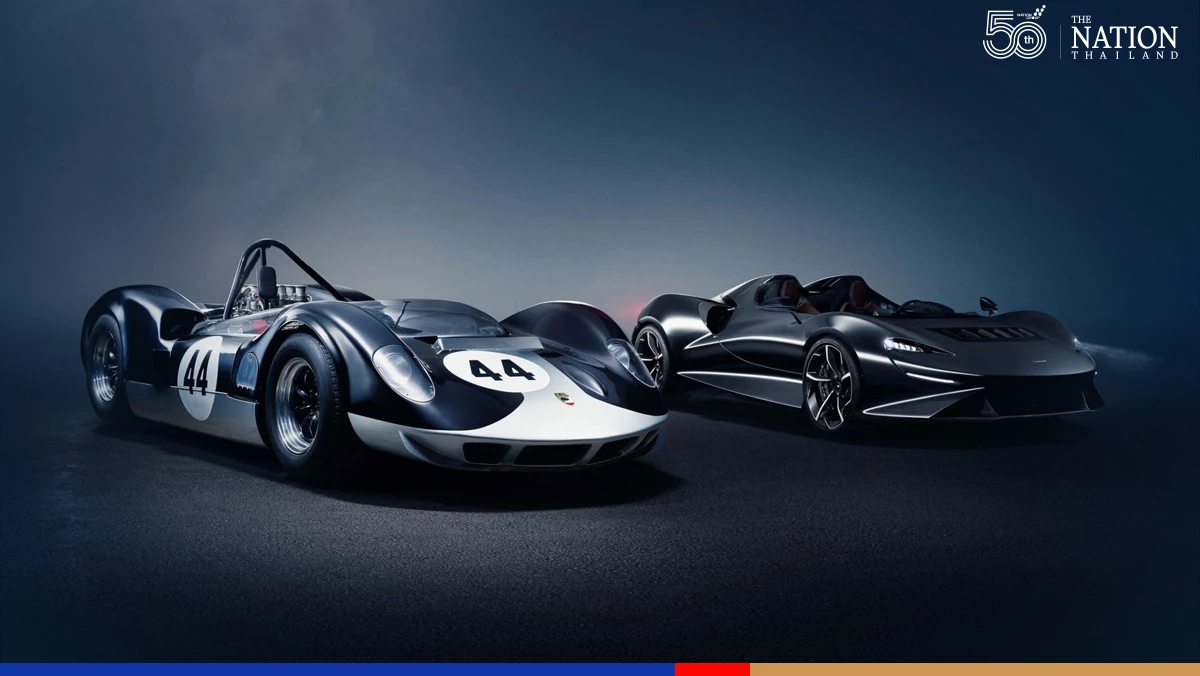
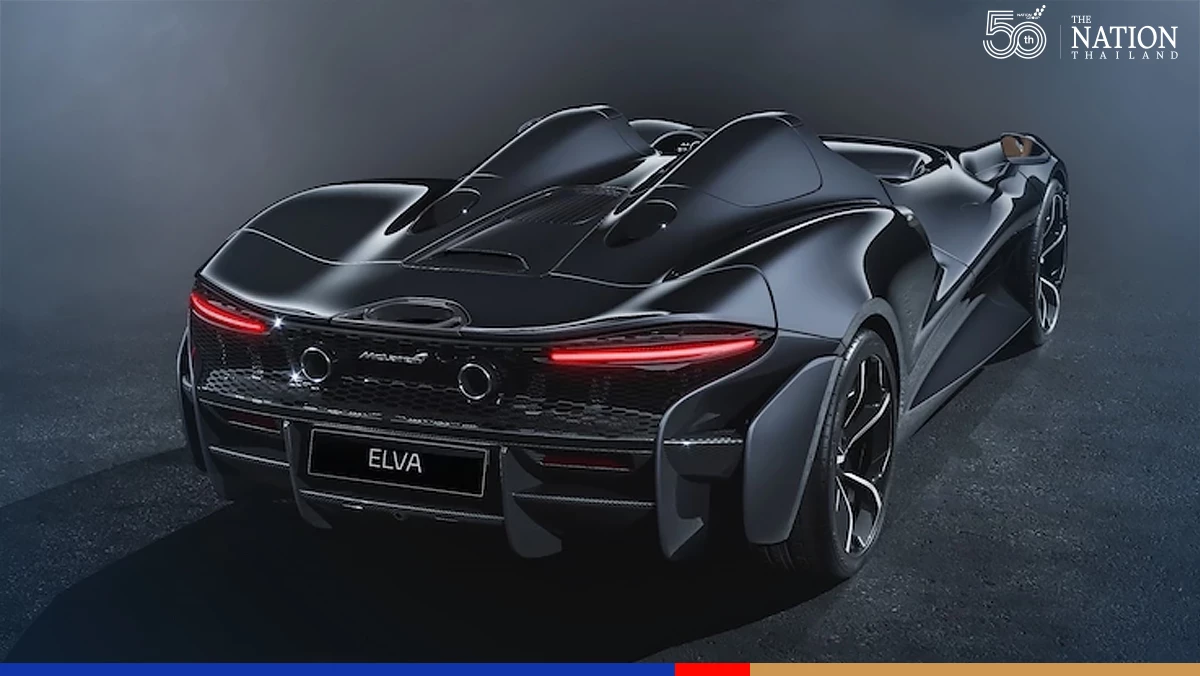
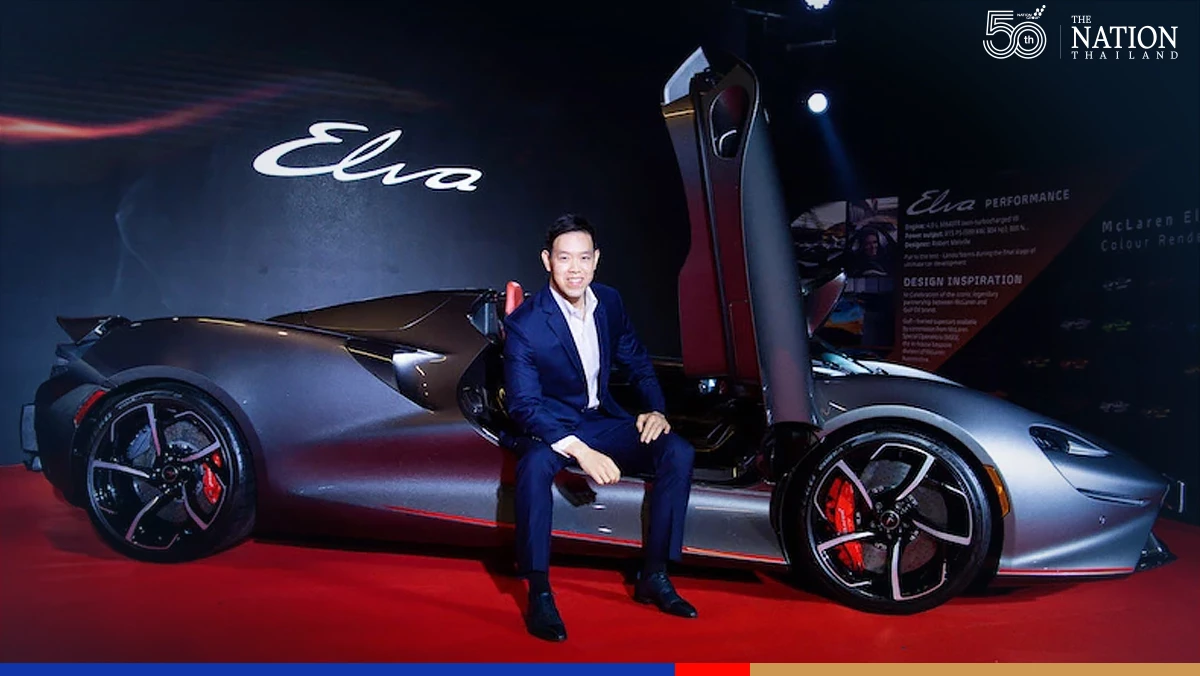
Hypercar McLaren Elva, the latest addition to McLaren Automotive’s Ultimate Series that was unveiled to the world in 2019, has finally debuted in Thailand thanks to Niche Cars Group.
“The McLaren Elva is a two-seater sports car without a roof. It has a rear mid-engine, rear-wheel-drive with a V8 4.0-litre engine and twin-turbo capable of delivering 815 horsepower,” the Niche Cars Group said in a press release.
“The production of McLaren Elva has been limited to only 149 units and Thailand’s quota is limited to just two units at 200 million baht each. One car has already been reserved.”
The car is said to embrace the principles of the first lightweight sports cars created by Bruce McLaren in the 1960s. The production of the first lightweight “Elva”, derived from the words “elle va” or “there she goes” in French, was first outsourced to British sports car manufacturer Elva.
The latest McLaren Elva is the fifth addition to the McLaren Ultimate Series after F1, P1, Senna and Speedtail.
The company’s first road-legit open-top sports car made almost entirely with carbon fibre is believed to be the lightest sports car ever. It features the McLaren Air Active Management System (AAMS), which channels the airflow through the car’s nose and directs it in front of the occupants, creating an “oasis of calm”.
The system can be turned off when track driving so the air channelled through the nose is sent to the engine instead. The Elva also features an active rear spoiler that acts as an air brake and a flat undercarriage that helps improve aerodynamics.
The V8 engine and seven-speed dual-clutch gear system can accelerate this beast from 0 to 100 km/h in 2.8 seconds and from 0 to 200 km/h in 3.7 seconds, which is faster than the McLaren Senna.
Customers can choose to install a sound system, five-prong alloy forged wheels, Pirelli P Zero Corsa tyres and six-point racing harness instead of the standard equipment at no additional cost.
McLaren Elva is 4,611mm long, 1,944mm wide, 1,088mm high and weighs a mere 1,274kg (including fuel and fluid).
Energy Minister Supattanapong Punmeechaow said that the National Electronic Vehicles Policy Committee will soon propose EV incentive packages to the Cabinet for approval.
The committee had earlier sent it at the end of December but the scheduled meeting on January 14 did not happen.
The secretary to the Energy Minister, Kawin Tangsupanich, said to “Bangkokbiz” that the ministry is pushing EV incentives as fast as possible for Cabinet approval.
According to a Government House source, it is expected to be placed before the Cabinet before mid-February.
Among the proposed incentives are:
Pay direct subsidy from 2022 to 2025
1.Cars
Cars with a retail price less than 2 million baht (manufactured and assembled in the country) will receive:
lower import duty by 40 per cent from 2022 to 2023
decrease in excise tax from 8 to 2 per cent from 2022 to 2025
70,000 baht direct subsidy for cars with 30 kilowatt per hour (kWh) batteries
150,000 baht direct subsidy for cars with more than 30kWh batteries
Cars with retail price from 2 million to 7 million baht will receive:
Decrease in import duty by 20 per cent from 2022 to 2023
Decrease in excise tax from 8 to 2 per cent from 2022 to 2025
Manufacturers must make cars to replace the ones that were previously imported. Manufacturers must make one of the models that they import from 2022 to 2023.
Applicants for the incentives must be car manufacturers in the country who, in 2024, replace the number of imported completely built units (CBU) from 2022 to 2023 in the ratio of one imported vehicle per 1.5 manufactured vehicle.
2. Motorcycles with a retail price of lesser than 150,000 baht will receive direct support of 18,000 baht for completely knocked down (CKD) and CBU motorcycles from 2022 to 2025.
Applicants must be motorcycle manufacturers in the country who manufacture motorcycles in 2024 to replace the number of imported Completely Built Units (CBU) from 2022 to 2023 and might extend to 2025 if it is necessary in the ratio of 1 imported vehicle per 1.5 manufactured vehicle.
Manufacturers must make vehicles from one of the models that they import from 2022 to 2023.
3. Pickup trucks
Pick up trucks with a retail price lesser than 2 million baht will receive the following incentives:
Zero excise tax from 2022 to 2025
150,000 baht direct support from 2022 to 2025 for trucks with more than 30kWh batteries that are manufactured in the country
Application procedure
Manufacturers must send the retail price structure to the Excise Department and they must produce or use batteries that were manufactured or assembled in the country.
They will have to sign a contract with the department for which they will have to present a bank guarantee. The subsidies and tax deduction will be charged with interest, along with the bank guarantee, if they do not follow the conditions. They will also be fined according to the Excise, Customs, and Tariff laws.
MG Sales (Thailand)’s vice president Pongsak Lertrudeewattanavong said that the EV support measures by the government are good because consumers will receive the benefit directly, making EVs more interesting, and push the market to grow.
However, the government should implement it as soon as possible because consumers are waiting for these measures and some might slow down their plans to get cars which will affect the market.
He said the conditions are good because they will create motivation for consumers as there are many EVs under 2 million baht which will receive the support.
He said MG or Ora will be benefitted from the excise tax reduction which will also decrease the car price and push the EV market to grow.
He said Chinese EVs have advantages from the bilateral FTA agreement as import duty is zero per cent. The import duty on Japanese EVs is 20 per cent, 40 per cent on Korean while other countries have to pay 80 per cent. The guidelines will make cars from Japan and Korea enjoy zero import duty.
Pongsak said it is good because consumers will have more choices and Chinese EVs will lose their price advantage. The overall market will grow in the future if there are more products, awareness, and reception.
However, he did not agree with measures for cars with a retail price from 2 million to 7 million baht. To get the incentive, manufacturers must manufacture cars to replace the ones that were imported before. Manufacturers must make one of the models that they have imported.
He said technology is changing quickly so the car might be outdated when they have to manufacture in 2024 or 2025.
Meanwhile, a source from the automotive industry business said the future for EV pickup trucks is not clear because they were not good for heavy, long-range, and long period use.
However, some companies such as Great Wall Motor are interested to make EV pickup trucks.
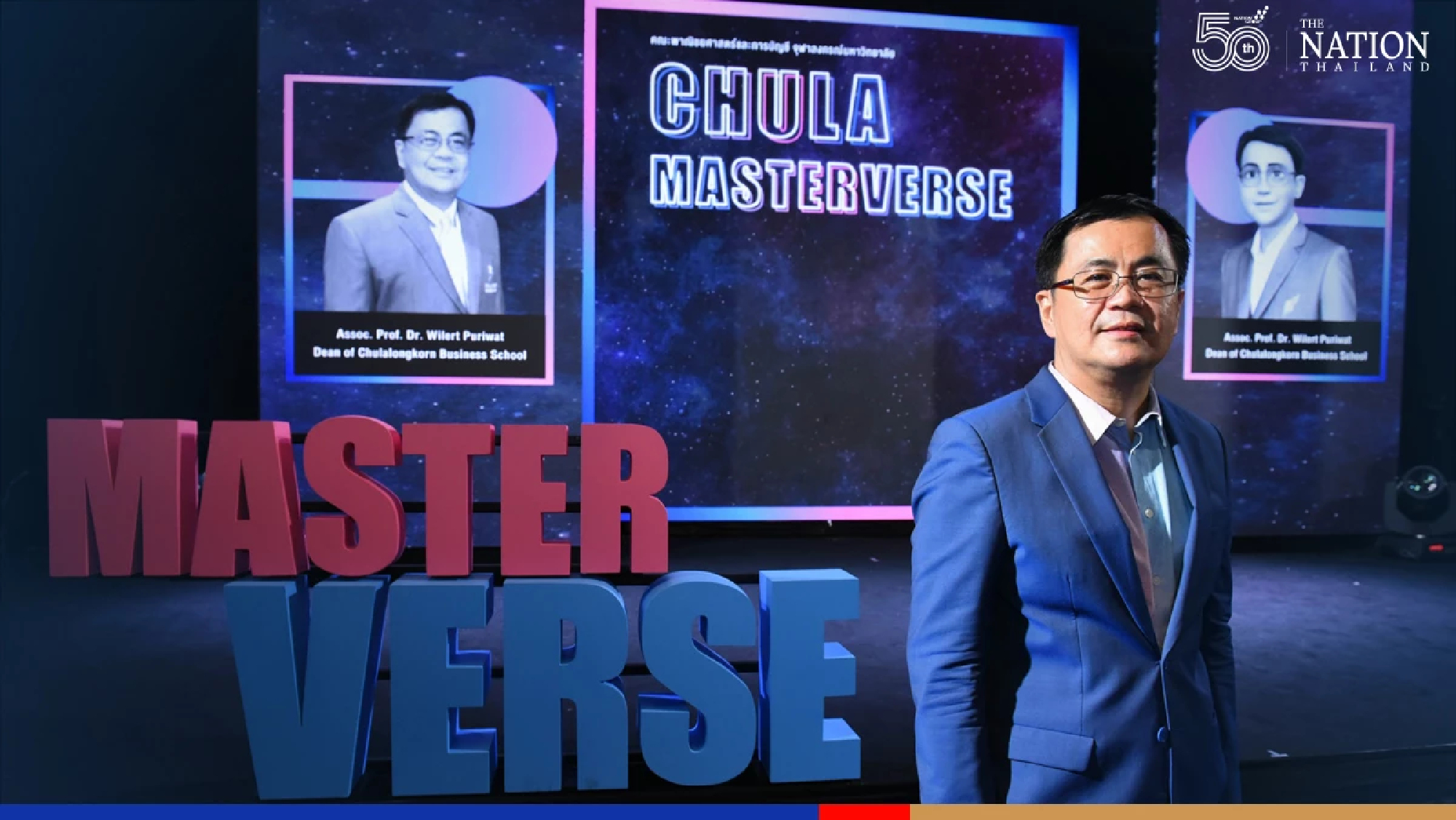
Chulalongkorn Business School (CBS) recently organised a seminar titled “Chula Masterverse 2022: Meeting Business Masters in the Metaverse Era”, inviting local and international gurus from various fields to brainstorm, provide knowledge, share ideas and recommend guidelines for business practices.
The aim of the seminar was to foster an understanding of doing business in a new world – the so-called “Metaverse”, the school said.
Speaking at the seminar, Assoc Prof Wilert Puriwat, the dean of CBS, said that as we enter the Metaverse era, which is dramatically impacting business models and marketing strategies, it is vital that people try to understand the new technology and ask why it is like that. As a key pillar of education, CBS gathered the gurus to share knowledge, thus offering participants the “Masterverse” or the universe of masters, he said.
Interestingly, Big Data, long recognised as a powerful tool in analysing consumer behaviour in the real world, cannot be used in the virtual world because it is not the world of the actual self but of the ideal self. Hence, business leaders must create new marketing strategies with greater consumer insights in order to understand consumer psychology.
“CBS provides not just knowledge but analyses the roots of what’s happening because knowledge can quickly become obsolete. More permanent is intelligence that enables people to master what the innovation trends are,” he said. “The innovations are not developed by technologies but by human instinct, so scientific and technological knowledge must be based on an understanding of humans. The metaverse is a combination of innovation and human insight. Thus, the role of CBS is not to provide new knowledge, but bring intelligence to the modern world to turn people from ‘Unknown unknowns’ to ‘Known Knowns’.”
Wilert added that there were lots of interesting ideas coming from the masters and CBS expected that business executives could apply them to develop and create their businesses in the Metaverse.
Speaking on the topic “Integrating the SDGs in Business Management: Preparing Business for the Future”, Armida Salsiah Alisjahbana, under-secretary-general of the United Nations and Executive Secretary of UN ESCAP, explained why the SDGs are important for businesses. UN ESCAP has encouraged businesses to mainstream the SDGs into their management strategies and operating frameworks. Research shows that the next generation of business leaders need to create businesses that not only generate profit but also tackle social and environmental challenges.
Wilert said that in the era of online business, entrepreneurs needed to not only operate business sustainability, but also ensure digital sustainability. Using the 17 SDGs as the baseline, there are three suitable goals for businesses in the Metaverse, namely the fourth (quality education), which leads to the 10th (reduced inequalities), and the fifth (gender equality).
“Marketing Downside-up through Solid Foundation” was another interesting topic addressed during the event. The Covid-19 pandemic has resulted in businesses facing a downside during the past two years, and Asst Prof Ake Pattaratanakun, CBS professor and head of the marketing department, and Asst Prof Kritinee Pongtanalert, CBS professor, introduced four keys to achieve sustainable growth: mutation, fusion, VA-Dentification, and inspiration.
In his presentation, Harvard University Professor Matthew C Stephenson focused on corruption and anti-corruption issues in businesses and marketing strategies. For years he has carried out research into the impacts of corruption on business sustainability.
“Innovation Verse: Trendy Tech Toward AI, Blockchain, and Metaverse (Statistics Department)” was another topic highlighted during the seminar. CBS Professor, Assoc Prof Wattana Viriyasitavat, anticipated that quantum computing would be one of the mega-technology trends that will reshape the business world in the future.
Another speaker, Jirayut Srupsrisopa, the founder and group CEO of Bitkub Capital Group Holdings, noted that the world would enter the third wave of technological development in the next decade. The so-called Web 3.0 will be created from various technologies including AI (artificial intelligence), blockchain, Big Data, Metaverse, NFT, cryptocurrency, and IoT (Internet of Things).
The event also underlined a sustainable future with “Green Finance” introducing ideas and models to go green. The Bank of Thailand will be launching measures next month that will drive financial institutions to classify green and brown businesses in an open and clear manner.
Meanwhile, the Office of the Securities and Exchange Commission is encouraging listed companies to reimagine financial reporting practices with the “One Report” model. So far, over 60 companies have already adopted One Report.
On the topic of “Management Verse: Thriving in the New World: Management Approaches of the Future”, the CBS professor suggested that business leaders pay great attention to Environmental, Social and Corporate Governance, set strategies based on purpose and fight digital disruption through mergers and acquisitions or spinoffs. Businesses are now living in two worlds, so they need to find a balance between offline and online before entering the Metaverse completely.
“Metaverse is a ‘touchnological’ innovation which is developed from human instinct. In 2022, everyone has two worlds to represent: the actual self and the ideal self. From now on, businesses must be 100 per cent ready to go to an online platform,” Wilert said. “Campaigns should not just promote product quality and properties but should link to feelings, emotions and society. The companies must carry out human insight, stakeholder identification and needs that can be turned into reality in the Metaverse era,” he added.














 SootinClaimon.Com