Biden warns S Arabia of ‘consequences’ after Opec+ move to cut production
WEDNESDAY, OCTOBER 12, 2022
US President Joe Biden promised Saudi Arabia on Tuesday that “there will be consequences” after the Middle East nation with Opec Plus agreed to go in for a large oil production cut despite pleas by the United States against doing so.
The US accused Riyadh of kowtowing to Russia.
White House press secretary Karine Jean-Pierre gave no timeline for any possible action but made it clear the United States would be watching the situation closely “over the coming weeks and months”.
Senate Foreign Relations Committee chairman Bob Menendez had said the US must immediately freeze all cooperation with Saudi Arabia, including arms sales.
Opec Plus, which also groups Russia, announced plans for an oil production cut, ignoring lobbying by US officials against such a move, especially amid an increase in oil prices, which has hit people hard.
US officials had earlier tried to persuade Saudi Arabia not to go in for the production cut, but de factor ruler Crown Prince Mohammed bin Salman was reportedly not convinced.
Bin Salman and Biden had clashed when the latter visited Jeddah in July and brought up the death of Washington Post journalist Jamal Khashoggi in 2018, according to a source.
The prince had denied ordering the killing but reportedly acknowledged it took place under his watch. Biden said in July he told the prince he thought he was responsible.
White House National Security spokesperson John Kirby said Biden would work with Congress “to think through what that relationship [with Saudi Arabia] ought to look like going forward”.
Kirby added: “And I think he’s going to be willing to start to have those conversations right away. I don’t think this is anything that’s going to have to wait or should wait, quite frankly, for much longer.”
Why South Korean chaebol chief calls K-food the next big thing
WEDNESDAY, OCTOBER 12, 2022
In a surprising move, SK Group chairman Chey Tae-won recently stepped up as an evangelist for hansik, or Korean food, even though his sprawling energy-to-chip business has no food subsidiary.
Last month he hosted a banquet at a fancy hansik restaurant in New York to invite a dozen UN ambassadors and introduced them to Korean cuisine and its unique ingredients.
He even appeared in a TV show as a main host to discuss ways to nurture K-food as a potent industry that appeals to the global audience like K-pop and K-drama.
“If there are enough ideas and systems to support the industrialisation of hansik, the potential seems almost unlimited,” Chey said during the show titled “Sikja Summit”.
Sikja can be roughly translated into “food meets knowledge” in Korean.
The market potential actually looks strong enough.
According to industry data compiled by the Korea Agro-Fisheries & Food Trade Corp, the global food market is expected to exceed $9 trillion (342.5 trillion baht) in 2024. Last year’s $8 trillion is more than 13 times larger than the market for semiconductor chips, Korea’s biggest export item.
Its ripple effect is also huge. A local think tank run by Kyunghee University estimates the nation’s hansik business generates about 23 trillion won (609 billion baht) in economic impact per year, the equivalent of selling 520,000 vehicles.
But the potential has not yet been nurtured into a full-fledged industrial push. Rather, the country’s whole hansik industry faces an existential crisis now.
Cho Hee-sook, a renowned hansik chef, pinpointed a talent shortage as the most urgent issue to tackle.
“It is a chronic issue that actually started decades ago,” she said during the show. “There has been no progress in the training system for hansik talent.”
In a recent survey conducted by Hansik Promotion Institute, only 23 per cent of culinary students said they wanted to pursue a career in hansik. For those not choosing to do so, 43.8 per cent said they are not just attracted to hansik, while 13.7 per cent cited the harsh work environment.
Establishing an elite cooking school like France’s Le Cordon Bleu and Ferrandi may be a solution to attracting more talent into the hansik industry, but more fundamentally investments should be made to change the industrial structure drastically, said Kwon Woo-joong, the owner chef of KwonSookSoo, a Michelin two-star hansik restaurant in Seoul.
“More investments can change the industrial structure and pave the way for hansik’s premium strategy,” he said. “Like in the fields of art and sports, investments should be made to nurture culinary chefs, which would speed up the industrialisation of K-food.”
Industry watchers agree that globalising K-food is a different story from industrialising it.
While globalisation is about raising awareness about hansik, turning Korean food into a competitive industry is about crafting the culture that works globally.
Chey who doubles as chairman of the Korea Chamber of Commerce and Industry, seems to have a good understanding on the need to nurture hansik as one of the nation’s future growth drivers, according to industry watchers.
Based on discussions made throughout the TV show, Chey appears to have asked the KCCI to come up with more concrete ideas to facilitate hansik’s growth and its global reach ultimately.
“There have been numerous failed attempts to globalise K-food. Food is an essence of our culture but has not yet been fully embraced globally despite the recent frenzy about K-pop and K-drama,” said Oh Il-sun, head of market tracker Korea CXO Institute.
Saying he was pleasantly surprised to see a chaebol leader appearing in a TV show, Oh added Chey could play a role in speeding up the overall discussions on hansik’s industrialisation.
“Chey is a distinctive chaebol leader who openly communicates with the public. His friendly image could help renew awareness about K-food and its global potential.”
Other industry watchers say that he seems to be wanting to be more than a business tycoon – someone who could contribute in economic growth and cultural prosperity of South Korea.
In the final episode of “Sikja Summit”, which aired on September 20, Chey made it clear that his push for hansik’s industrial success was not a one-time event.
“It is my mission to nurture hansik as an industry that plays the country’s future growth driver,” he said.
Hoteliers in China tap into rising interest in stargazing with astronomy-themed events
WEDNESDAY, OCTOBER 12, 2022
As stargazing becomes increasingly popular in Beijing, the city’s suburban areas, where there is a better natural environment and clearer skies than downtown, are seeing flocks of visitors, happy to pay big money for the experience of being blanketed by stars at night.
Yang Dong, general manager of Daxishui Xiyuan Homestay in northeastern Pinggu district, has been running such a business for nearly two years.
“I started to realise that stargazing has become a hot trend last summer when our hotel rooms were booked up for the whole of July and August,” Yang explained.
“Most of our guests came to the homestay for camping and enjoy the astronomy-themed events.”
Yang, who has worked in the commercial real estate industry for 10 years, took up his current management position in early 2021.
The homestay, which was transformed from a previous high-end hotel, opened to the public in 2020, aimed at providing a natural environment with mountains and lakes for guests.
Seeing the soaring demand for stargazing in the capital, the homestay swiftly seized the opportunity by raising 20 “star tents” in its open outdoor area last year.
“In fact, we already have four loft rooms themed around stargazing, where people can see the night sky through a glass ceiling,” Yang said. “However, they are always booked when the demand is high. So, we added well-equipped tents to meet the needs of guests.
“Also, the rate of the loft room is around 3,500 yuan (THB18,000) per night on weekends and during holidays, it is a bit high,” he said.
The average price of each tent per night ranges from 600 to 800 yuan.
Despite being called tents, they are similar to hotel rooms, replete with insulating layers, thick rugs, a sofa, a queen-sized bed, clothes hangers and lamps.
Since the tents are near Jinhai Lake, people can enjoy both the view of the lake and the stars at the same time.
“Sometimes, we receive guests carrying professional telescopes and cameras. Such guests make up around one-fifth of our clientele. Most of the time, people enjoy the night sky with the naked eye,” Yang added.
“The air quality is perfect in Pinggu since it’s far from the urban downtown. People can see starry skies most nights.”
“Business is pretty good,” Yang said. “I discovered the other day that several other hotels have also adopted an astronomy theme this year.”
Beijing Municipal Bureau of Culture and Tourism published a list of stargazing tourism destinations and homestays, covering villages in many suburban districts including Huairou, Yanqing, Fangshan and Shunyi.
Yang expects that the stargazing business will be long-lasting, saying that “with the burdens and stresses of daily life, people always have a desire to look up at the beauty of the night sky”.
At least 100 may have been killed as floods ravage Venezuelan city
WEDNESDAY, OCTOBER 12, 2022
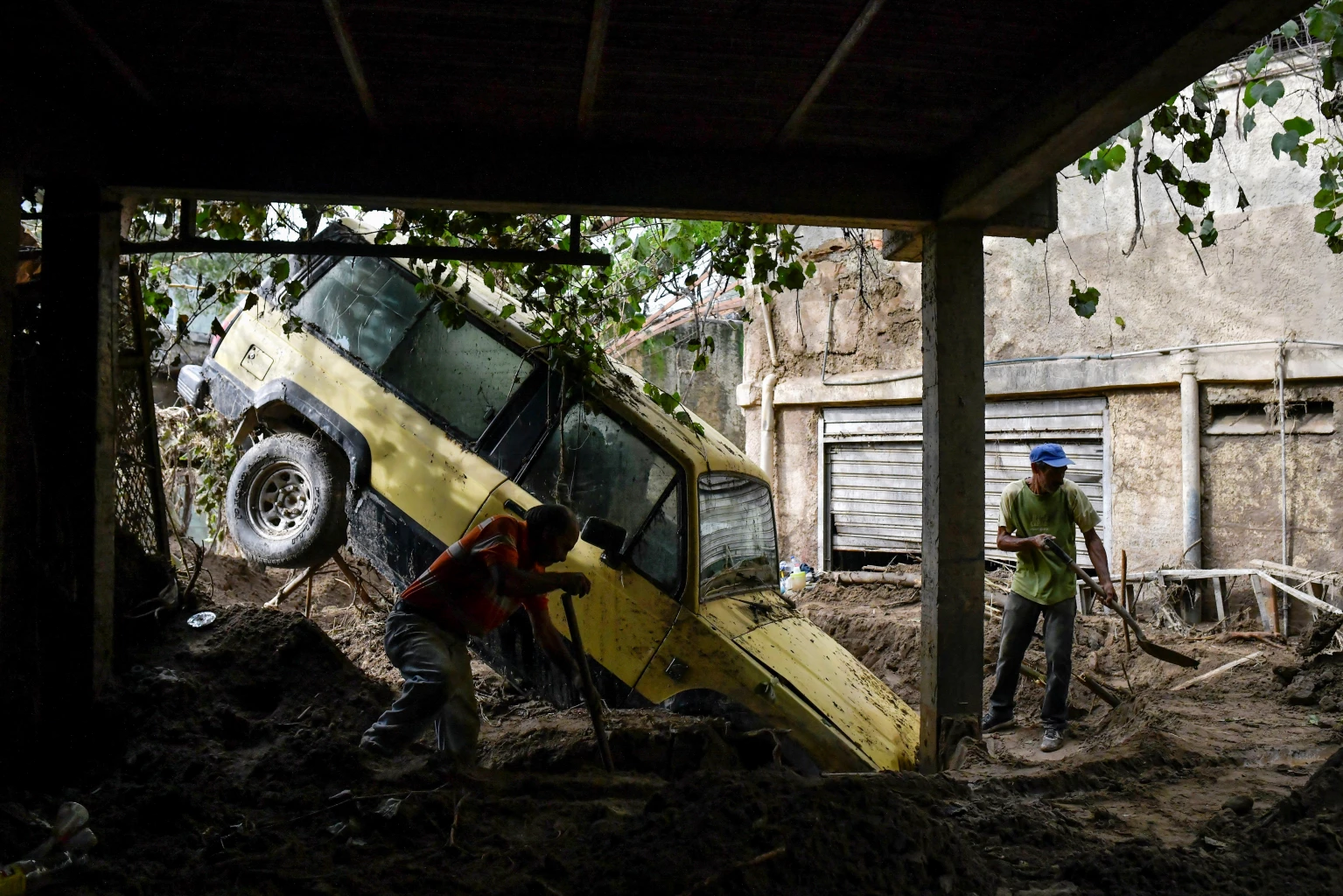
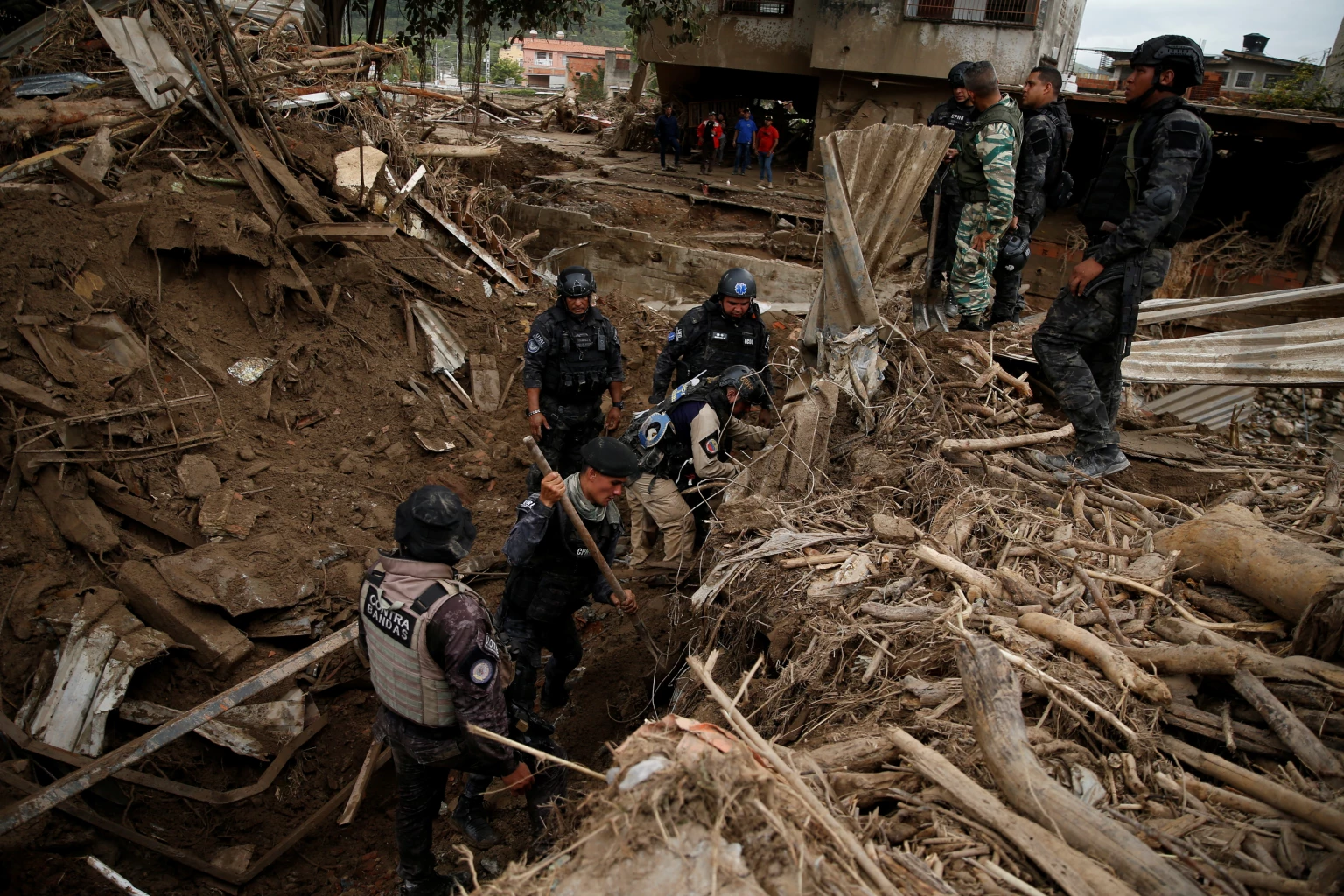
Hundreds of Venezuelans roamed the streets of the small town of Las Tejerias on Tuesday, digging and searching for missing relatives amid a rising death toll from devastating weekend floods that swept through the town about 67km southwest of the capital Caracas, leaving many wondering where they will live.
Venezuelan Vice President Delcy Rodriguez said 43 people had been confirmed killed in the disaster, while President Nicolas Maduro said earlier on state television that as many as 100 may have died. Some 56 people were still reported missing, Maduro said.
A local, Nataly Matos, is still searching for her mum. The last time Matos heard from her, her mum had called to say she was drowning in her kitchen.
Matos said she and her friends are checking in hospitals and dispensaries, as she posted pictures of her mother on social media networks, with no news yet.
Though electricity and cellphone coverage have been restored to the town of 73,000 people, it remains without running water, according to Reuters witnesses.
The floods carried mud, rocks, trees and other debris into the town in Venezuela’s Aragua state, destroying houses and businesses.
Government officials who visited Las Tejerias promised to help rebuild all the houses and businesses affected.
More than 1,000 homes were destroyed or damaged, officials said on Monday
The Coronation ceremony for His Majesty King Charles III will be held on May 6 next year, Buckingham Palace announced.
It will take place at Westminster Abbey in London and be conducted by the Archbishop of Canterbury.
At the ceremony, King Charles III will be crowned alongside his Queen Consort Camilla.
The ceremony will reflect the current monarch’s role while being rooted in longstanding traditions and pageantry, the palace said, adding that further details would be announced in due course.
King Charles III acceded to the throne on September 8 following Queen Elizabeth II’s death. Her reign spanned 70 years, 214 days.
Vietnam’s 5 magnificent cliffs that offer heart-stopping adventure
TUESDAY, OCTOBER 11, 2022
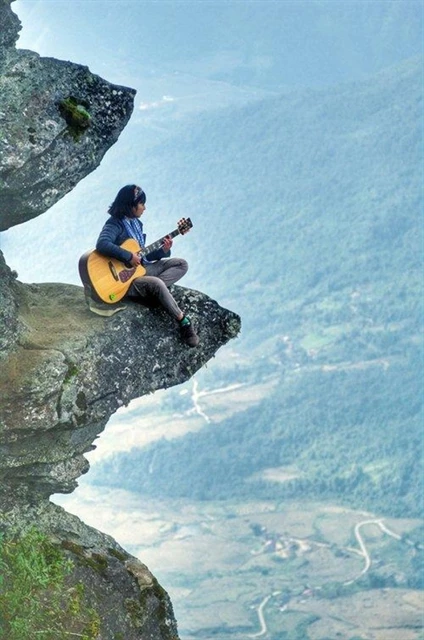
Cliffs and steep rock formations are the results of geological activities and the impact of nature. These sites also give adventure seekers a chance to test their endurance and steely spirit, as well as an opportunity to admire beautiful landscapes from high above.
In Vietnam, young adventure seekers have the chance to climb five steep cliffs. They are:
Pha Luong
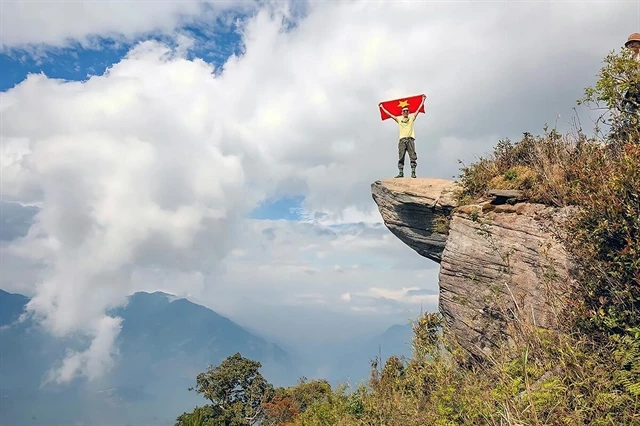
The cliff on top of Pha Luong in Son La province’s Chieng Xuan district is a check-in point for many tourists. Sitting about 70 kilometres from the centre of the Moc Chau Plateau, this cliff presents a spectacular view of numerous tectonic fissures and the poetic scenery of Son La.
Though this cliff is not as precarious as it looks, it will still take three hours to climb.
The area is often crowded by people taking photographs and it can be dangerous if care is not taken.
Ma Pi Leng Pass
Ma Pi Leng is a beautiful pass in the north of Vietnam, through which you can look down on the crystal-clear waters of the Nho Que River.
Along the pass, there are many eye-catching rocky tops, with the most beautiful one sitting in the middle of the pass. From this cliff, you will get to enjoy the majestic and immense panorama of Ha Giang, and the Nho Que River winding far below.
This cliff is believed to be the most dangerous and is fenced off by a steel net. Climbing the cliff can be difficult for the most experienced climbers due to the stacks of stone slabs. Avid photographers can capture beautiful images from other cliffs or against the railing of the pass itself.
Lao Than
When travelling to Lao Cai province, most tourists stop off to explore the Sa Pa Town and neighbouring villages. However, in this northwest region, there is also an attractive destination with a rock crop that captivates many travellers. The cliff on top of Lao Than Mountain, in the centre of Bat Xat district’s Phin Ho village, has become popular among backpackers thanks to social media.
Standing on top of the Lao Than cliff, climbers will be presented with the lyrical beauty of green valleys nestled in thick white clouds.
Though it takes almost four hours to get to the top, the trek itself is beautiful thanks to the many flowering bushes on either side.
Turtle-head cliff in Ta Xua
This cliff sits along the Ta Xua mountain range in Cong Village in Yen Bai province’s Tram Tau district.
Like the cliffs in Son La and Ha Giang, this one is also very beautiful, shaped like the head of a turtle protruding from the ground.
It takes about four hours to conquer this cliff, though once you get to the top of the 2,000-metre-high mountain, you will realise that it was certainly worth it.
The cliff is surrounded by white clouds, blue skies and dense forests. Though this cliff is not considered very dangerous, its sheer height can still be scary.
The cliff surface is relatively flat and easy to walk on, though climbers are advised to stay away from the edge.
Da Chong Mountain
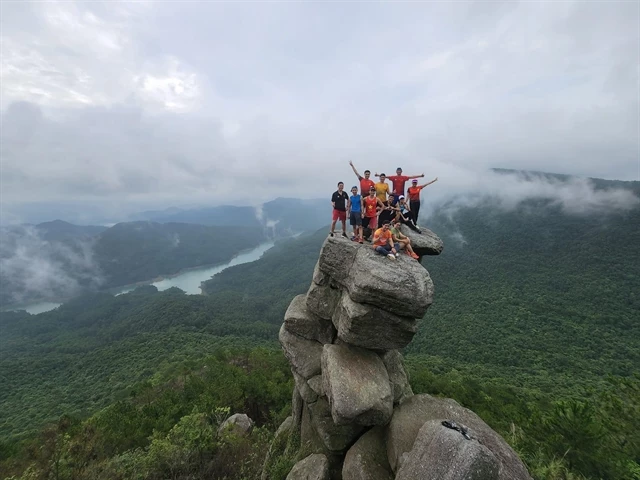
This rock formation on Da Chong Mountain in Quang Ninh province’s Hoanh Bo district can offer climbers an attractive surprise.
Apart from its unique shape and dozens of natural stones stacked one on top of the other, this cliff is hundreds of metres high, jutting out from the forest’s edge.
Once on top, climbers can enjoy the beauty of Yen Lap Lake surrounded by large pine forests and dotted with islets in the middle of the lake.
For young explorers, the cliffs present imposing, majestic beauty. Though the cliff can be scaled, climbers are advised to always be prepared to ensure their absolute safety.
UN rejects Russia’s call that vote on Ukraine ‘annexation’ should be secret ballot
TUESDAY, OCTOBER 11, 2022
UN members expressed solidarity with Ukraine after voting on Monday to reject Russia’s call that a vote to condemn Moscow’s move to annex four regions should be a secret ballot.
UK’s ambassador to the UN, Barbara Woodstock, said Russia’s President Vladimir Putin was overturning the “most sacred principle” in the international system and urged other member states to support the sovereignty of Ukraine with their vote.
“This assembly’s call on Russia since the start of its illegal invasion has been simple. End this war and withdraw from Ukraine,” she said.
The General Assembly decided, with 107 votes in favour, that it would hold a public vote – and not a secret ballot – on a draft resolution that would condemn Russia’s “illegal so-called referenda” and the “attempted illegal annexation”. Diplomats said the vote on the resolution would likely be on Wednesday.
Only 13 countries on Monday opposed holding a public vote on the draft resolution, while another 39 countries abstained and the others did not vote. Russia had argued that a secret ballot was needed because Western lobbying meant that “it may be very difficult if positions are expressed publicly”.
Moscow has moved to annex four partially occupied regions in Ukraine – Donetsk, Luhansk, Kherson and Zaporizhzhia – after staging what it called referendums. Ukraine and allies have denounced the votes as illegal and coercive.
The draft resolution to be voted on later this week calls on states not to recognise Russia’s move and reaffirms the sovereignty and territorial integrity of Ukraine.
Russia vetoed a similar resolution in the 15-member Security Council last month. It has been trying to chip away at its international isolation after nearly three-quarters of the General Assembly reprimanded Moscow and demanded it withdraws its troops within a week of its February 24 invasion of Ukraine.
The moves at the United Nations mirror what happened in 2014 after Russia annexed Ukraine’s Crimea. At the Security Council, Russia vetoed a draft resolution that opposed a referendum on the status of Crimea and urged countries not to recognise it.
The General Assembly then adopted a resolution declaring the referendum invalid with 100 votes in favour, 11 against and 58 formal abstentions, while two dozen countries didn’t take part.
Japan lifts all restrictions on vaccinated tourists, offers discounts
TUESDAY, OCTOBER 11, 2022
Japan announced that it will drastically ease entry restrictions on Tuesday, including scrapping the cap of 50,000 arrivals daily.
It will also eliminate the ban on individual tourists from Tuesday.
Before this, tourists could only enter on package tours.
Measures to stimulate domestic tourism demand, such as the national travel assistance programme, will also be initiated, to accelerate the “Living with the novel coronavirus” scheme to revive the economy.
Since February 2020, when the government denied entry to non-Japanese nationals who had been in China’s Hubei Province where infections first began to spread, Japan has imposed various limits on entry. Restrictions will now largely return to pre-Covid levels, except for requiring proof of a third dose of vaccine or a negative test result within 72 hours before leaving the last country travellers were in before coming to Japan.
“We want many people to enjoy events across the nation and hope it will invigorate Japan,” Prime Minister Fumio Kishida said to reporters on Sunday, expressing his expectations for the national travel assistance programme and the easing of entry restrictions.
Kishida spoke after attending the Japanese Grand Prix of the Formula 1 Drivers’ World Championship at the Suzuka Circuit in Mie Prefecture.
From Tuesday, all entrants, including returning Japanese nationals, will not be tested for the virus upon entry and will not be required to self-quarantine unless they have symptoms such as fever. Visa exemptions will also resume for short-term visitors to Japan from 68 countries and regions, including the United States and South Korea.
The national travel assistance programme subsidises 40 per cent of travel expenses for public transportation and accommodations, and together with coupons for food and beverages, the maximum subsidy amount is ¥11,000 per person per day. The Tokyo metropolitan government plans to start the programme on October 20. The event discount scheme, which offers a 20 per cent discount (up to ¥2,000) on the price of tickets to movies, sports games and other entertainment will also begin.
‘Cursed’ stretch of Cambodia’s National Road 3 to undergo 4th round of repairs
TUESDAY, OCTOBER 11, 2022
Cambodia’s Economy and Finance Ministry has come up with mechanisms to fund the US$70-million construction of a 20-kilometre section of National Road 3 and has told a construction firm to make temporary repairs to facilitate travel.
Finance Minister Aun Pornmoniroth and Minister of Public Works and Transport Sun Chanthol inspected the damaged stretch of National Road 3 on October 7.
“The Kampot-Veal Renh section of National Road 3 is 54km long, 34km of which is in good condition. The other 20km section has sustained regular damage even though we have repaired it on several occasions,” Chanthol said.
He also sent a team to examine the road and prepare a presentation on techniques that can be used to ensure that this round of repairs to the 20km section will be durable.
Pornmoniroth recommended that the construction firm make temporary repairs of the damaged road to facilitate travel before receiving the larger sum of funding to finish the construction.
Public works ministry spokesman Vasim Sorya told The Post that the ministry would have to study the area further because the land at the location was not ideal for construction and some new approach is needed to avoid having to do these same repairs again.
“Now that we’ve secured an agreement, we have to study the site because the land there is muddy,” he said. “On each project, we don’t just release the money to the contractors immediately because in general, we’ve had to deal with the Covid-19 situation and then the floods. But now that there is an agreement, we will proceed with the plans.”
Leading his ministry’s technical experts to inspect National Road 3 back on March 29, Chanthol, citing an earlier study, said the funds needed to make the 20km section solid and technically up to standards would cost about $70 million.
“This 20km section has many problems. We have not made it durable so far because this road was not studied in detail,” he said.
Chanthol added that the section had been constructed four times already, but earlier projects did not involve a careful study of the problem or any plans to mitigate the recurrence of the damage.
New Zealand cattle fed ‘Kowbucha’ to reduce climate-destroying methane burps
TUESDAY, OCTOBER 11, 2022
In a research farm in New Zealand, more than a dozen calves line up and eagerly drink their daily milk formula blended with Kowbucha, a wittily named probiotic that studies show reduces burps – or methane emissions.
The regular feeds are part of a series of trials being carried out by New Zealand dairy giant Fonterra since 2021 to gauge how effective the probiotic is in reducing methane emissions.
The “true eureka moment” came when early trials suggested that calves emit up to 20 per cent less methane when they receive the probiotic supplement, said Shalome Bassett, principal scientist at Fonterra Research and Development Centre.
“So New Zealand has key targets it needs to meet by 2030 and also by 2050 and this is a great solution that would be easy for farmers to adopt and help us meet some of those key targets,” said Bassett.
Ongoing trials have shown similar, promising results, she said. If that continues, Fonterra hopes to have Kowbucha sachets in stores by the end of 2024, Bassett said, before farmers have to start paying for animal burps. Fonterra said it did not yet have any pricing information for the sachets.
New Zealand has pledged to cut biogenic methane emissions by 10 per cent on 2017 levels by 2030 and by up to 47 per cent by 2050. On Tuesday, the government confirmed plans to price agricultural long-lived gases and biogenic methane that mainly comes from cow and sheep burps separately, in a plan that farm groups have raised concerns about.
The government also released its proposed plan on agricultural emissions pricing, which when introduced in 2025 will make New Zealand, a large agricultural exporter, the first country to have farmers pay for emissions from livestock. Agricultural emissions account for around half of the country’s greenhouse gas emissions.
Ahead of that, farmers, businesses and scientists are working on ways to cut emissions without reducing herd number, given agricultural products make up more than 75 per cent of the country’s goods exports.
Apart from Kowbucha, some feed additives available abroad have shown proven results. Royal DSM’s Bovaer feed additive can reduce methane emissions by 30 per cent in dairy cows and by more in beef cattle.
Fonterra said Kowbucha likely provides an easier solution generally as farmers only have to feed it to calves when they are being reared, given it is expected to have a lasting impact.
New Zealand is also considering whether supplements that have had success abroad can be adapted locally. Much of the science overseas focuses on altering barn animals’ food and is harder to implement in a country where animals largely live outdoors and eat grass.
“The easiest way to reduce emissions is to reduce production or have fewer animals basically, so that’s a real challenge when we’re trying to also produce food and keep our export returns at the level that we want them,” ANZ agricultural economist Susan Kilsby told Reuters.
For Fonterra, however, research remains key as it aims to cap farm emissions at 2015 levels. In addition to Kowbucha, it is also trialling other feed additives and seaweed.
“It’s definitely important for us to be leading in this space. Our farmers need a solution and New Zealand needs a solution,” said Bassett.