The Thai women’s national team face the Philippines on Saturday in the quarter-final of the 2022 Asian Women’s Volleyball Cup in Pasig, the Philippines.
Thailand qualified for the quarter-finals after settling for second in Group B following wins over Australia and Taiwan after losing to Japan, who topped the group.
Teams had a rest day on Friday to prepare for the last-eight showdown on Saturday.
Thailand are ranked 14th in the world, 106 places above the hosts at 120th.
Thailand also have a 5-0 record against the Philippines in recent encounters.
The quarter-final will be televised live at 7pm on ONE 31 channel, PPTV Gold website, and PPTV HD36 YouTube channel.
Meanwhile, Vietnam face Taiwan at 10am, China will play Australia at 1pm, and Iran will meet Japan at 4pm.
The winner of the clash between Thailand and the Philippines will qualify for the semi-final against the winner of the China-Australia match on Sunday.
Thailand’s kickboxing queen will top an international bill of Muay Thai and mixed martial arts (MMA) at the “Legend Fighting Championships” in Nakhon Ratchasima on September 3. Even better, entry to watch the event in the Northeast capital will be free.
Phayahong Ayothayafightgym, the first female Thai boxer to win the K-1 world championship, will test her skills against young Lao fighter Lukmee PK Vientiane.
Phayahong, the current K-1 atomweight champion, is ranked the eighth best kickboxer in the world pound for pound by Combat Press.
Former deputy prime minister Suwat Liptapanlop, who chaired Friday’s press conference, said the fourth edition of the “Legend Fighting Championships” would be unique as it featured both Muay Thai and mixed martial arts matches.
Five Muay Thai and four MMA matches will be held in two rings simultaneously. Nine Nakhon Ratchasima boxers will take on foreign fighters from France, Sri Lanka, Iran and Laos.
Phayong was born in Buri Ram but is descended from a Nakhon Ratchasima family.
Suwat said that the competition would boost the local economy and Korat (Nakhon Ratchasima)’s fame as a hotbed of Muay Thai talent.
He invited people to watch the fights for free. The matches will also be broadcast on Channel 8 from 7pm.
After the competition, young talented fighters from Nakhon Ratchasima Municipality Sport School will also be selected to train at the Legend Arena in Hua Hin.
“Legend Fighting Championships” will be held at the square in front of the Thao Suranari (Lady Mo) Monument in Korat on September 3.
According to Sky Sports, Ronaldo’s agent Jorge Mendes has approached Napoli to offer them the chance to sign the five time Ballon d’Or winner.
Mendes has been working around the clock for a while now in order to find the solution his client wants, which is to be playing in the Champions League. He is also tasked with finding a solution for United, which is a replacement if Ronaldo was to be sold.
The latest deal proposed by Mendes is for Ronaldo to move to Napoli, and striker Victor Osimhen to move to Old Trafford.
Sky Sports News reported that the Red Devils admire Osimhen and the Nigerian is on the list of potential replacements for Ronaldo.
However, it is believed that Napoli will not be selling the 23-year-old on a cheap, they are looking for a three digit offer.
Reports suggested that the Naples club are looking for €120 million for Osimhen, and if Ronaldo joins Napoli on loan, they would like United to pay 80% of the Portuguese’s mammoth salary.
It is hard to see how United will be able to afford him, especially when they are preparing another big offer to bring Ajax winger Antony to Old Trafford, with a deal said to be inching ever closer.
Apart from Napoli, it was reported by Italian journalist Gianluca Di Marzio that Mendes offered Ronaldo to AC Milan, with Rafael Leao moving to United as part of the deal. However, it is believed that the San Siro club rejected that idea.
The Ronaldo transfer saga has been dragging on for some time now, and it is something Erik ten Hag can do without as he prepares to keep up the team’s momentum after a huge win against Liverpool on Monday night.
They will now face Southampton on Saturday. Ten Hag is curious to see if his players have learned a lesson from the 4-0 thrashing by Brentford in their last away match.
He said in his pre match press conference: “It’s a different challenge so I’m really curious: did we learn the lesson from Brentford?
“Because this will be more or less the same approach. It’s about transition, it’s about running, it’s about battling and fighting, and then we have to make it our game. So it’s a real challenge for us to do that.”
Will Ronaldo leave or stay at Old Trafford? Only time will tell.
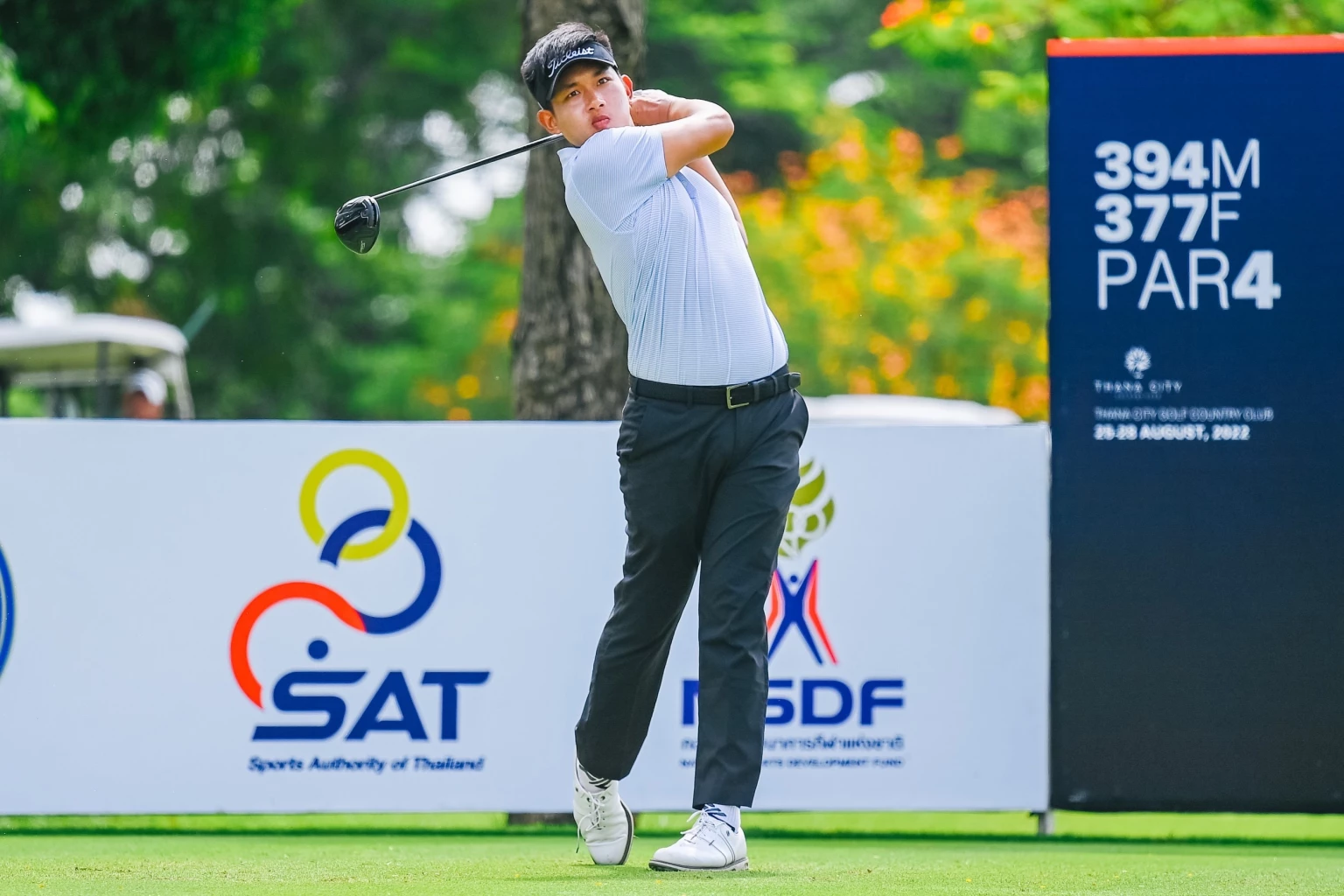
Young gun Atiruj Winaicharoenchai took the clubhouse lead with 18 points as heavy rain disrupted the second round action of the Bt3 million Thailand Mixed hosted by TrustGolf at Thana City Country Club on Friday.
With five birdies against one bogey which earned him nine points, the two-time all Thailand Golf Tour winner was the player who completed his round with the highest point but it was Amarin Kraivixien who was currently on top of the leaders’ board with 19 points and three holes to play.
As downpour hit the course after 5pm, orgainsers decided to stop play while 34 players will have to resume their second round actions on Saturday’s morning. Top 60 and ties will start the third round competition later on the day.
Atiruj, 22 from Chonbri, was more than happy with his form as he just recovered from COVID-19 and entered the tournament this week without proper practice.
“I had a good round with five birdies and one bogey. But there were some par five holes where I should have scored points. It’s quite a good round though, judging from my physical condition right now,” said Atiruj who enjoys stableford format which is being used in the Thailand Mixed this week.
“It’s a bit strange to play this format as you still get a point after making a birdie followed by a bogey whereas in the normal format, you are even par by doing so. So, stableford quite suits a player with an aggressive game like me,” he said.
“About my game plan for the weekend rounds, I will try to give myself as many chances as possible. I don’t want to expect too much at this point. I will try to hi the greens nd be happy with whatever happens out there,” Atiruj said.
Having 16 points were former LPGA player Sherman Santiwiwatthanaphong and Chaiyasit Chaiyachot, each producing six points in round two.
Arriving on Tuesday’s morning from the US, Sherman was still bothered by a jet-lag and had to rise to the challenge to pull it off in the second round.
“I’m more than happy to be able to finish the round. I was really exhausted out there,” bemoaned Sherman who took a break from the Epson Tour to prepare for the second LPGA Q-School in October.
“I didn’t have good results this year and made only one cut on the Epson Tour. I really need to come home to regain my confidence. It feels warm to play at home again,” said Sherman who is also fond of the stableford format.
“You can take more aggressive approach with this type of format because you get scores easier. You need to earn points on par five holes to be in a good position,” she added.
The third round session is due after 8am. Organisers announced that a Bt10,000 prize money sponsored by Balance Golf Nutrition will be granted to the last player who makes the cut.
Thailand’s e-commerce is on course for fivefold growth over the next three years, according to new Thai e-Commerce Association (Theca) president Kulthirath Pakawachkrilers.
The Thai e-commerce market is expected to grow from 817 billion baht currently to over 4 trillion baht in 2025, Kulthirath said.
Helping to drive that growth will be the new trend for virtual or metaverse commerce, she added.
“Meta-commerce is changing the world of e-commerce by adding virtual reality,” said Kulthirath as she was introduced as the association’s new chief on Thursday, replacing Thanawat Malabuppha. Kulthirath is CEO and co-founder of Thailand e-Business Centre (TEC).
Strategic Market Research forecasts the global meta-commerce market will grow to US$678.80 billion (24.4 trillion baht) by 2030. The market is currently worth about $47.48 billion.
Thai e-Commerce Association (Theca) president, Kulthirath Pakawachkrilers
The biggest driver of the Thai e-commerce market is online shopping.
The e-shopping market is expected to grow more than 128 per cent to 120 billion baht in 2025, according to Theca. The e-travel sector comes second, with a projected 29.91 per cent increase to 29 billion baht.
Ranked third is e-transportation and food delivery, which is forecast to rise 22.37 per cent to 18 billion baht.
Kulthirath said Theca’s strategy is to promote eight aspects of e-commerce: Thai e-commerce, fair competition, cross-border e-commerce, women and outreach, empowering Thai online sellers, new software, digital marketing and solutions for SMEs, and e-Commerce and future workforce.
In the situation that “food” has become more than just its deliciousness, people tend to focus more on consuming food for good health and wellness. Over the past 2-3 years, most people have changed their lifestyles and behaviors to fit with new normal life, especially preparing food by themselves or cooking at home.
However, if there is a lack of proper nutrition understanding, it may affect good health both in the short and long term. From the current data, it was shown that many Thai people are at the risk of developing non-chronic communicable diseases (NCDs) due to their improper dietary habits and nutrient intake. In particular, among Thai children, it was found that more than 20 per cent were obese and most of them consumed more than twice the amount of daily sodium as recommended by the World Health Organization (WHO).
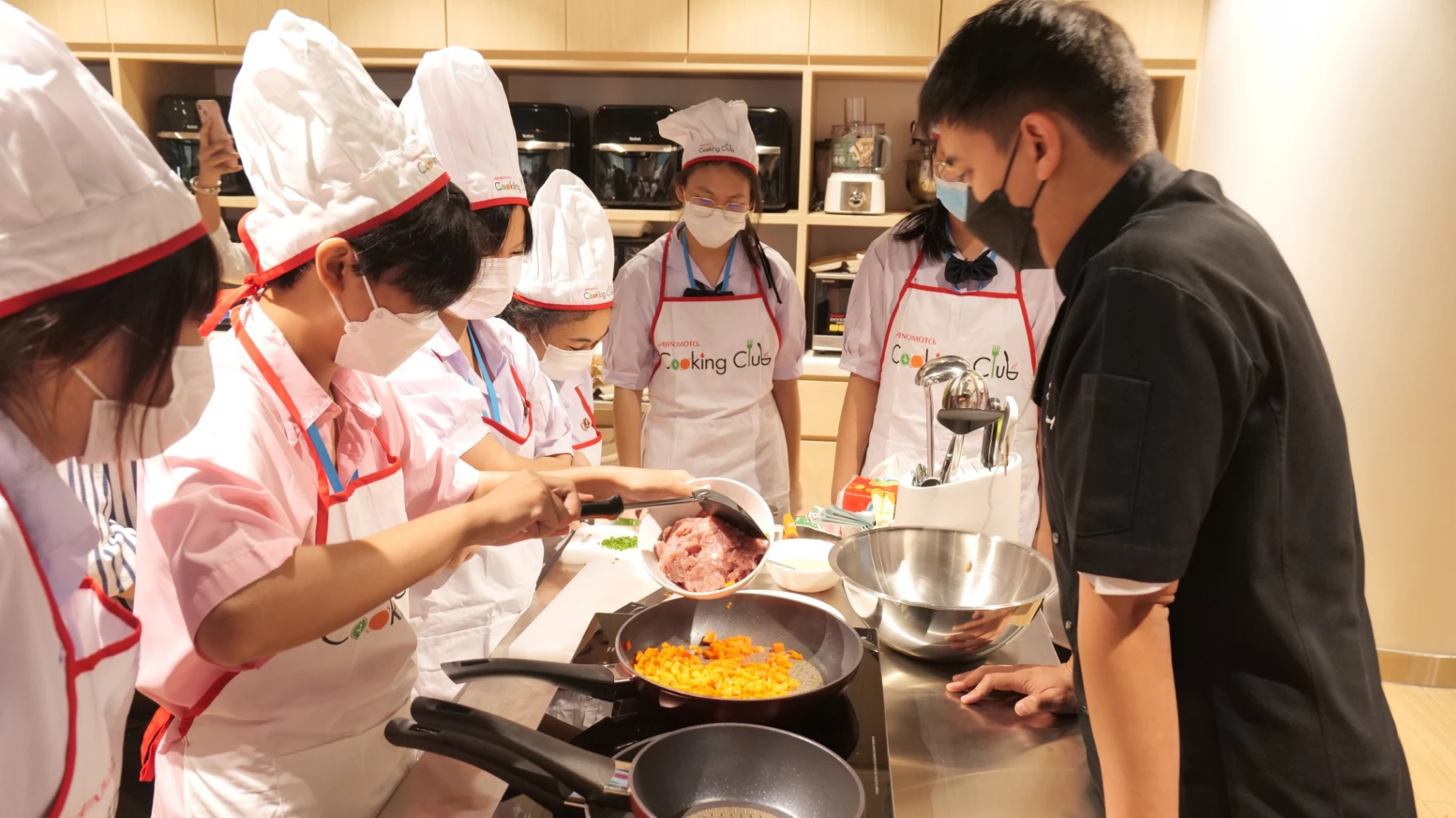
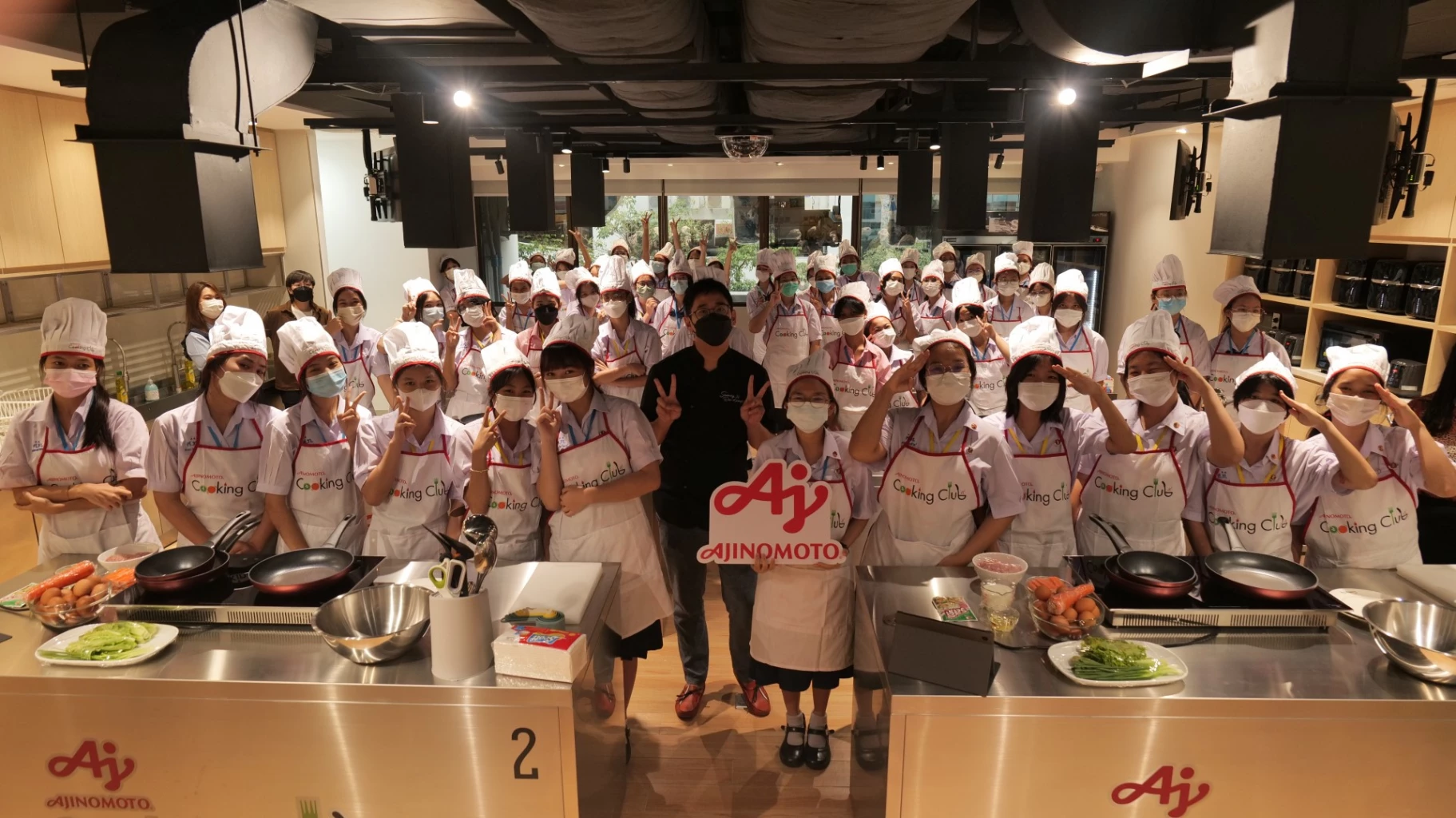
This year, Ajinomoto (Thailand) Co., Ltd., has launched a cooking class campaign under the concept of “Delicious and nutritionally balanced diets” that gives youngsters the opportunity to have fun experience through cooking practice on how to easily make a delicious balanced meal.
Through this program, Ajinomoto has passed on its amino acids’ expertise and healthy nutrition with umami into a fun cooking class to encourage the young generation to pay attention to health visualization. Recently, the cooking class was joined by a group of 50 young students from Satri Si Suriyothai School to practice cooking skills through the menu “Healthy Delicious Soft Omelet”, led by Chef Akradej ‘Benz’ Techakrenee, an experienced young chef, to demonstrate and share cooking techniques along with easy nutrition knowledge throughout the activity, which took place at Ajinomoto Cooking Space, Ajinomoto’s Head Office, Bangkok.
According to the Ajinomoto Group’s objective to become “a solution-providing group of companies for food and health issues through unlocking the power of amino acids to support the healthy lives of people all around the world”, we strive to deliver our intention of “nutrition without compromise” as a part of The Ajinomoto Group Creating Shared Value (ASV) policy, to which we have adhered as always.
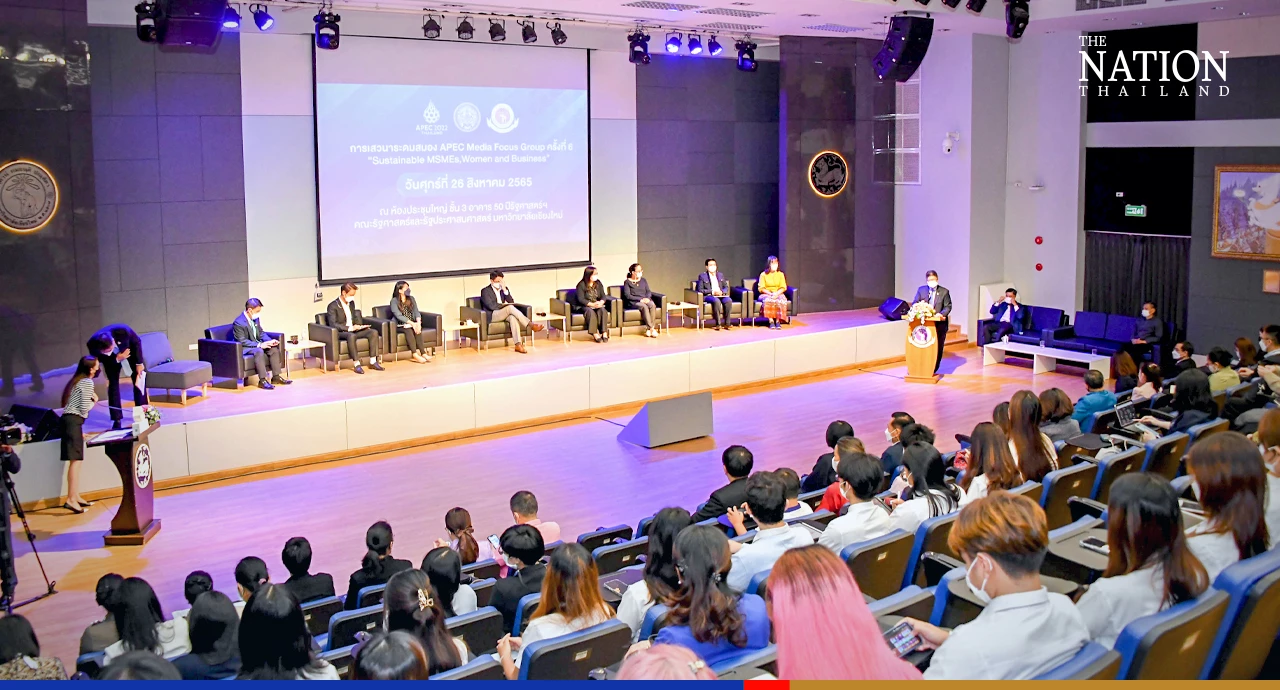
Chiang Mai will showcase the recovery of micro-, small and medium-sized enterprises (MSMEs) in Thailand when the country hosts world leaders at Apec meetings from next month.
The spotlight will focus on how Thailand’s bio-circular-green (BCG) economy model is aiding sustainable recovery, said Foreign Ministry permanent secretary Thani Thongphakdi on Friday.
Thailand is hosting four meetings of the 21-member Asia-Pacific Economic Cooperation (Apec) forum – two in September and one each in October and November.
Apec, which accounts for 62 per cent of global GDP, plays a critical role in determining the direction, policies and standards of global trade and investment.
Thani said Thailand will host 1,000 delegates and representatives attending over 100 Apec-related meetings throughout the year.
This was an excellent opportunity to demonstrate the country’s competitiveness, particularly among local MSMEs, which account for more than 70 per cent of business in the country, he told the Apec Media Focus Group forum at Chiang Mai University.
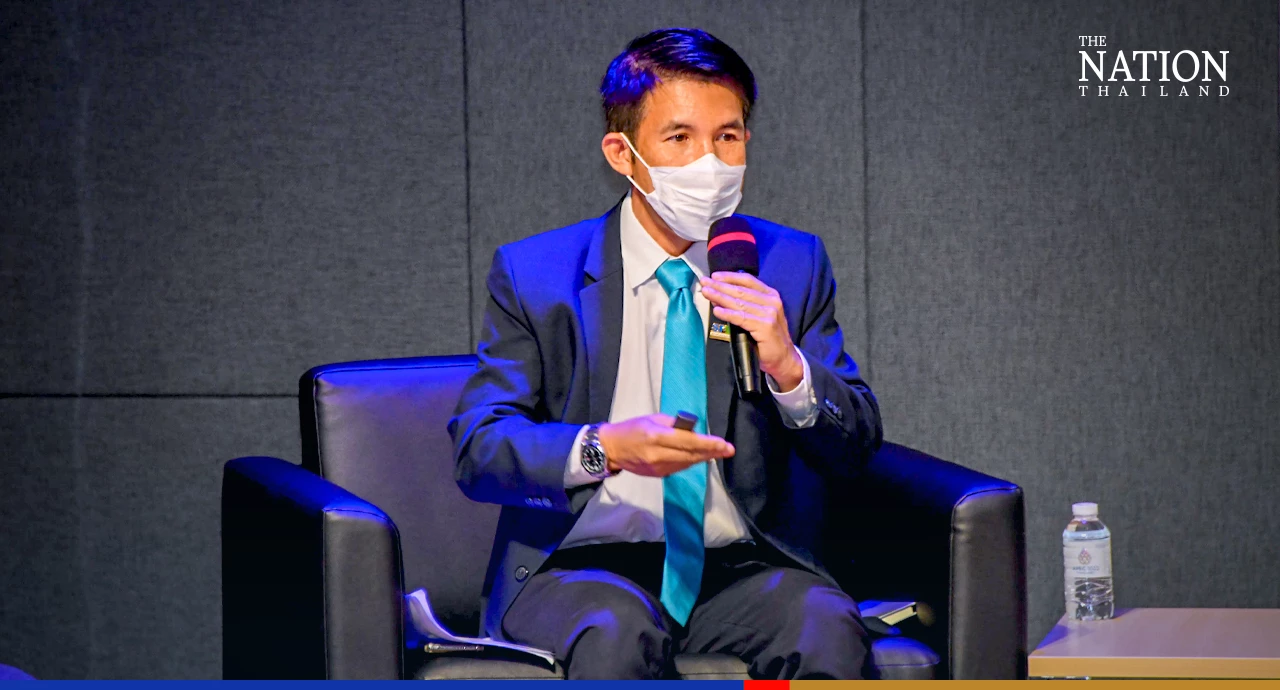
Cherdchai Chaivaivid, director-General of the Department of International Economic Affairs, said it was critical for Thailand’s MSMEs to think outside the box and adapt to trends in order to grow in the aftermath of Covid.
“Profit is no longer the number one priority in business,” he said, on the topic of “Sustainable MSMEs, Women, and Business”. “However, being responsible for your community and the environment will eventually pay off.”
Thailand has over 3.1 million MSMEs in total, with Chiang Mai accounting for about 100,000.
The northern capital will offer practical examples of how small businesses are using the BCG model to recover and thrive, the Foreign Ministry said.
Akom Suwanganta, president of the Federation Thai SMEs, Chiang Mai Chapter, said Chiang Mai residents understand the importance of sustainability after suffering PM2.5 air pollution for years.
“Our members work with researchers to find ways to improve both their products and the process of running their businesses by using more environmentally friendly methods,” Akom said.
Their focus is on “fewer carbon emissions, less waste, less energy consumption, and greater community responsibility”, he added.
Local entrepreneurs are also benefiting from increased support under Chiang Mai’s five-year provincial development plan (2023-2027). Value-added agriculture is one of the key drivers.
Under the BCG model, high-value processed agriculture and food innovations of the future will be developed, as will trade and investment based on the creative economy, innovation, and sustainability.
Pitiwat Wattanachai, president of Chiang Mai University’s Science and Technology Park, said the institution is helping local business owners to apply technology and innovation to boost operations.
He cited Hillkoff, a local hill-tribe coffee brand that is using the texture of the beans to create new products like coffee balsamic. Other new MSMEs are launching into business by enhancing and expanding on previous research, he added.
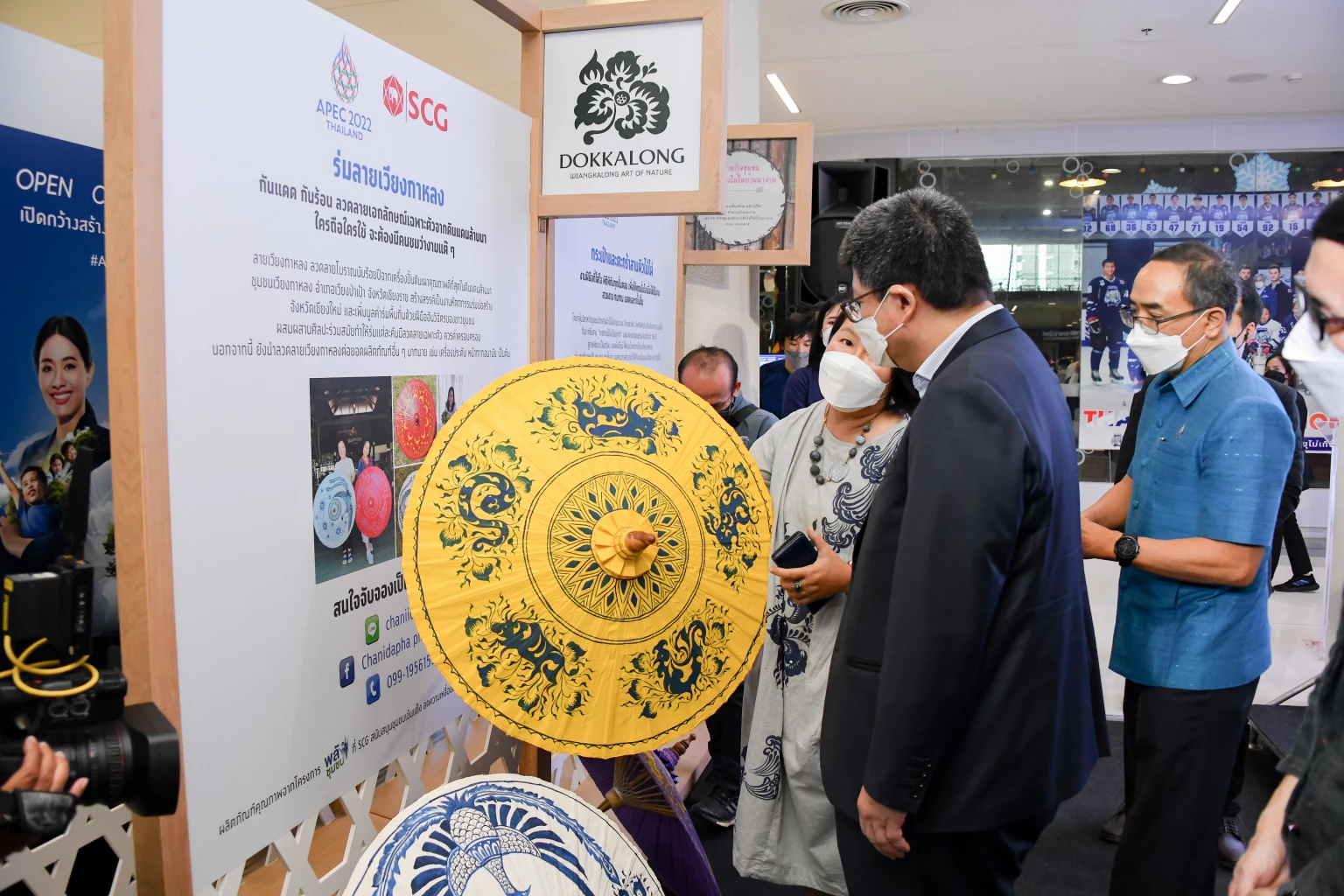
The Foreign Ministry is hosting an Apec exhibition at Central Festival Chiang Mai until August 30. The aim is to promote awareness and benefits of Apec membership to Chiang Mai businesses and locals.
The National Wage Committee has given the green light to increase the average minimum daily wage by 5 per cent to 337 baht, likely effective from October 1.
Labour Ministry permanent secretary Boonchob Suthamanaswong, who chairs the panel, said on Friday it had resolved to raise the minimum wage by 5.02 per cent.
The committee consists of representatives of employers, employees and the government.
The Labour Ministry will forward the resolution to Cabinet for endorsement so the new minimum wages could come into force on October 1, Boonchob said.
The new minimum wages vary from 328 to 354 baht depending on location.
Three provinces – Chonburi, Rayong and Phuket – will see the highest increase, to 354 baht.
Bangkok and its five satellite provinces — Nonthaburi, Nakhon Pathom, Pathum Thani, Samut Prakan and Samut Sakhon — will see the minimum wage raised to 353 baht.
The lowest hike — to 328 baht — will apply to Yala, Pattani, Narathiwat, Nan and Udon Thani.
Boonchob said that in making its decision, the National Wage Committee attempted to balance businesses’ survival with employees’ ability to cope with the rising cost of living.
The panel also proposed measures the government could implement to curb possible impacts of the wage hike on business operators, the permanent secretary said.
Thailand’s unemployment rate was 1.37 per cent in the second quarter, with 550,000 people without jobs, but the outlook is improving as the economic recovery continues, according to the National Economic and Social Development Council (NESDC).
NESDC secretary-general Danucha Pichayanan said on Friday that the jobless rate in the second quarter of 2022 was the lowest since the country was first hit by the Covid-19 pandemic in 2020.
He said Thailand’s employment situation has seen continued improvement in the second quarter, with 39 million people being employed in the system. That was a 3.1 per cent expansion from the same period last year, the highest since Covid-19 struck.
“This reflects a recovery in the labour market as the economy is making a positive adjustment due to increased consumption and exports,” the NESDC chief said.
Employment has increased in the production, retail,wholesale, transportation and warehousing sectors, ranging from 4.9 to 12.1 per cent.
NESDC data showed the hotel/restaurant and construction sectors saw a decline in employment— 2.6 and 5.4 per cent, respectively.
Construction projects have stalled due to concerns about economic uncertainties as the prices of construction materials have increased considerably.
Meanwhile, the hotel/restaurant sector has seen a slow recovery from the Covid-19 fallout as foreign tourists are returning to Thailand. However, demand for services has remained much lower than in the pre-Covid period.
In the agricultural sector, 11.7 million people were employed in the second quarter, a 0.8 per cent decrease from the same period last year.
However, employment in the non-farm sector increased 4.9 per cent with 27.4 million people employed.
Danucha said that inflation had resulted in wages being less valuable than before, particularly for low-skilled workers. He added that the government had come up with many measures to help shoulder the higher cost of living for those people, including subsidies for electricity and tap-water costs.
Thai exports in July rose 4.3 per cent from last year to US$23.629 billion, the Commerce Ministry reported on Friday.
The value of exports excluding products related to oil, fuel and weaponry grew 4.1 per cent to $20.306 billion.
Meanwhile, trade value in the first seven months rose 11.5 per cent from the same period last year to $172.814 billion.
Trade excluding oil, fuel and weaponry grew 8.3 per cent to $147.451 billion.
Commerce Minister Jurin Laksanawisit credited the rise to increasing demand for food, easing of Covid-19 lockdown measures, falling freight costs, and the weakening baht.
However, the ministry said the value of Thai exports is likely to fall in the second half amid a slowdown in economies of trading partners and the global inflation crisis.
The semiconductor shortage also hit trade values in July.









 Thai e-Commerce Association (Theca) president, Kulthirath Pakawachkrilers