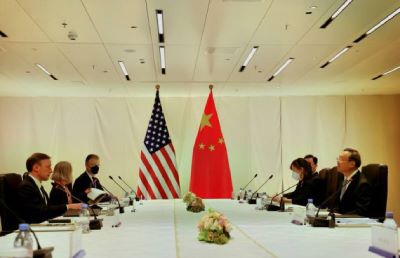
China hopes the U.S. side could adopt a rational and pragmatic China policy, and, together with China, follow a path of mutual respect, peaceful coexistence and win-win cooperation, with respect for each others core interests and major concerns.
Yang Jiechi, a member of the Political Bureau of the Communist Party of China (CPC) Central Committee, met here Wednesday with U.S. National Security Advisor Jake Sullivan.
The two sides, in a candid manner, had a comprehensive and in-depth exchange of views on China-U.S. relations as well as international and regional issues of common concern. The meeting was described as constructive, and conducive to enhancing mutual understanding.
ADVERTISEMENT
The two sides agreed to take action, following the spirit of the phone call between Chinese and U.S. heads-of-state on Sept. 10, strengthen strategic communication, properly manage differences, avoid confrontation and conflict, seek mutual benefit and win-win results, and work together to bring China-U.S. relations back to the right track of sound and steady development.
Yang said that whether China and the United States can handle their relations well bears on the fundamental interests of the two countries and two peoples, as well as the future of the world.
When China and the United States cooperate, the two countries and the world will benefit; when China and the United States are in confrontation, the two countries and the world will suffer seriously, said Yang, also director of the Office of the Foreign Affairs Commission of the CPC Central Committee.
The U.S. side needs to have a deep understanding of the mutually beneficial nature of China-U.S. relations and correctly understand China’s domestic and foreign policies and strategic intentions, said Yang, adding that China opposes defining China-U.S. relations as “competitive.”
Yang said that China attaches importance to the positive remarks on China-U.S. relations made recently by U.S. President Joe Biden, and China has noticed that the U.S. side said it has no intention to contain China’s development, and is not seeking a “new Cold War.”
China hopes the U.S. side could adopt a rational and pragmatic China policy, and, together with China, follow a path of mutual respect, peaceful coexistence and win-win cooperation, with respect for each other’s core interests and major concerns.
During the meeting, Yang expounded China’s solemn position on issues related to Taiwan, Hong Kong, Xinjiang, Tibet and human rights as well as on maritime issues, urging the United States to truly respect China’s sovereignty, security and development interests, and stop using the above issues to interfere in China’s internal affairs.
The U.S. side expressed its adherence to the one-China policy.
The two sides also exchanged views on climate change and regional issues of common concern.
The two sides agreed to maintain regular dialogue and communication on important issues.
The Ethiopian Government announced on Sept. 30 that seven UN officials had been declared “persona non grata” and given 72 hours to leave the country.
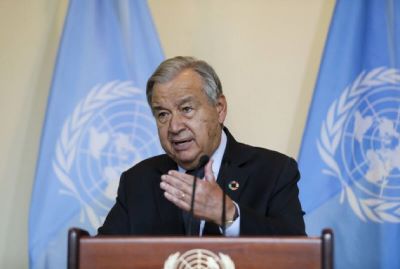
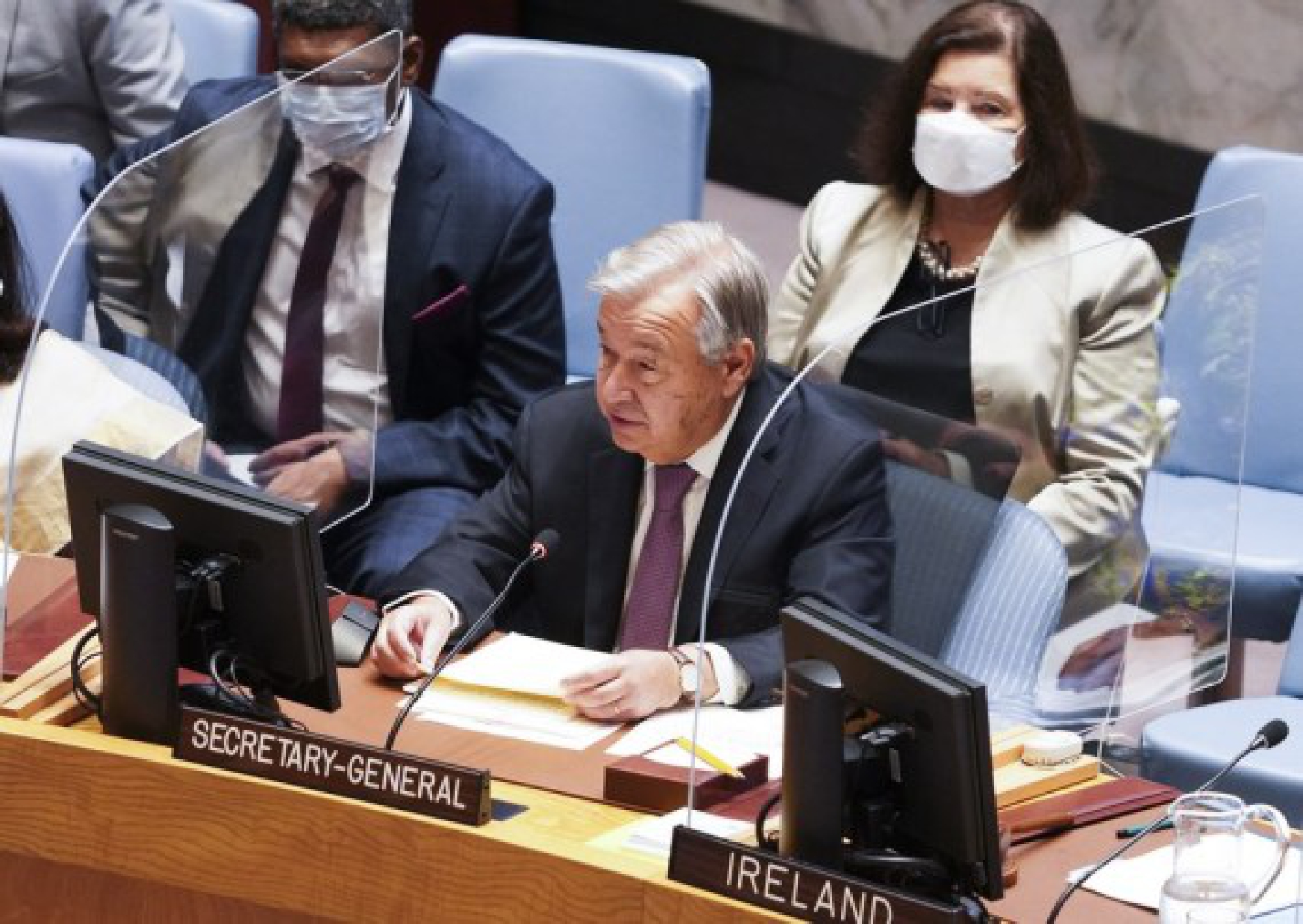
United Nations Secretary-General Antonio Guterres said on Wednesday that Ethiopia has no right to expel UN staff and it is violating the international law in doing this.
In his right of reply at the Security Council meeting on Ethiopia, the top UN official said that “we believe that Ethiopia has not the right to expel these members of the UN.”
ADVERTISEMENT
“We believe Ethiopia is violating international law in doing so,” he added.
Speaking directly to Ethiopia’s permanent representative to the UN, Taye Atske Selassie, who was also in the Security Council chamber, the secretary-general said that “if there is any written document, provided by the Ethiopian Government to any UN institution, about any of the members of the UN that were expelled, I would like to receive a copy of that document, because I have not had any knowledge of any of them.”
UN Secretary-General Antonio Guterres speaks during a Security Council high-level open debate on climate and security at UN headquarters in New York, Spet. 23, 2021. (Xinhua/Wang Ying)
“It would be very useful for me to detect, if documents are given to the UN and not given to my knowledge, then I have to investigate what has happened in my organization,” he added.
Guterres recalled that he “twice” told the Ethiopian prime minister that “if there were concerns about lack of, how to say, lack of impartiality of UN staff, that I asked him, please, send me those situations for me to be able to investigate. “
“Until now I have no response to these requests,” he stressed.
The secretary-general said that “we are ready to cooperate with the government of Ethiopia in relation to any situation in which the government of Ethiopia feels that any member of the UN is not behaving in total impartiality, in total independence, as humanitarian law prescribes and humanitarian principles establish.”
“I want to tell you, Mr. ambassador, we want to cooperate with the government of Ethiopia, because we have only one agenda in Ethiopia, and that agenda is the people of Ethiopia – Tigrayans, Amharans, Afaris, Somalis, the people of Ethiopia.”
“The people of Ethiopia are suffering. We have no other interest but to help stop that suffering,” he said.
Guterres told the Council before he exercised his right of reply that up to 7 million people in Tigray, Amhara and Afar are now in need of food assistance and other emergency support. This includes more than 5 million people in Tigray where an estimated 400,000 people are “living in famine-like conditions.”
The Ethiopian Government announced on Sept. 30 that seven UN officials had been declared “persona non grata” and given 72 hours to leave the country.
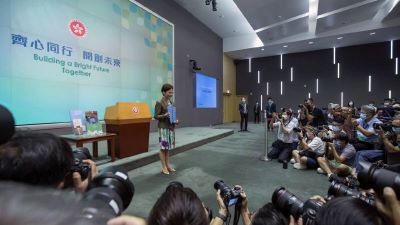
Hong Kongs leader outlined plans for a massive urban development on the border with China that appeared designed both to ease the worlds most expensive housing market and prove her own loyalty to Beijing.
The new “Northern Metropolis” will eventually provide homes for as many as 2.5 million residents, or a third of the city’s current population, Hong Kong Chief Executive Carrie Lam said Wednesday in the last annual policy address of her current term.
The major development answers Beijing’s call for the city to ease pressure on the world’s least-affordable housing market that Chinese officials consider a catalyst for 2019’s mass protests, which led to the imposition of a national security law. It also puts hard infrastructure behind Chinese President Xi Jinping’s vision for Hong Kong’s closer integration with nearby mainland cities such as Shenzhen and Guangzhou.
ADVERTISEMENT
“I am confident that Hong Kong is much stronger than ever, and I am most convinced that Hong Kong can integrate into the overall development of the country,” Lam told the city’s Legislative Council, which has been purged of opposition members who were either disqualified, resigned in protest or jailed while awaiting trial on national security charges.
The announcement of the symbolic new development — whose name mirrors Guangzhou’s moniker as China’s so-called Southern Metropolis — was front and center in an occasionally combative policy address that emphasized how China’s imposition of a national security law helped restore political stability to the former British colony.
The city’s ever-tightening relationship with the mainland comes as its reputation as an open, international financial hub continues to suffer from strict pandemic travel restrictions and sharper rhetoric on foreign interference — including what Lam called the “incessant and gross interference in Hong Kong affairs by external forces” in her speech.
The speech was derided as a platform for Lam’s re-election, Lo Kin-hei, chairman of the Democratic Party, at a press briefing Wednesday afternoon.
“The audience is not the Hong Kong people,” he said. “It’s not the Hong Kong residents but the central government … A lot of people are moving out of Hong Kong. They are emigrating to overseas. It didn’t address that. It didn’t talk about how they are going to reconcile the problems in Hong Kong.”
Economists were skeptical the northern plan, which had no timeline, would help solve the city’s housing problems in the near term.
“The problem is that none of this is immediate,” said Alicia Garcia Herrero, chief economist for Asia Pacific with Natixis. Given the project’s “location and size,” she added that it would likely accommodate migrants from mainland China, easing concerns about “Hong Kong’s sudden loss of population.”
The plan calls for the development of a 300 square-kilometer (115.83 square mile) area — 27% of Hong Kong’s total size — into an international information technology hub that will ultimately have as many as 926,000 residential units, including an existing 390,000 units in Yuen Long and the North District. A series of proposed rail links to Shenzhen would facilitate cross-border travel.
Lam called for some government offices to be based in the north, where she projected jobs would increase to 650,000, including 150,000 in the IT sector.
“The land development near the Shenzhen border should in the long term help resolve the housing problem and at the same time facilitate the interconnectedness with Shenzhen and the Greater Bay Area,” said Tommy Wu, lead economist with Oxford Economics in Hong Kong. “However, there was really nothing on tackling housing supply shortage in the short term.”
It’s possible that Lam decided to focus on long-term planning as it was the last address of her current administration, he said.
Other proposals in the address included:
– Splitting up the Transport and Housing bureaus; setting up a Culture, Sports and Tourism bureau; creation of an expanded Innovation, Technology and Industry bureau
– Allowing the southbound trade of mainland stocks denominated in the yuan.
– Using about 350 hectares of land to build about 330,000 public housing units in the next 10 years.
– Securing about 170 hectares of land in the next decade to facilitate 100,000 private residential units through land sales or railway property developments for tender.
– Devoting about HK$240 billion ($31 billion) over the next 15 to 20 years to address climate change, with an interim target to cease using coal for daily electricity by 2035.
– Plans to build a “mega courtroom” to handle a large number of pending cases.
Lam’s tumultuous five-year term, which ends in June, has been marked by huge anti-government protests, widespread international criticism about the national security law, and the Covid-19 pandemic that worsened a recession and led to unprecedented border controls in the top Asian financial hub.
She began the speech with a broad defense of the national security law, praise for China’s move to drastically alter the city’s democratic elections and an attack on the now mostly-jailed pro-democracy opposition for stalling legislation that could have benefited Hong Kong residents.
She also pledged the government would deepen the city’s security architecture by passing legislation to implement a security provision of the city’s charter that calls for, among other things, measures to ban treason, sedition and theft of state secrets. An attempt by Hong Kong’s local administration to enact that legislation in 2003 prompted widespread protests.
At the outset, she credited the central government for providing her with “staunch support” throughout and said under the protection of the national security law and the principle of patriots ruling Hong Kong, the city had “got back on the right track of one country, two systems.”
The Nobel Prize in chemistry was awarded Wednesday to two scientists who built a tool for constructing molecules in a cheap, environmentally friendly way, allowing researchers to more easily make products including pharmaceuticals.
David W.C. MacMillan of Princeton University and Benjamin List of the Max Planck Institute in Germany were awarded the Nobel for their development of a precise new tool for molecular construction known as organocatalysis.
Catalysts are basic tools for chemists. They are used to accelerate chemical reactions in many industries, including pharmaceuticals, plastics and food additives. Products made from catalysis are estimated to contribute 35 percent of the world’s gross domestic product (GDP).
ADVERTISEMENT
Until 2000, researchers had believed there were only two kinds of catalyst – metals and enzymes. The two laureates were rewarded for independently developing a third type of catalysis, which builds upon small organic molecules.
Known as organocatalysts, they are more environmentally friendly than traditional metal compounds, which are often expensive, difficult to dispose of and rare. The tool can be used to construct new drugs and chemicals, as well as molecules that can capture light in solar cells. The breadth of commercial and everyday products it can help create is enormous, ranging from clean energy to cosmetics.
Johan Aqvist, chair of the Nobel Committee for Chemistry, called the new concept “as simple as it is ingenious.”
“It is already benefiting humankind greatly,” said Pernilla Wittung-Stafshede, a professor of chemical biology at Chalmers University of Technology in Gothenburg. Wittung-Stafshede joined Goran Hansson, general secretary of the Royal Swedish Academy of Sciences, who announced the award at the Wednesday news conference.
Many materials traditionally used as catalysts are categorized as “at risk,” said Tom Welton, president of the Royal Society of Chemistry in London. Organocatalysts offer the potential for a much greener process.
“It’s good in terms of cost; it’s good in terms of not depleting nature’s resources,” Welton said.
Jon Lorsch, director of the National Institute of General Medical Sciences at the National Institutes of Health, described the innovation in terms of “molecular carpentry.” Rather than being limited to a board, hammer and nails to build houses, the researchers have developed tools that allow far greater flexibility in terms of building materials and the way they are joined.
Chemists pride themselves in manipulating molecules for specific applications, said H.N. Cheng, president of the American Chemical Society, and asymmetric organocatalysis makes the scope even larger.
“It’s like being given a new magic wand,” Cheng said. “I can wave it to different things.”
Asymmetric catalysts allow for the development of safer pharmaceuticals. Molecules – like a person’s hands – have mirror images, Welton said. Asymmetric catalysts allow manufacturers to use just one of those images, known as handedness compounds. That is key in pharmacology. The drug thalidomide, for example, which was developed in the 1950s, was manufactured with both handedness compounds – one performed very well in reducing morning sickness in pregnant women; the other caused birth deformities.
“You can use an asymmetric catalyst to only make one of the versions,” Welton said. “You don’t have the contamination with wrong handedness.”
Both scientists have received grants from the National Institutes of Health, according to NIH Director Francis S. Collins, who emphasized the importance of funding basic science to advance the field of medicine. List received NIH support early in his career. MacMillan has received continuous funding from NIH since 2000, totaling $14.5 million, according to NIH data.
Basic science “is the foundation for all the discoveries for human health,” Collins said in an interview Wednesday morning.
List briefly joined the celebratory Stockholm news conference by telephone from Amsterdam, where he is on vacation.
“You really make my day today,” the newly minted laureate said. “I was thinking somebody was making a joke with me.”
The award comes with a 10 million Swedish kronor prize – equivalent to about $1.14 million – that the two new laureates will split.
Greg Scholes, a friend of MacMillan’s and chair of the department of chemistry at Princeton, said MacMillan’s wife woke Wednesday morning and told him to turn his phone off because it kept buzzing. MacMillan saw an incoming call from Sweden and ignored it, thinking it was a student playing a Nobel-day prank. He texted List and said he was going back to sleep.
“The students were always trying to play this joke on him,” Scholes said. “The majority would agree it was not a matter of if, but when.”
His students were at the front of MacMillan’s mind once the good news sank in and he was asked to reflect on what his work meant for him. In an interview, MacMillan said he continues to be “blown away” by how the processes his students work on can be put to use by drug companies in a matter of days, and applied to any disease.
“Cancer, pain, Alzheimers. Across the board. In every context,” said Macmillan, who makes frequent visits to pharmaceutical companies. “People don’t realize how quickly you can get to the frontiers.”
When Scholes eventually got through to MacMillan on his wife’s phone, MacMillan had to begin rearranging his day. He canceled a Thai lunch he and Scholes often have together. They’ll be heading to a champagne reception instead.
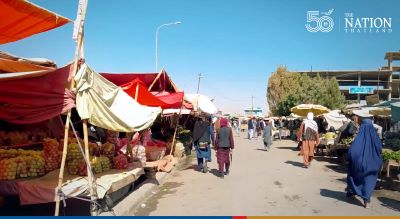
As the abrupt cutoff of foreign funding since the Taliban takeover threatens economic collapse in Afghanistan, risking the lives of many of its citizens along with their livelihoods, a United Nations agency has come up with a way to keep at least some of the money flowing.
The U.N. Development Program, in a novel temporary fix, plans this week to take over management from the World Bank of the system that has supplied hundreds of millions of aid dollars for essential health services throughout Afghanistan in recent years, including paying the salaries of at least 25,000 doctors, nurses and other workers in thousands of hospitals and clinics.
The payments, and other operational support for health services, were halted when the World Bank, along with the International Monetary Fund, the United States, Europe and virtually every other donor and lender stopped paying the bills on Aug. 15, the day the Taliban entered Kabul.
ADVERTISEMENT
UNDP’s assumption of responsibility for the direct payments, a task outside its normal development wheelhouse, was facilitated last week when President Joe Biden’s administration issued special licenses allowing “certain international organizations” to engage in “authorized transactions” in Afghanistan.
An initial $15 million to finance the program during October has been donated by the Global Fund, a separate, worldwide health partnership of public and private donors whose primary mission is fighting endemic diseases in sub-Saharan Africa.
The stopgap measure comes as the wealthiest and most powerful nations grapple with how to help desperate people in one of the world’s most destitute places, even as they refuse to recognize the government of the militant group that now runs it.
Without that recognition, neither the World Bank nor the International Monetary Fund – where the United States and its allies hold the majority of voting shares – can operate in Afghanistan. Although the IMF, pre-Taliban, allocated $440 million in interest-free drawing rights to Afghanistan, that money is now off-limits.
Virtually all aid that for years has supported up to 80% of all Afghan government expenditures has stopped except for a trickle of the most basic humanitarian supplies of food and medicine distributed through resident nongovernmental organizations that the Taliban has allowed some operational independence. The United States has frozen nearly $10 billion in Afghan government assets held by the Federal Reserve.
Having tried and failed over two decades to keep the militants out of power with military might, the international community – led by the United States, the largest donor to Afghanistan – is now trying to bend them to its will by using its most powerful remaining weapon: money.
But the question it faces is how to balance holding the Taliban to its promises – establishment of an inclusive government, preservation of the rights of women and minorities, and prevention of Afghanistan’s use as a launchpad for global terrorism – with the immediate needs of 40 million Afghans.
Both China and Russia, which have continued to operate their embassies in Kabul while not officially recognizing the Taliban government, have used the opportunity to liberally criticize U.S. policy over the past 20 years.
What to do about Afghanistan is a subject of near-constant discussion within the Biden administration, in bilateral talks between governments and in international forums. It will be a hot topic at the annual World Bank and IMF meetings in Washington next week, and at the Group of 20 summit in Rome at the end of October. Already, some U.S. allies who, like the administration, set up offices in the Qatari capital of Doha after shutting down their Afghanistan embassies, are starting to talk about reestablishing a presence in Kabul short of diplomatic relations.
“This obviously can’t continue,” Kanni Wignaraja, the UNDP’s Asia-Pacific director, said of the current situation.
“You’re going to have very soon, before the end of the year, not just a complete meltdown. The fiscal cliff is right with us. … We’re standing at the edge of it if not hanging by our fingernails,” Wignaraja said in an interview.
Donor governments, she said, are going to have to “wrap their heads around the politics of this, of an administration they don’t support, that is globally not recognized, including by the U.N. Security Council and member states.”
“How do you square that with the fact that it’s very hard to bring back a whole nation of people who are pushed to starvation, who have no way of earning a living?” Wignaraja said.
European Union foreign policy chief Josep Borrell agreed that disaster looms. “Certainly it’s a dilemma,” he said Sunday during a visit to Saudi Arabia. “Because if you want to contribute to avoid the collapse of an economy, in a certain way, you can consider supporting the government … depending on their behavior. And their behavior until now is not very encouraging.”
What the Taliban has said is an “interim” government, appointed last month, includes no women and few non-Taliban. Many professionals, government bureaucrats and technical experts have either fled the country or are in hiding for fear of Taliban reprisals. Amid reports of harsh treatment of civilians reminiscent of the militants’ brutal rule in the late 1990s, girls have so far been banned from education beyond the sixth grade.
The problem of the immediate future has also become a domestic political football in the United States, following the loss of the war and the chaotic U.S. exit in August.
Echoing the administration, Senate Foreign Relations Committee Chairman Robert Menendez, D-N.J., said Monday that “no U.S. foreign aid will go to a Taliban-controlled Afghan government.” But, he said after fighting off a legislative challenge to any assistance at all to Afghanistan, “this does not mean that we remain any less committed to supporting the Afghan people.”
In addition to receiving military funding and humanitarian and other assistance through international organizations, Afghanistan for years has been the largest recipient of bilateral aid from the U.S. Agency for International Development, with $19.5 billion spent since 2002, and nearly $500 million committed for fiscal year 2020.
But with ongoing uncertainty about the Taliban’s direction, all U.S. government personnel now evacuated from the country and no direct funding allowed, programs in agriculture, governance, education and other sectors have been suspended. E.U. development assistance is similarly being held in abeyance.
Last month, Secretary of State Antony Blinken announced an additional $64 million in humanitarian aid – primarily emergency food, shelter, medicine and hygiene supplies – in response to a worldwide “flash appeal” by U.N. Secretary General António Guterres launched last month for an immediate $606 million to avoid imminent starvation and disease.
So far, the overall appeal is only 35% funded, Guterres spokesman Stephane Dujarric told reporters Tuesday. “We would appreciate more cash,” he said.
But the cash for emergency supplies is only a Band-Aid, UNDP’s Wignaraja said. Only about 17% of about 2,200 health facilities funded under the World Bank program – many just one-room clinics – “are currently fully functional” and able to use whatever humanitarian supplies may arrive, she said. No personnel have been paid, and those still working are doing so on a voluntary basis,Wignaraja said.
“There is a risk that the Afghan people will have virtually no access to primary health services,” she said.
Three years ago, in a consolidation of a complex web of projects in Afghanistan, the World Bank stepped in to administer a $600 million, three-year program, under the Afghanistan Reconstruction Trust Fund, to deliver basic health and hospital services to all of Afghanistan outside Kabul and its environs. The aid, extended in the spring of 2021, for at least another year, was distributed under contract by 13 separate nongovernmental organizations – all but two of them Afghan.
When the Bank’s authorization to continue operations in Afghanistan was frozen in August, it asked the Global Fund – whose worldwide donors pay for treatment and control of malaria, tuberculosis, HIV and now covid-19 – to supply the money to allow health services to continue. The Fund then asked UNDP, already the administrating authority for its disease program in Afghanistan, to assume responsibility for disbursing the money.
The Taliban, Wignaraja said, has agreed that it will have no access to the funds, which are to be deposited in a UNDP account at one of the few operating Afghan commercial banks – a dollar transfer that the special licenses newly issued by the administration will now allow. UNDP will then transfer it in local currency to the accounts of the NGOs, which will distribute it directly in cash to the recipients.
“They know very well they can’t administrate, in the sense that we can’t send money through them,” she said of the militants. “They’re very well aware of the plan.”
Wignaraja stressed that the UNDP, with Global Fund money, is acting only as a “temporary lifeline,” to test if the system will work. After October, if necessary, it is hoped that other agencies such as the World Health Organization and the U.N. Children’s Fund may step in for the rest of the year, with money from the U.N.’s central emergency response account.
“Our duty is to step up cooperation and increase funding to ensure the most vulnerable populations – particularly women and girls – continue to have safe access to essential health services,” Peter Sands, executive director of the Global Fund, said in a statement prepared for announcement of the plan Wednesday.
By the beginning of 2022, Wignaraja said, the hope is that the World Bank will have regained member approval to return to Afghanistan.
In the meantime, she said, such measures are only “micro-level solutions” to the “macro-level implosions” in a country where few now have a way of earning a living, and the gains of the past two decades – including more than 60,000 microbusinesses operated by women – are in danger of disappearing altogether.
“Some of these tough decisions” for both sides of the divide over Afghanistan, Wignaraja said, “will have to be made sooner rather than later.”
BRUSSELS – NATO will expel eight Russian diplomats who were members of the countrys delegation to the military alliance, alleging that they were working as spies, the latest development in an increasingly frayed relationship between the Kremlin and Western forces.
“We can confirm that we have withdrawn the accreditation of eight members of the Russian Mission to NATO, who were undeclared Russian intelligence officers,” NATO said in a statement on Wednesday.
In addition to the diplomats’ expulsion, NATO has cut the maximum size of the Russian delegation in half, a move that could further reduce the capacity for communication between the alliance and Moscow.
ADVERTISEMENT
“NATO’s policy towards Russia remains consistent,” the statement said. “We have strengthened our deterrence and defense in response to Russia’s aggressive actions, while at the same time we remain open for a meaningful dialogue.”
The diplomats must leave Brussels, where the alliance is headquartered, by the end of October. It follows a string of expulsions this spring that saw roughly a dozen countries boot out Russian diplomats, which then triggered reprisals from Moscow.
NATO officials did not respond to questions about how they discovered that the Russian members were secretly working as intelligence officers or what their roles were at the mission.
“This decision is based on intelligence, and we are not going to comment on intelligence,” the statement said.
Leonid Slutsky, a Russian lawmaker who chairs the international affairs committee in the lower house of the country’s parliament, denied the NATO allegations in an interview with state media and said Russia’s foreign ministry would retaliate.
“The collective West continues a policy towards the diplomatic standoff with Russia,” he said. “Stripping of accreditation eight staffers of the Permanent Mission of the Russian Federation to NATO will further decrease the level of cooperation.”
NATO previously reduced the maximum size of the Russian delegation from 30 to 20 diplomats in 2018, after double-agent Sergei Skripal was poisoned in Britain in what Western intelligence agencies say was an assassination attempt by Russian agents.
Relations between the military bloc and Moscow have grown progressively worse since Russia’s annexation of Ukraine’s Crimean Peninsula in 2014. Moscow has regularly accused NATO of deploying troops and weapons close to its border. Tensions spiked this spring, when Russia increased its military presence along the Ukrainian border; the Kremlin said the buildup was for planned exercises.
The new expulsions come after a heated closed-door meeting between NATO Secretary General Jens Stoltenberg and Russian Foreign Minister Sergei Lavrov at the United Nations General Assembly last month.
During the meeting, Lavrov interrupted Stoltenberg, in an exchange two European officials described as “rude,” and accused NATO of supporting neo-Nazis in Ukraine and abandoning Afghanistan. Lavrov, according to a European official and a person familiar with the meeting, also said the NATO-Russia Council – a forum established in 2002 to promote cooperation between the two sides – was pointless, complaining that NATO members often gang up on Russia.
Stoltenberg responded by raising concerns about Russia’s aggressive actions in Ukraine, its support of Belarus and hybrid actions against NATO allies, including election interference, the official said, speaking on condition of anonymity to describe a closed-door meeting.
The secretary general also reiterated a proposal originally made more than 18 months ago to hold another meeting of the NATO-Russia Council, the official said, describing the council as an “important platform for dialogue.”
The World Health Organization on Wednesday endorsed the worlds first malaria vaccine for use in children. It said the vaccine could help save tens of thousands of lives each year.
The life-threatening parasitic disease kills more than 400,000 people a year, and the WHO says more than 260,000 of them are African children under age 5. Most cases and deaths caused by the disease, which is transmitted through bites of infected mosquitoes, occur in sub-Saharan Africa.
“This is a historic moment,” WHO Director General Tedros Adhanom Ghebreyesus said in a statement. “The long-awaited malaria vaccine for children is a breakthrough for science, child health and malaria control.”
ADVERTISEMENT
The WHO said it is recommending use of the vaccine among children in places with moderate to high malaria transmission. The guidance is based on an ongoing pilot program of the vaccine in Ghana, Kenya and Malawi that has included more than 800,000 children since 2019. Initial findings from the pilot program conclude that deadly, severe malaria was reduced by 30% among vaccinated children. The WHO is recommending that children 5 months old and older receive four doses of the vaccine.
Tedros said he expected the vaccine to add to the progress global health leaders have made since 2000, when malaria deaths were more than twice as high as they are now. But he emphasized that the vaccine should not replace other tools used to fight malaria, including bed nets meant to ward off mosquitoes while people sleep.
“We still have a very long road to travel,” Tedros said Wednesday at a news conference. “But this is a long stride down that road.”
The vaccine, manufactured by the British-based pharmaceutical company GlaxoSmithKline, is only moderately effective. Findings from the pilot program showed the immunization reduced cases of severe malaria by about 30%, said Ashley Birkett, the head of malaria vaccine development at PATH, an international global health organization that helped fund the immunization.
The WHO hopes eventually to have a vaccine that is 95% effective and can essentially eradicate malaria, Pedro Alonso, director of the WHO’s global malaria program, told reporters. But malaria is caused by a parasite, which is harder to protect against than a virus.
“I don’t think we are within reach of a highly efficacious vaccine yet, but what we have right now is a vaccine that can be deployed, that is accepted, that is safe and that can have a massive impact in terms of lives saved and episodes of malaria averted,” Alonso said.
Researchers found that the vaccine is most effective in the first months after immunization and that its potency wanes in the years afterward, Birkett said. The goal is for children to get their shots in the first years of their lives, when they are most at risk.
More than three decades in the making, the vaccine’s production was slowed somewhat by the complexity of targeting a parasite and the difficulty in securing funding to prevent a disease most destructive in poor areas of the world, Birkett said.
Now, next steps will include financial considerations about how to roll out the vaccine broadly and decisions at the country level on whether to adopt the immunization as part of its broader malaria control, the WHO said. Birkett said global health partnership Gavi, the Vaccine Alliance, may decide by the end of the year whether to finance the vaccine’s distribution. Funding will also be needed to scale up the vaccine’s production to meet demand, he said.
Gavi on Wednesday said it welcomed the WHO’s recommendation. In a statement with global health agency Unitaid and the Global Fund to Fight AIDS, Tuberculosis and Malaria, it said “global stakeholders, including Gavi, will consider whether and how to finance a new malaria vaccination programme for countries in sub-Saharan Africa.”
Brian Greenwood, a professor at the London School of Hygiene and Tropical Medicine who has played a key role in malaria vaccination trials and research into the vaccine, called Wednesday a “historic day for malaria.”
“For the first time we have a vaccine that is now recommended for expanded use in areas of Africa where the disease is endemic,” Greenwood said in a statement. “With malaria still a major cause of death, especially among children in Africa, this decision has the potential to save millions of young lives. We urgently need more tools and innovative, practical solutions to malaria.”
The immunization is the first malaria vaccine to have completed the clinical development process and receive a green light from the European Medicines Agency, which in 2015 gave the vaccine a positive scientific opinion for use outside the European Union.
The WHO recommended in 2016 that the vaccine be introduced in Ghana, Kenya and Malawi for a pilot program, which the organization says will continue through 2023. Malaria is endemic in Malawi and is the leading cause of morbidity and mortality, especially in children under 5 and pregnant women and other pregnant individuals, according to that country’s Ministry of Health.
The vaccine can cause mild side effects in some children, including fever and brief convulsions, said Katherine O’Brien, the WHO’s director of immunization, vaccines and biologicals. Officials also plan to keep studying the benefits of the vaccine’s fourth dose to determine whether it is needed, she said at a news conference.
In a statement, GlaxoSmithKline said it will work with partners and governments to help with additional supply of the vaccine. The company said it will make 15 million annual doses available at no more than 5% above the cost of production.
“This long-awaited landmark decision can reinvigorate the fight against malaria in the region at a time when progress on malaria control has stalled,” the statement said.
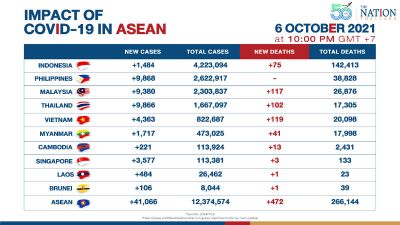
The number of Covid-19 cases crossed 12.37 million across Southeast Asia, with 41,066 new cases reported on Wednesday (October 6), higher than Tuesday’s tally at 39,342. New deaths are at 472, increasing from Tuesday’s number of 436. Total Covid-19 deaths in Asean are now at 266,144.
Singapore’s Manpower Minister announced that more foreign maids will be able to enter Singapore from November 1 but only those who are vaccinated will be considered for approval. The government will accept new entry applications for vaccinated foreign maids from October 15. Priority will continue to be given to homes with urgent and challenging caregiving needs, especially those with sick and elderly family members as well as those with special needs.
Meanwhile, Vietnamese Communist Party secretary-general announced that Hanoi will enter the economy recovery phase while promoting the ‘living with Covid-19 safely’ approach among its citizens. The city’s several businesses have been allowed to open since September 16 amid the risk of new infections spiking. Vietnam reported 4,363 new Covid-19 cases and 119 deaths of Wednesday, bringing cumulative cases in the country to 822,687 patients and total 20,098 deaths.
WASHINGTON – A bipartisan group of lawmakers plans to introduce legislation this week that for the first time would require trust companies, lawyers, art dealers and others to investigate foreign clients seeking to move money and assets into the American financial system.
The bill’s sponsors cited the findings of the Pandora Papers investigation, the result of a sweeping international collaboration published this week that exposed how the global elite conceal their wealth in tax havens that increasingly include the United States.
Stories by The Washington Post and the International Consortium of Investigative Journalists (ICIJ) showed that little-known trust companies in Sioux Falls, S.D., established nearly 30 trusts holding assets connected to people or companies accused of corruption, human rights abuses or other wrongdoing in some of the world’s poorest communities. The investigation also found that King Abdullah II of Jordan secretly used offshore companies to purchase three properties in Malibu and revealed the use of two offshore trusts by an art dealer, now deceased, who was accused by U.S. prosecutors of trafficking in looted Cambodian artifacts.
ADVERTISEMENT
The proposed law, known as the Enablers Act, would amend the 51-year-old Bank Secrecy Act, by requiring the Treasury Department to create basic due-diligence rules for American gatekeepers who facilitate the flow of foreign assets into the United States.
Banks are already required to investigate their clients and sources of wealth, but trust companies, lawyers, investment advisers, accountants, art dealers, public relations firms and other professionals have been excluded from due-diligence rules – a loophole regularly criticized by financial crime experts and international watchdogs.
The proposed legislation, experts say, represents the most significant change of anti-money-laundering rules since 9/11.
“If we make banks report dirty money but allow law, real estate, and accounting firms to look the other way, that creates a loophole that crooks and kleptocrats can sail a yacht through,” Rep. Tom Malinowski, D-N.J., co-sponsor of the proposed bill and co-chair of the Congressional Caucus against Foreign Corruption and Kleptocracy, said on Wednesday. “Our bill closes that loophole and encourages the administration to move in the same direction.”
Malinowski called on the White House to support the legislation, co-sponsored by Reps. Steve Cohen, D-Tenn., co-chair of the bipartisan Commission on Security and Cooperation in Europe; Joe Wilson, R-S.C., ranking member of the commission; and Maria Elvira Salazar, R-Fla., a member of the caucus.
“All around the world, countries are being looted and the most vulnerable people victimized by their elites,” Cohen said. “These kleptocrats then launder that money to the West, where they enjoy the high life – spending the money on luxury cars, penthouses, jets and opulent parties. Some also spend it on intervening in our democracy . . . working to undermine the rule of law. In order to fight corruption, we must curb the enablers.”
If passed, the law would give the Treasury Department until December 2023 to create anti-money-laundering rules for the gatekeeper industries. A new national security task force would oversee the effort.
After 9/11, banks and shell companies – criticized for serving and shielding terrorists, drug traffickers and dictators – shored up their due-diligence practices. Financial crime experts say that such measures encouraged wrongdoers to find other financial gatekeepers, including the U.S. trust industry.
“Global criminals, kleptocrats, dictators, they’re going to look for new ways to launder their money and we’re going to try to close them down, but the gap right now is just massive – we basically left our financial defenses wide open,” said Paul Massaro, a congressional anti-corruption adviser who helped work on the proposed legislation.
In South Dakota, now considered a top destination for global wealth, trust companies oversee more than $360 billion in assets, state data shows. The Post and the ICIJ investigation identified a series of international clients who moved their assets into trusts in South Dakota in recent years, including a Colombian textile mogul implicated in an international scheme to launder drug proceeds and a Brazilian orange juice executive accused of colluding to underpay local farmers.
“Regulating professional enablers is how the United States could stop being the world’s top offshore financial haven, begin treating dirty money as a leading national threat and start demonstrating how democracies can deliver against corrupt adversaries and powerful special interests,” said Josh Rudolph, a member of the National Security Council staff in the Obama and Trump administrations who recently published an analysis on the role of financial gatekeepers.
The proposed legislation comes as new information surfaces about Abdullah’s steps to contain the impact of the Pandora revelations before the articles about him were published.
Newly filed U.S. federal disclosure forms show that Abdullah hired a law firm and a crisis management public relations company after learning that his use of shell companies to purchase luxury properties costing more than $106 million was about to become public. The moves reflect apparent concern about the potential fallout both in Washington and in Jordan, where there has been scant coverage of the Pandora stories and at least one news outlet said it was contacted by the Jordanian intelligence service and told to take down an article about the Abdullah revelations.
The forms were filed by DLA Piper, a law firm hired by Abdullah, to comply with laws requiring U.S. firms to disclose when they have been hired to represent a foreign government. A letter attached to the filing shows that the DLA Piper was hired at an hourly rate of $1,335 to represent Abdullah “related to potential defamation and other legal remedies associated with inquiries and/or articles concerning His Majesty.”
A lawyer for DLA Piper did not immediately respond to a request for comment. The firm was quoted in The Post and other news stories saying that Abdullah had not misused aid money and that his use of offshore companies was driven by security concerns.
A second federal filing shows that Abdullah and DLA Piper also hired Stripe Theory, an Atlanta-based consulting and public relations firm that describes itself online as a provider of strategic marketing advice “when your brand is on the line.”
Craig Kronenberger, listed on the letter as an executive at Stripe Theory, did not respond to an email sent to his company address requesting comment.
On Sunday, The Washington Post and the ICIJ broke the story about Abdullah’s property purchases in the United States. All told, 150 media partners contributed to the Pandora Papers, which revealed the financial secrets of 35 current and former world leaders and more than 330 politicians and public officials with assets around the world, including in the United States.
“If we are serious about fighting dictatorship, we need U.S. professionals to do the most basic due diligence – no American should be accepting money from Chinese Communist Party operatives, Iranian mullahs, Russian oligarchs or others,” Wilson said. “The Enablers Act is a critical national security measure.”
– – –
Will Fitzgibbon is a reporter for the International Consortium of Investigative Journalists.
The Pandora Papers is an investigation based on more than 11.9 million documents revealing the flows of money, property and other assets concealed in the offshore financial system. The Washington Post and other news organizations exposed the involvement of political leaders, examined the growth of the industry within the United States and demonstrated how secrecy shields assets from governments, creditors and those abused or exploited by the wealthy and powerful. The trove of confidential information, the largest of its kind, was obtained by the International Consortium of Investigative Journalists, which organized the investigation.
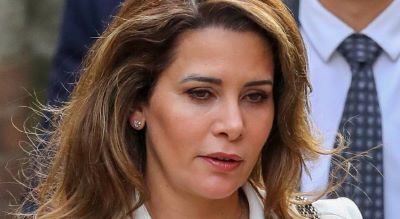
The ruler of Dubai used NSO Groups Pegasus spyware to hack the phones of his estranged wife, Princess Haya, and the closest members of her inner circle, a U.K. high court judgment released Wednesday shows.
The ruling offers strong confirmation for key elements of the Pegasus Project, an investigation published in July by The Washington Post and 16 other news organizations into NSO Group, the Israeli surveillance giant that sells its powerful spyware to government agencies around the world.
The phone numbers for Princess Haya and members of her legal and security teams were on a list of 50,000 numbers that formed the basis for the investigation. Reporters were able to identify more than 1,000 people whose numbers were on the list, including 85 human rights activists, 189 journalists, and more than 600 politicians and government officials. Forensic examination of 67 phones included on the list found 37 had been targeted by Pegasus.
ADVERTISEMENT
The phones of Haya and her inner circle were not examined as part of the news outlets’ investigation, but the numbers had been added to the list around the time Haya fled to London with her two young children following a campaign of harassment and threats from her then-husband, one of the Persian Gulf’s most powerful men.
The U.K. High Court of Justice ruling found that Haya, her personal assistant, two of her lawyers and two members of her security team had been subjected to “unlawful surveillance” carried out by agents of Sheikh Mohammed bin Rashid al-Maktoum, who, in addition to ruling Dubai, serves as the vice president, prime minister and defense minister of the United Arab Emirates.
The court’s family division has been investigating the surveillance amid a bitter custody battle over Haya and the sheikh’s children. The division’s president, judge Andrew McFarlane, said in the ruling that the findings represent not only “serial breaches of domestic criminal law” but a vast “abuse of power” by a head of state and a “total abuse of trust.”
In a statement, Sheikh Mohammed denied the allegations and said the matters concern “supposed operations of State security.”
The judgment, he added, was an “incomplete picture” and “unfair” because it was based on evidence not disclosed to him or his advisers. He also asked that the media “respect the privacy of our children and do not intrude into their lives in the U.K.”
Princess Haya’s attorney, Fiona Shackleton, declined to comment, saying the proceedings are ongoing. Her phone was among those hacked, the ruling found.
Haya’s legal team told the court that she “has been living in fear of her life, frankly, and in fear of the children’s security” since leaving Dubai in April 2019. “It feels as if I am being stalked, that there is literally nowhere for me to go to be safe” from him, she told the court.
The High Court judgment, which was written in May but released to the public only Wednesday, also found that Cherie Blair, the wife of former British prime minister Tony Blair, had alerted Haya’s attorneys to the invasion after being notified by a top official at NSO, where she served in an advisory role. Blair declined to comment.
Pegasus is one of the world’s most formidable spyware tools, allowing operatives to take over a phone without its owner even clicking a link. The spyware can silently send back vast amounts of data stolen from an infected phone, including call logs, emails, GPS coordinates, text messages and recordings from its cameras and microphones.
NSO officials have said Pegasus is licensed to governments solely for use in tracking terrorists and criminals, and that it investigates reports of misuse and can revoke contracts if the tool’s surveillance powers are abused.
On Wednesday, a person familiar with the operations of NSO, who spoke to The Post on the condition of anonymity to discuss internal operations, said that the company terminated its contract with Dubai after it learned the spyware had been used to surveil Haya and her allies. The deal would have been worth roughly $150 million over the next few years, the person said.
Haya’s phone was hacked 11 times during the summer of 2020 on Sheikh Mohammed’s “express or implied” orders, the judgment found. During one of the hacks, the ruling found, more than 250 megabytes of data were “covertly extracted” from the phone – a bundle big enough to include hundreds of photos, hours of video or audio recordings, and reams of text messages or emails.
The judgment, which was first reported by The Guardian, said the hacks had occurred during a “particularly busy” time of Haya’s life, in which she was preparing for critical custody hearings related to the long-term care of herself and her children.
The ruling also said that agents of Sheikh Mohammed had attempted to buy a sprawling 77-acre estate overlooking Haya’s new home, so close that it would have been “in prime position for direct or electronic surveillance.”
The person familiar with NSO operations said a confidential informant had told the company in August 2020 that the spyware was being used to target Haya and her attorneys. According to the judgment, a senior member of NSO’s management team called Blair, who advised the company on business and human-rights issues, around midnight Israel time on Aug. 5 to seek her help in alerting Haya and her legal team to the fact that their phones had potentially been compromised.
The NSO manager also urged Blair to advise the lawyers to restart their phones, as a way to block the spyware’s interception, the person familiar with NSO operations said. In witness statements provided to the court, Blair said the NSO manager told her the company had taken steps to ensure the phones could not be accessed again.
The person familiar with NSO operations told The Post that phone numbers with the U.K. country code of +44 have been blocked from searches by foreign governments since August 2020. NSO has said that numbers with the United States’ +1 country code also cannot be hacked.
The person said phones in NSO’s home country of Israel as well as in the “Five Eyes” – the intelligence-sharing alliance of the U.S., U.K., Canada, Australia and New Zealand – are now blocked from foreign surveillance, but that law enforcement and government agencies inside of those countries can still use Pegasus to target their own citizens.
Sheikh Mohammed said in his statement that it had not been appropriate for him, as a head of government, to provide evidence as part of private family proceedings in a foreign court. But McFarlane, the High Court judge, has disputed that argument, noting that the sheikh had submitted witness statements and directed his international legal team not to engage in the proceedings.
“At no stage has the father offered any sign of concern for the mother, who is caring for their children, on the basis that her phones have been hacked and her security infiltrated,” McFarlane wrote. “Instead he has marshaled a formidable forensic team to challenge the findings . . . and to fight the case against her on every point.”
Haya, the daughter of the late King Hussein of Jordan, had angered Sheikh Mohammad by questioning how he had behaved toward his daughter, Princess Latifa, previous U.K. judgments showed. Before fleeing Dubai, Haya said she had faced threats of exile to a desert prison and twice found a pistol in her bed.
In 2018, Princess Latifa had staged a dramatic escape from Dubai but was apprehended at sea in what her father declared was a “rescue.” Numbers for Latifa and her closest friends were also found on the list that included Pegasus targets.
The judgment follows a separate fact-finding ruling by the High Court last year that determined Sheikh Mohammed had ordered Latifa’s abduction and orchestrated an intimidation campaign against Haya.
The Post reported in August that one of Princess Haya and Latifa’s close allies, the human-rights activist David Haigh, also had his phone hacked by Pegasus, according to a forensic analysis by researchers with Amnesty International’s Security Lab. Those tests found that the hacks occurred on Aug. 3 and 4, 2020 – only days before NSO blocked the foreign targeting of U.K. numbers, the person familiar with the company’s operations said.
Bill Marczak, a researcher with the University of Toronto’s Citizen Lab who has helped investigate Pegasus use around the world and whose work on the Haya case is cited in the high court’s ruling, noted in a statement to The Post the unusual nature of NSO’s actions in the case.
“The actions that NSO Group took in this case, including sending letters to the court that accorded with my technical findings, notifying Princess Haya’s lawyers shortly after I did, and disconnecting one of their customers, are really quite unusual and extraordinary,” Marczak said.
“In our research at Citizen Lab, we see cases all the time of abusive surveillance of dissidents and journalists with NSO Group’s Pegasus spyware, but rarely if ever do we see NSO take actions resembling the ones they seem to have taken here. I wish they treated journalists and activists the way they treat Princesses and Baronesses.”

 UN Secretary-General Antonio Guterres speaks during a Security Council high-level open debate on climate and security at UN headquarters in New York, Spet. 23, 2021. (Xinhua/Wang Ying)