U.S. has weighed vaccine rule for international fliers #SootinClaimon.Com

#SootinClaimon.Com : ขอบคุณแหล่งข้อมูล : หนังสือพิมพ์ The Nation.

https://www.nationthailand.com/international/40006207

U.S. has weighed vaccine rule for international fliers


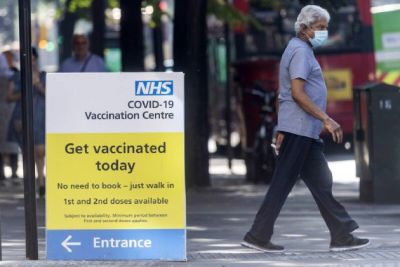
WASHINGTON – As White House officials rushed to shape last weeks sweeping new vaccine mandates, they debated the idea of requiring international air travelers to be vaccinated before boarding a plane, as part of a larger effort to persuade more Americans to get immunized, according to two people familiar with the plans.
Some aides argued that other countries already require vaccinations to fly and that the United States should join their ranks, according to an administration official. But others said mandates work best when they require people to prove they are immunized only once – like at work – rather than repeatedly, like every time they board a plane.

The idea was shelved, but top White House officials say that proposal and similar ones are still under consideration – including, potentially, a broader vaccine mandate that would include domestic air travel.

“We’re discussing it,” Anthony Fauci, President Joe Biden’s chief medical adviser, said about the idea of a broader requirement in an interview. “It’s on the table for discussion.”

White House officials stressed that no additional mandates are imminent, as the Biden administration is still sorting through how to implement the ones announced last week.

The debate over an airplane mandate, which many public health officials say is a logical next step, highlights Biden’s struggle to balance public health needs with practical, economic and political considerations. Some at the White House warn, for example, that an air mandate could prompt frustratingly long lines at airports.

Either way, Biden’s top advisers say that significantly more measures may be needed to convince – or coerce – Americans to get vaccinations, as more than 70 million Americans who qualify for coronavirus shots have not gotten them.

ADVERTISEMENT

That could mean more social tumult ahead, since Republicans are increasingly embracing a no-mandate message. GOP governors have announced lawsuits to block last week’s actions, and House Minority Leader Kevin McCarthy, R-Calif., on Monday tweeted, “NO VACCINE MANDATES.”

Requiring vaccines for air travel would be a big step beyond Biden’s announcement last week that businesses with more than 100 employees must require their workers to get vaccines or regular tests. Biden also ordered all federal employees to get shots and said most health care facilities that get Medicare or Medicaid funding will now have to immunize their workers.

In a departure for the disciplined Biden White House, some of the disagreements about an air travel mandate have broken into the open. Fauci, for example, applauded the idea in an interview for The Skimm podcast, saying, “I would support that if you want to get on a plane and travel with other people, that you should be vaccinated.”

But in a different podcast, “Pod Save America,” White House Chief of Staff Ron Klain challenged the notion, suggesting it’s impractical and possibly unnecessary. “We’re going to pick up the vast majority of Americans with the requirements we’ve [already] put in place,” Klain said.

Still, he added that the air travel mandate “is something we continue to look at.”

One person who talks regularly with White House officials said they often seem overwhelmed with the sheer number of anti-covid proposals being tossed at them from various quarters.

Mandates are only one of the anti-covid measures the White House is juggling. The administration moved this week to stave off shortages of monoclonal antibodies, taking over distribution of the critical covid-19 therapy and purchasing 1.4 million additional doses.

That change, which took effect Monday, is all but certain to result in cuts to some states, especially seven in the Deep South with high infection rates that have been using about 70% of the national supply.

Soaring demand for the therapy represents a sharp turn from just two months ago, when monoclonal antibodies were widely available. Since then, word of the highly effective therapy – which is free to patients – has spread, with federal officials and Republicans, including Florida Gov. Ron DeSantis, urging their use.

So the Department of Health and Human Services will, at least temporarily, set the rules for their distribution instead of allowing states, medical facilities and doctors to order them directly. “HHS will determine the amount of product each state and territory receives on a weekly basis,” an HHS spokesman said.

The issue of a potential vaccine requirement for air travel arose several weeks ago, during an administration discussion of whether to extend the current airplane mask mandate. Some advisers suggested that – besides masking up – international travelers be required to prove they had been vaccinated or tested negative, according to a person familiar with the conversation who spoke on the condition of anonymity because they were not authorized to describe it.

It is unclear whether the policy would apply to Americans traveling abroad, to foreigners visiting the United States, or both.

There was also a discussion of whether a mandate for domestic flights might also be necessary, the person said. But some administration officials challenged that idea, asking how the rule would apply in emergency situations, or if an unvaccinated traveler was headed to a funeral and had no time to get inoculated.

The White House has also been contending with pushback from the airline industry to the idea of further domestic mandates.

Industry officials have told the administration that they’ve already been hit hard by the pandemic and contended that air travel is now a relatively safe activity, because airlines are requiring masks and have increased airflow in the cabin in response to the pandemic.

“A4A passenger carriers comply with all [Centers for Disease Control and Prevention] guidelines and requirements, and remain committed to leaning into science to guide policies and protocols that prioritize the well-being of all travelers and employees,” said Katherine Estep, a spokeswoman for Airlines For America, an industry trade group.

Fauci suggested it made sense for Biden to consider an array of issues, including the likely reaction to a policy, in deciding what anti-covid steps to take. “The president has to make decisions based on a number of factors – the acceptance of it, the impact of it, what the response would be of it,” Fauci said.

One question the administration has so far stayed away from is what constitutes an acceptable proof of vaccination, an issue that seems central to any mandate. The administration has said it will not create vaccine “passports” or ID cards but has not specified what kind of evidence employers should require instead.

U.S. vaccination rates began to tick up recently after weeks of stagnation as the delta variant surged and more people feared infection. But they are still nowhere near where they were in the spring, when more than 3 million people a day were getting shots, according to a Washington Post vaccine tracker.

Mandates have been shown to be perhaps the most effective tool to compel hesitant people to get vaccinated, and several European countries saw vaccination figures rise after they instituted mandates for activities like going to restaurants, bars and gyms. There is a growing consensus among public health experts that Biden will similarly have to go further.

“What they did is fantastic, don’t get me wrong,” said Ezekiel Emanuel, a bioethicist at the University of Pennsylvania who was on Biden’s transition team. “But unfortunately we need more, because there are lots of people who will fall through the cracks with what’s been done.”

He added, “The easiest and best thing to do at this point is probably a travel mandate.”

White House officials stress that since they announced a major package of mandates just last week, they are focused on implementing those before they add new ones. “Right now, our focus is on operationalizing this plan as quickly and effectively as possible,” said Kevin Munoz, a White House spokesman.

But other officials leave little doubt that other actions could come. “We’re not taking any measures off the table,” Jeff Zients, the top White House covid-19 response coordinator, said Friday.

Zients suggested that the White House prefers prodding private companies to require vaccines, as in last week’s mandates, rather than implementing mandates itself, as it would have to do for air travel. The more visible the government is in enforcing mandates, he said, the more likely it to antagonize vaccine resisters.

“We believe that workplaces are a very efficient and effective way to ensure that people get vaccinated or, at minimum, get tested one time per week,” Zients said. “And verifying in the workplace that someone is vaccinated does not place an ongoing burden on vaccinated people.”

Similarly, the White House has urged the nation’s governors to enact various mandates, including one for teachers, school staffers and students 12 and older.

Some critics have accused Biden of being too slow to use the levers available to him to require that all Americans get vaccines, given how quickly the pandemic would end if more people took them. But others say the president was right to calibrate his actions to the public’s sentiment, which has grown more supportive of mandates.

“You go incrementally. You build up towards mandates,” said Celine Gounder, an epidemiologist who was a member of Biden’s covid task force during the transition. “You need to show that less-aggressive approaches are not working before you go to a more aggressive approach.”

Gounder said she has told administration officials that if they impose a travel mandate, they should make sure vaccines are available at travel hubs so that the unvaccinated can get shots there. Such a scenario would envision a travel mandate where Americans would not have to be fully vaccinated to travel, since a second shot comes several weeks later.

Other countries have been more willing than the U.S. to impose far-reaching mandates. In France, vaccines are mandatory for health care workers and patrons of restaurants, bars, museums and other public venues will be required to present a “health pass” demonstrating they are fully vaccinated, have a negative test or have recovered from the virus.

French officials, who forged ahead despite protests, have reported a surge in vaccine appointments after announcing the mandates. In the European Union in general, more than 70% of the population is fully vaccinated.

Even before Biden’s sweeping mandates were announced last week, some businesses in the United States had instituted mandates or penalties for those who do not get vaccinated. Delta Air Lines, which last month said employees who do not get vaccinated will have to pay $200 more per month for their health care, said a fifth of its unvaccinated employees received shots within two weeks of the company’s announcement.

Tyson Foods said 5,400 workers received their first coronavirus shots or were fully vaccinated about a week after it announced its workforce had to be inoculated by November.

The administration still must write a rule to implement Biden’s new policy that firms with more than 100 employees must require vaccines or regular testing. The rule will also almost certainly face legal challenges from Republicans who have said they will sue the administration.

Klain, speaking on the “Pod Save America” program, said he is confident the move will survive legal scrutiny, saying it is a “very standard application” of the authority of the Occupational Safety and Health Administration.

He compared it to the rule that construction workers must wear hard hats. “We’re in a pandemic right now,” Klain said. “To keep workers safe, to keep people in the workplace safe, requiring vaccinations is part of OSHA’s mandate.”

Published : September 16, 2021
Asean sees almost 70,000 new Covid cases #SootinClaimon.Com

#SootinClaimon.Com : ขอบคุณแหล่งข้อมูล : หนังสือพิมพ์ The Nation.

https://www.nationthailand.com/international/40006206

Asean sees almost 70,000 new Covid cases


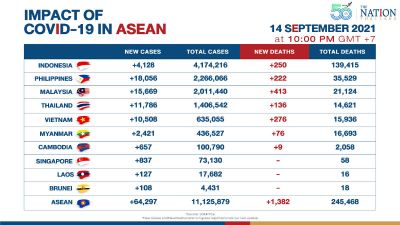
The number of Covid-19 cases in Southeast Asia crossed 11.19 million, with 69,057 new cases reported on Wednesday – higher than Tuesday’s tally of 64,297.

Asean also saw 1,440 additional deaths, an increase from Tuesday’s 1,382, taking total coronavirus deaths in the region to 246,907.

Cambodian Prime Minister Hun Sen on Wednesday approved vaccinations for 1.9 million children aged 9-12 from Friday to prepare for the reopening of schools nationwide.

He said the vaccination of children aged 3-6 years would follow soon.

Cambodia reported 653 new cases and nine deaths on Wednesday, bringing cumulative cases in the neighbouring country to 101,443 patients and 2,067 deaths so far.

Meanwhile, Laotian health authorities said a third dose of Covid-19 vaccine could be an option in the future to further boost the body’s immunity against new Covid strains including the Delta variant.

There are reports that some in Laos have attempted to get a booster shot at vaccination centres despite the fact that the government has yet to approve these.

The country reported 223 new cases on Wednesday, bringing cumulative cases to 17,905 patients and a total 16 deaths.

Published : September 16, 2021

Slaughter of nearly 1,500 dolphins sparks outcry over traditional hunt in Faroe Islands #SootinClaimon.Com

#SootinClaimon.Com : ขอบคุณแหล่งข้อมูล : หนังสือพิมพ์ The Nation.

https://www.nationthailand.com/international/40006205

Slaughter of nearly 1,500 dolphins sparks outcry over traditional hunt in Faroe Islands


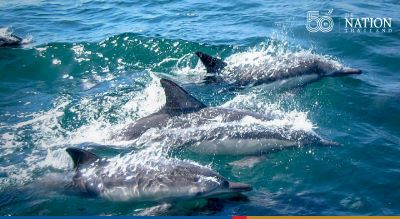
The slaughter of nearly 1,500 dolphins in the remote Faroe Islands has revived a debate about a centuries-old tradition that environmentalists condemn as cruel.

The pod of white-sided dolphins was driven into the largest fjord in the North Atlantic territory by hunters in speed boats and on water scooters on Sunday, where they were corralled into shallow waters and killed.

Many locals defend the hunt as an important local custom, with meat and blubber shared by the local community of the semi-independent Danish territory, which is located halfway between Scotland and Iceland.

But the size of this year’s hunt – which conservationists estimate is the largest in Faroese history, and possibly the largest single-day hunt ever worldwide – may be too much to feed the rocky archipelago’s population of around 50,000 people.

“Normally meat from a grindadrap is shared among the participants and any remainder among the locals in the district where the hunt took place,” the Sea Shepherd conservation group, which has been campaigning to stop the traditional Faroese “Grind” hunt since the 1980s, said. “However there is more dolphin meat from this hunt than anyone wants to take, so the dolphins are being offered to other districts in the hopes of not having to dump it.”

The chairman of the Faroese Whalers Association, Olavur Sjurdarberg, told the BBC that the hunters underestimated the size of the pod, only realizing their error when they began killing the dolphins.

ADVERTISEMENT

“It was a big mistake,” said Sjurdarberg, who did not participate in the hunt. “When the pod was found, they estimated it to be only 200 dolphins.” He said most people were “in shock about what happened.”

Many Faroese consider whale and dolphin meat to be an important part of their food culture and history, dating back to when they first settled the remote islands, although even those who defend the practice worry the size of this year’s hunt will draw unwanted attention.

Killing white-sided dolphins is “legal but it’s not popular,” Sjurdur Skaale, a Danish lawmaker for the Faroe Islands, told the BBC. He visited the beach where the killings took place to speak to locals on Monday. “People were furious,” he said.

Sea Shepherd said the number of dolphins killed Sunday is approaching the Japanese government quota for the entire six-month capture and killing season at Taiji in Japan, which shot to global infamy in 2009 with the Oscar-winning documentary “The Cove,” and significantly exceeds the numbers actually killed there in recent years. Japan is another nation widely criticized by environmentalists for its whale kills.

The Faroese hunt was brought to international attention by the “Seaspiracy” documentary on Netflix this year.

“Considering the times we are in, with a global pandemic and the world coming to a halt, it’s absolutely appalling to see an attack on nature of this scale in the Faroe Islands,” said Alex Cornelissen, the chief executive of Sea Shepherd, which campaigns against whaling globally. “If we have learned anything from this pandemic, [it] is that we have to live in harmony with nature instead of wiping it out.”

Published : September 16, 2021

Dueling ballistic missile tests on Korean Peninsula signal rising tensions #SootinClaimon.Com

#SootinClaimon.Com : ขอบคุณแหล่งข้อมูล : หนังสือพิมพ์ The Nation.

https://www.nationthailand.com/international/40006204

Dueling ballistic missile tests on Korean Peninsula signal rising tensions


TOKYO – Both Koreas test-fired ballistic missiles hours apart from each other on Wednesday in the latest sign of the intensifying arms race on the peninsula amid stalled diplomatic efforts.

North Korea fired the two short-range ballistic missiles off its east coast, just two days after it announced a test of a new long-range cruise missile capable of hitting Japan – likely in violation of U.N. Security Council resolutions and putting renewed pressure on the Biden administration’s efforts to end North Korea’s nuclear and ballistic missile program.

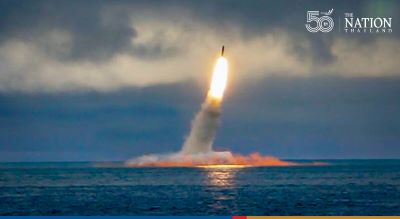
South Korea then conducted its own test hours later, launching an underwater ballistic missile fired from a submarine and successfully hitting a designated target – making it one of just a handful of countries with the capability to do so.

While their timing may be coincidental, the duel tests point to growing tensions on the Korean Peninsula. Pyongyang is retreating further from engaging with other countries during a self-imposed coronavirus lockdown, and Seoul is seeking to reduce its military dependence on the United States.

“It’s sort of a competition of neighbors, like keeping up with the Joneses, to some extent,” said Kazuto Suzuki, senior research fellow at the Asia Pacific Initiative in Tokyo and former member of the Panel of Experts on Iran Sanctions Committee.

North Korea’s projectiles were identified as short-range ballistic missiles by the South Korean Joint Chiefs of Staff. If confirmed, it would be the first such test since March.

ADVERTISEMENT

The back-to-back weapons tests by North Korea both complicates matters for Japanese officials and “it increases the vulnerability of American forces in Japan,” Suzuki said.

“It complicates the defense planning for Japan and probably for Americans,” he said. “The combination of capabilities . . . makes it much harder for defending Japan from North Korean missiles.”

Meanwhile, nuclear talks have been deadlocked since 2019, when negotiations fell through during a U.S.-North Korea summit in Vietnam. North Korea so far has not responded to outreach efforts by the Biden administration, which has not signaled intentions to offer the sanctions relief that Pyongyang has demanded.

In a statement, a spokeswoman for the State Department said the United States condemns North Korea’s ballistic missile launch and reiterated its commitment to defending South Korea and Japan.

“This launch is in violation of multiple UN Security Council Resolutions and poses a threat to the DPRK’s neighbors and other members of the international community. We remain committed to a diplomatic approach to the DPRK and call on them to engage in dialogue,” the statement read, referring to North Korea’s official name, the Democratic People’s Republic of Korea.

U.S. military officials said they have assessed that the Wednesday launch “does not pose an immediate threat to U.S. personnel or territory, or to our allies.” Still, “the missile launch highlights the destabilizing impact of the DPRK’s illicit weapons program,” the U.S. Indo-Pacific Command said in a statement.

A series of senior-level talks are taking place this week as officials in South Korea, Japan, China and the United States discuss how to re-engage Pyongyang on nuclear talks.

President Biden’s nuclear envoy, Sung Kim, is in Tokyo this week to meet with Japanese and South Korean officials. Meanwhile, Chinese Foreign Minister Wang Yi is in Seoul for meetings with his South Korean counterparts regarding the stalled nuclear diplomacy with the North.

On Monday, South Korean President Moon Jae-in was briefed on a host of other new weapons under development, including a supersonic cruise missile, and a successful test of a new long-range air-to-surface missile to be used on a new fighter jet, KF-21 Boramae.

Moon has been increasing the country’s defense spending in an effort to decrease his country’s military dependence on the United States. Earlier this year, the United States lifted restrictions on South Korea’s ability to develop missiles, under an agreement reached during Moon’s summit with Biden in Washington.

“The increase in our missile power can be a sure deterrent against North Korean provocations,” Moon said in a statement Wednesday.

In a statement released through state media, Kim Yo Jong, the powerful sister of North Korea’s leader, pushed back against Moon’s use of the word “provocation,” and warned that such language would jeopardize any improvements in inter-Korean relations. She said in her statement that Pyongyang is following its scheduled plans for self-defense military capabilities.

The development in South Korea gives the country “a more survivable retaliatory strike capability” against the North that Pyongyang would need to consider, said Daniel Pinkston, an international relations professor at Troy University in Seoul and nonproliferation policy expert.

South Koreans have displayed more technical advantages in their ability to have greater “command and control” over their systems than the North, he said.

Even though the South Korean system does not have nuclear weapons capability, “nevertheless, it’s difficult for North Korea to defend against,” he said.

North Korea’s tests this week are consistent with the country’s announced schedule for enhancing its military capabilities for deterrence, said Kim Joon-hyung, international relations professor at South Korea’s Handong Global University and former foreign policy adviser to Moon.

“Pyongyang is doing what they planned in the context of enhancing its military capabilities for deterrence,” he said. “They are doing this also for domestic purpose. This is what Pyongyang does the best anyway, especially under the dire economic and pandemic crisis situation.”

The Japanese Coast Guard said that the projectile landed outside of the exclusive economic zone, meaning it did not reach Japanese territory.

Japanese Prime Minister Yoshihide Suga condemned the missile launches on Wednesday, and said that the tests are “threatening the peace and security of our country and region. They’re also violating the U.N. Security Council resolutions.”

The Defense Ministry said that “North Korea’s recent repeated launches of ballistic missiles and other projectiles are a serious problem for Japan and the international community as a whole,” Kyodo News reported.

The U.N. Security Council took no action in response to North Korea’s launch of two ballistic missiles in March.

Published : September 16, 2021

U.N. pushed for moratorium on uses of artificial intelligence that infringe on human rights #SootinClaimon.Com

#SootinClaimon.Com : ขอบคุณแหล่งข้อมูล : หนังสือพิมพ์ The Nation.

https://www.nationthailand.com/international/40006202

U.N. pushed for moratorium on uses of artificial intelligence that infringe on human rights


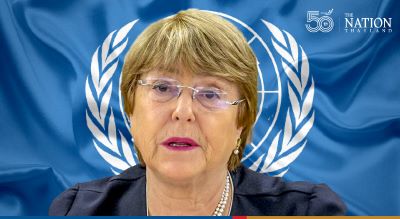
The rapid evolution of artificial-intelligence-based technologies and their adoption by businesses and governments have outpaced efforts to hold them to human rights standards, Michelle Bachelet, the United Nations Commissioner for Human Rights, warned Wednesday.

She called for a moratorium on artificial intelligence systems that could put human rights at risk – at least until stronger safeguards are in place internationally.

“We cannot afford to continue playing catch-up regarding AI – allowing its use with limited or no boundaries or oversight, and dealing with the almost inevitable human rights consequences after the fact,” she said in a statement.

The remarks came alongside the publication of a report by the U.N. Human Rights Council analyzing the human rights risks posed by a range of AI-powered technologies – including profiling, automated decision-making and machine learning. The consequences of unfettered proliferation of such technologies could be “catastrophic,” Bachelet said.

The report also pointed out that data sets used by AI can have historical racial and ethnic biases embedded, which can perpetuate, or enhance, discrimination.

ADVERTISEMENT

Many AI tools seek to predict outcomes, assess risk and provide insights into patterns of behavior on an individual or societal scale. The report raised warnings of a “digital welfare dystopia” in which data-matching could automate decisions about welfare benefits entitlements, loan access or home visits from child-care services – with human rights implications.

Technologies used by law enforcement, including national security and border management officials, are particularly fraught. AI systems can mine criminal arrest records, crime statistics, social media posts and travel records to profile people and identify sites of increased criminal or even terrorist activity, triggering criminal interventions, “even though AI assessments by themselves should not be seen as a basis for reasonable suspicion,” the report argues.

Bachelet did not call for an outright ban on facial recognition technology – using human features including face, fingerprint, iris and voice to identify individuals – but urged a moratorium on the use of real-time remote biometric recognition until rights provisions can be agreed upon.

The report did not call out any countries by name, but AI technologies in some places around the world have raised human rights flags in recent years, according to experts.

China has come under sharp criticism for mass surveillance, using AI technology with few checks – particularly in the Xinjiang region, where the Chinese Communist Party has for decades systematically sought to oppress and assimilate members of the Uyghur ethnic minority group.

Chinese tech giant Huawei tested AI systems, using facial recognition technology, that would send automated “Uyghur alarms” to police once a camera detected a member of the minority group, The Post reported last year. Huawei responded that the language used to describe the capability had been “completely unacceptable,” yet the company had advertised ethnicity-tracking efforts.

Technology can allow authorities to systematically identify and track individuals in public spaces, affecting the right to freedom of expression, of peaceful assembly and of movement, Bachelet said.

Fear of such surveillance affected protesters in Myanmar this year, Reuters reported. In March, Human Rights Watch criticized the Myanmar military junta’s usage of a public camera system, provided by Huawei, that used facial and license plate recognition to alert the government of individuals on a “wanted list.”

Human Rights Watch last year denounced a system in Buenos Aires that published personal data including photos of child suspects with open arrest warrants. The information was used by a facial recognition software operating in some city subway stations, the organization said.

Bachelet’s statement echoed growing global concerns. Portland, Oregon, last September passed a broad ban on facial recognition technology, including uses by local police. The European Commission in April proposed a ban the use of AI for tracking individuals and ranking their behavior. Amnesty International launched the “Ban the Scan” initiative to ban the use of facial recognition by New York City government agencies.

“The power of AI to serve people is undeniable, but so is AI’s ability to feed human rights violations at an enormous scale with virtually no visibility,” Bachelet said, calling for greater transparency, systematic assessment and monitoring of the effects of AI. “Action is needed now to put human rights guardrails on the use of AI, for the good of all of us.”

Published : September 16, 2021

UK to offer booster COVID-19 vaccines to over-50s #SootinClaimon.Com

#SootinClaimon.Com : ขอบคุณแหล่งข้อมูล : หนังสือพิมพ์ The Nation.

https://www.nationthailand.com/international/40006169

UK to offer booster COVID-19 vaccines to over-50s


Booster COVID-19 vaccine rollout will start in Britain next week.

The country’s vaccine advisory body said a third dose should not be given until six months after a person has received a second shot.

Booster COVID-19 jabs will be offered to people aged 50 and over, those in care homes, and frontline health and social care workers, the British government announced Tuesday.

Britain’s vaccine advisory body, the Joint Committee on Vaccination and Immunisation (JCVI), said a third dose should not be given until six months after a person has received a second shot.

ADVERTISEMENT

“I can confirm I’ve accepted the JCVI’s advice and the NHS (National Health Service) is preparing to offer booster doses from next week,” British Health Secretary Sajid Javid told the House of Commons, lower house of the British parliament.

He also announced that the booster program, made up of Pfizer and Moderna doses, would start next week for people aged over 50, who received their second dose six months ago, to protect against the virus “for the long-term”.

 People walk past a rapid COVID-19 testing center in London, Britain, Aug. 30, 2021. People walk past a rapid COVID-19 testing center in London, Britain, Aug. 30, 2021.

Related Storeis

JCVI Chair Wei Shen Lim told a press conference that a recurrent booster every six months may not be needed but it is too early to say. He added that the booster advice is just for this winter and younger people may not need a booster, but the JCVI will advise on that at a later date.

England’s deputy chief medical officer Jonathan Van-Tam warned of a “bumpy” winter despite the vaccines having been “incredibly successful”.

“We know that this winter could quite possibly be bumpy at times and we know that other respiratory viruses such as flu and RSV (respiratory syncytial virus) are highly likely to make their returns,” said Van-Tam.

More than 89 percent of people aged 16 and over in Britain have had their first dose of vaccine and about 81 percent have received both doses, the latest figures showed.

To bring life back to normal, countries such as Britain, China, Germany, Russia and the United States have been racing against time to roll out coronavirus vaccines.

 A man walks across London Bridge in London, Britain, Aug. 30, 2021.A man walks across London Bridge in London, Britain, Aug. 30, 2021.


Published : September 15, 2021

LatAm forests key to environmental sustainability, food security: FAO #SootinClaimon.Com

#SootinClaimon.Com : ขอบคุณแหล่งข้อมูล : หนังสือพิมพ์ The Nation.

https://www.nationthailand.com/blogs/international/40006168

LatAm forests key to environmental sustainability, food security: FAO


“Forests have a strategic role to play in the future resilience of food systems. Sustainable forest products allow for increased social, economic and environmental benefits,” he said in a statement issued from the FAOs regional office for Latin America and the Caribbean in Santiago, Chile, as part of conclusions from the 32nd Session of the Latin American and Caribbean Forestry Commission (LACFC).

Forests in Latin America and the Caribbean are key to environmental sustainability and food security, said a UN official on Monday.

Julio Berdegue, regional representative of the Food and Agriculture Organization (FAO), highlighted the importance of forests in improving people’s livelihoods, counteracting the impacts of climate change and halting biodiversity loss.

“Forests have a strategic role to play in the future resilience of food systems. Sustainable forest products allow for increased social, economic and environmental benefits,” he said in a statement issued from the FAO’s regional office for Latin America and the Caribbean in Santiago, Chile, as part of conclusions from the 32nd Session of the Latin American and Caribbean Forestry Commission (LACFC).

ADVERTISEMENT

According to the FAO, forests provide ecosystem services that are crucial for agriculture, such as regulating river flow, protecting the soil and replenishing groundwater.

South America lost 2.6 million hectares of forest each year from 2010 to 2020, the second highest rate in the world, after Africa, according to FAO data.

The LACFC also underlined the importance of access to land and resources, and forest investment, and how these can improve the wellbeing of women, youth and indigenous communities.

The 32nd LACFC Session took place on Sept. 6-10, with Jamaica serving as host country, and was attended by more than 100 experts.

Published : September 15, 2021

Putin, Raisi agree to strengthen Russian-Iranian ties #SootinClaimon.Com

#SootinClaimon.Com : ขอบคุณแหล่งข้อมูล : หนังสือพิมพ์ The Nation.

https://www.nationthailand.com/international/40006163

Putin, Raisi agree to strengthen Russian-Iranian ties


Putin and Raisi exchanged views on the current situation regarding the Iran nuclear deal.

Russian President Vladimir Putin and his Iranian counterpart, Ebrahim Raisi, agreed on Tuesday to deepen mutually beneficial relations in various fields between the two countries.

During a phone conversation, the two leaders noted the successful development of trade and economic ties and well-established cooperation in the fight against COVID-19, the Kremlin said.

ADVERTISEMENT

Related Stories

Putin and Raisi exchanged views on the current situation regarding the Joint Comprehensive Plan of Action, commonly known as the Iran nuclear deal.

They also discussed issues of working within the framework of the Shanghai Cooperation Organization.

Published : September 15, 2021

Only 2 pct of worlds COVID-19 vaccines administered in Africa: WHO #SootinClaimon.Com

#SootinClaimon.Com : ขอบคุณแหล่งข้อมูล : หนังสือพิมพ์ The Nation.

https://www.nationthailand.com/international/40006160

Only 2 pct of worlds COVID-19 vaccines administered in Africa: WHO


COVAX has also faced several challenges which, according to the WHO, were triggered by manufacturers prioritizing bilateral deals and many high-income countries tying up the global supply of vaccines.

Less than 3.5 percent of Africans have been vaccinated against COVID-19, which is far short of the official target of 60 percent.

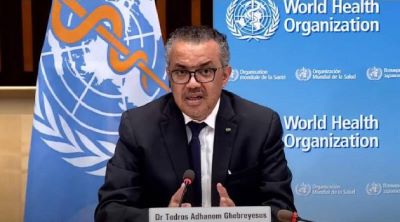
Africa has been “left behind by the rest of the world” as only two percent of the more than 5.7 billion COVID-19 vaccine doses administered globally have been administered there, the head of the World Health Organization (WHO) said on Tuesday, warning the world against vaccine inequity.

The WHO’s aim is to vaccinate at least 40 percent of the population of every country by the end of this year and 70 percent by the middle of next year. However, only two countries in Africa have reached the 40-percent target, the lowest of any region, WHO Director General Tedros Adhanom Ghebreyesus said at an online press briefing.

ADVERTISEMENT

“That’s not because African countries don’t have the capacity or experience to roll out COVID-19 vaccines. It’s because they have been left behind by the rest of the world,” he said.

Last year, the WHO and its partners launched COVAX, the global initiative to ensure fair and equitable access to COVID-19 vaccines. To date, it has delivered more than 260 million vaccine doses to 141 countries. However, COVAX has also faced several challenges which, according to the WHO, were triggered by manufacturers prioritizing bilateral deals and many high-income countries tying up the global supply of vaccines.

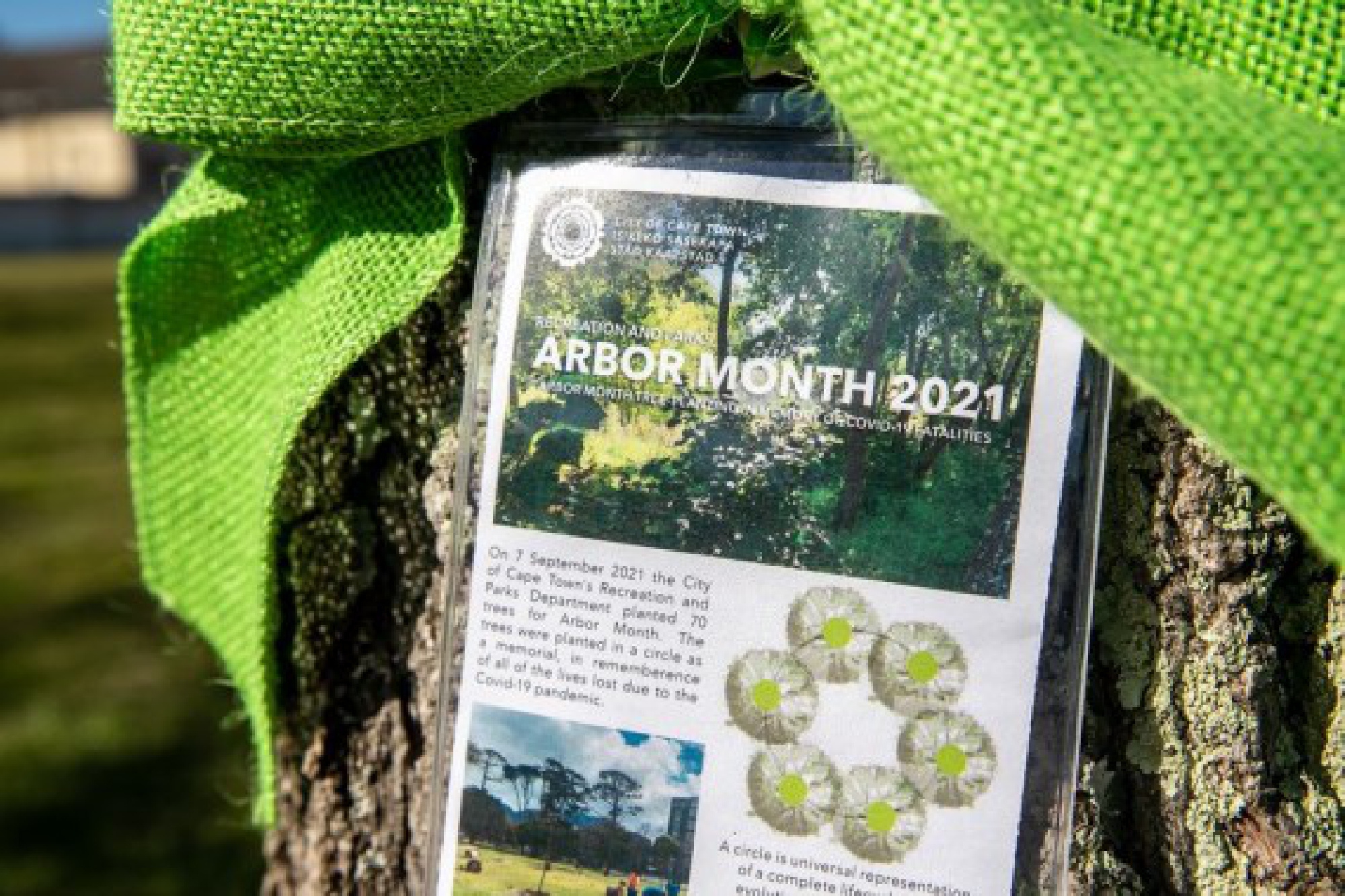
Photo taken on Sept. 8, 2021 shows a tag about trees planted at a memorial garden dedicated to those who lost their lives due to the COVID-19 pandemic in Cape Town, South Africa. Photo taken on Sept. 8, 2021 shows a tag about trees planted at a memorial garden dedicated to those who lost their lives due to the COVID-19 pandemic in Cape Town, South Africa.

Related Stories

According to John Nkengasong, director of the Africa Centers for Disease Control and Prevention who also attended the briefing, less than 3.5 percent of Africans have been vaccinated against COVID-19, which is far short of the official target of 60 percent.

“This leaves people at high risk of disease and death, exposed to a deadly virus against which many other people around the world enjoy protection,” Tedros said.

“The longer vaccine inequity persists, the more the virus will keep circulating and changing, the longer the social and economic disruption will continue, and the higher the chances that more variants will emerge that render vaccines less effective,” he warned.

The WHO, the African Union and COVAX have been calling on vaccine manufacturers to prioritize the COVAX program and urging countries to fulfill their dose-sharing pledges and facilitate the sharing of vaccine technology and intellectual property.

In August, the WHO also called for a global moratorium on booster vaccine doses at least until the end of September to prioritize vaccinating the most at-risk people around the world who are yet to receive their first dose. As vaccine inequity continues to persist, it then called for an extension of the moratorium until at least the end of the year to enable every country to vaccinate at least 40 percent of their populations. 

 A medical worker takes a swab sample for COVID-19 test in Rabat, Morocco, on Sept. 13, 2021.A medical worker takes a swab sample for COVID-19 test in Rabat, Morocco, on Sept. 13, 2021.

Published : September 15, 2021

Lack of equitable access to COVID-19 vaccines is public health tragedy: Bill Gates #SootinClaimon.Com

#SootinClaimon.Com : ขอบคุณแหล่งข้อมูล : หนังสือพิมพ์ The Nation.

https://www.nationthailand.com/international/40006159

Lack of equitable access to COVID-19 vaccines is public health tragedy: Bill Gates


“We face the very real risk that in the future, wealthy countries and communities will begin treating COVID-19 as yet another disease of poverty. We cant put the pandemic behind us until everyone, regardless of where they live, has access to vaccines,” Bill Gates said.

The lack of equitable access to COVID-19 vaccines is a public health tragedy though the fast development and deployment of COVID-19 vaccines help avert some of the worst-case scenarios in regards to United Nations Sustainable Development Goals, according to philanthropist Bill Gates.

“We face the very real risk that in the future, wealthy countries and communities will begin treating COVID-19 as yet another disease of poverty. We can’t put the pandemic behind us until everyone, regardless of where they live, has access to vaccines,” Bill Gates, co-chair of Bill & Melinda Gates Foundation, said on Monday.

More than 80 percent of all COVID-19 vaccines have been administered in high- and upper-middle-income countries to date, with some securing two to three times the number needed so they can cover boosters, according to the latest annual Goalkeepers Report by the Bill & Melinda Gates Foundation.

ADVERTISEMENT

By contrast, less than 1 percent of COVID-19 vaccine doses have been administered in low-income countries.

Further, COVID-19 vaccine access has been strongly correlated with the locations where there is vaccine research and development and manufacturing capability. Though Africa is home to 17 percent of the world’s population, for example, it has less than 1 percent of the world’s vaccine manufacturing capabilities, according to a release by the foundation.

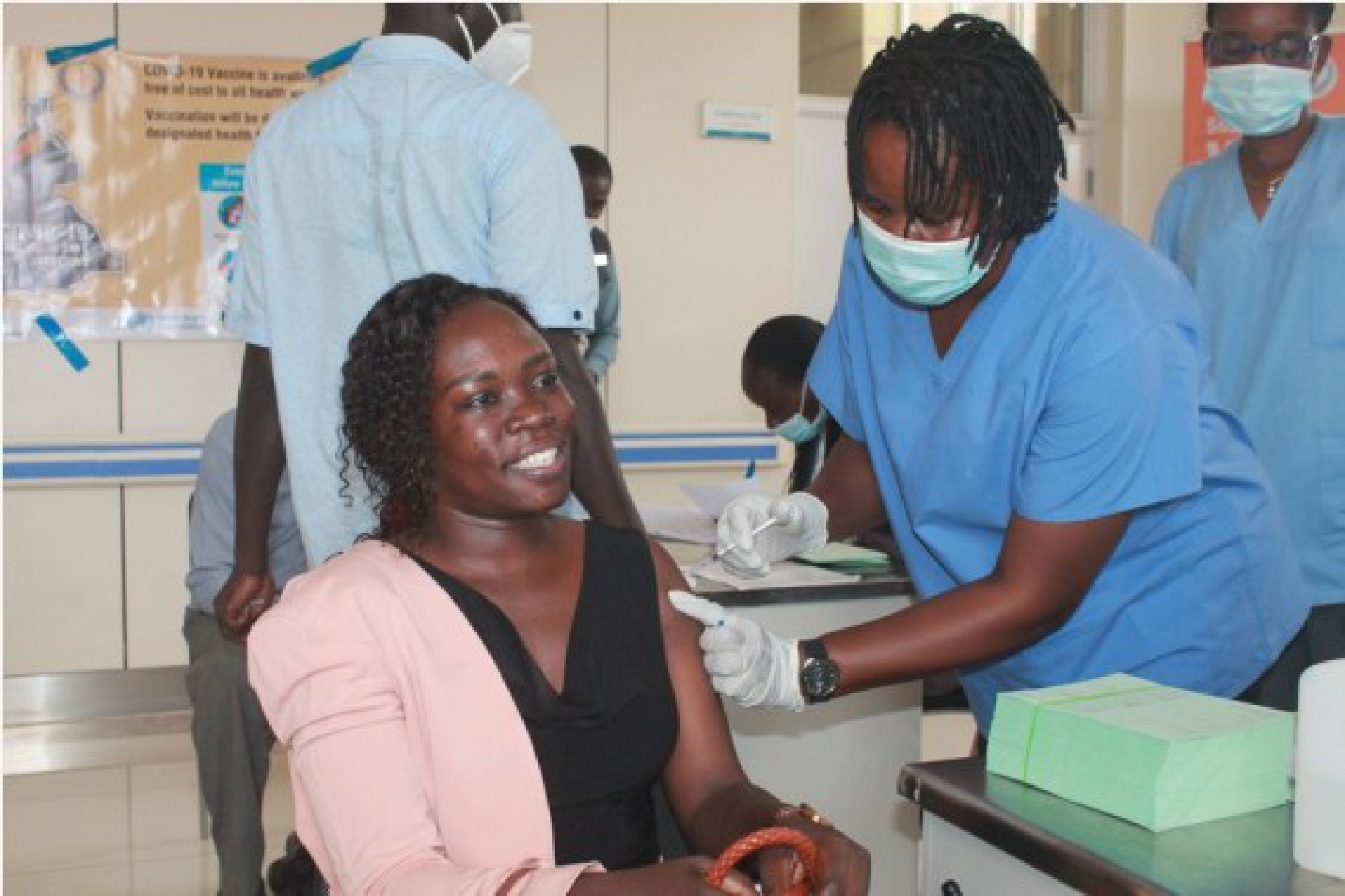
A South Sudanese woman receives AstraZeneca COVID-19 vaccine at Juba Teaching Hospital in Juba, capital of South Sudan, April 7, 2021.A South Sudanese woman receives AstraZeneca COVID-19 vaccine at Juba Teaching Hospital in Juba, capital of South Sudan, April 7, 2021.
Related Stories

The report calls for the world to invest in research and development, infrastructure, and innovation in places closer to the people who stand to benefit.

“We must invest in local partners to strengthen the capacity of researchers and manufacturers in lower-income countries to create the vaccines and medicines they need,” said Mark Suzman, chief executive officer with the foundation.

The report shows that disparities caused by COVID-19 remain stark, and those who have been hardest hit by the pandemic will be the slowest to recover.

The COVID-19 pandemic pushed as much as 31 million people into extreme poverty in the world within 2020 compared to 2019, said the release. And while 90 percent of advanced economies will regain pre-pandemic per capita income levels by 2022, only a third of low- and middle-income economies are expected to do so.

However, the world stepped up to avert some of the worst-case scenarios on United Nations Sustainable Development Goals, according to the report.

New analysis from the Institute for Health Metrics and Evaluation (IHME) at the University of Washington shows that the decline in global vaccine coverage due to the COVID-19 pandemic was only half of what was anticipated a year ago, said the release.

To ensure a truly equitable recovery from the pandemic, the world needs long-term investments in health and economies like the ones that led to the rapid development of the COVID-19 vaccine, according to the report.

This year’s report is co-authored by Bill Gates and Melinda French Gates, co-chairs of the Bill & Melinda Gates Foundation, which is one of the largest charitable foundations in the world. 

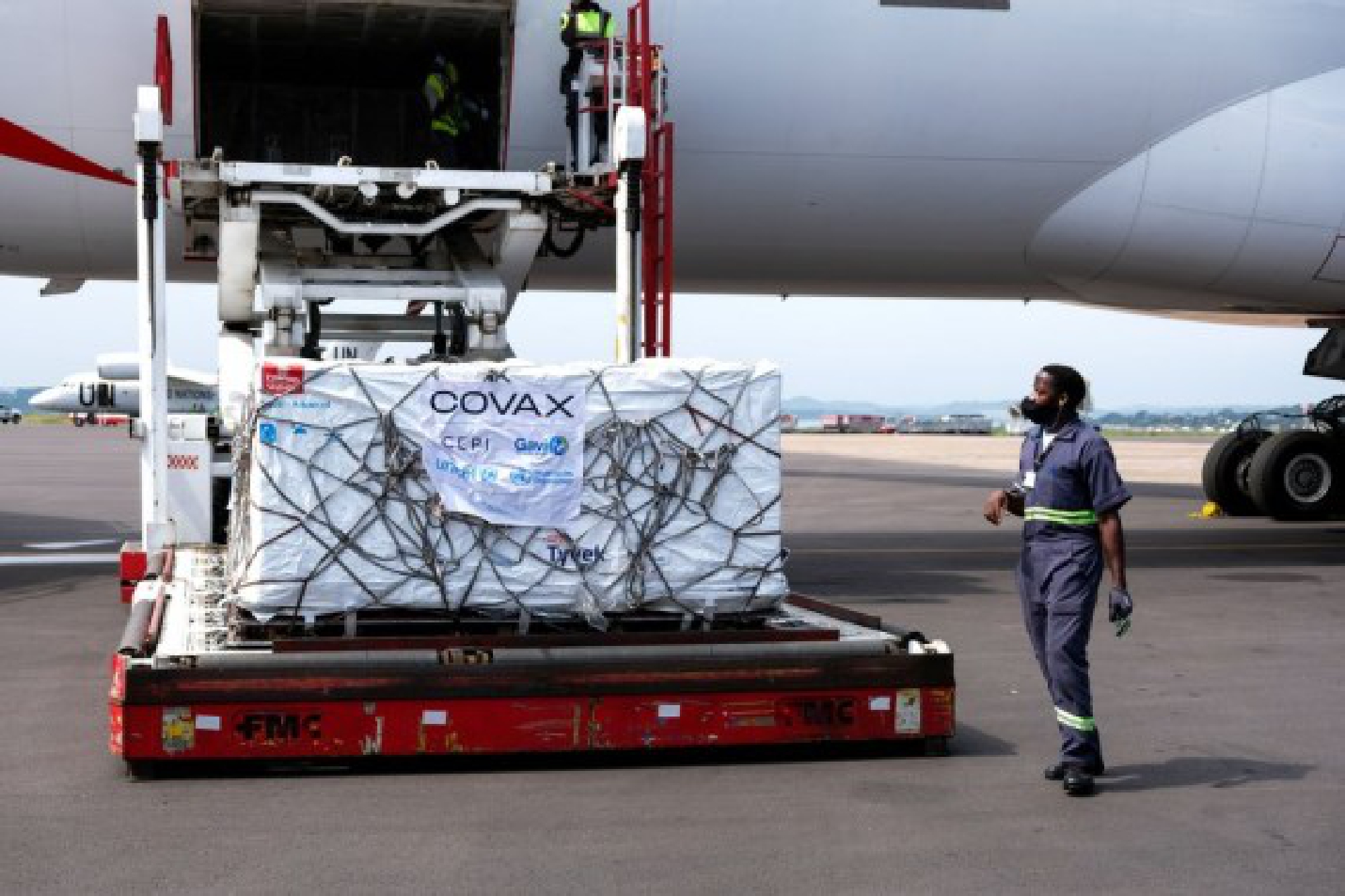
Photo taken on March 5, 2021 shows AstraZeneca-Oxford vaccines from COVAX vaccine sharing program being unloaded from a plane at Entebbe International Airport, Uganda.Photo taken on March 5, 2021 shows AstraZeneca-Oxford vaccines from COVAX vaccine sharing program being unloaded from a plane at Entebbe International Airport, Uganda.

Published : September 15, 2021