The company said the fire had been brought under control at 4:30 p.m. local time (21:30 GMT) on Sunday, about one hour and a half after it broke out at the E-Ku A2 platform of the Ku-A Process Center, part of the Ku-Maloob-Zaap oil field, in Campeche Sound.
At least five workers were killed, two others missing and six injured in a fire at an oil platform in the Gulf of Mexico on Sunday, Mexico’s state-owned Petroleos Mexicanos (Pemex), which runs the rig, said Monday.
One of the injured people was in serious conditions, Pemex General Director Octavio Romero Oropeza told a press conference.
ADVERTISEMENTx
The incident happened 100 km from Ciudad del Carmen in the southeast Campeche state, has claimed the lives of a Pemex employee and four workers from Cotemar, a rig maintenance company, he said.
Romero said the company was undergoing an exhaustive search for the missing persons, who work for the Conditions and Integrity Monitoring Firm.
Meanwhile, a root cause inspection would be conducted “to determine the source” of the fire “and apply the corresponding insurance,” said Romero.
The company said the fire had been brought under control at 4:30 p.m. local time (21:30 GMT) on Sunday, about one hour and a half after it broke out at the E-Ku A2 platform of the Ku-A Process Center, part of the Ku-Maloob-Zaap oil field, in Campeche Sound.
The oil field generates about 40 percent of Mexico’s crude oil output, or approximately 1.68 million barrels per day.
Full FDA approval of Pfizer vaccine a key milestone, Biden says
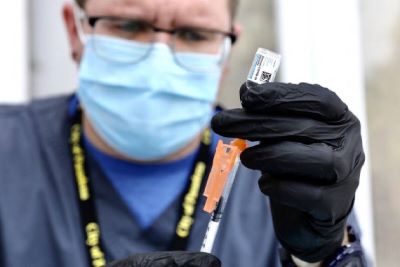
WASHINGTON – On the heels of the Food and Drug Administrations full approval of the Pfizer-BioNTech coronavirus vaccine, President Joe Biden again urged unvaccinated Americans to get the shots.
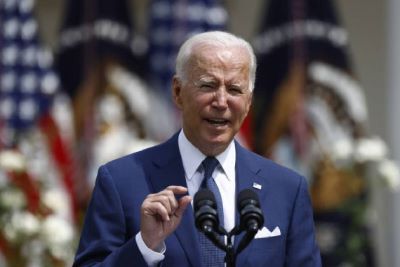
Speaking from the White House, he called the approval “a key milestone in our nation’s fight against covid” and stressed that inoculation saves lives. The coronavirus continues to be “a pandemic of the unvaccinated,” he said, adding that those awaiting final FDA approval no longer have a reason to delay.
“The moment you’ve been waiting for is here, it’s time for you to go get your vaccination and get it today,” Biden said.
He also urged more leaders to require the shots as a way of to “reach millions more people,” adding that “if you’re a business leader, a nonprofit leader, state or local leader who has been waiting for full FDA approval to require vaccinations, I call on you now to do that, require it.”
ADVERTISEMENTx
Several more cities, states and private companies announced vaccine mandates on Monday. New York announced that shots are required for all public school employees, and vaccination in New Jersey is now a requirement for all state employees. Chevron announced a vaccine requirement for some of its workers. The Pentagon said it is moving forward with plans to require the shots for all active-duty troops.
They join a growing list of entities issuing such rules.
Also Monday, White House press secretary Jen Psaki said Monday that former president Donald Trump being booed by supporters for encouraging them to get vaccinated shows just how hostile some Americans are to getting the treatment that medical professionals say can help save lives.
“We will take anyone who has a big platform out there who wants to encourage people to get vaccinated doing it,” she told reporters. “That’s a good thing.”
“I think it’s just a recognition, and we are very clear-eyed about that, there are still people who are skeptical out there in the country, that there are still people who, whether because of misinformation or a range of factors, are not yet getting vaccinated – even though it could save their lives,” Psaki said about the former president being booed. “It means we still have more work to do and we are committed to doing exactly that.”
Trump was booed by some of his own supporters at a rally in Alabama on Saturday night when he recommended vaccination.
While Trump and other high profile conservatives have acknowledged that they chose to be vaccinated to protect themselves from the coronavirus, about one in five Republicans said they refuse to get vaccinated, according to a survey released last month by the Public Religion Research Institute.
Vaccination rates are lowest in parts of the country that are most supportive of the former president. In fact, Alabama has the lowest vaccination rate in the country.
Aa growing number of GOP officials have become more vocal in their push for vaccines as infection rates rise. And some have begun to place the blame on the current state of the pandemic on those refusing to be vaccinated.
“It’s time to start blaming the unvaccinated folks, not the regular folks,” Alabama Gov. Kay Ivey, R, said last month. “It’s the unvaccinated folks that are letting us down.”
Published : August 24, 2021
By : The Washington Post · Adela Suliman, Bryan Pietsch, Brittany Shammas
Pfizer-BioNTech coronavirus vaccine wins landmark U.S. approval
The coronavirus vaccine made by Pfizer Inc. and BioNTech SE was granted a full approval by U.S. regulators, a milestone expected to help bolster the immunization drive amid a surge in infections fueled by the delta variant.
The Food and Drug Administration said in a statement on Monday that it had cleared the shot for the prevention of the disease caused by the novel coronavirus in people 16 and older. It will be marketed under the name Comirnaty.
The approval is the first for a coronavirus vaccine, and it arrives at a crucial time in the trajectory of the pandemic, as the U.S. is ensnared in a wave of illness sparked by the highly transmissible delta mutation. The Biden administration has made increasing vaccinations a priority in its efforts to tamp down the latest outbreak.
Many large employers, colleges and universities and state and local governments are expected to put vaccine requirements in place in the wake of the approval. The FDA’s move is also likely to boost confidence in the shot among people who say they are wary of its rapid-fire development.
ADVERTISEMENTx
The two-dose regimen was initially made available in the U.S. through an emergency authorization late last year. It has since become the most widely used of three available vaccines, according to data from the Centers for Disease Control and Prevention, with more than 92 million people having received two shots.
The vaccine continues to be available to people age 12 to 15, as does a third-dose for certain people with compromised immune systems, under an emergency-use authorization.
The approval will solidify the shot’s status as a blockbuster for its makers. Pfizer said last month it expects the vaccine to bring in $33.5 billion in revenue this year, a total that would place it among the biggest-selling drugs of all time. In the second quarter, the vaccine booked $7.8 billion in sales.
Other vaccines could receive approvals in coming months. In June, Moderna Inc. said it had initiated a rolling submission of its so-called Biologics License Application, or BLA, for its vaccine in people 18 and older. Johnson & Johnson plans to file for a BLA later in 2021.
Pfizer and BioNTech approached the FDA with a BLA in May, launching a formal review process of the two-shot regimen.
ADVERTISEMENT
“The FDA’s review of a BLA is among the most comprehensive in the world,” the agency said in an email earlier this month. “We conduct our own analyses of the information in the BLA to make sure the vaccines are safe and effective and meet our standards for approval.”
The companies’ submission was delivered in two batches. On May 7, they shared a package of clinical data including more information on the vaccine’s effectiveness and six months of safety data — building on two months of safety data shared in the emergency-use application.
Two weeks later, Pfizer and BioNTech shared information on the vaccine’s manufacturing processes and production facilities.
Altogether, the application was 340,000 pages, more than three times the length of the emergency-authorization submission. According to Pfizer, that’s significantly longer than the standard application package.
Though the BLA review process typically takes eight months, U.S. regulators said they turned to “sprint teams” to evaluate “a tremendous amount of data.” The review was ultimately concluded in less than half the time.
ADVERTISEMENT
Pfizer expects to file a BLA for its vaccine in 12-to-15 year-olds before the end of the year. For those under 12, the process will take longer. Neither Moderna nor Johnson & Johnson have yet sought FDA clearance for use of their shots in younger teens or adolescents.
President Joe Biden and top U.S. health officials hope the full approval will build confidence in the shot among unvaccinated Americans. Among U.S. residents eligible for immunization against covid, about 3 in 10 haven’t received a single shot.
The FDA decision is likely to have the greatest impact on Americans who have long suggested they are taking a “wait and see” approach, said Timothy Callaghan, who studies rural health at Texas A&M University. “This approval, paired with the spread of the delta variant could spur many in that group to vaccinate.”
Callaghan cautions, however, that more hesitant Americans will remain unmoved.
Ezekiel Emanuel, a medical ethicist at the University of Pennsylvania and former adviser to the Biden transition team, puts it differently. “The last excuse would be removed,” he said, “we have more than enough data.”
New York-based Pfizer and its German partner BioNTech are likely to become a more integral part in reaching hesitant Americans, as the formal approval allows the companies to launch marketing campaigns.
The approval will also ultimately open up the government to nongovernment purchasers — though that critical business shift in supply negotiations won’t come until next year.
Pfizer expects U.S. government to remain the sole distributor of vaccine doses domestically through next April, at the earliest. That means the Biden administration will continue to determine where supply is sent, and those eligible to be vaccinated will continue to receive the regimen and subsequent boosters for free.
Published : August 24, 2021
By : Syndication Washington Post, Bloomberg · Riley Griffin
UK economic recovery loses momentum amid staff, supply shortages
Despite a slowdown in output growth during August, service providers signalled a robust and accelerated rise in employment numbers, said the report.
Britain’s private sector companies witnessed a sharp slowdown in output growth during August amid worsening staff and supply shortages, according to a joint report released here Monday.
ADVERTISEMENTx
The headline seasonally adjusted flash composite output index stood at 55.3 in August, down from 59.2 in July, the slowest expansion of output since the private sector returned to growth in March, said the report published by IHS Markit, a London-based global information provider, and the Chartered Institute of Procurement & Supply (CIPS), a British-based global procurement and supply organisation.
“Although the purchasing managers’ index (PMI) indicates that the economy continues to expand at a pace slightly above the pre-pandemic average, there are clear signs of the recovery losing momentum in the third quarter after a buoyant second quarter,” said Chris Williamson, chief business economist at IHS Markit.
Williamson said he believes that despite the lift of COVID-19 restrictions, “rising virus case numbers are deterring many forms of spending, notably by consumers, and have hit growth via worsening staff and supply shortages.”
“An abnormally large slowdown in overall activity in August offers a stark warning to the UK economy that the accelerated levels of growth we’ve seen earlier this summer are not sustainable,” said Duncan Brock, group director at CIPS.
“It was the slowest output expansion for six months, and the worst shortages of staff and materials on record are mostly to blame,” Brock added.
In terms of the specific sectors, Britain’s purchasing managers’ index (PMI) for the manufacturing sector registered 60.1 in August, down from 60.4 in July and the lowest since March, the data showed.
A waiter is seen at a restaurant in London, Britain, on Aug. 13, 2021.
Despite a slowdown in output growth during August, service providers signalled a robust and accelerated rise in employment numbers, said the report.
“The latest increase in staffing levels was the strongest since this index began in July 1996. Survey respondents typically commented on the need to boost workforce numbers in response to higher order books and depleted business capacity,” said the report.
In addition, the survey showed a rebound in business sentiment to its highest since May, which ended a four-month sequence of falling confidence.
“The mood generally remained buoyant, however, especially amongst service companies as the end of pandemic restrictions improved business activity,” said Brock.
However, “it’s likely that cautious consumers will continue to remain an obstacle for UK businesses until full confidence returns,” he warned.
England lifted almost all its remaining COVID-19 restrictions since July 19. More than 87 percent of people aged 16 and over in Britain have had their first dose of vaccine and more than 76 percent have received both doses, the latest figures showed.
To bring life back to normal, countries such as Britain, China, Germany, Russia and the United States have been racing against time to roll out coronavirus vaccines.
Passengers walk at Waterloo train station in London, Britain, on Aug. 5, 2021.
Russia may sign new contract with Turkey on S-400 missile supply
“Consultations are continuing. I believe they are already at their final stage,” Mikheev said.
Russian state-run arms exporter Rosoboronexport said Monday that it may soon sign a new contract with Turkey on the supply of more S-400 air defense missile systems.
ADVERTISEMENTx
“Consultations are continuing. I believe they are already at their final stage,” Rosoboronexport Director General Alexander Mikheev said at the International Military-Technical Forum “Army-2021,” without disclosing details of the possible contract.
Russia and Turkey signed their first deal on the S-400 systems in 2017 and Turkey received the first shipment in July 2019.
Turkey is the first member state of the North Atlantic Treaty Organization (NATO) to purchase the S-400 systems, which has led to discontent on part of the United States.
Washington claimed that the Russian weapons would be incompatible with the NATO system and may collect confidential military information for Moscow.
The S-400 system, designed and manufactured by Russia’s Almaz-Antey arms manufacturer, is capable of destroying targets at a distance of up to 400 km and a height of about 30 km.
At the Army-2021 forum, Mikheev also said that Russia has signed arms export contracts worth a total of 8.6 billion U.S. dollars in 2021, and that the company is delivering weapons to 61 countries.
EU should support countries close to Afghanistan: Greek PM
Greece is protecting its borders, which are also the EUs borders, with respect for human rights, Greek PM Kyriakos Mitsotakis said.
The European Union (EU) should support the countries close to Afghanistan to ensure that there will be no additional refugee and migration flows to Europe, Greek Prime Minister Kyriakos Mitsotakis said on Monday.
ADVERTISEMENTx
The Greek PM spoke to Turkish President Recep Tayyip Erdogan by phone on Friday about the latest developments in Afghanistan.
“I talked to President Erdogan and I believe we have a common interest to ensure that the influx will be limited to as close to Afghanistan as possible,” Mitsotakis told visiting Vice President of the European Parliament Roberta Metsola, according to an e-mailed press release from his office.
Greece is protecting its borders, which are also the EU’s borders, with respect for human rights, Mitsotakis added.
Meanwhile, Matsola emphasised that Europe will continue to stand by Greece’s side, and with the member states that are on the frontline. The ratification of the EU’s New Pact on Migration and Asylum should be a priority, in order to bridge diverging views among member states, she added.
However, Greece and other Mediterranean member states have reservations about the proposed new Pact, Greece’s Alternate Minister of Foreign Affairs Miltiadis Varvitsiotis told Real FM radio on Monday.
Greece has asked for fair sharing of accommodation costs, and effective agreements on relocation and returning those non-eligible for asylum, he said.
Since 2015, more than one million people have arrived in Greece after fleeing war zones and extreme poverty, among them, many Afghans.
Most people have continued their journey to other European countries. However, in spring 2016, the borders along the Balkan route to central Europe were closed.
Currently, Greece hosts some 46,000 asylum seekers in state-run structures, according to data released by the Greek Migration and Asylum ministry last week.
U.S. engages with Taliban daily as Aug. 31 deadline approaches
“We are in talks with the Taliban on a daily basis through both political and security channels,” U.S. National Security Adviser Jake Sullivan said when asked about talks with the Taliban over the extension issue.
U.S. National Security Adviser Jake Sullivan said on Monday that the United States is engaging with the Taliban on a daily basis as the ongoing Afghan evacuation faces the Aug. 31 deadline.
President Joe Biden on Monday left open the possibility of extending the ongoing evacuation beyond Aug. 31, the date he previously set to end the U.S. military mission in Afghanistan.
ADVERTISEMENTx
Taliban spokesman Suhail Shaheen, however, made clear in an interview with Sky News that such extension would be unacceptable.
At a White House briefing, Sullivan told reporters that the United States has been consulting with allies and the Taliban on evacuation issues.
“We are in talks with the Taliban on a daily basis through both political and security channels,” he said when asked about talks with the Taliban over the extension issue. “I’m not going to get into the details of those discussions here to protect those discussions, which are covering a wide range of issues.”
Sullivan added that the United States is consulting the Taliban “on every aspect of what’s happening in Kabul right now” and would continue those conversations.
“As the president has said before, we believe that we have time between now and the 31st to get out any American that wants to get out,” he said, while noting “the president will ultimately make his decision about the precise shape and scope of this operation.”
State Department spokesperson Ned Price said later in the day that the United States had discussed the issue of Kabul airport with the Taliban.
“There is actually an agreement between and among all these actors, of course between the United States and our partners and allies, but also with the Taliban, that all of our interests would be served with a functioning airport,” he told reporters during a daily briefing.
According to media reports, British Prime Minister Boris Johnson would use the virtual summit of Group of Seven (G7) held on Tuesday to push Biden to extend the Aug. 31 deadline to exit the country. French Foreign Minister Jean-Yves Le Drian also said that additional time is needed to complete the evacuation.
The United States and its allies have been scrambling to evacuate personnel from Afghanistan since the Taliban entered Kabul on Aug. 15.
Sullivan said the U.S. and coalition aircraft had evacuated over 16,000 people in the last 24 hours.
Eight in ten want U.S. employers to require COVID-19 vaccination: NABE survey
A “substantial majority” of respondents, 79 percent, is in favor of employers requiring their employees to be vaccinated against COVID-19 before they return to the workplace, according to a National Association for Business Economics (NABE) survey.
Nearly 80 percent of respondents are in favor of employers requiring their employees to be vaccinated against COVID-19 before returning to the workplace, according to a National Association for Business Economics (NABE) survey released Monday.
A “substantial majority” of respondents, 79 percent, is in favor of employers requiring their employees to be vaccinated against COVID-19 before they return to the workplace, showed the semiannual economic policy survey, administered between Aug. 2 and Aug. 10.
ADVERTISEMENTx
Fourteen percent of respondents are opposed to such a policy, according to the survey, which summarizes the responses of 227 NABE members.
The survey showed that 25 percent of respondents indicates that their employers are requiring employees to be fully vaccinated against COVID-19 before they return to the workplace, while 33 percent report their employers are not requiring employees to be fully vaccinated.
NABE President Manuel Balmaseda, who is also chief economist at CEMEX, noted that panelists’ views are “split” on whether fiscal and monetary policies are ‘too stimulative,’ or ‘about right’.”
While 49 percent of respondents believe current fiscal policy is ‘too stimulative,’ nearly as many – 45 percent – indicate current policy is ‘about right,’ the survey showed. Similarly, a slight majority – 52 percent – of panelists believes current monetary policy is too stimulative, compared to 47 percent who say it is about right.
Looking forward, more than half (52 percent) of the respondents expect the Fed will start tapering asset purchases by the end of 2021. Almost three-fourths of the respondents (74 percent) believe the Fed should raise interest rates by the end of 2022.
The panelists’ views on whether current monetary policy should address the recent spike in inflation are split, the survey showed. Slightly less than half (47 percent) believe the central bank should not take action, while 49 percent think it should.
Among that 49 percent, there is disagreement as to which primary tool policymakers should use to tackle inflation: 26 percent suggest tapering asset purchases, 5 percent suggest interest rates should be raised, and 18 percent believe that both tools should be implemented.
In addition, only 23 percent believe that the risks to the Fed’s 2 percent inflation target are “balanced;” 58 percent sees them as skewed to the “upside,” while 15 percent believe they are tilted to the “downside.”
U.S. COVID-19 cases, hospitalizations, deaths continue to climb
The current 7-day moving average of daily new cases (133,056) increased 14.0 percent compared with the previous 7-day moving average (116,740), according to the latest CDC weekly report.
U.S. COVID-19 new cases, hospitalizations, deaths continue to climb due to the spread of the highly contagious Delta variant, showed data from the Centers for Disease Control and Prevention (CDC).
The current 7-day moving average of daily new cases (133,056) increased 14.0 percent compared with the previous 7-day moving average (116,740), according to the latest CDC weekly report.
ADVERTISEMENTx
As to the new hospital admissions, the current 7-day average for Aug. 11-Aug. 17 was 11,521, a 14.2 percent increase from the prior 7-day average (10,088) from Aug. 4- Aug. 10, said the report.
New admissions of patients with confirmed COVID-19 are currently at their highest levels since the start of the pandemic in Alabama, Florida, Louisiana, Mississippi, Oregon, and Washington.
The current 7-day moving average of new deaths (641) has increased 10.8 percent compared with the previous 7-day moving average (578).
Nationally, the combined proportion of cases attributed to Delta is estimated to increase to 98.8 percent, said the report.
The U.S. total COVID-19 infections are over 37.8 million with more than 629,000 deaths, according to a tally updated Monday afternoon by the Johns Hopkins University.
As of Sunday, 51.5 percent of the total U.S. population were fully vaccinated, showed CDC data.
Biden urges unvaccinated Americans to receive shots amid rapid spread of Delta variant
“Today Im calling on more companies in the private sector to step up with vaccine requirements that will reach millions more people,” President Joe Biden said.
U.S. President Joe Biden on Monday urged unvaccinated individuals to receive their shots amid the rapid spread of highly contagious COVID-19 Delta variant.
Biden made the remarks after the Food and Drug Administration (FDA) gave its full approval to the Pfizer vaccine earlier in the day.
ADVERTISEMENTx
“So let me say this loudly and clearly: If you’re one of the millions of Americans who said that they will not get the shot until it has full and final approval of the FDA, it has now happened,” said Biden.
“The moment you’ve been waiting for is here,” he said. “It’s time for you to go get your vaccination and get it today. Today.”
The president also encouraged businesses to require vaccinations among employees.
“Today I’m calling on more companies in the private sector to step up with vaccine requirements that will reach millions more people,” Biden said Monday.
Asked if the FDA’s approval of the Pfizer-BioNTech COVID-19 vaccine will lead to any additional vaccine mandates from the Biden administration, White House Press Secretary Jen Psaki said during the press briefing on Monday, “I expect there will be more, sure, as we’ve said all along.”
Pentagon Press Secretary John Kirby said during a Pentagon briefing on Monday the Department of Defense would move forward with requiring all U.S. military service members to be vaccinated now that the Pfizer/BioNTech vaccine has full FDA approval.
In recent weeks, the Biden administration has rolled out vaccine requirements among federal workers, members of the armed forces, federal medical facilities and nursing home workers.
As of Sunday, 51.5 percent of the total U.S. population were fully vaccinated, showed CDC data.




 A waiter is seen at a restaurant in London, Britain, on Aug. 13, 2021.
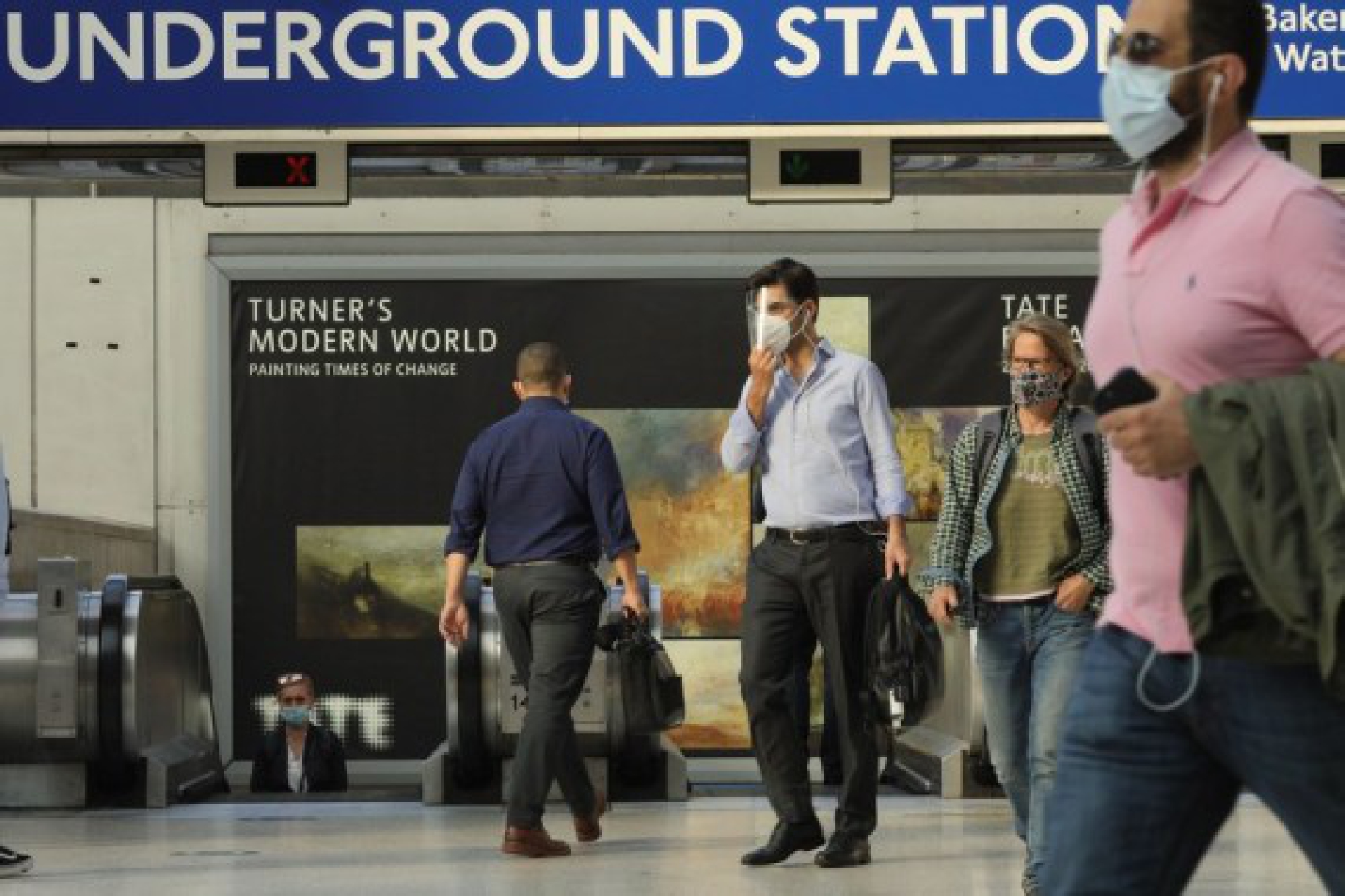 Passengers walk at Waterloo train station in London, Britain, on Aug. 5, 2021.