Chances of this asteroid hitting Earth are tiny, NASA says – but not zero #SootinClaimon.Com

#SootinClaimon.Com : ขอบคุณแหล่งข้อมูล : หนังสือพิมพ์ The Nation.

https://www.nationthailand.com/international/40004592

Chances of this asteroid hitting Earth are tiny, NASA says – but not zero


Its not the plot of another doomsday movie. Yet there is a pending, albeit unlikely threat to life as we know it: an asteroid approaching Earth.
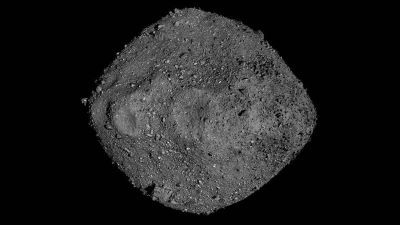
Bennu, a rugged, rock-spewing asteroid with a diameter of about one-third of a mile, is headed in our direction, on track to come very close with Earth in September of 2135.

But not to panic, scientists with NASA said Wednesday. Though Bennu will come within half the distance of the moon, the odds of the asteroid colliding with Earth in the next century and causing Armageddon-type of destruction are still very low.

“Even though there is no possibility whatsoever of in impact during that encounter, Bennu is going to be fairly close to the Earth,” said Davide Farnocchia, a scientist with the Center for Near Earth Object Studies, a NASA center that calculates asteroid and comet orbits and their odds of impact at the Jet Propulsion Laboratory in Southern California.

ADVERTISEMENTx

Although researchers believe it will not impact Earth, they now face the challenge of deciphering how our planet’s gravity will alter the asteroid’s path around the sun, NASA scientists said in a conference call with reporters Wednesday.

Scientists noted there is small possibility that the asteroid could pass through what’s known as a “gravitational keyhole” that could potentially put it in en route to Earth at a later date in the 22nd century. A gravitational keyhole is a tiny region in space where a planet’s gravity can tweak the trajectory of a passing asteroid and put it on a path to collide with it in the future.

Farnocchia said that although recent findings show the odds of impact have slightly increased – from 1-in-2,700 to 1-in-1,750 over the next century – it “does not represent significant change,” or a reason to worry.

Farnocchia explained that scientists now have a much better idea of Bennu’s path thanks to data collected by NASA’s Origins, Spectral Interpretation, Resource Identification, Security-Regolith Explorer (OSIRIS-REx) spacecraft, which orbited and studied the asteroid for over two years.

“Overall the situation has improved,” Farnocchia, the lead author of a study published Wednesday, told reporters in a conference call. “I am not any more concerned about Bennu than I was before; the impact probability remains very small.”

ADVERTISEMENT

In the study, NASA researchers used precision-tracking data from the OSIRIS-REx spacecraft to better understand Bennu’s movements through 2300, improving scientists’ ability to determine the probability of impacting Earth and predict the orbits of other asteroids.

Using NASA’S Deep Space Network of giant radio antennas that support interplanetary spacecraft missions and computer models, scientists were able to determine Bennu’s overall probability of striking is about 1 in 1750 (or 0.057%.)

Looking at it from glass half full perspective, it means there is a 99.94% probability that Bennu will not hit our planet.

Scientists also calculated the day with the highest risk of collision: Sept. 24, 2182, with a probability of 1 in 2,700 (or about 0.037%) – which is still lower that the overall probability of impact through 2300.

The potentially hazardous asteroid was discovered in 1999 by the Lincoln Near-Earth Asteroid Research Team, a program that works on detection and tracking, and has been closely observed with 580 ground-based “astrometric observations,” mainly made by optical and radar telescopes through 2018, according to the study published in Icarus Journal.

ADVERTISEMENT

Since its discovery, Bennu has had three close encounters with Earth, in 1999, 2005 and 2011, during which two radar stations collected data of the asteroid’s measurements.

Although the chances of it colliding with Earth are very low, Bennu remains one of the two most hazardous known asteroids in our solar system, along with another called 1950 DA, NASA said in a news release.

Researchers stated that the most pressing threat for Earth from space objects are hazardous asteroids that are undetected. However, they said they have detected about 60% of those similar to Bennu in size.

In 2016, NASA launched the OSIRIS-REx spacecraft to fly in close proximity to Bennu to gather information about its size, shape, mass, and composition, while monitoring its spin and orbital trajectory to evaluate its potential danger.

After a 27-month-long journey, OSIRIS-REx arrived in the asteroid’s orbit in 2018 and spent two years closely studying the object, before coming back to earth on May 10 of this year.

“The OSIRIS-REx data give us so much more precise information, we can test the limits of our models and calculate the future trajectory of Bennu to a very high degree of certainty through 2135,” said study lead Davide Farnocchia. “We’ve never modeled an asteroid’s trajectory to this precision before.”

The spacecraft also scooped up a sample of rocks and dust from the asteroid’s surface, which it will drop to Earth two years from now, on Sept. 24, 2023, landing at the Utah Test and Training Range, in the Great Salt Lake Desert.

“The orbital data from this mission helped us better appreciate Bennu’s impact chances over the next couple of centuries and our overall understanding of potentially hazardous asteroids – an incredible result,” said Dante Lauretta, OSIRIS-REx principal investigator and professor at the University of Arizona.

“The spacecraft is now returning home, carrying a precious sample from this fascinating ancient object that will help us better understand not only the history of the solar system but also the role of sunlight in altering Bennu’s orbit since we will measure the asteroid’s thermal properties at unprecedented scales in laboratories on Earth,” he said, according to the news release.

A week after the spacecraft entered its first orbit around Bennu, on Dec. 31, 2018, the mission’s team came to the surprise realization that the asteroid was releasing small pieces of rock into space.

Upon arrival at the asteroid, team members also were astonished to find that Bennu is littered with boulders, according to a NASA statement in May.

OSIRIS-REx is not the only spacecraft from Earth exploring an asteroid. Hayabusa2, launched by Japan’s space agency in 2014, began orbiting the near-Earth asteroid Ryugu in 2018 and in 2020 successfully completed its mission to collect samples and return them to Earth – according to the Japan Aerospace Exploration Agency.

Traveling at approximately 600 miles per hour, if Bennu were to crash into Earth it would unleash the energy of more than a billion tons of TNT, according to NASA’s calculations.

The resulting damage depends on a number of factors and specific circumstances, including location and angle of entry into our atmosphere, but it could create a crater three to six miles in diameter, said Lindley Johnson, NASA’s planetary defense officer. The area of devastation would be much bigger: as much as 100 times the size of the crater.

If an object Bennu’s size hit the Eastern Seaboard, it “would pretty much devastate things up and down the coast,” he told reporters.

Published : August 13, 2021

By : The Washington Post · Paulina Villegas

Tokyo virus situation is out of control, panel expert says #SootinClaimon.Com

#SootinClaimon.Com : ขอบคุณแหล่งข้อมูล : หนังสือพิมพ์ The Nation.

https://www.nationthailand.com/international/40004590

Tokyo virus situation is out of control, panel expert says


A member of a Tokyo Metropolitan Government coronavirus advisory panel of experts said it was now impossible to control the spread of Covid-19 in the capital.

“Infections are raging at disaster level — it’s an emergency,” Norio Omagari said at a Thursday panel meeting with Tokyo Governor Yuriko Koike. “It’s impossible to control the situation.”

His comments came as the city and national governments consider whether to extend a state of emergency in Tokyo, which is experiencing its worst-ever wave of virus cases as it has joined the list of countries battling surges attributed to the delta variant. The emergency is currently set to be lifted at the end of August.

The imposition of successive states of emergency has become less effective over time, with many bars and restaurants ignoring instructions to close early and stop serving alcohol. Several experts have blamed the government for issuing mixed messages about the seriousness of the situation, including by staging the Olympics, saying this may have prompted people to drop their guard.

ADVERTISEMENTx

Koike called for measures that would reduce the frequency of people’s outings by 50%, compared with the period immediately prior to the current emergency, echoing the advice of a government panel reported by public broadcaster NHK earlier in the day. She urged people to avoid going on vacation and stay away from their home towns.

Prime Minister Yoshihide Suga, whose public support hit new lows this week amid criticism of his handling of the pandemic, has rejected the idea of European-style lockdowns to contain the virus, ahead of a general election that must be held in the next three months. He has told reporters he’s relying on the vaccine rollout, and has also set limits on which patients can be hospitalized, in a bid to conserve resources.

Japan has fully vaccinated about 36% of its population, compared with 60% in the U.K. and 51% in the U.S., according to Bloomberg’s Vaccine Tracker.

Tokyo found 4,989 new cases of Covid-19 Thursday, near a record of 5,042 hit a week ago. The number of patients in hospitals and those in serious condition is continuing to hit records, putting the capital’s health care system under strain. Tokyo had 218 people suffering serious symptoms, its highest yet, while it has 392 beds available for those in serious condition.

Japan’s central government is considering extending the state of emergency into September, and expanding it to more regions, the Sankei newspaper reported earlier Thursday.

Published : August 13, 2021

By : Syndication Washington Post, Bloomberg · Isabel Reynolds

Calls for curfew, more curbs in Sydney as delta outbreak worsens #SootinClaimon.Com

#SootinClaimon.Com : ขอบคุณแหล่งข้อมูล : หนังสือพิมพ์ The Nation.

https://www.nationthailand.com/international/40004589

Calls for curfew, more curbs in Sydney as delta outbreak worsens


Australia is facing its worst Covid-19 crisis yet, and experts say a lockdown of its biggest city needs to be ramped up to prevent further deterioration to the nations vaunted record in stamping out the pathogen.

Though Sydney has been in lockdown for nearly two months now, the curbs are generally looser than those that helped Melbourne beat back the virus last year; daily cases have surged from 12 on June 26, when the stay-at-home order was first announced, to records of around 350 this week.

The situation is putting Australia in the worst of both worlds: half the population of 26 million people are cooped up again, but the delta variant is still spreading to new cities and regions hundreds of miles away, just like it is in reopened economies like the U.S. and U.K. National capital Canberra on Thursday became the latest to order a lockdown after one case were found.

New South Wales Premier Gladys Berejiklian is now under increasing pressure from other regional leaders and some health experts to tighten social-distancing restrictions to stem the outbreak, as her playbook of keeping the economy relatively open while trying to contain delta’s spread appears to be unequal to the variant’s highly contagious nature. While residents of Sydney and other locked-down areas have been told not to leave home unless unavoidable, there’s a lengthy list of exemptions such as for outside exercise or essential work that some people are using liberally.

“Covid Zero is clearly not holding up under delta — it’s so much more contagious,” said Raina MacIntyre, a professor of global biosecurity at the University of New South Wales. Unless Berejiklian changes tactics, “it will keep spreading and the case numbers will keep rising, and it will pose a greater threat to the rest of Australia.”

ADVERTISEMENTx

MacIntyre said the only way to get Sydney’s outbreak under control was to enforce city-wide night-time curfews, curtail the number of retailers allowed to open, and circle the city in a “ring of steel” to ensure residents can’t leave — as occurred in Melbourne last year during one of the world’s most stringent and longest lockdowns.

It’s a dilemma also facing other countries with a zero-tolerance approach to Covid-19, including China and Singapore. With delta being so much more transmissible than the original virus, these governments need to ramp up the strictness of their containment measures to slow down spread, even as populations fatigue from the 18 months of stop-start lockdowns.

The slow nationwide vaccine rollout is the biggest obstacle in the way of Australia’s path to normalization and international reopening after shutting its borders in early 2020. Only 36.2% of people have received a first dose, one of the lowest levels among developed economies, according to Bloomberg’s vaccine tracker.

There’s also concern the decision to tier the outbreak response in different parts of Sydney is causing social unrest. Some areas of its south and western districts hardest hit by the outbreak — which also have relatively large multicultural populations and wider socio-economic problems — have been dealt stricter travel restrictions than those in the more affluent eastern and northern suburbs.

Mistrust of authorities has been fueled by military patrols in those areas aimed at supporting the police in enforcing lockdown rules.

Berejiklian has been criticized by health experts who say she didn’t enforce Sydney’s lockdown early enough after delta was initially seeded in the community in mid-June by a limousine driver who came into contact with infected international flight crew. Still, the state premier insists the lockdown measures are the toughest implemented in Australia, and the outbreak’s spread is due to delta’s virulence and non-compliance by a minority of residents.

The dangers of relying on people to self-police given high levels of lockdown fatigue was evident in a high-profile case of an infected Sydney man who traveled almost 500 miles to look at real estate. He did not use his phone to “check in” at venues he visited as required, and the tourist hub of Byron Bay and other towns he visited were this week locked down as a result.

“Many smaller cities are now in lockdown, with all the economic and emotional issues that come with that,” said Sanjaya Senanayake, an infectious diseases specialist at the Australian National University Medical School. “That could have been avoided if those people simply hadn’t left Sydney, the center of the outbreak. It only takes a small minority of people to be non-compliant to cause a lot of damage.”

Other state leaders, who have implemented their own hard borders against Sydney residents, are losing patience with Berejiklian, saying the deteriorating situation in New South Wales is threatening their own Covid Zero strategies that have so far kept coronavirus deaths in Australia to below 1,000.

Earlier this week, Victoria state Premier Daniel Andrews urged Berejiklian to build a “ring of steel” enforced by police around Sydney, even as he battles another outbreak in Melbourne that’s placed the nation’s second-largest city in lockdown for a sixth time.

Western Australia state Premier Mark McGowan — perhaps the nation’s strictest adherent to the zero tolerance approach — told reporters on Wednesday that New South Wales authorities “don’t have the backbone to do what is required.”

Meanwhile Berejiklian, who hasn’t ruled out tightening some of Sydney’s rules, is now backing away from indicating that she could ease restrictions by the end of the month should case numbers fall and her state’s adult vaccination number reaches 6 million. It’s at about 4.7 million now.

While Prime Minister Scott Morrison is promising every adult will have access to a vaccine by the end of the year, he said on Thursday that there are no other options in the meantime but to enforce strict stay-at-home orders where necessary.

“Suppress and vaccinate — that is the phase we are in,” Morrison told parliament in Canberra, just hours before the city entered its first lockdown for more than a year. “Whether in Europe, the Netherlands or Singapore or Japan or other countries: where they have sought to open up, the delta variant has had a very different view.”

Published : August 13, 2021

By : Syndication Washington Post, Bloomberg · Jason Scott

In new documentary, WHO scientist says Chinese officials pressured investigation to drop lab-leak hypothesis #SootinClaimon.Com

#SootinClaimon.Com : ขอบคุณแหล่งข้อมูล : หนังสือพิมพ์ The Nation.

https://www.nationthailand.com/international/40004584

In new documentary, WHO scientist says Chinese officials pressured investigation to drop lab-leak hypothesis


The World Health Organization expert who led a controversial joint probe into the origins of the coronavirus pandemic says in a documentary airing Thursday night on Danish television that Chinese colleagues influenced the presentation of their findings.

Speaking to Danish documentarians, Peter Ben Embarek said Chinese researchers on the team had pushed back against linking the origins of the pandemic to a research laboratory in Wuhan in a report about the investigation.

“In the beginning, they didn’t want anything about the lab [in the report], because it was impossible, so there was no need to waste time on that,” Ben Embarek said during the interview. “We insisted on including it, because it was part of the whole issue about where the virus originated.”

In its report released earlier this year, the WHO-China team said it was “very unlikely” that the virus, officially named SARS-CoV-2, could have accidentally leaked from the Wuhan Institute of Virology or another facility in the Chinese city where infections were first found. The joint team of researchers said it would not recommend further investigation into the issue.

A discussion of whether to include the lab-leak theory at all lasted until 48 hours before the conclusion of the mission, Ben Embarek told the Danish reporters. In the end, Ben Embarek’s Chinese counterpart eventually agreed to discuss the lab-leak theory in the report “on the condition we didn’t recommend any specific studies to further that hypothesis.”

ADVERTISEMENTx

Asked in the documentary whether the report’s “extremely unlikely” wording about the lab-leak theory was a Chinese requirement, Ben Embarek said “it was the category we chose to put it in at the end, yes.” But he added that this meant it was not impossible, just not likely.

Ben Embarek said one similar scenario, in which a lab employee inadvertently could have brought the virus to Wuhan after collecting samples in the field, could be considered both a lab-leak theory and a hypothesis of direct infection from a bat, which was described as “likely” in the report.

“A lab employee infected in the field while collecting samples in a bat cave – such a scenario belongs both as a lab-leak hypothesis and as our first hypothesis of direct infection from bat to human. We’ve seen that hypothesis as a likely hypothesis,” Ben Embarek said.

In further comments during the interview that were not included in the documentary but were incorporated in an account by the Danish channel TV2 on its website, Ben Embarek suggested that there could have been “human error” but that the Chinese political system does not allow authorities to admit that.

“It probably means there’s a human error behind such an event, and they’re not very happy to admit that,” Ben Embarek was quoted as saying. “The whole system focuses a lot on being infallible, and everything must be perfect,” he added. “Somebody could also wish to hide something. Who knows?”

ADVERTISEMENT

Asked for comment, Ben Embarek initially said the interview had been mistranslated in English-language media coverage. “It is a wrong translation from a Danish article,” he wrote, declining to comment further and referring The Washington Post to the WHO. He did not immediately respond to follow-up questions.

WHO spokesman Tarik Jasarevic also said that the comment was mistranslated and that the interview took place “months ago.”

“There are no new elements nor [a] change of the position [that] all hypothesis are on the table and WHO works with member states on the next step,” Jasarevic said, referring to comments by senior officials with the global health organization about the probe.

The documentary, titled “The Virus Mystery,” is scheduled to air on TV2 on Thursday evening.

Ben Embarek had cooperated with the documentary filmmakers, even going so far as to film his trip to China for them on his phone to provide an inside look at a closed-off trip.

ADVERTISEMENT

Ben Embarek led a team of international scientists on a mission to China in January to work with local officials to investigate the origins of a pandemic that has so far led to more than 200 million confirmed cases and at least 4.3 million deaths worldwide.

From the start, the trip was mired in controversy. Beijing delayed approval for the WHO trip, pushing back the researchers’ arrival, while some of the international experts on the team were criticized for prior links to Chinese research.

Even once it arrived, the WHO team, subject to strict quarantine procedures, had only two weeks in the field to conduct research.

After the team’s report was released in late March, it grew only more disputed. The team looked at four different scenarios for how the virus first spread to humans, labeling the idea of zoonotic spread from animals to humans as “most likely.”

Other, less likely scenarios included that the virus could have been imported to China on frozen food – a theory pushed repeatedly by Chinese officials but seen as unlikely by many international experts.

The “lab-leak” theory, the subject of intense speculation in the United States, was dubbed the least likely scenario, and the WHO team said it should no longer be investigated. Even skeptics of the theory found the dismissal a surprise.

At a news conference marking the release of the report, WHO Director General Tedros Adhanom Ghebreyesus said the scenario still needed closer study.

“Although the team has concluded that a laboratory leak is the least likely hypothesis, this requires further investigation, potentially with additional missions involving specialist experts, which I am ready to deploy,” Tedros said.

Ben Embarek and other researchers on the team have hinted at immense pressure during the trip from all sides, with as many as 60 Chinese colleagues working with not only scientists but also public health figures.

“The politics was always in the room with us on the other side of the table,” he told Science Magazine during an interview published in February.

Later this month, the U.S. intelligence community is expected to complete a 90-day review of the evidence about the origins of the coronavirus.

Tedros has also said that the WHO will continue its own research into the origins, although Chinese officials said last month that it would be “impossible” to accept a continuing China-focused probe.

Published : August 13, 2021

By : The Washington Post · Adam Taylor, Emily Rauhala, Martin Sesloe Sorensen

U.S. sending thousands more troops to Afghanistan to bolster security as some embassy staff are withdrawn #SootinClaimon.Com

#SootinClaimon.Com : ขอบคุณแหล่งข้อมูล : หนังสือพิมพ์ The Nation.

https://www.nationthailand.com/international/40004583

U.S. sending thousands more troops to Afghanistan to bolster security as some embassy staff are withdrawn


The Biden administration will send thousands of troops to Afghanistan to help airlift American personnel and local allies out of Kabul, U.S. officials said Thursday, as rapid-fire advances by the Taliban intensified the existential threat facing the Afghan state.

Approximately 3,000 combat troops will deploy to the international airport in Kabul, Afghanistan’s capital, to facilitate the withdrawal of additional civilian staff from the U.S. embassy and accelerate the departure of Afghans who have aided the U.S. government in the war effort, the Defense and State Departments said.

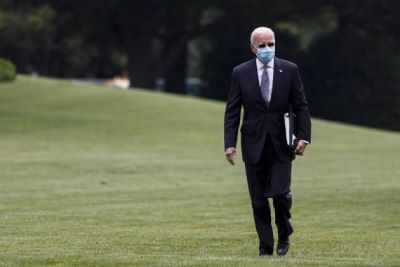
The orders to return American forces to Afghanistan comes just weeks before the military is scheduled to conclude its withdrawal under a timeline established by President Joe Biden, and coincides with Taliban’s seizure of Ghazni, the fifth provincial capital to fall to militant forces in less than a week.

On Thursday, Herat and Kandahar, Afghanistan’s second- and third-largest cities, were on the verge of falling to Taliban troops.

Pentagon spokesman John Kirby declined to call the deployment a combat mission, but said infantry soldiers and Marines will deploy with machine guns, mortars and other heavy weapons, and authorization to defend themselves if attacked.

State Department spokesman Ned Price said “core” diplomatic staff would continue their diplomatic and consular work at the heavily fortified U.S. embassy in Kabul , but declined to say how many U.S. government personnel are among the roughly 4,000 embassy staff there.

“The embassy remains open,” Price said. “This is not abandonment. This is not an evacuation. This is not a wholesale withdrawal.”

ADVERTISEMENTx

But the decision marks a tacit admission that the United States is uncertain how long it can ensure the safety of its staff in a country where conditions are changing on a daily, and sometimes hourly, basis.

The 3,000 troops being dispatched to Kabul will include two infantry battalions from the Marine Corps and one from the Army, all already deployed in the region, Kirby said. In the next week, an additional 3,500 U.S. soldiers will be sent to Kuwait and put on standby in case even more combat troops are needed in Kabul, and about a thousand other personnel will deploy to Qatar to assist Afghan allies evacuated from their home country with American help.

The additional muscle will augment a force of approximately 650 American troops who have been in Kabul since the U.S. military all but completed its withdrawal from Afghanistan last month. Those forces have been split between the airport and the U.S. embassy to provide defense against rocket attacks.

In April, Biden announced that he would fully withdraw military forces in keeping with a February 2020 deal the Trump administration struck with the Taliban. News of the American departure after two decades appeared to have energized the Taliban and undermined the confidence of Afghan forces as they face their adversary without air and logistical support from foreign troops.

The government of President Ashraf Ghani now controls less than a third of the country.

ADVERTISEMENT

The fall of Ghazni, 80 miles southwest of the Afghan capital, added fuel to Afghans’ concerns about surrender deals between the Taliban and local leaders that have appeared to have contributed to the group’s dramatic battlefield sweep. In many instances, the militant fights have commandeered areas without a major fight.

On Wednesday, hundreds of Afghans forces surrendered as part of a deal near the northern city of Kunduz. On Thursday, Ghazni’s governor was arrested after fleeing the provincial capital as it fell.

A senior Interior Ministry official said the Taliban runs a recruitment team that reaches out to Afghan officials, pushing them to join the militants.

“One of the main reasons we lost so much ground is the cooperation of officials with the Taliban,” he said, speaking on the condition of anonymity because he was not authorized to disclose such information to the news media.

“We suspect a long list of governors who might have Taliban ties.”

ADVERTISEMENT

Analysts said the Biden administration’s decision to reduce its embassy presence occurs amid an understanding of the impact a full-scale embassy withdrawal would have on the ground in Afghanistan.

“Without a diplomatic footprint, the Afghan government would suffer a major psychological blow, narratives of U.S. abandonment would strengthen, and the Taliban would score yet another victory,” said Michael Kugelman, a South Asia scholar at the Wilson Center.

“The international community should absolutely prioritize the security of its diplomats,” he said. “But let’s be clear: Its departure from Afghanistan would send a sobering signal that the world is resigned to leaving Afghans to their fate.”

Although Price suggested that at least some of the departing diplomats would leave on commercial flights, saying that the Kabul airport remained open, the embassy has advised nonofficial U.S. citizens in Afghanistan to leave “immediately” and noted that flights are limited.

Kirby described the newly deployed troops’ mission as “narrowly focused,” and said it was far better to be prudent and deploy the troops now than to “wait until it’s too late.”

“We believe that this is the right thing to do, and the right time to do it,” Kirby said.

In a possible sign of the sensitivities involved, however, Kirby declined to call the new mission a noncombatant evacuation operation, a term the military generally uses to describe the departure of civilians and nonessential military personnel from a dangerous situation. The term “NEO” is politically charged, and the Biden administration has sought to avoid using it, two U.S. officials said, speaking on the condition of anonymity because of the sensitivity of the issue.

“The purpose here is to help with the reduction of civilian personnel out of the embassy,” Kirby said. “That is not the same as a noncombatant evacuation operation, where you’re moving a massive amount of people who aren’t necessarily U.S. government employees. It’s a different operation altogether, and we’re just not there.”

Others scoffed at that notion.

“This is, in no uncertain terms, a NEO, which is an operation designed to evacuate U.S. civilian personnel whose lives are threatened by war, civil unrest or natural disaster,” said Mark Jacobson, a former Pentagon official in the Obama administration. “There’s no cut-out for embassy personnel unless you are trying to make a political point which was, simply, not to use the word, ‘evacuation.’ “

A Defense Department publication for evacuation operations states that “diplomatic or other considerations may make the use of the term NEO inadvisable and require the use of other terms for the operation instead.”

For the past several months, the Defense Department has been negotiating with Turkey over its offer to provide security for the airport after the U.S. withdrawal. Those negotiations are not yet completed, Kirby said this week, although he expressed certainty that they would be successful.

Turkey has repeatedly said it intends to provide airport security despite Taliban advances, as long as it has the proper financial, diplomatic and logistical support from the United States. During a visit Thursday to Pakistan, Defense Minister Hulusi Akar said that Turkey fully intends to man the airport, and that Turkish troops would not be in danger, despite Taliban statements warning of attacks against them.

But the delay in finalizing an agreement has concerned all of those foreign missions remaining in Kabul, as well as the Americans.

Turkish President Recep Tayyip Erdogan has tried to elevate Turkey’s status in NATO, and circumvent numerous disagreements with Washington over Syria, its defense purchases from Moscow, and domestic crackdowns over civil rights. In an interview Wednesday with CNN Turk, Erdogan said the situation in Afghanistan was “really, really troubling,” and offered to meet with “the person who is [the Taliban] leader.”

“Why? Because if we do not get control of things like this at a high level,” he said, “it won’t be possible to secure peace this time in Afghanistan.”

Published : August 13, 2021

By : The Washington Post · Missy Ryan, Dan Lamothe, Ezzatullah Mehrdad, Susannah George

California becomes first state in U.S. to require COVID-19 vaccine or testing for teachers, school staff #SootinClaimon.Com

#SootinClaimon.Com : ขอบคุณแหล่งข้อมูล : หนังสือพิมพ์ The Nation.

https://www.nationthailand.com/international/40004566

California becomes first state in U.S. to require COVID-19 vaccine or testing for teachers, school staff


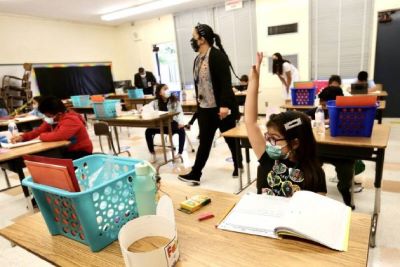
According to the new public health order issued by the California Department of Public Health, all school staff are required to either show proof of full vaccination or be tested at least once per week.

California Governor Gavin Newsom announced Wednesday the most populous state in the United States will implement first-in-the-nation measure to require all teachers and school staff to get vaccinated as schools return from summer break amid COVID-19 delta variant spread.

ADVERTISEMENTx

Newsom noted in a news conference at a Northern California school that “this is the right thing to do.”

“We think this is a sustainable way to keeping our schools open, and to address the number one anxiety that parents like myself have for young children,” said the governor, adding that “schools are doing everything in their power to keep our kids safe, to keep our kids healthy.”

Newsom said an impressive 124 billion U.S. dollars is being invested in California’s public education system this year to implement various school initiatives, including supports for physical and mental health as well as the social-emotional and academic needs of students.

According to the new public health order issued by the California Department of Public Health, all school staff are required to either show proof of full vaccination or be tested at least once per week. The new policy will take effect Thursday and schools must be in full compliance by Oct. 15.

There are around 6 million children and young adults in more than 10,000 schools with 300,000 teachers in the state’s public school system, according to the California Department of Education.

Published : August 12, 2021

By : xinhua

Tons of drugs, chemical substances torched in eastern Afghanistan #SootinClaimon.Com

#SootinClaimon.Com : ขอบคุณแหล่งข้อมูล : หนังสือพิมพ์ The Nation.

https://www.nationthailand.com/international/40004565

Tons of drugs, chemical substances torched in eastern Afghanistan


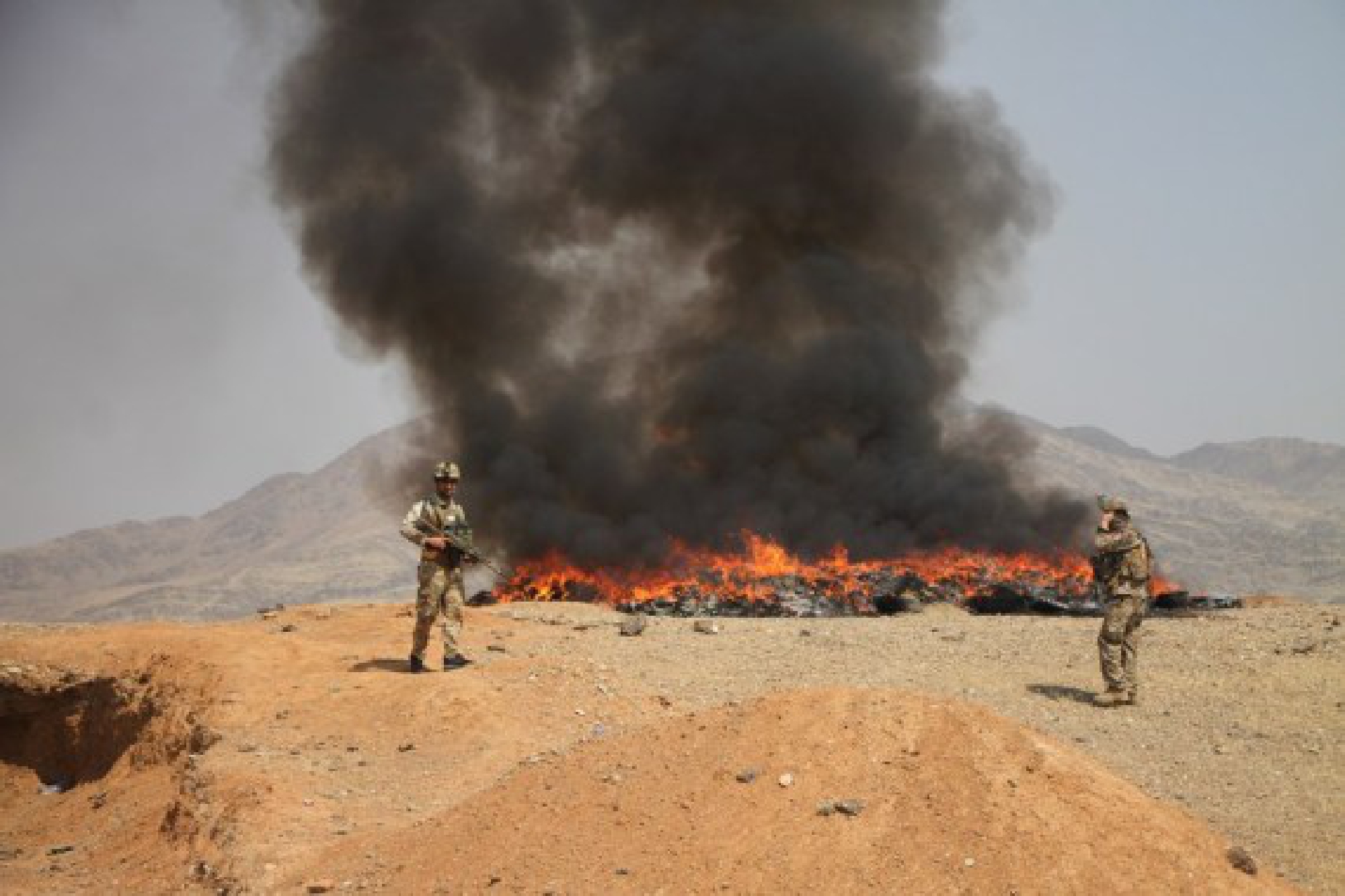
More than 13 tons of narcotic drugs including heroin, poppy opium, hashish, henbane and some amounts of chemical agents have been burned in eastern Nangarhar province.

Police in Afghanistan burned more than 13 tons of narcotic drugs in eastern Nangarhar province on Wednesday, the latest in the fight against illicit drug and narcotics trafficking, the country’s Ministry of Interior said.

ADVERTISEMENTx

The drugs were seized from separate locations in Nangarhar within the past three years and was set ablaze on the outskirts of provincial capital Jalalabad city, the ministry said in a statement.

The burned drugs included heroin, poppy opium, hashish, henbane and some amounts of chemical agents used in producing heroin, the statement added.

Police have also arrested 220 suspects along with 45 vehicles and 18 weapons in connection with trafficking and hiding the drugs during the cited period, according to the statement.

Much of the world’s opium poppy is cultivated in the militancy-hit country.

Afghan security force members are seen near the burning drugs in Jalalabad, Nangarhar Province, Afghanistan, Aug. 11, 2021. Afghan security force members are seen near the burning drugs in Jalalabad, Nangarhar Province, Afghanistan, Aug. 11, 2021.
Published : August 12, 2021

By : xinhua

WHO to test three new drugs for COVID-19 treatment #SootinClaimon.Com

#SootinClaimon.Com : ขอบคุณแหล่งข้อมูล : หนังสือพิมพ์ The Nation.

https://www.nationthailand.com/international/40004563

WHO to test three new drugs for COVID-19 treatment


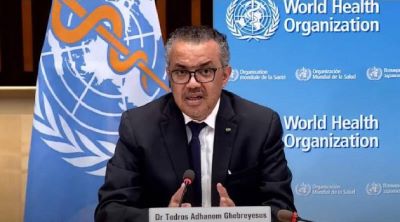
“Finding more effective and accessible therapeutics for COVID-19 patients remains a critical need, and WHO is proud to lead this global effort,” said WHO Director-General Tedros Adhanom Ghebreyesus.

The World Health Organization (WHO) on Wednesday announced that it will test three new drugs for COVID-19, which will involve thousands of researchers at more than 600 hospitals in 52 countries.

ADVERTISEMENTx

According to a press release issued by WHO on Wednesday, the three new drugs are artesunate, a treatment for severe malaria; imatinib, a drug for certain cancers; and infliximab, a treatment for immune system disorders such as Crohn’s Disease.

These therapies were selected by an independent expert panel for their potential in reducing the risk of death in hospitalized COVID-19 patients, and they were donated for the trial by their manufacturers, WHO said.

“Finding more effective and accessible therapeutics for COVID-19 patients remains a critical need, and WHO is proud to lead this global effort,” said WHO Director-General Tedros Adhanom Ghebreyesus.

In its previous efforts, WHO has tested four drugs, namely remdesivir, hydroxychloroquine, lopinavir and interferon, and the initial results showed that they had little or no effect on hospitalized patients with COVID-19. 

Published : August 12, 2021

By : xinhua

Biden urged to help confront global spread of COVID-19 with immediate export of stockpiled vaccines #SootinClaimon.Com

#SootinClaimon.Com : ขอบคุณแหล่งข้อมูล : หนังสือพิมพ์ The Nation.

https://www.nationthailand.com/international/40004562

Biden urged to help confront global spread of COVID-19 with immediate export of stockpiled vaccines


While ensuring that the countrys own vaccine dose stockpile remains in size, the U.S. administration should “begin immediate export of vaccine doses — within one week — to COVAX or through other international distribution mechanisms — of at least 10 million doses per week,” U.S. experts and scientists wrote in a letter to the White House.

More than 175 U.S. public health experts, scientists and activists have urged President Joe Biden’s administration to take urgent steps to confront the global spread of COVID-19, including immediate export of vaccine doses the country has stockpiled.

ADVERTISEMENTx

“We urge you to act now,” they wrote in a joint letter sent to senior White House officials on Tuesday, the full text of which was made public Wednesday in a report by The Washington Post.

“The emergence of the Delta variant is resulting in a surge in increasing infection rates in Africa, Latin America and Asia, where vaccines are least available,” they wrote.

“The United States currently has over 55 million doses of mRNA vaccines in storage, while only vaccinating approximately 900,000 people per day. At this rate, it would take over two months to administer just the vaccine doses currently stored,” they noted.

“Despite this, mRNA vaccine manufacturers are delivering over 17 million new doses each week to jurisdictions across the U.S.,” they noted.

While ensuring that the country’s own vaccine dose stockpile remains in size, the U.S. administration should “begin immediate export of vaccine doses — within one week — to COVAX or through other international distribution mechanisms — of at least 10 million doses per week,” they wrote.

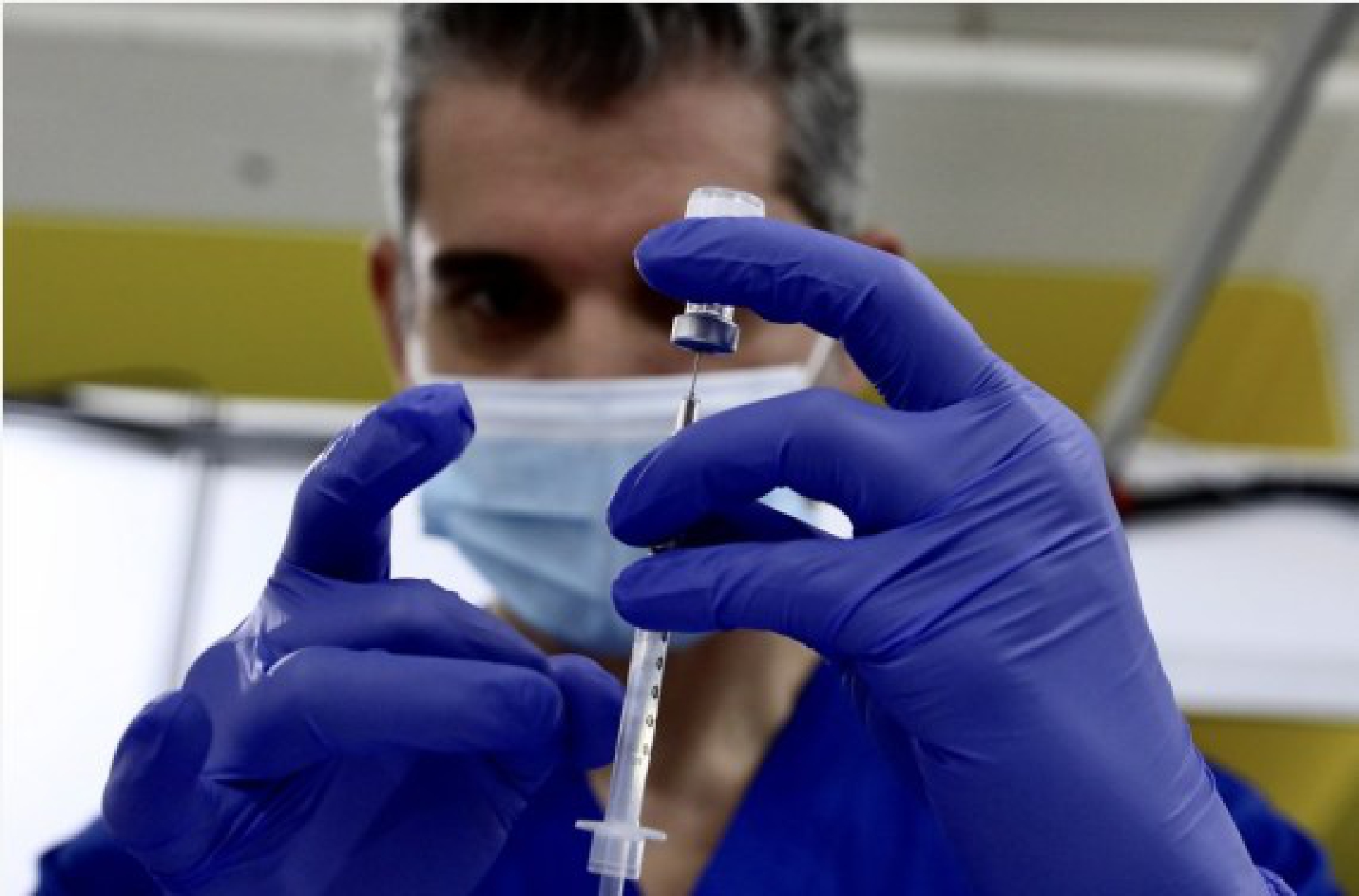
A health care worker prepares a dose of COVID-19 vaccine at a new vaccination site in the California Polytechnic State University in Pomona, Los Angeles County, California, the United States, Feb. 5, 2021.A health care worker prepares a dose of COVID-19 vaccine at a new vaccination site in the California Polytechnic State University in Pomona, Los Angeles County, California, the United States, Feb. 5, 2021.

The experts suggested that the White House should also announce a plan within a month for “establishing 8 billion doses per year of mRNA vaccine capacity within six months using existing federal resources.”

“Simultaneously, the U.S. government should develop and implement training and technology transfer for the development and manufacture of mRNA and other vaccines in hubs around the world,” they wrote.

Besides, it should “compel originators to transfer technology and, in collaboration with other governments, provide financing for vaccine manufacturing around the world,” they added.

The letter’s signatories include Tom Frieden, who led the U.S. Centers for Disease Control and Prevention during former President Barack Obama’s administration, five deans of leading public health, nursing and medical schools, faculty from 20 universities, including Harvard University, Yale University and University of Washington, and other leaders in global health and infectious disease. More than 50 organizations also co-signed the letter.

Published : August 12, 2021

By : xinhua

U.S. COVID-19 hospitalizations, deaths likely to increase in next 4 weeks: CDC #SootinClaimon.Com

#SootinClaimon.Com : ขอบคุณแหล่งข้อมูล : หนังสือพิมพ์ The Nation.

https://www.nationthailand.com/international/40004560

U.S. COVID-19 hospitalizations, deaths likely to increase in next 4 weeks: CDC


The ensemble forecasts predict 3,300 to 12,600 new deaths, 550,000 to 2,340,000 new cases likely reported in the week ending Sept. 4.

The U.S. Centers for Disease Control and Prevention (CDC) on Wednesday published ensemble forecasts indicating the country’s COVID-19 hospitalizations and deaths are likely to increase over the next four weeks.

ADVERTISEMENTx

The ensemble forecasts predict 3,300 to 12,600 new deaths, 550,000 to 2,340,000 new cases likely reported in the week ending Sept. 4.

There will be 9,600 to 33,300 new confirmed COVID-19 hospitalizations likely reported on Sept. 6, according to the ensemble forecasts.

A total of 630,000 to 662,000 COVID-19 deaths will be reported by Sept. 4, said the forecasts.

The previous forecasts, published Aug. 4, predicted up to 642,000 deaths by Aug. 28.

“Over the last several weeks, more reported cases have fallen outside of the forecasted prediction intervals than expected. This suggests that current forecast prediction intervals may not capture the full range of uncertainty. Because of this, case forecasts for the coming weeks should be interpreted with caution,” said the CDC.

As of Wednesday afternoon, there have been over 36 million COVID-19 cases and 618,457 fatalities in the United States, according to a tally by Johns Hopkins University.

Published : August 12, 2021

By : xinhua