Experts and media worldwide marvel at Chinas manned space mission #SootinClaimon.Com

#SootinClaimon.Com : ขอบคุณแหล่งข้อมูล : หนังสือพิมพ์ The Nation.

https://www.nationthailand.com/international/40002178

Experts and media worldwide marvel at Chinas manned space mission


As Chinas Shenzhou-12 manned spaceship successfully docked with the Tianhe space station core module on Thursday, experts and media worldwide applauded the landmark progress in Chinas manned space expeditions.

Experts and media worldwide marvel at Chinas manned space mission

Nie Haisheng, Liu Boming and Tang Hongbo, members of the three-man space crew, are scheduled to stay in orbit for three months, the longest in China’s manned mission to date, to build the country’s space station.

“This is a great moment,” said Philippe Coue, a French space expert, when commenting on the Chinese astronauts’ rendezvous with the station’s core module.

“And I am extremely amazed at the speed of development. There is a real dynamic in China, it is very impressive,” he told Xinhua on Thursday.

In recent months, the world has witnessed the fruitful results of China’s building of the space station and the country is moving steadily forward in this regard, said Vitaliy Egorov, a Russian journalist and popular writer about space research, adding he believed China’s space research would advance to a new stage.

China has made great efforts in the field of aerospace and has “managed to excel” in the realm, said Ali Sarosh, associate professor with the Institute of Avionics and Aeronautics at the Air University in Islamabad, Pakistan.

“The successful launch of the Shenzhou-12 manned spaceship is another big achievement made by China in the aerospace field,” he said.

In recent years, China’s space programme has had a very successful series of launches and landings, The New York Times reported on Wednesday. “These successful endeavours have added to the likelihood that China will keep to its proposed timelines for other deep space missions,” an article in the newspaper said.

“Keeping the station up and running smoothly involves much detailed and complicated work, as we saw on the International Space Station during its early days,” Chen Lan, an analyst at GoTaikonauts, an online news portal about China’s space programme, told the Agence France-Presse (AFP) on Tuesday.

The astronauts will aim to “get their new home in space kitted out and ready to use”, said Jonathan McDowell, an astronomer at the Harvard Smithsonian Center for Astrophysics. “It’s a practical goal rather than a groundbreaking one,” he told AFP reporters.

“They build a space station, go to the moon, and probe Mars because they want to demonstrate China’s technological advancements to its [the Chinese] people and the international community,” Kazuto Suzuki, professor of space security at the University of Tokyo was quoted by a Nikkei commentary as saying.

A platform for joint ventures

ADVERTISEMENT

Coue said the project would provide fresh opportunities for international cooperation, as “there are countries that China naturally cooperates with that I think will join the station”.

“That can be an important vector of cooperation,” he said.

Egorov noted that Russia’s space authority has laid out plans for cooperation with China, whose success in aerospace will also help Russia’s research and development in the field.

Any scientific achievements would ultimately benefit mankind as a whole, he said, adding that China’s success also contributes to enhancing humankind’s understanding of the surrounding world, the universe and even humankind itself.

The successful launch of Shenzhou-12 “is going to be a great benefit to the country in the future, as it will act as a platform for the country to carry out various experiments in space, besides acting as a launch pad for astronauts for research on the moon and space,” Sarosh said.

In the coming years, “many of the existing and new experiments will be shifted to the Chinese space station, which will promote China’s cooperation with international partners in conducting experiments in space”, he added.

Published : June 18, 2021

By : Xinhua

Steep jump in new Covid-19 cases and deaths in Asean #SootinClaimon.Com

#SootinClaimon.Com : ขอบคุณแหล่งข้อมูล : หนังสือพิมพ์ The Nation.

https://www.nationthailand.com/international/40002167

Steep jump in new Covid-19 cases and deaths in Asean


Southeast Asia saw the highest number of Covid-19 cases in over a month on Thursday, while the death toll was the second highest, collated data showed.

Steep jump in new Covid-19 cases and deaths in Asean

Asean saw 29,658 new cases, much higher than Wednesday’s 24,344, while 534 people died, up from Wednesday’s 476. On June 3, there were 537 deaths.

The number of Covid-19 cases in the region crossed 4.44 million, and the death toll rose to 86,517.

The Philippines reported 6,637 new cases and 155 deaths on Thursday, bringing cumulative cases in the country to 1,339,457 and total deaths to 23,276. The National Covid-19 Committee urged the president to issue an order to make the wearing of face shields mandatory in addition to the mandatory face mask rule, to be enforced at closed public areas such as hospitals, schools, public transport and religious places.

Cambodia reported 625 cases and 12 deaths on Thursday, taking cumulative cases in the country to 40,782 and deaths to 380. Private educational institutions called for the reopening of schools as soon as possible, but the Ministry of Education insists on keeping schools closed to prevent the outbreak from spreading.

Published : June 18, 2021

By : THE NATION

U.S. pumps $3.2 billion into covid-fighting antiviral effort #SootinClaimon.Com

#SootinClaimon.Com : ขอบคุณแหล่งข้อมูล : หนังสือพิมพ์ The Nation.

https://www.nationthailand.com/international/40002164

U.S. pumps $3.2 billion into covid-fighting antiviral effort


The U.S. is investing $3.2 billion into developing antiviral medicines to combat covid-19 and other viruses with pandemic potential. The aim: develop treatments to be taken at home soon after someone gets sick.

U.S. pumps $3.2 billion into covid-fighting antiviral effort

Dubbed the Antiviral Program for Pandemics, the effort led by U.S. health agencies will support the discovery, development and production of antiviral treatments for covid-19 and future viral threats, the Health and Human Services Department said Thursday.

Though vaccines are significantly slowing the spread of covid in wealthy nations, doctors around the world need treatments that can be quickly and easily deployed to those who get sick from the virus and its variants. There exists no simple, inexpensive pill that can prevent those at the earliest stages of infection from later needing to be hospitalized.

Antiviral medicines could serve as an “important complement to existing vaccines,” said Anthony Fauci, President Joe Biden’s chief medical adviser on the pandemic at a briefing Thursday. That’s especially true for people with compromised immune systems for whom the shots may not be as effective, he said.

An orally-administered treatment, like Tamiflu for influenza, is seen as the gold standard to ease the burden of disease on health systems, domestically and abroad. Fauci also noted that antiviral medicines could serve as an extra line of defense against emerging virus variants.

The program will help advance such antiviral candidates through early-stage safety studies, positioning them to be able to quickly move into late-stage efficacy studies.

The collaboration brings together the National Institutes of Health and the Biomedical Advanced Research and Development Authority.

Of the funds allocated to the effort, $1 billion will go to conducting pre-clinical and clinical trials, $300 million will go to research and lab support, and nearly $700 million will be directed to Barda and NIH’s National Institute of Allergy and Infectious Diseases unit to aid with development and manufacturing.

The remaining $1.2 billion will go to biomedical partnerships initially geared at discovering drugs to combat coronaviruses, called Antiviral Drug Discovery Centers for Pathogens of Pandemic Concern.

The amount the U.S. has spent developing antiviral treatments for covid-19 pales in comparison to the many billions it has spent on vaccine trials and production.

Francis Collins, the director of the NIH, said the U.S. had sifted through hundreds of antiviral candidates but come up short. Its one covid-fighting antiviral, Gilead Sciences’ IV drug remdesevir, speeds the recovery of hospitalized patients but hasn’t been proven to reduce deaths.

“I wish I could say that we got those home runs, but we got some singles and doubles,” Collins said at a Wednesday event held by the Biotechnology Innovation Organization, an industry trade group.

Around the world, other governments are also looking to bolster their antiviral pipelines. In April, the U.K. launched a new Antivirals Taskforce, which aims to approve two covid-19 antivirals for use this fall. A month later, the European Commission announced it will seek to make available three new antiviral medicines to combat the disease this October.

On Thursday, Fauci said the U.S. government’s new program could accelerate promising covid-fighting candidates already in development, such as pills being tested by Merck, Pfizer and Roche.

Earlier this month, the U.S. entered a $1.2 billion agreement with Merck for 1.7 million courses of its experimental antiviral pill, called molnupiravir, should it be authorized by U.S. regulators.

Developed with Ridgeback Biotherapeutics, the oral treatment is in a final-stage study of non-hospitalized patients with confirmed cases of covid-19 and at least one risk factor associated with poor disease outcomes.

Merck expects data from the trial in September or October, executives said in April, and could approach the Food and Drug Administration for authorization within the year.

ADVERTISEMENT

“Having additional FDA-authorized antiviral medicines available within a year would be a major breakthrough in ongoing efforts to combat covid-19 and protect the public,” HHS said in statement.

Published : June 18, 2021

By : Syndication Washington Post, Bloomberg · Riley Griffin, Rebecca Torrence

Colombia reopens economy as Covid deaths surge toward 100,000 #SootinClaimon.Com

#SootinClaimon.Com : ขอบคุณแหล่งข้อมูล : หนังสือพิมพ์ The Nation.

https://www.nationthailand.com/international/40002161

Colombia reopens economy as Covid deaths surge toward 100,000


Protest-wracked Colombia is fast on track to surpass 100,000 deaths from Covid-19 as the government tries to balance letting citizens work — and eat — with protecting them from the pandemic by reopening large swathes of the economy.

Colombia reopens economy as Covid deaths surge toward 100,000

Aslow vaccination rollout and social upheaval have meant that infections and mortality in Colombia continue to rise. Just in the past five days, the country of 50 million has marked new records in daily deaths, registering as many as 599 fatalities on Tuesday alone. At the current rate, Colombia will hit 100,000 deaths as soon as Sunday.

Colombia has the fourth-highest per-capita death rate in the world over the past week, among more than 125 countries tracked by Bloomberg. New daily cases have topped 29,000 this month, threatening to overwhelm the health system, which is already facing shortages of supplies, including precious oxygen. Lockdowns and the closing of borders with neighboring countries failed to ease the crisis, but hobbled the economy.

Latin America has seen more than 35 million infected with the coronavirus, and more than 1 million reported dead. Pan American Health Organization Director Carissa Etienne said recently that this year has been worse than last for the region. She called for an urgent increase in vaccination, warning that controlling the virus will take years otherwise. On Wednesday, the World Health Organization asked wealthy nations that have pledged to donate 1 billion vaccine doses to prioritize Latin America.

The situation is particularly fraught in Colombia, where the proportion of those living in poverty swelled during the pandemic to more than 42%. Colombia’s economy suffered the deepest crash in its history last year, leaving millions no longer able to afford three meals per day, according to the national statistics agency.

Since April, the Andean nation has been roiled with weeks of anti-government protests. Set off by a plan to raise taxes on the middle class, which was later withdrawn, the demonstrations have morphed into a mass movement with a range of grievances including police brutality, corruption and inequality.

Thousands went into the streets, and clashes with security forces left more than 40 dead. There have been billions of dollars in losses after roadblocks hit supply chains and forced thousands of companies to shut, threatening to derail the fragile recovery.

Now, with mortality rising to 193.8 deaths per 100,000 people, President Ivan Duque said recently that “we need to be aware that in the last weeks this situation has deteriorated, given the mass gatherings that have happened in different parts of our geography.”

To soothe the restive population, the government is reopening the economy and began easing mobility restrictions this month. Schools, universities and most businesses can operate without schedule restrictions. Cities with intensive-care-unit occupancy below 85% are allowed to hold sports events and concerts as long as no more than a quarter of the venue’s capacity is used.

Demonstrators take cover while clashing with police during a protest in Bogota, Colombia, on May 28, 2021. MUST CREDIT: Bloomberg photo by Nathalia Angarita.Demonstrators take cover while clashing with police during a protest in Bogota, Colombia, on May 28, 2021. MUST CREDIT: Bloomberg photo by Nathalia Angarita.

The government is correcting an “erroneous” policy that resulted in the loss of 5 million jobs, of which only half have been recovered, according to Jorge Restrepo, an economics professor at Bogota’s Javeriana University.

“This shift in the health policy is right in seeking the economy’s recovery,” he said. “Lockdowns aren’t effective, especially in an economy where the majority live hand to mouth.”

But doctors and scientists say the nation is facing the worst of the pandemic. More than 100 medical and scientific associations published a letter June 7 pointing to a health system that is overwhelmed and warned that deaths could soon reach more than 800 a day if the economy’s reopening isn’t delayed.

The population is suffering from shortages of oxygen and other medical supplies as well as health personnel, they said in the letter. Reopening the economy “will imply that the population won’t have the health care it requires,” they said.

Colombia, like many other nations in the region, has had a slow rollout of shots, with only 8% of the population fully vaccinated, as the government struggles to hasten the pace. As of Wednesday, nearly 14 million doses of the more than 19 million that have reached the country had been administered.

Jorge Martin Rodriguez, a professor of public health policy at Javeriana University, blamed bureaucratic barriers that made it hard for people to be eligible for inoculation. But with more mass vaccination sites, some of those obstacles are being lifted, he said.

ADVERTISEMENT

Still, ICU usage in some of the largest cities is above 95%, and Rodriguez is dubious about easing restrictions.

“We’re at the worst moment,” said Rodriguez. “To think that at this time, with a health system that has collapsed, we should reopen and the economy will recover? Maybe, but at what cost?”

Published : June 18, 2021

By : Syndication Washington Post, Bloomberg · Andrea Jaramillo

New COVID-19 variant of interest identified in 29 countries : WHO #SootinClaimon.Com

#SootinClaimon.Com : ขอบคุณแหล่งข้อมูล : หนังสือพิมพ์ The Nation.

https://www.nationthailand.com/international/40002142

New COVID-19 variant of interest identified in 29 countries : WHO


First identified in Peru, the new variant, named Lambda, was classified as a global Variant of Interest on Monday due to an “elevated prevalence” in South America, the WHO said in its weekly update.

New COVID-19 variant of interest identified in 29 countries : WHO

Lambda has been rampant in Peru where 81 percent of COVID-19 cases since April 2021 were associated with the variant.

GENEVA, June 16 (Xinhua) — The World Health Organization (WHO) said Wednesday that a new variant of COVID-19, named Lambda, was identified in 29 countries and notably in South America where it is believed to have originated.

First identified in Peru, the Lambda lineage was classified as a global Variant of Interest on Monday due to an “elevated prevalence” in South America, the WHO said in its weekly update.

Lambda has been rampant in Peru where 81 percent of COVID-19 cases since April 2021 were associated with this variant, authorities reported.

In Chile, it was detected in 32 percent of all submitted sequences in the last 60 days, and only outclassed by the Gamma variant which was first identified in Brazil. Other countries such as Argentina and Ecuador have also reported elevated prevalence of the new variant.

A woman wearing a face mask walks on a street in Lima, Peru, on March 6, 2020

The WHO reported that the Lambda lineage carries mutations that might increase transmissibility or strengthen the virus’s resistance to antibodies.

However, evidence is too limited for the moment, the Geneva-based organization said, and more studies are required to understand better the Lambda variant.

Variants of Interest, unlike Variants of Concern that have made headlines in newspapers worldwide, are monitored by health organizations but are not proved yet to be significant threats to public health.

The most recent example is the Delta variant. It was first identified in India and was labeled as a Variant of Interest until May 11, 2021, when its rapid spread around the world prompted the WHO to classify it as a Variant of Concern.A nurse prepares a dose of COVID-19 vaccine at a vaccination site in Santiago, Chile, March 25, 2021.

Published : June 17, 2021

By : Xinhua

China launches first crewed mission for space station construction #SootinClaimon.Com

#SootinClaimon.Com : ขอบคุณแหล่งข้อมูล : หนังสือพิมพ์ The Nation.

https://www.nationthailand.com/international/40002132

China launches first crewed mission for space station construction


China on Thursday successfully launched the crewed spacecraft Shenzhou-12, which is expected to send three astronauts to its space station core module Tianhe for a three-month mission.

China launches first crewed mission for space station construction

It is China’s seventh crewed mission to space and the first during the construction of China’s space station. It is also the first in nearly five years after the country’s last manned mission.

The spacecraft, atop a Long March-2F carrier rocket, was launched from the Jiuquan Satellite Launch Center in northwest China’s Gobi Desert at 9:22 a.m. (Beijing Time), according to the China Manned Space Agency Astronauts Nie Haisheng (R), Liu Boming (C) and Tang Hongbo wave during a see-off ceremony for Chinese astronauts of the Shenzhou-12 manned space mission at the Jiuquan Satellite Launch Center in northwest China

the first during the construction of China’s space station, according to the China Manned Space Agency (CMSA). It is also the first in nearly five years after the country’s last manned mission.

The three astronauts are commander Nie Haisheng, a 56-year-old veteran who participated in the Shenzhou-6 and Shenzhou-10 missions, Liu Boming, 54, who was part of the Shenzhou-7 mission, and Tang Hongbo, 45, who is in his first space mission.

They are expected to set a new record for China’s manned space mission duration, exceeding the 33 days kept by the Shenzhou-11 crew in 2016.

After entering orbit, the Shenzhou-12 spaceship will dock with the in-orbit space station core module Tianhe, forming a complex with Tianhe and the cargo craft Tianzhou-2. The astronauts will be stationed in the core module.

Their work will be more complicated and challenging than previous crewed missions, according to Hao Chun, director of the CMSA.

The crewed spacecraft Shenzhou-12, atop a Long March-2F carrier rocket, is launched from the Jiuquan Satellite Launch Center in northwest China's Gobi Desert

The Shenzhou-12 crew will complete four major tasks in orbit, said Ji Qiming, assistant to the CMSA director, at a press conference held at the launch center on Wednesday.

ADVERTISEMENT

First, they will operate and manage the complex, including the in-orbit test of the Tianhe module, verification of the recycling and life support system, testing and operation training of the robotic arm, as well as management of materials and waste.

Second, they will move, assemble and test extravehicular spacesuits and perform two extravehicular activities for work including assembling an extravehicular toolbox, lifting the panoramic camera and installing extended pump sets.

Third, they will carry out space science experiments and technology experiments, as well as public outreach activities.

Fourth, they will manage their own health through daily life care, physical exercise, and regular monitoring and assessment of their own health status. The crewed spacecraft Shenzhou-12, atop a Long March-2F carrier rocket

Published : June 17, 2021

By : Xinhua

Asean sees 24,344 new Covid cases #SootinClaimon.Com

#SootinClaimon.Com : ขอบคุณแหล่งข้อมูล : หนังสือพิมพ์ The Nation.

https://www.nationthailand.com/international/40002122

Asean sees 24,344 new Covid cases


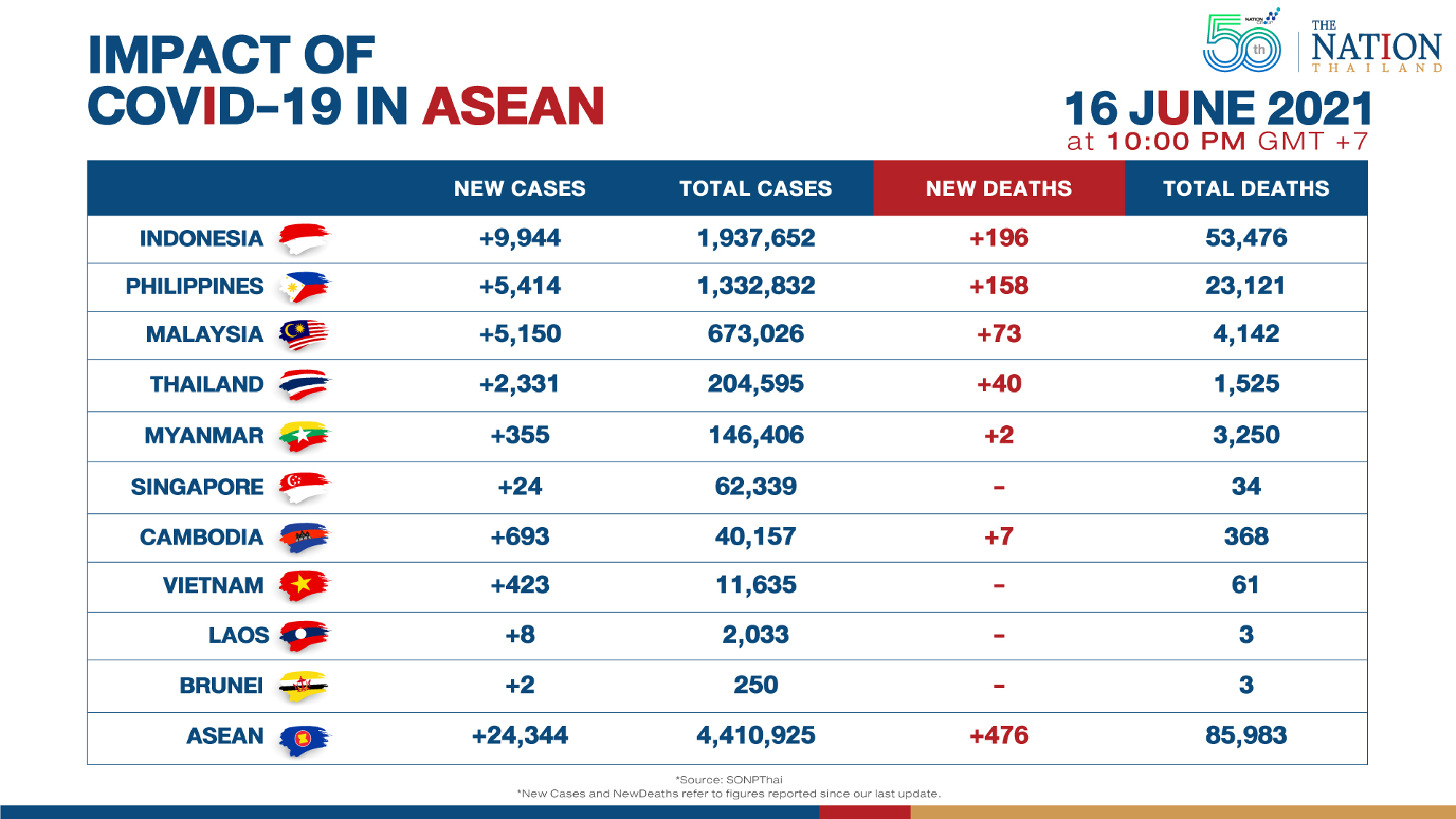
The number of Covid-19 cases across Southeast Asia went past 4.41 million, with 24,344 new cases reported on Wednesday, higher than Tuesday’s tally of 23,120, while new deaths were 476, increasing from Tuesday’s 415 and taking total Covid-19 deaths in Asean to 85,983 so far.

Asean sees 24,344 new Covid cases

Singapore reported 24 new cases on Wednesday, driving the cumulative cases in the city-state to 62,339. Of these, 61,931 people have been cured and discharged.

The country’s 24 private clinics have been allowed by the Public Health Ministry to provide Sinovac as an alternative vaccine. People who choose Sinovac will need to pay a medical fee ranging in equivalent from THB230-535 depending on each clinic’s rate, while the vaccine cost has been covered.

Laos reported eight new cases on Wednesday, taking the cumulative cases in the neighbouring country to 2,033 patients. So far 1,910 people have recovered and been discharged.

The Department of Health announced that expatriates residing in Laos can apply to get inoculated free of charge, but they cannot choose the brand of the vaccine.

Published : June 17, 2021

By : THE NATION

4 takeaways from the Biden-Putin summit #SootinClaimon.Com

#SootinClaimon.Com : ขอบคุณแหล่งข้อมูล : หนังสือพิมพ์ The Nation.

https://www.nationthailand.com/international/40002120

4 takeaways from the Biden-Putin summit


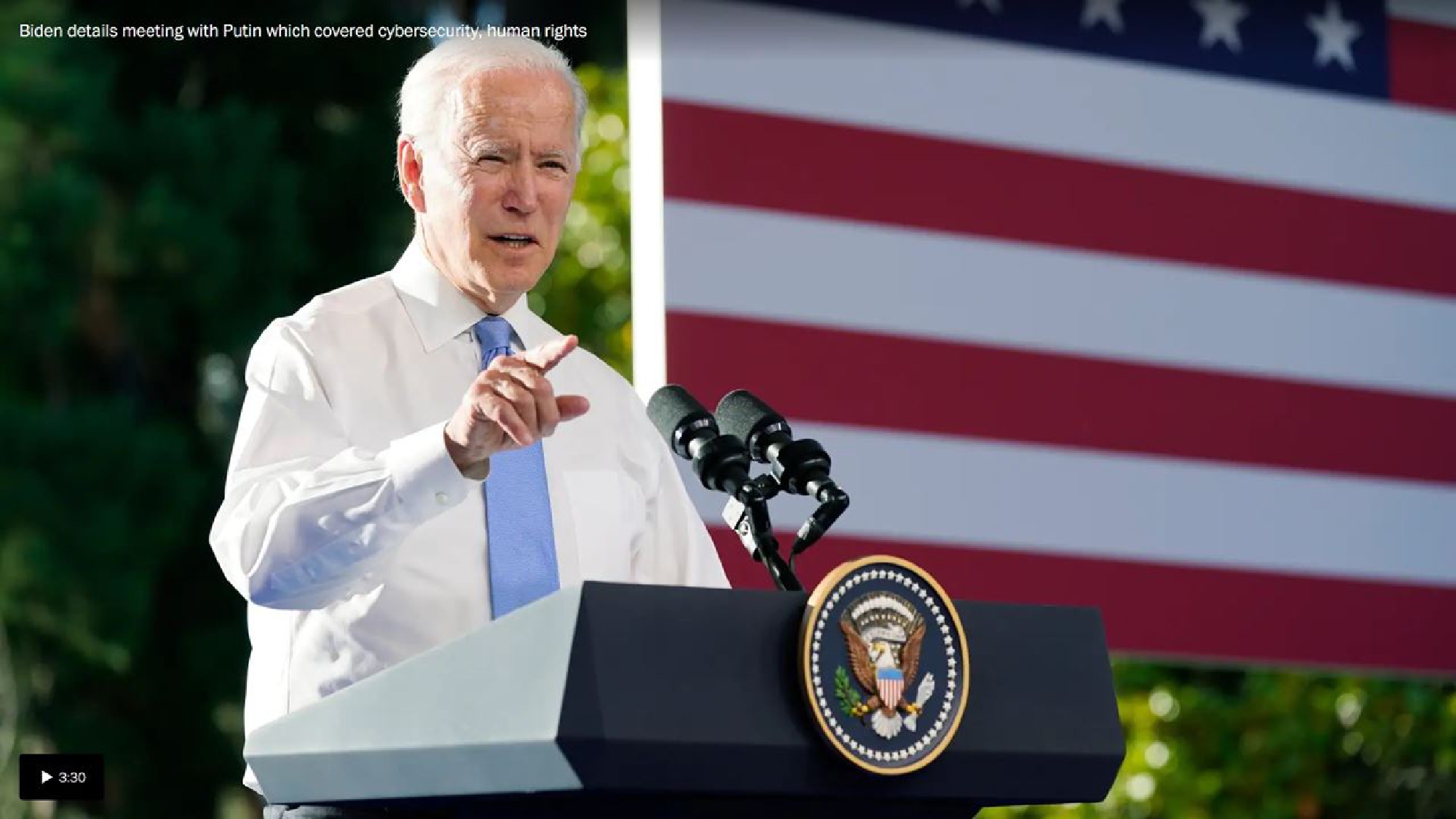
Three years after President Donald Trump and Russian President Vladimir Putin held a summit that made administration officials cringe – as Trump continued to downplay Russias 2016 election interference and otherwise kept his own government out of the loop – Putin and President Joe Biden held their own summit Wednesday in Geneva.

4 takeaways from the Biden-Putin summit

Unlike 2018, the two men did not appear next to each other at a news conference, instead holding separate ones, with Putin going first.

Here are a few takeaways.

– – –

1. A contrast to Trump, while avoiding direct threats

For basically the entirety of the Trump administration, Trump bent over backward to see the best in Putin. Perhaps the most significant example was Trump signaling he believed Putin’s denials about 2016 interference. “I have President Putin; he just said it’s not Russia,” Trump said, as he stood next to Putin in Helsinki. “I don’t see any reason why it would be.”

Trump claimed the next day that he had misspoken and that he meant to say, “I don’t see any reason why it wouldn’t be.” But he had repeatedly cast doubt on Russia’s culpability, and his course reversal was highly suspect.

Biden, perhaps not surprisingly, sought to strike a different tone. It was one that, somewhat similar to Trump’s, emphasized the importance of working together rather than pitching Russia as an irredeemable adversary. But unlike Trump’s, it also sought repeatedly to emphasize human rights and foreign interference like cyberattacks – albeit with relatively little specificity about consequences.

“Human rights is going to always be on the table,” Biden said. “It’s not about just going after Russia when they violate human rights. It’s about who we are. How could I be the president of the United States of America and not speak out against the violation of human rights?”

Biden pitched the consequences as being less about the United States, and more about Russia sacrificing its role in the world.

“Understand when you run a country that does not abide by international norms, and yet you need those international norms to be somehow managed so that you can participate in the benefits that flow from them, it hurts you,” he said.

Biden said he made no direct threats to Putin in their conversations, but he did talk generally about consequences if Russian opposition leader Alexei Navalny died in prison. Those consequences generally involved Russia marginalizing itself with the international community.

“I made it clear to him that I believe the consequences of that would be devastating for Russia,” Biden said.

Biden also declined to lay out specifics when it came to penalties for Russia engaging in another cyber attack on infrastructure, similar to the Colonial Pipeline.

“I pointed out to him, we have significant cyber capability. He knows it — he doesn’t know exactly what it is, but it’s significant. If in fact, they violate these basic norms, we will respond. Cyber. He knows.”

Biden acknowledged that his broad comments about human rights – rather than more directly calling out Russia and making threats – might not satisfy everyone.

“That’s not a satisfying answer: ‘Biden said he’d invade Russia’ — you know, by the way, that was a joke. That’s not true,” Biden said. “But my generic point is it is more complicated than that.”

– – –

A terse exchange

By the end of the news conference, Biden engaged in a terse exchange with a CNN reporter who pressed him, as he walked away, on whether he was tough enough with Putin. The reporter asked “Why are you so confident he’ll change his behavior, Mr. President?”

Biden bristled and disputed the premise.

“I’m not confident,” Biden said, turning back toward the gathered press. “I said what will change their behavior is if the rest of the world reacts to them and it diminishes their standing in the world. I’m not confident of anything. I’m just stating the facts.”

Biden indeed hadn’t necessarily predicted success, instead saying, “We’ll find out within the next six months to a year whether or not we actually have a strategic dialogue that matters.”

The reporter noted that Putin had earlier continued to dispute Russia’s role in cyberattacks and human rights abuses, including on Navalny, even after meeting with Biden.

“If you don’t understand that, you’re in the wrong business,” Biden shot back.

Biden later made a point to apologize, telling reporters before boarding a flight home, “I owe my last questioner an apology. I shouldn’t have been such a wise guy with the last answer I gave.”

– – –

4 takeaways from the Biden-Putin summit

https://www.washingtonpost.com/video/c/embed/a414336a-103f-4985-8da3-f69ccaba6cf7?ptvads=block&playthrough=false

3. Nobody’s talking about a Cold War

Biden repeatedly downplayed the idea of a new “Cold War” between the United States and Russia, saying this wasn’t his or – he believed – Putin’s goal.

“I think that the last thing he wants now is a Cold War,” Biden said. “But I’m not quoting him, which I don’t think is appropriate.”

Biden again emphasized diplomacy rather than conflict.

“This is not a kumbaya moment, as we used to say back in the ’60s in the United States – like, let’s hug, love each other,” Biden said, while adding of Putin not wanting another Cold War: “I truly believe he thinks that. He understands that.”

– – –

4. Biden on Putin’s ‘ridiculous’ use of Jan. 6 to deflect

This was a key point of contention between the two news conferences.

The pro-Trump mob attack on the Capitol on Jan. 6 was hardly a proud moment for the United States. Rioters violently trying to overturn an election was the kind of scene you see in other, less-developed countries, but Americans liked to think it wouldn’t ever happen here.

Putin on Wednesday sought to again use the attack and its aftermath to call into question the United States’ moral high ground. He used it to deflect from questions about Russia’s human rights record, including the poisoning of Navalny.

“As for who is killing whom or are throwing whom in jail, people came to the U.S. Congress with political demands,” Putin said. “Over 400 people had criminal charges placed on them. They face prison sentences. . . . They’re being called domestic terrorists.”

Putin specifically cited Ashli Babbitt, a rioter who was fatally shot by police while trying to break into an area close to lawmakers.

“One person was simply shot on the spot by the police, although they were not threatening the police with any weapons. In many countries, the same thing happens that happens in our country,” Putin said. “I’d like to stress once more that we sympathize with what happened in the United States, but we have no desire to allow the same thing to happen in our country.”

Putin’s comments come after Russian Foreign Minister Sergei Lavrov recently accused the United States of “persecuting” the Jan. 6 Capitol rioters. Putin later echoed those comments, speaking of the Capitol riots as if they merely had “political requests” and likening them to political prisoners by saying they were being “detained.”

Biden later called it a “ridiculous comparison.”

ADVERTISEMENT

“It’s one thing for literally criminals to break through cordon, go into the Capitol, kill a police officer and be held accountable,” Biden said, contrasting that to “people objectively marching on the capital and saying, ‘You are not allowing me to speak freely. You’re not allowing me to do A, B, C, D.’ “

Published : June 17, 2021

By : The Washington Post · Aaron Blake

Chinas migrating elephants travel slightly northwest about 500 km from home #SootinClaimon.Com

#SootinClaimon.Com : ขอบคุณแหล่งข้อมูล : หนังสือพิมพ์ The Nation.

https://www.nationthailand.com/international/40002089

Chinas migrating elephants travel slightly northwest about 500 km from home


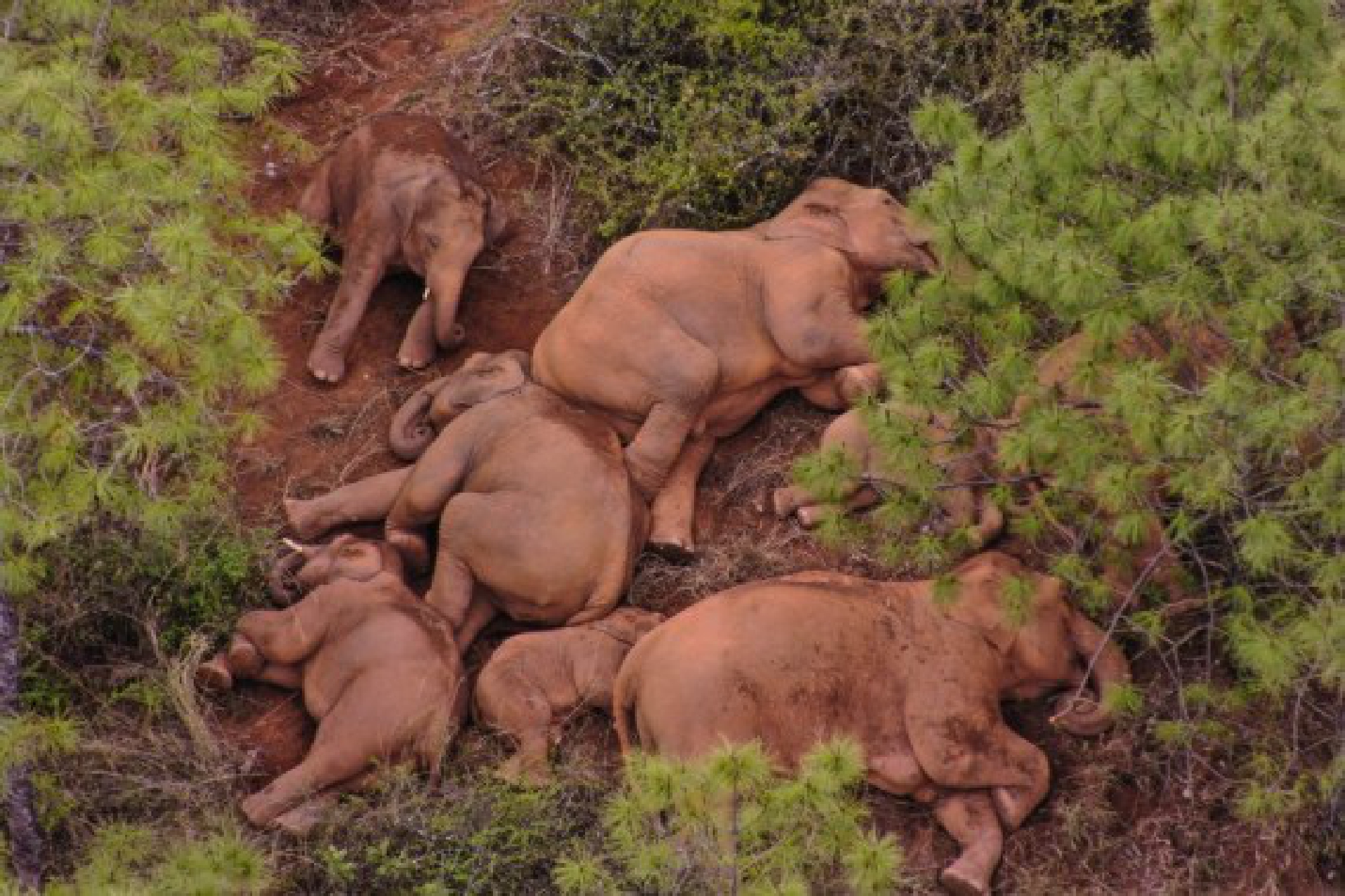
The wandering wild Aelephant herd that has caught global attention has headed 1.3 km northwest in Shijie Township in the city of Yuxi, in southwest Chinas Yunnan Province. and all the 15 elephants are safe and sound

Chinas migrating elephants travel slightly northwest about 500 km from home

Amale elephant, which strayed 10 days ago, is now about 19.1 km away from the herd, and all the 15 elephants are safe and sound, according to the headquarters in charge of monitoring their migration.

The animals have entered forests after taking food from farmland, complicating the efforts to guide and monitor them and take safety precautions.

The herd traveled about 500 km from their forest home in the Xishuangbanna Dai Autonomous Prefecture before reaching Kunming, the provincial capital, late on June 2.

For over a month, authorities have sent police to escort the herd, evacuated roads to facilitate their passage, and used food to distract them from entering densely populated areas.

Asian elephants, which are mostly found in Yunnan, are under A-level state protection in China. Thanks to enhanced protection efforts, the wild elephant population in the province has grown to about 300, up from 193 in the 1980s.

Published : June 16, 2021

By : Xinhua

EU, U.S. agree to five-year truce in Boeing-Airbus trade dispute #SootinClaimon.Com

#SootinClaimon.Com : ขอบคุณแหล่งข้อมูล : หนังสือพิมพ์ The Nation.

https://www.nationthailand.com/international/40002078

EU, U.S. agree to five-year truce in Boeing-Airbus trade dispute


The U.S. and the European Union agreed to extend a tariff truce for five years, parking a dispute over aircraft subsidies given to Airbus and Boeing that saw the allies impose duties on $11.5 billion of each others exports.

EU, U.S. agree to five-year truce in Boeing-Airbus trade dispute

U.S. Trade Representative Katherine Tai, speaking to reporters in Brussels on Tuesday, said the tariffs would remain suspended as long as the terms of the agreement are upheld and while they work on addressing issues including outstanding subsidies already paid.

The accord turns the page on a key conflict in former President Donald Trump’s trade war and sets the stage for a new era of transatlantic cooperation over state aid at a time when China is vying to displace the Boeing-Airbus civil aircraft duopoly.

“Today’s announcement resolves a long standing trade irritant in the U.S.-EU relationship,” Tai said. “We have also with the EU agreed to clear statements on acceptable support for large civil aircraft producers and a cooperative process to address that support between our two parties.”

The European Commission spent Monday night discussing the accord with member states to get the deal over the line before an EU-U.S. summit in Brussels with President Joe Biden, according to EU officials familiar with the deliberations. The allies will also vow to end a separate dispute over steel and aluminum, in a sign of progress in resetting the relationship.

Under the Airbus-Boeing deal, all future passenger aircraft will be required to be developed without subsidies, the officials said.

The agreement was driven, in part, by a growing awareness among policymakers in Brussels and Washington that China’s state-sponsored aerospace manufacturer Commercial Aircraft Corp. of China, or Comac, is on track to become a legitimate rival in global planemaking by the end of the decade.

“This really opens a new chapter in our relationship because we move from litigation to cooperation on aircraft,” European Commission President Ursula von der Leyen said in a statement. “Today we have delivered.”

Airbus and Boeing declined to comment.

Shares of Airbus, based in Toulouse, France, advanced 0.9% as of 12:43 p.m. in Paris, bringing this year’s gain to 27%. Chicago-based Boeing shares were up 0.7% ahead of regular U.S. trading. They have risen 15% year-to-date.

The feud dates back to 2004, when the U.S. lodged a legal case at the World Trade Organization against the EU over member-state support to Airbus for commercial aircraft development. A parallel case opened by the bloc argued that Boeing benefited from U.S. subsidies as well as space and military contracts, which defrayed the cost of civilian aircraft development.

In 2019, the World Trade Organization authorized the U.S. to level tariffs against $7.5 billion of EU exports annually over government support for Airbus. The EU then won permission to hit back with levies on $4 billion of U.S. goods.

While the dispute escalated during the Trump administration, the levies, which extend beyond aircraft parts to items like tractors, wine and cheese, were suspended by both sides in March as negotiators worked toward an agreement. The U.K. unilaterally suspended its tariffs with the U.S. in December as it broke from the EU.

Airbus has likely reimbursed or moved to commercial rates all launch-related financing that was deemed illegal, and any further adaptations required are likely to be immaterial, said Sandy Morris, an analyst with Jefferies in London.

“I understand why the U.S. might have felt aggrieved in the first place,” Morris said. But he said that it has long looked like there were mutual infractions, and “seeking to bolt the stable door long after the Airbus horse had left was futile.”

The EU and U.S. will also commit at the summit to remove tariffs related to a steel and aluminum dispute, according to a draft of the meeting’s conclusions. In 2018, the U.S. imposed levies on metals exports from Europe on national-security grounds.

This one is trickier and there has been back-and-forth over the exact language in the drafts of the joint communique, but both sides seem to agree on pushing for a deadline by the end of the year, said the officials, who asked not to be identified because the talks are private.

The EU retaliated against the U.S. steel and aluminum measures by targeting 2.8 billion euros ($3.4 billion) of American imports with tariffs on a range of big-brand products, including Harley-Davidson Inc. motorcycles, Levi Strauss & Co. jeans and bourbon whiskey.

ADVERTISEMENT

Published : June 16, 2021

By : Syndication Washington Post, Bloomberg · Alberto Nardelli, Nikos Chrysoloras, Jennifer Jacobs