The Tokyo Organizing Committee of the Olympic and Paralympic Games announced Thursday that it had reached a deal with all 68 domestic sponsors to extend their contracts for a year, through 2021.
The corporate sponsors have plans to make additional contributions of about 22 billion yen, which is set to be incorporated into the organizing committee’s revenue.
Since the decision to postpone the Tokyo Games to summer 2021 was made in March, executive members of the organizing committee, including President Yoshiro Mori, visited each of these companies to request an extension of their sponsorship contracts.
“We’ve received word [from the companies] that they’d like to support us as much as possible to ensure that the Games can be held,” Mori said at a news conference Thursday. “We can’t thank them enough for their support.”
Despite the possibility that the novel coronavirus could cause a deterioration in business performance, Mori said, “I believe that they will continue to cooperate with us as they recognize the significance in the Games being held.”
WASHINGTON – Relations between Washington and Moscow have gotten so bad that the United States cannot get visas for American technicians to repair malfunctioning elevators and fire alarms at diplomatic missions.
The U.S. Embassy in Moscow is understaffed and overstretched as every diplomatic visa requires drawn-out negotiations that get snagged over minuscule matters. Senior diplomats are being tasked with basic duties including shoveling snow and mixing disinfectants to supplement depleted cleaning crews battling the coronavirus pandemic.
Even as President Donald Trump has refrained from directly criticizing Russian President Vladimir Putin, the State Department has been outspoken in condemning Russian transgressions and pressuring the government to change its behavior and rhetoric.
That has contributed to a “visa impasse,” as U.S. officials delicately phrase it, that has been growing since 2014, when the United States imposed sanctions on Russia over its invasion of Crimea. Since then, the diplomatic standoff has ballooned into a tit-for-tat visa war, with both sides expelling diplomats and closing each other’s consulates during rows over Russia’s interference in the 2016 U.S. election and Moscow’s poisoning of a former Russian spy in Britain.
After years without a solution, U.S. officials grew alarmed about the potential for a catastrophic fire or accident at the missions and their ability to keep the embassy in Moscow functioning. So in early December, the State Department notified Congress that it would permanently close the consulate in Vladivostok near the Pacific and suspend operations at the consulate in Yekaterinburg in Russia’s industrial heartland.
“We had to decide structurally how we can address this,” said a senior U.S. official, speaking on the condition of anonymity to talk about the delicate, tangled relationship. “We’re running out of Band-Aids to sustain our presence in those locations.”
The two consulates already had been effectively shuttered since March because of the pandemic. News that they would stay out of operation coincided with revelations that Russian hackers had penetrated the computers of U.S. government agencies, including the Departments of State and Homeland Security.
U.S. officials insist that the timing was coincidental and that the consulate decision was based solely on how best to keep the embassy in Moscow functioning with sufficient staff numbers.
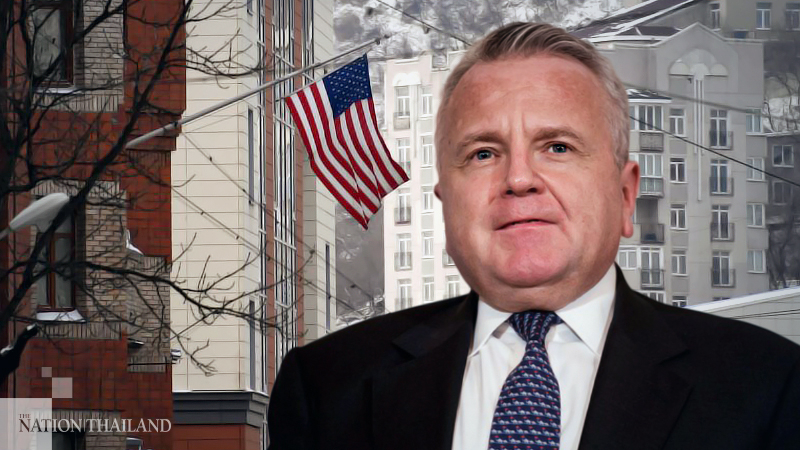
“We took the decision we took because it’s part of . . . broader problems in a bilateral diplomatic relationship between the United States and Russia, which have extended to a so-called visa impasse,” John Sullivan, the U.S. ambassador to Moscow, said in an interview this week with Radio Free Europe/Radio Liberty. “We can’t get visas for U.S. personnel to come to work at our consulates in Yekaterinburg [and] Vladivostok, or the embassy in Moscow.”
“And without those personnel who are able to perform essential functions for health and safety risks, the risk is increasing that there could be a fire or other safety issues,” he added.
The other U.S. official said the consulate closures are not meant to send Moscow a message on any foreign policy issue other than the visas. “It’s not about Russian behavior, whether in cyberspace or elections or aggression abroad,” the official said.
But the decision effectively is a recognition that the U.S. relationship with Russia is unlikely to improve anytime soon, even after Joe Biden assumes the presidency.
“We are going from bad to worse,” Deputy Foreign Minister Sergei Ryabkov said in an interview Wednesday with the Interfax news agency. “This was very typical for the past four years, and so far there is no feeling that this trend has exhausted itself.”
Ryabkov said he doubted tensions would ease in a Biden administration, which he said would be stocked with foreign policy experts who harbor antipathy to Russia.
“It would be strange to expect good things from people, many of whom made their careers on Russophobia and throwing mud at my country,” he said.
The visa deadlock leaves the embassy in Moscow as the only U.S. diplomatic outpost in Russia, a vast country that encompasses 11 time zones. That complicates matters for Russians seeking visas to visit the United States, though they have dwindled with the pandemic. Before the coronavirus stopped most international travel, the wait for a U.S. visa in Moscow was almost a year, compared with a few months in Vladivostok and Yekaterinburg.
The pandemic also blocks most remaining opportunities for U.S. diplomats to connect with ordinary Russians and local government officials. Those contacts already were curtailed by the Russians, who had ordered the closure of American “corners” established in Russian libraries, banished U.S. exchange programs as undesirable and prohibited U.S. diplomats from speaking at universities.
The Russians have rejected U.S. requests to move to new buildings over the past year.
Under caps established under the retaliatory punishments, Russia and the United States are allowed to staff their embassies and consulates with 455 people, including local hires. The Russians have almost 430 people in their U.S. missions, while the United States is down to about 320.
Visas are occasionally granted when diplomats are rotated out, though the Russians have imposed limitations, such as insisting a woman can be replaced only by another woman, and a man with a man.
Some former U.S. envoys to Moscow consider the closures counterproductive.
“I cannot understand how this is anything but against the interests of the United States,” said James Collins, who as U.S. ambassador to Moscow oversaw the opening of the consulate in Vladivostok in 1992.
“It was in the American interest to get to know and establish relations with the Russian government beyond the Kremlin. It’s just as important today as it ever was,” he said.
Mike McFaul, a U.S. ambassador to Russia during the Obama administration, said his conversations with students and business leaders in Vladivostok and Yekaterinburg gave him valuable insights into popular sentiment.
“This is a self-inflicted wound,” he said of the consulate closures. “Russia is not kicking us out. We are unilaterally deciding we don’t want be there. It’s a giant mistake. I hope Biden reverses it.”
State Department officials say they have reached out to former ambassadors, explaining that conditions in recent years have made interactions with Russian citizens virtually impossible. About eight diplomats already have been transferred from Vladivostok to Moscow, but several remain in Yekaterinburg.
They have told the Russians that the United States will not order the closure of Russian consulates in Houston and New York, at least for now. They would like their action to spur negotiations that reverse the impasse.
“I hope this is the start of a path forward and the Russians will think about it, and we’ll be able to get to a more stable footing for the bilateral situation,” the U.S. official said. “But that’s going to require visas for us to get our mission-essential personnel on the ground.”
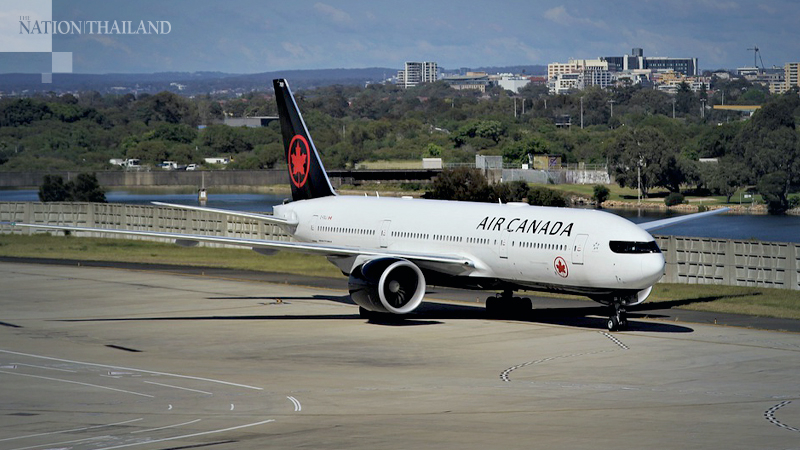
An Air Canada Boeing 737-8 Max on a test flight had engine problems that forced the crew to shut down one of the plane’s engines and make an emergency landing in Tucson, Ariz., Aviation24.be reported.
Shortly after takeoff, the crew received an indication of hydraulic low pressure in the left engine, the website said. The three-member crew of the empty plane initially decided to continue the flight to Montreal, but it shut down the engine and diverted to Tucson after receiving an indication of a fuel imbalance from the left wing, Aviation24.be said.
The incident took place Tuesday, according to the report.
The U.S. Federal Aviation Administration permitted the 737 Max to return to the skies in November, after a 20-month hiatus prompted by two fatal crashes. Boeing is seeking approval from other regulators around the world to relaunch the 737 Max, the manufacturer’s best-selling model.
An earlier version of this obituary misstated the date of the “Show Boat” revival in which Rebecca Luker played Magnolia and for which she received her first Tony nomination. The revival was staged in 1994, not 2004.
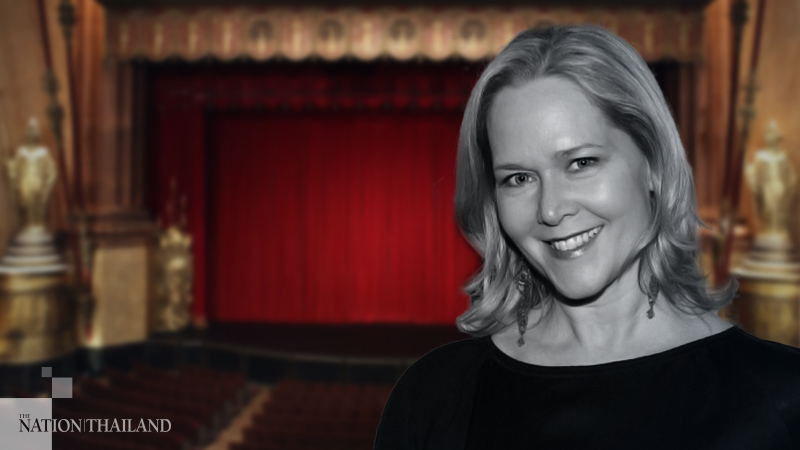
Rebecca Luker, a Broadway actress and singer who was nominated for three Tony Awards and starred in several classic musicals, including “Show Boat,” “The Sound of Music” and “The Music Man,” died Dec. 23 at a Manhattan hospital. She was 59.
Her death was announced in a statement by her husband, actor Danny Burstein. The cause was amyotrophic lateral sclerosis (ALS), a degenerative neurological disease that leads to paralysis.
Luker was one of the leading figures of musical theater for 30 years, appearing in nine Broadway productions and many others off-Broadway and on stages across the country. Known for her clear, crystalline soprano voice, she recorded several albums and was a popular cabaret performer.
She had starring roles in “The Phantom of the Opera,” Maury Yeston’s “Nine” and musicals by Stephen Sondheim, but she gained particular acclaim for bringing new life to beloved musicals from Broadway’s past.
She received Tony Award nominations for her performances in revivals of “Show Boat” and “The Music Man,” and her third nomination came for a role in “Mary Poppins,” a 2006 musical based on the 1964 movie. Luker also starred as Maria in a 1998 revival of Rodgers and Hammerstein’s “The Sound of Music,” which ran for more than a year.
“During her audition, Rebecca brought such a freshness to the music, as if I had never heard the score before,” Susan H. Schulman, who directed Luker in “The Sound of Music,” told Playbill in 1998. “Little hairs stood up on the back of my neck. You don’t expect songs that you are so familiar with to take you by surprise that way. She has the most glorious voice. The instrument is so pure.”
“The Sound of Music” has never impressed the critics – only the audiences that flock to see it and memorize the words of every song. But even some cynical Broadway scribes found something to like in Luker’s portrayal of Maria, a high-spirited nun – “Unpredictable as weather / She’s as flighty as a feather” – who becomes governess to the seven children of an Austrian nobleman in the 1930s as Nazis take over the country. (The role was first performed on Broadway in 1959 by Mary Martin, then on film in 1965 by Julie Andrews.)
Hartford Courant theater critic Malcolm Johnson called Luker’s performance “true and wonderful, never too sweet . . . a Maria who far surpasses Mary Martin, and perhaps even Julie Andrews.”
Luker received her first Tony nomination for a 1994 revival of Jerome Kern and Oscar Hammerstein II’s “Show Boat,” which was first presented on Broadway in 1927. She played Magnolia, an innocent girl who falls for a shady riverboat gambler named Gaylord Ravenal. Her songs included “Make Believe” and “Can’t Help Lovin’ Dat Man.”
Luker received her first Tony nomination for a 1994 revival of Jerome Kern and Oscar Hammerstein II’s “Show Boat,” which was first presented on Broadway in 1927. She played Magnolia, an innocent girl who falls for a shady riverboat gambler named Gaylord Ravenal. Her songs included “Make Believe” and “Can’t Help Lovin’ Dat Man.”
“Rebecca is a very truthful actor,” Mark Jacoby, who played Ravenal in that production, told the Raleigh News & Observer in 2016. “By that I mean that she doesn’t play the character, she inhabits the character . . . And what a great singer. I have not heard another voice like hers on Broadway in my lifetime.”
Luker was nominated again for a 2000 revival of Meredith Willson’s “The Music Man,” for playing Marian (the librarian), a role first performed on Broadway by Barbara Cook and later in a 1962 movie by Shirley Jones. In “Mary Poppins,” for which she received a Tony nomination in 2007, Luker played Winifred Banks, the mother of two children under the care of Mary Poppins, their nanny. She appeared in the musical for more than three years.
Luker made her Broadway debut in Andrew Lloyd Webber’s “The Phantom of the Opera” in 1988, eventually taking on the lead role, and also was in “The Secret Garden” (1991-93), “Nine” (2003), “Rodgers & Hammerstein’s Cinderella” (2013-15) and “Fun Home” (2015-16).
Elsewhere, she appeared in the 2014 world premiere at the Kennedy Center of “Little Dancer,” about a teenage dancer who inspired painter Edgar Degas, and in other productions in Washington and California. Seeking to expand her acting roles beyond those of ingénues, Luker had parts in several television series, including “NCIS: New Orleans,” “Law and Order: SVU” and “Boardwalk Empire,” and was in several films. She last performed onstage in a 2019 Kennedy Center production of “Footloose.”
Luker often appeared in concerts with orchestras and in intimate cabaret settings, singing show tunes. She “lends even the most anecdotal lyrics a gravitas that keeps you hanging on every word,” critic Stephen Holden wrote in the New York Times in 2005.
“If you’ve been wondering who, if anyone, might be the heir to the great Barbara Cook, Luker, who also comes from the South . . . and also played Marian the librarian (in the revival of “The Music Man”) is the one.”
Rebecca Joan Luker was born April 17, 1961, in Birmingham, Ala., and grew up in the small Alabama town of Helena. Her father was a construction worker, her mother a treasurer at a high school.
Luker seldom saw live theater as a child, but “I sang in church a lot and every singing group I could get into,” she told the Los Angeles Times in 2003. She was first runner-up for Junior Miss Alabama in 1979. She graduated in 1984 from the University of Montevallo in Alabama, then moved to New York, finding work in the theater almost immediately.
Her first marriage, to actor Gregory Jbara, ended in divorce. In 2000, she married Danny Burstein, a Broadway performer who has been nominated for seven Tony Awards.
In addition to her husband, of New York, survivors include her mother, Martha Hales, and stepfather, Lamar Hales; two stepsons; a brother and sister.
In February, Luker revealed that she had been diagnosed in 2019 with ALS, sometimes called Lou Gehrig’s disease. A month later, her husband became ill with covid-19, the disease caused by the coronavirus, and was hospitalized for a week.
Luker later contracted the disease herself but recovered. Burstein published two essays in the Hollywood Reporter about caring for his ailing wife while trying to recover from covid-19.
“Will she ever walk again?” Burstein wrote in August. “Her shoulders went, seemingly overnight. And now her hands.”
Two months earlier, Luker was still strong enough to sing three songs from her wheelchair during a fundraiser for ALS research broadcast over Zoom.
“Well, physically, it helps my lungs,” she told the Times in June. “But more than that, when I sing, I think it heals me. It helps me feel like I’m still a part of something, like I’m doing something that’s worthwhile.”

 เกิดเหตุระเบิดครั้งใหญ่ในเมืองแนชวิลล์ ช่วงเช้าวันคริสต์มาส เจ้าหน้าที่เชื่อมีผู้ไม่หวังดีจงใจสร้างสถานการณ์

 ศูนย์ป้องกันและควบคุมโรคแห่งแอฟริกาเผยพบเชื้อไวรัสสายพันธุ์ใหม่อีกตัวที่ไนจีเรีย
 กระทรวงสาธารณสุขฝรั่งเศสเผยพบผู้ติดเชื้อไวรัสโคโรนาสายพันธุ์ใหม่เป็นรายแรก
 เรือดำน้ำเป็นเรื่องจำเป็นเร่งด่วนสำหรับกองทัพเมียนมา เพราะเพื่อนบ้านมีกันหมดแล้ว
 บิ๊กกลาโหมประชุมเครียดเกี่ยวกับความเป็นไปได้ที่ทรัมป์จะประกาศกฎอัยการศึกในนาทีสุดท้ายเพื่อขวางไม่ให้ โจ ไบเดน นั่งเก้าอี้ผู้นำ
 ไฟเซอร์หุบยิ้มไม่อยู่เมื่อเด็ก 6 ขวบขอวัคซีนไปขั้วโลกเหนือเพื่อให้ซานตาและเหล่าเอลฟ์ด้วย