By Syndication Washington Post, Bloomberg · Emily Ashton, Corinne Gretler
Britain’s National Health Service launched what it has called the biggest immunization campaign in its history, starting covid vaccinations across the country.
People over 80 are at the front of the line for the shot made by Pfizer Inc. and BioNTech SE on Tuesday, with tens of thousands expected to get vaccinated in the coming days. The U.K. is the first western nation to begin its program, having approved the jab last week.
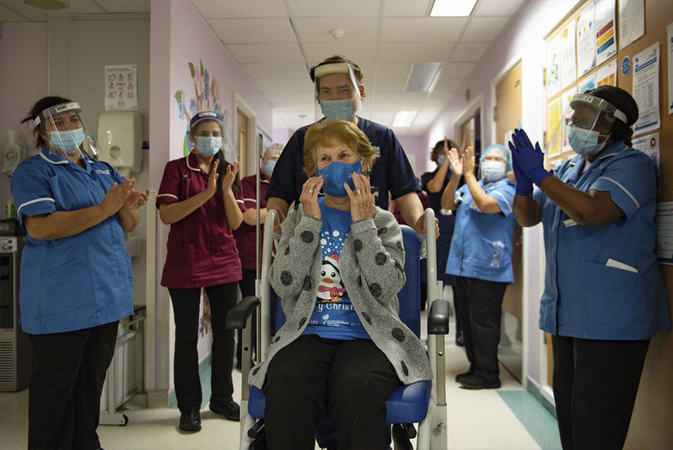
Margaret Keenan, who’s due to turn 91 next week, was the first person to get the vaccine at about 6:30 a.m., according to a statement. Receiving a shot at a hospital in Coventry was “the best early birthday present I could wish for,” Keenan said, because it meant she’d be able to spend time with her family and friends in the new year after being on her own for most of 2020.
“At the moment I don’t know how I feel — just so strange and wonderful, really,” she told reporters. “This is for a good cause, so I’m so pleased to have it done.”
Prime Minister Boris Johnson hailed a “huge step forward” in the fight against the coronavirus, which has infected more than 1.7 million people and killed more than 61,000 people in Britain. The U.K.’s speedy clearance of the vaccine has drawn criticism from experts in the U.S. and Europe, though domestic regulators say they’ve put safety first.
The stakes are high for Johnson’s government after missteps earlier in its handling of the pandemic, with the U.K. recording Europe’s highest death toll from the virus and reeling from the economic fallout of repeated lockdowns. Now it faces the logistical challenge of rolling out the vaccine to a country of 67 million people, amid concern that end-of-year holidays could spur a new wave of infections.
“It’s important for people to understand that the virus is, alas, still rising in some parts of the country,” Johnson told television reporters. “We can’t afford to relax now.”
As the program ramps up in the weeks ahead, Britons should continue to follow the social distancing rules in their area, the prime minister said. Some 99% of England’s population are currently in the top two tiers of restrictions — with many regions forced to close pubs and restaurants — as the government attempts to curb the spread of the virus.
Fifty hospitals are initially taking part in the vaccination campaign and have started scheduling over-80s for shots and working with care-home providers to book their employees into vaccination clinics. Around 800,000 doses are expected to be available in the first week, with as many as 4 million available by the end of the year, according to NHS Providers, which represents hospitals.
Any appointments not used for these groups will be available for health-care workers at highest risk of serious illness from covid-19, NHS England said. All those vaccinated will need a second shot 21 days after the initial jab.
A number of community-based family doctors will start vaccinations next week, before mass vaccination centers — based in sporting venues and conference centers — are brought online when further supplies of the vaccine become available.
Despite surveys showing sizable portions of the population are skeptical about the benefits of a vaccine or worried about safety, there’s no need for concern, Johnson said.
“I would say to all those who are scared: Don’t be,” he said. “There is nothing to be nervous about.”
The U.K. has struck deals for 357 million vaccine doses from seven makers, including the Pfizer-BioNTech collaboration. It plans to combine that shot with one from AstraZeneca Plc and the University of Oxford in trials next year, according to the U.K. Vaccine Taskforce.
When asked what went through her mind when she found out she was going to be the first to get the Pfizer shot, Keenan said she “thought it was a joke.”
“I’m happy it’s happened, and hopefully it’ll help other people come along and do as I did, and try and do the best to get rid of this terrible thing,” she said.
covid blunders in Latin America sow fears of more mistakes on vaccines
InternationalDec 09. 2020Doctors and nurses work to resuscitate a patient in the covid-19 intensive care unit at the Emilio Ribas Institute of Infectious Disease hospital in Sao Paulo, Brazil, on Dec. 4, 2020. MUST CREDIT: Bloomberg photo by Jonne Roriz
By Syndication Washington Post, Bloomberg · Andrea Navarro, Julia Leite, Simone Preissler Iglesias
One afternoon a couple months ago, hijackers commandeered a truck just east of Mexico City and hauled off its cargo. It wasn’t cash or jewelry but doses of ordinary flu vaccine so scarce in Mexico this year that there’s a black market for it in what many worry is an omen for covid-19 vaccination.
In Brazil, the region’s other behemoth, President Jair Bolsonaro, who belittles masks, is vowing not to get a covid vaccine, causing health officials to worry that his loyal supporters might follow suit. In Bolivia, the government has approved ingesting chlorine dioxide — bleach — against the virus, widely considered useless and dangerous.
Arguably, no region in the world has been hit as hard by the virus as Latin America. At the best of times, its health systems are wobbly. This pandemic year, with Brazil registering the world’s second-highest covid death toll and Mexico the highest case-fatality ratio, they’re unraveling, aggravating rising inequality, crime, economic decline and public mistrust. With 8% of the globe’s population and 30% of its covid deaths, Latin America is facing the pandemic’s next phase — mass vaccination — with alarm.
“Vaccine distribution will be complicated in developed countries but in Latin America you have to add a lack of transparency, lack of governance and corruption,” said Sergio Litewka, director of global bioethics at the University of Miami. “Will the same people who were incapable of handling the pandemic be able to handle the vaccine?”
There are problems that will affect all countries. Pfizer Inc. just announced that supply chain snags will halve this month’s distribution from original plans. INTERPOL has issued a global alert saying organized crime networks are targeting covid-19 vaccines, both physically and online, around the globe.
But Latin America, apart from a couple countries, appears more vulnerable than other regions. The virus has set back decades of gains in democracy and equality, and nearly tripled the number facing food insecurity. Given how poorly the region has fared over the past nine months and the ultracold equipment needed to store and transport two of the proven vaccines, many of its health leaders expect it to lag behind, with the risk of more virus waves still ahead.
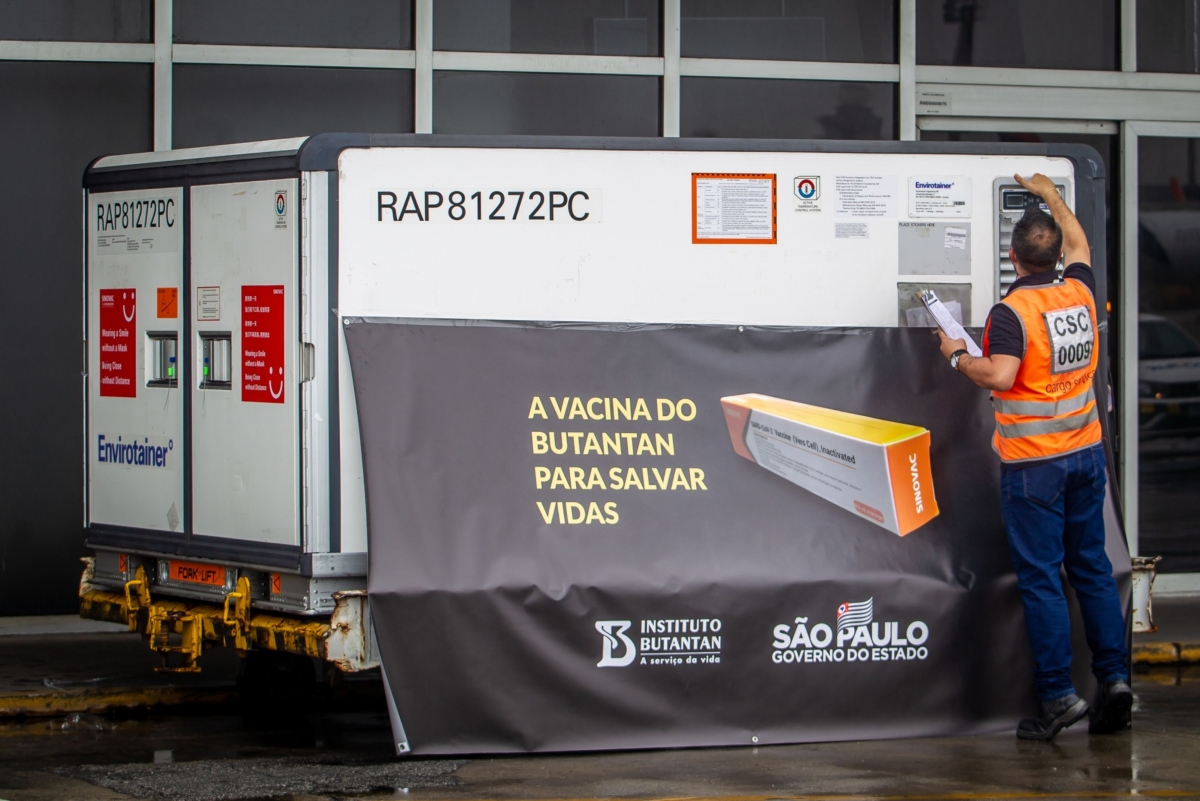
A worker checks a refrigerated container carrying Sinovac Biotech coronavirus vaccines at Guarulhos International Airport in Sao Paulo, Brazil, on Nov. 19, 2020. MUST CREDIT: Bloomberg photo by Jonne Roriz
Of the three vaccine front-runners, Pfizer’s and Moderna Inc.’s have shown 95% effectiveness but their costs and the temperature requirements might prove prohibitive. That leaves AstraZeneca Plc. The shot developed with the University of Oxford accounts for more than 40% of the supplies going to lower- and middle-income nations, based on deals tracked by London-based research firm Airfinity Ltd.
Health ministries across the region say they are gearing up with equipment, distribution points and plans to mobilize the military. Some have deals with big drug companies, most are part of Covax, a World Health Organization endeavor to help less well-off countries obtain vaccines speedily and at low prices.
But many in the know are worried.
Jorge Martin Rodriguez, professor of public health policy at Javeriana University in Bogota, says it will probably be 2022 or 2023 before Colombia is protected, something many don’t seem to realize.
“That hasn’t been mentioned much and it’s something to which we need to bring awareness,” Rodriguez said in a phone interview. “The risk will fall only when we reach herd immunity, ideally through vaccination.”
He estimates 45% of the population will acquire immunity through vaccine or infection next year, meaning restrictions will need to remain.
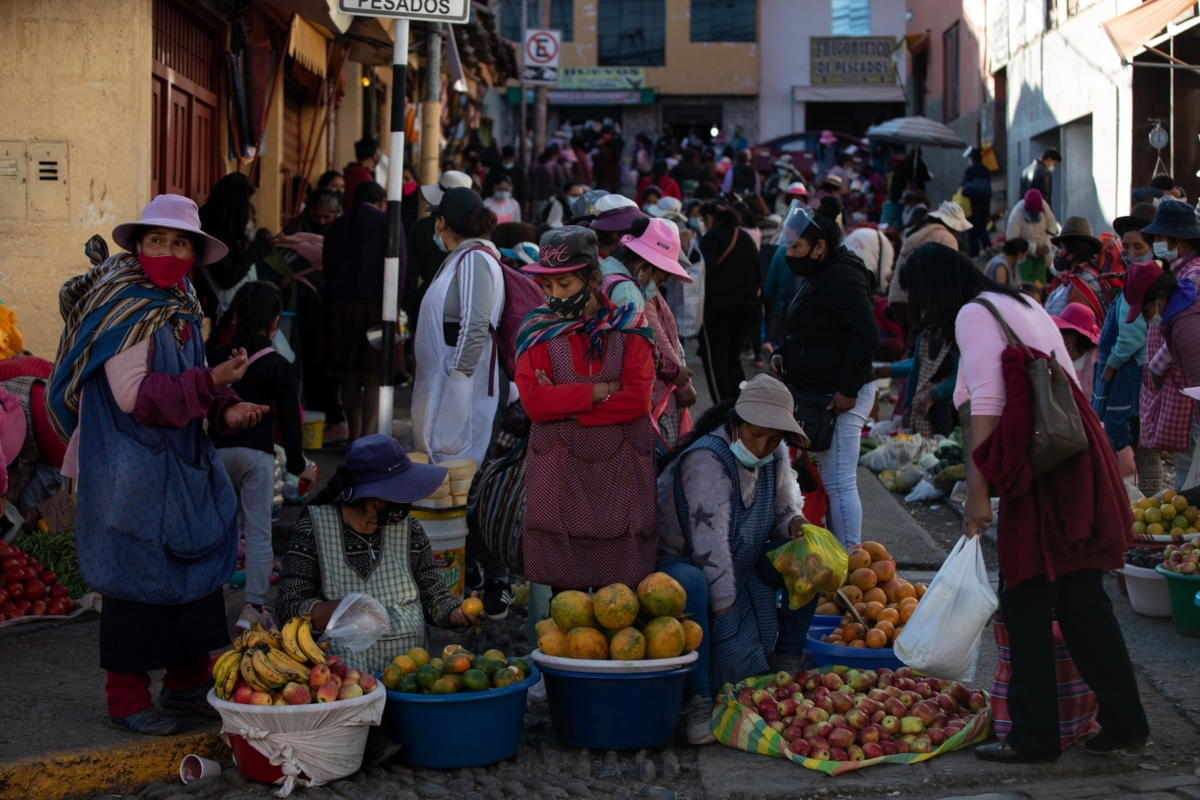
Vendors wear protective masks at a market in Cusco, Peru, on Oct. 13, 2020. MUST CREDIT: Bloomberg photo by Jonne Angela Ponce
Mexico and Argentina signed a deal in August with Astra through billionaire Carlos Slim’s foundation to fund the production of as many as 250 million doses. Brazil is hosting phase 3 trials for Pfizer, AstraZeneca, Sinovac and Janssen.
In theory, Brazil should fare better vaccinating its 210 million people than it did containing the disease. According to a dozen health experts consulted, its five-decade-old immunization program, which operates 35,000 outposts, is in sturdy shape. Even in this difficult year, the government reached 90% of the people it intended to with the annual flu shot.
Vice President Hamilton Mourao said on Monday the country should vaccinate 150 million people by the end of 2021. The government, which is mostly relying on the AstraZeneca shot, is now also in talks to purchase 70 million doses from Pfizer.
But recent mishaps are causing concern. Last month, it was reported that there were almost 7 million high-quality coronavirus tests sitting unused in a Sao Paulo airport, with most of them set to expire by January.
“I had no idea that was even there,” said Carlos Lula, health secretary of the northern state of Maranhao and president of Conass, the association of the country’s state secretaries. “We had been pleading with the health ministry for more tests.”
Like the U.S., Brazil is a federal system and the central government may or may not play a major role in health care. Governors implemented measures as they saw fit, asking the country’s supreme court to ensure Bolsonaro would not overrule them in his push to get people back to work. As a result, the virus behaved differently across the nation’s 27 states, a first wave that folded into a second in what some have described as a “tsunami” of infections.
Talks between the health ministry and states remain stalled and there are disagreements over whether to use the Chinese vaccine, CoronaVac, which Sao Paulo state says will begin to be deployed on Jan. 25. The expectation is that Brazil will need more than one vaccine to cover the whole country.
“We’ll have to get creative — applying vaccines at home, in drive-throughs, churches, stadiums,” said Juarez Cunha, the head of the Brazilian Society of Immunization. “We’ve done it before, and we’ll have to do it again.”
In next-door Argentina, Adolfo Rubinstein, a former health minister, said he doesn’t expect mass vaccination across Argentina until the second half of 2021 partly because of the need for the low-temperature freezers.
“There aren’t so many freezers available, particularly in the most distant, rural areas,” he said. Noting that winter, along with its spike in cases, will start in the Southern Hemisphere as vaccine distribution begins, he added, “It’s very likely that, starting in April, you’ll start to see a new outbreak of cases.”
AstraZeneca is among the pharma companies supplying Covax, the WHO effort, which will accelerate the production of Astra or Novavax shots for low- and middle-income nations, priced at a maximum of $3 per dose. Sanofi and partner GlaxoSmithKline have also signed on. As the shots become available, Covax will distribute them at the same rate until all countries have enough doses to cover 20% of their populations.
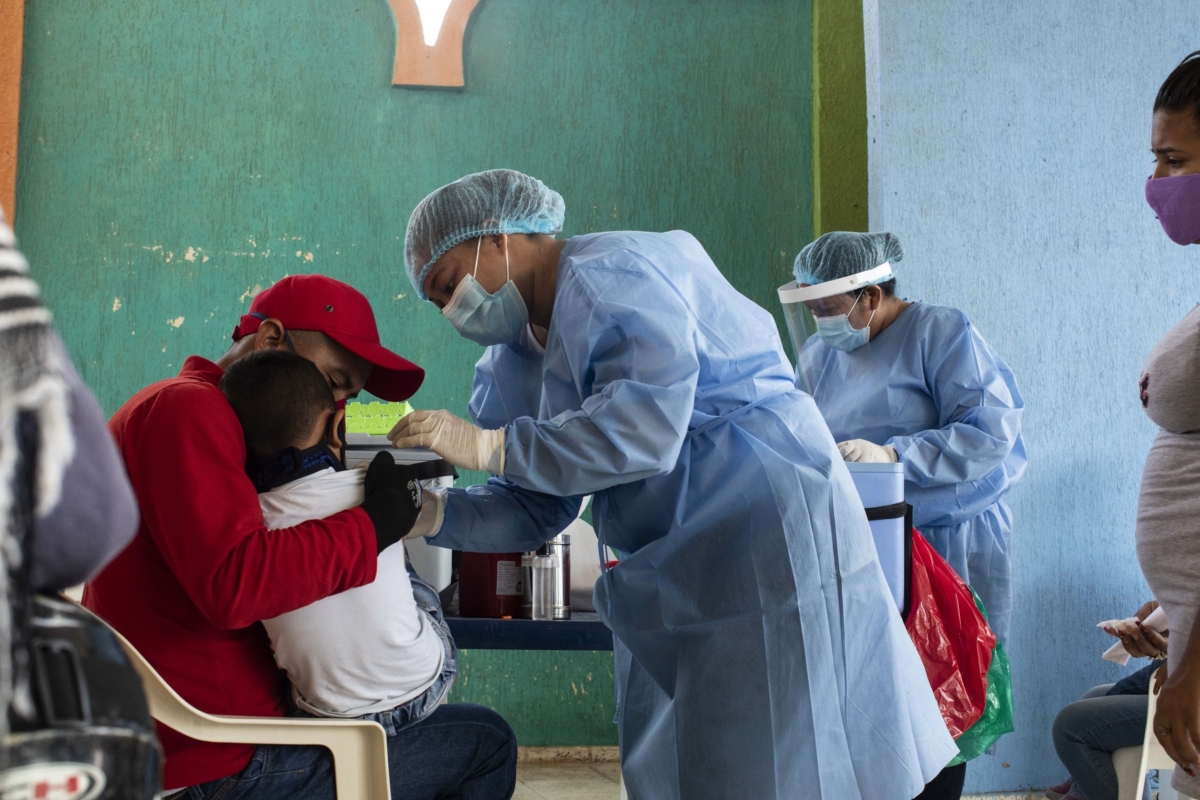
Health-care workers of the San Jose Hospital mobile unit treat Venezuelan migrants at a closed school in Maicao, La Guajira, Colombia, on Oct. 1, 2020. MUST CREDIT: Bloomberg photo by Nicolo Filippo Rosso
In Mexico, the government says more flu shots will be available in the coming weeks, blaming the slow deployment on one of the largest producers, Sanofi Pasteur Inc. Sanofi says its supply chain was affected by the pandemic.
“It’s been a complete failure, there are no flu vaccines,” said Francisco Moreno, head of internal medicine at ABC Medical Center in Mexico City. “Mexico is gearing up for another disaster because we couldn’t control the covid pandemic and we didn’t prepare the population against the flu.”
There are a couple bright spots in the region.
Uruguay has the lowest infection and mortality rates in South America thanks to one of the best health-care systems and widespread adoption of voluntary social distancing policies. The country of 3.5 million closed its borders early and plans to keep them closed over the Christmas tourism season. President Luis Lacalle Pou said the government expects to have a vaccine available as soon as April.
And in Chile, which had some tough covid months, Josefina Bascunan, head of academic, research and strategic alliances at Hospital del Trabajador in Santiago, said the flu vaccine went well this year and she believes the government can put in place a strong coronavirus vaccination strategy.
More typical however, is Peru, which has suffered mightily under covid despite stringent lockdown efforts and now looks to vaccination with concern.
Victor Zamora, a recent health minister, said congress – which recently impeached a president – hasn’t yet debated legislation to fast-track the approval for new vaccines. He added that 70,000 nurses and a great deal of equipment need to be mobilized.
“You can’t expect this fragmented, bureaucratic, slow, politicized state to guarantee you modern, executive logistics,” he said by telephone. “I’d prefer the private sector do it even if it costs more money. Just in masks and gowns in the public sector, there is enormous loss because of theft, corruption and mismanagement.”
“If the private sector can get a Coca-Cola to the remotest point on this map of Peru, and I can’t get there with a paracetamol, we’re doing something wrong and they’re doing something right.”
Merkel is losing her touch at the worst possible time
InternationalDec 09. 2020German Chancellor Angela Merkel, followed by Hungarian Prime Minister Viktor Orban, in Berlin on Feb. 10, 2020. MUST CREDIT: Bloomberg photo by Krisztian Bocsi
By Syndication Washington Post, Bloomberg · Arne Delfs
At a critical juncture for Germany and the European Union, Angela Merkel is faltering.
In the final months of her 16-year tenure, the German chancellor is within touching distance of a historic budget settlement that would underpin the recovery from the pandemic, bind the EU closer together and accelerate the shift to a carbon-neutral future. It’s threatening to slip through her fingers.
For years, Merkel has allowed rule-of-law violations in Hungary and Poland to fester. Now they could derail the $2.2 trillion (1.8 trillion-euro) budget and jointly funded recovery package that was supposed to be the centerpiece of Germany’s EU presidency. To make matters worse, the dispute with the U.K. over post-Brexit trade ties is overshadowing preparations for Thursday’s crucial EU summit and raising the risk of another economic shock.
With negotiations hamstrung by restrictions on face-to-face meetings, Merkel’s European allies are talking about pressing ahead with the recovery fund without the two eastern holdouts. That would open a breach at the heart of the EU, fuel concerns that more member states could ultimately follow Britain’s exit, and interrupt the reintegration of former Communist states that has been a leitmotif throughout the chancellor’s political career.
“We had imagined our presidency differently,” Merkel told European lawmakers last week. “The presidency is marked by the pandemic. That’s just the way it is, and you have to take things as they are.” Dissenters within her party say the chancellor should also shoulder some of the blame.
Inside the concrete edifice of Berlin’s chancellery, Merkel has been switching between crisis meetings over the mounting number of covid-19 cases in Germany and phone calls with EU leaders aimed at finding ways forward, according to an official, who asked not to be identified discussing internal deliberations.
Normally, her spokesman Steffen Seibert issues a statement after such conversations, but during the budget crisis, there’s been little communication — a sign of just how sensitive the issue has become. Even when French President Emmanuel Macron mentioned he’d be speaking to the chancellor on Monday, Seibert refused to comment.
In an effort to resolve the stalemate, Merkel is resorting to an old trick, said the official familiar with her thinking. She tries to get herself into the mind-set of her opponent to understand their weaknesses and find an opening for a compromise.
The threat of EU funds drying up is one obvious pressure point, but for Hungary’s Viktor Orban and his Polish counterpart Mateusz Morawiecki, there’s more at stake, including national identity and a cultural agenda that collides with EU principles. That’s tough for the notoriously pragmatic German leader to crack.
Making Merkel’s position more difficult is that she let Orban flout the rules for years without suffering any consequences, his party Fidesz even remained a member of the same European grouping as Merkel’s Christian Democrats. During the refugee crisis of 2015, which marked a watershed in Merkel’s relationship with German voters, Orban refused to take on Hungary’s allotment of migrants even when threatened with a cut in EU funding. And he ultimately suffered no repercussions.
This time it’s not just the EU’s moral authority at stake, this fight is about its economic and political future. And the chancellor’s normally unflappable demeanor is starting to show the strain.
Her frustration was evident when she addressed European parliamentarians last week on the results of the German presidency. She bemoaned her lack of progress and unusually complained about the demands put on her.
“There are those who tell me: don’t make a compromise here and don’t change a single comma there. And then the same people tell me: but please come back with a result,” the 66-year-old chancellor said. “Without compromise from all sides, this won’t work.”
Back home in Germany, some in her political movement are suggesting the chancellor carries some of the responsibility for her problems. In the Christian Social Union — the Bavarian sister party of Merkel’s Christian Democrats — many officials say she misjudged support for the recovery fund and put Germany into an untenable position, just like she did with her open-door refugee policy.
EU leaders should have known that the connection between the budget and democratic standards would provoke a hard confrontation, according to Alexander Dobrindt, leader of the CSU caucus in the Bundestag.
Her most prominent critic is Ralph Brinkhaus, who leads the CSU and Merkel’s Christian Democratic Union in Germany’s lower house. Brinkhaus spent political capital persuading conservatives in their party to support the EU’s controversial joint-debt plan only to see the agreement among leaders fall apart.
When the recovery fund was agreed in July, Merkel was also winning plaudits for the low rate of infection during the first wave of the coronavirus pandemic. But the country has been hit much harder during the fall and Merkel’s partial lockdown policy has come in for heavy criticism while failing to bring the virus under control.
That’s another point of friction for German conservatives — already on edge as they struggle to chart a path for the post-Merkel era. The country’s soft shutdown is costing the federal government at least 15 billion euros a month to support affected bars, gyms and cinemas.
At a meeting in November, state leaders rejected and openly criticized the chancellery’s push for harsher restrictions, including limiting kids to one playmate. By proposing measures that were too ambitious for the states to accept, Merkel wound up empty-handed, delaying a longer term strategy and leaving Germany most likely facing tighter curbs.
Tension in the ranks over the disjointed strategy erupted at a closed-door meeting of CDU leadership last week. Volker Bouffier — the state premier of Hesse, home of the Frankfurt financial center — shouted down Brinkhaus over his criticism of the lack of state financing for pandemic support.
“Let me make it clear we are no longer willing to watch your grandstanding,” he said, while Merkel sat quietly as the exchange unfolded, according to an official familiar with the meeting. A spokesman for Bouffier didn’t respond to a request for comment.
Her pending departure from the political scene after elections in the fall is also playing into her fading authority. Markus Soeder, the Bavarian premier who’s the front-runner to succeed her, has grabbed the coronavirus spotlight. He preempted harsher national rules by implementing a state of emergency starting Wednesday, including a strict curfew in hard-hit areas.
At a meeting with Merkel last week, which extended national curbs to Jan. 10, he slammed the current approach as too timid.
“The question is whether we can keep the country in this kind of half-sleep all the time, or whether we will have to think again at some point to take a very clear and consistent deeper approach in some places,” he said.
Merkel shot him an irritated look, but her own plans for tougher measures on a national level had been shot down by state premiers in November. They both knew she was powerless to change things.
Civil society activists say that women commonly face online violence in Asian countries but for many victims, fear and distrust make reporting these attacks to authorities “often the last resort,” a new UN Women study has found.
Countries should respond by strengthening prosecutions and sanctions against perpetrators and increasing efforts to correct the gender inequality and misogynistic norms in society that drive the violence, the report says.
The report — “Online Violence against Women in Asia” — focused on situations in India, Malaysia, Pakistan, the Philippines and Republic of Korea. It was funded by the Government of the Republic of Korea.
It is set to be released today at the Online Violence against Women in Asia Cyber Café event, organised as part of the United Nations Secretary-General’s annual 16 Days of Activism against Gender-based Violence (November 25 to December 10).
The report was done before the COVID-19 pandemic but is even more relevant now when lockdowns have pushed so much of communication, business and services online, possibly increasing the risk of online attacks against women.
The report says the violence includes digital voyeurism, morphing of women’s bodies into composite images, harassment of women over clothing and behaviour deemed “inappropriate,” dissemination of rape video footage, and live-streaming of child sexual abuse.
It says people with limited digital skills — mostly women and girls — are more at risk. Also at risk of sexual exploitation, it says, are children who are now spending more time online.
Civil society activists interviewed by the researchers said victims preferred to confide in friends, work colleagues and civil society organisations and “rarely or never” report attacks to the authorities.
“Fear of reprisals from perpetrators, lack of confidence in police, the high cost of civil legal action and a lack of confidence in the judicial process are significant barriers to complaining to authorities,” the report says.
The report says that according to activists, online violence against women “is a low priority for the police and prosecutors, and there is an unhealthy level of victim blaming.”
It further says specific legal provisions are needed to respond to online violence against women, including specialised courts and specially trained investigators and prosecutors.
Governments also need to do more to educate people about proper Internet etiquette, toxic online behaviour, and the prohibition of online violence against women, the report says.
“Online presence, an essential during the COVID-19 pandemic, is crucial for obtaining and maintaining a job, accessing information, exercising democratic rights, having a voice, getting an education and conducting commercial transactions,” said Sarah Knibbs, UN Women Deputy Regional Director for Asia and the Pacific.
“For the survivor, reporting the attack requires courage and confidence that the system will protect and support to see her through the process. It is imperative that online violence receive the same legal treatment as other forms of violence. If offline sexual harassment and stalking are crimes, online harassment and cyberstalking should similarly be criminalised.”
A Cambodian court will begin hearings on Tuesday into the disappearance of Wanchalearm Satsaksit, a Thai activist and political exile, who disappeared from Phnom Penh in the middle of the year.
Thanee Saengrat, director-general of the Department of Information and spokesman of the Ministry of Foreign Affairs, said Thai authorities have coordinated closely with their Cambodian counterparts as soon as they had learned of Wanchalearm’s disappearance in June 2020.
The Royal Thai Embassy in Phnom Penh had sent a letter to the relevant authorities in Cambodia requesting cooperation to investigate the matter after hearing the news, Thanee said.
The Ministry of Foreign Affairs is concerned about the well-being of Wanchalearm which is considered an important mission of the ministry to provide consular assistance to Thai people in foreign countries in distress as well as coordinating and giving advice to Wanchalerm’s sister, Sitanan Satsaksit, Thanee said.
Recently, the ministry facilitated through the Department of Consular Affairs and the Royal Thai Embassy in Phnom Penh for Wanchalerm’s sister to travel to Cambodia to provide information to the judge after receiving an invitation from the Phnom Penh Civil Court.
“Thai authorities cannot express any opinion on the case since it is under investigation in Cambodia,” Thanee said.
On Tuesday, the Cambodian court will arrange a preliminary examination for the first time in the case of Wanchalerm.
The spokesperson for the Ministry of Foreign Affairs stated that Thailand was committed to the rule of law and human rights principles in accordance with its obligations and related international laws to which Thailand was a partner.
“The Thai government has a constitutional duty to protect and oversee the interests of all Thais.
“The Thai government has made every effort to facilitate through the relevant government agencies so that the legal process can go well in the search for Wanchalerm,” Thanee said.

 Doctors and nurses work to resuscitate a patient in the covid-19 intensive care unit at the Emilio Ribas Institute of Infectious Disease hospital in Sao Paulo, Brazil, on Dec. 4, 2020. MUST CREDIT: Bloomberg photo by Jonne Roriz
 German Chancellor Angela Merkel, followed by Hungarian Prime Minister Viktor Orban, in Berlin on Feb. 10, 2020. MUST CREDIT: Bloomberg photo by Krisztian Bocsi


 หนุ่มอิตาลีแหกเคอร์ฟิวเดินออกจากบ้านไกล 450 กม. หวังหวังสงบสติอารมณ์หลังทะเลาะกับภรรยา
 หญิงอังกฤษวัย 90 ปีเป็นคนแรกของโลกที่ได้รับวัคซีนป้องกันไวรัสโคโรนาจากไฟเซอร์และไบโอเอ็นเทค
 พลเอกลอยด์ ออสติน อดีตผู้บัญชาการกองบัญชาการกลางกองทัพสหรัฐเตรียมขึ้นดำรงตำแหน่งรัฐมนตรีกลาโหมผิวดำคนแรกของสหรัฐ
 ปัญหาความยากจนขั้นสูงสุดในประเทศจีนถูกกำจัด แต่ยังคงดำเนินมาตรการย้ำความสำเร็จต่อไป
 ชายชาวฟิลิปปินส์ถูกปรับ 106,000 บาท หลังแอบออกจากห้องกักตัวเพียงแค่ครู่เดียว

