Airlines face ‘mission of the century’ in shipping vaccines #SootinClaimon.Com

#SootinClaimon.Com : ขอบคุณแหล่งข้อมูล : หนังสือพิมพ์ The Nation.

Airlines face ‘mission of the century’ in shipping vaccines (nationthailand.com)

Airlines face ‘mission of the century’ in shipping vaccines

InternationalDec 02. 2020A passenger aircraft at Ciudad Real International Airport in Ciudad Real, Spain, on Oct. 27, 2020. MUST CREDIT: Bloomberg photo by Paul Hanna.A passenger aircraft at Ciudad Real International Airport in Ciudad Real, Spain, on Oct. 27, 2020. MUST CREDIT: Bloomberg photo by Paul Hanna. 

By Syndication Washington Post, Bloomberg · Christopher Jasper, William Wilkes

In cooled warehouses on the fringes of Frankfurt airport, Deutsche Lufthansa is preparing its depleted fleet for the gargantuan task of airlifting millions of doses of the vaccines meant to end the global pandemic.

Lufthansa, one of the world’s biggest cargo carriers, began planning in April in anticipation of the shots that Pfizer to Moderna and AstraZeneca are developing in record time. A 20-member task force is at work devising how to fit more of the crucial payload onto the airline’s 15 Boeing Co. 777 and MD-11 freighters, along with hold space in a vast passenger fleet now flying at just 25% of capacity.

“The question is how we scale it up,” said Thorsten Braun, who leads Lufthansa’s part in the global effort.

Laid low by a covid-19 outbreak that’s decimated passenger demand, airlines will be the workhorses of the attempt to eradicate it, hauling billions of vials to every corner of the globe. It’s an unprecedented task, made more difficult by the carriers’ diminished state after culling jobs, routes and aircraft to survive a crisis that’s reduced air traffic globally by an estimated 61% this year.

“This will be the largest and most complex logistical exercise ever,” said Alexandre de Juniac, chief executive officer of the International Air Transport Association, the industry’s chief lobby. “The world is counting on us.”

IATA estimates that the equivalent of 8,000 loads in a 110-ton capacity Boeing 747 freighter will be needed for the airlift, which will take two years to supply some 14 billion doses, or almost two for every man, woman and child on Earth. It’s a tall order, given about one-third of the global passenger fleet is still in storage, based on data from Cirium.

Katherine O’Brien, the World Health Organization’s head of immunization, likens the task of distributing the vaccines after the months-long development sprint to summiting Mount Everest having reached base camp.

“The climb to the peak is really about delivering the vaccines,” she said on Nov. 16.

Here are some of the biggest challenges along the way:

– Cargo capacity. There are around 2,000 dedicated freighters in use, carrying about half of all goods moved by air. The remainder typically goes in the bellies of the world’s 22,000 regular jetliners.

While the freighters are full, air-cargo volume has tumbled this year because so much belly capacity is sitting idle. Airlines have drafted about 2,500 passenger planes into cargo-only roles, but the job of distributing the vaccine would be easier if fleets were flying with usual frequencies to their usual destinations.

At the start at least, space will be limited. The massive undertaking is expected to begin at a peak time for cargo carriers, right as the online Christmas shopping frenzy, boosted this year by covid-19, reaches its zenith.

Pfizer plans to ship 1.3 billion doses of its vaccine by the end of next year. Moderna, which plans to request U.S. and European approval on Monday, will produce about 500 million. AstraZeneca has manufacturing capacity for 2 billion doses, half of those targeted to low- and middle-income nations.

“What we have to do is very quickly help the world get up on its feet,” said Dennis Lister, vice president for cargo at Emirates, the world’s largest long-distance airline. “Part of that is making sure we get vaccines on planes to people that need it, so we get people flying again.”

To allow more passenger jets to be brought back into service, governments should open up travel, says Glyn Hughes, IATA’s global head of cargo, striking a familiar industry refrain.

– Deep freeze. The Pfizer-BioNTech vaccine adds an extra layer of difficulty. It must be transported at minus 70 degrees Celsius, colder than winter in Antarctica, and the companies plan to use GPS-enabled thermal sensors to track the location and temperature of each vaccine shipment.

Upon arrival, the vaccine can be stored in ultra-low temperature freezers (which are commercially available and can extend the vaccine’s shelf life for up to six months), or in a fridge in a hospital for five days at 2-to-8 degrees Celsius, or in a special Pfizer thermal shipper, in which the doses will arrive. That can be used as a temporary storage unit by refilling with dry ice for up to 15 days. Once thawed, the vials cannot be re-frozen.

The choreography will be delicate, with controls in place from factory to clinic and all points between. Virtually no aircraft are capable of keeping items so cold. Airlines will instead rely on Pfizer’s specialized containers to cool the medicine.

United Airlines Holdings Inc. has begun flights to ready Pfizer’s vaccine for distribution if it receives regulatory approval, said a person familiar with the matter. The pharmaceutical company and the airline declined to comment on the flights, which were reported earlier by the Wall Street Journal.

Delta Air Lines Inc. and American Airlines Group Inc. are among other carriers that said they are prepared to handle shipments of the Pfizer drug. American has both temperature-controlled containers and pre-packaged shipments with cold packs or dry ice.

Delta recently approved use of DoKaSch GmbH’s Opticooler RAP climate-control containers. It also increased allowable levels of dry ice, which is regarded as a “dangerous good,” according to IATA, meaning only about 50% of hold space can normally be filled with vaccine shipments packed this way.

“If all vaccine producers ship within a narrow time frame, the situation would require all cargo carriers to be involved,” said Vittal Shetty, director of innovation and delivery-airport excellence and cargo for American. “While distribution needs continue to evolve, a team approach will ensure that there will be enough air cargo capacity to handle demand.”

– Storage. Despite the hurdles, a well-established global network for pharmaceutical distribution should expedite the flow of doses. Cities ranging from Miami, Dallas and London, to Liege in Belgium, Dubai, Mumbai, Singapore and Incheon in Seoul have well-established deep-freeze capabilities.

United Parcel Service Inc. has built facilities in Louisville, Kentucky, and in the Netherlands with a total of 600 deep freezers that can each hold 48,000 vials of vaccine at temperatures as low as minus 80 degrees Celsius.

FedEx Corp. has added freezers and refrigerated trucks to its already extensive cold-chain network, and Richard Smith, who’s heading up the delivery firm’s vaccine effort, has pledged to free as much air and ground capacity as needed.

Delivery firms have experience transporting flu vaccines and medical samples at low temperatures. And both UPS and FedEx mobilized earlier this year to fly tons of needed medical supplies into the U.S. when the shortage was acute. They’ve since been coordinating with vaccine makers and government officials to prepare for the vaccine rollout.

“We’re just waiting until they tell us they have a vaccine ready and we will be ready to go out there and deliver it to every ZIP code in the U.S.,” Smith said. “We’ll be ready to deliver it around the world as well.”

– Reaching the poor. United Nations humanitarian relief agency Unicef has been recruiting airlines into its vast effort to distribute the vaccine to more than 170 countries.

While transporting vials from their point of manufacture to a major hospital or clinic in a big, developed city is one thing, the challenge gets steep in emerging nations, where infrastructure to remote villages and towns may be rickety and unreliable, or even non-existent.

Unicef held a call in November with about 40 carriers to make plans for the global airlift to 92 of the world’s poorest nations, for which it’s leading efforts to purchase and distribute Covid vaccines. With another 80 higher-income countries that have chosen it to procure inoculations they will buy, the agency’s effort will cover 70% of the world’s population.

PT Garuda Indonesia was certified last month to transport vaccines across a country that has Southeast Asia’s biggest outbreak with more than 520,000 confirmed cases. The nation also presents one of the toughest logistical challenges, with a population of some 273 million spread across the world’s largest archipelago.

Singapore, meanwhile, a close neighbor to some of Asia’s poorest nations, should be able to target a disproportionate share of the transit, according to Alex Hungate, chief executive officer of ground-handling giant SATS Ltd. The former Singapore Airlines unit is IATA CEIV Pharma certified in Singapore, Beijing and Bangalore and is in the process of receiving the designation in Jakarta and Kuala Lumpur, he said.

– The last mile. Delivery won’t be just about airlines. Cars, buses, trucks — even motorcycles, bicycles and donkeys — may be required to get the vaccine to rural areas. In some places, it may need to be carried in by foot.

“You just don’t have deep-freezers everywhere,” said Adar Poonawalla, chief executive officer of Serum Institute of India Ltd., the world’s biggest vaccine maker. It’s tied up with five developers, making 40 million doses of AstraZeneca’s vaccine so far. The company aims to start manufacturing Novavax Inc.’s contender soon.

“These frozen vaccines, which are highly unstable, the developers need to work on stabilizing,” Poonawalla said.

The possibility of tampering, production of counterfeit shots and even attempts to disrupt distribution are also a concern, according to IATA. Drug companies have responded by requesting end-to-end security escorts, according to Dominic Kennedy, managing director for cargo at Virgin Atlantic Airways Ltd.

De Juniac, the IATA chief, insists that the industry is ready. “We will not disappoint,” he said.

U.S. holiday sales are booming, just not in stores #SootinClaimon.Com

#SootinClaimon.Com : ขอบคุณแหล่งข้อมูล : หนังสือพิมพ์ The Nation.

U.S. holiday sales are booming, just not in stores (nationthailand.com)

U.S. holiday sales are booming, just not in stores

InternationalDec 02. 2020People stand in line to enter a GameStop store in Tampa, Florida, on Nov. 27. MUST CREDIT: Bloomberg photo by Eve Edelheit.People stand in line to enter a GameStop store in Tampa, Florida, on Nov. 27. MUST CREDIT: Bloomberg photo by Eve Edelheit. 

By Syndication Washington Post, Bloomberg · Kim Bhasin, Jordyn Holman, Tiffany Kary, Gabrielle Coppola

Don’t let the empty Black Friday parking lots fool you. This holiday shopping season still looks like it’ll be one for the record books.

Adobe Analytics, a tracker of digital sales, says every “Cyber Week” day from Thanksgiving on broke records for online spending. Customer Growth Partners’ President Craig Johnson, who’d been forecasting 5.8% growth this holiday season to a record $749 billion, now says spending in the final two months of the year may actually rise by nearly 7%. The shopping may have started weeks earlier than usual and billions of dollars more of it took place online, but the overall trend is certainly up.

“We’ve been predicting it will be a decent Christmas for months, but we didn’t realize it would be this strong,” Johnson said. “There’s an extra $1.2 trillion in people’s pockets versus a year ago. It’s like dry powder to spend for Christmas.”

Shoppers pass a Black Friday sale sign at a mall in Tampa, Florida, on Nov. 27. MUST CREDIT: Bloomberg photo by Eve Edelheit.
Shoppers pass a Black Friday sale sign at a mall in Tampa, Florida, on Nov. 27. MUST CREDIT: Bloomberg photo by Eve Edelheit.
Americans are snatching up everything from yoga pants to video games to air fryers – the kind of items that will keep homebound shoppers dressed, entertained and fed as the U.S. braces for a long winter of social distancing. External monitors and keyboards are also in demand for those looking to upgrade their work-from-home set-up. GameStop Corp., one of the few retailers to do a brick-and-mortar release of newest video game consoles this year, even saw shoppers camp out in Thanksgiving Day lines in a throwback moment reminiscent of Black Friday of the early aughts.

High-end handbags and jewelry – items to “bolster a sense of self-worth” – are also having a big holiday, said Doug Stephens, who runs consulting firm Retail Prophet. That’s because Americans who canceled vacations and fancy dinners all 2020 long are sitting on loads of extra cash – at least the ones who kept their jobs. “It’s a tale of two cities; for consumers whose jobs are secure, they can jump online and have stuff sent to their doors. Another part of the population is living on the margin right now.”

The boom in overall spending is what retailers needed to bounce back after a challenging year that saw weeks of spring shutdowns, millions of worker furloughs and dozens of big-name bankruptcies, from J.C. Penney to J.Crew. Even with stores seeing half their normal foot traffic, the unprecedented surge in online orders is more than offsetting weakness in malls and shopping districts.

“We could be on track for the strongest holiday season in 20 years,” Matt Shay, president of the National Retail Federation, said in an interview on Black Friday. The trade group will release its estimates for holiday-weekend performance on Tuesday.

In an effort to draw smaller physical crowds and avoid turning their stores into superspreader events, retail executives started the shopping season earlier than ever by offering promotions in October and early November. They also actively encouraged shoppers to buy online and pick-up their goods in stores, rather than spend time browsing in person. It wasn’t just goodwill: Margins are lower when items have to be shipped, so retailers are pushing curbside, and hard.

Adobe Analytics, which had been expecting as much as $12.7 billion in spending on Cyber Monday in the U.S., said spending actually came in at $10.8 billion after retailers started to entice people to shop earlier in the season to avoid capacity problems. That’s still a record though. Adobe is now predicting U.S. online holiday sales will total $184 billion, up 30% from last year.

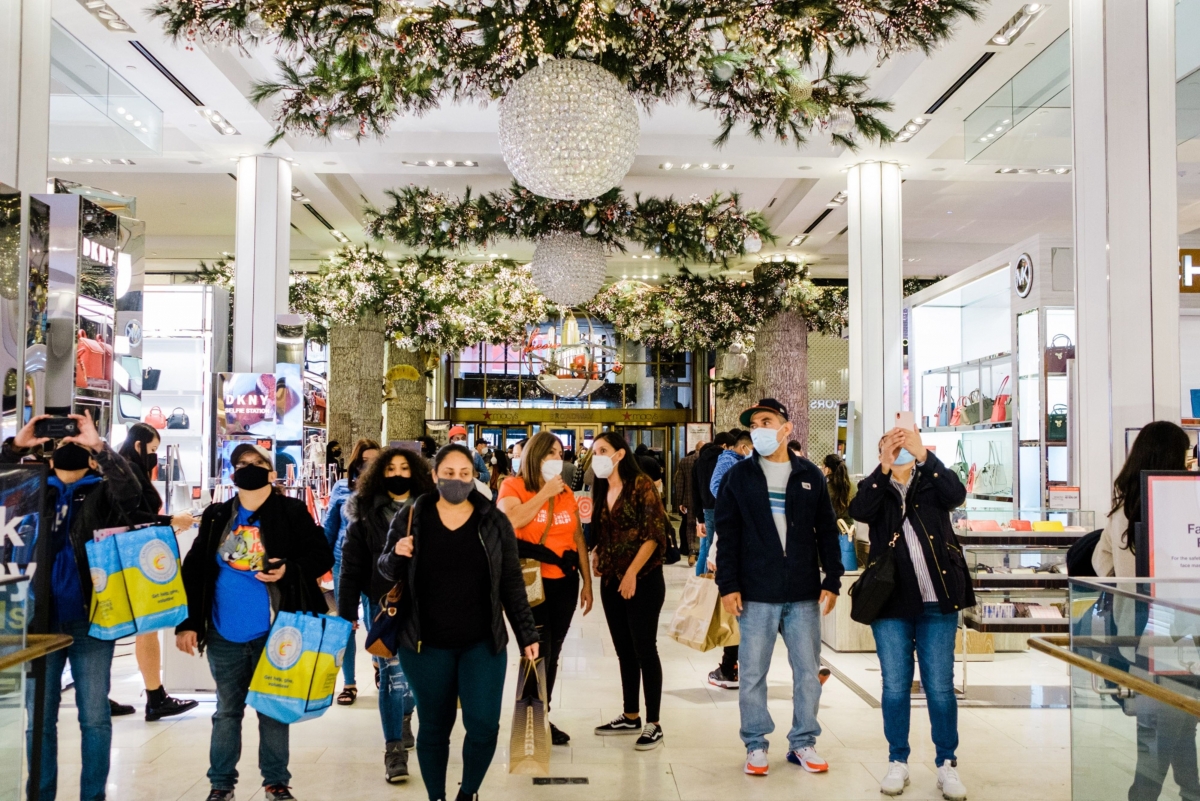
The shift online meant Black Friday wasn’t the shopping frenzy of long-lines and door-busting Americans have grown accustomed to. At the Macy’s flagship in New York, the largest department store in the U.S., it looked like a normal day, and malls across the country were subdued. Visitors to stores declined by 52% on Black Friday, according to preliminary data from Sensormatic Solutions. On Thanksgiving Day, store traffic plummeted 95%, with most major retailers opting to shut their doors on the Thursday holiday for the first time in years.

Shoppers walk through Macy's flagship store in New York, on Nov. 27. MUST CREDIT: Bloomberg photo by Gabriela Bhaskar.

Shoppers walk through Macy’s flagship store in New York, on Nov. 27. MUST CREDIT: Bloomberg photo by Gabriela Bhaskar.

Some shoppers hit the mall anyway. Even though many retailers took precautions – Walmart limited the number of customers inside its stores to just 20% of usual capacity, for example – there were still lines reported at stores across the U.S. including Lululemon Athletica, Bath & Body Works and Urban Outfitters on Black Friday. Gabriella Santaniello, founder of retail research firm A-Line Partners, said teenagers in particular went out to shop in person, though that may have been more for the social aspect after months cooped up inside.

“A lot of teens want to be at the mall to look at the merchandise, and look at each other,” she said in a phone interview.

Most in-person shoppers were in-and-out, with nearly everyone who showed up making a purchase, boosting what retail watchers call the “conversion rate.”

“They want to make each trip count; especially with covid, you don’t want to just go idly to a store or just do window shopping,” analyst Johnson said. “There are very few things that will stop American consumers from spending when they want to spend.”

The major general merchandise sellers like Amazon.com and Walmart are set to be the big winners this year with their strong e-commerce platforms and distribution networks. But even small businesses without the logistical muscle of their larger kin may prove surprisingly resilient.

They’ve coped by using social media and online shops to drive business. Black Friday sales shot up 75% to a record-setting $2.4 billion for the million or so independent businesses that use the e-commerce platform Shopify globally.

Small Business Saturday, a nationwide marketing campaign started by American Express in the wake of the 2009 financial crisis, helped draw shoppers into independent stores. Steering money to these shops has grown more urgent as pandemic-related shutdowns across the country pushed millions of small firms over the edge.

Consumers have gotten the message, said Rachel Lutz, owner of the Peacock Room, a women’s clothing boutique in Detroit. Sales at the Peacock Room and its sister store were about 20% better this past weekend than any previous year, with people snapping up self-care items such as tiaras, shea butter hand cream and “anything with a swear word on it,” she said.

“People are fiercely shopping local,” said Lutz. Though she hasn’t started an e-commerce site, she’s hosted shows on Facebook Live to display her wares.

The Detroit City Distillery is another brick-and-mortar business that’s been forced onto the internet to survive covid. The whiskey factory and cocktail lounge has supplemented a street-side bar with bottle releases online, and it’s doing more business because of it. It’s already sold over half the stock of its honey bourbon that went on sale on Black Friday, said Ian Redmond, the tasting room manager.

“We’re not going to stop doing it, I tell you that,” Redmond said in a phone interview Sunday. “We’re going to keep the online store going hard now and forever.”

Fed, Treasury emergency lending facilities divide lawmakers on state of the economic recovery #SootinClaimon.Com

#SootinClaimon.Com : ขอบคุณแหล่งข้อมูล : หนังสือพิมพ์ The Nation.

Fed, Treasury emergency lending facilities divide lawmakers on state of the economic recovery (nationthailand.com)

Fed, Treasury emergency lending facilities divide lawmakers on state of the economic recovery

InternationalDec 02. 2020

By The Washington Post · Rachel Siegel

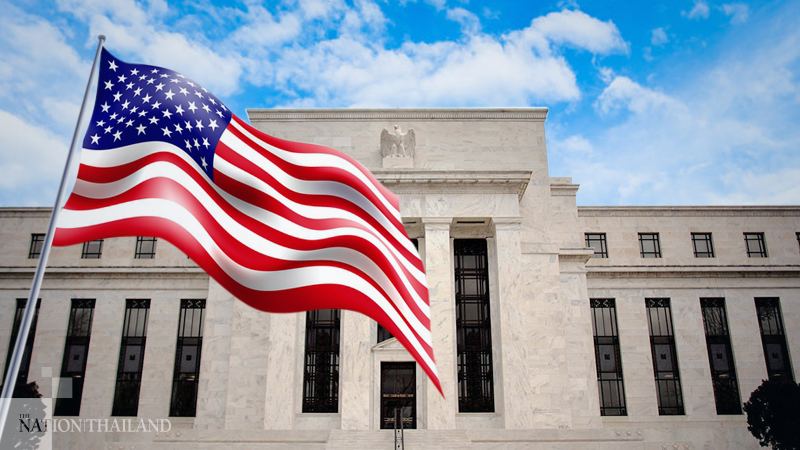
WASHINGTON – Lawmakers debated the emergency lending facilities run by the Federal Reserve and Treasury Department at a Senate Banking Committee hearing Tuesday, revealing diverging opinions on the state of the recovery and how to keep it going.

Treasury Secretary Steven Mnuchin testified before the panel on Tuesday, giving a strong defense of his decision not to extend the programs beyond the end of the year. Mnuchin said the programs had done their jobs and that hundreds of billions of dollars put toward the facilities would be better spent elsewhere. Fed Chair Jerome Powell, meanwhile, said that “we would have left the facilities in place to be backstops” and continued to push for more help from Congress.

Support for the emergency lending facilities set up at the start of the pandemic has waned among Republicans who say it’s time to phase out the programs. By contrast, Democrats say cutting them off too soon jeopardizes the economic recovery.

Disputes around programs became especially charged last month when Mnuchin said he would not extend most of the programs beyond the end of the year. Mnuchin also requested that the Fed return hundreds of billions of dollars that had been put toward the facilities but never spent, saying the money could be reallocated by Congress to directly reach distressed parts of the economy.

The announcement spurred a rare public clash between Treasury and the Fed, which wanted the programs to stay in place to continue backstopping the markets in case the recovery faltered. Democrats and several economists condemned Mnuchin’s move saying it was premature to cut off the extra support. Biden’s transition team called the decision “deeply irresponsible.”

At the hearing, Mnuchin said his decision to end the programs at the end of the year reflects a legal interpretation of the Cares Act, adding the programs were never meant to be in place indefinitely. Despite the initial rebuke, the Fed has agreed to return the unused money and is in the process of doing so.

“My decision not to extend these facilities was not an economic decision,” Mnuchin said Tuesday. He also dismissed criticism from the left that the move was politically motivated.

Republicans on the banking panel echoed Mnuchin, saying financial markets have healed since a tailspin in February and March. Sen. Patrick Toomey, R-Pa., a top Republican on the panel, said the programs were designed for a specific purpose in the pandemic’s early days, and that they should not be thought of as an evergreen supplement to fiscal policy.

“It’s always been the case that you could imagine some bad thing happening in the future, if some terrible thing were to happen to threaten the viability of our financial markets,” Toomey said. “There are some industries that are in big trouble. That is a true fact…It’s up to Congress to decide what to do about that.”

The emergency programs that targeted small businesses and local governments have issued few loans, drawing criticism around those programs’ usefulness. Some economists have pushed the Fed and Treasury to loosen the lending terms and expand the programs’ reach. Fed officials have said the Main Street lending program, for example, could see more interest if businesses continue to struggle through the winter.

The programs only allow the Fed to lend money, with the expectation that those loans are repaid, while Congress can issue grants or direct payments through a stimulus package.

During the hearing, Senate Democrats said the programs should not be cut off.

Sen. Sherrod Brown, D-Ohio, the top Democrat on the panel, said Mnuchin was “trying to sabotage our economy on your way out the door.” Sen. Robert Menendez, D-N.J., told Mnuchin at the hearing that “no one will be better off when you end the Cares Act facilities.”

“There is a choice here, and unfortunately the choice you’re making is very consequential,” Menendez said.

The recovery picked up speed faster than many economists expected, with unemployment falling to 6.9 percent in October. But there are mounting fears that a wintertime surge in coronavirus cases, plus uncertainty around another stimulus package, will claw back that momentum. Powell said the pace of improvement has moderated over the past few months, with spending on services like travel and hospitality remaining low.

“We can both acknowledge the progress and point out just how far we have left to go. The lion’s share of the credit should go to fiscal policy,” Powell said Tuesday.

In the backdrop are ongoing questions of whether Congress and the White House will reach a deal on another stimulus package. Powell has long maintained that fiscal support will be needed to keep the recovery on track, and Mnuchin has called for a targeted relief bill to fill the economy’s lingering gaps.

Negotiations around another stimulus package have broken apart multiple times. On Tuesday, a bipartisan group of senators unveiled a roughly $908 billion stimulus proposal that includes $300 weekly unemployment benefit lasting four months as well as $160 billion in funding for state and local governments.

The package would also include a temporary moratorium on some coronavirus-related lawsuits against firms and other entities and funding for small businesses, schools, health care, transit authorities, and student loans. Still, much remained in flux, and many congressional aides were skeptical the plan will become law.

Asked at Tuesday’s hearing about the proposal, Mnuchin reiterated that more help from Congress was needed and said he looked forward to reviewing the pitch.

“I think what’s more important is what we can pass quickly on a bipartisan basis to target the most difficult parts of the economy,” Mnuchin said.

When it comes to the government’s economic response, Powell said there is less of a risk to “overdoing it” than there is to “underdoing it.” With encouraging news about a vaccine, Powell said that many businesses and households can “see the light at the end of the tunnel…but they may need more help to get to that place.”

“We can see the end. We just need to get there,” he said.

Biden’s economic team set to prepare ambitious recovery plan, challenging Republicans’ renewed debt worries #SootinClaimon.Com

#SootinClaimon.Com : ขอบคุณแหล่งข้อมูล : หนังสือพิมพ์ The Nation.

Biden’s economic team set to prepare ambitious recovery plan, challenging Republicans’ renewed debt worries (nationthailand.com)

Biden’s economic team set to prepare ambitious recovery plan, challenging Republicans’ renewed debt worries

InternationalDec 02. 2020Joe BidenJoe Biden 

By The Washington Post · David J. Lynch

President-elect Joe Biden’s choice of economic advisers highlights a commitment to spend whatever is needed to restore a full-employment economy, setting up a clash with Senate Republicans who are sounding alarms over a national debt they helped President Trump increase by nearly $7 trillion.

As the economic recovery shows signs of faltering amid rising coronavirus caseloads, even members of Biden’s economic team who have called rising government debt a problem support a generous new rescue package. Former Federal Reserve chair Janet Yellen, a deficit hawk Biden picked for treasury secretary, said earlier this year that the United States could afford new borrowing to help a wounded economy and would save money in the long run by preventing lasting damage to the labor market.

On Tuesday, as Biden introduced his economic brain trust in Wilmington, Del., Yellen labeled the pandemic recession “an American tragedy” and urged a swift response. “It’s essential that we move with urgency,” she said. “Inaction will produce a self-reinforcing downturn causing yet more devastation.”

The Biden team’s push for government borrowing to fill the pandemic-size hole in the economy also reflects a broader shift in some leading economists’ view of public debt. By cutting interest rates to near zero – and all but exhausting its conventional tool kit – the Federal Reserve has made such borrowing more attractive and left the nation’s fiscal authorities in Congress with a greater role in propping up the economy, they say.

But prominent Republican lawmakers are balking at Democrats’ $2 trillion proposal for additional pandemic relief, saying annual budget deficits that add to the government’s debt bulge must be trimmed.

At stake in the debate are the hopes of millions of jobless Americans for an early return to the workforce along with the economy’s long-term health, economists said. Failure to provide additional government stimulus would probably drag out the recovery, threaten more small businesses with closure and force state and local governments to proceed with major layoffs, economists said.

“We need a bridge to the vaccine, and fiscal stimulus can provide that bridge,” said Nathan Sheets, chief economist for PGIM Fixed Income. “Are there issues in the long term with the level of debt? Yes, but we need to make it through these short-term challenges with the economy intact.”

When the pandemic hit in March, Congress and the administration moved quickly to provide roughly $3 trillion to cushion the blow. But subsequent talks over additional money for extra unemployment benefits, small-business loans, and budget aid for state and local governments have run aground.

Prospects for resolving a months-long stalemate between the two parties may turn on the outcome of two Senate runoff elections in Georgia on Jan. 5. If Republicans win at least one of the two seats, as expected, they will retain control of the Senate, dimming hopes for an additional multitrillion-dollar measure.

“The politics of a divided Washington are going to make it very difficult to agree on much of anything,” said Eric Winograd, senior economist for fixed income at AllianceBernstein in New York. “Republicans in the Senate seemed reluctant to pass more stimulus when there was a Republican president. They are likely to be even more reluctant with a Democratic one.”

Indeed, Sen. Lindsey Graham, R-S.C., slated to chair the Senate Budget Committee if Republicans maintain control of the upper chamber, told reporters after the Nov. 3 election that he wants to “finally begin to address the debt.”

Likewise, Sen. John Thune of South Dakota, the No. 2 Senate Republican, said he expects to focus next year on curbing spending on entitlement programs, adding: “I think that’s kind of getting back to our DNA. … I think spending, entitlement reform, growth and the economy are all things that we’re going to have to be focused on.”

Top Democrats scoff at Republicans’ renewed debt fears after years of their support for Trump’s budget-busting policies. In 2017, for example, every Republican senator voted in favor of the president’s signature tax cut, which added $1.9 trillion to the debt, according to the nonpartisan Committee for a Responsible Federal Budget.

Government spending under Trump, who once crowned himself “the king of debt,” soared to $6.6 trillion in the fiscal year that ended Sept. 30 – up 71% from $3.8 trillion four years earlier, according to the Congressional Budget Office.

“It is hard to take the Republican senators seriously,” said William Spriggs, chief economist of the AFL-CIO labor union. “We still have very rough days ahead of us.”

While Democrats such as Sen. Elizabeth Warren, D-Mass., accuse Republicans of rediscovering their debt phobia only to impede Biden’s agenda, Senate Majority Leader Mitch McConnell, R-Ky., began flagging government debt as “a matter of genuine concern” in April.

Republicans back a $500 billion package targeted to small businesses and the jobless and resist a blank-check approach because the economy has healed faster than expected, said Brian Riedl, a senior fellow at the Manhattan Institute. The current 6.9% unemployment rate is well below the double-digit levels many Wall Street economists initially expected for the end of this year.

“An economy with unemployment below 7% requires a different solution than if unemployment stayed above 10%,” he said.

Biden this week filled out his economic team with experts who have called for rebuilding the economy first and dealing with deficit concerns later. Among them are all three members of his Council of Economic Advisers: Princeton University economist Cecilia Rouse, the incoming chair; Jared Bernstein, who advised Biden on economic policy during his vice presidency; and Heather Boushey, head of the Washington Center for Equitable Growth. Neera Tanden, president of the Center for American Progress who was nominated to head the Office of Management and Budget, also supports deferring deficit action.

While Republicans cite the economy’s progress in recent months, Democrats point to a mounting toll of hardship and loss. Existing federal programs, including extended unemployment benefits and a moratorium on evictions, are scheduled to expire at year end. Roughly 3.6 million Americans have been unemployed for more than six months, four times the number at the end of April.

“You’re going to get the recovery starting in April, May, whether or not we get this package,” said economist Adam Posen, head of the Peterson Institute for International Economics. “Whether we get stimulus in December or January is about how much human suffering there is between now and then.”

Democrats’ stimulus push is driven by lessons of the last financial crisis as well as subsequent shifts in the economic climate.

After Republicans took control of the House in 2010, they pressed President Barack Obama to accept spending limits that contributed to the weakest recovery since World War II. Leading Republicans at the time, including then-House Budget Committee Chairman Paul Ryan, warned of soaring inflation and a collapsing dollar if deficits weren’t quickly corralled.

“We’ve gone through this before,” said Sam Bell, policy director for Employ America, a left-leaning think tank. “We didn’t have spikes in interest rates. We didn’t have ruinous inflation. It’s hard to overstate how much the mainstream academic consensus has moved.”

On Tuesday, a pair of prominent Democratic economists – Lawrence Summers and Jason Furman – are scheduled to deliver a new paper that underscores that shift. The former Obama administration officials, appearing at a virtual Brookings Institution event, will argue that persistently low interest rates require a “revolution” in thinking about debts and deficits.

The implications for government tax and spending policies “are as profound as those that occurred in the wake of the inflation of the 1970s,” wrote Summers, a former treasury secretary, and Furman, who led Obama’s National Economic Council.

The government’s borrowing spree since the 2008 financial crisis has not had the effects – rising bond yields or higher inflation – that traditional economics would have predicted. Private businesses have not been “crowded out” of bond markets by government agencies or faced higher borrowing costs. Consumers expect inflation even a decade from now to be a tame 1.4%, according to the Federal Reserve Bank of Cleveland.

The $21.2 trillion national debt – up from $14.4 trillion on the day Trump was inaugurated – is now slightly larger than the U.S. economy, a nominal milestone that hasn’t been reached since World War II and yet seems to have little real-world impact.

Even the Federal Reserve, normally hypervigilant about potential inflation, has been outspoken in calling for lawmakers to support the economy. Last month, Fed Chair Jerome H. Powell reiterated that the economy requires more government spending to complete its recovery, saying the risk was that policymakers would provide too little help, not too much.

“The consensus view among many economists is that there are limits to how much debt you can take on. But where those limits are and when the constraints start to bite – that’s very much an open question,” Sheets said. “We don’t know for certain if the limit on debt is another 50% of GDP or another 300% of GDP.”

The Biden team will take office with the government able to borrow for 10 years at 0.8%, compared with roughly 4% in late 2008.

That explains why even as the federal government is expected to rack up an additional $10 trillion in debt from 2021 to 2028, Washington will pay less each year in interest charges than it paid in 2019, according to the CBO’s latest projections.

At the American Economic Association conference in January, Yellen pronounced the interest burden “manageable” and said low interest rates provided the government with greater fiscal firepower.

“Even under current conditions, I think we can afford to increase federal spending or cut taxes to stimulate the economy if there’s a downturn,” she said, adding that low rates also made “a strong case” for new spending on infrastructure, research, education and climate change mitigation, which could boost the economy’s long-term potential.

Yet, Yellen in recent years also has expressed the concern over government debt that worries liberals who fear it as a justification for cuts in Social Security or Medicare.

“The U.S. debt path is completely unsustainable under current tax and spending plans,” she said during a Feb. 4 Bipartisan Policy Center event.

As the U.S. population ages, Social Security and Medicare are expected to account for a larger share of government spending while tax revenue fails to keep pace. By 2040, rising borrowing costs and increased spending will drive accumulated debt to more than 140% of annual output. The government’s interest bill that year will be more than three times as large relative to the economy as it is today and five times as large by 2050.

And if interest rates on federal borrowing are just 1% higher each year than expected, interest charges would consume about four-fifths of all projected revenue that year, the CBO said.

“We are incredibly vulnerable to an increase in interest rates,” said Maya MacGuineas, president of the Committee for a Responsible Federal Budget.

Virus resurgence dashes hopes for Hong Kong-Singapore travel ‘bubble’ #SootinClaimon.Com

#SootinClaimon.Com : ขอบคุณแหล่งข้อมูล : หนังสือพิมพ์ The Nation.

Virus resurgence dashes hopes for Hong Kong-Singapore travel ‘bubble’ (nationthailand.com)

Virus resurgence dashes hopes for Hong Kong-Singapore travel ‘bubble’

InternationalDec 02. 2020Airport workers wait for departing passengers during a media event at Hong Kong International Airport in Hong Kong, China, on Oct. 15, 2020. MUST CREDIT: Bloomberg photo by Billy H.C. KwokAirport workers wait for departing passengers during a media event at Hong Kong International Airport in Hong Kong, China, on Oct. 15, 2020. MUST CREDIT: Bloomberg photo by Billy H.C. Kwok 

By Syndication Washington Post, Bloomberg · Kyunghee Park, Iain Marlow, Denise Wee

A resurgence of the virus is scuppering hopes of a return to normalcy in Hong Kong.

A key travel bubble with Singapore was delayed for a second time on Tuesday, some international banks ordered their staff to resume working from home and Carrie Lam, the city’s chief executive, said even parties at sea are off limits.

It’s a sobering reminder of how quickly circumstances can change. After a long lull with just a handful of cases a day, the deteriorating situation in Hong Kong prompted the government to impose tighter social-distancing rules and to close schools again. The city reported 82 new infections on Tuesday.

While Hong Kong’s resurgent outbreak is far less intense than in the U.S. and Europe, where cases in some places are still hitting daily records, it’s been enough to usher in a raft of new restrictions. With nightclubs and karaoke parlors closed, a hotline for residents to report parties aboard yachts and rented party boats has been set up, Lam told a weekly news briefing Tuesday.

“The reporting hotline newly set up is there because we see that, after party rooms and karaoke parlors have been made to close, there are a number of people who organize events at sea,” Lam said. “We want to target such a breach.”

While Hong Kong is poised to limit public gatherings to two people, the government hasn’t capped the number of people who can meet in private. A police representative declined to elaborate on the rules on whether the measure would have any effect on private parties hosted by yacht owners, referring only to the earlier Facebook post.

Meanwhile, global banks in the financial hub from Goldman Sachs Group Inc. to Standard Chartered Plc are urging more staff to work from home again.

Goldman Sachs will go back to a full work-from-home approach in Hong Kong starting Wednesday except for staff that have to be in the office to perform their roles, according to a staff memo that was confirmed by a bank spokesman.

Standard Chartered has applied a hard split-team arrangement for functions that require work in the office, and shortened branch hours last Friday, according to a spokeswoman. “In view of covid wave 4, we strongly encourage our staff to work from home where possible,” she said.

But perhaps Tuesday’s biggest setback was the delay until 2021 of the keenly anticipated travel corridor between Hong Kong and Singapore. That’s a blow for the region’s airlines and tourism businesses seeking to start a recovery from the almost year-long pandemic.

The travel bubble that would have involved rigorous coronavirus testing will be delayed beyond 2020, and the cities said Tuesday they will review the arrangement for 2021 toward late December. The pact, which would have allowed passengers to travel between the centers without a quarantine, was already postponed by two weeks on Nov. 21, a day before flights were due to start.

The decision was taken “in view of the severity of the epidemic situation in Hong Kong with the number of local cases of unknown sources increasing rapidly,” the Hong Kong government said in a statement.

Strict border curbs have helped Asia contain the coronavirus better than in other parts of the world, with countries from China to New Zealand limiting the entry of travelers and imposing mandatory quarantines as a way of stopping the virus at their doors. But the approach — which has seen some all but eliminate covid-19 — has come at a heavy cost, decimating tourism with cross-border travel basically paralyzed.

While in-country containment of the virus has resulted in the world’s 10 busiest domestic air travel routes now all being in Asia, according to OAG Aviation Worldwide Ltd., Hong Kong’s Cathay Pacific Airways Ltd. and Singapore Airlines Ltd. continue to struggle as they have no domestic travel market to fall back on. Cathay shares are down 26% this year; Singapore Airlines has slipped 31%.

A rise in cases in either Hong Kong or Singapore was always a risk for those who booked tickets when the bubble plan was announced on Nov. 11. It’s still possible to travel between the two cities, but a mandatory quarantine applies on both sides.

Singapore and Hong Kong had said they hoped the agreement can be a model for other nations trying to open up. Air traffic globally is expected to be at just 33% of 2019 levels at the end of this year, and “hopefully” at 50% to 60% by the end of 2021, Alexandre de Juniac, director general of the International Air Transport Association, said last month.

Asean and EU’s new online customs system set to boost trade in Asean #SootinClaimon.Com

#SootinClaimon.Com : ขอบคุณแหล่งข้อมูล : หนังสือพิมพ์ The Nation.

Asean and EU’s new online customs system set to boost trade in Asean (nationthailand.com)

Asean and EU’s new online customs system set to boost trade in Asean

InternationalDec 01. 2020

By THE NATION

Cross-border traders in Asean can now take advantage of a new online Customs transit management system – the Asean Customs Transit System (ACTS) – to accelerate trade in goods by road within the region.

The ACTS was developed with the support of the European Union.

The new online system will reduce intra-Asean trading challenges and enable companies to benefit fully from the Asean Economic Community (AEC) and the free movement of goods across the region, Asean said.

In 2017, Asean Economic Ministers set the twin goals of reducing trade transaction costs by 10 per cent by 2020 and doubling intra-Asean trade between 2017 and 2025. To realise this goal, the ACTS has been developed to allow businesses to lodge e-transit declarations directly with Asean Customs Authorities and to track the movement of their goods from loading at departure to delivery at the final destination.

“The implementation of the ACTS plays a vital role in facilitating seamless movement of goods in the region. I believe the system would be an excellent tool in enhancing Asean’s trade and production networks as well as establishing a more unified market for its firms and consumers,” said Lim Jock Hoi, the Asean secretary-general. 

“The ACTS could also support post Covid-19 recovery to accelerate the transit movement of medical supplies, vaccines and personal protective equipment within the member States,” he added.

Under the ACTS, the private sector can make a single Customs transit declaration that covers the transport of goods across multiple Asean countries, without the need to make repeated Customs declarations or change vehicles at each border. Special arrangements allow reliable traders to load their goods at their own premises in the country of departure, and to deliver the goods to their own premises at destination. Faster Customs clearance at borders helps accelerate transit movements, and reduce the time and expense of carrying out regional trade in goods, to the benefit of producers and consumers across the continental Asean region, Asean said.

The system is managed by a permanent ACTS central management team based in the Asean Secretariat in Jakarta, with support from the EU-funded ARISE Plus programme. Regional and national ACTS helpdesks are available (see https://acts.asean.org).

“The ACTS is a remarkable achievement that is testament to the strong, dynamic and long-standing partnership between Asean and the European Union,” said Koen Doens, director-general for International Cooperation and Development at the European Commission. 

“The ACTS will make the movement of goods by road quicker and easier across the borders of the participating Asean member states, thereby reducing costs for businesses and citizens. The EU is proud to have joined Asean to make the ACTS a reality, providing European technical expertise and 10 million euros since 2012, in addition to the 5 million euros invested by our Asean partners,” he added.

ARISE Plus has provided extensive ACTS training for stakeholders in the public and private sectors, including Customs authorities, government transport agencies, freight forwarders, transporters, banks and insurance companies. Following the ACTS pilot activities in Cambodia, Lao PDR, Malaysia, Singapore, Thailand and Vietnam, the system has now been formally launched for general use. The first successful ACTS transit movement occurred on October 23 and 24 with a truck travelling from Singapore via Malaysia to Thailand. The system will soon be available in Myanmar, and depending on business needs may later be expanded to Brunei, Indonesia and Philippines.

“We are excited to have the Asean Customs Transit System in place,” said Yukki Nugrahawan, chairman of the Asean Federation of Forwarders Associations. 

“The freight forwarding community will be one of the main beneficiaries of this system, as it offers simplified Customs and transport control procedures between different Asean member states, and provides predictability on door-to-door delivery times and most importantly reduced transport costs. The ACTS will significantly accelerate transit movements across the region and help us reduce time and expenses of carrying out cross border trade in Asean,” he added.

ฟิลิปปินส์ช่วยออกค่าตรวจโควิดให้ครึ่งหนึ่งหวังดึงนักท่องเที่ยว #SootinClaimon.Com

#SootinClaimon.Com : ขอบคุณแหล่งข้อมูล : หนังสือพิมพ์โพสต์ทูเดย์

ฟิลิปปินส์ช่วยออกค่าตรวจโควิดให้ครึ่งหนึ่งหวังดึงนักท่องเที่ยว – โพสต์ทูเดย์ รอบโลก (posttoday.com)

วันที่ 01 ธ.ค. 2563 เวลา 17:31 น.ฟิลิปปินส์ช่วยออกค่าตรวจโควิดให้ครึ่งหนึ่งหวังดึงนักท่องเที่ยว ฟิลิปปินส์เสนอแผนการออกงบอุดหนุนตรวจโควิด-19 ให้ชาวต่างชาติเพื่อกระตุ้นการท่องเที่ยว

สำนักข่าวบลูมเบิร์กรายงานว่าฟิลิปปินส์กำลังพิจารณาการให้เงินอุดหนุนการตรวจเชื้อโคโรนาสำหรับนักท่องเที่ยวเพื่อกระตุ้นอุตสาหกรรมการท่องเที่ยวที่ได้รับผลกระทบอย่างหนัก แต่เริ่มที่จะค่อยๆ เปิดประเทศรับนักท่องเที่ยวเข้ามาในประเทศอีกคั้ง

รัฐมนตรีกระทรวงการท่องเที่ยว เบอร์นาเดตต์ โรมูโร-ปูยัต (Bernadette Romulo-Puyat) กล่าวในการให้สัมภาษณ์กับสถานีข่าว ABS-CBN News เมื่อวันอังคารว่ารัฐบาลกำลังพิจารณาที่จะลดค่าใช้จ่ายในการตรวจเชื้อโควิด-19 สำหรับนักท่องเที่ยวโดยอาจจะช่วยออกค่าใช้จ่ายให้มากถึงครึ่งหนึ่ง

โรมูโน-ปูยัตกล่าวว่าจะมีการมอบบัตรกำนัลการท่องเที่ยวให้นักท่องเที่ยวเพื่อนำไปตรวจเชื้อพร้อมกับได้รับส่วนลดค่าตรวจที่โรงพยาบาลฟิลิปปินส์เจเนอรัลของรัฐในกรุงมะนิลา แต่โรมูโร-ปูยัตไม่ต้องระบุรายละเอียดว่าใครมีคุณสมบัติที่จะได้รับการอุดหนุนบ้าง

“เราต้องการให้ผู้คนสามารถเดินทางโดยเฉพาะในเทศกาลคริสต์มาสนี้” โรมูโร-ปูยัตกล่าว “ ค่าใช้จ่าย (เรื่องการตรวจเชื้อ) ค่อนข้างสูงจนทำให้คนไม่เข้ามาเที่ยว แต่เราก็ไม่สามารถยกเลิกข้อกำหนดในการตรวจเชื้อก่อนเดินทางได้”

นอกจากนี้โรมูโร-ปูยัตยังเปิดเผยว่า กระทรวงการท่องเที่ยวยังเตรียมกำหนดข้อกำหนดแบบเดียวกันสำหรับการเข้าสู่สถานที่ท่องเที่ยว เนื่องจากระเบียบการเดินทางที่แตกต่างกันที่กำหนดโดยรัฐบาลท้องถิ่นนั้นสับสน

ทั้งนี้ ภาคการท่องเที่ยวคิดเป็น 12.7% ของผลผลิตทางเศรษฐกิจของฟิลิปปินส์ในปีที่แล้ว

ฟิลิปปินส์กำลังผ่อนคลายการเดินทางเพื่อกระตุ้นเศรษฐกิจในภาวะถดถอย ในขณะที่การติดเชื้อรายวันลดลงเป็นเดือนที่ 3 ในเดือนพฤศจิกายน ประเทศนี้มีการระบาดที่เลวร้ายที่สุดเป็นอันดับสองในเอเชียตะวันออกเฉียงใต้โดยมีผู้ป่วย 431,000 ราย ณ วันจันทร์ที่ 30 พฤศจิกายน

Photo by STR / AFP

ส่องดรามาเครื่องแบบนักเรียนต่างประเทศ #SootinClaimon.Com

#SootinClaimon.Com : ขอบคุณแหล่งข้อมูล : หนังสือพิมพ์โพสต์ทูเดย์

ส่องดรามาเครื่องแบบนักเรียนต่างประเทศ – โพสต์ทูเดย์ รอบโลก (posttoday.com)

วันที่ 01 ธ.ค. 2563 เวลา 16:00 น.ส่องดรามาเครื่องแบบนักเรียนต่างประเทศกฎระเบียบเครื่องแบบนักเรียนเป็นที่ถกเถียงกันในหลายประเทศรวมถึงญี่ปุ่นและเกาหลีใต้

โรงเรียนเกือบทุกแห่งในญี่ปุ่นกำหนดให้นักเรียนสวมเครื่องแบบ รวมถึงกำหนดประเภทกระเป๋านักเรียนและทรงผม รวมถึงบางแห่งยังกำหนดให้นักเรียนหญิงต้องสวมเสื้อชั้นในสีขาวล้วน

ส่งผลให้ในเดือนพฤศจิกายนที่ผ่านมาโรงเรียนมัธยมของญี่ปุ่นวิพากษ์วิจารณ์ถึงการตรวจสีเสื้อชั้นในของนักเรียน โดยกล่าวว่า “แม้จะเป็นการตรวจสอบโคยครูผู้หญิง แต่การขอดูเสื้อชั้นในของผู้อื่นนั้นถือเป็นการละเมิดสิทธิมนุษยชน”

โดยสภาทนายความจังหวัดได้ยื่นเรื่องต่อคณะกรรมการการศึกษาประจำจังหวัดซางะและสมาคมผู้ปกครองและครูในท้องถิ่นเพื่อเรียกร้องให้มีการปฏิรูปกฎของโรงเรียน

รวมถึงยังมีการร้องเรียนถึงกฎระเบียบที่ไม่สมเหตุสมผลอื่นๆ เช่น ห้ามนักเรียนชายตัดผมทรงทูบล็อก, ห้ามนักเรียนหญิงสวมกางเกงรัดรูป, ห้ามสวมผ้าพันคอเมื่ออยู่ในเครื่องแบบนักเรียน และกฎการแต่งกายและทรงผมที่แตกต่างกันตามเพศสภาพของนักเรียน

โดยสภาทนายความจังหวัดเรียกร้องให้โรงเรียนต่างๆ พิจารณาว่ากฎของโรงเรียนส่งผลดีต่อคุณภาพการศึกษาของนักเรียนจริงหรือไม่โดยเฉพาะในยุคปัจจุบัน และนำข้อมูลจากนักเรียนมาพิจารณาเพื่อดำเนินการแก้ไขให้มีความเข้าใจซึ่งกันและกัน

ในการประชุมสภามหานครโตเกียวในเดือนมีนาคม ยูอิชิ ไอกิกาวะ ตัวแทนเขตมาจิดะกล่าวว่า “ผมได้ยินจากนักเรียนหลายคนว่า เมื่อพวกเขาถามว่าทำไมจึงไม่อนุญาตให้ไว้ผมทรงทูบล็อก เขามักจะได้คำตอบว่า “เพราะนั่นคือกฎ” หรือ “เพราะนั่นคือข้อบังคับของโรงเรียน” แล้วทำไมถึงต้องบังคับ”

นอกจากนี้ในปี 2017 มีการถกเถียงกันถึงกฎของโรงเรียนในญี่ปุ่นที่ห้ามนักเรียนย้อมผมและนักเรียนจะต้องมีผมสีดำ โดยมีนักเรียนหญิงคนหนึ่งในโอซกาซึ่งมีผมสีน้ำตาลธรรมชาติถูกบังคับให้ย้อมผมสีดำ จึงมีการฟ้องร้องโรงเรียน 2.2 ล้านเยน แต่ภายหลังในปี 2019 มีรายงานว่าโรงเรียนรัฐบาลในโตเกียวจะหยุดบังคับให้นักเรียนต้องมีผมสีดำ

รวมถึงโรงเรียนในหลายเมืองของญี่ปุ่นอนุญาตให้นักเรียนสามารถเลือกใส่เสื้อเบลเซอร์, กางเกง, กระโปรง หรือเนคไทได้ เพื่อให้ความสำคัญต่อนักเรียนเพศทางเลือก

เช่นเดียวกับโรงเรียนในเกาหลีใต้ซึ่งกำหนดให้นักเรียนต้องสวมเครื่องแบบ แต่โรงเรียนหลายแห่งอนุญาตให้นักเรียนหญิงสามารถเลือกได้ว่าจะสวมกางเกงหรือกระโปรง

นอกจากนี้สำนักงานการศึกษาของกรุงโซลกล่าวเมื่อปี 2018 ว่าจะผลักดันให้มีการแก้ไขกฎระเบียบเพื่อให้นักเรียนสามารถย้อมสีผมหรือดัดผมได้

โช ฮียอน ผู้อำนวยการสำนักงานการศึกษาของกรุงโซลกล่าวว่า “สิทธิในการย้อมหรือดัดผมเป็นส่วนหนึ่งของสิทธิขั้นพื้นฐาน เราต้องสร้างสภาพแวดล้อมของการเรียนรู้ที่มีความรู้สึกอิสระและมีคุณค่าของประชาธิปไตย”

อี มินจิน นักเคลื่อนไหวเพื่อสิทธิเยาวชนกล่าวว่า “ไม่เคยมีเหตุผลที่สมเหตุสมผลว่าทำไมทรงผมของนักเรียนจะต้องถูกควบคุมโดยผู้มีอำนาจ เรามักได้ยินว่านักเรียนควรมีลักษณะเหมือนนักเรียน นักเรียนต้องมีลักษณะที่เหมาะสมกับวัย เราคิดว่านี่เป็นวิธีที่รัฐบาลพยายามควบคุมเยาวชน ซึ่งเป็นรูปแบบหนึ่งของความรุนแรงที่ลึกซึ้งมานานหลายปีแล้ว”

เช่นเดียวกับ คิม โดยอน นักเรียนมัธยมปลายในกรุงโซลกล่าวว่าเธอดีใจกับการตัดสินใจของสำนักงานการศึกษา ในขณะเดียวกันยังมีอีกหลายประเด็นที่เธอรู้สึกว่าเป็นการละเมิดสิทธิของนักเรียน “ฉันรู้สึกว่าชุดนักเรียนมันอึดอัดและไม่ยุติธรรมเลยที่เราได้รับอนุญาตให้ใส่ชุดนี้ไปโรงเรียนเท่านั้น รูปลักษณ์ของเรา การแต่งตัวของเรา ควรเป็นเรื่องส่วนตัวของเรา”

จีนสวนกลับ ห้ามส่งออกเทคโนโลยีทหารไปประเทศอื่น #SootinClaimon.Com

#SootinClaimon.Com : ขอบคุณแหล่งข้อมูล : หนังสือพิมพ์โพสต์ทูเดย์

จีนสวนกลับ ห้ามส่งออกเทคโนโลยีทหารไปประเทศอื่น – โพสต์ทูเดย์ รอบโลก (posttoday.com)

วันที่ 01 ธ.ค. 2563 เวลา 14:39 น.จีนสวนกลับ ห้ามส่งออกเทคโนโลยีทหารไปประเทศอื่นจีนบังคับใช้กฎหมายควบคุมการส่งออกเพื่อตอบโต้การเคลื่อนไหวของสหรัฐท่ามกลางความตึงเครียดที่ยังไม่ซาลงแม้สหรัฐเริ่มจะเปลี่ยนรัฐบาลใหม่

เมื่อวันอังคารที่ 1 ธันวาคม จีนได้บังคับใช้กฎหมายใหม่ที่มีวัตถุประสงค์เพื่อห้ามการส่งออกเทคโนโลยีและผลิตภัณฑ์ล้ำสมัยของประเทศที่อาจถูกเปลี่ยนไปใช้ทางการทหารในประเทศอื่น เป็นความเคลื่อนไหวล่าสุดของจีนที่จะกระตุ้นความตึงเครียดกับสหรัฐให้รุนแรงขึ้น

สำนักข่าว Kyodo ระบุงว่าเห็นได้ชัดว่ากฎหมายที่ประกาศออกมาในเดือนตุลาคมร่างขึ้นมาเพื่อกำหนดเป้าหมายไปที่สหรัฐซึ่งพยายามกีดกันจีนออกจากเครือข่ายการค้าของโลก หลังจากสองประเทศมหาอำนาจของโลกขัดแย้งกันในหลายประเด็นรวมถึงแนวทางการดำเนินธุรกิจ, กรณีไต้หวันและฮ่องกง

ก่อนที่จีนจะใช้กฎหมายฉบับนี้สหรัฐก็ใช้กฎหมายห้ามส่งออกเทคโนโลยีที่อาจถูกนำไปใช้ในการทหารเช่นกันโดยเล็งเป้าหมายมาที่บริษัทจีนที่พัวพันกับกองทัพ การบังคับใช้กฎหมายเหล่านี้ยังเพิ่มความกังวลให้มากขึ้นไปอีกว่าว่าจะส่งผลกระทบต่อบริษัทของประเทศอื่นๆ เช่นญี่ปุ่น เนื่องจากหลายบริษัทผลิตสินค้าโดยซื้อชิ้นส่วนจากจีน

ในช่วงปลายเดือนตุลาคมพรรคคอมมิวนิสต์ของจีนให้คำมั่นที่จะรักษากลยุทธ์ “การหมุนเวียนแบบคู่” เพื่อหนุนอุปสงค์ในประเทศในขณะที่พยายามกระตุ้นการส่งออกไปพร้อมๆ กัน เพื่อประคองประเทศให้อยู่นอดจากการพึ่งตัวเองมากขึ้น เนื่องจากรัฐบาลของประธานาธิบดีโดนัลด์ ทรัมป์พยายาโดดเดี่ยวจีนและแยกตัวเองจากการพึ่งพาการผลิตของจีน

ในขณะเดียวกันประธานาธิบดีสีจิ้นผิงของจีนได้แสดงความกระตือรือร้นที่จะดำเนินการเพิ่ม “ขีดความสามารถในการต่อต้าน” ต่อการกระทำของประเทศอื่นๆ ที่ถือว่าเป็นการทำร้ายผลประโยชน์ของประเทศจีน

ในบรรดาผลิตภัณฑ์ที่อยู่ภายใต้การควบคุมของกฎหมาย ได้แก่ สินค้าที่เกี่ยวข้องกับกิจการทหารและนิวเคลียร์ตลอดจนเทคโนโลยีที่เชื่อมโยงกับความมั่นคงของชาติ

ผู้ส่งออกมีหน้าที่ต้องรายงานล่วงหน้าต่อทางการจีนเกี่ยวกับการใช้ผลิตภัณฑ์ปลายทางและแจ้งการเปลี่ยนแปลงใดๆ ที่ปลายทางการจัดส่งของพวกเขา บริษัทที่ละเมิดกฎหมายจะถูกขึ้นบัญชีและกำหนดค่าปรับสูงถึง 20 เท่าของมูลค่าธุรกรรมที่ถือว่าผิดกฎหมาย

การตัดสินใจดังกล่าวเชื่อว่าจะเป็นการตอบโต้สหรัฐซึ่งเพิ่งกำหนดมาตรการคว่ำบาตร บริษัท Huawei Technologies Co. ซึ่งเป็นบริษัทอุปกรณ์โทรคมนาคมยักษ์ใหญ่ของจีนด้วยเหตุผลด้านความมั่นคง

สำหรับประเทศญี่ปุ่น ผู้ผลิตรถยนต์ของญี่ปุ่นนั้นพึ่งพาแร์เอิร์ธ () rare earth ของจีนเพื่อพัฒนามอเตอร์สำหรับรถยนต์ไฮบริด

พนักงานของบริษัทด้านการค้าของญี่ปุ่นในกรุงปักกิ่งกล่าวว่าเขาหวังว่าจีนจะ “ไม่ใช้กฎหมายเพื่อกลั่นแกล้งเพื่อหวังผลทางการเมือง”

AFP PHOTO / KCNA VIA KNS / KCNA VIA KNS / South Korea OUT

จีนส่งวัคซีนให้ ‘คิม จอง อึน’ ลองฉีดแล้ว #SootinClaimon.Com

#SootinClaimon.Com : ขอบคุณแหล่งข้อมูล : หนังสือพิมพ์โพสต์ทูเดย์

จีนส่งวัคซีนให้ ‘คิม จอง อึน’ ลองฉีดแล้ว – โพสต์ทูเดย์ รอบโลก (posttoday.com)

วันที่ 01 ธ.ค. 2563 เวลา 13:00 น.จีนส่งวัคซีนให้ 'คิม จอง อึน' ลองฉีดแล้วผู้เชี่ยวชาญจากสหรัฐเผยคิม จอง อึน และคนใกล้ชิดได้รับวัคซีนขั้นทดลองจากรัฐบาลจีน

รอยเตอร์สรายงาน แฮร์รี คาเซียนิส ผู้เชี่ยวชาญด้านเกาหลีเหนือของสหรัฐ กล่าวว่าคิม จอง อึน ผู้นำสูงสุดของเกาหลีเหนือและครอบครัว รวมถึงเจ้าหน้าที่ระดับสูงของเกาหลีเหนือได้รับการฉีดวัคซีนป้องกันไวรัสโคโรนาจากประเทศจีนที่กำลังอยู่ในกระบวนการทดลอง

คาเซียนิสระบุว่ายังไม่ทราบแน่ชัดว่าวัคซีนดังกล่าวมาจากบริษัทใด และได้รับการพิสูจน์แล้วว่าปลอดภัยหรือไม่

โดยปีเตอร์ เจ. โฮเทซ นักวิทยาศาสตร์การแพทย์ของสหรัฐที่กล่าวว่าขณะนี้มีบริษัทของจีนอย่างน้อย 3 แห่งกำลังพัฒนาวัคซีนป้องกันไวรัสโคโรนา ได้แก่ บริษัทซิโนแวค ไบโอเทค, แคนซิโนไบโอ และซิโนฟาร์ม

ทั้งนี้ ยังไม่มีรายงานผู้ติดเชื้อไวรัสโคโรนาในเกาหลีเหนือ ขณะที่หน่วยข่าวกรองแห่งชาติเกาหลีใต้ (NIS) เชื่อว่ามีความเป็นไปได้ที่ไวรัสโคโรนาจะแพร่เข้าสู่เกาหลีเหนือเนื่องจากมีติดต่อค้าขายกับประเทศจีนซึ่งเป็นต้นตอของการแพร่ระบาด ก่อนที่จะสั่งปิดพรมแดนในช่วงปลายเดือนมกราคม

นอกจากนี้ไมโครซอฟต์เผยเมื่อเดือนพฤศจิกายนที่ผ่านมาว่ากลุ่มแฮ็กเกอร์ชาวเกาหลีเหนือ 2 กลุ่มพยายามที่จะเข้าไปในเครือข่ายของผู้พัฒนาวัคซีนในหลายประเทศ

Photo by STR / KCNA VIA KNS / AFP