S. Korea to launch presidential committee on carbon-neutral campaign, Moon says
InternationalNov 29. 2020President Moon Jae-in speaks at a meeting on South Korea’s aim of going carbon neutral by 2050 held at Cheong Wa Dae in Seoul on Friday. (Yonhap)
By Yonhap Korea Herald
President Moon Jae-in announced a plan Friday to establish a presidential body on South Korea’s stated goal of going carbon neutral by 2050 as part of a “strong pan-governmental system” to push for the vision.
He said the envisioned government-private organization, tentatively named the “2050 Carbon Neutrality Committee,” is meant to implement the policy speedily.
The government will also seek to create a new vice ministerial position to be in charge of energy policy at the Ministry of Trade, Industry and Energy, the president added.
He was speaking at an interagency meeting on drawing up carbon-neutral strategies, joined by the heads of relevant ministries and senior ruling Democratic Party officials.
“The grand transition to a carbon-neutral society will be an opportunity to simultaneously pursue economic growth and the improvement of quality of life,” he said in his opening remarks.
He added, “(The government) is going to push for low carbonization in all economic sectors. The structural transformation of the energy system is the starting point.”
Moon revealed a scheme to place a focus on developing three key new industries — renewable energy, hydrogen and energy IT — in order to accelerate the transformation of South Korea, one of the world’s most fossil fuel-reliant economies, into a carbon-neural nation.
In particular, he said his administration will grow future car production businesses as a leading industry, pledging to lay a “firm foundation” for moving toward carbon neutrality before his tenure ends in May 2022.
Moon also said his government will consider introducing a related fiscal system, which includes the creation of a special fund to help cope with climate change, as it’s preparing to submit a long-term low-carbon growth strategy to the United Nations within this year.
He then stressed the need for international cooperation.
South Korea will push actively for joint projects with the European Union to achieve carbon neutrality and solidify policy coordination with the new US administration of Joe Biden, while strengthening trilateral partnerships with China and Japan, according to the president. (Yonhap)
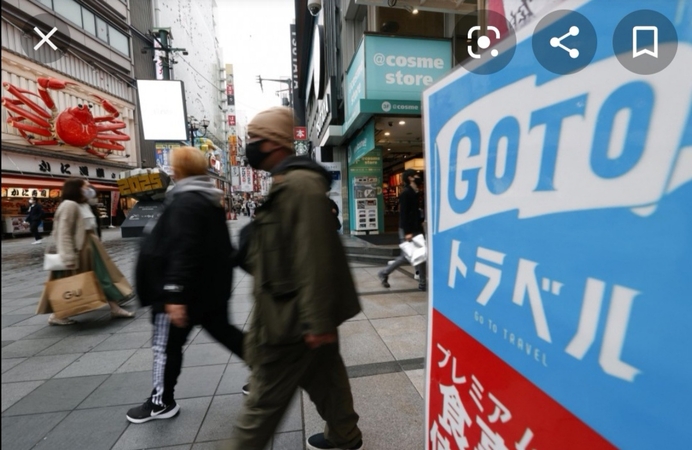
By Syndication Washington Post, The Japan News-Yomiuri · No Author · WORLD, ASIA-PACIFIC Prime Minister Yoshihide Suga has called on people in Osaka and Sapporo to refrain from travel outside the cities, where novel coronavirus cases are rising. Trips to the two cities had already been excluded from the Go To Travel campaign in a revision of the government’s tourism promotion program.
The government is aiming to curb the spread of infections through the suspension and call for restraint.
“I’ll immediately call on people to refrain from using [the program],” Suga said at a meeting of a government task force on the coronavirus at the Prime Minister’s Office on Friday, referring to travel from the cities.
“A measure will be taken to prevent campaign users, hotels and inns from shouldering the cancellation fees,” he said, indicating the government will be offering compensation.
In response to the government’s move, Osaka Gov. Hirofumi Yoshimura on Friday said: “I ask the residents of Osaka City for restraint. I want to prevent the spread of infections in cooperation with the central government.”
Hokkaido Gov. Naomichi Suzuki released a statement on Friday night, saying, “I will call on Sapporo residents to refrain from travel under the Go To Travel campaign if the risk of infection cannot be avoided.”
If the governors of other prefectures where infection cases are increasing consider suspending the campaign and calling for restraint, the central government intends to consult with them individually to respond to the situation.
The nation’s coronavirus response has been notable for the dissonance between the economy-focused government and the subcommittee on coronavirus measures, which is increasingly concerned about the spread of infections.
The government has apparently been forced to make minor changes to the Go To Travel campaign at the insistence of the subcommittee.
Suga had been cautious about reviewing the travel program with a view to prioritizing economic recovery, but he has now made successive changes.
The initial review, which included restrictions on travel destinations, was prompted by a subcommittee of experts who recommended on Nov. 20 that the government urgently consider excluding infected areas from the program. The government hastily held a task force meeting on the following day and decided to revise the program.
However, some members of the subcommittee voiced frustration as the government’s move was limited to restrictions on destinations.
“It’s halfhearted,” one subcommittee member said. “A sense of urgency hasn’t been conveyed to the government.”
After the government announced Tuesday that travel to Sapporo and Osaka would be excluded from the campaign, the subcommittee urged it the next day to also suspend benefits for travel from the cities.
Shigeru Omi, who chairs the subcommittee, expressed his view that the central and local governments should strengthen their coronavirus measures. “We’re past the stage of relying solely on individual effort,” Omi said at a meeting of the House of Representatives’ Committee on Health, Labor and Welfare.
However, the government has taken a stance that a causal relationship between the travel campaign and the spread of infections has not been established as the total number of travelers under the campaign who were infected with the virus stood at just 202 as of Thursday.
The prime minister appears to want to keep revisions to the program to a minimum. The subcommittee’s call to restrict travel from the cities has ruffled feathers at the Prime Minister’s Office, with a senior government official saying: “It’s a selfish opinion. They [members of the subcommittee] have gone beyond their authority.”
However, another senior government official said, “It would be best if we didn’t have to take action, but we can’t ignore the opinions of the subcommittee.”
The government stopped short of excluding travel from the cities from the program and has only asked for people to refrain from travel, apparently because the government decided it was not a good idea to fully accept the opinions of the subcommittee.
Yasutoshi Nishimura, the minister in charge of economic revitalization who serves as a bridge between the government and the subcommittee, has come under pressure.
“The government is making moves every time it is pressured by the subcommittee,” a government source said.
As many prefectural governors have praised the economic effects of the Go To Travel campaign, the central government intends to continue the campaign while working together with them.
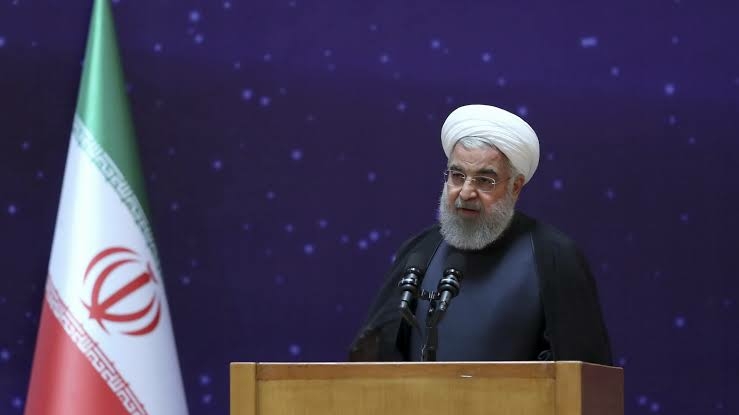
By The Washington Post · Kareem Fahim, Miriam Berger, Steve Hendrix · WORLD, MIDDLE-EAST ISTANBUL – Iranian President Hassan Rouhani on Saturday blamed Israel for killing Mohsen Fakhrizadeh, a prominent Iranian nuclear scientist, saying it was aimed at causing turmoil before President-elect Joe Biden takes office and that Tehran would respond at the “right time.”
Fakhrizadeh was killed in a daytime ambush east of Tehran on Friday, Iranian authorities said. Though once regarded as the architect of Iran’s disbanded effort to build a nuclear weapon nearly two decades ago, he played a far less prominent role in Iran’s current programs involving reactors and uranium enrichment.
But the attack stung Iran for apparent lapses in security and intelligence and threatened wider fallout in the region less than two months before Biden takes office and seeks a possible reset in relations with Iran.
Rouhani, however, suggested that Iran could calibrate its possible responses with an eye toward the end of President Donald Trump’s “maximum pressure” campaign, which is supported by Israel.
“Their pressure era is coming to an end and the global conditions are changing,” he said. Officials in Israel have not commented.
A spokesperson for the European Union released a statement Saturday calling the attack “a criminal act” that “runs counter to the principle of respect for human rights the E.U. stands for.”
The statement continued, “In these uncertain times, it is more important than ever for all parties to remain calm and exercise maximum restraint to avoid escalation which cannot be in anyone’s interest.”
In a statement Saturday, Rouhani blamed the “usurper Zionist regime” – a reference to Israel – for the killing and said Fakhrizadeh’s death would not impede Iran’s scientific “achievements.” In a separate speech, Rouhani tied the killing to Trump’s coming departure from office.
Trump withdrew the United States from a nuclear pact that Iran struck with world powers five years ago. His administration has ratcheted up sanctions and other pressures on Tehran since abandoning the deal aimed at reining in Tehran’s nuclear program. Biden has pledged to work more closely with allies on Iran policies and work to rejoin the nuclear agreement.
“This brutal assassination shows that our enemies are passing through anxious weeks, weeks that they feel their pressure era is coming to an end and the global conditions are changing,” Rouhani said. He added that Israel aimed “to cause commotion and turmoil.”
A senior U.S. official said that the United States had nothing to do with the scientist’s killing and believes Iran has been told that. The official, who spoke on the condition of anonymity to discuss a sensitive matter, said there was little doubt Israel was behind the attack.
“There is absolutely no information indicating that it was anyone other than the Israelis,” the official said, adding that the Trump administration has no desire to get drawn into a regional war by Israel.
Germany – one of the world powers part of the nuclear pact – echoed the EU’s call for avoiding escalation.
“The killing of Mohsen Fakhrizadeh is once again worsening the situation in the region, at a time when we absolutely do not need such an escalation,” German Foreign Minister Heiko Maas told Germany’s Funke media group. He called on “all those involved to refrain from taking steps that could lead to a further escalation of the situation.”
The killing added to soaring tensions in the region amid fears that a confrontation between Iran and the United States or Israel could erupt before Biden takes office.
The front page of Iran’s hard-line Kayhan newspaper warned Israel to await an “eye for an eye.” Hamas and the Palestinian Islamic Jihad, two Iran-backed Palestinian militias, issued statements Friday condemning the assassination.
Lebanon’s Hezbollah, another Iranian ally, said Friday that “the response to this crime” was in Iran’s hands, Reuters reported.
Israel’s Channel 12 News reported Saturday that Israeli embassies around the world had been put on high alert.
The Pentagon announced Friday that the USS Nimitz aircraft carrier had been deployed back to the Middle East following maritime exercises in the Indian Ocean. While the timing of the announcement was unusual, the deployment, had been initiated before Friday’s attack to support U.S. troops withdrawing from Iraq and Afghanistan.
A spokeswoman for the U.S. Navy’s Fifth Fleet, based in Bahrain, said “there were no specific threats that triggered the return of the Nimitz Carrier Strike Group,” Reuters reported.
Iran’s supreme leader, Ayatollah Ali Khamenei, in a series of tweets Saturday warned that there would be “definitive punishment of the perpetrators” while Iran would continue “following the scientific and technological attempts of the martyr in all segments of his activity,” in a possible reference to Fakhrizadeh’s nuclear work.
Fakhrizadeh, a physics professor who was believed to be about 60, was widely regarded as the driving force behind Iran’s nuclear program, including clandestine efforts to develop a nuclear bomb in the early 2000s.
Intelligence officials identified him as the head of the Amad Plan, the secret nuclear weapons research program that sought to develop as many as six nuclear bombs before Iranian leaders ordered a halt to the program in 2003.
Once a reclusive figure, Fakhrizadeh has more recently raised his profile, allowing himself to appear on official Iranian websites, including during events held by Iran’s supreme leader.
Iran has recently increased its stockpile of enriched uranium, insisting it is intended only to power its nuclear energy plants and a research reactor. Its adversaries have countered that it puts the nation closer to producing warhead-grade material.
Israel, which maintains its own undeclared nuclear weapons program, has beseeched the international community to take tougher actions against Iran’s nuclear program and Fakhrizadeh specifically. Prime Minister Benjamin Netanyahu highlighted the scientist’s photograph at a news conference in 2018 and advised the world to “remember his name.”
More recently, speculation has risen that Netanyahu has pushed the Trump administration to strike against Iran’s nuclear assets before Biden’s inauguration.
The Trump administration and the Biden team have yet to comment on the killing. On Friday, Trump retweeted veteran Israeli journalist Yossi Melman, who described the attack as a “major psychological and professional blow for Iran.”
Melman, author of “Spies Against Armageddon,” a history of Israeli clandestine operations, said in an interview that he would not be surprised to learn that the killing was an Israeli operation, but has gotten no such confirmation from within the government.
“There is total silence,” he said. “In this case, it is likely to stay that way.”
For Israel, Fakhrizadeh was “the number one target among the scientists,” he added.
While many saw the timing of the killing as an attempt to complicate a future Biden administration’s diplomacy with Iran, Melman said it was more likely driven by logistics, since such an ambush would have taken months to prepare.
The attack – which Iranian officials said involved a car bomb and gunmen who raked the scientist’s car – recalled the shadowy killings of at least four Iranian nuclear scientists from 2010 to 2012.
Accounts of Fakhrizadeh’s killing indicated his movements were being tracked and the attack was coordinated.
Sepah Cybery, a social media channel affiliated with Iran’s Islamic Revolutionary Guard Corps, said Saturday that it believed 12 attackers were involved, in addition to Fakhrizadeh’s four bodyguards, two of whom it reported were shot and are in serious condition.
Iran’s Fars news reported Friday that the car explosion sent debris flying 300 meters away and damaged an electricity tower. It also reported that one of the bodyguards was shot and killed while trying to protect Fakhrizadeh, though other outlets reported the security worker was injured.
In a message on Twitter Friday, Sen. Chris Murphy, D-Conn., wrote: “If the primary purpose of the killing of Mr. Fakhrizadeh was to make it harder to restart the Iran nuclear agreement, then this assassination does not make America, Israel or the world safer.”
Former CIA director John Brennan, a strong Trump critic, tweeted that the attack was “a criminal act & highly reckless.”
“It risks lethal retaliation & a new round of regional conflict,” he wrote. “Iranian leaders would be wise to wait for the return of responsible American leadership on the global stage & to resist the urge to respond against perceived culprits.”
Wilton Gregory becomes first Black American cardinal
InternationalNov 29. 2020Washington Archbishop Wilton Gregory leads Mass on Feb, 26, 2020, at the Cathedral of St. Matthew the Apostle in Washington, D.C. MUST CREDIT: Washington Post photo by Marvin Joseph
By The Washington Post · Chico Harlan · NATIONAL, WORLD, RELIGION, EUROPE ROME – Wilton Gregory, the archbishop of Washington,on Saturday became the first Black American to earn the rank of cardinal, in a pandemic-altered Vatican ceremony that was strange and historic like none before it.
Because of virus travel concerns, two of the 13 new cardinals didn’t come to Rome. The others wore masks and sat in socially distanced rows inside St. Peter’s Basilica. Gregory, like some other new cardinals, had quarantined for 10 days before the ceremony at a Vatican resident building, with meals and towels dropped off at his door.
After testing negative for the third time at his Rome quarters, Gregory’s quarantine lifted Saturday morning.
Hours later, he’d received a title that heightens his clout and profile inside the Catholic Church – and makes him one of the papal electors – at a time of fierce American racial inequities and division.
Gregory said in a videoconference interview that he hopes to be a “voice for the African American community in the pope’s ear.”
“Among the people that have congratulated me and wished me well, friends and colleagues, I’ve heard this: It’s about time,” Gregory said, referring to a Black American becoming a cardinal. “But it is also an important recognition that the African American, the Black Catholic community, is an important component within the larger, universal church.”
It was the seventh time that Pope Francis has convened a consistory, as the ceremony is known. The events generally are colorful and full of ritual, and they have played an underappreciated role in Francis’s efforts to remodel the church, as he gradually builds a church leadership that reflects his priorities and styles.
The Catholic Church now has 229 cardinals, 128 of whom are under 80 years old and eligible to vote for the next pope. Of those 128, 73 have been named by Francis. That means Francis-picked cardinals will comprise the majority in the next conclave.
The event Saturday was attended by old cardinals as well as the new ones – with the new ones sitting in individual seats flanking the pope. Francis recited a homily as well as the names of the incoming cardinal class. Most chose to remove their masks when kneeling before the pope to receive their red hats; Gregory kept his on. The pope, as has been his habit throughout the pandemic, did not wear a mask.
After the ceremony, Francis took the new cardinals to pay a visit to retired Pope Benedict XVI, 93, who lives in a monastery inside the Vatican. According to a Vatican spokesman, Benedict “expressed his joy” for the visit and gave the cardinals his blessing.
In recent years, he has selected new cardinals interested in migration and critical of nationalism. He has also gone further than his predecessors in appointing non-European cardinals, an acknowledgment of how Catholicism’s power base has tilted toward Africa and South America.
Gregory, who turns 73 this month, is the fourth American named a cardinal by Francis.
Gregory said he received the news of his elevation only after Francis had announced it publicly, in an October Angelus service in St. Peter’s Square. Gregory was told of the decision in a 6:30 a.m. phone call by Cardinal Kevin Farrell.
“I want to be the first to congratulate you,” Gregory remembers Farrell saying.
“I was humbled and grateful and a little tearful all rolled up in one,” Gregory said.
When Francis first announced the new cardinals, it was unclear whether the Vatican would even try to hold an in-person consistory. But Gregory and most of the other new cardinals decided to come. Gregory tested negative for the coronavirus before leaving Washington, was tested again upon arrival in Italy, and then went into quarantine in the same residence where Francis lives.
“I thought I could do it safely,” Gregory said. “And finally, I think the Holy Father wants a face-to-face consistory.”
Gregory’s promotion to cardinal had been anticipated, dating to his appointment last year as archbishop of Washington – a position that normally comes with a cardinal’s hat. The position is both high-profile and complicated, part religion and part politics, and it has pushed the normally moderate, mild-mannered Gregory to become more outspoken. In June, he criticized President Donald Trump’s visit to a Washington shrine to Pope John Paul II, taking particular aim at the shrine’s leadership, saying the facility was being “egregiously misused and manipulated.”
Days earlier, law enforcement used rubber bullets and tear gas to clear peaceful protesters outside the White House so Trump could stage a controversial photo op holding a Bible in front of St. John’s, the Episcopal church on Lafayette Square.
Gregory’s next challenge involves working with President-elect Joe Biden, who will be the first Catholic president since John F. Kennedy. Some Catholic traditionalists say that Biden, who regularly attends Mass, should be denied the sacrament of Communion because of his support for abortion rights.
The Catholic News Agency noted that in 2004, the Vatican’s doctrinal chief, Cardinal Joseph Ratzinger – soon to be Pope Benedict XVI – told U.S. bishops that politicians “consistently campaigning and voting for permissive abortion” laws were committing a grave sin. Such politicians, Ratzinger wrote, should be informed of church teaching and not given Communion.
But individual bishops have greatly differing interpretations, with some arguing that pastors should not withhold Communion as a way to pressure politicians.
Biden last year was denied Communion during a campaign stop in South Carolina. But Gregory noted that the bishop in Biden’s hometown of Wilmington, Del., Fran Malooly, has not imposed such a restriction. Gregory indicated he would follow in Malooly’s path.
“I don’t envision imposing any restrictions on his participation in the church. I have to challenge him,” Gregory said. “I have to confront him. I have to remind him of what the church believes and teaches. But I have to respect and treat him with the dignity he deserves, not just as president but as a human being.”
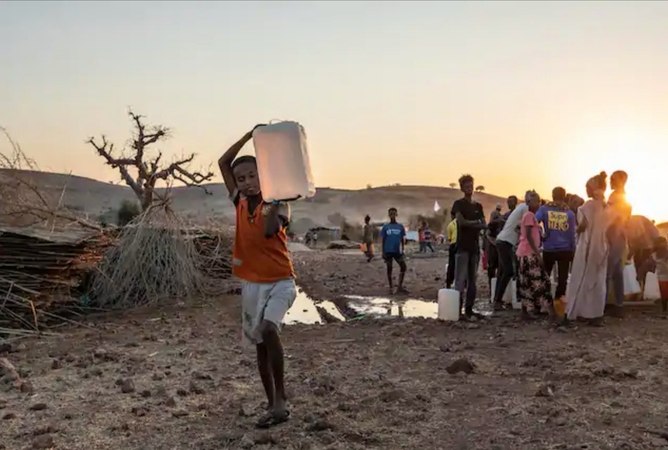
By The Washington Post · Lesley Wroughton, Max Bearak, Danielle Paquette · WORLD, AFRICA Ethiopia’s military launched an assault on the capital of the northern Tigray region Saturday after last-minute diplomatic efforts by three former African presidents failed to persuade the fighting sides to reach a truce.
Hours later, the country’s army chief of staff said government forces had taken full control of Mekele – home to at least half a million people – and Prime Minister Abiy Ahmed claimed in a separate statement that the “last phase” of the operation against leaders of the Tigray People’s Liberation Front (TPLF) had been completed.
A communications shutdown and bans on media access across most of Tigray has made verifying the government’s claims near impossible. Fighting began Nov. 3 and has been marked by reports of mass atrocities and a deepening humanitarian crisis in an already stressed region.
The offensive followed the end of a 72-hour ultimatum Abiy issued to the rebelling leaders of the Tigray region to lay down arms after three weeks of unrest that sent more than 40,000 civilians fleeing across the border into Sudan.
The military campaign is directed against the TPLF, the political party in charge of the province and which once ruled a coalition that led Ethiopia for nearly three decades. After Abiy’s rise, leaders returned to their power base in Tigray. Relations with the central government in recent months have imploded.
Watch: What’s behind the conflict in Ethiopia?
Abiy has rejected international calls for talks with the TPLF, saying dialogue would “nurture a culture of impunity with devastating cost to the survival of the country.” Ethiopia is made up of ten semiautonomous ethnolinguistic regions.
Abiy won last year’s Nobel Peace Prize for ending a two-decade-long standoff with neighboring Eritrea.
Abiy’s statement said that the Ethiopian military had retaken Mekele airport and a major command post in the city, freed thousands of soldiers that had been “held hostage” by the TPLF, and done so with precision to avoid civilian casualties. Tigrayan officials, however, noted heavily populated areas of Mekele were being shelled.
Ethiopian forces “started hitting with heavy weaponry and artillery the center of Mekelle,” the local government said in a statement to Tigrayan media. Video of the claim also surfaced on Facebook, and two humanitarian groups with staff in the city confirmed the reports to Agence France-Presse.
A senior diplomat said blasts rocked the city’s north on Saturday, citing satellite phone calls from a government official who heard them. Local television, which had been operating until midday, suddenly went static.
“It’s happening,” said the diplomat, who was not authorized to discuss the matter publicly.
The shells appeared to be coming from surrounding areas, said a humanitarian official in Addis Ababa, who fielded reports from staffers in Mekele. No one could see federal forces.
International concern had mounted that Mekele’s half a million residents could get caught in the violence. Aid workers said the exodus from Tigray included pregnant women, children and the ill.
After fleeing Tigray, refugees in Sudan recount brutal killings
Billene Seyoum, a spokeswoman for the prime minister’s office, denied claims that Ethiopian forces were striking civilian areas. “The safety of Ethiopians in Makelle and Tigray region continues as priority for the federal government,” she said.
The three African Union envoys who met with Abiy – former Presidents Joaquim Chissano of Mozambique, Ellen Johnson Sirleaf of Liberia and Kgalema Motlanthe of South Africa – urged the Ethiopian leader this week to open dialogue with the rebelling TPLF.
He has publicly refused to take that step, calling the TPLF an illegal “clique” and an internal matter for Ethiopia to resolve on its own. (He barred the envoys from seeing TPLF commanders.)
Pope Francis was among those appealing for peace Saturday.
“I invite everyone to pray for #Ethiopia where armed clashes have intensified and are causing a serious humanitarian situation,” he wrote on Twitter. “I appeal to the parties in conflict so that the violence might ceases, life may be safeguarded and the populations can regain #peace.”
The U.N. refugee agency has warned that a “full-scale humanitarian crisis” is unfolding in Tigray. Food and water may be running out in the province of 6 million, putting untold lives at risk.
Aid workers said they had no way to reach people who had been forced from their homes for weeks. Access remains unclear, several groups said, after Ethiopian officials announced the opening of humanitarian routes on Thursday.
Abiy’s government has blamed the rebels in the north for the crisis that has grabbed the world’s attention.
“The last peaceful gate which had remained open for the TPLF clique to walk through has now been firmly closed as a result of TPLF’s contempt for the people of Ethiopia,” the prime minister’s office said in a statement.
The most senior State Department official on African affairs, Tibor Nagy, tweeted on Saturday that “fighting and shelling in the Mekele area are a very grave concern. We urge an immediate end to conflict and restoration of peace in Tigray. Civilians must be protected and humanitarian access provided to aid those in need.”
President-elect Joe Biden’s national security adviser nominee, Jake Sullivan, urged dialogue led by the African Union.
“I’m deeply concerned about the risk of violence against civilians,” he said on Twitter, “including potential war crimes.”
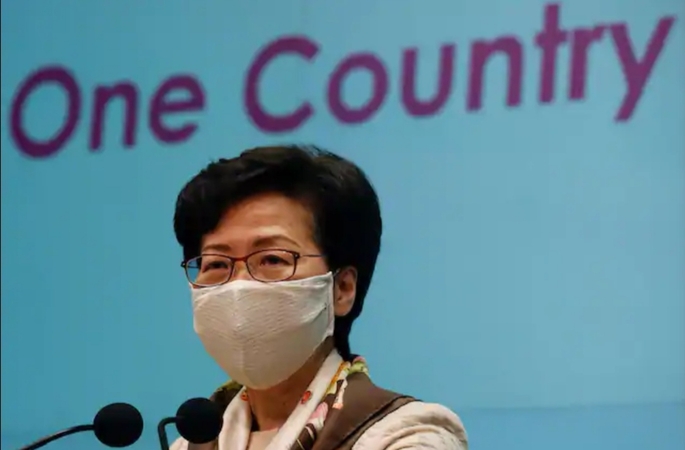
Hong Kong Chief Executive Carrie Lam says she “has no banking services made available to her.” (Tyrone Siu/Reuters)
By The Washington Post · Adam Taylor · WORLD, ASIA-PACIFIC Hong Kong Chief Executive Carrie Lam keeps “piles of cash” at home and is unable to open a bank account after being targeted by U.S. sanctions, according to an interview the top official gave on Friday evening.
“Sitting in front of you is a chief executive of the Hong Kong SAR [Special Administrative Region] who has no banking services made available to her. I’m using cash for all the things,” Lam told HKIBC, an English language news channel based in Hong Kong.
“I have piles of cash at home, the government is paying me cash for my salary because I don’t have a bank account,” Lam added.
The highest ranking official in the semiautonomous territory, Lam said she did not want to deter people from entering Hong Kong’s public service because of the sanctions. “To be so unjustifiably sanctioned by the U.S. government is an honor,” she said.
Lam is paid around 5.21 million Hong Kong dollars, roughly $672,000, a year, making her among the highest paid public officials in the world.
Despite her bravado, Lam’s remarks were widely welcomed by her critics. Some activists noted that it appeared to suggest that even Chinese banks were complying with American financial restrictions.
“Lam says that no banks are willing to provide financial services to her. Not even Chinese state banks,” Nathan Law, a prominent Hong Kong activist who fled the country this summer, wrote on Twitter. “Her salary is paid in cash and she can only spend in cash. What does it imply?”
Lam was among 11 top Hong Kong officials who were targeted with targeted U.S. sanctions in August. The Treasury Department said the sanctions were a response to “draconian” national security legislation China has imposed on Hong Kong, which lays the groundwork to jail protesters and censor critics.
As chief executive of Hong Kong, Lam was “directly responsible for implementing Beijing’s policies of suppression of freedom and democratic processes,” the Treasury said in a statement announcing the sanctions.
The sanctions meant that Lam and the other Hong Kong individuals were added to the Specially Designated Nationals and Blocked Persons List (SDN list) maintained by Treasury’s Office of Foreign Assets Control.
Inclusion on the list essentially bars any businesses with significant U.S. links from working with the individual and blocks access to all property or other assets that the individuals have within U.S. jurisdiction.
Lam initially suggested that the sanctions on her were only a minor inconvenience. In August, shortly after the sanctions were announced, she posted on Facebook that the address on her designation was wrong and that she would cancel a U.S. visa she applied for in 2016.
Later in the month, the Hong Kong chief executive told an interviewer from Chinese state media that her “use of credit cards is sort of hampered” but added that the restrictions were “really meaningless as far as I’m concerned.”
But there had been some signs that the sanctions designation had caused more serious complications for Lam’s family.
Hong Kong media reported in August that her 26-year-old Joshua Lam had returned to Hong Kong from the United States, where he had been completing a doctorate in mathematics at Harvard University, around the time the sanctions were announced.

 President Moon Jae-in speaks at a meeting on South Korea’s aim of going carbon neutral by 2050 held at Cheong Wa Dae in Seoul on Friday. (Yonhap)
 การประท้วงมาตรการล็อกดาวน์ในอังกฤษบานปลายจนผู้ชุมนุมปะทะกับตำรวจนำมาสู่การจับกุมนับร้อย
 บลินเคนมีท่าทีชัดเจนเรื่องกิจการของสหรัฐในตะวันออกกลาง
 สหรัฐตั้งตัวเป็นตำรวจต่อต้านการประมงผิดกฎหมายในพื้นที่ทะเลจีนใต้
 แม้ญี่ปุ่นจะสามารถรับมือกับการแพร่ระบาดได้ดีแต่ยังคงมีคนฆ่าตัวตายจำนวนมากจากโควิด-19
 Washington Archbishop Wilton Gregory leads Mass on Feb, 26, 2020, at the Cathedral of St. Matthew the Apostle in Washington, D.C. MUST CREDIT: Washington Post photo by Marvin Joseph