
Trump’s baseless election fraud claims in Georgia turn Senate runoffs into a ‘high-wire act’ for Republicans #SootinClaimon.Com

#SootinClaimon.Com : ขอบคุณแหล่งข้อมูล : หนังสือพิมพ์ The Nation.

Trump’s baseless election fraud claims in Georgia turn Senate runoffs into a ‘high-wire act’ for Republicans (nationthailand.com)

Trump’s baseless election fraud claims in Georgia turn Senate runoffs into a ‘high-wire act’ for Republicans

InternationalNov 27. 2020Sen. Kelly Loeffler, R-Ga., in Atlanta on Election Night. MUST CREDIT: Washington Post photo by Melina MaraSen. Kelly Loeffler, R-Ga., in Atlanta on Election Night. MUST CREDIT: Washington Post photo by Melina Mara 

By The Washington Post · Cleve R. Wootson Jr., Amy Gardner · NATIONAL, POLITICS

GRIFFIN, Ga. – Sen. David Perdue was encouraging a crowd at a gun club south of Atlanta to support him and fellow Republican Kelly Loeffler in their bid for Georgia’s Senate seats, which he called the only thing standing between America and “a radical socialist agenda.”

But five minutes into the senator’s speech, a man interrupted.

“What are you doing to help Donald Trump and this fraud case?” the man screamed, as one woman said “Amen” and the crowd applauded. “What are you doing to stop what’s been going on here and this election fraud?”

The Republican candidates in Georgia’s dual Senate runoff campaign are navigating a highly unusual political labyrinth – caught in the middle of an intraparty war that has erupted since President Trump narrowly lost the state to President-elect Joe Biden and has turned his fire on the Republican leadership there.

The infighting now threatens to turn off the very Republican voters Perdue and Loeffler need to stave off challenges from their Democratic rivals, Jon Ossoff and the Rev. Raphael Warnock.

Trump and his allies have repeatedly, and falsely, accused Georgia Secretary of State Brad Raffensperger and Gov. Brian Kemp, both Republicans, of presiding over a fraudulent election. Trump has pushed the baseless claim that the Dominion Voting Systems machines used in Georgia were rigged as part of a global conspiracy, and Perdue and Loeffler have called for Raffensperger’s resignation.

But therein lies the conundrum: Perdue and Loeffler are traveling the state pleading with Republican voters to turn out on Jan. 5 – effectively asking Trump supporters to put their faith in the same voting system their president claims was manipulated to engineer his defeat.

“What did (Trump) get, 73 million votes? Those folks don’t just disappear. Trump’s blessing goes far here,” said the Rev. Benny Tate, of Rock Springs Church, who has been traveling with Perdue on campaign stops and prayed before Monday’s event. “There are folks that didn’t come out to vote necessarily Republican, they came out to vote for Donald Trump. I think it’s imperative that (Perdue and Loeffler) do get the Trump voters back. I think it remains to be seen whether they actually come back.”

Loeffler and Perdue are walking what one Republican strategist called “a high-wire act right now, to figure out exactly where the candidates should be relative to the president.”

Complicating the senators’ pitch to voters is the call by some Trump advocates for voters to protest the voting system in ways that some GOP strategists fear will merely result in effective votes for the Democrats.

One prominent Trump ally, Atlanta attorney Lin Wood, who unsuccessfully sued Georgia election officials to stop the certification of the vote, has urged Republican voters not to vote in elections with Dominion machines.

Wood has attacked Perdue and Loeffler for not doing enough to help, and told his 631,000 Twitter followers last weekend that if the senators don’t step up their support, he would take a pass on Jan. 5.

“If not fixed, I will NOT vote in GA runoff,” he tweeted.

Asked whether his efforts would depress GOP turnout, Wood told The Washington Post via email that the Dominion machines “have no integrity” and insisted that “Georgia can vote by written ballot if necessary in January.”

Raffensperger, among the most outspoken who have said such talk will hurt Loeffler’s and Perdue’s chances, expressed exasperation at Wood’s comments. A statewide audit of the presidential result, in which every ballot was recounted by hand, disproved the claims about the voting machines.

“I really don’t know what he’s thinking,” Raffensperger said in an interview. “If the people don’t use the machines then I guess they vote absentee and then their ballot will be scanned on a Dominion machine,” he said. “People need to get a grip on reality.”

Nonetheless, support for the claims being spread by Trump and his supporters is clearly strong in the state’s GOP base.

Hundreds of people attended “Stop the Steal” protests outside the Georgia Capitol and governor’s mansion on Saturday.

Four senators have called for a special legislative session to address voting issues before the runoff.

And the state Republican chairman, David Shafer, has echoed questions about the state’s voting system. He signed a letter along with the state party executive committee demanding fresh scrutiny of signature verification on mail-in ballots.

“We have grave concerns as to whether or not proper verification took place,” the letter said.

No evidence has surfaced that ballots with nonmatching signatures were counted.

The Perdue and Loeffler campaigns did not respond to requests for comment.

Perdue has privately pointed to the challenges of campaigning in the Trump era, and the potential benefit of running now without the president on the ticket.

Addressing donors on a conference call earlier this month, Perdue spoke of an “anti-Trump vote in Georgia” and said the runoff is about getting “enough conservative Republicans out to vote” who might have opposed the president’s re-election. Details of the call were shared with The Post by a person who provided a precise account of the discussion.

“I’m talking about people that may have voted for Biden but now may come back and vote for us because there was an anti-Trump vote in Georgia,” Perdue said. “And we think some of those people, particularly in the suburbs, may come back to us. And I’m hopeful of that.”

The odd political dynamics have come across in part through the absence of some potential campaign-trail headliners.

Trump has tweeted in favor of Loeffler and Perdue, but he has not committed to showing up on the campaign trail, though Vice President Mike Pence did lead a rally.

Kemp, the governor, has also avoided making any runoff campaign appearances on behalf of his state’s two Republican senators. The governor has been walking a line between supporting the integrity of the election result – he signed the certification on Friday of the presidential race votes – and agreeing that improvements can be made to signature verification and voter-identification rules. Kemp did not respond to a request for comment.

Republican strategists say they hope that some of tensions will fade in the weeks before the runoff, giving the party time to air enough attacks to tarnish the Democrats. They say Georgia remains a conservative state with a history of runoff campaigns going the GOP’s way. And the absence of Trump on the ballot could help win back suburban voters who rejected his style but still want to support conservatives.

One person who has been helpful for the two Senate candidates is Trump’s elder son, Don Jr., who tweeted that Georgians should “IGNORE” calls to boycott the runoffs.

“We’re not as divided as you think,” said one Republican strategist involved in the race.

Still, many Republicans remain concerned that the public hostility within the party – as well as efforts to foment distrust of voting – pose serious threats to Loeffler and Perdue.

And those tensions do not appear to be going away. Trump, for his part, has continued to push as recently as Wednesday the unfounded claims about Georgia’s voting machines.

Raffensperger hasn’t shied away from the divisions, either. His tenor hardened after Loeffler and Perdue called for his resignation – and after death threats began filtering in through social media to him and his wife.

Now, he makes no secret of his disdain for the unfounded attacks on him.

“If Republicans don’t start condemning this stuff, then I think they’re really complicit in it,” Raffensperger said in the interview. “It’s time to stand up and be counted. Are you going to stand for righteousness? Are you going to stand for integrity? Or are you going to stand for the wild mob? You wanted to condemn the wild mob when it was on the left side. What are you going to do when it’s on our side?”

Coronavirus cases are skyrocketing again in cities #SootinClaimon.Com

#SootinClaimon.Com : ขอบคุณแหล่งข้อมูล : หนังสือพิมพ์ The Nation.

Coronavirus cases are skyrocketing again in cities (nationthailand.com)

Coronavirus cases are skyrocketing again in cities

InternationalNov 27. 2020

By The Washington Post · Brittany Shammas, Mark Guarino, Jacqueline Dupree · NATIONAL, HEALTH, HEALTH-NEWS

For a few months, coronavirus-weary Chicago residents got a reprieve from the strict regulations that shuttered the nation’s third-largest city during the spring.

After infections plummeted in early June, restaurants welcomed diners back inside. Movie theaters, fitness centers and bowling alleys reopened their doors. And the barriers came down on the bike pathway along the city’s cherished lakefront.

But with new coronavirus cases surging beyond the springtime peak, Chicago is now hunkering down. Statewide measures have closed some businesses and limited the capacity at others, while officials are urging residents to stay home. Again.

“We’ve been through a heck of a lot this year,” Lori Lightfoot, the city’s Democratic mayor, said during a recent news conference. “And it’s not over.”

Across much of America, the picture is similar. Major metropolitan areas were the face of the pandemic before being overtaken by spikes in less populated parts of the country in September. Since then, the nation’s worst outbreaks have been concentrated in rural parts of the Upper Midwest.

Yet dramatic increases have been reported in many major American cities in recent weeks, with some being hit harder than they were during their previous peaks. Testing has greatly ramped up since the start of the pandemic, but that alone does not explain the growing caseloads.

“The dreaded fall wave, in many places, is upon us,” said Josh Michaud, an epidemiologist and associate director for global health policy at the nonprofit Kaiser Family Foundation. “And that includes in metropolitan areas.”

In Cook County, where Chicago is located, the seven-day average of new cases hit a record high of 4,654 on Nov. 17 – far outpacing the peak of 1,690 during the spring surge. Deaths are lower than the numbers seen in the spring but have climbed in recent weeks.

With winter approaching, business owners who stayed afloat by turning to outdoor service have been investing in heating lamps, hoping to keep customers coming even in temperatures that can drop below freezing.

Michelle Foik, co-owner of Eris Brewery & Cider House, said she saw the shutdown of indoor dining as inevitable. The facility’s patio has been “our saving grace,” she said, but she worries about what will happen this winter. She’s torn between relief that the rise in cases was met with more restrictions and concerned over the impact on her business.

“Believe me, we need the money,” Foik said. “We’re a start-up. We are investing in our future, but if this become a longtime shutdown, it just hurts everything.”

At NorthShore University HealthSystem, infectious-disease specialist Kamaljit Sandhu Singh said he and other health-care workers were “exhausted physically and mentally” as hospitalizations and intensive care unit admissions increased.

He said the pandemic reminded him of growing up during the Vietnam War: “I could never wrap my name around the number of soldiers’ lives lost, but the pictures were compelling.”

Cases are surging on Chicago’s West and Southwest sides, where the virus spread at a disproportionate rate in the spring and the majority of residents are Black or Latino. Kiran Joshi, senior medical officer at the Cook County Department of Public Health, said “a myriad of factors” play into why those areas are surging highest, but that a common attribute is that people there “experienced structural racism over decades.”

The second peak in Chicago mirrors those in metropolitan areas across the country. In recent weeks, counties home to cities including Philadelphia, Los Angeles, Detroit, Las Vegas and Minneapolis have seen new cases surpass their past highs. Miami-Dade County has been trending up again, while Salt Lake County is experiencing its first major peak of the pandemic, with cases and hospitalizations rising since early October.

In Maricopa County, which includes Phoenix, Valleywise Health “had a little breather” after the summer’s surge in Sun Belt states, said Michael White, the health system’s chief clinical officer. But the seven-day average of new cases, which hovered around 500 a day in late October, exceeded 2,000 on Monday.

“We’re hanging in there is how I would describe it,” White said. “Our biggest concern always is, as we continue to see this case count rise, that that certainly can lead to more folks needing hospitalization down the road, on top of a time where we usually see a higher rate of hospitalizations for non-covid-related illnesses.”

Phoenix-based Banner Health is projecting that 125 percent of the system’s licensed hospital beds will be full by the first week of December. Hospital administrators believe they have stocked up on enough personal protective equipment, ventilators and beds to weather the surge, Chief Clinical Officer Marjorie Bessel said during a news conference Tuesday. They worry most about staffing – they’ve hired nearly 1,000 health-care workers from out of state and are recruiting 900 more.

The health system always beefs up its staff for the winter months, Bessel said, but the coming weeks are expected to be markedly different from previous years and even the Sun Belt’s summer surge.

“The entire country is surging at the same time,” she said.

Health officials attribute the virus’s resurgence in cities to several factors, including eased restrictions, increased gatherings and what’s being called “covid fatigue.” Eight months into the pandemic, “there is no longer that sense of urgency,” said Mouhanad Hammami, chief health strategist in Wayne County, home to Detroit. “When you live with something, it is no longer urgent, and you tend to get desensitized to it.”

Some authorities in Chicago blamed rock-bottom hotel prices and the state-imposed indoor dining ban, suggesting it may have caused parties to relocate to hotel rooms or other spaces, such as Airbnb rentals. On Nov. 12, Lightfoot told reporters that current restrictions apply to both.

“I know the hotel industry was hit hard and is in many instances is on life support, but that cannot include parties,” she said. “I urge the hotel industry to be much more diligent about who is coming in. … People think it’s party time. It’s not.”

Officials in many hard-hit cities also point to increasingly widespread transmission across the United States, which has been reporting record-setting numbers of infections. Over the past week, the country had well over 150,000 new cases each day. Ahead of Thanksgiving, traditionally a time of significant travel and extended family get-togethers, health experts feared the number would only continue to climb.

“We would love to be that shining city on the hill where we’re avoiding all this,” said Philadelphia Department of Public Health spokesman James Garrow. “But I don’t know that anybody’s going to be able to avoid this.”

Mortality rates have improved from earlier in the pandemic – a change attributed to improved therapeutics and knowledge of how to handle covid-19, the disease caused by the virus. Still, authorities in areas that are seeing spiking infections have reacted with alarm, noting that the explosion in cases will inevitably drive up the death toll.

In Los Angeles County, where hospitalizations are up and deaths increased slightly last week, Public Health Director Barbara Ferrer on Friday described the data as looking “really bad right now” and added that the county had experienced “three terrible days in terms of case rates and increases in hospitalizations.” She said health officials were hoping deaths “don’t go up … as much as earlier in the pandemic.”

With rapidly rising case numbers has come a return to some of the restrictions of the spring. In Los Angeles, health officials suspended outdoor dining for the first time since May. They warned that a stay-at-home order could follow if the situation worsens.

Wayne County’s health department on Friday strongly recommended that schools shift to virtual instruction through mid-January, noting that the current wave “is at a level higher than the first peak in April 2020.”

Philadelphia on Nov. 20 imposed new “Safer at Home” restrictions, which required schools to shift to online learning, restaurants to suspend indoor dining, and gyms and indoor fitness classes to close. Movie theaters, casinos and bowling alleys were also shuttered and indoor gatherings of more than one household prohibited.

“The hope is that by implementing these restrictions as soon as we could – and we’re doing it ahead of at least a lot of surrounding counties and states – that we’ll be able to head off getting to a point where we outstrip our capacity and get to a point worse than we were in April,” Garrow said.

Months after the first shutdowns in the United States, a better understanding of how the coronavirus spreads means that this latest wave of restrictions can be more targeted, Michaud said. Authorities can focus on what is believed to carry the greatest risk of transmission: venues where people are crowded together indoors for extended periods of time.

“In the spring, we didn’t know a whole lot about the virus and exactly what were the activities that were the riskiest,” he said. “We know a whole lot more now. And that means that we don’t have to put in a Chinese-style lockdown to have an effect on transmission. You can be much more surgical in your approach.”

But among some already battered by earlier shutdowns, the new restrictions drew frustration.

The Illinois Restaurant Association released a statement objecting to the state’s ban on indoor dining, arguing that it “will force people into less controlled, private gatherings with no safety precautions – resulting in the exact opposite of slowing the spread” of the virus. The organization said that without being allowed to serve indoors in some capacity, “our state’s largest private sector employer will be pushed to the brink of permanent devastation.”

Mark Domitrovich, co-owner of Chicago restaurants Ina Mae Tavern and Frontier, said he was trying to “string together as much as an outdoor dining situation as we can get” because takeout and delivery alone weren’t enough to get by.

“At this point we’re trying to grind it out. To try to drive as much business as possible,” he said. “It’ll run out at some point and it doesn’t seem like the cavalry is on the way either, so we’re just praying right now.”

Biden’s conciliatory tone has some Democrats concerned #SootinClaimon.Com

#SootinClaimon.Com : ขอบคุณแหล่งข้อมูล : หนังสือพิมพ์ The Nation.

Biden’s conciliatory tone has some Democrats concerned (nationthailand.com)

Biden’s conciliatory tone has some Democrats concerned

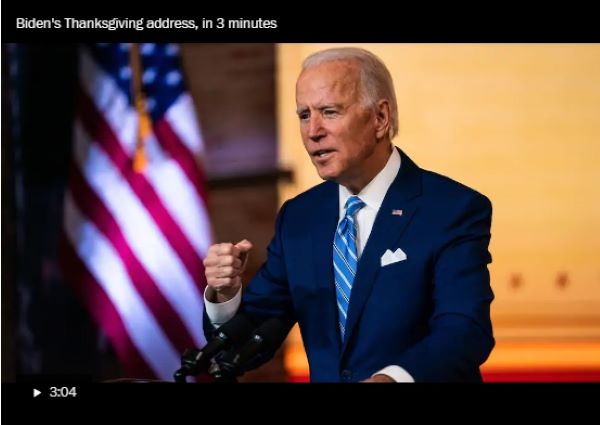
InternationalNov 27. 2020President-elect Joe Biden delivers remarks last week after a virtual meeting with U.S. governors, including some Republicans, during which he vowed a bipartisan assault on the coronavirus. MUST CREDIT: Washington Post photo by Salwan GeorgesPresident-elect Joe Biden delivers remarks last week after a virtual meeting with U.S. governors, including some Republicans, during which he vowed a bipartisan assault on the coronavirus. MUST CREDIT: Washington Post photo by Salwan Georges 
By The Washington Post · Annie Linskey, Sean Sullivan · NATIONAL, POLITICS

WILMINGTON, Del. – Republicans had been gearing up for the first partisan brawl of the new administration – a battle over whether to confirm the woman widely believed to be on Joe Biden’s shortlist for secretary of state.

https://www.washingtonpost.com/video/c/embed/ab34799b-793a-45ca-8b25-eabeb77a1930?ptvads=block&playthrough=false

They blasted Susan Rice as a polarizing throwback to an interventionist style of foreign policy or, as one senator put it, the “Typhoid Mary” of the Obama administration for what they saw as her role in multiple controversies. Some Democrats urged Biden to pick her anyway, to stand by an experienced hand in foreign affairs who could be one of the most prominent Black women in his government.

That fight will have to wait.

Biden’s choice of the lower-profile Antony Blinken, an establishment figure with close ties to the president-elect for decades, is widely seen as less likely to kick up a political storm in the closely divided Senate that will vote on his confirmation.

But while the State nomination, along with several other Cabinet picks rolled out this week, underscore Biden’s intention to govern as a conciliator and not a partisan warrior, some on the left worry that his early moves signal weakness even before he steps into the Oval Office. They say Biden, 78, naively believes the Senate still functions as it did during his 36 years there, with potential for compromise and conciliation.

“To meet Republicans where they are is to meet them in Fantasyland,” said Rebecca Katz, who worked as a top aide to Nevada Democrat Harry Reid when he served as Senate majority leader. “We don’t have any time to spare. Sometimes you’ve got to fight. We can’t fold before we’ve had one fight.”

On Capitol Hill, other Democrats are sounding similar warnings.

“There is still plenty of room for bipartisanship, but real bipartisanship, from a position of strength, not begging Republicans to confer bipartisanship upon us if we do things their way,” said Sen. Sheldon Whitehouse, D-R.I., who is worried that Biden’s outreach to the GOP is being met with resistance.

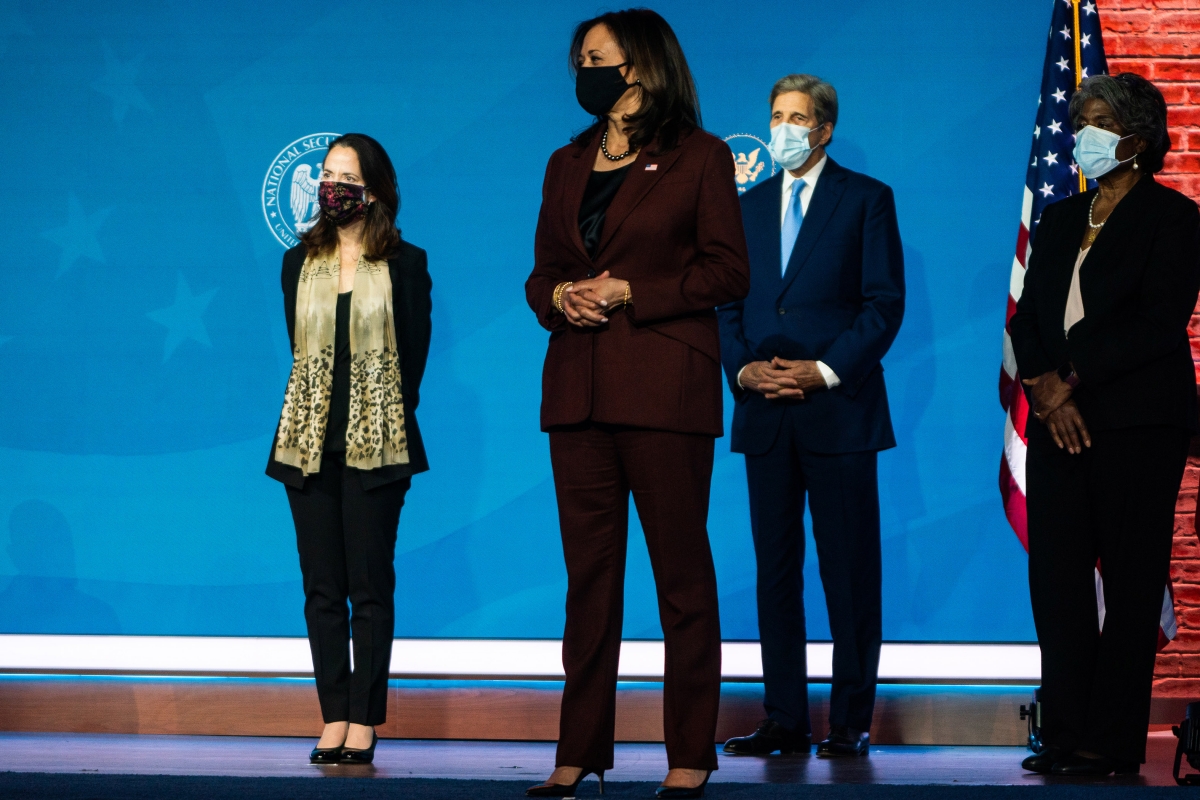
Vice President-elect Kamala D. Harris, center, appears onstage as President-elect Joe Biden introduces nominees for his administration on Tuesday. So far his picks have underscored his conciliatory posture. MUST CREDIT: Washington Post photo by Demetrius Freeman

Vice President-elect Kamala D. Harris, center, appears onstage as President-elect Joe Biden introduces nominees for his administration on Tuesday. So far his picks have underscored his conciliatory posture. MUST CREDIT: Washington Post photo by Demetrius Freeman

But Biden is making clear through his early moves that he meant it when he said, for months on the campaign trail, that he would turn down the partisan heat in Washington. His team has quietly reached out to Republicans in the House and Senate and expressed public sympathy for their delicate political calculation in weighing the potential backlash from Trump’s base if they acknowledged the election results, according to a person familiar with the strategy who like others spoke on the condition of anonymity to share internal thinking and private discussions.

So far, Biden can boast some success with his approach. Along with other olive branches to Republicans, he backed away from filing a lawsuit to force the General Services Administration to release resources for his transition. The GSA instead relented after a pressure campaign that came first from Democrats, and then Republicans, along with back-to-back-to-back losses in state courts for the president’s attempt to overturn the election results.

“I’m making a judgment based on many years of experience and how to get things done with the opposition,” Biden said recently when asked why he had declined to pursue a legal challenge against Trump’s refusal to cooperate with a transition.

The tension between picking fights and pursuing conciliation so far is typified by questions about Rice, who was a finalist in Biden’s vice-presidential search and was mentioned by Biden allies as a possible secretary of state when she didn’t get that post.

“Susan will land in another key job,” said one Biden insider. The person declined to say whether the position would be one requiring Senate confirmation.

The person also scoffed at the notion that Rice was set to get the job but for Biden’s reluctance to launch a fight with Republican senators.

“Tony was always the choice. Always,” the person said, referring to Blinken. “Anyone who thinks Tony was not going to get this doesn’t know Joe Biden.”

Rice was a leading candidate for secretary of state during Obama’s second term. The Stanford University-educated foreign policy phenom had risen quickly in the diplomatic ranks, becoming one of the country’s youngest assistant secretaries of state.

But she withdrew from consideration amid furor over her initial comments about the 2012 armed attacks on U.S. facilities in Benghazi, Libya – which killed four Americans, including the U.S. ambassador to Libya – that relied on what turned out to be inaccurate talking points supplied by the White House and CIA. Eight congressional panels investigated the events; none found that Rice had been deliberately misleading.

Instead, Obama named Rice as his second-term national security adviser, a job that does not require Senate confirmation. She worked closely with Biden as vice president, often hashing out policy ideas with him in the West Wing.

Before the Blinken selection, GOP senators lined up to oppose Rice, even as they refused to fully acknowledge Biden’s victory. It was Sen. Tom Cotton, R-Ark., a member of the Armed Services Committee, who called her the “Typhoid Mary” of the Obama administration’s foreign policy. Sen. Lindsey Graham, R-S.C., a member of the Foreign Relations Committee, said in an interview that “she’s a hard person to confirm.”

Biden’s common-ground approach was part of his pitch to America – and how he worked during a Senate career that preceded his two terms as vice president.

“I’ve known him a long time, and I don’t think guns blazing is ever going to be his style,” said Biden’s friend and donor John Morgan. “He is an institutionalist. He’s friendly with both sides. And I think the reason he was chosen to be vice president was because of his relationships.”

As he awaited official recognition of his victory, Biden has showcased bipartisan meetings. Speaking to a group that included Republican governors, he vowed a bipartisan assault on the coronavirus. During a meeting with mayors, he noted that there are not “blue cities” or “red cities.” A panel of medical experts he named to advise him on the pandemic included two former Trump administration officials.

Biden’s attempts at unity offer a direct contrast to the way in which Trump whooshed into the presidency four years ago, condemning the Washington establishment, making a series of early Cabinet decisions that were highly controversial and working to undo the actions of his Democratic predecessor.

While Biden is expected to take on issues unpopular on the right via executive order, such as mitigating climate change and liberalizing immigration rules, his early focus will be on containing the virus and bolstering the economy – two issues where there has been recent history of bipartisan agreement.

“I am hopeful that I’m going to be able to get cooperation from our Republican colleagues in the Senate and the House, as well as the governors, to build a consensus as to how we proceed when we do,” Biden said recently.

The conciliatory tone goes beyond just the divide between parties.

When talking about his then-unnamed pick for treasury secretary last week, he eagerly pointed out that they would be “accepted by all elements of the Democratic Party.” Former Federal Reserve chair Janet Yellen, who has been tapped for the position, fits that bill.

Biden’s recent meeting with national security officials included retired Gen. Stanley McChrystal, who clashed with Biden over troop levels in Afghanistan and was fired by President Barack Obama in 2010 after he disparaged administration officials, including Biden, in comments to a reporter for Rolling Stone.

On Monday, Biden named former secretary of state and Senate colleague John Kerry to be a special presidential envoy for climate, adding him to the National Security Council – showing he has no hard feelings about a February cellphone call in which Kerry, then in Iowa as a surrogate for Biden, was overheard musing about jumping into the Democratic primary.

Part of Biden’s calculation is the reality he faces in a closely divided Senate – a chamber now in Republican hands. Even if Democrats win both of Georgia’s runoff elections on Jan. 5, the chamber would split 50-50, giving him the smallest possible edge with the tie-breaking vote of Vice President Kamala Harris.

That will require maintaining some relationships with Republicans and keeping the Democratic left happy. Already, Sen. Bernie Sanders, I-Vt., the liberal leader who rallied his forces on behalf of Biden during the general election, is worried that Biden’s posture to reach out to the right will leave the left wing of the party untended.

“It seems to me pretty clear that progressive views need to be expressed within a Biden administration,” Sanders said in an interview with the Associated Press. “It would be, for example, enormously insulting if Biden put together a ‘team of rivals’ – and there’s some discussion that that’s what he intends to do – which might include Republicans and conservative Democrats – but which ignored the progressive community.”

Sanders is hoping that Biden will tap him to be labor secretary, according to a person familiar with his ambitions, although that could reignite GOP campaign talking points that Biden is captive to the left. Biden avoided a similar fight by skipping over Sen. Elizabeth Warren, D-Mass., as treasury secretary, a position she sought, according to several Warren allies.

“You can only pick one or two battles,” said a Biden insider, explaining Biden’s approach to nominations.

Biden, in an NBC interview Tuesday night, indicated he was reluctant to select Democratic senators or House members for his Cabinet because of the potential impact on the party’s legislative strength.

Democratic members urged Biden not to dial back any Cabinet choices.

“He should go by the person that he feels is the most qualified,” said Rep. Gregory Meeks, D-N.Y. “Don’t worry about the political aspects of the Republicans, many of whom still have not acknowledged that he’s the president of the United States.”

Rather than gearing up for a fight, Biden has said he expects some back-and-forth with Senate Majority Leader Mitch McConnell, R-Ky., when it comes to Cabinet nominations.

“I take McConnell at his word,” Biden said recently when discussing his process for making selections. “I understand he said that he will make it clear who he’s prepared to support or not support and that’s a negotiation that I’m sure we’ll have.”

Last week, Biden’s newly minted chief of staff, Ron Klain, offered a more traditional posture on the Cabinet, saying that Biden would not defer to GOP leaders on his choices.

“On these executive branch nominations, these are the choices for the president to make, and then the Senate needs to act on those choices,” Klain told CNN’s Wolf Blitzer.

However, some Democrats have been quick to point out that Republicans are showing no indication they’ll work with Biden – even as he tries to work with them.

Some Democratic operatives see Biden’s current strategy as an effort to claim the higher ground with the American public and predict it will be short-lived.

“Biden’s entire message – which I did not enjoy, but I think I understand the political calculation – has always been seeking cooperation as part of his ‘healing America mission,’ ” said Adam Jentleson, a former deputy chief of staff to Reid. “It’s fine for Republicans to be the ones to shoot first and break any sort of cease-fire that may exist.”

Increase investment in Thailand or risk missing UN Sustainable Development Goals: Research #SootinClaimon.Com

#SootinClaimon.Com : ขอบคุณแหล่งข้อมูล : หนังสือพิมพ์ The Nation.

Increase investment in Thailand or risk missing UN Sustainable Development Goals: Research (nationthailand.com)

Increase investment in Thailand or risk missing UN Sustainable Development Goals: Research

InternationalNov 27. 2020

By THE NATION

Thailand and emerging Asean are not getting the investment needed to help the world meet the UN Sustainable Development Goals (SDGs), new research from Standard Chartered has revealed.

“The $50 Trillion Question” investigates how some of the world’s biggest asset managers – with a combined US$50 trillion in assets under management (AUM) – are investing at this critical time for the global economy and environment.

The research is based on a survey conducted between July and August 2020, among a panel of the world’s top 300 investment firms with total assets under management (AUM) of more than US$50 trillion.

It found that 20 per cent are unaware of the UN’s Sustainable Development Goals (SDGs).

Meanwhile only 13 per cent of their $50 trillion of investment is linked to the SDGs

Just 22 per cent of the AUM is invested in Asia.

The lack of investment in emerging markets puts the chances of meeting the 2030 SDG deadline at risk.

Of those already investing in the largest emerging Asean markets (Vietnam, Indonesia, Thailand, the Philippines and Malaysia), 39 per cent say they will likely increase their investment in the future. Thailand was seen as particularly attractive with 45 per cent of high-growth investors.

The research also shows Covid-19 may have made it even harder for emerging markets to get the investment they need. Some 70 per cent of investors believe the pandemic has widened the capital gap further.

Biden’s conciliatory tone has some Democrats concerned #SootinClaimon.Com

#SootinClaimon.Com : ขอบคุณแหล่งข้อมูล : หนังสือพิมพ์ The Nation.

Biden’s conciliatory tone has some Democrats concerned (nationthailand.com)

Biden’s conciliatory tone has some Democrats concerned

InternationalNov 26. 2020President-elect Joe Biden delivers remarks last week after a virtual meeting with U.S. governors, including some Republicans, during which he vowed a bipartisan assault on the coronavirus. MUST CREDIT: Washington Post photo by Salwan GeorgesPresident-elect Joe Biden delivers remarks last week after a virtual meeting with U.S. governors, including some Republicans, during which he vowed a bipartisan assault on the coronavirus. MUST CREDIT: Washington Post photo by Salwan Georges 
By The Washington Post · Annie Linskey, Sean Sullivan · NATIONAL, POLITICS 
 WILMINGTON, Del. – Republicans had been gearing up for the first partisan brawl of the new administration – a battle over whether to confirm the woman widely believed to be on Joe Biden’s shortlist for secretary of state.

They blasted Susan Rice as a polarizing throwback to an interventionist style of foreign policy or, as one senator put it, the “Typhoid Mary” of the Obama administration for what they saw as her role in multiple controversies. Some Democrats urged Biden to pick her anyway, to stand by an experienced hand in foreign affairs who could be one of the most prominent Black women in his government.

That fight will have to wait. 

Biden’s choice of the lower-profile Antony Blinken, an establishment figure with close ties to the president-elect for decades, is widely seen as less likely to kick up a political storm in the closely divided Senate that will vote on his confirmation.

But while the State nomination, along with several other Cabinet picks rolled out this week, underscore Biden’s intention to govern as a conciliator and not a partisan warrior, some on the left worry that his early moves signal weakness even before he steps into the Oval Office. They say Biden, 78, naively believes the Senate still functions as it did during his 36 years there, with potential for compromise and conciliation.

“To meet Republicans where they are is to meet them in Fantasyland,” said Rebecca Katz, who worked as a top aide to Nevada Democrat Harry Reid when he served as Senate majority leader. “We don’t have any time to spare. Sometimes you’ve got to fight. We can’t fold before we’ve had one fight.”

On Capitol Hill, other Democrats are sounding similar warnings.

“There is still plenty of room for bipartisanship, but real bipartisanship, from a position of strength, not begging Republicans to confer bipartisanship upon us if we do things their way,” said Sen. Sheldon Whitehouse, D-R.I., who is worried that Biden’s outreach to the GOP is being met with resistance. 

But Biden is making clear through his early moves that he meant it when he said, for months on the campaign trail, that he would turn down the partisan heat in Washington. His team has quietly reached out to Republicans in the House and Senate and expressed public sympathy for their delicate political calculation in weighing the potential backlash from Trump’s base if they acknowledged the election results, according to a person familiar with the strategy who like others spoke on the condition of anonymity to share internal thinking and private discussions.

So far, Biden can boast some success with his approach. Along with other olive branches to Republicans, he backed away from filing a lawsuit to force the General Services Administration to release resources for his transition. The GSA instead relented after a pressure campaign that came first from Democrats, and then Republicans, along with back-to-back-to-back losses in state courts for the president’s attempt to overturn the election results. 

“I’m making a judgment based on many years of experience and how to get things done with the opposition,” Biden said recently when asked why he had declined to pursue a legal challenge against Trump’s refusal to cooperate with a transition.

The tension between picking fights and pursuing conciliation so far is typified by questions about Rice, who was a finalist in Biden’s vice-presidential search and was mentioned by Biden allies as a possible secretary of state when she didn’t get that post. 

“Susan will land in another key job,” said one Biden insider. The person declined to say whether the position would be one requiring Senate confirmation. 

The person also scoffed at the notion that Rice was set to get the job but for Biden’s reluctance to launch a fight with Republican senators. 

“Tony was always the choice. Always,” the person said, referring to Blinken. “Anyone who thinks Tony was not going to get this doesn’t know Joe Biden.”

Rice was a leading candidate for secretary of state during Obama’s second term. The Stanford University-educated foreign policy phenom had risen quickly in the diplomatic ranks, becoming one of the country’s youngest assistant secretaries of state. 

But she withdrew from consideration amid furor over her initial comments about the 2012 armed attacks on U.S. facilities in Benghazi, Libya – which killed four Americans, including the U.S. ambassador to Libya – that relied on what turned out to be inaccurate talking points supplied by the White House and CIA. Eight congressional panels investigated the events; none found that Rice had been deliberately misleading.

Instead, Obama named Rice as his second-term national security adviser, a job that does not require Senate confirmation. She worked closely with Biden as vice president, often hashing out policy ideas with him in the West Wing.

Before the Blinken selection, GOP senators lined up to oppose Rice, even as they refused to fully acknowledge Biden’s victory. It was Sen. Tom Cotton, R-Ark., a member of the Armed Services Committee, who called her the “Typhoid Mary” of the Obama administration’s foreign policy. Sen. Lindsey Graham, R-S.C., a member of the Foreign Relations Committee, said in an interview that “she’s a hard person to confirm.”

Biden’s common-ground approach was part of his pitch to America – and how he worked during a Senate career that preceded his two terms as vice president.

“I’ve known him a long time, and I don’t think guns blazing is ever going to be his style,” said Biden’s friend and donor John Morgan. “He is an institutionalist. He’s friendly with both sides. And I think the reason he was chosen to be vice president was because of his relationships.”

As he awaited official recognition of his victory, Biden has showcased bipartisan meetings. Speaking to a group that included Republican governors, he vowed a bipartisan assault on the coronavirus. During a meeting with mayors, he noted that there are not “blue cities” or “red cities.” A panel of medical experts he named to advise him on the pandemic included two former Trump administration officials.

Biden’s attempts at unity offer a direct contrast to the way in which Trump whooshed into the presidency four years ago, condemning the Washington establishment, making a series of early Cabinet decisions that were highly controversial and working to undo the actions of his Democratic predecessor. 

While Biden is expected to take on issues unpopular on the right via executive order, such as mitigating climate change and liberalizing immigration rules, his early focus will be on containing the virus and bolstering the economy – two issues where there has been recent history of bipartisan agreement. 

“I am hopeful that I’m going to be able to get cooperation from our Republican colleagues in the Senate and the House, as well as the governors, to build a consensus as to how we proceed when we do,” Biden said recently.

The conciliatory tone goes beyond just the divide between parties. 

When talking about his then-unnamed pick for treasury secretary last week, he eagerly pointed out that they would be “accepted by all elements of the Democratic Party.” Former Federal Reserve chair Janet Yellen, who has been tapped for the position, fits that bill. 

Biden’s recent meeting with national security officials included retired Gen. Stanley McChrystal, who clashed with Biden over troop levels in Afghanistan and was fired by President Barack Obama in 2010 after he disparaged administration officials, including Biden, in comments to a reporter for Rolling Stone.

On Monday, Biden named former secretary of state and Senate colleague John Kerry to be a special presidential envoy for climate, adding him to the National Security Council – showing he has no hard feelings about a February cellphone call in which Kerry, then in Iowa as a surrogate for Biden, was overheard musing about jumping into the Democratic primary. 

Part of Biden’s calculation is the reality he faces in a closely divided Senate – a chamber now in Republican hands. Even if Democrats win both of Georgia’s runoff elections on Jan. 5, the chamber would split 50-50, giving him the smallest possible edge with the tie-breaking vote of Vice President Kamala Harris.

That will require maintaining some relationships with Republicans and keeping the Democratic left happy. Already, Sen. Bernie Sanders, I-Vt., the liberal leader who rallied his forces on behalf of Biden during the general election, is worried that Biden’s posture to reach out to the right will leave the left wing of the party untended.

“It seems to me pretty clear that progressive views need to be expressed within a Biden administration,” Sanders said in an interview with the Associated Press. “It would be, for example, enormously insulting if Biden put together a ‘team of rivals’ – and there’s some discussion that that’s what he intends to do – which might include Republicans and conservative Democrats – but which ignored the progressive community.”

Sanders is hoping that Biden will tap him to be labor secretary, according to a person familiar with his ambitions, although that could reignite GOP campaign talking points that Biden is captive to the left. Biden avoided a similar fight by skipping over Sen. Elizabeth Warren, D-Mass., as treasury secretary, a position she sought, according to several Warren allies. 

“You can only pick one or two battles,” said a Biden insider, explaining Biden’s approach to nominations. 

Biden, in an NBC interview Tuesday night, indicated he was reluctant to select Democratic senators or House members for his Cabinet because of the potential impact on the party’s legislative strength.

Democratic members urged Biden not to dial back any Cabinet choices.

“He should go by the person that he feels is the most qualified,” said Rep. Gregory Meeks, D-N.Y. “Don’t worry about the political aspects of the Republicans, many of whom still have not acknowledged that he’s the president of the United States.”

Rather than gearing up for a fight, Biden has said he expects some back-and-forth with Senate Majority Leader Mitch McConnell, R-Ky., when it comes to Cabinet nominations.

“I take McConnell at his word,” Biden said recently when discussing his process for making selections. “I understand he said that he will make it clear who he’s prepared to support or not support and that’s a negotiation that I’m sure we’ll have.”

Last week, Biden’s newly minted chief of staff, Ron Klain, offered a more traditional posture on the Cabinet, saying that Biden would not defer to GOP leaders on his choices.

“On these executive branch nominations, these are the choices for the president to make, and then the Senate needs to act on those choices,” Klain told CNN’s Wolf Blitzer.

However, some Democrats have been quick to point out that Republicans are showing no indication they’ll work with Biden – even as he tries to work with them. 

Some Democratic operatives see Biden’s current strategy as an effort to claim the higher ground with the American public and predict it will be short-lived.

“Biden’s entire message – which I did not enjoy, but I think I understand the political calculation – has always been seeking cooperation as part of his ‘healing America mission,’ ” said Adam Jentleson, a former deputy chief of staff to Reid. “It’s fine for Republicans to be the ones to shoot first and break any sort of cease-fire that may exist.”

Trump pardons former national security adviser Michael Flynn, who pleaded guilty to lying to the FBI #SootinClaimon.Com

#SootinClaimon.Com : ขอบคุณแหล่งข้อมูล : หนังสือพิมพ์ The Nation.

Trump pardons former national security adviser Michael Flynn, who pleaded guilty to lying to the FBI (nationthailand.com)

Trump pardons former national security adviser Michael Flynn, who pleaded guilty to lying to the FBI

InternationalNov 26. 2020Former national security adviser Michael Flynn is pictured at a news briefing at the White House on Feb. 1, 2017. MUST CREDIT: Washington Post photo by Jabin BotsfordFormer national security adviser Michael Flynn is pictured at a news briefing at the White House on Feb. 1, 2017. MUST CREDIT: Washington Post photo by Jabin Botsford 

By  The Washington Post · Rosalind S. Helderman, Josh Dawsey · NATIONAL, POLITICS, COURTSLAW, NATIONAL-SECURITY
WASHINGTON – President Donald Trump on Wednesday announced he had pardoned his former national security adviser Michael Flynn, ending a three-year legal saga that included Flynn’s guilty plea for lying to the FBI, his later effort to withdraw that plea and then a controversial decision by Attorney General William Barr to try to drop the case altogether.

Trump’s move marks a full embrace of the retired general he had ousted from the White House after only 22 days on the job – and a final salvo against the Russia investigation that shadowed the first half of his term in office.

The pardon he granted Flynn, an early backer of his 2016 White House bid, underlines how Trump has used his clemency power to benefit allies and well-connected offenders.White House officials said Trump has been considering other pardons before leaving office, including possibly other former aides who were convicted of crimes as part of the special counsel probe of Russian interference in the 2016 campaign.

Flynn pleaded guilty to a felony in December 2017, admitting that he had misled investigators about details of his conversations with the Russian ambassador during Trump’s presidential transition.

His plea was one of the first major courtroom victories for special counsel Robert Mueller III, who had been appointed seven months earlier.

The special counsel probe ultimately did not establish the Trump campaign had entered into a criminal conspiracy with the Kremlin. But the investigation documented how Russia interfered in the 2016 race to benefit Trump, and how Trump’s campaign welcomed the assistance. 

Flynn was one of six Trump associates to be convicted or charged with crimes before the probe ended in 2019. The president and his allies have repeatedly attacked Flynn’s prosecution as overzealous and flawed in their efforts to discredit the special counsel inquiry.

This spring, Barr and the Justice Department suddenly reversed course, declaring that prosecutors should not have brought the case against Flynn and seeking to have it dismissed. That request has been pending before a federal judge, who has been reviewing the case.

On Wednesday, Trump tweeted, “It is my Great Honor to announce that General Michael T. Flynn has been granted a Full Pardon. Congratulations to @GenFlynn and his wonderful family, I know you will now have a truly fantastic Thanksgiving!”

Not long before Trump announced the pardon publicly, Flynn tweeted an image of the American flag and the words “Jeremiah 1:19,” a reference to a Bible verse in which God says, “They will fight against you but will not overcome you, for I am with you and will rescue you.”

Democrats responded to the long-anticipated pardon with outrage. In a lengthy statement, House Intelligence Committee Chairman Adam Schiff, D-Calif., said Flynn had chosen “loyalty to Trump over loyalty to his country” and that Trump’s decision was intended to insulate himself from criminal investigation. He called the move a “corruption of the Framer’s intent” in giving the president broad pardon powers. 

“It’s no surprise that Trump would go out just as he came in – crooked to the end,” Schiff said.

House Judiciary Chairman Jerrold Nadler, D-N.Y., called the pardon “undeserved, unprincipled, and one more stain on President Trump’s rapidly diminishing legacy.”

Through a representative, Mueller declined to comment. 

But Andrew Weissmann, a former member of the special counsel team, tweeted, “Trump’s abuse of the pardon power undermines the crown jewel of our democracy: the rule of law.”

Trump told one adviser this week that Flynn had considerable support from the conservative community, and that his pardon would be well received among his supporters, according to the person, who spoke on the condition of anonymity to describe the private conversation.

Flynn had also developed close ties with Jenna Ellis, one of the president’s legal advisers, who is pushing his false allegations of fraud in this month’s election. 

Last week, the night before she appeared at a news conference at the headquarters of the Republican National Committee in Washington to discuss the president’s claims about the election, Ellis posted a photograph on Twitter of herself with Flynn and the president’s personal lawyer, Rudy Giuliani. She has discussed Flynn’s case with Trump, according to the person.

Chief of Staff Mark Meadows was an advocate for the Flynn pardon, and has often commiserated with the president about how unfair the Mueller investigation was to Flynn and others.

Flynn is the second Trump associate caught up in the Mueller probe to benefit from the president’s power to grant clemency. In July, Trump commuted the sentence of his former adviser, Roger Stone, who had been convicted of lying to Congress about his efforts to secure information from WikiLeaks during the 2016 campaign.

Trump has largely eschewed the traditional pardon process, in which people convicted of crimes formally apply for White House consideration and have their applications reviewed by Justice Department lawyers. 

Instead, the president has taken recommendations from friends, TV hosts and White House advisers, such as son-in-law Jared Kushner, who has taken a large role in some of the past decisions.

It is unclear whether Trump might seek to preemptively pardon himself or any of his family members, who have told others they expect to face ongoing investigations after Trump leaves office. 

After his guilty plea in late 2017, Flynn initially cooperated with special counsel prosecutors pursuing other cases, delaying his sentencing. 

But once Mueller’s team disbanded, Flynn hired new lawyers – including attorney Sidney Powell, who this fall has been part of a team of Trump legal advisers working to overturn the November election results by promoting baseless conspiracy theories about fraud.

In the Flynn case, Powell argued that Flynn had been entrapped during his FBI interview, conducted at the White House four days after Trump took office. She maintained that he had never intended to lie and that key documents had been withheld from him by prosecutors.

Prosecutors at first continued to pursue the case, and a federal judge rejected several of Flynn’s new arguments.

But in May, acting on instructions from Barr, the Justice Department reversed course and said a new review of the case’s origins led prosecutors to conclude that Flynn’s lies could not be proved in court. Because of that, the department said, they were not material to an FBI investigation of Russia’s interference in the 2016 election that was underway at the time.

The stunning turnaround prompted fears of politicization at the Justice Department. Barr insisted that a review of the case concluded it should be dismissed.

Rather than immediately accept that, however, District Court Judge Emmet Sullivan, who has overseen the case, signaled that he wished to explore whether the Justice Department had acted properly and if Flynn was being given special treatment because he is an ally of the president.

Flynn objected to Sullivan’s handling of the case, but the U.S. Court of Appeals for the District of Columbia Circuit ruled the judge did not have to immediately grant the Justice Department’s request to drop the matter.

In September, Powell told Sullivan that she had personally briefed Trump on Flynn’s case and had asked the president not to pardon his former national security adviser.

But on Wednesday, Powell said the pardon was appropriate. “It was high time that he be exonerated of all these charges,” she said on Fox Business. “It was truly a pardon of innocence.”

Trump’s pardon shortcuts Sullivan’s ongoing review. The Justice Department will no longer be able to pursue charges against Flynn for lying to the FBI, even after President-elect Joe Biden and his new attorney general take over next year.

The Supreme Court has ruled that accepting a pardon is akin to an admission of guilt – though some presidents and governors have used their pardon powers to help people who maintained their innocence. 

A Justice Department official, speaking on the condition of anonymity, said the department was not consulted in advance of the pardon but was given a “head’s up” on Wednesday. The official said the department would have preferred to see if Sullivan would act, and for the matter to be resolved in court.

“We were confident in the likelihood of our success in the case,” the official said. They said, however, the move was “obviously an appropriate use of the president’s pardon power.”

Flynn, now 61, was a highly regarded military intelligence officer who served multiple tours in Iraq and Afghanistan before being named director of the Defense Intelligence Agency under President Barack Obama.

But he was pushed out of that job amid concerns about his leadership skills, and a penchant for taking positions on matters related to Iran and militant Islam not supported by underlying intelligence. Associates of Flynn said he was so embittered by his treatment that he turned against Obama, former secretary of state Hillary Clinton and others he blamed for his professional demise.

In 2016, he lent Trump’s campaign legitimacyat a time when no other established national security official role was willing to endorse the former reality TV star or advise him on foreign policy issues.

As a campaign adviser, he led crowds in chants of “Lock Her Up” about Clinton and, in recent years, as his legal woes mounted, Flynn has made statements and postings on Twitter that suggest he has embraced online conspiracy claims espoused by QAnon and other sources.

After Trump was elected, he designated Flynn to serve as his national security adviser. In that role, Flynn conducted a series of meetings and phone calls with Russian Ambassador Sergey Kislyak before Trump was inaugurated.

Among the topics the two discussed were new sanctions that were imposed on Russia by Obama on Dec. 29, 2016, in response to Russia’s interference in the election. Declassified transcripts of the call show that Flynn and Kislyak spoke that day, and Flynn asked that Russia not respond aggressively to Obama’s move or escalate the conflict. 

The next day, Russian President Vladimir Putin announced that he would take no action in reaction to the new sanctions, flummoxing officials in Washington. 

The reason for the move, however, was made clear in a phone call from Kislyak to Flynn on Dec. 31, in which the Russian envoy told Flynn his views had been “taken into account” at the Kremlin and were the reason for the muted Russian reaction.

When Flynn was asked 24 days later by two FBI agents whether he discussed the sanctions with Kislyak, he told the agents that he did not remember doing so. In pleading guilty, he told the court he knew this was not true. 

More recently, he told the court he had not intended to lie. 

After a Washington Post columnist reported in January 2017 that Flynn had spoken to Kislyak on the day the sanctions were announced, Vice President Pence and other officials publicly said they had been assured by Flynn that he had not discussed the topic with the Russian ambassador. 

Justice Department officials warned the White House that Flynn had been interviewed by the FBI. After that, Flynn acknowledged privately to Trump that he may have discussed sanctions with Kislyak.

Trump’s top aides concluded they did not think Flynn could have forgotten the conversation and concluded he had lied. Flynn was then forced to resign from his post.

Why Flynn chose to lie repeatedly about his contacts with Kislyak is one of the lingering mysteries of the Russia investigation. Many legal experts believe that if had he been truthful, he likely would not have faced charges or lost his job.

In pleading guilty, Flynn also told the court that he had acted as a foreign agent of the government of Turkey while working as a consultant during the 2016 presidential campaign – and falsely filed paperwork with the Justice Department in March 2017 indicating that he had not known whether Turkey would benefit from the work or not. Flynn later denied knowingly making false statements about his Turkey work. 

His lies to the FBI – as well as his undisclosed work for Turkey – prompted Sullivan to lecture the retired general at a dramatic hearing not long after he pleaded guilty, telling him that his crime was a “very serious offense.”

The judge pointed to the American flag that sat on the bench next to him and told the retired military officer: “Arguably, you sold your country out.” 

เวียดนามอันดับ 10 ประเทศเศรษฐกิจใหญ่ฟื้นตัวจากโควิด-19 ดีที่สุด #SootinClaimon.Com

#SootinClaimon.Com : ขอบคุณแหล่งข้อมูล : หนังสือพิมพ์โพสต์ทูเดย์

เวียดนามอันดับ 10 ประเทศเศรษฐกิจใหญ่ฟื้นตัวจากโควิด-19 ดีที่สุด – โพสต์ทูเดย์ รอบโลก (posttoday.com)

วันที่ 26 พ.ย. 2563 เวลา 20:04 น.เวียดนามอันดับ 10 ประเทศเศรษฐกิจใหญ่ฟื้นตัวจากโควิด-19 ดีที่สุดนอกจากจะรับมือกับการระบาดจนชาวโลกให้การซูฮกแล้วเวียดนามยังมีเศรษฐกิจที่ฟื้นตัวอย่างแข็งแกร่งด้วย

บลูมเบิร์ก (Bloomberg) ผู้ให้บริการข่าวสารด้านการเงินทั่วโลก จัดให้เวียดนามอยู่ในอันดับที่ 10 จาก 53 ประเทศเศรษฐกิจขนาดใหญ่ ที่ฟื้นตัวจากการแพร่ระบาดของโรคติดเชื้อไวรัสโคโรนาสายพันธุ์ใหม่ (โควิด-19) ได้ดีที่สุด

วีเอ็นเอ็กซ์เพรส (VnExpress) หนังสือพิมพ์ออนไลน์ท้องถิ่น รายงานว่าเวียดนามได้รับคะแนนการฟื้นตัว 74.3 จาก 100 คะแนน

โดยการจัดอันดับการฟื้นตัวจากโรคโควิด-19 ที่เผยแพร่เมื่อวันอังคาร (24 พ.ย.) ได้ดำเนินการสำรวจ 53 ประเทศที่มีขนาดเศรษฐกิจมูลค่ามากกว่า 2 แสนล้านดอลลาร์สหรัฐ (ราว 6 ล้านล้านบาท) โดยวัดจากตัวชี้วัดสำคัญ ซึ่งรวมถึงการเพิ่มขึ้นของจำนวนผู้ป่วย อัตราการเสียชีวิตโดยรวม ความสามารถในการตรวจเชื้อ ข้อตกลงในการจัดหาวัคซีน ความสามารถของระบบดูแลสุขภาพท้องถิ่น และผลกระทบของการล็อกดาวน์ในประเทศ

ผลสำรวจชี้ว่าอัตราผลตรวจโควิด-19 เป็นบวกในเวียดนามอยู่ที่ร้อยละ 0.1 ขณะที่เม็กซิโกมีอัตราผลตรวจโรคเป็นบวกสูงสุดที่ร้อยละ 62.3

ขณะเดียวกัน เวียดนามได้รับคะแนนด้าน “ความรุนแรงของการล็อกดาวน์” อยู่ที่ 39 จาก 100 คะแนน โดยคะแนนที่สูงขึ้นบ่งชี้ว่ากิจกรรมทางสังคมและเศรษฐกิจในประเทศนั้นๆ ถูกจำกัดโดยรัฐบาลอย่างเข้มงวด ซึ่งหมายความว่าการใช้ชีวิตของประชาชนต้องหยุดชะงัก

ทั้งนี้ เนื่องจากสถานการณ์โรคโควิด-19 ในเวียดนามเริ่มซับซ้อนยิ่งขึ้นในเดือนมีนาคม รัฐบาลจึงกำหนดมาตรการเว้นระยะห่างทางสังคมระดับประเทศเป็นเวลาราว 3 สัปดาห์ แต่ไม่ได้กำหนดใช้มาตรการดังกล่าวอีกครั้งหลังเกิดการระบาดระลอกสองในเดือนกรกฎาคม โดยหันไปปรับใช้มาตรการเว้นระยะห่างทางสังคมในระดับท้องถิ่นแทน

นอกจากนี้ เวียดนามยังสามารถเข้าถึงวัคซีนป้องกันโรคโควิด-19 ที่ผลิตในประเทศจำนวน 1 ตัว ซึ่งกำลังอยู่ระหว่างเตรียมการสำหรับการทดลองในมนุษย์เร็วๆ นี้ และหากได้รับอนุมัติ วัคซีนตัวดังกล่าวจะกลายเป็นวัคซีนป้องกันโรคโควิด-19 ตัวแรกของเวียดนามที่ทดลองในมนุษย์

อนุเคราะห์เนื้อหาข่าวโดยซินหัว

Photo by Manan VATSYAYANA / AFP

หาหมอจนล้มละลาย! ผู้ป่วยสหรัฐร่วมแชร์ค่ารักษาพยาบาลสุดโหด #SootinClaimon.Com

#SootinClaimon.Com : ขอบคุณแหล่งข้อมูล : หนังสือพิมพ์โพสต์ทูเดย์

หาหมอจนล้มละลาย! ผู้ป่วยสหรัฐร่วมแชร์ค่ารักษาพยาบาลสุดโหด – โพสต์ทูเดย์ รอบโลก (posttoday.com)

วันที่ 26 พ.ย. 2563 เวลา 19:03 น.หาหมอจนล้มละลาย! ผู้ป่วยสหรัฐร่วมแชร์ค่ารักษาพยาบาลสุดโหดสำนักข่าวสหรัฐร่วมกับองค์การไม่แสวงหาผลกำไรเปิดโครงการตีแผ่ค่ารักษาพยาบาลแพงเกินเหตุ

สำนักข่าว NPR ร่วมกับ Kaiser Health News จัดตั้งโครงการ “Bill Of The Month” เพื่อตรวจสอบและตีแผ่ค่ารักษาพยาบาลของโรงพยาบาลในสหรัฐอเมริกา โดยเปิดโอกาสให้ประชาชนมาแบ่งปันประสบการณ์จ่ายค่ารักษาพยาบาลที่มีราคาสูงเกินไป และเป็นกระบอกเสียงให้ทุกคนได้ตระหนักถึงปัญหาค่ารักษาพยาบาลของสหรัฐ ซึ่งจะอัปเดทใหม่ในทุกๆ เดือน

“คุณมีใบเสร็จค่ารักษาพยาบาลที่สูงเกินไปหรือไม่สมเหตุสมผลหรือไม่ มาร่วมบอกเล่าประสบการณ์ของคุณ” ทางโครงการกล่าว

ทั้งนี้ สหรัฐเป็นหนึ่งประเทศที่มีค่ารักษาพยาบาลแสนแพง โดยในแต่ละเดือนมีผู้มาร่วมแชร์ประสบการณ์จำนวนมาก ซึ่งค่ารักษาที่พวกเขาต้องเจอนั้นค่อนข้างน่าตกใจ โดยในผู้ป่วยบางรายถึงกับล้มละลายเมื่อต้องจ่ายค่ารักษาพยาบาล

โดยชายวัยคนหนึ่งป่วยเป็นโรคหัวใจและเข้ารับการรักษาที่ Baptist Health Louisville เขาต้องเผชิญกับค่ารักษาพยาบาล 10,000 เหรียญสหรัฐ หรือราว 300,000 บาท ซึ่งเขาไม่มีเงินเพียงพอที่จะจ่ายค่ารักษาพยาบาล จนกระทั่งถูกทางโรงพยาบาลฟ้องร้อง และต้องเป็นบุคคลล้มละลายด้วยวัยเพียง 25 ปีเท่านั้น

นอกจากนี้ยังมีอีกหลายกรณีที่ต้องช็อกกับค่ารักษาพยาบาลในสหรัฐ อาทิ ชายวัย 50 ปี ได้รับการวินิจฉัยว่ามีภาวะไตวายและต้องเข้ารับการฟอกไตที่ศูนย์การแพทย์ Fresenius ซึ่งเป็นหนึ่งในสองผู้ให้บริการฟอกไตรายใหญ่ที่สุดในสหรัฐ ภายหลัง 14 สัปดาห์ที่เข้ารับการรักษาตัว เขาได้รับใบเสร็จค่ารักษาพยาบาลเป็นจำนวน 524,600 เหรียญสหรัฐ หรือราว 15 ล้านบาท

แต่หลังจากที่ NPR เผยแพร่เรื่องราวนี้ทางศูนย์การแพทย์จึงได้ตกลงที่จะยกเว้นการเรียกเก็บค่ารักษาดังกล่าว

รวมถึงหญิงวัย 44 ปี ถูกแมวจรจัดกัดนิ้วขณะเธอกำลังพยายามให้อาหารแมว และมีความกังวลเกี่ยวกับพิษสุนัขบ้าจึงได้มุ่งหน้าไปที่โรงพยาบาล Mariners เธอใช้เวลาประมาณ 2 ชั่วโมงในห้องฉุกเฉิน และฉีดยา 2 ชนิดพร้อมได้รับยาปฏิชีวนะ โดยไม่ได้มีการพูดคุยกับแพทย์แต่อย่างใด แต่ต้องตกใจเมื่อเห็นใบเสร็จค่ารักษาพยาบาลจำนวน 48,512 เหรียญสหรัฐ หรือราว 1.4 ล้านบาท

นอกจากนี้ ยังมีเด็กชายวัย 9 ปี ประสบอุบัติเหตุขณะขี่รถจักรยาน และเข้ารับการรักษาโดยการเย็บแผลที่ศูนย์การแพทย์ประจำภูมิภาค Carson Tahoe ก่อนจะได้รับใบเสร็จค่ารักษาสูงถึง 18,933 เหรียญสหรัฐ หรือราว 5.7 แสนบาท

โดยสหรัฐอเมริกาเป็นประเทศที่มีค่าใช้จ่ายด้านการดูแลสุขภาพสูงที่สุดแห่งหนึ่งของโลก ซึ่งผลิตภัณฑ์มวลรวม (GDP) ของสหรัฐจำนวน 19 ล้านล้านเหรียญสหรัฐ เป็นค่าใช้จ่ายเกี่ยวกับการดูแลสุขภาพไปแล้วประมาณ 3.2 ล้านล้านเหรียญสหรัฐ หรือประมาณ 10,000 เหรียญสหรัฐ (300,000 บาท) ต่อคน

หากเปรียบเทียบกับประเทศไทยมีค่าใช้จ่ายด้านการรักษาพยาบาลโดยรวมในประเทศมูลค่าประมาณ 25.3 พันล้านเหรียญสหรัฐ หรือคิดเป็น 6.6% ของผลิตภัณฑ์มวลรวม (GDP) ทั้งหมด

Photo by AFP /CHRISTOF STACHE

ไทยส่งตัวมือระเบิดปี 55 แลกอิหร่านปล่อยตัวชาวตะวันตก #SootinClaimon.Com

#SootinClaimon.Com : ขอบคุณแหล่งข้อมูล : หนังสือพิมพ์โพสต์ทูเดย์

ไทยส่งตัวมือระเบิดปี55 แลกอิหร่านปล่อยตัวชาวตะวันตก – โพสต์ทูเดย์ รอบโลก (posttoday.com)

วันที่ 26 พ.ย. 2563 เวลา 16:58 น.ไทยส่งตัวมือระเบิดปี55 แลกอิหร่านปล่อยตัวชาวตะวันตกแม้ทางไทยจะไม่เผยความเชื่อมโยง แต่ทีวีของรัฐของอิหร่านกล่าวเมื่อวันพุธว่า มัวร์-กิลเบิร์ทถูกแลกตัวกับชาวอิหร่านสามคน

สำนักข่าว AFP รายงานว่า ทางการไทยยืนยันว่าได้ส่งกลับชาวอิหร่าน 3 คนที่ถูกจำคุกจากคดีวางระเบิดในกรุงเทพเมื่อปี 2555 ไม่กี่ชั่วโมงหลังจากที่รัฐบาลอิหร่านปล่อยตัวนักวิชาการชาวออสเตรเลียที่ถูกคุมตัวไว้หลังถูกกล่าวหาว่าสอดแนม

กรมราชทัณฑ์เปิดเผยว่าว่าชายอิหร่าน 2 คนคือ มาซูด เซดากัตซาเดห์ (Masoud Sedaghatzadeh) และซาเอด โมราดี (Saeid Moradi) ถูกส่งตัวกลับไปอิหร่านในฐานะนักโทษในขณะที่โมฮัมหมัด คาซาเอ (Mohammad Khazaei) คนที่สามได้รับพระราชทานอภัยโทษในเดือนสิงหาคมแล้ว

เจ้าหน้าที่ของไทยไม่ได้โยงว่าการส่งตัวมือระเบิดกลับไปยังอิหร่านเกี่ยวข้องกับการที่อิหร่านปล่อยตัวไคลี มัวร์ กิลเบิร์ท (Kylie Moore-Gilbert) นักวิชาการชาวออสเตรเลียที่เชี่ยวชาญด้านตะวันออกกลาง หลังจากเขาถูกคุมขังในอิหร่านเป็นเวลา 2 ปีในข้อหาจารกรรม ตอนนี้ มัวร์ กิลเบิร์ท เดินทางกลับออสเตรเลียแล้ว

มัวร์ กิลเบิร์ท วัย 33 ปีถูกจับกุมโดยกองกำลังพิทักษ์การปฏิวัติอิสลามของอิหร่านในปี 2018 หลังจากเข้าร่วมการประชุมทางวิชาการในเมืองกอม เมืองอันศักดิ์สิทธิ์ทางตอนกลางของอิหร่าน ต่อมาเธอถูกตั้งข้อหาจารกรรมและถูกตัดสินจำคุกสิบปี

หลังจากได้รับอิสรภาพเธอบอกว่า “ฉันมาที่อิหร่านในฐานะเพื่อนและด้วยความตั้งใจที่เป็นมิตร” พร้อมกับยกย่องชาวอิหร่านที่ “อบอุ่นใจกว้างและกล้าหาญ” แม้ว่าเธอจะบอกว่าประสบการณ์ที่พานพบเป็น “การทดสอบที่ยาวนานและเจ็บปวด”

แม้ทางไทยจะไม่เผยความเชื่อมโยง แต่ทีวีของรัฐของอิหร่านกล่าวเมื่อวันพุธว่า มัวร์-กิลเบิร์ทถูกแลกตัวกับชาวอิหร่านสามคน

ด้านชายชาวอิหร่านทั้งสามคนที่ประเทศไทยถูกจำคุกจากแผนการวางระเบิดโจมตีนักการทูตอิสราเอลในกรุงเทพฯ ซึ่งต่อมาทางการอิสราเอลเชื่อมโยงว่าเป็นปฏิบัติการโจมตีนักการทูตอิสราเอลที่ปฏิบัติหน้าที่อยู่ทั่วโลก

เรื่องนี้เกิดขึ้นในวันวาเลนไทน์ปี 2555 การระเบิดครั้งแรกเกิดขึ้นเมื่อเวลาประมาณ 15.00 น. ที่หน้าโรงเรียนเกษมพิทยา ใกล้กับตู้โทรศัพท์สาธารณะ ภายในซอยปรีดีพนมยงค์ 31 ซึ่งเป็นซอยแยกของซอยสุขุมวิท 71 แขวงพระโขนงเหนือ เขตวัฒนา โดยผู้ต้องหาได้เดินออกมาเซฟเฮาส์ที่เช่าไว้ เหตุระเบิดได้พัดพาบางส่วนของหลังคาอาคารไป

จากนั้นชายได้หลบหนีออกจากบ้าน โมราดี ผู้ได้รับบาดเจ็บและมีเลือดออก พยายามโบกมือเรียกแท็กซี เมื่อคนขับ ที่เห็นอาการของเขา ปฏิเสธที่จะรับเขาไป เขาก็ได้โยนระเบิดมือไปยังแท็กซี่นั้น ระเบิดมือทำความเสียหายแก่พาหนะ และทำให้คนขับได้รับบาดเจ็บ เจ้าหน้าที่ตำรวจผู้สนองต่อเหตุระเบิดจากนั้นพยายามหยุดโมราดี ผู้พยายามหลบหนีโดยโยนระเบิดมืออีกลูกหนึ่งใส่ ระเบิดมือกระเด็นจากต้นไม้และกลับใส่เขา เกิดระเบิดและตัดขาทั้งสองข้างของเขาขาด

ขณะที่คาซาอีไปที่สนามบินก่อนจะถูกจับกุม ในปี 2556 ศาลกรุงเทพจำคุกโมราดีตลอดชีวิตในข้อหาพยายามฆ่าและตัดสินจำคุกคาซาอีเป็นเวลา 15 ปีในข้อหาครอบครองวัตถุระเบิด

ส่วนเซดากัตซาเดห์หนีไปมาเลเซียก่อนที่จะถูกส่งตัวกลับมาตามข้อตกลงส่งผู้ร้ายข้ามแดนในอีกหลายปีต่อมา และยังมีผู้ต้องสงสัยอีก 2 คนในคดีนี้ที่เชื่อว่าหลบหนีไปยังอิหร่าน

photo by AFP

ทุบสถิติ! เรือดำน้ำจีนลงจอดจุดที่ลึกที่สุดของโลก #SootinClaimon.Com

#SootinClaimon.Com : ขอบคุณแหล่งข้อมูล : หนังสือพิมพ์โพสต์ทูเดย์

ทุบสถิติ! เรือดำน้ำจีนลงจอดจุดที่ลึกที่สุดของโลก – โพสต์ทูเดย์ รอบโลก (posttoday.com)

วันที่ 26 พ.ย. 2563 เวลา 15:46 น.ทุบสถิติ! เรือดำน้ำจีนลงจอดจุดที่ลึกที่สุดของโลกจีนสร้างสถิติใหม่ขับเคลื่อนเรือดำน้ำในระดับความลึกกว่าหมื่นเมตร

“เฟิ่นโต้วเจ่อ” (Fendouzhe) ซึ่งมีความหมายว่าผู้ไม่ย่อท้อ เป็นเรือดำน้ำขับเคลื่อนด้วยมนุษย์จากประเทศจีน ที่สามารถทุบสถิติโดยลงจอดบริเวณร่องลึกก้นสมุทรมาเรียนา ทางตะวันตกของมหาสมุทรแปซิฟิก ซึ่งเป็นจุดลึกที่สุดของโลก ในระดับความลึก 10,909 เมตร เมื่อวันที่ 10 พ.ย. ที่ผ่านมา

โดยได้ทำลายสถิติจากวันที่ 27 ต.ค. ที่เรือดำน้ำเฟิ่นโต้วเจ่อดำดิ่งไปที่ระดับความลึก 10,058 เมตร

ภารกิจนี้จะทำการวิจัยเกี่ยวกับทรัพยากรใต้ทะเลลึก โดยในเดือนนี้รัฐบาลจีนได้จัดตั้งศูนย์ฝึกอบรมและวิจัยร่วมกับหน่วยงานท้องทะเลระหว่างประเทศ ซึ่งจัดฝึกอบรมผู้เชี่ยวชาญเกี่ยวกับเทคโนโลยีใต้ทะเล ตลอดจนการวิจัยเกี่ยวกับการขุดหาแร่ธาตุที่มีค่าบริเวณก้นมหาสมุทร

โดยคาดว่าเรือดำน้ำลำดังกล่าวจะเป็นมาตรฐานสำหรับเรือเดินทะเลของจีนในอนาคต ซึ่งขณะนี้จีนกำลังผลักดันการขุดสำรวจในทะเลลึก

ทั้งนี้ ในเดือนพฤษภาคม ปี 2019 วิคเตอร์ เวสโคโว นักสำรวจชาวอเมริกัน ทำลายสถิติโลกโดยการนำเรือดำน้ำลงไปที่ระดับความลึก 10,927 เมตร บริเวณร่องลึกก้นสมุทรมาเรียนาเช่นกัน