Meet the cruise fans vying for a spot on the first test voyages
Nov 15. 2020
By The Washington Post · Shannon McMahon · FEATURES, TRAVEL Large passenger cruises have been banned in U.S. waters since mid-March when the coronavirus pandemic began, devastating the cruise industry and a loyal community. But both are now thankful that the no-sail order has been lifted, giving cruise lines a path to sailing again.
The Centers for Disease Control and Prevention has new rules before real voyages can begin: ramp up coronavirus protocols and testing; limit capacity onboard; and stage “mock voyages with volunteers who will play the role of passengers.”
Royal Caribbean said Thursday that it received thousands of inquiries from loyal cruisers about that endeavor, so it created an official sign-up page and Facebook group for interested cruisers. Early Thursday, thousands of volunteers began rolling in.
“23 cruises with Royal. 4 canceled by RC this year and we miss our cruises,” wrote Collin Hext, 63, of Tyler, Texas. “This Firefighter and his dear wife are ready to go at any time!!”
“Who else in this group is in Tampa? I cannot wait to get back to cruising!” wrote Susel Rosario, 34, who works for a health-care company and signed up to volunteer with her husband.
The public group had amassed more than 20,000 members by Friday, even as the first cruise in the Caribbean since March was halted after multiple passengers tested positive for the coronavirus.
Avid cruisers posted photos from their favorite past voyages and bragged about their loyalty status on the Facebook page. But not everyone was so sure about the opportunity.
“So if 1 person tests positive on the ship, everyone is quarantined on the ship for 14 days?” one member asked.
“What’s everyone’s thoughts on how much in the way of rights people would be signing away to become a volunteer on one of these cruises?” asked another. “I am thinking insurance would not cover any treatment related to anything caught during these test cruises.”
Royal Caribbean has not clarified the volunteering terms, or what exact onboard health scenarios would be tested on the mock journeys, saying in an email that it is “still reviewing the CDC framework and [does] not have details on our simulated sailings.”
Hext, a 63-year-old retired firefighter, says he has no concerns about he and his wife, Hope, 62, potentially being selected for a mock sailing. “I’m excited more than anything. We are both very active and healthy, and I’m not concerned about contracting anything.”
Hext says he has read all of the new CDC guidelines for cruise ships, which require coronavirus testing of all passengers and crew before voyages depart, as well as enhanced cleanings, revamped air filtration and new onboard medical cabins. He thinks the cruise lines “have gone above and beyond” in terms of the protocols they have said they will implement.
Another volunteer, Clinton Seal, 49, says he is not worried about getting the virus on a cruise ship or anywhere else. “The survival rate is really high, so I think if you get it, most likely you’ll be fine.”
Seal signed up himself and his wife, Julie, 44, to be Royal Caribbean volunteers, and he says they will get a babysitter for their 16-month-old baby if they are selected. The couple visited Disney World in October, and Clinton says they felt safe and had no issues wearing masks for their entire experience, including the flights to and from Florida.
He does hope the cruise lines will clarify if coronavirus testing and other expenses will be paid for, but he notes that he and his wife are “eager” to help out in any way.
Rosario, 34, of Tampa, who volunteered with her husband, Freddy, 37, also has some questions. “My only concern would be to be left onboard a ship like other people [were] when covid first hit,” she said. But “I’m not worried about the cruise lines’ safety measures. Even before covid, they were extremely clean, you would always see the crew cleaning all over the boat. To me, it’s the same thing as going to a store now, wearing a mask,” Rosario says.
All three have extensive cruising experience: Rosario has been on eight cruises with Disney and Carnival. Seal has been on 16 cruises with Royal Caribbean. Hext has been on 36 total cruises – 23 of them with Royal Caribbean.
Hext, Seal and Rosario say their understanding of the word “volunteer” is that they will not be paid by the cruise line. They are willing to give their time for free.
Seal also sees the mock cruises as having a bigger purpose. “What I’m hoping for is just to be part of getting cruising started back up,” he says. “If this is one of the steps for that to happen then it needs to happen. Cruising benefits not just the cruise industry, but the workers, the ports that need the cruises, everybody.”
“I feel like the cruise lines have gotten a bad rap during this whole deal,” Rosario says. “They have always been clean, and thought of their guests, putting them first.
“If the public is not comfortable with sailing again, they should refrain from going,” she says. But as for excited cruisers, “let the ones who feel OK with it take advantage.”
Female-only classes support women in hitting the slopes
Nov 15. 2020Instructors and members of the Women of Whitetail program last season. MUST CREDIT: Alex Beard/Whitetail Mountain Resort.
By Special To The Washington Post · Rebecca Gale · FEATURES, TRAVEL Last winter, Kelly Beeland joined the growing number of female skiers who have discovered the benefits of honing their skills in the company of other women.
Dina Cappiello Tilghman and her son Luke Tilghman, 7, ride the chairlift last season. He was in the Whitetail Resort’s kid ski program; she was in the Women of Whitetail cohort. MUST CREDIT: Dina Tilghman.
For six weeks, Beeland and about two dozen other students – some novices, some black diamond skiers – participated in Women of Whitetail (WOW), a ski instruction program at Pennsylvania’s Whitetail Resort. Not coincidentally, the start time for the resort’s weekend course was 30 minutes after drop-off time at its ski school for children.
Beeland, 46, a stay-at-home mom from Alexandria, Va., wanted to improve her own skiing so she could keep up with Sam, now 11, and Brynn, 9, when the family traveled from the East Coast to the more challenging skiing of Snowmass, Colo. Though she hadn’t been seeking women-only classes, she found them an ideal fit, because “I think women and men approach learning things differently,” she said.
Emily Spiker, the program manager of Women of Whitetail, concurs. “Learning with other women creates a more supportive group and makes skiing less intimidating,” she said. The resort’s only female instructor with Level 3 certification, Spiker has been skiing for 50 years and teaching it for 20. She estimates that about 70 percent of the Women of Whitetail participants are moms with a child in the ski school program or on the race team. Like Beeland, their goals are modest: improve their skiing, keep up with their kids and make the entire experience of spending the day at Whitetail more fun overall.
Launched 15 years ago, Women of Whitetail has grown so much in recent years that the instructors added a second session in the 2018-2019 season to meet the demand. The popular program reflects a larger industry effort to appeal to women – especially moms like Beeland, whose kids are already skiing – by creating women-specific ski programs.
Nationally, the number of women participating in downhill skiing is growing, and resorts have taken notice. Between 2009 and 2017, the number of women in skiing increased by 7.2% – to 4.7 million – while the percentage of men in skiing decreased by 13.3% to 6.9 million, according to data from Snowsports Industries America (SIA).
Getting more women on the slopes is also good for business: Industry surveys indicate that women are often the primary decision-maker on family vacations, and SIA estimates that women control between 70 and 80 percent of all ski-related consumer spending. As part of the outreach to women, Vail Resorts, which owns Whitetail, Roundtop and Liberty in Pennsylvania, began offering women-only lessons at most of its 37 ski resorts.
For example, it started its Women Ultimate 4 ski lessons at four of its Colorado resorts – Vail, Breckenridge, Beaver Creek and Keystone – in the 2014-2015 season. Other resorts that have provided women-specific instruction include Snowbird in Utah, Whistler Blackcomb in British Columbia, Telluride in Colorado, Killington in Vermont and Jackson Hole in Wyoming.
Now comes 2020, and a ski season like no other. Among the safety measures being adopted by many U.S. resorts is themodification of group ski instruction. Decisions are still being made but so far Whitetail and Vail canceled large group lessons, though group lessons of up to six adults will be available, and other resorts in the chain were expected to follow. Snowbird was still planning to hold its three-day women’s camps this year and its Wednesday morning women’s group beginning in January.
When Whitetail announced the cancellation in October, the participants immediately began lobbying the resort to reconsider.
“Women of Whitetail was an outlet for me last year, and I was looking forward to it being even more of one this year because of the challenges covid has placed on working women and working mothers,” wrote editorial director Dina Cappiello Tilghman, of Silver Spring, Md., in an email. Cappiello, 46, credits the program with giving her the confidence to ski with her sons, Eli, 10, and Luke, 8, after tearing her ACL while skiing in high school.
“Looking at the long, dark winter ahead, especially after what we have all been through this year, skiing together week in and week out is perhaps one of the safest family activities to do this year,” Cappiello wrote.
A resort spokesperson said that although Whitetail’s adult group lesson programs are paused – it will still offer a modified kids’ program – individuals at Vail resorts can create their own groups of up to six people for private lessons, which could be a workaround for interested women.
Though WOW and similar programs clearly fill a need, the notion of women-only classes initially met some resistance – even from female ski professionals. Mermer Blakeslee, an instructor at Windham Mountain in New York, balked at the idea when she was approached about teaching a women-only ski seminar. “And then I did one,” she said, “and I could not get over the difference in women skiing with only women.” Her female students encouraged one another in tackling new skiing challenges, Blakeslee said. She also found that they opened up to one another, with conversations on the lifts flowing easily between banal topics and serious ones.
“Skiing is a risk sport. In an environment for risky learning, you have to be vulnerable, you have to risk making a mistake in public,” said Blakeslee, who has been skiing for nearly 60 years and was on the National Alpine Team for the Professional Ski Instructors of America and American Association of Snowboard Instructors (PSIA-AASI) from 1996 to 2000. “I found that women were more comfortable doing that in an all-female setting.”
One frustration for Blakeslee, who serves as a regional examiner for PSIA-AASI, is the lack of women in the ski instruction world, particularly at the upper levels. The higher the certification level, “the more male-dominated it becomes,” she said. “If so many women are coming into the ski world, why don’t we have more instructors for them?”
Last year, PSIA-AASI created a task force to create opportunities for women in snowsport leadership positions. Its findings, released last month, spotlighted some of the issues holding female instructors back: feeling that they do not belong and have few opportunities for mentorship; ill-suited equipment (many women perform better on lighter, more nimble skis designed for people with a lower center of gravity); and issues with child care.
The task force recommended including women in all levels of the ski experience, from leadership to product design to training ski school instructors. As the industry pivots to develop more offerings geared toward female skiers, neither Blakeslee nor Spiker believes the temporary cessation of women’s programs will affect their continued growth.
“The laptop in the cafe is always an option,” Spiker said. “But as more women see how skiing can work for them, the mountains may be more appealing.”
By The Washington Post · Andrew Van Dam, Heather Long · NATIONAL, POLITICS Are you better off than you were four years ago? That question has been at the heart of presidential campaigns since President Ronald Reagan first asked it in 1980.
The general thinking has been that voters who are doing well would vote to re-elect a sitting president. That’s not what happened in 2020.
This time around, those who were better off voted for a change in the White House.
The parts of America that have seen strong job, population and economic growth in the past four years voted for Joe Biden, economic researchers found. In contrast, President Donald Trump garnered his highest vote shares in counties that had some of the most sluggish job, population and economic growth during his term.
Trump fared well among voters who said the economy was their top concern, and he even won votes in places that didn’t fare particularly well under his presidency. This is perhaps a continuation of the 2016 election, when Trump won a huge share of places that had struggled under President Barack Obama. Democrats tended to view the 2020 election more as a referendum on Trump, especially his response to the pandemic.
These trends help explain why Biden was able to flip the counties that contain Phoenix, Fort Worth and Jacksonville, Fla., all of which are growing and prosperous urban hubs. And it helps explain why Trump did better than expected in Osceola County and Miami-Dade counties, the two Florida counties with some of the state’s highest unemployment rates.
“Counties where voters feel better off today than four years ago swung toward Biden,” said James Chung, co-founder of StratoDem Analytics, which studies local economic trends. “Counties that declined over the past four years were more likely to shift even more to Trump.”
To be sure, Chung found that – as exit polls have shown – education and race most strongly explained voting patterns, but they were followed closely by a county’s economic performance. The economy often decides elections, but the surprise in this case was that good economic performance didn’t appear to favor the incumbent.
What occurred in 2020 appears to be part of a larger shift in U.S. politics and economics that has been in motion since the turn of the century. In almost every election since 2000, Democrats increased their share of votes in urban areas that are densely populated and prosperous, while Republicans have increasingly become the dominant party for voters in smaller cities and rural areas.
The transformation has been swift – and stark. In the 2000 election, Republican George W. Bush won 2,417 counties that drove 45 percent of the U.S. economy, while Democrat Al Gore won 666 counties that made up to 55 percent of the economy, a fairly even split of the economic map.
In 2020, Biden won 477 counties that account for 70 percent of the U.S. economy, while Trump won 2,497 counties amounting to just shy of 30 percent of the economy, according to an analysis by Mark Muro, who directs the Metropolitan Policy Program at the Brookings Institution, and his team. (A handful of counties are still awaiting final election results.) For Democrats, it was a notable increase from 2016, when Hillary Clinton won counties amounting to 64 percent of the U.S. economy.
The United States is transforming into a knowledge and digital economy, and the political map appears to be shifting with it. Some call it the urban versus rural divide, but it is also a digital versus blue-collar split.
Increasingly, blue America is diverse, college-educated and heavily invested in professional and tech businesses. In contrast, red America is more White, less likely to have gone to college and reliant on blue-collar sectors like manufacturing, construction and energy.
“It’s a fundamentally different economic geography than we saw 30 years ago, and our politics seem to be following pretty closely,” said John Lettieri, president of the Economic Innovation Group. “Democrats are consistently and increasingly capturing the most economically productive and vibrant areas of the country.”
Some warn this political divide could heighten the gridlock in Congress. If the parties are looking out for such different types of industries and workers, they are unlikely to agree on where to invest money and what policies to prioritize.
This is “not a scenario for economic consensus,” Muro warns.
Muro notes that Biden flipped half of the 10 most “economically significant” counties that Trump won in 2016, including Maricopa County, Ariz. (which includes Phoenix), Tarrant County, Texas (which includes Fort Worth), Duval County, Fla. (which includes Jacksonville), Morris County, N.J. (a New York City suburb) and Pinellas County, Fla. (which includes St. Petersburg).
A Washington Post analysis of Labor Department data found counties that suffered economically under Obama’s second term flocked to the Trump in 2016, while prosperous counties moved toward Obama’s Democrat successor, Hillary Clinton. Contrast that with 2020, when the gaps were smaller, but Biden saw the biggest shift in his favor in counties that saw the fastest job growth in the four years of the Trump presidency through March. Meanwhile, the largest shift to Trump in 2020 came from counties that saw the least job growth over his term.
In an analysis for The Post, StratoDem Analytics found that three variables best explained voting shifts form 2016 to 2020: educational attainment, race and ethnicity, and county-level economic performance. Rapidly growing counties around Austin and Dallas turned more blue, primarily because they attracted higher educated workers who are more likely to vote Democratic.
An analysis from the Economic Innovation Group came to a similar conclusion, finding that counties won by Biden have stronger recent growth than counties won by Trump. The EIG team focused on employment growth, wage growth and growth in the number of businesses in a county from 2018 to the first quarter of 2020 – just before the pandemic caused a devastating downturn.
“Democrats need to figure out what their positive and inclusive vision is that speaks to rural America,” said Kenan Fikri, research director at EIG. “Democrats really didn’t make inroads into rural America this time around.”
Harris’s allies wonder anxiously: Will she have real clout?
InternationalNov 15. 2020Vice President-elect Kamala Harris speaks Nov. 10 on the Affordable Care Act in Wilmington, Del. MUST CREDIT: Washington Post photo by Demetrius Freeman
By The Washington Post · Chelsea Janes, Sean Sullivan · NATIONAL, POLITICS, RACE When Kamala Harris stepped onstage for the first time as vice president-elect recently, she spoke emotionally of “Black women, who are often – too often – overlooked, but so often prove that they are the backbone of our democracy.”
But while Black activists remain excited about Harris’s ascent, many now worry that the administration will not deliver much beyond her historic election – a fear sharpened by Democrats’ disappointing performance in congressional races, which has dramatically limited Biden’s maneuvering room.
Their worries are underlined by the ongoing uncertainty over what exactly Harris’s portfolio will be in the Biden administration, and how much freedom she will have to chart her own course on issues like racial justice and immigration.
“I really want her to be a transformative leader. I don’t want her to be transactional,” said LaTosha Brown, co-founder of Black Voters Matter. “What I am hoping is she becomes the lightning rod.”
Brown conceded that will be a challenge amid emerging signs that President-elect Joe Biden’s longtime advisers will hold an array of influential positions in his administration. “The entire political landscape has been dominated by White, male-centered power,” Brown said. “I certainly think there’s going to be a strain within the administration. I think there’s going to be a strain within government.”
All indications are that Harris and Biden are cementing a strong personal relationship. They talk frequently, most often through phone calls and text messages, according to a person familiar with the dynamic, who spoke on the condition of anonymity to describe private interactions. Their connection is built partly on a shared belief in the importance of family, this person said, and on Harris’s friendship with Biden’s late son Beau, who served with Harris when both were state attorneys general.
But it is far from clear how that personal relationship will translate to official roles. Biden has not announced a portfolio for Harris, the way Biden handled the economic stimulus for Obama, and Harris’s allies are watching anxiously to see if she will be allowed to choose her top staffers or if Biden loyalists will be installed.
Many Black activists are not waiting to find out. Patrisse Cullors, co-founder of the Movement for Black Lives, has written a letter on the group’s behalf to Biden and Harris requesting a meeting to convey their demands.
“Black people won this election,” Cullors wrote. “Alongside Black-led organizations around the nation, Black Lives Matter invested heavily in this election. … We want something for our vote. We want to be heard and our agenda to be prioritized.”
Not everyone agrees. Some Democrats argue that while Black voters were crucial to Biden’s win, his ability to attract White centrists – who often vote Republican – was equally important. That’s sparked tensions within the party.
Cullors said she had not received a response to her letter. “The fact that we have to ask for a seat at the table, after the way we showed up, shows that Democrats have a lot of work to do when it comes to rewarding and listening to the Black folks that made this victory possible,” she said.
Another complication is that some of Biden’s powerful African American backers, such as Rep. James Clyburn, D-S.C., are also forceful critics of the most far-reaching demands of Black Lives Matter protesters, such as calls to “defund the police.”
All of this has created a swirl of often-conflicting hopes, pressures and expectations around Harris, 56, who will be a vice president like no other.
As a youthful woman of color and daughter of immigrants, she represents an increasingly diverse, liberal Democratic Party – while serving a president who reflects an older, whiter, more centrist America.
In addition, many Democrats are unsure whether the 77-year-old Biden will – or should – seek a second term in 2024. That makes Harris a possible successor and a source of excitement as potentially the first female president, but Biden’s team will want her to focus loyally on his agenda and not her own political future.
Few of these complications have manifested themselves publicly yet, a little over a week after Biden and Harris declared victory in an election their opponent has yet to concede.
Biden has already given Harris unusual prominence. She spoke before him on the night he declared victory – an event usually dedicated solely to highlighting the president-elect. Harris also addressed reporters during a joint event Tuesday on the importance of the Affordable Care Act, and she has participated in internal briefings all week.
Harris’s personal relationship with Biden has been up-and-down. He initially felt close to her because of her friendship with Beau, but when she attacked his record on racial issues at a June 2019 Democratic debate, he and his family felt betrayed.
When Biden was looking for a running mate, he was facing pressure to choose a Black woman – leaving it unclear whether the decision to pick Harris was driven more by confidence or political necessity. But since then, Harris has worked tirelessly for his candidacy, serving as an ambassador of sorts to the Black community, and by all accounts their relationship has solidified.
A spokeswoman for Harris said it is too early to know what influence she will have in the administration or what her portfolio might include, and her own comments on the subject have been vague. “I will strive to be a vice president like Joe was to President Obama – loyal, honest and prepared, waking up every day thinking of you and your family,” she said in her victory speech.
Some Black activists hope that Harris, a former California attorney general, will focus on racial inequities in the criminal justice system. In the 2 1/2 months she spent campaigning for the Biden-Harris ticket, she made repeated trips to cities – Atlanta, Philadelphia, Milwaukee, Detroit – where turnout from Black voters contributed to Biden’s victory.
“I think Joe Biden will be very wise to have Vice President-elect Harris have a say in all of his major decisions,” said civil rights attorney Ben Crump, who has represented the families of victims of police violence including George Floyd and Breonna Taylor.
Rashad Robinson, spokesman for the Color of Change PAC, said he “absolutely sees Harris as an ally.” Both he and Crump said they have been in touch with Biden’s transition team and have urged it to stress diversity in the administration.
But the prospect of Harris carving out her own identity within the administration would be a departure from the traditional role of the vice president as a low-profile servant of the president, one without a separate agenda.
Sen. Robert Casey Jr., D-Pa., who campaigned alongside Harris in the final stretch and is in touch with Biden, predicted she would play a “vital role,” but one that fits the traditional mold of 21st-century presidencies.
“I think the job of the presidency in the modern era has gotten so much more complicated and even more difficult than it was years ago,” Casey said in an interview. “Presidents have had to offload responsibility on the vice president. … I would expect that model or that relationship to continue.”
Those who have different hopes for Harris argue that these are not traditional times and she is not a traditional figure. Recent vice presidents – including Biden, Dick Cheney and Vice President Mike Pence – were all chosen by inexperienced presidents to reassure voters they would govern with competence and, in Trump’s case, ideological consistency.
Many Democrats are also say Biden’s diversity efforts should go far beyond Harris. They are pushing for a Black woman to serve as attorney general, for example, and for figures like Rep. Cedric Richmond, D-La., a top Biden ally, to get senior White House roles.
Biden has promised that his government will look like the country, but for now he relies on a small clutch of mostly White, male advisers who have long been at his side. Ronald Klain was recently named his chief of staff, and advisers Steve Ricchetti and Mike Donilon are seen in Biden’s orbit as likely to receive high-level White House posts.
Still, civil rights leaders say Biden’s aides have reached out to consult on potential appointees. “The transition team has been in touch and we have had conversations about our suggestions,” said Robinson, declining to provide details of names he and others are advocating.
Others said they were cautiously optimistic. Aimee Allison, head of the organization She the People, said Harris has reached out to Black women on social media and elsewhere in an unprecedented way. “I’ve never experienced that as a Black woman in my lifetime, and I think anyone’s lifetime,” she said.
Allison also praised the work of two female Black advisers to Biden’s transition team, the Rev. Leah Daughtry, former CEO of the Democratic National Convention, and longtime Democratic strategist Minyon Moore.
Longtime White House watchers say a critical question is whether Harris is allowed to assemble her own senior staff. During her presidential run, disagreements among Harris’s aides sometimes spilled into public view, prompting concerns in the party about her abilities to manage such a team.
But after dropping out of the primaries, Harris slimmed down her operation as she competed to be Biden’s running mate. When she joined the ticket, her longtime aide Rohini Kosoglu helped run her campaign.
One of Harris’s closest allies is her sister Maya, who co-chaired her presidential campaign, served as a policy adviser to Hillary Clinton’s presidential effort and has deep ties in Black activists circles.
When Harris was running for president, Maya often served as an emissary to activists concerned that Harris’s background as a prosecutor meant she would not support needed reforms to the criminal justice system. It remains unclear if Maya Harris will reprise that role, or any role, in the Biden administration.
As Biden was contemplating whom to choose as his running mate earlier this year, his inner circle was split over Harris. Some worried she would seize any opportunity to advance her own career, citing her attack on Biden’s record on race during the Democratic primary.
Others disagreed, arguing that Harris had invaluable experience in the glare of the national spotlight and would serve Biden well. Now that the administration is taking shape, there are at least small signs that the two have forged a comfortable relationship.
Biden often described his goal of finding a running mate with whom he was “simpatico,” citing his closeness with Obama, whom he publicly called “Barack.” He is already in the habit of referring to Harris as “Kamala.”
Amid the continued tense bilateral relationship between Japan and South Korea, the two countries have increased reciprocal visits by high-profile politicians and government officials in attempts to smooth the rough edges. Of particular interest is the unresolved issue of lawsuits involving South Korean former wartime requisitioned workers.
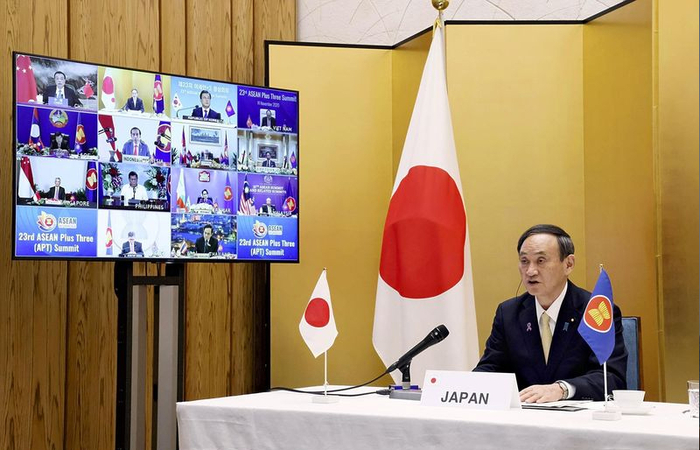
On Friday, Prime Minister Yoshihide Suga and South Korean lawmakers including Kim Jin-pyo, who leads the South Korea-Japan Parliamentarians Union, met at the Prime Minister’s Office in Tokyo. However, no clue for a thaw was found.
“The relationship between Japan and South Korea has been in a very difficult situation,” Suga told Kim and other members of the South Korean delegation at the meeting on Friday.
According to a person present at the meeting, Suga asked them to relay the message to South Korean President Moon Jae-in that Seoul should first create an opportunity to resolve the issue.
Since Suga took office, the two countries have accelerated moves to mend the stalled bilateral relationship.
Takeo Kawamura, secretary-general of a nonpartisan parliamentary league that promotes the Japan-South Korea relationship, Shigeki Takizaki, director-general of the Foreign Ministry’s Asian and Oceanian Affairs Bureau, and other high-profile people recently visited South Korea in succession. From South Korea, officials such as National Intelligence Service Director Park Jie-won have visited Japan. And on Thursday, Vice Foreign Minister Takeo Akiba held phone talks with South Korea’s first vice foreign minister.
Two years have passed since the South Korean Supreme Court ordered Japanese companies to pay compensation to the former requisitioned workers. Procedures are being taken to convert the companies’ seized assets into cash. Japan and South Korea are both aware that the time left to prevent this action is limited.
However, efforts by the both countries have produced no major positive results.
At a press conference on Friday, Lee Nak-yon, leader of the South Korean ruling Democratic Party, said, “I don’t think they [the delegation members] brought a solution proposal” for the wartime labor issue.
A senior official of the Japanese Foreign Ministry also said: “The South Korean side didn’t present [any solution proposals at the meeting with Suga]. We’ve got nothing.”
As Moon has taken a victim-oriented approach, he has not changed his position that the Japanese companies should pay redress to the victims in one way or another. According to South Korean government sources, the Moon administration intends to hold a Japan-South Korea summit on the sidelines of a Japan-China-South Korea leaders summit being arranged in South Korea by the end of this year. Moon intends to take advantage of the bilateral summit to issue a joint declaration that will collectively resolve pending issues, including the wartime labor and Japan’s tightening of export controls, the sources said.
On the other hand, Tokyo has ruled out the court rulings that ordered the Japanese firms to pay compensation, saying that the wartime labor issue was settled under the 1965 Agreement on the Settlement of Problems concerning Property and Claims and on Economic Cooperation between Japan and South Korea.
Frustration apparently has grown on the Japanese side as the South Korean side, including the lawmakers who visited Japan, did not present realistic proposals to resolve the issue.
“There wasn’t anything that sat well with us,” a senior Japanese government official said.
The Japanese side has taken a stance not to agree to hold even the trilateral summit if the situation remains unchanged. During the meeting Friday, Suga expressed caution after Kim asked him to visit South Korea.
If South Korea acts to cash in the seized assets, the Japanese government is expected to take strong countermeasures.
If that happens, a senior official of the Japanese Foreign Ministry said, “Further deterioration in the bilateral relationship will be unstoppable.”
A trade pact nearly 10 years in the making: 5 things to know about RCEP
InternationalNov 15. 2020The Regional Comprehensive Economic Partnership will eliminate as much as 90 per cent of the tariffs on imports between its parties.(ST PHOTO: MARK CHEONG)
Involving the 10 Asean members, plus China, Japan, South Korea, Australia and New Zealand, the RCEP bloc covers nearly one-third of the world’s population, and contributes around 30 per cent of its gross domestic product.
It will eliminate as much as 90 per cent of the tariffs on imports between its parties within 20 years of coming into effect, and will improve market access for goods and services within the region.
It also aims to establish a common set of trade rules and covers non-traditional areas which are not in some existing agreements, such as e-commerce, competition policy, and intellectual property.
Here are five key things to note about the mega trade deal.
1. The Covid-19 factor
While online talks have made legal scrubbing – a process in which lawyers, translators and staff review and edit the text of the agreement – more cumbersome, the economic fallout from the Covid-19 pandemic was a motivating factor to finalise the deal, given the benefits of its cuts to tariffs and trade barriers.
A joint statement by ministers, released after online talks in August, said the signing of the agreement would enhance business confidence, as well as demonstrate the region’s support for an open, inclusive and rules-based multilateral trading system.
“The ministers also underscored the significant role that the RCEP Agreement could play in post-pandemic recovery efforts, as well as in contributing to the growth and stability of the regional and global economy,” the statement said.
Outgoing United States President Donald Trump’s tariff-raising trade war with China has also given extra impetus in recent years to push ahead with the RCEP, which had otherwise progressed only sluggishly since negotiations began in 2012.
2. Who benefits?
All parties to the RCEP stand to gain.
Assistant professor of international studies at China’s Renmin University Jason Ji said Cambodia, Thailand and Vietnam could see an increase in GDP and export volumes under the pact.
Key sectors he sees benefiting include Thailand’s construction sector, Singapore and Malaysia’s processed food industries, and Laos’ manufacturing sector.
Singapore University of Social Sciences senior lecturer Pan Zhengqi said a significant result of the RCEP is that it helps to facilitate complex supply chains, which would also boost South Korea’s electronics sector.
As for Vietnam, he said, the lower trade barriers and enhanced market access would benefit its telecommunications, textile and footwear sectors.
Dr Pan added that China, being the world’s largest trading nation, stands to gain the most from the pact. Both its manufacturing and service sectors would see a boost, given the country’s large export and import capacities, he said.
He added that exchanges of technical know-how under the agreement would also help China move up the value chain.
It had major concerns over trade imbalances, as it had trade deficits with 11 of the 15 nations involved in the RCEP. Fearing that the deal could result in a flood of manufacturing and agricultural products into its market, India was unwilling to remove tariffs on many sensitive industries.
Associate professor of practice at the Lee Kuan Yew School of Public Policy James Crabtree said India’s decision not to come on board was a setback for the agreement but a “historic blunder” for India itself.
“It might well have made the agreement easier to finalise, but it also left it dominated by China, to the disappointment of South-east Asia in particular,” he said.
“For India, it signalled a more fundamental turn away from economic openness, leaving New Delhi outside both of the economic blocs that will define Asia’s future: RCEP and the 11-member Comprehensive and Progressive Agreement for Trans-Pacific Partnership (CPTPP).”
Renmin University’s Prof Ji said India’s withdrawal is not irreversible, nor will its absence significantly impact the scope and quality of the agreement, as the bulk of the negotiations were already concluded with India’s participation.
“That said, RCEP becomes a smaller mega-FTA because of India’s absence, temporary or otherwise.”
4. Where does the CPTPP fit in?
The Trans-Pacific Partnership (TPP) which originally included the US was seen as a counterweight to RCEP, and RCEP’s inclusion of India was meant to balance China. But neither scenario has panned out in the way it was envisioned.
The CPTPP, which evolved from the TPP after Mr Donald Trump pulled out of the deal in one of his first acts as president, was concluded in 2018 among 11 countries, seven of which are also in the RCEP: Australia, Brunei, Japan, Malaysia, New Zealand, Singapore and Vietnam. The other CPTPP members are Canada, Chile, Mexico and Peru.
The CPTPP involves greater elimination of tariffs and also includes provisions on labour and environmental standards, unlike the RCEP.
But few are holding their breath that the US, which is still emerging from the throes of a bitterly contested presidential election, will return to the table any time soon.
“The RCEP provides China with much-needed reprieve from the US-China trade war and rising global protectionism,” says SUSS’ Dr Pan.
However, both the CPTPP and RCEP are seen as building blocks of a much-larger free trade vision spanning the Pacific Ocean: The Free Trade Area of the Asia Pacific (FTAAP), which members of the Asia-Pacific Economic Cooperation have alluded to as early as 2004. Malaysia is hosting this year’s Apec leaders summit later this week.
Some say the ongoing trade spat could stymie cooperation under the RCEP. But SUSS’ Dr Pan said the trade pact can be useful in de-escalating tensions between Australia and China in one major way: It constrains the actions of both countries within a rules-based framework.
“As such, participating countries – even major powers such as China – might not readily use trade as a strategic leverage,” he said, pointing out that China’s behaviour within RCEP will shape its reputation and credibility as well as alter the behaviour of other states towards it.
By supporting frequent dialogues among members, the trade pact will also decrease information asymmetries and foster cooperation, he added.
Notwithstanding these issues, analysts agree that the key now is to demonstrate that the RCEP is useful.
“RCEP will not supersede pre-existing FTAs like Asean-Plus agreements per se,” said Renmin University’s Prof Ji, referring to agreements which Asean has signed separately with major economies such as China, Japan, and South Korea.
“But it improves upon them and facilitates an orderly and negotiated convergence of these agreements in terms of trading rules and customs procedures.”
Australia donates millions of dollars to support ASEAN’s COVID-19 response efforts
InternationalNov 15. 2020Australian Prime Minister Scott Morrison (centre) announces financial packages to support ASEAN on Saturday. (Photo: VNA/VNS )
By Vietnam News
HÀ NỘI — Australian Prime Minister Scott Morrison on Saturday announced a series of financial packages to support ASEAN and Mekong countries with post-COVID-19 economic recovery at the second ASEAN-Australia biennial summit.
Those included A$21 million to the ASEAN Centre for Public Health Emergencies and Emerging Diseases, which was launched on Thursday; A$1 million for the ASEAN COVID-19 Respond Fund; and A$70 million for resilience and recovery in Southeast Asia in the sectors of maritime, connectivity, sustainable development and economic co-operation.
Australia recently committed some $500 million over three years to support access to safe and effective COVID-19 vaccines for Southeast Asia and the Pacific. Safe effective access to affordable COVID-19 vaccines will be the central factor in our collective recovery, Morrison said.
The Australian PM also committed a A$232 million package for Mekong countries, focusing on the environment, infrastructure, cyber, and critical technologies and scholarships.
“In spite of changes brought by COVID-19, ASEAN remains united as always and Australia’s commitment to a region of sovereign, independent states, resilient to coercion, remains absolutely steadfast,” he said.
“We are more than your neighbour as your first dialogue partner, we are also your partner in the great recovery.
“ASEAN centrality is at the core of Australia’s vision for the Indo Pacific. We strongly support the ASEAN outlook for the Indo-Pacific.
“In Australia we understand that your prosperity is our prosperity.”
Vietnamese Prime Minister Nguyễn Xuân Phúc said as Australia was one of the most long-standing partners of ASEAN with relationship established in 1974. Over the past four decades, the bilateral relationship has been increasingly strengthened.
At the ASEAN-Australia Summit on Saturday, the two sides agreed to hold the summit annually instead of biennially as a foundation to further deepen and substantially promote the important relationship. — VNS
HÀ NỘI — Leaders from ASEAN countries, the Republic of Korea (RoK), Japan and China praised the region’s international co-ordination in the battle against COVID-19 during a summit on Saturday.
Addressing the 23rd ASEAN+3 Summit on Saturday, RoK President Moon Jae-in said the COVID-19 Response Fund and the reserves of essential medical supplies had been a joint effort.
He said ASEAN and the RoK, Japan and China must boost co-operation in the area of public health and work towards the development and equitable supply of vaccines and treatment.
“We must also establish a timely and transparent co-ordination mechanism to prepare against new infectious diseases which could strike at any time,” he added.
On the economic front, he said the global economy was projected to bounce back to pre-pandemic levels by next year. But the speed of this recovery would be very uneven among different countries.
“We are still facing a wave of trade protectionism and uncertainties in the financial markets. There are concerns that an accelerated transition to a digital economy could widen the gap between social classes. No country can solve these challenges on its own,” he said.
Japanese Prime Minister Yoshihide Suga said Japan would provide more than US$200 million to secure medical supplies and equipment, as well as technical assistance to research institutes in ASEAN. On economic revitalisation, Japan has provided a total of $2.5 billion in budget support loans to countries.
Following up on the joint statement at the ASEAN+3 special summit on responding to COVID-19 in April, based on collaboration between Japan, China and the RoK, a contribution of $300,000 had been made from the ASEAN+3 Co-operation Fund to the COVID-19 ASEAN Response Fund. In addition, Japan had made its own contribution of $1 million to the fund, he added.
Chinese Prime Minister Li Keqiang delivered his thanks to the ASEAN countries, Japan and the RoK for offering support to China during the most difficult stages in its fight against COVID-19.
“ASEAN countries have extended assistance to China, and we have done as much as we can to help ASEAN countries. We’ve been there for each other and we are looking out for each other. This is the best demonstration of our solidarity and friendship,” Li said.
Thailand’s Prime Minister Prayut Chan-o-cha proposed promoting sustainable economic security, economic integration and supply chain connectivity in the region, and invited the Plus Three Countries to support the ASEAN Comprehensive Recovery Framework. — VNS
US-ASEAN partnership a ‘positive force’ for Indo-Pacific region: Indonesian foreign minister
InternationalNov 15. 2020Foreign Affairs Minister Retno LP Marsudi speaks on behalf of President Joko “Jokowi” Widodo at the ASEAN Women Leaders’ Summit on Nov. 12. (Twitter/@Menlu_RI)
By Alya Nurbaiti The Jakarta Post
Indonesia has conveyed its hope for a stronger partnership between ASEAN and the United States for years to come, as the partnership can promote peace, stability and prosperity in the Indo-Pacific region, Foreign Minister Retno LP Marsudi has said.
Speaking on behalf of President Joko “Jokowi” Widodo, Retno expressed Indonesia’s hope for a strategic partnership to US National Security Advisor Robert C. O’Brien, who represented President Donald Trump at the ASEAN-US Summit held virtually on Saturday.
“Indonesia hopes for the US to remain an important and strategic partner in the region, including in the implementation of the ASEAN Outlook on the Indo-Pacific. We expect the partnership to be a positive force to create peace, stability and prosperity in the region,” she said in a press conference held at the Bogor Palace, West Java.
During the virtual meeting, Retno said Indonesia emphasized the importance of maintaining the strong friendship and cooperation between ASEAN and the US.
“In the last four years, in the economic and development sectors, the US continues to be ASEAN’s second-largest trade and investment partner. The trading volume of the two parties increased by 39 percent from US$211.8 billion to $294.6 billion.”
She went on to say that US investment in the region had increased by 110 percent from $11.65 billion to $24.5 billion. In the energy sector, the US and ASEAN have made a long-term 2021-2025 partnership plan.
Meanwhile, in the digital economy sector, they have cooperated through capacity-building programs for 4,000 micro, small and medium enterprises (MSME).
Moreover, Retno said, in the past 10 months, the partnership between ASEAN and the US in health care had also strengthened with the mutual fight against the COVID-19 pandemic.

 การเจรจาเกี่ยวกับความตกลงหุ้นส่วนทางเศรษฐกิจระดับภูมิภาคนี้ได้เริ่มขึ้นอย่างเป็นทางการในการประชุมอาเซียนที่ประเทศกัมพูชาเมื่อเดือนพฤศจิกายน พ.ศ. 2555 จนลงนามสำเร็จในปีนี้

 Instructors and members of the Women of Whitetail program last season. MUST CREDIT: Alex Beard/Whitetail Mountain Resort.


 Vice President-elect Kamala Harris speaks Nov. 10 on the Affordable Care Act in Wilmington, Del. MUST CREDIT: Washington Post photo by Demetrius Freeman
 The Regional Comprehensive Economic Partnership will eliminate as much as 90 per cent of the tariffs on imports between its parties.(ST PHOTO: MARK CHEONG)
 Australian Prime Minister Scott Morrison (centre) announces financial packages to support ASEAN on Saturday. (Photo: VNA/VNS )

 Foreign Affairs Minister Retno LP Marsudi speaks on behalf of President Joko “Jokowi” Widodo at the ASEAN Women Leaders’ Summit on Nov. 12. (Twitter/@Menlu_RI)

