WHO-linked plan to start global vaccine rollout in first half of 2021 #SootinClaimon.Com

#SootinClaimon.Com : ขอบคุณแหล่งข้อมูล : หนังสือพิมพ์ The Nation.

WHO-linked plan to start global vaccine rollout in first half of 2021 (nationthailand.com)

WHO-linked plan to start global vaccine rollout in first half of 2021

InternationalDec 19. 2020

By The Washington Post · Emily Rauhala

A multilateral effort to develop and distribute vaccines has secured almost 2 billion doses, potentially allowing some vulnerable groups in participating countries to get vaccinated in the first half of next year, the World Health Organization said Friday.

The announcement came in an end-of-year update on the Covax Facility, a plan to ensure that low- and middle-income countries are not cut out of a vaccine race that has seen rich countries snap up the majority of early doses, leaving the rest of the world to wait.

At a news conference on Friday, officials from the WHO, Gavi, the Vaccine Alliance, and the Coalition for Epidemic Preparedness Innovations, or CEPI, touted progress toward reversing that trend, at least a little, announcing deals with AstraZeneca and Johnson & Johnson.

Officials from Canada and France said they were working to develop and fund a mechanism for rich countries to eventually share surplus vaccine doses through Covax, though they did not offer details on when that might start.

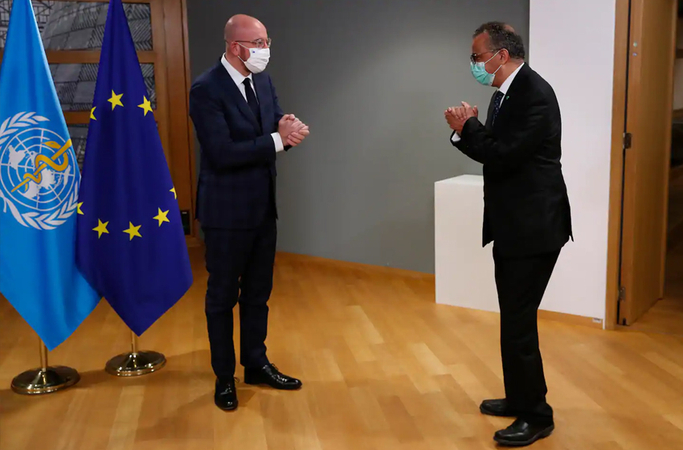
“The arrival of vaccines is giving all of us a glimpse of the light at the end of the tunnel,” WHO Director General Tedros Adhanom Ghebreyesus said Friday. “But we will only truly end the pandemic if we end it everywhere at the same time, which means it’s essential to vaccinate some people in all countries, rather than all people in some countries.”

Tedros cast the update as good news for an initiative that has struggled to secure funding and support from big players including the United States, which has declined to participate.

But his upbeat tone belied growing concern that hoarding by rich countries will leave much of the world without an adequate vaccine supply.

In recent weeks, as the United States, Britain and Canada have cheered the rollout of domestic vaccination campaigns, other countries have scrambled to secure doses of as-yet-unproven candidates.

By mid-November, wealthy nations had reserved 51 percent of various vaccine doses even though they are home to only 14 percent of the world’s population, according to a new study published by two Johns Hopkins researchers in the BMJ, a journal published by the British Medical Association.

An earlier study by researchers at Duke University estimated that people in low-income countries could be waiting for a coronavirus vaccine until 2024.

Covax on Friday announced new deals with drug companies, including an advance purchase agreement with AstraZeneca for 170 million doses and a memorandum of understanding for 500 million doses from Johnson & Johnson.

These deals will build on existing agreements with India’s Serum Institute for 200 million doses, plus options for up to 900 million doses more of either the AstraZeneca or Novavax candidates, as well as a statement of intent for 200 million doses from Sanofi/GSK, according to the WHO.

The U.N. health agency said Friday that at least 1.3 billion donor-funded doses will be made available to 92 relatively poor countries by the end of 2021.

But the figures are estimates. The WHO noted that vaccines are still being evaluated. As it waits for results, the agency will “continue developing” its vaccine portfolio, it said.

In the news conference, Canadian and French officials sketched out plans to share surplus doses through Covax, but details are still scarce.

Karina Gould, Canada’s minister for international development, pledged Canadian money and support for a mechanism to donate or exchange doses. The plan is “not about slowing anyone down, but speeding everyone up,” she said.

Pressed on when Canada will start sharing and whether Canada will vaccinate every Canadian before sharing with others, Gould declined to lay out a specific timeline. Canada, she said, is moving “one day at a time.”

Stéphanie Seydoux, France’s minister for global health, said her country will start sharing “as early as possible” and encouraged other wealthy countries to do the same.

All told, more than 190 countries, representing a large share of the world’s population, have signed on to participate in Covax.

It is seen as one of the only ways that low-income countries will be able to source vaccines. But questions about funding and supply persist.

“We still need more doses, and we still need more money,” Seth Berkley, chief executive of Gavi, said Friday. “But we have a clear path to securing what we need to end the acute stage of this pandemic.”

Up to 7 feet of snow slams Japan, stranding 1,000 motorists #SootinClaimon.Com

#SootinClaimon.Com : ขอบคุณแหล่งข้อมูล : หนังสือพิมพ์ The Nation.

Up to 7 feet of snow slams Japan, stranding 1,000 motorists (nationthailand.com)

Up to 7 feet of snow slams Japan, stranding 1,000 motorists

InternationalDec 19. 2020Vehicles are stranded on the Kan-Etsu Expressway at 8 a.m. on Friday near the Yamato rest area in Minami-Uonuma, Niigata Prefecture. MUST CREDIT: Japan News-YomiuriVehicles are stranded on the Kan-Etsu Expressway at 8 a.m. on Friday near the Yamato rest area in Minami-Uonuma, Niigata Prefecture. MUST CREDIT: Japan News-Yomiuri 

By The Washington Post · Matthew Cappucci

While parts of the Northeast U.S. were getting buried by more than three feet (or around a meter) of snow earlier this week, the high terrain of Japan dealt with about twice that much. Extreme snowfall totaling seven feet (or about 2 meters) in spots snarled travel and buried roadways, trapping more than 1,000 motorists on a clogged highway overnight Thursday.

Drivers were encouraged to remain in their vehicles during the debacle, some forced to melt snow as a means of drinking water.

Several all-time snowfall records had been set as of Friday, 7.1 feet (2.2 meters) falling on the city of Fujiwara in three days’ time. Fujiwara is a community in Gunma Prefecture, a mountain region of central Honshu northwest of Tokyo. A number of ski resorts are located nearby, having experienced a significant accumulation of snow.

Nearly 70 inches (178 centimeters) of Fujiwara’s snow accumulated in just 48 hours, breaking the previous record of 57 inches (145 centimeters) set in 2010.

A record 72-hour December snowfall also occurred in nearby Tsunan, where 5.7 feet (1.9 meters) came down. Elsewhere along the spine of the Japanese Alps and Echigo Mountains, a broad 4 to 6 feet (1.2 to 1.8 meters) of snow fell, establishing a number of records.

At least 1,000 cars were stranded Thursday on the Kan-Etsu Expressway, which connects Tokyo with Nigata. Some vehicles had been stuck as early as Wednesday night. The traffic jam peaked in severity on Thursday night according to CNN Japan, the chain reaction of halted vehicles spanning nearly ten miles.

By then, snow was falling fast and furious, with conditions continuing to deteriorate as heavy bands of snow pivoted in from the northwest. Impressive snowfall rates, likely topping two inches (5 centimeters) per hour, accompanied the most fierce bands.

The episode was caused by “ocean-effect snow,” similar in dynamics to lake-effect precipitation that frequents the shores of the Great Lakes. A frigid air mass blowing from the northwest over much warmer waters, in this case between 55 and 60 degrees (12.8 to 15.6 Celsius), allowed heat and moisture from the Sea of Japan to be transported inland in the form of heavy snow.

Japan’s high terrain helped focus moisture too, concentrating it on the upslope, or windward side of the mountains. That meant snow could fall for days at a time unimpeded, the wintry blast maintained so long as the wind fetch remained from the northwest.

Japan’s climate routinely favors hefty snowfall in the mountains. Arctic wintertime cold fronts from Siberia surge south across northeast China and the Korean Peninsula, arriving in Japan after passing over the adjacent sea. The Sea of Japan is kept mild by the Kuroshio Current, akin to the Gulf Stream; a branch of it, called the Tshushima Current, meanders west of the Japanese island chain.

At least 600 vehicles remained stuck early Friday according to Japanese broadcaster NHK News; they were all freed late Friday local time.

Meanwhile, another 15 to 30 inches (38 to 76 centimeters) of snow could be on the way for hard-hit areas finally beginning to dig out as the ocean effect kicks in once again this weekend. The Japanese Meteorological Agency has issued warnings for heavy snow and avalanche advisories, anticipating an additional “traffic hindrance due to snowfall.”

Debate over Fed’s powers is a stumbling block in stimulus talks #SootinClaimon.Com

#SootinClaimon.Com : ขอบคุณแหล่งข้อมูล : หนังสือพิมพ์ The Nation.

Debate over Fed’s powers is a stumbling block in stimulus talks (nationthailand.com)

Debate over Fed’s powers is a stumbling block in stimulus talks

InternationalDec 19. 2020

By The Washington Post · Rachel Siegel

Debate over the Federal Reserve’s emergency lending powers has ensnared frantic stimulus negotiations around a roughly $900 billion relief bill for the U.S. economy, and could have long-lasting implications for the central bank itself.

The fight centers on the Fed’s extraordinary actions to prevent an economic collapse. Back in March, the Federal Reserve moved quickly to slash interest rates, flood the financial markets and boost bond purchases. While Congress has struggled for months to extend federal aid programs, the Fed has stuck with its slate of emergency lending programs, and had no intention of winding them down before the recovery was complete.

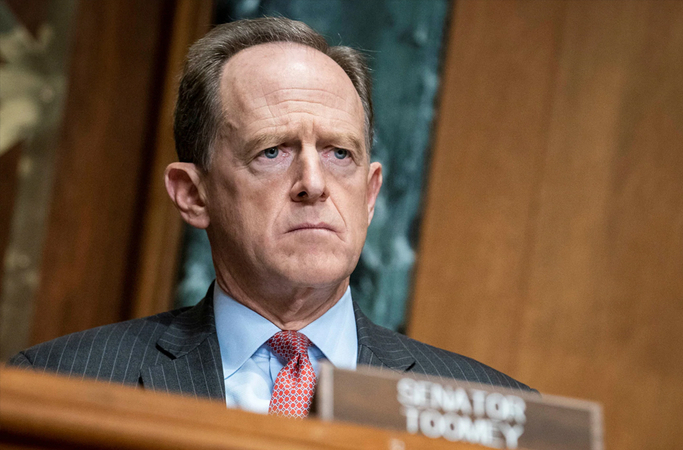
Some Republicans now want to pare back the Fed’s reach as part of a stimulus deal, wary that the Fed may use programs set up through the earlier stimulus effort, the Cares Act, to become something more akin to a lender of “first resort” instead of “last resort,” as Sen. Patrick Toomey, R-Pa., put it Thursday. By contrast, Democrats are concerned Republicans are slashing the Fed’s broader authority, which has been a stabilizing force for the economy, just weeks before the Biden administration takes over.

The Fed faced similar existential threats in the years after the 2008 financial crisis and recession, and lawmakers eventually did reshape the central bank’s oversight over the financial system to guard against another downturn. But now, the Fed is embroiled in a new battle over its powers and independence, just as the recovery is backsliding and the pandemic escalates into a wintertime surge. Jobless claims for the unemployed are rising again after trending downward, and retail sales slipped in November, a month that historically kicks off a strong holiday shopping season.

“What the current [Republican] proposal on the table appears to be is something that goes well beyond the Cares Act,” said Bharat Ramamurti, a Democratic member of the Congressional Oversight Commission, which focuses on the recovery efforts of the Fed and Treasury Department. “This proposal isn’t just, ‘let’s go back to the world as it existed the day before the Cares Act.’ It’s actually a significant reduction of the authorities that the Treasury and Fed had before the Cares Act.”

On Friday, Democratic lawmakers firmly rejected Toomey’s proposal, saying that the call to curb Fed powers is thwarting a relief bill, as well as threatening the Fed’s independence. With lawmakers likely to seek unanimous consensus on a stimulus vote, Toomey’s plan for the Fed programs, which on Thursday he called “the most important thing to me,” could hold up negotiations headed into the weekend.

“These authorities should be maintained to allow for the Federal Reserve to act to prevent hardship to families across the country,” Senator Michael Bennet, D-Colo., said in a statement. “If ever there is a time to put politics aside and do the right thing, it should be in the middle of a pandemic and corresponding economic crisis.”

Toomey defended his position Friday afternoon and emphasized that the emergency lending programs that received Cares Act money were always intended to close out at the end of the year.

“The language Senate Republicans are advocating for affects a very narrow universe of lending facilities and is emphatically not a broad overhaul of the Federal Reserve’s emergency lending authority,” Toomey said.

The coronavirus pandemic spurred the Fed into one of its most active years ever. In the pandemic’s early days, the Fed reached far beyond its playbook from the Great Recession in ways that economists say prevented an even deeper recession. As the coronavirus spread beyond China and U.S. stocks plunged into the red, the Fed quickly slashed interest rates to zero in March. A sprawling set of programs to flood the markets and boost bond purchases further helped reinvigorate the financial system. Plus, the Fed also rolled out loan programs to struggling businesses and local governments.

Federal Reserve Chair Jerome Powell has repeatedly said the slate of emergency lending programs propped up in the spring were not meant to be permanent.

“When the time comes, after the crisis has passed, we will put these emergency tools back in the box,” Powell said at a news conference Wednesday.

The Fed’s lending programs for businesses and local governments have not been blemish-free. Considering how much money was set aside, the Main Street lending program and municipal lending programs haven’t been well utilized, with critics saying the loans carry onerous requirements. Some Republicans have also bristled at Powell’s repeated calls on Congress to pass a stimulus bill that can fill the economy’s remaining gaps, although Powell stops short of making specific suggestions for what should go into legislation.

The Fed’s vast response has attracted some criticism. Some Republicans argue the Fed is venturing beyond its mandate, which strives for maximum employment and stable prices. Speaking to reporters on Thursday, Toomey said the Fed shouldn’t be engaging “in fiscal policy, social policy or allocating credit,” and instead should leave those decisions to elected leaders on Capitol Hill.

Meanwhile, Democrats have pushed the Fed in the opposite direction. Many wanted to widen the Fed’s lending programs so they could help more businesses and local governments on the brink. Liberal policymakers also want the Fed to put more focus on racial inequality and climate issues, arguing they pose risks to economic growth.

The Fed is one of the most powerful financial institutions in the world, and much of its reputation rests on its independence from the White House. The chair cannot be fired by the president over policy differences – a question which came up when Powell was on the receiving end of President Donald Trump’s routine attacks. Fed governors are unelected officials, subject to Senate confirmation, and can fill terms of up to 14 years.

But a highly-partisan climate in Washington, mixed with the Fed’s large footprint, have made for a fraught combination.

Brian Gardner, chief Washington policy strategist at Stifel Financial Corp, said there’s “always this give and take about Fed independence,” with the facilities emerging as the latest flash point.

“I think there are a lot of Republicans saying, ‘wait a second, what’s going on here?'” Gardner said. “This is a way to send a message to the Fed about who’s in charge.”

Tensions over the Fed’s lending programs ramped up last month when Treasury Secretary Steven Mnuchin announced the programs would wind down at the end of 2020 and requested that the Fed return hundreds of billions of dollars that went unspent. The move was met with a rare rebuke from the Fed and widespread disagreement from Democrats, who say the facilities are an important backstop and could have had more reach.

There’s agreement from both parties that some of the programs’ unused money could be put to more direct use. But the larger debate about the Fed’s own authority emerged when Toomey, the incoming leader of the Senate Banking Committee, said he is also pushing for a bill that prevents the expiring programs, or anything remotely similar to them, from being created in the future. For example, once the Main Street lending program expires, Toomey warned against a “Main Street lending program 2.”

Toomey insisted the Fed’s emergency lending powers “remain on the books” and that the door would still be open for Congress to approve entirely different programs “if in the future, some dire emergency occurs.”

“We’re not changing the role of the Fed at all,” Toomey said. “We’re saying these programs were meant to be temporary, and they’re going to be temporary.”

That argument was soundly rejected by Democrats, many of whom say Toomey’s proposal goes far beyond the nuts and bolts of a coronavirus relief bill. Democrats said the move cuts into lending powers the Fed had well before the Cares Act and handicaps the central bank’s ability to combat future crises.

“What’s happening here is a rewriting of the Fed’s emergency powers at the last minute, without any hearing, without any debate of what the implications are,” Ramamurti said.

Democrats argue that Toomey’s plan takes away any chance for the Biden administration to revamp the programs.

In a statement Friday, Brian Deese, Biden’s pick for director of the National Economic Council, said the stimulus package shouldn’t “include unnecessary provisions that would hamper the Treasury Department and the Federal Reserve’s ability to fight economic crises.”

“Undermining that authority could mean less lending to Main Street businesses, higher unemployment, and greater economic pain across the nation. Congress’s good faith effort to deliver immediate relief should not be delayed by provisions that could put our future financial stability at risk,” Deese said.

Democrats lawmakers also said Toomey is using the Fed as a political instrument in the final days of the lame duck session.

“It’s no surprise that Republicans are drawing a line in the sand over their ability to sabotage the economy, and tie the Biden administration’s hands,” Sen. Ron Wyden (Ore.), the ranking Democrat on the Senate Finance Committee said in a statement.

Toomey disputed the criticism, saying the Cares Act programs were always meant to be temporary, and that he’s held this view for months.

Sony pulls Cyberpunk 2077 from PlayStation store after public outcry #SootinClaimon.Com

#SootinClaimon.Com : ขอบคุณแหล่งข้อมูล : หนังสือพิมพ์ The Nation.

Sony pulls Cyberpunk 2077 from PlayStation store after public outcry (nationthailand.com)

Sony pulls Cyberpunk 2077 from PlayStation store after public outcry

InternationalDec 19. 2020

By Syndication Washington Post, Bloomberg · Vlad Savov, Konrad Krasuski, Jason Schreier

Sony has removed CD Projekt SA’s Cyberpunk 2077 from its PlayStation Store and is offering full refunds, taking unusual steps to appease customers furious about bugs plaguing one of the year’s most highly anticipated gaming blockbusters.

The radical move to pull the game “till further notice” came after the console version of Cyberpunk 2077 debuted Dec. 10, following several delays, to reviews calling out problems and an online outcry from players frustrated with its poor performance.

CD Projekt shares dropped as much as 20% in Warsaw at the start of Friday’s trading, erasing this year’s gains.

Warsaw-based developer CD Projekt — best known for 2015’s The Witcher 3, part of a franchise that was turned into a successful Netflix Inc. series — has offered refunds to any disappointed players, but Sony is going a step further by entirely removing the game from its store. Cyberpunk features Hollywood star Keanu Reeves as an in-game character and has used the actor as its most visible ambassador in the buildup to its release.

CD Projekt, whose shares have plunged 40% since Dec. 4, confirmed Sony’s decision in a regulatory statement. The studio said it was “working hard” to bring its game back to the PlayStation store and that it had discussions with Sony regarding a full refund for all gamers seeking one.

It said that “all copies, whether digital or physical, will continue to receive support and updates” to help fix the game’s teething problems. Its shares traded 15% lower at 261.8 zloty at 10:43 a.m. in Warsaw.

Trigon analyst Kacper Kopron said that Sony’s decision is one of “worst scenarios” for the company as PlayStation represents two-thirds of the console market. He expects that the move may trim estimates for Cyberpunk sales by 30% to 40%.

Erste Group analyst Emil Poplawski cut his recommendation on CD Projekt’s shares to reduce from buy, setting a target price of 280.5 zloty. Analysts at MBank and VTB Capital expect the game to be restored to PlayStation’s store after larger fixes in early 2021.

On Monday, the developers posted a message on Twitter saying they “should have paid more attention to making it play better on PlayStation 4 and Xbox One.” But the company had not cleared its offer of a refund with console manufacturers Sony or Microsoft Corp., both of which have stringent refund policies.

This week, many players who requested refunds found themselves out of luck. Sony said it was working to resolve issues with accessing the refund.

CD Projekt Chief Executive Officer Adam Kicinski was cited as saying by PAP news agency that the gaming studio isn’t currently holding talks with Microsoft about removing Cyberpunk from its Xbox store.

It’s rare for any title to be removed from stores so soon after release. Previous examples include Square Enix Holdings’s Final Fantasy XIV, which was taken offline for an overhaul following its disastrous 2010 launch, and Amazon.com’s Crucible, yanked from PC stores earlier this year and subsequently canceled.

Cyberpunk’s developers faced intense public pressure to get the game out this year, rising to the level of death threats, as Senior Game Designer Andrzej Zawadzki tweeted in October. Six-day work weeks became the norm in the final months leading up to the eventual release, breaking with previous pledges from CD Projekt leaders that the company would avoid imposing a so-called crunch to hurry a game into existence through overtime.

The company has said it’s continuing work to rectify the issues players are encountering in Cyberpunk 2077 — and its prior blockbuster, The Witcher 3, improved drastically after its release thanks to downloadable patches.

Russia hack confronts Trump with decision that echoes Obama’s #SootinClaimon.Com

#SootinClaimon.Com : ขอบคุณแหล่งข้อมูล : หนังสือพิมพ์ The Nation.

Russia hack confronts Trump with decision that echoes Obama’s (nationthailand.com)

Russia hack confronts Trump with decision that echoes Obama’s

InternationalDec 19. 2020The Kremlin in Moscow on Dec. 11, 2020. MUST CREDIT: Bloomberg photo by Andrey Rudakov.The Kremlin in Moscow on Dec. 11, 2020. MUST CREDIT: Bloomberg photo by Andrey Rudakov. 

By Syndication Washington Post, Bloomberg · Nick Wadhams

A massive hack on the federal government presents President Donald Trump with the same choice Barack Obama faced in the waning days of his tenure: whether to impose sanctions on Russia, and how severe to make them. So far, Trump has shown little willingness to impose costs.

Confronted with evidence that Vladimir Putin’s government orchestrated cyberattacks aimed at interfering with the 2016 election, Obama levied sanctions against Russia’s intelligence services and expelled 35 diplomats.

Now, it’s Trump’s turn to decide whether to call out and punish the Kremlin, as Obama did, or go easy on the Russian president and leave it to President-elect Joe Biden to formulate a response to a hack so serious it prompted National Security Advisor Robert O’Brien to cut short an overseas trip and return to oversee daily crisis meetings at the White House.

Government agencies and hundreds of Fortune 500 companies are still assessing the damage done by the cyberattack, which involved code embedded in updates for a widely used network-management software made by SolarWinds Corp.

Unlike in 2016, the latest attack didn’t involve election interference, but there’s little doubt it was a serious strike. The U.S. Cybersecurity and Infrastructure Security Agency on Thursday called it a “grave risk” to federal, state and local governments, as well as critical infrastructure and the private sector. SolarWinds said 18,000 customers downloaded the tampered software update.

Security experts familiar with the hack said that even if evidence is still being gathered, it’s important to come out with a swift condemnation and set about taking measures to establish some sort of deterrence.

“The one thing you can say is the Trump administration has basically given the Russians a green light by not calling them out,” said James Lewis, director of the Strategic Technologies Program at the Center for Strategic and International Studies. “That’s what you want to watch for: Does the Trump administration take any action even if it’s just symbolic? And so far the answer is no.”

Although Obama has been criticized for reacting too slowly to the Russian election meddling, the sanctions he eventually imposed sparked one of the most notorious episodes of the Trump era: the decision by Trump’s incoming national security adviser, Michael Flynn, to privately urge Russia not to respond to Obama’s sanctions. Trump last month pardoned Flynn after he was convicted of lying about the conversations he had with Russia’s ambassador on the matter.

Trump and many of his top aides have repeatedly tried to shift the spotlight to China as America’s biggest national security threat, sometimes downplaying Russian actions in comparison. Ending his presidency by going after Russia would contradict that strategy.

According to one person familiar with the president’s thinking, who asked not to be identified discussing private deliberations, Trump has never let go of the belief that he could leverage personal ties with President Putin to improve relations with Russia. That would make it much harder for his staff to discuss punishment for fear that Trump would reject it out of hand.

Issues of cybersecurity seem to be particularly fraught for Trump’s aides. In his 2017 book “Fear,” Bob Woodward recounts an episode when Trump’s homeland security adviser at the time, Tom Bossert, tried to approach the president.

“I want to watch the Masters,” Woodward says Trump told Bossert, referring to the annual golf tournament. “You and your cyber…are going to get me in a war – with all your cyber sh_t.”

In an opinion piece in the New York Times on Thursday, Bossert suggested an idea that’s likely to find a better reception from the Biden team than Trump’s. He said the U.S. must call out Russia but also work with allied nations to pressure Russia.

Although Trump has yet to say anything about the hack, Biden echoed Bossert’s argument in a statement Thursday, vowing to united with allies and impose “substantial costs on those responsible for such malicious attacks.” He promised to make cybersecurity a “top priority at every level of government.”

There are many ways for Trump’s administration to respond — new sanctions on Russia’s intelligence services, for example. Yet one challenge officials face is that such actions, as the current episode proves, clearly have failed to deter Russia in the past.

Another issue that Trump — and later Biden — will have to confront is that no one knows the true extent of the hack and what the hackers will do with the information they gleaned. Snooping on an adversary’s networks is something countries routinely do to each other and, as brazen as the hack may be, might provoke only a moderate response, in keeping with what past administrations have done.

But if the hackers use the breach for more nefarious ends — shutting down electrical grids, for example, or wiping out people’s bank accounts or exposing sensitive information publicly — that could provoke a more serious response.

“Sanctions are probably the most politically expedient option,” said Lauren Zabierek, executive director of the Cyber Project at Harvard University’s Belfer Center for Science and International Affairs. “That’s probably the minimum that we can expect out of this from this administration, but I honestly don’t know what they’re going to do especially given their response to previous Russian actions.”

Indeed, top advisers including Secretary of State Michael Pompeo have played down the hack. In a recent interview, Pompeo portrayed it as more of the same from Russia.

“The Russian efforts to use cyber capabilities against us here in the United States is something that’s been consistent certainly for – goodness, I guess I was in Congress six years and now four years in the administration,” Pompeo said on the Ben Shapiro Show.

Given that Russia is unlikely to be deterred, experts argue that the best result will have to be a fundamental rethinking of cyber issues, something that will require new money and more time than the Trump team has left before Biden’s Jan. 20 inauguration.

“We’ve been talking about this for 25 years, and we’re not there,” said Christopher Painter, who was the State Department coordinator for cyber issues before Trump shut down his office in 2017.

“The way you do that is you make this whole area much more of a mainstream national security priority and not treat it as this little boutique-y tech issue, which I think in large part it has been relegated to,” Painter said.

Pandemic is starting to hit North American meat plants again #SootinClaimon.Com

#SootinClaimon.Com : ขอบคุณแหล่งข้อมูล : หนังสือพิมพ์ The Nation.

Pandemic is starting to hit North American meat plants again (nationthailand.com)

Pandemic is starting to hit North American meat plants again

InternationalDec 19. 2020The Cargill Inc. meat plant in Chambly, Quebec, on May 11, 2020. MUST CREDIT: Bloomberg photo by Christinne Muschi.The Cargill Inc. meat plant in Chambly, Quebec, on May 11, 2020. MUST CREDIT: Bloomberg photo by Christinne Muschi. 

By Syndication Washington Post, Bloomberg · Isis Almeida, Michael Hirtzer

Meat packers across North America are bracing for a resurgence of coronavirus cases, trying to avoid the shutdowns that left supermarket shelves empty earlier in the pandemic.

Cargill Inc. has temporarily idled one of its beef plants in Canada after some employees tested positive. JBS, the world’s top meat producer, sent thousands of vulnerable U.S. workers home on paid leave, while Sanderson Farms Inc. said it’s now facing higher absenteeism at its plants than earlier in the pandemic.

Producers of everything from beef to chicken are looking to prevent the sort of disruption that shut several plants during the spring, curbing meat supplies when consumers were stocking up their fridges. Executives now say companies are better prepared, having spent millions of dollars to reconfigure factories, implement social distancing and distribute the protective equipment workers need to stay safe while keeping the food supply chain running. A labor union executive warns that efforts to keep plants running comes at a cost, with extra hours taking a physical toll on workers.

“I don’t expect to see the same issues,” Jon Nash, head of protein for Cargill in North America, said in an interview. “Generally speaking, our industry is better prepared to handle the challenges. We know what we are dealing with.”

“We know a lot more than we ever did and I think our food supply chain is resilient to the point we will be OK,” he said.

Closely-held Cargill, the world’s largest agricultural commodities trader, said Thursday it was temporarily shutting down its beef processing plant in Ontario due to “an abundance of caution as our local workforce deals with the community-wide impacts of covid-19.”

“This is not just a Cargill spread, but community-wide spread in Guelph,” about 56 miles (90 kilometers) west of Toronto, said April Nelson, a spokeswoman for the company.

Earlier this month, JBS said it had sent more than 5,000 workers home in the U.S. since coronavirus cases began to accelerate in October. Joe Sanderson, chief executive officer of the third-largest U.S. chicken producer, said infections are rising among its workers as cases increase in Texas, Mississippi, Georgia, the Carolinas and Louisiana.

“We’re still running and we’re still running at our capacity, but there have been more instances of absentees now than we had all summer or back in the spring,” he said at an earnings call Thursday. “It’s becoming more of a challenge for us right now than it has been since this pandemic started.”

The increase in cases across rural North America highlights the challenges meat packers face in preventing the virus from entering their facilities and spreading among the workforce. More than 50,000 meatpacking workers in the U.S. have tested positive for the virus and more than 260 have died, according to data from the Food and Environment Reporting Network.

Meat packers have spent millions installing plexiglass dividers, expanding locker and cafeteria areas, providing masks and face shields. Foster Farms, a chicken producer in California, said it’s testing workers twice a week and has also removed at-risk employees from its factories.

Tyson spent $540 million to adapt its U.S. facilities in the 2020 fiscal year, adding temperature scanners, workstation dividers and social distance monitors, the company said in a statement earlier this month. It’s testing thousands of employees every week, including ones that don’t present any symptoms, a Tyson spokesman said, adding that the company has appointed a chief medical officer and hired 200 additional nurses.

JBS invested more than $200 million in health and safety measures and over $160 million to pay higher wages, according to a company spokesman. The company has also staggered start times and breaks to promote social distancing, installed UV germicidal air sanitation and plasma bipolar ionization technologies to neutralize potential viruses in the air, and instituted temperature checks.

“Smithfield has invested more than $700 million in extensive measures aimed at Covid-19 prevention,” a company spokesperson said.

People are working more extra hours and Saturdays, and since the lines can’t go the same speed with fewer people, what used to take about 16 hours now takes 20, according to Mark Lauritsen, director of food processing, packing and manufacturing at the United Food and Commercial Workers union, which represents 1.3 million workers in the U.S. and Canada. “All those extra hours is going to take its toll eventually,” he said.

Some contracts have caps on hours, and for others, the union is pushing employers to guarantee days off to make sure toll on their bodies is not too severe, he said.

Cargill is still running its plants in the mid to high 90s% of capacity as it has been able to compensate for localized issues by increasing output at other facilities, Nash said. The company has also changed its product mix to adapt to the tight labor availability and a switch to serving more retailers as restaurants shut down.

Consumers may now find bigger packages at supermarkets, with ground beef being a case in point, Nash said. Cargill is also making more in-bone products, he said. JBS also said earlier this month that it was simplifying its product mix and that the more labor-intensive processing jobs such as removing bones from pork hams or beef loins had been delayed as workers focus on essential tasks.

“Could we have issues where we may have to slow down in some spots as an industry? Potentially,” Nash said. “For us, if we get to a point where we can’t run a part of our facility or a facility safely or with the same food safety controls in place, we will shut it down.”

The U.S. meat industry wants its workers to be among the top priority for vaccines once health-care workers and people in long-term care facilities get shots, the North American Meat Institute said earlier this month. Joe Sanderson has pledged to take the vaccine on video and broadcast to factories to incentivize workers to be inoculated as well.

“We’re providing flu shots for everybody and we are preparing hopefully to give Covid vaccinations when that becomes available, we think in March or April,” Sanderson said.

Bank of Russia warns on inflation risks as it holds rates #SootinClaimon.Com

#SootinClaimon.Com : ขอบคุณแหล่งข้อมูล : หนังสือพิมพ์ The Nation.

Bank of Russia warns on inflation risks as it holds rates (nationthailand.com)

Bank of Russia warns on inflation risks as it holds rates

InternationalDec 19. 2020A Russian national flag flies above the headquarters of Bank Rossii, Russia's central bank, in Moscow, on .Oct., 11, 2016... MUST CREDIT: Bloomberg photo by Alexander Zemlianichenko Jr.A Russian national flag flies above the headquarters of Bank Rossii, Russia’s central bank, in Moscow, on .Oct., 11, 2016… MUST CREDIT: Bloomberg photo by Alexander Zemlianichenko Jr. 

By Syndication Washington Post, Bloomberg · Anya Andrianova

The Bank of Russia warned growing risks of higher inflation may leave no room for further monetary easing after it kept the key rate unchanged at a third consecutive policy meeting.

The key rate was kept at 4.25% on Friday, the lowest level on record, after 200 basis points of cuts earlier this year. The central bank left the door open to further monetary easing, but altered the language in the statement to suggest there may not be any further reductions. Russian government bonds fell for the first time in four days.

“We continue to talk about space for easing, but probably not as confidently as before,” Governor Elvira Nabiullina said at a news briefing following the rates decision. “There is lots of uncertainty now about the outlook for the economy and inflation.”

Inflation has become a political issue, with President Vladimir Putin last week ordering the government to take urgent measures to reduce prices of key staples. The central bank raised its forecast for year-end inflation to 4.6%-4.9% from its previous forecast in October of 3.9%-4.2%. The estimate for the end of next year was kept at 3.5%-4%.

“With headline inflation surging toward 5%, the central bank had little choice but to introduce some hawkish undertones into its statement,” said Tatiana Orlova, an analyst at Emerginomics in London. “Still, there is no hint that they could start considering rate hikes if inflation continues to rise.”

The central bank said pro-inflationary factors are lasting longer than expected, but monetary policy will still remain accommodative for all of next year. A handful of economists had suggested that the bank may consider a rate increase if inflation continues to climb.

Measures to control food prices aren’t likely to have a full impact this month, Nabiullina said, adding that price controls shouldn’t be implemented before the government has tried out other economic measures to curb volatility.

The jump in inflation was partly caused by a nearly 16% slump in the ruble this year, which has fed through into consumer prices. The currency has appreciated in the past two months, but slumped with other emerging-market currencies on Friday due to a drop in oil prices and reports of a Russian hacking campaign in the U.S.

The hawkish tone dimmed expectations for a cut in the months ahead and 10-year government bonds, also known as OFZs, fell for the first time in four days, lifting the yield three basis points to 5.83%.

“A lot was already priced into OFZs, but given the harsh rhetoric, the pressure continues,” said Iskander Lutsko, a strategist at ITI Capital in Moscow.

Trump fills government boards with loyalists as term nears end #SootinClaimon.Com

#SootinClaimon.Com : ขอบคุณแหล่งข้อมูล : หนังสือพิมพ์ The Nation.

Trump fills government boards with loyalists as term nears end (nationthailand.com)

Trump fills government boards with loyalists as term nears end

InternationalDec 19. 2020Kellyanne Conway, senior adviser to President Donald Trump, center, speaks with attendees following the announcement of Judge Amy Coney Barrett's nomination for associate justice of the U.S. Supreme Court during a ceremony in the Rose Garden of the White House in Washington on Sept. 26, 2020. MUST CREDIT: Bloomberg photo by Stefani Reynolds.Kellyanne Conway, senior adviser to President Donald Trump, center, speaks with attendees following the announcement of Judge Amy Coney Barrett’s nomination for associate justice of the U.S. Supreme Court during a ceremony in the Rose Garden of the White House in Washington on Sept. 26, 2020. MUST CREDIT: Bloomberg photo by Stefani Reynolds. 

By Syndication Washington Post, Bloomberg · Jordan Fabian

President Donald Trump has appointed a slew of prominent aides, supporters and fundraisers to federal advisory boards since losing re-election, a sometimes controversial practice that indicates recognition his time in office is coming to a close.

Roughly three dozen Trump allies have received appointments to federal boards and commissions in recent weeks — including some who bring no apparent expertise to the posts.

For instance, Trump appointed two of his 2016 campaign officials, Corey Lewandowski and David Bossie, to the traditionally nonpartisan Pentagon Defense Business Board. Andrew Giuliani, the 34-year-old son of Trump lawyer Rudy Giuliani, secured a spot on the U.S. Holocaust Memorial Museum’s board, along with the president’s close aide and body man, Nick Luna.

Other appointees are overseeing the John F. Kennedy Center for the Performing Arts and military service academies and supervising funding for organizations and programs including the Library of Congress and education research. The positions can be highly coveted, as they represent affiliations with prestigious Washington institutions.

The appointments are yet another implicit recognition by the president that he will soon leave office, even as he continues to refuse to concede defeat to President-elect Joe Biden. The largely ceremonial and unpaid appointments, which don’t require Senate confirmation, typically happen at the end of a presidency.

The appointments aren’t extraordinary — President Barack Obama named his close aides Susan Rice and Valerie Jarrett to the Kennedy Center board with three days remaining in his second term, and some of his appointees remain on government advisory committees today.

“These are things you want to put your friends on because it’s a nice thing to do for somebody or it’s something they care about,” said Terry Sullivan, executive director of the White House Transition Project.

But some of Trump’s selections have drawn backlash from critics who say the backgrounds of the appointees aren’t suited for the positions they’ll hold, or that they lack qualifications.

On Wednesday, Trump announced the appointment of Andrew Giuliani, a White House aide who works as a liaison to sports teams. The elder Giuliani, the former New York mayor, has been representing Trump in his effort to overturn the election results.

Andrew Giuliani referred to a statement he posted on Twitter saying that the appointment “by this president, who has been a champion for our Jewish brothers and sisters all around the world, makes this honor that much more humbling.”

Earlier this month, Trump appointed Lewandowski and Bossie to the Pentagon board, which provides advice to senior officials on business management.

Members of the board are supposed to have experience running large corporations and organizations or posses a “wealth of top-level, global business or academic experience,” according to its website. The former Trump aides were named to the board after other members were dismissed.

“It’s not standard practice to put your former campaign manager and a campaign adviser onto a core defense advisory board. That is not typical fare,” said Max Stier, president and chief executive officer of the Partnership for Public Service, a nonprofit that seeks to make government more effective and efficient.

President-elect Joe Biden’s administration could replace Lewandowski and Bossie upon taking office since their board seats do not carry a fixed term, Stier said.

The Anti-Defamation League last month demanded that Trump rescind the appointment of Darren Beattie to the Commission for the Preservation of America’s Heritage Abroad, which identifies cemeteries and historic buildings in Europe, including Holocaust sites. Beattie was ousted in 2018 from his job as a White House speechwriter after he participated in a conference of the H.L. Mencken Club, a right-wing group that has hosted racist speakers.

The unpaid commission seat carries a three-year term that will last into the Biden administration.

Heidi Stirrup, a White House liaison at the Department of Justice, was named to the board of visitors of the U.S. Air Force Academy on the same day the Associated Press reported that she was banned from DOJ headquarters after pressuring officials for information on sensitive investigations and work on election irregularities.

Kellyanne Conway, Trump’s 2016 campaign manager and former White House counselor, was also named to the board of visitors of the U.S. Air Force Academy.

Matt Schlapp, the American Conservative Union chairman who has amplified Trump’s unfounded claims of election fraud, will serve on the Library of Congress Trust Fund Board.

Paul Light, a professor of public service at New York University, said that with some of Trump’s appointments, it appears “there’s no effort whatsoever to match names with interest.” While it’s not unusual for presidents to make last-minute picks for boards and commissions, Light said, political loyalty seems to be the overriding factor for Trump even more so than his predecessors.

“It’s about the prestige and it’s about the favors owed,” he said.

The positions Trump has recently filled generally do not provide a salary, though reimbursements for travel expenses are allowed. While the titles pad résumés of the people appointed to the posts, they will have little to no effect on Biden’s ability to run the federal government.

The administration has made other recent personnel moves, however, that could hamper Trump’s successor. The Senate’s confirmation this month of a Trump nominee to the Federal Communications Commission will cause a 2-2 partisan deadlock on the panel once Biden takes office, with chairman Ajit Pai stepping down.

And the administration has reportedly installed a Trump supporter as general counsel at the National Security Agency, a career post that carries civil service protections.

“Trump is creating a hornet’s nest of a kind and Biden could find that those hornets are pretty damn aggressive if they are disturbed,” said Light.

Other board appointments have gone to Trump campaign fundraisers. Republican lobbyists Brian Ballard and Jeff Miller on Dec. 3 received posts on the Kennedy Center’s board of trustees and the Holocaust Memorial Council, respectively. Both raised large sums of money for Trump’s re-election.

Their board positions will last well into Biden’s presidency; the Kennedy Center seat carries a six-year term while the Holocaust Memorial Council’s term last five years.

Transportation Secretary Elaine Chao on Dec. 8 was named to the Kennedy Center board. She is the wife of Senate Majority Leader Mitch McConnell.

Global warming skeptic David Legates, a top official at the National Oceanic and Atmospheric Administration, was named to the President’s Committee on the National Medal of Science. The 12-person panel evaluates nominees for the medal.

Last Friday, Trump named pro sports figures who have publicly supported him to the President’s Council on Sports, Fitness and Nutrition. The list includes New England Patriots Coach Bill Belichick, former NFL running back Herschel Walker and mixed martial artist Jorge Masvidal.

Former Trump campaign adviser Bryan Lanza, who accepted a spot on the President’s Advisory Commission on Hispanic Prosperity, described a deliberative process for his selection. He said he was in discussions with the White House about serving on various boards during the first year of the Trump administration and was asked about his interests and in what capacity he would want to work.

Lanza, a partner at the lobbying and public affairs firm Mercury, didn’t take a position at the time. But he decided to join the commission when the post was offered again following the election, he said.

Stier said the process of filling government advisory boards should be overhauled to focus on merit and qualifications.

“These positions are all highly sought after. It’s the reason why the outgoing president uses it as a chit or a recognition because they know they are doing a consequential favor for somebody,” he said. “We ought to be asking the question, ‘is that what we want to see in anything associated with the public sector?'”

U.S. blacklists more than 60 Chinese firms, including SMIC #SootinClaimon.Com

#SootinClaimon.Com : ขอบคุณแหล่งข้อมูล : หนังสือพิมพ์ The Nation.

U.S. blacklists more than 60 Chinese firms, including SMIC (nationthailand.com)

U.S. blacklists more than 60 Chinese firms, including SMIC

InternationalDec 18. 2020

By Syndication Washington Post, Bloomberg

The U.S. Commerce Department announced it’s blacklisting Semiconductor Manufacturing International Corp. and more than 60 other Chinese companies “to protect U.S. national security.”

“This action stems from China’s military-civil fusion doctrine and evidence of activities between SMIC and entities of concern in the Chinese military industrial complex,” the Commerce Department said in a statement.

Commerce Secretary Wilbur Ross confirmed the move in a Friday morning interview with Fox Business. It was reported first by Reuters overnight. Shares in China’s top chipmaker slid 5.2% Friday in Hong Kong on the news.

Other affected Chinese entities include those “that enable human rights abuses, entities that supported the militarization and unlawful maritime claims in the South China Sea, entities that acquired U.S.-origin items in support of the People’s Liberation Army’s programs, and entities and persons that engaged in the theft of U.S. trade secrets,” according to the U.S. government statement.

The majority of the newly banned companies are Chinese and will join the likes of Huawei Technologies Co. on a list that denies them access to U.S. technology from software to circuitry.

Companies including Huawei and SMIC have been caught in the middle of worsening tensions between the world’s two largest economies, which have clashed on issues from trade to the pandemic.

President Donald Trump had been widely expected to level more sanctions against China’s national champions before Joe Biden formally took office.

“If the report you mentioned is correct, it will be another example of how the U.S. is using its national power to crack down on Chinese companies,” Chinese Foreign Ministry spokesman Wang Wenbin said at a briefing in Beijing on Friday. “We urge the U.S. to stop its wrongful activities cracking down on foreign companies.”

The Shanghai-based company, a supplier to Qualcomm Inc. and Broadcom Inc., lies at the heart of Beijing’s intention to build a world-class semiconductor industry and wean itself off a reliance on American technology. Washington in turn views China’s ascendancy and its ambitions to dominate spheres of technology as a potential geopolitical threat. A blacklisting threatens to cripple its longer-term ambitions by depriving it of crucial gear.

In response to the widening U.S. crackdown, China is planning to provide broad support for so-called third-generation semiconductors in its next five-year plan to increase domestic self-sufficiency in chip manufacturing, people with knowledge of the matter have said. SMIC, backed by the China Integrated Circuit Industry Investment Fund as well as Singapore’s sovereign fund GIC Pte and the Abu Dhabi Investment Authority, is expected to play a central role in that overall effort.

SMIC representatives didn’t respond to requests for comment. The company had already been laboring under similar, less severe curbs after the Commerce Department in September placed it on a separate export restrictions list, accusing SMIC of supplying the military. Those sanctions took a toll on shares of the company, whose co-CEO Liang Mong Song this week unexpectedly resigned, triggering another selloff.

Relying on his gut, Biden shrugs off criticism to form a ‘Cabinet of firsts’ #SootinClaimon.Com

#SootinClaimon.Com : ขอบคุณแหล่งข้อมูล : หนังสือพิมพ์ The Nation.

Relying on his gut, Biden shrugs off criticism to form a ‘Cabinet of firsts’ (nationthailand.com)

Relying on his gut, Biden shrugs off criticism to form a ‘Cabinet of firsts’

InternationalDec 18. 2020President- elect Joe Biden introduces his health team at the Queen in Wilmington, Del. on December 8, 2020. MUST CREDIT: Washington Post photo by Demetrius FreemanPresident- elect Joe Biden introduces his health team at the Queen in Wilmington, Del. on December 8, 2020. MUST CREDIT: Washington Post photo by Demetrius Freeman 

By The Washington Post · Matt Viser

Thick packets have been delivered regularly to President-elect Joe Biden’s Wilmington, Del., home, providing meticulous details on each potential Cabinet member’s strengths, weaknesses and possible areas of conflict. Biden has been conducting virtual interviews with final candidates, focusing on their values and life stories nearly as much as their approach to the departments they would lead.

He has made Vice President-elect Kamala Harris perhaps his closest partner in the Cabinet-selection effort; she has interviewed each candidate separately and traded notes with Biden afterward in what people close to the transition say has been an important step in deepening their working relationship.

Biden’s transition – which began months before the election results were known – is providing the first portrait, if one largely conducted behind the scenes, of his style as a manager and decision maker-in-chief.

From the outside, advocates, groups, and members of Congress can find his process cryptic and unpredictable as they attempt to discern which directions Biden and his small core of advisers are leaning, only to find out he’s abruptly switched course. Some nominations have been rushed much quicker than expected, while other decisions have lingered, creating some frustration even among allies. Proponents of demographic and ideological diversity have complained that he has rested too much power in more moderate White officials like himself.

But Biden, in what was a defining feature of his campaign, has largely shrugged off the criticism, confident in his own approach to what he sees as a gut-check decision-making process. Lately he has become more animated in defending some of the choices that his internal deliberations have yielded, urging those on the outside to take his full Cabinet into consideration.

“This Cabinet will be the most representative of any Cabinet in American history,” Biden said Wednesday while introducing Pete Buttigieg, who would be the first openly gay Cabinet secretary, as his nominee to run the Transportation Department. “We’ll have a Cabinet of barrier breakers, a Cabinet of firsts.”

The formation of the Biden Cabinet began much earlier and has been far more comprehensively planned than previously known, according to multiple people close to the effort who spoke on the condition of anonymity to discuss internal deliberations.

Biden instructed transition officials months ago that he wanted a range of options for jobs available in his administration. By Election Day, the transition had built a database of 9,000 potential administration hires. Some 2,500 had already been vetted – half of whom were people of color and more than half of whom were women. That database now has more than 45,000 entries.

Inside the transition, officials say they have tried to exceed the Rooney Rule – the NFL requirement that teams interview at least one minority candidate for every head coaching and high-level job – so that more would have an opportunity to be considered, according to several people involved with the transition. That has not stopped criticism of his eventual selections, particularly for the highest-profile roles.

Biden prefers to work from paper: His transition team has so farsent him more than 130 detailed background memos on the candidates.

“The Biden transition team is the most organized, best resourced and most effective transition team ever,” said David Marchick, director of the nonpartisan Center for Presidential Transition, who has worked for months with Trump and Biden transition officials. “Future transition teams, Republican and Democratic will be studying their model. They’re just wickedly organized.”

Four years ago, President Donald Trump’s transition provided an early indication of how Trump would conduct his presidency. Potential nominees were paraded into Trump Tower or to his golf course in Bedminster to shake hands before television cameras. Trump and Mitt Romney, then a possible secretary of state, dined on frog legs at Jean-Georges in Manhattan.

Chris Christie, then governor of New Jersey, had set up a vetting process, a detailed schedule and 30 volumes of transition documents in the months before the election, only to get pushed out along with his plans just days after Trump’s victory. In many cases, Trump, a relative political newcomer, settled on nominees with whom he had little relationship but whom he thought looked the part.

In part because of health protocols, but also by design, Biden’s opening efforts to form his administration could not be more different.

During his interactions with potential Cabinet members, which have been mostly virtual until the formal announcements, he is rarely confrontational, and more often casually breaks the ice. During a video call with homeland security candidate Alejandro Mayorkas, the former Obama administration official stumbled over how to address the president-elect.

“Just call me Joe,” Biden eventually said, by Mayorkas’s account.

While Harris’s role is still undefined and the her imprint on the choices of the nominees is so far unapparent, she has been involved in almost every discussion as Biden makes decisions on his administration, according to people involved in the process.

“She is the first and last in the room. He is asking her input and her feedback,” said a person involved in the transition. “That’s the partnership Biden had with Obama, and as Harris wanted with Biden . . . He wants her feedback.”

The discussions about Cabinet picks and other high-profile posts are kept to a very small circle, with Harris and Biden joined by incoming chief of staff Ron Klain and just a handful of others. The mood veers from light banter – with joking laments from Biden about how he fractured his foot playing with one of his dogs – to the severity of the economic and health crises his administration will confront.

“He gave us all the following advice: These are tough jobs, make sure you take care of yourself and your family,” Mayorkas said.

Former senator Chris Dodd (D-Conn.), who helped lead Biden’s similar vice-presidential search process, said Biden’s management style is one of “a collaborator.”

“He likes to talk things out,” Dodd said. “He’s not averseat all to people expressing alternative views. It’s a very healthy approach. He’s not insular in any way.”

While Biden has a soft spot for hiring people he knows and has long worked with, he likes to have a wide range of options.

“With the vice-presidential selection process, I had assumed we’d narrow candidates down to two or three people,” Dodd said. “Joe wanted to see a lot. He really wanted more of an opportunity to meet with and talk to folks. It was like six, seven, eight people. I was sort of surprised.”

The transition team examined each agency and looked at how it had been run historically and which model of leadership was most successful – a chief executive, or a budget expert, or someone who looked through a regulatory lens. Candidates were judged by how best they fit the model the transition team decided on for each job, and those options were presented to the president-elect.

In most of his picks, Biden has valued expertise – not necessarily in particular subject areas but in crisis management. In his view, his administration is inheriting a multipronged crisis, and a government workforce that has spent four years being disparaged and downplayed. That is why many of his appointments have extensive government service, those close to the decision-making say.

That instinct, however, has led to some unusual picks that have baffled outside groups that closely follow each department. Xavier Becerra, the California attorney general, has little background running a health care agency but has been nominated as secretary of health and human services. Denis McDonough, a former chief of staff to President Obama, was chosen to lead the Department of Veterans Affairs despite never serving in uniform.

In both cases, the perception of their general abilities overrode outside concerns about their expertise in those specific areas.

Biden has always been one who stews over difficult decisions, letting them linger and growing agitated with those who try to rush him. Deciding whether to run for president, including the most recent of his three campaigns, was a process that stretched later than advisers wanted, as he ruminated over the possibilities in front of him before making a final decision.

His advisers describe a decision-making and hiring approach that resembles the playing of an accordion, starting wide and then narrowing – and then, sometimes suddenly, expanding once more.

Becerra was initially not a top candidate for HHS, but then suddenly was filling out paperwork to be vetted late in the process. Retired Army Gen. Lloyd Austin was not considered a top pick for secretary of defense until shortly before Biden announced his nomination, causing his team to scramble to line up support and catching key Democratic senators off guard.

The quest for an attorney general nominee appeared to have narrowed in recent days, but advisers then began floating the name of New York Gov. Andrew Cuomo, according to two people close to the process, even though he has repeatedly denied interest in the job and Biden has been primarily focused on a trio of other candidates.

Biden views his decision-making as taking into account broad amounts of information and then relying on his gut – and what he considers to be his forte, homing in on what is politically possible.

“I measure what happens, how the leaders that I’ve served with based on . . . whether their judgment about what to do comes from their gut or their head,” he said earlier this year during a virtual roundtable to discuss on rural issues in Wisconsin.

“I trust people who start with their gut,” he added. “And they have had a head bright enough to know what to do about that gut feeling. People who arrive at it purely from intellectual standpoint, they’re not always ones that can be counted on to stay through at the very end when it gets really tough . . . It starts here in the gut, and it moves to the head.”

Those who have worked with Biden say that he trusts his instincts even when they run counter to the advice he is given.

“He’ll be the first to tell you, ‘I have better political instincts than all of you,’ ” said one adviser. “He wants the recommendations. He will hear varied perspectives, and he wants people to present their case. But at the end of the day he listens to his gut. If everybody is like, ‘Sir we have to go right,’ and he says, ‘My gut says we have to go left,’ he’s going to give his gut a lot of weight.”

Harris and Biden, who receive the same packets of information on potential appointees, ask numerous follow-up questions in their interviews, at times evaluating two candidates against one another or trying to determine whether a substantive difference between Biden’s position and those of the potential nominees is a disqualifier.

Becerra, for example, has long been a proponent of Medicare-for-all, the health care plan Biden campaigned against, favoring expansion of Obamacare. But those differences were not deemed not a big enough problem to thwart his nomination.

Most of Biden’s choices so far are aligned with his views – and, in many cases, have helped shape his views over the decades. His nominee for secretary of state, Tony Blinken, is one of Biden’s longest-serving foreign policy advisers, helping craft lines that Biden still quotes to this day. Klain, the chief of staff, was Biden’s chief of staff as vice president.

Biden’s virtual sessions have at times been folksy and conversational, much as he appears in public. If a dog barks during a presentation, he defuses the tension by laughing about it. If a staff member’s children walk into the screen, he’ll engage them in conversation.

“Biden understands it’s so much bigger than him,” said Rep. Cedric L. Richmond, D-La., whom Biden has named as senior adviser and director of the White House Office of Public Engagement. “He’s not caught up on title and he’s not caught up on what people call him in the interview. . . . Trump is erratic and it’s all about Trump. If you do anything to take attention away from him, he acts like a child. Biden does not seek or crave attention.”

But, publicly and privately, he does like to talk.

“When I first sat down with Joe Biden, it was like I had known this man for 10 years. I didn’t know him at all,” said one person who has interviewed with Biden in the past. “But by the end, he’s offering his cellphone number and making jokes and talking about family. That’s just who Joe Biden is.”