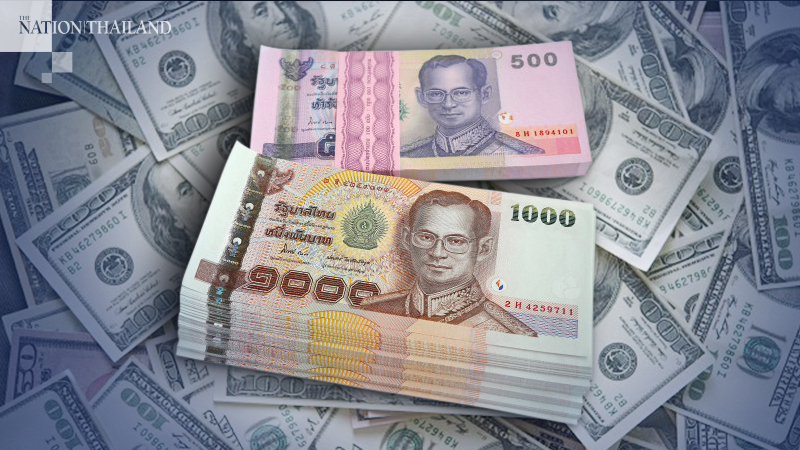
Bangkok Commercial Asset Management (BAM) believes it will be able to collect Bt15 billion and Bt16 billion in outstanding debts next year, chief of BAM’s investor relations Rathanon Fookiat said.
This year, the company was only able to collect between Bt12 billion and Bt13 billion in payments or 20 per cent less than initially targeted due to the fallout of Covid-19, he said.
In the next few days, the company will put six of its non-performing assets (NPAs) worth a total of Bt780 million on auction. The next auction will take place early next year, he said.
Rathanon added that BAM’s performance is starting to improve in the fourth quarter of this year, and it will realise revenue worth about Bt1.6 billion from its sale in the second and third quarters.
For now, he said, the company is prioritising renovating its NPAs for sale, which will account for 72 per cent of the total items up for auction.
The company’s cash collection recovered in the third quarter of this year, realising net profit worth Bt289 million. Its profits in the first nine months of the year came to Bt1.13 billion.
The asset management firm is satisfied with the current level of profits, he said.
He added that non-performing loans (NPLs) in the banking system will rise to 3.4 per cent of total loans, up from the 3.18 per cent or Bt70 billion estimated for this year.
He said the fallout of the Covid-19 pandemic is a major cause for rising bad debts.
BAM is an asset management company, offering investments in the real-estate sector. It also puts properties up for auction and sale.
The Stock Exchange of Thailand (SET) Index rose by 22.72 points, or 1.54 per cent, to 1,501.64 in the morning session on Wednesday.
An analyst at Krungsri Securities expected the day’s index to rise to between 1,490 and 1,500 points from foreign fund inflows in response to positive news of a Covid-19 vaccine, adding that this positive sentiment is also benefiting large-cap stocks.
“However, we still advise investors to undertake short-term speculation as the SET would come under pressure from its tight valuation and mass sell-offs of shares to reduce risks during the upcoming long holiday,” he said.
He recommended investors buy:
> Laggard shares in the SET50 Index, such as EGCO, TCAP, DTAC, KTB, TMB, SCB, BCP and TOP.
> MINT, CENTEL and AOT that benefit from positive news of a Covid-19 vaccine.
The SET Index closed at 1,478.92 on Tuesday, up 29.09 points, or 2.01 per cent. Total transactions amounted to Bt123.46 billion, with an index high of 1,484.73 points and a low of 1,442.65.
The price of gold was unchanged in morning trade on Wednesday after surging by Bt300 per baht weight at close on Tuesday, the Gold Traders Association reported.
As of 9.24am, the buying price of a gold bar was Bt26,450 per baht weight and selling price Bt26,550 while gold ornaments cost Bt25,969.08 and Bt27,050, respectively.
The Comex (Commodity Exchange) gold price to be delivered in February next year rose by US$8.90, or 0.48 per cent, closing at $1,874.9 (Bt56,270) per ounce on Tuesday, the highest since November 17.
The gold price gained positive sentiment from hopes of a US Covid-19 relief package and a decline in the US Treasury bond yield.
An analyst at YLG Bullion International advised investors to undertake short-term speculation as mass buy-ups of the precious metal hadn’t increased by much.
“We advise investors to buy gold when the price rises over the line between $1,846 and $1,850 per ounce and take profits if the price cannot rise over the line between $1,878 and $1,887,” he said.
The baht opened at 30.04 to the US dollar on Wednesday, unchanged from the previous day’s close.
The Thai currency is likely to move between 29.95 and 30.15, said Jitipol Puksamatanan, senior director of the chief investment office at SCB Securities.
On Tuesday night, the S&P 500 Index rose by 0.3 per cent amid progress in US financial policy, while the Stoxx 600 Index increased by 0.2 per cent as the ZEW Investor Sentiment Index in December hit 55 points, higher than the market expectation of 46 points.
However, the financial market didn’t open in a risk state as the US ten-year Treasury bond yield was unchanged at 0.91 per cent, while the dollar recovered slightly after positive news of a US economic stimulus package, Jitipol said
Meanwhile, the baht strengthened to near the strongest point of the year – at 30 to the dollar – due to mass sell-offs of the currency by exporters, while some foreign investors have gradually sold bonds to purchase Thai shares for the remainder of the year as they expect the economy to recover, he said.
“We still believe the baht will weaken once the stock market faces a correction,” Jitipol added.
By Syndication Washington Post, Bloomberg · Rita Nazareth, Claire Ballentine
Stocks rose to a record as stimulus talks tempered concern about tougher restrictions amid a surge in coronavirus cases.
The S&P 500 closed at an all-time high after Senate Majority Leader Mitch McConnell, R-Ky., suggested setting aside some issues that have been roadblocks to a relief package — a strategic retreat aimed at striking a deal. The Nasdaq 100 advanced for a 10th straight day, the longest rally in about a year. Pfizer Inc. jumped as U.S. regulators gave early indications they may grant emergency-use authorization to its vaccine. Tesla Inc. erased losses that were driven by plans to raise as much as $5 billion.
Time is running ever shorter on getting fresh stimulus, with lawmakers approaching the year-end break just as U.S. coronavirus infections surpass 15 million. Democrats have opposed McConnell’s insistence on giving employers a shield from lawsuits, while he has been among Republicans blasting Democratic demands for assistance to state and local authorities as a bailout. Both issues have curtailed prospects of an agreement.
“After months of inaction by leaders in Washington, the market is likely to respond well to any movement towards additional fiscal support,” said Adam Phillips, director of portfolio strategy at EP Wealth Advisors. “However, motion is not the same as action. If these discussions do not lead to results, we could see the market give up some of its recent gains.”
A key sentiment indicator for U.S. stocks has reached its most bullish level in two decades. The weekly Cboe ratio of volume traded in puts versus calls fell to the lowest since July 2000 last week. This implies extreme positioning to the upside, as investors look beyond short-term uncertainty toward a continuing global recovery in 2021.
Elsewhere, the pound pared declines after the U.K. dropped controversial parts of an internal bill that would have given it the power to unilaterally override the Brexit divorce treaty. Prime Minister Boris Johnson will hold crisis talks with European Commission President Ursula von der Leyen Wednesday evening as the two sides try to salvage a trade deal by the end of the year.
These are some of the main moves in markets:
Stocks
– The S&P 500 increased 0.3% as of 4 p.m. EST.
– The Stoxx Europe 600 Index climbed 0.2%.
– The MSCI Asia Pacific Index fell 0.1%.
Currencies
– The Bloomberg Dollar Spot Index was little changed.
– The euro was little changed at $1.2106.
– The British pound dipped 0.1% to $1.3366.
– The Japanese yen weakened 0.1% to 104.17 per dollar.
Bonds
– The yield on 10-year Treasuries fell one basis point to 0.91%.
– Germany’s 10-year yield decreased three basis points to -0.61%.
– Britain’s 10-year yield dipped three basis points to 0.257%.
Commodities
– West Texas Intermediate crude fell 0.3% to $45.61 a barrel.
EconDec 09. 2020Transport Minister Saksayam Chidchob
By The Nation
The Transport Ministry has reportedly asked the Office of Transport and Public Policy and Planning to study the plan to promote electric vehicles in public transport.
The plan will pilot the use of electric public buses in six provinces – Bangkok, Chiang Mai, Nakhon Ratchasima, Ayutthaya, Chonburi and Phuket.
Transport Minister Saksayam Chidchob said he had received the EV subcommittee’s findings from its study of Thailand’s transition from fuel-based vehicles to EVs.
He added that it is expected to take 15 years to fully achieve the transition.
Gulf’s Sarath richest Thai stockholder for second year in a row
EconDec 09. 2020Sarath Ratanavadi, CEO of Gulf Energy Development Plc
By The Nation
Sarath Ratanavadi, CEO of Gulf Energy Development Plc, is the wealthiest Thai stockholder for the second consecutive year with Bt115.29 billion, according to rankings compiled by Money & Banking magazine and Chulalongkorn University’s Faculty of Commerce and Accountancy.
The rankings list major shareholders at close of trade on September 30 this year, after the SET fell to 1,237.04 from 1,637.22 last year.
The fall wiped Bt140.796 billion off the value of major investors’ stockholdings.
The worth of Sarat’s Gulf shares fell Bt5.67 billion from last year. Sarat is the company’s largest shareholder with 35.44 per cent.
Gulf shares were worth Bt160 last year when he topped the wealth list for the first time, up 109.84 per cent from the initial public offering price of Bt45 in 2018. They had fallen to Bt30.5 in September this year after the Thai economy and listed companies were hit by the Covid-19 fallout.
The second richest investor this year is Prasert Prasattong-Osoth, founder of Bangkok Airways and Bangkok Dusit Medical Services, with a total shareholding of over Bt50.079 billion – down by Bt16.031 billion from last year.
The third richest is Niti Osathanugrah with Bt48.181 billion, down Bt431.68 million. Niti is heir to the Osotspa beverage empire. His investment portfolio this year covers 12 companies.
The fourth richest is Vonnarat Tangkaravakoon, director of TOA Paints (Thailand), who moved up from sixth place last year. His overall stake in Stark Corporation and TOA Paints was worth Bt41.213 billion, up Bt157.85 million.
ThaiBev tycoon Charoen Sirivadhanabhakdi was fifth with total holdings of Bt38.178 billion, richer by Bt27.848 billion following his listing of Asset World Corp on the SET last October.
Moving up one place to sixth and seventh were Daonapa Petampai and Chuchat Petaumpai, respectively, who own shares in Muangthai Capital Plc.
Daonapa’s holdings were worth Bt35.460 billion, down Bt5.580 billion, while those of Chuchat were Bt35.277 billion, down by Bt5.563 billion.
Somphote Ahunai, CEO of Energy Absolute, slid to eighth place from fifth last year with Bt34.412 billion, down Bt7.671 billion.
Khunying Wanna Sirivadhanabhakdi, wife of Charoen, is ranked ninth with holdings of Bt28.728 billion, Bt18.398 billion richer than last year.
Harald Link, chairman of B Grimm Power Plc, is 10th in this year’s rankings with shares worth Bt26.798 billion, down Bt632.63 million.
HBO Max, Peacock Users Surge as Streaming Wars Heat Up
InternationalDec 09. 2020AT&T Chief Executive Officer John Stankey, speaking at an investment conference Tuesday, said HBO Max has added about 4 million new users in less than three months, putting activations at 12.6 million. MUST CREDIT: Bloomberg photo by Gabby Jones
By Syndication Washington Post, Bloomberg · Scott Moritz, Gerry Smith
AT&T’s HBO Max and Comcast’s Peacock saw a surge in sign-ups in recent months, an indication they’re gaining some momentum in an uphill fight against Netflix and Walt Disney.
AT&T Chief Executive Officer John Stankey, speaking at an investment conference Tuesday, said HBO Max has added about 4 million new users in less than three months, putting activations at 12.6 million.
Peacock, meanwhile, has attracted about 26 million sign-ups since its launch, Comcast said Tuesday. That’s up from 22 million announced in October. But the service is free with ads, making it difficult to compare with HBO Max and other streaming platforms.
The two media conglomerates are playing catch-up in a streaming industry with more entrenched players, including Netflix, Disney and Amazon.com. Netflix has 65 million subscribers in the U.S. alone, and many more overseas. And Disney has a trio of services — Disney+, Hulu and ESPN+ — that it sells as a bundle.
But an influx of new programming is giving HBO Max a boost. Shows like “The Undoing” and “The Flight Attendant” have helped fuel an “incredible pace” of customer gains, Stankey said in the presentation. It’s also bolstered the amount of time viewers spend with the service, a measure that’s up about 36% in the past 30 days.
The subscriber update comes just days after AT&T shocked Hollywood by announcing plans to put all its 2021 Warner Bros. movies on HBO Max at the same time they debut in theaters.
The shift in strategy created some blowback for AT&T. Director Christopher Nolan, who has a long relationship with the studio, criticized the plan on Monday, describing it as a betrayal of filmmakers. He also slammed HBO Max as an inferior streaming service.
Stankey used his presentation Tuesday to help justify the decision to have big-budget movies debut on HBO Max at the same time they open in theaters.
“It’s really important that we have a direct relationship with consumers,” Stankey said. With the pandemic shutting down theaters and disrupting TV-show production, “it’s important that these new distribution platforms scale faster for fear of being left behind,” he said.
Comcast’s Universal studio has made similar efforts to shorten the theatrical window — the amount of time a movie plays exclusively at cinemas — though it hasn’t taken as drastic a step as AT&T. In its presentation, the company said that shorter film windows will add value to its operations, but stressed that theaters remain a critical part of the business.
Comcast also has less riding on Peacock than AT&T does with HBO Max. Though Peacock generates ad revenue, it isn’t seen as an integral part of the cable giant’s business. For now, the service — launched nationally in July — is mostly a way to attract customers who may also use the company’s broadband services.
At AT&T, HBO Max is more central to its efforts to adapt to cord cutting — including people getting rid of the traditional HBO network. In its early months, the service got off to a slow start. It’s more costly than the other major streaming platforms, and confusion over its use of the existing HBO brand may have kept some potential customers away. Stankey said the recent sign-ups show that HBO Max is building a base of users that will only grow when big movies start hitting the service.
“The models that we’re putting in place are going to give us tremendous flexibility,” Stankey said. “That’s the only way we’re gonna survive in this economy, in this market structure, moving forward.”
Despite trade war, China-U.S. farm ties are stronger than ever
InternationalDec 09. 2020A combine harvester reaps in an aerial image taken over Princeton, Ill., on Sept. 29, 2020. Through the trade war and open hostilities at the highest political levels, pig farmers in China and crop farmers in the U.S. have become increasingly interdependent. MUST CREDIT: Bloomberg photo by Daniel Acker
By Syndication Washington Post, Bloomberg
Measured by the bushel, the U.S.-China relationship has never been stronger.
Through the trade war and open hostilities at the highest political levels, pig farmers in China and crop farmers in the U.S. have become increasingly interdependent. Already America’s biggest customer of soybeans and sorghum, for this season China bought an unprecedented 11.2 million metric tons of corn, up nearly 1,300% compared with pre-trade war purchases.
For the moment, both sides seem happy. The American imports have helped China feed its hog herd, which is recovering faster than expected after the African swine fever outbreak created a shortage of the country’s most staple protein. Meanwhile, U.S. farm profits are at a seven-year high, riding China’s demand and additional support from federal aid to agriculture.
China’s bought nearly 30 million metric tons of U.S. soybeans, the most for this point in the season since 1991 and 57% of America’s export sales. For sorghum, which is also a substitute for corn, China accounts for 80% of sales. Corn purchases, once negligible, rocketed to almost 30%.
“American agriculture has to be careful of putting too many eggs in the China basket,” says Tom Vilsack, who served as agriculture secretary from 2009 to 2017 and has emerged as a leading candidate for the position under President-elect Joe Biden. MUST CREDIT: Bloomberg photo by Andrew Harrer
But the deeper reliance is tenuous. As the trade war showed, that market can quickly evaporate, and experts warn that any number of geopolitical events – an incident in the South China Sea, for example, or further activity in Hong Kong – could end with another chill on Chinese imports.
“American agriculture has to be careful of putting too many eggs in the China basket,” said Tom Vilsack, who served as Agriculture Secretary from 2009 to 2017 and has emerged as a leading candidate for the position under President-elect Joe Biden. “I think the lesson that should be learned from the last couple of years is the need for American agriculture to continue to diversify so there’s always somewhere else the products can go, other than the storage bins.”
For now, purchases are so big that traders are even drawing parallels with the Soviet era’s “Great Grain Robbery,” another huge agricultural trade at a time of tensions between superpowers. Overall, the U.S. has nearly exhausted its export capacity.
“We are loading boats as fast as we can,” Gregg Doud, the U.S. Trade Representative’s chief negotiator for agriculture, said in an interview with Bloomberg at the end of October. “North of 95% of what can possibly be done in 2020 is already booked, and a huge chunk of that is soybeans to China.”
The farm belt, which voted overwhelmingly for the reelection of President Donald Trump, is waiting to see how Biden will approach trade negotiations with China. Trump’s North American and Chinese trade deals, plus covid-linked farm aid, have sustained the agricultural economy, said Jim Putnam, who grows corn and soy in Minnesota. “I was never a big Trump fan but he did get the Chinese attention with Phase 1,” he said. “I hope that the Biden administration can keep things going.”
Even if relations improve, China’s appetite for American crops reflects a combination of factors that won’t remain static: the strength of China’s post-Covid economy, the unanticipated consequences of the African swine fever recovery, and the limitations on the country’s own corn production.
When the disease killed roughly half the country’s herd after China first reported outbreaks in 2018, traders projected a five-year timeline for recovery. It’s been far faster. The herd is now at 80% of its pre-disease levels.But the industry has changed. Multi-story “hog hotels” and large industrial producers have replaced the backyard farms where pigs grew fat on table scraps. The more professional operations mean hogs are eating more corn, soybean meal and other feed grains.
“Everybody focuses on soybean trade, but as the Chinese livestock industry is professionalizing their feeding practices, it means not only the soybean meal demand will grow, but it also means the corn demand grow as well too,” Greg Morris, president of Archer-Daniels-Midland Co.’s Ag Services and Oilseeds unit, said at a recent investment conference.
Trump has taken credit for the deal that resolved the two-year long trade war and required China to increase purchases of agricultural goods by 52% from 2017. As of the end of October, China had met 71% of the $36.5 billion target based on exports through August and sales scheduled for import by Dec. 31, according to the USTR.
Others are skeptical about the influence of the trade deal.
“China doesn’t adhere to trade policies because they’d like to, it only happens when there is a need,” said Dan Basse, president of Chicago-based consulting firm AgResource. “I think China would have bought the same amount of grain relative to having a phase one agreement or not.”
China has already bought so much corn from the U.S. and Ukraine, traditionally its biggest supplier, that imports this year exceeded for the first time the 7.2 million ton quota set by the World Trade Organization. The USDA’s Foreign Agriculture Services expects China’s purchases to triple to 22 million tons this season. Those are the projections that will inform U.S. farmers as they decide how to allocate their land for the 2021 growing season.
Behind closed doors, American executives worry that they’re at a disadvantage. China closely guards the status of its reserves, and only its state-owned enterprises understand the full scale of the country’s demand. Typhoons in the northeast could have done serious damage to the country’s harvest or, as its agriculture minister said, this year could see a bumper crop. The amount of corn subject to lower tariffs is also opaque.
Les Finemore, chief investment officer at commodity hedge fund Imbue, drew a parallel with what’s known as the Great Grain Robbery of the 1970s. Hiding a severe domestic crop failure, Soviets bought millions of tons of American wheat in frenzy, driving global prices higher and heavily contributing to inflation in the U.S.
In China, the goal is self-sufficiency. President Xi Jinping visited a corn farm in Jilin in July, urging local authorities to protect the fertile soil in the region. If the country can improve its yield by 2.5% per year, it could meet domestic demand by 2029, according to Xu Weiping, a chief analyst with the agriculture ministry. The country is reallocating land from non-grain crops to corn. ChemChina also acquired Syngenta in 2017, and plans to use genetically modified crops and other technologies to help get the country to 90% self-sufficiency.
Even if the political relationship sours, China has been developing its global supply chain. As part of its Belt-and-Road Initiative, it has heavily invested in Brazil, the world’s top producer of soybeans, and in the Black Sea region. It has also developed its own commodity-trading powerhouse, with the acquisition of Noble Group’s agriculture arm and Dutch grain trader Nidera BV, now merged and renamed Cofco International Ltd. Despite the jumps in purchases, the scars of the trade war remain. Tariffs are still in place, a challenge the Biden administration will eventually have to deal with, said Joseph Glauber, a former USDA chief economist. The new president will also have to tackle issues such as intellectual property and business practices, which remain on the table.
Any sticking points over any of those issues could stress agricultural trade, as China’s tension with Australia is once again making clear. What began in 2018, when Canberra barred Huawei Technologies Co. from building its 5G network on national security concerns, has snowballed; this year, China moved to block imports of barley, wine, sugar, lobster, coal and copper ore.
“The issue has never really been about agricultural trade,” said Glauber. “The bigger issues have been outside of agriculture, and I think those are going to be the tough ones.”
Biden lays out plan to combat covid in first 100 days, including requiring masks on interstate buses, trains
InternationalDec 09. 2020President- elect Joe Biden introduces his health team at the Queen in Wilmington, Del., on Tuesday, Dec. 8, 2020. MUST CREDIT: Washington Post photo by Demetrius Freeman
By The Washington Post · Amy Goldstein
President-elect Joe Biden Tuesday laid out a three-point plan to begin defeating the coronavirus pandemic during his first 100 days in office, saying he will sign an executive order the day he is sworn in to require Americans to wear masks on buses and trains crossing state lines, as well as in federal buildings.
Biden also pledged to distribute at least 100 million vaccines during that time, singling out educators, who he said should get shots “as soon as possible” after they are given first, under current plans, to health workers and peoPerfectple who live and work in long-term care facilities. He did not specify whether he meant 100 million doses or vaccinating that many people; the two vaccines nearing approval both require two doses.
The other goal of his 100-day plan, Biden said, is to enable “the majority of our schools” to reopen within that time horizon and to remain open. He called on Congress to devote the funding needed to make it safe for students and teachers to return to classrooms.
The president-elect set out these initial priorities for the pandemic he regards as his top priority in remarks in Wilmington, Del., during which he introduced six members of the team he has chosen to lead the government’s response and to pursue other changes to the nation’s health-care system.
They include California Attorney General Xavier Becerra, a Democrat, his nominee as secretary for the Department of Health and Human Services – a former 12-term House member who is the first Latino and the first top state legal official ever chosen for that role.
Biden has said often and urgently that Americans should wear masks, and he reiterated Tuesday that he would work with mayors and governors, encouraging them to impose mandates regarding face-coverings in their jurisdictions. But his remarks were the first time he committed to signing an executive order to require masks “wherever possible” in venues under federal authority.
His vaccine goal came a day after The Washington Post reported that federal officials may be unable buy more than their first 100 million vaccine doses from Pfizer and BioNTech, the drug companies whose vaccine is first in line for federal clearance, until late June or July, because other countries have been buying it. Like Pfizer, Moderna has already contracted to deliver its first 100 million doses to the U.S. government. Doses of both vaccines will become available as soon as they are cleared by federal regulators.
Biden did not specifically address the possibility that fewer doses may be available for the first months of next year than has been anticipated.
He acknowledged that those actions will not end the pandemic, saying “we will still have much to do in the year ahead, and sadly, much difficulty, too. We will be far, far from done.”Yet,” he said, “it is possible that after 100 days, we will be much farther along in the fight against the pandemic.”
Biden’s appearance at the Queen auditorium was the third Tuesday in a row on which he used the stage to introduce his nascent team. But this was the first time he broached specific policies – one indication of the primacy with which he regards controlling the escalating pandemic, which has infected at least 15 million people in the United States and killed at least 284,000.
Biden called covid-19, the illness caused by the coronavirus, “a mass casualty event,” pointing out that, for last week, it was the nation’s leading cause of death.
The president-elect portrayed the half-dozen appointees for senior roles in the White House and at HHS as “world class experts at the top of their fields. Crisis tested.” And he said his administration will accelerate testing for the virus, improve the supply chain to provide protective gear, and distribute the vaccine that is on the cusp of becoming available to the first members of the public.
But health policy and public health specialists regard Becerra, and others on the team as talented and skillful, but not entirely steeped in what one called “boots-on-the-ground experience” running a complex health care organization.
In addition to Becerra, Biden introduced Jeff Zients, co-chairman of his presidential transition and a former leader of President Barack Obama’s national economic council, as the White House’s coordinator of the pandemic response. Vivek Murthy, a co-chair of the transition’s covid-19 advisory board, will return as surgeon general, a role he held during the latter part of Obama’s tenure and the first months of the Trump administration.
Rochelle Walensky, an infectious-disease specialist and professor of medicine at Harvard Medical School, will be the next director of the Centers for Disease Control and Prevention. Marcella Nunez-Smith, another co-chair of the advisory board, will lead a covid-19 equity task force to focus on the disproportionate impact the virus has had on racial and ethnic minorities.
The president-elect also introduced a familiar figure who is remaining in the job he has held for nearly four decades: Anthony Fauci, director of the National Institute of Allergy and infectious-disease who is adding to his title chief medical adviser on covid-19.
Becerra will be the only one of those to require Senate confirmation- and is already being targeted by some Republicans who question his qualifications and his previous support for a single-payer health care system called Medicare-for-all.
The Biden transition and others close to Becerra have been working hard to play up his long-standing commitment to improving access to affordable health-care as a senior House member and as attorney general of the nation’s most populous state.
In his current role since 2017, Becerra has led the Democratic opposition to a lawsuit attempting to overturn the Affordable Care Act. His office has focused on Medicaid fraud and won a major settlement against a large health system it accused of anti-competitive practices. In an unusual twist in which California’s attorney general can sponsor state legislation, he was behind a successful recent bill that deters pharmaceutical companies from blocking lower-price genetic drugs.
In the House for two dozen years, Becerra sat on the Ways and Means Committee, which has jurisdiction over large government health insurance programs and took a leading role in promoting and messaging the ACA and fighting Republican efforts to repeal the law. But he was known on Capitol Hill more for his interest in immigration policy than health care.
“Becerra’s a bright guy. I’m not arguing that,” said Sen. Bill Cassidy, R-La., a physician. “But that’s not to say he knows anything about health care.”
Speaking by video during the event,Becerra said HHS’ mission “has never been as vital or as urgent as it is today . . . tackling the pandemic, saving lives, keeping us healthy should be our calling card.”





 Transport Minister Saksayam Chidchob
  Sarath Ratanavadi, CEO of Gulf Energy Development Plc
  AT&T Chief Executive Officer John Stankey, speaking at an investment conference Tuesday, said HBO Max has added about 4 million new users in less than three months, putting activations at 12.6 million. MUST CREDIT: Bloomberg photo by Gabby Jones
  A combine harvester reaps in an aerial image taken over Princeton, Ill., on Sept. 29, 2020. Through the trade war and open hostilities at the highest political levels, pig farmers in China and crop farmers in the U.S. have become increasingly interdependent. MUST CREDIT: Bloomberg photo by Daniel Acker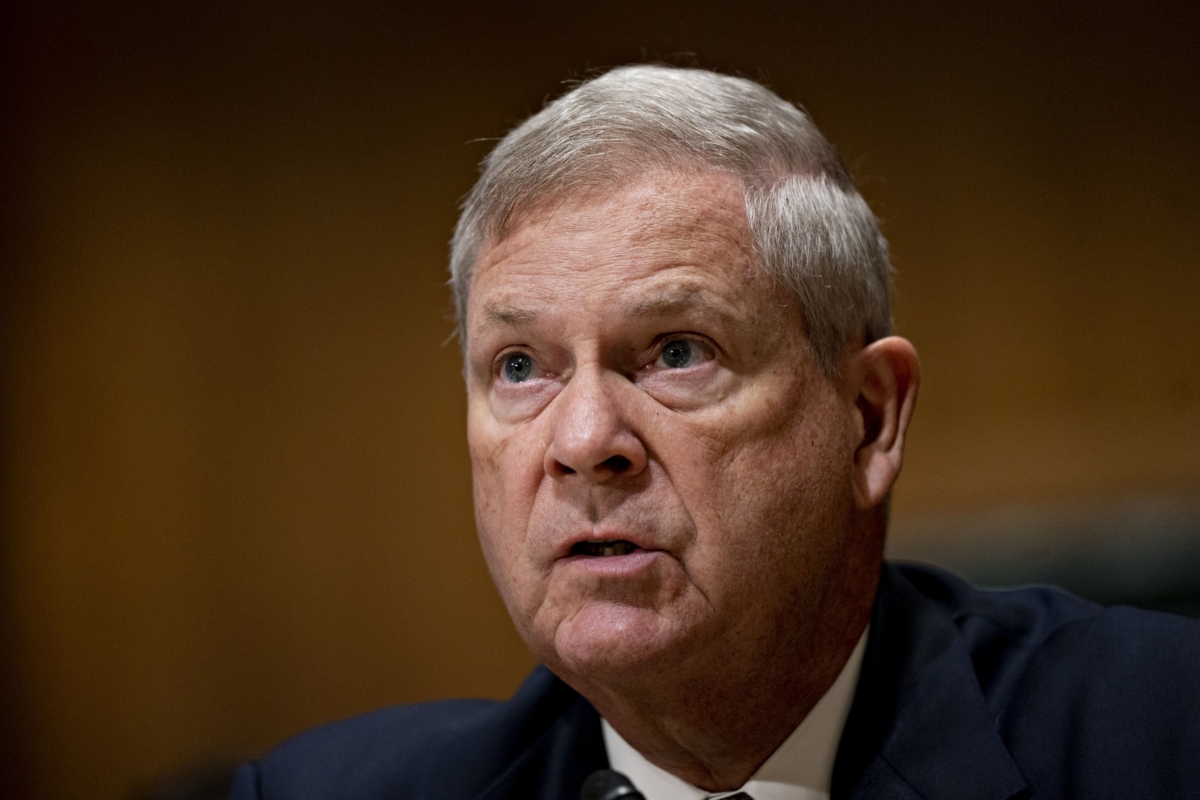
 President- elect Joe Biden introduces his health team at the Queen in Wilmington, Del., on Tuesday, Dec. 8, 2020. MUST CREDIT: Washington Post photo by Demetrius Freeman
  SootinClaimon.Com