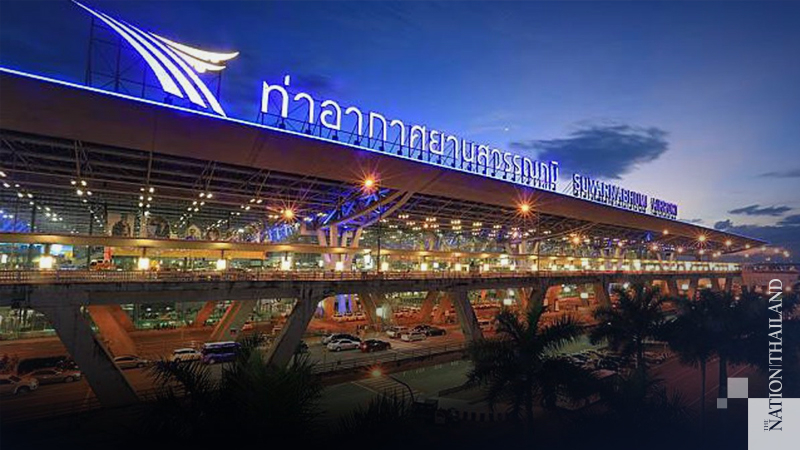
Suvarnabhumi Airport issued a statement on Thursday saying the story of a Myanmar national trying to pass himself off as a pilot at the airport was true and that the suspect has been sentenced to eight months in jail for the offence.
Suthirawat Suwanawat, the airport’s general manager, said the suspect called Ye Min Thu was also prosecuted on Tuesday for overstay.
The man apparently had dressed like a pilot and tried to use a fake pilot ID to enter the domestic passenger area.
Guards, however, were unconvinced and sent him to the airport’s police station. Upon interrogation, police found out that the man had told his family and girlfriend that he was a pilot, when in reality he is only an aviation student.
Ye Min Thu lives in a condo in Bangkok’s Hua Mark area, and has not applied for a visa extension since the beginning of this year.
The pretend pilot has been charged for trespassing and overstay, and hit with a jail sentence of eight months.
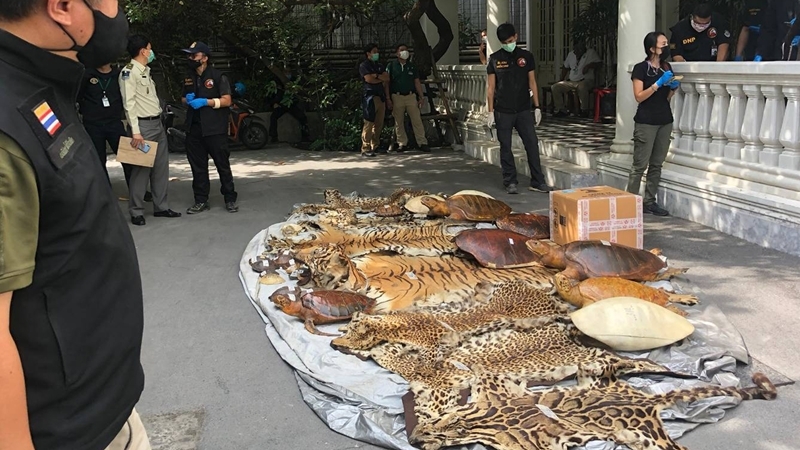
The Royal Forest Department confiscated 32 animal remains showcased at a high-end hotel in Bangkok’s Sukhumvit area on Thursday.
Turtle shells of different species, skins of two Bengal tigers, three leopards and two clouded leopards, as well as tiger skeletons, were found put up as decorations around the premises.
The authorities confiscated everything after management was unable to provide permits for the possession of these items.
Initial investigation showed that the hotel is owned by Thai and foreign businessmen, who were not available when police arrived.
The illegal possession of wildlife remains violates Section 17 of the Wildlife Conservation and Protection Act, and further investigation will be conducted to prosecute those involved in the crime.
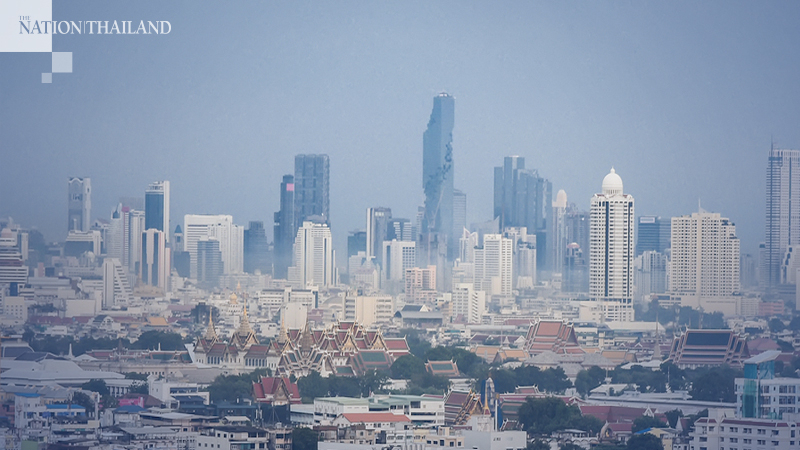
Air pollution exceeded safe levels in 13 spots in Bangkok, with records at 7am showing the range of PM2.5 dust particles in the capital and its vicinity at between 35 to 57 micrograms per cubic metre (μg/m3).
PM2.5 are dust particles that are less than 2.5 micrometres in diameter (more than 100 times thinner than human hair) and can lead to serious health problems. The safe level set by the World Health Organisation is 25μg/m3, though Thailand’s safe level is 50μg/m3.
The 13 areas in Bangkok where air pollution has crossed the safe limit include Thonburi, Nong Khaem, Khlong San, Samphanthawong, Phra Khanong, Bangkok Yai, Prawet, Klong Toei, Bang Khunthien, Yannawa, Phasi Charoen, Pathum Wan and Bueng Kum.
People in these areas are advised to avoid outdoor activities, especially the elderly, children and people suffering from respiratory disorders.
The Thai Meteorological Department has reported that 10 per cent of Bangkok will get some rain, adding that rain may reduce dust pollution.
The Tourism Authority of Thailand (TAT) expects local tourists to take a total of 2.75 million trips over the December 31-January 3 long weekend.
TAT governor Yuthasak Supasorn said tourism during the New Year holidays will inject more than Bt10.74 billion into the economy, and result in 37 per cent occupancy in hotels.
He said local tourism has contracted in some places due to the new wave of Covid-19 infections, with several provinces like Bangkok, Chonburi, Sukhothai and Khon Kaen suspending their countdown events to curb transmission.
The governor added that some people may also avoid travelling over the long weekend either because they have no money or don’t like traffic.
Interprovincial bus company, Transport Co, has predicted that the number of passengers will drop by 30 per cent compared to the same period last year.
Ratchaburi province has found the first Covid-19 patient in the latest outbreak, which could be linked to the seafood market in Samut Sakhon province.
The provincial public health office announced at 4pm on Thursday that the man went to make purchases from Mahachai Market on December 9 and returned to Ratchaburi the same day.
He is a 24-year-old male resident of Nong Krathum subdistrict, Pak Tho district.
There are 20 people considered at high risk of being infected due to their proximity to the patient, while 57 have low risk.
The high-risk group will be tested for the virus while the others have been told to self-quarantine in their houses.
The province now has 10 confirmed Covid-19 patients.
The Green Butterfly group, an NGO dedicated to promoting fair fuel prices, has urged the Ministry of Energy to reduce the fuel marketing fee to Bt1.85 per litre from the current Bt3-4 per litre to allow consumers to buy fuel at fair prices.
“We have submitted the proposal during a meeting with Energy permanent secretary Kulit Sombatsiri on December 22,” said Nakarn Chanthiratnara, founder of the group.
“The permanent secretary has promised that he will forward it to the Energy Policy and Planning Office [EPPO] to consider the new rate after the new year or early next year. In the meantime, the ministry will survey the marketing fee from petrol stations nationwide to get accurate data on calculating a suitable rate.”
Nakarn added that the group’s decision came after the EPPO’s announcement on June 17 to reduce all kinds of fuel price at refinery by Bt0.5 per litre on average, but the retail prices of oil remain the same as oil vendors have not adjusted their marketing fee accordingly. “This has resulted in consumers receiving zero benefit from the EPPO policy,” he said.
Meanwhile, ML Korakasiwat Kasemsri, director of Energy and Natural Resources Policy Research Centre at Rangsit University, said that the marketing fee that the Ministry of Energy has set is an average for all kinds of oils, but in reality each petrol station sells different oils at different prices.
“To maintain market competitiveness, the marketing fee should be set individually for each type of oil and must be under a maximum limit to ensure that all parties receive the fullest benefit,” he said. “In the past, there have been cases when some small petrol stations had to go out of business due to the marketing fee being too high.
“Domestic consumption of fuel is at approximately 100 million litres per day. If the marketing fee is only Bt1 per litre higher than it should be, that means Thai people have overpaid Bt36 billion on fuel per year,” he added. “This amount is significant and should have been spent on some other necessities.”
Flooding caused by heavy rain in the southern region for several days could leave people vulnerable to leptospirosis.
Dr Opas Karnkawinpong, director-general of the Disease Control Department, said on Thursday that “People who live in flooded areas and have to wade through floodwaters are at risk of contracting leptospirosis,” he said. “Leptospira bacteria could enter the body via scratches, wounds or even through the skin exposed to floodwater for prolonged periods. It could also be transmitted via food or water that are contaminated.”
Opas added that the carrier of leptospira are rodents, the disease is hence also known as rat fever.
Symptoms of leptospirosis range from mild headaches, muscle pains especially on the upper thigh and calf, fever to severe bleeding in the lungs or meningitis.
“From January 1 to December 19, there have been 1,537 cases of leptospirosis in Thailand, resulting in 20 deaths,” he added.
“The majority of cases, or 837 patients, were residents of southern provinces. The most reported age groups are 45-54 years that have risky behaviour of wading through flooded water or fishing. School children who like to swim in floodwater are also among the high-risk groups.”
The five provinces that have the highest number of patients per 100,000 population are: Rayong, Phang Nga, Yala, Phatthalung and Song Khla.
“If you have the symptoms of leptospirosis, avoid self-medication as they could worsen the symptoms,” he added. “See a doctor immediately and don’t forget to mention that you have had contact with flood water. Leptospirosis must be treated by antibiotics according to each patient’s symptoms.
“To prevent oneself from leptospirosis, make sure to wear boots if you have to wade through floodwater, cover your wounds with waterproof band-aids, wash your hands and feet with soap regularly and take a shower immediately after touching floodwater,” added Opas.
For more information, contact the Disease Control Department at 1422.
The new patients are seafood vendors who had visited a seafood market in Samut Sakhon.
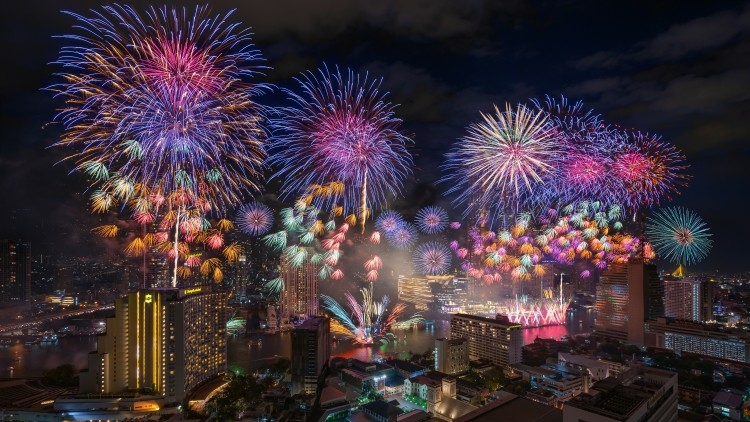
In a bid to prevent the spread of Covid-19 and create awareness among people, government agencies have decided to cancel various activities, including Christmas and countdown festivals.
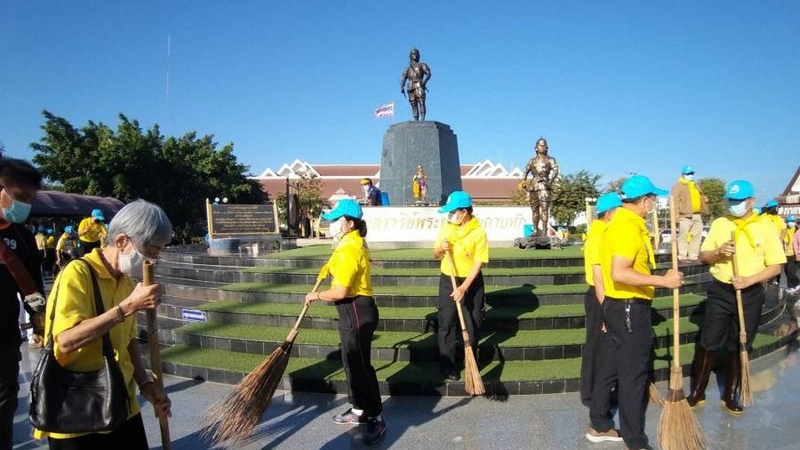
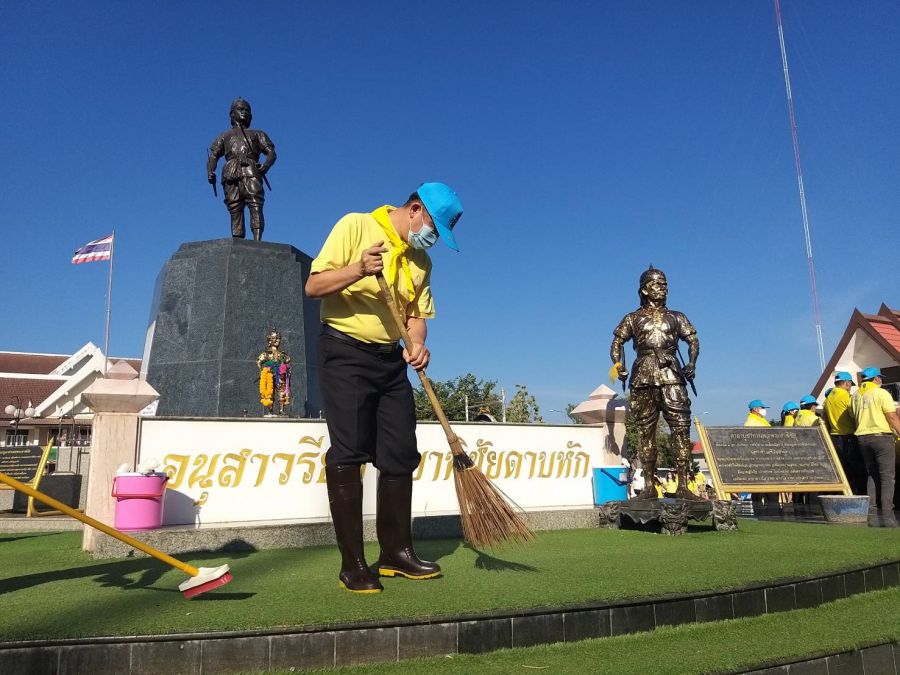
Uttaradit governor Phol Damtham kicked off the cleaning operation at Phraya Phichai Dap Hak Monument. He later instructed government agencies in nine districts to clean their areas, focusing on tourist attractions, communities, bus terminals, train stations, markets, and temples.
The initial round of tests on more than 500 people who had been in contact with the patients came out negative but have been put under 14-day self-isolation.
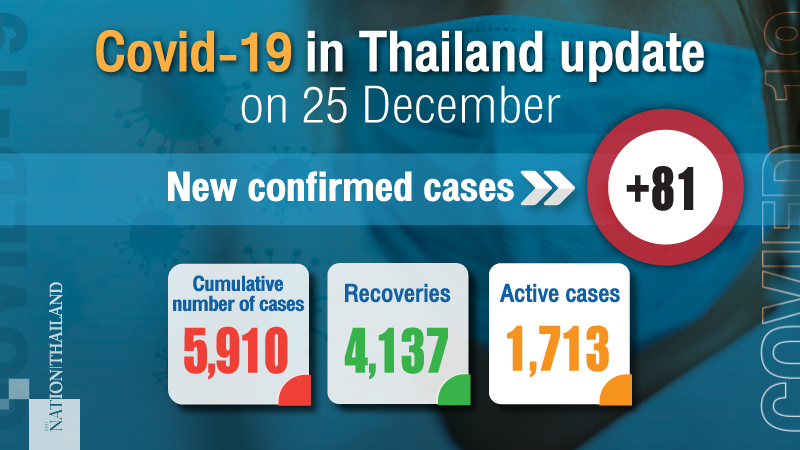
The Centre for Covid-19 Situation Administration (CCSA) reported 81 new cases over a 24-hour period on Friday.
Of the 81, 37 were domestic cases, with 26 patients linked directly to the Samut Sakhon cluster, 11 yet to be confirmed and 35 migrant workers who tested positive as part of a proactive Covid-19 search operation. Most of the workers who have tested positive are asymptomatic.
Separately, six Thais and three foreigners who have recently entered the country tested positive in quarantine.
The returnees include one Thai who returned from Myanmar, one from Switzerland, one from the United Arab Emirates, three from the United States. Foreigners included a German dentist and two Russian men.
Meanwhile, 21 patients have recovered and been discharged.
The total number of confirmed cases in Thailand has risen to 5,910 (1,943 returnees and 1,308 found domestically), 1,713 of whom are in hospital or ad-hoc quarantine facilities, while 4,137 have recovered and been discharged. The death toll remains unchanged at 60.
According to Worldometer, as of 10am, the total number of confirmed cases globally had risen to 79.72 million (up by 665,189). Of them, 56.12 million have recovered, while 21.85 million are active cases (106,250 in severe condition) and 1.75 million have died (up by 11,718).
Thailand ranks 144th for most cases in the world, while the US tops the list with 19.11 million, followed by India 10.14 million, Brazil 7.42 million, Russia 2.96 million and France 2.52 million
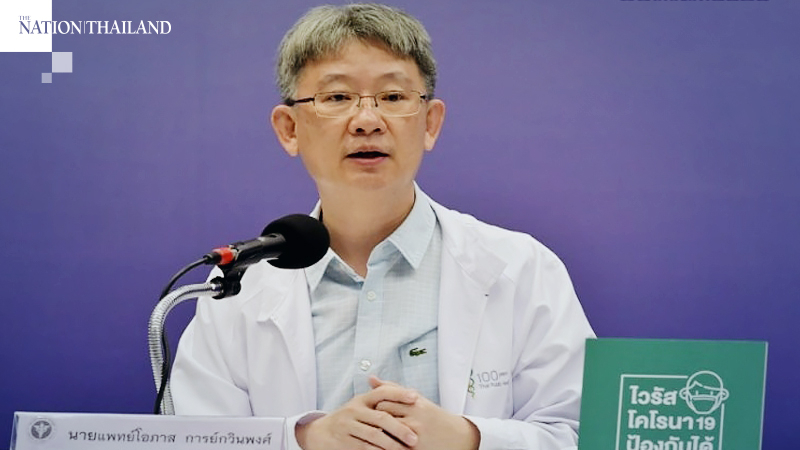
CCSA spokesperson Dr Taweesin Visanuyothin said as part of the search for active cases, 8,810 people have been tested so far and 1,308 found infected, accounting for a 15-per-cent positive rate. Of this group, three patients are at risk – two are suffering from severe diarrhoea and one is a pregnant woman close to delivery.
As for Samut Sakhon locals who are against the setting up of a field hospital, he said there are enough personnel and security officials to ensure the safety of communities around the site.
So far, patients linked to the Samut Sakhon outbreak have been found in 31 provinces, namely Bangkok, Chachoengsao, Nakhon Pathom, Pathum Thani, Phetchaburi, Samut Prakan, Saraburi, Uttaradit, Petchabun, Suphanburi, Nakhon Ratchasima, Prachin Buri, Krabi, Phuket, Ayutthaya, Kamphaeng Phet, Khon Kaen, Chai Nat, Samut Songkhram, Udon Thani, Phichit, Nakhon Si Thammarat, Surat Thani, Chaiyaphum, Nakhon Sawan, Nonthaburi, Ang Thong, Ratchaburi, Songkhla, Loei and Ubon Ratchathani. Dr Taweesin has suggested that people keep DMHT in mind, namely distancing, mask, handwashing and temperature testing.
As for panic over seafood from Samut Sakhon, he said he wants people to calm down because many provinces have temporarily stopped the movement of products, though seafood can be safely consumed provided it is cooked properly in line with good hygiene guidelines.
The Chinese Embassy, consulates and Chinese visa application service centres in Thailand will collect 10 fingerprints of all visa applicants starting from January 11, 2021.
In accordance with Chinese laws and regulations and international common practices, all visa applicants are required to submit the application documents and have their fingerprints collected in person at the time of their appointment after filling in the online electronic application forms and booking the appointment at https://visaforchina.org, the embassy said.
Fingerprints collection is not required for:
▪︎ Children under 14 years and adults over 70 years;
▪︎ Diplomatic passport holders and diplomatic, official and courtesy visa applicants.
▪︎ Applicants holding the same passports whose fingerprints have been collected at the same Chinese Embassy, consulates or the visa application service centres within five years.
All applicants should have their fingerprints collected in person at the embassy, consulates or visa centres. Visitors to China whose fingerprints do not match may be denied entry, the embassy said.
For necessary economic, trade, science and technology activities or emergency humanitarian needs, contact via email bangkokcentre@visaforchina.org.





 SootinClaimon.Com