Thai seafood to be packaged with ‘Covid-safe’ mark from Dec 26
NationalDec 25. 2020esak Pakdeekong, director-general of the Fisheries Department, chomps on a boiled shrimp to promote the safety of Thai seafood.
By The Nation
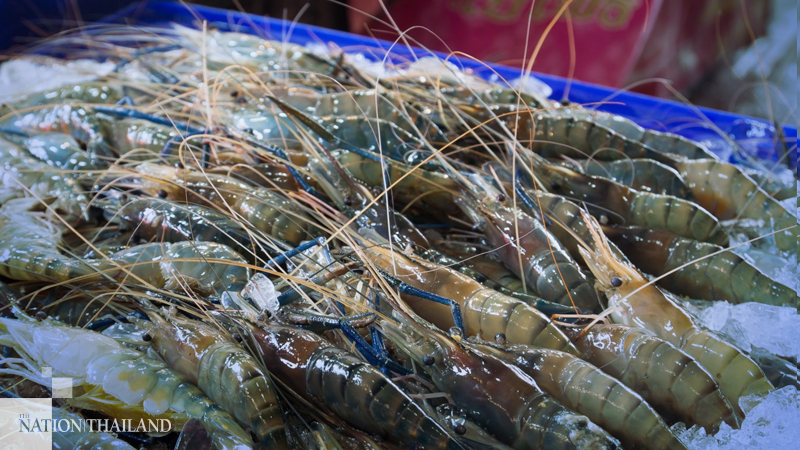
From tomorrow, two standards will certify Thai seafood and aquatic products are free from Covid-19 contamination. The move by the Fisheries Department is aimed at building confidence in Thai fisheries produce both domestically and in neighbouring countries. So far, 60 exporters have applied for the new safety certification.
Department chief Mesak Pakdeekong said the Covid-19 outbreak in Samut Sakhon’s central shrimp market had spread to other areas, sparking public alarm over food safety and threatening livelihoods in the fisheries industry.
In response, two new Covid safety certificates had been issued. The first covers fishing boats, fish markets, transport systems, retailers and modern trade markets, while the second applies to farms, transport and markets. The certification will be marked on product packaging to build confidence among consumers.
“The Fisheries Department will check for Covid-19 at origin – as produce leaves farms or is unloaded from fishing boats. Fisheries workers, farmers and those who receive their produce must all be Covid-free [to be certified]. Certification will start from December 26,” said Mesak.
So far, Laos is the only country that has banned Thai seafood exports following the Samut Sakhon outbreak.
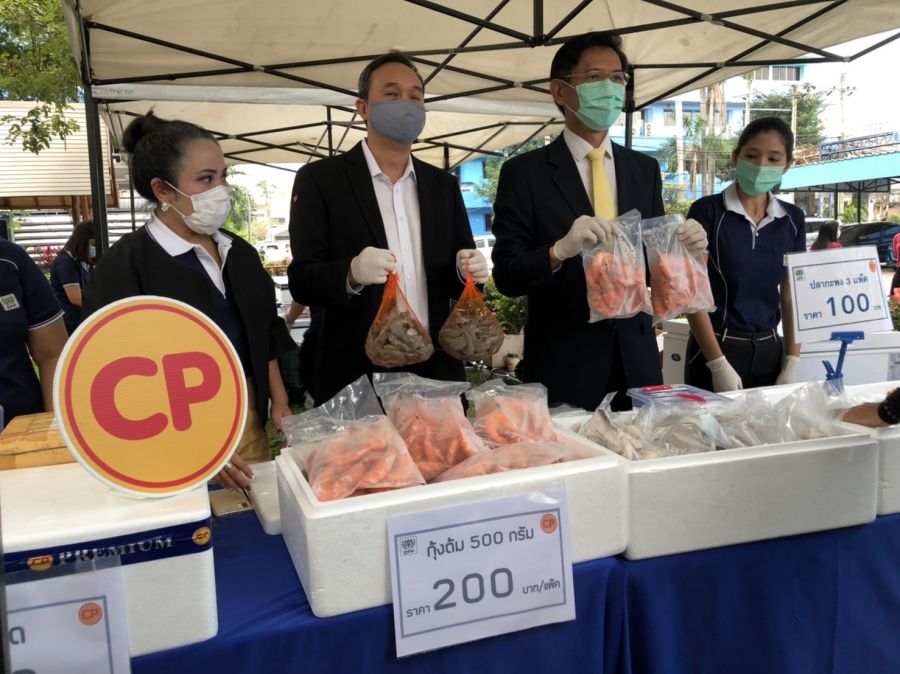
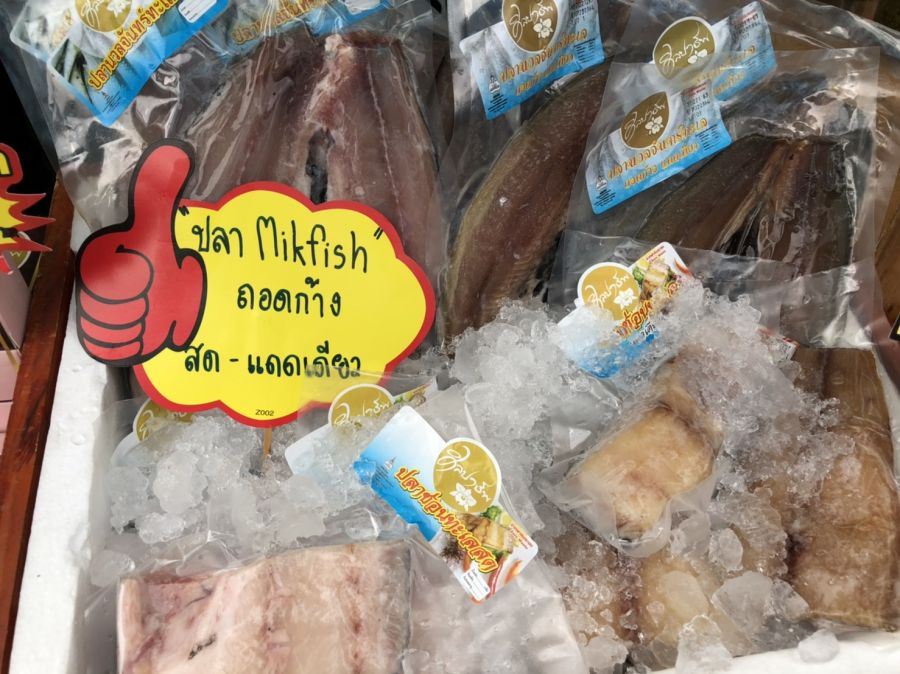
The Fisheries Department said it has joined hands with Charoen Pokphand Foods (CPF) to distribute produce such as steamed blue crab, banana shrimp, boiled shrimp, giant freshwater prawn, mantis shrimp, king mackerel, snapper, catfish under the “Thai aquaculture standards to combat Covid-19” campaign.
Wichan Ingsrisawang, the department’s deputy director-general, said more than 60 businesses had applied for the new certification guaranteeing their supply chains were Covid-free, most of them exporters. The Samut Sakhon shrimp market, which also sent produce to Laos, had been unable to offer such a guarantee, he added.
Cash-and-carry operation Siam Makro, a subsidiary of CP Group, is among the businesses who have applied for certification, he said.
The Commerce Ministry has joined hands with relevant agencies to build confidence in the safety of Thai seafood after Laos temporarily banned fresh, chilled and frozen seafood.
The aim of the ministry’s exercise is to build confidence that Thai seafood is Covid-19-free.
Deputy Prime Minister and Minister of Commerce Jurin Laksanawisit revealed that the Laos Ministry of Industry and Trade was preparing to implement a temporary ban on import of fresh, chilled and frozen seafood products from Thailand after an outbreak in the central shrimp market in Samut Sakhon province.
Jurin on Wednesday instructed the Department of International Trade Promotion and the director of the Office of Foreign Trade Promotion in Vientiane to resolve the issue. He will discuss with the Department of Fisheries on preparing a hygiene certificate for export goods among measures to build confidence in the buyers.
Somdet Susomboon, director-general at the Department of International Trade Promotion, said the department had coordinated with the Commerce ambassador and Thai Embassy in Laos, including related agencies, to clarify the facts to the Laos Ministry of Industry and Trade, and assure them that both fresh and frozen Thai seafood are not contaminated. Importantly, from the technical data of the Department of Fisheries, it is confirmed that marine animals are cold-blooded and therefore there is absolutely no chance of them getting Covid-19.
“At this time, various agencies are trying to do whatever it takes to ensure fresh, chilled and frozen seafood, including processed food of Thailand, are free of Covid-19. Also, the Thai government has already enforced strict epidemic control measures and is getting results as well. Thailand had not found any infection in the country for the past several months,” said Somdet.
However from discussions with the Department of Fisheries, there is advice that if buyers of seafood are not confident about contamination or infection during the transportation process, they can buy seafood directly at the farm without having to go to the market.
Poj Aramwattananon, president of Thai Frozen Foods Association, said importers of agricultural and fisheries products cannot declare a ban on the import of agricultural and fishery products since these products are under the World Trade Organisation agreement (WTO) signed by member countries. It is not possible to ban the import of this group of goods from other member countries without a good reason unless it is announced by the WTO that consuming the food will be harmful or even fatal. In which case, the situation will be similar to the bird flu outbreak where the WTO announced a ban on members importing chicken from countries with the outbreak and to have strict inspection measures before importing.
“In the case of Thai seafood, there were some inquiries from overseas buyers about hygiene measures. Thailand has already strictly undertaken measures for more than six months. The order for seafood from major buyers has not been cancelled yet,” Poj assured.
Somsak Paneetatyasai, president of the Thai Shrimp Association, revealed that the main importers — China, European Union, and Japan — had already inspected products from Mahachai Market. China stated that the virus was not found from Thailand, but the virus was detected from Myanmar products, while the EU and Japan said no infection was found in Thai product packaging.
“Therefore, the case of Laos preparing to ban Thai fishery products is probably more a case of panic, which is hard to understand right now. It takes time to build confidence. As for other countries, there is no problem and we can still export shrimp as usual. However, we must ensure that the products released from the factory are free from the Covid-19 virus because the Myanmar workers are legal with clear residence area, not illegal labourers smuggled into the country and hidden in small shrimp retailers,” said Somsak.
Prime Minister General Prayut Chan-o- cha has called for steps to build confidence in fishery exports.
After a special session of the Centre for Covid-19 Situation Administration (CCSA) on Thursday, which discussed zoning the virus risk area, the committee also discussed other economic matters including tourism, export and the possible seafood ban from Laos.
After the meeting, a reporter asked Jurin Laksanawisit, Deputy Prime Minister and Minister of Commerce, on how he planned to deal with the issue of Thai product standards, especially fishery products after the latest Covid-19 outbreak. Jurin did not answer and left.
Deputy Prime Minister Supattanapong Punmeechaow said every seafood product could be exported normally according to standard and would not be seriously affected by the virus.
A source from the CCSA meeting revealed that the prime minister expressed concern about confidence in Thai food abroad, especially Thai seafood, after the ban by Laos. He told Jurin to establish standards for fishery products for export to build confidence in Thai food so that international consumers will know Thai food can be consumed as normal.
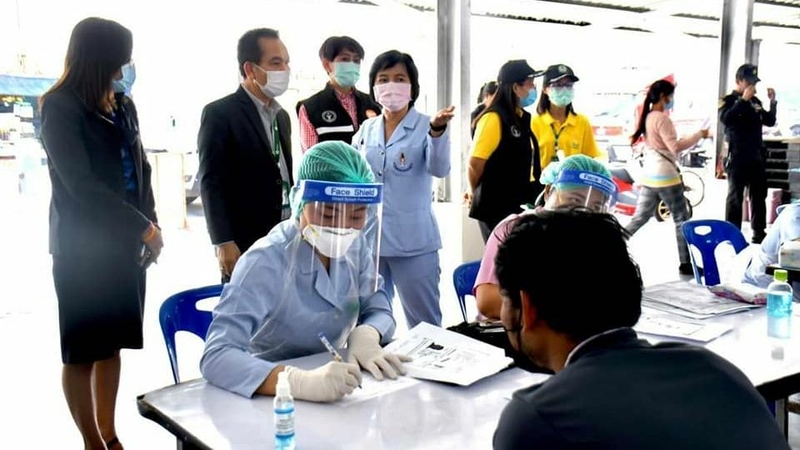
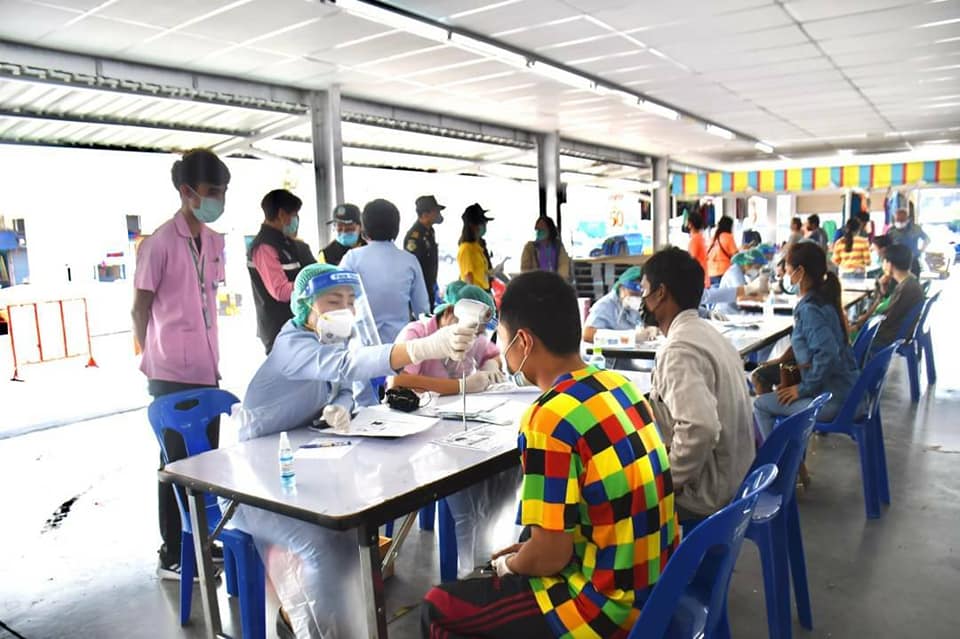
Bangkok authorities are speeding up the mission to screen migrant workers for Covid-19 across the capital.
On Friday, Bangkok governor Aswin Kwanmuang said that 7,220 immigrant workers in 484 markets across the capital had been screened since December 21.
The move follows last week’s outbreak of Covid-19 among locals and migrant workers at a Samut Sakhon shrimp market, 45 kilometres southwest of Bangkok.
Posting on Facebook, Aswin said Bangkok officials will evaluate workers’ history before conducting swab tests on those found to be at risk of infection.
“Meanwhile, we have screened 54,257 immigrant workers in 5,890 businesses and construction sites across the capital. We will complete the operation as soon as possible,” he said.
“We would also like to thank the Mor Lab Panda team for their support,” he said, referring to the popular Facebook page run by celebrity medic Parkpoom Dejhutsadin.
Aswin added that City Hall has deployed medical personnel to deal with the Covid-19 outbreak in Bangkok and its vicinity.
“We are ready to raise the protection level to curb the spread of the virus if the situation worsens,” he said.
All public New Year’s events have been banned in Bangkok, which has been placed in the Orange zone (more than 10 cases) as part of the four zones – Green, Yellow, Orange, Red – of Covid-19 restrictions.
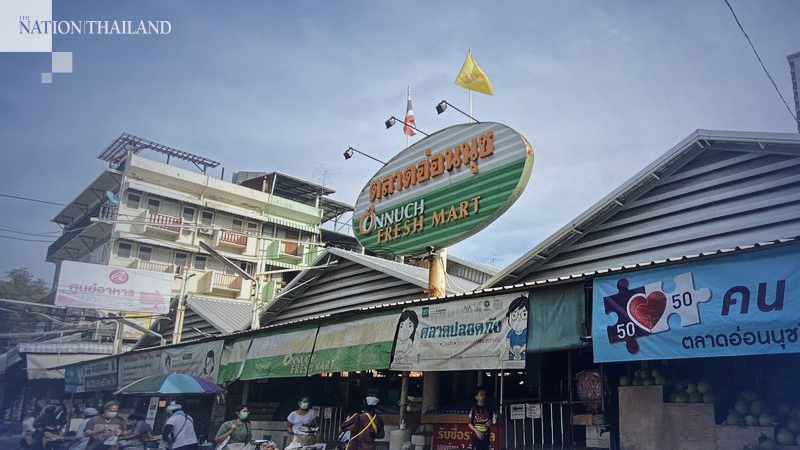
Two seafood vendors in a fresh market in Bangkok’s Onnut area tested positive for Covid-19 and are being treated in hospital.
A post in the market’s Facebook page, “Onnuch Freshmart”, said one of the vendors usually buys seafood from Samut Sakhon province and had been told to quarantine himself. The stall has been closed since Monday.
Later, this vendor was found to be infected and 10 people who had come in close contact with the patient have also been checked for the virus.
One of them tested positive and was identified as another seafood vendor in the market, the announcement said, adding that both are being treated in hospital.
Interior Minister Anupong Paochinda said on Friday that a field hospital must be set up in Samut Sakhon’s Muang district, a hotspot of new Covid-19 cases, to separate infected patients from those who are still under investigation.
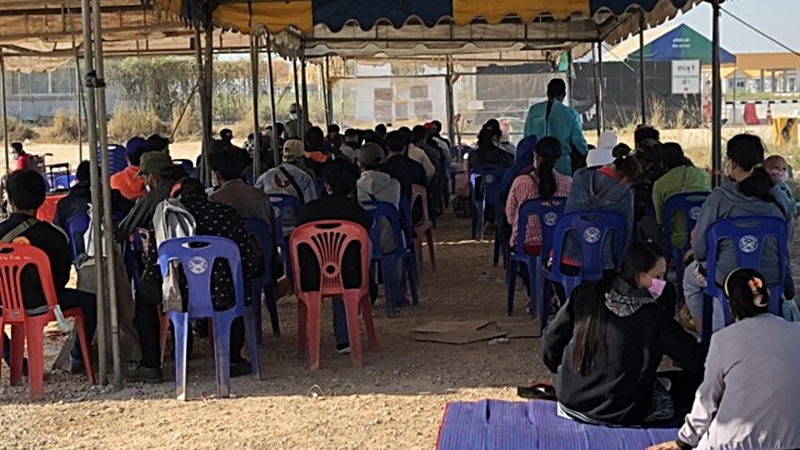
Anupong spoke after local residents gathered to protest the plan, over fears that the hospital will increase the infection risk in their communities. On Thursday hundreds of locals showed up at the Thailand National Sports University Samut Sakhon campus to block efforts to turn the campus into a field hospital for Covid-19 patients.
“Public health officials have performed Covid-19 tests on many migrant workers in Samut Sakhon, but this small city has limited facilities to safely separate those who are infected from those who still need further monitoring or testing to confirm their status,” said the minister.
“If we don’t isolate them [in the hospital], these workers could return to their community and spread the virus to others, meaning our efforts would be wasted.”
Anupong revealed that the Labour Ministry will next week ask the Cabinet to approve temporary mandatory registration of migrant workers.
“In the meantime, authorities have ordered employers to report the number of migrant workers they have hired and not to move them out of the area without permission,” he added.
Netizens on Friday shared video clips of Myanmar people thanking the spokesman of the Centre for Covid-19 Situation Administration (CCSA), Taweesin Visanuyothin, for his words of encouragement.
Taweesin made his remarks during the Covid-19 situation press conference on Wednesday in response to some netizens’ accusing Myanmar workers sneaking into Thailand as being responsible for the new Covid-19 wave in Samut Sakhon’s shrimp market.
“I would like to ask Thai people to see Myanmar workers as relatives because they came to Thailand to boost the country’s economy. Meanwhile, Thais should take good care of these workers when they are sick to maintain our strong friendship,” Taweesin said.
Later, several netizens, including Gwyn Chatranon, shared video clips of Myanmar people’s appreciation for Taweesin’s remarks on their Facebook page. The posts then went viral on the internet, while other netizens also made posts of encouragement for Myanmar workers.
During the Covid-19 situation report on Friday, Taweesin said he had watched all the video clips by Myanmar people.
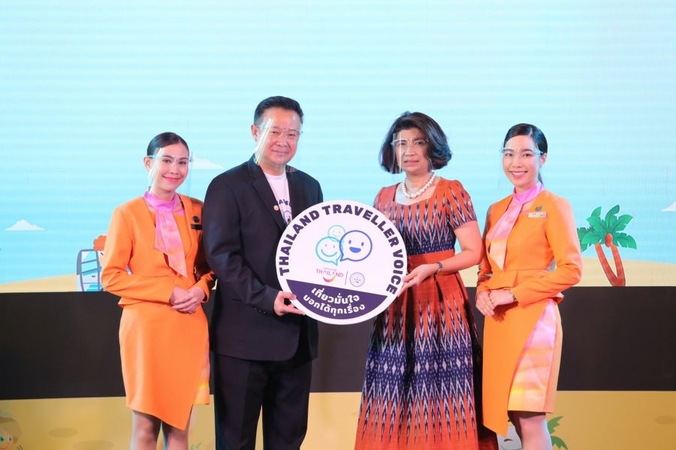
The Tourism Authority of Thailand (TAT) is launching an online platform designed to improve tourist services and keep travellers safe over the New Year holiday.
Named “Thailand Traveller Voice: Travel with confidence, tell everything”, the platform enables travellers to flag up problems with Covid-19 measures, safety, hygiene or service operators.
The TAT said Thailand Traveller Voice (korbok.com/TTV) is an open platform, receiving information and reports of problems from travellers in real-time. The idea is to help the tourism industry and businesses meet the needs of travellers.
TAT governor Yuthasak Supasorn said the platform will help create peace of mind and confidence in travelling. All comments from the public will be forwarded directly to the relevant agencies, helping tour operators to improve services and hygiene safety standards, he said. Comments and feedback submitted by travellers will be summarised into insights which the TAT and all tourism sectors can use to develop strategies that meet the needs of tourists. This will give the Thai tourism industry a clear direction for development, said the TAT governor
He also invited all tourism operators to participate in the platform, to generate big data that could be analysed to drive future business development.
Thailand will build a spacecraft within seven years with a budget of around Bt3 billion, according to the Ministry of Higher Education, Science, Research and Innovation.
Minister Anek Laothamatas announced on Thursday that Thailand will produce high-tech satellites in four years, before advancing to build a spaceship with a weight of 300 kilograms for a mission to the moon.
The ship will be powered by a xenon ion thruster, the same propulsion method used by Nasa for interplanetary space missions. The spacecraft will travel at 11 kilometres per hour to the moon, before slowing to enter lunar orbit at 2kph.
Thailand’s first lunar mission will be officially announced in January, Anek said.
More than 200 Burmese workers are returning to Myanmar via the Mae Sot district border in Tak province on Friday before entering the quarantine process after crossing the border.
Tak public health officials with the help of other responsible organisations have screened all the workers prior to their travel to Myawaddy.
They will be later checked for body temperature again and will be placed in 11 quarantine locations for 21 days.
However, Thai authorities said that if there was a new order to prevent the movement of labourers, they would not be allowed to leave the country.
 esak Pakdeekong, director-general of the Fisheries Department, chomps on a boiled shrimp to promote the safety of Thai seafood.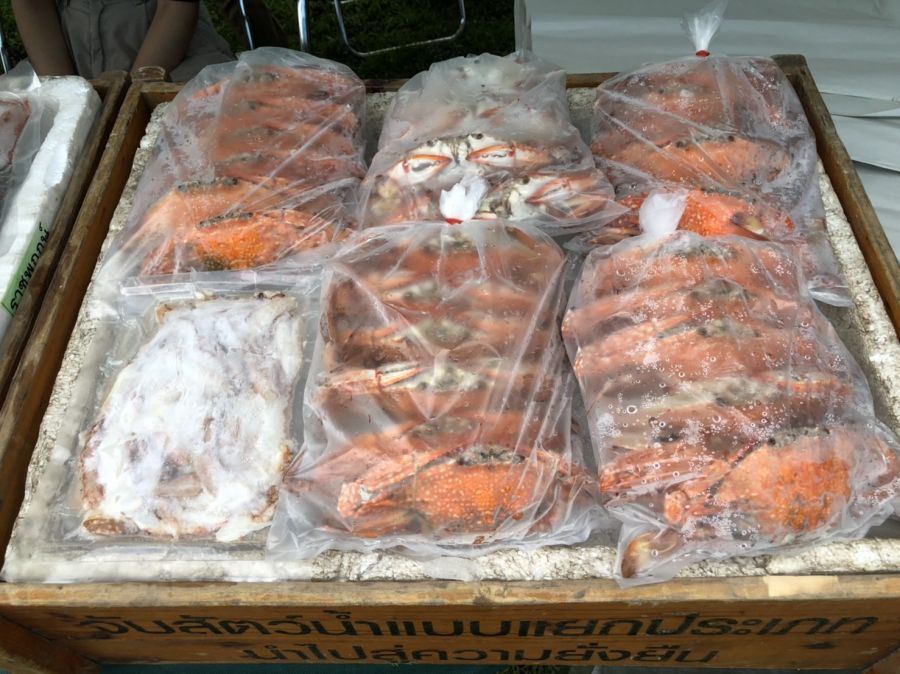

.jpg)

 SootinClaimon.Com