CIMB Thai Bank (CIMBT) has said that the bank has set a target for retail loans in 2021 to expand from Bt138 billion to Bt145 billion, or 5 per cent.
Tan Keat Jin, deputy Head of Consumer Banking, said this year loans in this category contracted by 1-3 per cent due to the impact of the Covid-19 outbreak.
“We expect loans for buying houses and used cars to grow significantly next year as in the second half of this year the demand in these categories has been continually rising,” he said.
“Currently home loans are accountable for 60 per cent of total retail roans, while used-car loans take up 30 per cent.
“Used-car loans have higher profit margin at around 6-7 per cent compared to loans to buy new cars at only 1-2 per cent,” he added.
Tan added that next year CIMBT expected to keep the amount of non-performing loans (NPLs) at a suitable level, as he believed the economy would start to recover provided the new Covid-19 outbreak is limited to only some provinces.
“One of our missions is to provide borrowers with moratorium and debt restructuring service to prevent them from becoming NPLs,” he said.
“Statistics show that after the repayment suspension, up to 70 per cent of customers were able to continue repaying their debt, while 20 per cent are still in need of additional assistance. We hope to reduce this number down to 5-10 per cent next year.”
CIMBT also targets up to 25 per cent expansion in fee from its wealth management services, which it has developed into a digital wealth management platform to provide customised services to its ‘CIMBT Preferred’ and private banking customers.
The Stock Exchange of Thailand (SET) Index closed at 1,486.31 on Friday, up 34.79 points or 2.40 per cent. Total transactions amounted to Bt88.24 billion with an index high of 1,486.84 and a low of 1,462.77. The SET rose more than 2 per cent for the second successive day after gaining more than 2.37 per cent on Thursday.
In the morning session, an analyst at Krungsri Securities expected the day’s index to fluctuate between 1,440 and 1,465 points amid news that the European Union and Britain had reached a deal on Brexit, and Thailand had escaped a nationwide lockdown after the latest Covid-19 outbreak.
However, the index would come under pressure from the decline in fund flows over the Christmas and New Year period, said the analyst.
The 10 stocks with the highest trade value today were DELTA, AEONTS, KEX, IVL, SA, IRPC, BANPU, SAWAD, PTTGC and MTC.
Other Asian indices were mixed:
Japan’s Nikkei Index closed at 26,656.61, down 11.74 points or 0.044 per cent.
China’s Shang Hai SE Composite Index closed at 3,396.56, up 33.45 points or 0.99 per cent, while Shenzhen SE Component Index closed at 14,017.06, up 101.48 points or 0.73 per cent.
Taiwan’s TAIEX Index closed at 14,331.42, up 51.14 points or 0.36 per cent.
Hong Kong’s Hang Seng Index and South Korea’s KOSPI Index were closed for Christmas Day.
Banks are preparing cash reserves to accommodate withdrawals during the New Year holidays.
Kasikornbank is planning to allocate Bt36.8 billion for its KBank branches and ATMs from December 28 to January 1.
Of that, Bt10.5 billion will be distributed among KBank’s 860 branches nationwide, with Bangkok getting Bt4.5 billion. Another Bt26.3 billion will be loaded into 8,200 KBank ATMs nationwide, with a whopping Bt14 billion allocated to Bangkok ATMs to support revelry.
Meanwhile, Krungsri will allocate cash reserves of Bt15.24 billion for its nationwide branches and ATMs from December 28 to January 3.
Of the total, Bt11.052 billion will be allocated to its ATMs and Bt4.19 billion to branches. Krungsri had around 632 branches and around 6,121 ATMs as of November.
The Siam Commercial Bank (SCB) is preparing a cash reserve of Bt63 billion, Bt45 billion of which will be for ATMs and Bt18 billion for branches. The bank had 860 branches and 11,926 ATMs nationwide as of November.
Bangkok Bank is preparing cash reserves of Bt50 billion for all its service channels, including ATMs, to cater to spending during December 31 to January 3.
The share price of Delta Electronics (DELTA) has continued to soar since the beginning of this year.
In the morning session on Friday, DELTA’s share price opened at Bt638 per share, up Bt102, or 19 per cent.
The price of DELTA shares rose from Bt53.50 per share at the beginning of this year amid the Covid-19 crisis, as its performance surpassed the market’s expectation.
DELTA’s second-quarter net profit was Bt2.02 billion, up 132 per cent year on year, while its third-quarter net profit was Bt2.64 billion, up 327 per cent year on year.
With the growth in performance and market capitalisation, DELTA was listed in MSCI Global Standard, FTSE SET Large-Cap Index, SET50 and SET100
As of December 24, DELTA’s market capitalisation was Bt668.59 billion, up Bt604.04 billion compared to 64.55 billion at the beginning of this year.
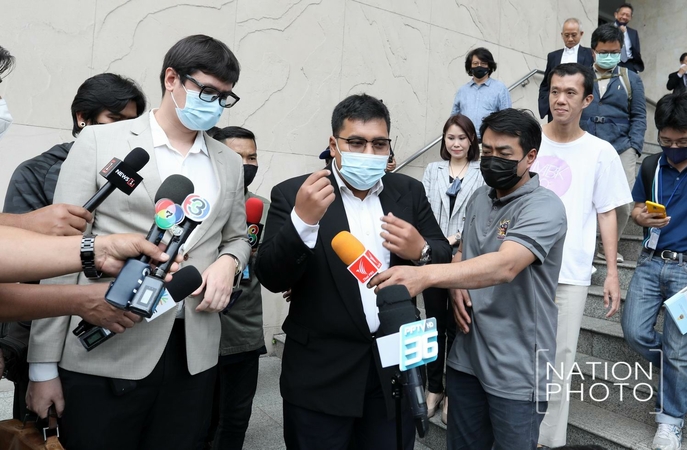
The Criminal Court on Friday dismissed the charges filed against 39 anti-coup protesters who had held a rally at Pathumwan Skywalk in front of MBK Center in Bangkok’s Pathumwan district in January 2018, urging the then junta-backed government to hold general election.
The group later became known as “MBK39”, comprising key activists, such as Veera Somkwamkid, Rangsiman Rome, Sirawit Serithiwat, Nuttaa “Bow” Mahattana, Arnon Nampha, Ekachai Hongkangwan, Sukrit Piansuwan, Netiwit Chotiphatphaisal and Sombat Boongamanong.
They had been charged with sedition under Section 116 of the Criminal Code.
By The Washington Post · Toluse Olorunnipa, Josh Dawsey
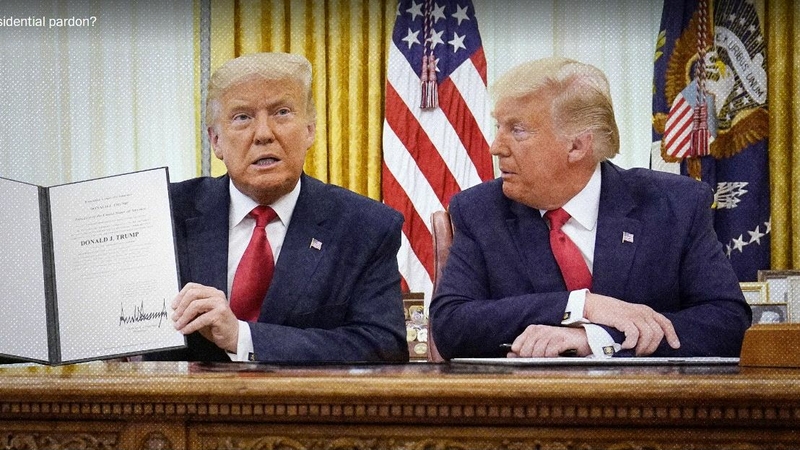
WEST PALM BEACH, Fla. – Among the dozens of people who received pardons from President Donald Trump this week were several who lied to investigators andobstructeda federal probe into the president’s links to Russia.
Some had personal connections to Trump or his most loyal backers. A handful were Republican lawmakers rewarded for fealty to the president after betraying the public trust. Others abused their authority in more violent ways, killing or injuring unarmed civilians.
Taken together, the rogue’s gallery of criminals receiving clemency this week showcased Trump’s willingness to exert raw political power for his own personal gain, handing out favors to friends at a time when he is seeking GOP support for his flailing bid to reverse his election loss.
In a process White House aides describe as ad hoc, many of the pardon seekers ended up on the president’s radar after conservative activists, television commentators or other friends-of-Trump made personal appeals on their behalf.
The brazenness of the announcements – which included pardons for his daughter’s father-in-law, a former campaign manager and convicted killers from a private security firm founded by a longtime political ally – rocked Washington and sparked calls for an overhaul of the Constitutional power.
Trump’s pardon spree, coming less than a month before he is set to leave office, is his latest exploitation of his executive powers in ways that offend the spirit of the Constitution if not its letter, said Russell Riley, a presidential historian at the University of Virginia’s Miller Center.
“The pardon is an unfettered power, so I don’t think that there was ever a chance that he wasn’t going to look after the people he’s been quietly authorizing and protecting all along,” he said. “Nobody with a straight face can argue that this use of the pardon power is consistent with what the Framers envisioned when they conveyed it in Article II.”
The vast majority of the 94 people who have received clemency from Trump have a personal or political connection to him, according to a compilation by Harvard Law School professor Jack Goldsmith and Matthew Gluck on the Lawfare blog.
Democrats in Congress, good governance groups and several former prosecutors slammed the pardons as antithetical to the rule of law and yet another example of hypocrisy from a president who campaigned on a pledge to restore “law and order” and end political cronyism.
Some called for an overhaul of the pardon power, saying Trump has so corrupted it that it should be amended or even stripped from the Constitution.
“Once one party allows the pardon power to become a tool of criminal enterprise, its danger to democracy outweighs its utility as an instrument of justice,” Sen. Chris Murphy, D-Conn., wrote Thursday on Twitter after Trump pardoned several individuals who were charged in special counsel Robert Mueller’s probe into whether Trump conspired with Russia or obstructed justice. “It’s time to remove the pardon power from the Constitution.”
For their part, Republican lawmakers have largely been silent – abandoning the kind of outrage they expressed with Democratic presidents issued pardons to political allies on a far smaller scale.
One Republican who did speak out, Nebraska Sen. Ben Sasse called the moves “rotten to the core.”
The White House did not respond to a request for comment.
Trump is likely to issue dozens more pardons after the Christmas holiday, according to aides, who, like others, spoke on condition of anonymity to discuss internal deliberations. Before leaving office, Trump is preparing to deliver parting gifts to allies who have demonstrated loyalty to him, officials said.
Trump has taken something of an impromptu approach to the pardon process, polling advisers, friends and allies for potential candidates, according to advisers. Alice Johnson, a criminal justice advocate from Tennessee who received a pardon for a drug conviction after an intervention by the celebrity Kim Kardashian and spoke at the Republican National Convention, has played a key role by sending names to Trump family members and other White House advisers.
Trump continues to consider a pardon for his personal lawyer Rudolph W. Giuliani and former chief strategist Steve Bannon, a White House adviser said. Bannon, who was indicted earlier this year on charges of defrauding donors to a charity, has pled not guilty. Giuliani, whose business practices have drawn scrutiny from investigators, did not respond to a request for comment.
Several advisers said Trump has asked lawyers and aides to look into the issue of preemptive pardons.
Legal scholars have debated whether Trump could issue a pardon for himself in the coming weeks, a prospect that appeared more likely after his latest clemency push focused largely on allies whose legal predicaments were closely linked to his own.
Trump has used his constitutional power to undermine Mueller’s investigation, which neither charged nor exonerated him of obstructing justice. Mueller, who indicted several of Trump’s close allies and aides, cited longstanding Justice Department guidelines against indicting a sitting president.
Trump has told allies he wants to erode the Mueller probe through the presidential power to pardon. His pardons Wednesday of former campaign manager Paul Manafort and political confidant Roger Stone – both convicted of trying to impede investigations into Russia’s interference into the 2016 presidential race – were part of the effort to discredit Mueller and reward those who stood by him even as they faced prosecutorial pressure, aides said.
In its announcement of the pardons, the White House said Manafort was “one of the most prominent victims of what has been revealed to be perhaps the greatest witch hunt in American history.”
The defiant tone drove home another way Trump’s pardons differ from those of his predecessors: Many of the recipients are unrepentant and the White House has portrayed the prosecutors as the actual wrongdoers.
While Trump has so far pardoned five people who were charged by Mueller, some onetime Trump allies who cooperated with the investigation and expressed remorse for their crimes have not received pardons.
They include Trump’s former personal attorney Michael Cohen and former deputy campaign manager Rick Gates. After Cohen implicated Trump in several crimes, Trump lashed out at him and called him a “rat.”
“Trump has upended the traditional criteria for clemency,” Goldsmith, has tracked Trump’s pardons and commutations, wrote Thursday on Twitter. He linked to a Justice Department document that said “a pardon is granted on the basis of the petitioner’s demonstrated good conduct for a substantial period of time after conviction and service of sentence.”
The Office of the Pardon Attorney, which produced that document, has largely been eliminated from the pardon process.
The process is being overseen by White House Counsel Pat Cipollone, but many of the names are coming directly from Trump, who hears about cases on television and from friends, officials said.
Aides say the candidates for clemency fall, broadly, into two categories -political allies with criminal convictions for mostly white-collar crimes and unaffiliated people recommended to be pardoned for what one aide described as “actual crimes” such as drug convictions. White House officials have tried to roll out the pardons so far with a mix of both, sometimes moving the politically affiliated ones toward the bottom of the list.
Those involved in the process say future pardon announcements will also feature a mix of names.
“I can’t talk about it and I don’t think you will find anyone who will. There are a lot of names in the hopper,” said Doug Deason, a Trump donor who is working on the issue.
Deason said he was working on pardons with Jared Kushner and Brooke Rollins, the head of the domestic policy council. Deason said he believed the majority of the remaining pardons will be for less controversial convictions, including those who were served lengthy sentences for small amounts of drugs.
But Trump has also told allies that he wants to use his pardon power to help political allies who have been loyal to him. On Wednesday, he pardoned a former aide to Rand Paul, a senator who has regularly supported him on some of his positions that are unpopular in the conference and has raised concerns about voter fraud.
Other pardon recipients have benefited from their powerful connections to those in the president’s orbit.
In announcing the pardons, the White House has listed several Trump loyalists who had advocated for clemency – including former Florida Attorney General Pam Bondi and Newsmax CEO Christopher Ruddy.
In pardoning Charles Kushner for witness retaliation and other crimes, the White House cited support from campaign adviser Matt Schlapp and David Safavian, himself a recipient of a presidential pardon from Trump. It did not mention Trump’s son-in-law and White House aide Jared Kushner.
Trump has granted clemency to a handful of Republican lawmakers who were found guilty of crimes including fraud, obstruction of justice and campaign finance violations. Two former members of Congress who received pardons this week, Duncan Hunter and Chris Collins, were among the first Republicans to endorse Trump’s presidential bid.
Former Palm Beach County Commissioner Mary McCarty was pardoned for a 2009 charge of honest services fraud. Her brother, Brian Ballard, is a longtime lobbyist for Trump’s business and a Trump fundraiser.
While the majority of people receiving pardons were guilty of non-violent crimes, Trump also broke from tradition by granting clemency to several people involved in acts of cruelty against the innocent.
Four private security contractors who received full pardons – Nicholas Slatten, Paul Slough, Evan Liberty and Dustin Heard – were each sentenced to lengthy prison sentences for their roles in shootings that killed 14 Iraqi civilians, including women and children. The contractors all worked for the Blackwater Worldwide security company, which was founded by Erik Prince – a longtime Trump ally and brother of Education Secretary Betsy DeVos.
Trump also pardoned two Border Patrol agents convicted of shooting an unarmed suspect near El Paso, Texas, and another Border Patrol agent who spent 27 months in prison for assaulting a Mexican national who illegally crossed into Texas.
He pardoned a Prince George’s County, Md., police officer who served 10 years in prison for releasing her police dog to attack a man who had surrendered.
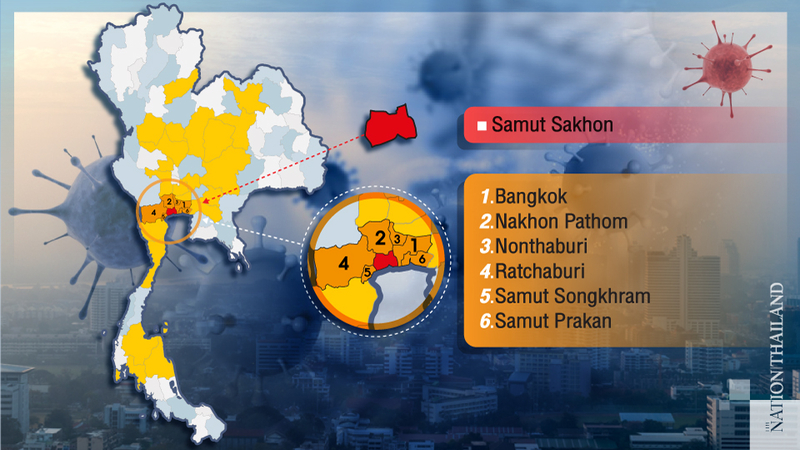
The Centre for Covid-19 Situation Administration (CCSA) released a map of Thailand with provinces colour coded based on the level of Covid-19 risk and strength of measures taken.
The colours are red, orange, yellow and green, with red being provinces with the highest number of infections. As of Friday, of the 32 provinces where Covid-19 cases have been confirmed, the only one marked in red was Samut Sakhon.
Province marked out in orange, signifying more than 10 cases, were Bangkok, Samut Songkhram, Ratchaburi, Nakhon Pathom, Nonthaburi and Samut Prakan.
Provinces marked out in yellow, where fewer than 10 cases have been found, are Saraburi, Suphanburi, Pathum Thani, Uttaradit, Chachoengsao, Kamphaeng Phet, Phetchabun, Ayutthaya, Phuket, Phetchaburi, Nakhon Ratchasima, Prachinburi, Krabi, Khon Kaen, Chai Nat, Udon Thani, Phichit, Nakhon Si Thammarat, Surat Thani, Prachuap Khiri Khan, Chaiyaphum, Nakhon Sawan, Ang Thong, Ubon Ratchathani, Songkhla and Loei.
The rest of the provinces were marked in green to show no Covid-19 cases have been reported in the new wave of infections.
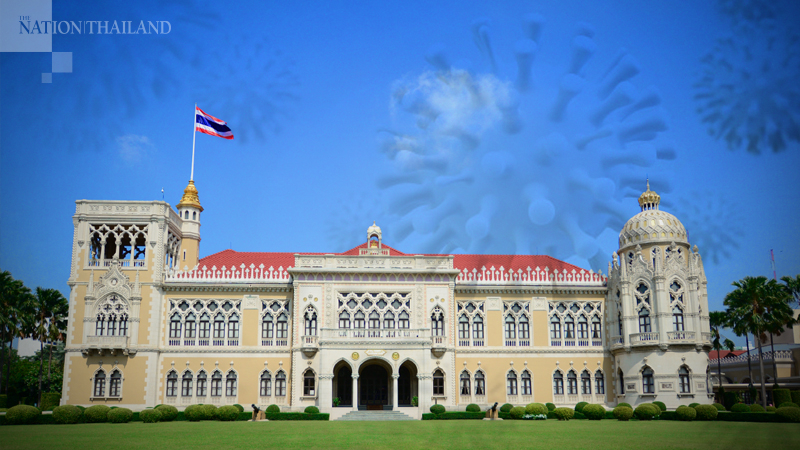
Six officials in the Prime Minister’s Office at Government House have tested positive for Covid-19 after random screening of its 700 staff. The six positive results came from the first batch of 350 staff whose saliva was screened with rapid test kits. The second batch will be tested on Monday.
The six whose results came back positive have been tested again via the swab method to confirm the infection, with the results due tomorrow (December 26).
Government House has now been closed to outsiders, while all documents delivered to the building are being sterilised in a UV cabinet.
The building will be sterilised in a deep-cleaning operation on Friday. Meanwhile the press pack at Government House have been warned they face rapid tests if the situation does not improve.
The Department of Disease Control (DDC) has revealed a new Covid-19 cluster from a “big-bike party” in Koh Lanta, with around 10 confirmed infections and 129 people at risk.
A Covid-19 patient travelled from Samut Sakhon on December 9 with two friends to attend the Multistrada Thailand Meeting of Ducati bikers on December 11 in Koh Lanta.
There he came in contact with 133 people, 129 of whom are at high risk and four not at such high risk. All these people have been tracked and contacted as the hotel had registered every partygoer.
So far, 10 cases related to this party have been detected, including the initial one from Samut Sakhon.
Four cases have been found in Krabi, one of whom attended the party in Koh Lanta and then transmitted the virus to his wife, daughter and relative.
One partygoer transmitted the virus to his two sons in Phuket, while two infections were recorded in Songkhla, as one of the big bikers transmitted the virus to his younger sister.
DDC has called on authorities in each province to look out for people who may have attended the Koh Lanta party and passed the infection on to others.







 SootinClaimon.Com