Malaysia remains steadfast in championing regional trade
Dec 25. 2020“As a grouping whose economies constitute about 60% of the global economy, Apec assumes a central role in spearheading post-pandemic economic recovery, ” Prime Minister Tan Sri Muhyiddin Yassin (pic), the host of this year’s Apec meetings, said in his opening remarks.
By The Star/ANN
KUALA LUMPUR: The year 2020 is supposed to be an ambitious year for regional trade pacts.
However, progress has been hampered as the world scrambles to mitigate the challenges brought about by the Covid-19 pandemic.
The deadly virus – which had allegedly originated from an exotic meat market in Wuhan, China, and detected in Malaysia as early as in January this year – has severely damaged the global economy, and the country was not spared from its repercussions.
Like many other countries, Malaysia has resorted to taking drastic actions, including implementing international border closure and restricting interstate travels to curb the spread of Covid-19, which the World Health Organisation (WHO) had declared as a global pandemic on March 11,2020.
However, amidst the backdrop of the pandemic, Malaysia has proven its capabilities by successfully conducting and concluding its year-long Asia-Pacific Economic Cooperation (Apec) chairmanship with a strong pledge towards free, open and non-discriminatory trade and investment.
The leaders of the 21 Apec member economies vowed to strengthen cooperation during and after the Covid-19 pandemic, as they gathered online on Nov 21 for the first-ever fully virtual 27th Apec Economic Leaders Meeting (AELM).
“As a grouping whose economies constitute about 60% of the global economy, Apec assumes a central role in spearheading post-pandemic economic recovery, ” Prime Minister Tan Sri Muhyiddin Yassin, the host of this year’s Apec meetings, said in his opening remarks.
Among the leaders at this year’s AELM were the US President Donald Trump and Chinese President Xi Jinping.
Both leaders agreed to set aside their differences and recognise the importance of a free, open, fair, non-discriminatory, transparent and predictable trade and investment environment to drive economic recovery in such a challenging time.
Two years ago, Apec leaders failed to agree on a joint statement for the first time in its history amidst a trade row between Washington and Beijing, while in 2019, the AELM meeting scheduled in Chile was cancelled due to anti-government protests across the South American cities.
In a declaration issued after the virtually-held meeting in Kuala Lumpur, Apec leaders stated their commitment to combatting and mitigating the impacts of Covid-19 and improving the narrative of trade and investment.
They had also committed to implement inclusive economic participation through digital economy and technology, driving innovative and inclusive sustainability, as well as strengthening stakeholder engagement during “one of the most challenging health and economic crises of our times”. — Bernama
Mental, physical strain growing among teleworking employees in Japan
Dec 25. 2020
A Nissin Foods Holdings Co. employee uses a device that measures stress levels in two minutes. (The Yomiuri Shimbun)
By The Japan News/ANN
Telework has been welcomed as a flexible way to do one’s job anywhere and at any time, but an increasing number of remote workers are suffering from stress due to a lack of communication with others or difficulty distinguishing between work and private time.
How can mental and physical disorders related to teleworking, which has spread rapidly due to the coronavirus pandemic, be prevented?
Peacemind Inc., a human resources consulting company based in Tokyo, has been receiving an increasing number of inquiries about mental and physical problems caused by prolonged teleworking. One person said: “I feel depressed because I stay home all the time. I don’t feel like eating and I’ve lost weight.” Another said, “I can’t stop crying during work these days.”
According to Peacemind, in the early days after people began to refrain from commuting because of the spread of the virus, many people expressed confusion in their inquiries about working from home, or a fear of infection. From early August on, however, they began to talk about different issues.
Their problems are believed to have been caused by stress related to teleworking. People usually work on computers alone at home, and report their work or receive instructions mainly through email and social media. Unlike working at an office, it can be difficult to determine when to talk with their bosses. People began to feel pressured or anxious when work did not progress as a result of these factors.
“People communicate through casual conversation at an office. It’s important when teleworking to create opportunities to talk regularly to reduce anxiety or irritation,” said Hidehiko Takeda, a clinical psychologist at Peacemind.
According to a survey conducted in September on people in charge of corporate general affairs around the country by Gekkan Soumu Inc. — a Tokyo-based firm that publishes a magazine for corporate employees — 73.3% of 255 respondents said they found it difficult to provide mental care to teleworking staff.
“The biggest challenge of teleworking is that you can’t see each other’s faces. It’s necessary to consider how companies can visualize the situation and health condition of employees,” said Kenichi Toyoda, editor in chief of the Gekkan Soumu magazine.
Some companies are taking measures to prevent stress related to teleworking.
Nissin Foods Holdings Co. established a team in August to prevent depression linked to remote work. About 1,360 group company employees who work from home are asked to use a device that measures their stress levels, so problems can be dealt with even before they become aware of them.
Depending on the measurements, employees receive online interviews or are encouraged to participate in a program to improve the quality of their sleep, for example.
“Stress can accumulate before you’re aware of it. I thought unsolicited help was necessary to prevent employees from suffering from stress,” said Yasuhisa Miura, deputy manager of Nissin Foods’ business administration office and a member of the team. The company is considering expanding the system throughout the entire group.
More S’poreans may have to be vaccinated as more contagious Covid-19 strains detected: Public health school dean
Dec 25. 2020Current research indicates that new strains will not affect the effectiveness of vaccines. PHOTO: ST FILE
By Goh Yan Han The Straits Times/ANN
SINGAPORE – With the discovery of new, more contagious strains of the Covid-19 virus in Britain and South Africa, it may now be important for more Singaporeans to get vaccinated against the coronavirus, said a health expert here.
Professor Teo Yik Ying, dean of the Saw Swee Hock School of Public Health at the National University of Singapore, said on Thursday (Dec 24): “This is the only way we can continue to ensure that the community as a whole is protected.”
This means that instead of aiming to get 80 per cent of the population here to be vaccinated against Covid-19, “we may be now looking at 90 per cent or even higher”, said Prof Teo, who was speaking in a video interview with The Straits Times on its daily online talk show The Big Story.
The Health Ministry’s chief health scientist Professor Tan Chorh Chuan previously told ST that at least 80 per cent of Singapore’s population would have to be vaccinated in order to achieve herd immunity against Covid-19.
The new B117 strain of Covid-19 circulating in Britain has been reported to be more contagious, but has not shown signs of being more lethal or severe.
Singapore recorded its first case of this strain on Wednesday – a 17-year-old Singaporean girl who had returned home from Britain.
Prof Teo said on Thursday that current research indicates that new strains will not affect the effectiveness of vaccines, though a better understanding of the new strains is needed before determining the likely impact and making appropriate policy decisions.
“Governments are concerned (about the new strains) because of the impact that they have in managing the spread of Covid-19 in the community, and also any potential impact on vaccine effectiveness and quality control measures,” said Prof Teo.
“But for individuals like you and me, as long as we continue to diligently practise the necessary safe management measures, there is no need to be overly concerned with this new mutations,” he added, referring to the new strains.
Present research also indicates that the new strains are transmitted between people in the same way as the older strains, though it is more contagious, as an infected person with the new variant may have a higher viral load in his upper respiratory tract, said Prof Teo.
This is why existing measures like wearing a mask properly and maintaining the necessary social distance, if followed, can still minimise the chance of an infected person passing on the virus to someone who is healthy, he said.
Prof Teo also advised that during the year-end festive period, Singaporeans should continue to follow safe distancing rules and measures to keep themselves, as well as their family and friends, safe from the coronavirus.







 รวมคนข่าว
 กำเนิดชีวิตลิขิตหัวใจ
 แดนสนธยา ธงพญาอินทรี
 โตโยต้า ไทยลีก 2020
 The living and the dead ท้าเป็นท้าตาย
 The Musketeers สามทหารเสือ















 “As a grouping whose economies constitute about 60% of the global economy, Apec assumes a central role in spearheading post-pandemic economic recovery, ” Prime Minister Tan Sri Muhyiddin Yassin (pic), the host of this year’s Apec meetings, said in his opening remarks.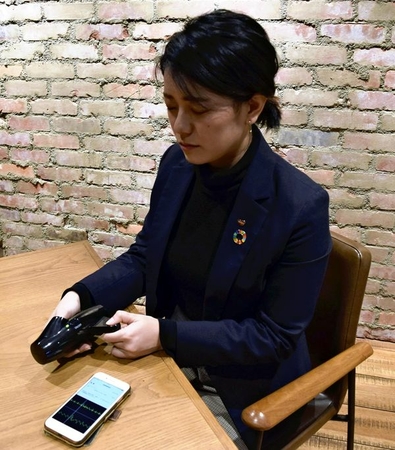
 Current research indicates that new strains will not affect the effectiveness of vaccines. PHOTO: ST FILE
 SootinClaimon.Com