The Stock Exchange of Thailand (SET) Index closed at 1,451.52 on Thursday, up 35.50 points or 2.51 per cent. Total transactions amounted to Bt103.03 billion with an index high of 1,453.87 and a low of 1,409.75.
The index was buoyed by the first day of trading in Kerry Express (KEX) shares, as well as news that health authorities had not imposed a nationwide lockdown in response to the latest virus outbreak. The KEX share price shot up to Bt51.25 on Thursday, 83.04 per cent higher than its initial public offering (IPO) price of Bt28.
The 10 stocks with the highest trade value today were KEX, DELTA, KBANK, AEONTS, PTT, IVL, CPF, AOT, BANPU and CPALL.
As of 4.30pm, the price of oil dropped by US$0.12 or 0.25 per cent to $48 per barrel, while gold rose by $4.90 or 0.26 per cent, to $1,883 per ounce.
Other Asian indices were mixed:
Japan’s Nikkei Index closed at 26,668.35, up 143.56 points or 0.54 per cent.
China’s Shang Hai SE Composite Index closed at 3,363.11, down 19.21 points or 0.57 per cent, while Shenzhen SE Component Index closed at 13,915.57, down 99.45 points or 0.71 per cent.
Hong Kong’s Hang Seng Index closed at 26,386.56, up 43.46 points or 0.16 per cent.
South Korea’s KOSPI Index closed at 2,806.86, up 47.04 points or 1.70 per cent.
Taiwan’s TAIEX Index closed at 14,280.28, up 57.19 points or 0.40 per cent.
Extradition and its ugly cousin, hostage-taking, have a long history, East and West, as a byproduct of what legal pundits have called ‘courtesy and goodwill between sovereigns’, ie rulers who have power over their subjects and their territories.
Exile was the flipside of rendition. Socrates, given the choice “exile or hemlock”’ went for hemlock. A puzzling choice for today’s Church of Englanders who, offered the choice between “Cake or Death?” reliably opt for the former.
Whistle-blower Edward Snowden, now resident in Russia, is one prominent example of modern exiles who, metaphorically speaking, went for the C of E option, rather than the Socratic choice.
The US’s ongoing extradition case in Canada against Huawei CFO Meng Wangzhou (aka Sabrina Meng) suggests two things. First that, on returning favours between heads of state, the more things change, the more they stay the same, as the French say. Secondly that conflicting ideas about “what is a sufficient nexus between alleged crimes and the place where they are to be prosecuted?” and “how much does the quality of justice depend on where it is handed down?”, have produced a legal muddle in the field of extradition.
On top of the vestiges of “hostage trades” between heads of state, that will be seen in our case study of the Meng case, the evolving laws of extradition remain shot through with two themes: First, the lingering tradition of crimes normally only being prosecutable in the territory where they are committed (piracy and war crimes being exceptions) and, secondly, finding the right balance between expedition and fairness.
Ancient legal history
In the US, the idea that the courts of, say, Twosticks, Alabama summoning a Palo Alto resident to show up in Alabama, infringed California’s sovereignty, was essentially snuffed out by the US Supreme Court in 1945 in the International Shoe case. This case stands for the principle that, if the defendant had had relevant dealings engaging the territory or laws of the summoning court, those “minimum contacts” were good enough to found jurisdiction, in the courts of Twosticks (for the purposes of our example).
And yet the spells that US lawyers have cast to deem connections to the US, using more or less imaginary territorial connections, include using US payment systems for monetary transactions wherever you may be, having a “dot com” as opposed to a “dot wherever”, and flying over US airspace. After all Uncle Sam can turn off your satnav at will, so its current attitude reflects Thucydides’ axiom – “The strong do what they will and the weak suffer what they must.”
My particular favourite legal fiction, allied to this idea that all jurisdiction is territorial, was that it was unnecessary to seek the permission usually required from the English High Court to serve its proceedings abroad, if the defendant was aboard a British naval vessel anywhere in the world. All British Men O’ War (warships), were deemed by legal fiction to be situated in the parish of Stepney (where the Royal Naval Docks on the Thames were formerly located – obvious really).
Similarly Huawei’s Meng Wangzhou is presently confined to her home in Vancouver, on the theory that a PowerPoint presentation by her in a restaurant in Hong Kong caused HSBC to commit a crime in the US, by wiring money through the US clearing system for the supply of goods to Iran. If the HSBC back office person (who may even have been in India at the time) had “left-clicked” to use Hong Kong’s own clearing system instead, these electronic greenbacks would never have even notionally passed through the good old US’s geography or ecosystem, and Uncle Sam might not even have what US lawyers like to call a “colourable claim” that a crime had been committed – a counterintuitive expression for a claim you can articulate without actually blushing.
Before we get to the Meng, case, however, we need to take a quick look at some common themes in the modernisation of UK and Canadian extradition laws that bear on an assessment of whether the US may get its way in achieving the rendition of Meng to the United States.
The modern legal history
Canada in 1999 and the UK in 2003, for broadly similar reasons, modernised their extradition legislation with a view to making it fit for purpose for modern crime, where it is not so much about people fleeing, as money doing so.
Modern proceeds of crime, legislation essentially began with the 1971 Vienna Convention on Psychotropic Substances, which came up with the bright idea (possibly they were smoking and discussing such substances simultaneously) that the right response to the “victimless crime” of drug trafficking was to seize the profits. This idea was flawed for at least two reasons: first, it impedes criminals’ ambition to make and keep enough money through crime so that their children can “go straight”. The Crown Estates are, after all, an international crime proceed dating to 1066, laundered by the passage of time. The second flaw, is “why stop at drugs? What about financial crime?” Only redressing the second of those two flaws has found favour with the wider legal and political community and hence the ability of states to forfeit the fruits of criminal activity is now more or less ubiquitous and all embracing.
Apart from the EU dimension and the advent of the European Arrest Warrant for the UK, Canada’s modernisation of its extradition laws in 1999 and the UK’s in 2003 (both intended, in part at least, to meet the needs of the new international crime proceeds era) followed similar lines.
In broad terms, four features are especially important:
1. To justify extradition, the offence needs to be one which was a crime where it was committed and would have been a crime if it had been committed in the state asked to extradite. This is called the “double criminality test” (which did not apply for the European Arrest Warrant).
2. The requesting state must demonstrate that is has evidence which would justify a matter being sent to trial, if the conduct had occurred in the state required to extradite.
3. The requesting state must make a fair presentation of the evidence that would justify a criminal trial, but does not have to disclose all its evidence, or even exculpatory evidence, in the way that the prosecuting authorities typically would be obligated to do in a domestic prosecution.
4. If the requesting state has abused the process of the courts of the requested state, the request can get kicked out.
The way that the UK -US extradition arrangements worked following the UK’s modernisation attracted a lot of flak as being “lop-sided” in favour of the US, because the Brits have to show “Probable Cause” to get an extradition from the US, but the Yanks only have to show a “Reasonable Suspicion” to get you all cuffed up and wearing an orange boiler suit. The majority view amongst extradition lawyers today (and following official inquiries into the question of asymmetry) seems to be that, in practice, this is a distinction without a difference.
I suspect, however, that ordinary punters who struggle with lawyers’ “Humpty Dumpty” linguistic distinctions – eg, about why “tax avoidance” may be okay, but “tax evasion”, not so much – instinctively feel that “the accused was seen leaving the deceased’s room” may ground a “reasonable suspicion” whereas it might take “the accused was seen leaving the deceased’s room carrying a gun” to rise to the level of “probable cause”.
Perhaps the more powerful concern on lop-sidedness in favour of the US emerges from the rather extravagant views that Uncle Sam has about what facts constitute a crime being committed in the United States.
The ongoing case in British Columbia of USA v Meng Wangzhou provides ample scope to illustrate not only the extravagant reach of US theories about how people outside the US can be said to be committing crimes within the US, but also how the primal theme of extradition as a favour between sovereigns can produce “abuse of process” grounds as a ‘fig leaf’ for judges to deny extradition, without having to risk embarrassment in international relations by calling out extradition requests as political.
‘Trumpanomics’
The story that is unfolding in continuing proceedings in Vancouver about the arrest and detention of Meng Wangzhou and the US’s case against her, includes the following ‘eyebrow raising’ features, according to the arguments being rolled out by her Defence team.
1. Despite there being a judicial warrant for her immediate arrest, which both the Canadian border officials and the RCMP (the “Mounties”) were empowered and bound to execute, the Mounties stood by whilst the Border guys feigned a regular immigration side check, in which they managed to relieve, Meng of her laptop and phones, including getting her to write down the passwords. They put these in protective bags to stop them being wiped remotely. All of this was done without “immediately arresting” and reading Meng her rights as required. The Border agents also handed her devices and passwords over to the Mounties “by mistake”.
2. Meng lost a preliminary hearing to strike down the extradition as entailing no “double criminality”. It would not be a crime to trade with Iran from Canada (or Hong Kong) per se. But the US’s case theory is that Meng duped HSBC exposing it to potential financial loss, and such alleged deception of HSBC, could count as criminal, had it happened in Canada. Bear in mind that none of the actors were US citizens or entities, and the presentation had been in a restaurant in Hong Kong. But HSBC had a powerful incentive to co-operate with the US by claiming Huawei had misled them, as the bank was still subject to a US Deferred Prosecution Agreement (DPA) relating to allegations that it had laundered drug monies. If HSBC had knowingly infringed US sanctions by using the US clearing system, instead of Hong Kong’s own CHATs system, it could have been accused of breaching DPA conditions, potentially making the money laundering charges “live” once more.
3. Canada’s extradition legislation has the usual carve-out to protect against alleged political crimes, of the sort for example that would ground an asylum claim under international refugee conventions. The way the US and Canadian authorities collaborated, may have just been a coincidence (like Justin Trudeau and his brother both having been born on Christmas Day) but Meng’s disclosure requests to interrogate their dealings yielded a few documents full of redactions for claimed Public Interest Immunity (PII) and Legal Privilege, which the judge has largely refused to have unredacted.
Having encountered the mafia instincts of politicians and the executive branch of government, acting both for and against government interests of various nations around the world over the years, I have learned that an independent judiciary and robust rule of law is essential to prevent laws being wielded by governments to perpetrate injustices.
Standing back from the detail of the Meng case, it is important to bear in mind that the standard of review by the requested court is intended to be a fairly “low resolution” assessment of whether the material presented by the requesting state reaches a prima facie standard sufficient for charges to be sent to trial. The requested court should not conduct a mini trial of the charges the putative deportee will face abroad. The Canadian and other courts will, however, be vigilant if there is a concrete concern that either an individual’s due process rights, or the courts own processes are being abused. On the face of it, there would seem to be some reasonably rich materials for the Canadian judge to throw out the Meng request on abuse of process grounds, without having to “call a spade a bloody shovel” , by condemning the request as politically motivated.
Epilogue?
If and when President Trump leaves the White House, it is plausible to imagine that the line for the “End of Regime Pardon Sale” will stretch a long way down Pennsylvania Avenue, and that those pardons will be flying out of the Oval Office quicker than indulgences from a Borgia-occupied Vatican. Having himself described Meng Wangzhou as “the Ivanka Trump of China”, we shall see whether he spares Canada’s courts their task, in the hope of putting his relationship with President Xi back to the good old days of sharing delicious chocolate cake while “cruising Syrians” from Mar a Largo. I should hastily clarify (to avoid this concluding remark from being mistaken as libellous by Rudy Giuliani) that the verb “cruising” in this context refers to the launch of missiles and not to a method of making new friends in nightclubs.
—–
Tim Taylor QC specialises in international commercial and investment arbitration at King & Wood Mallesons, a law firm that has represented Huawei.
Despite progress, backups persist on Christmas Eve at Port of Dover
InternationalDec 25. 2020Trucks and vehicles sit in stationary traffic on the access road toward the Port of Dover in Dover, England, on Dec. 23, 2020. Routes to Dover, Britain’s busiest cross-channel port, have been choked for days after France shut its border with Britain, blaming an outbreak of a novel strain of the coronavirus. MUST CREDIT: Bloomberg photo by Chris Ratcliffe
By Syndication Washington Post, Bloomberg · Lizzy Burden, Deirdre Hipwell, Christopher Jasper
Britain’s main trucking gateway to the European Union remained backed up for a fifth day, despite progress moving traffic through the Port of Dover.
Thousands of truckers were stuck in logjams around Britain’s busiest ferry port on Christmas Eve, separated from families, many as far away as Poland. Some 4,000 trucks alone were crowded onto the site of Manston Airport, a disused airfield in Kent being used to conduct coronavirus testing required before they can board ferries to Calais, France.
Only 100 trucks made it across overnight, a spokesman for the port said. The facility remained “very congested,” with progress slowed partly to ensure full ferry sailings.
Some 170 military personnel tested hauliers overnight, enabling their journeys to continue into Europe, the U.K. Ministry of Defence said. They were aided by French firemen who brought over 10,000 coronavirus tests. France reopened its borders on Wednesday after a two-day blockade, on the condition that drivers have proof of a negative test.
“We have information from Polish drivers who managed to drive through the Channel Tunnel and enter France,” the Polish Embassy tweeted. “Successive drivers are tested and queue up for the crossing. There is progress at the border.”
Ferries will continue to sail on Christmas and Boxing Day to help clear the backlog, U.K. Transport Secretary Grant Shapps said on Twitter.
However, the U.K.’s Road Haulage Association said it was awaiting clarity from the French government on whether trucks would be allowed to keep working once they reach Calais — they are not usually allowed to move on roads on Sundays and holidays such as Christmas.
Many drivers, some stranded since Saturday, risk spending Christmas parked by the side of an English road. Sikh humanitarian group Khalsa Aid is set to return to the congested M20 today to distribute 2,500 Domino’s pizzas among them.
Coronavirus testing firms said they’d been contacted about helping with the effort to process truckers waiting to cross the Channel, but were struggling to provide any assistance given surging demand at their main business at airports.
“This may take out capacity in other testing locations,” Denis Kinane, chief medical officer at the ExpressTest division of Cignpost Diagnostics, said in an email. “Our testing facilities at Gatwick and Heathrow have been inundated by the number of people who want a test in a very tight time frame.”
Collinson Group, which provides a range of coronavirus tests for travelers at Heathrow, Luton, Stansted, London City, Manchester and East Midlands airports, said it had provided advice on how to implement and streamline screening, but hadn’t been able to directly participate.
“The government had to bring in the military because it’s a massive challenge,” Scott Sunderman, Collinson’s managing director for medical and security assistance, said in an interview. “You need to deploy large numbers of well trained people very quickly.”
Sunderman said Collinson is already grappling with a rapidly changing requirements at airports, with Virgin Atlantic Airways Ltd. introducing testing for flights to the U.S. today and Spain last week changing rules for visiting the Canary Island “overnight.” He said the company is braced for a jump in bookings from people flying to France who need to comply with the new rules.
Supermarkets said they aren’t worried about food shortages on Christmas Day but there will likely be shortages next week, especially of products from Spain, transported by road, such as citrus fruits, salad ingredients and some field vegetables which are expensive to send by airfreight, said Clive Black, a retail analyst at Shore Capital Ltd.
Trucks that are meant to be in Europe on Christmas Day and Boxing Day collecting new loads of fresh produce to bring back to the U.K. remain stuck in Kent, he said.
“A single lorry can carry about 30 to 40 tonnes of product,” he said. “You can see how if trucks don’t start moving quickly, and if Dover is not operating fluidly, we could absolutely have more empty shelves than has been suggested so far between Christmas and New Year and beyond.”
Pence under pressure as the final step nears in formalizing Biden’s win
InternationalDec 25. 2020Vice President Pence addresses the crowd at a rally for Sens. Kelly Loeffler and David Perdue in Augusta, Ga. MUST CREDIT: Washington Post photo by Melina Mara
By The Washington Post · Colby Itkowitz, Josh Dawsey
Vice President Mike Pence urged an audience of conservative youth activists earlier this week to “stay in the fight,” as they chanted “Four more years” and “Stop the steal” to trumpet their embrace of the groundless notion that President Donald Trump was the true victor of the recent election.
“I’ll make you a promise: We’re going to keep fighting until every legal vote is counted, we’re going to keep fighting until every illegal vote is thrown out,” Pence said at the event Tuesday. “So – for all we’ve done, for all we have yet to do – stay in the fight.”
But in less than two weeks, it will fall to Pence to declare that fight over – and lost. A joint session of Congress on Jan. 6 will take the last step in formalizingPresident-elect Joe Biden’s victory, and Pence, in his role as president of the Senate, will preside over the session after four years of ceaseless efforts to demonstrate his loyalty to Trump.
Some die-hard Trump supporters are declaring that Pence will be a traitor if he does not somehow derail the proceedings. There is no evident way for him to do that even if he wanted to, but such demands ratchet up the pressure on Pence, who is unlikely to escape their wrath – or Trump’s.
“Trump would probably tell Pence, ‘Just go declare us reelected,’ ” said Joel Goldstein, a professor at the Saint Louis University School of Law. “Part of his constitutional duty is to be responsible. Just because you’re vice president doesn’t mean you get to engage in behavior that is threatening the underpinning of democratic institutions of the country.”
Pence is hoping for a low-key Jan. 6 and is not planning any unnecessary drama, aides said, intending to stick to his perfunctory role. He is eyeing a trip overseas soon after.
Trump realized only recently that Pence would play a notable role on that day and has been asking associates, including Pence, what can be done to block Biden’s win. The president became angry after a group called the Lincoln Project recently aired an ad suggesting Pence was abandoning the president, aides said.
The vice president has sought to avoid the appearance of breaking with the president, while trying to avoid echoing some of Trump’s most aggressive rhetoric, advisers said. His office is participating in the presidential transition, although Trump himself is not.
Yet for weeks, Pence has been near the center of the desperate, chaotic efforts to keep Trump in office. On Monday, he attended White House meetings with conservative House Republicans intent on challenging the results on Jan. 6; Pence told them his constitutional duty will be to open and count the results, not to determine their legitimacy, said a person familiar with the meeting who spoke on the condition of anonymity because they were not authorized to speak about it publicly.
But rumors of Pence’s power at the joint session of Congress have been greatly exaggerated online. Some Trump supporters are insisting that he could use his role as presiding officer to invalidate the results from various states, causing the hashtag “Pence card” to trend on social media – meaning the pro-Trump forces should play that card.
But that is a misunderstanding of a provision in the U.S. Code saying that if a state does not submit its electoral votes by the fourth Wednesday of December, the vice president should prod the state to send them expeditiously. It does not give the vice president the power to reject any electoral votes.
Still, some Trump supporters are furious with Pence for letting that Dec. 23 deadline pass.
“Pence’s actions today and over this next 2 weeks will determine whether he’s a front-runner for 2024, or a traitor to the Patriot base. Simple as that,” Rogan O’Handley, a conservative activist, tweeted to his nearly 440,000 followers.
As Pence reads aloud the vote tallies at the joint session, several GOP lawmakers have said they will challenge the results of several Biden-won states. If a member of both the House and the Senate object, that would trigger a two-hour debate in each chamber and then a vote.
Senate Majority Leader Mitch McConnell, R-Ky., is eager to avoid forcing his members, especially those facing difficult reelections in 2022, to take that vote. Accepting the results could mean alienating the still-powerful Trump base, while opposing them could be seen as undermining democracy.
But Trump wants the drama of such a challenge. A senior administration official said Trump is “mad at everyone,” not just Pence, because he wants his whole team to fight more.
“At a meeting in Florida today, everyone was asking why aren’t the Republicans up in arms & fighting over the fact that the Democrats stole the rigged presidential election? Especially in the Senate, they said, where you helped 8 Senators win their races. How quickly they forget!” Trump tweeted Thursday from Mar-a-Lago, his estate in Palm Beach, Fla.
Former House Speaker Newt Gingrich, R-Ga.,, a prominent Trump defender, said he had not spoken to Pence, but argued that it would be a mistake for McConnell or anyone else to stand in the way of a debate over the election results.
“If there is a member of the House and Senate who feels strongly enough, then there should be a strong, methodical review that will lead to a final vote,” Gingrich said in an interview. “If you’re part of the 74 million who voted for Trump, you don’t think you’re getting a fair hearing anywhere. I believe it will be a disaster if there is a move to cut off debate.”
Still, Gingrich predicted that Pence “will play it very straight.”
The danger for Pence, perhaps, is that footage of him declaring Biden the winner could potentially damage his political prospects within the Republican Party, especially if he seeks the presidency in 2024.
Edward Foley, a law professor at Ohio State University who also is a contributing columnist for The Washington Post, said Congress’s job is not to determine whether the election was fraudulent, but to certify that the results received are the ones that each governor signed off on.
Some Republicans have spoken of sending Pence alternate slates of electors. But such slates would have no standing, and in any case it is unclear if any Trump electors have taken that step.
Pence is not the first vice president to find himself in a difficult role as the Senate declares a new president. Several have been forced to oversee the congressional declaration of their own defeat.
After the bitterly contested 2000 election, then-Vice President Al Gore went to Capitol Hill to certify the victory of his rival, Republican George W. Bush, overruling the vocal protests of some Democrats who felt Florida’s vote had been miscounted.
That event was widely seen as an effort to bring the country together and reaffirm a peaceful transfer of power.
“I think what the vice president can do is really very limited,” Goldstein said. “But one of the things the vice president can do is use it as a way of helping to unify the country and underscore the fact that we’re committed to the rule of law in democracy – and if you lose, you accept it and you move on.”
Fixed mortgage rates didn’t move much this week, but they declined enough to reach another record low, marking the third time this month and the 16th time this year they have hit historic lows.
The 30-year fixed-rate average, the most popular mortgage product, sank to 2.66% with an average 0.7 point, according to the latest data released Thursday by Freddie Mac. (Points are fees paid to a lender equal to 1% of the loan amount and are in addition to the interest rate.) It was 2.67% a week ago and 3.74% a year ago.
The 30-year fixed rate has never been this low since Freddie Mac began tracking mortgage rates in 1971. It surpassed the previous low of 2.67% set last week. Since the start of 2020, the 30-year rate has fallen more than a percentage point, going from 3.72% in January to 2.66% this week.
Freddie Mac, the federally chartered mortgage investor, aggregates rates from around 80 lenders across the country to come up with weekly national average mortgage rates. It uses rates for high-quality borrowers with strong credit scores and large down payments. These rates are not available to every borrower.
Because the survey is based on home purchase mortgages, rates for refinances may be different. This is especially true since the price adjustment for refinance transactions went into effect earlier this month. The adjustment is 0.5% of the loan amount (e.g., it is $1,500 on a $300,000 loan) and applies to all Fannie Mae and Freddie Mac refinances.
The 15-year fixed-rate average dropped to 2.19% with an average 0.5 point. It was 2.21% a week ago and 3.19% a year ago. The five-year adjustable rate average was unchanged at 2.79% with an average 0.2 point. It was 3.45% a year ago.
“Mortgage rates were little changed this week as markets digested the authorization of a second coronavirus vaccine and $900 billion stimulus package,” said Danielle Hale, Realtor.com’s chief economist. “Taking a broader look, mortgage rates have steadily declined over the last 12 months and are currently more than a whole percentage point lower than this time last year.”
When it comes to the mortgage market, the week between Christmas and New Year’s is typically quiet. With many lenders off for the holidays, rates don’t tend to make big moves. However, with President Donald Trump throwing a wrench into the stimulus package and investors concerned about recent economic data showing a decline in consumer spending and income, rates may continue to seek new lows.
However, Bankrate.com, which puts out a weekly mortgage rate trend index, found nearly half the experts it surveyed predicted rates would stay about the same in the coming week, while 40% expected them to rise.
Jennifer Kouchis, senior vice president of real estate investing at VyStar Credit Union in Jacksonville, Fla., is one who says they will hold steady.
“With the holidays upon us, I think rates will remain on a sideways trend,” she said. “My immediate guess is that rates will continue to ignore market indicators and will hold pretty firm until year-end with minimum movement expected.”
Meanwhile, mortgages applications were flat last week. According to the latest data from the Mortgage Bankers Association, the market composite index – a measure of total loan application volume – increased 0.8% from a week earlier. The purchase index fell 5% from the previous week but was 26% higher than a year ago. The refinance index rose 4% and was 124% higher than a year ago. The refinance share of mortgage activity accounted for 74.8% of applications.
“Last week’s increase in refinance applications was driven by FHA and VA activity, while conventional refinances saw a slight decline,” said Joel Kan, an MBA economist. “Purchase applications decreased for the second time in three weeks, as both conventional and government applications saw a drop-off . . . and the average loan balance reached another record high.”
Fast-food boom drives rebound in meat sales for U.S. packers
InternationalDec 25. 2020An employee wearing protective gloves hands an order to a customer through a drive-through window at a McDonald’s in Oakland, Calif., on April 9, 2020. MUST CREDIT: Bloomberg photo by David Paul Morris
By Syndication Washington Post, Bloomberg · Isis Almeida, Michael Hirtzer
American meatpackers are benefiting from one bright spot in the restaurant industry during the pandemic: fast-food sales.
With most restaurants closed or operating at reduced capacity, customers have flocked to places including McDonald’s and Burger King, where they can simply drive through to grab food. That’s helped Cargill Inc.’s protein sales to food-services business to return to near normal, while Sanderson Farms Inc. is encouraged by the chicken-sandwich rivalry among quick-service restaurants, or QSR.
Americans used to spend more than half of their food budget eating out before the virus struck, locking down cities from New York to Los Angeles and shuttering restaurants. Consumer behavior shifted, and businesses adapted to more online sales and increased delivery options.
“Our food-services business is pretty close to being back to where it was,” said Jon Nash, head of North America protein for Cargill, the third-largest U.S. beef producer. “The only places where we continue to see things being impacted is more fine dining, but the QSR space has been very strong.”
The turnaround boosted the meat industry, which was initially roiled by lower sales to restaurants. Companies have also come under fire this year for the way they handled the coronavirus crisis after processing plants became hot spots. Meatpackers faced scrutiny amid investigations and lawsuits involving price-fixing allegations, especially in the chicken industry.
Same-store sales at fast-food restaurants in November rose 1.1% from a year earlier after plunging more than 20% in April, according to a MillerPulse index. Figures may improve more in 2021, with McDonald’s planning faux-meat burgers and a new crispy chicken sandwich early next year, competing with Chick-fil-A Inc. and Popeyes Louisiana Kitchen Inc.
“We are encouraged by reports of a chicken sandwich war in 2021,” Joe Sanderson, chief executive officer of Sanderson Farms, the third-largest U.S. chicken producer, said Dec. 17 on an investor call, alluding to a major fast-food restaurant building inventory ahead of a sandwich rollout.
Chicken-breast prices in November climbed to $3.41 a pound, the highest in more than five years, according to U.S. Department of Agriculture data.
The rebound in fast-food demand has focused on lunch and dinner. Breakfast sales are still suffering because people aren’t traveling to work or taking children to school in the same way as they did before the pandemic, Cargill’s Nash said. Even with a second wave of the coronavirus, Nash said he was upbeat.
“I’m pretty optimistic,” he said. “We are going to continue to see pretty robust demand.”
While U.S. drive-through shops performed strongly in the virus economy, a bigger recovery in the food-services sector will be tied to a vaccine and the economy returning to normal, Nash and Sanderson said.
“I don’t think any of that’s going to happen until the vaccine is widely distributed, and people start going out to eat again,” Sanderson said.
“The vaccine is an important determinant,” Nash said. “As that goes, we will see people willing to travel more, eat out more and let lose more and have some fun. It’s been a tough time for many many people around the world.”
By Syndication Washington Post, Bloomberg · Justin Villamil, Cyntia Barrera Diaz
Mexico, Chile and Costa Rica started administering Latin America’s first coronavirus vaccines Thursday as the region hardest hit by the disease seeks relief from the pandemic.
The first injection was broadcast live from a hospital in Mexico and shown during President Andres Manuel Lopez Obrador’s daily press briefing. It was administered to the head of nursing at an ICU unit in Mexico City’s General Hospital. In Chile, the government selected five health workers for vaccination, which was also televised. Costa Rica started its vaccination campaign on Thursday as well. All three are applying Pfizer Inc shots.
The vaccine arrivals offer a glimmer of hope to a region particularly devastated by the virus. Brazil has the second-highest death count in the world from the virus, with Mexico following close behind in fourth place. Mexico’s fatality rate is also one of the highest in the world. Mexico City’s hospital occupancy has reached 85%, and one study says health services may be overwhelmed soon.
“Mexico is the first country in Latin America to have this vaccine,” Mexico’s president said in the press briefing. “Pfizer is fulfilling its commitment.”
Mexico’s government plans to vaccinate close to 3,000 people Thursday in what authorities are calling a trial run. Pfizer is expected to ship 50,000 more doses to Mexico next week.
In Chile, a plane arrived Thursday morning with the country’s first 10,000 doses. During a news conference, President Sebastian Pinera said that the country aims to vaccinate the majority of health personnel and at-risk citizens — about 5 million people — in the first quarter of 2021.
Brazil, the Latin American country with the highest number of cases of covid-19, has fallen behind in the region’s race to inoculate the population. The push to obtain injections has been hamstrung by political infighting and timeline setbacks of the locally produced Coronavac vaccine.
The earliest date publicized so far for vaccinations in Latin America’s largest economy is January 25, for the state of Sao Paulo only. The country’s Supreme Court has also determined that Brazilians can be mandated to take the vaccine.
While Latin American nations have lagged behind developed countries in their vaccine rollout programs — the U.S. has already administered over a million doses — Mexico and Chile have secured more doses of the virus than anyone else in the region.
300,000 doses of Russia’s Sputnik V vaccine arrived in Argentina on Thursday as well. President Alberto Fernandez thanked Russian President Vladimir Putin in a social media post on Twitter Thursday afternoon for the “commitment” he had shown Argentina and said the shipment will kick-start the biggest vaccination campaign in the nation’s history.
WASHINGTON – House Republicans on Thursday blocked an effort by House Democrats to approve $2,000 stimulus payments for millions of Americans. Democrats were seeking to advance the measure after President Donald Trump demanded it on Tuesday night, breaking with many of his fellow Republicans.
House Democratic leadership attempted to advance the measure by “unanimous consent,” but the effort was blocked by Republican leadership.
The political jostling, with no clear path forward, shows how Trump’s surprise refusal to sign the bill into law has created a sudden political and economic crisis in Washington.
Failure to pass the package could spell disaster for tens of millions of Americans and risk the broader U.S. economy at a perilous moment during the coronavirus pandemic. Unemployment benefits for 14 million Americans expire on Saturday. An eviction moratorium protecting as many as 30 million Americans from eviction is set to expire by the end of the month. The federal government will shut down Monday at midnight if lawmakers do not approve an extension in funding.
With the Trump administration’s help and support, Congress passed the $900 billion emergency economic relief package on Monday. But on Tuesday, Trump said he did not support the bill and demanded changes that appear – at this stage – politically unfeasible. Now the entire relief package is in jeopardy.
Also on Thursday, House Democrats blocked a measure sought by Republicans to reevaluate U.S. spending on foreign aid, something Trump also pushed for earlier this week. Sen. Roy Blunt, R-Mo., a member of Senate Republican leadership, told reporters Thursday that he opposes reopening negotiations over foreign aid, pitting Senate and House Republicans against each other.
“Today, on Christmas Eve morning, House Republicans cruelly deprived the American people of the $2,000 that the President agreed to support,” House Speaker Nancy Pelosi, D-Calif., said in a statement. “If the President is serious about the $2,000 direct payments, he must call on House Republicans to end their obstruction.”
The $900 billion stimulus package approved by Congress included $600 direct payment checks, an amount that Trump’s top economic adviser, Treasury Secretary Steven Mnuchin, had proposed earlier this month. Trump on Tuesday said these checks were not big enough. He wanted them to be $2,000, a change that would increase the cost of the bill by around $370 billion.
Pelosi tried on Thursday to approve the $2,000 checks, but she needed unanimous consent and approval from GOP leaders to try such a tactic on short notice. They refused. And in an effort to counter Pelosi’s move, House Republicans attempted to pass a request to revisit the foreign aid portion of the government funding package, also through unanimous consent. This is also in line with demands that Trump surfaced for the first time Tuesday night, one day after the large spending package was approved by Congress. That measure failed as well.
It is unclear what lawmakers – or Trump – will do next after the failed procedural moves, and there are major consequences for both the economy and the government. Shortly after the House measures fizzled on Thursday, Trump went to Trump International Golf Club in West Palm Beach, Fla.
Because the House and Senate have already passed the bill, Trump could ultimately decide to veto it if his demands aren’t met.
If Trump does veto the legislation, Congress would then have the opportunity to override the president’s veto with another vote. Yet it’s likely that the relief effort could fall apart entirely at that point, given congressional Republicans have already indicated they are reluctant to go against Trump, who remains widely popular with GOP voters.
Despite the looming deadlines, the president as of Wednesday evening was still weighing whether he should veto the relief package, according to multiple officials inside and outside the White House who spoke on the condition of anonymity to frankly discuss internal thinking.
Trump was encouraged by what he perceived as the positive media reaction to his denunciation of the aid package, as well as support among Democrats for his call for $2,000 stimulus payments, one person in communication with senior White House officials said. The person spoke on the condition of anonymity to describe candid interactions with the White House.
“Nobody knows exactly what Trump is going to do, and they’re all trying to figure it out,” the adviser said, describing the odds of a veto as “a little less than 50-50.”
The $900 billion aid package that Trump may veto would also devote $25 billion for food assistance amid an explosion of hunger in America; hundreds of billions for restaurants and other small businesses bracing for the surge in the pandemic; and billions for other critical needs such as transportation agencies, vaccine distribution and rental assistance.
But Washington was suddenly consumed with a new political battle over the stimulus payments. House Minority Leader Kevin McCarthy, R-Calif., accused Democrats of “selective hearing” Wednesday night because their effort does not include Trump’s call to cut international aid spending that the president also denounced in his video address.
“They have conveniently ignored the concerns expressed by the president, and shared by our constituents, that we ought to reexamine how our tax dollars are spent overseas,” McCarthy said in a letter to House Republicans.
Trump’s own budget proposal included much of the foreign aid items that he himself railed against in his video address. The U.S. Global Leadership Coalition also pointed out in a statement that the aid funding had support from Republicans, including allies of Trump such as Sen. Lindsey Graham, R-S.C.
“The truth is that not only were many of these funds pushed for by the White House – as recently as less than a week ago in the case of Sudan – but they were vetted and assembled by bipartisan leaders,” the coalition president, Liz Schrayer, said in a statement.
House Democrats plan to try to vote on legislation increasing the $600 per person check approved in the aid package to $2,000 on Monday. Blunt, the Senate Republican, told reporters that the Senate was unlikely to take up the $2,000 stimulus payments measure if passed by the House. Blunt also expressed strong opposition to renegotiating the foreign aid component of legislation passed through Congress.
“It took us a long time to get to where we are, I think, reopening that bill would be a mistake,” Blunt said.
New York luxury real estate could be a bargain in 2021
InternationalDec 25. 2020The Upper West Side of Manhattan. MUST CREDIT: Bloomberg photo by Andrew Harrer
By Syndication Washington Post, Bloomberg · James Tarmy
Judging by the last quarter of 2020, New York’s luxury real estate market should enter 2021 with confidence.
Sales of homes that cost more than $4 million were a little above those of the same three months in 2019, says Donna Olshan, president of luxury real estate broker Olshan Realty. “Now, some of that has to do with demand that was never met, because we lost the most important quarter-the spring,” she says.
But the tick upward is also, she says, “because most of these sales are [to] New Yorkers, or from the New York metro area, betting on the home team. They are getting covid-19 discounts, they’re looking at the long-term prospects of New York, and they’re buying.”
As the city looks toward next year, the known unknowns loom large. The timeline of the vaccine rollouts is opaque. A proposed pied-à-terre tax, dreaded by everyone in the industry, remains possible. And the economic futures of the city, the country, and the world are up in the air.
But the city’s luxury residential market has enough momentum to make experts feel comfortable making some conditional predictions.
– Suburb Mania Is Over
“The way I think of the suburbs is that they had their moment,” says Jonathan Miller, president and chief executive officer of Miller Samuel appraisers, who adds: “The ‘fleeing the city’ narrative is already extremely dated.”
While suburban sales are still up year over year, “it’s just no longer a rocket ship of growth,” he says. “And the jump in pricing, largely caused by what I would call panic buying-where people left the city out of fear-that was front end-loaded, and I don’t see a compelling reason why that [price growth] can be sustainable.”
John Walkup, COO and co-founder of UrbanDigs, agrees. He says the move to the suburbs this year was really part of an older trend. “We were in year three in this shift to the suburbs picking up in demand, relative to New York City,” Walkup says.
This spring’s hysterical exodus to New York’s suburban areas was “a bit of a flash,” Walkup continues. “Prices and deal activity have spiked.”
– Brooklyn Will Stay Hot
“Houses were on fire,” Olshan says. “Townhouses in Brooklyn did very well during the pandemic.”
The median price for luxury home sales in the fourth quarter in Brooklyn is expected to be up 5.5% year-over-year, according to UrbanDigs data. (“Luxury” in Brooklyn is defined by UrbanDigs as anything over $2 million.) Contracts signed are up an anticipated 26.2% for the same period, and days on the market are down by nearly half.
Overall, despite the nonexistent spring sales season, this year’s median luxury sales price in Brooklyn, according to UrbanDigs, was only down 1.5% compared to last year. The number of contracts signed will only be down an estimated 12% year-over-year, according to the company’s data.
“A lot of it has to do with the lower price point,” says Walkup. “A million dollars buys you a bit more space, or a Zoom room, and once you get into that luxury sector, that value grows quite a bit.”
The demand shows no signs of abating.
“Brooklyn is certainly accelerating,” Walkup says, “and I don’t see any reason for that to stop.”
– Foreign Buyers Will Keep Away
“Foreign buyers are a bit of a straw man because sometimes they’re blamed for the ups, and sometimes they’re blamed for the downs,” Walkup says.
Still, many luxury buildings-particularly condominiums along the stretch of W. 57th Street known as “Billionaires Row”-“were predominantly positioned for the foreign market, and that’s where oversupply is at its greatest,” Olshan says.
“Unless the deployment of the vaccine is very, very successful, we won’t see the foreign market back” for at least the first half of next year, she adds.
– Manhattan Will Still Have Too Much of the Wrong Thing …
The new luxury condominium market “is burdened with a tremendous amount of supply,” Miller says.
“In 2020 we had 8.7 years of sellout, meaning it would take 8.7 years to sell all unsold Manhattan new-development condos,” he says. That is likely to drop to 7.2 years in 2021, because there’s an anticipated “decline of new product coming into the market,” Miller says. Plus, additional sales will occur as buyers are drawn by discounted pricing, he says.
“I think in 2021 we’ll see a continued drop in price trends,” he says.
– … and That Means Major Discounts
That’s a nice way of saying there could be serious deals to be found. The only question is at which buildings.
“The problem with developers is that they are held hostage to the bank or their lenders,” Olshan explains. That means that a developer can’t just price on a whim. It’s a negotiation. Whichever buildings sort out their discounts first might have the upper hand.
“These things take a long time, and you know the buyers go where the next project is. If you don’t lower your price, they’ll move on. It’s just that simple.”
The next few months, Olshan says, “are going to be remembered as the time when it was optimal to go out and strike a deal.”
In U.S., shoppers make late surge to stores to dodge shipping logjam
InternationalDec 25. 2020Holiday shoppers in San Francisco on Dec. 23, 2020. MUST CREDIT: Bloomberg photo by David Paul Morris
By Syndication Washington Post, Bloomberg · Kim Bhasin
Extensive delays at the U.S. Postal Service have pushed millions of Americans to do the one thing they swore they wouldn’t this holiday season: shop inside stores.
On Dec. 24, parking lots filled across the U.S. with shoppers grabbing last-minute items after finally admitting to themselves the in-transit orders they placed online days or weeks earlier might not make it in time for Christmas.
“Christmas comes whether the Postal Service does or not,” said Simeon Siegel, analyst at BMO Capital Markets. “At the end of the day, Santa has to deliver. If that means that the Postal Service or port stoppages or any other supply bottlenecks are preventing items from getting to the tree, there’ll been a last-minute attempt to find something.”
The rush to the mall is good news for retailers, many of which are still trying to make up for the sales they lost when shuttered during lockdowns earlier this year. In-person purchases carry higher margins than delivered items, plus shoppers are more likely to throw in “something extra” at the last second when gift-hunting in store, boosting basket sizes — and companies’ net sales.
Americans largely shunned in-person shopping this year to steer clear of potential virus exposure. Seasonal shopping started weeks earlier than usual and more of the volume moved online, resulting in Black Friday visits dropping 52% compared to a year ago, according to data from Sensormatic Solutions. It was also down sharply over Super Saturday weekend, traditionally the last shopping surge before Christmas.
But as the post office reports “unprecedented” volumes and large swaths of its workforce out due to covid-19, those packages are piling up in delivery trucks and processing plants, rather than under the tree. With delivery statuses lingering “in-transit” and only about 12 hours until Christmas, some U.S. shoppers decided they had to mask up and hit the stores after all.
“There’s surprisingly a lot of people heading out last minute,” Gabriella Santaniello, founder of retail research firm A-Line Partners, said after visiting stores near Los Angeles in the final days leading up to Christmas. “Yesterday, I was at one mall and it was the busiest mall I’ve been to since pre-pandemic.”
That marks a big change from just a few days ago, when the Super Saturday crowds never materialized. Activity during Super Saturday and Black Friday weekends was so low, in fact, Sensormatic Solutions had to revise down its foot-traffic forecast for the entire holiday season. That’s because as of last Saturday, shoppers still held onto hope their orders would make it. No longer.
“Shipping delays have been an issue this year, which is resulting in consumers shifting from online to in-store to make their last minute purchases,” according to the International Council of Shopping Centers. Fewer than half of consumers had finished their holiday shopping heading into last weekend, it said.
Mackenzi Farquer, owner of Lockwood, a small chain of boutiques in New York City, is experiencing the boom first hand. She said there was a “block-long line” outside her Astoria, Queens, location on Christmas Eve when she arrived at work at 10 a.m. The day before was the busiest her store has been since the pandemic began, and she’s had to turn away shoppers at closing time.
“To me, as a retailer, it’s shocking,” she said. “We close at 6 p.m. tonight and I suspect we’ll have to tell people that unfortunately, they can’t come in. Last night we had to close even though there were folks still in line waiting to get in.”



 Trucks and vehicles sit in stationary traffic on the access road toward the Port of Dover in Dover, England, on Dec. 23, 2020. Routes to Dover, Britain’s busiest cross-channel port, have been choked for days after France shut its border with Britain, blaming an outbreak of a novel strain of the coronavirus. MUST CREDIT: Bloomberg photo by Chris Ratcliffe
 Vice President Pence addresses the crowd at a rally for Sens. Kelly Loeffler and David Perdue in Augusta, Ga. MUST CREDIT: Washington Post photo by Melina Mara
 An employee wearing protective gloves hands an order to a customer through a drive-through window at a McDonald’s in Oakland, Calif., on April 9, 2020. MUST CREDIT: Bloomberg photo by David Paul Morris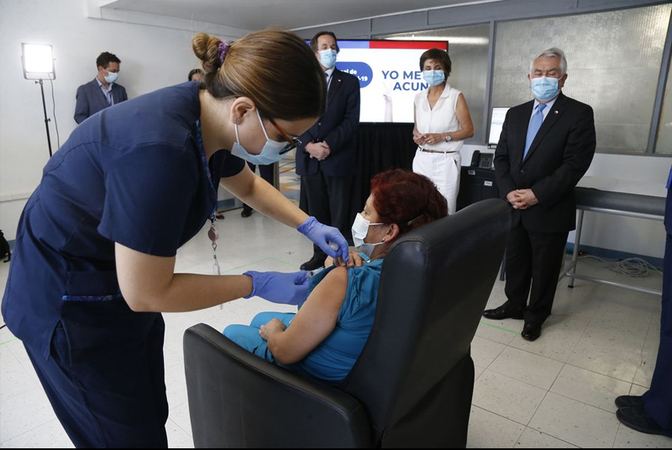
 The Upper West Side of Manhattan. MUST CREDIT: Bloomberg photo by Andrew Harrer
 Holiday shoppers in San Francisco on Dec. 23, 2020. MUST CREDIT: Bloomberg photo by David Paul Morris
 SootinClaimon.Com