By Syndication Washington Post, Bloomberg · Julia Leite, Robert Langreth
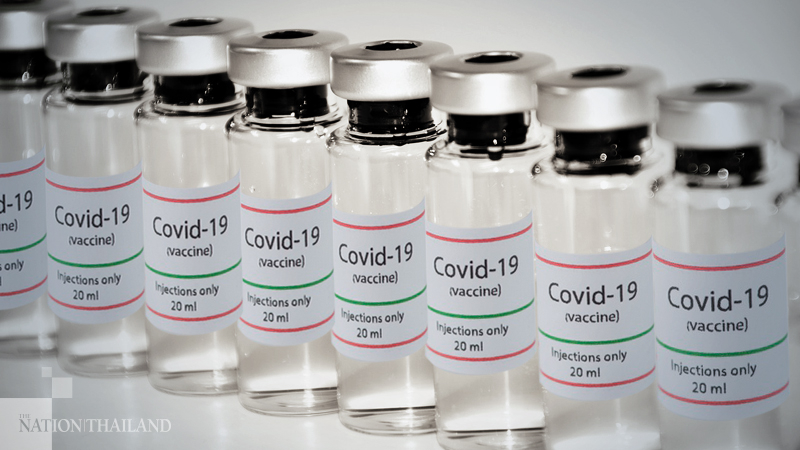
A coronavirus vaccine developed by Chinese pharmaceutical firm Sinovac Biotech Ltd. was found to be more than 50% effective in a Brazilian clinical trial, though researchers delayed releasing more information at the company’s request.
A 50% efficacy rate is a minimum standard set by U.S. regulators for emergency authorization of coronavirus vaccines. Messenger RNA vaccines from Moderna Inc. and Pfizer Inc. have produced far better results, reducing symptomatic covid cases by well over 90% in giant trials.
Chinese vaccine developers have been slow compared with their western peers in releasing efficacy data on their shots. As millions of healthy people count on transparency in trials before taking a shot, the lack of more specific results from Sinovac’s trial risks eroding confidence in Chinese vaccines. Hong Kong on Wednesday said residents will be allowed to choose which shot they want to take among several candidates that will likely include Sinovac’s.
The lack of transparency in reporting the Brazil trial results “is totally unacceptable,” and wouldn’t pass muster in the U.S., Eric Topol, a clinical trials expert and director of the Scripps Research Translational Institute, said in a phone interview. “This doesn’t have a good look to it at all.”
Sinovac didn’t respond to repeated calls seeking a comment. State-backed newspaper Global Times said in response to what it called western media “hyping up questions about transparency” that the delay had nothing to do with “fake data.” It said the company will gather and analyze data from trials in other countries like Turkey and Indonesia before finalizing a complete picture.
The late-stage trial of Sinovac’s vaccine in Brazil, involving about 13,000 participants, suggested the shot is “safe and effective,” authorities at the Butantan Institute and from the state of Sao Paulo said. They were asked to not disseminate the information until it was thoroughly reviewed in China as part of a contractual agreement, they said.
“Our goal was for the shot to be more than 50% effective,” state Health Secretary Jean Gorinchteyn said at a news conference. “A vaccine that reaches at least that is already cause for celebration.”
The group that received the vaccine in Brazil’s trial had no severe cases of covid-19, and the main side effect reported was mild pain at the injection site, said Dimas Covas, head of Butantan. Efficacy is above the threshold needed for a vaccine to be registered by Brazil health regulator known as Anvisa, which still has to approve the shot, he said.
The trial produced efficacy data that differed from tests carried out in other countries, Gorinchteyn said, without elaborating. He added that Sinovac’s review of the data is slated to take 15 days but could take less than that, and shouldn’t delay the planned Jan. 25 start of inoculations with the Sinovac shot.
“Sinovac has several ongoing trials, and it’s important it gives the data consistency,” Covas said. “The company can’t analyze data from the same vaccine using different criteria, and can’t have three different efficacy rates for the same vaccine.”
It is routine for trials of a drug or vaccine conducted in different groups of patients or locations to produce slightly different results, and research groups typically report results of independent trials separately.
Yet while Butantan and state authorities reiterated their optimism for the shot, Topol said the fact that Brazilian authorities would only say that the vaccine is more than 50% effective, but not provide any more detail, suggests that Sinovac efficacy results may not be as good as those achieved by Pfizer and Moderna.
Sinovac is betting on a successful vaccine to inoculate more people around the world and save lives, especially in developing countries like Brazil that will have limited access to the Pfizer and Moderna shots. Vaccines from Sinovac and other Chinese companies could also help their home country win geopolitical influence and restore an image tarnished by the criticism of its initial response to the virus.
Sinovac’s shot is potentially more suited to developing countries because it can be kept at normal refrigerator temperatures. By contrast, the mRNA vaccines from Pfizer and Moderna require deep-freeze conditions for storage and transportation, making distribution more complicated.
China has allowed emergency use of its front-runner vaccines since midyear and plans to inoculate 50 million people in front-line industries by early February, Bloomberg News has reported. A shot developed by state-owned China National Biotec Group Co., a unit of Sinopharm, protected 86% of people against covid-19, according to a statement from the health ministry in the United Arab Emirates. Neither CNBG nor Sinopharm has commented on the UAE announcement, nor released interim efficacy data directly.
China’s drug regulator will review an application by a Sinopharm unit that developed one of the company’s two inactivated vaccines, according to local Chinese news website Jiemian, citing a screenshot of the regulator’s Center for Drug Evaluation website. In Hong Kong, the government has agreed to receive 7.5 million doses of Sinovac’s vaccine.
The data delay on the Sinovac shot is a blow to Sao Paulo Governor Joao Doria’s plan to obtain swift approval and begin vaccinating the state of some 45 million people in January. He’s attempting to move quickly while the central government drags its feet on supply agreements and concrete vaccination dates. Millions of doses of Sinovac’s vaccine, called CoronaVac, have already been shipped to Sao Paulo.
The Sinovac vaccine has been at the center of a political dispute between Doria and President Jair Bolsonaro, who says a vaccine from China can’t be trusted.
By The Washington Post · William Booth, Michael Birnbaum, Karla Adam
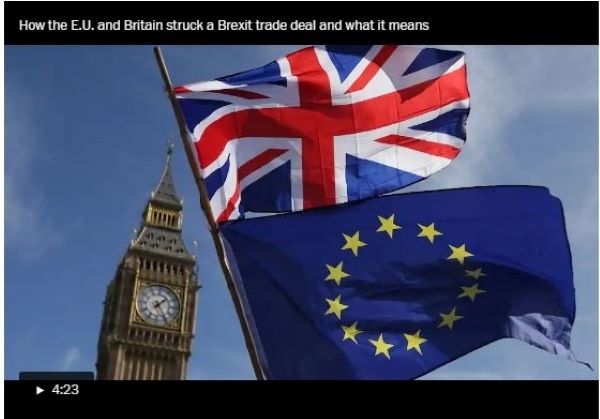
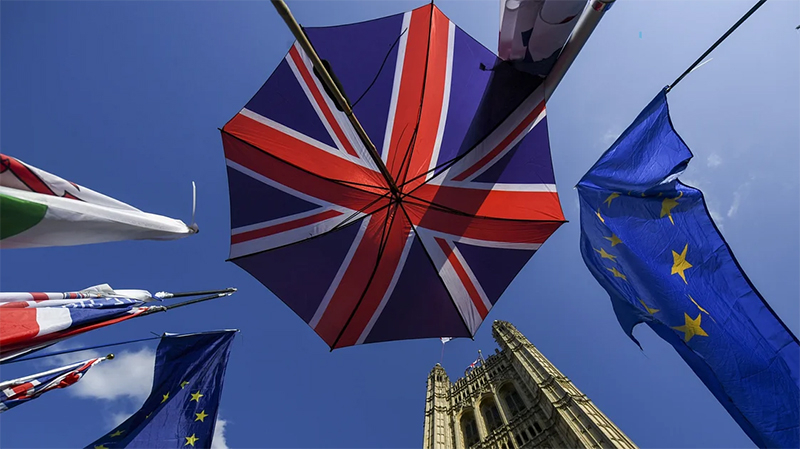
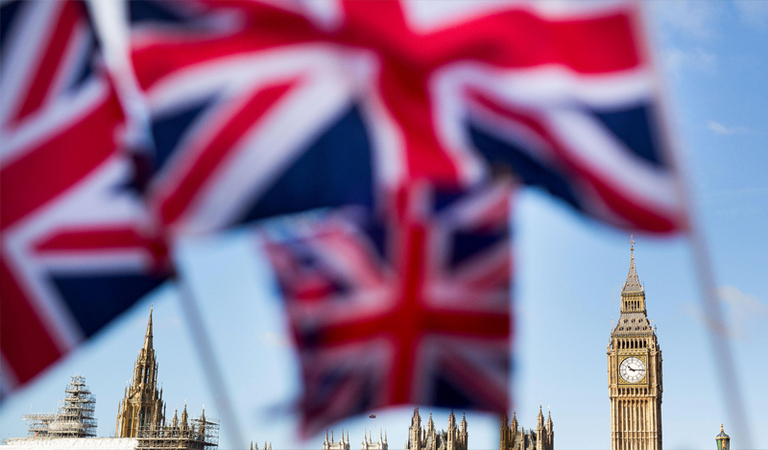
LONDON – After seemingly endless negotiations, Britain and the European Union on Thursday announced they had struck a post-Brexit trade and security deal, which will reshape relations between the two allies and antagonists for years to come, and may begin to mute the bickering that has consumed the sides in rancorous, often nationalistic debate.
The details of the world’s largest free trade pact were still emerging Thursday, but the deal will allow hundreds of billions of dollars in goods to continue to flow – without tariffs or quotas but a lot more red tape – between Britain and the 27 remaining nations in the E.U., the richest trading club on the planet.
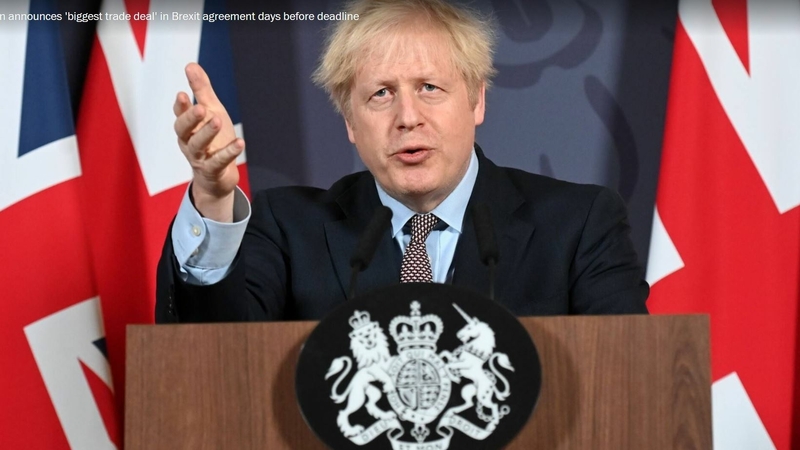
“We’ve taken back control of our laws and our destiny,” British Prime Minister Boris Johnson said at an afternoon news conference from Downing Street. “We’ve taken back control of every jot and tittle of our regulation in a way that is complete and unfettered.”
Johnson said he hoped Europe, too, would be better off with “a prosperous, dynamic and contented U.K. on your doorstep.”
“This deal means a new stability and a new certainty in what has sometimes been a fractious and difficult relationship,” said the British prime minister, adding, “although we have left the E.U., this country will remain culturally, emotionally, historically, strategically, geologically attached to Europe.”
Across the English Channel, there was more nostalgia than celebration.
“Today is a day of relief,” E.U. negotiator Michel Barnier said at a news conference in Brussels. “But tinted by some sadness, as we compare what came before with what lies ahead.”
European Commission President Ursula von der Leyen said: “It was a long and winding road. But we have got a good deal to show for it. It is fair, it is a balanced deal, and it is the right and responsible thing to do for both sides.”
She added: “Now is the time to turn the page and look to the future. The United Kingdom is a third country. But it is a trusted partner. We share the same values and interests.”
There was palpable relief from business leaders on both sides, who consider this agreement far better than the wreckage of “no deal” exit, something they have feared for years and was previewed this week, when countries shut their borders to travelers from Britain over fears of a coronavirus mutation and thousands of freight trucks were snarled at British ports.
Even with the trade deal, though, the two sides will make a sharp split with little precedent in the modern global economy, with brand-new borders, inspection regimes and paperwork, where for decades there has been none.
Britain officially left the E.U. at the end of January, but little has changed during an 11-month transition period. The real change is coming the night of Dec. 31.
The United Kingdom will leave the E.U. customs union and single market and be able to chart its own course. Johnson envisions a “Global Britain,” a free-trading sovereign nation, able to write its own regulations, control its own borders and make its own deals with the United States and other nations, without seeking consensus in Brussels.
Many in Britain and abroad, however, fear “Global Britain” will turn out to be runt, a Little England, a diminished power, hobbled by nativism, chasing nostalgic dreams stoked by tabloid newspapers.
The Office for Budget Responsibility, an independent forecaster, estimated that Britain’s gross domestic product will be 4 percent lower in the long-run than if it had stayed inside the bloc. That is greater than the long-term economic impact of the pandemic, the forecaster said.
After Brexit, the E.U. will remain Britain’s biggest trading partner for the foreseeable future, both because of the size of its market and its proximity.
But David Henig, a trade policy expert, said the new relationship will be “nothing like it was” when Britain was a member of the E.U. “It’s always going to look pretty disappointing compared to the current trade situation,” he said.
Food and goods flowing between the two sides will now face a blizzard of paperwork and inspections. Thousands of businesses that have never had to fill out a customs form will now have to do so every time they sell a single item over the border. The U.K. services sector – 80% of its economy – will face steep new barriers, and many British businesses will have to open affiliates on the continent if they want to keep making money in Europe.
For months, Britain and the E.U. struggled to strike a deal over two of the most intractable issues:
First, how to share the fish swimming in Britain’s coastal waters – the cod, haddock and mackerel that today are mostly caught by fishing trawlers that set to sea under European flags. The deal allows Britain to increase its share to two-thirds of the fishing stock over the next five years.
“We will be able to catch and eat quite prodigious amounts of fish in this country,” Johnson promised.
It’s all about the cod. Boris Johnson threatens a no-deal Brexit as Britain and France fight over fish.
Negotiators also battled over how to assure that the British government would honor its commitments to assure a “level playing field” with the E.U. – meaning that the U.K. would not undercut strict environmental and labor laws, nor grant outsized state subsidies to British businesses, that would give British sectors unfair advantages against its European competitors.
The deal allows each side to appeal to an independent review panel and impose tariffs if they feel wronged.
Barnier, the chief E.U. negotiator, said the deal was limited. It does not address a future partnership on foreign policy, defense and development. Barnier said he was disappointed Britain would no longer participate in a shared university program, known as Erasmus, that has seen a generation of students freely attend colleges on either side of the Channel.
Johnson said Britain would launch program to send students not just to Europe but around the world.
The trade agreement will still need to be ratified by both sides. The British Parliament will vote on it Wednesday. Some of the arch-Brexiteers in Johnson’s own party signaled that they may oppose the deal. In a joint statement, Mark Francois and David Jones of the European Research Group said their “star chamber” of lawyers would “scrutinise” the deal “to ensure that its provisions genuinely protect the sovereignty of the U.K.” However, Johnson has a comfortable enough majority in Parliament that the deal would be expected to pass.
The deal also appeared to win approval from zealous Brexiteers outside Parliament, with Nigel Farage, leader of the now defunct Brext Party, tweeting, “The deal is not perfect but it is a big moment…. There is no going back.”
On the E.U. side, national capitals will review it. Some parliaments may have to weigh in. The European Parliament will need to sign off, and has said it does not plan to do so before the end of the year because of the deal’s complexity. But the European Union can apply it “provisionally” in the meantime.
German Chancellor Angela Merkel said in a statement that the agreement was of “historic importance.” Berlin would now “intensively examine” the text of the document, she said, adding that she was confident of a “good result.”
French President Emmanuel Macron, who took a tough line in Brexit negotiations, said the deal showed “European unity and firmness have paid off.”
“The agreement with the United Kingdom is essential to protect our citizens, our fishermen, our producers,” he said. “We will make sure this is the case.”
It often seemed like this day would never come.
Four years ago, Britons stunned the world – and their political establishment – by voting 52-48 to exit the European Union, the first country ever to leave the bloc.
In the months after the lightning-bolt vote in 2016, many E.U. leaders feared other countries could follow Britain out the door. But British leaders have created such difficulties for themselves that few in Europe still worry a departure might tempt anyone else.
Britons tied themselves in knots over how to disentangle from a partnership that has spanned nearly half a century.
The drawn-out melodrama consumed and eventually dashed the premierships of Conservative prime ministers David Cameron and Theresa May, just as John Major and Margaret Thatcher before them were ousted in part over how closely Britain should be tied to the continent.
Johnson rode into 10 Downing Street under the banner “Get Brexit Done.” He and his fellow Brexiteers promised striking a trade deal would be easy. But like everything else with Brexit, it was not. Whereas almost all trade negotiations are about agreeing to give up some sovereignty in exchange for the benefits of a closer relationship, in this one Britain wanted to reclaim sovereignty and diverge.
“Trade agreements are not made to assert one’s independence. They are made to manage interdependence,” Spanish Foreign Minister Arancha González, herself a former E.U. trade negotiator, told Sky News earlier this month, explaining why the talks had been so difficult. “This trade deal that we are building, post-Brexit, is not to assert people’s sovereignty, countries’ sovereignty. Trade deals are not made to do that.”
The sharp break spelled out by Thursday’s deal was not foreordained. Many Brexit advocates originally envisioned a relationship that would leave their country deeply integrated into the European Union’s market. And at various points, some of those opposed to Brexit hoped Britain might change its mind. Prime Minister May’s circular mantra, “Brexit means Brexit,” let listeners imagine whatever Brexit they wanted.
On the E.U. side, where infighting is common, everyone could agree to agree on Brexit. The comity surprised the British, who appeared to have difficulty understanding why so much deference could be given the views of individual E.U. members, notably Ireland, whose thorny border issues with the U.K. ultimately shaped the broad outlines of the deal.
Rob Ford, a professor of politics at the University of Manchester and author of a new book called ‘Brexitland,” said one of the notable elements of negotiations was the Johnson administration’s willingness to “throw Northern Ireland under the bus, quite openly, really. I mean, Johnson dressed up in his usual rhetorical flimflam, but it ain’t fooled a single unionist voter.”
In five to 10 years, Ford said, politics in Northern Ireland “is going to look pretty different, one way or the other, and historians will look back to this moment and say, well, that’s what did it.”
Some believe Brexit could create conditions that support the break up the United Kingdom. The last general election saw a surge of support for nationalist parties in Northern Ireland and in Scotland, which has its own elections coming up in 2021. In 2016, voters in Northern Ireland and Scotland overwhelmingly voted to stay in the E.U.
“It’s worth remembering that Brexit is happening against Scotland’s will,” First Minister Nicola Sturgeon said Thursday. “And there is no deal that will ever make up for what Brexit takes away from us. It’s time to chart our own future as an independent, European nation.”
With a deal with Europe in hand, Britain can press the incoming Biden administration for a free-trade agreement, too. Those negotiations will also face challenges. Britons, for instance, have consistently said they don’t want to see America’s hormone-injected beef and chlorine-washed chicken in their grocery stores.
The rupture on Dec. 31 will be felt acutely by those with strong links between the U.K. and the E.U. who find they suddenly need visas, permits, passports.
For decades, millions of Europeans have freely moved between a bloc of countries, living and working where they please. An Italian could, with nothing more than a backpack and a plane ticket, move to London, rent an apartment, get a job, use the National Health Service.
A teenager from Munich could attend university in Manchester and not pay overseas fees. Elderly Brits looking to retire in a sun-kissed country could buy a condo on Spain’s Costa del Sol or a villa in the south of France.
After Brexit, all that will be much more problematic.
Britain will control its borders and has already stated that Europeans will not longer be granted priority visas over others. The new British immigration paradigm will be to recruit “the best and brightest” from India, China or the United States.
And instead of Romanians and Bulgarians picking 99 percent of the British crops, it will more likely be Nepalese or Bangladeshis on six-month work contracts.
Johnson and his Conservative Party will be working hard to identify and emphasize the benefits of Brexit.
Government ministers even claimed that Brexit enabled Britain to be first in the world to authorize the Pfizer-BioNTech coronavirus vaccine. It wasn’t. Britain remains subject to E.U. medicine rules until the end of the month, and any E.U. country can choose emergency authorization, like Britain did.
But the idea of Britain being able to achieve great success because it is unencumbered by rules and regulations that come with E.U. membership appeals to Brexiteers.
Anand Menon, a professor of European politics at King’s College London, anticipated that there would be more Brexit tub thumping to come. “It’s important for the government to get out a line that ‘we’ve done Brexit and all these good things are coming from it.'”
WASHINGTON – House Democrats on Friday will try to pass legislation giving $2,000 stimulus payments to millions of Americans, seizing on President Trump’s demand from Tuesday night.
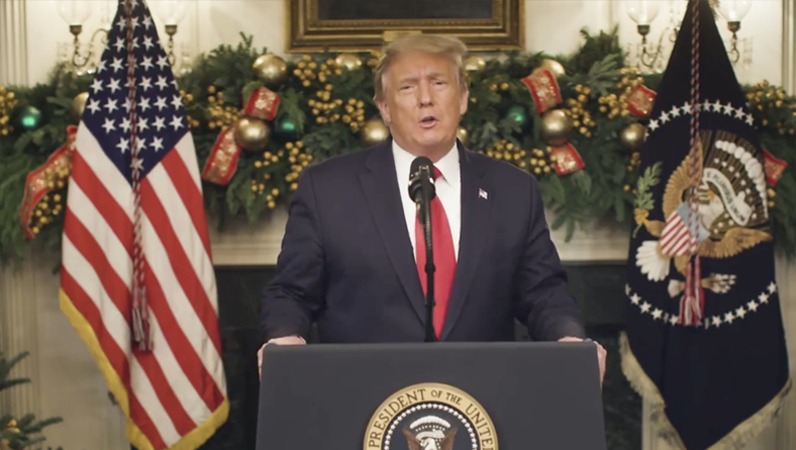
Trump has hinted he will not sign a $900 billion emergency economic relief package into law unless these larger stimulus payments are approved. Many Democrats also support the higher payments, while most Republicans do not. But Trump’s late-stage intervention now puts the entire package in jeopardy, and the government will shut down on Tuesday if there is not a resolution.
House Speaker Nancy Pelosi, D-Calif., will attempt to approve by “unanimous consent” the measure. Her procedural move is expected to fail because it can be defeated by opposition from a single member of Congress, and congressional Republicans have already indicated they oppose the effort. The $900 billion stimulus package approved by Congress included $600 direct payment checks, a level that Trump’s top economic adviser, Treasury Secretary Steven Mnuchin, had proposed earlier this month. Trump on Tuesday said these checks were not big enough.
In an effort to counter Pelosi’s move, House Republicans will attempt to pass a request to revisit the foreign aid portion of the government funding package, also through unanimous consent. This is also in line with demands that Trump surfaced for the first time Tuesday night, one day after the large spending package was approved by Congress. That House GOP effort is also expected to fail as Democrats and many Republicans support the foreign aid spending.
It is unclear what will lawmakers – or Trump – will do next after the failed procedural moves, and there are major consequences for both the economy and the government.
Failure to pass the package would also spell disaster for tens of millions of Americans and risk the broader American economy at a perilous moment during the coronavirus pandemic. There is little time to act. Unemployment benefits for 14 million Americans expire on Saturday. An eviction moratorium protecting as many as 30 million Americans from eviction is set to expire by the end of the month. The federal government will shutdown Monday at midnight if lawmakers do not approve an extension in funding.
Because the House and Senate have already passed the bill, Trump could ultimately decide to veto it if his demands aren’t met.
If Trump does veto the legislation, Congress would then have the opportunity to override the president’s veto with another vote. Yet it’s likely that the relief effort could fall apart entirely at that point, given that congressional Republicans have already indicated that they are reluctant to go against Trump, who remains widely popular with GOP voters.
Despite the looming deadlines, the president as of Wednesday evening was still weighing whether he should veto the relief package, according to multiple officials inside and outside the White House granted anonymity to frankly discuss internal thinking.
Trump was encouraged by what he perceived as the positive reaction in the media to his denouncement of the aid package, as well as support among Democrats from his call for $2,000 stimulus payments, one person in communication with senior White House officials said. The person spoke on condition of anonymity to describe candid interactions with the White House.
“Nobody knows exactly what Trump is going to do and they’re all trying to figure it out,” the adviser said, describing the odds of a veto as “a little less than 50-50.”
The $900 billion aid package Trump may veto would also devote $25 billion for food assistance amid an explosion of hunger in America; hundreds of billions for restaurants and other small businesses bracing for the surge in the pandemic; and billions for other critical needs such as transportation agencies, vaccine distribution, and rental assistance.
But Washington was suddenly consumed with a new political battle over the stimulus payments. McCarthy accused Democrats of “selective hearing” Wednesday night because their effort does not include Trump’s call to cut international aid spending that the president also denounced in his video address.
“They have conveniently ignored the concerns expressed by the president, and shared by our constituents, that we ought to reexamine how our tax dollars are spent overseas,” McCarthy said in a letter to House Republicans.
Trump’s own budget proposal included much of the foreign aid items that he himself railed against in his video address. The U.S. Global Leadership Coalition also pointed out in a statement that the aid funding had support from Republicans, including allies of Trump such as Sen. Lindsay Graham, R-S.C.
“The truth is that not only were many of these funds pushed for by the White House – as recently as less than a week ago in the case of Sudan – but they were vetted and assembled by bipartisan leaders,” the coalition president, Liz Schrayer, said in a statement.
House Democrats plan to try to vote on legislation increasing the $600 per person check approved in the aid package to $2,000 on Monday if the effort on Thursday fails.
By Syndication Washington Post, Bloomberg · Ian Wishart, Alberto Nardelli, Alex Morales
U.K. and European Union negotiators are locked in talks in Brussels over the final details of a historic post-Brexit trade accord, with both sides engaged in last-minute haggling over fishing rights.
While the outline terms of the deal, including broad fishing quotas, were agreed on Wednesday, negotiators have hit a last-minute disagreement over the precise number of each species EU boats will be able to catch in U.K. waters, officials said. It isn’t clear how long it will now take for the discussions to reach a conclusion.
The accord, which will formally complete Britain’s separation from the bloc four-and-a-half years after the 2016 referendum, will allow for tariff and quota-free trade in goods and cooperation in areas from security to aviation.
The U.K. cabinet held a conference call on the state of the negotiations late on Wednesday while European governments were briefed by officials from Brussels. The final document, running to about 2,000 pages, would still need to be approved by Johnson and EU governments, as well as parliaments on both sides.
Johnson and European Commission President Ursula von der Leyen intervened personally in recent days, holding several phone conversations, in a last-ditch bid to reach an agreement before the U.K. leaves the single market at the end of the month.
One EU diplomat said the U.K. had made concessions on fisheries in recent hours that had unlocked the deal. According to two people familiar with the matter, Johnson has accepted that the bloc’s share of the catch in U.K. waters should fall by 25% over a period of five-and-a-half years. Britain had initially sought an 80% reduction over just three years, but in recent days had offered a cut of 30%.
The bloc had refused to accept a reduction of more than 25% in the value of fish caught, saying even that was hard for countries like France and Denmark to accept, according to officials with knowledge of the discussions.
This would be phased in over five and a half years. The U.K. previously offered three years while the EU were pushing for 10.
The pound rose 0.5% to $1.3560, though was still short of the two-and-a-half year high of $1.3624 reached last week.
If the two sides can finalize the deal off, it would draw a line under almost five years of often tempestuous negotiations since the U.K. voted to withdraw from the EU in 2016 and lay the foundations for Britain to trade and collaborate with the bloc going forward.
As the Brexit endgame was drawing to a close, the emergence of a new strain of the coronavirus forced large parts of England into lockdown. Hundreds of trucks backed up around the southern English port of Dover in a sobering reminder of the potential consequences of ending Britain’s transition period on Dec. 31 without a deal.
Both sides have made an agreement on fishing a precondition for any wider deal over their future relationship, even if the 650 million euros ($790 million) of fish European boats catch in U.K. waters each year is a fraction of the 512 billion euros of goods traded annually between Britain and the EU.
The EU also wants to be able to impose tariffs on the U.K. if, after the fisheries transition period, the government restricts access to its waters. In its latest compromise offer, the U.K. said it would accept tariffs on fisheries but not in other areas, such as on energy, as demanded by the bloc.
Could President Donald Trump declare martial law, or seize voting machines, or try to otherwise steal the election by force in his last month in office? Any of those would be an extreme escalation of Trump’s already unprecedented strong-arm tactics in his effort to overturn the election results.
The answer is no, he can’t do this stuff, say various national security and election law experts.
But even if these maneuvers aren’t in the president’s tool kit, it’s dangerous for him to talk about them in a way that risks normalizing them – let alone in Oval Office meetings, said nearly every expert The Fix spoke with.
“This is really dangerous stuff to start playing with,” said Rachel Kleinfeld, a national security expert at the Carnegie Endowment for International Peace. “You cannot normalize extrajudicial action outside the rule of law and believe democracy will hold. Democracies are fragile, even ours.”
But even if Trump could do any of the things he might be entertaining, they wouldn’t actually change the election results: Here’s what he’s mulling, according to Washington Post reporting, and why experts say these efforts won’t get him what he wants.
1. Declare martial law
What this would do: Trump would put the military in charge. It would implement and enforce curfews, keep people in their homes. Former Trump national security adviser Michael T. Flynn has suggested the military could force states to rerun elections. It could even stop members of Congress from coming to work on Jan. 6 to certify President-elect Joe Biden’s win.
Could it happen? No, experts say. There’s absolutely no legal or political precedent for it. “Can the president invade the Congress of the United States? No, he cannot,” said Adav Noti, an election law expert with the Campaign Legal Center.
Some experts were skeptical the president could actually declare martial law in the first place. Governors have that power in their states, but the president doesn’t, Kleinfeld said. (The Washington Post’s Gillian Brockell reports the Supreme Court has never ruled on whether a president can declare martial law without congressional approval.)
“If you have martial law,” Kleinfeld said, “you have total suspension of the Constitution. So that’s a coup, and a coup in this country is not going to happen.”
Trump would also need military buy-in, and military leaders have said they’re not interested in entertaining any of these ideas. Experts were heartened that military leaders expressed regret for participating in a clearing of peaceful protesters outside the White House this summer so the president could pose for a photo he used for political purposes.
Also, declaring martial law wouldn’t do anything to change votes. What is a curfew in December going to do to change an election in November? States aren’t going to redo elections. And even if Congress were unable to certify results, on Jan. 20, the political and legal and military establishment would almost certainly recognize Biden as president. The military could just escort Trump out of the White House on that day if he refused to leave.
After reporting over the weekend that he was briefed on this idea by fringe advisers, Trump tweeted this, throwing cold water on the idea.
Trump has called plenty of accurate reporting “fake news” before, so it’s not the same as an outright denial.
2. Use the Insurrection Act to somehow get control
What this would do: This is slightly different from martial law in that it’s an actual legal tool the president has that allows him to use the military in extreme ways. The Insurrection Act allows the president to call in troops for domestic law enforcement, not unlike what he did this summer in Portland, Ore., during Black Lives Matter protests. It’s supposed to be used only in times of emergency.
But what emergency is there right now that would warrant the military taking to the streets? There is none. Trump could try to gin one up by encouraging protests across the nation on Jan. 6 as Congress certifies results, said Meredith McGehee, an expert in ethics in politics and the director of Issue One.
To that end, Trump allies are planning a rally in Washington that day. Trump is encouraging them: “Big protest in D.C. on January 6th. Be there, will be wild!” he tweeted last week.
That’s scary language, said McGehee, who wondered whether Trump might try to do this in several cities to create the pretense of insurrection and chaos. “Now we have a president who is playing with the notion that we are going to solve conflict with violence,” she said. “That puts us up there truly with the banana republics.”
But this tactic would almost certainly face legal challenges and political blowback. “Talk about an idiotic idea,” Republican strategist Karl Rove recently said on Fox News. “There’s no ability for any president to invoke the Insurrection Act of 1803, claiming that the issue has got to do with the hubbub around the election.”
And just like declaring martial law, it wouldn’t actually change Trump’s results. The Insurrection Act “says nothing about: ‘Therefore the president can stay in power after he’s been voted out in a legitimate election,'” Kleinfeld said.
3. Seize voting machines from states
What this would do: It’s unclear, honestly. It’s an idea that’s been floated to the president on the basis he could somehow try to prove baseless claims that voting machines counted votes incorrectly, or that they were somehow hacked by communist countries.
But those claims been disproved. In Georgia, the Republican secretary of state has presided over three recounts, including one by hand, that confirmed the machines counted votes correctly. An Arizona judge allowed Republicans to view 100 ballots to search for fraud or miscounting, and they found nothing.
“We’re at a point where the votes have been counted,” Noti said. “The machines are done. There was no fraud.”
Also, this is illegal without states’ permission. The Constitution gives states the authority to run their own elections as they see fit. Taking the voting machines would fall to the Department of Homeland Security, and its head, Chad Wolf, has told the White House he’s doesn’t have the authority, according to Post reporting.
4. Set up a special counsel to investigate voter fraud
Trump has toyed with putting one of the most conspiracy-theory-minded lawyers in his orbit, Sidney Powell, into an official position to “investigate” whether there was fraud that led to his loss.
What this would do: Not much.
For one, it doesn’t seem like she’ll find anything. In six states he lost, officials have found just a handful of incidents worth investigating – nowhere near the tens of thousand of votes Trump would need to overturn his loss. The courts have nearly universally rejected his claims as well.
Two, she wouldn’t have much time. A special counsel can’t be removed by the next president, but a Biden Justice Department could just silo her and give her zero resources.
Three, the Justice Department would need to implement this, and it’s not clear Trump has that support. Attorney General William P. Barr said on his way out the door this week that he saw no need. His replacement, Jeffrey A. Rosen, hasn’t commented on this.
But unlike with declaring martial law, the president leaned into this idea in a tweet Wednesday.
Of all the ideas floated out there, this one is the flimsiest, experts said. (But they stressed that they are all infeasible.) “Like all the post-election litigation by the president’s team, it’s all half-baked ideas that don’t have a basis in law and don’t have a basis in fact and don’t have any chance of success,” Noti said, “however success is defined other than whipping some portion of the American public into a frenzy.”
5. Have Congress protest the election
What this would do: Again, nothing to change the election results. But this is one of the only ideas Trump has considered that he could legally do.
Well, not himself.
When Congress meets Jan. 6 to confirm Biden’s win, Trump has lined up several House Republican lawmakers to challenge as many as half a dozen states he lost. But they won’t actually succeed in changing the outcome. They don’t have support yet from a Republican senator, and without that, their objections die immediately.
If a Republican senator does join in – potentials include incoming senator Tommy Tuberville of Alabama or Sen. Rand Paul of Kentucky – Congress has to debate and vote on their challenges. Lawmakers will almost certainly vote them down, even the Republican-controlled Senate. Sen. John Thune, R-S.D., the No. 2 Senate Republican, has said these challenges are “going down like a shot dog.” There’s no legal basis not to accept state’s electors that, taken together, make Biden president.
So all of this talk about possible actions is just that: talk. And Trump will probably continue to talk, and tweet, about the election up to noon on Jan. 20, at which point he will be the former president.
By Syndication The Washington Post, Bloomberg · Ian Wishart
The U.K. clinched a historic trade deal with the European Union, averting the threat of an acrimonious breakup and laying the foundations for a new relationship with its biggest and nearest commercial partner.
Negotiators finalized the accord, which will complete Britain’s separation from the bloc, on Christmas Eve, days before the country is due to leave the bloc’s single market and customs union.
“It was a long and winding road — but we have got a deal to show for it,” European Commission President Ursula von der Leyen said. “It is fair, it is a balanced deal, and it is the right and responsible thing to do for both sides.”
The agreement will allow for tariff and quota-free trade in goods after Dec. 31, but that won’t apply to the services industry — about 80% of the U.K. economy — or the financial services sector.
Firms exporting goods will also face a race to prepare for the return of customs and border checks at the year-end amid warnings of disruption at Britain’s ports. The deal comes after three days of chaos at the main crossing between Britain and France offered a reminder of how quickly blockages at the border can choke international trade.
More than five turbulent years after a general election set off a chain reaction that would transform British politics and the country’s connections to the rest of Europe, the deal establishes a new framework for businesses on both sides of the Channel and frees the British Parliament from many of the constraints imposed by EU membership.
For Boris Johnson, the architect of Brexit and the third prime minister since the 2016 vote to leave the EU, it marks another landmark just over 12 months after he claimed a decisive mandate from voters with the promise to “get Brexit done.”
With the electorate divided, public finances battered by the covid-19 pandemic, and Scots pushing for a split from the rest of the U.K., the prime minister’s next challenge is to prove that the U.K. can flourish outside the EU’s single market and customs union, a status that puts it behind other nonmembers such as Norway and Switzerland when it comes to EU access.
Businesses will still face border checks for which surveys have shown that they are unprepared, and consumers in Northern Ireland face the prospect of shortages of some goods as firms adjust to the new paperwork.
In a worst-case scenario, Johnson’s government itself has warned of a 7,000-long line of trucks, enough to stretch from the Port of Dover to the Palace of Westminster.
The U.K. got a taste of the potential chaos this week after France closed its border in response to an outbreak of a new strain of the coronavirus in Britain, leaving hundreds of lorries bound for the port of Dover backed up on local roads. To mitigate the risk, the government has built lorry parks and drivers entering Kent will require a permit or risk a fine.
Outside the EU’s single market, U.K. financial services firms will be deprived of the passport that allows them to offer their services across the bloc and face a wait to see if the EU will grant them access — something that is still far from certain and, even if granted, could be withdrawn at any time.
That has allowed Dublin, Frankfurt, Amsterdam and Paris to start chipping away at London’s dominance as Europe’s financial center. Firms from JPMorgan Chase & Co. to Goldman Sachs Group Inc. are among the companies that have already shifted about 7,500 employees and $1.6 trillion of assets out of the U.K. because of Brexit.
The deal mitigates some of the immediate economic costs of leaving the EU, even if Britain’s long-term growth is set to be stunted. A no-deal Brexit would have cut 1.5% off U.K. gross domestic product in 2021, according to Bloomberg Economics. But growth is still forecast to be 0.5 percentage points lower every year for the next decade than what it would have been had Britain stayed in the bloc.
Against the dollar, the pound is still trading below its level before the Brexit vote. The U.K.’s benchmark FTSE 100 index is one of the worst-performing Western European benchmarks this year.
For the EU, reaching a deal avoids poisoning relations with a key diplomatic and commercial neighbor for years, and provides a basis for further cooperation in future.
Unlike other similar trade deals, the agreement will establish frameworks for common standards in aviation, business subsidies, labor rights and the environment, as well as law enforcement.
The agreement’s wide scope made negotiating it all the more complicated: Britain resisted EU calls to align its rules on business subsidies with those of the bloc, while France pushed for continued access to British fishing waters.
With the two sides at loggerheads on those two issues — and any wider agreement impossible until they were resolved — the negotiations quickly became bogged down.
After the coronavirus stopped the negotiators from meeting in person, Johnson refused to extend the post-Brexit transition period beyond the year-end. That put the squeeze on the teams, with officials working around the clock as multiple deadlines were missed. At one stage in October, the prime minister threatened to walk out without a deal.
Now that he has one, Johnson faces the challenge of governing without the Brussels bogeyman to blame for setbacks, knowing that he and his Conservative party will be judged on how the country fares as an independent nation.
The Mall Group on Thursday updated that no Covid-19 patient had visited the Mall Bang Kae department store recently, clearing the way for DTAC and iCare shops to open as usual on December 24 and 25.
On Wednesday, The Mall Group had announced that three shops in two branches of The Mall – Bang Kae and Bang Kapi – were ordered to close and disinfect, after it was suspected that Covid-19 patients might have visited the outlets recently.
The Mall Bang Khae on Wednesday told the DTAC and iCare shops to suspend their services until Friday. The staff of each shop were told to be quarantined.
A similar case took place at the Yum Saap restaurant at The Mall Bang Kapi. A patient who was confirmed as the first Covid-19 case in Samut Songkhram province had earlier visited the restaurant for a meal.
Late afternoon on Thursday, The Mall Group mentioned on its Facebook page that it was now confirmed no Covid-19 patient had visited the Bang Kapi branch recently. Therefore, the DTAC and iCare shops could open as usual on Thursday and Friday.
The new announcement added that the shops had been disinfected before opening.
The Mall Group did not say when the Covid-19 patient had visited the Bang Kapi branch.
A five-year-old is among six new Covid-19 cases in Chai Nat province.
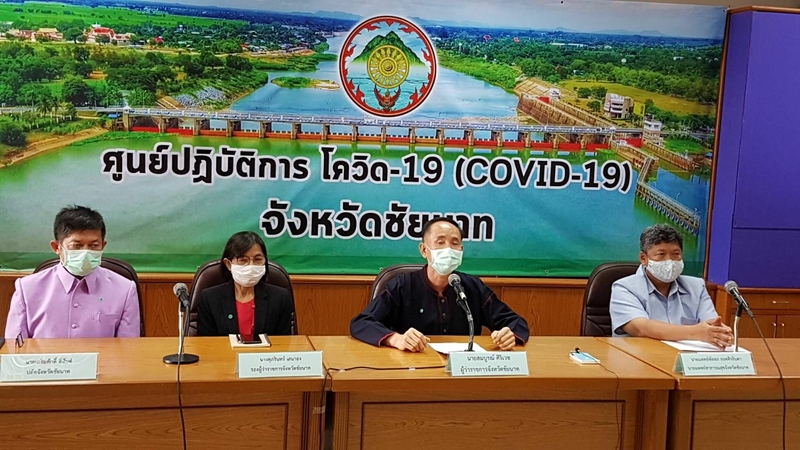
Chai Nat Governor Somboon Sirivej told a press conference on Thursday afternoon that the province now had six confirmed cases of Covid-19 after the first case was reported on December 20.
The source of the infections is suspected to be a 35-year-old seafood vendor who had earlier visited Samut Sakhon province, a hotspot of recent mass infections.
“The second and third patients are a mother and son from Muang district who had visited the same clinic where the first patient had received testing,” he said.
“The 41-year-old mother had reportedly brought her five-year-old for asthma treatment to the clinic.”
The fourth and fifth patients are a married couple aged 34 and 31 from Han Kha district. They had earlier visited Thalay Thai Market in Samut Sakhon and been tested on December 22 at Chai Nat Narenthorn following a Ministry of Public Health recommendation for people who had visited the hotspot.
“The sixth patient is a 47-year-old woman who is a stepmother of the fifth patient. They live in the same house,” said Somboon.
Somboon added that five other persons who had been in close contact with the patients had been tested and placed in isolation while awaiting the results. He also ordered the Huay Ngu subdistrict in Han Khan district, where three of the patients lived, to be a controlled area and public health officers must stay on high alert for possible new cases.
In a suspected case of suicide, the principal of a school in Bangkok’s Laksi district jumped to his death from the school building.
Thungsonghong Police Station were informed about the incident at 15 minutes past midnight on Friday. At the scene they found the body of Yutthanan Srichumphu, the school’s principal, lying on the ground with a wound at his head.
Police said they found a letter on his body addressed to his family and colleagues, saying he was sorry for ending his life as he could no longer fight the depression he was suffering from. In the letter, the deceased also asked that his body be taken to his hometown in Phrae province for the funeral.
Police reportedly also found a doctor’s note on Yutthanan’s body from Srithanya Psychiatric Hospital, stating that the deceased had been suffering from severe depression with high tendency of committing suicide and that he had been receiving continued treatment at the hospital.
Police are interviewing witnesses and reviewing CCTV footage, while the deceased’s body was sent for autopsy to confirm the cause of death.
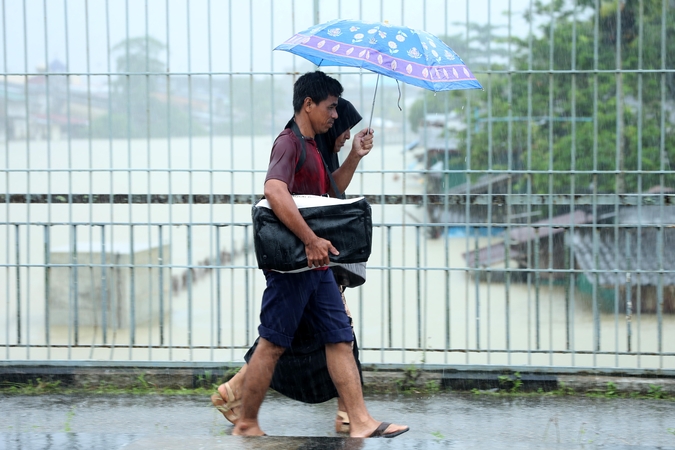
The Thailand Meteorological Department said on Friday that an active low-pressure cell covers the middle South while the strong northeast monsoon prevails over the Gulf of Thailand and the South. Isolated heavy to very heavy rains are forecast in the areas.
People should beware of the severe conditions that may cause flash floods. Waves in the Gulf are expected to rise 2-3 metres high and above three metres during thundershowers. All ships should proceed with caution and keep off thundershowers, while small boats should keep ashore until December 26, the department said.
Meanwhile, the high-pressure system covering upper Thailand is weakening, increasing temperatures by 1-2 degrees Celsius, with fog in the morning. Mountaintops remain cold to very cold with frost in some areas.
The weather forecast for the next 24 hours:
North: Cold to cool weather with light fog in the morning; minimum temperature 10-19°C, maximum 27-34°C; temperature on hilltops is likely to drop to 2-10°C with frost in some areas.
Northeast: Cold to cool weather with light fog in the morning and isolated light rain; minimum temperature 15-20°C, maximum 29-33°C; temperature on hilltops is likely to drop to 6-14°C.
Central: Cool weather with light fog in the morning and isolated light rain; minimum temperature 18-23°C, maximum 31-34°C.
East: Cool weather with light fog in the morning and isolated light rain; minimum temperature 20-25°C, maximum 31-34°C; waves 1-2 metres high and two metres off shore.
South (east coast): Mostly cloudy with thundershowers in 60 per cent of the areas and isolated heavy rain; minimum temperature 22-25°C, maximum 27-30°C; waves 2-3 metres high and over three metres during thundershowers.
South (west coast): Mostly cloudy with thundershowers in 40 per cent of the areas and isolated heavy rain; minimum temperature 22-23°C, maximum 29-31°C; waves 1-2 metemres high and two metres during thundershowers.
Bangkok and surrounding areas: Light fog in the morning with isolated light rain; minimum temperature 23-24°C, maximum 32-34°C.



 SootinClaimon.Com