Tencent announces 50b yuan social charity investment plan #SootinClaimon.Com

#SootinClaimon.Com : ขอบคุณแหล่งข้อมูล : หนังสือพิมพ์ The Nation.

https://www.nationthailand.com/international/40005045

Tencent announces 50b yuan social charity investment plan


Long-term and constant move an effort to leverage tech to help society develop
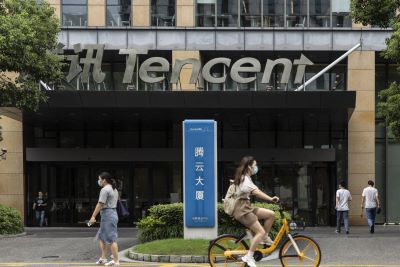
Tencent Holdings Ltd announced a plan to double its fund for social charitable causes in a bid to help promote “common prosperity” in China.

The internet giant is investing an additional 50 billion yuan ($7.7 billion) on supporting everything from rural revitalization, enhancing efficiency of the rural economy, increasing incomes for low-income people, funding inclusive education programs and other measures to enhance social fairness, the company said on Thursday though its official WeChat channel.

This latest move, which Tencent promised to be “long-term and constant”, adds to an April pledge of 50 billion yuan for the “Sustainable Innovations for Social Value” program, which is dedicated to basic science, education innovation, carbon neutrality, food/energy/water provisions, and technology for the elderly and digitalization of public welfare.

In a news release, Tencent said the efforts “underscored its initiatives in China’s wealth redistribution campaign and constant exploration in enhancing social welfare and contributing to common prosperity”.

Tencent’s new initiatives mark a proactive response to the nation’s development strategy. The recently-convened 10th meeting of the Central Committee for Financial and Economic Affairs has turned the spotlight on the country’s pursuit of common prosperity.

Participants at the meeting encouraged some people to become prosperous first, then help others get rich later. They also called for the creation of conditions and opportunities for more people to develop and become prosperous.

“As a Chinese technology company growing up in the tide of reform and opening-up, we are constantly pondering how we can leverage our own technology and digital capabilities to help the society develop,” the company statement said.

It outlined two parallel paths for development: Exploring future and unknown realms to help bolster China’s long-term sustainable development, and training sets on social inclusiveness, using technologies to improve more people’s lives by improving welfare and creating opportunities.

It pledged to play the role of a “connector”, linking more partners in the ecosystem, government departments and various social forces to embark on inclusive social causes.

Tencent has spared no effort in its social endeavors. The invention of a smart phone-based digital Health Code embodies its dual efforts in fighting the COVID-19 pandemic to constructing smart cities, it said. In August, Tencent also cut the playing time for its signature gaming title Honor of Kings for minors.

It has made initial steps in optimizing its philanthropic platform where some 20,000 public welfare agencies set foot, fostering emergency relief endeavors, establishing labs for rural development, carbon neutrality, basic discipline research and technology products for the elderly.

“An excellent internet company is not only an innovative company that uses big data, artificial intelligence, 5G, cloud computing, blockchain and other new technologies to lead a new economic model. It shall also be a mature company embracing humanistic care and goodwill that actively assumes social responsibilities,” said Tian Feng, a researcher at the National Institute of Social Development of the Chinese Academy of Social Sciences.

Tencent on Wednesday reported a 29 percent rise in second-quarter profit at 42.6 billion yuan, while revenue climbed 20 percent to 138.3 billion yuan.

Published : August 21, 2021

By : HE WEI/China Daily/ANN

Tougher regulations cast shadow over crypto markets in S. Korea #SootinClaimon.Com

#SootinClaimon.Com : ขอบคุณแหล่งข้อมูล : หนังสือพิมพ์ The Nation.

https://www.nationthailand.com/international/40004984

Tougher regulations cast shadow over crypto markets in S. Korea


Ko Kwang-nam invested 5 million won ($4,251) in cryptocurrencies but lost about half of his holdings as the nations cryptocurrency markets showed signs of cooling down ahead of tougher regulations.

As things stand, Ko, a 30-something office worker in Seoul, is likely to lose most of holdings because he made big bets on smaller or “alternative” coins.

“I am not going to cut my losses because I believe that prices will go up again if regulatory issues are over,” Ko said.

About a month before South Korea enforces tougher regulations against cryptocurrency exchanges, there was a sense of confusion in cryptocurrency markets and fears of a mass shutdown of minor exchanges dampened cryptocurrency interest.

By Sept. 24, both foreign and local cryptocurrency exchanges targeting Korean investors must register with the nation’s anti-money laundering body and disclose their details on risk management.

Under the tougher regulations, which were announced in March with a six-month grace period, banks will issue real-name accounts in line with stricter guidelines to prevent money laundering.

Beginning Sept. 25, cryptocurrency exchanges will be banned from withdrawing money for cryptocurrency trading if they have no real-name bank accounts.

Currently, only four major exchanges — Bithumb, Upbit, Coinone and Korbit — have real-name bank accounts issued by commercial banks.

Minor cryptocurrency exchanges, which have been using opaque accounts to lure investors, are unlikely to meet such regulatory requirements, analysts said.

Finance Services Commission (FSC) Chairman Eun Sung-soo has said about 200 cryptocurrency exchanges could face a shutdown unless they are registered as “virtual asset service providers” by the September deadline.

In July, Eun said cryptocurrency exchanges that are based outside South Korea must register with the Korea Financial Intelligence Unit (KFIU), the anti-money laundering body, if they use the Korean currency.

When asked by a lawmaker whether Binance, the world’s largest cryptocurrency exchange, needs to comply with the tougher regulations, Eun replied, “If a cryptocurrency exchange serves local customers with the won-currency settlement, it must register with the (Korea) Financial Intelligence Unit.”

For months, worries about regulatory crackdowns have hammered prices of smaller coins and some minor exchanges voluntarily discontinued operations or delisted smaller coins.

According to a report released by the office of Rep. Kim Hee-gon of the People Power Party, the combined trading volume of the four major exchanges stood at 401 trillion won at the end of June, compared with 1,322 trillion won a month earlier.

The price of Siacoin, one of the smaller coins that Ko invested in, plunged to 20.21 won on Thursday from its April 17 peak of 100.2 won.

In June, Upbit, the country’s largest cryptocurrency exchange, suspended won-based trading of five types of smaller coins It also put 25 minor virtual currencies on the warning list, which virtually means they will be removed from the trading platforms.

At least 11 of 20 certified cryptocurrency exchanges have decided to delist some smaller coins or place them on a warning list for investments since late May, according to industry sources.

Between June 15 and July 16, the FSC conducted on-site consulting on 25 crypto exchanges to review their preparation for registration and check the level of stability in their transactions system.

However, no exchanges were found to have met all the registration requirements, and they have shown inadequate levels of preparedness for complying with anti-money laundering efforts, the FSC said last week.

“At the time of consulting, the level of internal control mechanisms for stable maintenance and management of virtual asset transactions appeared to be inadequate,” the FSC said in a statement.

“Unlike in stock markets where a variety of players take up different functions and provide different services, different types of services are often provided by the same entities in the virtual asset market. This has exposed the issues of fairness in market order, safety in user’s assets and system stability,” it said.

As the nation is set to step up efforts to curb speculation, some foreign cryptocurrency exchanges have distanced themselves from Korea.

The KFIU has sent a notice to 27 foreign cryptocurrency exchanges that have business operations targeting Korean people about this requirement under the tougher regulations.

So far, no foreign exchanges have expressed their willingness to comply with the regulations.

Unless foreign exchanges register with the KFIU, they shall cease business operations targeting Koreans starting Sept. 25, FSC officials said.

“If they continue to operate without registration, they will be subject to up to five years of imprisonment or a maximum fine of 50 million won ($43,455),” an FSC official said.

Earlier this month, Bitfront, a US-based cryptocurrency exchange set up by the messaging app company Line, said it will stop providing a Korean-language service on Sept. 14.

Citing the tougher regulations, Bitfront also said it will discontinue payments with Korean credit cards on Sept. 14.

Last week, Binance, the world’s largest cryptocurrency exchange, announced it halted trading pairs and payment options using the Korean currency.

Despite repeated warning from policymakers, Korean investors have been heavily buying virtual currency as they see it as a lucrative asset amid the COVID-19 pandemic.

More young people have been investing in cryptocurrencies, anticipating higher returns, with some saying they cannot buy homes solely with their income amid skyrocketing home prices.

In the latest warning against cryptocurrency investors, the FSC said earlier this week that a closure of crypto exchanges starting Sept. 25 “may result in losses.” (Yonhap)

Published : August 20, 2021

By : The Korea Herald/ANN

COVID-19 infection rate declines in most of the regions and states, including Yangon, except for Mandalay, Tanintharyi and Kayah #SootinClaimon.Com

#SootinClaimon.Com : ขอบคุณแหล่งข้อมูล : หนังสือพิมพ์ The Nation.

https://www.nationthailand.com/international/40004983

COVID-19 infection rate declines in most of the regions and states, including Yangon, except for Mandalay, Tanintharyi and Kayah


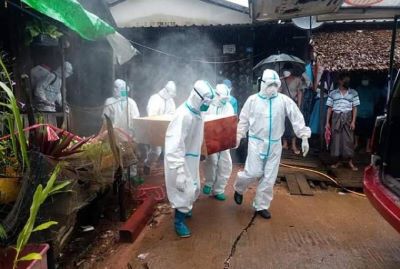
Although COVID-19 infection rate is gradually declining in most of regions and states, including Yangon Region, except for Mandalay and Tanintharyi regions and Kayah State, where there is a slight uptrend, according to the Ministry of Health.

“Looking back at the regions and states, Yangon Region has a long holiday and in the first week it started to drop by more than 20 percent. In the second week, it dropped by more than 40 percent. In the third week, the figure dropped by more than half. The infection rate is declining in Nay Pyi Taw, Sagaing, Bago, Ayeyawady and Magway region and Kayin, Rakhine, Mon and Kachin states. There are some areas where the infection rate is unchanging,” said an official from the ministry.

Although the COVID-19 infection rate has dropped in most regions and states, the infection rate in three regions and states is found to be slightly increased. Efforts should be made to minimize contact with special caution in those areas and to comply with COVID-19 regulations, He said.

“We found that the infection rate in Mandalay and Tanintharyi regions and Kayah State is increased although there is a three-week long holiday,” he said.

In Mandalay Region, three townships, where the highest infection rate occurred, are Natogyi, Thabeikkyin and Sintku. In Tanintharyi Region three townships, where the highest infection rate occurred, are Dawei, Myeik and Launglon. In Kayah State, the infection rate is increased in percentage and three townships, where the highest infection rate occurred, are Loikaw, Hpasawng ung and Bawlakha.

“As for Kayah State, it is increasing by a percentage. The infection rate is high due to the population. However, there is a risk of a contagion if one person is found infected, so special care must be taken,” he said.

“Nationwide, the diagnostic graph is downward and it will be successful if only the rate is not continued to rise in areas where the rate is high. If so, it will be the condition to overcome the COVID-19 third wave,” he said.

The death toll from COVID-19 in Myanmar has dropped since August 5 with the infection rate around 30 percent, according to the ministry.

Published : August 20, 2021

By : Eleven Media/ANN

Fully jabbed travellers to Singapore to qualify for differentiated vaccination measures #SootinClaimon.Com

#SootinClaimon.Com : ขอบคุณแหล่งข้อมูล : หนังสือพิมพ์ The Nation.

https://www.nationthailand.com/international/40004982

Fully jabbed travellers to Singapore to qualify for differentiated vaccination measures


SINGAPORE – Travellers to the Republic who have been fully inoculated with a vaccine under the World Health Organisations (WHO) Emergency Use Listing (EUL) will also be eligible for vaccination-differentiated safe management measures in Singapore.

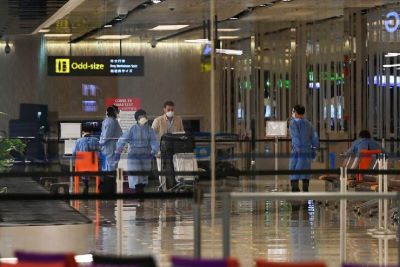
The Ministry of Health (MOH) announced on Thursday (Aug 19) that from 11.59pm on Friday, the Immigration and Checkpoints Authority (ICA) will start issuing tamper-proof stickers to arrivals who have been fully inoculated with a vaccine under the WHO EUL.

These include Pfizer-BioNTech/Comirnaty and Moderna – used in Singapore’s national vaccination programme – as well as the AstraZeneca, Johnson & Johnson, Sinopharm, Sinovac and Covishield vaccines.

To obtain the stickers to affix to their passports, travellers must produce an English-language vaccination certificate to ICA officers upon arriving at Singapore’s immigration checkpoints.

Previously, only Singapore citizens, permanent residents (PRs) and long-term pass holders with vaccination records in the National Immunisation Registry were eligible for these vaccination-differentiated safe management measures.

MOH added that by September, IT systems will be enhanced so that vaccinated travellers – including citizens, PRs, long-term pass holders and short-term visit pass holders from all countries – will also be recognised by the SafeEntry Business app through their TraceTogether apps or tokens.

This will make them eligible for differentiated measures in Singapore such as dining in without needing to go through pre-event testing (PET).

All other incoming travellers will have to obtain a negative PET by an MOH-approved test provider. This will be valid for 24 hours.

These differentiated measures, first announced on Aug 6, include allowing the fully vaccinated to dine in groups of up to five at food and beverage establishments.

On Thursday, the Government also announced a new Vaccinated Travel Lane (VTL).

It will allow fully vaccinated persons to travel to Singapore under reduced border measures – such as multiple polymerase chain reaction (PCR) tests pre-departure, on-arrival and during their stay in Singapore – instead of having to serve a stay-home notice.

Pilot arrangements will kick off with Brunei and Germany.

ADVERTISEMENTx

At a press conference by the multi-ministry task force on Covid-19, Health Minister Ong Ye Kung shared that as at Aug 17, 77 per cent of the population have completed the full vaccination regimen with 82 per cent receiving at least one dose.

“That is quite significant – which means some time in September, we will have 82 per cent of our population fully vaccinated,” he said, adding that this indicated a “remarkable” near-90 per cent of the eligible population being fully vaccinated.

By early September, 89 per cent of seniors aged 60 and above would have received two vaccine doses as well, said Mr Ong.

In a release, MOH stressed that there was clear evidence of vaccination significantly reducing severe illnesses and deaths.

It noted that among infected cases, almost 9 per cent of the unvaccinated required intensive care or oxygen supplementation, compared with 1.3 per cent for the vaccinated.

Around 1 per cent of the unvaccinated also died, in contrast with 0.1 per cent of the vaccinated.

Published : August 20, 2021

By : Justin Ong/The Straits Times/ANN

Afghans protests spread challenging Taliban rule #SootinClaimon.Com

#SootinClaimon.Com : ขอบคุณแหล่งข้อมูล : หนังสือพิมพ์ The Nation.

https://www.nationthailand.com/international/40004981

Afghans protests spread challenging Taliban rule


Afghan protesters have shown exemplary courage defying the Taliban for the second day, waving their national flag in motley demonstrations which were met with fierce reprisal from the militants.

Taliban responded rapidly to dissent as many fear that the militants will succeed in obliterating progress in women’s and human rights made in two decades.

A UN official warned of dire food shortages in this nation of 38 million people reliant on imports and experts said the country was severely short on cash, highlighting that the Taliban face the same problems as the civilian government they dethroned without the level of international aid it enjoyed.

On Thursday, a procession of cars and people near Kabul’s airport carried long black, red and green banners in honor of the Afghan flag. At another protest in Nangarhar province, video posted online showed one demonstrator with a gunshot wound bleeding, as onlookers tried to carry him away.

In Khost province, Taliban authorities instituted a 24-hour curfew on Thursday after violently breaking up another protest, according to information obtained by journalists monitoring from abroad. The militants did not immediately acknowledge the demonstration or the curfew.

At that rally, in the eastern city of Jalalabad, demonstrators lowered the Taliban’s flag and replace it with Afghanistan’s tricolor. At least one person was killed.

Meanwhile, opposition figures gathering in the last area of the country not under Taliban rule talked of launching an armed resistance under the banner of the Northern Alliance, which allied with the US during the 2001 invasion.

The Taliban so far have offered no specifics on how they will lead, other than to say they will be guided by Shariah, or Islamic, law.

“A humanitarian crisis of incredible proportions is unfolding before our eyes,” warned Mary Ellen McGroarty, the head of the U.N.’s World Food Program in Afghanistan. Beyond the difficulties of importing food, she said that drought has seen over 40% of the country’s crop lost. Many who fled the Taliban advance now live in parks and open spaces in Kabul.

“This is really Afghanistan’s hour of greatest need, and we urge the international community to stand by the Afghan people at this time,” she said.

Hafiz Ahmad, a shopkeeper in Kabul, said some food has flowed into the capital, but prices have gone up. “It is better to have it,” he said. “If there were nothing, then that would be even worse.”

Two of Afghanistan’s key border crossings with Pakistan, Torkham near Jalalabad and Chaman near Spin Boldak, are now open for trade. Hundreds of trucks have passed through, Pakistani Interior Minister Sheikh Rashid Ahmed has said. However, traders still fear insecurity on the roads and confusion over customs duties that could push them to price their goods higher.

At Kabul’s international airport, military evacuation flights continued, according to flight-tracking data. However, access to the airport remained difficult. On Thursday, Taliban militants fired into the air to try to control the crowds gathered at the airport’s blast walls. Men, women and children fled. Fighter jets later roared overhead, but no airstrike accompanied their pass.

Overnight, President Joe Biden said that he was committed to keeping U.S. troops in Afghanistan until every American is evacuated, even if that means maintaining a military presence there beyond his 31 August deadline for withdrawal.

Indirectly acknowledging the resistance they face, the Taliban on Thursday asked preachers to urge congregants to remain in the country and counter “negative propaganda” against them.

The Taliban have also urged people to return to work, but most government officials remain in hiding or are themselves attempting to flee.

Questions remain over Afghanistan’s $9 billion in foreign reserves, the vast majority now apparently frozen in the U.S. The International Monetary Fund, meanwhile, said the militants for now would not be allowed to access loans or other resources.

The head of the country’s Central Bank warned that the supply of physical U.S. dollars is “close to zero,” which will batter the currency, the afghani, and raise the prices of much-needed food.

There has been no armed opposition to the Taliban. But videos from the Panjshir Valley north of Kabul, a stronghold of the Northern Alliance militias that allied with the US during the 2001 invasion of Afghanistan, appear to show potential opposition figures gathering there. That area is in the only province that has not fallen to the Taliban.

Those figures include members of the deposed government — Vice President Amrullah Saleh, who asserted on Twitter that he is the country’s rightful president, and Defense Minister Gen. Bismillah Mohammadi — as well as Ahmad Massoud, the son of the slain Northern Alliance leader Ahmad Shah Massoud.

Published : August 20, 2021

By : The Statesman/ANN

Vice-President Kamala Harris’ trip to Singapore, Vietnam will stress on US commitment to Indo-Pacific #SootinClaimon.Com

#SootinClaimon.Com : ขอบคุณแหล่งข้อมูล : หนังสือพิมพ์ The Nation.

https://www.nationthailand.com/international/40004980

Vice-President Kamala Harris’ trip to Singapore, Vietnam will stress on US commitment to Indo-Pacific


WASHINGTON – United States Vice-President Kamala Harris will emphasise America’s enduring commitment to the Indo-Pacific region during her upcoming visit to Singapore and Vietnam, senior US officials said on Thursday (Aug 19).

“This region, South-east Asia, really matters to the United States,” one official, speaking on condition of anonymity, told reporters during a briefing.

“The Vice-President… recognises that much of the history of the 21st century will be written in the Indo-Pacific. We have enduring interests there. And that’s why she is so focused on this region and making this trip,” he added.

Ms Harris’ trip to South-east Asia will be her second foreign trip since taking office in January, and the first visit by any US vice-president to Vietnam.

She will be the most senior US official to visit the region since President Joe Biden was sworn in in January, and her trip comes on the heels of Secretary of Defence Lloyd Austin’s visit to Singapore, Vietnam and the Philippines last month.

The official said her trip will highlight the Biden administration’s focus on revitalising alliances and partnerships around the world, and that Ms Harris “recognises the significance of showing up and engaging on the ground”.

ADVERTISEMENTx

Her visit comes amid concerns in Washington that China is gaining influence in South-east Asia, fuelled by an apparent earlier neglect of the region by Washington.

Her trip will make clear that America is part of the Indo-Pacific region and “here to stay”, and will further the Biden administration’s goal of maintaining a free and open Indo-Pacific, said the official.

Officials said that Ms Harris will focus on the key areas of global public health, economic partnership, and security.

She will also discuss addressing the threat of climate change, America’s commitment to the rules-based international order, worker rights, human rights, as well as regional issues including China.

Ms Harris will depart Washington DC on Friday and arrive in Singapore on Sunday.

ADVERTISEMENT

On Monday, she will call on President Halimah Yacob and meet Prime Minister Lee Hsien Loong to discuss the full range of issues in  bilateral relationship, before having a joint press conference with PM Lee.

In the afternoon, the Vice-President will visit Changi Naval Base, where she will give brief remarks to US sailors on the USS Tulsa, an American littoral combat ship currently visiting Singapore.

“The Vice-President’s trip to the base will underscore the strong security ties between Singapore and the United States. Our partnership with Singapore really is the bedrock of our security presence in South-east Asia,” said another official.

Ms Harris will give a policy speech on Tuesday morning, making the case for why America’s partnerships matter, particularly those in South-east Asia and the Indo-Pacific region, and discussing the Biden administration’s vision for engagement in the region and how it intends to deliver on it.

“She’ll make clear that the US has an enduring commitment to the region, and she’ll outline key areas of our partnership and how we intend to strengthen those areas,” the official added.

ADVERTISEMENT

The Vice-President will then take part in a roundtable session with supply chain thought leaders, government officials and private sector representatives, where she will discuss supply chain resiliency issues.

Ms Harris will meet with staff from the US Embassy in Singapore, before departing for Vietnam, where she will arrive in Hanoi in the evening.

On Wednesday, she will have several government meetings, before leading the US delegation in co-hosting the official launch of the US Centres for Disease Control and Prevention’s South-east Asia regional office in Hanoi.

“They will discuss America’s response to the pandemic, and how we all need to work together to end the pandemic and strengthen global health security,” said the official.

On Thursday, Ms Harris will meet with civil society representatives and meet staff from the US Embassy in Hanoi during an embassy lease-signing event.

On the way back to Washington, she will stop in Honolulu, Hawaii, where she will meet and deliver remarks to US troops stationed there at Joint Base Pearl Harbour-Hickam.

Published : August 20, 2021

By : Charissa Yong/The Straits Times/ANN

South Korea’s potential growth on downhill for decades #SootinClaimon.Com

#SootinClaimon.Com : ขอบคุณแหล่งข้อมูล : หนังสือพิมพ์ The Nation.

https://www.nationthailand.com/international/40004900

South Korea’s potential growth on downhill for decades


South Korea’s potential growth rate has declined for decades, reflecting the nation’s aging society, slowing capital accumulation and changing job market, a think tank report showed Wednesday.

Asia’s fourth-largest economy’s potential growth rate – gross domestic product per person aged 15 and over – by decade came to an average 2.1 percent in the 2010s, compared with 7.6 percent in the 1980s, according to the Korea Economic Research Institute. The figure has been gradually falling, with 5.3 percent in the 1990s and 3.8 percent in the 2000s.

A potential growth is the rate of economic expansion a country can sustain over the medium term without excess inflation. It has overall declined in advanced economies in recent decades.

The think tank took total factor productivity, capital accumulation, labor hours and employment per decade into account when calculating the growth rates. As a result, all areas expect employment rate have been declining in recent decades.

Total factor productivity or TFT — a measure of productive efficiency by measuring the size of output from “unseen” inputs including labor, capital and regulations — fell to 2.9 percent in the 2010s from 6.4 percent in the 1980s. The figure stood at 4.2 percent in the 1990s and 4.1 percent in the 2000s.

Capital accumulation reached its peak at 2.1 percent in the 1990s from 0.7 percent in the 1980s, then sharply fell to 0.3 percent in the 2000s. It stood flat at 0 percent in the 2010s.

Average labor hours came to minus 1.2 percent in the 2010s, compared with 0.1 percent in the 1980s. It stood at 0.8 percent and 0.9 percent in the 1990s and 2000s, respectively.

Meanwhile, the employment rate has steadily hovered around 0.4 percent in the cited decades, KERI said.

The think tank voiced concerns that the slowing pace of the potential growth could eventually pull the economy down into negative growth, if the issues remain unresolved. The changing labor market affected by the nation’s declining birthrate and the aging population trend is likely to further drag down the growth potential, it added.

The nation has been slowly morphing into an aged society. The number of senior citizens, or people aged 65 and older, came to 8.21 million as of November last year, data from Statistics Korea showed, accounting for 16.4 percent of the total population. The economy is projected to become a super-aged society in 2025, when those aged 65 and older account for 20 percent of the population.

The total fertility rate — the average number of children a woman bears in her lifetime — hit a new record low of 0.84 last year, same data showed. It marked the third straight year that the rate was below 1 percent.

Overall, South Korea’s total population grew slightly in the cited period, as more Koreans living overseas returned home due to the global COVID-19 pandemic. A total of 51.83 million people lived in South Korea as of Nov. 1, 2020, up 0.1 percent or 50,000 on-year.

“Since there is a limit to supply in labor and capital, Korea must boost its total factor productivity to nurture its growth potential,” said Choo Kwang-ho, the head of KERI‘s economy policy division.

“In order to achieve that, an overhaul of the strict business regulations, tax benefits and support for more research and development must be implemented,” Choo added.

Published : August 19, 2021

By : Jung Min-kyung/The Korea Herald/ANN

Are Myanmar migrant workers becoming criminals during Covid-19 crisis? #SootinClaimon.Com

#SootinClaimon.Com : ขอบคุณแหล่งข้อมูล : หนังสือพิมพ์ The Nation.

https://www.nationthailand.com/international/40004899

Are Myanmar migrant workers becoming criminals during Covid-19 crisis?


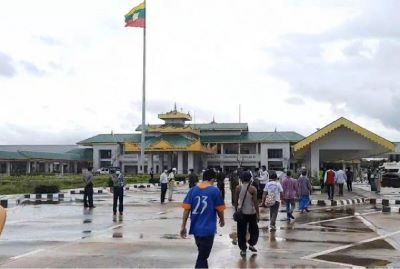
Myanmar still continues welcoming its migrant workers back from across Thailand every two days at Myawady-Mae Sot Friendship Bridge No.2 on the border between the two countries.

Returnees said they had a lot of difficulties coming back home amid inter-district travel restrictions in Thailand, where Covid cases are soaring in the third wave. 

Myanmar halted accepting returning migrant workers on July 19 during the pandemic, leaving over 800 others stranded in Thailand’s Mae Sot. Then, acceptance resumed on August 1. 

Authorities in Myawady District disseminated education about Covid-19 to the Myanmar returnees.  

Covid testing is carried out as soon as they enter the country. Those who tested positive for the virus were sent to the Covid Center in Myawady Township for treatment. Those free from the virus were sent to Kyauklonegyi Quarantine Center in Ward No.4 for ten days.  

The over 800 workers stranded in Mae Sot returned from the Thai police, immigration or the special detention center. They returned not because they committed a crime but because they felt homesick. 

“The migrant workers returned home after paying money to the Thai immigration and police officers through brokers. Even after their payment, they could not leave immediately. They have to wait in Bangkok. They are allowed to leave depending on how much they paid. If you pay 3,000, 7,500 or 8,000 baht, there will be differences in waiting time. The problem is that they cannot go back to Thailand. All of their documents will be stamped with a ‘cancel’ seal by the Thai immigration,” said Moe Gyo, Chairman of Joint Action Committee for Burmese Affairs (JACBA) based in Mae Sot.   

Some migrant workers are returning from Thailand as they are out of work following their factory closures caused by the Covid-19 third wave, while some are coming back to take care of their ailing parents and relatives.   

“With our factory having closed and my mother getting ill, I decided to come back home to take care of her. Since I was stranded in Mae Sot for over a month, she has now died,” said a woman returnee with her eyes filled with tears. 

Some heavily pregnant women reportedly gave birth to their babies in Mae Sot while awaiting to go home. 

A Myanmar worker in the area of Mae Sot said: “We feel so homesick that we want to return. But if we want to so, we have to get arrested and give money. The Thai immigration stamps cancel seals on our documents so we cannot go back to work. So we can’t help it. I have to set aside my homesickness.”   

JACBA chairman Moe Gyo said stamping a cancel seal on documents means that a worker has been regarded as a criminal. 

“The Thai government charges migrant workers for renewal of their documents and collects money for social security. But in the second and third waves of Covid-19, they don’t care for Myanmar workers. If a worker died of Covid-19, the body would be taken by municipal officials. The family was not allowed to come to the funeral,” he commented.  

A young woman out of work after being infected with the virus said those having tested for positive for Covid-19 were sent to a quarantine center for 14 days without receiving treatment. If they did not die, they were sent back to their hostels. But they would not have a chance to go back to work, she added. 

Anyway, migrant workers have to help with each other in Thailand that still sees surges in Covid-19 cases and deaths. 

Despite such difficulties, around 200 Myanmar migrant workers are returning to their motherland every other day via Mae Sot-Myawady Road. 

At Myawady-Mae Sot Friendship Bridge No.2, Myanmar authorities accepted and welcomed 200 returnees on August 1, 206 on August 3, 204 on August 5, 202 on August 7, 203 on August 9, 199 on August 11, and 204 on August 13. 

The total number of returnees in the third wave of the pandemic has reached 1,418.   

Unfortunately, migrant workers are having their documents stamped with a ‘cancel’ seal by Thai authorities when they return home during the Covid crisis. As such, the question arises as to whether every worker returning home in the Covid period is regarded as a criminal.

Published : August 19, 2021

By : Ko Shwe Thein/Eleven Media/ANN

4 HKU students arrested for violating National Security Law #SootinClaimon.Com

#SootinClaimon.Com : ขอบคุณแหล่งข้อมูล : หนังสือพิมพ์ The Nation.

https://www.nationthailand.com/international/40004898

4 HKU students arrested for violating National Security Law


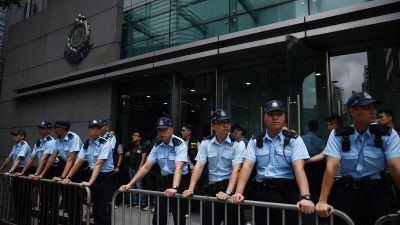
The national security department of the Hong Kong police on Wednesday arrested four people on suspicion of advocating terrorism in relation to a motion that paid tribute to a “lone wolf” police attacker.

Steve Li Kwai-wah, senior superintendent of the department, said the four arrested men are members of the student union of the University of Hong Kong. Local media reported that the arrested individuals include former student union president Kwok Wing-ho and chairman of the union council Kinson Cheung King-sang.

ADVERTISEMENTx

Li said the arrested people were suspected of advocating and glorifying terrorism, and encouraging suicidal behavior, which were not only morally unacceptable but also allegedly violations of Article 27 of the National Security Law for Hong Kong.

Those who were arrested also used their own means, including livestreaming the meeting for voting on the motion, to promote these messages to the public, Li said.

On July 7, the student union council passed a motion by 30 votes to 0 to “appreciate the sacrifice” of an assailant who stabbed a police officer before committing suicide on July 1, and express its condolences over his “unfortunate passing”.

The motion drew huge backlash from officials, the university and the community. The union later withdrew the motion and several council members of the union stepped down.

Earlier on July 14, the university severed ties with the student union and would no longer recognize the union’s role on campus. Later in August, the university banned those involved from entering the campus and using its facilities.

ADVERTISEMENT

Chairman of the university council Arthur Li Kwok-cheung, in the wake of the motion, said expulsion could be a possible outcome for those involved.

In response, Chief Secretary John Lee Ka-chiu on Wednesday morning said the government has a duty to make it clear to the public that law enforcement will deal with illegal activities committed by anyone or any organization in accordance with the law.

Lee cautioned the public to think twice before taking any actions as Hong Kong is a city of rule of law and everyone shall obey the law.

Hong Kong Secretary for Security Chris Tang Ping-keung on Wednesday said advocating terrorism is a serious crime, since it may mislead innocent residents to participate in terrorist activities.

Speaking at the Legislative Council, Tang vowed to come down hard on terrorist activities and urged society to stand united against acts that glamorize violence to prevent extremists from misleading young people who might become terrorists.

ADVERTISEMENT

Tang said there are signs of terrorism permeating the campus with attempts to recruit students to join terrorist activities. The recruitment, much like the behavior of international terrorist activities, mostly was carried out via social media platforms, Tang said.

Those who sympathize with violent attackers are easily persuaded to be supporters of violence and get involved in terrorist activities, he cautioned.

Glorifying terrorist activities may create soil for homegrown terrorism, therefore the government will step up intelligence collection to carry out full-scale investigation over online information that is fake, ill-intended and incites violence and hatred, Tang said.

Published : August 19, 2021

By : Gang Wen/China Daily/ANN

Tokyo to establish ‘oxygen stations’ to treat coronavirus patients #SootinClaimon.Com

#SootinClaimon.Com : ขอบคุณแหล่งข้อมูล : หนังสือพิมพ์ The Nation.

https://www.nationthailand.com/international/40004896

Tokyo to establish ‘oxygen stations’ to treat coronavirus patients


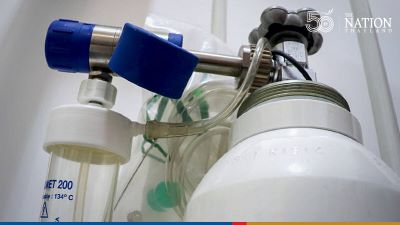
The Tokyo metropolitan government plans to open oxygen therapy facilities in an attempt to cope with the rising number of coronavirus patients recuperating at home whose condition suddenly deteriorates.

The first facility will open as early as next week at the site of a former children’s recreation center in Shibuya Ward, Tokyo, with a capacity to treat about 130 patients. There are plans for two more, with the aim of reaching a capacity for 400 patients at three locations.

According to the metropolitan government and other sources, the three “oxygen stations” will mainly accept patients who have requested emergency transport while recuperating at home, and whose symptoms are judged to be relatively mild by the emergency team.

Oxygen will be administered to patients and their blood oxygen levels will be checked at the facilities, which will operate 24 hours a day. If the condition of the patients improves, they will be allowed to return home. If doctors deem it necessary, patients will be hospitalized.

Beds, medical equipment and partitions will be installed at the site of the former children’s recreation center, which the metropolitan government acquired from the central government in 2019. The facility will start accepting patients as early as next week.

Since July, the metropolitan government has set up facilities to administer oxygen and provide other medical treatment to patients who have not been able to receive treatment at a hospital, with a total capacity to handle 50 patients at 11 hospitals.

As of Tuesday, the number of people recuperating at home in Tokyo surged to 22,164, more than eight times the number a month ago.

The metropolitan government has decided to urgently strengthen measures as seven patients recuperating at home have died this month.

It plans to secure 80 beds at public and private hospitals to administer oxygen to patients with moderate symptoms.

“The situation is truly a disaster. We are considering it a medical emergency and will establish a response system to tackle the problem,” Tokyo Gov. Yuriko Koike said on Tuesday evening.

“Considering there have been difficulties finding hospitals for severe patients in recent months, it is significant that large-scale oxygen stations will be set up at three locations,” said Tetsuya Matsumoto, professor at the International University of Health and Welfare and an expert on infectious diseases.

“In addition to setting up more stations, it is necessary to secure hospitals for patients whose symptoms have worsened. The government should consider establishing such facilities as soon as possible in areas outside of Tokyo where infections are spreading, to ensure medical services in those areas can be maintained.”

Published : August 19, 2021

By : The Japan News/ANN