Thailand’s private sector joins ‘Race to Zero’ ahead of global climate summit #SootinClaimon.Com

#SootinClaimon.Com : ขอบคุณแหล่งข้อมูล : หนังสือพิมพ์ The Nation.

https://www.nationthailand.com/business/40005262

Thailand’s private sector joins ‘Race to Zero’ ahead of global climate summit


Thailand’s business world got in training this week to cut carbon ahead of the UN’s COP 26 climate conference in November. The “Race to Zero: Meet the World’s Race to Zero Heroes for Climate Action” guided more than 400 public and private-sector organisations on practical steps towards the goal of net-zero carbon emissions.

Thailand’s business world got in training this week to cut carbon ahead of the UN’s COP 26 climate conference in November.


The “Race to Zero: Meet the World’s Race to Zero Heroes for Climate Action” guided more than 400 public and private-sector organisations on practical steps towards the goal of net-zero carbon emissions. 


Led by the UN’s Global Compact Network Thailand (GCNT), the technical webinar helped businesses take transformational action in setting climate targets by bringing together experts, sharing best practices, and providing tools for transition to net-zero emissions.


Noppadol Dej-Udom, secretary-general of GCNT and chief of sustainability for Charoen Pokphand (CP) Group, said the event will help the private sector step up against climate change, after the “code-red for humanity” warning delivered by the latest Intergovernmental Panel on Climate Change report. Business-as-usual was no longer an option, which is why GCNT has made building climate preparedness and adaptation among its members a top priority, Noppadol said. 

Thailand’s private sector joins ‘Race to Zero’ ahead of global climate summitThailand’s private sector joins ‘Race to Zero’ ahead of global climate summit

Gita Sabharwal, UN Resident Coordinator in Thailand, explained that the private sector, which generates nearly 9 in 10 jobs and contributes to over 80 per cent of the country’s GDP, has an undeniable leadership role and responsibility. Although traditionally environmental spending is seen as a cost burden to the economy, a recently published IMF Paper suggests that green spending can be a green multiplier contributing between 2 to 7 times more than conventional multipliers. This is precisely why it is so critical to create an enabling environment for a green economy and business sustainability, she added. 


“I am pleased that the private sector in Thailand is taking such bold initiatives to be climate champions, with some companies already aiming to be carbon neutral over the coming decade,” said Sabharwal.

Thailand’s private sector joins ‘Race to Zero’ ahead of global climate summitThailand’s private sector joins ‘Race to Zero’ ahead of global climate summit

ADVERTISEMENTx

Said Jens Radschinki, Regional Lead of the UN climate change convention office in Bangkok:
“Ambitious government commitments and country action is needed. To be consistent with the 1.5C-degree goal, global greenhouse gas emissions need to decline by around 45 per cent by 2030. Ahead of us lies a fundamental transformation of our economy, and private sector needs to play a key role in setting science-based targets to reduce GHG emissions.”


Businesses need a common baseline to keep their climate goals in reach, acknowledged Race to Zero members Moh Suthasiny from Happy Grocers and Dan Pathomvanich from NR Instant Produce. They shared their zero-emission targets as well as advice on raising ambition and concrete action.

Thailand’s private sector joins ‘Race to Zero’ ahead of global climate summitThailand’s private sector joins ‘Race to Zero’ ahead of global climate summit

Published : August 25, 2021

By : The Nation

First day of school indefinitely postponed for 140 million first-time students around the world – UNICEF #SootinClaimon.Com

#SootinClaimon.Com : ขอบคุณแหล่งข้อมูล : หนังสือพิมพ์ The Nation.

https://www.nationthailand.com/pr-news/business/40005251

First day of school indefinitely postponed for 140 million first-time students around the world – UNICEF
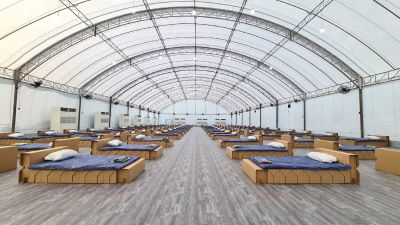
At least eight million of these young learners have been waiting for over a year.

Achild’s first day of school—a landmark moment for the youngest students and their parents around the world—has been delayed due to COVID-19 for an estimated 140 million young minds, UNICEF said in a new analysis released as summer break comes to end in many parts of the world.

For an estimated eight million of these students, the wait for their first day of in-person learning has been over a year and counting, as they live in places where schools have been closed throughout the pandemic.

In Thailand, too many young children entering the first grade have missed out on months of in-person instruction, and primary and secondary-age students are also absent from classrooms due to prolonged school closures in many parts of the country following the third and worst wave of COVID-19 that began in April.

ADVERTISEMENTx

First day of school indefinitely postponed for 140 million first-time students around the world – UNICEFFirst day of school indefinitely postponed for 140 million first-time students around the world – UNICEF

“The first day of school is a landmark moment in a child’s life setting them off on a life-changing path of personal learning and growth. Most of us can remember countless minor details what clothes we wore, our teacher’s name, who we sat next to. But for millions of children, that important day has been indefinitely postponed,” said UNICEF Executive Director Henrietta Fore. “As classes resume in many parts of the world, millions of first graders have been waiting to see the inside of a classroom for over a year. Millions more may not see one at all this school term. For the most vulnerable, their risk of never stepping into a classroom in their lifetime is skyrocketing.”

The first grade sets up the building blocks for all future learning, with introductions to reading, writing, and math. It’s also a period when in-person learning helps children gain independence, adapt to new routines, and develop meaningful relationships with teachers and students. In-person learning also enables teachers to identify and address learning delays, mental health issues, and abuse that could negatively affect children’s well-being.

In 2020, schools globally were fully closed for an average of 79 teaching days. However, for 168 million students, after the pandemic began, schools were shuttered for nearly the entire year. Even now, many children are facing an unprecedented second year of disruption to their education. The associated consequences of school closures – learning loss, mental distress, missed vaccinations, and heightened risk of drop out, child labour, and child marriage – will be felt by many children, especially the youngest learners in critical development stages.

First day of school indefinitely postponed for 140 million first-time students around the world – UNICEF

First day of school indefinitely postponed for 140 million first-time students around the world – UNICEF

Seven in 10 children and young people reported poorer mental health due to the impact of COVID-19 on their lives in a 2020 UNICEF-led survey in Thailand. Following school closures, more than half said they were worried about their studies, and future education and employment.

While countries worldwide are taking some actions to provide remote learning, at least 29 per cent of primary students are not being reached. In addition to lack of assets for remote learning, the youngest children may not be able to participate due to a lack of support using the technology, a poor learning environment, pressure to do household chores, or being forced to work.

In Thailand, nearly half of all households surveyed in a 2020 study by the National Statistical Office were not ready for online learning. Fifty-one per cent did not have access to devices for online learning; 26 per cent did not have internet access for online learning; and 40 per cent of parents and caregivers said they did not have time to oversee their children’s online learning.

Studies have shown that positive school experiences during this transition period are a predictor of children’s future social, emotional and educational outcomes. At the same time, children who fall behind in learning during the early years often stay behind for the remaining time they spend in school, and the gap widens over the years. The number of years of education a child receives also directly affects their future earnings.

UNICEF urges governments to reopen schools for in-person learning as soon as possible, and to provide a comprehensive recovery response for students. Together with the World Bank and UNESCO, UNICEF is calling for governments to focus on three key priorities for recovery in schools:

Targeted programmes to bring all children and youth back in school where they can access tailored services to meet their learning, health, psychosocial well-being, and other needs;

Effective remedial learning to help students catch up on lost learning;

Support for teachers to address learning losses and incorporate digital technology into their teaching.

“Your first day of school is a day of hope and possibility—a day for getting off to a good start. But not all children are getting off to a good start. Some children are not even starting at all,” said Fore.” We must reopen schools for in-person learning as soon as possible, and we must immediately address the gaps in learning this pandemic has already created. Unless we do, some children may never catch up.”

Published : August 25, 2021

PAT sets up field hospital, community isolation centre in Khlong Toei #SootinClaimon.Com
#SootinClaimon.Com : ขอบคุณแหล่งข้อมูล : หนังสือพิมพ์ The Nation.

https://www.nationthailand.com/pr-news/business/40005248

PAT sets up field hospital, community isolation centre in Khlong Toei


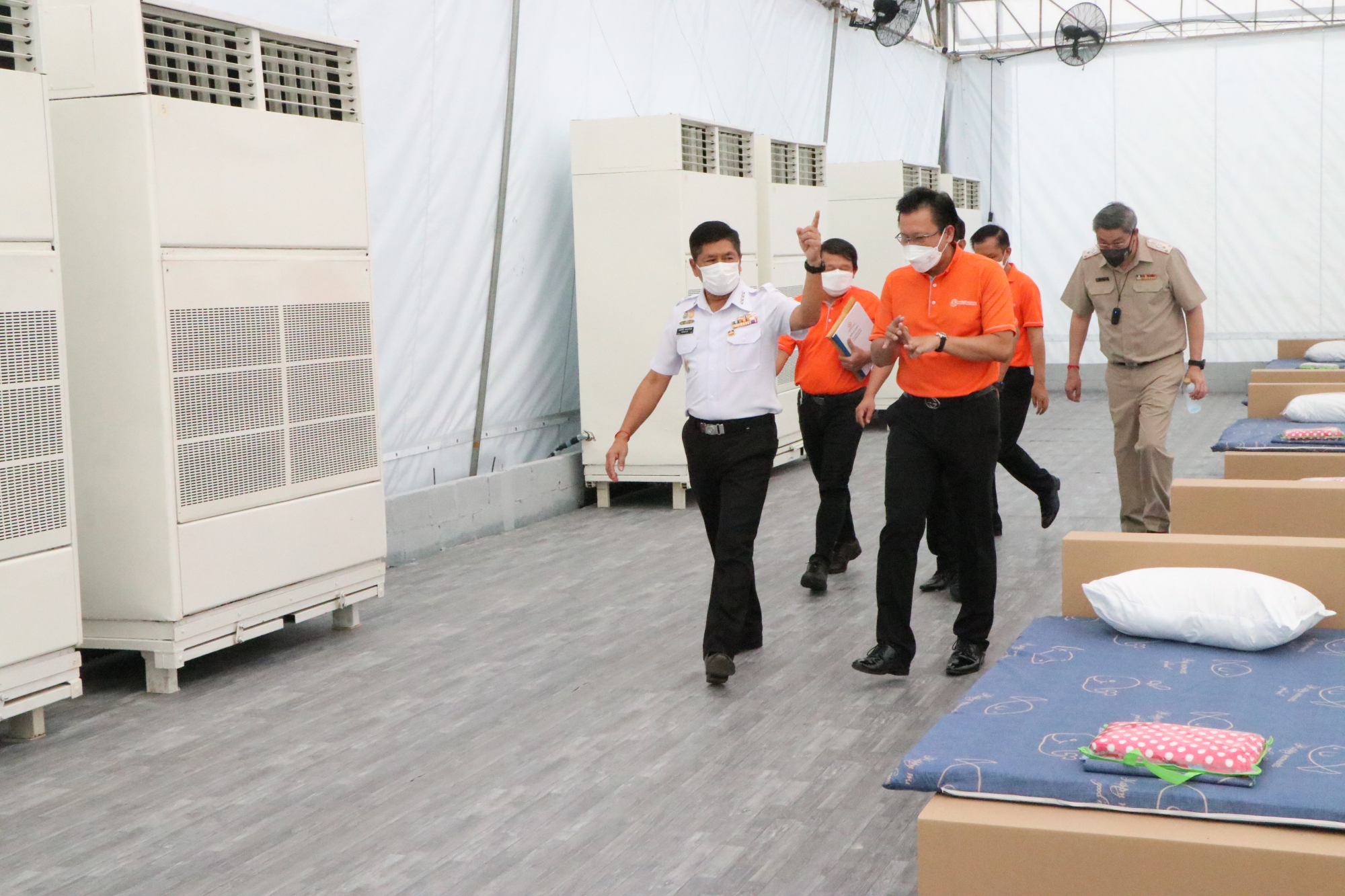
PAT executives greeted Metropolitan Electricity Authority (MEA) executives, who were visiting the projects as their agency is responsible for installing the electricity system.

Afield hospital and community isolation (CI) centre are being set up at the Warehouse Stadium in Bangkok’s Khlong Toei area, under a Port Authority of Thailand (PAT) order.

On Monday, PAT executives greeted Metropolitan Electricity Authority (MEA) executives, who were visiting the projects as their agency is responsible for installing the electricity system.

ADVERTISEMENTx

PAT sets up field hospital, community isolation centre in Khlong ToeiPAT sets up field hospital, community isolation centre in Khlong Toei

The field hospital and CI centre will serve PAT staff and locals infected with Covid-19. The field hospital has 240 beds and the CI centre has 60 beds.

Along with MEA, several other organisations are supporting the projects, namely the SCG foundation, PTTOR, Metropolitan Waterworks Authority and Khlong Toei district office.

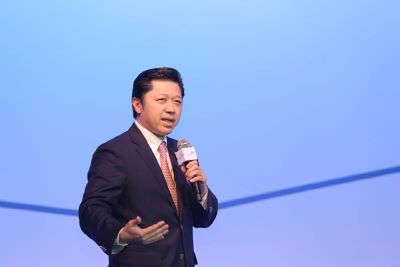
MEA deputy governor Jaturong Suriyasasin said that his organisation was grateful to take part in the projects, and was confident that electricity services in the hospital and CI centre will be sufficient.

Published : August 25, 2021

C.P. adjusting to post-pandemic world – focuses on collaborations and overseas expansions #SootinClaimon.Com

#SootinClaimon.Com : ขอบคุณแหล่งข้อมูล : หนังสือพิมพ์ The Nation.

https://www.nationthailand.com/pr-news/business/40005176

C.P. adjusting to post-pandemic world – focuses on collaborations and overseas expansions


Unveils four strategies for post-pandemic world. Adopting ‘Platforms of Opportunity’ business model to collaborate with more Thai businesses to reach into new overseas markets

Charoen Pokphand Group (C.P. Group) Chief Executive Officer Mr. Suphachai Chearavanont, today, announced corporate business strategies to prepare for the post-pandemic world that will focus one of Thailand’s most diversified business enterprises with over 400,000 staff on accelerated overseas expansion and alliances with other Thai businesses.

Mr. Chearavanont said that the COVID-19 pandemic has “transformed the business environment, catastrophically affecting SMEs in Thailand, and at the same time also creating very large international corporations, some of which are now valued at more than the GDP of many of the world’s countries.”

He said that both of these developments “affect Thailand’s global competitive standing as well as the health of its local economy by weakening its backbone of SMEs.”

ADVERTISEMENTx

According to Mr. Chearavanont, C.P. Group will drive four strategies that include “accelerating its investments; accelerating the pace at which the group goes global; simplifying group structures of companies for added agility and speed; as well as creating commercial platforms to increase collaboration with other businesses and growers, especially in penetrating overseas markets.”

“We must not scale back investments because of the pandemic, but, on the contrary, accelerate current and new projects as a way of creating new jobs and new contracts, especially for the more than 1.2 million SMEs and small-holder farmers with which we collaborate directly and indirectly.

“The spending of the group’s various businesses should have a flow-through effect into many communities and businesses of all sizes, combined with the almost two billion baht the group has donated for assistance since the beginning of the pandemic,” he said.

Overseas investments are also being accelerated and he expects “multiple large initiatives to progress rapidly this year that can increase the footprint of Thai businesses in international markets.”

Mr. Chearavanont said that there would also be simplification of some complex group structures of companies that are organised in 14 business groups.

“We want to enable our companies to make faster decisions on joint initiatives in a world that demands great speed,” he said.

“We must accelerate the pace at which we go global.   And we must help other Thai businesses go global with us.” – Suphachai Chearavanont, CEO C.P. Group“We must accelerate the pace at which we go global. And we must help other Thai businesses go global with us.” – Suphachai Chearavanont, CEO C.P. Group

Mr. Chearavanont added that the most important initiative in preparing for the post-pandemic world is for C.P. Group companies to “go beyond creating, producing or selling products and services, to also becoming platforms that empower SMEs and other businesses to develop new opportunities for growth in Thailand and globally.”

As a part of a programme that he called the creation of ‘Platforms of Opportunity,’ Mr. Chearavanont said that C.P. Group is developing systems that will help other Thai businesses and growers enter foreign markets by working together with C.P. Group companies.

“When any Group company succeeds in establishing itself in an overseas market, it should also help tens, hundreds, or maybe even thousands, of Thai SMEs, or farmers, or other producers to go into those markets. SMEs are generally unable to afford the risks and difficulties of trying to enter international markets. And often, they cannot succeed against the entrenched commercial networks of those countries. If we consolidate their collective capabilities on any of our commercial platforms, we can give them the power of much larger companies and help them obtain the market access that only the largest Thai corporations can secure in foreign countries. It will unlock enormous, new economic potential that will bring added prosperity to millions, while also reinforcing the C.P. Group’s footprint internationally through a win-win arrangement.”

Mr. Chearavanont said that the ‘Platforms of Opportunity’ business model is one of the best ways to strengthen Thailand’s interests in the new, post-pandemic world because “it empowers and mobilises on the global stage the capabilities of tens of thousands of SMEs and other Thai enterprises.”

“Thai companies must collaborate on a level they’ve never done before to create a collective power that can protect Thailand’s place in the future global economy. Just as the world’s giant companies in the United States or Europe or China or Japan or Korea support and strengthen their home countries and home companies while also adding value to their host countries, so, too, must we do the same, in accordance with our Three-Benefit Principle. The Principle states that the consideration of benefits should be, first and foremost, to our country of investment, second to the community, and lastly to the company, in that order,” he said.

Published : August 24, 2021

Gold drops in Thai, HK markets amid slide in Comex price #SootinClaimon.Com

#SootinClaimon.Com : ขอบคุณแหล่งข้อมูล : หนังสือพิมพ์ The Nation.

https://www.nationthailand.com/business/40005290

Gold drops in Thai, HK markets amid slide in Comex price


The price of gold in Thailand dropped by THB50 on Thursday morning.

AGold Traders Association report at 9.28am said the buying price of a gold bar was THB27,700 per baht weight and selling price THB27,800, while gold ornaments were priced at THB27,197.04 and THB28,300, respectively.


At close on Wednesday, the buying price of a gold bar was THB27,750 per baht weight and selling price THB27,850, while gold ornaments were THB27,257.68 and THB28,350, respectively.


Spot gold on Thursday morning was moving at around US$1,790 (THB58,640) per ounce after Comex gold dropped by $17.50 to $1,791 per ounce at close on Wednesday, under pressure to sell gold as a safe-haven asset after the US stock market rose for several days in a row. Investors, meanwhile, are monitoring the US Federal Reserve annual meeting in Jackson Hole, Wyoming from August 26-28 for indicators of its monetary policy direction.

ADVERTISEMENT

Hong Kong gold price dropped by HK$60 to $16,620 (THB69,945) per tael, the Chinese Gold and Silver Exchange Society reported.

Published : August 26, 2021

Fed meeting tempers positive sentiments driving SET #SootinClaimon.Com

#SootinClaimon.Com : ขอบคุณแหล่งข้อมูล : หนังสือพิมพ์ The Nation.

https://www.nationthailand.com/business/40005288

Fed meeting tempers positive sentiments driving SET


The Stock Exchange of Thailand (SET) Index rose by 1.21 points, or 0.08 per cent, to 1,601.70 on Thursday morning.

The SET Index closed at 1,600.49 on Wednesday, up 13.51 points or 0.85 per cent. Transactions totalled THB92.93 billion with an index high of 1,601.09 and a low of 1,588.37, as the SET rose for the fourth straight day.

Krungsri Securities expected the index on Thursday to rise to between 1,608 and 1,615 points amid positive sentiment of the Centre for Covid-19 Situation Administration considering easing lockdown measures and a plan to administer 100 million Covid-19 vaccine doses on citizens today.

It added that the index also gained positive sentiment from foreign funds inflows for the third straight day in response to the SET’s “Thailand Focus 2021” virtual conference, which is being held until Friday.

“However, investors’ mass sell-offs of stocks to prevent risk before the US Federal Reserve’s annual meeting would pressure the index,” Krungsri Securities said.

ADVERTISEMENTx

It recommended selective buying as an investment strategy:

▪︎ AOT, CPN, CRC, HMPRO, AAV, BA, MINT, CENTEL, AMATA and WHA, which would benefit from the country’s reopening.

▪︎ PSL, TTA and RCL, which would benefit from a rise in freight rated.

▪︎ PTT, PTTEP, TOP, PTTGC and BANPU, which benefit from rising oil price.

Published : August 26, 2021

Baht expected to strengthen quickly in the short term #SootinClaimon.Com

#SootinClaimon.Com : ขอบคุณแหล่งข้อมูล : หนังสือพิมพ์ The Nation.

https://www.nationthailand.com/business/40005287

Baht expected to strengthen quickly in the short term


The baht opened at 32.71 to the US dollar on Thursday, unchanged from Wednesday’s closing rate.

The Thai currency is likely to move between 32.60 and 32.80 during the day, Krungthai Bank market strategist Poon Panichpibool said.

Poon expected the baht to strengthen in the short term amid hopes of an economic recovery.

The government might ease lockdown measures and foreign investors might invest in Thai stocks because the situation was stable and might be resolved soon.

Foreign investors also bought short-term bonds to gain profit from the currency.

ADVERTISEMENTx

He said the weakening dollar had led to Asian currencies strengthening.

The dollar’s trend will be clear after the US Federal Reserve moves to decrease quantitative easing at the Jackson Hole Economic Symposium.

He said the baht had strengthened quickly because exporters had sold dollars, as they were surprised by the baht’s rebound.

The baht might slow down close to its support level of 32.50 to 32.60 to the US currency. The baht might strengthen to 32.25 if the baht went lower than its support level.

Poon was worried about the Covid-19 situation in Thailand, as he was not sure if the spread of the virus had been contained because enough proactive testing was not being done.

Poon added that the baht was likely to fluctuate and weaken as the situation was not clearly better.

Published : August 26, 2021

Markets wrap: Stocks extend gain as not that many bears left #SootinClaimon.Com

#SootinClaimon.Com : ขอบคุณแหล่งข้อมูล : หนังสือพิมพ์ The Nation.

https://www.nationthailand.com/blogs/business/40005269

Markets wrap: Stocks extend gain as not that many bears left


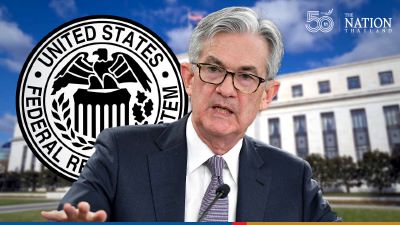
U.S. equities were higher on a quiet day of trading ahead of the Federal Reserves Jackson Hole symposium later this week.

The S&P 500 and Nasdaq 100 gained on Wednesday, with both indexes topping record highs. The financial and energy sectors led the gains as Treasury yields and crude oil advanced. Meanwhile, stocks in Europe drifted while a gauge of Chinese tech names struggled to extend a rally.

“There are not that many bears left,” Irene Tunkel, chief U.S. equity strategist at BCA Research, said by phone. Pullbacks like last week’s are becoming “shallower and shallower” as more people buy the dip, she said. “There is very, very strong buy-the-dip mentality.”

Company earnings, expanding vaccinations and support from monetary policy have helped repair sentiment in the face of climbing delta variant cases. However, the pace of the Fed’s plans to begin tapering its asset purchase program remains a key overhang, which traders seek to get more clarity on when Fed Chairman Jerome Powell speaks virtually on Friday.

Fiona Cincotta, a senior financial markets analyst at City Index, said investors have been “flip flopping” over whether the Fed will make a taper announcement, with current consensus expecting the Fed to delay an announcement until later in the autumn, given the rising covid cases.

Investors are hoping to gain more insight into the Fed’s thinking on monetary stimulus amid a takeoff in inflation but still-mixed economic reports. The latest data Wednesday showed orders placed with U.S. factories for business equipment unexpectedly stalled in July, marking a pause in a months-long buildup in capital investment.

“Visibility into getting enough product to satisfy demand is a challenge. Managing one’s own rising cost pressures and labor shortages are another,” said Peter Boockvar, Bleakley Advisory Group chief investment officer, noting the recovery’s uncertainty. “On the other hand, for those thinking longer term, capital investments must take place.”

WTI crude oil gained, adding to Tuesday’s best two-day rally since November 2020. Gold fell below $1,800. The dollar was little changed.

ADVERTISEMENTx

Here are some events to watch this week:

– Bank of Korea policy decision; briefing by Governor Lee Ju-yeol Thursday

– Fed officials attend the Jackson Hole Economic Policy Symposium from Thursday through Saturday

– U.S. GDP, initial jobless claims Thursday

– July U.S. personal income and spending data Friday. Investors will scrutinize the personal consumption expenditures price index, an inflation measure closely watched by the Fed.

ADVERTISEMENT

Some of the main moves in markets:

– – –

– The S&P 500 rose 0.2% as of 4 p.m. New York time

– The Nasdaq 100 was little changed

– The Dow Jones industrial average rose 0.1%

ADVERTISEMENT

– The MSCI World index rose 0.2%

– – –

– The Bloomberg Dollar Spot Index was little changed

– The euro rose 0.1% to $1.1771

– The British pound rose 0.2% to $1.3760

– The Japanese yen fell 0.3% to 109.99 per dollar

– – –

– The yield on 10-year Treasuries advanced five basis points to 1.34%

– Germany’s 10-year yield advanced six basis points to -0.42%

– Britain’s 10-year yield advanced six basis points to 0.60%

– – –

– West Texas Intermediate crude rose 1.1% to $68.30 a barrel

– Gold futures fell 0.9% to $1,792.90 an ounce

Published : August 26, 2021

For Fed taper, forget when it starts. Its the end that matters. #SootinClaimon.Com

#SootinClaimon.Com : ขอบคุณแหล่งข้อมูล : หนังสือพิมพ์ The Nation.

https://www.nationthailand.com/business/40005265

For Fed taper, forget when it starts. Its the end that matters.


These days, all the talk in financial markets is about when the Federal Reserve will start paring its debt purchases. Whats more important, for everything from stocks to bonds to currencies, is when they will end.

There have been few major moves ahead of the Kansas City Federal Reserve Bank’s virtual Jackson Hole symposium, where Chair Jerome Powell on Friday may provide insight into how and when officials will start pulling back its bond market support. That will set the timetable for how soon the Fed will raise interest rates.

The stakes are high, with the gusher of cash awash in the financial system driving U.S. stocks to record highs and Treasury yields holding just above six-month lows. Pulling back too quickly could derail the economic recovery just as the surge in the delta variant is posing a new risk. Moving too slowly could fuel the inflation pressures unleashed by the reopening from the pandemic.

“The key for markets is how quickly the Fed removes the accommodation, because that dictates how soon until we have none, which then translates into when the first rate hike comes,” said Tom Essaye, a former Merrill Lynch trader who founded “The Sevens Report” newsletter.

ADVERTISEMENTx

The Fed is currently buying $80 billion a month in Treasuries and $40 billion of mortgage-backed securities, which the bank is expected to wind down before it raises interest rates. It has said it will hold those purchases steady “until substantial further progress has been made toward its maximum employment and price stability goals.”

When the Fed unwound a similar $85 billion-a-month program in the aftermath of the last recession, it took 10 months. The reductions were announced in December 2013 and began the following month, with the Fed detailing cuts by $10 billion at each policy-setting meeting, divided evenly between Treasuries and mortgage bonds. The Fed wrapped up all the buying in October 2014 and went on to lift rates in December 2015 after keeping them steady for seven years.

Essaye sees it mostly likely that tapering begins in December and doesn’t finish until the end of 2022, which he said will help fuel more gains in stocks and commodities and send the 10-year yield toward 2%.

Money-market traders are currently pricing in that the Fed will first increase rates the first quarter of 2023 — with the funds rate peaking at about 1.4%.

“When the Fed actually announces the taper, it will likely also give some degree of information on what pace it will take and how flexible or inflexible they want to be with the process,” said Guneet Dhingra, head of U.S. interest-rate strategy at Morgan Stanley. “That could provide a key signal for the rate-hike cycle — particularly with regard to the pace of the hikes.”

ADVERTISEMENT

Ten-year Treasury yields have drifted steadily downward since March and are now around 1.3%, not far from record lows, amid concerns that the resurgent pandemic in the U.S. could dampen the recovery. The gap between long- and short-term yields has also narrowed since hitting a more than five-year high in March, a sign of speculation that the Fed will start to withdraw its stimulus. The prospect of higher rates has boosted the dollar, driving the currency this month to its highest since November, according to the Bloomberg Dollar Spot Index.

Morgan Stanley forecasts that 10-year Treasury yields will end the year at 1.8%, with the Fed beginning to taper in January and ending in October. The firm predicts the Fed’s first rate hike will come in the second quarter of 2023.

Steven Barrow, Standard Bank Group’s head of G-10 strategy, said there is more risk if the Fed delays its tapering than if it moves too soon. He said a delay could force the central bank to raise rates within just months of ending its bond purchases, which could rattle financial markets and fuel a retreat from risk that would send investors into havens like the Japanese yen and the Swiss franc.

“It would be dangerous for the Fed to do this because it needs to be in a position — from the middle of next year — to start putting out the rhetoric that they maybe raising rates,” Barrow said. “And we know it’s not out of the realm of possibilities that the Fed could lift rates some time around the end of next year. So I’m focused more on the end point for Fed tapering than the starting point.”

St. Louis Fed President James Bullard says he would like to see the tapering end by the first quarter of 2022. Atlanta Fed’s Raphael Bostic said it should start after a few more strong job reports and wrap up faster than in past episodes.

ADVERTISEMENT

There’s more at stake in normalization this time around as the backdrop of near-zero rates and easing is joined by a historic debt overhang and near-record duration, indicating how sensitive the bond market is to changes in rates. That’s a risk that extends into equities, even tech stocks that soared after the onset of the pandemic. The cheap money that’s been plowed into markets globally, driving down bond yields, has stoked a search for yield that has raised signs of bubbles nearly everywhere.

“Liquidity on the margin is what matters in these markets,” said George Goncalves, head of U.S. macro strategy at MUFG Securities Americas. “So the taper will effect periphery assets, beginning with cryptocurrencies and including certain stocks and high-yield debt, more than Treasuries. These securities will have to stand on their own.”

Published : August 26, 2021

THB1.2bn rescue fund for Thailand’s micro to medium-sized businesses #SootinClaimon.Com

#SootinClaimon.Com : ขอบคุณแหล่งข้อมูล : หนังสือพิมพ์ The Nation.

https://www.nationthailand.com/blogs/business/40005260

THB1.2bn rescue fund for Thailand’s micro to medium-sized businesses


The Small and Medium Enterprises Promotion board on Wednesday approved a budget of 1.2 billion baht to help micro-entrepreneurs and small to medium-sized businesses (MSMEs) survive the Covid-19 crisis.

The board, chaired by PM Prayut Chan-o-cha, set aside 1.225 billion baht to aid MSMEs, which have been hit hard by the pandemic and restrictions.

Prayut also ordered rapid development of Single Sign On (SSO), a database platform to facilitate the exchange of services and information between SMEs.

The PM also proposed amending the SME promotion law to accommodate changes to business operations post-Covid-19.

Published : August 25, 2021

By : The Nation