Harry Kane has confirmed his stay with Tottenham Hotspur after linked to a Manchester City move over the transfer window.
England captain Harry Kane has said that he will stay with Tottenham this season after a move to Premier League champions Manchester City fell through.
ADVERTISEMENTx
The striker, who returned to action as a second half substitute in Tottenham’s 1-0 win away to Wolverhampton at the weekend, confirmed the news that ends one of the on-off transfer sagas of the summer on social media.
“It was incredible to see the reception from the Spurs fans on Sunday and to read some of the messages of support I’ve had in the last few weeks,” wrote Kane. “I will be staying at Tottenham this summer and will be 100% focused on helping the team achieve success.”
England
The 28-year-old had said at the end of last season that he wanted to leave the north London club in order to try and win silverware and he was linked to a move to Manchester City.
However, despite Kane insisting he has a gentleman’s agreement with Tottenham chairman Daniel Levy to allow him to leave, Spurs dug their heels in and turned down an offer of 100 million pounds (about 137 million U.S. dollars) in June from the team coached by Pep Guardiola.
The news ends Manchester City’s chase to sign Kane for this season, but with Gabriel Jesus the only specialist striker at the club, they are now likely to turn their attention elsewhere in their hunt for a specialist goal scorer.
Denmark captain Simon Kjaer and the medical staff who helped save Christian Eriksens life at Euro 2020 will receive the 2021 UEFA Presidents Award.
Simon Kjaer, captain of the Danish football national team, alongside four members of the medical staff in the team, have been awarded the 2021 UEFA President’s Award on Tuesday.
The award was given in recognition of their “fantastic performance, professional excellence and exemplary personal qualities,” according to the UEFA website.
ADVERTISEMENTx
During a European Championship match between Denmark and Finland on June 12, a worldwide television audience watched in horror as Denmark’s Christian Eriksson suffered a cardiac arrest during open play, followed by the ensuing drama of Kjaer and medical staff successfully reviving the midfielder.
“These are the true heroes of the European Championship 2020. It is truly a great honor for me to present them with the UEFA President’s Award. It provides an important and eternal reminder of how precious life is, and it puts everything in our lives in the clearest perspective,” UEFA President Aleksander Ceferin told UEFA’s website.
Erickson who made a full recovery and has since had an advanced pacemaker implanted, responded with a statement over social media after the award was announced.
“I would like to thank the medical staff, who helped in the Park Stadium on 12 June. You did great, and you saved my life. Also a big thank you to my friend and captain Simon and my teammates on the Danish national team for your support, both on June 12 and afterwards,” said Eriksen.
The UEFA President’s Award is usually presented to a lone recipient from the world of football, such as Chelsea striker Didier Drogba and David Beckham.
However, on this occasion, an exemption was made, and footballer Kjaer was listed under the Danish medical staff by UEFA, as an equal recipient of the award.
Tokyo 2020 Paralympic Games open with hope on the horizon
After a year of pandemic-related delays, the Tokyo 2020 Paralympic Games opened Tuesday evening at Tokyos Olympic Stadium.
Japanese Emperor Naruhito officially declared the Tokyo Paralympic Games open, in front of approximately 3,400 delegation members and 3,200 invited personnel.
The Refugee Paralympic Team (RPT) led the parade of nations as Syrian refugee Alia Issa and Afghani athlete Abbas Karimi presented the International Paralympic Committee (IPC) flag together for the RPT.
ADVERTISEMENTx
Despite not competing at the Tokyo Games, the Afghanistan flag still appeared along with the other 161 delegations as a sign of solidarity.
China, which is participating in the Summer Paralympics for the 10th consecutive time, has sent a delegation of 251 athletes, 132 female and 119 male, with the oldest athlete being 56 years old and the youngest 16 years old. They will compete in 20 of the 22 sports.
Torch bearers carry the Paralympic flame during the opening ceremony of Tokyo 2020 Paralympic Games in Tokyo, Japan, Aug. 24, 2021.
Leading a group of 150 people participating in the opening ceremony, Paralympians Zhou Jiamin and Wang Hao served as the flag bearers as the Chinese delegation marched on the center stage in the 98th.
With badminton and taekwondo being introduced for the first time in the Paralympic history, a record number of 4,403 athletes from 162 delegations have been confirmed to take part across 22 sports.
Due to the surging COVID-19 infections in the country, Tokyo and three other prefectures which will host the upcoming competitions are now under a state of emergency running until September 12.
As the only city hosting the Paralympic Summer Games for a second time in history, Tokyo has “an opportunity to build a society where everyone is free to live as who they are in mutual support and understanding, free from discrimination or barriers of any kind”, said Seiko Hashimoto, president of the Tokyo 2020 Organising Committee (TOCOG).
Hashimoto expressed her gratitude and respect to all athletes, saying: “thank you for your hard work, dedication and perseverance in the face of the pandemic’s many challenges to gather here in Tokyo.”
Thailand Paralympic team
“Para-athletes testify to our infinite potential as human beings, and to our power to go beyond our limits,” Hashimoto said. “Please give us hope and the strength to stand tall as we witness all you have overcome to reach this stage.”
Hashimoto also reassured to “take all possible measures to prevent COVID-19 and ensure a safe and secure Games,” as all Paralympic athletes will be subject to the COVID-19 control rules, including daily testing, mandatory mask-wearing and limits on their movement.
Despite the pandemic, the 2020 Tokyo Olympic and Paralympic Games have been a challenge for all but also an opportunity for change like never before.
“We at Tokyo 2020 will do everything in our power to make these Paralympic Games a celebration of all that para athletes have achieved and an inspiration for true social change,” the TOCOG chief said.
“When the Games were postponed last year, Paralympic athletes were beacons of hope,” IPC president Andrew Parsons said. “Difference is a strength, not a weakness and as we build back better, the post-pandemic world must feature societies where opportunities exist for all.”
“When the shadow of uncertainty was upon us, they never stopped training, they never stopped pursuing their dreams, and they never stopped believing they would be here in this stadium tonight. They are a force of nature, a force for good.”
“Thanks to the efforts of many, the most transformative sport event on Earth is about to begin,” Parsons said.
“We want to change the entire world,” Parsons added. “The Paralympic Games are for sure a platform for change. But only every four years is not enough. It is up to each and every one of us to play our part, every day, to make for a more inclusive society in our countries, in our cities, in our communities.”
The Paralympic flame was relayed around the stadium as three past Paralympians passed it to three medical representatives, before three athletes finally lit the Paralympic cauldron with the cherry blossom motif, marking the pinnacle of the opening ceremony of the Tokyo 2020 Paralympic Games.
Paralympic Delegation of Greece parade into the Olympic Stadium during the opening ceremony of Tokyo 2020 Paralympic Games in Tokyo, Japan, Aug. 24, 2021.
SIAM Takashimaya at ICONSIAM Bring along freshness from ready-to-serve Japanese Fish Market
Japanese sushi and sashimi lover and crave for fresh seafood from Japan, don’t miss out real genuine freshness for your sushi & sashimi at home from Nakajima Suisan
IAM Takashimaya, original yet famous Japanese department store at ICONSIAM, complied with the policy to eliminate risk from Covid-19 pandemic by accommodating our valued customers gathering sushi and sashimi menus from Nakajima Suisan, the renowned sushi & sashimi retailer in Japan and East & South East Asia, that selects seafood from the Japan and worldwide fish market. Not only sumptuousness, but also the freshness in every bite will be delivered to your doorstep. Stay safe at home and indulge yourself, your family & your friends with freshly prepared and delicious menus every day.
If you are Japanese sushi and sashimi lover and crave for fresh seafood from Japan, don’t miss out real genuine freshness for your sushi & sashimi at home from Nakajima Suisan, the retail outlet that has originated from a big & famous fishery company from Japan that specializes in preserving/delivering the high quality of great taste & freshness during the transportation which are made by Nakajima Suisan. Their outlets become well-known and they can be able to expand over 100 outlets throughout East & South East Asia.
ADVERTISEMENTx
SIAM Takashimaya at ICONSIAM Bring along freshness from ready-to-serve Japanese Fish Market
SIAM Takashimaya & Nakajima Suisan serve more than 20 delicious menus both sushi and sashimi starting from 10 baht each bite, 16-piece value set menu for 180 baht, unagi set menu, salmon set menu and many more. Don’t miss special recommended menus from Chef’s Recommend stickers that guarantee freshness at valuable prices packed in imported temperature-controlled box to preserve great taste and freshness to make sure you can enjoy what you order as if you dined in at Nakajima Suisan.
Simply make your order now at SIAM Takashimaya Chat & Shop service. Just chat with us via LINE@SIAMTakashimaya then let us know what menu you would like to order. Simple as that, delicious menus will arrive at your doorstep in no time, fast and easy. Please make your order from 10:00am – 5:00pm. Delivery charge will be made from 1 – 40 kilometers in Bangkok and Nontaburi only.
SIAM Takashimaya at ICONSIAM Bring along freshness from ready-to-serve Japanese Fish Market
Indulge yourself with delectable and freshness directly from Japan now. SIAM Takashimaya has the best precaution and safety policy, our customers are welcome to enjoy shopping at Taka Marché and Pharmacy on G Floor during 10:00am – 8:00pm. For more information, please call 02-011-7500, or Facebook : Siam Takashimaya.
Krungsri enters Vietnam through the acquisition of SHB Finance
The acquisition of SHB Finance marks another milestone achievement in Krungsri’s strategic directions of ASEAN expansion, paving the way to aspiration to “Be the Preferred Thai Bank Connecting Customers’ Needs across ASEAN.”
Krungsri (Bank of Ayudhya PCL) announced that it has reached an agreement with Saigon-Hanoi Commercial Joint Stock Bank (“SHB”), the top 5 largest joint-stock commercial banks in Vietnam, to purchase and receive the transfer of 100% of charter capital in SHBank Finance Company Limited (“SHB Finance”), the top 10 consumer finance company in Vietnam. Under this agreement, SHB will transfer 50% of SHB Finance’s charter capital to Krungsri and the remaining 50% after 3 years when the two parties fulfil the certain conditions and meet the relevant regulatory requirements. The acquisition of SHB Finance marks another milestone achievement in Krungsri’s strategic directions of ASEAN expansion, paving the way to aspiration to “Be the Preferred Thai Bank Connecting Customers’ Needs across ASEAN.”
Krungsri President & CEO Mr. Seiichiro Akita said, “We are very pleased to announce that we have signed agreements with SHB to acquire a 100% stake in SHB Finance, SHB’s consumer finance subsidiary, upon closing of the transaction after all regulatory approvals are obtained. SHB’s local expertise and an extensive network in Vietnam complemented by Krungsri’s strength in consumer finance will enhance SHB Finance’s business competitiveness. Together, we will develop and deliver quality consumer finance products to customers in Vietnam. This milestone also underscores our commitment to ASEAN expansion strategy following our current medium-term business plan covering 2021-2023 .”
ADVERTISEMENTx
Currently, Krungsri has secured its foothold in the ASEAN Market including a branch and a consumer finance business in Lao PDR, a commercial bank in Cambodia, a consumer finance business in the Philippines, and a representative office in Myanmar. The acquisition of SHB Finance in Vietnam further strengthens Krungsri’s leading position in connecting customers’ needs across ASEAN.
Chairman of the Board of Directors of SHB Mr. Do Quang Hien said, “The consumer finance market in Vietnam has great potential and room for growth. SHB Finance is a “beautiful girl” with healthy financial health. After a period of selection and negotiation, we have found a suitable partner to contribute to bringing synergistic value in many aspects such as management experience, technology, improve financial capacity, network expansion, and new product development, international cooperation, enhancement of SHB’s reputation and brandname in the region and in the world.”
Both Krungsri and SHB will work together to promote the growth of Vietnam’s consumer finance market, bringing greater value to customers, shareholders, and partners.
PTG tapping strong growth in household LPG sector to expand market penetration
PTG saw the business opportunities in this growth and prioritised studying customers’ needs. To gain customers’ loyalty and desire to use PTG’s services, it knew it had to respond to their requirements.
PTG is moving forward to penetrate the LPG business, launching products to suit the needs of customers’ lifestyles.
“We launched the household gas business in 2020 with a goal of meeting consumers’ needs. We began by conducting a consumer survey about existing household gas services. Survey respondents expressed concern about old gas cylinders and also said they were sometimes not comfortable with the gas delivery staff. So, we designed our business plan to provide what customers needed,” said Suwatchai Pitakwongsaporn, managing director of Atlas Energy Company Limited, a subsidiary of the PTG Energy Public Company Limited.
ADVERTISEMENTx
PTG tapping strong growth in household LPG sector to expand market penetration
Meanwhile PTG’s liquefied petroleum gas business (LPG) in the automotive, industrial and household sectors is still in the “uptrend” phase, says the company. This is especially true for the household gas sector, which is growing against the trend. Although consumer behaviour is shifting to electrical appliances, gaps remain in the market that offer PTG opportunities to penetrate this sector.
Suwatchai explained that the household gas sector is showing the highest average LPG consumption rate at 2 million tons per year. This compares to 600,000 tons in the industrial sector and 600,000 tons in the automotive sector.
PTG saw the business opportunities in this growth and prioritised studying customers’ needs. To gain customers’ loyalty and desire to use PTG’s services, it knew it had to respond to their requirements.
A year and a half later, the feedback from household gas consumers has been impressive.
In 2020, only 7 per cent of PTG’s gas business revenue came from household use, with the rest from the auto sector. In 2021, income from household use surged to 30 per cent, with automotive gas at 70 per cent. The company has set a goal of boosting the household gas proportion to 50 per cent in the near future.
PTG tapping strong growth in household LPG sector to expand market penetration
To strengthen its household gas business for market penetration, as well as the consumer survey, PTG has also created a members’ platform with the “Max Card”. The platform, which has so far attracted 16 million members and is ranked second in the country, enables household gas customers to collect points on their Max Card from all PTG services and redeem them for privileges.
“Max Card is our strong selling point, as the customers can collect points when they refuel or buy gas. We aim to expand the membership to 18 million. We are the only company where customers can buy household gas to collect points for privileges and receive discounts at more than 1,000 participating stores.
PTG tapping strong growth in household LPG sector to expand market penetration
The Max Card also allows the company to study consumer behaviour and leads to more responsive service offerings,” said Suwatchai.
PTG has two major strengths in the cooking gas business:
1. The confidence in differentiation and service, with the “new gas cylinder” as a prominent service, according to the customer survey. PTG’s gas cylinders are newer than the cylinders of other services currently available in the market. The “Safe Locked Valve” system was developed to prevent gas from leaking, and the “QR Code” allows the cylinder’s usage history to be monitored and recorded from the filling station to the customer’s delivery location.
2. The company’s constant service care and overall quality control, as PTG’s business covers upstream to downstream operations, whether gas transportation, filling plants or gas sales outlets.
There are currently 116 Gas Shop branches in PT gas stations across Bangkok and its perimeter, expanded from 90 branches in 2020. The company aims to have 140 branches operating by the end of 2021 but is likely to expand beyond that target to 160 by year-end.
The company also expected to open another 12 gas filling plants franchises this year, making a total of 16 including the four existing ones. But that expectation has been exceeded after more than 20 entrepreneurs applied for franchise rights. There are currently more than 300 kiosk services located at PT gas stations, and the goal is to expand to 450 branches in 2021.
The goal of the PTG household gas business over the next 3-5 years is to grow its market share to become the No 3 provider by 2024. It expects to boost its market share by 2 per cent in 2021. PTG household gas sales in 2021 are estimated at 80,000 tons, with 15,000 tons sold in the first six months of the year (January to June). The growth rate is more than 100 per cent from the 5,300 tons of household gas sold in 2020.
Suwatchai also revealed plans to expand the LPG business in the automotive sector amid the drop in vehicle usage during the Covid-19 pandemic. The company will add another 50 gas stations, totalling 206 branches by the end of 2021. The company expects to retain its second-highest market share if the Covid situation remains bad. However, if the situation improves, it expects to move up to No 1 with sales forecast to rise by 15 to 20 per cent.
“Taxis are the main customer group in the auto gas market. Some may reckon that gas-powered cars are being replaced by alternative-energy vehicles, but the data shows that there are over 80,000 registered taxis. Hence, there is potential to impel these taxis to switch from NGV to LPG. Our gas tank-swapping service will be free of charge, and taxis will receive continuous services including Covid-19 sterilising spray, free lunches and the Taxi Reward campaign.”
PTG also sees an opportunity to expand in the LPG business due to a shift in consumer behaviour to using cooking equipment that is convenient and safe. The company will launch a “canned gas” product to meet consumers’ demand and need for convenience. Meanwhile, it is experiencing significant growth in the grill restaurant group.
For its canned gas product, PTG has emphasised the approach to customer groups. Thanks to its online ordering and delivery services, including the nationwide network of Gas Shops, the company is confident that this product will receive a good response. It added that while there are other big brands in the market, there is no widespread promotion of sales. And although this type of product is available in convenience stores, the company believes that the PT brand has the advantage of being trusted by consumers.
Suwatchai concluded that strong growth of the LPG sector had opened opportunities to expand the business. The company will be listed on the Stock Exchange of Thailand (SET) to raise additional funds for business expansion, with a goal to invest in a warehouse system. The goal has been set to be swiftly achieved by the end of 2021, or at the latest in the first quarter of 2022.
“In my opinion, the challenge of this business is the logistics system. A good logistics system can reduce costs and we are certain that we can do it because we already have our own transportation system operated by a company in our group,” said Suwatchai.
WHA Group Acquires Shares in Storage Asia to Expand its Integrated Logistics Portfolio
The acquisition of 29.40 % marks a strategic partnership to expand its logistics portfolio and offer tech-driven services to support the fast-growing sector.
WHA Corporation Pcl. (“WHA Group”), Thailand’s leader in fully-integrated logistics and industrial facilities solutions, today announced it has acquired a 29.40% stake in Storage Asia Co., Ltd. (“Storage Asia”), a leading premium self-storage solution, under the brand “i-Store Self Storage”. The new acquisition is in line with WHA Group’s strategy to embrace new market opportunities through meaningful investments and create new value for its customers and industry as a whole.
As a leading developer of logistics solutions, commercial properties and industrial estates, WHA Group aims to constantly expand its business footprint, under its long-term strategy to create a value-added, innovation and one-stop service solution that supports customers’ needs as well as moves forward and grows sustainably in Thailand and across the region. As urbanization trend is on the rise, WHA Group has realized a great opportunity in the self-storage industry. The business has proven to be in high demand and continues to grow in the new era. People who are living and working in smaller spaces often have trouble managing their storage space. WHA Group has seen a great potential in the premium self-storage business, resulting to making its decision to invest in Storage Asia, a top player in the business.
ADVERTISEMENTx
WHA Group Acquires Shares in Storage Asia to Expand its Integrated Logistics Portfolio
Established in 2015, Storage Asia is a leading private storage service business under the brand “i-Store Self Storage”, offering a wide range of high-quality and reliable private storage solutions. Its customers are both individuals and businesses who are looking for a secure space for their valuable belongings. Clients can enjoy a customized storage size that can fit their possession with the best self-storage service and highest quality. The company currently operates 2 branches in the heart of the cities; two in Bangkok (Silom branch and Sukhumvit Soi 24 branch) and will be opening two more branches in Sukhumvit 71 and Pattaya City in 1st quarter 2022, with a plan to expand its operations nationwide.
With the acquisition, WHA Group and Storage Asia will jointly create value-added services and solutions for their customers, offering a tailor-made solution package with the aim to support the business and its client requirements. The win-win alliance will streamline business operations.
“We are very excited about this new collaboration with Storage Asia. Branching out into new business territories to establish a sustainable and steady growth is part of our Corporate DNA,”
said Ms Jareeporn Jarukornsakul, Chairman and Group CEO, WHA Corporation Pcl. “Together, we will leverage on our expertise and know-how in logistics business to create enhanced self-storage services, using advanced technologies and innovation. The demand for smart, integrated solutions is here to stay. We are committed to driving business success with our partners, growing together sustainably and ready to support our customers’ needs including coping with suddenly disruption change. This collaboration is to fulfill and expand its logistics business as well as create synergy each other to have the value-added products and provide innovative services. Over the next few years, WHA Group will continue to seek new investment opportunities with the right partners to diversify its portfolio and contribute to sustainable economic growth for the country and the region,” she said.
“The acquisition definitely opens new business doors for Storage Asia,” said Mr. Pakdee Anivat, Chief Executive Officer of Storage Asia Co., Ltd. and Founder of i-Store Self Storage. “Through WHA Group’s regionwide network and strong relationship with key strategic partner, we can expand our client base to more sectors. We firmly believe we are in good hands with WHA Group. We are looking forward to creating innovative one-stop services with them, to tackle today’s space and logistics-related challenges,” he further commented.
Property firm AssetWise builds strong strategy to tackle Covid-19
AssetWise has procured Covid-19 vaccines through Chulabhorn Royal Academy for its staff, business partners and workers at its construction sites.
In response to the Covid-19 crisis, property company AssetWise has launched a “We Build Happiness” strategy, which provides health security to not just its staff and partners, but also homebuyers.
Strict safety measures
AssetWise has readied rapid antigen test kits for its business partners, homeowners and even potential buyers who have shown interest in its properties. The company has partnered up with some hospitals to tend to members of staff or partners who contract Covid-19 and also created guidelines for those needing to isolate at home or go into quarantine.
Facilitating vaccines
AssetWise has procured Covid-19 vaccines through Chulabhorn Royal Academy for its staff, business partners and workers at its construction sites. Before that, the company urged its staff members to register for a jab via the government system. Now, it can proudly claim that all its employees are fully vaccinated.
ADVERTISEMENTx
Property firm AssetWise builds strong strategy to tackle Covid-19
The company has also bought Covid-19 insurance policies for its staff and is providing meals for those required to work in the office.
Workers’ welfare
When Bangkok authorities ordered the closure of all construction sites across the capital, AssetWise sent meals and fresh products to workers at its 12 construction sites.
Motivating medics
AssetWise collaborated with producers of the MasterChef Thailand TV show to provide special meals to medics at hospitals overwhelmed by Covid-19 patients, such as Bhumibol Adulyadej, Thammasat University, Siriraj and King Chulalongkorn Memorial. It has also made a large donation to the KMC Hospital.
Looking after society
The company continues donating food, sanitising gel and other necessities to communities, government units and the Ramintra Sports Park field hospital in Bangkok.
Property firm AssetWise builds strong strategy to tackle Covid-19
Corporate Americas $50 billion promise to confront racial justice shows limits of power to catalyze change
After the murder of George Floyd ignited nationwide protests, corporate America acknowledged it could no longer stay silent and promised to take an active role in confronting systemic racism.
From Silicon Valley to Wall Street, companies proclaimed “Black lives matter.” JPMorgan Chase CEO Jamie Dimon adopted the posture of former NFL quarterback Colin Kaepernick’s protests against police brutality and took a knee with bank employees. McDonald’s declared Floyd and other slain Black Americans “one of us.”
Now, more than a year after America’s leading businesses assured employees and consumers they would rise to the moment, a Washington Post analysis of unprecedented corporate commitments toward racial justice causes reveals the limits of their power to remedy structural problems.
Apple and AbbVie, Facebook and Pfizer, Johnson & Johnson and Procter & Gamble, and other top corporations made broad claims about what they would do, pledging to be a force for societal change and to fight racism and injustice, including violence against Black Americans.
Where and how they dedicated their money became the most visible signs of their priorities.
To date, America’s 50 biggest public companies and their foundations collectively committed at least $49.5 billion since Floyd’s murder last May to addressing racial inequality – an amount that appears unequaled in sheer scale.
Looking deeper, more than 90% of that amount – $45.2 billion – is allocated as loans or investments they could stand to profit from, more than half in the form of mortgages. Two banks – JPMorgan Chase and Bank of America – accounted for nearly all of those commitments.
Meanwhile, $4.2 billion of the total pledged is in the form of outright grants. Of that, companies reported just a tiny fraction – about $70 million – went to organizations focused specifically on criminal justice reform, the cause that sent millions into the streets protesting Floyd’s murder by a Minneapolis police officer.
The $4.2 billion in grants, to be disbursed over as long as a decade in some cases, represents less than 1% of the $525.6 billion in net income earned by the 50 companies in the most recent year, according to data from S&P Global Market Intelligence.
“Corporations are not set up to wield their power for the greater good as much as we give them credit for, a lot of times,” said Phillip Atiba Goff, a professor at Yale University who co-founded the Center for Policing Equity. “They are constrained by things they feel they need to do to manage their brand in a world where Black liberation does not have consensus.”
It will be difficult to assess whether corporations deliver measurable results. There is no single entity tracking the corporate promises. Nor are corporations required to report on where all of their money is going or its impact.
“Because these are pledges, there isn’t any one entity that will be holding these organizations accountable,” said Una Osili, an associate dean at Indiana University who leads the research and publication of Giving USA, the annual report of American philanthropy. While Osili is hopeful about the corporate efforts, she added: “I wonder about the follow-through – whether the will be there in three to four years to continue to lift up these issues.”
The Post analyzed data provided by 44 of the 50 most valuable companies, along with public statements and company reports, to track pledges made after May 2020 to charitable organizations as well as loans and investments.
So far, 37 companies have confirmed disbursing at least $1.7 billion of the $49.5 billion pledged. Seven of the companies that provided data on their racial justice commitments refused to outline how much they had already spent.
The analysis shows that public companies are devoting the most resources to promoting upward economic mobility for Black people, through increased opportunities for homeownership, entrepreneurship and education.
Among the investments aimed at narrowing the racial wealth gap is the $28 billion in housing and business loans in Black and Latino communities that JPMorgan Chase has pledged, with the goal of moving 40,000 families into homeownership over the next five years. PayPal is investing $500 million in Black and Latino financial institutions and venture capital funds. Google is donating $50 million to historically Black colleges and universities to increase Black representation in the tech sector.
“Education is a fairly noncontroversial, conservative impulse in terms of corporate donations,” said Robert E. Weems Jr., a professor of business history at Wichita State University, “when in fact George Floyd as a catalyst specifically had to do with criminal justice and policing.”
In the new commitments to racial justice since Floyd’s death, the companies are expanding beyond traditional philanthropy, incorporating racial justice initiatives in their regular course of business. In addition to the external financial commitments analyzed by The Post, the companies said they are diversifying their workforces up to the highest-paid C-suite jobs as well as increasing their purchases of goods and services from Black-owned businesses.
Profit-driven corporations will not propel transformational change with money alone, experts say. That will require corporate and government policy changes aimed at addressing the historic destruction of Black wealth, said Mehrsa Baradaran, a law professor at the University of California at Irvine whose research focuses on financial inclusion and the racial wealth gap.
“The answer to these massive problems is not in capitalism doing better or more. It’s not going to come from philanthropy. It’s not going to come from promises. It’s got to be a policy change,” said Baradaran, who has informally advised companies on impact investing.
“We don’t want just benevolent billionaires and nicer, softer, more-woke monopolies. We want an economic structure that allows for more mobility, and we don’t have that.”
Homeownership
At a new Chase branch in south Minneapolis, home lending advisers have begun scanning for-sale listings in Black and Latino neighborhoods, looking for properties where they could erect yard signs advertising $5,000 home buyer grants.
The grants, created to defray down payment and closing costs, are central to JPMorgan Chase’s $8 billion nationwide effort to boost Black homeownership by tens of thousands of families over the next five years in hopes of increasing generational wealth.
But the initiative by the United States’ largest bank would make only a tiny dent in a systemic problem fueled by the industry’s long history of lending discrimination. Some economists and civil rights advocates warn that it could even widen racial disparities because it explicitly targets place – not race.
That risk is especially salient in a city such as Minneapolis, which has the country’s biggest homeownership gap – 27% of Black families own homes compared to 76% of White families, according to an Urban Institute analysis of 2019 Census data.
Banks are allowed under federal civil rights law to create what’s known as Special Purpose Credit Programs to increase lending to Black consumers and other disadvantaged groups if their normal lending practices result in racial disparities.
But banks tend to craft such credit assistance programs very conservatively to avoid legal challenges – to the point where the intended beneficiaries may not always benefit the most, said Lisa Rice, president and chief executive of the National Fair Housing Alliance who serves on JPMorgan Chase’s consumer advisory council.
JPMorgan Chase’s home buyer grants are available to anyone who qualifies for a loan to buy a home in Black and Latino neighborhoods regardless of race, allowing White borrowers with more wealth than Black borrowers to access the same financial benefits. Civil rights experts say that could have the unintended effect of further increasing gentrification and displacement.
“If the problem that JPMorgan Chase is trying to solve is the wealth gap between Blacks and Whites, then they need to be aware of the fact that their strategy in Minneapolis might not get us where we need to go,” said Samuel L. Myers Jr., an economist at the University of Minnesota whose research examines the effectiveness of race-neutral remedies to racial inequality.
Bank officials say they are closely monitoring internal data on grant recipients for signs of gentrification and are prepared to adjust the program if necessary.
To make a significant difference, the homeownership grants should be tied to Black borrowers – not just majority-Black neighborhoods, some civil rights advocates and housing attorneys say.
JPMorgan Chase officials say matching financial incentives to census tracts that are predominantly Black or Latino – even if beneficiaries may be White – is the closest the bank could legally get to targeting race.
“The banks are being very judicious because they don’t want to be accused of reverse discrimination,” said Rice, who is pushing federal regulators to issue better guidance outlining how lenders can legally use race in special credit programs to boost Black homeownership. “I’ve had long conversations with JPMorgan Chase. They would like to do more. They need the regulatory framework in order to do that, and we are working to make that happen.”
The Consumer Financial Protection Bureau issued an advisory in December clarifying that banks could craft credit programs designed to specifically benefit Black consumers and encouraging lenders to do so given existing racial disparities in the credit market.
Expanding homeownership depends on a complicated mix of borrowers’ savings, income and credit scores combined with the availability of credit – all of which are affected by the practice of targeting Black borrowers for subprime loans and decades of redlining, when banks denied Black borrowers or charged them more to purchase homes in minority neighborhoods.
Rice and Myers recommend that banks analyze their own lending data to discover the top reasons for loan denials to Black borrowers – then devise credit programs that address issues such as racially biased credit scoring and appraisals that undervalue homes in Black neighborhoods.
Nationally, Black applicants were more than twice as likely as Whites to be denied conventional home-purchase loans in 2019, and Black borrowers who did receive loans were charged higher rates, according to the CFPB.
JPMorgan Chase’s racial equity commitment includes $8 billion for 40,000 new mortgages and $4 billion for 20,000 refinances over the next five years. The $12 billion combined would represent a 28% increase over the bank’s home lending to Black and Latino borrowers from 2019, when $8.7 billion of the nearly $85 billion in home loans it originated went to Black and Latino borrowers, according to JPMorgan Chase.
(The bank is also allotting $14 billion in financing for affordable rental housing, $2 billion in small-business loans and more than $1 billion for philanthropy.)
“This is our largest lending commitment to Black and Latino communities,” said Mark O’Donovan, chief executive officer of home lending at Chase who is overseeing the initiative. “When you look at household formation trends in the next 10 years, there are massive opportunities in these demographics.”
Bank of America, meanwhile, has pledged an additional $15 billion toward expanding homeownership to at least 60,000 low- and moderate-income families over the next five years. Borrowers will be eligible for below-market fixed interest rate mortgages with no down payments or closing costs and grants of up to $17,500. Neither the race of the borrower nor the neighborhood is taken into account – only the income levels for the person and area, but the bank expects Black borrowers to benefit substantially because many low- and moderate-income neighborhoods are also predominantly Black.
Nationally, the 30 percentage point difference between Black and White homeownership amounts to about 5 million households. JPMorgan Chase and Bank of America account for just over 6% of the market share for home mortgage originations. Combined, their initiatives would only reach about 100,000 households over five years.
Wells Fargo, which represents nearly 5% of the market share, had made a $60 billion lending commitment in 2017 to increase the number of Black homeowners by at least 250,000 over 10 years. So far, the bank says it has made $18.6 billion in mortgages to 72,758 Black borrowers.
“These are loans they were supposed to make if they didn’t discriminate,” William E. Spriggs, a Howard University economist and chief economist to the AFL-CIO, said of the Black homeownership commitments by the nation’s banking giants. “This is small by comparison given their moral deficit and given what they make.”
JPMorgan Chase, Bank of America and Wells Fargo have previously settled claims for charging Black and Latino home buyers higher rates than White borrowers with similar financial profiles. All three banks had denied the allegations of discrimination.
JPMorgan Chase officials said they decided to set 40,000 additional home loans to Black and Latino borrowers as a realistic target after an analysis of census tract demographics, credit scores and bank branch presence.
To help reach the goal, the bank has begun opening branches in lower-income communities where residents have traditionally relied on payday lenders, rendering themselves credit invisible even if they made timely payments.
At the Chase branch in south Minneapolis, which opened last fall two miles from where George Floyd was killed, community lending advisers market the $5,000 grants at free home-buying seminars and through local real estate agents and nonprofits.
Experts say the grants could help borrowers who have the income to cover monthly mortgage payments but not enough in savings for a down payment. But the availability and terms of the mortgage loans offered by JPMorgan Chase – especially interest rates – will be critical to determining the impact of the initiative.
JPMorgan Chase declined to outline how many Black families have already obtained mortgages, details about the types of loans being made or the demographics of home buyers receiving down payment grants, saying the bank plans to report on its progress in the fall.
“The nation has seen these commitments be made very publicly, and we are waiting to see what these commitments result in,” said Tawanna Black, founder and chief executive of the Center for Economic Inclusion, a Twin Cities-based nonprofit that has advised JPMorgan Chase on its Minneapolis expansion. “Because it was spurred by George Floyd’s murder, how will this community change because of it?
“How will life be different in five, 10 years as a result?”
– – –
ADVERTISEMENTx
WASHINGTON, DC – JUNE 6: Civil rights advocates march in Washington, D.C., June 6, 2020, to mourn black lives taken by Police brutality. George Floyd, an unarmed black man was killed in police custody late May. His death prompted continuing and mostly peaceful mass demonstrations across the U.S. MUST CREDIT: Photo by Astrid Riecken for The Washington Post
Black banks
The deposits started soon after George Floyd’s death: tens of millions of dollars from some of America’s largest companies to a small Black-owned credit union in Mississippi.
First came $10 million from Netflix, followed this year by $10 million each from PayPal and Nike, along with smaller deposits from Thermo Fisher Scientific and other corporations.
“We pretty much went from $0 to $54 million in corporate deposits over the past year,” said Bill Bynum, chief executive and founder of Hope Credit Union.
ADVERTISEMENT
The influx of corporate deposits to Black-owned banks and other financial institutions – more than $1 billion in all from the 50 companies surveyed by The Post – is supposed to enable the undercapitalized banks, historically founded to serve Black people, to make more home and small-business loans in low-wealth communities.
But the cash and corporate goodwill come with complications. Some banks were unable to absorb all the money that corporations wanted to deposit. Many Black banks lack the shareholder equity required by regulators to cover potential losses and protect deposits, which customers can withdraw at any time.
So what these banks need most is equity – long-term investments that allow them to take on more deposits that they then use to make loans.
Without additional equity, Bynum said, Hope Credit Union is limited in its ability to lend to Black families across the Deep South who are shut out from the traditional banking system. Residents in communities without access to banks and credit unions – nearly a third of Black neighborhoods nationwide, compared to just a tenth of White ones – are instead more likely to rely on predatory lenders who charge exorbitant rates for mortgages, car notes and emergency loans, research shows.
“Deposits are great, but they should be matched by a 10% contribution of equity capital,” Bynum said. “That will enable Black banks and credit unions to absorb more deposits and put them to work.”
ADVERTISEMENT
Many companies remain reluctant to invest the equity that banks need to mitigate risk.
“That wasn’t going to work with what we were given authority to do and what works for our business,” Netflix treasurer Shannon Alwyn said. While she said Netflix has no plans to withdraw its deposits, having that option is important. “For us, liquidity was definitely a factor.”
Her colleague Aaron Mitchell, human resources director at Netflix Animation Studio, began researching the possibility of investing in Black banks last spring, before Floyd’s murder, when he saw the disproportionate impact of the coronavirus pandemic on Black-owned businesses. He and his colleagues read “The Color of Money: Black Banks and the Racial Wealth Gap,” and spoke with the author, UC-Irvine law professor Mehrsa Baradaran, about how Black banks have been systemically starved of the capital they needed to thrive.
Two days after Floyd was murdered, Mitchell emailed Netflix CEO Reed Hastings and proposed that the entertainment giant move $100 million – approximately 2% – of its cash holdings into Black banks.
“That sounded like a meaningful number,” Mitchell said. “And looking at the amount of cash we had, it was a small enough number not to cause too many alarm bells.”
Six weeks later, Netflix transferred $10 million to Hope in a rolling three-month certificate of deposit, the company’s first deposit into a Black bank. It has since expanded its efforts beyond Black banks, moving an additional $60 million into financial institutions that support Black communities.
Few companies outside major banks such as JPMorgan Chase, Bank of America and Wells Fargo are making equity investments in Black banks, Bynum said. The big banks are expected by law to meet the credit needs of underserved communities, and regulators consider their record of doing so when evaluating applications for mergers, acquisitions and branch openings.
And so Bynum is turning to a U.S. Treasury program launched this spring aimed at injecting $9 billion in capital into minority and community lenders.
Bynum said he plans to apply for $108 million in U.S. Treasury funds – which would quadruple Hope’s equity. That would allow Hope to expand lending in impoverished communities across the Black Belt, offering a more affordable alternative to subprime lenders.
“The role of government is closing opportunity gaps that market forces like corporations are not equipped to adequately serve,” Bynum said. “When the market fails, government should step in. And the market has historically failed – and continues to fail – communities of color.”
When CEOs began issuing public statements in response to Floyd’s murder, Bynum had reached out to Dan Schulman, president and chief executive of PayPal, with whom he had previously traveled the country promoting a documentary about the impact of payday lending.
PayPal ultimately committed $400 million to Black- and Latino-focused financial institutions, including deposits of $10 million in Hope and $50 million in Optus, a Black-owned bank in Columbia, S.C.
Franz Paasche, one of the PayPal executives who oversaw the initiative, said the company went out of its way to structure its deposits to be helpful to Black banks. For example, PayPal directly deposited only $10 million in Optus Bank last year, with the remaining $40 million temporarily deposited in $250,000 chunks in other banks – and earning interest for Optus – until Optus was able to raise enough equity to add another $20 million to its balance sheet in July.
Dominik Mjartan, Optus president and chief executive, said he used to spend at least an hour explaining the value of Black banks to potential investors – if they even bothered returning his calls.
“Post-George Floyd that conversation is 30 seconds. You now have enough enlightened White folks who at least pretend they believe in this work. And that’s awfully meaningful to us. I don’t even question their motives. I say, ‘Yes! We’re here,’ ” said Mjartan, a White longtime community banking executive who became an investor and CEO of Optus four years ago.
Now, some of the money even comes unsolicited. But he worries the newfound interest in Black banks won’t last.
“What happens in three years if everyone calls their money back and meanwhile I’ve made a bunch of 10-year loans to Black-owned businesses on Main Street?” he said. “What a bank like ours needs is patient investors. You cannot reverse a 400-year legacy of carefully constructed systemic racism with a two- or three-year deposit.”
– – –
Criminal justice
Corporate executives called out rogue officers for repeatedly perpetrating horrific crimes against Black Americans. They condemned excessive use of force by police in Black communities. And they committed to addressing disparities in the criminal justice system.
Despite their strong statements after George Floyd’s murder, companies hesitated to pour vast sums into the core issue that sparked last summer’s racial justice demonstrations.
Compared to their support for economic mobility, they pledged much lower amounts to groups focused on criminal justice and police reform, including those connected to Black Lives Matter, the most visible movement addressing police brutality.
The issue of criminal justice reform – governed by the public sector, with less clear paths for results – may simply be too new or too divisive for corporate America, experts said.
Companies that did contribute appear more willing to put money toward efforts to change habitual offender laws and reduce cash bail than police reform, said Darren Walker, president of the Ford Foundation and with whom CEOs have consulted widely on their responses to Floyd’s murder.
“Black Lives Matter involves more issues around policing,” Walker said. “It’s a more combustible issue.”
At least 36 companies gave to criminal justice or civil rights organizations, but the donations added up to a small proportion of the total grants.
Corporations pledged only 2%, or $70 million, of the grants identified in The Post’s analysis to organizations that focused specifically on criminal justice – such as the Equal Justice Initiative, a nonprofit focused on ending mass incarceration and wrongful convictions, which drew donations from at least 18 companies.
They pledged another 2% of their donations to broad civil rights groups such as the NAACP Legal Defense and Educational Fund and the National Urban League, which work on voting rights, economic opportunity and education, as well as criminal justice reform.
Just eight of the 50 companies – Apple, Microsoft, Amazon, Google, Oracle, Coca-Cola, PepsiCo and Qualcomm – disclosed contributions to nonprofits directly connected to the Black Lives Matter movement – a decentralized social movement that includes groups such as local Black Lives Matter chapters, the Movement for Black Lives and the Black Lives Matter Global Network Foundation.
Companies are saying “we understand the business piece, we understand the education piece, but we don’t understand the piece around criminal justice and police reform and we want to learn more,” said Bruce Haynes, whose communications firm, Sard Verbinnen & Co., advised companies after Floyd’s murder.
The issue may simply be too polarizing, he said. “There’s just much less of a consensus in our society about what police reform ought to look like and how far it should go.”
Cisco CEO Chuck Robbins tweeted in June last year that the tech company would be donating $5 million to a handful of racial justice groups, including Black Lives Matter. “We need ACTION to eradicate racism, inequality, and injustice,” Robbins wrote. “This is just the beginning.”
A year later, the company has yet to donate to Black Lives Matter.
“After further consideration and assessing where we’d have the biggest impact, Cisco committed funding to several social justice organizations including NAACP Legal Defense Fund and Equal Justice Initiative,” Shari Slate, Cisco’s chief inclusion and collaboration officer, said in a written statement.
Other companies said they chose to give to long-standing partners rather than groups specifically affiliated with the Black Lives Matter movement.
Leaders within the Movement for Black Lives, a national network of more than 150 organizations, said they did not seek corporate donations – and even declined some – because they did not want the movement to be used by corporations seeking to bolster their brands.
“Many of these companies pledging to give money to racial justice efforts exploit Black workers and extract wealth from Black communities, which goes directly into the pockets of their wealthy stakeholders,” said Charles Long, who helps oversee fundraising at Movement for Black Lives.
The Black Lives Matter Global Network Foundation, which has described itself as a fundraising and grantmaking entity of the movement, declined to comment for this story.
Melina Abdullah, a Pan-African studies professor at California State University at Los Angeles and co-founder of the Los Angeles chapter of Black Lives Matter, said she would have liked to see more corporations “push the envelope on racial justice.”
“Saying Black Lives Matter is one thing,” she said, “but saying we gave money to Black Lives Matter might mean something else.” She said that while Black Lives Matter is focused on transforming policing, it also gave out grants to Black-owned businesses and Black Americans impacted by covid-19. “What if corporations had said, ‘You know what, we’re going to team up with them?’ We could have given away far more,” Abdullah said.
Among the firms that detailed their donations toward criminal justice, Microsoft pledged $51 million – the most of any company – including $250,000 to the Black Lives Matter Global Network Foundation.
The company also expanded a 2017 criminal justice initiative to include funding for a national network of violence prevention offices. Microsoft’s efforts have grown to seven full-time employees and partnerships with nearly two dozen nonprofits.
“The technology community is keenly aware of the over-incarceration in this country, in part because they are younger, more libertarian, and they view the idea of incarceration with skepticism,” Walker said.
Google parent Alphabet donated $6 million toward criminal justice reform, including $1 million to the Movement for Black Lives and $1 million to the Center for Policing Equity.
Susan Burton, co-founder of the Formerly Incarcerated Convicted People and Families Movement, said her group received its largest corporate gift ever following Floyd’s murder – a $1 million unsolicited donation from Nike’s Jordan Brand and Michael Jordan that accounts for nearly a fifth of the group’s annual operating budget. The money helped to pay fines and fees for formerly incarcerated individuals as well as register them to vote.
Yet she often found the grant application process for racial justice pledges announced by other corporations unclear and says she believes causes like incarceration are still “too far of a reach” for some companies.
Some companies said donations do not account for all the ways they have advocated for criminal justice reform over the past year. The Business Roundtable, which represents the CEOs of more than 200 companies, has dedicated nearly 20% of its advocacy budget to pushing for bipartisan legislation on police reform, a BRT spokeswoman said.
The BRT in April also launched a coalition focused on giving adults with criminal records a chance at employment, with major employers such as Walmart and JPMorgan Chase starting to recruit formerly incarcerated workers.
At AT&T, which led the BRT’s police reform initiative launched last summer, efforts by legislative and public affairs staff members to advance police reform policy have become part of their performance evaluations. AT&T’s Western region president, Ken McNeely, said teams of employees and outside lobbyists testified in hearings, wrote letters and met with lawmakers in 21 states where legislation to reform policing has since passed.
“Our financial contributions to support police reform is but a slice of the pie,” McNeely said. “We actually took a more direct route: Filing testimony or a letter of support in our name – using our brand – is in many instances more impactful than giving money to a third party.”
– – –
WASHINGTON, DC – AUGUST 03: Brandon Williams, center, who is the nephew of George Floyd speaks to Senator John Cornyn (R-TX) on Tuesday August 03, 2021 in Washington, DC. They were meeting with lawmakers for a police reform bill. MUST CREDIT: Photo by Matt McClain/The Washington Post
Education
The elite historically Black colleges and universities in Atlanta attracted a corporate windfall after George Floyd’s murder, benefiting from more than $46 million of the nearly $345 million that America’s biggest companies pledged to HBCUs and other minority-serving institutions.
Bank of America gave $10 million to launch the Center for Black Entrepreneurship at Spelman and Morehouse colleges, along with other grants. Apple pledged $25 million for a 50,000-square-foot academic center and business incubator in the Atlanta University Center, whose virtual classes will be accessible to any HBCU student.
And Google in June announced a $50 million donation aimed at building the notoriously low Black representation in the tech industry, allotting $5 million each to Spelman and Clark Atlanta University.
The colleges in the Atlanta University Center weren’t the only high-profile Black institutions that drew outsize corporate attention. Companies surveyed by The Post pledged more than $8 million to Howard University, which is the wealthiest HBCU to report an endowment, at $712 million, to the National Association of College and University Business Officers. Other colleges whose endowments rank among the top 10 HBCUs – North Carolina A&T State University and Florida A&M University – drew at least $12 million and $7 million, respectively.
(Even the top HBCU endowments still trail the average 2019 university endowment of nearly $1.4 billion reported by U.S. News and World Report.)
The infusion of corporate dollars into well-known Black institutions deepens the long-standing gap between wealthier schools and lower-profile ones that have historically drawn little corporate support.
Companies identified grants to more than 50 of the 101 accredited HBCUs. At least 22 of those schools received less than $100,000 – mostly for campus improvements sponsored by Home Depot.
“Just like in all of higher education, those that are the most well-known with the largest endowments get the most money. It would be nice to have a little more parity,” said Walter Kimbrough, president of Dillard University, a small liberal arts HBCU in New Orleans.
Dillard received just under $500,000 in corporate gifts, including a $125,000 grant from PayPal to research and propose policy solutions to the racial wealth gap and a $200,000 grant from Verizon for esports development and scholarships.
Corporations look to invest in HBCUs with degree programs that fit their talent needs – often larger institutions with broad research infrastructure, said Terrell Strayhorn, provost at Virginia Union University, where he is also the director of the Center for the Study of HBCUs. He has fielded many calls from corporations over the past year seeking input on the top schools in certain research areas.
It can be challenging for corporations to build relationships with smaller schools that lack the resources to invest in marketing, Strayhorn said. “We’re going to have to think about that as a sector because it’s only going to continue to widen the gap between the haves and the have-nots among HBCUs.”
Corporate donations are often earmarked for specific programs, an understandable instinct for businesses, Strayhorn said. But he said it would help if more of the philanthropy suddenly flowing to HBCUs came without restrictions, such as the $560 million in grants that billionaire MacKenzie Scott, the former wife of Amazon founder and Washington Post owner Jeff Bezos, made to HBCUs last year. Schools are best positioned to know their students’ needs, whether that means building an on-campus child-care facility, overhauling the library or providing transportation for students, Strayhorn said.
HBCUs are engines of social mobility to the Black middle class. Although HBCUs represent only 3% of all U.S. universities, they confer 17% of bachelor’s degrees (and a quarter of the STEM degrees) earned by Black Americans, according to a recent McKinsey report crediting HBCUs for vaulting many low-income students into the top quintile of income earners.
At Dillard, three-quarters of the students are eligible for Pell Grants, federal aid reserved for the most low-income students.
Beyond direct aid to universities, companies also gave to several larger umbrella efforts to strengthen HBCUs: Cisco committed $100 million for networking, security and collaboration technology, Thermo Fisher Scientific dedicated $25 million to expand campus coronavirus testing, and Wells Fargo donated $5.6 million for financial literacy campaigns.
In addition, corporations contributed $29 million to scholarship programs directly benefiting HBCU students such as the United Negro College Fund.
Some institutions say they are starting to see their financial fortunes turn with donations that – while not on the scale of the money flowing to the big-name schools – are among the largest some have ever received from corporations, according to administrators who oversee fundraising.
The law school at North Carolina Central University in Durham received a $5 million pledge from Intel to fund a tech policy center. Intel is expected to help develop curriculum, establish certificate programs and a patent trademark boot camp, provide internships, and recruit from the law school, said Gia Soublet, vice chancellor of institutional advancement.
Fundraising from corporate donors more than tripled to $4.2 million in the second half of 2020 at Louisiana’s five-campus Southern University System, the only Black university system in the country, said Alfred Harrell, CEO of the Southern University System Foundation in Baton Rouge.
Anthony Holloman, the vice president of university advancement at Fort Valley State University in Georgia, said he believes that recent corporate pledges to HBCUs have encouraged private donors to give to lesser-known schools like his, where fundraising has doubled over the past year.
Chevron’s $1.1 million gift last fall amounts to more than double the company’s previous annual donations in its long-standing support for students pursuing careers in geosciences, Holloman said. Private donors followed with a $250,000 gift and another worth nearly half a million dollars, he said.
“When the corporate money starts to come,” he said, “that raises the ante for anyone of significant means.”




 Torch bearers carry the Paralympic flame during the opening ceremony of Tokyo 2020 Paralympic Games in Tokyo, Japan, Aug. 24, 2021.
 Thailand Paralympic team
 Paralympic Delegation of Greece parade into the Olympic Stadium during the opening ceremony of Tokyo 2020 Paralympic Games in Tokyo, Japan, Aug. 24, 2021.
 SIAM Takashimaya at ICONSIAM Bring along freshness from ready-to-serve Japanese Fish Market
 SIAM Takashimaya at ICONSIAM Bring along freshness from ready-to-serve Japanese Fish Market


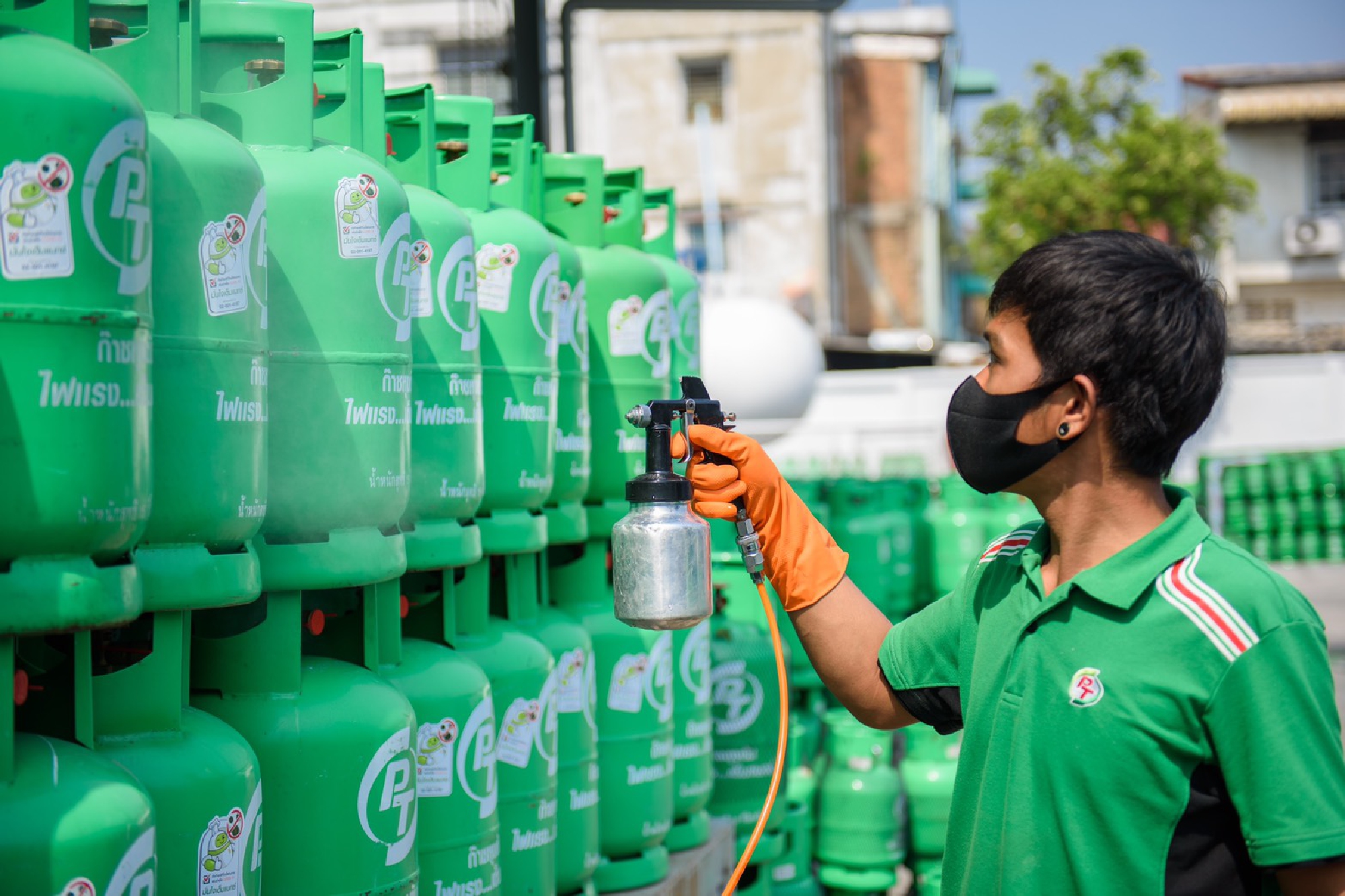 PTG tapping strong growth in household LPG sector to expand market penetration
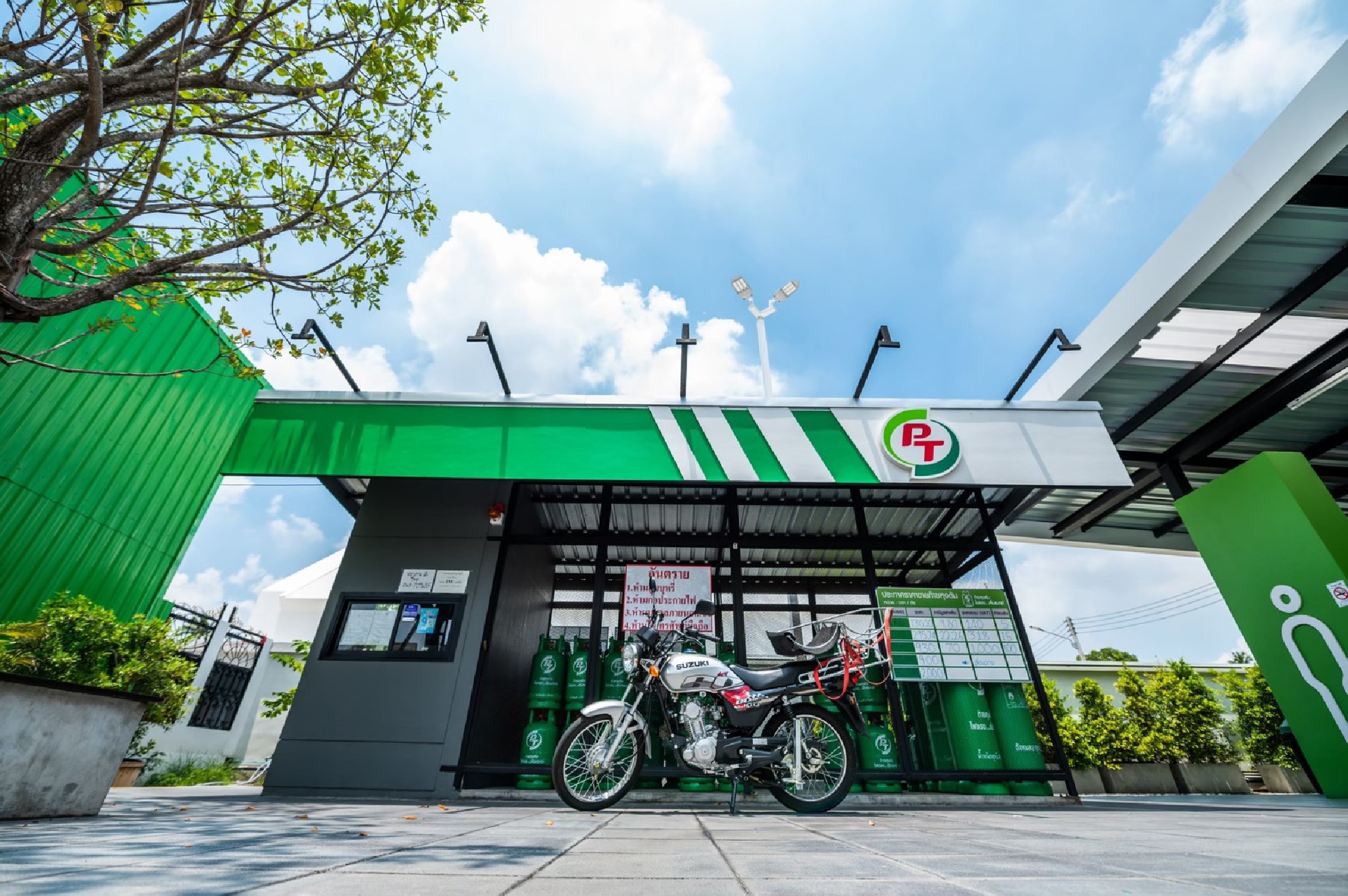 PTG tapping strong growth in household LPG sector to expand market penetration
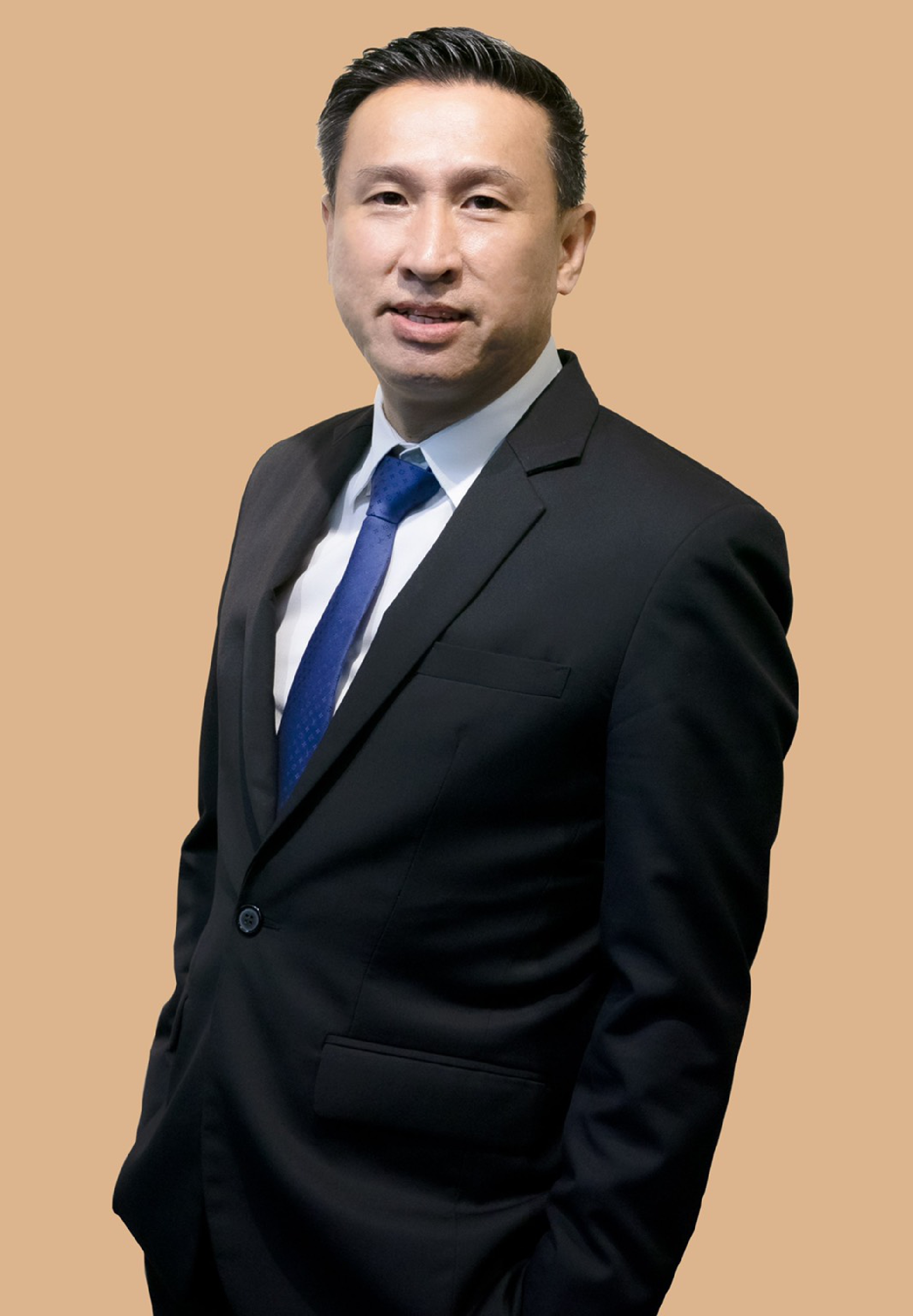 PTG tapping strong growth in household LPG sector to expand market penetration
 WHA Group Acquires Shares in Storage Asia to Expand its Integrated Logistics Portfolio
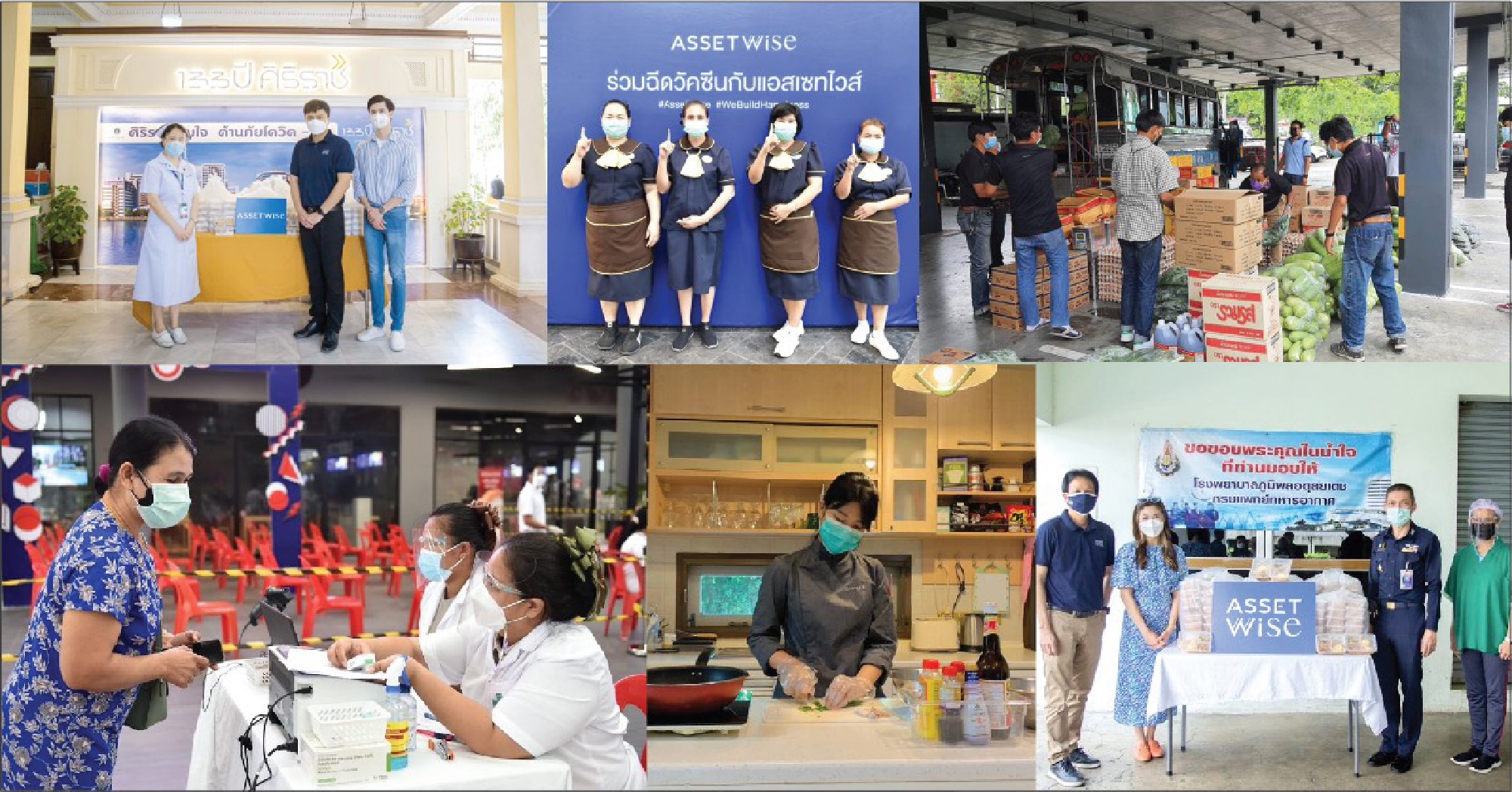 Property firm AssetWise builds strong strategy to tackle Covid-19
 Property firm AssetWise builds strong strategy to tackle Covid-19
 WASHINGTON, DC – JUNE 6: Civil rights advocates march in Washington, D.C., June 6, 2020, to mourn black lives taken by Police brutality. George Floyd, an unarmed black man was killed in police custody late May. His death prompted continuing and mostly peaceful mass demonstrations across the U.S. MUST CREDIT: Photo by Astrid Riecken for The Washington Post
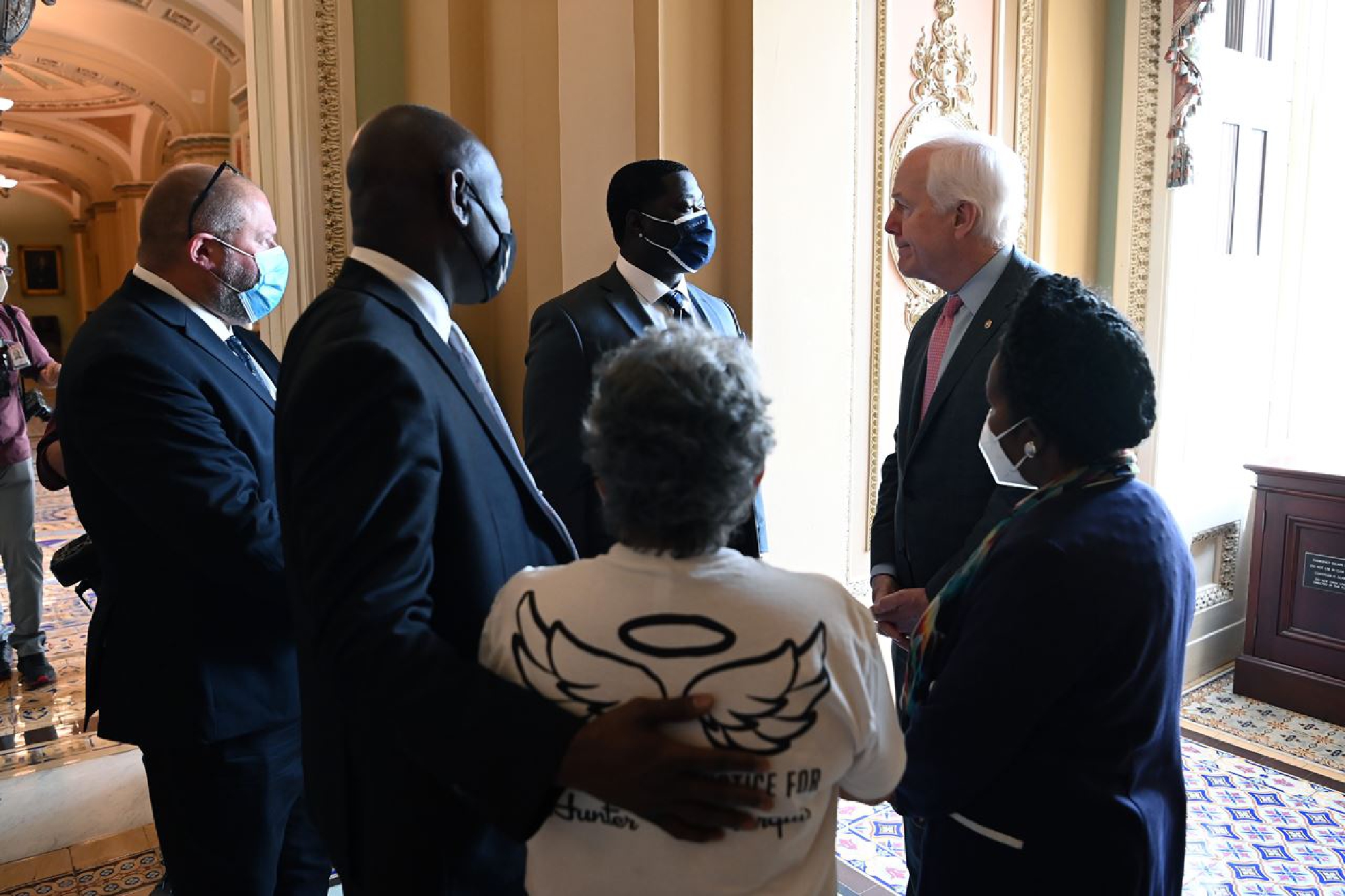 WASHINGTON, DC – AUGUST 03: Brandon Williams, center, who is the nephew of George Floyd speaks to Senator John Cornyn (R-TX) on Tuesday August 03, 2021 in Washington, DC. They were meeting with lawmakers for a police reform bill. MUST CREDIT: Photo by Matt McClain/The Washington Post
 SootinClaimon.Com