Mekong River Commission, Israel team up to tackle river’s plight
The Mekong River Commission (MRC) and Israel, represented by its Agency for International Development Cooperation of the Ministry of Foreign Affairs, last week signed a pack that will see both sides confront some of the challenges facing the Mekong River, according to MRC
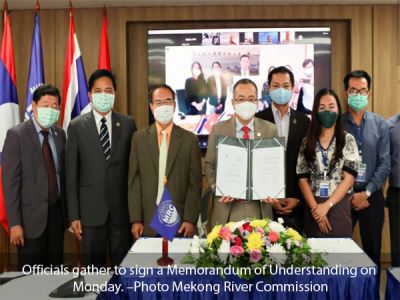
The five-year renewable Memorandum of Understanding was inked in a virtual ceremony on September 9 by Israel’s Ambassador to Vietnam, Nadav Eshcar, and the MRC Secretariat’s Chief Executive Officer, Dr An Pich Hatda.
“The signing of the MOU is another example that represents our timely response to the challenges we are facing today and tomorrow, especially drought,” Dr Hatda said, adding that the agreement will benefit both the MRC and wider Mekong region.
As part of the agreement, both sides will work to develop institutional capacity and share technical expertise with a focus on drought management, agriculture, irrigation and other areas relevant to addressing the Mekong River’s plight.
In addition, the MOU contains a provision for courses, training sessions and workshops that draw on Israel’s expertise in managing scarce water resources.
Shifting seasonal and daily flow patterns resulting from climate change and water being stored for regional power have already affected the Mekong’s ecology.
In 2019 and 2020, droughts saw Mekong water levels fall to record lows. The MRC estimates that severe droughts will only become more frequent.
ADVERTISEMENT
During the signing ceremony, Ambassador Eshcar reflected on Israel’s experience of managing exiguous water resources and its current relevance to the Mekong River’s situation.
“Unlike in the past, Israeli’s many decades of expertise are now very relevant to this region. Israel wishes to contribute to those efforts of the MRC in the spirit of friendship and solidarity with the region in general and the four Member Countries in particular,” he said.
Ambassador Eynat Shlein, Head of Israel’s Agency for International Development Cooperation, also spoke of the MOU’s importance in leveraging Israel’s experience for the betterment of Mekong communities.
A delegation from the Embassy of Israel in Thailand also attended the signing ceremony. The MRC is an intergovernmental organisation established in 1995 for regional dialogue and cooperation in the Lower Mekong River Basin.
Based on the Mekong Agreement between Cambodia, Laos, Thailand and Vietnam, the Commission serves as a regional platform for water diplomacy as well as a knowledge hub of water resources management for the sustainable development of the region.
Afghanistan seeks permission to operate commercial flights to Pakistan
The civil aviation ministry of Afghanistan has requested Pakistan to allow two of its airlines — Ariana Afghan Airlines and Kam Air — to begin commercial flight operations to the neighbouring country.
In a letter, a copy of which is available with Dawn.com, sent by the Ministry of Aviation and Transport of the Islamic Emirate of Afghanistan to Pakistan’s Civil Aviation Authority (CAA) dated Sep 13, it requested Pakistani authorities to permit air operations of two national carriers of Afghanistan on the basis of the memorandum of understanding signed between the two countries.
The Afghan ministry said its two carriers aimed to commence their scheduled flights and requested the CAA to facilitate the process.
The letter also recalled that the Kabul Airport was damaged by American troops before their withdrawal, however, “By technical assistance of our Qatar Brother, the Airport became operational once again and a notice to airmen (Notam) in this regard issued on 6 September 2021,” said the letter.
Warning from Qatar
ADVERTISEMENT
Qatar had a day ago warned it would not take responsibility for Kabul airport without “clear” agreements with all involved, including the Taliban, about its operations, according to AFP.
“We need to make sure that everything is addressed very clearly otherwise … we are not able to take any responsibility of the airport (if) all these things are not addressed,” Foreign Minister Sheikh Mohammed bin Abdulrahman Al-Thani had said at a press briefing.
“Right now the status is still (under) negotiation,” he told the presser.
Meanwhile, a Qatari official was on Sep 9 quoted by Reuters as saying the Kabul Airport was about 90 per cent ready for operations but its reopening was planned gradually.
“Flights into Kabul will fly through Pakistan’s airspace for the time being because the majority of Afghanistan is still not covered by flight radar,” he had said.
Chaos at the airport
The Kabul airport was left inoperable after US-led forces finished a chaotic evacuation of over 120,000 people, and the Taliban have since scrambled to get it operational with technical assistance from Qatar and other nations, according to AFP.
Turbulent scenes were witnessed at the Kabul airport on Aug 16 after thousands rushed the facility following the Taliban’s capture the Afghan capital. Several Afghans had plunged to their deaths while hanging off the side of a US military cargo plane that was leaving the airport.
On Aug 26, two suicide bombers and gunmen had attacked crowds of Afghans flocking to Kabul’s airport, transforming a scene of desperation into one of horror in the waning days of airlift for those fleeing the Taliban takeover. The attacks had killed at least169 Afghans and 13 US troops.
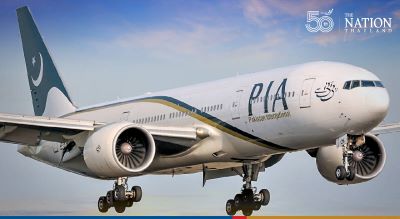
The Pakistan International Airlines (PIA) had on Aug 16 suspended its flights to Afghanistan due to the uncertain security situation in the war-ravaged country and the chaotic scenes prevailing at Kabul airport.
After the situation normalised, the PIA had on Sep 13 run its first commercial flight to Kabul. Prior to it, the national airline was undertaking special flights to evacuate people stranded in the neighbouring country.
A Boeing 777, with flight number PK 6429, departed from Islamabad as a commercial flight chartered by the World Bank, carrying officials from the bank and journalists, airline spokesman Abdullah H. Khan had said.
Qatar Airways had also run a chartered flight from Kabul to Doha on Sept 9, carrying about 113 people.
12 jailed for participating in unauthorized assembly in HK
HONG KONG – Twelve anti-China activists were sentenced by the District Court of the Hong Kong Special Administrative Region on Wednesday to up to 10 months in prison for taking part in an unauthorized assembly on June 4 last year.
The 12 defendants participated in an unauthorized assembly in Victoria Park on June 4, 2020, during which they entered the park despite being barred by the police, and shouted anti-National Security Law slogans.
Albert Ho Chun-yan, Figo Chan Ho-wun and Andrew Wan Siu-kin were sentenced to 10 months in prison. Steven Kwok Wing-kin and Chiu Yan-loy were sentenced to eight months in prison. Cyd Ho Sau-lan, Leung Kwok-hung, Eddie Chu Hoi-dick and Yeung Sum were sentenced to six months in prison, while Cheung Man-kwong, Mak Hoi-wah and Leung Kwok-wah received suspended sentences.
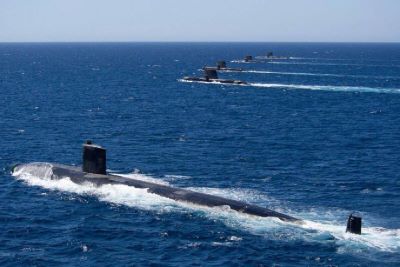
Australia will upgrade to nuclear-powered submarines in new security partnership with Britain, US
WASHINGTON – In the most significant move between the three countries in decades, and a sharp signal that defence in Asia and the Indo-Pacific is being beefed up against what is seen as the threat of a rising China, Australia, the US and Britain on Wednesday (Sept 15) announced a new trilateral security partnership.
This will, among other things, upgrade Australia’s submarines to a nuclear-powered fleet, vastly expanding its reach and capabilities.
The “new architecture” is “about deepening cooperation on a range of defence capabilities for the 21st century”, a senior US administration official told journalists.
US President Joe Biden – with British Prime Minister Boris Johnson and Australia’s Prime Minister Scott Morrison joining him virtually – announced details late on Wednesday afternoon (5am Singapore time) in Washington.
The partnership will spur cooperation across many new and emerging arenas, including cyber, applied artificial intelligence, quantum technologies and some undersea capabilities, officials said.
“We’ll also work to sustain and deepen information and technology sharing, and I think you’re going to see a much more dedicated effort to pursue integration of security and defence-related science, technology and industrial bases and supply chains,” one of the officials said.
The pact, with the acronym Aukus, is not aimed at China, the senior administration officials insisted – framing it as part of a continuum of US involvement in the region and its alliances with Australia and Britain.
ADVERTISEMENT
“This is about a larger effort to sustain the fabric of engagement and deterrence in the Indo-Pacific,” another senior official said, adding: “We have a history of innovation upgrading capabilities. I would urge you to look at it in this context.”
“One of the things the United States has done most effectively in the Indo-Pacific is to secure peace and stability and to be the ultimate guarantor of that rules-based order.
“This allows Australia to play at a much higher level and to augment American capabilities that will be similar. And this is about maintaining peace and stability in the Indo-Pacific.”
Addressing doubts as to the US’ commitment and resolve in the Indo-Pacific, the official said: “What President Biden is saying with this initiative is, count us in. We are all in for a deeper sustained commitment to the Indo-Pacific, and we recognise that one of our critical roles is indeed the maintenance of peace and stability there.
“This is meant to complement ongoing and existing security and political partnerships, and… to send a message of reassurance and a determination to maintain a strong deterrent stance into the 21st century.”
And on the role of Britain, the officials noted “a desire for Great Britain to substantially step up its game in the Indo-Pacific”.
“The process of this next 18 months is to help chart out what exactly that means. Obviously, Great Britain has… deep historical ties to Asia. I think they’ve indicated to us that they do want to do more going forward. And I think this is a clear and decisive next step in that arena.”
Australia thus far has conventional submarines, which must surface periodically and have limited range, and which are viewed as being outclassed by China’s growing maritime reach. Upgrading to nuclear power will give Australia long-range and stealth capabilities.
“They’re quieter, they’re much more capable; they will allow us to sustain and to improve deterrence across the Indo-Pacific,” one of the senior officials said.
The officials stressed that this was about nuclear propulsion and Australia would remain a non-nuclear power state.
“Australia has no intention of pursuing nuclear weapons,” one of them said.
“This is about nuclear power submarines, but it’s a very important initiative that will basically set us on a new course of trilateral cooperation into the 21st century.
“We will work closely on efforts to ensure the best practices with respect to nuclear stewardship,” he said.
“You will see much deeper interoperability among our navies and our nuclear infrastructure people.
“This is a fundamental decision… that binds decisively Australia to the United States and Great Britain for generations,” he said.
Mr Ashley Townshend, director of foreign policy and defence at the United States Studies Centre at the University of Sydney, tweeted: “This is surprising and a very welcome sign of Biden’s willingness to empower close allies like Australia with highly advanced defence tech assistance — something the US has rarely been willing to do. It suggests a more strategic approach to collective defence.”
The pact comes ahead of the first in-person summit in Washington on Sept 24 of leaders of the Quadrilateral Dialogue or Quad – India, the US, Australia and Japan.
“It’s a huge breakthrough in US-Australia relations” given the sensitivity of the technology the US will share, Dr Patrick Cronin, Asia-Pacific Security Chair at the Hudson Institute in Washington told The Straits Times.
“This is going to give a colossal upgrade to Australia’s submarine capability and the survival of its future missile fleet.
“This counters China’s… area access denial (and) potentially puts Australia, India, the US and Japan into the kind of… joint patrols and operations they have been talking about,” Dr Cronin said.
“It is going to be transformative in Asia, and the Pacific will be the centre of the submarine world for better or worse once you get to the 2030s and beyond.”
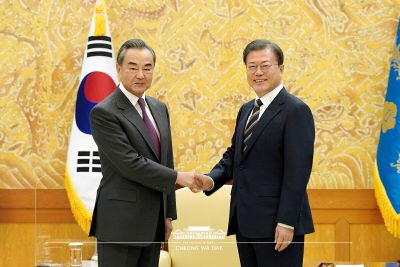
Chinese FM arrives in Seoul in latest effort to bolster regional ties
Chinese State Councilor and Foreign Minister Wang Yi arrived in Seoul on Tuesday evening as part of a weeklong Asia tour that aims to bolster regional ties.
According to Seoul’s Foreign Ministry, China’s top diplomat will hold talks with South Korean Foreign Minister Chung Eui-yong on Wednesday. He is also likely to pay a courtesy call to President Moon Jae-in before leaving for China later in the day.
Wang last visited Seoul 10 months ago, in November last year. South Korea is the final destination in an Asia trip that also included stops in Vietnam, Cambodia and Singapore.
The high-level talks are expected to touch on a range of topics, from bilateral ties to North Korea and the Beijing Winter Olympics. But observers downplayed speculation that the aim of the upcoming visit was to increase pressure on South Korea, which has distanced itself from the escalating US-China rivalry and avoided being drawn in.
“The key purpose of Wang’s visit appears to be managing bilateral relations amid the prolonged pandemic,” said Hwang Jae-ho, a professor of international studies at Hankuk University of Foreign Studies.
“For China, South Korea is a key partner in the region, especially ahead of mega-events next year such as the Beijing Olympics and the Communist Party’s party congress. He is more likely to seek backing from South Korea rather than renewing pressure.”
Additionally, the apparent resumption of activity at North Korea’s Yongbyon nuclear complex is expected to be high on the agenda. While the US has reiterated its willingness to resume talks with the North without preconditions, China has urged sanctions relief to expedite the stalled talks.
On Monday, North Korea said it had successfully test-fired a new type of long-range cruise missile over the weekend, possibly in an attempt to gain attention as South Korea, the US and Japan were set to hold a trilateral meeting in Tokyo on Tuesday to discuss the North’s nuclear activities.
“Wang may want to be briefed on discussions ongoing between South Korea and the US on North Korea issues. But it seems unlikely for him to express open hostility toward the Seoul-Washington alliance,” the professor added.
While Chinese President Xi Jinping remains extremely cautious about traveling abroad due to the nation’s heightened pandemic restrictions, Wang, along with Communist Party Politburo member Yang Jiechi, who specializes in US affairs, is holding high-level talks around the world.
South Korean and Chinese officials have sought to arrange a state visit to Seoul for Xi, which was supposed to take place last year but was delayed due to the pandemic. But talks on the subject seem to have fallen apart, with COVID-19 showing no immediate signs of abating.
ADVERTISEMENT
A growing subject of speculation is whether Moon will attend the opening ceremony of the Beijing Olympics in February if the two Koreas agree to take part together, in a resumption of peace efforts on the Korean Peninsula.
Still, uncertainties are mounting. Aside from North Korea’s unresponsiveness, the International Olympics Committee recently suspended the North’s national Olympic committee until the end of 2020 for unilaterally skipping this year’s Tokyo Olympics.
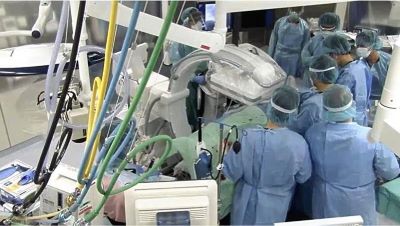
Pharmaceutical companies race to develop oral drugs for COVID
Japanese pharmaceutical companies are among those fiercely competing to develop oral antiviral drugs for COVID-19. Oral medications that could be taken at home by patients with mild symptoms could be a game changer in the fight against the novel coronavirus.
If a patient can recover quickly by taking such drugs in the early stages of the disease, the coronavirus could be treated as a common infection like the flu.
■ High hopes
“The final trial data for the oral drug under development will be available in September or October,” Health, Labor and Welfare Minister Norihisa Tamura said at a press conference on Sept. 3. “We hope to see an application filed soon [by the pharmaceutical company] and provide it to the public as soon as possible.”
At the peak of the fifth wave, the number of infected people resting or receiving treatment at home exceeded 130,000 nationwide due to the overwhelming pressure on the medical system. In some cases, patients could not be admitted to hospitals and their treatment was delayed, resulting in serious illness.
If a highly effective drug becomes available that can be easily stored and transported, and taken at home in mild cases, it could end the pandemic. The competition for development is increasingly heated.
A leading contender is U.S. pharmaceutical giant Merck & Co. with its experimental drug molnupiravir. This drug is in the final stages of international clinical trials in countries such as the United States, Britain and Japan, and the trial data is expected to be released in September or October.
In June, the U.S. government announced plans to procure 1.7 million doses of this drug for $1.2 billion (about ¥130 billion) in anticipation of its approval. With a view to authorizing emergency use as early as this year, the U.S. government has high hopes that many lives can be saved at home and abroad.
ADVERTISEMENT
Swiss pharmaceutical giant Roche is also in the final stages of clinical trials for its experimental drug AT-527. According to an interim analysis of the study on the drug, on Day 2, patients receiving AT-527 experienced an 80% mean reduction from the baseline viral load as compared to a placebo.
Final trial results are expected to be released by the end of this year. In Japan, Chugai Pharmaceutical Co., which is under the umbrella of Roche, aims to file an application for the drug in 2022.
U.S. pharmaceutical giant Pfizer Inc. is also in the final stages of clinical trials for a new drug, and aims to compile data by the end of this year to obtain authorization for emergency use in the United States.
■ Development in Japan
All these experimental oral drugs share a mechanism of suppressing the multiplication of the virus in the body, preventing serious illness and speeding recovery. Development efforts are also underway in Japan.
Shionogi & Co., which has successfully developed drugs for infectious diseases such as the influenza drug Xofluza, began clinical trials for an experimental oral drug in July. The new drug is being administered to healthy people to verify its safety.
The company plans to conduct a large-scale clinical trial within this year, and hopes to establish a manufacturing capacity of 1 million to 2 million doses.
Earlier this month, the health ministry made the company eligible for subsidies to develop the drug, with the aim of early commercialization in Japan.
Shionogi President Isao Teshirogi expressed his enthusiasm for a Japan-made therapeutic drug, saying, “We want to get to the point where people can feel assured that the novel coronavirus is almost the same as the flu.”
■ Mass-produced at lower cost
There are three types of drugs for COVID-19 available in Japan, including anti-inflammatory drugs for patients with moderate and severe symptoms. All these drugs have been converted from drugs for other diseases and have been put to practical use one after another since last year.
For patients with mild to moderate symptoms, a combination of antibodies known as an “antibody cocktail” was rapidly developed and received special approval in July. Although there have been a number of reports that the treatment is highly effective, it is an intravenous medication and must be administered at a medical institution, limiting the number of patients who can be treated.
In contrast, Prof. Katsumi Maenaka of Hokkaido University said oral drugs “take a long time to develop because [the pharmaceutical companies] need to create new compounds that are safe and effective in inhibiting the multiplication of the virus.”
However, if such a drug is successfully developed, it can be mass-produced at a lower cost than antibodies, and has the advantage of being easily taken at home.
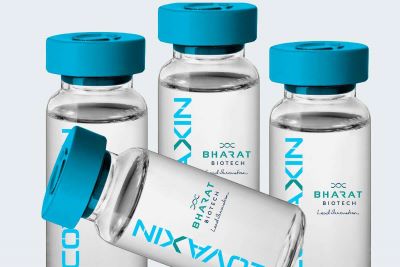
The World Health Organisation’s approval for Covaxin is likely before the month-end, Dr VK Paul, member Niti Aayog and chairman of the National Expert Committee on Vaccine Administration, said here today.
The WHO approval for emergency use of Covaxin will not only declare it safe for use in other countries but will also enable people receiving the shot to travel abroad without mandatory quarantine, he said.
The dossier of Bharat Biotech has been under review by technical experts for consideration since July.
“We know of positive developments – data sharing, data evaluation going on through multiple reviews and we know that we are close to a decision point. We believe that a positive decision could be coming in before the month-end,” he was quoted as saying.
“We must give time to WHO to make their decision based on science and yet we hope that the decisions will be taken quickly because people who are receiving Covaxin have certain imperatives of travel etc, for which WHO’s concurrence is important,” Paul added.
Minister of State for Health Bharati Pravin Pawar had told Parliament that the application for pre-qualification was submitted by Bharat Biotech on July 9.
Covishield, manufactured by the Serum Institute of India, has received the WHO pre-qualification.
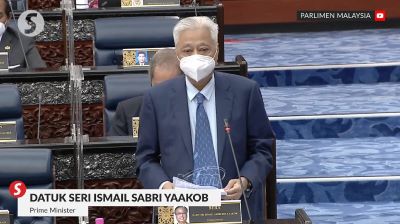
KUALA LUMPUR: More economic sectors are allowed to reopen as the lockdown move is no longer feasible as it is feared that it can have more negative implications, including on the mental health of Malaysians, says Prime Minister Datuk Seri Ismail Sabri Yaakob.
He said the reopening of the sectors would not only help speed up economic recovery but also give the people the opportunity to improve their livelihoods.
“The reopening of 11 economic sectors in states under Phase One of the National Recovery Plan (NRP) was appropriate due to the high vaccination rates in the states.
“The government made the decision after taking into consideration data from the risk assessments conducted by the Health Ministry and the Domestic Trade and Consumer Affairs Ministry,” he said in reply to Datuk Mohd Salim Sharif (BN-Jempol) who questioned the government’s move to reopen economic sectors amid high daily Covid-19 cases.
Ismail Sabri also said that 74.7% of Malaysia’s adult population had been fully vaccinated while 91.6% has received at least the first dose of the Covid-19 vaccine.
He added that the sectors were reopened with strict compliance to standard operating procedure, including allowing in only fully vaccinated customers and having only fully vaccinated workers on duty.
A total of 11 types of economic activities were allowed to resume operations in Phase One of the NRP from Aug 16, including car wash, electrical and electronics shops, clothing, fashion and accessories shops, goldsmith shops, barbers, as well as beauty centres and hair salons.
To a supplementary question from Mohd Salim whether the decision to reopen the sectors had taken into consideration the risks of Covid-19 infection for the unvaccinated population aged 17 and below, Ismail Sabri said the responsibility lies with everyone to maintain discipline and self-control to prevent themselves, their families and their communities from being infected by the virus.
ADVERTISEMENT
“When we reopen (the economic sectors), we see people beginning to flock to holiday destinations and some are not even wearing face masks.
“The future of our country, in terms of Covid-19, depends on us.
“We cannot depend on the vaccine alone. Self-control is very important or all our efforts will be in vain,” he said.
To a question by Datuk Seri Saifuddin Nasution Ismail (PH-Kulim Bandar Baharu) on why the government relaxed social and economic restrictions despite the death toll hovering at three-digit figures daily, the Prime Minister maintained that the decision was done based on science and data.
He added that Covid-19 clusters from the 11 recently reopened economic sectors were few, citing the example of barbers, beauty salons and car wash shops which had sparked little to no known cases or clusters throughout 2020.
“Based on data like these, we focused on reopening certain sectors,” he said.
To Saifuddin’s question on why former prime minister Tan Sri Muhyiddin Yassin was chosen to head the National Recovery Council (NRC), Ismail Sabri this was because Muhyiddin has been chairing the meetings since the NRC was formed and therefore, was chosen as chair for the sake of continuity.
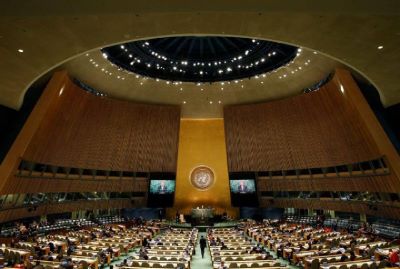
U.S. and China Agree to Delay Myanmar Government’s Efforts to Appoint U.N. Ambassador
(Foreign Policy)- The United States and China have reached an agreement to block Myanmar’s military government efforts to address the United Nations’ General Assembly next week, serving as a hindrance to the military government’s pursuit for international recognition, at least until November.
However, this agreement between the U.S. and China will require U Kyaw Moe Tun, the still-serving U.N. ambassador who represented the deposed government to ‘hold his tongue’ during the event and to withhold the ‘tough rhetoric’ that he has used over the past year in condemning the military takeover. Additionally, this pact will also delay efforts by Myanmar’s military rulers to pressure U.N. members to recognize it as the legitimate government in Myanmar, at least until November.
This pact, according to multiple diplomatic sources and representatives of advocacy groups, has been informally endorsed by multiple representatives of the EU, members of ASEAN, and Russia. This agreement comes as the U.N. plans to announce a nine-member panel on U.N. credential after the U.N. General Assembly opens on Tuesday (September 14th) to determine the U.N. representative to Myanmar. The committee will chaired by Sweden and includes representatives from Bhutan, the Bahamas, Chile, China, Russia, Sierra Leone, South Africa, and the United States.
The U.S. and its European allies hope to delay any decision on Myanmar’s representation at the United Nations as long as possible, preserving the ‘diplomatic stalemate’ by ensuring that Kyaw Moe Tun retains his U.N. seat for the time being.
In a telephone interview to Foreign Policy, Kyaw Moe Tun confirmed that ‘international negotiations are underway to determine how to move forward on Myanmar’s U.N. seat. He also added that he is highly unlikely to address the UN General Assembly even though the list of speakers at the assembly includes Myanmar.
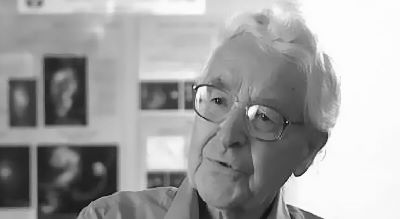
Antony Hewish, astronomer who won Nobel Prize for the discovery of pulsars, dies at 97
Antony Hewish, a British astronomer who designed and built the innovative radio telescope used to discover pulsars – dense, fast-spinning stars that emit sweeping beams of radiation – and was honored with a share of the Nobel Prize in physics for his role in their detection, died Sept. 13 at 97.
His death was announced by Churchill College at the University of Cambridge, where he was an emeritus fellow. Dr. Hewish was associated with Cambridge for his entire scientific career, and was working at the school’s Mullard Radio Astronomy Observatory when he and his research team detected the first pulsars in 1967.
Like celestial lighthouses, the stars send streams of radio waves or other radiation into the universe, rotating rapidly so that their beams appear to pulse like clockwork. Most pulsars are now understood to be neutron stars, the extraordinarily dense husks of collapsed supergiants. Their discovery ushered in a new era for 20th-century astronomy, helping scientists locate distant planets, search for gravitational waves and investigate the interstellar medium that fills the cosmos.
Along with his Cambridge colleague Martin Ryle, Hewish was one of the first two astronomers to ever win a Nobel Prize. They were honored in 1974 for what the committee described as “their pioneering research in radio astrophysics,” with Hewish cited for playing a “decisive role in the discovery of pulsars.”
Yet the award sparked decades of arguments among scientists who said at least part of the prize should have gone to one of Hewish’s graduate students, Jocelyn Bell. She helped build the radio telescope, operated the instruments, analyzed the data and identified the first pulsars, for which she was later honored with the 2018 Special Breakthrough Prize in Fundamental Physics.
Hewish never denied that Jocelyn Bell Burnell, as she became known as, made the initial pulsar observations. But he noted that he closely investigated the pulses himself, conducting detailed measurements to learn more about the signals, and created the telescope that made their discovery possible.
ADVERTISEMENT
“When you plan a ship of discovery and somebody up the masthead says land ho, that’s great,” he said in a video interview that was featured in a recent New York Times documentary about Bell Burnell. “But I mean, who actually inspired it and conceived it and decided what to do when and so on? I mean, there is a difference between skipper and crew.”
Hewish had been studying rapid variations in radio signals when he built the Interplanetary Scintillation Array, a four-acre network of cables and copper wires that stretched across a field near Cambridge. As part of a search for mysterious radio sources known as quasars, the telescope recorded the signals of distant radio waves, which were registered on chart paper as crests and troughs.
Soon after the telescope was completed in 1967, Bell Burnell noticed an unusual squiggle, what she called a piece of “scruff,” that she traced to the constellation Vulpecula. “I wanted to understand what it was, and I ended up taking this problem to Tony. And he said that it was interference,” she recalled in the Times documentary. Referring to herself in the third person, she added that Hewish “had one idea that Jocelyn had wired up the radio telescope wrongly, and it was something to do with that.”
As Bell Burnell told it, she kept studying the scruff, doing a more detailed analysis that revealed a string of pulses about 1 1/3 seconds apart. Once again, she called Hewish. This time he agreed it was a genuine signal, although its source remained unclear; unable to rule out an alien origin, they jokingly named their discovery LGM-1, for Little Green Man, according to a 2018 report in The Washington Post.
Bell Burnell soon discovered a second, third and fourth pulsing signal, suggesting they had discovered a new kind of star. The findings were announced in a February 1968 article in Nature, in which Hewish was credited first, followed by Bell Burnell and three other members of the research team.
Interviewed for the Times documentary, Bell Burnell said Hewish “could have cited me more and didn’t” while presenting their findings at Cambridge. She added that while he became the scientific face of the pulsar discovery, she was interviewed merely for “human interest,” asked about the color of her hair and the dimensions of her hips, waist and chest. “Tony just let it happen,” she said. “It was dreadful.”
When it came to the Nobel Prize, however, she said Ryle and Hewish were fully worthy of the honor. When English astronomer Fred Hoyle asserted in 1975 that Hewish had won by claiming credit for Bell Burnell’s work, she responded by saying Hoyle had “drastically exaggerated the situation” and was “factually incorrect.”
“It doesn’t much bother me that my name wasn’t included,” she told the Guardian in 2009. “In those days, students weren’t recognized by the committee.”
By 1993, when a Nobel Prize was awarded to pulsar researchers for a second time, that practice had apparently changed. The committee honored both the professor overseeing the research, Joseph Taylor Jr., and his graduate student at the time, Russell Hulse.
The youngest of three sons, Antony Hewish was born in Fowey, Cornwall, on May 11, 1924, and grew up in the coastal town of Newquay. His father was a banker, but Hewish showed an aptitude for physics while studying at King’s College boarding school in Taunton and enrolled at Cambridge in 1942 to study science.
Hewish was also a competitive rower, and in a 2008 video interview for Cambridge he recalled spending “afternoons practicing on the river when I should have been in the physics lab.” His grades suffered, and after his first year, he was dispatched to aid the war effort at the Royal Aircraft Establishment, a military research center in Farnborough.
For most of the next three years, he helped develop a device to jam the radar of enemy aircraft, working with electronics and antennas that piqued his interest in radio astronomy. He also met Ryle, the head of the military’s radar countermeasures group, whose lab he joined after returning to Cambridge and graduating in 1948.
Hewish married Marjorie Richards in 1950. She later told the Times that she was surprised when her husband won a share of the Nobel: “The entire prize, my husband would agree, should have gone to Professor Ryle. We expected him to get it, and sharing it has been totally unexpected as far as my husband is concerned.”
They had a son and daughter. Information on survivors was not immediately available.
After receiving his PhD in 1952, Hewish joined the faculty at Cambridge. He was professor of radio astronomy from 1971 until his retirement in 1989, and led the Mullard Radio Astronomy Observatory for six years at the close of his career. He also delighted in lecturing about physics to wide audiences, including at the Royal Institution in London.
“There is, I think, some special benefit for mankind in the realm of astrophysics,” he said at the conclusion of his Nobel banquet speech in 1974. “It is impossible to witness the interplay of galaxies without a sense of wonder, and looking back at Earth we see it in its true perspective, a planet of great beauty, an undivided sphere. Let us try and keep this image always in our view.”
 SootinClaimon.Com