SET Index suffers end-of-week dip after two days of gains
The Stock Exchange of Thailand (SET) Index closed at 1,625.65 on Friday, down 6.05 points or 0.37 per cent. Transactions totalled THB105.67 billion with an index high of 1,635.04 and a low of 1,617.31.
The SET Index fell back on Friday after rising 0.26 and 0.22 per cent on Wednesday and Thursday.
The 10 stocks with the highest trade value today were KCE, PTT, KBANK, HANA, DELTA, GULF, CPALL, AOT, BANPU and TU.
Japan’s Nikkei Index closed at 30,500.05, up 176.71 points or 0.58 per cent.
China’s Shanghai SE Composite Index closed at 3,613.97, up 6.87 points or 0.19 per cent, while the Shenzhen SE Component Index closed at 14,359.36, up 101.23 points or 0.71 per cent.
Hong Kong’s Hang Seng Index closed at 24,920.76, up 252.91 points or 1.03 per cent.
South Korea’s KOSPI closed at 3,140.51, up 10.42 points or 0.33 per cent.
Taiwan’s TAIEX closed at 17,276.79, down 1.91 points or 0.011 per cent.
Export industry making most of FTA, GSP pacts, says trade dept
The ongoing Covid-19 pandemic has not affected Thailand’s free trade agreements (FTAs) or the Generalised System of Preferences (GSP), the Department of Foreign Trade (DFT) said on Thursday.
In the first seven months of this year, deals under the pacts had risen by 36.23 per cent compared to the same period last year, while the industries using the privileges most were agriculture and food, DFT said.
Keerati Rushchano, DFT director-general, said the total value of deals made by Thai exporters under the FTA and GSP pacts between January and July this year stood at US$46.4 billion, up 36.23 per cent from the same period last year.
Between January and July, Thailand has increased its use of trade incentives under various FTA and GSP frameworks in a bid to boost exports. Besides, several markets have started recovering in the wake of the Covid-19 fallout. For instance, export to India has risen by 4.91 per cent, while Thailand’s shipments to Asean and Japan has expanded by 3.89 per cent.
Products benefiting the most from these pacts are industrial goods, food and beverage, as well as agricultural products such as processed coconut, seasonings, water/non-alcoholic beverages, processed food, canned pineapples, fish, rice and aromatics used in the food industry.
The price of gold crashed by THB250 in morning trade on Friday.
AGold Traders Association report at 9.25am said the buying price of a gold bar was THB27,550 per baht weight and selling price THB27,650, while gold ornaments cost THB27,060.60 and THB28,150, respectively.
At close on Thursday, the buying price of a gold bar was THB27,800 per baht weight and selling price THB29,000, while gold ornaments cost THB27,303.16 and THB28,400, respectively.
The Stock Exchange of Thailand (SET) Index fell by 0.46 points, or 0.03 per cent, to 1,631.24 on Friday morning.
The volume of total transactions was THB10.37 billion with an index high of 1,635.04 and a low of 1,630.97 in opening trade.
The 10 stocks with the highest trade value were KCE, PTT, HANA, KBANK, BANPU, SCGP, SIRI, DELTA, PTTGC and TU.
The SET Index closed at 1,631.70 on Thursday, up 3.66 points or 0.22 per cent. Transactions totalled THB79.59 billion with an index high of 1,636.01 and a low of 1,628.57.
The baht opened at 33.12 to the US dollar on Friday, weakening from Thursday’s closing rate of 33.04, the weakest in almost a month.
The Thai currency is likely to move between 33.05 and 33.25 during the day, Krungthai Bank market strategist Poon Panichpibool predicted.
Poon said the baht is still pressured more than strengthening in the short term. Foreign investors might sell more Thai bonds amid concerns that bond issues in the future might be more than expected.
Some investors have stopped speculating that the baht will strengthen, due to worries of a new Covid-19 wave. Foreign investors would sell Thai stocks if the situation clearly worsened.
Meanwhile, the US market is not in a mood for risk. The market is also worried that volatility will increase on Friday, which is the day when both future and options of stock shares and indexes are due. There might be a big change in asset possession, he added.
Chevron CEO warns of high energy prices and supply crunches
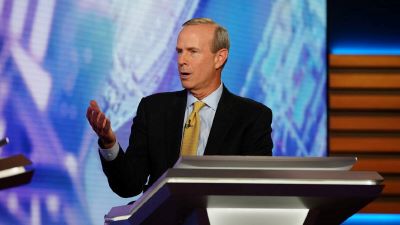
The world is facing high energy prices for the foreseeable future as oil and natural gas producers resist the urge to drill again, according to Chevron Corp.s top executive.
“There are things that are interfering with market signals right now that we haven’t seen before. Eventually things work out, but eventually can be a long time,” Chief Executive Officer Mike Wirth said Wednesday in an interview at Bloomberg News headquarters in New York. He expects strong prices for gas, liquefied natural gas and oil, at least “for a while,” without specifying a time frame.
Even though oil and gas prices have surged this year as the world recovers from the covid-19 pandemic, major producers have been reluctant to invest their cash in new projects, a shift in behavior from previous upswings. That’s leading to concerns of shortages. Already, Europe is facing its worst natural gas crunch in decades, with prices rising to record levels even before winter when demand is typically at its strongest.
One reason executives are wary to plow investment dollars into new supply is shareholders haven’t shown they’re in their corner. They want cash returned to them immediately rather than seeing it re-invested in new developments. Although soaring commodities markets are “signaling we could invest more,” equity prices are sending boardrooms a different sign, Wirth said.
“There are two signals I’m looking for and I’m only seeing one of them” right now, he said. “We could afford to invest more. The equity market is not sending a signal that says they think we ought to be doing that.”
Some investors are unwilling to back new projects after oil and gas companies wasted billions of dollars on low-return operations over the past decade. Others are watching signs of climate change and trying to gauge whether companies are making changes fast enough. The risks are real: Royal Dutch Shell was ordered to reduce carbon emissions by 45% by 2030 by a Dutch court earlier this year, and Exxon Mobil Corp. was forced to backtrack on an aggressive expansion plan amid covid-19 and shareholder unrest.
ADVERTISEMENT
“You’ve got some real new dynamics, whether it’s government policy, efforts to constrain capital into the industry, to make it harder for the industry to access capital markets,” Wirth said. “That in the short term could create some risk for the global economy.”
Chevron, the second-largest Western oil major, is unlikely to buck the trend and chase new production, despite having the strongest financial position among its peers. It slashed its capital spending by almost a third last year and, unusually, pledged to maintain it at low levels right the way through 2025. An announcement earlier this week to boost spending on energy transition technologies reverses just a portion of those cuts.
When new projects do come to the table, their future emissions are “a big part of our decision-making process,” Wirth said. Chevron has pledged to reduce its emissions intensity progressively over the coming decades, suggesting that higher-carbon operations such as oil sands may find it harder to receive the green light.
There may be some relief for oil prices, at least in the short term. OPEC’s ability to bring previously curtailed barrels back to the market will help stabilize prices over the coming months. But with production severely constrained outside of the cartel, medium-term pricing may stay strong, Wirth said. Shale producers, which have kept a lid on prices for much of the last decade with floods of oil, are now focused much more on harvesting profits rather than drilling new wells.
“Looking out for a few years if the global economy continues to grow and recover post covid, is there sufficient reinvestment in the energy that runs the world today?” Wirth said. “Or are we turning so quickly to the energy that runs tomorrow that we created an issue in the short term?”
U.S. stocks swung between gains and losses ahead of tomorrows expiration of options and futures, a quarterly event that usually brings increased volume and volatility. Treasury yields rose and the dollar strengthened.
The S&P 500 fluctuated on either side of unchanged after the index posted its biggest gain since August on Wednesday. The equity market benchmark is down about 1% so far this month amid concern about a broader pullback in the wake of a string of record gains. The Nasdaq Composite turned positive for a second day after halting a five-session slide.
“After seven months of gains, equity markets have been choppier midway through September,” said Keith Lerner, chief market strategist at Truist Advisory Services. “This is actually quite normal from a historical seasonal standpoint, though the ongoing carousel of concerns continues.”
Markets began fluctuating as investors weighed the impact of mixed economic data on the Federal Reserve’s plans to taper stimulus. Fed policymakers meet next week.
Retail sales unexpectedly increase in August, suggesting that demand for goods remains strong. A separate report showed weekly jobless claims increased.
“It remains to be seen if this will reverse the slight downward trend we’ve seen in the market these past few weeks,” said Mike Loewengart, managing director of investment strategy at E*Trade Financial.
Meanwhile, casino stocks with operations in Macao extended drops amid the government’s tightening grip on the gambling hub. Travel and leisure companies led gains in Europe’s Stoxx 600 Index as Ryanair Holdings Plc lifted its growth target.
ADVERTISEMENT
Investors continue to assess the outlook for economic reopening amid the delta virus strain outbreak and rising costs fueled by higher commodity prices and pandemic-related supply snarls. The United Nations said the global economy is expected to undergo its fastest recovery in almost five decades this year, but warned about deepening inequities between advanced and developing nations.
“Investors are really trying to weigh the tug-of-war of concerns between how soon will the Fed taper,” said Art Hogan, chief strategist at National Securities.
While global economic expansion remains above trend, it’s past peak levels and a “deceleration” phase of the market cycle has begun, characterized in part by slowing earnings growth, T.Rowe Price said in its global asset allocation report.
Shares fell in Asia, where the debt crisis at China Evergrande Group and Beijing’s latest push to rein in private industries hurt sentiment. Technology stocks slid as China slowed approvals for video games to enforce stricter criteria for content.
Some of the main moves in markets:
Stocks
The S&P 500 fell 0.2% as of 4:08 p.m. EDT
The Nasdaq 100 was little changed
The Dow Jones industrial average fell 0.2%
The MSCI World index fell 0.2%
Currencies
The Bloomberg Dollar Spot Index rose 0.4%
The euro fell 0.4% to $1.1767
The British pound fell 0.3% to $1.3795
The Japanese yen fell 0.3% to 109.70 per dollar
Bonds
The yield on 10-year Treasurys advanced four basis points to 1.33%
Germany’s 10-year yield was little changed at -0.30%
Britain’s 10-year yield advanced four basis points to 0.82%
British among hardest hit as living costs rise during pandemic
Central bankers worldwide are weighing the probability of higher inflation. Consumers around the world say they are already feeling the pinch.
About 40% of respondents said their living costs have increased since the onset of the pandemic, according to a YouGov survey of 18,983 people conducted in 17 countries. That proportion was closer to half in the U.K. and U.S., compared to just a fifth of Danes and Swedes.
The survey, carried out between Aug. 17 and Aug. 28, underlines the challenges facing policymakers, who must decide whether to act on signs prices are heading higher after years of stability. That’s leading some investors to anticipate an increase in interest rates.
In the U.K., inflation surged more than expected to the strongest pace in more than nine years with consumer prices jumping 3.2% in August from a year ago, the most since March 2012, the Office for National Statistics said on Wednesday. Labor and material shortages may lead to more persistent inflation, with a surge in energy costs due to hit in coming months.
The YouGov survey, whose results were made available to Bloomberg, also examined attitudes to the banking industry. Banks closing branches to save costs can take heart: most customers worldwide prefer their mobile apps anyway.
From East Asia to Latin America, apps are the most popular choice to access banking services, according to the survey. The only outliers were Germany and Denmark, where more customers said websites were their favorite way to bank.
ADVERTISEMENT
Lenders around the world have been shuttering branches since the financial crisis — a trend that saves on running costs but risks widening the wealth gap in some areas. In the U.K., some analysts have said about a third of retail branches could be closed after the covid-19 pandemic pushed more customers to try virtual services.
Many customers still want to visit branches, though. About a quarter of customers in the U.S. said in-person services were their preferred method of banking, compared to 16% in the U.K. and 8% in Denmark, according to the poll.
Telephone banking also has some fans left in Hong Kong, where 13% said it was their favorite method, and the UAE, where 11% prefer to call up.
The rise of online banking doesn’t mean consumers are comfortable with it, with 55% of respondents saying they are very worried or fairly worried about banks’ ability to protect their personal information from cyber criminals. About 51% were worried about the threat cybercriminals posed to their money.
Some of that comes from bitter experience, with 16% of those surveyed saying they had been a victim of some kind of bank account fraud, more than any other type of online scam, according to the survey.
Banks still have plenty of work to do to win the hearts and minds of their customers in most markets, particularly Western Europe. Less than a quarter of respondents held a favorable view of the industry, a proportion that fell to about tenth in the U.K., Germany and Spain.
NACC to wait for detailed verdict before releasing info on luxury watch scandal
The National Anti-Corruption Commission (NACC) responded to the call for transparency over Deputy PM Prawit Wongsuwan’s luxury watch collection on Thursday by saying it would wait for the Administrative Court’s full verdict.
NACC said it was not taking any steps now because it could affect witnesses, the judicial process and may violate the Constitution.
In a ruling on Wednesday, the Administrative Court said NACC should release all the information it has on the infamous watch collection. This was in response to a case filed by the MATTER online news agency.
Niwatchai Kasemmongkol, NACC deputy secretary-general, said the commission was waiting for the court to release its full verdict to see exactly what information it is required to release.
ADVERTISEMENT
“We may not be able to reveal everything related to the case as witnesses may file complaints against us,” he said.
“We can also not release information that affects the judicial process, personal rights and liberty, as well as information that violates the Constitution.”
Court orders NACC to be transparent over Prawit’s luxury watches
The Administrative Court ruled on Wednesday that the National Anti-Corruption Commission (NACC) should reveal all the information it has on Deputy PM Prawit Wongsuwan’s collection of luxury watches to the MATTER online news agency.
The MATTER had filed a lawsuit against NACC for concealing information about the luxury watch collection by suspending the inquiry into the deputy PM’s assets on December 27, 2018.
The court ruled that NACC must release all the information it has on the case, including reports, documents and related evidence as well as Prawit’s clarifications.
“The NACC can hold back on personal information but must reveal the abovementioned information within 15 days after the case has been closed,” the court said.
The court added that revealing this information will prove that NACC is transparent and accountable under the Constitution, resulting in confidence among people under the commission’s administration.
ADVERTISEMENT
The NACC has 30 days to file an appeal against the ruling.









 SootinClaimon.Com