How Biden new vaccine mandate affects the NFL, MLB and other pro sports leagues #SootinClaimon.Com

#SootinClaimon.Com : ขอบคุณแหล่งข้อมูล : หนังสือพิมพ์ The Nation.

https://www.nationthailand.com/life/40006029

How Biden new vaccine mandate affects the NFL, MLB and other pro sports leagues


Leaders of the country major professional sports leagues expressed little consternation over the announcement of President Joe Biden new vaccination mandate.

How Biden new vaccine mandate affects the NFL, MLB and other pro sports leagues

The leagues, with high vaccination rates and strict protocols featuring frequent coronavirus testing, already have enacted policies that put them in compliance with – and beyond – the administration’s new requirements. To them, Biden’s directives amount to an attempt to bring the rest of the nation closer to what the sports leagues implemented long ago to remain operational amid the pandemic.

No major pro league has instituted a vaccination requirement for its players, instead stressing education and incentives. But some leagues and teams have vaccine mandates for staffers.

“At 93.5% players vaccinated and 98-plus percent of staff vaccinated, we’ve really created in our clubs the worlds in which all the public health officials were sort of hoping for, a highly vaccinated group of people getting together,” Jeff Miller, the NFL’s executive vice president of communications, public affairs and policy, said in a phone interview Wednesday, a day before Biden’s announcement. “And so in many ways, it’s an opportunity for us to share our learnings with public health officials about what the future might look like, I think, larger than just the football team.”

Biden’s plan includes ordering businesses with more than 100 employees to require workers to be vaccinated or face weekly testing.

ADVERTISEMENT

The NFL has said it is interested in a vaccine requirement for all players, but the NFL Players Association has not consented to that. The league mandated vaccinations for coaches and team staffers for them to be permitted to work closely with players. Under the protocols developed by the league and NFLPA, vaccinated players and staffers will be tested weekly this season. Unvaccinated players remain subject to the same daily testing that was in effect last season.

“We’re doing the once-per-week surveillance of everyone,” Allen Sills, the NFL’s chief medical officer, said in a phone interview Wednesday. “That’s more than anyone else is doing . . . in society. Health care, for example, where I work, we’re not testing vaccinated people routinely unless they have symptoms. … We’re doing more testing than what the CDC and others have recommended.”

The NFL declined to comment in detail Friday on Biden’s mandate, merely stressing its vaccination rate and daily testing of unvaccinated players. The league’s season began Thursday, amid the surge of the highly transmissible delta variant. But Sills said, “I feel very optimistic because I believe that the vaccines have proven very beneficial through all of the variants that we’ve seen so far.”

The mandate does not change much for Major League Baseball, according to people familiar with the league’s thinking, because players and other uniformed personnel have been subject to regular testing under the protocols since the beginning of the current season. Representatives of the MLB Players Association have said repeatedly that its members would not agree to making the vaccines mandatory, though the union did agree to incentivize vaccination before the season by relaxing some protocols for teams on which 85 percent of players and coaches were fully vaccinated.

Seven teams have yet to reach that threshold; 86% of coaches, players and uniformed staff have been vaccinated leaguewide, according to an MLB spokesman. The league office requires vaccination of all its employees.

The mandate may have implications, however, for MLB front offices and non-uniformed personnel. The Washington Nationals, Houston Astros and Baltimore Orioles in recent weeks have made vaccination a condition of employment for non-playing staffers. That led to at least one high-profile departure from the Nationals’ front office, by longtime executive Bob Boone. Other teams have taken less stringent approaches to their non-baseball staff. Some organizations were actively considering requiring vaccinations of all non-uniformed employees in the weeks before Biden announced his order.

The NBA, in a memo distributed Aug. 27 to team presidents and general managers, mandated vaccinations for “team, arena and other personnel under team control” who will interact with or be in “close proximity” to players during the upcoming 2021-22 season. Those employees include coaches; referees; front office executives; medical personnel; security, public relations and social media staffers; photographers; scorer’s table employees; and broadcasters, among others.

The memo, a copy of which was obtained by The Washington Post, requires that such employees be fully vaccinated – more than 14 days removed from their final shot – by Oct. 1. The season opens Oct. 19.

The NBA’s policy for players, negotiated with the National Basketball Players Association, does not require vaccination. However, the league’s “anticipated health and safety protocols,” communicated to teams in a memo dated Sept. 1, will require each team to maintain a dedicated area at its arena to handle “rapid molecular testing” for players who aren’t fully vaccinated. Under the proposed rules for the upcoming season, unvaccinated players will be tested on game days and practice days, while vaccinated players will be exempt from regular testing.

The NBA postponed 31 games during the first three months of the 2020-21 season due to dozens of positive tests among players. But widespread vaccination among players, coaches and team staffers produced a more stable situation during the 2021 playoffs, which saw only a handful of positive tests and no interruptions. NBPA executive director Michele Roberts told Yahoo Sports in July that “90%” of players had been vaccinated. The league plans to further review Biden’s mandate to ensure compliance.

The NHL is continuing to follow its protocols released in early September. All individuals involved in the league have been “strongly encouraged” to get vaccinated, ideally with the Pfizer or Moderna vaccines, according to the league. It is mandated that anyone whose job requires personal interactions with club personnel be fully vaccinated. Those people include coaches, general managers, on-ice officials, security staff, bus drivers and food-service employees.

Individuals in the league who are not fully vaccinated must be tested daily. Teams will also be able to suspend unvaccinated players who are “unable to participate in club activities.”

Major League Soccer said its players are not required to be vaccinated but slightly more than 95 percent are. MLS requires its league-office employees working on-site or traveling for business to be vaccinated, while deferring to each of its 27 teams for individual club policy. D.C. United said last week that employees are required to be fully vaccinated by Oct. 18 as a condition of continued employment. D.C. United players are under contract with the league and exempt from that requirement; players and technical staff are tested multiple times per week, whether vaccinated or not.

The National Women’s Soccer League said that nearly 90 percent of its players and nearly all staffers are vaccinated. Vaccinated players are tested weekly, while unvaccinated players are tested twice per week.

“As we have from the beginning of the pandemic, the NWSL will continue to rely on the guidance of its Medical Task Force, as well as federal, state and local guidance,” the league said, “and update our policies and procedures accordingly.”

Published : September 12, 2021

Short-term weakening of baht possible amid new Covid wave worries #SootinClaimon.Com

#SootinClaimon.Com : ขอบคุณแหล่งข้อมูล : หนังสือพิมพ์ The Nation.

https://www.nationthailand.com/business/40006103

Short-term weakening of baht possible amid new Covid wave worries


The baht opened at 32.86 to the US dollar on Tuesday, strengthening from Monday’s closing rate of 32.91.

The Thai currency is likely to move between 32.80 and 32.95 during the day, Krungthai Bank market strategist Poon Panichpibool predicted.

Poon said the baht was likely to weaken due to the uncertainty in the Covid-19 and political situations in the country.

The Centre for Covid-19 Situation Administration (CCSA) warned that there might be a new Covid-19 wave at the end of this month.

The key resistance level for the baht would be from 32.90 to 33.00 to the dollar, which is the level at which exporters might sell the US currency, Poon said.

Related News

ADVERTISEMENT

Baht expected to move sideways as market awaits key US data

Baht stable but sales by foreign investors could trigger volatility

Baht could wane today as investors offload Thai assets

He added that the dollar might be volatile and strengthen if US economic data were better than expected, and the US Federal Reserve decreased the quantitative easing faster or higher. The pressure from the dollar will not affect the baht from strengthening in the short term.

Published : September 14, 2021

U.S. inflation starting to look like a stimulus-led outlier #SootinClaimon.Com

#SootinClaimon.Com : ขอบคุณแหล่งข้อมูล : หนังสือพิมพ์ The Nation.

https://www.nationthailand.com/business/40006092

U.S. inflation starting to look like a stimulus-led outlier


Covid inflation is everywhere, but some have more of it than others. Among advanced economies, the U.S. is starting to look like the outlier.

That’s probably because it did more fiscal stimulus in the pandemic, economists say. The consensus is that high inflation won’t last long. But even if that’s right, the current elevated level has the potential to cause problems of its own — for President Joe Biden’s most ambitious economic plans at home, and for other countries too.

August data due Tuesday is set to show annual growth in U.S. consumer prices stayed above 5% in August for a third straight month, according to Bloomberg surveys. The median forecast was 5.3%, down from 5.4% the previous month. Most other developed countries have seen a spike too — just not nearly as big.

Much of the current wave of inflation has been driven by stretched global supply-chains. But research by the Institute of International Finance shows that while problems like longer delivery times are affecting all economies, they’re most acute in the U.S. — and price markups by firms are bigger there too. That suggests stronger American demand is a key part of the picture.

“What’s striking is just what an outlier the U.S. is, when you actually put all the countries’ supply-chain statistics next to each other,” says Robin Brooks, the IIF’s chief economist. “It’s pretty clear to me that the fiscal side is what makes the U.S. stand out.”

The gap may in part be a matter of timing.

ADVERTISEMENT

The U.S. rolled out vaccines and reopened for business faster than most, so the rush of post-lockdown demand happened there first, while it’s still gathering pace in other economies. The difference may also narrow if the historic surge in natural gas prices and other commodities drives up inflation faster in Europe in coming months, as some analysts anticipate.

Still, when explaining the U.S.’s current outpacing, “I place much more weight on fiscal stimulus,” says Jason Furman, an economics professor at Harvard. Rescue packages worth roughly one-quarter of GDP, bigger than in almost any other country, pulled the U.S. economy out of its pandemic hole earlier than many thought possible. But Furman says that’s not all they did: “I don’t know how you argue that you got dramatically faster real growth, but you didn’t get any faster price growth.”

Brooks says America’s exceptional recovery may spell trouble for the rest of the world if stimulus-driven inflation leads to earlier monetary tightening. That could pull cash out of emerging markets, like in the 2013 “taper tantrum.”

“The U.S. is emerging from this crisis much faster than others,” he says. “It’s potentially globally destabilizing — because nobody else was able to match that.”

None of this necessarily means the U.S. has made a grave economic error. Lacking strong European-style social safety nets, policymakers were short of options other than discretionary handouts to households — which they did more of than anyone else.

Their approach worked. And many analysts say that even if prices do climb a bit faster as a result, there’s no reason to fear a 1970s-style spiral — because labor isn’t strong enough now to keep pushing wages higher like it did back then — and monetary policy can easily rein inflation in. Meantime, though, there’s a risk that even transitory inflation could derail Biden’s $3.5 trillion program for cleaner energy and better childcare. He needs the votes of centrist Democrats in Congress like Sen. Joe Manchin, D-W.Va., who’s cited surging prices as a reason to scale it back.

Economists reckon Biden’s plan would be less inflationary than the $1.9 trillion stimulus approved in March, because it invests in building the economy’s capacity. But it could get lumped in the same category.

“There’s always a bit of fighting the last war,” says Furman, who generally backs a bigger role for government spending. “If there’s high inflation in the U.S., that could help discredit fiscal policy.”

Higher-for-longer prices may also sap the newly-acquired resolve of the Fed and its global peers to prioritize growth and employment, according to Dario Perkins, chief European economist at TS Lombard. “There is nothing inherently dangerous about inflation settling in, say, a 3-5% range” instead of the 1-2% that’s been normal for the past decade, he wrote last week. The bigger risk is that hitherto dovish central bankers “lose their nerve” and raise interest rates until it causes a recession, like they’ve done in the past.

Put differently: In the developed world, the fear of inflation may ultimately prove more damaging than inflation itself.

Published : September 14, 2021

U.S. Stocks Snap Slide Before CPI; Crude Oil Jumps: Markets Wrap #SootinClaimon.Com

#SootinClaimon.Com : ขอบคุณแหล่งข้อมูล : หนังสือพิมพ์ The Nation.

https://www.nationthailand.com/business/40006091

U.S. Stocks Snap Slide Before CPI; Crude Oil Jumps: Markets Wrap


U.S. stocks snapped a five-day slide, with energy companies leading the gains as crude oil extended a rally to a six-week high. Bonds yields declined and the dollar was little changed versus its major peers.

The benchmark S&P 500 closed in the green after fluctuating between gains and losses for much of the trading session. A drop in Moderna helped to keep the Nasdaq 100 in negative territory. OPEC predicted stronger demand for its crude on a combination of rising global fuel consumption and output disruptions elsewhere. Industrial metals rose, with aluminum reaching $3,000 a ton in London for the first time in 13 years amid supply disruptions.

“The market is not overvalued, but it is not as undervalued as it once was,” said Brian Wesbury, chief economist at First Trust Advisors. “A slowdown in GDP will likely slow profit growth, while rising inflation will eventually lift long term interest rates. Tax hikes are still a threat, as are tougher Covid-related restrictions that limit a service-sector recovery.”

Traders are marking time ahead of critical inflation data that traders will use to assess expectations about the timing of stimulus withdrawal and interest-rate hikes. A report on Tuesday may show consumer prices in the U.S. moderated in August.

Elsewhere, Chinese technology shares tumbled after a report that officials are seeking to break up Ant Group Co.’s Alipay. The country’s online platforms were also told to protect the rights of workers in the so-called gig economy. MSCI Inc.’s Asia-Pacific index retreated for the third time in four sessions.

Global stocks have been buoyed this year by robust earnings reports and a rapid recovery from the pandemic-induced recession. With valuations becoming stretched, sentiment soured over the past weeks, amid concerns that economic growth may stall as the delta variant of the coronavirus disrupts the anticipated return to normalcy, while inflation remains sticky. Retail and travel stocks declined.

ADVERTISEMENT

“Since the beginning of last week, realism has started to set into global equity markets as a long list of shocks percolate through the markets leading to an accelerated slowdown in economic activity in the U.S., a more subdued rebound in Europe and an unknown slowdown in China where the regulatory crackdown and its impact on investments are yet to be measured.” Sebastien Galy, a senior macro strategist at Nordea Investment, wrote in a note to clients.

Meanwhile, President Joe Biden’s $3.5 trillion tax-and-spending plan faces challenges. Democrat Senator Joe Manchin has cast doubt on the timeline for pushing Biden’s economic agenda through Congress, and proposed tax rates may be watered down to boost the chances of the package being passed.

Some of the main moves in markets:

Stocks

The S&P 500 rose 0.2% as of 4:07 p.m. New York time

The Nasdaq 100 was little changed

The Dow Jones Industrial Average rose 0.8%

The MSCI World index was little changed

Currencies

The Bloomberg Dollar Spot Index was little changed

The euro was little changed at $1.1808

The British pound was little changed at $1.3835

The Japanese yen was little changed at 110.01 per dollar

Bonds

The yield on 10-year Treasuries declined two basis points to 1.32%

Germany’s 10-year yield was little changed at -0.33%

Britain’s 10-year yield declined one basis point to 0.74%

Commodities

West Texas Intermediate crude rose 1.3% to $70.65 a barrel

Gold futures rose 0.2% to $1,794.80 an ounce

Published : September 14, 2021

SET Index falls slightly amid US rate uncertainty #SootinClaimon.Com

#SootinClaimon.Com : ขอบคุณแหล่งข้อมูล : หนังสือพิมพ์ The Nation.

https://www.nationthailand.com/business/40006082

SET Index falls slightly amid US rate uncertainty


The Stock Exchange of Thailand (SET) Index closed at 1,633.76 on Monday, down 1.59 points or 0.10 per cent. Transactions totalled THB86.15 billion with an index high of 1,642.63 and a low of 1,627.29.

In the morning session, Krungsri Securities forecast the index on Monday would fluctuate between 1,625 and 1,645 points amid uncertainty over whether the US Federal Reserve’s will taper its quantitative easing programme and raise interest rates sooner than expected after the Producer Price Index rose again in August.

However, it forecast that speculation on stocks with specific positive sentiment, plus the decline in domestic Covid-19 infections, would help boost the index.

The 10 stocks with the highest trade value today were DELTA, EA, KBANK, PTT, AOT, U, ADVANC, JMT, GULF and INTUCH.

ADVERTISEMENT

Related stories:

Other Asian indices were mixed:

Japan’s Nikkei Index closed at 30,447.37, up 65.53 points or 0.22 per cent.

China’s Shanghai SE Composite Index closed at 3,715.37, up 12.26 points or 0.33 per cent, while the Shenzhen SE Component Index closed at 14,705.83, down 66.04 points or 0.45 per cent.

Hong Kong’s Hang Seng Index closed at 25,813.81, down 392.10 points or 1.50 per cent.

South Korea’s KOSPI closed at 3,127.86, up 2.10 points or 0.067 per cent.

Taiwan’s TAIEX closed at 17,446.31, down 28.26 points or 0.16 per cent.

Published : September 13, 2021

Gold slides in Thailand, Hong Kong as dollar appreciates #SootinClaimon.Com

#SootinClaimon.Com : ขอบคุณแหล่งข้อมูล : หนังสือพิมพ์ The Nation.

https://www.nationthailand.com/business/40006065

Gold slides in Thailand, Hong Kong as dollar appreciates


The price of gold dropped by THB100 in morning trade on Monday.

AGold Traders Association report at 9.26am said the buying price of a gold bar was THB27,650 per baht weight and selling price THB27,750, while gold ornaments were priced at THB27,151.56 and THB28,250, respectively.

At close on Friday, the buying price of a gold bar was THB27,750 per baht weight and selling price THB27,850, while gold ornaments were THB27,257.68 and THB28,350, respectively.

Spot gold on Monday morning was moving at around US$1,789 (THB58,590) per ounce after Comex gold at close on Friday dropped by $7.9 to $1,792.1 per ounce due to pressure from the appreciation of the US dollar, including selling gold as a safe-haven asset after President Joe Biden had a telephone conversation with Chinese President Xi Jinping, which eased concerns about the conflict between the US and China.

Related news:

ADVERTISEMENT

Hong Kong gold price, meanwhile, dropped heavily by HK$150 to $16,570 (THB69,721) per tael, the Chinese Gold and Silver Exchange Society reported.

Published : September 13, 2021

SET expected to gain from improvement in Covid situation #SootinClaimon.Com

#SootinClaimon.Com : ขอบคุณแหล่งข้อมูล : หนังสือพิมพ์ The Nation.

https://www.nationthailand.com/business/40006064

SET expected to gain from improvement in Covid situation


The Stock Exchange of Thailand (SET) Index rose by 3.61 points, or 0.22 per cent, to 1,638.96 on Monday morning, witnessing a high of 1,639.05 and a low of 1,634.25 in opening trade.

The SET Index closed at 1,635.35 on Friday, up 6.23 points or 0.38 per cent. Transactions totalled THB92.05 billion with an index high of 1,639.65 and a low of 1,620.58.

Krungsri Securities forecast the index on Monday would fluctuate between 1,625 and 1,645 points amid uncertainty over the US Federal Reserve’s will to taper the quantitative easing programme and raise interest rate sooner than expected after the rise in Producers Price Index.

However, it predicted that speculations in stocks that gained specific positive sentiment and the decline in domestic Covid-19 case would help boost the index.

It also recommended buying the following companies’ shares as an investment strategy:

ADVERTISEMENT

▪︎ HANA, KCE, TU, CPF, GFPT, ASIAN, EPG, NER, SUN and APURE, which benefit from the weakening baht.

▪︎ COM7, SYNEX, SPVI and CPW, which benefit from Apple’s move to launch iPhone 13 in the middle of September.

▪︎ PTT, PTTEP, TOP and PTTGC, which benefit from rising oil price.

Related stories:

Published : September 13, 2021

Baht expected to move sideways as market awaits key US data #SootinClaimon.Com

#SootinClaimon.Com : ขอบคุณแหล่งข้อมูล : หนังสือพิมพ์ The Nation.

https://www.nationthailand.com/business/40006060

Baht expected to move sideways as market awaits key US data


The baht opened at 32.74 to the US dollar on Monday, weakening from last week’s closing rate of 32.65.

The Thai currency is likely to move between 32.65 and 32.80 during the day and between 32.50 and 32.90 this week, Krungthai Bank market strategist Poon Panichpibool said.

Poon predicted that the baht would drift sideways in the short term. Foreign investors are keeping an eye on the Covid-19 situation in the country after the easing of lockdown measures, including the economic recovery and the Bank of Thailand’s policy. The Monetary Policy Committee will be meeting at the end of this month.

He said the dollar might be pressured if US economic data is worse than expected, especially retail sales and consumer confidence. Investors expect that the US Federal Reserve might not hurry to reduce quantitative easing at the meeting in September if the US economy slows down.

The dollar might still be in demand from the need for safe-haven assets if investors are in risk-off mode due to the economic recovery.

Related News

ADVERTISEMENT

Baht stable but sales by foreign investors could trigger volatility

Baht could wane today as investors offload Thai assets

Baht could seesaw today: market strategist

The key resistance level for the baht would be from 32.80 to 33.00 to the dollar, which is the level at which exporters might sell the US currency, Poon said.

Meanwhile, the key support level for the baht is 32.60 to th dollar, the level that some importers are waiting for to buy the US currency.

Published : September 13, 2021

The problem with Latin Americas rate hikes: They barely work #SootinClaimon.Com

#SootinClaimon.Com : ขอบคุณแหล่งข้อมูล : หนังสือพิมพ์ The Nation.

https://www.nationthailand.com/business/40006044

The problem with Latin Americas rate hikes: They barely work


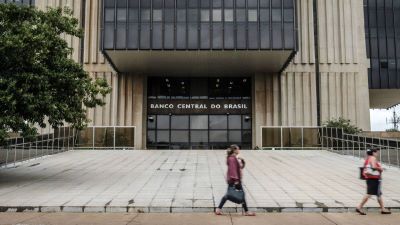
When it comes to raising interest rates to cool off pandemic inflation, Latin Americas central banks have been near the front of the global pack. Theyre also among the worst-equipped for that task.

Half a dozen countries in the region have hiked borrowing costs since March. There’s been more tightening than in most parts of the world because prices are rising faster — a problem highlighted Thursday when the region’s two biggest economies posted new inflation data.

Brazil’s headline number exceeded forecasts and nudged close to 10% — fueling talk of even more rate increases — while in Mexico core inflation accelerated for the ninth straight month.

But economists say there are limits to what rate hikes can achieve, thanks to a backdrop that makes Latin America a uniquely unfavorable place to use monetary policy as a tool to combat inflation. Swaths of its economy are off the books, with low levels of lending — many people don’t even have bank accounts — so raising the cost of credit has less of a dampening effect on demand. Politics tend to be volatile, and its dramas often eclipse central-bank policy tweaks in the eyes of markets.

Plus, there’s often a fairly recent history of high inflation that makes investors and the public ever-wary of rising prices — especially when governments ramp up spending, as Latin America’s mostly have in the pandemic.

Central bankers sometimes have to hit the brakes harder than they might want to when fiscal policies pull in the opposite direction — and some Latin American monetary authorities have a long way to go to convince investors that they’re autonomous from politicians. In any case, much of the current wave of inflation is driven by forces — like pandemic disruptions to supply chains, or rising commodity prices — that are beyond central-bank control.

ADVERTISEMENT

All the region’s monetary authorities face some combination of these problems.

In Mexico, the government has stuck to its austerity plan through the pandemic, and politics are fairly stable. Inflation has surged anyway, pushing the central bank into two rate hikes this year. It doesn’t expect to hit the 3% target until early 2023, and the country’s large informal economy may be one reason why. Less than 40% of Mexicans have access to bank accounts, lagging an overall rate of 55% for the region that’s itself low by world standards. Credit to households and businesses adds up to 45% of Mexico’s GDP; in Thailand, where per-capita incomes are similar, the figure is 131%.

“When you’re working informally, you’re not buying houses left and right,” said Enrique Cardenas, an economic historian at the Iberoamerican University of Puebla. “Modifications to the key rate do not affect you that much. They’re not that relevant.” With limited power to influence the economy via credit, central bankers in Latin America often have to rely on exchange rates. Higher interest rates attract foreign investors, propping up currencies and making imports cheaper. That doesn’t work so well when political tensions or fiscal spending overshadow everything else.

In Brazil, the currency strengthened after the central bank’s surprise 75-point rate-increase in March. But since June it’s declined again even though the bank kept hiking. Investors remain concerned about a possible breach of spending rules, as President Jair Bolsonaro considers expanding social programs. And tensions have only escalated last week, amid street demonstrations orchestrated by Bolsonaro and a fight over the Supreme Court’s powers. “Political noise and the threats to breach the fiscal ceiling are preventing the real from strengthening,” said Jose Julio Senna, a former central banker now in charge of monetary studies at the Institute of Brazilian Economics. “So monetary policy loses a very important transmission channel.”

Peru is another example. For years it’s been among the region’s rare investment-grade credits. But the country has been through weeks of turmoil after a knife-edge election won by a left-wing outsider. The sol currency has plunged, driving inflation to a 12-year high, and analysts expect the central bank’s first rate increase in five years won’t be the last.

Chile, South America’s richest country and usually one of its more tranquil, has been hit by street protests in the last two years. It’s also been a relatively big spender in the pandemic — and congress has been trying another form of stimulus by letting people tap their pension funds early. That’s escalating inflation risks, warns central bank chief Mario Marcel, who surprised markets last week with a bigger-than-expected interest-rate hike.

Consumer prices have exceeded forecasts for the past two months. Many of these problems pre-date the pandemic, which hit the region harder than most. It’s just that they’ve gotten worse. And they leave policy makers walking an especially precarious line. There’s pressure from above, from the financial markets, to keep finances sound — and from below to remedy deep-seated social divides. “When institutions and economic policy foundations are not strong, central banks are forced to hike interest rates before time, like it’s happening today,” said Ernesto Revilla, chief Latin America economist at Citigroup Inc. “We have called this the Latin American dilemma,” he said. “It’s not obvious how it will be solved.”

Published : September 13, 2021

Biden vaccine push wins cautious business support as political opponents fume #SootinClaimon.Com

#SootinClaimon.Com : ขอบคุณแหล่งข้อมูล : หนังสือพิมพ์ The Nation.

https://www.nationthailand.com/business/40006028

Biden vaccine push wins cautious business support as political opponents fume


WASHINGTON – Bob Harveys phone did not ring.

Biden vaccine push wins cautious business support as political opponents fume

In Washington, a political furor had erupted over President Joe Biden’s new coronavirus vaccine and testing mandate for businesses, with Republicans howling about an unconstitutional power grab and vowing to challenge him in the courts.

But in Houston, where Harvey heads the city’s largest business group, employers took the news in stride.

“I have not heard from my members today, which is interesting. I think the reason is what he announced is so in line with the conversations we’ve been having,” Harvey, the chief executive officer of the Greater Houston Partnership, said Friday. “This will come as a relief to the business community, to have an order that requires all of them to move together.”

The president’s decision to require medium and large companies to subject their employees to mandated vaccination or weekly coronavirus testing represents a sharp expansion of the federal government’s workplace powers, according to political scientists and legal experts.

ADVERTISEMENT

For a leader who has said he is committed to reviving Washington’s bipartisan impulse, it amounted to an unapologetic offensive in the culture wars that have divided the country and inflamed its politics.

Instead of directly mandating Americans take the vaccine, Biden effectively outsourced the job to the business community. But unlike previous White House interventions in the market – notably including President Barack Obama’s 2010 health insurance mandate – Biden’s action was welcomed by many bosses.

Texas Republican Gov. Greg Abbott called Biden’s move “an assault on private businesses,” but businesses in his state’s largest city did not see it that way.

“The context in which this is occurring really matters,” said Harvey, a former energy industry executive. “We’ve been hit hard by this fourth wave [of the virus] . . . and employers simply must play a role in addressing this problem. We’ve tried it every other way.”

In a recent survey, 23% of partnership members already required coronavirus vaccines for some or all employees and an additional 30% were considering doing so. Of the remaining 46% that were not, most said they feared that some workers would quit rather than submit.

The president’s blanket order, applying to all companies with at least 100 employees, eliminated that worry, Harvey said.

Texas is a hotbed of resistance to pandemic health measures. Its vaccination performance – 58.6% of those 12 and older are fully vaccinated – trails the national average, according to state and federal data.

Employers in the Houston area have been talking for weeks about what to do in response to the virulent delta strain of the coronavirus, which has emptied workplaces and filled hospitals, Harvey said. Now, they can get down to it.

“The reality is there are a number of businesses that are wanting the government to step in. This gives them the cover to do what they want to do anyway,” said Charles Shipan, a political scientist at the University of Michigan.

Indeed, the vocal Republican opposition to the president’s initiative threatens to leave the GOP at odds with its traditional business constituency.

Houston is a largely Democratic city. But Harvey’s group has members in 11 counties, nine of which backed former president Donald Trump last year, and includes numerous companies in traditionally conservative industries, such as oil and banking. Among them: ExxonMobil, Chevron, JPMorgan and Wells Fargo.

Biden’s new covid plan also drew backing from some national business groups, such as the Business Roundtable, the National Association of Manufacturers, and the American Apparel and Footwear Association

And the president cited the example of several large companies that already require employees to be vaccinated, including Disney and United Airlines and “even Fox News.” (The cable network actually required employees to disclose their vaccination status, not get vaccinated, according to published reports.)

“We’re going to reduce the spread of covid-19 by increasing the share of the workforce that is vaccinated in businesses all across America,” Biden said, speaking in the State Dining Room.

The president said he was acting, in part, to protect the economic recovery. In recent weeks, the resurgent virus has drained momentum from industries that had been rebounding, such as the airlines.

Employers added just 235,000 jobs last month, well below economists’ expectations, and forecasts for September aren’t much better.

In August, the University of Michigan consumer sentiment gauge fell to its lowest mark since the pandemic’s initial weeks. Wholesale inflation on Friday hit a new annual high of 8.3%. And on Wall Street, stock prices have drifted sideways for two months.

If the need for federal action last week seemed clear, the response in some quarters to Biden’s announcement was hostile.

Several Republican governors, including in Texas, Georgia, and South Dakota, vowed to fight the mandate in court.

South Carolina Gov. Henry McMaster said Biden and the Democrats had “declared war against capitalism” and he pledged to “fight them to the gates of hell to protect the liberty and livelihood of every South Carolinian.”

Even before the president spoke on Thursday afternoon, the Federalist, a right-wing publication, assailed the vaccine-and-testing plan as “a fascist move.”

J.D. Vance, a Republican Senate candidate in Ohio, called for “mass civil disobedience,” urging Americans to refuse to comply with any new requirement or to pay any subsequent fine. And Josh Mandel, another Senate aspirant in Ohio, warned that Biden would use “the Gestapo” to enforce his directive.

Social media chatter about workers quitting their jobs rather than complying with the new federal mandate has left Wall Street economists unimpressed. Michael Feroli of JPMorgan Chase called it “noise,” pointing out that employees who quit are not eligible for unemployment insurance.

Jim O’Sullivan, chief U.S. macro strategist for TD Securities, said the option of weekly testing would offer vaccine skeptics an alternative, thus minimizing any workforce loss. And cautious service-sector workers might be drawn back into the labor force if it appeared that more of their co-workers were likely to be immunized, he said.

Biden’s action is the latest in a long expansion of presidential involvement in business affairs. From a laissez-faire stance in the 19th and early 20th centuries, Washington responded to war and economic crises by increasing its sway over commercial activities.

Numerous White House occupants have battled with powerful industries over their commercial practices. President Theodore Roosevelt broke up John D. Rockefeller’s Standard Oil trust. President John F. Kennedy forced U.S. Steel to roll back price increases at a time of incipient inflation. President Richard M. Nixon went farther in 1971, imposing economy-wide wage and price controls.

Yet Biden’s coronavirus plan tests the limits of presidential power, according to Shipan, who has written on the subject. The president is requiring employers to delve into employees’ personal medical practices, not companies’ market behavior.

“This is a break from what presidential power has done in the past,” said Shipan. “That doesn’t mean it’s necessarily outside the boundaries of what presidents have the power to do.”

Biden has ordered the Labor Department to write an emergency rule requiring employers with more than 100 workers to demand weekly tests or proof of vaccination. Violations are punishable with fines up to $14,000 each.

Up to 80 million Americans could be covered by the action.

In 1970, Congress gave the department’s Occupational Safety and Health Administration (OSHA) authority to write regulations governing workplace safety, including emergency standards that are valid for six months.

In June, the agency issued an emergency rule to prevent the spread of coronavirus in health care settings. But courts have fully or partially struck down five of the nine emergency rules OSHA has promulgated, according to the Congressional Research Service.

Josh Blackman, a constitutional law specialist at the South Texas College of Law, said Biden was attempting to stretch a half-century old law beyond what Congress had intended.

OSHA regulations customarily deal with workplace conditions that directly affect employee health and well-being, such as the handling of hazardous chemicals, slippery floors or dangerous stairs.

“This is completely novel. There’s a credible argument it goes beyond the scope of delegated authority,” he said. “Lawsuits will be filed and inevitably some judge will find this goes too far.”

Published : September 12, 2021