Toyota’s EV strategy moves up a gear

#SootinClaimon.Com : ขอบคุณแหล่งข้อมูล : หนังสือพิมพ์ The Nation.

https://www.nationthailand.com/international/40010036


Toyota Motor Corp. has announced plans to significantly expand its lineup of electric vehicles, a move that is likely to accelerate the shift to electrification among other carmakers.

Toyota’s EV strategy moves up a gear

The world’s largest automaker aims to achieve global sales of 3.5 million EVs per year by 2030, a major increase from its previous goal of 2 million, including fuel cell vehicles.

With the drive toward decarbonization gaining speed throughout the automotive industry, Toyota is planning to invest ¥4 trillion in plants, equipment and research and development to boost its electric vehicle strategy.

The new target of 3.5 million units is more than one-third of Toyota’s total global sales in 2020. The auto giant had previously planned to roll out 15 EV models by 2025, but this figure has now been doubled to 30 by 2030.

The bZ4X, a sport-utility vehicle set to hit the market in mid-2022, will be the first model in a new series of Toyota EVs that will range from small cars to large SUVs and sedans.

Toyota’s luxury Lexus brand plans to have a full lineup of electric vehicles and achieve 1 million units in global EV sales.

Lexus is aiming for EVs to account for 100% of global sales in 2035.

Toyota also plans to invest a total of ¥8 trillion between 2022 and 2030 on plants, equipment and the development of vehicles, including hybrid and fuel cell vehicles.

The company will increase investment in the production of batteries — a core component of EVs — from ¥1.5 trillion announced in September to ¥2 trillion. Toyota is also considering installing fast-charging stations at all of its dealerships across Japan by 2025 to promote the spread of electric vehicles.

“At present, the energy situation varies greatly from region to region,” Toyota President Akio Toyoda said at a media briefing in Tokyo on Tuesday. “That is exactly why Toyota is committed to providing a diversified range of carbon-neutral options for various situations and needs.”

The rapid shift toward low or zero carbon-emission vehicles is increasing the possibility that fossil fuel-powered vehicles could become unmarketable in some major markets, such as Europe.

In April, Honda Motor Co. announced a target of selling only battery-powered electric or fuel cell vehicles by 2040.

Honda was the first major Japanese automaker to declare that it would stop manufacturing gasoline-powered vehicles, including hybrids, at some point in the future.

In November, Nissan Motor Co. said it aims to invest about ¥2 trillion in electrification, including EVs, over the next five years and sell 15 new electric models globally by fiscal 2030.

Nissan’s strategy takes into account the differing conditions in various regions around the world, such as recharging infrastructure, and also places importance on the company’s hybrid vehicle technologies.

The shift to electric vehicles has been even more pronounced among automakers in Europe, partly due to the European Union’s tougher emissions regulations.

Mercedes-Benz plans to go all-electric by 2030, while Audi, part of the Volkswagen Group, has announced that all its new vehicles will be EVs from 2026.

Published : December 16, 2021

By : The Japan News
Cathay Pacific eyes business rebound, bigger role in GBA

#SootinClaimon.Com : ขอบคุณแหล่งข้อมูล : หนังสือพิมพ์ The Nation.

https://www.nationthailand.com/international/40009990


Largest airline in HK resuming more flights between SAR, Chinese mainland

Cathay Pacific eyes business rebound, bigger role in GBA

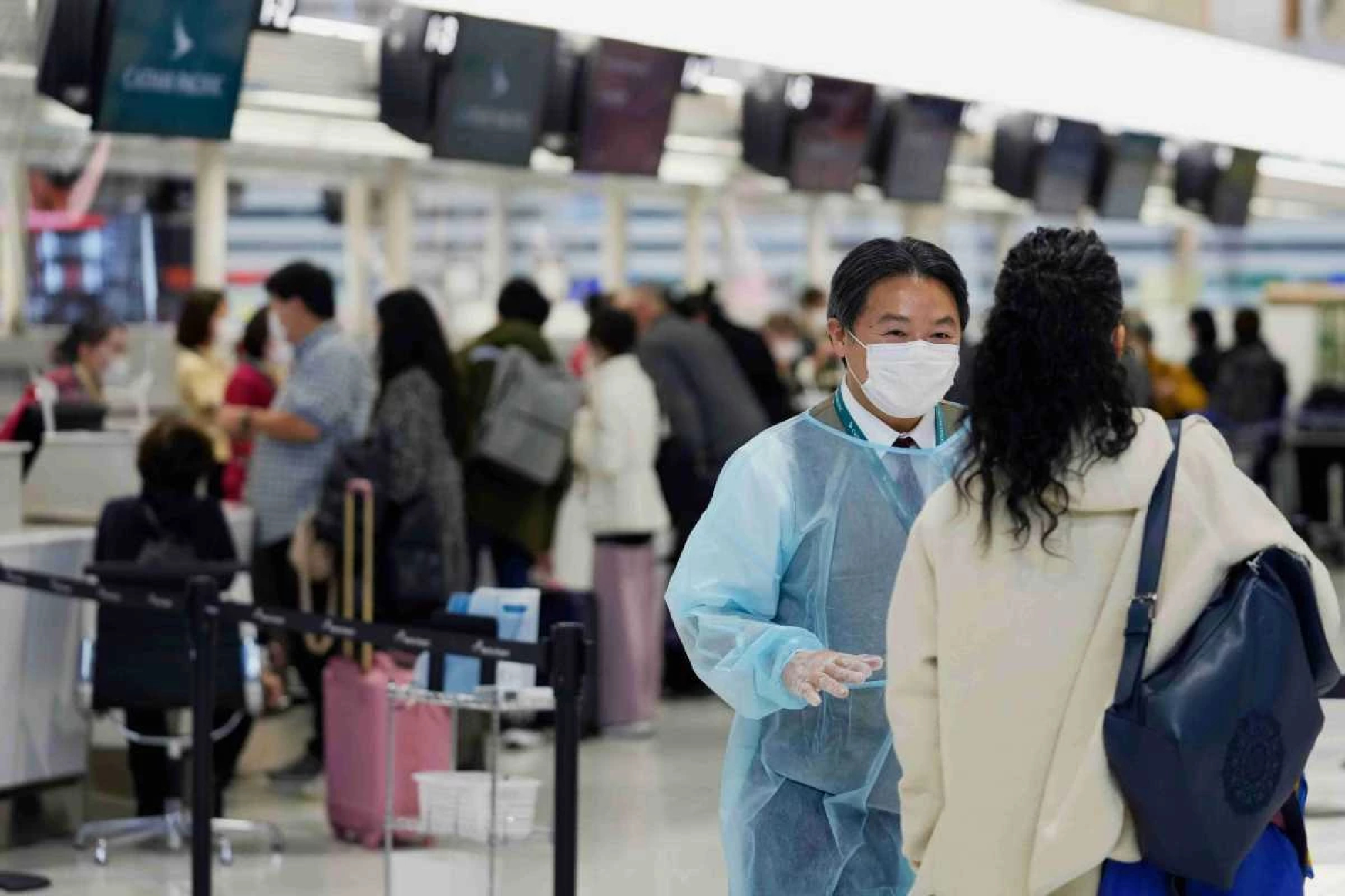
Cathay Pacific Airways, the largest airline in the Hong Kong Special Administrative Region, said it is cautiously optimistic about the growth prospects of the air travel market in the Chinese mainland next year, and is prepared for a potential future capacity increase through business growth opportunities brought about by the Guangdong-Hong Kong-Macao Greater Bay Area.

With the COVID-19 pandemic gradually brought under better control in China, Cathay Pacific said it is preparing for more flight resumptions to and from the Chinese mainland. It has resumed flights between Hong Kong and 10 cities in the Chinese mainland.

“As Hong Kong’s flagship airline, which was established in 1946, we welcome and fully support various measures to strengthen Hong Kong’s ties with the Greater Bay Area. We will continue to focus on this important national strategy and promote traffic connections between Hong Kong and other cities in the area. We will also strengthen Hong Kong’s role as a ‘super liaison’ between the area and the rest of the world,” said Agatha Lee, general manager of China business at Cathay Pacific Airways.

“We are happy to see that the third runway of Hong Kong International Airport will launch operations next year. It will help us better connect the Chinese mainland, Hong Kong and other cities in the world,” Lee said.

With the development of the GBA, Cathay Pacific has found more passengers in the region showing interest in a hybrid transportation model. Some choose to take buses to go across the Hong Kong-Zhuhai-Macao Bridge or take ferries first and then head to the Hong Kong airport for flights. The carrier believes such a model will become more common in the future.

In the third quarter, some 120,000 Chinese mainland students studying abroad, especially those in the United States and the United Kingdom, took Cathay Pacific flights and transferred in Hong Kong. The high demand from students helped the carrier significantly reduce losses, helping it make earnings and costs even during the period between July and October.

For overall passenger demand, the performance of short-haul flights, especially flights that connect Asian countries, fared better. Demand for long-haul international flights was weaker due to travel restrictions, Cathay Pacific said.

In addition, the air cargo transportation market has become a bright spot for the industry amid the pandemic. Cathay Pacific has been no exception. The carrier said its cargo capacity has resumed to about 70 percent of the level seen before the pandemic.

The company said it has a fleet of 20 freighters and six Boeing 777-renovated freighters, and it also transported goods with belly-hold operations. With the advanced freight handling system in Hong Kong, it has transferred about 76 million doses of COVID-19 vaccines to overseas markets with its freighters.

Despite COVID-19, Cathay Pacific has continued business upgrades and deliveries of more new fuel-efficient aircraft. The carrier is also introducing more advanced devices such as 4K screens and Bluetooth earphones for inboard entertainment systems. Starting Jan 1, 2022, the carrier will introduce the HBO Max channel in its entertainment system, becoming the first Asian airline to do so.

“The impact of the pandemic is temporary, and passenger demands are constantly upgrading. We need to keep improving ourselves and maintain advantages in our products,” Lee said.

Until March 2022, to give passengers more flexibility, Cathay Pacific said it will allow all passengers who have booked domestic or international flights to make changes to their itineraries for free or change to Cathay credits if they are not sure about departure times.

Cathay Pacific said it plans to achieve zero carbon emissions by 2050. In 2014, it became the first airline that invested in US sustainable fuel company Fulcrum BioEnergy, and will purchase 1.1 million metric tons of sustainable aviation fuel from the company during a 10-year period. By 2030, it plans to use 10 percent of total fuel needed as sustainable fuel.

By ZHU WENQIAN

Published : December 15, 2021

By : China Daily

Vietnam, South Korea wants trade to reach $100bln by 2023, flights to resume soon: leaders

#SootinClaimon.Com : ขอบคุณแหล่งข้อมูล : หนังสือพิมพ์ The Nation.

https://www.nationthailand.com/international/40009989


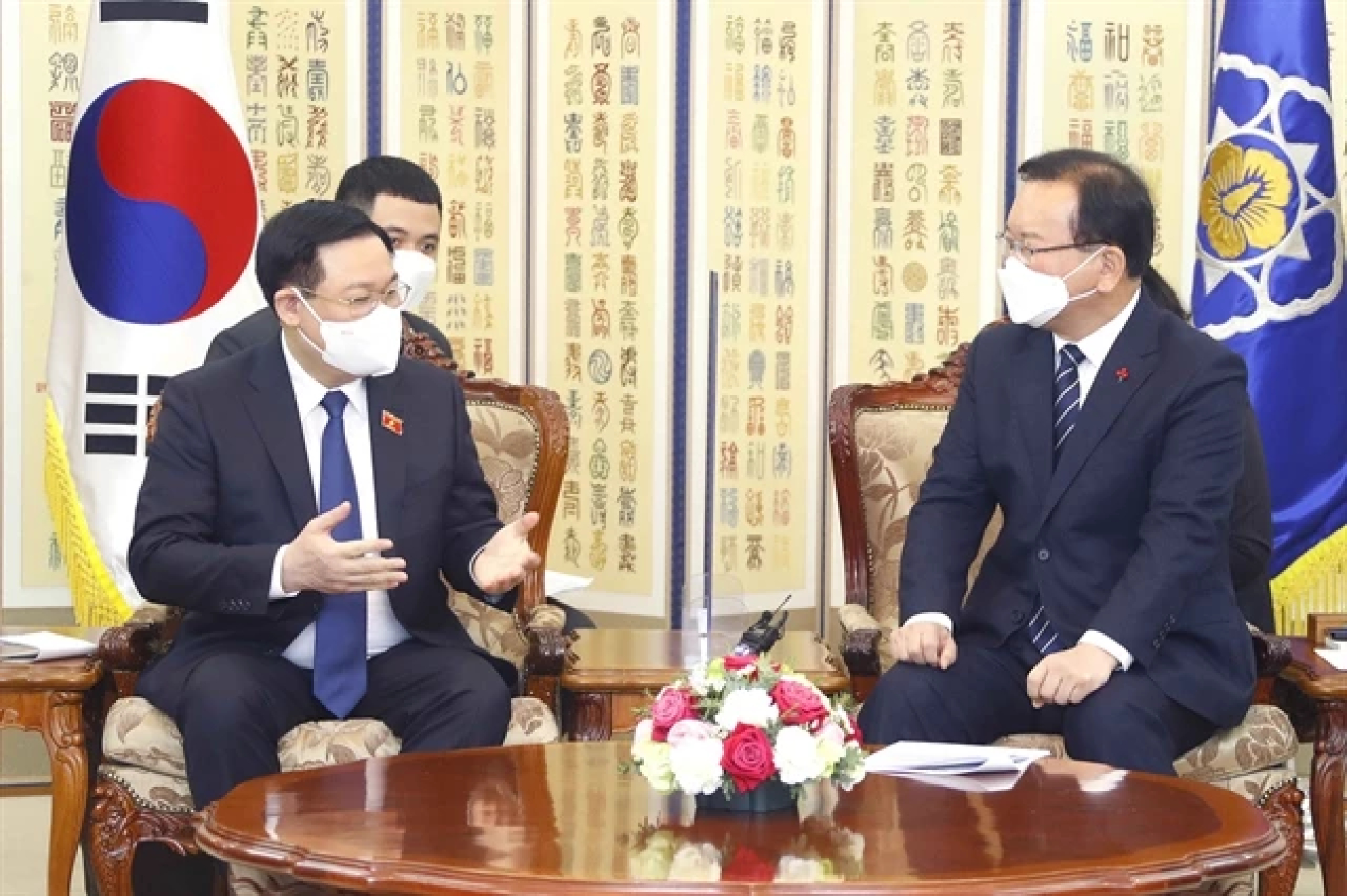
SEOUL — Vietnamese National Assembly Chairman Vương Đình Huệ held talks with Prime Minister of the Republic of Korea (RoK) Kim Boo-kyum on Tuesday in Seoul, as part of his official visit to the country.

Vietnam, South Korea wants trade to reach $100bln by 2023, flights to resume soon: leaders

The RoK Government leader welcomed the visit as a launchpad for a series of commemorative events celebrating 20 years of Việt Nam-RoK diplomatic ties in 2022, saying that the growing parliamentary ties between Việt Nam and RoK reflect the two people’s wishes.

RoK PM congratulated Việt Nam for its increasingly elevated profile on the international stage, stressing that RoK cherishes its relationship with Việt Nam and continues to consider Việt Nam a key partner in its New Southern Policy.

NA Chair Huệ informed Kim Boo-kyum of the outcomes of the talks with RoK counterpart Park Byeong-seug the day before, underlining Việt Nam’s wish to cooperate further with RoK on several fronts, especially trade and investment.

He noted with pleasure how bilateral economic ties remain strong and secure despite COVID-19 headwinds.

At the meeting, the two sides agreed to several measures to boost bilateral ties in 2022, the 30th anniversary of diplomatic relations, as well as the expansion of security and defence cooperation.

The leaders of the two countries reaffirmed efforts to achieve the goal of raising bilateral trade to over US$100 billion by 2023 and $150 billion by 2030, encouraging RoK enterprises to continue investing in and expanding their businesses in Việt Nam.

NA Chair Huệ said the Vietnamese legislation will accompany the Government in creating favourable policies and guaranteeing long-term interests for RoK enterprises in Việt Nam.

The Vietnamese top legislator said the many questions RoK enterprises put forward in the recent RoK-Việt Nam business forum shows how interested they are in trading with Việt Nam and the opportunities for further economic cooperation between the two sides.

NA Chair Huệ and PM Kim Boo-kyum expressed delight that the two countries have signed a bilateral social insurance agreement that helps RoK and Vietnamese workers in the host countries to get better access to social welfare policies.

The two sides agreed to boost information exchange with regards to COVID-19 response plans and post-pandemic recovery, facilitating people travelling between the two countries, including mutually recognising each other vaccine passports and resuming two-way flights soon.

NA Huệ also thanked the Government and people of Korea for their medical support to Việt Nam, including a donation of nearly 1.4 million doses of COVID-19 vaccines, proposing that the two sides actively cooperate in research, development technology transfer for the production of vaccines and medicines, not only for the COVID-19 pandemic.

The Vietnamese parliament leader thanked the RoK for its attention and support to the Vietnamese community in RoK, especially during the pandemic, and expressed his hope that the RoK will continue to help ensure the legitimate rights of the Vietnamese workers and the happy, stable life of multicultural families.

PM Kim Boo-kyum thanked the Vietnamese side for actively supporting RoK businesses in Việt Nam, especially in avoiding disruption of the supply chain in Việt Nam due to COVID-19.

He highly appreciates Việt Nam’s help in dealing with the lack of raw materials for the production of diesel engine exhaust fluid and hopes that the two sides will cooperate closely in this field in the near future. — VNS

Published : December 15, 2021

By : Vietnam News

US, Indonesia sign MOU on joint naval exercises and combating illegal fishing

#SootinClaimon.Com : ขอบคุณแหล่งข้อมูล : หนังสือพิมพ์ The Nation.

https://www.nationthailand.com/international/40009988


JAKARTA – The United States and Indonesia have signed a memorandum of understanding (MOU) on maritime cooperation, including on joint naval exercises and combating illegal fishing, a problem Jakarta has been grappling with due to reports of occasional encroachment of its waters by Chinese and Vietnamese fishing vessels, among others.

US, Indonesia sign MOU on joint naval exercises and combating illegal fishing

Both countries also signed two other MOUs to continue the Peace Corps programme, which involves the US providing social and economic development assistance, and to expand educational ties that have seen thousands of young leaders participating in exchange programmes.

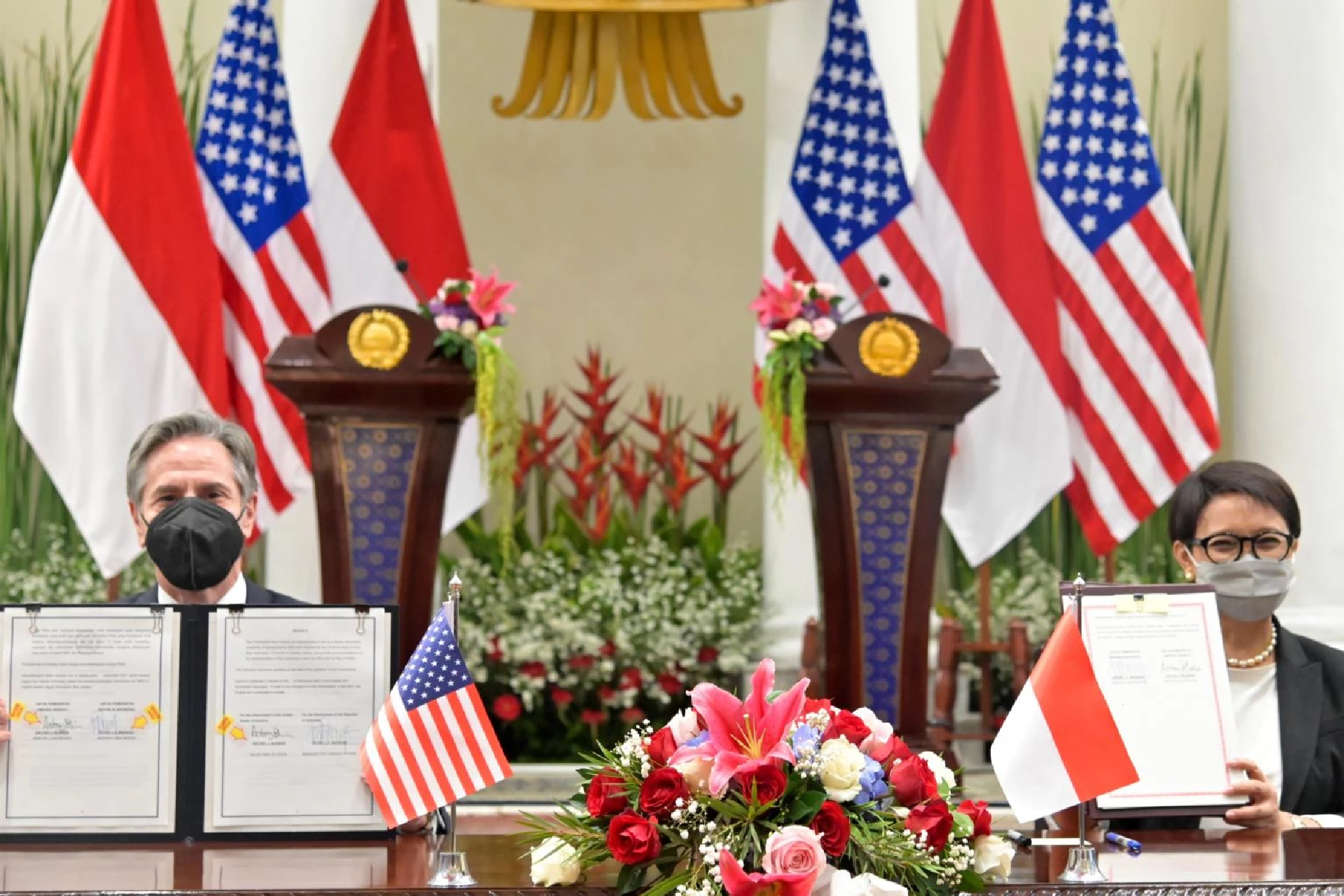
The MOUs were signed on Tuesday (Dec 14) by Indonesia’s Foreign Minister Retno Marsudi, Education Affairs Minister Nadiem Makarim and US Secretary of State Antony Blinken, who was in Jakarta on the first leg of a four-day trip to South-east Asia.

Mr Blinken told a media briefing later the three agreements would bring cooperation between the two countries to another level.

Referring to the MOU on maritime cooperation, Ms Retno said that it would also cover conservation and fisheries management, as well as maritime safety and navigation.

“In order to strengthen our security cooperation, we agreed to establish a two-plus-two dialogue mechanism between senior officials from each ministry of foreign affairs and defence,” Ms Retno added.

The US has also offered to to work with Indonesia to deal with the Covid-19 pandemic and ensure a strong post-pandemic economic recovery.

“President (Joe) Biden asked me to come here to advance our work together on a number of critical issues that includes stopping the Covid-19 pandemic,” Mr Blinken said.

The US has donated more than 25 million doses of vaccines to Indonesia, and the latest shipment arrived on Tuesday. On top of this, the US is also providing US$77 million (S$105.4 million) in pandemic relief assistance.

Ms Retno said that Indonesia hoped both countries could also cooperate in the development of mRNA-based vaccine technologies.

Pfizer-BioNTech and Moderna are among the companies that have successfully developed Covid-19 vaccines using this technology.

In Indonesia, Mr Blinken met President Joko Widodo at the Jakarta presidential palace on Monday, and expressed the US’ commitment to strengthen its partnership with Indonesia, including in economic development and infrastructure development.

During the meeting, which was described by Ms Retno as “warm and open”, Mr Widodo expressed his appreciation for the support given to Indonesia by the US amid the Covid-19 pandemic.

By Wahyudi Soeriaatmadja

Published : December 15, 2021

By : The Straits Times

Korea, Australia adopt joint statement on South China Sea

#SootinClaimon.Com : ขอบคุณแหล่งข้อมูล : หนังสือพิมพ์ The Nation.

https://www.nationthailand.com/international/40009987


Statement says Indo-Pacific stability depends on following international law

Korea, Australia adopt joint statement on South China Sea

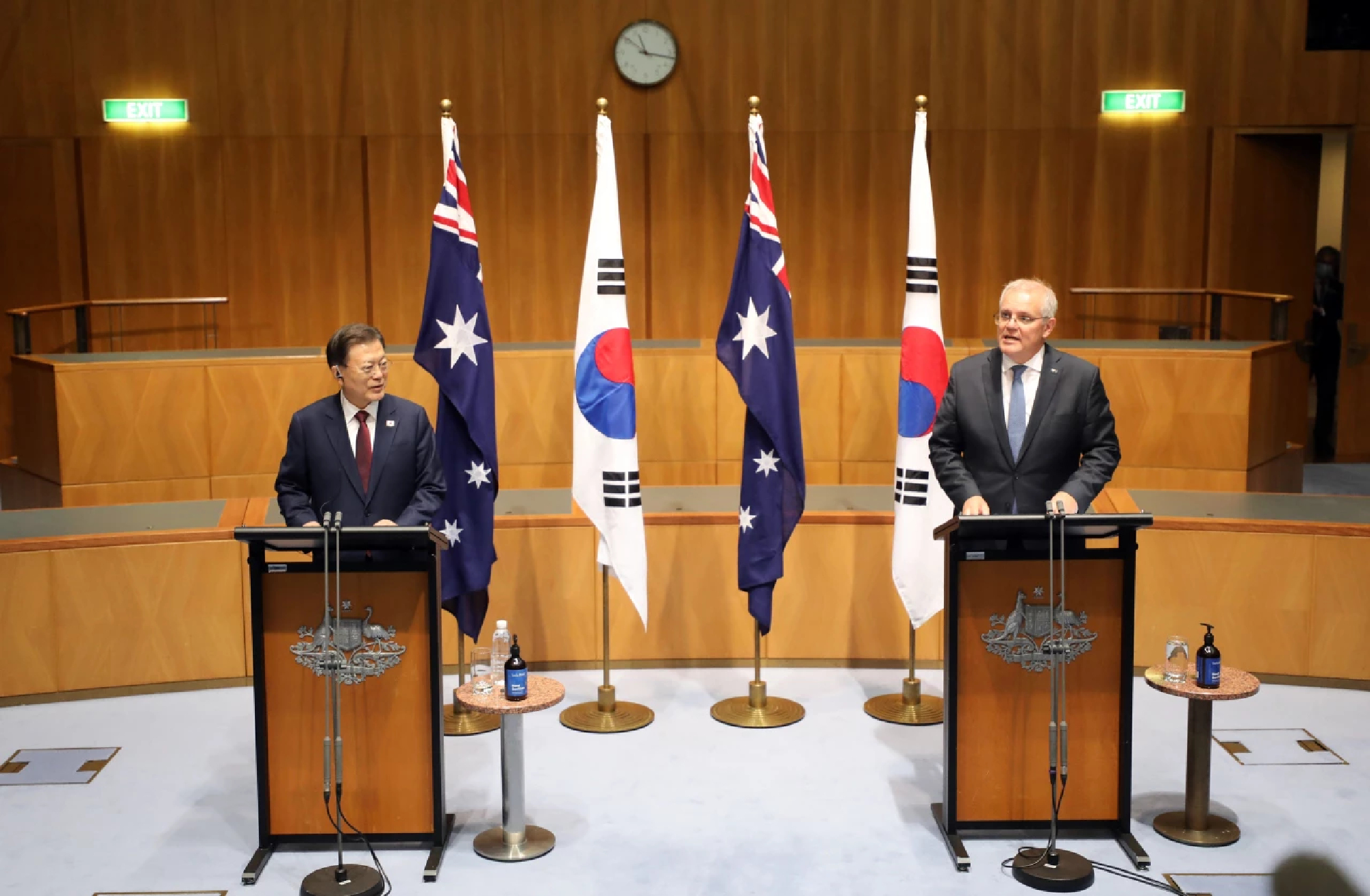
In the wake of Monday’s summit between South Korea and Australia, President Moon Jae-in and Prime Minister Scott Morrison adopted a joint statement on territorial disputes in the South China Sea.

“As major maritime trading nations, Australia and South Korea recognize that the stability of the Indo-Pacific depends on adherence to international law in the maritime domain, including in the South China Sea,” said the joint statement signed by the two leaders.

The South China Sea is a marginal sea of the Western Pacific Ocean. China claims most of the sea as its territory and strongly opposes outside intervention, despite objections from its neighbors and a court ruling against it in the Hague.

Tensions between China and the US have recently escalated as the US and the European Union are concerned about China’s violation of international law in the sea through high-level consultations. The US also warned that it could trigger a mutual defense treaty after China used water cannons on two Philippine supply boats heading into the sea.

The joint statement said the two leaders underscored that disputes must be resolved peacefully and in accordance with international law, including the United Nations Convention on the Law of the Sea.

“They also reaffirmed the importance of upholding freedom of navigation and overflight, and agreed to strengthen coordination to uphold these principles, which must not be undermined in the context of increasing risks of instability in the maritime domain.”

President Moon, who distanced himself from the diplomatic boycott of the Beijing Winter Olympics on Monday, appears to be on the side of Australia when it comes to the issue of the South China Sea.

Australia is the top US ally, participating in the AUKUS, Quad and Five Eyes, which the US leads to keep a check on China. Morrison said the member states of the Association of Southeast Asian Nations should be able to make their own economic decisions at a joint press conference Monday, speaking of the sea.

The two leaders also agreed to support peace on the Korean Peninsula.

“Leaders underscored their mutual commitment to the complete denuclearization and establishment of permanent peace on the Korean Peninsula, based on previous agreements including the 2018 Panmunjom Declaration, Pyongyang Joint Declaration and Singapore Joint Statement,” the statement said.

They also called for the full implementation of relevant United Nations Security Council resolutions by the international community, including North Korea.

In addition to security issues, the Comprehensive Strategic Partnership Joint Statement includes expanding cooperation in economy, technology, health and promoting human exchange.

They agreed to work together to advance clean hydrogen cooperation, focusing on trade, supply chain development, support for infrastructure, expanding use in the transport and power sector, institutional agreements and enabling regulatory and skills reforms.

The two nations will increase cooperative efforts to ensure supply chain resilience for critical minerals and associated products. They also agreed to be close partners on earth observation and imagery captured from space.

By Shin Ji-hye

Published : December 15, 2021

By : The Korea Herald

ADB revises slightly lower outlook for developing Asia

#SootinClaimon.Com : ขอบคุณแหล่งข้อมูล : หนังสือพิมพ์ The Nation.

https://www.nationthailand.com/international/40009986


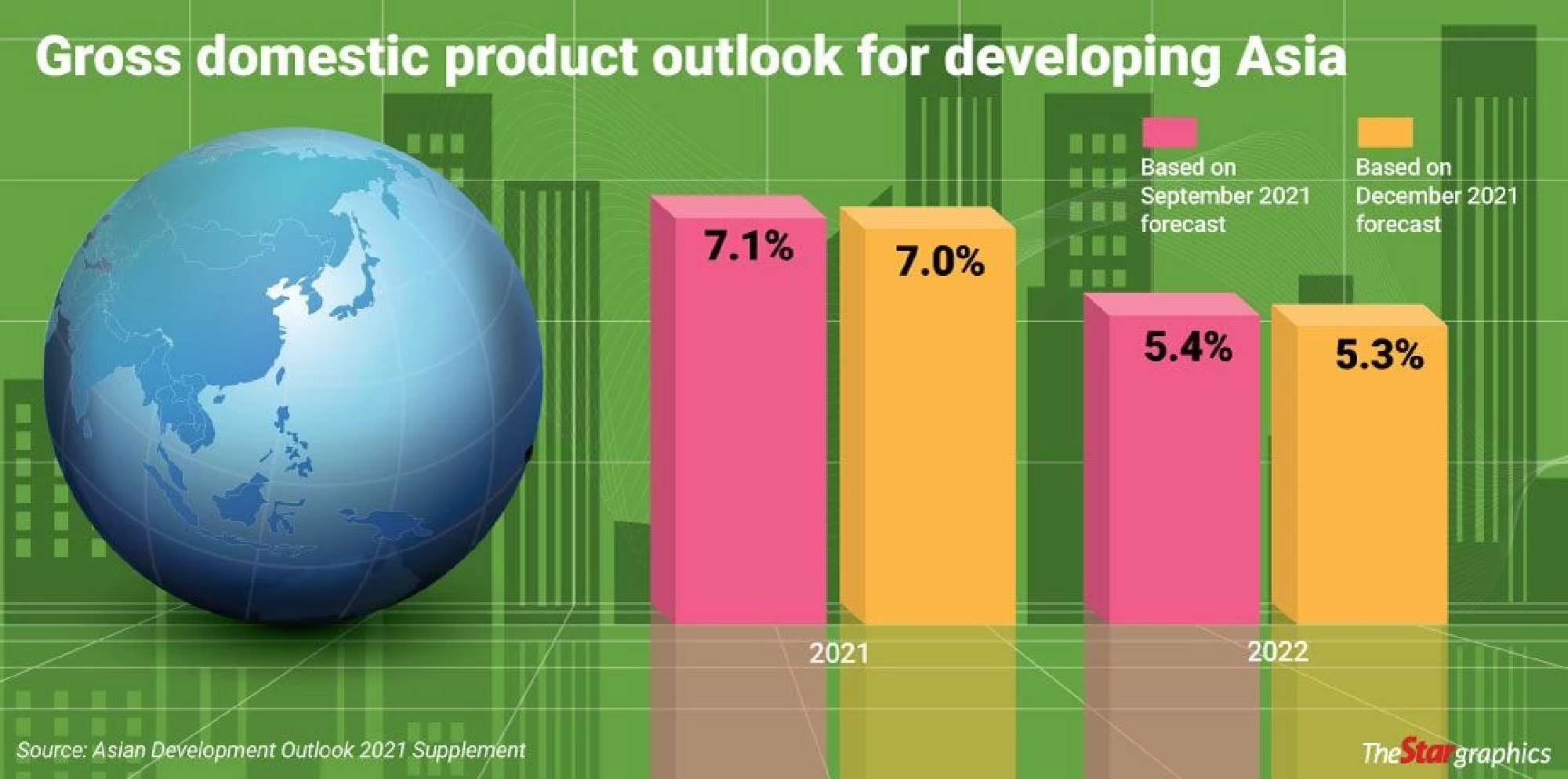
PETALING JAYA: The Asian Development Bank (ADB) has revised its economic growth outlook for developing Asia down slightly to 7% this year and 5.3% next year, after renewed outbreaks of the Covid-19 led to slower growth in the third quarter.

ADB revises slightly lower outlook for developing Asia

ADB’s latest estimates, presented in a regular supplement of the Asian Development Outlook (ADO) 2021, compare with the bank’s September forecasts of 7.1% growth for 2021 and 5.4% for 2022.

Developing Asia refers to the 46 developing members of ADB. Prospects for this year have been revised slightly downward for all sub-regions except Central Asia.

“Developing Asia’s steady progress in dealing with the pandemic, through continued vaccination drives and more strategic application of containment measures, helped boost growth prospects in the early part of the year.

“However, new outbreaks in the third quarter muted gross domestic product growth and the advent of the Omicron virus variant is causing renewed uncertainty.

“Recovery efforts will have to take these developments into consideration,” said ADB acting chief economist Joseph Zveglich Jr in a statement.

The main risk to the growth outlook remains a resurgence in Covid-19 cases, the bank said. The average number of daily cases globally rose to almost 573,000 on Nov 30 from 404,000 on Oct 15.

Developing Asia’s vaccination rate has increased significantly to 48.7% (fully vaccinated) as of Nov 30, although the region still lags behind the United States at 58.1% and the European Union at 67.2%.

Rates of fully vaccinated people also vary widely within the region, from as high as 91.9% of the total population in Singapore to as low as 2.2% in Papua New Guinea.

Bucking the overall trend for developing Asia, ADB said Central Asia’s economy is expected to grow 4.7% this year, reflecting higher commodity prices and increased public spending.

The forecast for next year has also been raised to 4.4% from 4.2% in September.

East Asia’s growth outlook has been downgraded by 0.1 percentage points for both 2021 and 2022, to 7.5% and 5%, respectively, amid slight downward adjustments in the forecasts for China – the region’s largest economy.

The latter’s economy is now expected to grow 8% this year and 5.3% next year.

South Asia is forecast to grow 8.6% in 2021, compared with September’s forecast of 8.8%. The sub-region’s 2022 outlook remains at 7%.

India, South Asia’s largest economy, is now expected to grow 9.7% in fiscal year 2021, which ends March 31, 2022, ADB said.

The reduction of 0.3 percentage points comes amid supply chain issues that are affecting industry. India’s outlook for fiscal year 2022 is maintained at 7.5%, as domestic demand is expected to normalise.

South-East Asia’s 2021 outlook has been revised down by 0.1 percentage points to 3% as economies in the sub-region imposed targeted restrictions in the face of Delta variant.

Next year’s growth forecast is increased to 5.1% as economies are expected to continue easing overall restrictions and reviving economic activities, the bank said.

Regional inflation is expected to remain manageable at 2.1% in 2021 and 2.7% in 2022, allowing for a more accommodative monetary policy and supporting pandemic recovery efforts.

Published : December 15, 2021

By : The Star

Asean reported over 24,000 new Covid-19 cases on Tuesday

#SootinClaimon.Com : ขอบคุณแหล่งข้อมูล : หนังสือพิมพ์ The Nation.

https://www.nationthailand.com/international/40009976


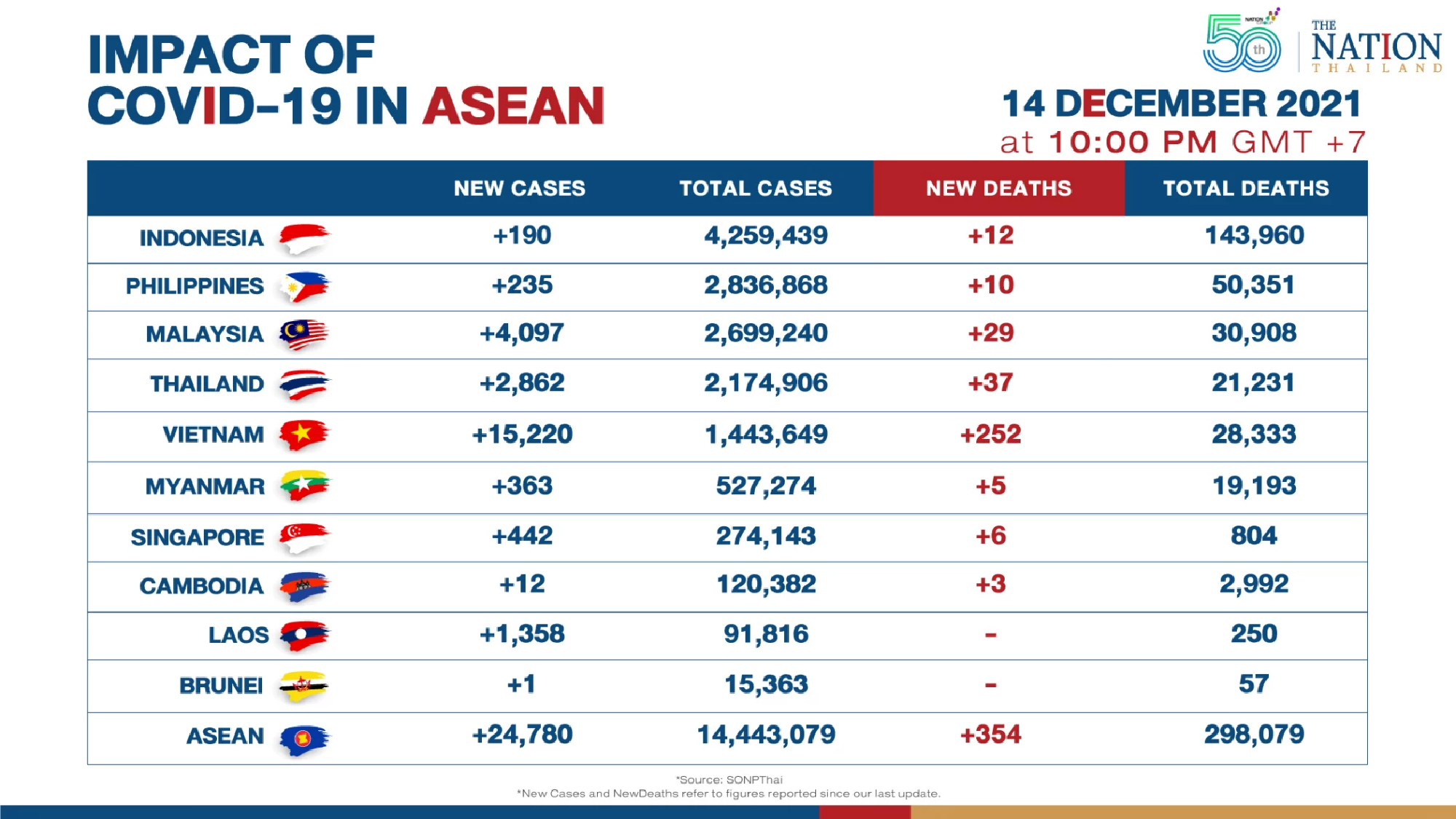
The number of Covid-19 cases crossed 14.44 million across Southeast Asia, with 24,780 new cases reported on Tuesday (December 14). New deaths are at 354, bringing accumulated Covid-19 deaths in Asean to 298,079.

Asean reported over 24,000 new Covid-19 cases on Tuesday

The number of Covid-19 cases crossed 14.44 million across Southeast Asia, with 24,780 new cases reported on Tuesday (December 14). New deaths are at 354, bringing accumulated Covid-19 deaths in Asean to 298,079.

The Philippines received on Tuesday an additional batch of Sinovac vaccines donated by the Chinese government to help the country recover quickly from the Covid-19 pandemic. Majority of these vaccines will be distributed to far-flung areas, while many Filipinos are reportedly considering taking the Chinese vaccine as a booster shot.

To date, the Philippines has received more than 158.5 million doses of Covid-19 vaccines from different vaccine makers, with China being its biggest vaccine supplier.

Meanwhile, Indonesia’s government has warned that the public keep implementing health protocols and get vaccinated, particularly ahead of Christmas and New Year holidays after the country recorded 190 new Covid-19 cases on Tuesday. West Java, the country’s most populous province, dominated the total number of the newly-confirmed cases with 39 reports, followed by East Java with 27 cases and the country’s capital Jakarta with 20 cases.
 

Published : December 15, 2021

By : THE NATION

Wooden Corolla replica driven in test run

#SootinClaimon.Com : ขอบคุณแหล่งข้อมูล : หนังสือพิมพ์ The Nation.

https://www.nationthailand.com/international/40009948


A wooden replica of Toyota Motor Corp.’s Corolla sedan was driven Saturday on the premises of Aste, a public interest incorporated foundation in Toyota, Aichi Prefecture. More than 200 Japanese cypresses harvested from forest thinning went into making it and the car’s original interior, seats and design have all been meticulously reproduced.

Wooden Corolla replica driven in test run

Aste first made a wooden version in 2016 to mark the 50th anniversary of the Corolla’s launch and displayed it at an event. It was so true to form that many asked if the timbered reproduction could be operated.

Some modifications were made by installing an electric motor in the trunk and replacing the wooden tires with roadworthy ones to make the replica drivable.

During Saturday’s test run, the wooden car drove about 20 meters at walking speed in front of people from the foundation.

Wooden Corolla replica driven in test run

“We want to make further improvements to the car and have it run in front of many more people,” said an official of the foundation’s secretariat.

Published : December 14, 2021

By : The Japan News

Fiscal measures set to stabilize economic growth

#SootinClaimon.Com : ขอบคุณแหล่งข้อมูล : หนังสือพิมพ์ The Nation.

https://www.nationthailand.com/international/40009947


Chinese policymakers vowed to adopt more efficient fiscal measures to stabilize economic growth in 2022, while still reining in government debt amid regulations on financing and the property sector, experts said on Monday.

Fiscal measures set to stabilize economic growth

Stronger and more targeted fiscal actions are expected after the top leadership held the annual Central Economic Work Conference last week, including additional tax and fee cuts, and faster fiscal expenditure to boost infrastructure construction, they said.

Further easing of macro policy will cushion the economic slowdown in China in 2022, according to Andrew Fennell, senior director of Fitch Ratings (Hong Kong). He said he expected that fiscal policy will be supportive and the macro leverage ratio will rise modestly next year.

After strong revenue growth and lower-than-expected expenditures contributed to “an undershooting” of this year’s budget deficit target, Fitch’s projection of the general government deficit is at 6 percent of GDP in 2022, well above the pre-pandemic levels, he added.

The official annual fiscal budget plan will not be published until the annual session of the National People’s Congress, which is expected to be held in March, according to analysts.

Meanwhile, “widespread property-sector and financial-contagion risks should be averted,” said Fennell, as strategic adjustments to macro-financial regulations stabilize market confidence and refinancing conditions and translate into improved homebuyer sentiment.

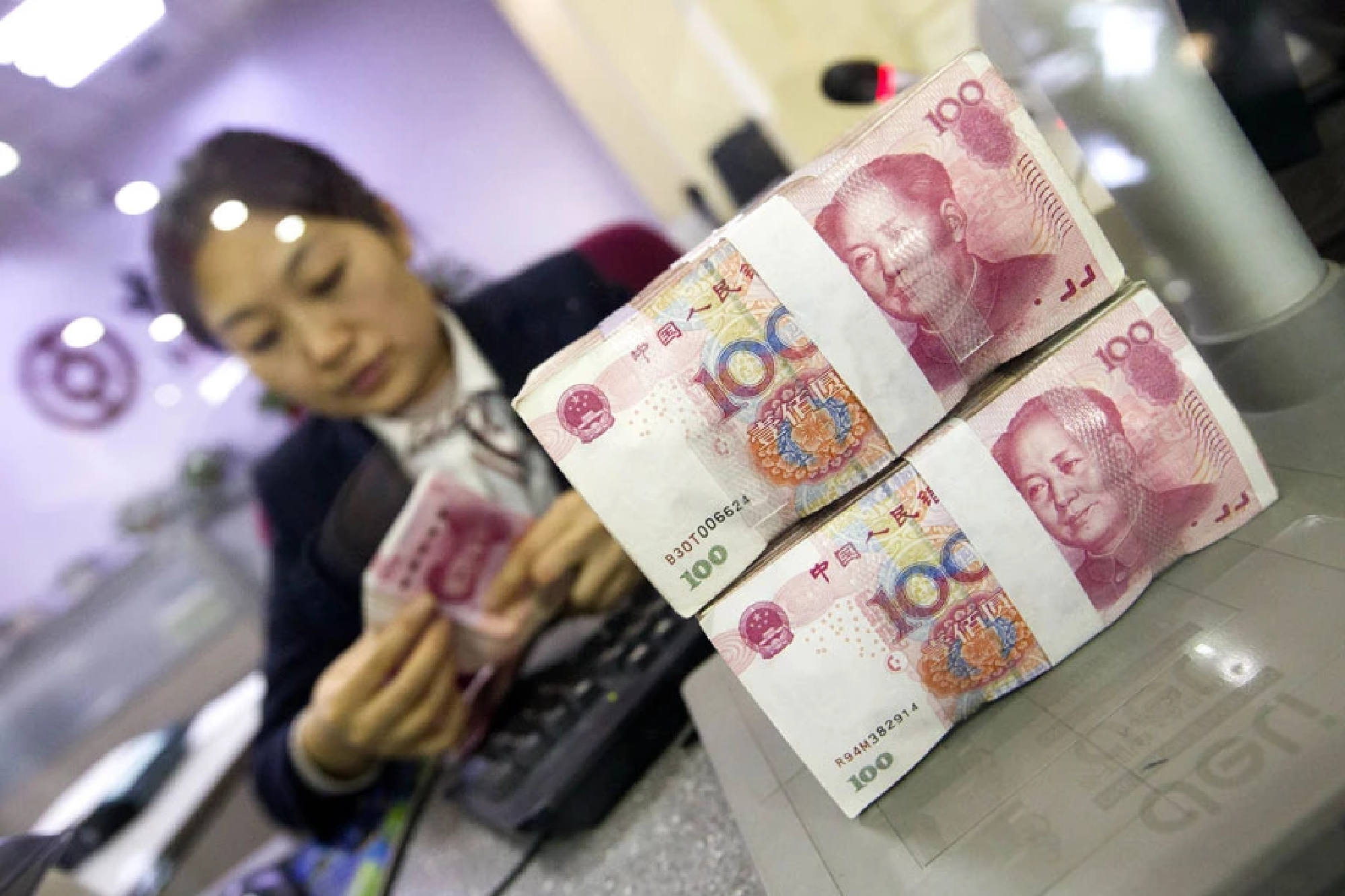
Wang Tao, chief China economist at UBS, wrote in a research note that the official budget deficit ratio is likely to remain at 3.1 to 3.2 percent next year, and the new quota of local government special bonds might remain stable at 3.6 trillion to 3.7 trillion yuan ($565.8 billion to $581.5 billion) in 2022, compared with 3.65 trillion yuan this year.

According to a statement after the conference, policymakers emphasized growth stability as the priority of 2022’s economic work, adding that economic growth faces threefold pressure from shrinking demand, supply shocks and weakening expectations.

The conference also decided that infrastructure investment must advance moderately, the statement said.

A spokesperson from the Ministry of Finance confirmed earlier that the ministry was considering allocating the local government special bond quota in advance, but did not disclose the specific amount.

Policymakers may approve a new quota of special bonds in advance in the first half of next year, as well as accelerate the use of funds, said Wang with UBS, who added that the growth rate of infrastructure investment is expected to rebound slightly to about 4 percent, up from about 1 percent this year.

Lu Ting, chief China economist at Nomura, said that “there will be no 180-degree shift in existing property curbs for now”, noting that policymakers maintained a “hawkish stance” of resolutely preventing new additions to local governments’ implicit debt.

The conference required that ministries and local governments “share their duties on growth stability, roll out pro-growth policies” and implement supportive measures ahead of schedule, but ministerial and local government officials might still face conflicting restrictions and score cards, especially on tasks such as containing the pandemic, said Lu.

By CHEN JIA

Published : December 14, 2021

By : China Daily

Miss Universe 2021 is a Bollywood actress working on master’s degree

#SootinClaimon.Com : ขอบคุณแหล่งข้อมูล : หนังสือพิมพ์ The Nation.

https://www.nationthailand.com/international/40009946


MANILA, Philippines — Despite the threat posed by COVID-19 and calls for a boycott in support of Palestinians, the 70th edition of the Miss Universe pageant pushed through as scheduled in Israel on Monday, with Miss India Harnaaz Sandhu besting 79 other contestants to win the crown.

Miss Universe 2021 is a Bollywood actress working on master’s degree

The Bollywood actress who is also working on her master’s degree in public administration impressed the judges with her confidence in the final round of questions. Asked what advice she would give young women, Sandhu said, “Stop comparing yourselves with others and let’s talk about more important things happening worldwide. Come out, speak for yourself, because you are the leader of your life. You are the voice of your own.”

She followed two other winners from India: Sushmita Sen who won in the Philippines in 1994 and Lara Dutta who was crowned in Cyprus in 2000.

Another heavy favorite, Paraguay’s Nadia Ferreira, settled for first runner-up while South Africa’s Lalena Mswane, who advanced to the semifinals by garnering the most online votes, was named second runner-up.

Mswane, who holds a law degree, found herself in a quandary before departing for the global tilt when the South African government withdrew support for her participation to protest Israel’s apartheid and show support for Palestinians.

11-year finals streak

The global health crisis posed another threat to the international competition yet again, with the discovery of the Omicron variant in some countries, including Israel. This prompted the Israeli government to shut its borders to all international travelers in November although it granted special access to those involved in the pageant.

The Philippines’ Beatrice Luigi Gomez sustained the country’s streak of landing in the finals since 2010. The 26-year-old Cebuana finished in the Top 5, together with Colombia’s Valeria Ayos, who was crowned Miss Earth Water in 2018 in the Philippines.

Gomez, a Navy reservist and model from Cebu, was the first openly gay representative from the country in the Miss Universe pageant.

Miss Universe Philippines Creative Director Jonas Gaffud took to social media to congratulate her, saying, “I am very happy and so proud of you, [Gomez]! You fought hard and put the Philippines back in the Top 5 at Miss Universe.”

Malacañang also lauded Gomez with acting presidential spokesperson Karlo Nograles saying she brought joy to the people and honor to the country, and inspired many.

“A member of our Armed Forces, an athlete, and a youth advocate, Ms Gomez is an inspiring figure whose participation in Miss Universe allowed the world to see what we in the country witness every day: the strength, grace, and beauty of the Filipino woman,” he said in a statement.

Many Cebuanos watched the pageant on television while some gathered in hotels to cheer for Gomez.

Proud mother

Her mother, Ping Gallarde Gomez, said in a media interview that she was so happy over her daughter’s achievement. “Win or lose, we love her very much,” she said.

“She did everything she could for our country. I believe that if the crown was really for her, then she would get it. If not, it’s all right. She already achieved a lot in her life,” she added.

Gomez’s creative team leapt for joy when she made it to the Top 5. Her stylist, Edward James Castro, said they were so proud of the beauty queen.

For Cebu City Mayor Michael Rama, “the important thing is Bea made it to the Top 5. That is already an accomplishment.”

During the pageant, Gomez was asked by Miss Universe 2016 Iris Mittenaere on her opinion of mandating a universal vaccine passport given the ever-changing COVID-19 situation.

“I believe that public health is everyone’s responsibility, and to mandate vaccine inoculation is necessary. If mandating vaccine passports would help us in regulating the rollouts of the vaccine, and mitigate the situation of the pandemic today, then I would agree on mandating the necessary passport of vaccination,” she replied.

By: Armin P. Adina

—WITH REPORTS FROM ADOR VINCENT MAYOL, NESTLE SEMILLA, LEILA B. SALAVERRIA AND JULIE M. AURELIO

Published : December 14, 2021

By : Philippine Daily Inquirer