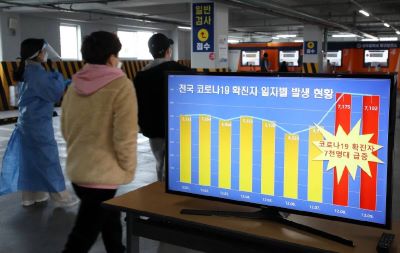
South Koreas new coronavirus cases stayed above 7,000 for the third consecutive day Friday and its caseload surpassed the grim milestone of 500,000 as the coronavirus continued to spread unabated among the unvaccinated and older adults with waning immunity.
The country reported 7,022 new COVID-19 infections, raising the total caseload to 503,606, according to the Korea Disease Control and Prevention Agency (KDCA).
The figure was the third highest daily total of the pandemic, after a record-high of 7,174 reported Wednesday and 7,102 the previous day.
The number of critically ill COVID-19 patients came to 852, the second-highest after 857 reported Thursday, putting increasing strain on hospitals and intensive care units.
The death toll rose 53 to 4,130, the authorities said. The fatality rate stood at 0.82 percent.
Earlier this week, the government implemented tightened health protocols to contain a rapid winter surge in infections, putting a brake on its plan to bring the country to a gradual return to normalcy.
Private gathering is limited and more businesses need to require patrons to show that they are fully vaccinated or have tested negative for the coronavirus. The measures will remain in effect until Jan. 2.
The authorities said the measures will start to show effects later this week, but health experts warned more stringent measures are needed to slow down the spread of the virus and the omicron variant.
The KDCA reported three more cases of the omicron variant, bringing the total tally to 63.
To shore up vaccine effectiveness, the government said it will cut the dosage interval between primary vaccination and booster shots to three months from the current 4-5 months.
“Our medical response capability is quickly burning out as daily cases remained in the 7,000s for the third day in a row with seniors aged 60 or older accounting for 35 percent of the cases,” Prime Minister Kim Boo-kyum said during a daily pandemic response meeting Friday. “Our top priority is the swift administration of vaccines.”
On the vaccination front, 83.5 percent of the country’s 52 million population have received at least one shot of the vaccine, while 81 percent have received two shots and 10.3 percent have gotten their booster shots. (Yonhap)
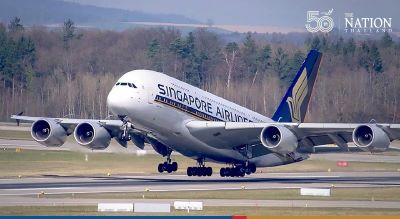
SINGAPORE – Travellers from Singapore will be able to fly into India without having to serve quarantine, thus reinstating quarantine-free travel for vaccinated travellers between the two countries.
The Republic had last month been put on a list of territories deemed by India to be of higher risk of Covid-19 infections, following the emergence of the Omicron variant.
This meant that travellers arriving in India from Dec 1 would have had to face home quarantine for seven days, among other restrictions.
But India’s Ministry of Health and Family Welfare removed the Republic from the list on Thursday (Dec 9).
The move means that travellers arriving in India from Singapore will be allowed to travel freely. But they will have to monitor their health for 14 days after touching down there.
Singapore started a vaccinated travel lane (VTL) for travellers from India on Nov 29, after the aviation authorities agreed to resume scheduled commercial flights between the two countries.
Under the VTL, travellers who are fully vaccinated against Covid-19 may enter Singapore without quarantine but need to undergo Covid-19 testing before departure and upon arrival at Changi Airport.
As an additional precaution in response to the emergence of the Covid-19 variant Omicron, these travellers will also have to take daily antigen rapid tests for seven days after their arrival.
Independent aviation analyst Brendan Sobie from consulting firm Sobie Aviation said the resumption of scheduled services between Singapore and India on Nov 29 was the most significant development yet in the recovery for the Changi air hub.
This was due to India being a huge inbound, outbound and transit market for Singapore Airlines (SIA) and Changi Airport, he said.
While scheduled services continued to be operated to all of Changi’s major markets throughout the pandemic, India permitted charters for only 20 months, since March 2020.
“India was a major hole in the Changi and SIA network. The SIA Group has quickly resumed 51 weekly flights to India, including 21 VTL flights,” added Mr Sobie.
“With quarantine-free travel between the two countries an option again, these flights are now more viable.”
There are six designated VTL flights to Singapore daily from Chennai, Delhi and Mumbai.
Meanwhile, the International Air Transport Association (Iata) has called for governments worldwide to reconsider all new border restrictions reintroduced in response to the Omicron variant, citing advice from the World Health Organisation.
The industry group’s director-general Willie Walsh said: “All measures should be time-bound and regularly reviewed.
“It is unacceptable that rushed decisions have created fear and uncertainty among travellers just as many are about to embark on year-end visits to family or hard-earned vacations.”
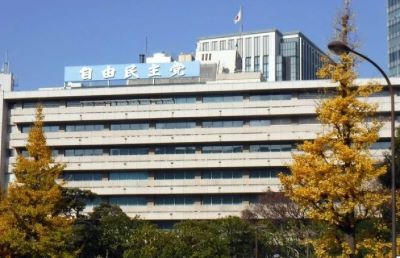
In the run-up to the Beijing Winter Olympics in February, members of the ruling Liberal Democratic Party are increasingly concerned about and critical of the Chinese government’s human rights violations.
Conservative lawmakers hope to pass a resolution condemning China for human rights abuses in the Xinjiang Uygur Autonomous Region, Hong Kong and elsewhere, in the current Diet session.
Some are calling for a diplomatic boycott of the Beijing Games. At a meeting of a group of conservative lawmakers in the Diet on Wednesday, Sanae Takaichi, chairperson of the LDP’s Policy Research Council, said that Japan “should do it” when asked about her opinion on a diplomatic boycott.
On the same day, five LDP and bipartisan leagues that handle Uighur, Tibetan and other issues held a joint meeting and confirmed their intention to adopt a parliamentary resolution condemning China.
Another group of conservative lawmakers proposed the early adoption of the resolution to Prime Minister Fumio Kishida, who is also the LDP president, on Tuesday.
Conservative lawmakers are stepping up their moves because they see the Japanese government’s stance as lukewarm compared with that of the United States and Europe, which have been increasingly tough on China over human rights issues.
After failing to pass a resolution condemning China in the previous ordinary Diet session, the conservative lawmakers are making another try to pass a resolution in the current Diet session ahead of the Beijing Games.
Hakubun Shimomura, former chairperson of the LDP’s Policy Research Council, said on a TV program Tuesday night, “[China] should hold a festival of peace on the premise that basic human rights are guaranteed.”
In Japan-China relations, there are also issues of violations of Japan’s sovereignty, such as provocations by China Coast Guard vessels near the Senkaku Islands in Okinawa Prefecture. China’s increasing military pressure on Taiwan is also directly linked to Japan’s security.
The United States, Australia, Britain and Canada have announced diplomatic boycotts of the Beijing Games over human rights issues, but the Japanese government has yet to decide its stance on a boycott. Some members of the LDP have called for a diplomatic boycott for reasons including to protest the Senkaku issue.
Masahisa Sato, director of the LDP’s Foreign Affairs Division, said, “The participation of state leaders and cabinet ministers in the Olympics will not send a good message.”
Kishida, who has yet to take a clear stance on the issue, has been targeted by hardline lawmakers. Criticism is still lingering over the appointment of Foreign Minister Yoshimasa Hayashi, who had headed the Japan-China Parliamentary Friendship Association.
On Friday night, while dining with a former lawmaker he is close to, the prime minister reportedly complained that he was seen as flattering China.
Some LDP members have expressed understanding about the government’s diplomatic stance. Tatsuo Fukuda, chairperson of the LDP’s General Council, said, “We need to have a variety of [diplomatic] channels.” However, if the conservative lawmakers gain more momentum, confrontations with lawmakers who are cautious about taking a hardline stance against China could become pronounced.
Washingtons selection of participants looks like return to Cold War paradigms
As Beijing has offered a Global Development Initiative to rally international efforts to combat the COVID-19 pandemic and promote economic recovery, Washington is convening its so-called Summit for Democracy on Thursday and Friday, a move that observers said would serve to sow the seeds of division and confrontation worldwide.
But after the world watched the disregard for rule of law and mistrust of elections spread throughout the United States, the question is what moral authority does Washington have to lecture the rest of the world about democracy, they said.
Addressing the 14th Bali Democracy Forum on Thursday, State Councilor and Foreign Minister Wang Yi reiterated that democracy is not the privilege of an individual country but the right of people from all countries.
Some preach that Western-style democracy is a yardstick for democracy and they try to export it to, or impose it on other parts of the world, while others take a certain country’s model of democracy as a dividing line to incite competition between different political systems and ideologies, Wang said in a video speech. “Such assertions are not true democracy, but hypocrisy in the name of democracy,” he added.
The decision by US President Joe Biden’s administration to handpick which countries and regions ought to participate in his “Summit for Democracy” constitutes a return to obsolete Cold War paradigms and goes against the trend of multilateralism, said Alfred de Zayas, a professor of international law at the Geneva School of Diplomacy and International Relations in Switzerland.
“It is obvious that such a conference cannot serve peace and justice, because it excludes billions of human beings,” Zayas said in an article published on the website of China Global Television Network. He was the United Nations Independent Expert on the Promotion of a Democratic and Equitable International Order from 2012 to 2018.
“Far from being an exercise in democracy, the US summit artificially divides the world into two camps-those countries which the US unilaterally considers democratic and those that are labeled undemocratic.”
According to the US Department of State, the summit will set forth an agenda for “democratic renewal”.
However, observers said that the riot that took place at Capitol Hill in Washington in January to prevent the joint session of Congress from certifying the newly elected president has shown the world how badly US-style democracy works in practice. In addition, US efforts to promote its model of democracy globally have landed countries like Iraq, Syria and Afghanistan in disaster and itself in a disgraceful position.
Far from an example of “renewal”, the summit reinforces the world view that the US believes it has a monopoly on democracy, said Danny Haiphong, a US-based independent journalist and researcher, and also a founding member of the No Cold War international campaign.
It begins from the vantage point that the US considers itself to be in a position to teach others about the perils of “authoritarianism”, Haiphong added.
Noting that “democracy” is being used by the US as a cover for its hegemonic ambitions, he said the Biden administration’s “Summit for Democracy” is just another opportunity for Washington to dress up its dangerous “America First” approach to politics in the garb of democracy.
Democracy is not a one-size-fits-all model, Haiphong said, and China and all nations have the right to pursue their own political and economic models of democracy free from external interference.
China and 30-plus nations currently suffering under US-imposed sanctions, including Russia, Cuba, Venezuela, Zimbabwe, Eritrea and Belarus, have been excluded from the summit. Pakistan, which was invited to the summit, announced on Wednesday it will not participate. However, Taiwan, which is an inalienable part of China’s territory, is on the list of invitees.
Analysts said such a summit is to rally “democracies” against what the US considers to be “authoritarian” states, and the main purpose is to reassert Washington’s hegemony as the so-called leader of the free world in order to reinforce its current efforts to deploy a new anti-China containment strategy.
Stephen Ndegwa, a Nairobi-based communication expert and lecturer-scholar at the United States International University-Africa, said that the world has been fed a unilateral view of democracy for many years.
The narrative has been based on notions that true democracy can only come from the West led by the US, which has adopted the carrot and stick approach in its perennial quest to “democratize” other countries, setting conditions for those who wish to have close relations with it, Ndegwa said.
However, he added, this coercion is gradually backfiring because of the gross interference of the US in other countries’ internal affairs and the crumbling of democracy in the US as well.
Ndegwa commended China’s whole-process people’s democracy, saying that those who criticize China’s political system fail to acknowledge that it is the only way to govern a country so vast and with a massive population of 1.4 billion people, the most populous globally.
“The Chinese truly follow the maxim that democracy is by the people and for the people.”
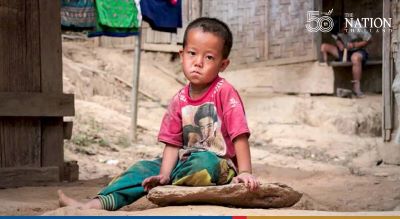
More than one million children are in need of humanitarian assistance due to COVID-19 pandemic, armed conflict and rising poverty, announced UNICEF Myanmar.
The statement said that due to the increase in the COVID-19, armed conflict and rising poverty in Myanmar, the number of people in need of humanitarian assistance has increased significantly. Such threats affect the lives, health and property of children seriously.
Myanmar is facing an unprecedented humanitarian crisis, exacerbated by the economic upheaval and the COVID-19 pandemic, which has had a devastating effect on children, the statement said.
An estimated 14.4 million people in Myanmar, including five million children, are needed humanitarian assistance due to escalating conflict and violence, ongoing COVID-19 pandemic, rising poverty and deteriorating public services.
According to UNICEF Myanmar, US$ 151.4 million is needed by 2022 to save the lives of children, protect the futures and avoid the loss of generations.
China led the world in seven out of 11 research areas this year in terms of active frontier research, surpassing the United States for the first time, according to a report published on Wednesday.
The 2021 Research Fronts report, jointly published by the Institutes of Science and Development of the Chinese Academy of Sciences and global analytics firm Clarivate, identified 171 frontier research topics.
The topics included 110 “hot” and 61 emerging research fronts, which are divided into 11 broad research categories, from physics to clinical medicine. The list is compiled by analyzing data of highly influential and often-cited papers published from 2015 to 2020.
China achieved the highest scores in seven categories of the Research Leadership Index this year: agricultural, plant and animal sciences; ecological and environmental sciences; clinical medicine; chemistry and materials science; mathematics; information science; and economics, psychology and other social sciences.
China ranked second in geosciences, biological sciences and physics, and eighth in astronomy and astrophysics, according to the annual report.
The United States scored highest in four major areas: geosciences; biological sciences; physics; astronomy and astrophysics. It ranked second in the other seven categories.
When ranking an individual country’s overall performance across all 11 areas, the United States remains the world’s most active researcher, scoring a total of 209.23 points.
China was second with 191.43 points, up from 151.29 points last year. The gap in the Research Leadership Index scores between the two nations is less than 10 percent.
China is only slightly more active than the US in frontier research in clinical medicine, social sciences and information science this year, while the US enjoys a substantial lead in geosciences and biological sciences, as well as astronomy and astrophysics, the report said.
Yang Fan, a researcher at the Institutes of Science and Development of the Chinese Academy of Sciences, said a major reason for China’s higher rankings is due a great deal to Chinese scientists publishing a large number of highly influential papers on COVID-19.
The papers cover a wide range of topics from genetic information about the virus, to clinical trials of vaccines and drugs, to evaluating the social and psychological impacts of the pandemic, she said.
Gao Hongjun, vice-president of the Chinese Academy of Sciences, said the annual report, which is the eighth of its kind, can help scientists and policymakers determine key research topics and trends by tracking emerging specialty areas of research.
Steen Lomholt-Thomsen, chief revenue officer at Clarivate, said the ability to identify emerging specialty areas of research can provide a distinct advantage for those seeking to monitor, support and advance the conduct of research, which is often done with finite resources.
This includes governments, policymakers, publishers, research administrators and commercial companies, he said. “Research fronts enable them to identify key players as potential collaborators and an opportunity to turn published research into a compelling competitive advantage with societal and economic impact,” Lomholt-Thomsen said.
Of the 171 research fronts, 81 are led by the US, while China leads global research in 65 fronts. The two countries combined account for 85 percent of all the listed specialist research areas.
Gao Fu, head of the Chinese Center for Disease Control and Prevention, said it is encouraging to see China making such rapid progress in frontier sciences, but people should also keep a clear mind regarding both its accomplishments and shortcomings. “There is still a lot of room for collaboration, especially in regards to basic sciences,” Gao said.
Hyundai Motor Group is likely to post a better-than-expected fourth quarter result as well as a record-high operating profit of 7 trillion won ($5.9 billion) this year, despite the ongoing chip shortage, market experts said Wednesday.
Market analysts viewed that the Korean automaker’s focus on expanding sales of its ecofriendly models and broadening its product mix to enhance its brand value has helped the company to anticipate a turnaround this year.
Nine local securities firms’ outlook on Hyundai Motor’s yearly profit came at 7.9 trillion won on average, about 196 percent jump compared to a year ago — a record-high since 2014 when it hit the 7.5 trillion won of operating profit for the first time.
Experts also forecasted Hyundai Motor’s Q4 operating profit at 1.9 trillion won on average, up by 53 percent on-year. They said the Korean automaker will post about 30 trillion won in sales on average, inched up by 5 percent compared to 2020.
From January to September, Hyundai Motor recorded an accumulated 5.1 trillion won in operating profit.
According to Hyundai Motor’s sister company Kia Motor, it has already surpassed its record-high operating profit in Q3 with an accumulated 3.8 trillion in operating profit from January to September. Its highest so far was 3.5 trillion won in 2012.
The nine securities firms’ outlook on Kia Motor’s Q4 operating profit came at 1.4 trillion won on average, a nearly 16 percent rise from a year ago. From January to September, both Hyundai and Kia sold many cars globally compared to a year ago. Hyundai’s luxury brand Genesis sold 144,000 cars with its latest GV70 and G80, dragging its sales up by 57 percent from 2020. Kia’s high-priced RV models such as Sorento and Carnival also led its sales.
Global interest in electric models also powered Hyundai’s Ioniq 5 and Kia EV6 sales. The company said an accumulated 47,267 Ioniq 5 and 19,068 Kia EV6 have been sold from January to October.
Meanwhile, analysts also viewed that the Korean automaker will continue with an upward momentum, with reviving consumer demand for automotive.
KB Securities forecasted that Hyundai Motor Group will post 7.9 trillion won in operating profit in 2022, about 10.5 percent increase from this year, while 5.5 trillion won of operating profit in 2022 for Kia.
“With the market gradually recovering from the aftermath of COVID-19 and solving the semiconductor supply chain issue, the automaker will have its operating profit increase compared to this year,” said Kang Sung-jin, researcher from KB Securities.
According to market data, the global automotive market will see its demand increase 2.3 percent to 79 million cars in the next year, with some 6.3 million EV models globally, which is about a 58 percent increase on-year.
HÀ NỘI — The Ministry of Transport has submitted to the Prime Minister a plan on the pilot resumption of regular international flights carrying passengers to Việt Nam from December 15, in anticipation of a year-end surge in travel demand.
The first phase will last for two weeks, starting on December 15, during which regular flights between Việt Nam and destinations with a ihigh level of pandemic safety and high demand for entry into Việt Nam will be conducted, namely Beijing (China), Tokyo (Japan), Seoul (the Republic of Korea), Taipei (Taiwan, China), Bangkok (Thailand), Singapore, Vientiane (Laos), Phnom Penh (Cambodia), and San Francisco or Los Angeles (the US).
The flights in this phase will connect with the international airports of Nội Bài (in Hà Nội) and Tân Sơn Nhất (in HCM City). There will be four flights per week on every way for each side. About 14,000 passengers are expected to arrive in Việt Nam every week.
Meanwhile, the second phase will last for a month after the first one concludes, starting in January 2022.
Apart from the nine abovementioned destinations, the transport ministry also proposed regular flights linking with Kuala Lumpur (Malaysia), Hong Kong (China), Paris (France), Frankfurt (Germany), Sydney (Australia), and Moscow (Russia).
In addition to Nội Bài and Tân Sơn Nhất, the international airports of Đà Nẵng, Cam Ranh (in Khánh Hoà), Phú Quốc (in Kiên Giang), and Vân Đồn (in Quảng Ninh) are also proposed to host those flights in the second phase. The frequency will be raised to seven flights per week on every way for each side. The weekly number of passengers entering Việt Nam is estimated at some 40,000.
The transport ministry said to ensure the plan’s feasibility, it is necessary to gradually lift quarantine rules on passengers who have been fully vaccinated against COVID-19 or have recovered from the disease, and have a negative result of rapid antigen or RT-PCR tests within 72 hours prior to their flights.
In addition, the resumption of international flights can only be carried out based on the reciprocity principle and mutual recognition of the “vaccine passport,” which the transport ministry is urging the foreign affairs ministry to expedite, especially with countries in the two pilot phases.
The Ministry of Health, Ministry of Public Security, and the Ministry of Information and Communications should work together and agree on a single unified COVID-19 app that passengers will have to install on their devices for medical declaration and contact tracing efforts.
The transport ministry cited the Ministry of Foreign Affairs as saying that Vietnamese citizens’ demand for returning home is now on the rise, especially when the New Year and Tết (Lunar New Year) holidays are approaching. Besides, there is also a large number of foreigners planning to go to the country for work, investment, business, and tourism purposes.
Given this, it is necessary to soon resume regular international flights carrying passengers to Việt Nam, according to the transport ministry.
The ministry also noted that in a meeting with airlines in late November, they all said they are more than prepared and ready to restart regular international flights.
Việt Nam, with a population of about 100 million people, has to date administered 128.6 million COVID-19 vaccine doses, with 55 million people double vaccinated. — VNS
PUTRAJAYA: Datuk Seri Najib Razak closed his eyes and chose not to verify the origins of the millions that came into his bank accounts, says the Court of Appeal.
In a summary judgment, a three-man panel of the appellate court chaired by Justice Abdul Karim Abdul Jalil agreed with the trial judge at the High Court that Najib’s contention that he had justifiable reasons not to suspect anything untoward in the flow of the RM42mil from SRC International Sdn Bhd was simply a “flawed” defence.
“The appellant had deliberately shut his eyes and chose not to verify the origins of the funds, but instead relied wholly on others, whilst at the same time spending the RM42mil for his own purposes and benefit,” he said in upholding Najib’s conviction on three money laundering charges.
Najib was found guilty of three money laundering charges under Section 4(1)(b) of the Anti-Money Laundering, Anti-Terrorism Financing and Proceeds of Unlawful Activities Act 2001.
On the three charges of criminal breach of trust (CBT), where Najib was convicted under Section 409 of the Penal Code, the Court of Appeal found that the evidence had clearly showed that monies – RM27mil, RM5mil and RM10mil – were transferred into Najib’s accounts and utilised by him.
Justice Abdul Karim said the trial judge was right to hold Najib as an “agent” of SRC, who was entrusted with the dominion of the RM42mil from the company, which he dishonestly misappropriated and converted for his own use, resulting in a wrongful gain to him and wrongful loss to the 1Malaysia Development Bhd (1MDB)-linked company, adding that Najib failed to raise any reasonable doubt in the prosecution’s case in respect to the CBT charges.
“Hence, we find the appellant’s conviction on all three CBT charges is safe,” he added.
The appellate court also found Najib’s conviction for abuse of power under Section 23(1) of the Malaysian Anti-Corruption Commission Act to be safe.
Najib, in his defence, had said that his actions and decisions at two Cabinet meetings he chaired regarding SRC were done in the name of national interest.
Justice Abdul Karim said Najib’s “fingerprints” could be seen from the time of SRC’s formation, the SRC loan application to the Retirement Fund Inc (KWAP), his intervention in the loan application, his influence in the approval of the government guarantees, the rushed disbursement of the RM4bil loan, among others.
“The appellant has since shown a total lack of interest in the usage of the RM4bil,” the judge said.
The court said it did not find any error from the High Court in rejecting Najib’s defence in respect to the power abuse charge.
“We find the charge against the appellant for using his position for gratification has been proven beyond reasonable doubt.”
MANILA, Philippines — While unemployment slightly eased in October, the Department of Labor and Employment (DOLE) aired concern on Tuesday over the jump in the number of workers who were still looking for more work or longer working hours.
The unemployment rate declined to a three-month low of 7.4 percent in October as the reopening of more business establishments generated more jobs due to the improving COVID-19 situation.
The Philippine Statistics Authority’s (PSA) quarterly labor force survey (LFS) in October showed that there were 43.8 million Filipinos who had work in October, or 92.6 percent of the 47.3 million Filipinos age 15 and above who were either employed or unemployed.
However, 7 million of them were underemployed, referring to those who were looking for longer working hours or higher-paying jobs as they settled with part-time arrangements. October’s underemployment rate of 16.1 percent was the highest in three months.
“The increase of the underemployment level by 862,000 is a reminder that much has still to be done to improve the quality of work,” Dole said in a statement.
The department said it was confident that employment figures would improve further with the increasing vaccine coverage, the safe reopening of more businesses as the alert levels are lowered, and the government’s focus on improving the labor market through the National Employment Recovery Strategy.
Prepandemic level
President Duterte’s economic managers noted that “more people are employed today than in the months before the pandemic struck.”
“Employment creation remained positive as 234,000 more Filipinos were able to find work in [October]. This brings total employment to 1.3 million above prepandemic levels,” said a joint statement issued on Tuesday by Department of Budget and Management Officer in Charge Tina Rose Marie Canda, Finance Secretary Carlos Dominguez III, and Socioeconomic Planning Secretary Karl Kendrick Chua.
“Better employment outcomes in October were driven by the government’s policies that further reopened the economy safely, such as shifting to the alert level system and granular lockdowns from large-area and blanket quarantines and allowing more mobility for vaccinated individuals,” the statement said.
“Credit should also be given to the close collaboration between the private sector and government not only in accelerating the inoculation drive for our people but also in enforcing the minimum health protocols to contain infections,” it added.
“Backed by a stronger healthcare system, we will solidify our recovery by reopening the economy to alert level 1 in January 2022. At the same time, to avert long-term productivity losses and restore more employment, we will resume face-to-face schooling in January 2022, increase public transport capacity for all transport types to 100 percent, and relax restrictions for domestic and international travel,” the economic team said in the statement.
Gainers, losers
National Statistician Dennis Mapa told a press briefing that on a year-on-year basis, the biggest increases in employment in October were in the following sectors: wholesale and retail trade plus repair of motor vehicles and motorcycles (up by 1.32 million jobs); agriculture and forestry (990,000); manufacturing (297,000); public administration and defense, plus compulsory social security (287,000), and other service activities (239,000).
Quarter-on-quarter or compared to July before the Delta strain of COVID-19 forced a revert to the strictest enhanced community quarantine (ECQ) in Metro Manila and surrounding provinces last August, the biggest increases in jobs were in agriculture and forestry (up by 1.35 million); wholesale and retail trade plus repair of motor vehicles and motorcycles (1.2 million), and fishing and aquaculture (234,000).
On the other hand, the biggest quarter-on-quarter declines in employment were in construction (down by 291,000 jobs); manufacturing (213,000); transportation and storage (123,000); professional, scientific and technical activities (123,000), and financial and insurance activities (78,000).
Year-on-year, the largest declines were suffered by education (down by 46,000 jobs); financial and insurance activities (8,000); electricity, gas, steam, and air-conditioning supply (6,000); information and communication (4,000), and activities of extraterritorial organizations and bodies or regional and global institutions operating in the country (by 900).
Mapa said the quarter-on-quarter job shedding in the construction sector likely happened due to finished public and private projects, while most of the job losses in the education sector were observed in privately run preprimary and primary education institutions.
Education impact
Joseph Noel Estrada, managing director of the Coordinating Council of Private Educational Associations (Cocopea), said private preschools and elementary schools dealt with “lower demand because of economic difficulties, challenges in online platforms, and the migration to public schools where it’s free.”
For Estrada, not only the job losses among education personnel but also the possibility that some younger schoolchildren stopped attending classes were a concern.
“Anytime there’s disruption in education, especially in the formative years, it’s always concerning,” Mapa said.
He said the pilot of in-person learning would help resume jobs in private kindergarten and elementary schools.
Gradually, the pilot of face-to-face classes will help some schools recover. But it really depends on how ready and confident the parents are sending their kids back to schools to in-person classes,” Estrada, for his part, said.
In its Philippines Economic Update December 2021 report released on Tuesday, the Washington-based World Bank said that amid the prolonged COVID-19 pandemic, “low-skilled occupations and workers in low productivity sectors increased, indicating an overall deterioration of job quality” in the Philippines.”
Employment in high productivity sectors including real estate, finance and information and communication remained flat. The reallocation of labor to less productive sectors and the lack of jobs growth in more productive industries also point to a slowdown in the structural transformation of the labor market,” the World Bank said.