KUALA LUMPUR – Malaysia and China would collaborate in vaccine research, development and production, The Star recently quoted Malaysian Foreign Minister Saifuddin Abdullah as saying.
Saifuddin said the collaboration will fulfill Malaysia’s aspiration to be able to produce its own vaccines as expressed in Malaysia’s National Vaccine Development Roadmap.
The roadmap was recently announced by the country’s Prime Minister Ismail Sabri Yaakob.
“Malaysia welcomes prominent vaccine companies from China to set up their production plants in Malaysia which include data research and R&D centers,” Abdullah said in a joint press conference with Chinese State Councilor and Foreign Minister Wang Yi in China on Saturday.
The two sides agreed to continue anti-pandemic cooperation when the two ministers co-chaired the first meeting of the high-level committee on China-Malaysia cooperation in Anji in east China’s Zhejiang province.
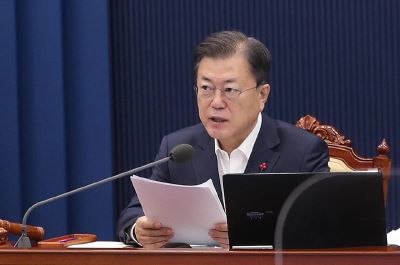
US boycott deepens Moon’s concerns over diplomatic stance, end-of-war declaration
The US decision to have its diplomats boycott the 2022 Beijing Olympics is posing a dilemma for South Korea, as Washington could prod allies to follow suit, while Seoul hopes to use the games as an opportunity to restart dialogue with Pyongyang.
Amid the struggle between the two global superpowers, South Korea has taken an ambiguous diplomatic position, as it values both its security alliance with the US and its economic ties with China. But with Washington’s recent announcement, South Korea is increasingly in a position where it may have to choose a side.
The situation could also jeopardize President Moon Jae-in’s plan to use the global sports event as a chance to restart the peace process on the Korean Peninsula and declare a formal end to the Korean War, together with the leaders of North Korea, the US and China.
Earlier, Secretary of State Antony Blinken said in a media interview that the US had consulted allies about a “shared approach” to the Beijing Games. Senate Foreign Relations Committee Chairman Bob Menendez called on US allies to “share our values to join with the United States in this diplomatic boycott.”
US President Joe Biden is expected to urge the country’s allies to join the boycott this week during an upcoming democracy summit. The meeting aims to keep China in check, since Biden defines the Chinese government as an authoritarian regime, and more than 110 participating countries are likely to discuss boycotting the Beijing Winter Olympics. Moon plans to attend the event.
A number of countries, including those in the European Union, the UK, Japan, Canada, Australia and New Zealand, are already reviewing whether to join the boycott, according to news reports.
Shin Beom-chul, director of the Center for Diplomacy and Security at the Korea Research Institute for National Strategy, said the US might call off the boycott if China takes certain steps such as releasing some of its political prisoners from Xinjiang. But that appears unlikely as China is fanning nationalism ahead of President Xi Jinping’s third term.
Shin said South Korea “should not get on either side too early.”
Cheong Wa Dae has not made any official statement and the Ministry of Foreign Affairs said there was nothing to comment on the diplomatic decisions of foreign governments.
But the ministry added that the Korean government has supported the successful hosting of the Beijing Winter Olympics and hopes the event will contribute to peace and prosperity in Northeast Asia, the world and inter-Korean relations.
“The US side has informed us of the decision in advance through diplomatic channels. However, in the process of communication, we have not received any demands such as requesting to participate in the boycott,” the ministry said.
Citing past Chinese efforts to draw South Korea into the Asian Infrastructure Investment Bank, a China-led multilateral development bank, Shin said the US had not taken issue with it at the time as the UK and Australia had already joined the institution before South Korea.
“This time also we should take a look at the moves of (other countries like) the UK and Australia and then decide on the position of Korea,” he said.
President Moon first proposed formally ending the Korean War at the United Nations General Assembly in September. Since then, the Beijing Games have been mentioned as a possible stage for the envisioned “peace event.” Moon has been moving ahead with plans to declare an end to the war in recent months.
South Korean national security adviser Suh Hoon recently went to China to meet with top Chinese Communist Party diplomat Yang Jiechi to seek the nation’s support for such a declaration.
A local media outlet recently reported that Cheong Wa Dae is considering delivering a letter from Moon to North Korean leader Kim Jong-un in the New Year. The report quoted a ruling party figure as saying Cheong Wa Dae intends to share information with North Korea about its negotiations with the US and China on declaring the war is over. The government later called the report “speculative.”
Last week, Moon met with US Defense Minister Lloyd Austin in Seoul to explain his motives for wanting to achieve such a declaration.
Despite Moon’s efforts, things are not all rosy, as the pandemic would make it difficult for Kim Jong-un to visit China. Additionally, the International Olympic Committee has refused to allow North Korea to participate in the Beijing Winter Olympics.
Shin said an end-of-war declaration could be made at another time and that the two events should not be directly related.
“However, given the changing situation, it seems to be getting more and more difficult for the US, China and North Korea to cooperate to come up with a document to reach an agreement like the declaration of an end to the war,” Shin said.
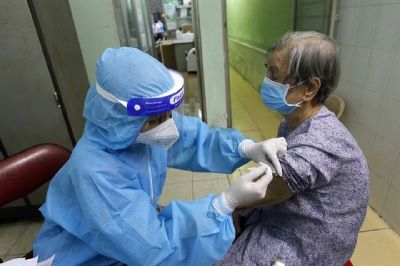
HCM CITY — The HCM City health sector plans to provide third vaccine shots to 6.3 million people who have been fully vaccinated in an effort to boost their immunity against COVID-19 beginning on December 10.
An “additional dose” is intended to improve immunocompromised people’s response to their first and second dose of vaccine, but a “booster dose” is given to other people when the immune response to the first and second dose is likely to have waned over time.
As for the additional dose, HCM City plans to give it to people who are aged 18 or older with immunocompromised status (organ transplant, cancer, HIV or use of immunosuppressive drugs in the past six months) and have had the second dose of the COVID-19 vaccine at least 28 days prior to the booster. People aged 50 and over are given priority.
The booster dose will be offered to people 18 years and older who had the second dose of the vaccine at least six months ago. Priority groups are people with underlying diseases, people needing long-term care at medical facilities, people aged 50 or older, and people who directly test, care for and treat COVID-19 patients.
In December, the city will need more than 64,2000 doses of AstraZeneca; next January, 29,400 doses; February, 235,000 doses; March, over 3.1m million doses; April, more than 2.2 million doses of AstraZeneca, Pfizer, Moderna and Sinopharm’s Vero Cell vaccines; May, 422,000 doses; and June, over 157,000 doses of AstraZeneca, Pfizer, Vero Cell and Sputnik V vaccines.
Vaccines reserved for additional or booster doses need to comply with the Ministry of Health’s guidance.
Additional doses or booster doses will be the same type of vaccine as the earlier shots or an mRNA vaccine. If previous injections were mixed vaccines, additional or booster shots will use the mRNA vaccine type.
If the first or second dose was the Vero Cell vaccine, the booster dose will be of the same type, an mRNA vaccine, or a viral vector vaccine.
As of December 5, more than 7.92 million people aged 18 and over in HCM City had received the first vaccine dose. Of the number, nearly 6.82 million people have received the second dose. — VNS
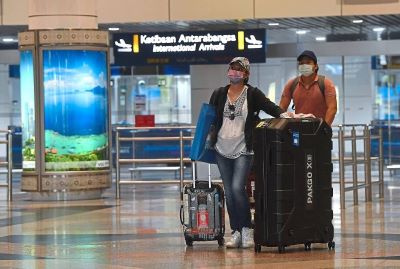
KUALA LUMPUR: International and local travellers for the Vaccinated Travel Lane (VTL) by air and land, Langkawi International Travel Bubble (LITB) and One Stop Centre (OSC) for short-term business visitors will have to undergo Covid-19 test for six days after arriving in Malaysia.
Health Minister Khairy Jamaluddin said the requirement would take effect tomorrow and was a move to strengthen the Ministry of Health (MOH)’s existing precautionary and control measures to prevent the transmission and spread of the Omicron variant in the country.
“Travellers under these categories must undergo Covid-19 detection test upon arrival in Malaysia, RTK-Ag test or Rapid Antigen Test (self-test) on the second, fourth and sixth day after arrival.
“They would also need to undergo a professional RTK-Ag test on the third and fifth day after arriving. In addition, LITB travellers must undergo an RT-PCR test at least 48 hours earlier before leaving Langkawi island.
“All test results must be reported through the MySejahtera application,” he said in a statement.
Khairy, reported Bernama, said those travellers must also ensure that they are fully vaccinated and must undergo RT-PCR tests at least 48 hours prior to their travel dates, replacing the previous procedure set 72 hours before departure.
Meanwhile, he said travellers from five countries with reported cases of Omicron in the community, namely the United Kingdom, the United States, Australia, France and Norway, will be required to get tested with an RT-PCR swab test 48 hours before departing to Malaysia.
He added that they, too, would be required to use a digital tracking device on them at all times during their mandatory quarantine period.
Khairy said travellers (Malaysian citizens and long-term visit pass holders) arriving from the temporary travel ban in eight countries must also use a digital tracking device at the designated isolation centres during their 14-day mandatory quarantine period.
According to him, the preventive measures will be reviewed from time to time.
As of yesterday, 43 countries have reported Omicron-related cases.
On Nov 27, Malaysia has listed eight countries on temporary travel restrictions, namely, South Africa, Botswana, Eswatini, Lesotho, Mozambique, Namibia, Zimbabwe, and Malawi.
Three foreign students attending universities in Seoul have been confirmed to be infected with omicron, officials said Tuesday, signaling the highly contagious COVID-19 variants penetration into the capital.
One foreign student each from Seoul National University (SNU), Hankuk University of Foreign Studies (HUFS) and Kyunghee University has been confirmed to have contracted the omicron variant, according to the Seoul city government.All of the three were found to have visited a church in Incheon, west of Seoul, where a pastor and his wife were confirmed last week as the first cases of omicron in South Korea. The students tested positive for COVID-19 last Friday and their infections with omicron have been finally confirmed through a whole genome analysis, the government said.
This is the first time that omicron cases have been confirmed in Seoul. Nationwide, the number of omicron cases rose by 12 to 36 as of midnight Monday.
The infections of students immediately raised fears of omicron spreading in Seoul’s university districts and beyond.
The concerned universities are conducting contact tracing related to the infected students and mapping out quarantine measures amid the possibility of secondary infections.
HUFS has decided to switch all classes to non-face-to-face classes until Dec. 14 and restrict the operations of a library and other school facilities, visited by its omicron-infected student, until Dec. 11.
SNU has quarantined those who have been classified as close contacts of its omicron patient and is considering asking all of the patient’s fellow dormitory students to undergo rapid molecular diagnostic tests.
Kyunghee University also plans to recommend COVID-19 testing for all students who share the same dormitory floor with its omicron-infected student. (Yonhap)
Prime Minister Hun Sen said there was a strong possibility that he would travel to Myanmar to meet with Min Aung Hlaing, chairman of the ruling State Administration Council (SAC), in Naypyidaw to find a solution to the country’s ongoing crisis so that it could resume full participation in ASEAN.
General Min Aung Hlaing is widely accused of carrying out a “military coup” against the civilian government of the predominantly Buddhist country.
“If we don’t work with the person in charge and those who are in power and control Myanmar, then whom will we work with? Nobody needs to criticise Cambodia right now because Cambodia knows how to work on this,” Hun Sen said while presiding over the opening of National Road 11 in Prey Veng town.
Hun Sen’s statement came after Myanmar was pointedly excluded from the recent ASEAN summit by the other member nations due to the crisis there, where elected civilian leader Aung San Suu Kyi was detained for “inciting dissent against the military and breaching Covid-19 rules”. Suu Kyi was sentenced to four years in prison for those charges on December 6.
Cambodia’s possible diplomatic intervention in the ongoing crisis stems from the Kingdom’s leadership role as chair of ASEAN for the coming year.
Hun Sen said General Min Aung Hlaing cannot be compared with outlawed regimes like the Taliban government in Afghanistan.
“Most likely, I will have to visit Naypyidaw to meet with General Min Aung Hlaing and work with him,” he said, adding that as a member of the ASEAN family, Myanmar has the right to attend meetings and summits.
“We’ll keep this as a task for Hun Sen to deal with. Let’s wait and see. We can’t stray from ASEAN’s common principles or the ASEAN Constitution which mandates non-interference in the internal affairs of other countries. And we won’t try to apply the UN formula to ASEAN, they aren’t the same thing,” he said.
The prime minister said he had already made it clear in talks with Indonesia and Japan that ASEAN should not burn its own house down to serve the whims of others. He said ASEAN must be strengthened and bring its membership back to 10 countries, not nine like in recent meetings.
Hun Sen said Myanmar has never declared that it wishes to leave ASEAN and it is still cooperative with the 10-nation bloc.
He noted that according to the ASEAN Constitution, no member can be expelled by any other member because ASEAN makes all decisions on a consensus basis, so any country proposed for expulsion would have the opportunity to veto it.
Hun Sen will meet Myanmar foreign minister Wunna Maung Lwin on December 7 in Phnom Penh to understand the country’s current leadership better and get a response to the ASEAN five-point consensus, a plan of action established by ASEAN members to guide Myanmar out of its turmoil. The five-point consensus also enjoys strong international backing outside of ASEAN, including support from the US.
Kin Phea, director of the Royal Academy of Cambodia’s International Relations Institute, believes that Hun Sen is capable of solving the Myanmar crisis. He noted that Hun Sen began his political career as foreign minister throughout most of the 1980s and engaged extensively with world leaders in that period, including many Asian countries as well as highly successful official visits to Washington, DC, and Paris.
“He is a veteran diplomat with experience and strategy and also good at solving problems. He had experience in ending the civil war in Cambodia, which brought about comprehensive peace for the country.
“I think he should go to Myanmar and engage in open diplomacy on a private basis and try to calm the situation there and return things to how they were before last February,” he said.
In addition to meeting with General Min Aung Hlaing, he said Hun Sen should also meet other leaders involved in the Myanmar crisis, including those representing the deposed civilian government and, if possible, the opposition groups protesting as any solution must be inclusive to all relevant parties.
“The solution should be for everyone, not just for a certain group. It should be a win-win solution. If they find a compromise with all sides involved, then it will be acceptable to everyone.
“Cambodia must follow all ASEAN principles, especially the five-point consensus made in April, which is a guideline that it can use as a starting point.
“The country must be clever in persuading other ASEAN leaders to accept Cambodia-led initiatives because ASEAN makes decision on consensus basis,” he said.
Political Bureau meeting highlights stability as top priority in coming year
China will strive to stabilize the fundamentals of its macro economy next year, with steps to make its fiscal policies more efficient, targeted and sustainable and promote the steady recovery of consumer spending, the core leadership of the Communist Party of China said on Monday.
The meeting of the Political Bureau of the CPC Central Committee set the tone for the nation’s economic policies next year, highlighting stability as the top priority and the need to continue to implement a proactive fiscal policy and a prudent monetary policy.
Xi Jinping, general secretary of the CPC Central Committee, presided over the meeting.
The nation will expedite steps to foster a new development paradigm, deepen reform and opening-up across the board, coordinate efforts to fight the COVID-19 pandemic and sustain socioeconomic growth and maintain its major economic indicators within a proper range, policymakers said.
The nation must ensure that its macro policies are prudent and effective, with monetary policy being flexible and appropriate in terms of maintaining liquidity at a reasonable and adequate level, they said.
The meeting reiterated the importance of carrying out the strategy of boosting domestic demand, including measures to proactively expand effective investment.
Priority must be given to energizing market players, and greater emphasis must be placed on the protection of intellectual property rights, they said, adding that the nation must continue to lift the core competitiveness of the manufacturing sector and enhance the resilience of supply chains.
As for the real estate sector, the policymakers pledged to move forward with the development of affordable housing projects in a bid to enable the sector to meet reasonable demand from homebuyers.
China will continue to focus on breakthroughs in core technologies, strengthen its national strategic force in science and technology, bolster the principal role of businesses in conducting innovation and facilitate a favorable relationship between science and technology, industries and the financial sector, according to the meeting.
In moving forward with reform and opening-up, the nation must effectively push forward major regional strategies and strategies for coordinated regional development, pilot reforms to promote the market-based allocation of productive forces and expand opening-up at a higher level.
The policymakers underscored that China’s social policies must ensure that the basic living needs of the public are met, adding that the employment-first policy and the new third-child policy must be fully carried out.
The nation will continue to work toward the unified national management of pension funds and improve the mechanism under which residents obtain public services based on where they actually live, they said.
The meeting’s participants called for sound and targeted measures to contain and prevent COVID-19 outbreaks, saying that the supply of coal, electricity, oil and gas must be guaranteed to meet the public’s demand for heating in the winter.
It is important to conduct sound preparatory work for the Beijing 2022 Winter Olympics and Paralympics to ensure that the nation will host streamlined, safe and splendid Olympic Games, they said.
The Political Bureau meeting was held days after the CPC Central Committee convened a symposium with non-CPC members to solicit their opinions on economic policies.
While presiding over the symposium, Xi stressed that the upcoming 20th National Congress of the CPC next year would be a major event in the political life of the Party and State.
He highlighted the complex situation facing the Chinese and global economies, and called for efforts to act on the general principle of pursuing progress while ensuring stability and faithfully, accurately and comprehensively carrying out a new development philosophy.
MANILA, Philippines — The Department of Education (DepEd) expects more schools to be allowed to hold in-person classes next year following the smooth implementation of the pilot run in 118 schools last month and in an additional 177, including 28 in Metro Manila, starting this week.
So far, the physical classes have been going well with no reported COVID-19 cases among participants, DepEd Undersecretary Nepomuceno Malaluan said at the Laging Handa briefing on Monday.
He added that the second batch of schools was likely to be the last to be added to the pilot run this year as students were expected to go on break starting Dec. 20.
After that, participating schools would submit their assessment using the DepEd’s monitoring and evaluation tool, with the consolidated report to be submitted to the Office of the President before the end of the month.
“Since so far it has been going well, we anticipate that the recommendation will be to move to what we call the expanded phase early next year,” Malaluan said.
Asked how the Omicron COVID-19 variant could affect the reopening of more schools, he said the DepEd would rely on the assessment of the Department of Health (DOH).
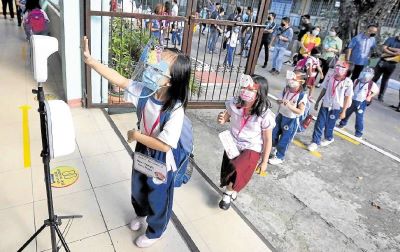
On the first day of limited in-person classes at Pasig Elementary School, parents dropped off students who underwent a temperature check before being escorted by teachers to their classrooms.
Despite the masks that concealed half of their faces, the children’s eagerness and excitement were visible as they participated in the morning ceremonies, including singing the national anthem and a simple dance exercise.
For 13 Grade 1 students, Monday was the first time they entered the school and met their classmates and teachers in the flesh.
Unlike other pilot schools, there were no plastic barriers around students’ seats with Pasig Mayor Vico Sotto saying that ultraviolet lights, acrylic barriers, and other additional equipment were unnecessary.
He cited the opinion of experts that as long as there was proper airflow and ventilation inside a room, people there would be safe.
“We don’t need to be fancy about it and add a lot [of stuff]. What we want is what would be simpler, safer, and sustainable,” Sotto told reporters.
At Pedro Cruz Elementary School in San Juan City, 62 students joined the pilot run with Mayor Francis Zamora dropping by for an inspection. He was accompanied by DepEd National Capital Region Director Wilfredo Cabral.
“We need to remember that this is just a pilot program and we are going to assess in the coming weeks whether we can actually start the face-to-face classes,” Zamora said.
In Manila, 60 students at Aurora A. Quezon Elementary School and 15 senior high school students from Ramon Avanceña High School joined in-person classes.
Monitoring hotline
The Movement for Safe, Equitable, Quality, and Relevant (SEQuRe) Education, a network of education experts, teachers, students, and parents, launched on Monday a campaign to monitor the implementation of the pilot program for in-person classes.
Through the group’s Bantay Balik Paaralan (BBP) project, the public can forward their concerns and observations to 0967-4461266 or 0917-6395942. They can also send messages to facebook.com/SEQuReEducationMovt or movementforeducationph@gmail.com.
According to Mercedes Arzadon, SEQuRe Education Movement convener, their project was prompted by the government’s weak response after only 177 out of 62,700 primary and secondary schools, and 65 out of over 200 higher education institutions were allowed to hold in-person classes.
The pilot program, she said, also needs to be monitored to gain insights in preparation for its expansion nationwide.
Among the initial concerns received so far by SEQuRe Education Movement were insufficient health protection mechanisms and the contradicting policies of the DepEd, the DOH, and the Inter-Agency Task Force for the Management of Emerging Infectious Diseases on the mandatory vaccination of school personnel.
The lack of clear guidelines on content and teaching methods for in-person classes to be integrated with remote learning was also raised.
SINGAPORE – Home-grown biotechnology firm BioAcumen Global has launched Singapores first Omicron-specific Covid-19 polymerase chain reaction (PCR) kit.
The new BioA Omicron Detection Kit is able to detect the Omicron variant specifically, besides prior variants of the coronavirus, The Straits Times learnt on Monday (Dec 6).
This means that a person will receive one of three results: Covid-19 positive and Omicron positive; Covid-19 positive and Omicron negative; or Covid-19 and Omicron negative.
Currently, PCR kits here that are capable of detecting Omicron require an additional gene sequencing step to confirm the specific variant. This takes an additional day.
This test kit’s ability to detect and identify the Omicron variant specifically will speed up the testing process.
PCR test results typically take about several hours to a day to process, after factoring in time taken for swabbing, logistics and the uploading of test results. This does not include the time needed for additional gene sequencing, if necessary.
Some PCR kits, such as those currently in use by medical technology firm Acumen Diagnostics and biotech firm MiRXES, are able to detect both the Delta and the Omicron strains, but to confirm if a positive case has been infected by Omicron, gene sequencing is necessary.
A further advantage of the BioA Omicron test is that it has been freeze-dried, or lyophilised, so it does not require refrigeration, unlike other “wet” PCR test kits.
This has simplified storage and transportation requirements, allowing the kit to be stored at room temperature for up to a year.
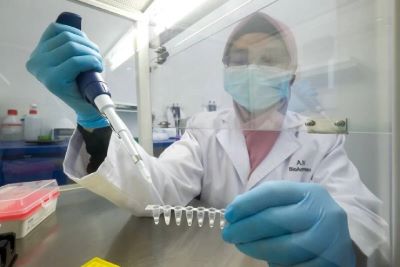
Using these freeze-dried Omicron-specific PCR kits is simple. A swab sample is added to a bead of pre-mixed ingredients, then the mixture is put through the PCR machine. Results will be ready about 90 minutes after the swab is collected.
BioAcumen Global started making freeze-dried kits in May.
The kit has been tested with artificial known sequences of the Omicron spike gene and took about two weeks to produce.
Given the convenience and speed at which these kits can detect Omicron, the company hopes this kit will be employed at places such as the immigration checkpoints.
Mr Jimmy Toh, director of BioAcumen Global, said: “We are looking at ways to cut down the steps and time needed to run this test. This is crucial, especially at the borders where accurate tests need to be done on-site. There is no time to wait on sequencing results to know if a positive sample is infected with Omicron.”
So far, scientists have seen more than 30 mutations on the spike protein of Omicron. Besides these, there is also a six nucleotide deletion not present in other currently circulating variants like the Delta strain. BioAcumen’s Omicron-specific kit specifically detects this particular deletion.
The spike protein is an important part of the virus that allows it to bind to human cells and facilitates infection of the cells.
Currently, the team is able to produce up to 8,000 freeze-dried tests in a day, compared with up to 25,000 a day of the traditional wet version.
A freeze-dried Omicron-specific kit contains 40 individual tests at around $14 per test, while the wet version will cost around $11 per test.
Mass production of the kit has begun, and the team hopes this kit will provide much needed help locally and in the region for the surveillance and control of this new variant, Mr Toh said.
There are plans to export the wet Omicron-specific kits to countries like Indonesia.
As more Omicron cases are being detected globally and scientists believe that it could be more transmissible than the Delta variant, Singapore must expect to detect more cases at its borders and in time to come, and also within the community, the Ministry of Health said on Sunday.
MANILA, Philippines — Two years into the pandemic, Nicholas Mapa, an economist at Dutch bank ING, is raring to go out again — work in his office some days but work from home on other days — and meet friends once in a while.
“I’m ready to go. It’s been too long,” Mapa says, adding, however, that he will do so only if the COVID-19 virus remains under control.
Even before the COVID-19 pandemic struck, ING had been pilot-testing a hybrid work arrangement, whereby employees were allowed to work in the office four days a week and work remotely once a week.
“So when the pandemic hit, we were actually pretty much set up for this—to do work from home. I think now that everybody has experienced it, they’re likely to say ‘kaya naman pala e’ (it’s doable),” he says. “It does help companies save on cost to some extent. I think it also helps increase enthusiasm, because you’re not very often boxed in your offices.”
The decline in daily new cases has encouraged the government to ease mobility restrictions and as quarantine protocols are further relaxed, ING is planning to institutionalize a hybrid workplace model, giving its employees the option to work either in the office or at home.
Such a hybrid model works for Mapa. “It’s still different working from here or working in the office. But we will be given that option to mix,” he says at an online economic briefing conducted from his home, as he has done so multiple times for clients and the media since the pandemic reached the Philippines in March 2020.
“I prefer [the] hybrid setup—getting the chance to go out and see some friends again, but also staying safe, and then trying to prevent the spread of the virus,” he says. “ I think other companies pick up on that as well.”
Many businesses that have enabled work-from-home (WFH) arrangements during this pandemic are likewise preparing to shift to hybrid work arrangements, especially for the segments in their business that can operate remotely. Even the business process outsourcing (BPO) companies have been allowed to have 90 percent of their staff under WFH arrangements and still retain their fiscal incentives during this pandemic, although it remains to be seen how long they will be allowed by the government to keep this arrangement.
There are those who do not have such options, like health-care workers, police authorities as well as staff of groceries, factories, utilities, hotels, and bank branches who need to be in the field. They are the front-liners during this pandemic.
This is why some CEOs choose to come to the office, even if they have the ability to manage their organizations remotely.
Even at the height of the pandemic, Bank of the Philippine Islands CEO Teodoro Limcaoco chose to go to the office every day. He would even pay branches surprise visits.
“When we ask our front-liners—tellers, branch people to come every day, how can I not come every day?” he quips.
Back to on-site work
During its third quarter Metro Manila property market briefing, which had mostly property developers, analysts and businessmen in the audience, property consulting firm Colliers reports that with increased confidence in the COVID-19 vaccines, employers are expecting more of their employees on-site by 2022. (See chart.)About 34 percent of the respondents of Colliers’ third quarter survey expect at least half of their workforce to return to their offices starting 2022. “This signifies that occupiers are still considering a hybrid working model including a mix of work-from-home and on-site operations,” Colliers says in a Nov. 29 research note.
Meanwhile, 31 percent of the respondents expect their employees to fully work on-site in 2022.
“In our view, any rebound in office leasing will be supported by the successful COVID inoculation which should allow more employees to report back to their offices. Despite the implementation of work-from-home arrangements, some firms, including outsourcing companies, continue to look for office space across the country. We see these leasing queries materializing over the next 12 months and resulting in greater office space takeup,” Colliers opines.
More than 70 percent of Colliers’ respondents say that 81 to 100 percent of their employees have already been vaccinated against COVID-19.
Colliers recommends that office occupiers finalize their split-operations plans and prepare for employees to return to the office.
WFH not for everyone
Newly listed real estate investment trust Filinvest REIT Corp. (FILRT) expects a growing number of IT and BPO firms resuming on-site operations as COVID-19 cases decline and many Filipinos get vaccinated.
“While WFH is an option, it is not for everyone, especially for multinational BPO companies,” says Maricel Brion-Lirio, president of FILRT, which is the leading office space provider in Alabang, with a market share of close to 50 percent.
Brion-Lirio says FILRT’s tenants, including those that belong to the top 10 BPO companies in the world, prefer the office setup due to concerns about potential security data breaches, poor internet connectivity, and low productivity due to numerous distractions when employees are in a WFH mode.
“A majority of the multinational locators said prolonged lack of face-to-face interaction, social isolation and reduced camaraderie among employees pose a threat to mental health,” she adds.
Property consulting firm KMC Savills estimates that 98,000 square meters (sqm) of office space have been taken up in the third quarter, bringing to 325,000 sqm the office takeup year-to-date. Excluding lease preterminations, net market absorption stands at just 147,000 sqm — but this marks a turnaround from the net negative absorption of 164,000 sqm in 2020.
BPO firms account for most of the new leases while expanding e-commerce firms add to the demand. Philippine Economic Zone Authority (Peza)-accredited buildings capture 71 percent of demand.
“Despite Peza allowing work-from-home for accredited companies—until, of course, a policy review after the first quarter of 2022—this did not stop some IT-BPM (IT-business process management) companies to secure Peza spaces. This is potentially due to the nature of the services and the contracts they have with certain customers. They may also be preparing for [greater] capacity should Peza regulations change after the first quarter of next year,” says KMC Savills chief operating officer Rosario Carbonell.
She sees office demand further picking up in the coming quarters from IT-BPM and other growing industries.
“We applaud Peza for staying true to its commitments to support the IT-BPO industry and extending its incentives for you know work from home and ensuring that there won’t be a halt in generating jobs for Filipinos. But I would be curious to see what changes would take place after the first quarter of 2022 that could potentially impact office space takeup should any of the policies change,” she says.
Unlike in the prepandemic period, Carbonell says it may be quite tricky now to estimate office absorption just based on headcount and revenue growth target of the BPO industry due to the dynamic work arrangements that are already incorporated in the industry’s business model.
Up for policy review
In mid-October, the Cabinet-level Fiscal Incentives Review Board (FIRB) denied Peza’s request to exempt its registered IT-BPM enterprises from the rules on WFH arrangements. Enterprises exceeding the 90-percent threshold cannot enjoy income tax incentives during the months of their noncompliance with the FIRB resolution.
Peza director general Charito Plaza previously appealed to the FIRB to let the investment promotion agency to implement its previous policy that allowed WFH arrangements for all employees, with the limitation that only 90 percent of the enterprise’s revenues may be granted tax incentives. This was rejected by the FIRB.
“The idea of opening the economy is allowing the people to go out and spend money in the restaurants and other businesses in the area. This [proposal] won’t achieve the goal of opening the economy,” says Finance Secretary and FIRB chair Carlos Dominguez III.
Dominguez says the activities registered with Peza are supposed to be conducted within the economic zones.
Finance Assistant Secretary and FIRB Secretariat Head Juvy Danofrata adds that the 90-percent WFH arrangement is only a temporary measure for exceptional circumstances approved by the FIRB, as authorized by the implementing rules and regulations of the Corporate Recovery and Tax Incentives for Enterprises Act.
“The Peza rule that 90 percent of total revenue from the registered activity is entitled to incentives— revenue, rather than workforce, as basis for the 90 percent—has no reasonable connection to COVID-19 prevention and mitigation,” Danofrata stresses.
Any future adjustment, if not unwinding of this temporary flexibility granted to BPOs, will have a big impact on how Metro Manila’s workplace will shape up in the coming year. After all, BPOs account for 8 million sqms or 53 percent of the total office space in the Philippines today of 15 million sqms, based on estimates from Leechiu Property Consultants (LPC).
Asked whether BPOs will still likely be allowed by the government to keep most of their staff under WFH arrangements, LPC president David Leechiu says it’s difficult to say.
“The population would need [COVID-19 vaccine] boosters by then, plus the mutations of the virus make it difficult to plan. However, the companies are keen to move back to office, some faster than others, but with clear intent to be 100 percent back in office,” he says.
Those outside the BPO sector have more flexibility to choose whether to summon back all their employees to the offices or stick to some form of hybrid arrangements.
“If WFH becomes permanent, it will hurt the property sector. Demand for offices, lease rates and capital values will fall,” says Abacus Securities head of research Raymond Neil Franco, adding there will be knock-on effects for residential condominiums and commercial asset as well.
“That being said, there are also reasons to back WFH. Employees are happier, renting may increase. It will help reduce traffic congestion and lower fixed/operating costs. Eventually, I think a compromise will be reached with maybe 50 percent of employees returning to offices on rotating basis.”